Scottsdale’s appreciation for art enables artists to publicize their talents and add to the environment’s imaginative aesthetic year-round. From initiatives like IN FLUX Cycle 10 to classic installations like Knight Rise, Scottsdale proudly embraces the impact behind sharing art with others. Today, we’re spotlighting Scottsdale’s latest addition of public art, Pinball Wizard.
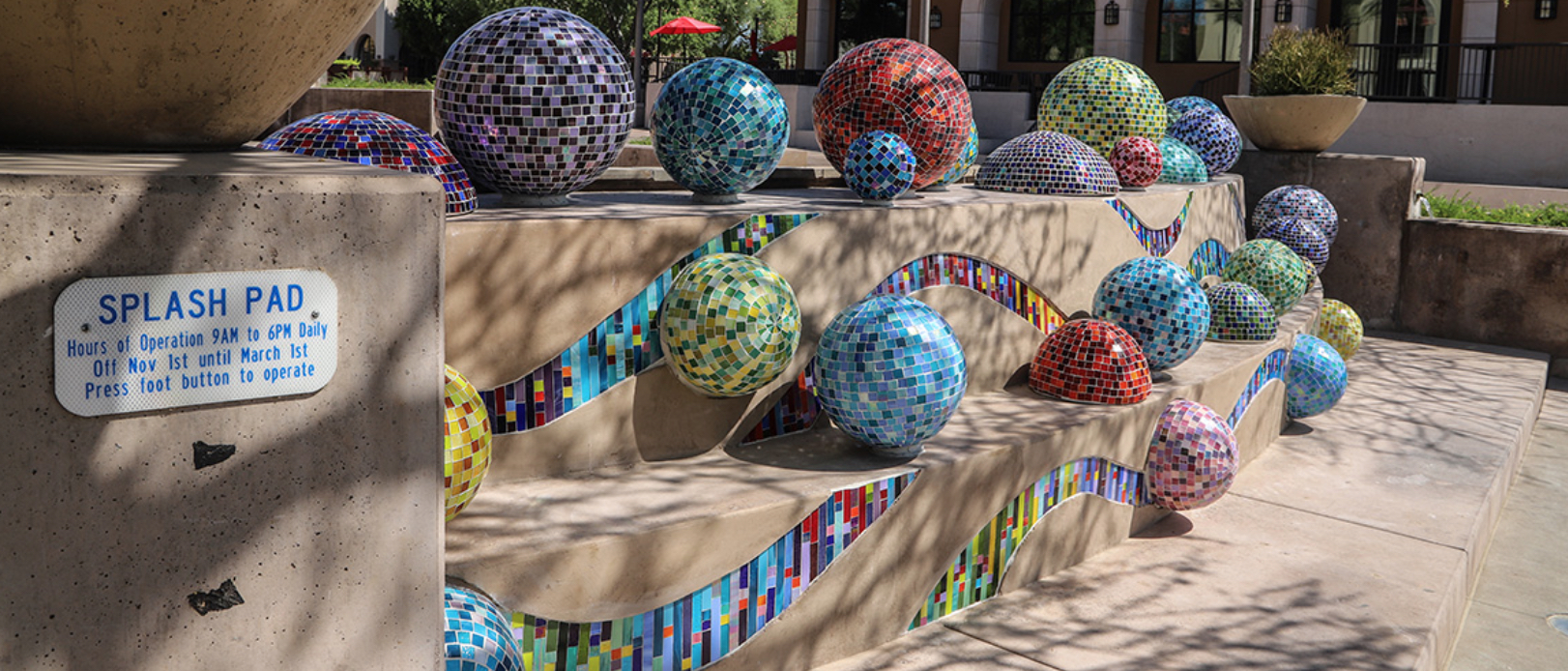
Completed in June 2022, Old Town Scottsdale welcomes Pinball Wizard as the city’s newest public art installation. Public Artist Annette Coleman worked with Scottsdale Public Art to design and construct the vibrant project using colored glass. Coleman is well-known for her illustrative mosaic public art installations, many of which reside in Colorado, and embraces a public art philosophy rooted in stimulating inspiration and creating community.
Pinball Wizard resides at the Stetson Plaza Splash Pad at the Scottsdale Waterfront and features 30 disco-like mosaic orbs and various mosaic waves built into the environment. Designed to catch light from every angle, the myriad of shapes and bright colored glass in Coleman’s design embraces the playful attitude that already fills the area.
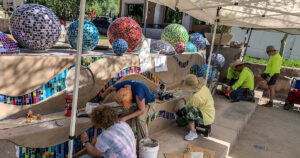
Annette Coleman installing Pinball Wizard, Courtesy of Scottsdale Public Art
Drawing inspiration from her appreciation for the outdoors, specifically water, wind, flora and fauna, Coleman included various serpent-shaped waves throughout the concrete wall of the splash pad. Her inspiration behind Pinball Wizard, and many of her other projects, also draws from television shows, games and science productions, and other pop culture references.
Pinball Wizard brings a splash of color to the already lively surrounding at Scottsdale’s Stetson Plaza Splash Pad. Visit the public art yourself and hear more from Coleman about its creation here.
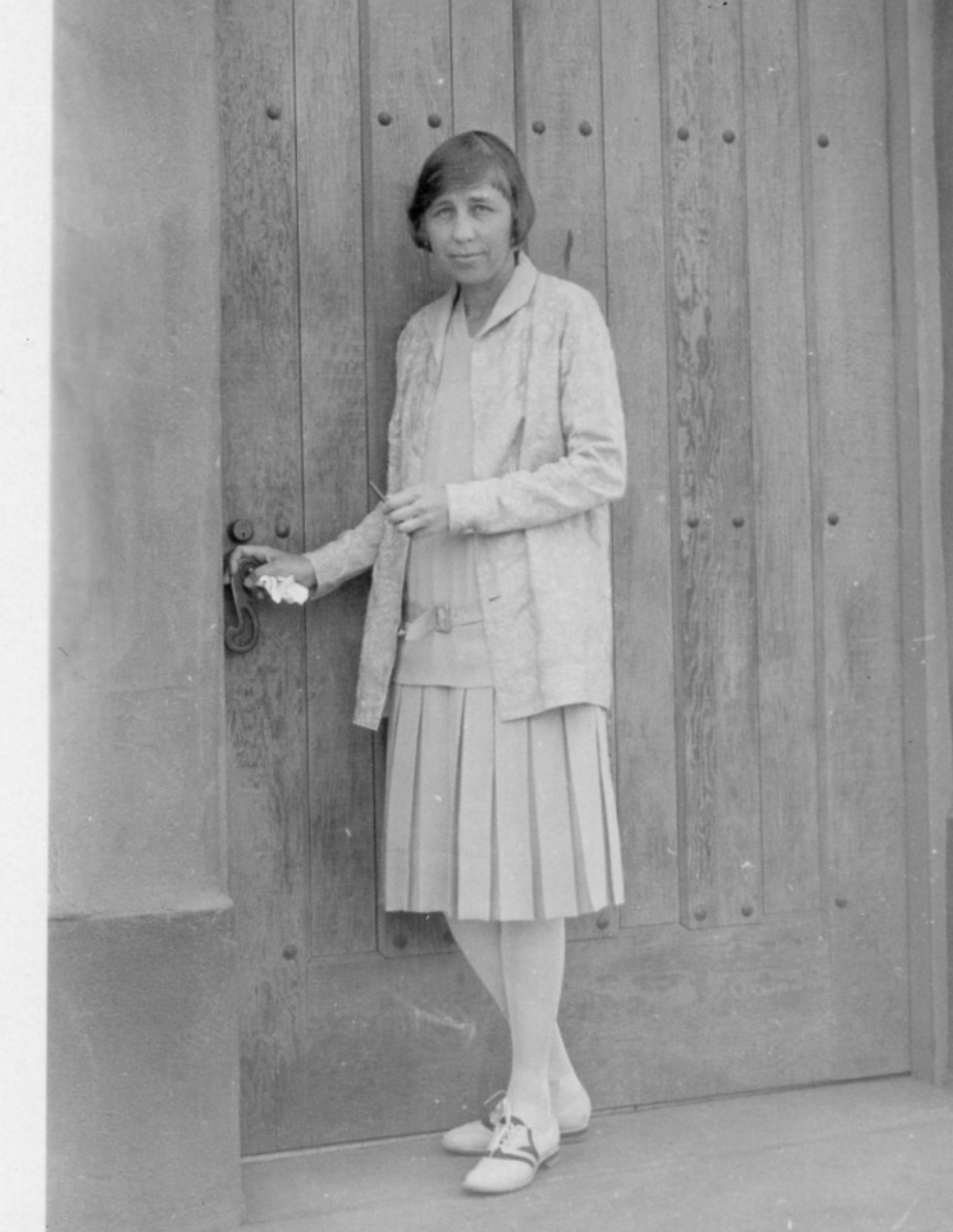
As part of our ongoing “Women in Architecture” series, we’re spotlighting an eco-conscious architect of the early 20th century, Lilian Rice. Inspired both by the historic Spanish Colonial design she grew up in and the organic philosophy that influenced her throughout college, Lilian Rice left an impressive mark on the architecture of Southern California. Learn more about her extraordinary life and work below:
The Life of Lilian Rice
Born on June 12, 1889, Rice grew up in National City, California, just south of San Diego and only 10 miles north of the Mexican border. Her father, Julius Rice, was a prominent educator in the state and her mother, Laura Rice, an amateur painter and designer, both empowered her to pursue her interests in education and the arts.
Growing up, Rice was heavily inspired and influenced by the abundant Spanish Colonial culture and architecture in the area, including the many adobe homes. In 1906, she moved to Northern California, where she started attending school at the University of California, Berkeley, where she studied architecture. Rice joined the school’s Architecture Association shortly after and quickly rose to a leadership position. At school, she also discovered her philosophy of holding a deep respect for each project’s surroundings and striving to protect their natural environments.
Following her graduation in 1910, she moved back home to National City to care for her mother and acquired a job working with San Diego architect Hazel Wood Waterman – the city’s first female architect. While working for Waterman, Rice also spent time teaching at San Diego High School, leaving her influence on many future architects, including Samuel Hamill, FAIA.
Notable Works and Achievements
In 1921 Rice’s career catapulted when Richard Requa and Herbert Jackson hired her as an associate in their architecture firm. During her first year, Requa and Jackson assigned Rice with designing a Civic Center for Rancho Santa Fe – an up-and-coming subdivision – which she eventually gained leadership over in 1923.
From then on until 1927, the majority of Rice’s work involved developments and expansions within Rancho Santa Fe. Many of the projects she designed in the subdivision are listed in the U.S. National Register of Historic Places, including the Claude and Florence Terwilliger House and the Reginald M. and Constance Clotfelter Row House. In 1928, after she had received her architect’s license from California, Rice made the ambitious decision to open her own architecture firm.
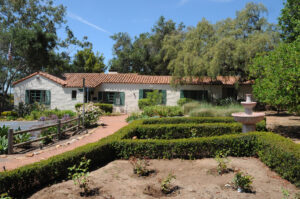
Following the launch of her firm, Rice began working outside of Rancho Santa Fe, allowing her to step away from the Spanish Colonial style she was known for into more organic approaches. Even throughout the depression, Rice’s career excelled in the 1930s when she designed some of her most familiar works, including the Paul Ecke Ranch home, and both a boathouse and a clubhouse for the San Diego ZLAC Rowing Club in 1932.
Alongside her work, Rice has been a recipient of many architecture awards and achievements, including:
AIA Honor Award, Chrstine Arnberg Residence, 1928
AIA Honor Award, ZLAC Rowing Club, 1933
AIA Honor Award, La Valenciana Apartments, 1933
11 buildings listed to the National Register of Historic Places
Through her diverse catalog of architecture projects, Rice filled Southern California with more than 60 unique homes. And while the Spanish Colonial Revival was prevalent at the time, Rice was one of the leading architects who helped make it widespread throughout the state, leaving a reputation little can compare.
No matter where you find yourself in Scottsdale, you’re sure to run into one of the city’s many works of public art. IN FLUX is one unique initiative exclusive to Arizona that is empowering emerging artists to innovatively apply their creativity to temporary works of public art in Scottsdale and other communities throughout the state. Learn more about IN FLUX and their 2022 additions here:
What is IN FLUX?
IN FLUX began as an initiative formed by various art organizations in and around the Phoenix and Scottsdale area in the early 2010s. Scottsdale Public Art launched the project to provide Arizona artists with the opportunity and resources to create temporary public art installations throughout the state.
Since IN FLUX’s inception, it has expanded tremendously, now reaching more than 53 locations across eight cities in Arizona. Thanks to the initiative’s commitment to spotlight and aid some of the state’s emerging artists, not only does the work greatly impact the artists themselves, but it also supplies communities with inspiring works of art.
Each cycle of IN FLUX begins when they seek out submissions from artists across the state. Their team then carefully chooses a limited number of artists to commission a unique work of temporary art that becomes displayed throughout the year. This year marks the launch of IN FLUX Cycle 10!’
The Magic of Water, Yuke Li, Courtesy of Scottsdale Public Art
IN FLUX Cycle 10
IN FLUX Cycle 10 introduces 13 new artists and artworks throughout six cities in Arizona, including four unique pieces that will live exclusively in Scottsdale. Installations for the temporary artwork in Cycle 10 concluded in June of 2022, and each piece will be on display for a minimum of a year. Here are the four artists featured in Scottsdale:
Hector Ortega
Reliance
Found on the northeast corner of Scottsdale Road and Oak Street
Installed May 25, 2022, through June 30, 2023
Christopher Luber
Fragmented Reflection
Found on the northeast corner of Scottsdale Road and Roosevelt Street
Installed May 25, 2022, through June 30, 2023
Yuke Li
The Magic of Water
Found on the south side of Thomas Road between N 81st Way and N 82nd Street
Installed May 9, 2022, through June 30, 2024
Shirley Wagner
Zenith, Surge, and Bliss
Found at Miller Plaza on the northeast corner of Miller Road and Indian School Road
Installed June 28, 2022, through June 30, 2023
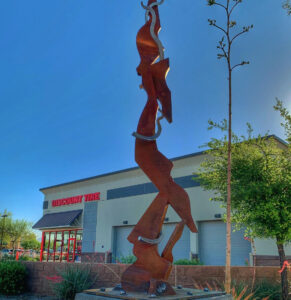
Reliance, Hector Ortega
We’re ecstatic to see more of the stunning artwork helping to bridge the Valley into one community and celebrate the talented artists included IN FLUX Cycle 10 and future cycles. Make sure to observe the temporary artwork yourself throughout the next year before IN FLUX Cycle 11 welcomes a new group of emerging artists!
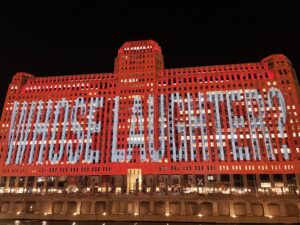
Chicago is home to a myriad of stunning public art experiences, where each complement their encompassing environment. In this spirit, the city’s largest work of public art, and the largest permanent digital art project in the world, Art on theMART, embraces its surroundings unlike any other installation in Chicago.
The now-beloved contemporary art project originated in September of 2018 as more than 30,000 fled to the Chicago Riverwalk to watch the historic Merchandise Mart building transform into a work of art. Following its launch, Art on theMart has hosted nightly projects created by countless artists, ranging from the current exhibitioner Nick Cave to the inaugural artist Jason Salavon.
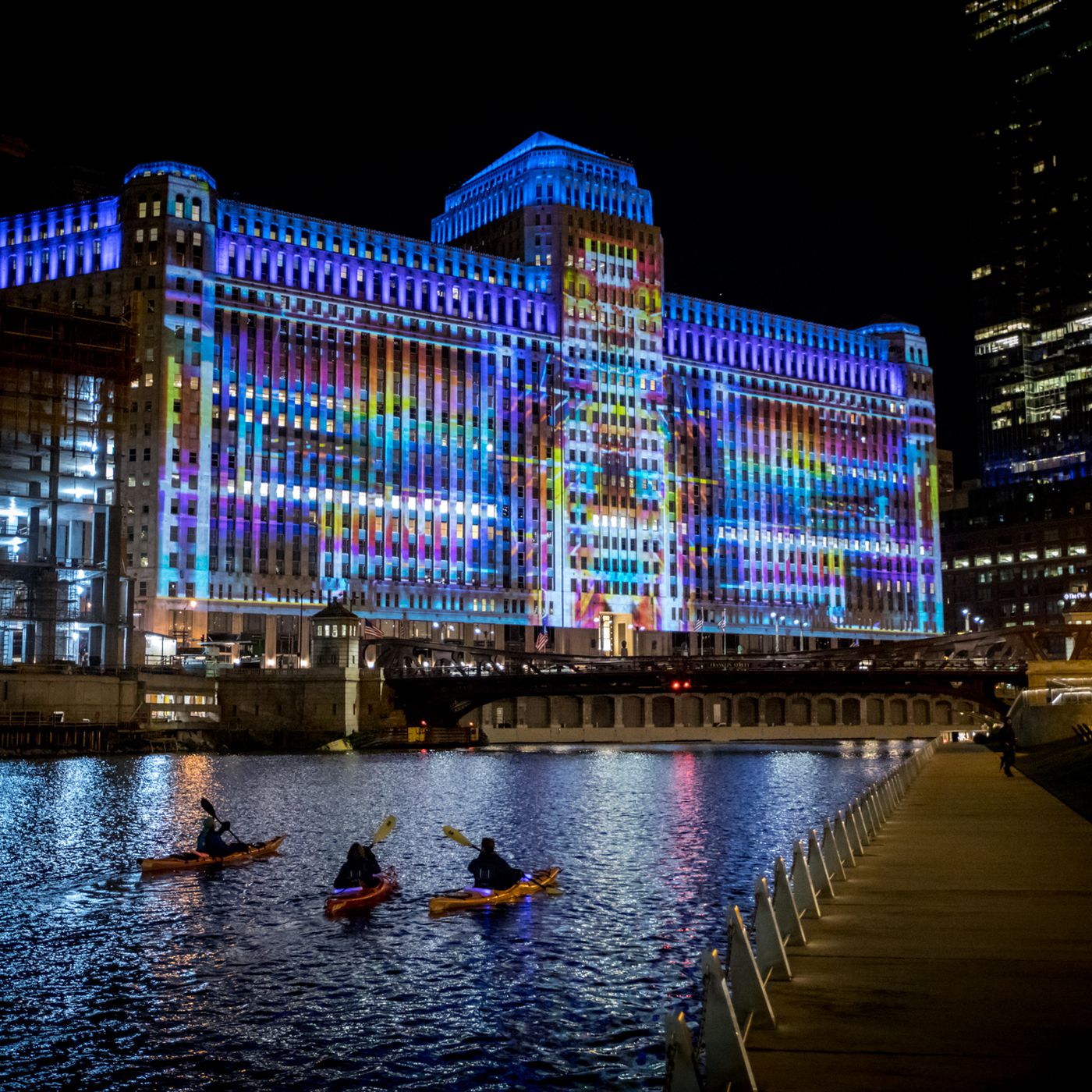
Every evening, 34 projects – sprawled across the Riverwalk itself – help project multiple works of digital art across its 2.5-acre facade. TheMART takes advantage of the latest immersive art technology, using various mapping techniques to ensure every projection fits perfectly to the Art Deco details of theMart.
While all of the projections showcased at Art on theMART utilize the giant facade of theMart to showcase bright colors and complex imagery to catch the attention of viewers, the installations also comprise bespoke audio elements, creating an even more immersive experience.
Art on theMART, THINKING OF YOU. I MEAN ME. I MEAN YOU, Barabara Kruger
Current exhibitions include explore by Jonas Denzel and Billiken by Shkynna Stewart and Wills Glasspiegel beginning at 9 p.m. and at 9:30, Ba Boom Boom Pa Pop Pop by Nick Cave, running concurrently with the Furthermore installation at the Museum of Contemporary Art Chicago. Only a 15-minute walk from Optima Signature, prime locations to witness the marvelous exhibition are found across the river from theMart on Chicago’s Riverwalk and West Wacker Drive.
Community means everything to us at Optima, which is why we bring thoughtful design to each project, committed to supporting and uplifting every resident. Historically, architecture has been a dominant tool for many to build and sustain communities, and recently, community architecture has taken on a more prominent role in the discourse surrounding living environments. Learn more about community architecture and some of the practice’s most visionary examples below:
What is Community Architecture?
Community architecture is a collaborative building experience between both an architect and the users of the built space. The movement originated in the mid-20th century when architects across the world began to see that people wanted more say in shaping what they lived in and how they lived.
Because it was such a radical idea at its inception, some architects who took charge of the movement experienced ridicule. Minette de Silva, in particular, was unsupported in her efforts to build Sri Lanka’s first Public Housing Project in collaboration with its residents. The result, however, was a triumphant success, like many other community architecture projects across the world.
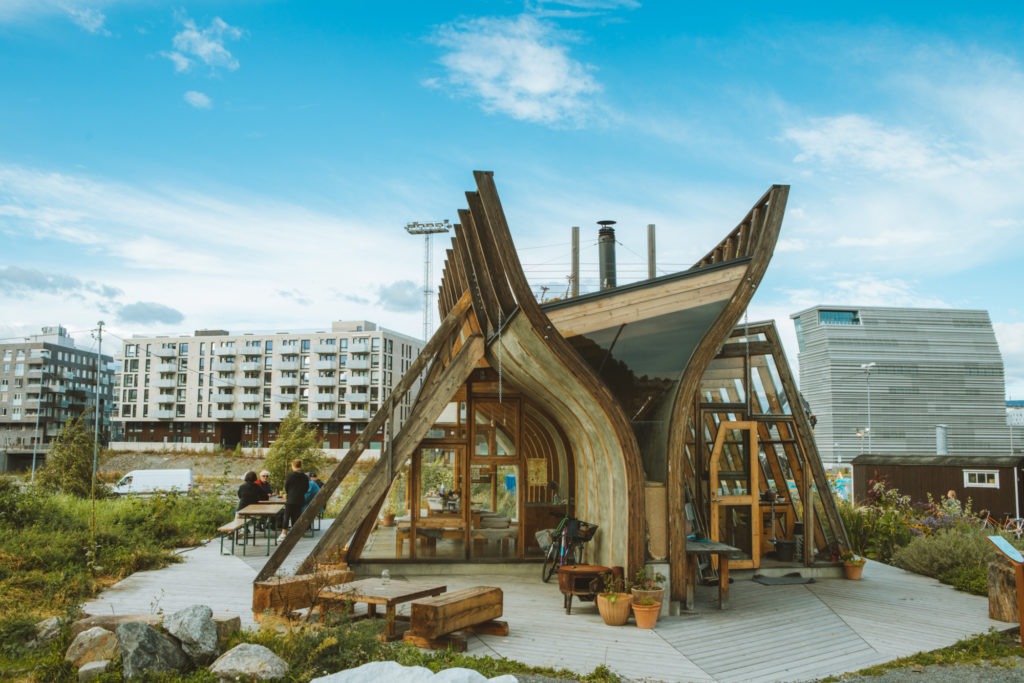
What originated as a mere art project in 2011 has turned into one of the world’s most functional community-built projects. The intricate design behind the main building, the bakehouse, operates as a place of creative production and a gathering space for communal interactions.
The structure appears still under construction or repair, but the wooden skeleton and window-filled walls intentionally mimic the past. Both the structure’s versatile purpose and its boat-like canopy design are odes to the country’s rich history, reflecting on the cultural significance of Bakehouses and maritime history.
From serving as a hunting ground for the indigenous Osage nation to being transformed into a cheese factory, the land on which The Momentary resides in Bentonville, Arkansas, has a long, rich history. Today, however, the land is home to the adaptive reuse art museum. The original structure – which is still 80% preserved – was completed in 1947, and, with the help of Wheeler Kearns Architects, the newly constructed museum finished construction in 2020.
Instead of trying to gloss camouflage the branches of history rooted in The Momentary’s land, they intentionally embraced them, designing an accessible hub that supports community members through cultural programming, education, engagement and enjoyment.
In 2020, The Night Ministry – an organization encompassing health care, housing, outreach and other social services – welcomed its new home, also designed by Wheeler Kearns Architects, in Chicago’s Bucktown neighborhood. The former manufacturing facility became transformed into the organization’s headquarters and is home to their overnight shelter, The Crib.
Parts of the original manufacturing facility were repurposed to reduce waste when constructing the new headquarters, including flooring, windows and heavy timber. Vibrant murals around the interior alongside multipurpose programming spaces and a communal kitchen and dining space also help to reflect the collaborative nature The Night Ministry displays.
The best architecture attracts people and allows them to feel a true sense of ownership of their living environment. And, because more and more architects are discovering the importance of doing just that in their projects, community architecture shows no signs of slowing down.
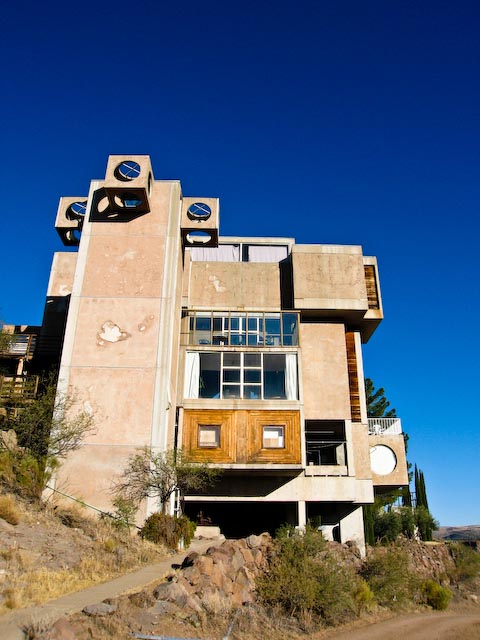
Known for his unique approach to architecture, Paolo Soleri brought the philosophy of arcology to numerous of Arizona’s most stunning environments. In Cosanti, he welcomed his otherworldly construction elements to the surroundings of Scottsdale. Today, we’re spotlighting another of the architect’s treasures, which embraces all of Soleri’s design principles on a much grander scale, Arcosanti.
Inception of Arcosanti
Following the completion of his first build, Cosanti, Soleri began to explore more behind the meaning of arcology – a word he coined himself to label if design philosophy. What he began to discover was just how significant ecologically sound human habitats were to the ideology.
In 1970, following the release of his book Arcology: The City in the Image of Man, in which he detailed the concept of cities embodying the fusion of architecture and ecology, Soleri began developing his own planned city, Cosanti. The project – found roughly 70 miles North of Scottsdale – was built to exhibit how urban environments can be elevated while minimizing negative impacts on the surroundings.
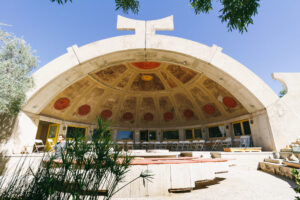
Arcosanti Apse. Credit: Devon Christopher Adams on Flicker Creative Commons, CC BY-NC 2.0 Deed
Arcosanti is built on 25 acres of a 6.25 square mile property, and though originally planned to house 5,000 people, the community is home to a population that varies from 100 to 150 throughout the year. Because the planned city is ever-changing, construction and development continue today due to the many students and volunteers who call it home.
The magnificent community currently consists of 13 major structures, ranging in size and purpose and featuring diverse design features unique to the town. One particular feature is the site-cast tilt-up concrete panels used to support various buildings, expressing similar patterns to the earth around them, some even cast in embedded art.
Other attentive design features include the southward orientation of most buildings designed to capture the most natural light and an apse – similar to Cosanti’s – built to house the community’s bronze bell-casting space.
The city also features essential builds intentionally placed to help the community thrive, including two barrel vaults, apartment residences, an outdoor amphitheater, a community swimming pool, an office complex and a lush greenhouse.
Today, Arcosanti continues to fulfill Soleri’s vision as an educational center for upcoming architects and philosophers. Scholars from across the world choose the community to attend advanced workshops and classes on everything from experimental design to architectural agriculture.
Nearly 40,000 tourists visit the unique community annually to witness Soleri’s philosophy of arcology in person. Visitors can take guided tours through the sweeping campus or stay overnight in one of its lavish guest accommodations. To plan your trip to the historic community, or learn more about its events and programming, visit Arcosanti’s website here.
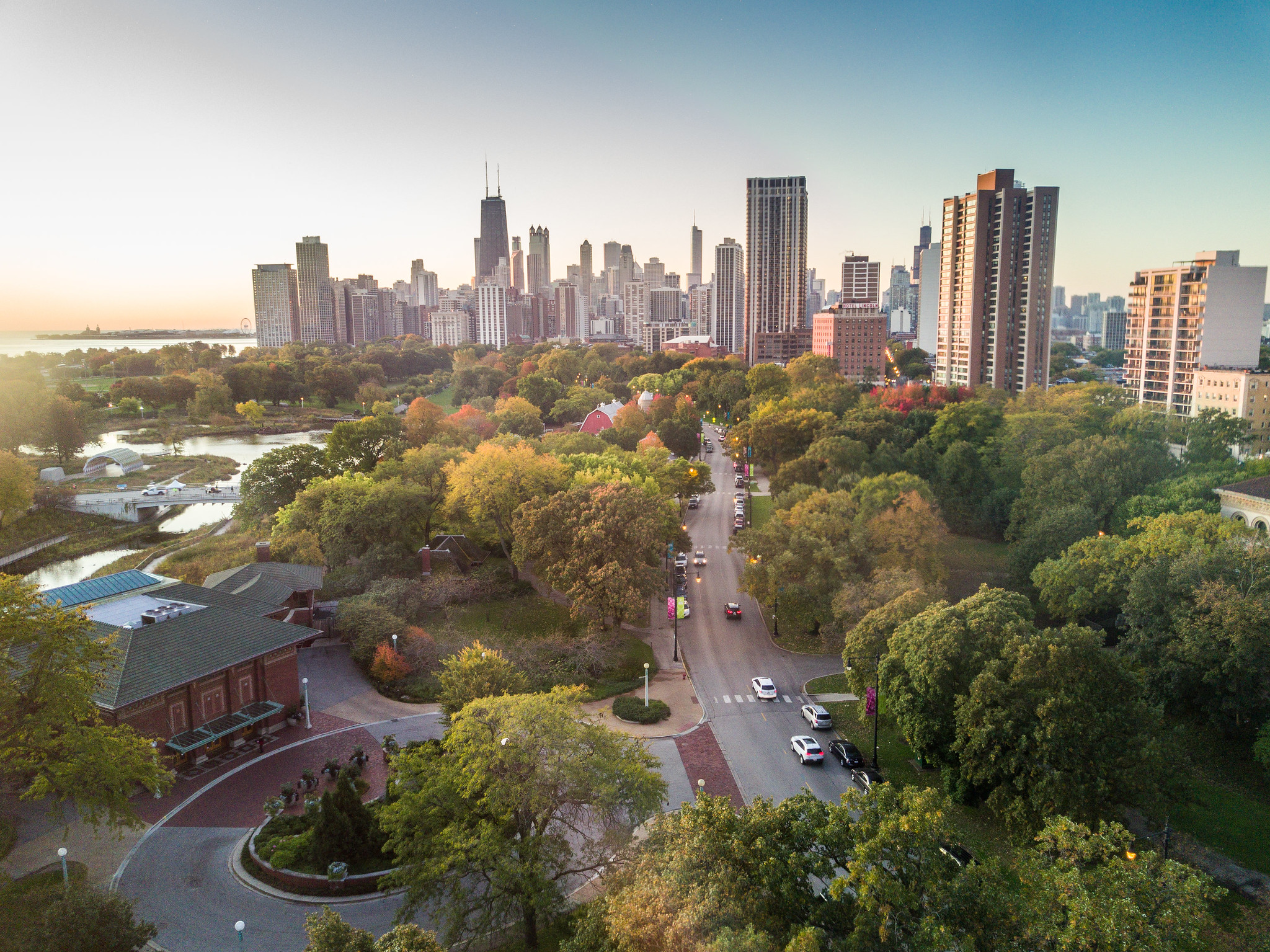
Just two blocks east of Optima Lakeview lives Chicago’s largest recreational area, Lincoln Park. Throughout the year, the beloved park is host to a plethora of unique events and activities, but Spring is one of the best seasons to witness the more than three square miles of greenery come alive and enjoy all of its enchanting affordances. Here are our favorite activities we believe you should take advantage of this season:
While the park is widely known for being home to the cherished Lincoln Park Zoo, Conservatory, Chicago History Museum, countless other treasures line the seven-mile stretch of greenery. As the weather gets warmer, one of the best ways to experience Lincoln Park is by taking a stroll through one of its various paths.
One of the most familiar, the Lincoln Park Trail, is perfect for those interested in observing some of the park’s most iconic monuments, sculptures and murals. The five-mile stretch offers views of Self Portrait, Chevron, the You Know What You Should Do mural and the Alexander Hamilton Monument.
The park is also home to great eateries and restaurants that provide amazing views of the vast greenery and not-so-distant skyline. The Patio at Cafe Brauer, North Pond and Bacino’s Italian Grill each bring their unique flavors to the park, promising visitors unforgettable eats and refreshing atmospheres.
Another easy stop for food and entertainment is at Lincoln Park’s Theater on the Lake. Found at the end of Fullerton Avenue on Lakefront Trail, Theater on the Lake is one of the steadfast champions of Chicago’s off-Loop theater community. With special events and shows happening throughout the season into the summer, it’s one of the greatest treasures in the park.
Along with being home to the Waveland Tennis Court, Sydney R. Marovitz Golf Course, Lincoln Park Archery Range and countless other recreational activities, the park hosts various free and unique excursions. From yoga to farmer’s markets, Lincoln Park provides visitors with a handful of unique events throughout the Spring, all of which can be found on their website here.
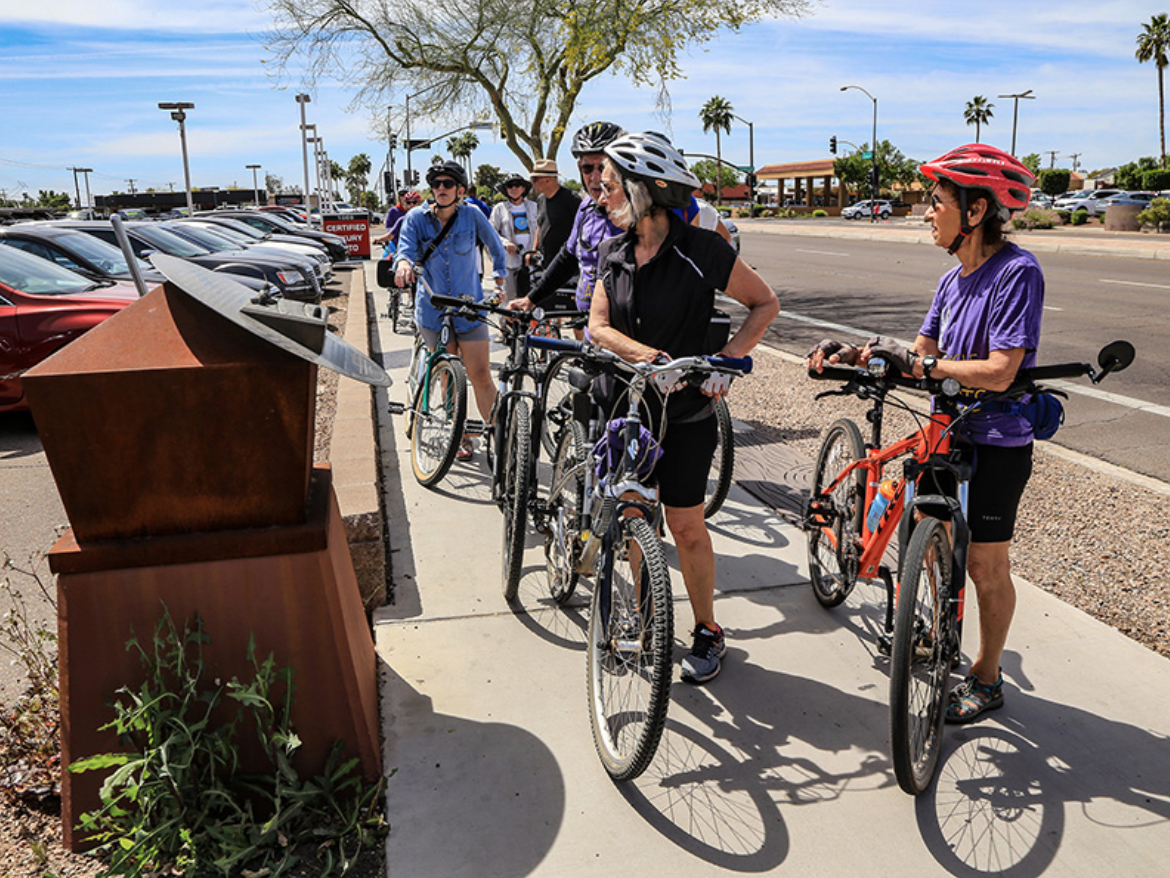
Thanks to the city’s deep appreciation for the arts, Scottsdale is home to some of the most visionary public art in the country. And, with warm weather here and summer approaching, there is no better way to experience the city’s inspiring works than on a bike! Here is our guide to Cycle the Arts Scottsdale 2022:
Cycle the Arts Scottsdale is hosted by Scottsdale Public Art and the City of Scottsdale. The annual cycling event is back for the first time since 2019 to showcase some of the city’s exciting public art displays and sculptures. And because this is the event’s first time back in more than three years, participants will be able to hear about some of Scottsdale’s newest public art additions.
The leisurely 9-mile bike ride is free and perfect for the whole family. It kicks off on Sunday, April 3, and check-in is at 8:30 a.m. at Scottsdale’s Museum of the West. While the event is expected to last until noon, the ride on Scottsdale’s award-winning bike paths will only take about two hours.
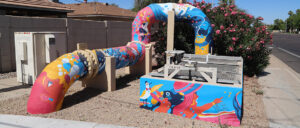
Industrial Pipe Wave, Christopher Fennel, 2015, Courtesy of Scottsdale Public Art
The event includes 17 works from the city’s public art collection, including Jack Knife, Industrial Pipe Wave and Terraced Cascade. Each stop will include information about the art provided by Scottsdale Public Art staff and board members and possibly feature the artists themselves.
Made for both bike riders and art enthusiasts, Cycle the Arts Scottsdale is the perfect event for those looking to explore and learn more about the vibrant community. If you plan to participate, please bring your own helmet and water, and RSVP on Scottsdale Public Art’s website here.
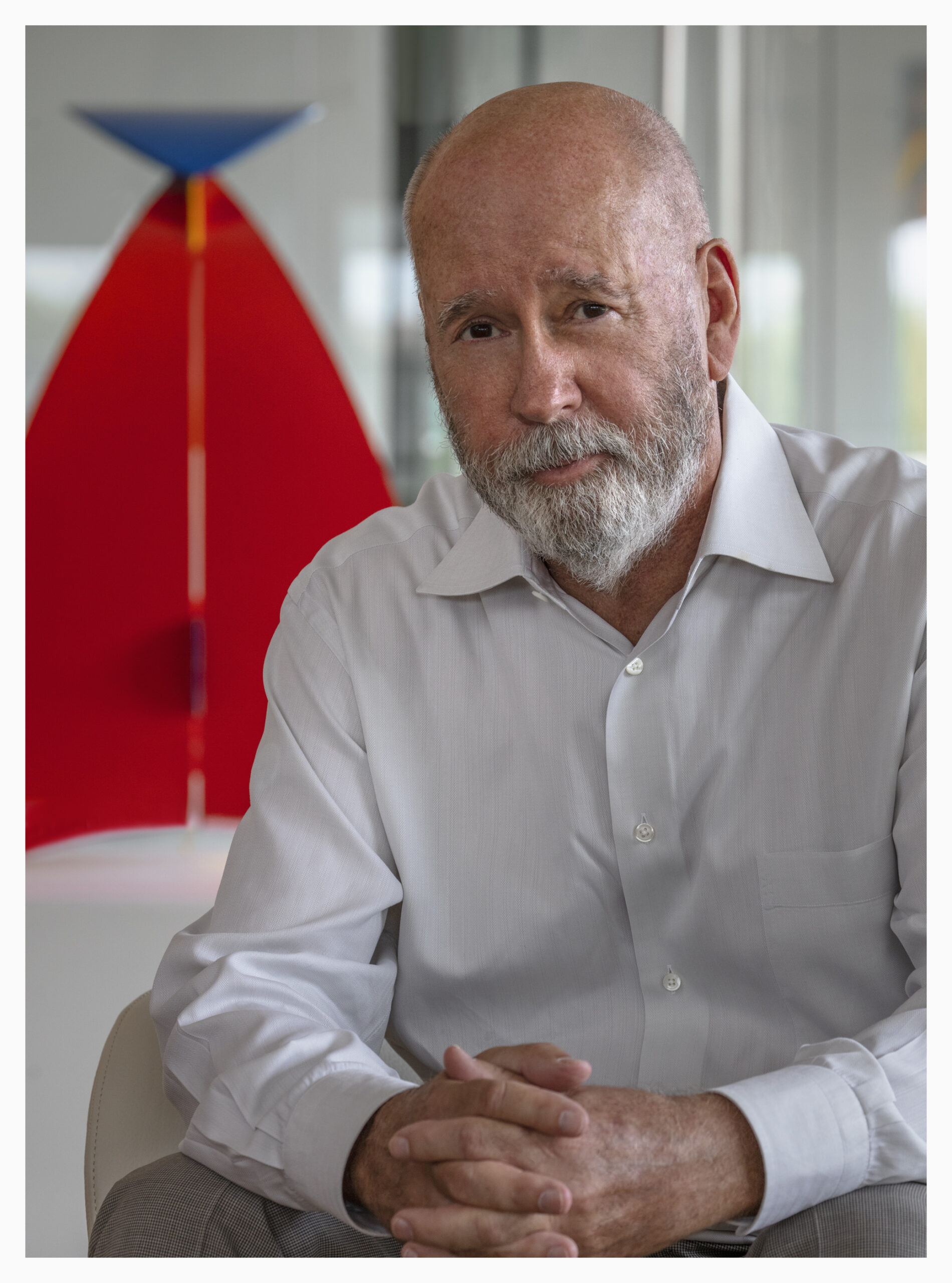
Hot off the press is the spectacular retrospective of the 40+ year career of David Hovey Sr., FAIA, Optima’s CEO and Founder. David Hovey Sr., released by Images Publishing, is a collector’s item that arrived on bookshelves in January 2022. The monograph opens with a beautiful introductory essay by the late luminary architect Helmut Jahn, who wrote about their decades-long friendship and Hovey’s “staggering” influence on architecture. Entitled “Living Beautifully,” Jahn explains:
“The best thing that can be said about the work of David Hovey Sr. in his chosen field of multi-family and single-family housing is that he builds unique and inventive dwellings for people to live beautifully. That he chooses to play not just the role of the architect but also that of developer, contractor, construction manager, sales and leasing agent, and building operator makes the achievement even more remarkable. As his own client and CEO of his company, Optima, Hovey demonstrates that it’s possible to successfully execute the very different skills of an architect and a developer by applying tremendous knowledge and tenacity and assuming great responsibility. Many who have tried to work as an architect-developer have failed because they did not find the right balance. David Hovey expanded the role of the architect to the level of a master building and in this, he is without equal in his generation.”
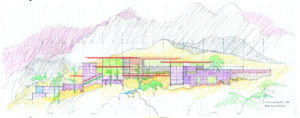
A sketch of Optima’s Sterling Ridge
In the words of friend and chronicler, Jahn talks about the arc of Hovey’s career:
“Hovey’s built work is a testament to constant refinement and improvement, each project a step along a path to take on new and bigger challenges, never being afraid of making a mistake by doing something new. The achievements of an architect become more evident with the passing of time. The good buildings become more important, the others will be forgotten.”
In Jahn’s reflections on Hovey’s deep understand of the complex issue of climate change, he shares his thoughts this way:
“David Hovey’s work should be recognized for more than its architectural design. This is particularly evident in his desert buildings where he addresses the important issue of climate change that challenges architecture today. Authorities measure energy consumption as the primary factor in building construction. Looking at energy efficiency alone is the wrong measure. We don’t have an energy problem, we have an emissions problem. Carbon dioxide is the principal culprit in climate change and the building industry contributes a considerable amount of it to the atmosphere.
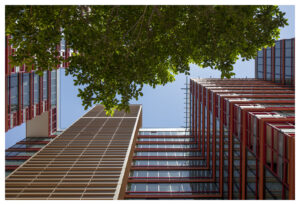
Optima’s Biltmore Towers
“In Hovey’s buildings, there are strategies that address climate issues. This is demonstrated in the use of many prefabricated lightweight materials for load-bearing or non-load-bearing, enclosing parts. This extends to the use of recycled steel. Hovey regularly employs effective sun-shading devices. His strategies include LED lighting as well as energy-saving heating, air conditioning, and ventilation systems. Sustainability is assured by design and not through additional equipment or devices, which don’t pay off over time. Here, the mind of the architect and developer in one person can best design and build buildings where nothing can be taken away to come closer to perfection. Only through knowledge, determination, and a deep sense of responsibility can these energy goals be achieved, as the buildings show.”
Stay tuned for other inspiring excerpts from David Hovey Sr., along with stunning images of completed structures and his extraordinary sketches. For those who wish to purchase the book, it is available through a number of booksellers online.
Since the early 2000s, Optima has called Scottsdale home. The one-of-a-kind desert city offers a little bit of something for everyone. Golf lovers can enjoy the sprawling championship courses, foodies have access to some of the country’s finest dining and chic boutiques provide shoppers endless entertainment. We are proud of our contributions to this vibrant city with the amazing communities of Optima Camelview Village, Optima Sonoran Village, Optima Kierland, and Optima McDowell Mountain and equally proud to see the city continuing to expand its cultural offerings to residents and visitors alike. Today we’re exploring one of the city’s most treasured locations, the Scottsdale Arts District.
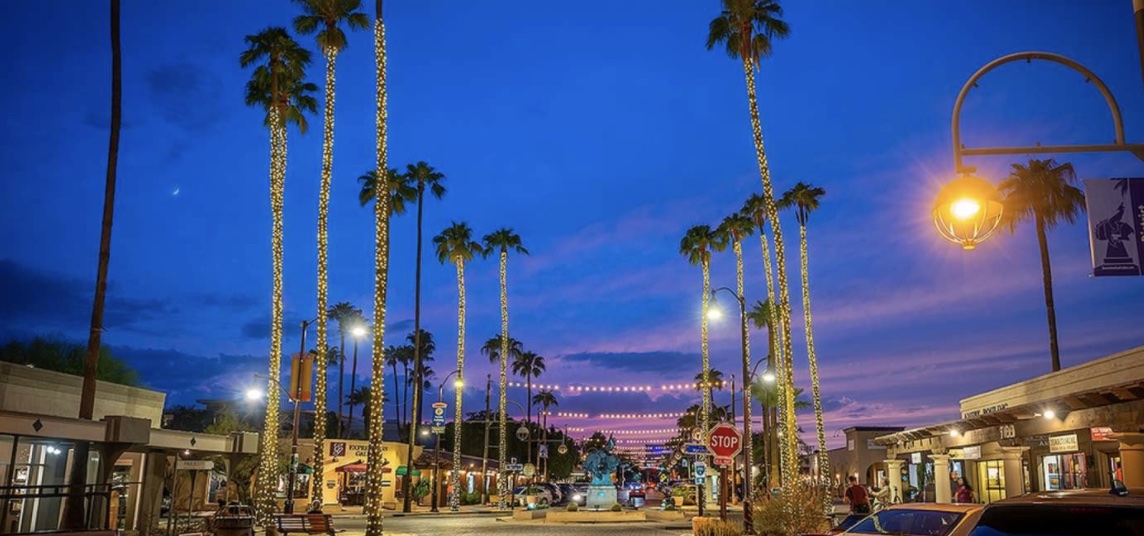
The arts district consists of an entire neighborhood found in the heart of Downtown Scottsdale, running along Main Street for roughly six blocks. Celebrated art galleries sit next to amazing art installations. Around them, retailers, boutiques and acclaimed restaurants ensure that visitors to the district are fully immersed in the best of everything.
Some of Scottsdale’s most cherished pieces of public art – like the commanding sculpture Jack Knife – reside in the district, along with a number of the city’s museums and cultural venues including Western Spirit: Scottsdale’s Museum of the West, Scottsdale Center for Performing Arts and Scottsdale Museum of Contemporary Arts, the home of Knight Rise.
Throughout the year, the arts district embraces its warm surroundings and friendly culture with its weekly ArtWalk. Every Thursday from 7 PM – 9 PM, buildings lining Main Street open their doors to the individuals enjoying the Scottsdale ArtWalk. In addition to this weekly tradition, ArtWalk hosts a themed Gold Palette series event every few weeks to offer even more exciting entertainment and showcase only the best of the best works of art. Live music, complimentary food and wine tastings, and extended gallery hours are just some of the few extra features that come along with the special event. Upcoming Gold Palette events include Western Week on February 3 and Native Spirit on March 3.
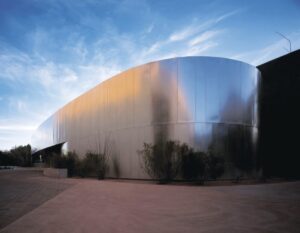
Scottsdale Museum of Contemporary Art found in the Scottsdale Arts District, Courtesy of SMoCA
As we continue to develop our vibrant culture here in Scottsdale, particularly with the expansion of the Kierland community, we look forward to discovering new opportunities to enjoy the city’s rich cultural and entertainment programming, unique retail experiences and fantastic dining values, where there is truly something for everyone.