Women in Architecture: Minnette de Silva

Women continue to make giant strides in architecture today, contributing to some of the most celebrated designs in the world. Historically however, many trailblazing women and their designs became overlooked and overshadowed. Today, we’re spotlighting a pioneer of tropical-modern design in Southern Asia, Minnette de Silva

Minnette de Silva’s Life & Career

De Silva was born on February 1, 1918, in Kandy, Ceylon – present-day Sri Lanka. Her father, George E. de Silva, was the President of the Ceylon’s National Congress and was a well-known politician. Her mother, Agnes Nell, was an activist who pushed for universal suffrage throughout the country. As a child, de Silva attended school overseas in England, spending much of her youth away from her family. However, when home, her family would frequently visit the architecture of ancient Sri Lankan cultures, influencing her profoundly.

Because she wasn’t able to study architecture in Sri Lanka, de Silva convinced her father to allow her to attend Sir Jamsetjee Jeejebhoy School of Art in Mumbai, India. Coming into the country with no previous architecture experience forced de Silva to learn the trade through apprenticeship and additional schooling at the Architecture Academy Mumbai before she was able to attend Sir J.J. School of Art. 

After being expelled from the academy in 1942, de Silva started working under emigre architect Otto Königsberger designing prefabricated housing in Bihar, India. And not long after, through connections back home, she was admitted to the Royal Institute of British Architects, where she built relationships with some of the world’s most inspiring architects. 

After Sri Lanka’s independence in 1948, de Silva’s father insisted she come home and contribute to the growth of her home country. So, de Silva moved back into her parents’ house with no money to her name and opened her studio – one of only two studios in the world named after the woman they were owned by at the time.

While back in Sri Lanka, de Silva developed her unique architecture style, influenced by a mixture of the traditional architecture she grew up with and the modern builds she was exposed to outside of her home country. In hopes of becoming exposed herself, de Silva began designing everything she could from small cottages to luxurious villas. 

Notable Works & Achievements

Her first build was the Karunaratne House, built for family friends from 1949 to 1950. At the time of completion, the house was the first building in the country completed by a woman and received much attention and controversy. The house was an exhibition of Silva’s design philosophy. Featuring woven Dumbara mats used as interior door paneling, clay tiles fired with ancient patterns and a custom mural in the living room designed by local artist George Keyt.

De Silva’s next build, Pieris House, was another commissioned home for family friends, this time in the country’s capital, Columbo. The open plan echoed traditional Sri Lankan architecture with a courtyard incorporated into its living room, which became a hallmark of de Silva’s designs. The house also featured one-of-a-kind patterned tiles and railings lacquered in gold leaf prints. 

One of her later but most acclaimed builds came in 1958 for Kandy’s Public Housing Project. The ambitious project had de Silva conduct extensive research and interviews with various house seekers in the city to uncover each of their unique lifestyles. She then used the information she received to curate and design custom housing types for each family – some families even assisting her throughout the process. 

While today this approach to design is celebrated, at the time, de Silva’s prospect was suspect and left unsupported. However, she knew the ultimate success would lay in whether the homeowners felt their environments were accessible to their lifestyles. The project eventually became a huge success and quickly became a model used throughout the country, encouraging the boom of strong mixed cultural communities in Sri Lanka. 

De Silva was awarded the Gold Medal by the Sri Lanka Institute of Architecture in 1996. She championed a new, inspired vision in Sri Lanka, mixing modernism with the traditional design elements that excited her growing up. Even though few of her buildings survive today, her legacy as a pioneer of tropical-modernism remains. 
David Hovey Sr., FAIA, A Modernist Philosophy Emerges

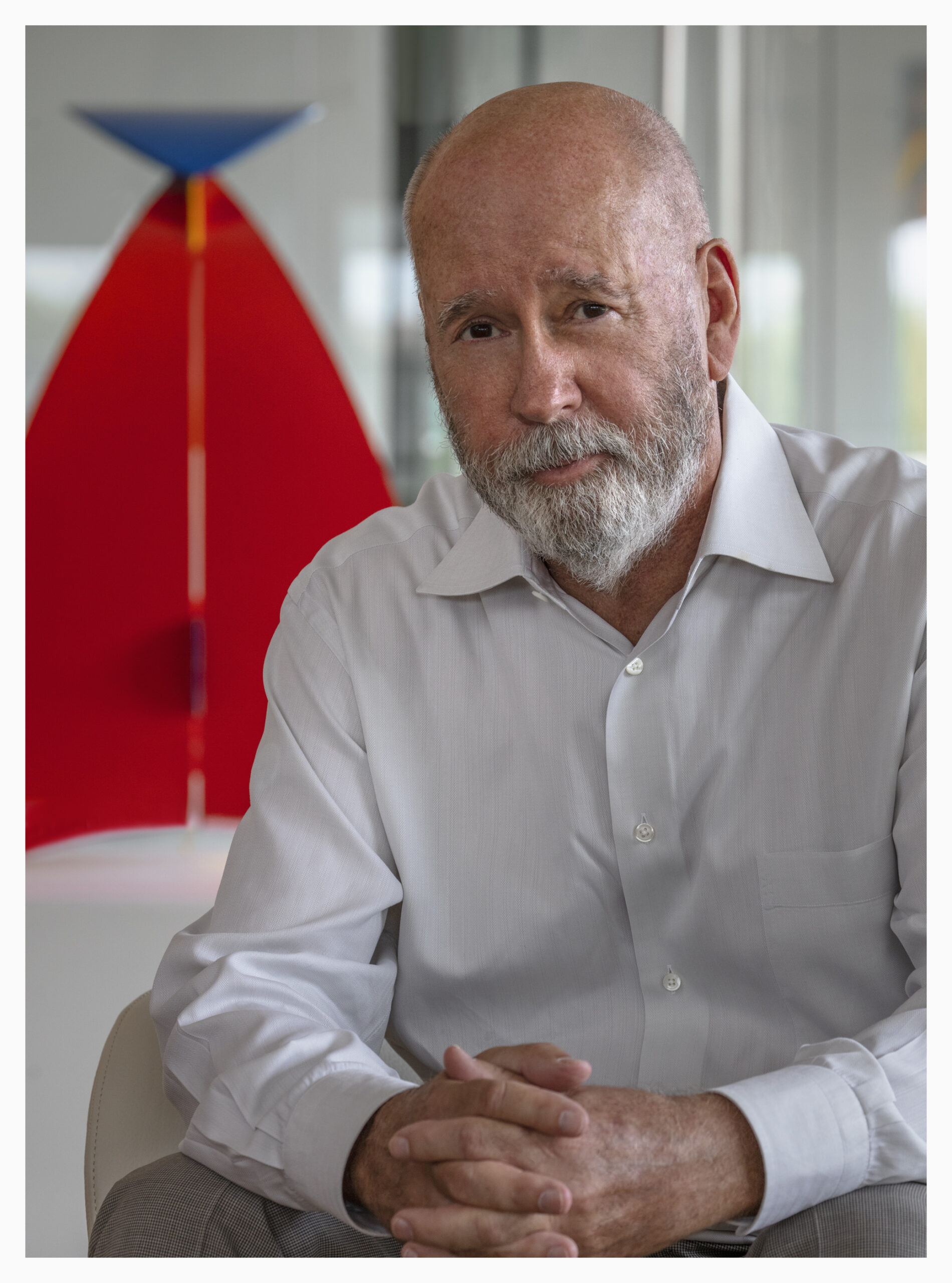
As we continue to explore the new David Hovey Sr., FAIA catalogue raisonné, it’s a pleasure to linger over the expansive, thoughtful essay penned by distinguished architecture writer and long-time associate, Cheryl Kent. This examination of Hovey’s career entitled, “The Achievement,” provides new perspectives on his career that give us greater appreciation for what he has cared deeply about, and the impact he has made.

In speaking about Hovey’s core beliefs, Kent explains:

“David Sr. continues as CEO and a principal architect. Now in his mid-seventies, he is beginning to pull back and leave more responsibility to his heirs. Still, he continues to work every day, ‘helping’ as he says ‘wherever I’m needed.’ In 2004, Optima opened an Arizona office but it has been building in the Phoenix-Scottsdale area since 2000. Today, Optima projects routinely gross over one million square feet and sometimes more than two. Over the course of the company’s existence, it has built nearly six thousand residential units with another 950 now in the works. And the pace has picked up. In its early years, the firm did approximately one project a year; now it is likely to have projects in construction in both markets at the same time, and sometimes more than one in each.

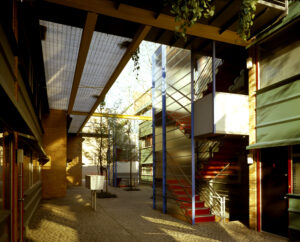
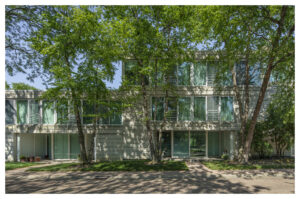
840 Michigan was a 24-unit complex in suburban Evanston built in 1985.

“It is significant that Hovey accomplished this over decades when his design philosophy, modernism — and he does embrace it as a philosophy — was out of step with the architectural mainstream. When many architects had embraced postmodernism beginning in the 1970s arguing for conventional historical references non-cognoscenti could understand and still other architects turned to deconstructivism that no one could understand, Hovey was steadfast in his belief in the tenets of modernism, in the future, in technology, in material honesty, in structural expression, and in architecture’s ability to improve life for people. Architecture, Hovey insists, must be expressive of its time and employ the latest technology. He has made a highly successful career of well-designed housing in a modernist idiom.”

When Hovey tackled North Pointe on the site of an old warehouse in Evanston in 1990, he used a dynamic plan to include 118 townhouses with penthouses and two mid-rise condominiums.

The projects in the early years of Hovey’s career allowed him to hone his practice by continuing to take on greater challenges in location, scope, size and materials — all the while staying true to his core beliefs and principles.

New Book Release: Reflections on the Career of David Hovey Sr., FAIA

Hot off the press is the spectacular retrospective of the 40+ year career of David Hovey Sr., FAIA, Optima’s CEO and Founder. David Hovey Sr., released by Images Publishing, is a collector’s item that arrived on bookshelves in January 2022. The monograph opens with a beautiful introductory essay by the late luminary architect Helmut Jahn, who wrote about their decades-long friendship and Hovey’s “staggering” influence on architecture. Entitled “Living Beautifully,” Jahn explains:

“The best thing that can be said about the work of David Hovey Sr. in his chosen field of multi-family and single-family housing is that he builds unique and inventive dwellings for people to live beautifully. That he chooses to play not just the role of the architect but also that of developer, contractor, construction manager, sales and leasing agent, and building operator makes the achievement even more remarkable. As his own client and CEO of his company, Optima, Hovey demonstrates that it’s possible to successfully execute the very different skills of an architect and a developer by applying tremendous knowledge and tenacity and assuming great responsibility. Many who have tried to work as an architect-developer have failed because they did not find the right balance. David Hovey expanded the role of the architect to the level of a master building and in this, he is without equal in his generation.”

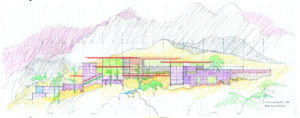
A sketch of Optima’s Sterling Ridge

In the words of friend and chronicler, Jahn talks about the arc of Hovey’s career:

“Hovey’s built work is a testament to constant refinement and improvement, each project a step along a path to take on new and bigger challenges, never being afraid of making a mistake by doing something new. The achievements of an architect become more evident with the passing of time. The good buildings become more important, the others will be forgotten.”

In Jahn’s reflections on Hovey’s deep understand of the complex issue of climate change, he shares his thoughts this way:

“David Hovey’s work should be recognized for more than its architectural design. This is particularly evident in his desert buildings where he addresses the important issue of climate change that challenges architecture today. Authorities measure energy consumption as the primary factor in building construction. Looking at energy efficiency alone is the wrong measure. We don’t have an energy problem, we have an emissions problem. Carbon dioxide is the principal culprit in climate change and the building industry contributes a considerable amount of it to the atmosphere.

Optima’s Biltmore Towers

“In Hovey’s buildings, there are strategies that address climate issues. This is demonstrated in the use of many prefabricated lightweight materials for load-bearing or non-load-bearing, enclosing parts. This extends to the use of recycled steel. Hovey regularly employs effective sun-shading devices. His strategies include LED lighting as well as energy-saving heating, air conditioning, and ventilation systems. Sustainability is assured by design and not through additional equipment or devices, which don’t pay off over time. Here, the mind of the architect and developer in one person can best design and build buildings where nothing can be taken away to come closer to perfection. Only through knowledge, determination, and a deep sense of responsibility can these energy goals be achieved, as the buildings show.”

Stay tuned for other inspiring excerpts from David Hovey Sr., along with stunning images of completed structures and his extraordinary sketches. For those who wish to purchase the book, it is available through a number of booksellers online.

Modernist Treasures: A Visit to Columbus, Indiana

When you’re feeling a bit of wanderlust and looking for beauty in unexpected places, hit the road and make a beeline to Columbus, Indiana. Just 3-½ hours by car from Chicago and 50 miles south of Indianapolis, Columbus is a small city by American standards — and yet finds itself ranked 6th in the nation for architectural innovation and design by the American Institute of Architects.

As the website for Columbus explains, “Columbus is an improbable town. Every year thousands of visitors arrive to explore its streets and study its buildings, for it is one of the rare places on earth where the idea that architecture can improve the human condition has been put to the test. It’s a small, southern Indiana community with no apparent call to destiny that remarkably became an architectural ‘mecca.’”

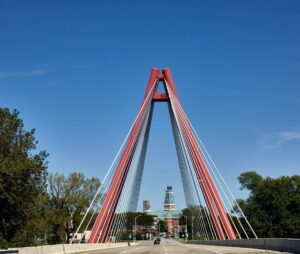
The Robert N. Stewart Bridge, 1999

The evolution of Columbus into an extraordinary experiment in modernist architecture began in the early 1940s when the industrialist J. Irwin Miller began commissioning world renowned architects to come to the city and undertake the design of commercial and municipal buildings. 

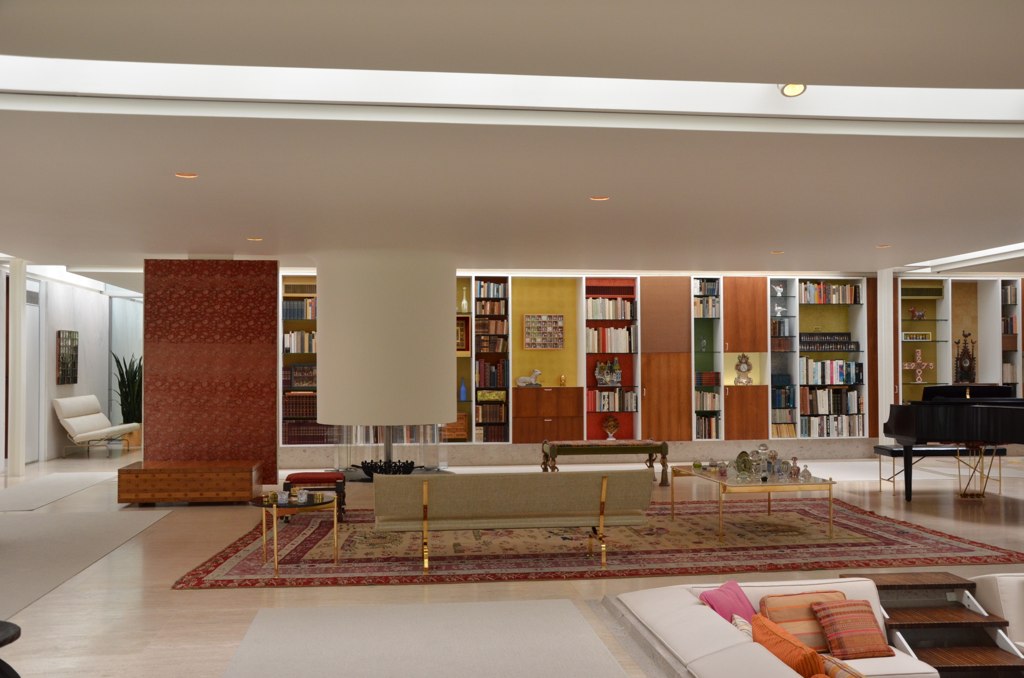
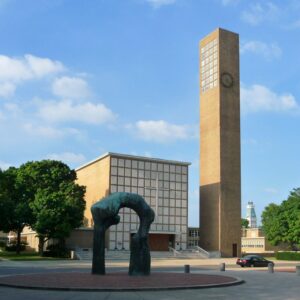
A tour through the city will take you to a host of treasures including  First Christian Church by Eliel Saarinen, the Irwin Union Bank, Miller House, and North Christian Church by Eliel’s son Eero Saarinen, and the Cleo Rogers Memorial Library by IM Pei. These commercial buildings and houses of worship expressed the deep beliefs held by J. Irwin Miller about the power of great architecture to shape the civic experience. 

Besides being meticulously preserved, the buildings are situated in proximity to impressive public art installations that include works by Henry Moore, Dale Chihuly, Jean Tinguely, and Robert Indiana.

First Christian Church, Eliel Saarinen, 1942

Adding to the caché and allure of Columbus is a feature film that has drawn even greater attention to this unique metropolis. Columbus is a 2017 American drama written, directed, and edited by Kogonada was shot on location in 2016 over a period of 18 days. The film follows the son of an esteemed architecture scholar who gets stranded in Columbus and strikes up a friendship with a young architecture enthusiast who works at the local library. The film premiered at the 2017 Sundance Film Festival and was released in the United States by the Sundance Institute, receiving broad acclaim from critics. 

When planning a visit to Columbus, visit the city’s comprehensive website for a guide to the city’s architecture or to schedule a tour. And if you want to get inspired in advance, you can stream the film Columbus on Amazon Prime.

Curated Furniture at Optima Lakeview: the Bertoia Side Chair

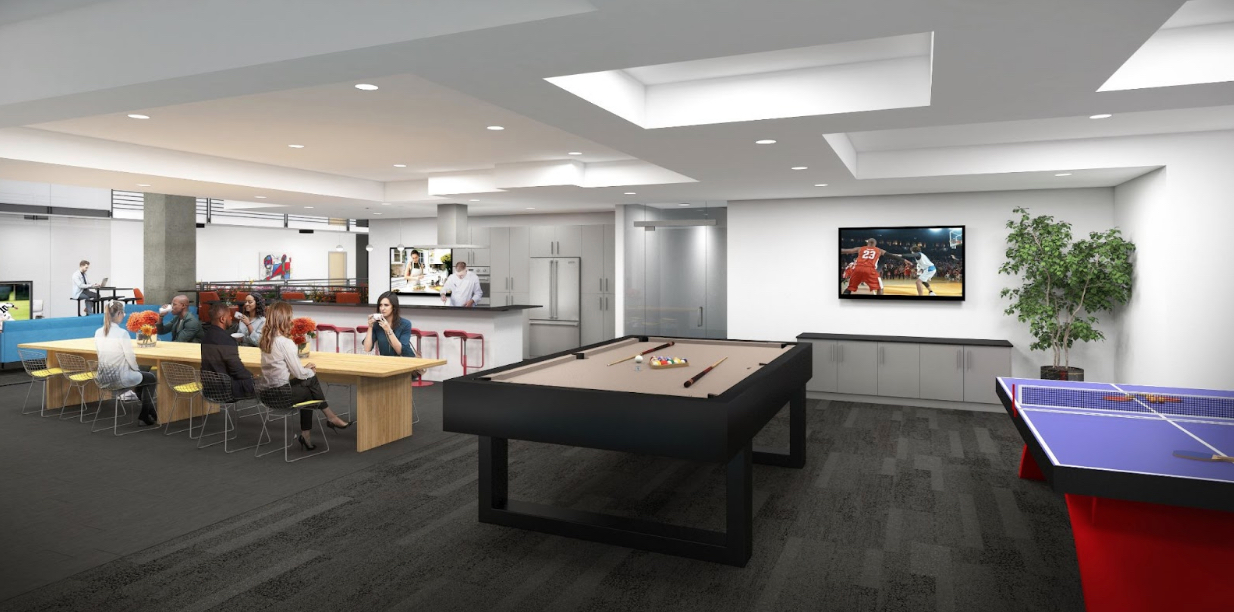
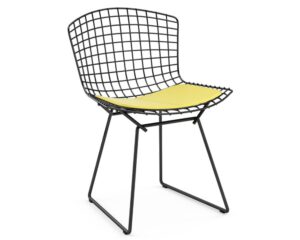
Our love of mid-century classic furniture can be found throughout all of the Optima communities. And with our soft spot for iconic seating, it’s no surprise that the famed Bertoia Side Chair is a staple in many of our amenity spaces. Let’s take a closer look.

About Harry Bertoia
Born in San Lorenzo, Italy in 1915, Bertoia built an international reputation as an artist, sound art sculptor and modern furniture designer. After leaving his home at the age of 15 to join his older brother Oreste in Detroit, Harry embarked on a career that centered on the exploration of modernist ideas and ideals, often in collaboration with some of the greatest thinkers and visionaries of that era.

In 1936, a one-year scholarship to the School of the Detroit Society of Arts and Crafts allowed Harry to study painting and drawing. He entered and placed in many local art competitions, said to be the most awarded student up until that time. The following year, another scholarship took him to the Cranbrook Academy of Art in Bloomfield Hills, Michigan. Working among some of the most famous artists and designers of the modernist age, including Eero and Eliel Saarinen, Charles and Roy Eames and Florence Knoll, Bertoia’s creativity and mastery of materials flourished.

Bertoia as Furniture Designer
Bertoia was first exposed to furniture design at Cranbrook when Eero Saarinen and Charles Eames entered and won the Organic Furniture Design Competition sponsored by the Museum of Modern Art. In fact, Bertoia developed his initial chair design ideas while working with Charles Eames and others in California in the late 1940s, which he later incorporated into his work.

Bertoia eventually left Eames to join the Point Loma Naval Electronics Laboratory. While there, he learned how to study the human body to design control panels and knobs that focused on comfort for reach and grip. This sensitivity to ergonomics contributed significantly to Bertoia’s fascination with designing well-fitting practical chairs.

In 1950, at the invitation of former classmate Florence Knoll and her husband Hans, Harry moved to eastern Pennsylvania to work at their emergent furniture company Knoll, Inc. Florence had seen Harry’s work at Cranbrook, heard he had left Eames, and knew that he had enormous promise as a furniture designer. The Knolls offered him the opportunity to design what he wished with full credit and complete recognition of his work, which was their policy with all designers.

About the Bertoia Side Chair
Once on staff at Knoll, Bertoia was asked to develop hospital furniture, but he preferred to work with healthy bodies. He gravitated towards metal as his material of choice, and he continued to experiment with it until he landed on the concept of the wire grid, which could be shaped at will. with it until arising at the wire grid concept that could be shaped at will to conform to the human body. This was a radical departure from the use of rigid wood, which was characteristic of the late 1940s and early 1950s furniture. He not only created the airy welded metal design of the chairs, but also devised the production molds used for mass manufacture. 

Knoll produced the first Bertoia chairs in 1952 — an amazing collection of furniture that reflects a profoundly beautiful study in space, form and function. As with other designers of his time, including Mies van der Rohe, Bertoia found infinite elegance in an industrial material, elevating it beyond its utility into a work of art. 

Today, the Bertoia collection remains one of the great achievements of mid-century modern furniture design by one of the master sculptors of the last century and a proud part of the Knoll heritage.

Remembering the 1922 Art Week in São Paulo

With Optima’s love for all things modern, we take great pleasure in diving into the history of modernism around the globe, including how the principles of modernism took hold in Brazil. And as luck would have it, the country is celebrating a huge milestone in February 2022 — the 100th anniversary of the Semana de Arte Moderna that runs from February 10 through 17 — so we are taking a closer look at this pivotal moment in time.

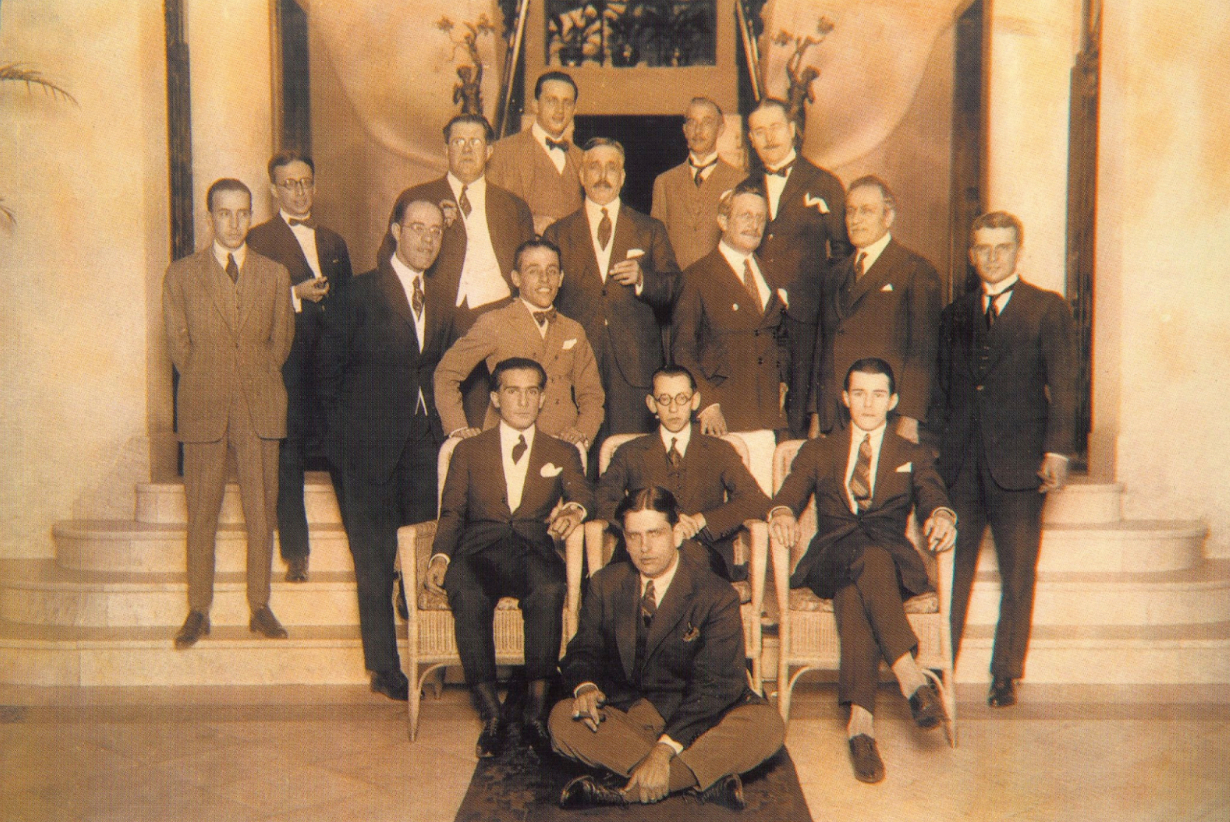
For the people of Brazil, 1922 was a landmark year. It marked a full century of independence from Portugal – and it was also the year that put Brazilian art on the international map, beginning with an idea emerged from a group of artists to host a week-long art celebration around modernism. Dubbed the Semana de Arte Moderna — this game-changing event took the form of exhibitions, lectures, poetry readings and musical performances that brought avant-garde works and ideas to the entire country.

Today, 100 years later, we look back at the Semana de Arte Moderna of 1922 and recognize it as a major turning point in the development of modern art. At the time, however, it was greeted with mockery, anger and fear. There were stories of horrified audiences throwing objects at performers on stage, and critics fuming with negative reviews of art, music and theater they didn’t understand.

Original poster for 1922 Semana de Arte Moderna, Wikipedia

Central to the works presented during the Semana de Arte Moderna was the theme of creating work that drew upon European influences but was uniquely Brazilian. This was a radical approach in 1922, since the European centers of art and culture had a tight grasp on what was considered “art,” and the idea that Brazilian artists had voices of their own was considered shocking. 

Following the Semana de Arte Moderna, the Brazilian Modernism movement blossomed. Throughout the 1930s and ’40s, while much of the world was still in a state of flux about what exactly constituted ‘modern’ art, the country was leading the way into new styles of artistic expressions that were quickly embraced by Brazilians as a unique cultural identity. And with this new-found inspiration and energy, the modernist architecture movement took hold.

The painting A Negra by Tarsila do Amaral was part of an exhibition of her work at Semana de Arte Moderna. From Caixa Modernista, Edusp / Editoria UFMG / Imprensa Oficial, São Paulo, 2003.

In the 1950s Brazil decided to found Brasilia, a new capital city heralded as a great experiment in modernist architecture, to help develop Brazil’s interior. Led by the vision of Brazil’s most famous architect and designer,  Oscar Niemeyer, the country began to define itself by its modernist aesthetic, with buildings characterized by their use of concrete and free-flowing curves.

As we reconsider the impact the 1922 Semana de Arte Moderna had on the rise of modernist architecture around the globe, we can’t help but recognize how the forever modern principles we practice at Optima fit into a larger context. It is Optima’s pleasure and privilege to be such an esteemed and vital company.

The Intersection of Fashion and Architecture

Coco Chanel famously stated, “fashion is architecture, it’s a question of proportions.” While architecture can span hundreds of meters, fashion is typically crafted on a much smaller scale. Without question, however, both artful expressions involve a balance of creativity, functionality and innovation that often evolves with time. With our passion for architecture here at Optima, we’re exploring the inherent intersections between fashion and architecture, along with some talented creators who have discovered how to successfully cross the boundary that can separate the two.

An Affinity For Craftsmanship

The fields of architecture and fashion have been influenced by the same movements over time, including art, culture, economics, science and technology. And as various modernizations affecting form, materials, lighting and techniques for fabrication have changed our world, designers continue to adapt and innovate.

To be sure, designers and architects treat their creations as works of art, translating their emotions and visions through various acts of color, line, shape and form. Taking advantage of technological innovation, visionaries in both fields continue to share extraordinary new creations with the world through their exploration of glossiness, transparency, texture, color and structure. And in the process, they reinforce the intrinsic linkages between fashion and architecture that delight, surprise and inspire. 

Various selections from Virgil Abloh’s first Off-White collection, 2014

Individuals Who Have Found Success Crossing Fields

Countless individuals have elegantly walked the line between fashion and architecture. Some creatives first find themselves constructing shelters made of steel and wood but eventually shift to materials like cotton and silk for contrasting yet similar purposes. 

Virgil Abloh, the late Director of Louis Vuitton and Founder and CEO of Off-White, didn’t always work from a sewing machine. Abloh, who studied civil engineering and later received a master’s degree in architecture from the Illinois Institute of Technology, often took inspiration from his past experiences in architecture to propel his career in the fashion industry, using materials and structures uncommon to traditional fashion design. In fact, Abloh credited the inspiration for his acclaimed debut Off-White collection to Mies van der Rohe’s Farnsworth House and exhibited it with references to both Baroque and Bauhaus art. 

Louis Vuitton Icone Bag x Zaha Hadid, 2006

Zaha Hadid, one of the most influential and iconic architects in modern history, also successfully explored the dynamic relationship between architecture and fashion throughout her career. Known for her extensive use of curvature and emphasis on linework in architecture, Hadid brought her inspirations to the fashion world to design products that had not been explored before. Partnering with various luxurious fashion brands, including Louis Vuitton, Fendi and Lacoste, Hadid created ultra-modern bags, shoes and jewelry that fused signature elements of architecture and fashion. 

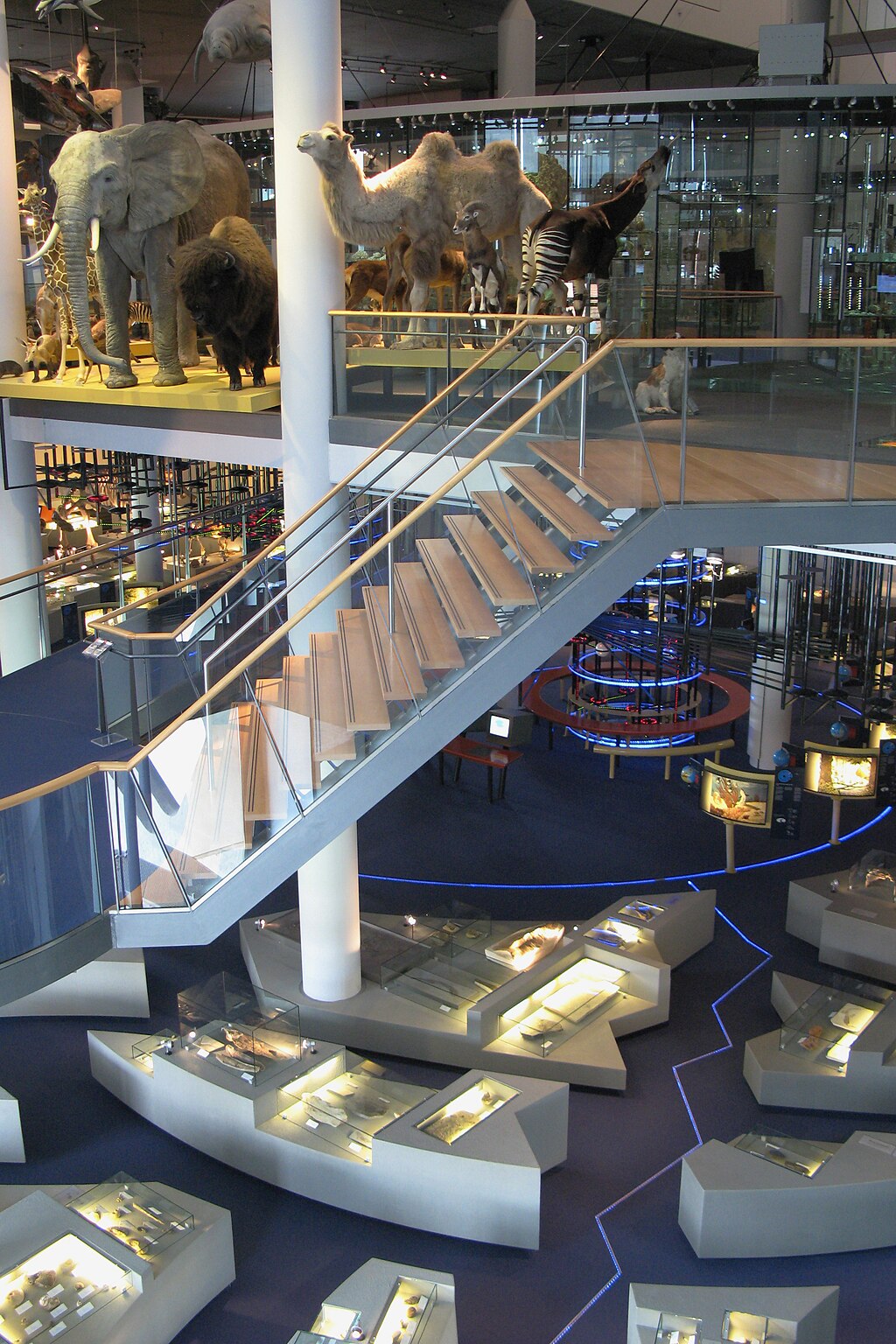
Today, countless fashion designers and architects continue to dismantle the boundaries between these disciplines with innovative constructions. Renowned fashion designer Iris van Herpen recently collaborated with Netherlands-based architecture firm Neutelings Riedijk Architects to transform the national research institute for biodiversity, Naturalis. Van Herpen was inspired by the museum’s collections, to replicate erosion patterns from the volcanic island of Lanzarote.

For decades, fashion designers and architects have crossed paths and shared similar inspirations within their designs – whether they know it or not. And for decades to come, these collaborations will continue to happen, expanding and advancing the fashion and architectural world.

Women in Architecture: Charlotte Perriand

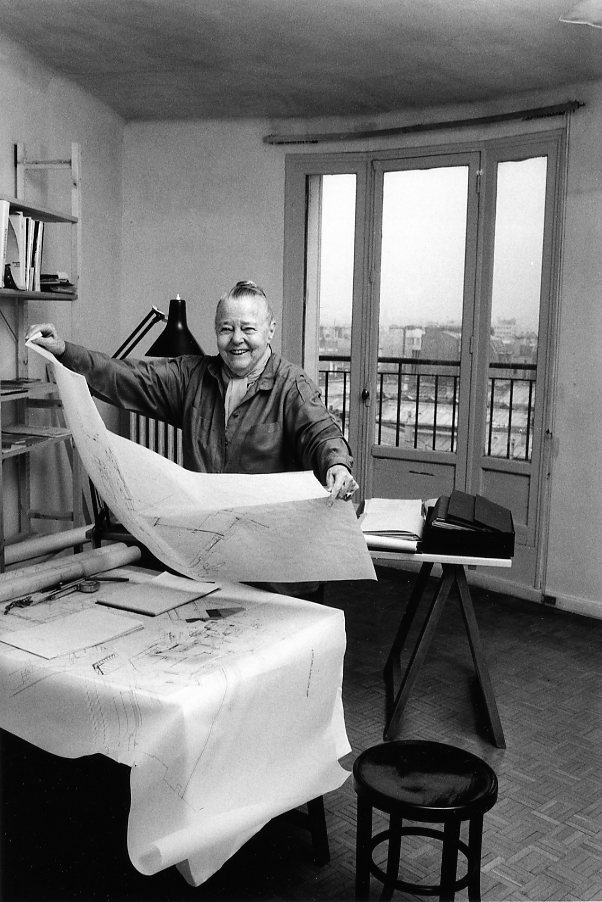
A trailblazer for women designers, Charlotte Perriand always found a way to reinvent her work with the ever-changing aesthetics of interior design and architecture in the 20th century. She forged herself as a leader of the avant-garde cultural movement, which influenced new perspectives and values in the design world. Today, as part of our ongoing “Women in Architecture” series, we’re exploring the life of this exceptional designer and some of her most celebrated creations. 

The Life of Charlotte Perriand
Perriand was born in Paris, France in 1903. She lived with her mother, who was a talented seamstress, and her father, who worked as a tailor in the city. Because of the lively energy of her surroundings, Perriand found a deep appreciation for city life but also relished her frequent visits to her grandparents’ home in the French Alps, where the natural environment was peaceful and calm. 

At a young age, Perriand discovered a passion for the arts. As her talents continued to flourish, Parriand’s mother encouraged her to push herself by attending École de l’Union Centrale des Arts Décoratifs in Paris. From 1920-1925 she studied under the renowned artist and decorator Henri Rapin, who helped bring her unique ideas to life. 

During her time at École de l’Union Centrale des Arts Décoratifs, Perriand learned to incorporate popular aesthetics such as ornate patterns, warm materials like wood and soft textiles like cotton. Dissatisfied by the status quo, Perriand pushed her interests and fed her curiosity by enrolling in classes made available through large department stores that housed their own design workshops. Encouraged by the reactions to her creations that incorporated glistening surfaces, reflective metals and blunt geometric forms, she began to submit her work to expositions throughout Paris. Perriand’s most notable entry at the time was Le Bar sous le toit, or Bar in the Attic, at the prestigious Salone d’Automne, in1927. This installation of furniture, finishes and a built-in bar reflected the current machine-age landscape and displayed a bold design featuring nickel and other metals. Emboldened by the reactions of her peers, Perriand quickly began embracing these taboo materials in her work, conveying exciting new interpretations of modern design. 

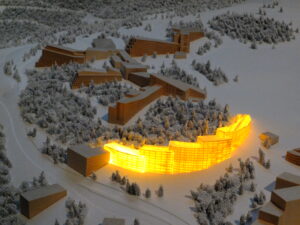
Maquette of Les Arcs ski resort, French Alps. Credit: B on Flickr Creative Commons. Licensed under CC BY-NC-SA 2.0.

Career and Achievements
After the success from Bar in the Attic, Perriand had a difficult time discovering what her next move should be in the art world. She took advice from a friend, jewelry designer Jean Fouquet, and immersed herself in the intensive literature of Le Corbusier. Dazzled by his work, Perriand reached out with her portfolio for a position at his atelier. After a hasty dismissal, she showed Le Corbusier her acclaimed Bar in the Attic project, which caused him to reverse his decision and hire her on the spot. 

While working for Le Corbusier and his cousin, Pierre Jeanneret, Perriand contributed to the design of some of their most celebrated furniture pieces: the basculant sling chair (known as LC1), the Grand Confort (LC2 and LC3) and the chaise lounge chair (LC4). However, her impact reached far beyond furniture; Perriand brought to life the trio’s vision of modern luxury as Equipment for the Home for the 1929 Salon d’Automne, which included an entire apartment set with a bold kitchen and bathroom. 

Perriand left Le Corbusier’s atelier in 1937 after ten years of extraordinary growth and accomplishment. Her expertise led her across the world, but she eventually traveled back to the French Alps, where her roots enticed her to work on her largest – and final – project, Les Arcs. Composed of three different structures and built over a nearly-20 year period, Les Arcs brought to life a new style of living with an open-plan interior and an exterior integrated into the surrounding natural environment. 

The bedrooms of the famous ski resort were built with minimal design elements. Thoughtful design was instead prioritized in communal spaces, like the great rooms, where windows opened to vibrant sunlight and views of the pristine natural surroundings. 

Throughout her illustrious career, Perriand preferred to look to the future instead of reflecting on her previous work. And on this life journey,Perriand established herself as a fearless forward-facing designer who was eager to reinvent her design philosophy over and over.  

Optima Communities: Exploring Wilmette’s Rich History

With groundbreaking underway for Optima Verdana in Wilmette, IL, we’re discovering this vibrant community and all it has to offer — including its rich history.

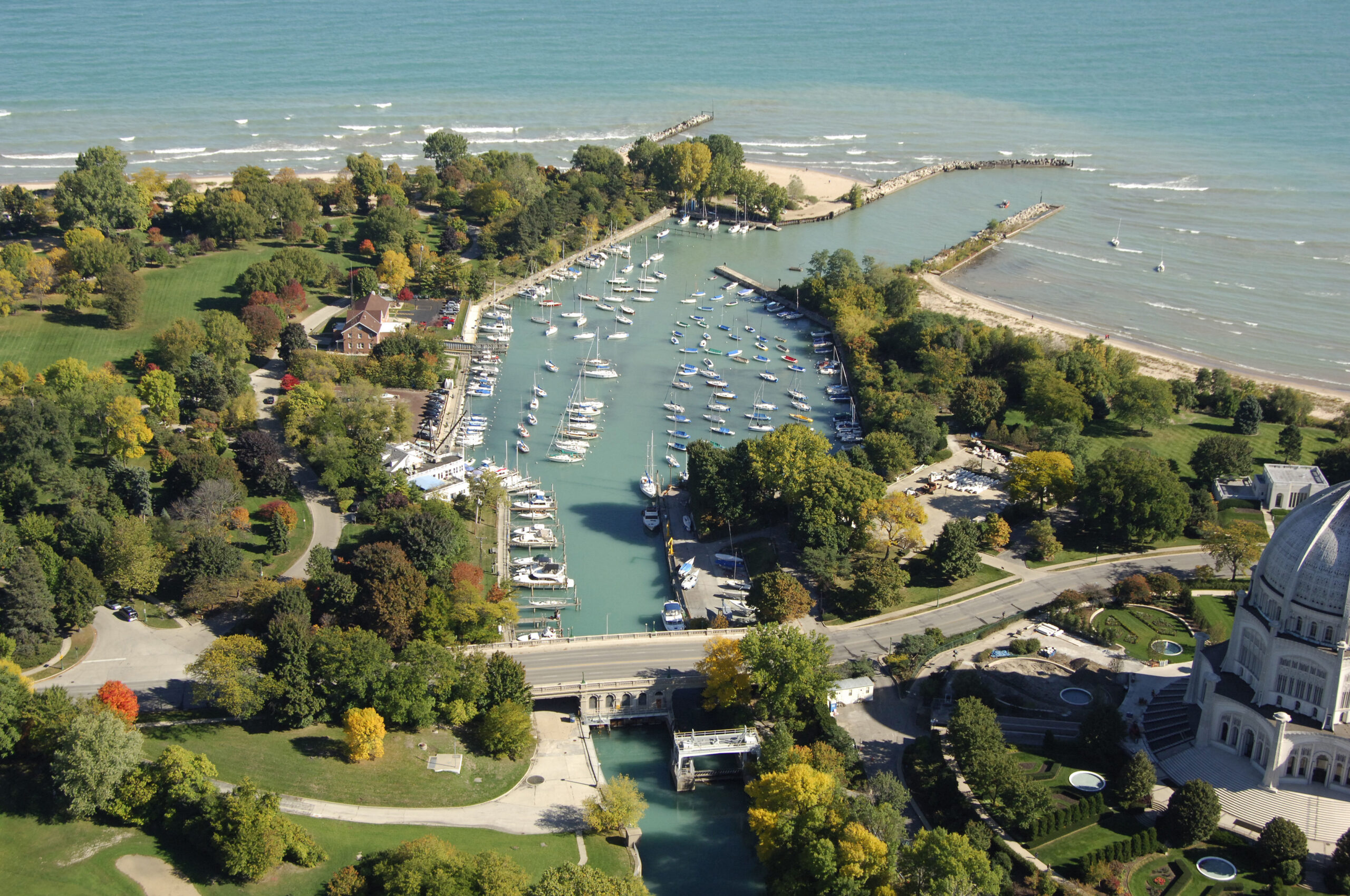
Bordering Lake Michigan and located 14 miles north of the Chicago Loop, Wilmette is recognized as one of the most prestigious communities in the nation. It started as a small settlement on Chicago’s North Side in 1872 and by the mid-twentieth century, it emerged as a distinctive, desirable suburb with unique vitality, extraordinary walkability along tree-lined, brick streets and a character all its own. 

Fast forward to today, when Wilmette, with a population of nearly 30,000, has fully matured into a vibrant community. Small businesses and lively restaurants flourish, each bringing a refreshing offering to this thriving, 21st century livable village. The lakefront, parks and gardens are all within easy reach. Culture abounds with music, theater, art and cinema. And the Wilmette schools are considered among the best in the country.  

As luck would have it, 2022 marks the 150th anniversary of Wilmette. As celebrations for this important milestone continue throughout the year, Wilmette is proud to showcase its reputation as future-facing while showing a deep appreciation for the past, including a host of events that shine a light on its delightfully eclectic history.

Bahá'í House of Worship
Bahá’í House of Worship

Mark your calendars…

To start the sesquicentennial year, all are welcome to the Wilmette Historical Museum’s  annual meeting and lecture via Zoom. John Jacoby, former Village President and Wilmette Beacon columnist, will discuss his recent book Wilmette at 150, a collection of essays on Wilmette. Mr. Jacoby’s talk will explore the lost landmarks of Wilmette. Learn about the stories of the significant buildings and other structures that are no longer in existence, including some of the oldest in Wilmette, such as the Big Tree and the Unity Church. Hear fascinating tales of Dr. Martin Luther King’s visit to the North Shore, the German POW camp in Harms Woods, the colorful history of No Man’s Land, the perseverance of world pushup champion Chick Lister and Public Enemy Number One Baby Face Nelson’s demise on Walnut Avenue.

You can stay connected to all the sesquicentennial happenings on the Wilmette at 150 website. And to attend the meeting and lecture, which will take place Sunday, January 30, 2022, from 2:00pm – 3:30pm,

Register HERE.

A Guide to Frank Lloyd Wright’s Studios Part 2: Taliesin West

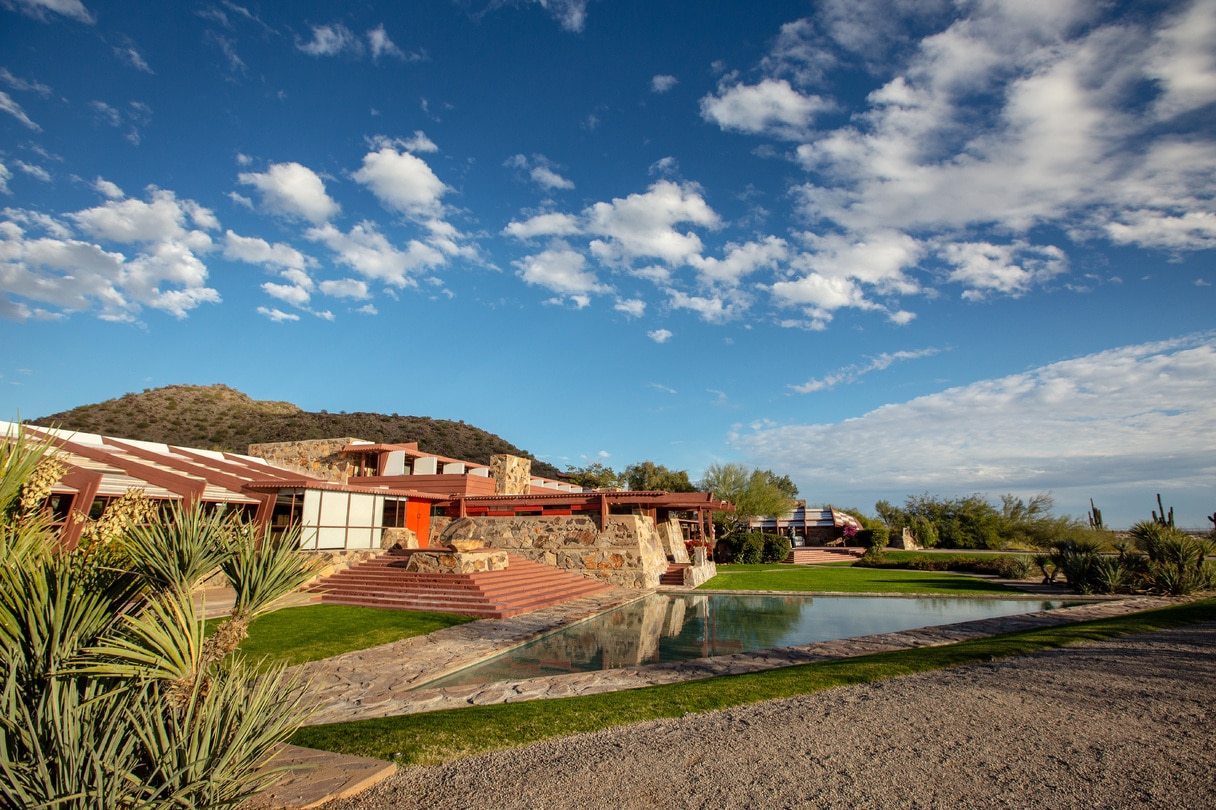
While Frank Lloyd Wright’s Taliesin was the first of his residences and studios, Taliesin West, a monumental exploration of Wright’s unique approach to organic architecture, is arguably Wright’s most intimate creation. 

Following the completion of Taliesin, where Wright lived and worked for nearly 30 years, the famed architect became interested in relocating to a warmer climate. In 1935, he purchased 495 acres of stunning Sonoran Desert below McDowell Mountain just outside of Scottsdale. Taliesin West brought extraordinary life to Arizona’s then-desolate desert, and, after nearly nine decades, the complex continues to advance Wright’s legacy and his iconic designs. 

Similar to Taliesin, Taliesin West drew great inspiration from its brilliant surroundings. While working with a group of apprentices throughout the construction process, Wright took advantage of the unique materials found in the surrounding landscapes. Using a mixture of local rocks, cement and desert sand, Wright and his team created, often by hand, what many describe as “desert masonry” to help structure the campus.

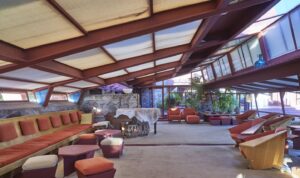
The complex is situated with various unique architectural elements that accentuate its deep-rooted connection to nature. Translucent canvas (now plastic) once covered the roof of many rooms within Taliesin West, creating an illusory linkage to the warm outdoors. Other features include lofty redwood beams accenting the building’s cold structure. 

Throughout Wright’s life, the campus served as both a winter home and a desert studio. While Taliesin West never experienced any misfortunes, unlike its sibling complex Taliesin, the space did experience numerous renovations throughout the period from 1937 to 1959 when Wright lived and worked there. Some of the renovations included the addition of a drafting studio, dining hall,  workshop, three theaters, Wright’s office and living quarters, and the residences for his apprentices and staff. Various decorative walkways, gardens, terraces, and pools acted as both luxuries to the property and connections to each larger structure. 

Taliesin West interior
The Garden Room found inside of Taliesin West, Courtesy of Frank Lloyd Wright Foundation

Today,Taliesin West serves as the headquarters for the Frank Lloyd Wright Foundation and, until 2020, was the winter home for The School of Architecture at Taliesin. The inspiring architecture was added to the U.S. National Register of Historic Places in 1974, was recognized as a U.S. National Historic Landmark in 1982 and was designated a UNESCO World Heritage Site in 2019.

Found just a short drive from the heart of Scottsdale, Taliesin West offers the perfect trip for anyone seeking to explore one of Arizona’s most exciting works of architecture. The complex hosts a variety of events and programs throughout the year and presents visitors with numerous tours that can be discovered on their website here.  

person name goes here

Maintenance Supervisor

Glencoe, IL


    Acceptable file types: *.pdf | *.txt | *.doc, max-size: 2Mb