2023 Design Trends: Designing The World of Tomorrow

The ways in which we live, move, and work are changing fast, and we, at Optima®, believe that up-and-coming architectural trends continue to address many of the challenges faced in modern life. Some solutions focus on more space, more storage, less clutter, and more flexibility. Others address affordable rent, resistance to climate change, and sustainability. These trends, along with a  myriad of others, inspire us and those who are at the forefront of designing the world of tomorrow. Here are some of the trends on the horizon in 2023.

Biophilic Urbanism

Biophilia, a term coined by Erich Fromm in 1964, is the human interaction and appreciation for nature. In 2023, this trend is continually on the rise as we seek to develop buildings that are ecologically friendly in their use of resources. Biophilic design can revolutionize the way we manage stress, increase productivity within offices and educational spaces, and improve mental health, through the use of nature inside and outside of buildings.

While biophilic design is very much at the forefront of architectural trends, it has been central to our work at Optima for decades. Our passionate connection between the built environment and nature continues to be as fluid as it is concrete, reflected in our signature innovation of vertical landscaping. The widespread adoption of this essential design principle, we are excited to welcome others into the process of bringing people and nature closer together.
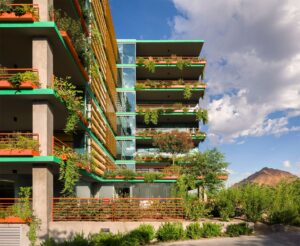
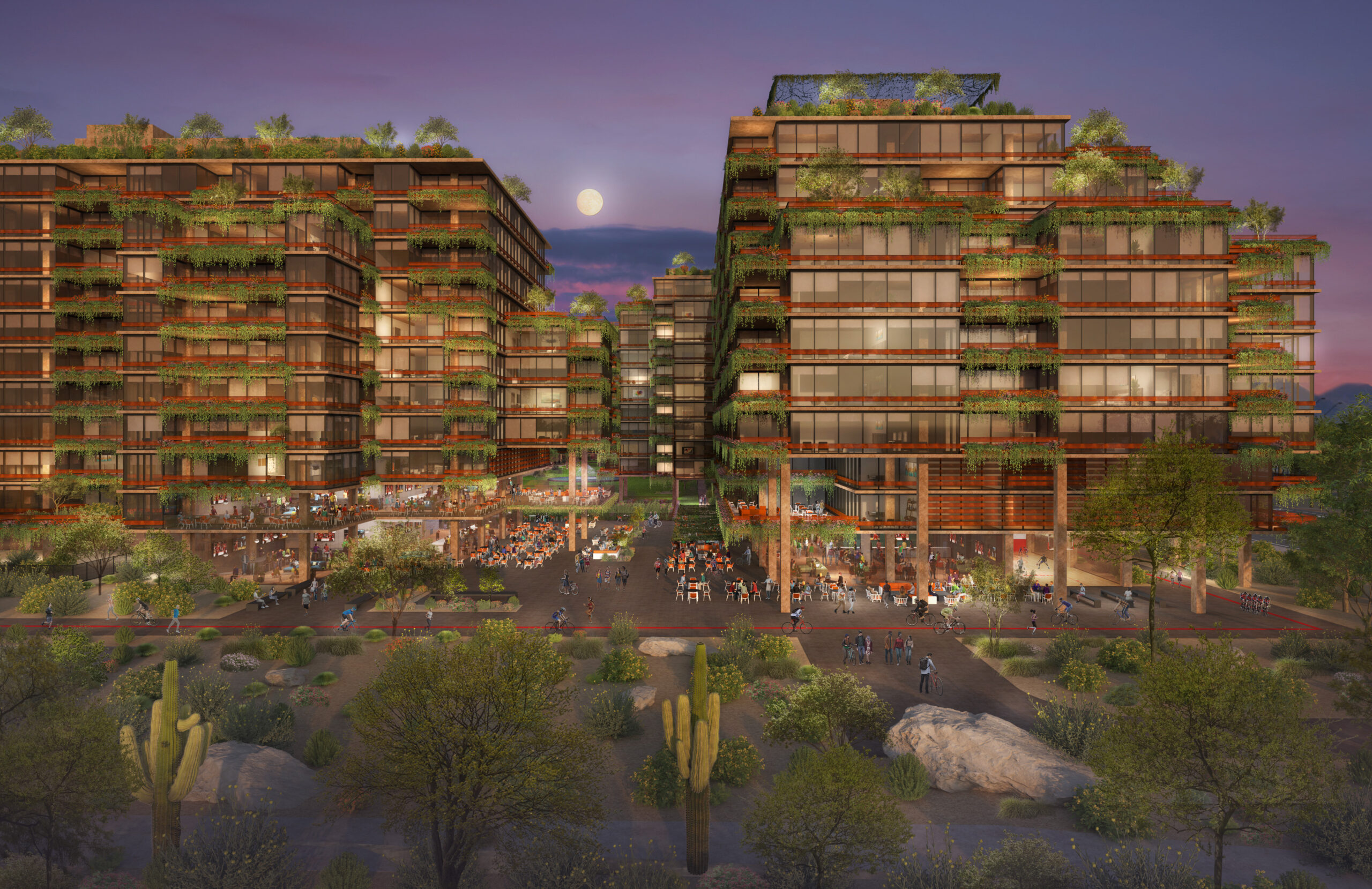
Sonoran Village®
Optima Sonoran Village®, Vertical Landscaping

Modular Construction

Modular construction has been at the forefront of Optima’s DCHGLOBAL Building System since its conception in 2009 . We began our experimentation with modular construction with Relic Rock, reflecting our commitment to building homes flexibly — in horizontal and vertical directions — sustainably and efficiently anywhere, anytime. 

As part of the broader architectural community seeking modular solutions around the globe, we’re excited by the opportunity to celebrate sustainability and versatility as core values at Optima, while ensuring enduring aesthetics and affordability.
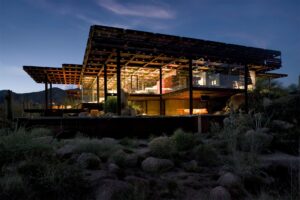
Sonoran Desert, AZ
Relic Rock, Sonoran Desert, AZ

Smart Materials

Through the integration of smart devices in our homes, cars, phones, and wrists comes Smart Materials. Recent developments provide that these materials could eventually respond to changes in pressure, temperature, moisture, and UV radiation, giving architects unfathomable flexibility. Along with an expanded toolkit for designing and building.

Our respect for materiality and space is important for the 360-degree approach to sustainability, and the inclusion of these new and unexplored materials gets us excited about their potential for the environment at large. Part of our role at Optima has been ensuring the environment remains protected with the inclusion of smart materials such as bird glass or green concrete within many of our buildings.
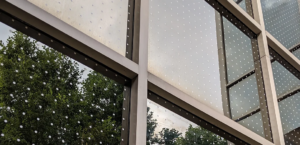
Bird glass
Bird Safe Glass

Community-Centered Design

It is a universal truth that the built environment functions better if those who use it are involved in the process of creation. Designing buildings with community in mind makes for rich and diverse environments where people can be themselves, while also giving them a sense of ownership in the places where they live, play, and work.  As we enter 2023, we are seeing greater collaboration between architects, developers and their communities across the globe — much the way Optima has partnered with the cities, villages and neighborhoods where we have put down roots for more than 40 years.


 

Waste Management Phoenix Open

Tee Off

Before we tee off, it’s important to know that the annual Waste Management Phoenix Open is known as the “Greenest Show on Grass.” Playing host to the greatest players in the game. It is the PGA’s most attended event, drawing nearly 700,000 spectators each year to TPC Scottsdale! 

WM stands for so much more than just “Managing Waste.” Not all heroes wear capes, or in this case — hard hats. Through Waste Management’s sponsorship of the Phoenix Open, the company has set out to seek better environmental solutions for everyone. Regardless of whether you’re tossing pizzas, running a construction site, or managing a household. 

In 2021, the WM Phoenix Open raised more than $3.8 million dollars for charity, and has raised more than $165M for charities in its 85-year history. At the same time, the event has an economic impact of more than $400 million. Bringing revenue to every part of the hospitality industry in the Scottsdale area.

The action isn’t just limited to the golf course. Behind the scenes, thousands work tirelessly to ensure the WM Phoenix Open generates zero waste for tomorrow and inspires spectators to reimagine what a sporting event can truly be. 

Golf
TPC Scottsdale Stadium. Credit: TBC Scottsdale

A Course Par Excellence

The City of Scottsdale underwent an extensive renovation of TPC Scottsdale’s Stadium golf course and clubhouse in 2014, led by architect Tom Weiskopf. It included the relocation of four greens, resurfacing of all greens, and reshaping and regrassing of all tee complexes. It also included the relocation and reshaping of all bunker complexes, replacement of cart paths, and re-landscaping of desert areas. The redesign added a dramatic new look to the course, in part due to planting more than 250 trees.  Today, the course is both aesthetically pleasing and more challenging. 

Behind The Phoenix Open

Water from kitchens and bars are used in portable restrooms during the Phoenix Open, millions of gallons of water are restored for Arizona Tribal Nations through Water Restoration Certificates, and water education is incorporated throughout the entire tournament to raise awareness. 

On the subject of emissions, WM Phoenix Open is the first golf organization to sign on to the UN Sports for Climate Action Initiative, aiming for a whopping 50% reduction target of emissions by 2030 and net zero operations by 2040. As if they didn’t prove themselves enough already. Did we mention that all of the electricity purchased for course operation is 100% renewable?

For the fan or golfer who desires to start the year off with a bang! The Waste Management Phoenix Open takes place in Scottsdale from February 6-12.

Purchase Tickets Here for the Greenest Show on Grass!

Scottsdale Public Art: Impulsion

As part of our ongoing public art series, we’ve been exploring exceptional creations to be found across Scottsdale such as Water to Water, Pinball Wizard and today’s breathtaking focus, Impulsion.

Project Background

The project was commissioned by Scottsdale Public Art, and installed in December, 2014. It was announced that Impulsion, a work created by Jeff Zischke, had been chosen from 200 applicants as the new sculpture for the entrance of one of the most recognized equestrian centers in the country, WestWorld. The city of Scottsdale undertook an expansion that added 40,000 square feet of space to host special events and renovated their equidome, and wanted to celebrate the newly-opened space with a public art commission.

Today, you’ll find that the equestrian experience at WestWorld is complemented by any number of non-equestrian events ranging from dog shows to auto auctions, including the Barrett-Jackson Car Show. These various events provide great financial benefits to the community while contributing to Scottsdale’s treasure trove of things to do. 

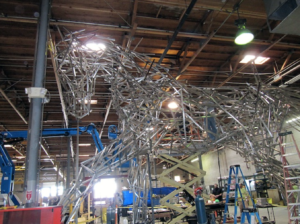
Construction of Impulsion

Power, Nobility, and Beauty

Made of stainless steel tubing, the reflective quality of Impulsion exhibits the brilliance of an equestrian structure floating in formation. The artist’s desire was to create an iconic sculpture to welcome visitors with a grand entry experience as they step inside North Hall at WestWorld. 

Construction of Impulsion

Impulsion is an amalgamation of several horse breeds, projecting the excitement of explosive movement in equine form. In a recent interview, Zischke explains, “At the fundamental level, my intention is to create a site-specific work that is unique, educational, and interactive. To create a catalyst for an experience that tells visitors that Scottsdale is a place on the move. A place containing all the power of the large, elegant horse they are gazing at.” 

Jeff Zischke is an Arizona artist who works in both the public and private art sectors, creating sculptures, mixed media and urban transformation pieces. His viewpoint on the environment he lives in is addressed through varying installations centered on organic shapes and modern technology. 

Next time you’re out and about in your hometown or visiting Scottsdale from outside the community, don’t miss an excursion to WestWorld and check out Impulsion!

Growing Your Own Herbs at Optima Verdana®

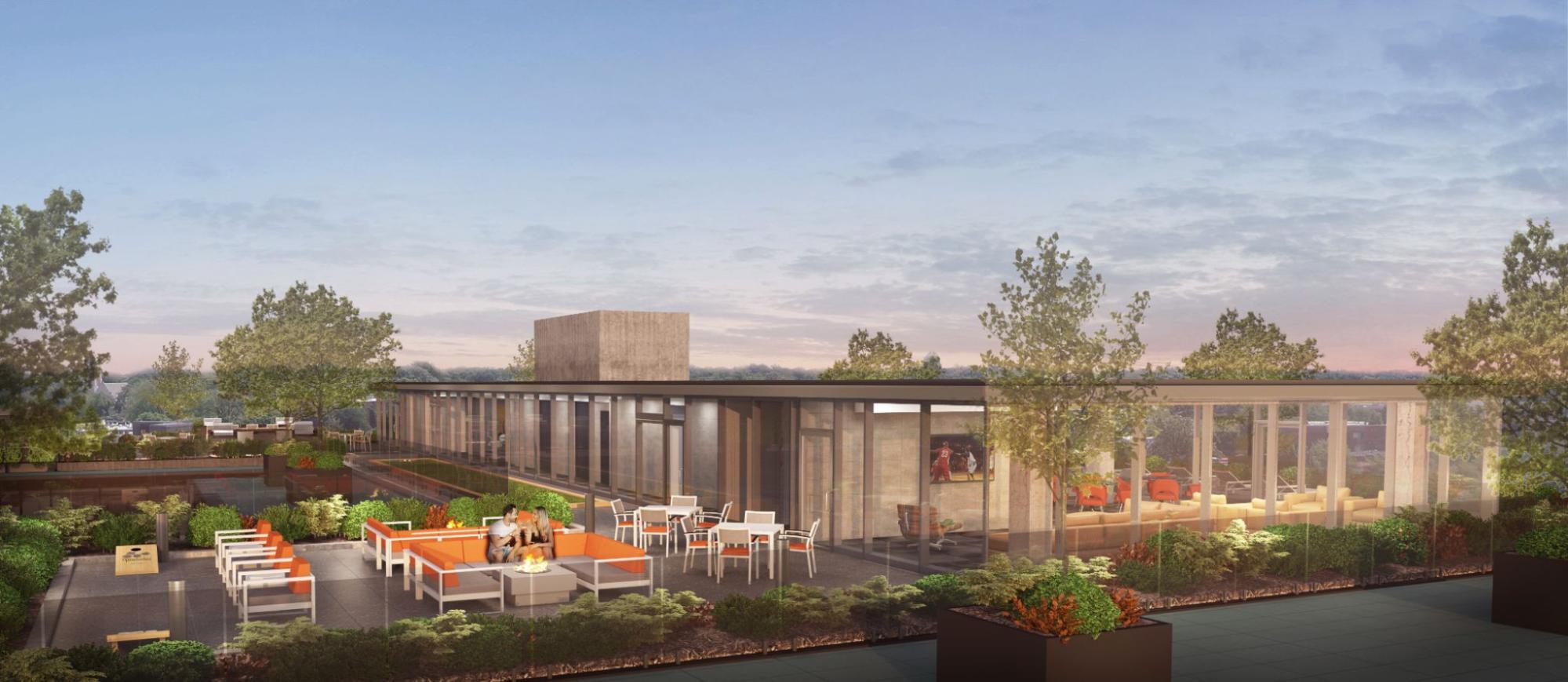
The stellar Rooftop Sky Deck and communal courtyard at Optima Verdana® abound with gorgeous greenspace and reflective hardscape surfaces to reduce heat. Our residents can delight in the outdoors year-round for both recreation and relaxation. And for those with green thumbs, dedicated planters atop the Sky Deck will be home to a seasonal herb garden.


Check your kitchen cabinets, your cupboards, your drawers! If you spend any time cooking, you probably have dried thyme, basil, and even a bit of parsley or oregano. These earthly delights known as herbs are easily accessible from most grocery stores, but imagine what it would be like if you grew them yourself?

In spite of their simplicity, herb gardens are magical places and offer many gifts — from cooking, to medicine, to unique fragrances. Growing your own herbs also serves as an exercise in gratification, and so much more:

Great for All Skill Levels

First, herb gardens are great for beginner gardeners because they require minimal effort and are easier to grow than vegetables. They don’t require large plots of land, and grow well in pots, planters and other containers. Herbs don’t need much fertilizing, which is a huge plus for beginners, and they can handle a wide range of temperatures that’s ideal for Chicago’s seasons. 

Herbs
Basil, parsely, thyme, and rosemary

Redefining the Word “Fresh”

When your recipes call for fresh herbs, what could be more delightful — and satisfying — than heading to your herb garden with a pair of kitchen shears and picking or cutting what you need? And because you can harvest your herbs while you’re cooking, they will always be fresh and fragrant.

Variety is the Spice of Life

Knowing that you have easy access to what you’re growing, you may find yourself with an appetite for expanding your repertoire with dishes that specifically call for fresh herbs. This is a real treat, since the flavors are so much more robust and the option to have full leaves, stems and flowers in your preparations is a real bonus. 

The herb garden also offers the opportunity to experiment with new flavor combinations. Take advantage of your herbs and try out a new recipe or two. Try growing herbs that are uncharted territory for you, this will likely lead to taking new risks in your cooking. Which in turn will enrich your life with new and flavorful experiences.

As you head into the fall and winter months, you can harvest your herbs and dry them indoors. This will tide you over until spring arrives and it’s time to plant again.

Creating A Healthy, Budding Community

The herb garden at Optima Verdana® is part of the powerful community experience of connecting with others around a shared purpose. All it takes is one seed to sow a relationship and build a budding new friendship with a neighbor. This convenience of access offers residents physical exercise, fresh air and the meditative qualities of connecting to the earth. 

If you’re looking for ideas for dishes that will put your fresh herbs in the spotlight at your next dinner or event, The Food Network offers quite a few!

Exploring Scottsdale: Barrett-Jackson, The World’s Greatest Collector Car Auction

If you are a car enthusiast or a lover of all things automobile, you might want to buckle up for this one! 

Throughout its rich 45-year history, the Barrett-Jackson Auction Company has become world-renowned for offering the finest, most prestigious selection of collector cars at auction, outstanding professional service, and capturing sales success second to none. Barrett-Jackson began as a modest company, started by Russ Jackson and Tom Barrett, two car aficionados in Scottsdale, AZ who met through a car advertisement in the mid-1960’s. 

Tom Barrett wanted to sell his 1933 Cadillac V16 Town Car and the most interested buyer happened to be Russ Jackson. That deal was never struck between the two but instead, a lifelong friendship and partnership was formed.

In 1967, Russ Jackson and Tom Barrett hosted their first car auction, which was called “Fiesta de los Elegantes.” Fiesta de los Elegantes was held as a fundraiser to donate to local charities, which included the community arts and the Scottsdale Public Libraries.

Mercedes 770 Phaeton

In 1971, Russ and Tom presented the company’s first car collector auction, which featured classic autos from the two men’s private collections. The star of the auction was a Mercedes 770 Phaeton that sold for $153,000 — and this grabbed the attention of auto collectors from around the world. From there, the sale of this rare vehicle set the Barrett-Jackson name into motion around the world.

Speeding towards today, Barrett-Jackson specializes in providing products and services to classic and collector car owners and automotive enthusiasts around the world. Its iconic events, branded as The World’s Greatest Collector Car Auctions, take place in Scottsdale, Palm Beach, Houston, and Las Vegas, where hundreds of the most sought-after, unique and valuable automobiles parade in front of a global audience. Take a look at a few of the most awesome cars shown and auctioned off at the 2022 Barrett-Jackson Car Auction:

1958 Chevrolet Corvette Custom Topless Roadster
1960 Chevrolet Corvette Custom Convertible

Be a part of the world’s greatest classic car auction in 2023, just a stone’s throw from Optima Kierland, Optima Sonoran Village and Optima Paradise Valley. And even if you might not be holding a paddle to bid on one of these sweet gems, take the chance to explore the city of Scottsdale, the auction venue – the Westworld of Scottsdale, and immerse yourself in car memorabilia all week long.

Tickets for Barrett-Jackson The World’s Greatest Collector Car Auction, taking place from Saturday, January 21, through Sunday, January 29, at WestWorld.

The Role of the Courtyard in Optima® Communities

In a former Forever Modern post, we shared a brief history of the courtyard. From their earliest uses around 6000 BC in the Jordan Valley, courtyards have evolved into physical settings that enable people to interact harmoniously with others — and with their natural surroundings.

Within the Optima® culture, we never grow tired of exploring relevant, resonant expressions of the courtyard within the communities we design and build. Over the past several years, we have turned our attention to the role of courtyards in our projects in Chicago — Optima Lakeview® and Optima Verdana® — as an integral element in creating an elevated sense of home.

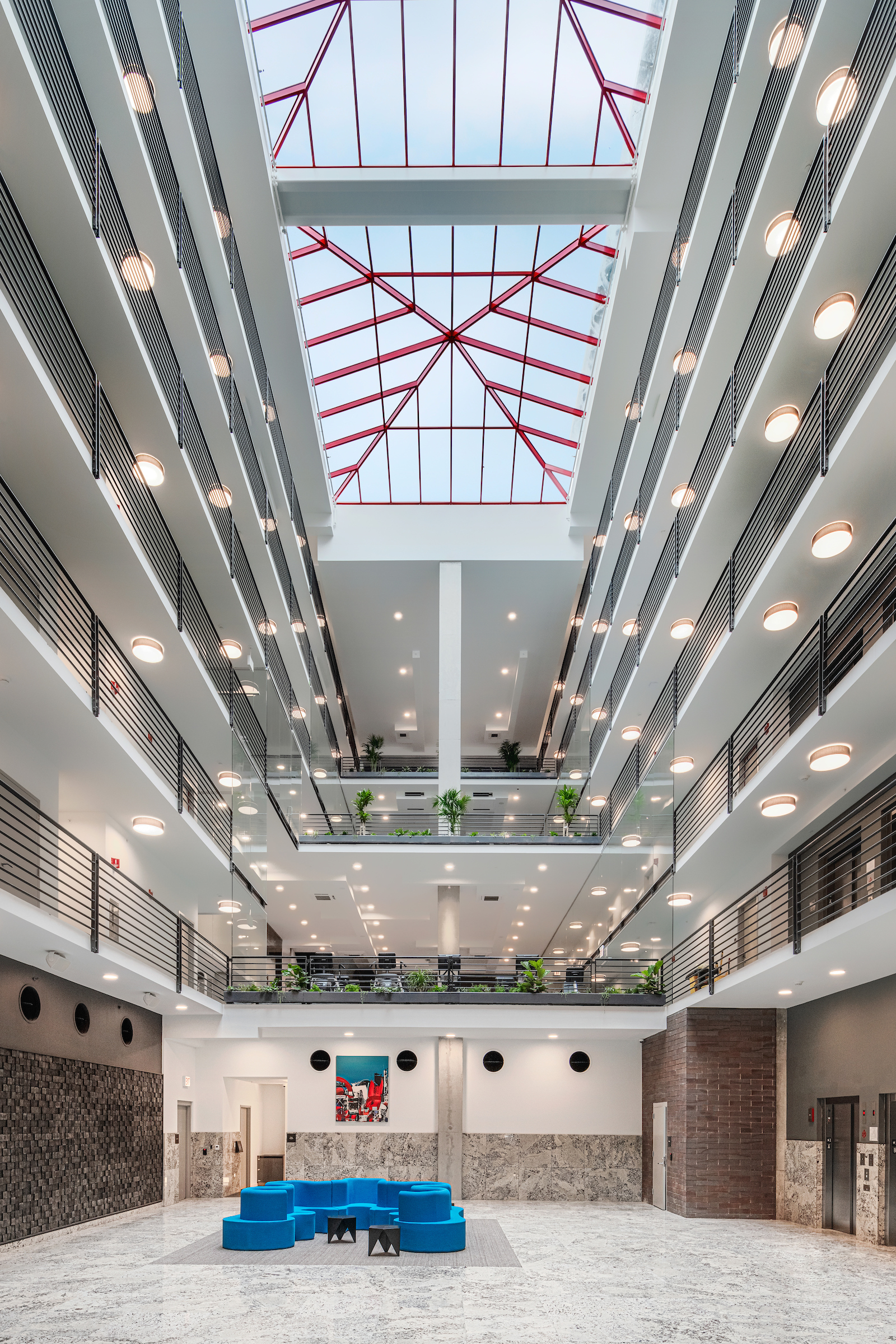
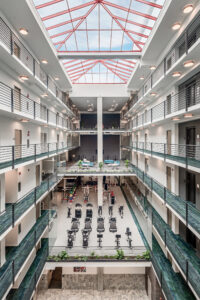
Take the atrium at Optima Lakeview®. Sharing the same properties as a courtyard, this distinctive architectural feature is a stunning landscaped interior volume that runs through the building’s 7-story core and is enclosed by a fixed in-place skylight at the roof to bring natural light into the building’s interior. The residential units and building amenities are arranged around the atrium. In its central role, the atrium serves as a public space flooded with light, filled with plants and flowers, and outfitted with comfortable seating where residents and their guests can linger and enjoy the outdoors, even with the Midwest’s seasons might not make it hospitable to be outdoors.

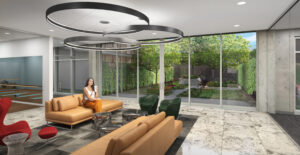
A rendering of Optima Verdana’s lounge and residential courtyard

Exemplifying our passion for opportunities to engage with nature and organic environments is a vibrantly landscaped courtyard found in the heart of Optima Verdana® in Wilmette. The open-air space serves as a lush oasis for residents and is home to 7’ high garden walls, verdant trees, restful seating and more than 1,500 light-filled square feet. Beyond the tranquility and sheer beauty of the abundant plantings in the courtyard, residents enjoy remarkable access to reoxygenating air, natural light and the absence of ambient noise. It’s no surprise that the building is a proud recipient of two Green Globes from the prestigious Green Globes® Building Certification program, acknowledging that the building’s courtyard design contributes to the larger eco-friendly environment!  

At Optima, we celebrate the power of connection — to nature and to each other — as we express it through timeless architecture complimenting the built environment.

Trending Now: Play the 5,000-Year-Old Royal Game of Ur

History 

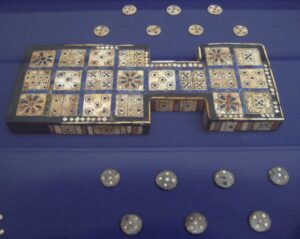
The Royal Game of Ur received its name from a British archaeologist named Sir Leonard Woolley in 1928. He was part of a team that excavated five worn boards at the Royal Cemetery of the Sumerian City of Ur. These ornate boards, made of wood, lapis lazuli, and inlaid shell are expected to have been made between 2600-2400 B.C. Making the Royal Game of Ur the oldest tabletop game.

Game of Ur
The Royal Game of Ur, made of wood, lapis lazuli, and inlaid shell, 2600-2400 B.C. Credit: Wikipedia Commons

Also known as the Game of 20 Squares, it appears to have been immensely popular with people of all classes according to archaeological evidence. With the game being so widely played, it spread across many Middle Eastern countries we know today. Iran, Syria, Egypt, and Lebanon are a few to name. Archaeologists have also discovered that when no board was available, players scratched it into clay or rock. 

Even though the Royal Game of Ur was very popular in ancient Mesopotamia for 1,000 years, its popularity and instructions waned as more games were introduced.

Consequently, figuring out the rules of the Royal Game of Ur was no easy task. It took Irving Finkel, a curator and Assyriologist at the British Museum to uncover the instructions of this ancient game. Dr. Finkel received a crumbling clay tablet from an antiquities dealer in the 1980s. It was inscribed with what appeared to be the rules of a game.

His research led him to Itti-Marduk-balatu, the author of the 177-176 B.C. tablet. Later, Finkel was able to decipher the rules by comparing them with other games.

This led to an understanding that the Royal Game of Ur is a race between two players. With the single goal of getting all 7 pieces across the board before your opponent.

So How Does One Play The Royal Game of Ur?


Playing a Game of Ur
The Royal Game of Ur with player pieces. Credit: British Museum via Picryl.com, Public Domain Dedication (CC0)

Fast forward to today. The Royal Game of Ur is back in the mix, and attracting fellow gamers near and far! Here are the rules:

  1. Throw the dice to decide who plays first – highest score goes first, if it’s a draw, throw again.
  2. Players take turns to throw three binary lots and move one of their pieces.
  3. Only one piece may be moved per throw of the dice and pieces must always move forward around the track.
  4. If a counter lands upon a square occupied by an opposing counter, the counter landed upon start’s from the beginning.

Finally, if you weren’t planning on time traveling several thousand years ago to discover an ancient Ur board. Get your very own modern Ur board in this New York Times article!

Check out the not so distant relative of The Royal Game of Ur, Backgammon.


2022: A Year in Review

As 2022 comes to a close, we’re taking this moment to reflect on how we’ve continued to grow, learn and serve others over the past year. Here are just a few of the highlights:

Awards

We were honored to receive a total of 7 awards this year! Our design and architecture were recognized with the AIA Chicago Design Excellence Award – Architecture Extra Large (Optima Kierland), the AIA Chicago Design Excellence Award – Architecture Small (Rising Sun) and the Chicago Athenaeum International Architecture Award twice (Optima Kierland Center and Optima Sonoran Village). 

Optima Sonoran Village was further awarded the Residential Architecture Award by Architecture MasterPrize and the Champions of Sustainability Award by SRP. 

Our culture and values were also acknowledged in 2022 with the Arizona Division of Occupational Safety and Health’s Safety & Health Achievement Recognition Program. 

To see the full 2022 award lineup, visit our awards page here

Projects and Properties

2022 was a year of growth and many exciting announcements for us at Optima. In Chicago, we finished construction on Optima Lakeview – the first multifamily development to achieve the WiredScore Home Gold Certification in North America – and excitedly opened in June. Residents at Optima Lakeview are surrounded by experiences and spaces that delight and surprise around every corner, from our heated dog park and fitness center to the rooftop sky deck with panoramic views and a heated pool for year-round use. Construction also continued on Optima Verdana in Wilmette, where residents will live among our signature vertical landscaping system, a residential courtyard and a rooftop sky deck with unsurpassed views of the community. 

In Arizona, we were thrilled to finally announce our newest project, Optima McDowell Mountain Village, in November. The mixed-use development will include six eight-story buildings – a mix of apartments and condominiums – 12 acres of greenspace and a 210,000-gallon rainwater harvesting system for reuse on-site. 

Optima Lakeview’s 7-story light-filled atrium

Culture

Throughout 2022 our culture at Optima continued to thrive through rewarding avenues of affinity and connection. We celebrated with each other at our third annual costume and pumpkin carving contest, celebrated Diwali, Oktoberfest, the 4th of July and more, held our annual master architect challenge, held an extraordinarily competitive ping pong tournament, learned how to master pickleball and shared laughs and stories on a boat.

We continued to embrace and internalize our shared values more than ever. Our team gave back to the communities we call home by volunteering at Feed My Starving Children in Arizona and Illinois. And in December, we built bikes for Lurie Children’s Hospital of Chicago. 

We can’t thank our leadership, team members and Optima communities enough for making 2022 one to remember. Heading into 2023, we are excited to continue innovating and achieving great things together.

A Look at Frank Lloyd Wright’s Unsold Designs

On December 9, 2022, Christie’s auction house held a special auction to release a collection of rare drawings, glasswork and furniture produced by legendary architect Frank Lloyd Wright. The collection was put up for sale by Grand Rapids-based Steelcase Corporation, the iconic American furniture manufacturer that enjoyed a unique relationship with the famed architect. Today, we’re taking a look at the treasured work:

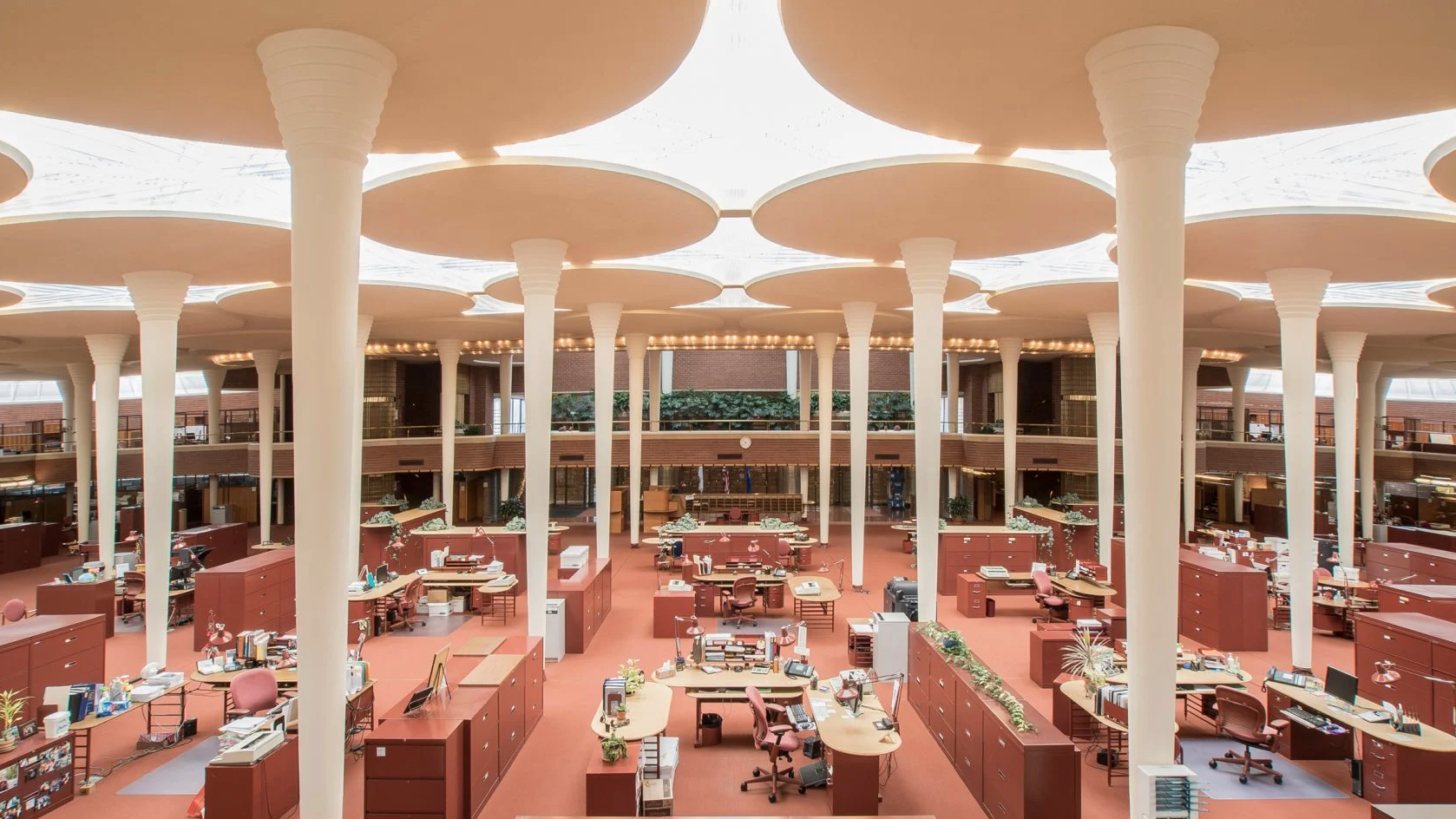
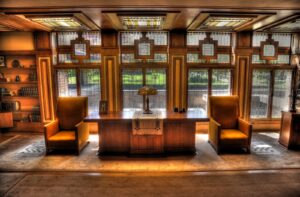
In the mid-1930s, Wright was working on his seminal corporate design for the Johnson Wax Headquarters, commissioned by S.C. Johnson & Son in Racine, Wisconsin. He approached Steelcase with the hopes of working with them to manufacture furniture for the building. Decades later, in 1985, Steelcase bought the Meyer House — a home designed by Wright in 1909 in Grand Rapids, Michigan — to celebrate the spirit of innovation and collaboration between Wright and Steelcase that began during the Johnson Wax Headquarters project. Steelcase set out to uncover the original designs of the home, and after several years of extensive research, they accumulated a number of Wright’s original drawings that documented the architect’s vision. After a two-year restoration that included demolition of a 1922 addition to the home and fanatical attention to hundreds of interior and exterior details, the Meyer House stands as the most complete and authentic restorations of all of Wright’s designs.

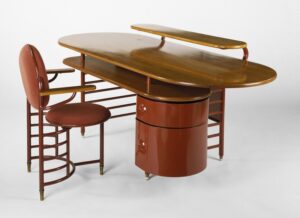
An executive desk and armchair designed by Wright for SC Johnson’s headquarters

Taken together, the projects represent unique and different moments in Wright’s career. The Meyer House is a prime example of his Prairie School era, a period of roughly 15 years in the early 1900s when commissions most often came from affluent families before he shifted focus to more. These designs typically feature hip roofs with long eaves, art glass ribbon windows and strong horizontal lines. 

Wright designed multiple residential structures in this style for about 15 years in the early 1900s before shifting focus to more democratic architecture. The S.C. Johnson building, on the other hand, is considered Wright’s corporate masterpiece; today it remains one of the most important examples of the American corporate office building. 

The unique glasswork designed by Wright for the Meyer House

The pieces included in Christie’s auction come from these two projects and include the executive desk master and executive arm chair master from the S.C. Johnson project and windows from the Meyer house. Wright’s original drawings for the furniture he designed for both the Johnson Wax Headquarters and the Meyer House were also sold, including schematics for an officer’s chair from the S.C. Johnson building and the sofa and living room table from the Meyer House. 

It’s not often that fans of Frank Lloyd Wright fans have the opportunity to acquire processual works — in this case, drawings, windows and furniture that reveal the process that Wright and his clients used to produce masterpieces.

Conceptualizing the Future of Furniture

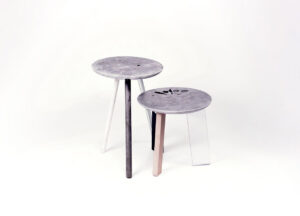
During the spring semester of 2022, the Department of Architecture at the Massachusetts Institute of Technology conducted Course 4.041 — Advanced Product Design. The focus of the course was to “develop concepts of sustainability for a more ecologically-responsible and digitally-enabled future.” According to the course syllabus, students would be asked to “reinterpret and conceive of new typologies, redefining what ‘furniture’ means from the ground-up.” Today, we’re spotlighting just a handful of their future facing designs. 

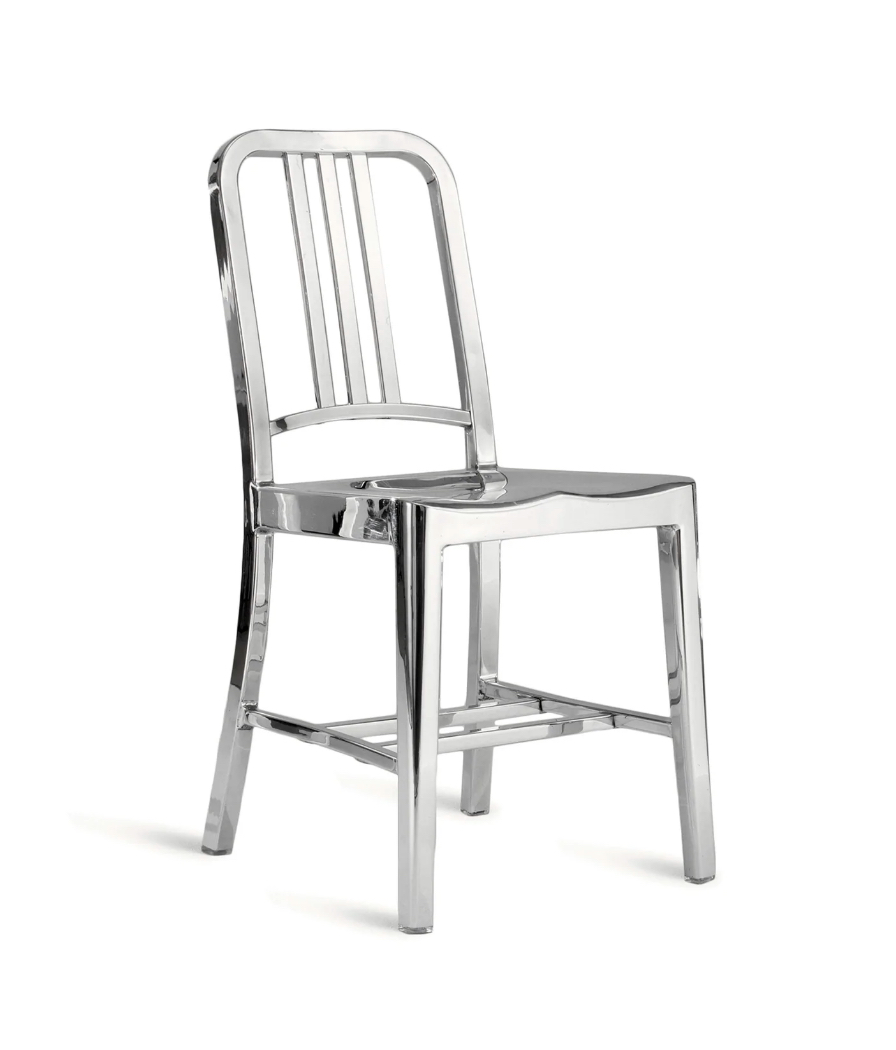
To make the course even more interesting, MIT teamed up with Emeco, an iconic American furniture company to provide students with access to Emeco’s manufacturing technology as they conceptualized sustainable furniture. The students’ design solutions have been dubbed The Next 150-year Chair, based on Emeco’s 1006 Navy chair developed in 1944, which, according to the manufacturer, has a “150-year lifespan.”

Associate Professor Skylar Tibbits explained that “Today, a 150-year chair means making something that lasts a long time, which is a great thing to do. But the question is whether that will be the same for the next 150 years – should the goal still be to make things that last forever? That’s one approach, but maybe there’s something that could be infinitely recyclable instead or something that’s modular and reconfigurable.”

La Junta designed by María Risueño Dominguez

Over the spring term, five students explored their unique approaches to answering the question. Their results featured a number of complete furniture pieces and components that were exhibited at Emeco House, the company’s converted 1940s sewing shop, in Venice, CA in late November. 

María Risueño Dominguez developed a furniture component based on longevity. Her research on furniture consumption and interviews with people involved in the furniture industry resulted in a concept called La Junta – a cast-aluminum joint with multiple different inserts shaped to fit a variety of components.

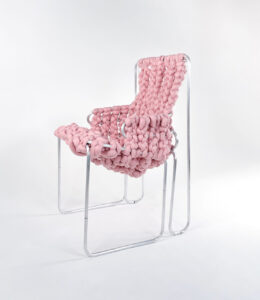
Rewoven Chair designed by Faith Jones

Amelia Lee developed a product designed to last through different stages of childhood. It is made from a single sheet of recycled HDPE. Modeled on a rocking chair, the piece can be turned on its side to function as a table.

Zain Karsan set out to improve metal 3D printing technology for the frames of his chairs, focusing on a technique for dispensing molten material at high-speed to explore new ways to think about form and joining parts.

Faith Jones designed the ReWoven Chair, with an aluminum frame and a recycled (and replaceable) cotton sling, as an exploration into how to maintain comfort and sustainability.

Jo Pierre’s interest in maintaining comfort within dense physical settings resulted in a chair called Enhanced Privacy — a plastic partition designed for domestic spaces that includes a hanging sheet of plastic that can be filled with water to block sound and diffuse light.

As both a design process and a collaboration between academia and industry, The Next 150-year Chair Project established a refreshing model for how we might conceptualize the future of furniture while pushing the boundaries of sustainable design and novel materials.

person name goes here

Maintenance Supervisor

Glencoe, IL


    Acceptable file types: *.pdf | *.txt | *.doc, max-size: 2Mb