Vertical Landscaping Around the World

Our passionate connection to nature is an essential piece of our identity at Optima and has been since our founding. This foundation has led to signature design elements in our properties, like our vertical landscaping system. From the vibrant greenery that extends beyond Optima Kierland Center, Optima Camelview Village and Optima Sonoran Village in Arizona to the introduction of vertical landscaping to the Midwest’s four seasons at Optima Verdana in Chicago, the lush green element is a cornerstone of our Optima communities. Given our innovation in this arena, it’s interesting to take a look at how vertical landscaping is used throughout the rest of the world:

The Via Verde project, Mexico City

Via Verde, Mexico City 

In 2016, Mexico City began planning an ambitious project to bring vibrant greenery into the city to reduce pollution and welcome additional natural allure to the area. The city came up with Via Verde, an initiative to cover more than 1,000 highway pillars with lush vertical landscaping. Because traffic in the city is some of the most congested in the world, the pillars not only serve as beneficial to the environment but also as works of natural art for residents.  

The vertical landscaping at One Central Park, Sydney

One Central Park, Sydney

Completed in 2012, One Central Park was built as part of Sydney’s Central Park renewal project. The building is a dual high-rise with a height of more than 380 feet, but it is famously known for its vertical landscaping designed by its architects, Foster and Partners, Ateliers Jean Nouvel and PTW Architects. The vertical landscaping system was a collaboration between French botanist Patrick Blanc, the modern innovator of the green wall, and the architects. One Central Park is home to 350 different species, including both exotic and native verdure, and totaling over 85,000 plants that cascade more than meters down its facade.

The Rainforest Chandelier in EmQuartier, Bangkok

Rainforest Chandelier, EmQuartier, Bangkok

Designed by the American architecture firm Leeser Architecture, EmQuartier is a 2,700,000 square foot mall located in Bangkok, Thailand. The innovative design that makes up the grand retail hub features restaurants, offices, event halls, and at its heart, an open-air atrium. In the atrium’s core, an unprecedented 337-foot chandelier hangs with exotic plants spilling from its sides. Patrick Blac – who also inspired One Central Park’s vertical landscaping – not only designed the ellipse-shaped Rainforest Chandelier for EmQuartier but also included two garden areas and a fully landscaped bridge connecting the mall to other surrounding buildings. 

We couldn’t be more proud to have brought vertical landscaping to the Scottsdale and Chicago communities like many other projects have done across the globe, enriching communities and fostering a connection to nature found little elsewhere.

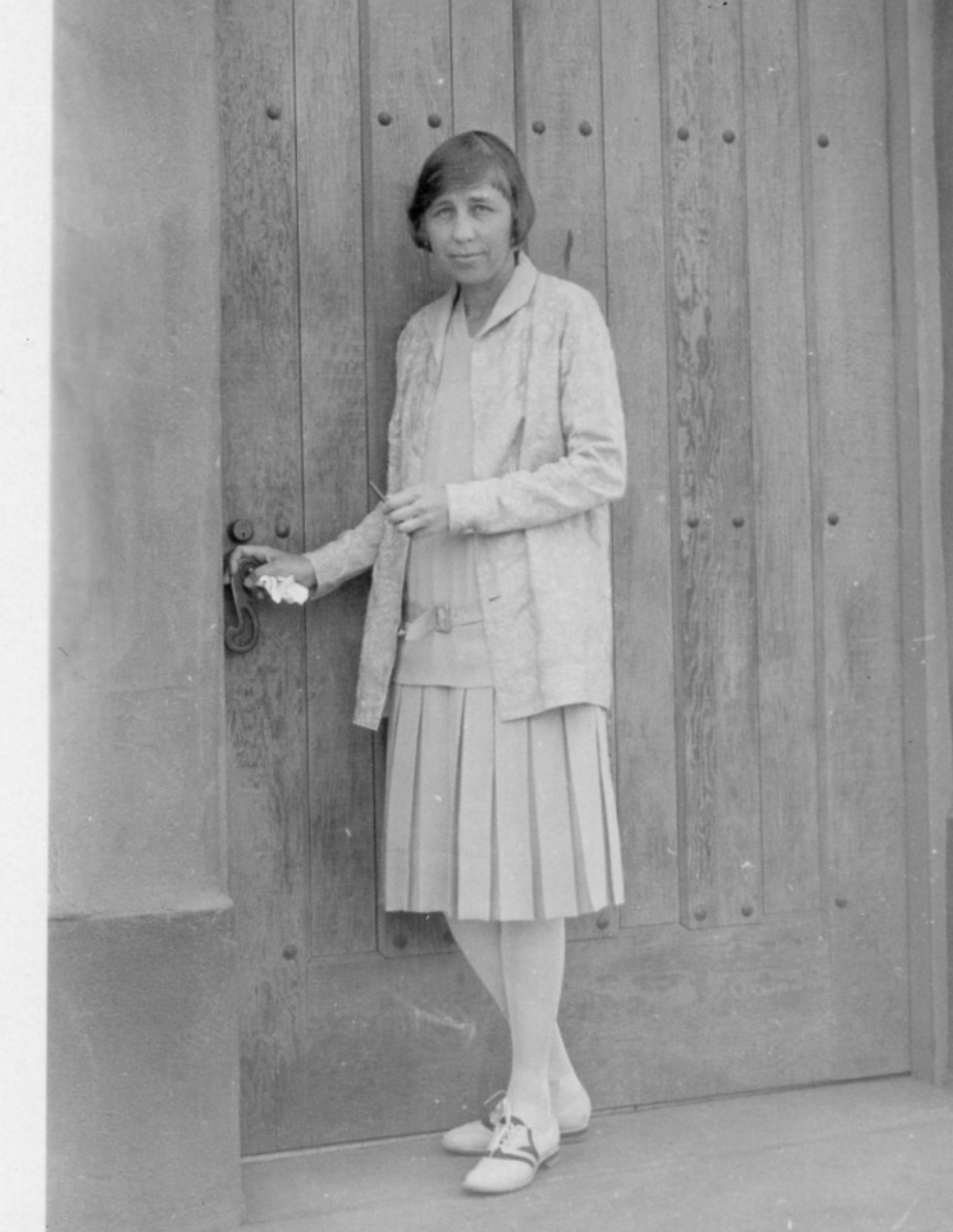
Women in Architecture: Lilian Rice

As part of our ongoing “Women in Architecture” series, we’re spotlighting an eco-conscious architect of the early 20th century, Lilian Rice. Inspired both by the historic Spanish Colonial design she grew up in and the organic philosophy that influenced her throughout college, Lilian Rice left an impressive mark on the architecture of Southern California. Learn more about her extraordinary life and work below:  

The Life of Lilian Rice

Born on June 12, 1889, Rice grew up in National City, California, just south of San Diego and only 10 miles north of the Mexican border. Her father, Julius Rice, was a prominent educator in the state and her mother, Laura Rice, an amateur painter and designer, both empowered her to pursue her interests in education and the arts. 

Growing up, Rice was heavily inspired and influenced by the abundant Spanish Colonial culture and architecture in the area, including the many adobe homes. In 1906, she moved to Northern California, where she started attending school at the University of California, Berkeley, where she studied architecture. Rice joined the school’s Architecture Association shortly after and quickly rose to a leadership position. At school, she also discovered her philosophy of holding a deep respect for each project’s surroundings and striving to protect their natural environments. 

Following her graduation in 1910, she moved back home to National City to care for her mother and acquired a job working with San Diego architect Hazel Wood Waterman – the city’s first female architect. While working for Waterman, Rice also spent time teaching at San Diego High School, leaving her influence on many future architects, including Samuel Hamill, FAIA. 

Notable Works and Achievements

In 1921 Rice’s career catapulted when Richard Requa and Herbert Jackson hired her as an associate in their architecture firm. During her first year, Requa and Jackson assigned Rice with designing a Civic Center for Rancho Santa Fe – an up-and-coming subdivision – which she eventually gained leadership over in 1923. 
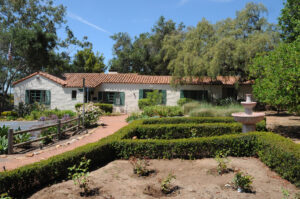
Lillian Rice House, Rancho Santa Fe, San Diego County, CA. Credit: Jerrye & Roy Klotz, MD on Wikimedia Commons. Licensed under CC BY-SA 4.0.

From then on until 1927, the majority of Rice’s work involved developments and expansions within Rancho Santa Fe. Many of the projects she designed in the subdivision are listed in the U.S. National Register of Historic Places, including the Claude and Florence Terwilliger House and the Reginald M. and Constance Clotfelter Row House. In 1928, after she had received her architect’s license from California, Rice made the ambitious decision to open her own architecture firm.

Following the launch of her firm, Rice began working outside of Rancho Santa Fe, allowing her to step away from the Spanish Colonial style she was known for into more organic approaches. Even throughout the depression, Rice’s career excelled in the 1930s when she designed some of her most familiar works, including the Paul Ecke Ranch home, and both a boathouse and a clubhouse for the San Diego ZLAC Rowing Club in 1932.  

Alongside her work, Rice has been a recipient of many architecture awards and achievements, including: 

  • AIA Honor Award, Chrstine Arnberg Residence, 1928
  • AIA Honor Award, ZLAC Rowing Club, 1933
  • AIA Honor Award, La Valenciana Apartments, 1933
  • 11 buildings listed to the National Register of Historic Places

Through her diverse catalog of architecture projects, Rice filled Southern California with more than 60 unique homes. And while the Spanish Colonial Revival was prevalent at the time, Rice was one of the leading architects who helped make it widespread throughout the state, leaving a reputation little can compare. 

Scottsdale Public Art: IN FLUX Cycle 10

No matter where you find yourself in Scottsdale, you’re sure to run into one of the city’s many works of public art. IN FLUX is one unique initiative exclusive to Arizona that is empowering emerging artists to innovatively apply their creativity to temporary works of public art in Scottsdale and other communities throughout the state. Learn more about IN FLUX and their 2022 additions here:  

What is IN FLUX?

IN FLUX began as an initiative formed by various art organizations in and around the Phoenix and Scottsdale area in the early 2010s. Scottsdale Public Art launched the project to provide Arizona artists with the opportunity and resources to create temporary public art installations throughout the state. 

Since IN FLUX’s inception, it has expanded tremendously, now reaching more than 53 locations across eight cities in Arizona. Thanks to the initiative’s commitment to spotlight and aid some of the state’s emerging artists, not only does the work greatly impact the artists themselves, but it also supplies communities with inspiring works of art. 

Each cycle of IN FLUX begins when they seek out submissions from artists across the state. Their team then carefully chooses a limited number of artists to commission a unique work of temporary art that becomes displayed throughout the year. This year marks the launch of IN FLUX Cycle 10!’

The Magic of Water, Yuke Li, Courtesy of Scottsdale Public Art

IN FLUX Cycle 10

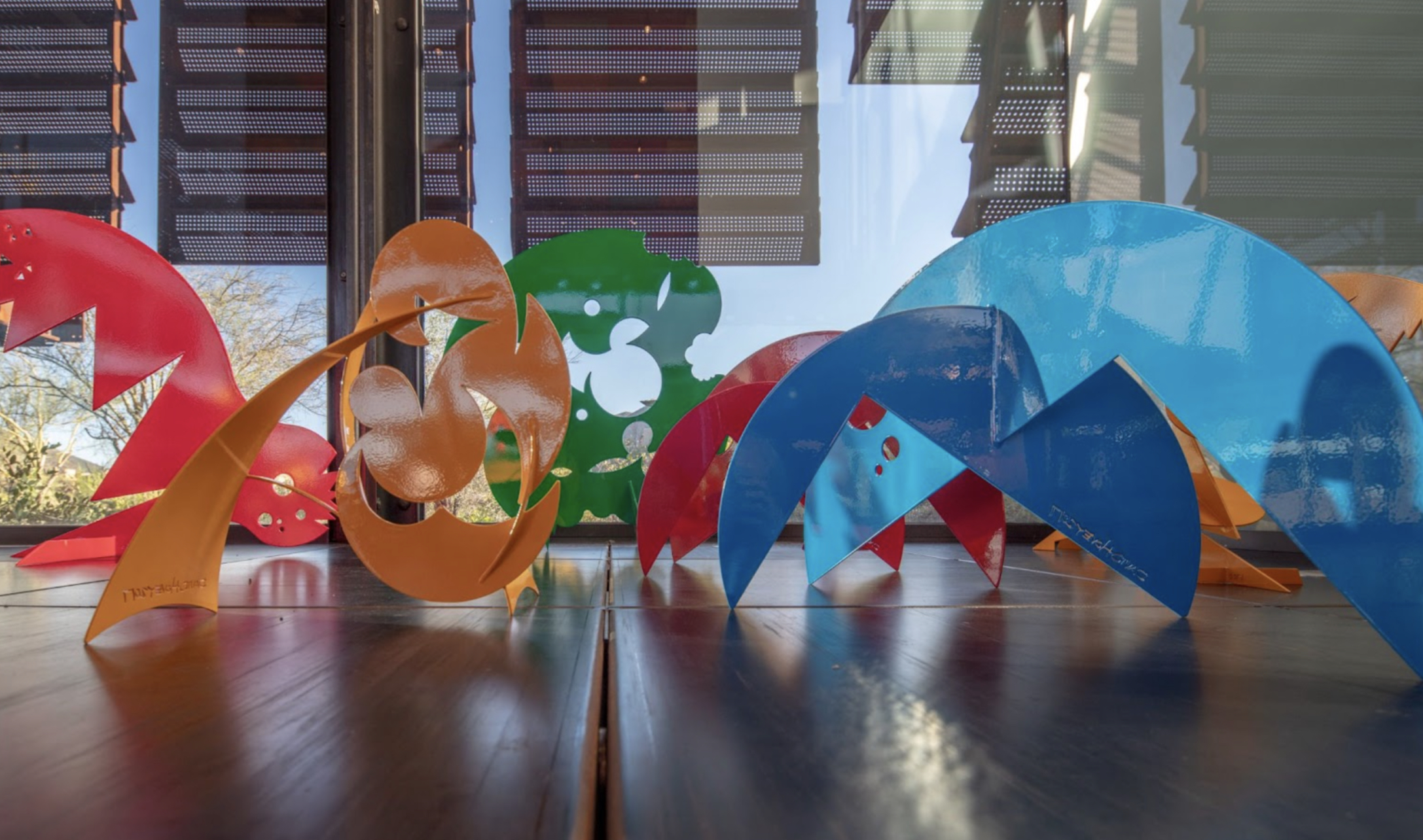
IN FLUX Cycle 10 introduces 13 new artists and artworks throughout six cities in Arizona, including four unique pieces that will live exclusively in Scottsdale. Installations for the temporary artwork in Cycle 10 concluded in June of 2022, and each piece will be on display for a minimum of a year. Here are the four artists featured in Scottsdale:

Hector Ortega 

Reliance

Found on the northeast corner of Scottsdale Road and Oak Street

Installed May 25, 2022, through June 30, 2023

Christopher Luber

Fragmented Reflection 

Found on the northeast corner of Scottsdale Road and Roosevelt Street

Installed May 25, 2022, through June 30, 2023

Yuke Li 

The Magic of Water

Found on the south side of Thomas Road between N 81st Way and N 82nd Street

Installed May 9, 2022, through June 30, 2024

Shirley Wagner 

Zenith, Surge, and Bliss

Found at Miller Plaza on the northeast corner of Miller Road and Indian School Road

Installed June 28, 2022, through June 30, 2023

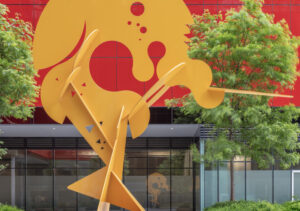
Reliance, Hector Ortega

We’re ecstatic to see more of the stunning artwork helping to bridge the Valley into one community and celebrate the talented artists included IN FLUX Cycle 10 and future cycles. Make sure to observe the temporary artwork yourself throughout the next year before IN FLUX Cycle 11 welcomes a new group of emerging artists!

Furniture Spotlight: Table E-1027

One of the ways we honor the Forever Modern promise and keep it relevant at Optima is by curating both public and residential spaces in our communities with timeless furniture. Take a stroll through any of our Optima communities and you will find the Table E-1027 in beautiful settings of pristine Modernist furniture. Let’s take a closer look.

Table E-1027 is an adjustable steel and glass table designed by Irish designer Eileen Gray in 1927. Originally created for her home in the south of France by the same name, the table has since become one of Gray’s most famous designs.

The table’s design celebrates the simplicity of Modernist ideals of form and function. The table consists of two concentric forms of tubular stainless steel that are joined by two vertical tubes to adjust the height — with one of the forms serving as an adjustable arm and tempered glass functioning as the table’s surface. The story behind the design is that Gray originally conceived it for her sister, who routinely ate breakfast in bed. With a traylike surface that could be positioned comfortably over the bed, her sister could enjoy her morning routine while avoiding dropping crumbs on the linens.

Table E-1027

Without question, Table E-1027 is one of Gray’s most famous pieces, even though she was a prolific designer. In the decades since it became available commercially, Table E-1027 has come to represent the epitome of Modernist design. It is multipurpose, adjustable and portable. It works just as well in a bedroom as in a living room or sitting area. And finally, it brings refinement and tastefulness to any interior setting.

At Optima, we’re proud to include Table E-1027 in a host of spaces and arrangements for our residents and their visitors to enjoy.

Natural Stone: A Timeless Staple of Architecture

At Optima, we celebrate the fundamental connection between design and nature. It’s this philosophy that often inspires the design in our communities, including our newest, Optima Lakeview. One of Optima Lakeview’s most exceptional features is the stunning natural stone that lines the first floor. Today, we’re taking a closer look at a classic architectural material, natural stone. 

The History of Natural Stone in Architecture

Stone is a timeless material used in some of the world’s most admired architectural works and monuments, from the Colosseum to the Washington Monument. The centuries-old resource, dating back nearly 12,000 years, has found its use in nearly all aspects of architecture and remains relevant today. 

In its early use, quarried stone was utilized to create walls, columns and piers. For centuries, entire cities were made of stone, making it an essential building resource. As technology advanced and more sophisticated construction methods metamorphosed, stone began appearing in archways, windows, facades and other stunning building accents.  

Colosseum
The Colosseum, famously built with natural stones such as travertine, lime and marble. Credit: YellowCat on Flickr Creative Commons CC BY 2.0 Deed

With time, materials like iron and concrete became an easy replacement for natural stone in architecture and helped to allow the construction of skyscrapers in the 19th and 20th centuries. The natural resource then became a popular staple for exteriors and cladding exclusively. However, today, architects are again embracing stone in full force, and it’s found on everything from kitchen tables to living room walls. 

Natural Stone in Optima

Each of Optima’s Illinois communities — Optima Lakeview, Optima Signature and the in-progress Optima Verdana — feature one-of-a-kind granite flooring throughout their main levels. Granite, which is only one of many natural stones used in Optima Communities, perfectly compliments Optima’s commitment to artistry and elevated living, amplifying each atmosphere housing the stone.  

Optima Kierland’s landscaped courtyard featuring a natural stone water feature

We embrace the organic here at Optima, which is why you can find more than just granite in most of our communities. Other uses of natural stones include stunning, polished quartz and granite for kitchen and bathroom finishes throughout our communities and even in Optima Kierland’s courtyard’s sparkling water feature. 

Even after a millennium of use, architects and designers continue to discover new adoptions for natural stone in buildings today, making it a timeless staple of the architecture world.

A Brief History of Constructivism

As Modernism and its influence spread across the world in the early 1900s, new art and design factions emerged throughout cultures. Today, we’re exploring Constructivism, a Russian art and architecture movement that brought abstraction to the country. Learn more about the short-lived, industrial-heavy movement below:

The History of Constructivism

Constructivism popularized in the 1910s Soviet Union, the same period that the Bauhaus and De Stijl movements emerged across Eastern Europe. Constructivism was largely inspired by other modern, innovative developments of the time, specifically Bauhaus and Russian Futurism.

Constructivist artists strived to reflect the industrialization of urban society in their work. The movement’s art and architectural works combined characteristics from existing modern principles such as geometric and minimal design, with a more experimental approach.

Often staying away from ornate decorative elements, Constructivist architecture instead favored mechanical and industrial materials. This design direction also focused on space and rhythm, frequently resulting in futuristic and abstract-presenting structures.

Notable Works

Arguably the most well-known and famous Constructivist architectural work was the 1919 proposal of Tatlin’s Tower by Vladimir Tatlin. The project, which was never completed, intended to use iron, glass and steel in its design. As a towering symbol of modernity, its main feature included a twin helix — reaching taller than the Eiffel Tower — paired with four other suspended geometric structures that planned to rotate around the helix.

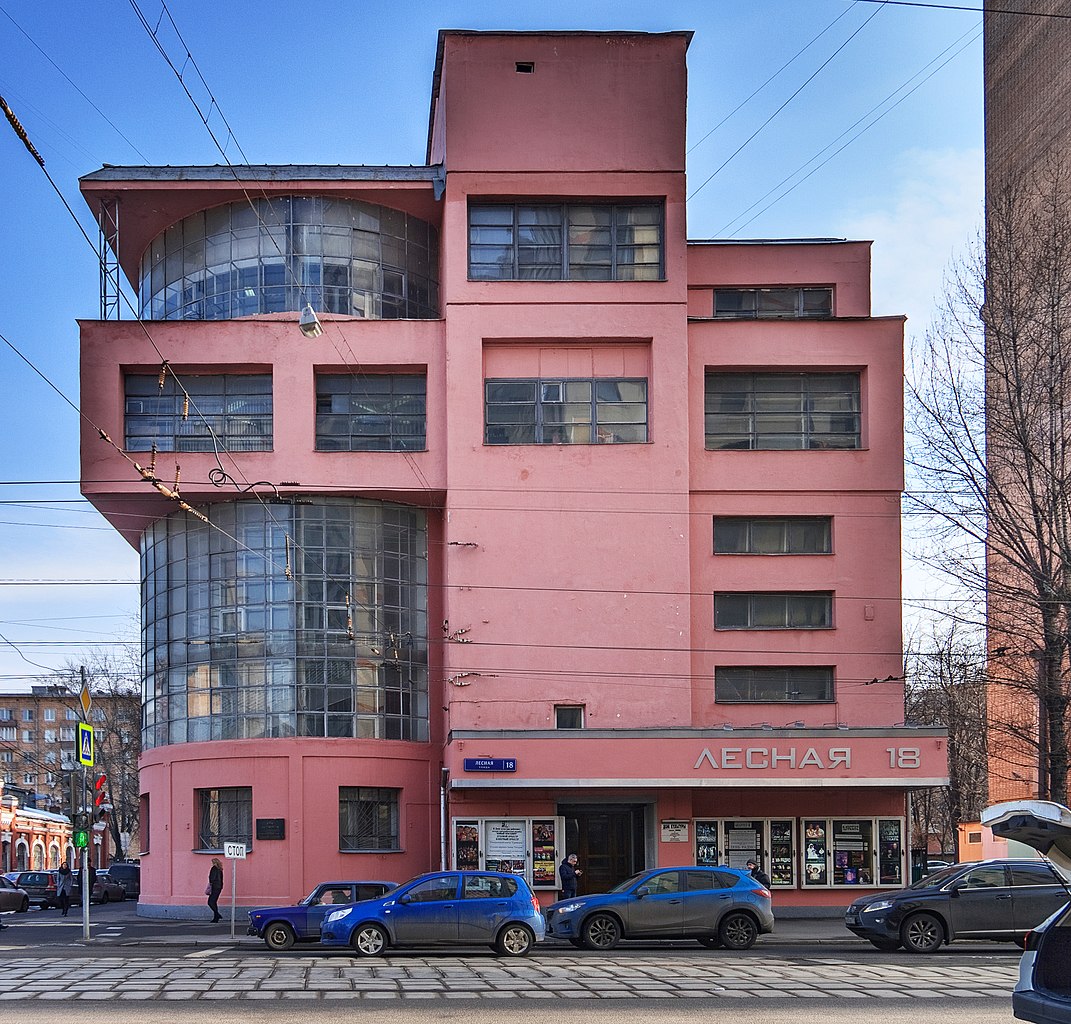
One of the main philosophies of Constructivism was to instill new aesthetics of the avant-garde into everyday life, which led architects to design some of the country’s most visited buildings in their unique style. The Zuev Workers’ Club in Moscow was one of many workers’ clubs to adopt the Constructivist style when completed in 1929. The composition of the building’s facade features a mix of circular staircases, stacked rectangular floors, bright pink paint and an exterior glazed treatment which was innovative for the time.

Another famous work of Constructivism is Ogonyok Magazine’s printing plant which was commissioned in 1932 in Moscow. Russian artist El Lissitzky designed the building, and it remained his only architectural creation. The dynamic building features a mansard roof and circular windows that contrast the long rectangular exterior. Although damaged in a 2008 fire, the building remains a heritage site, and in 2012 it was named a regional landmark of the country.

EL-LISITZKY-OGONYOK-PRINTING PLANT-3
El-Lisitsky Ogonyok Printing Plant. Credit: Sergei Dorokhovsky, 2010, Wikimedia Commons, CC BY-SA 3.0 Deed

Although Constructivism lost steam only a decade after emerging, its influence is found in other movements like Brutalism, and works of graphic design, industrial design, fashion, and ultimately the Deconstructivism Movement. Stay tuned for more blogs spotlighting the many subsects of Modernist architecture!

Women in Architecture: Anne Tyng

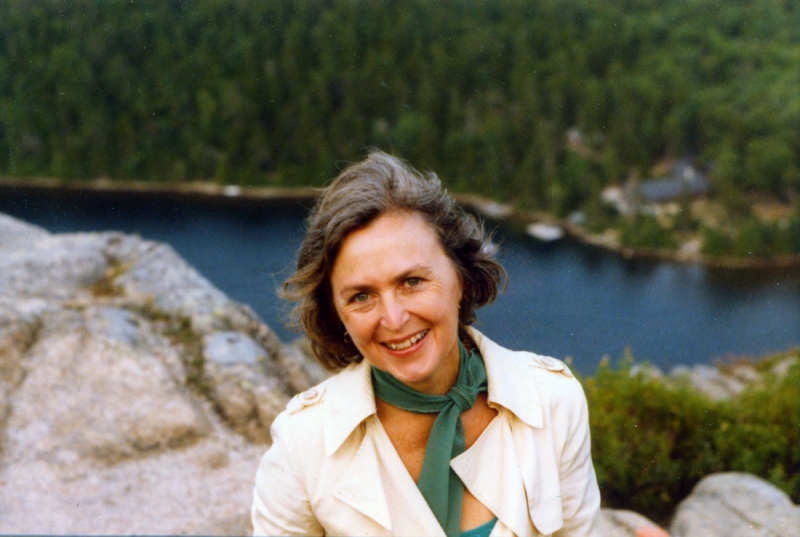
As part of our ongoing “Women in Architecture” series, we’re spotlighting someone who was at the forefront of architectural experimentation in the mid-twentieth century, Anne Tyng. Tyng pioneered the inclusion of complex geometry as a source for form in architecture and design and became an expert in the field. Learn more about her extraordinary life and work below: 

The Life of Anne Tyng

Anne Griswold Tyng was born in Lushan, Jiangxi province, China, on July 14, 1920. Although her family lived in China at the time, their roots traced back to the Massachusetts Bay colonies, and they frequently visited the United States for family trips. Tyng’s love for design sparked when she was just a child, and she often recalled how she would carve whole cities out of the soft stone surrounding her family’s properties. 

At 18, Tyng moved permanently to the U.S., where she attended Radcliffe College in Cambridge, MA, to study fine arts. During her final year, however, she discovered the Cambridge School of Architecture and Landscape Architecture — the first institution to provide design training to women only — and began taking classes there. 

After her graduation in 1942, she went on to further her architecture studies at Harvard, studying with renowned architects like Marcel Breuer and Bauhaus founder Walter Gropius. In 1944, Tyng was among the first women to complete their studies at Harvard, and later she became the only woman to enter the architecture licensing exam in 1949. Tyng finished her education nearly 30 years later when she was awarded a Ph.D. from the University of Pennsylvania.

Anne-Tyng
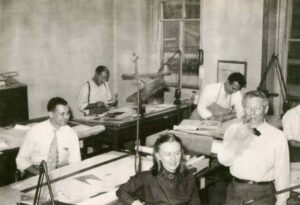
Anne Tyng and Louis Kahn, at his architectural practice, 1947.
Photo courtesy of the Anne Griswold Tyng Collection and the Architectural Archives of the University of Pennsylvania

In 1945, Tyng moved to Philadelphia and began working for Louis Kahn’s architecture firm, Stonorov and Kahn. Khan and Tyng became close collaborators, and her passion for geometric form influenced many of the firm’s designs of the time. In 1964, she left the firm, where she had been a partner, and began developing more solo projects until the end of her career.

Notable Work and Achievements  

Although she became a successful architect, Tyng was also passionate about mathematics. Thanks to the versatility and flexibility of architecture, this allowed her to conflate her interests  and focus on space frame architecture — creating light-filled spaces using interlocking geometric forms of architecture.

City Tower for Philadelphia
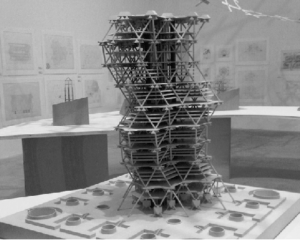
Louis Kahn and Anne Tyng, Model of the proposed City Tower for Philadelphia, 13 x 17 cm, 1953, ” Visionary Architecture, ” exhibition at the Museum of Modern Art, “The Changing Concept of Proportions”: Architecture, Mathematic and Geometry from Architectural Principles in the Age of Humanism to the Techno-Organic Movement. The Journal of Art Theory and Practice. 18. 123-144. 10.15597/17381789201418123.

Many of Tyng’s earliest works can be traced back to the influences she left in Kahn’s designs, including the Yale University Art Center (1953), Philadelphia City Tower (1957) and the Trenton Bath House (1956), all of which included triangles or cubes in their forms. However, her former residence, the Tyng House, is where her personal style is most celebrated. 

Built in the 1950s, the single-family home features slotted windows, a pyramidal timber-framed ceiling and metal screened openwork staircases. And although the exterior of the house appears ordinary at first, a closer look reveals a mansard roof and large parlor-floor windows. 

In the late 1960s, after falling in love with Maine’s Mount Desert Island, Tyng designed the Four-Poster House. In her design, Tyng took inspiration from the surrounding ecology, and she strived to make the home an organic outgrowth of the wooded area. Using logs, cedar shake and tree trunks, the house was framed similar to a four-poster bed with four central columns.

Alongside her transformative work, Tyng has been a recipient of many architecture awards and achievements, including: 

  • First woman licensed as an architect in the state of Pennsylvania
  • Fellow of the American Institute of Architects, 1975
  • Academician of the National Academy of Design, 1975
  • Selected by the United States to participate in the First International Congress of Women Architects, 1976 

Tyng’s career was devoted to understanding the synthesis of geometrical shape and human consciousness within architecture, and because of her extraordinary contributions, the spatial potential of architecture was pushed further than ever before.

Community Architecture Across The World

Community means everything to us at Optima, which is why we bring thoughtful design to each project, committed to supporting and uplifting every resident. Historically, architecture has been a dominant tool for many to build and sustain communities, and recently, community architecture has taken on a more prominent role in the discourse surrounding living environments. Learn more about community architecture and some of the practice’s most visionary examples below: 

What is Community Architecture?

Community architecture is a collaborative building experience between both an architect and the users of the built space. The movement originated in the mid-20th century when architects across the world began to see that people wanted more say in shaping what they lived in and how they lived. 

Because it was such a radical idea at its inception, some architects who took charge of the movement experienced ridicule. Minette de Silva, in particular, was unsupported in her efforts to build Sri Lanka’s first Public Housing Project in collaboration with its residents. The result, however, was a triumphant success, like many other community architecture projects across the world. 

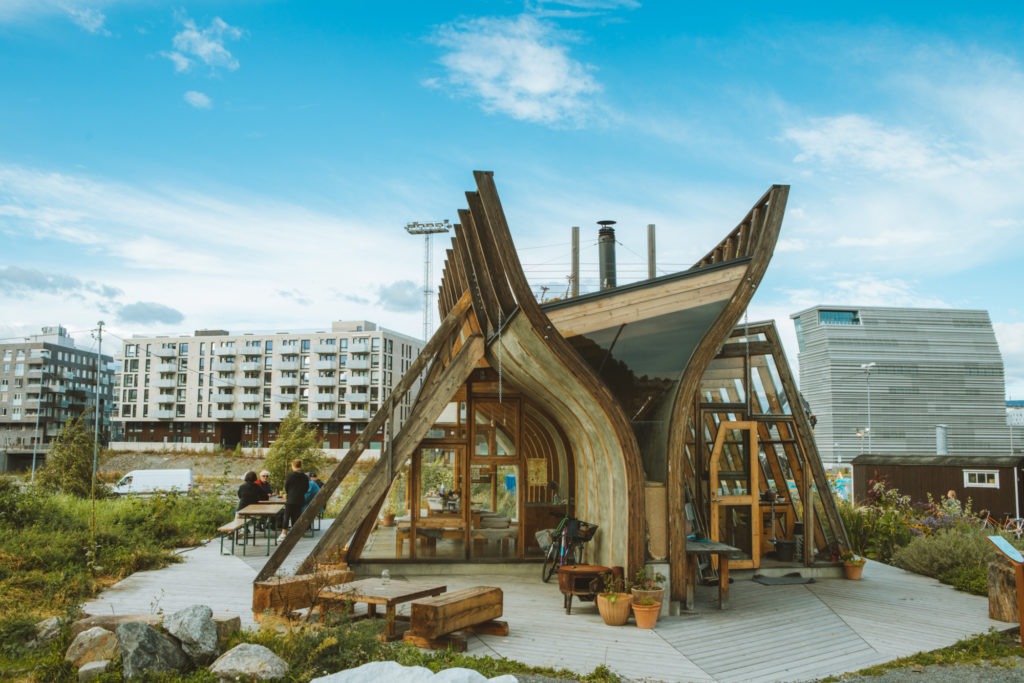
The interior of the Losæter Bakehouse during a community event. Creator: Sébastian Dahl Credit: © Sébastian Dahl (www.sebastiandahl.com) Copyright: Creative Commons BY-NC-SA

Losæter Bakehouse, Oslo

What originated as a mere art project in 2011 has turned into one of the world’s most functional community-built projects. The intricate design behind the main building, the bakehouse, operates as a place of creative production and a gathering space for communal interactions. 

The structure appears still under construction or repair, but the wooden skeleton and window-filled walls intentionally mimic the past. Both the structure’s versatile purpose and its boat-like canopy design are odes to the country’s rich history, reflecting on the cultural significance of Bakehouses and maritime history. 

The Momentary, Bentonville, Arkansas

From serving as a hunting ground for the indigenous Osage nation to being transformed into a cheese factory, the land on which The Momentary resides in Bentonville, Arkansas, has a long, rich history. Today, however, the land is home to the adaptive reuse art museum. The original structure – which is still 80% preserved – was completed in 1947, and, with the help of Wheeler Kearns Architects, the newly constructed museum finished construction in 2020.

Instead of trying to gloss camouflage the branches of history rooted in The Momentary’s land, they intentionally embraced them, designing an accessible hub that supports community members through cultural programming, education, engagement and enjoyment. 

The Night Ministry, Chicago

In 2020, The Night Ministry – an organization encompassing health care, housing, outreach and other social services – welcomed its new home, also designed by Wheeler Kearns Architects, in Chicago’s Bucktown neighborhood. The former manufacturing facility became transformed into the organization’s headquarters and is home to their overnight shelter, The Crib. 

Parts of the original manufacturing facility were repurposed to reduce waste when constructing the new headquarters, including flooring, windows and heavy timber. Vibrant murals around the interior alongside multipurpose programming spaces and a communal kitchen and dining space also help to reflect the collaborative nature The Night Ministry displays. 

The best architecture attracts people and allows them to feel a true sense of ownership of their living environment. And, because more and more architects are discovering the importance of doing just that in their projects, community architecture shows no signs of slowing down. 

A Brief History of Architecture in the Expressionist Movement

Although many know expressionism for its evocative poetry and painting, expressionist architecture was also a subsect of the Modernist Movement. While coexisting with the minimalist rigor of the Bauhaus, this avant-garde style allowed designers to explore new, radical perspectives, gifting to the world some of the most dynamic, expressive architecture of the 20th century. 

Origins of Expressionism

Expressionism originated in the late 1800s from a small group of artists based in Germany. The artists who founded the movement felt that 19th-century impressionism – which commanded the art world – was out of touch with the social climate of the times due to the various changes that came with the Industrial Revolution. This feeling of detachment helped inspire what would soon be known as expressionism.  

Acclaimed painters like Van Gogh, Paul Gauguin, Edvard Munch and Francis Bacon all contributed remarkable works of art throughout the movement, but artists who worked with other mediums also adopted the ideals that expressionists held close. Because of the vivid colors and distorted lines and angles associated with expressionism, German cinematography, in particular, took advantage of the moody standards. 

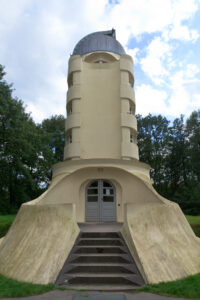
Einstein Tower by Erich Mendelsohn. 1921
Einstein Tower, Erich Mendelsohn, 1921. Credit: H. Raab on Flickr Creative Commons, CC BY-NC-ND 2.0 Deed

After more than 30 years of commanding the art world itself, expressionists became banned from showing and selling their work in Germany, where the majority of the artists lived. The result left many artists suppressed, eventually leading to various radical movements, including Abstract Expressionism, Pop-Art, Minimalism and in the late 20th century, Neo-Expressionism. 

Expressionism in Architecture

Expressionist architecture took advantage of the many characteristics associated with the movement’s other works of art, including distortion of form, themes of romanticism, expression of inner experience and the conception of architecture as a work of art, among others. Much of the movement’s builds featured Gothic, Romanesque and Rococo affinities. 

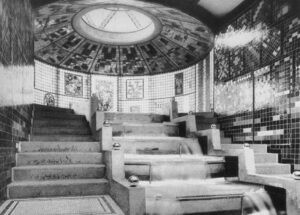
Glass Pavilion’s interior featuring the seven-tiered waterfall. Public Domain photo.

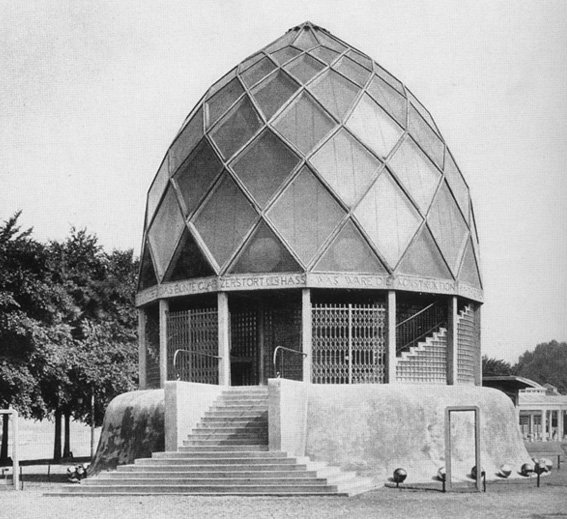
Bruno Taut’s Glass Pavilion is one of the earliest examples of expressionist architecture. The structure was built in 1914 as a feature of the Cologne Deutscher Werkbund Exhibition. Constructed using only concrete and glass, the exterior of the pavilion showcases a vibrantly colored prismatic dome and a grand staircase. The interior of the building featured a kaleidoscope of color from the crown above it and a seven-tiered cascading waterfall.

The Einstein Tower is another striking example of expressionist-style architecture. The observatory was built by German Architect Erich Mendelsohn from 1919 to 1921 and was envisioned to hold a solar telescope. Mendelsohn designed the building to reflect the radical theories formed by Einstein – specifically his theory of motion. The structure is built with brick but covered with stucco to give it its smooth, tidal-like exterior. 

More recent examples of expressionist-style architecture include Walt Disney Concert Hall designed by Frank Gehry in Los Angeles, the Lotus Temple designed by Fariborz Sahba in Delhi, and Zaha Hadid’s Vitra Fire Station in Weil am Rhein. 

Arcosanti: Creating a City

Known for his unique approach to architecture, Paolo Soleri brought the philosophy of arcology to numerous of Arizona’s most stunning environments. In Cosanti, he welcomed his otherworldly construction elements to the surroundings of Scottsdale. Today, we’re spotlighting another of the architect’s treasures, which embraces all of Soleri’s design principles on a much grander scale, Arcosanti

Inception of Arcosanti

Following the completion of his first build, Cosanti, Soleri began to explore more behind the meaning of arcology – a word he coined himself to label if design philosophy. What he began to discover was just how significant ecologically sound human habitats were to the ideology. 

In 1970, following the release of his book Arcology: The City in the Image of Man, in which he detailed the concept of cities embodying the fusion of architecture and ecology, Soleri began developing his own planned city, Cosanti. The project – found roughly 70 miles North of Scottsdale – was built to exhibit how urban environments can be elevated while minimizing negative impacts on the surroundings. 

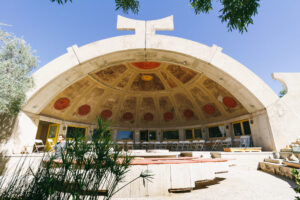
Arcosanti Apse
Arcosanti Apse. Credit: Devon Christopher Adams on Flicker Creative Commons, CC BY-NC 2.0 Deed

Arcosanti is built on 25 acres of a 6.25 square mile property, and though originally planned to house 5,000 people, the community is home to a population that varies from 100 to 150 throughout the year. Because the planned city is ever-changing, construction and development continue today due to the many students and volunteers who call it home. 

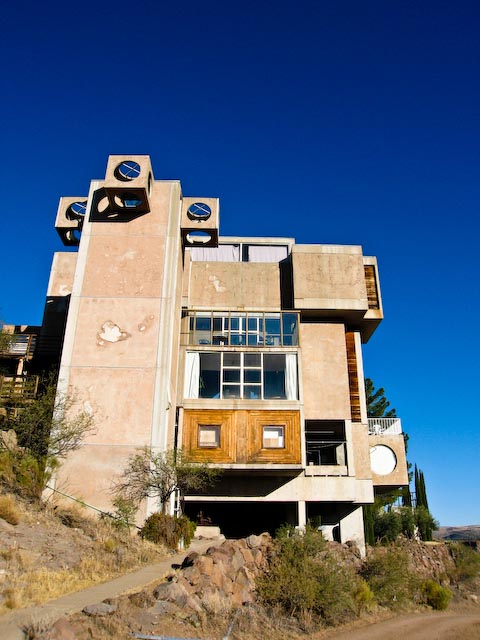
The magnificent community currently consists of 13 major structures, ranging in size and purpose and featuring diverse design features unique to the town. One particular feature is the site-cast tilt-up concrete panels used to support various buildings, expressing similar patterns to the earth around them, some even cast in embedded art. 

Other attentive design features include the southward orientation of most buildings designed to capture the most natural light and an apse – similar to Cosanti’s – built to house the community’s bronze bell-casting space. 

The city also features essential builds intentionally placed to help the community thrive, including two barrel vaults, apartment residences, an outdoor amphitheater, a community swimming pool, an office complex and a lush greenhouse. 

Today, Arcosanti continues to fulfill Soleri’s vision as an educational center for upcoming architects and philosophers. Scholars from across the world choose the community to attend advanced workshops and classes on everything from experimental design to architectural agriculture.  

Nearly 40,000 tourists visit the unique community annually to witness Soleri’s philosophy of arcology in person. Visitors can take guided tours through the sweeping campus or stay overnight in one of its lavish guest accommodations. To plan your trip to the historic community, or learn more about its events and programming, visit Arcosanti’s website here.

person name goes here

Maintenance Supervisor

Glencoe, IL


    Acceptable file types: *.pdf | *.txt | *.doc, max-size: 2Mb