Ralph Haver: The Unsung Brilliance of A Mid-Century Arizona Architect

Ralph Haver’s work may not have gained the same international recognition as his contemporaries Frank Lloyd Wright, Richard Neutra, or Eero Saarinen, but there’s no mistaking his defining influence on Arizona Mid-Century Architecture.

Haver was born in Pasadena in 1915. He attended Pasadena Junior College and later studied architecture at the University of Southern California (USC) before the United States entered World War II. After a stint in the military with the U.S. Army Corp of Engineers, he moved to Phoenix, and started his own architectural practice. In 1945, he founded Haver, Nunn & Associates, partnering with fellow architect, Jimmie Nunn. The duo focused on designing affordable tract homes that were stylish, functional, and suited to the desert climate.

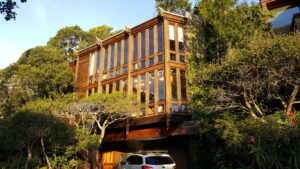
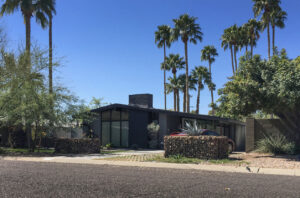
Northwood Haver Home in Phoenix. Photo: ©2016 Modern Phoenix LLC

His passion for simple, affordable, and elegant design made him an instant hit among Arizonans who were seeking a fresh architectural perspective.

While Wright’s organic architecture and luxurious designs were the talk of the town, Haver was working diligently behind the scenes. He envisioned a world where every family could live in a well-designed, modern home without breaking the bank. And thus, the “Haver Home” was born.

Haver Homes For All

Haver’s homes were designed for the average family. Their clean aesthetic and open floor plans allowed homeowners to bask in the natural beauty of Arizona while having a comfortable, stylish abode.

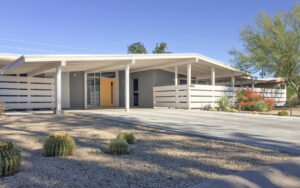
Marlen Grove Haver Home. Photo: ©2020 Modern Phoenix LLC

With the thousands of Haver Home designed and built, their iconic design elements included low-sloping roofs, expansive windows, and a post-and-beam construction, similar to that of another Arizona contemporary we wrote about recently, Al Beadle. These elements allowed for a seamless integration of indoor and outdoor spaces, maximizing both beauty and functionality.

Ralph Haver and his firm didn’t limit themselves to residential projects. They also designed schools, churches, and commercial buildings, leaving their mark on many aspects of Arizona’s mid-century architectural landscape. Many of their projects were concentrated in neighborhoods like Marlen Grove, Town and Country, and Windemere.

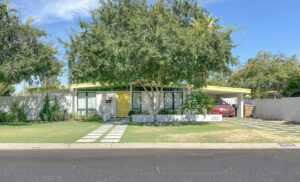
Windermere Haver Home. Photo: ©Modern Phoenix LLC

Although Ralph Haver passed away in 1997, his work continues to influence architects and homeowners, and his designs have become highly sought-after by those looking to own a piece of Arizona’s unique modernist architectural heritage. In fact, many neighborhoods throughout Phoenix and Scottsdale still boast a high concentration of Haver Homes, lovingly maintained and restored by their proud owners. These communities serve as a testament to Haver’s enduring vision of affordable, stylish living for all. At Optima®, we’re inspired by the innovative spirit of Ralph Haver and his dedication to creating beautiful, functional living spaces.

In the Shadows of Giants: The Overlooked Genius of Harry Weese

When we talk about the architectural giants of the Modern era, names like Frank Lloyd Wright and Ludwig Mies van der Rohe come to mind. These masters of design have left an indelible mark on our cities and towns, and their legacies continue to inspire and influence generations of architects. But what about those talented visionaries who have been overshadowed, whose work is often overlooked in the annals of architectural history? Today we’ll take a look at one such figure, Harry Weese, a brilliant architect who made a significant impact on the world of design, yet never quite garnered the same level of recognition as his contemporaries. 

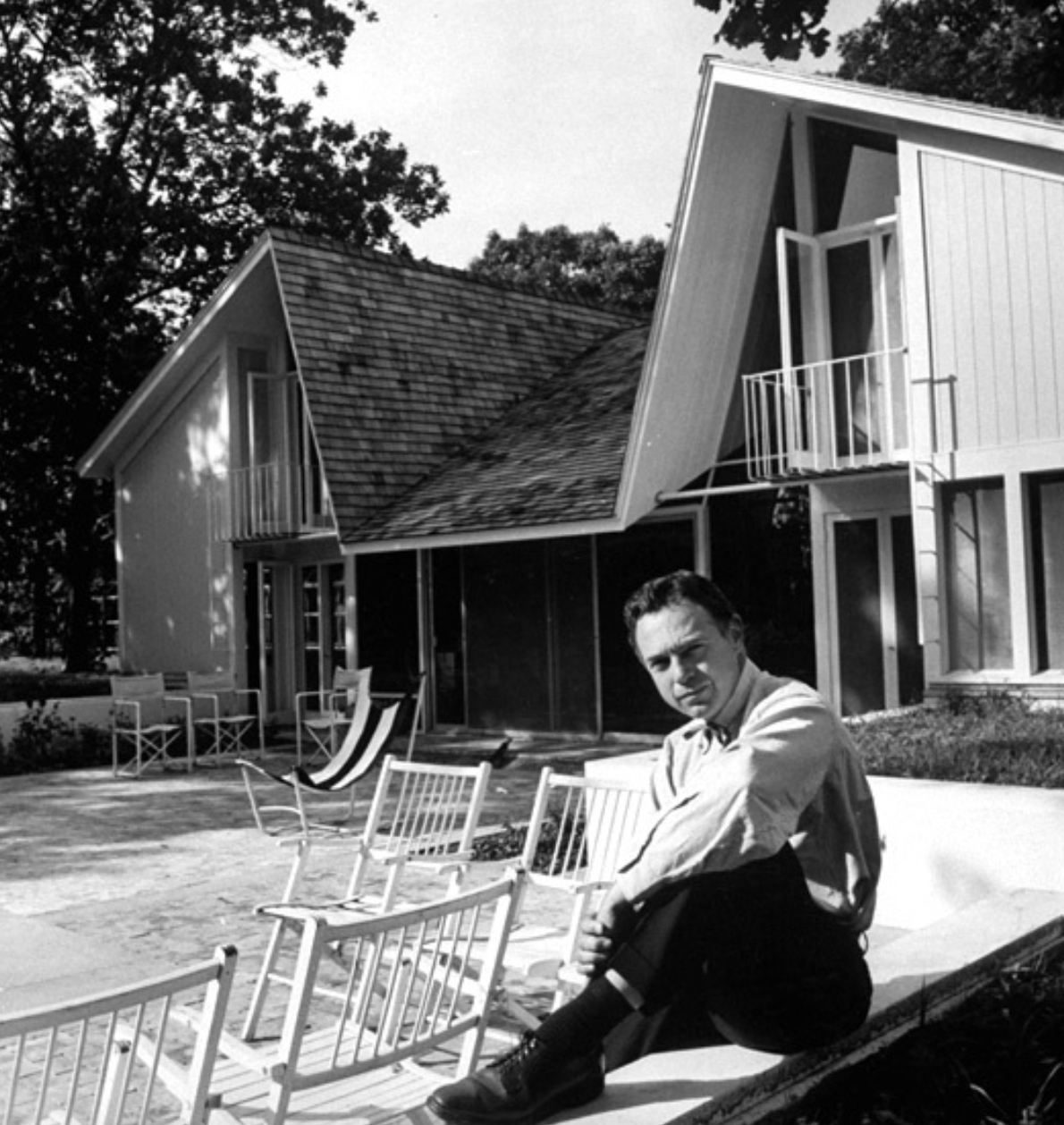
Harry Weese was born in 1915 in Evanston, Illinois. Even from a young age, he displayed a keen interest in architecture. His passion led him to study architecture at the Massachusetts Institute of Technology (MIT) and later at the Cranbrook Academy of Art, where he formed lifelong friendships with renowned architects; Eero Saarinen, and Charles and Ray Eames. Despite this impressive educational background, Weese struggled to find his footing in the competitive world of architecture, but that didn’t stop him from garnering attention.

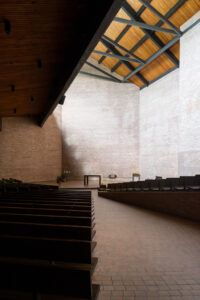
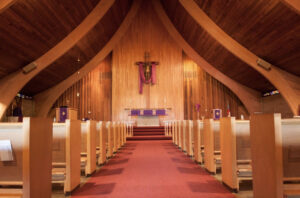
Seventeenth_Church_of_Christ_Scientist_Chicago_2019-1498
Seventeenth Church of Christ Scientist, Chicago. Photo: Paul R. Burley, CC BY-SA 4.0 Deed

His career began to gain momentum in the 1950s, as he designed several noteworthy buildings in Chicago. One of the earliest examples of his work, the Seventeenth Church of Christ, Scientist, showcased his ability to blend functionality with aesthetics, while respecting the religious context of the building. 

As the years passed, Weese gradually earned the respect of his peers and clients. He designed everything from public buildings and universities to private residences, each project showcasing his unique approach to architecture. His firm completed over 200 new buildings and renovations that span mostly across the midwest, but his commissions also took him across the globe to Ghana, India, Saudi Arabia, and Singapore.

One of Weese’s most enchanting designs can be found in the idyllic town of Wilmette. Known as The Robert and Suzanne Drucker House, this private residence epitomizes Weese’s ability to harmoniously blend nature and architecture. The home features an open-plan layout, with large windows that invite the outdoors in, creating a seamless connection between the interior and exterior spaces. The Drucker House is a testament to Weese ‘s skill in crafting spaces that are both functional and aesthetically pleasing, while respecting the environment and the needs of its occupants.

Chicago River Cottages
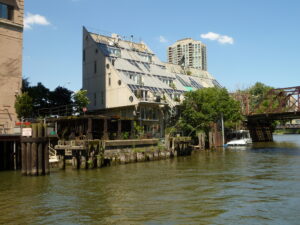
Chicago River Cottages designed by Harry Weese. Credit: Jonathan Byrne CC BY-NC 2.0 Deed

Beyond residential architecture, Weese made significant contributions to the field of urban planning and revitalization. He was deeply concerned about the decline of American cities and the loss of their architectural heritage. In the 1960s and 1970s, he embarked on several ambitious projects to preserve and reinvigorate urban spaces. One of his most notable accomplishments was the restoration of the Chicago Riverfront, transforming a previously neglected area into a vibrant, bustling hub of activity.

Washington, D.C. Metro System. Photo: Sara Cottle/Unsplash

Weese’s vision extended far beyond Chicago, as he also worked on the design of the Washington, D.C. Metro system. His innovative approach to public transportation and his commitment to creating aesthetically pleasing, user-friendly stations helped to shape the face of the nation’s capital and earned him widespread acclaim.

For those who have the privilege of experiencing Harry Weese’s work firsthand, the impact of his designs is undeniable. His creations have left a lasting mark on the communities they inhabit, and at Optima®, we’re proud to be a part of a shared sensibility and set of architectural traditions.

Isamu Noguchi’s Freeform Sofa: A Timeless Classic in Optima Signature®

In the realm of iconic furniture design, few pieces stand the test of time quite like the Vitra Freeform Sofa by Isamu Noguchi. This groundbreaking piece, unveiled in 1946, remains celebrated and sought-after, embodying the perfect balance between art and functionality that is at the heart of the Optima® experience, and can be enjoyed in the public spaces within our Optima Signature® community.

Born in 1904, Isamu Noguchi was an innovative artist and designer who left an indelible mark on the worlds of sculpture, landscape architecture, and furniture design. As a Japanese-American artist, Noguchi deftly blended Eastern and Western influences to create works of art that transcends cultural boundaries. His designs encompassed a myriad of materials, including wood, stone, and metal, and reflected a keen understanding of the relationship between form and function.

Noguchi’s collaboration with Swiss furniture company Vitra led to the creation of the Freeform Sofa in 1946. At a time when post-World War II design was dominated by stark, linear forms, Noguchi’s organic, sculptural piece was a breath of fresh air. The Freeform Sofa was conceived as an artistic expression that pushed the boundaries of conventional furniture design. It wasn’t just a piece of furniture, but a work of art that elevated the aesthetics of any space it inhabited.

The Freeform Sofa’s distinctive, undulating silhouette sets it apart from other sofas. Its sweeping curves and biomorphic form are inspired by nature, showcasing Noguchi’s desire to create harmony between the organic world and the built environment. It comprises a single, continuous line, gracefully transitioning from the armrests to the backrest and seat, creating a fluid and cohesive form.

The sofa’s slim, solid wood legs are highly reminiscent of the delicate limbs of a tree, providing the necessary support without detracting from the overall elegance of the design. The legs are carefully positioned to ensure stability and balance, allowing the sofa to stand confidently within our Optima Signature® site.

Freeform Sofa Isamu Noguchi, 1946. Photo: Vitra®

Freeform Sofa Isamu Noguchi, 1946. Photo: Vitra®

Upholstered in high-quality fabric or leather, the Freeform Sofa offers unparalleled comfort. Its ergonomic design conforms to the contours of the human body, providing a luxurious seating experience. The sofa’s timeless appeal lies not only in its aesthetic beauty but also in its ability to adapt to various interior styles, from mid-century modern to contemporary minimalism.

The Vitra Freeform Sofa remains a design icon, a testament to Isamu Noguchi’s genius and his unwavering dedication to creating harmonious, functional works of art. This seminal piece of furniture has inspired countless designers and artists, and continues to be a sought-after addition to various homes, and offices. We are proud to showcase Noguchi’s furniture within our own spaces, designs which amplify and activate the evocative Modernist exteriors and interiors of our buildings.

Al Beadle: The Mid-Century Modern Master in Phoenix

When it comes to mid-century modern architecture in Arizona, the name Frank Lloyd Wright tends to come to mind first. It’s exciting to note, however, that there have been other luminary architects who made enormous contributions to modernist architectural traditions here in the desert. Today, we are happy to introduce one of these under-the-radar designers — a true pioneer in his time whose work continues to inspire practitioners and homeowners alike.

Born in 1927, Al Beadle grew up in St. Paul, Minnesota. He served with the United States Navy Construction Battalion, the Seabees, in the South Pacific during World War II. His experiences included building piers, designing command bases, and constructing hospitals. After his time in the military, where he acquired much of his architectural prowess, Beadle eventually moved to Phoenix where he would make his mark on the city’s architectural scene. Starting his own architecture and build firm in 1967, Beadle believed in the principles of minimalism, efficiency, and the seamless integration of indoor and outdoor spaces.

Beadle’s unique design approach is evident in his many residential and commercial projects throughout the Phoenix area. His signature style often features clean lines, flat roofs, expansive glass walls, and a keen attention to detail. His buildings effortlessly blend with their desert surroundings, creating a harmonious balance between the built environment and the natural landscape.

Paradise Gardens

One of Beadle’s most iconic projects is the Paradise Gardens community. Developed between 1958 and 1964, this neighborhood showcases a collection of mid-century modern homes that embodies Beadle’s design philosophy. These homes are characterized by their post-and-beam construction, open floor plans, and large windows that blur the lines between indoor and outdoor living spaces. 

Single-family home in Paradise Gardens
Single-family home in Paradise Gardens. Photo: ©2016 Modern Phoenix LLC

Beadle House 11

Another noteworthy example of Beadle’s work is Beadle House 11, which he designed for himself and his family. Completed in 1963, this stunning residence exemplifies the architect’s minimalist approach, with its floor-to-ceiling windows, exposed steel beams, and sense of effortless elegance.

Beadle House 11 in Phoenix
Beadle House 11 in Phoenix, AZ. Photo: ©2016 Modern Phoenix LLC
Beadle House 11 remodeled interior
Beadle House 11 remodeled interior. Photo: ©2016 Modern Phoenix LLC

Today, Al Beadle’s architectural legacy lives on in the many buildings he designed throughout Phoenix and the surrounding areas. His work continues to be celebrated by architects, designers, and mid-century modern enthusiasts who appreciate the timeless quality of his designs. Preservation efforts are underway to ensure that Beadle’s architectural gems remain intact for future generations to enjoy.

In a city like Phoenix, where the natural beauty of the desert meets the sleek sophistication of modern design. Those who call this place home or are simply visiting, should consider checking out Al Beadle’s architectural masterpieces. From the effortlessly cool Paradise Gardens community located on 32nd Street to 36th Street and Mountain View, to the striking Beadle House 11 on 4323 E McDonald Dr, there’s no shortage of Beadle-designed gems to explore and appreciate.


Local Wilmette Landmarks: Frank J. Baker House

Have you ever stumbled upon a remarkable architectural gem that leaves you captivated by its design and history? The Frank J. Baker House, located at 711 Lake Avenue in Wilmette, is one such marvel that deserves a spotlight for its unique charm and intriguing background, along with its significance as a National Registered Landmark. It’s such a pleasure to be able to showcase this modernist architectural wonder that’s just a stone’s throw from Optima Verdana®.

Historical Background

Constructed in 1909, the Frank J. Baker House is a prime example of the Prairie School architectural style, which flourished between the late 19th and early 20th centuries. This style was characterized by horizontal lines, overhanging eaves, and an emphasis on integrating the building with its natural surroundings. 

The house was designed by architect Frank Lloyd Wright, and commissioned by Frank J. Baker, a successful businessman with a passion for art and architecture. Throughout its history, the Baker House has undergone several renovations and restorations, all aimed at preserving its architectural integrity and adapting it to the needs of modern living. Today, the house remains a private residence, treasured by its owners, Amy and Eric Bauer. 

Connection to Wilmette Landmarks

The Frank J. Baker House is also an integral part of the rich architectural tapestry of Wilmette’s collection of landmark structures, including the Robert and Suzanne Drucker House, and Oak Circle Historic District. Together they exemplify timeless modernist architecture at its best and offer an engaging and educational experience for all design enthusiasts.

Interior of Frank J. Baker House. Photo: @Properties

Architectural Features

One of the most striking features of the Baker House is its harmonious integration with the landscape. The house boasts a low-pitched roof, wide eaves, and extensive use of natural materials, allowing it to blend seamlessly with its surroundings. This unity of architecture and nature is a cornerstone of the Prairie School design philosophy.

Inside the Baker House, you’ll find a spacious, open floor plan that allows for an easy flow between rooms. The generous use of windows and natural light creates an airy, inviting atmosphere, while the built-in furniture and custom woodwork showcase the craftsmanship and attention to detail that went into designing and constructing the home.

Impact on Modern Architecture

It’s a rare pleasure to see such a pristine example of Wright’s genius and the influence of the Prairie School on modern architecture — with its clean lines, simplicity, and connection to nature — up close. At Optima®, as we continue to design living spaces that blend form and function, we draw inspiration from architectural masterpieces like this every day.

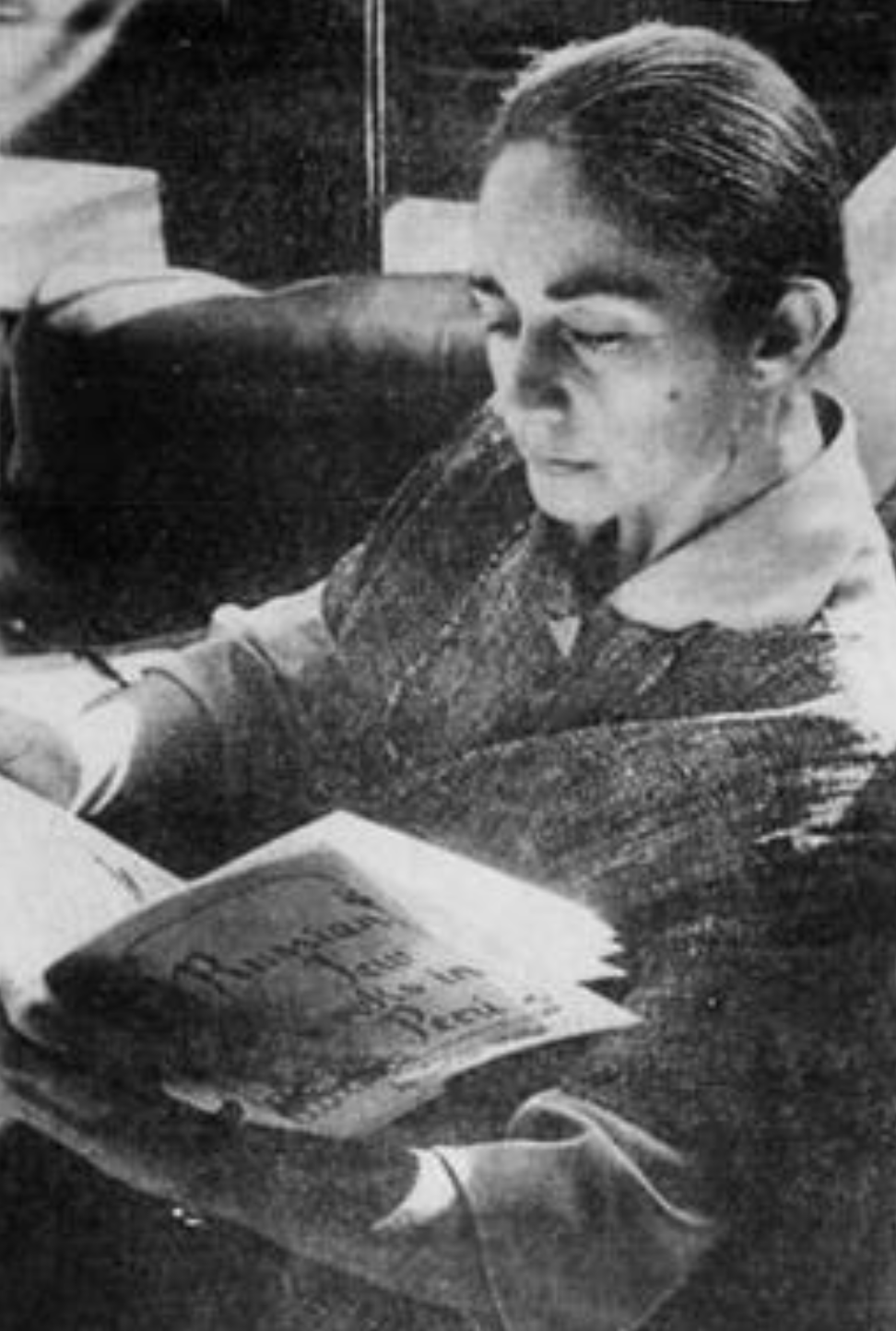
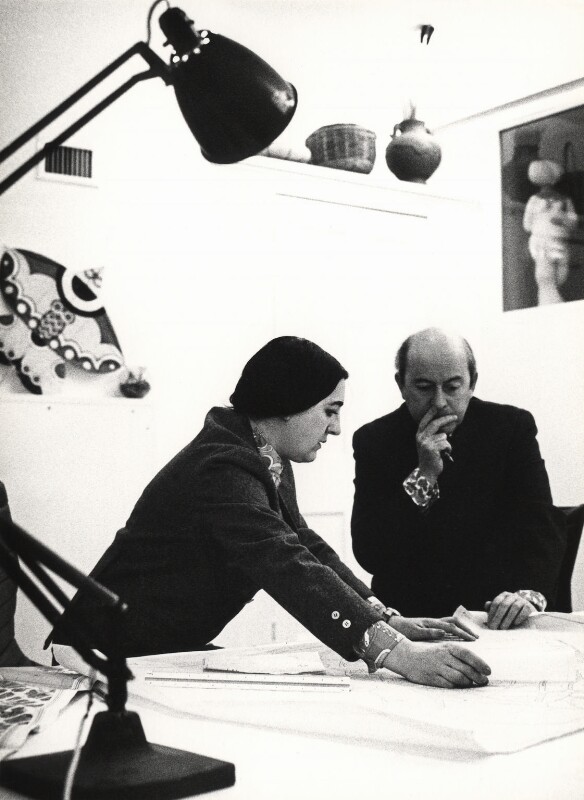
Woman in Architecture: Eulie Chowdhury

As part of our ongoing Women In Architecture series, we continue to honor the contributions of female architects who have shattered barriers and paved the way for future generations. Today, we celebrate the life and work of Eulie Chowdhury, the first woman architect of India, who left an inspiring legacy of perseverance and innovation with India’s most ambitious Modernist project. 

Early Life and Education
Eulie Chowdhury was born in 1923 in Uttar Pradesh, India. Growing up in a time when women’s roles were largely confined to the household, Chowdhury sought to disrupt those societal boundaries while building her career on a host of rich multicultural experiences derived from her early years spent traveling with her diplomat father. Schooled in Japan, Sydney and the U.S., Chowdhury had the freedom to become a steward of culture. 

Career
Upon returning to India in 1951, life took a remarkable turn for Chowdhury, when she had the opportunity to participate in the design and planning of the modern city of Chandigarh, working alongside some of the most renowned architects of her time including Le Corbusier and Pierre Jeanneret. Chandigarh, situated at the foothills of the Shivalik Hills, would become one of Le Corbusier’s greatest works and an iconic symbol of India’s post-independence architectural movement.

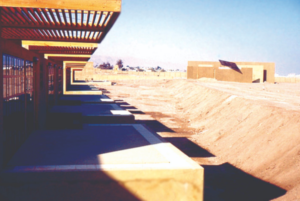
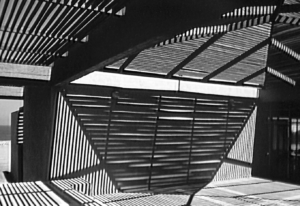
During the first phase of the Chandigarh project, from 1951-1963, Chowdhury worked on the High Court building, the first structure to be built by Le Corusier. She also helped with drawings of the Geometric Hill, Tower of Shadows, and Martyrs Memorial, some of the seminal structures of the city. 

Champion for Women’s Rights and Professional Involvement
Eulie Chowdhury was not only a pioneer in her profession but also a staunch advocate for women’s rights. She actively encouraged more women to pursue careers in architecture, inspiring a generation of female architects to follow in her footsteps.

Throughout her career, Chowdhury was involved in various professional organizations, such as the Indian Institute of Architects and the Indian Council of Architecture. She used her influence to promote the importance of women’s participation in the field and to create opportunities for the next generation of architects.

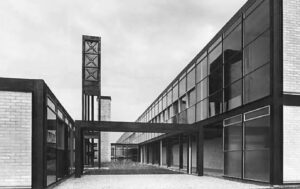
Government Home Science College, Sector 10, Chandigarh. Credit: Sarbjit Bahga on Wikimedia Commons. Licensed under CC BY-SA 4.0 Deed.

Legacy
Though Eulie Chowdhury passed away in 1995, her spirit continues to touch the world of architecture. As the pioneering woman architect who shaped India’s modern architectural landscape, her inspiring legacy of resilience, innovation, and groundbreaking achievements continues to hold incredible power. In celebrating Chowdhury’s remarkable story, we hope to spark the desire for current and future generations of women to chase their dreams and leave their own indelible marks on the world of architecture.

Villa Weil: A French Modern Masterpiece

We’re always moved by stories of lost-and-found in the world of great modernist architecture, and that’s just what we discovered in a recent article by Joseph Giovannini in The New York Times about a French Modern Masterpiece brought back to life by Dominique Perrault and Gaëlle Lauriot-Prévost, the architects leading the charge for master planning the 2024 Olympics in Paris.

Giovannini observes that for many architects, time is measured in the projects they undertake, and that every new project is an opportunity to create something meaningful and lasting. And when Dominique Perrault and Gaëlle Lauriot-Prévost — partners in life and in the firm of Dominique Perrault Architecture went in search of a weekend country house outside of Paris, they were looking to feed their desire to enjoy both the city and nature. As it turns out, they were also looking for a project that would leave a lasting mark on the world.

For years, Perrault Architecture honed their appetite for monumental projects, including the design of the National Library of France in Paris in 1989 when Perrault was only 36. In looking for a country home, on the other hand, Perrault and Lauriot-Prévost were motivated by the desire for something personal, something that would reflect their own tastes and sensibilities rather than building for others. 

They considered a host of options in their search for the right property, including repurposing a former factory. Nothing seemed quite right until a real-estate agent specializing in architect-built homes introduced the couple to a Modern masterpiece that had been largely forgotten — the Villa Weil, designed and built by Jean Dubuisson, a third-generation Parisian architect who came out of the École des Beaux-Arts to design Modernist housing blocks that helped build the infrastructure of France as it emerged from the wreckage of World War II. Villa Weil, situated in a protected forest near the medieval town of Senlis, north of Paris, was commissioned by the real estate developer André Weil and completed in 1968.

National Library of France
National Library of France. Credit: caribb on Flickr Creative Commons CC BY-NC-ND 2.0 Deed

Perrault and Lauriot-Prévost saw something special in the house, described by Giovanni as “a straight line of a building streaking across the landscape.” He writes, “Inside and out, the clean white planes, crisp machined corners and squared geometries are derived from International Style Modernism and recast into a new synthesis….The abstract lines and planes, like picture frames, bracket outdoor terraces that are landscaped like the Zen gardens Dubuisson had seen in Japan. Huge sliding glass doors recall the indoor-outdoor relationship of mid century Modernist California houses, by then well known in Europe.” 

But the home wasn’t without its issues, since it had languished for years without proper attention. They restored the house with exquisite attention to its original design and materials. Today, Perrault and Lauriot-Prévost enjoy the long-forgotten estate with their two dogs, furnished with original mid-century Modernist furniture sourced online. As Giovanni relates, the couple remains dedicated to “expanding the property to its fullest potential — the basement and barn are being turned into exhibition spaces for a variety of shows and a home for their collection of models and drawings.” At the same time, the vision of the owners is to design and build flats that will host resident artists, architects, and researchers as part of a study center that will expand the life of the semi-private villa into a campus for a larger architecture and design community.

Wilmette Landmarks: Robert and Suzanne Drucker House

As part of our Wilmette Landmark series, today we’ll cover a home steeped in an architect’s very own familial bonds. A home that has been on the National Register of Historic Places since 2013 — The Robert and Suzanne Drucker House. Designed by one of Chicago’s iconic Modernist architects, Harry Weese.

An Overlooked Modernist

His practice was inexhaustibly creative. Rooted in the Modernist and Brutalist architectural styles which laid the groundwork for efficient and functional living spaces. His most famous work, the Washington Metro system, not only showcases Weese’s unique design approach but also illustrates how he prioritized the user experience with his coffered concrete vaults and meticulous attention to detail. Weese never shied away from innovation, all the while quietly detaching himself from the architectural dominance of Mies van der Rohe and Frank Lloyd Wright.

The Drucker House

Quietly closed off from view, the front of the Drucker home is a wonderful expression of Weese’s personal brand of Modernism — a synthesis of International Style, Scandinavian, and Midwestern influences. The home’s geometry is obscured by slatted screens and maturing cedar trees. The house is L-shaped. Consisting of two wings running parallel to the street and the other angled in a way that allows for sunlight. This L-shaped arrangement also allows for an expansive view of the front yard.

The back of the home, on the other hand, embraces its deep rectangular lot and thoughtfully placed windows. Along with a screened porch resembling film reel that takes advantage of natural light to cast the home’s image. The indoor and outdoor living space almost seem to be brought together through this effect, all while maintaining complete privacy.

Side view of Robert and Suzanne Drucker House
Side view of Robert and Suzanne Drucker House. Photo: Susan Benjamin

Weese built the Drucker house for his sister Suzanne and her family. It largely reflects Weese’s experimental approach to Modern design, and is informed by geometry rather than ornamentation. Furthermore, the house exhibits a remarkable focus on flexibility instead of adhering to a traditional layout that — when combined with how the Drucker family lived — created a universally functional residence that could accommodate the family’s lifestyle.

In its interior, the home is compartmentalized into zones delineated by screens and bookspaces. Each room flows effortlessly from one to another, the kitchen in particular being planned with convenience and ample storage in mind. In 1963, as the Drucker family began to grow, a second floor was added to provide more space.

As Optima® continues to embrace all that Wilmette has to offer, taking the time to highlight unconventional pioneers who blurred the boundaries of style and functionality is always a pleasure. We encourage you to take a slow drive to see this magnificent home and all that it has to offer on 2801 Iroquois Rd in Wilmette, IL.


How Space Affects Mood

Today, virtually every aspect of daily life seems to bring a measure of stress. And when thinking about how to cope, it’s reassuring to turn to science, where research studies continue to point to the fact that human health and the spaces in which we live, work, and play directly correlate with stress levels and mood. Since our earliest years and projects, Optima® has championed the primacy of interior space, and we continue to celebrate its importance for each and every one of our residents — including giving a few tips on how to make the most out of one’s own space!

The Importance of Natural Light

Previously, we’ve spoken about the positive effects of an abundance of natural light and expansive windows and the critical role they play in adhering to our principles of Modernist design. Sunlight alone holds many benefits that go beyond the physical. It helps increase serotonin and endorphin levels, two hormones that significantly boost our mood.

What simple steps can you take to maximize natural light in your space? Start by arranging mirrors to reflect light, making sure you’re not blocking light with furniture, and rethink the use of dark drapes or shades.

Natural light at Optima Lakeview®, Chicago, IL

Perception

The impression a space makes affects your mood, as well, and happens on an immediate and intuitive level as your mind and body engage with the physical environment. Picture an expansive living/dining area with floor-to-ceiling windows where you are drawn to gather with family and friends (or curl up with your pooch). Juxtapose that impression with what you would feel when entering a cluttered, dim room with little space to move around.

Take advantage of the layout of your space to maintain a sense of effortless flow in and around furniture and built-in elements, and keep piles and stacks to a minimum!

Introducing Color 

Color isn’t merely visual eye candy, it provides a psychological experience, as well. Beyond the sense of tranquility that the Modernist palette of monochromatic tones of gray, white, and black offer, expanding your space’s palette can make a world of difference in boosting your mood. 

Extending a hand to vibrant colors like red, yellow, or orange can give you feelings of passion and comfort. Cooler colors on the other side of the spectrum, like blue, green, and purple, can be peaceful, calming, or comforting. Sprinkling bits of color throughout your space is a surefire way to add a new emotional dimension to the environment and enhance your mood. 

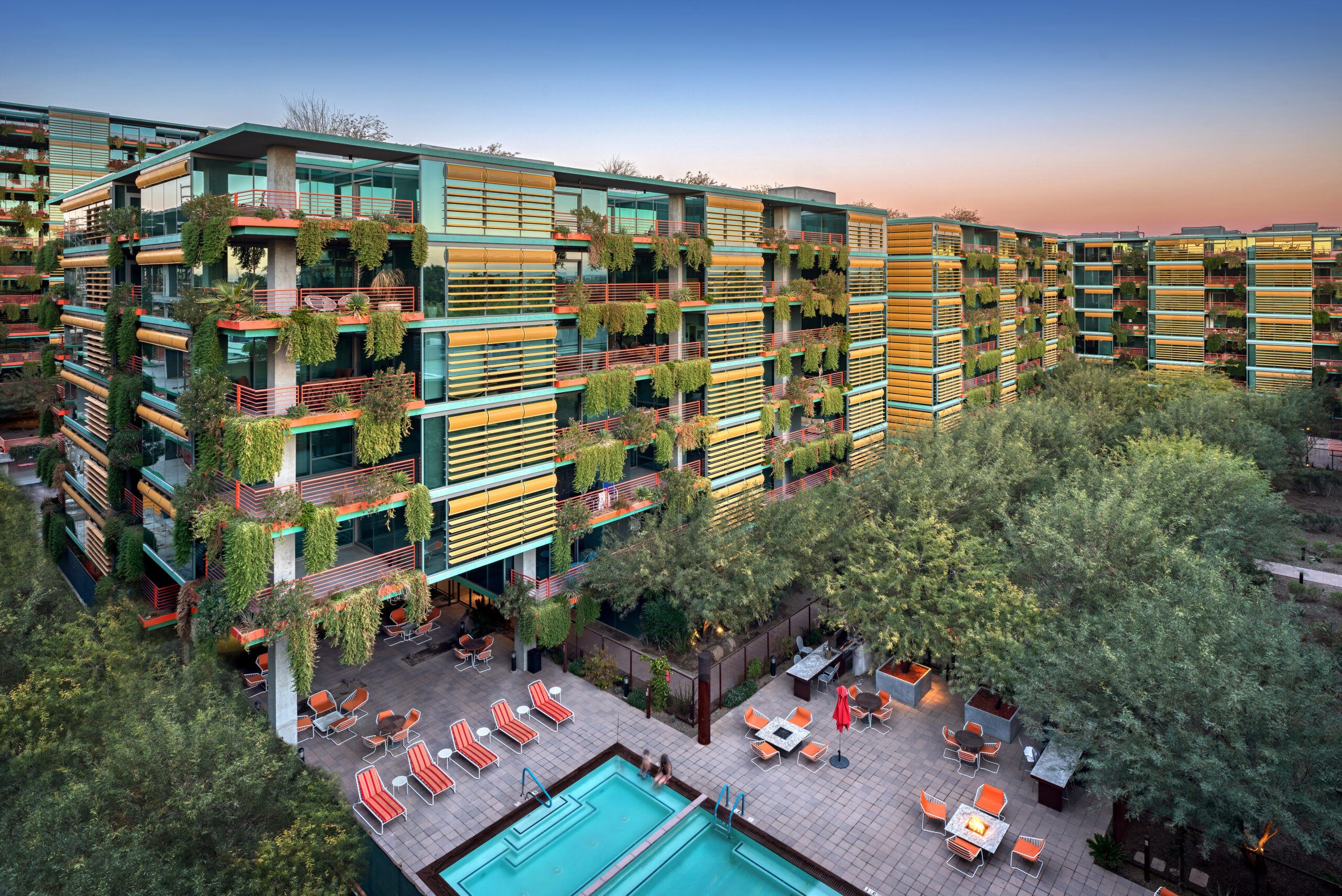
Terrace gardening at Optima Sonoran Village®
Vertical landscaping at Optima Sonoran Village®

Budding Companions Can Increase Mood

We’ve written in the past about the mental health value of introducing budding companions such as house plants or flowers into your space, based on the results of comprehensive studies that show how the presence of plants improves concentration and memory retention while also reducing stress.

Make a regular habit of keeping plants and flowers around your home, and enjoy their affect of reducing the likelihood of depression and increasing positive feelings — in addition to the aesthetic beauty they provide.

From the feedback we continue to receive from Optima® residents, living in one of our communities sets the stage for high spirits and upbeat moods. With “great bones” in the design of our residences, optimized for openness, materiality and light, the opportunity to transform living space into home becomes a joy.

Why Xeriscaping Matters

As with many books, movies, and other forms of American-focused media, you’ll often find images of a lush green lawn, situated flush against a modest home. Unfortunately, to keep these lawns green all-year-round requires a good deal of water and upkeep. And with climate change and longer droughts looming, the need for a more environmentally-effective system of water conservation has become urgent.

At Optima®, we often talk about how the architecture of a residence and the land it inhabits can ultimately affect the landscape. For us, the conversation around, “How will this new structure affect the land around us?” remains central and compelling. As with all of our Arizona properties, it has been vital to embrace different forms of landscaping in order to design and build more environmentally-viable spaces that reduce the amount of water being used in more arid climates. Enter xeriscaping as one of our go-to solutions.

Xeriscaping in the simplest of terms is the practice of designing landscapes to reduce or eliminate the need for irrigation. This means xeriscaped landscapes need little or no water beyond what the natural climate provides. This way of landscaping can be traced back to the early 1980s, originating in Denver, Colorado, and has become widely popular in some areas because of its environmental and financial benefits. 

The importance of xeriscaping lies in its power to nurture vegetation that can survive with little to no water. Trees such as myrtles, and flowers such as daffodils are known as “drought-tolerant” and can thrive in dry climates, making them appropriate for a landscaping system such as xeriscaping.

Xeriscaping can reduce water usage by 50 or 75 percent. This in turn saves literally tons of water and money for any given community. Another critical component of xeriscaping is installing better and more efficient irrigation methods. One way this can be achieved is through grouping different types of plants together with similar water needs.

Today, the Optima® team is focusing on the landscaping design for Optima McDowell Mountain Village®, with a focus on water conservation and a 210,00-gallon storm water tank that will repurpose captured water for irrigation. There will be much more to share on this topic in the months ahead!

person name goes here

Maintenance Supervisor

Glencoe, IL


    Acceptable file types: *.pdf | *.txt | *.doc, max-size: 2Mb