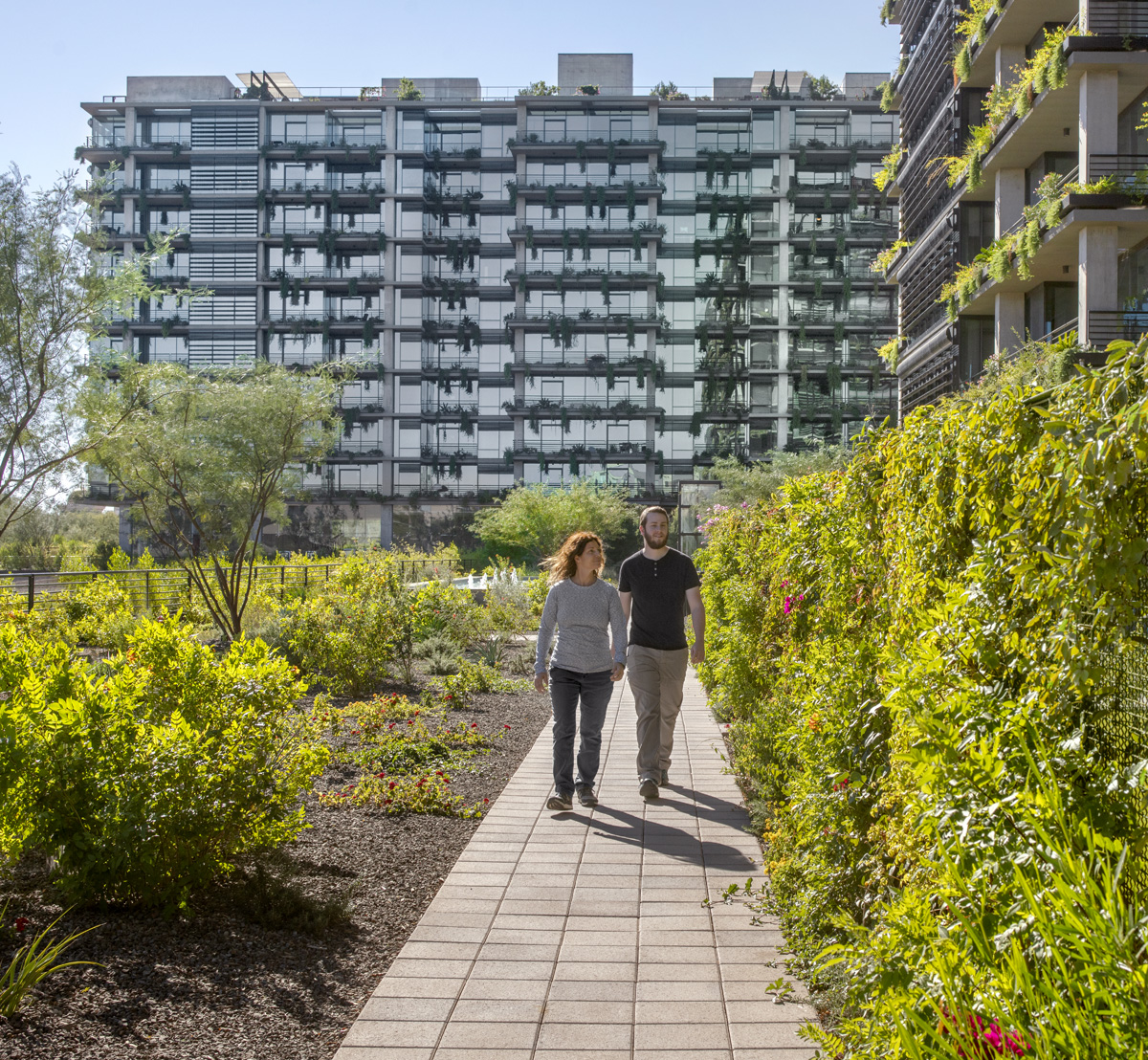
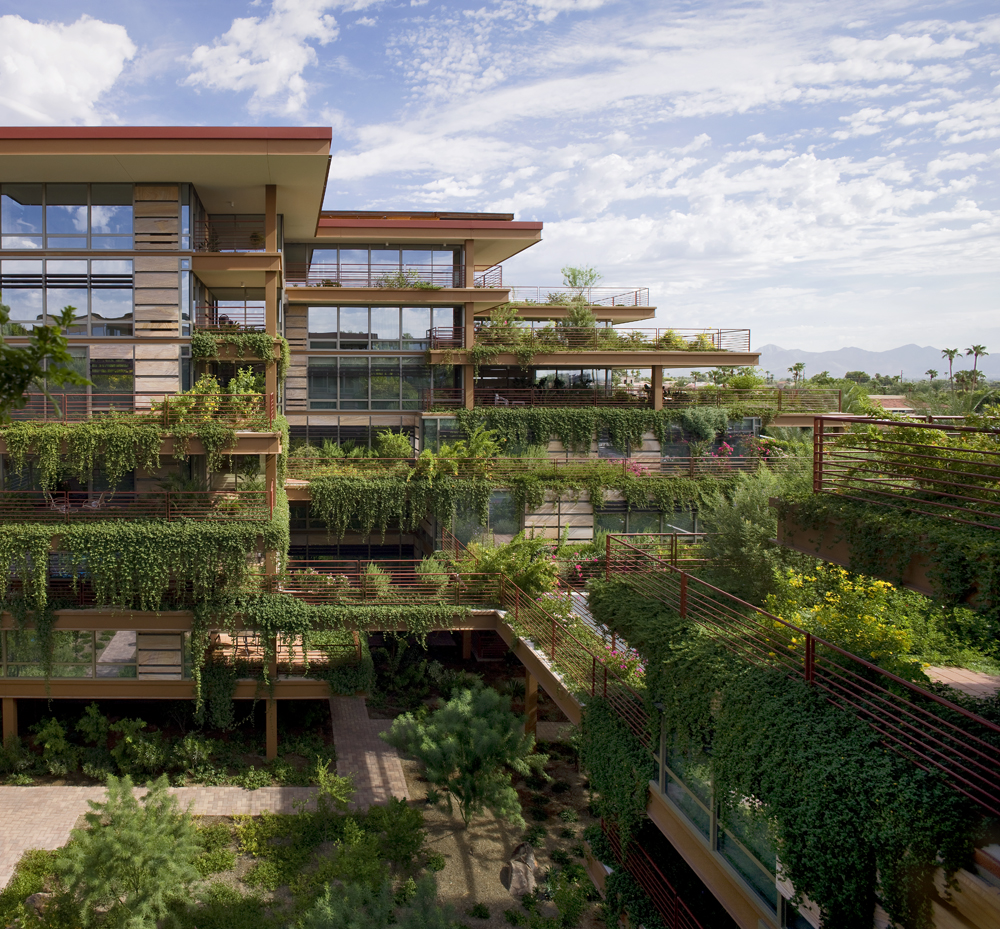
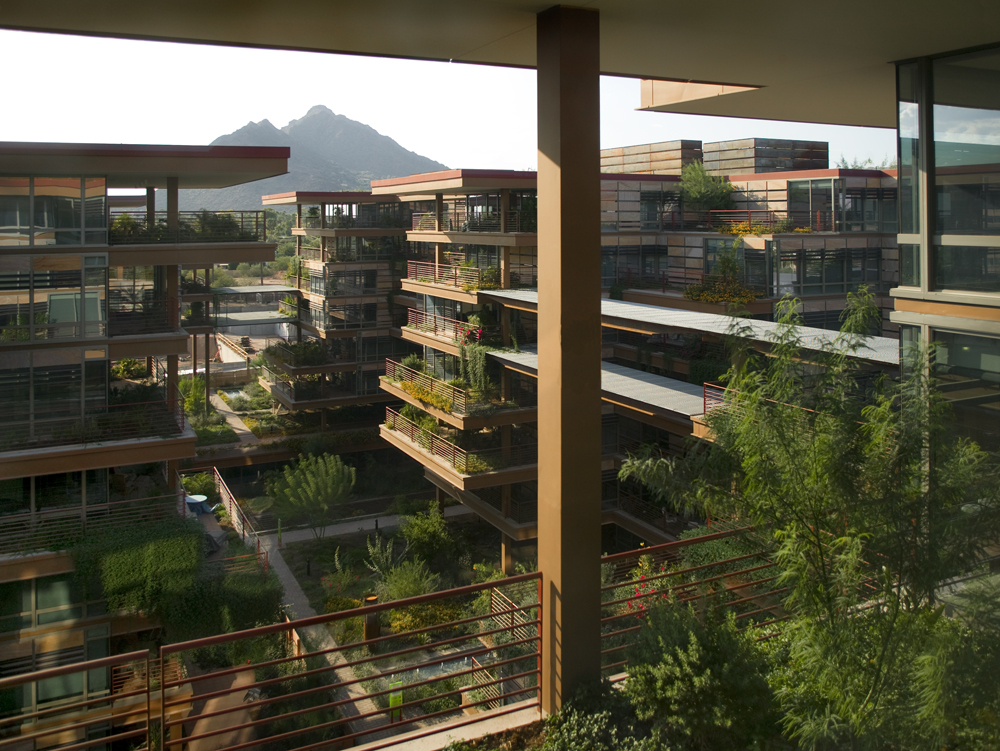
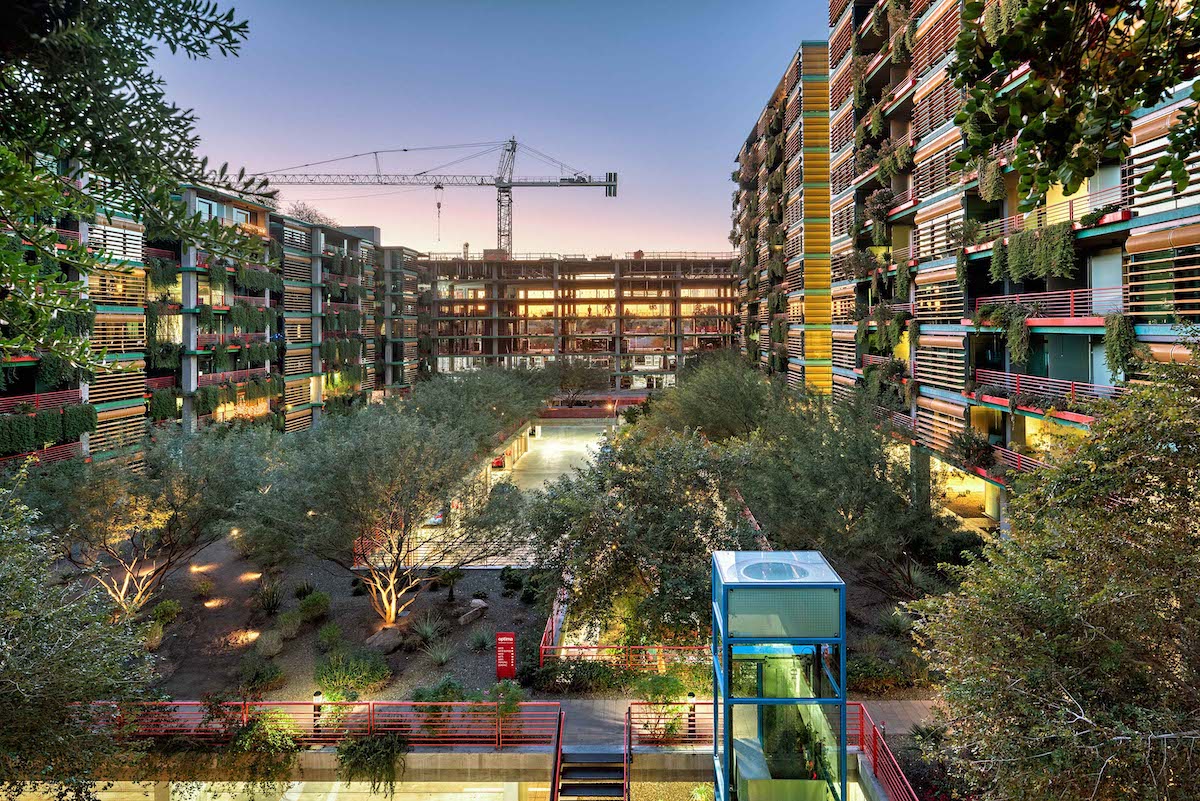
As we began construction on Optima Kierland Center, we envisioned a beautiful community that embraced the desert surroundings and welcomed residents and visitors alike with beautiful Modernist design and, of course, gorgeous green space. A multiphase development project, each building within Optima Kierland Center is connected to the others through aesthetic structure and physical pathways amidst lush gardens. More than 5.5 acres of landscaped open space create a park-like setting for both our neighbors and our residents.
Within the building, our innovative vertical planting system features self-containing irrigation and drainage, including the vibrant and colorful planters at the edge of each floor. The system ultimately culminates into a beautiful rooftop garden, one of the many amenities throughout the building. Within the individual residences, hanging gardens and expansive, private terraces bring the outdoors in, perfectly designed to let our residents enjoy the surrounding greenery.
As with all of our projects, we designed Optima Kierland Center to take advantage of the beauty of the surrounding environment and to integrate our design with soft, natural elements. Working in tandem with our expansive amenity spaces, our green space gives Optima Kierland Center residents endless opportunities to enjoy — and be a part of — the outdoors. With the next two towers underway and with 7180 Optima Kierland 50% sold, we eagerly await the completion of what will be a truly stunning community.
As 2019 comes to a close, we reflectively look back on all that’s happened throughout a busy and exciting year. Our team, projects and Optima as a whole have experienced tremendous growth over the last twelve months. Here are just a few of the highlights:
Awards
Our team was honored to win five awards, including AIA Chicago Divine Detail award for Optima Sonoran Village, Architecture MasterPrize and Architizer A+ Finalist Award for Arizona Courtyard House, American Architecture Award for Whale Bay House and Build Magazine’s Luxury Urban Housing Designer of the Year.
Projects and Properties
This was a big year for development, construction, leasing and more.
In Arizona, we completed construction and leased up Optima Sonoran Village Phase III, the fifth and final tower at Optima Sonoran Village. 7120 Optima Kierland sold out – and was the fastest selling community in the Valley. We launched sales at 7180 Optima Kierland and are already over 50% sold. We also began construction on both 7140 and 7180 Optima Kierland, both slated for completion in 2020. We also purchased new land in Scottsdale to develop new Optima communities.
In Illinois, we leased up 100% of our commercial and retail space at Optima Signature including business suites. We also purchased new land in Chicago and the North Shore for new developments.
We also launched Optimized ServiceTM, a next-level white-glove approach to our concierge experience.
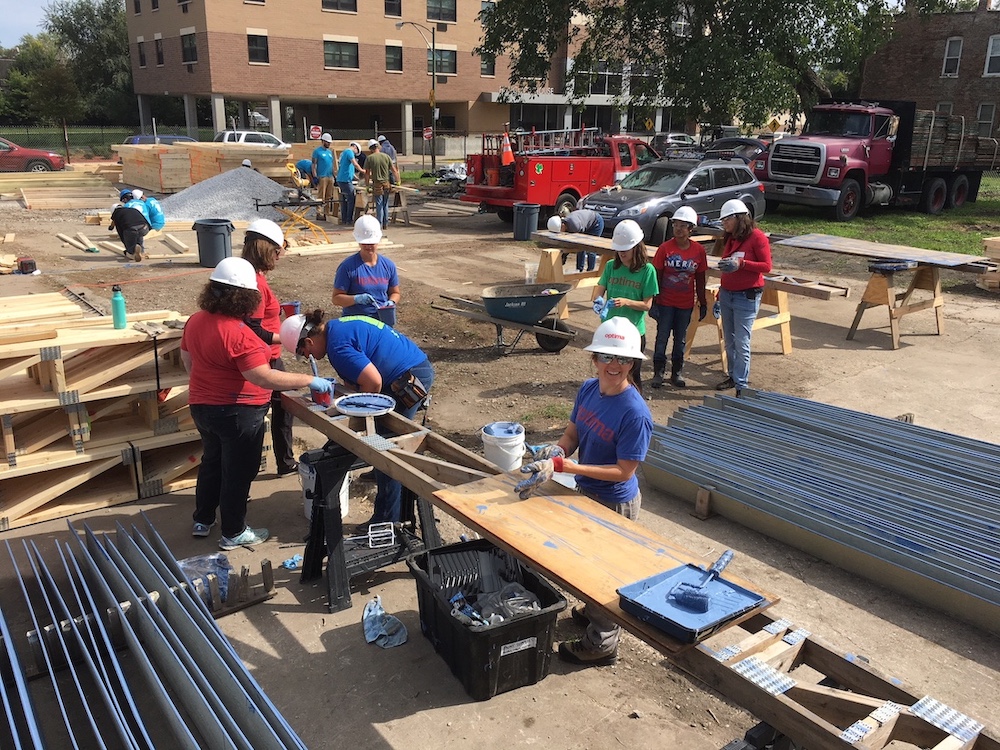
The Optima team volunteering for Habitat for Humanity.
Culture
Working across our entire organization, we formalized our purpose statement and core values to reflect our growth and inspire our path forward. We volunteered: we spent the day with Habitat for Humanity in both AZ and IL, cleaned up the Skokie Lagoons in IL, and worked with animals at Amy’s Farm Sanctuary in AZ. We had fun: we enjoyed axe throwing, bowling, go karting, beaches, barbeques, concerts and high tea. We also learned: our team attended the Metropolitan Planning Council lunch, the TCN Women in the Forefront Luncheon, the Goldie Gala, the Chicago Build Expo and NAA Apartmentalize.
We can’t thank our leadership, team members and supporters enough for such a fantastic year. As we look towards 2020, we look forward to the new year to come, new milestones to pass and new ways to innovate across our upcoming projects.
Across all of our projects and properties, we believe amenities are essential to building wellness-focused, holistic spaces. From our single-family homes to our multi-family residences, we carefully curate our outdoor and indoor amenities to reflect these values. One of our favorite applications is utilizing our rooftop areas, particularly in our multi-family residences. Although rooftop gardens and green spaces have existed since the Hanging Gardens of Babylon, new technologies have allowed us to expand into sophisticated, expansive systems of features. Optima began using green roofs in Chicago back in the early 1980s, and have evolved our practice to include both green space and amenities throughout our properties in Arizona and Illinois.
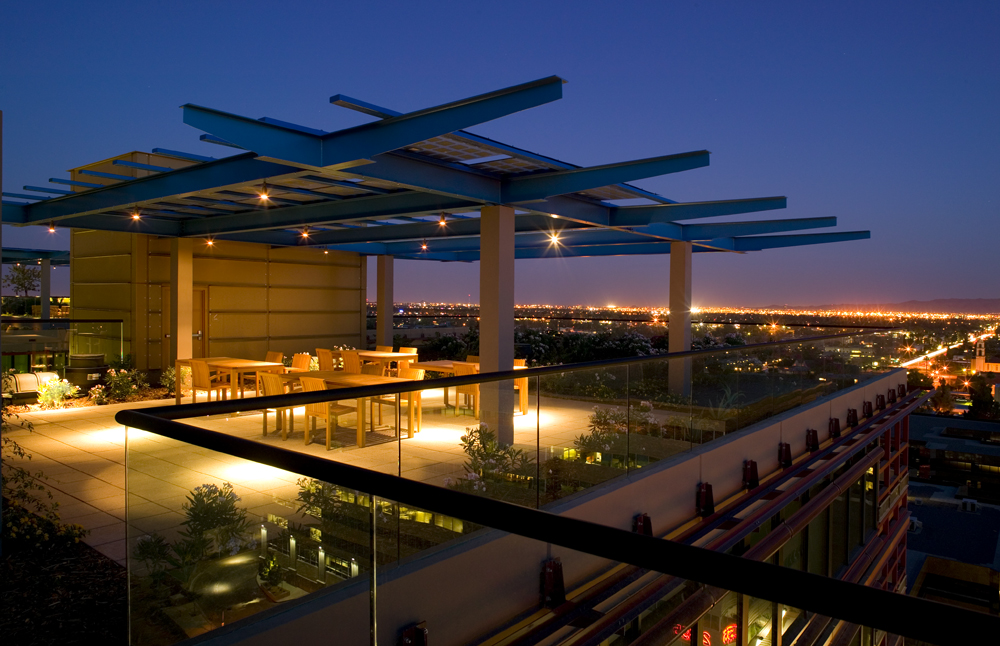
The rooftop views from Optima Sonoran Village.
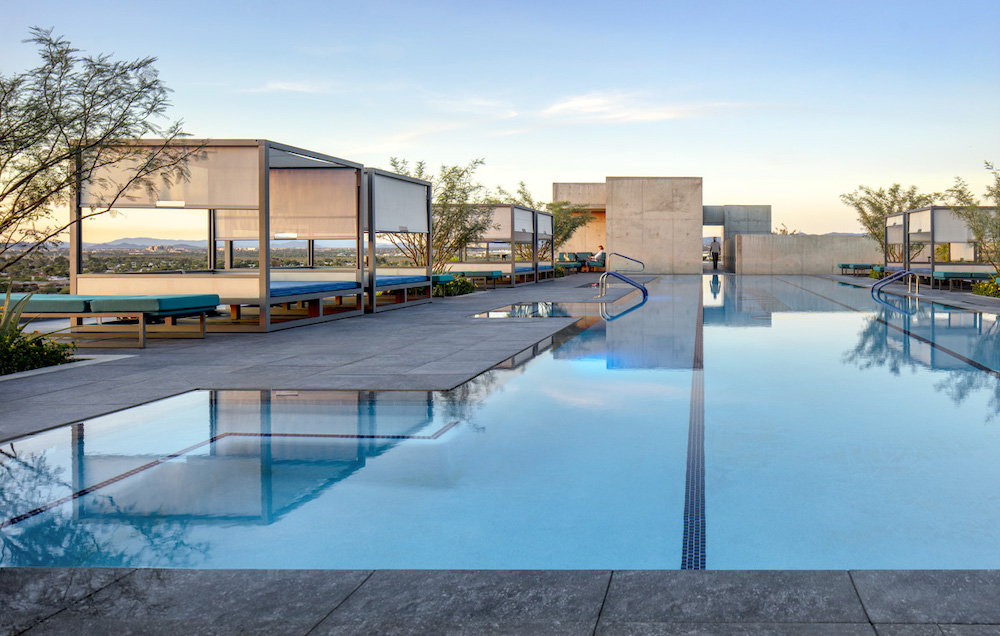
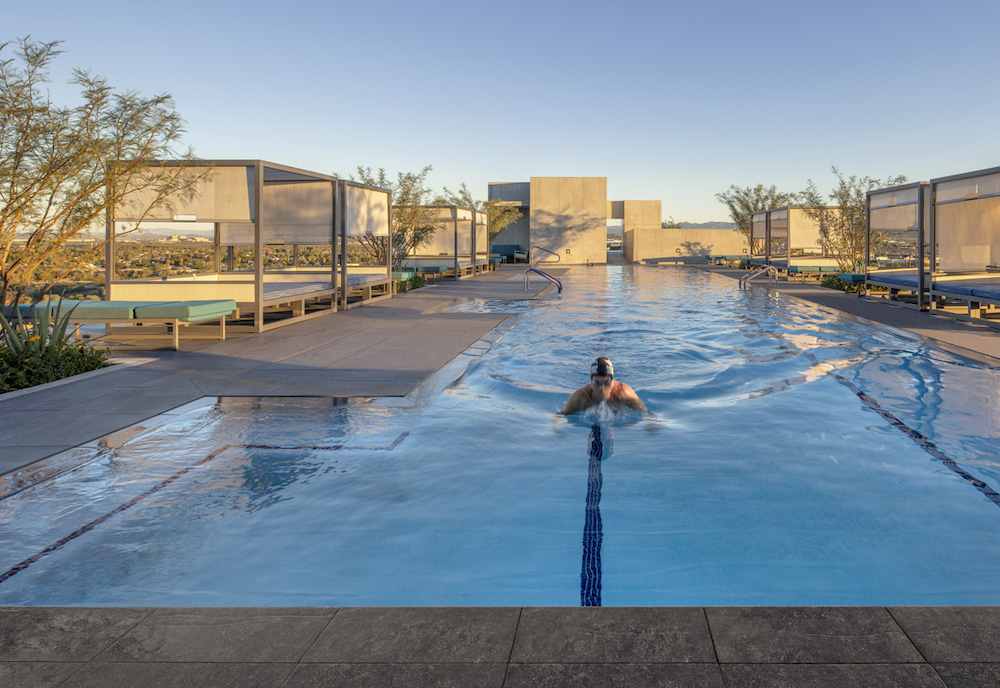
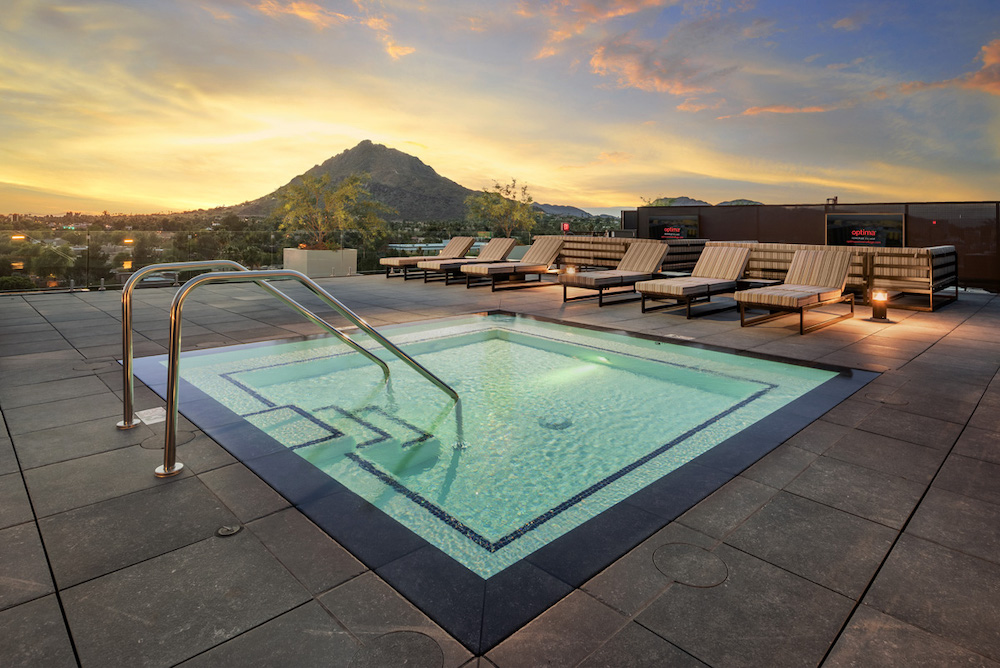
One of our favorite aspects of moving out to Arizona was creating outdoor spaces that celebrated and embraced the desert atmosphere. Our Arizona rooftop amenities include heated pools, built-in seating areas, spas,cold plunges, rooftop running tracks, outdoor yoga studios, entertaining spaces with barbecues and fire pits, and of course, panoramic mountain views. At Optima Sonoran Village in particular, we maximized the small footprint of the building to offer incredible views of Camelback mountain and to create socializing space for residents.
With state-of-the-art features and unparalleled views of the surrounding environments, our rooftop spaces across our Arizona projects create the perfect backdrop for time spent outside with loved ones.
The rooftop at Optima Chicago Center.
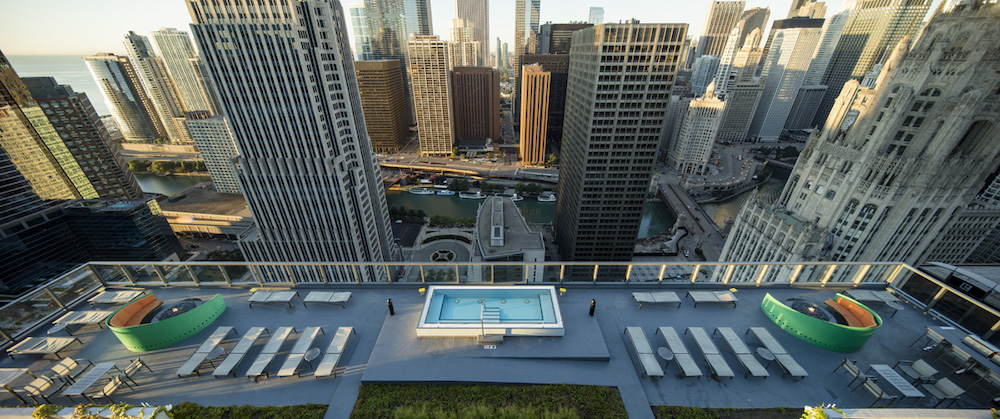
Despite the cold Chicago winters, our projects within the city still take advantage of their rooftop space for dynamic city views and amenities for our residents to enjoy. With outdoor heated swimming pools, cabanas and bars, outdoor saunas and steam rooms, outdoor terraces, fire pits, herb gardens, dog parks and outdoor children’s play areas, both Optima Chicago Center and Optima Signature feature plenty of enticing areas and activities.
Our building amenities are an integral step in our process of creating functional, beautiful and welcoming spaces, and in utilizing our rooftops, we extend our creativity into designing desirable, innovative outdoor space.
Our design is often driven with sustainability and efficiency in mind. This leads to the thoughtful incorporation of unconventional materials in many of our projects — whether that be for the exterior facade or an interior accent. One such detail, the redwood in the lobby at Optima Signature, is an unconventional material that serves to juxtapose the strength of the building’s steel-and-glass exterior.
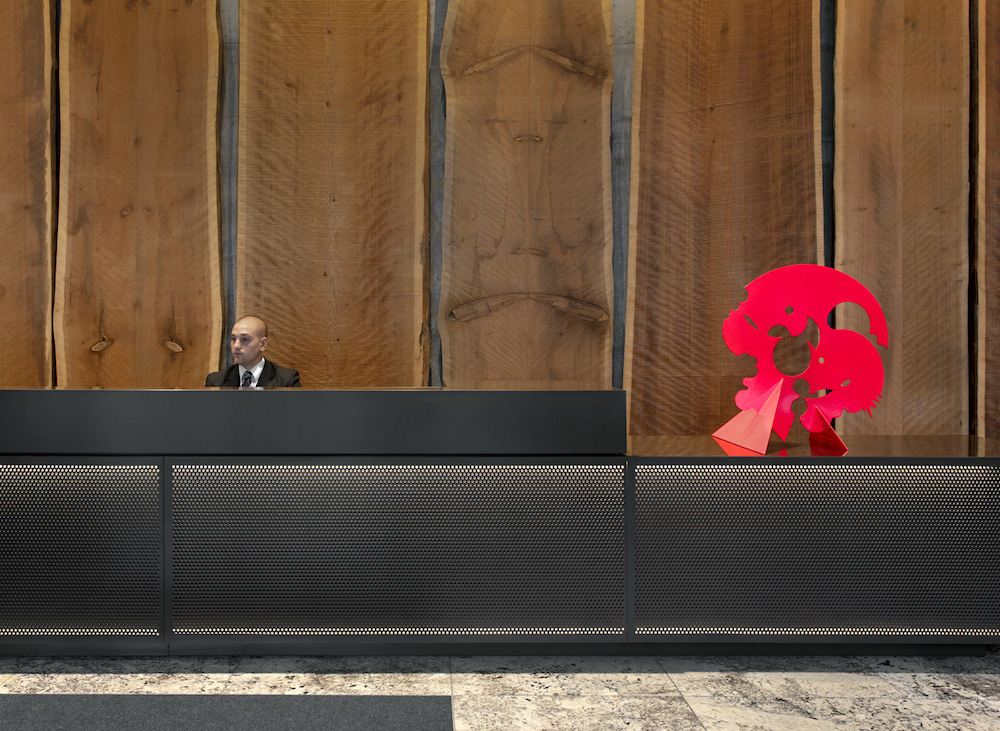
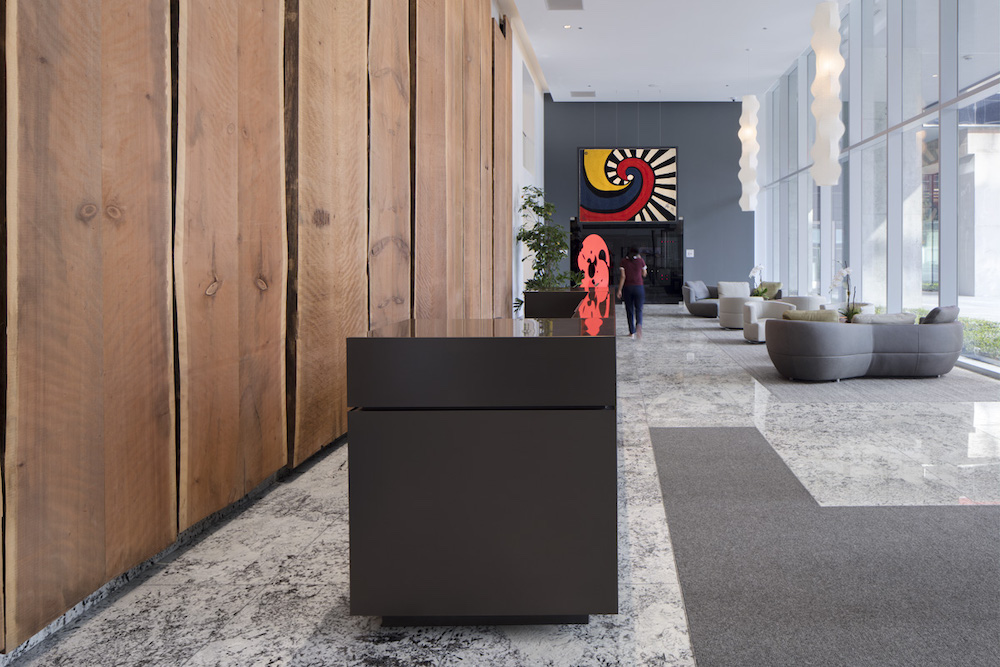
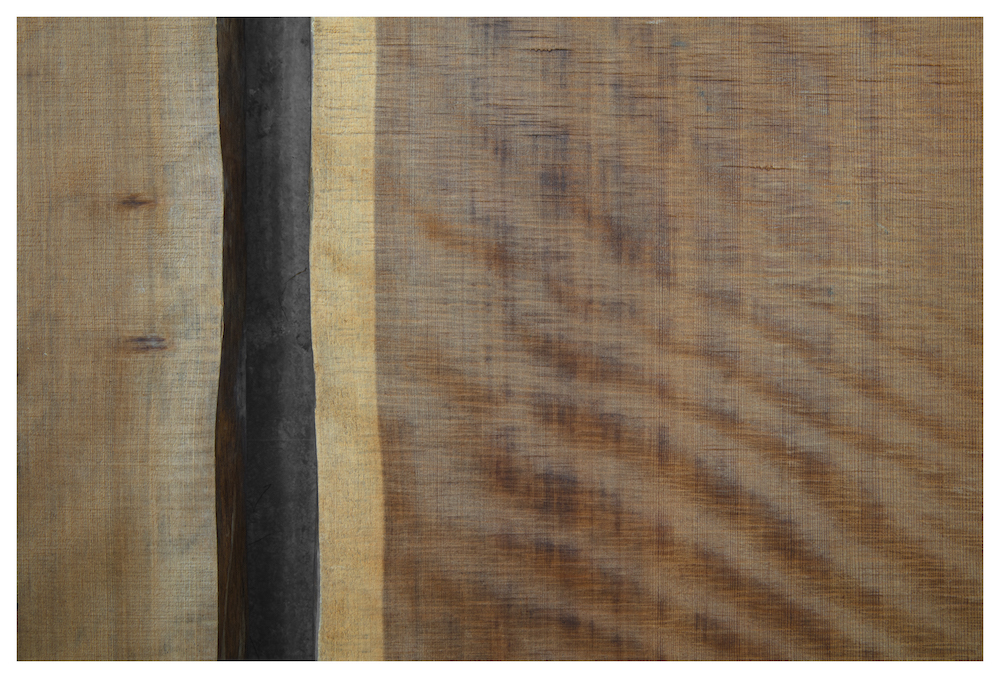
A striking statement throughout the Optima Signature lobby, the barge wood adds a soft, natural texture behind the front desk, creating a stark contrast to the surrounding steel and glass. The wood lines the north wall of the lobby in long planks and is the first sight to greet residents and visitors when they enter the building. Though now on display for all in our community, the wood came all the way from California in the 1850s.
Barge wood in the lobby at Optima Signature.
The planks are redwood, formed from one massive log that sat on the bottom of the Big River in Mendocino California. This particular log was a “sinker,” the name given to the handful of logs that unfortunately sank during their river journey from a redwood forest to the sawmill at the mouth of the Big River, not far from San Francisco.
For over 100 years, the log sat at the bottom of the Big River, until it was salvaged by Arky Ciancutti. Ciancutti began a redwood salvage business in the 1970s, raising large redwood logs that had previously sat forgotten at the bottom of the river. This particular log, Ciancutti determined, was from the first growth period of the redwood forest. He knew this because it was more than six feet in diameter and had axe-shaven markings at its ends, indicating that it was cut down, prior to the invention of the “raker tooth” saw of the late 1800s.
A close-up look at the barge wood at Optima Signature.
Having sat in the river for over one hundred years in mineral-rich water, this redwood log developed a truly rare and unique “curl” pattern within the grain of the wood. To highlight this unique feature, the wood was cut into three-inch-planks that ran the full length of the log. We then carefully installed these planks, with their raw beauty intact, leaving the live edges of the wood as is. The planks were then hung vertically in the lobby space, the orientation the same from which they grew.
From a river in California to the lobby of a Chicago residential building, our barge wood at Optima Signature has a unique story that connects our urban lobby back to nature, and reflects our commitment to sustainability and longevity.
A hallmark of Optima properties is our integration of the built environment with the natural. Oftentimes, we employ terraces—level platforms incorporated into buildings that allow for plantlife to thrive—that allow our buildings, and their residents, to live in harmony with the surrounding landscape. The usage of terraces is one that dates back for over 12,000 years, evolving over the millennium to be the sophisticated components of urban architecture that they are today.
Terraces of Ancient Times
The word terrace is derived from terra, the Latin word for earth. The technique has been in use for over 12,000 years, first utilized as an ancient farming method in hilly regions. Agricultural terracing involved cutting the land into a series of successively receding flat platforms, much like steps, to allow for more effective farming, by decreasing erosion and surface runoff and increasing the effectiveness of irrigation.
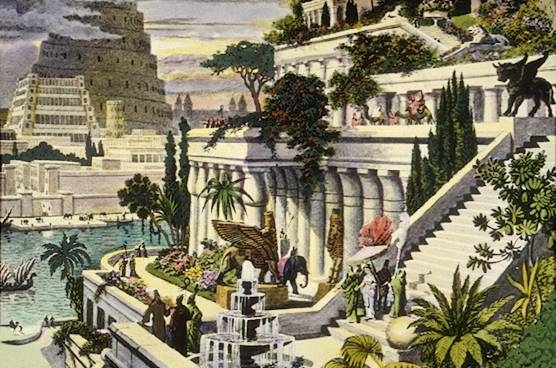
An illustration of the Hanging Gardens of Babylon.
In 9800 BC, ancient civilizations realized that they could adapt this technique to buildings, and they began to add terraces to their homes and other domestic structures. This first usage was seen across the globe, from the Middle East to the Pacific Islands. The most famous interpretation is undeniably King Nebuchadnezzar’s Hanging Gardens of Babylon, one of the Seven Wonders of the Ancient World. Although no actual proof of its existence has been found, depictions show an ascending series of tiered gardens abundant with plantlife, complete even with a waterfall.
Thousands of years later, from 3000 BC – 600 BC, Mesopotamians grew gardens atop ziggurats, terraced religious temples that allowed for religious spaces to become placed ever higher. The structures were placed upon many layered platforms, and it’s believed that ziggurats were what inspired the Biblical parable The Tower of Babel.
Terraces continued to be integrated into homes. Around 1500 AD, Venice adopted terrace design to the tops of their homes, called altanas. Altanas were private, slat-floored roofs. They started out as a place to hang laundry out to dry, but continue to be used today as social spaces.
The terraced design of Optima Camelview Village.
Terraces in the Modern Age
Following the progression of altanas as a place to socialize, people began more and more to use the terrace as a location to congregate in privacy. Private rooftop and per-unit terraces became luxury amenities in the 1920s, when building height began to increase due to the adoption of the elevator. At that time, terraces become a status of wealth, allowing for privacy, fresh air and separation from the increasing bustle of life on city-level.
Today, the use of terraces continues to flourish, finding increased purpose and urgency in response to population growth and a changing environmental climate. They provide private places to reconvene with nature, away from the bustle of the city. Terraces also create sustainable and contributive space, by providing thermal insulation, solar shading to mitigate air pollution, increased biodiversity and enhanced quality of life.
At Optima, we incorporate terraces to create private social space, to integrate nature into our communities through our signature hanging gardens, and to contribute to our sustainability practices at many of our properties, including Optima Camelview Village, Optima Sonoran Village and Optima Kierland. Terraces at Optima serve as outdoor living space, connecting the outdoor and indoor for a seamless living experience. From agricultural beginnings, the terrace stays true to its roots, allowing us to find harmony with nature.
In a recent New York Timesarticle, author Karrie Jacobs wrote that the “hard barriers between the designed environment and the natural one are softening — maybe for good.”
Jacobs went on to say, “Designers today are rebalancing the relationship between architecture and nature, with the goal of increasing the quality of life, especially in urban settings.”
The NYTimes article features several new and innovative works by global architects who are designing to fuse outdoor and indoor, with structures that are both influenced by and have influence on their environment. We love to see the innovation taking place throughout the architecture world, and the continued conversation surrounding how design can evolve to appreciate nature.
From the beginning, our work at Optima has celebrated this fundamental connection between design and nature as a way of enhancing the human experience. Since our founding in the late 70s, we have been utilizing Modernist design to create homes that are an extension of their environment and integrate nature into the lives of those that live in them.
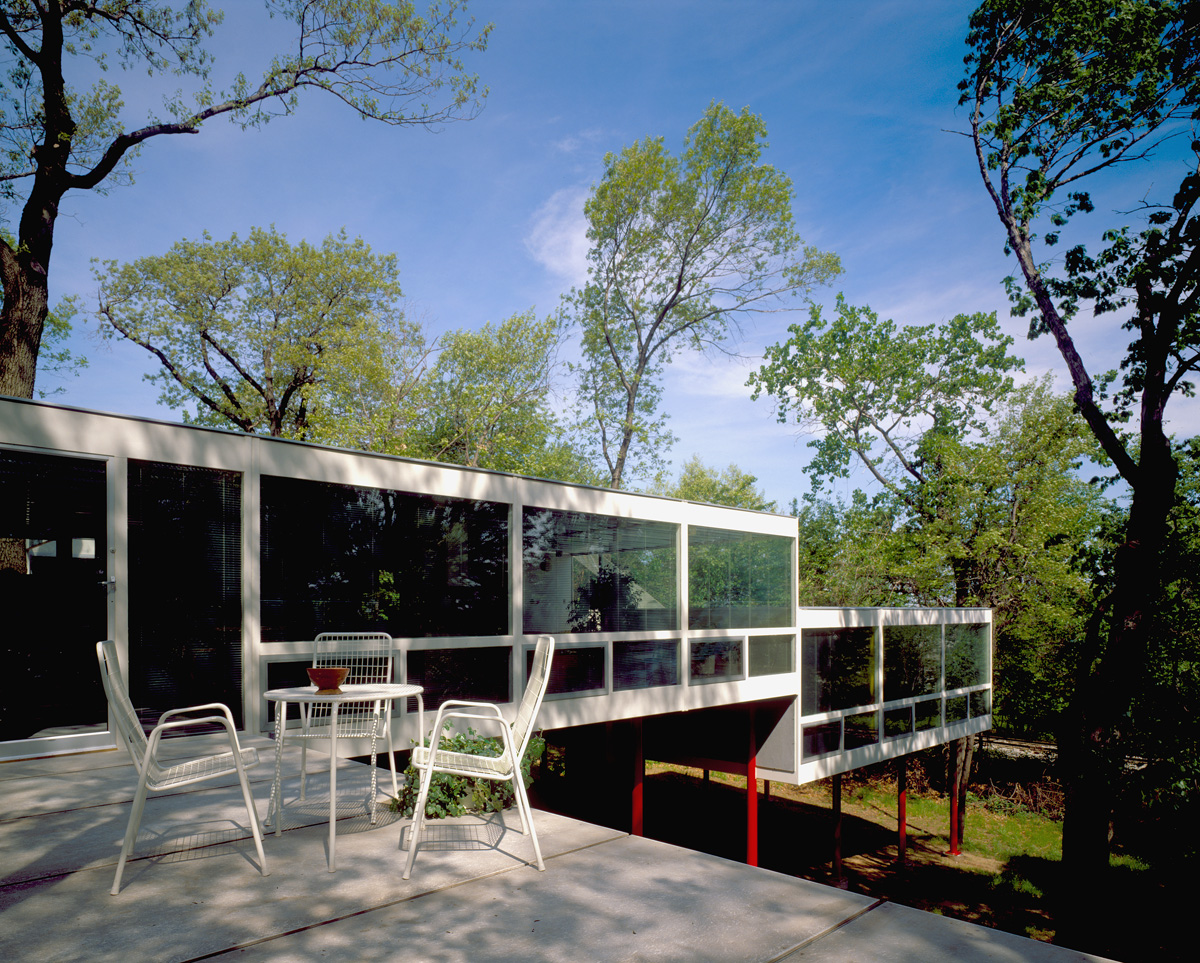
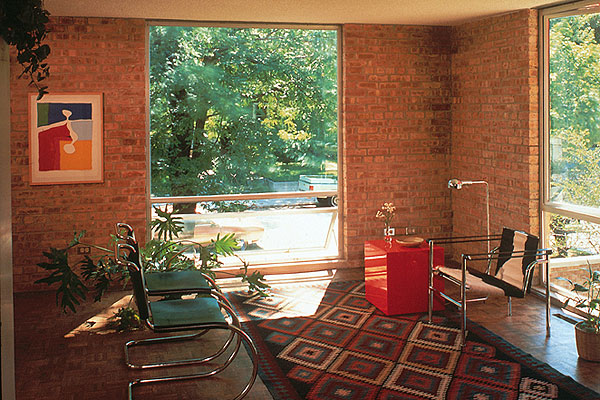
Sandy Knoll, Optima, Homewood, Illinois
One of our first residences, Sandy Knoll, demonstrated how modular housing could integrate a home into a steep, challenging wooded knoll. What resulted was a beautiful home that preserved the integrity and grace of its site, with mature trees and local Illinois vegetation creating the views out of glass-paneled walls.
Since then, we have continuously challenged ourselves to evolve new ways of incorporating nature into our design. Green space has always been a large component to the communities that we build, and our move to Arizona has only deepened our intimate understanding of landscaping.
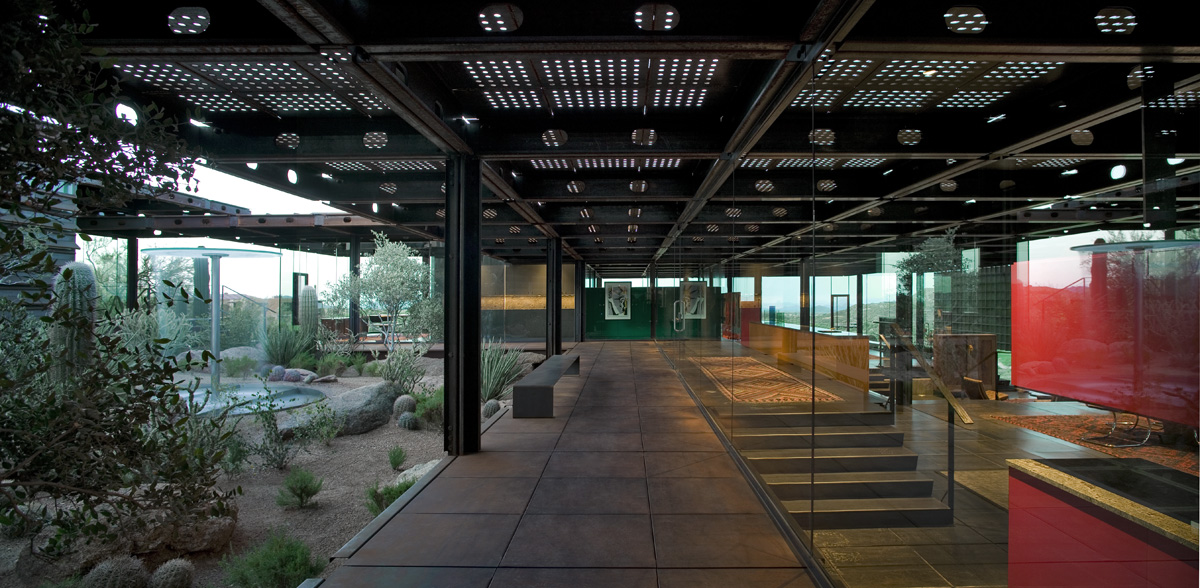
Relic Rock, Optima DCHGlobal, Scottsdale, Arizona
Our desert dwellings incorporate the elevation, vegetation and climate of the desert into every facet of design, from bridged courtyards to the materials and colors used for each home’s exterior. Glass curtainwalls also provide uninterrupted, panoramic views of the sweeping landscape, so that the mountains of the desert feel a part of each home.
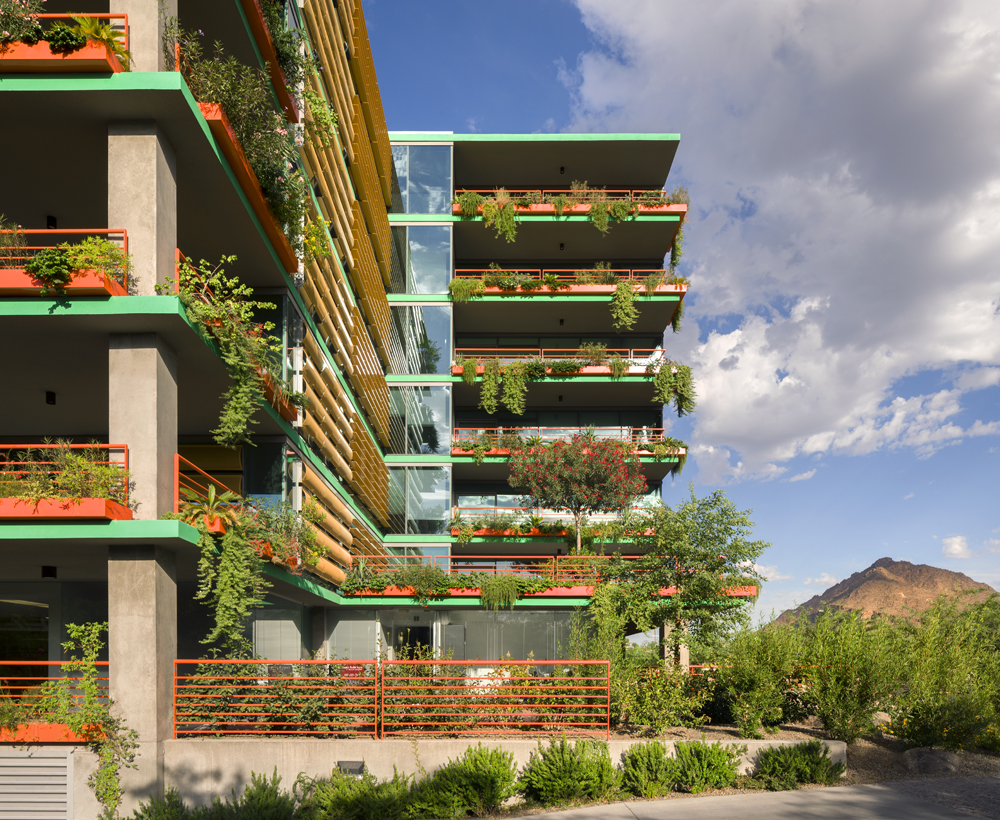
Optima Sonoran Village, Scottsdale, Arizona
In our multifamily work, we incorporate the Optima vertical landscaping system to create protection, privacy and beauty. For us, lush landscaping vertically and horizontally across our communities is an integral part of creating connection – a connection that is both physically inviting and spiritually inviting, as our design seeks to connect people with their surrounding environment.
We look forward to the future, to constantly pushing the boundaries and exploring how to further unify the built and natural environment. We’re excited that the work we do is part of a larger conversation in the architecture world and can’t wait to see what we, and others, do next for architecture and for the earth.
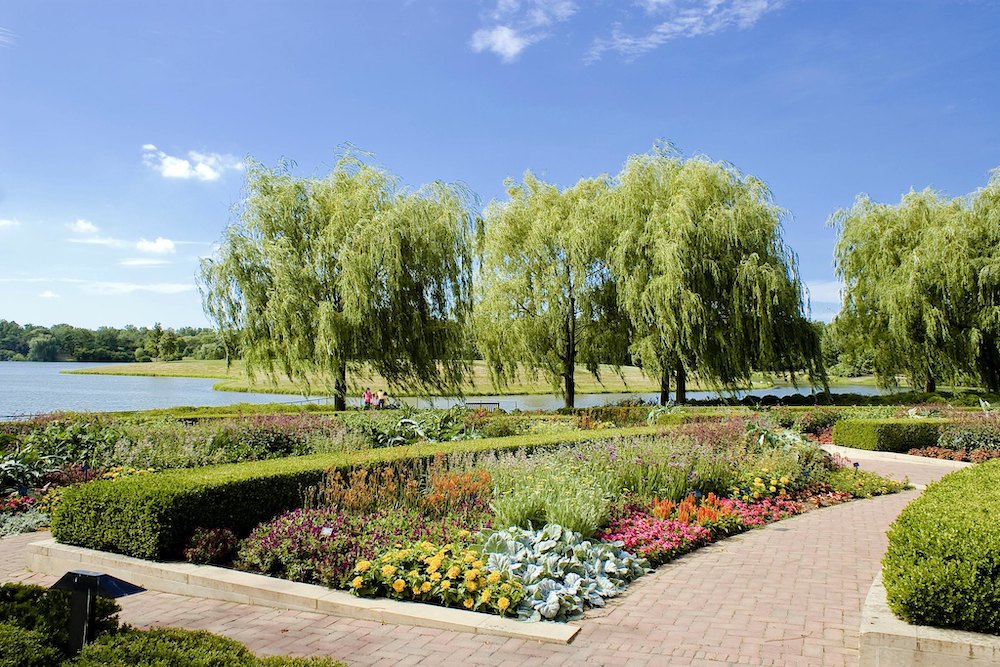
It’s no secret that we love the outdoors at Optima. That’s why we are thrilled that our Glencoe office is less than a five-minute drive from the Chicago Botanic Garden, where we’re able to find inspiration and beauty in astounding acres of natural plantlife. To encourage these meditative visits, we have passes for our team to allow them to take a stroll through the gardens for a break and even a lunchtime picnic.
Open for nearly fifty years, the Chicago Botanic Garden features 27 gardens and four natural areas, sprawling across 385 acres, complete with nine islands and six miles of lake shoreline. With over 2.5 million species of plants, the Garden is a hub drawing people in from all over to visit and learn about horticulture, conservation and sustainability in a beautiful setting.
Year-round, the Chicago Botanic Garden features a garden set into the stones and terraces beneath a cascading waterfall, hidden rooms within their English Walled Garden, a Japanese Garden that’s the perfect place to find a mindful moment and a secret land filled with model trains traversing across bridges and trestles. We are always thrilled to visit their meticulously cared-for collection of hundreds-of-years-old bonsai trees, or to have a drink or bite to eat at the Garden View Cafe overlooking a peaceful pond.
Right now, the Garden is also hosting Lightscape, an enchanting and exclusive U.S. experience. The exhibition brings a mile of immersive ribbons of light, a garden of fragrant fire, a sparkling tunnel and more to an already breathtaking landscape. Also on display, The Orchid Show features 10,000 brilliant blooms in unexpected ways.
Whether it’s for a breath of fresh air during a daytime walk or to have a picturesque lunch, we are lucky to have our offices so close to this neighborhood gem.
When David Hovey Sr. and Eileen Hovey set out to create Optima in 1977, they had a distinct vision for how to transform their passions into a business. After deciding that David would design and build the projects and Eileen would take charge of sales, they put a second mortgage on their condominium and purchased infill land in the Hyde Park neighborhood of Chicago. That plot of infill land eventually became our first development, but the concept of redevelopment and infill land has benefitted countless cities and urban areas throughout the country. Today, we dive into its history.
The History
The American Planning Association describes infill development as redevelopment that “optimizes prior infrastructure investments and consumes less land that is otherwise available.” Infill development can result in efficient utilization of land resources, reinvestment in areas that are targeted for growth and more efficient delivery of quality public services. Infill buildings are often constructed on vacant or underused property or between existing buildings. Often called “smart growth,” infill development allows for sustainable land development close to a city’s urban core, instead of spreading out. This type of development also helps to renew neighborhoods and create more prosperous communities.
In Chicago
Following World War II, a series of local and federal initiatives were passed to revitalized aging and decaying parts of Chicago. Major institutions, including Illinois Institute of Technology, took part in the planning and reinvesting of various neighborhoods. New developments and infill on individual lots began to bring new vitality back to the city, with local school improvements and reduced crime rates following behind.
At Optima
From our plots of land, to designing each residence, to creating fantastic amenity spaces, we’re passionate about bettering the lives of those within our buildings and the environments around them. Starting our first project on infill land, and continuing to do so with many projects for years after, reflects our pursuit of creating beautiful spaces that enhance the human experience.
To fuel our vertically-integrated business model, Optima is composed of strong, multi-faceted teams that ensure an effective and efficient workflow throughout our projects. Ever since our inception, we have recognized the benefits of harnessing collaborative teams, and we’re not alone. According to Forbes, productive team environments are the new vision for successful and satisfying employment. Adaptability, trustworthiness and openness are key components in coordinating team actions and solving challenging problems.
Now more than ever, teamwork is recognized as a critical part of successful work culture. Our construction team at Optima is no exception; the team is currently working on two buildings in Arizona, just wrapped up another project ahead of schedule and is growing in Illinois as we prepare for upcoming projects in the Chicago market.
Construction at Whale Bay House, New Zealand
When asked about what makes their team amazing, here are some of the things our construction team members had to say:
“We understand what the needs of the job are and strive towards a common goal to get things done. If someone makes a mistake, they own the mistake and fix it themselves so they learn and grow from the experience.”
“We all pitch in and help one another. If one of us has a problem, we all have a problem and will work together to find an answer.”
“I love the team we have gathered; they are knowledgeable and willing to learn.”
“I absolutely have learned leaps and bounds! I found my passion. Similar to a child in a sugar shop, my brain is soaking up everything like a sponge! I smile just talking about decking, and vetting subs for new partnerships!”
With our holistic business model that encompasses architecture, development, general contracting, sales/brokerage, asset/property management, and shared services, each of our talented teams are part of what makes Optima great. Think you would be a good fit on the Optima team? Check out our current open positions to inquire about joining our team.
One of our cornerstone beliefs at Optima is that our buildings can help improve the lives of those who reside within them by offering everyday comforts and conveniences — and we’re constantly searching for ways to innovate and improve.
It’s no secret that coworking spaces and the ability to work remotely, or from home, has become increasingly popular in the professional sector. In 2018, a staggering 1,000 new coworking spaces were introduced in the United States alone — and experts don’t see the trend slowing down anytime soon. Some estimates claim that freelancers will even outnumber full-time employees in the workforce by 2027.
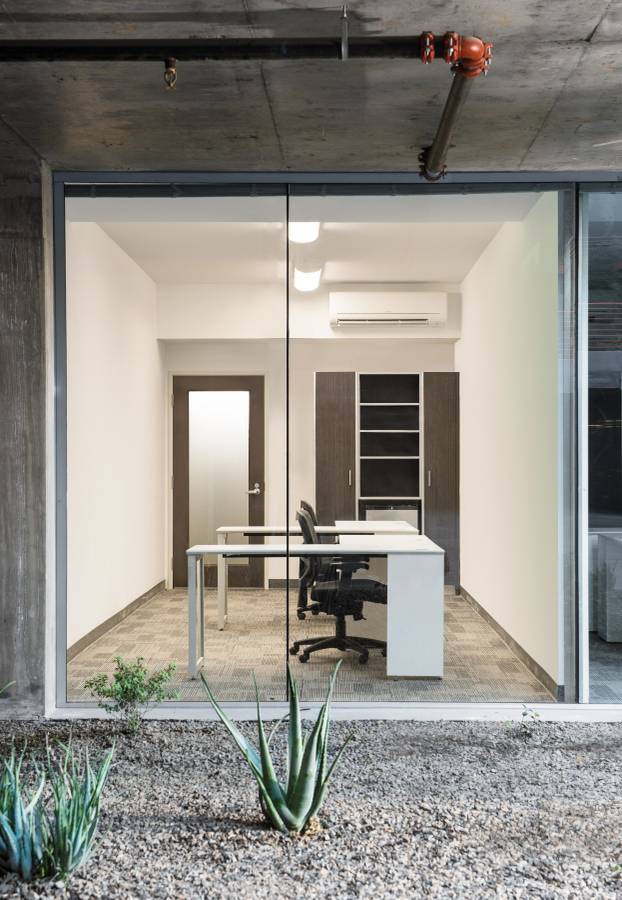
An Optima business suite at Optima Signature
We were happy to respond to the growing need by integrating our own rentable, commercial business suites into our multi-family communities, starting in 2010 with Optima Camelview Village. Since Optima Camelview Village, we have designed business suites at Optima Sonoran Village, Optima Chicago Center and Optima Signature with a live-work-play environment in mind. At each site, we have seen measurable success as the remote working trend continues to be on the rise and residents take advantage of the opportunity to utilize a workspace right in their own home.
Optima Signature in the Streeterville neighborhood of Chicago, IL
Having business suites within our communities makes work feel like a more comfortable, more convenient experience. And that’s exactly what we want to bring to our residents and tenants.