The Synthesis of Art and Architecture

Art and architecture share a rich, timeless connection rooted in their design, creators and intended meaning. Both forms of expression become envisioned and constructed through similar principles, visual elements and ambition to engage with one’s senses. Today, we’re exploring this essential relationship and what happens when the two worlds collide. 

David Hovey Sr., FAIA, Optima’s CEO and Founder, says it best when describing the linkage between art – in particular, sculptures – and architecture, saying that “architecture is about function, as well as aesthetics, while sculpture is really just about aesthetics.”

Architecture is traditionally informed by functionality first, with aesthetics coming into play as with a significant role. Art, on the other hand, is commonly guided by aesthetics, without any burdens to deliver an object or outcome that is functional. However, both forms of expression are typically influenced by similar social and political factors that affect the environment surrounding the work or structure. 

Centuries-old cultural movements, including the Renaissance, where art imitated life and vice versa, demonstrate the linkage between art and architecture. However,  it wasn’t until the Avant-Garde movements of the late 19th and early 20th centuries that the integration of the two took a new meaning. 

This integration between the disciplines quickly became a core characteristic of modernism and modernist design, and is distinctly present in the work of some of the greatest architects and artists of the time period. Because artists use their art as a tool to shape emotions, modernism emerged as an expectation in which art and architecture would provide a new value when combined. 
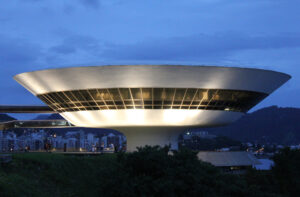
Oscar Niemeyer Museum
The Oscar Niemeyer Contemporary Art Museum in Niterói exhibits the synthesis of art and architecture, displaying bold geometric forms, sculptural curves and vivid murals in a functional structure, reminiscent of a human eye. Credit: Rosa Menkman, Flickr Creative Commons, CC BY 2.0 Deed

The Bauhaus Movement was one of the first to introduce this idea, encouraging the unification of all arts and coupling aesthetics with the technology of the time. Notably, this ideology was cultivated through Le Corbusier’s use of painting and sculpture within his established concepts of architecture. Le Corbusier also argued that it was of equal importance to architects, painters and sculpturists to contribute constructive collaborations to the world by designing and creating in harmony with one another. 

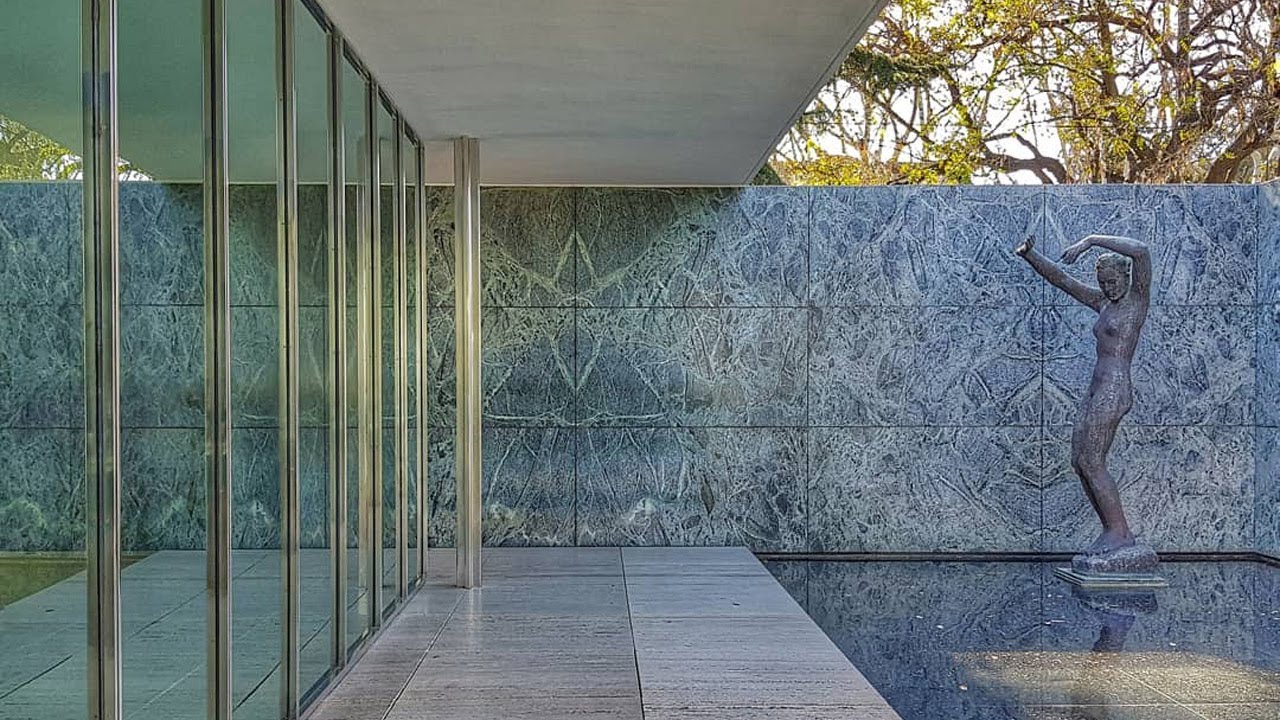
Along with Le Corbusier, various other artists throughout the past century have tried to synthesize art and architecture throughout their work, particularly Oscar Niemeyer, Mies van der Rohe and Zaha Hadid. Today, architects and artists continue to collaborate and integrate their disciplines more than ever, exploring and expanding the dynamic relationship shared between the two.
Scottsdale Public Art: Knight Rise

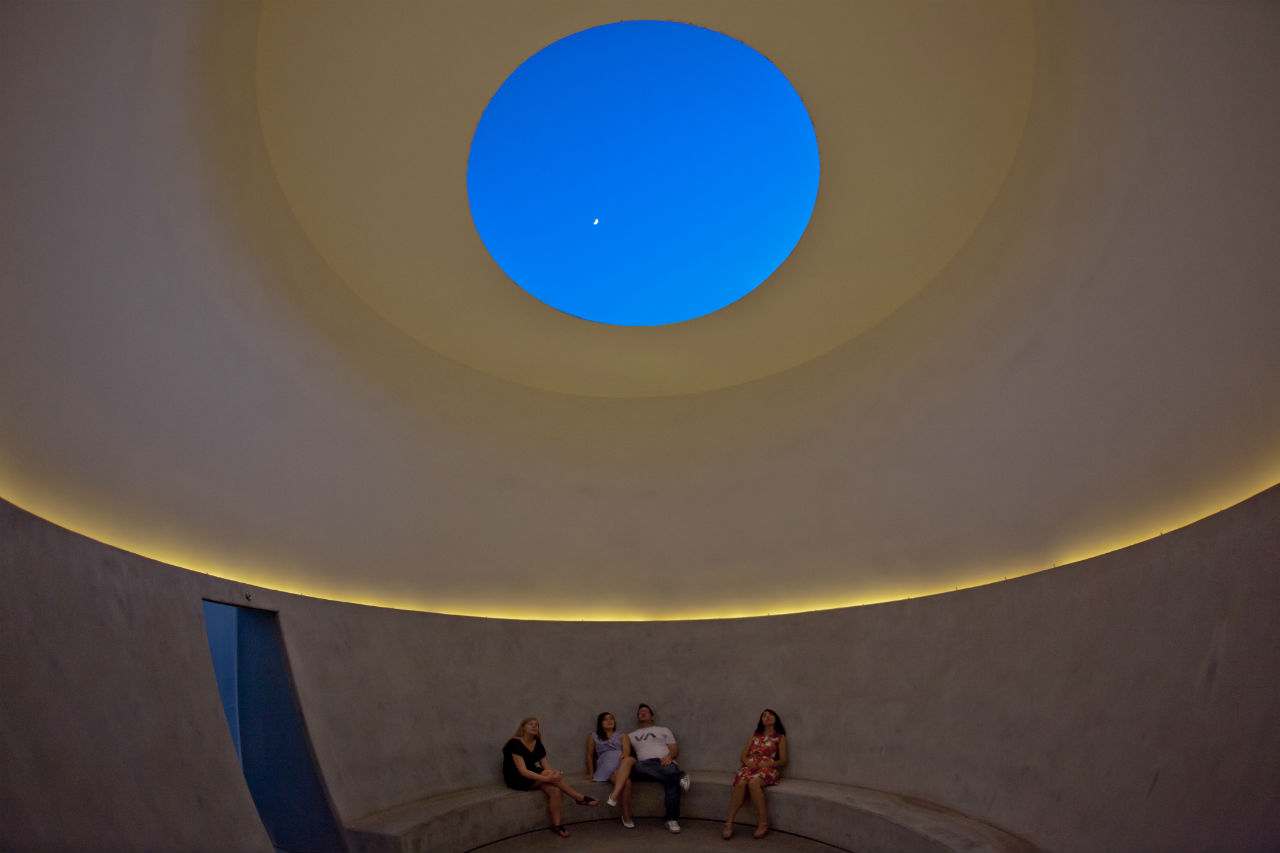
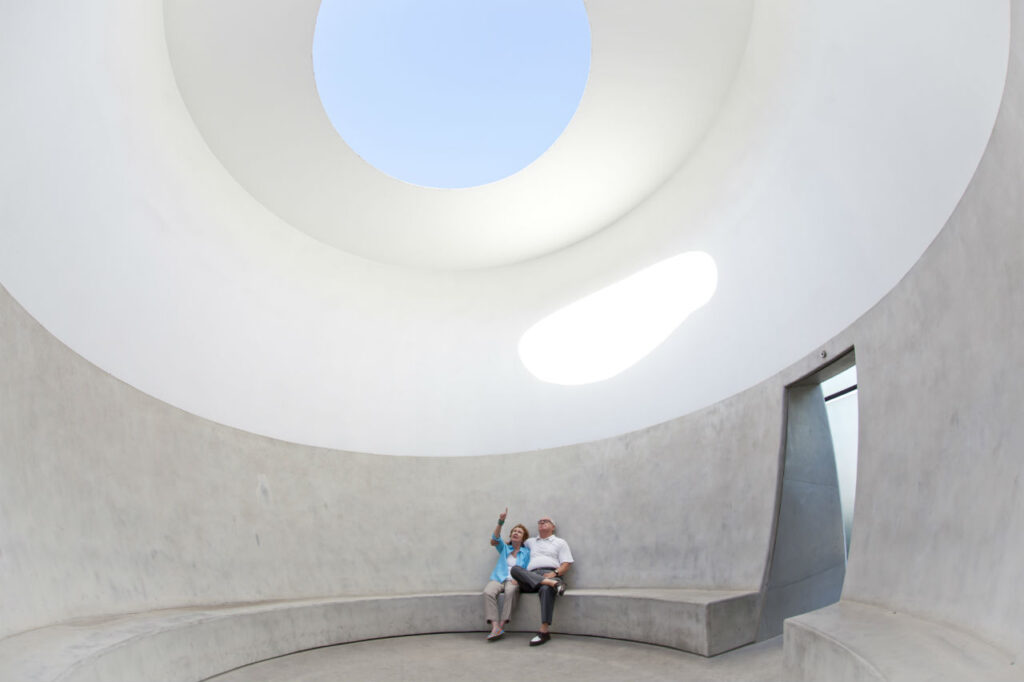
One of the many reasons we love Scottsdale is its appetite for some of the country’s most thoughtful architecture and art installations. Found in the Nancy and Art Schwaim Sculpture Garden at the Scottsdale Museum of Contemporary Art, a very short drive from Optima Sonoran Village, is one of those extraordinary displays, Knight Rise by James Turrell.

This inspiring work of art frames the dynamic colors of Scottsdale’s sky through an oculus or skylight. The skyspace is situated at the peak of a concrete dome with concrete benches encircling the room. Knight Rise gives guests their own unique experience with every visit. As the sky overhead changes constantly, so do the perceptions of light and color being framed through the skyscape, inviting visitors’ imaginations to run wild. In a simple, physical act of viewing the sky purely as light, hue, and texture, the artwork completes itself. More specifically, an engaged visitor completes the experience that is Turrell’s artwork.

Part art, part science, the skyspace is an unparalleled creation, and only 14 others are open to the public across the country. Those who experience Knight Rise find it to be meditative and inspiring; a space where one can find tranquility and peace within the confines of the concrete space.

Vibrant sunlight coming in from Knight Rise illuminates the concrete surface of the installation’s interior
Vibrant sunlight coming in from Knight Rise illuminates the concrete surface of the installation’s interior. Credit: Scottsdale Public Art

Knight Rise was completed in 2001 by Turrell, known as a “sculptor of light.” He is an artist of international acclaim considered to be one of the most significant and influential artists working in the world today. And while many artists use paint to replicate light, he uses light itself — sometimes manmade, sometimes natural — to create visual effects. Turell has been creating skyscapes across the United States for nearly five decades, mastering his craft along the way. Inspired by legendary artists from Monet to Mark Rothko, Turell tangibly employs color as the focal point of his practice. 

Knight Rise is a permanent installation located in the Nancy and Art Schwalm Sculpture Garden at the Scottsdale Museum of Contemporary Art. To experience Knight Rise, visit the Museum anytime from 11 a.m. – 5 p.m. Monday through Friday.

Scottsdale Public Art: Water to Water

Scottsdale is a diverse community with a deep appreciation for its environment, its history and the arts, which are some of the many reasons we love it. Home to the Scottsdale Arts District, the city recognizes the significant benefits that public art provides to neighborhoods, a value we share in our Optima communities. Today, we’re exploring one of Scottsdale’s most unique public works that highlights an essential aspect of life, Water to Water.

Water to Water was completed in 1999 by Christine Tanz in collaboration with Paul Edwards. Edwards is a renowned designer who received the Concrete Reinforcing Steel Institute Design award in 1990. Both artists are recognized in Arizona for their impressive contributions to public art, including their instrumental involvement in developing a public art plan for Metropolitan Tucson.

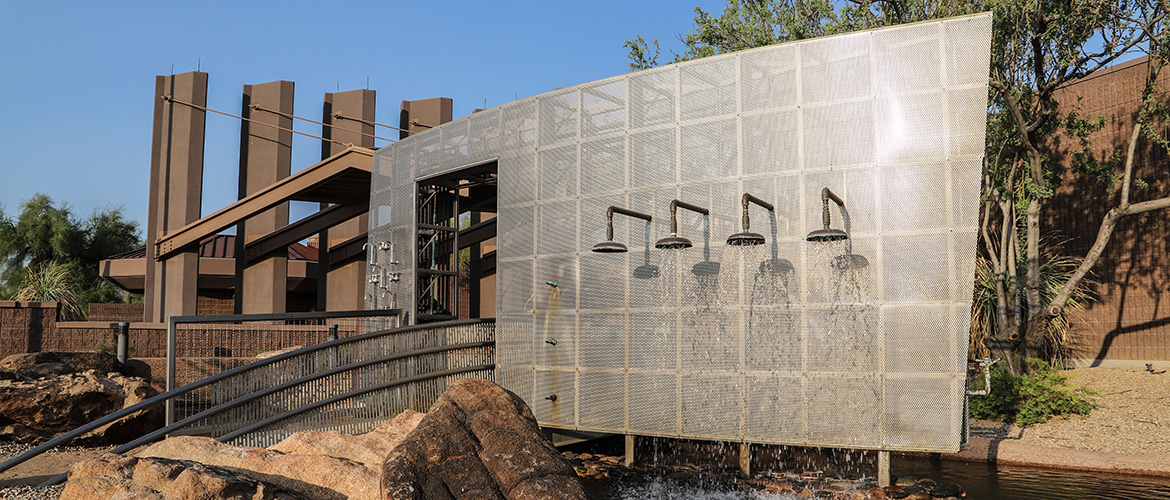
Located 15 minutes north of Optima Kierland Apartments, Water to Water sits at the entry of the Scottsdale Water Campus, one of the leading water recycling plants in the world and Arizona’s first potable water reuse facility. While Water to Water is acknowledged as a public art display, it operates as a kind of performance, highlighting the water’s importance to Arizona and its encompassing deserts.

Visitors first witness a pierced metal façade, mirroring the walls in our kitchens, bathrooms and gardens, through which many of us have access to water. Once sensors around the display recognize movement, the installation comes alive, and water sprays from the showerheads and faucets that line the metal wall. 

The “interior” of Water to Water revealing its extensive network of pipes

The unique fountain takes advantage of the freshwater stream that stretches across the campus. After the water travels through the extensive network of pipes that lives behind its metal wall and retreats through the various spouts on its other side, it returns directly back into the facility’s stream – a fully-sustainable process. The skeletal framework of the work provides visitors with new understandings of water, a natural element that many take for granted, and tells a powerful, physical story about how life prospers in its barren surroundings. 

Scottsdale Water Campus, where Water to Water resides, is located at 8787 E Hualapai Drive and is open from 6 to 5 most weekdays. The art can be viewed at no cost to visitors.

Chicago Public Art: AMENDS

When people think of public art in Chicago, their minds often wander to Millennium Park, where iconic pieces like Crown Fountain and Cloud Gate live. However, throughout the city, art is discoverable in every neighborhood. Today, we’re exploring the community-art project: AMENDS. In addition to being an interactive project, the expansive goal of AMENDS is to lay the foundation for the eradication of racism.

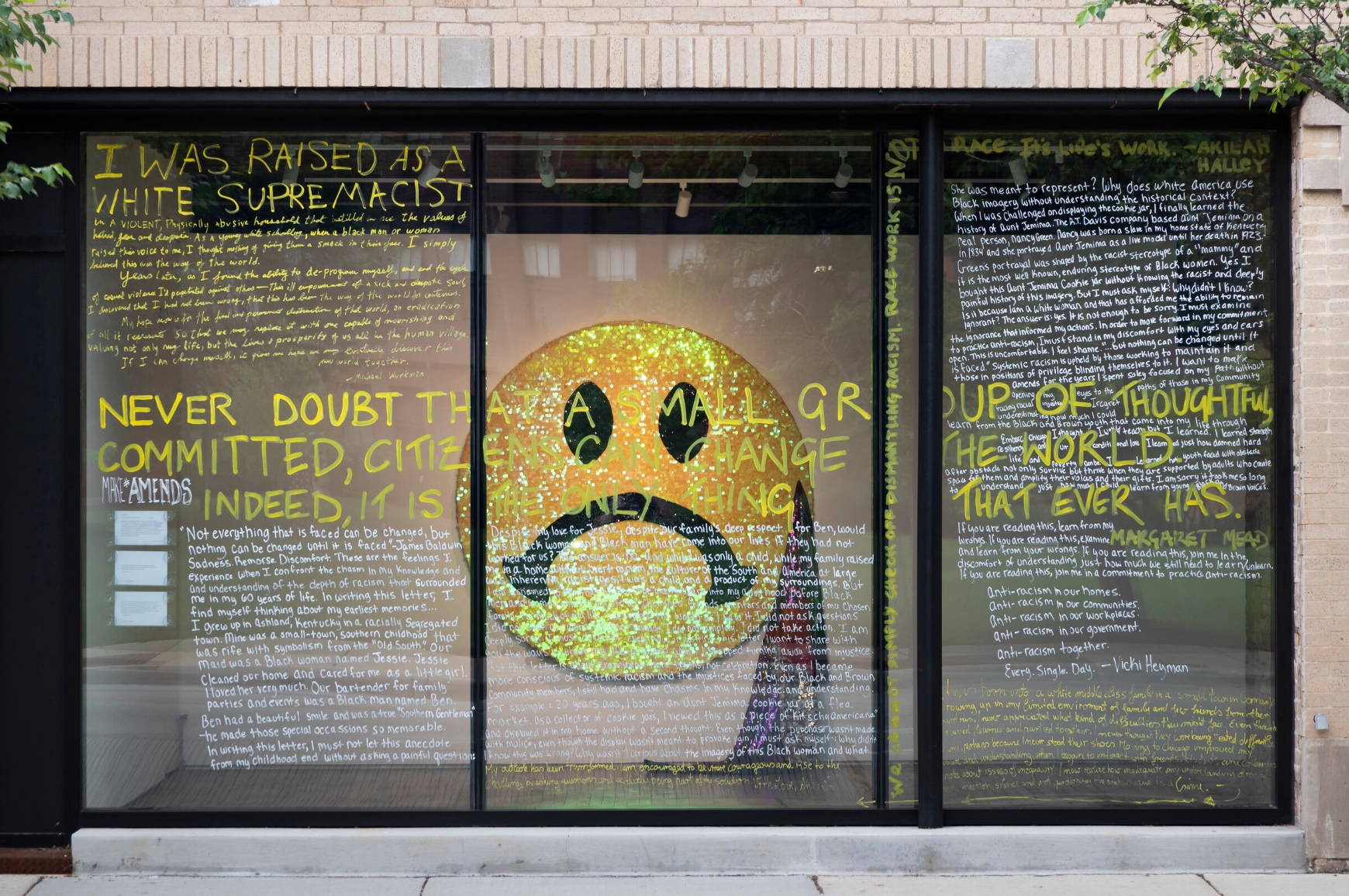
Created by internationally-renowned artists Nick Cave and Bob Faust, AMENDS is a multifaceted project living at the Chicago creative space, Facility. The collaborators first envisioned the project after the death of George Floyd in 2020. The engaging experience encourages individuals to publicly share confessions and apologies that recognize how they may be independently responsible for the continued expansion of racism.

The adversarial action is simple but an extremely intimate and impassioned way to acknowledge where individuals make change and, with hope, where society can too. AMENDS consists of three dynamic phases, each expanding on the project over time.

The first phase,“Letters to the World Toward the Eradication of Racism,” is an assemblage of letters, quotes and notes brought to life by Chicago community leaders on the windows of Facility. The remarks contain various raw and emotional expressions that are on view to everyone in the public.

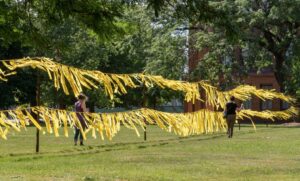
“Dirty Laundry,” the second phase of AMENDS, Photo from Facility

“Dirty Laundry,” the second phase of AMENDS, progresses at Carl Schurz Public High School across the street from Facility. “Dirty Laundry” challenges the public to address any roles they have played in advancing racism throughout their lives. The declarations of apology metamorphose into yellow ribbons that are tied to clotheslines, creating a public collection of community remorse.

Building upon the previous phases, “Called to Action” asks for participation on a much larger scale. In the form of a hashtag — #AMENDS — the final chapter encourages people across the world to voice their avowals and invite ensuing change for the near future. Bringing together artists, community leaders and everyday people, AMENDS serves as a beacon for Chicago and pushes to keep the city moving forward. 

The power of public art is rooted in its ability to welcome beauty into communities. At the same time, it can be a driving force for inquiry, engagement and participation. The values inherent in public art are also core to the character of Optima, which we express through our commitment to incorporating thoughtful art programs into each community we build.

Women in Architecture: Amanda Williams

As part of our ongoing “Women in Architecture” series at Optima, we’re taking a look at another spearheading female figure: Amanda Williams. Similar to many of the women in this series, she is a pioneer in her field. Trained as an architect, Williams blurs the line between visual arts and modern architecture. Learn more about her remarkable life and work below. 

The Life of Amanda Williams

Amanda Williams was born in 1974 in Evanston, Illinois. However, she grew up in Chicago’s Southside Gresham neighborhood. She graduated from Cornell University in 1997, where she studied architecture and was a member of one of the nation’s most prominent honor societies. After graduating, Williams moved to San Francisco and worked for a commercial architecture firm for six years before returning to her hometown to focus on her love of painting.

Back in Chicago, Williams discovered The Center Program. The Hyde Park Arts Center’s capstone program is a one-of-a-kind opportunity for groundbreaking artists. While in the program, fellow artist Trisha Van Eck challenged Williams to take her talents a step further and paint on a larger architectural scale. Her response led to some of her most recognized and celebrated work today. 

Throughout her practice, Williams uses vibrant color to draw attention to the complexities and intersections of race, place and value within cities. Her paintings, sculptures and installations are all created to examine how the mundane can be viewed through a new lens and question the state of urban space throughout the country. Notable Work

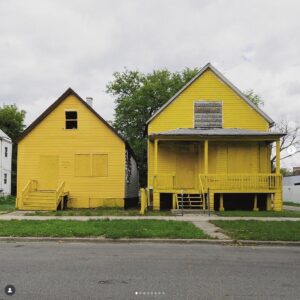
Amanda Williams. Color(ed) Theory: Currency Exchange, Safe Passaage, 2014-16. Photograph by Amanda Williams. https://www.instagram.com/awstudioart/.

In 2015, Williams debuted her most famous project, Color(ed) Theory at Chicago’s Architecture Biennial. The critically acclaimed exhibition, featured in The New York Times, examines race and space on Chicago’s South Side. With the help of family and friends, Williams repainted eight abandoned houses in the Englewood neighborhood between 2014 and 2016 as part of the exhibition. Each house was decorated with specific colors Williams found in products targeted towards Black consumers. Still standing today, the eight eye-opening houses continue to push for further discussions on the complexities of race and space Chicago and around the world.

Chicago is home to another one of William’s most well-known pieces. Located at The Arts Club of Chicago, Uppity Negress was a site-specific exterior installation created in 2017. The work investigates the claim of courtyards as either public or private areas and addresses the vast roles that gender and race play in urban accessibility. 

While much of Williams’ work is located in or near Chicago, her aptitude for creation has led her across the United States. In early 2019, Williams was chosen alongside acclaimed artist Olalekan Jeyifous to design Brooklyn’s newest monument dedicated to Rep. Shirley Chisholm, part of a larger city-wide initiative known as She Built NYC. The monument is soon to be completed and will sit at the Parkside entrance to the neighborhood’s Prospect Park. 

Alongside her transformative work, Williams has been a recipient of many architecture and art awards as well as achievements throughout her career:

  • Chicago’s 3Arts Award, 2014
  • United States Artists Fellow, 2018
  • New Generation Leader, Women in Architecture Awards, 2021
  • Obama Presidential Center Design Team

Williams has lectured at esteemed schools including Washington University, California College of the Arts, Illinois Institute of Technology and her alma mater. Today, she continues to forge a lane of her own and blend traditional visual art techniques with the complexity of architectural design.

Women in Architecture: Jeanne Gang

Perhaps one of the most well-known architects of her time, especially in Chicago, Jeanne Gang is the founder and leader of Studio Gang. Born 1964 in Belvidere, Illinois, a small town on the northern border of Illinois, she was raised with the prairies of the midwest and proximity to Chicago’s architectural legacy. 

Gang studied at the University of Illinois before going on to earn a Master of Architecture with Distinction from Harvard Graduate School of Design. After Harvard, she studied abroad in Switzerland and France as a Rotary Fellow before joining Dutch architect and design theorist, Rem Koolhaas and his architectural firm, OMA in Rotterdam. 

In 1997, she established Studio Gang, her own practice headquartered in Chicago. The studio’s mission is to use design to connect people to each other, their communities, and the environment. Soft details that reflect the light of the lake and suggest rippling columns of water can easily be identified as Studio Gang’s work.

Aqua Tower, designed by Jeanne Gang, 2009. Credit: (vincent desjardins) on Wikimedia Commons, licensed under the Creative Commons Attribution 2.0 Generic license

Studio Gang Around Chicago

Much of Gang’s work is a prominent part of Chicago’s landscape. Her designs can be found across the city, from O’Hare International Airport to the Loop to Uchicago dorms. Over the years, the studio’s work has become integral to Chicago’s rich architectural legacy. Gang’s 2010 Aqua Tower, situated at 225 N Columbus Dr in downtown Chicago, takes inspiration from terrestrial topography. The facade emulates the contours of a topographic map and reflects light in a way similar to the wave patterns of Chicago’s Lake Michigan. The tower combines a hotel, offices, apartments, and a green roof into a vertical community that facilitates human interaction.

In addition to the studio’s practice, Studio Gang is a strong supporter of climate action. As a member of the Active Transportation Alliance and Architects Advocate Action on Climate Change, the firm supports sustainable forms of transportation in urban environments and radical change in the building sector in regards to climate.

In effort to take climate action, Studio Gang has submitted a design to the C40 Reinventing Cities competition titled Assemble Chicago, a carbon-neutral residential community next to the main branch of Chicago’s public library. The proposed project would provide housing for the downtown workforce including those who earn as little as minimum wage. The design is also eco-conscious and works to reduce carbon pollution, minimize waste, and promote urban biodiversity. 

Studio Gang in the World

Jeanne Gang’s designs can be found across the globe from a powerhouse in Beloit, Wisconsin to the Kaohsiung Maritime Cultural & Pop Music Center in Kaohsiung, Taiwan. Wherever their location and whatever their purpose, the structures focus on immersing themselves in their environment both aesthetically and through their contributions to their ecosystems. Gang’s designs take inspiration from the topography and ecology of their surroundings and concern themselves with how they can bolster the environment and human communities around them, creating the perfect harmony between architecture and nature. 

The thoughtfulness of Studio Gang’s work has been recognized by receiving numerous awards. 

  • MacArthur Fellowship, 2011
  • Cooper Hewitt, Smithsonian Design Museum’s National Design Award for Architecture, 2013
  • Named Woman Architect of the year by Architectural Review, 2016
  • Royal Institute of British Architects International Fellowship, 2018

Gang currently serves as a Professor in Practice at the Harvard Graduate School of Design and lectures frequently around the world. Her studio continues to present unique and conscious designs to the architectural landscape, working to build a sustainable future and sustainable communities.

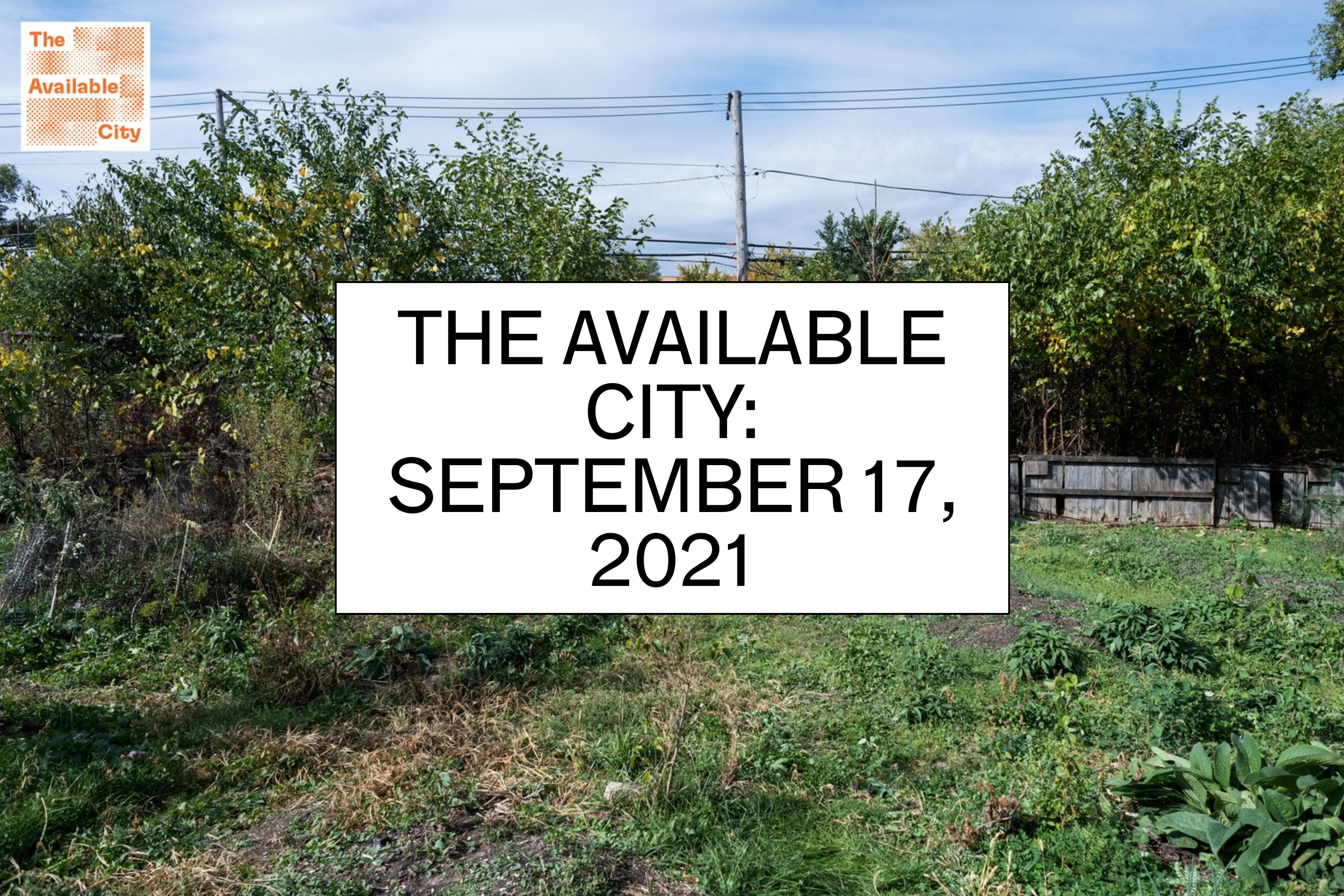
A Guide to the Chicago Architecture Biennial: The Available City

The first of its kind in North America, Chicago’s Architecture Biennial, an international exhibition of architectural ideas, projects and displays, began in 2014 with the support of the city’s Cultural Affairs department. Similar to Optima, Chicago’s Architecture Biennial celebrates the relationship that design and nature have with one another in urban environments.

Former Chicago mayor, Rahm Emanual described the Biennial as “an ode to the city’s past and an echo to our future.” This year’s theme, “The Available City” stands true to that sentiment. The 2021 edition of the Chicago Biennial “is a framework for a collaborative, community-led design approach that presents transformative possibilities for vacant urban spaces that are created with and for local residents.” Artistic Director, David Brown, a designer, educator, and researcher based at the School of Architecture at the University of Illinois focuses his work on non-hierarchical, flexible and variable approaches to urban design and has selected a group of accomplished collaborators to reflect his vision of an “Available City.” 

In order to achieve a collaborative and community-led design approach that transforms vacant urban spaces, the Biennial invites artists, architects and designers from Chicago and around the world to come together and share their creations, lead workshops and conversations, and create communal spaces where Chicagoans can come together and appreciate their city. Workshops will be held in neighborhoods across the city in which vacant spaces will be transformed into collective spaces. Digital programming will be used to activate these spaces. 

This year’s lineup of collaborators include creators from around the globe and creators who call Chicago home. Chicago-based architect, designer, and educator, Ania Jaworksi, will present a solo exhibition at Volume Gallery in which she pays homage to Chicago and urban life through the humor, pragmatism, and seduction that can be found in design. Other local contributors include Borderless Studio, a research-design practice that leads community-based projects addressing issues of social equity, Central Park Theater Restoration Committee, a group aiming to revive Chicago’s abandoned Central Park Theater, Englewood Nature Trail, a two-mile green infrastructure reuse project located in the Englewood neighborhood, in care of Black women, a creative initiative launched in Chicago’s south side focused on re-activating vacant spaces and creating “cartographies of care,” Open Architecture Chicago + Under the Grid led by Haman Cross III, Lawndale’s resident artist which leads and promotes design-efforts and creative projects in the Lawndale community, PORT, a public-realm design practice founded by Christopher Marcinkowski and Andrew Moddrell, and The Bittertang Farm, an architectural duo composed of Antonio Torres and Michael Loverich who explore architecture’s connection to living organisms. 

International contributors, ranging from Boston to South Africa to China, include Ana Miljački of the Critical Broadcasting Lab at MIT, Atelier Bow-Wow from Tokyo, Japan, Studio Ossidiana from Rotterdam, Netherlands and Venice, Italy, Matri-Archi(tecture) from Basel, Switzerland and Cape Town, South Africa, and Hood Design Studio from Oakland, California among numerous other designers and creatives from around the country and world. 

The 2021 Chicago Architecture Biennial is open to the public starting September 17.

Women in Architecture: Amanda Levete

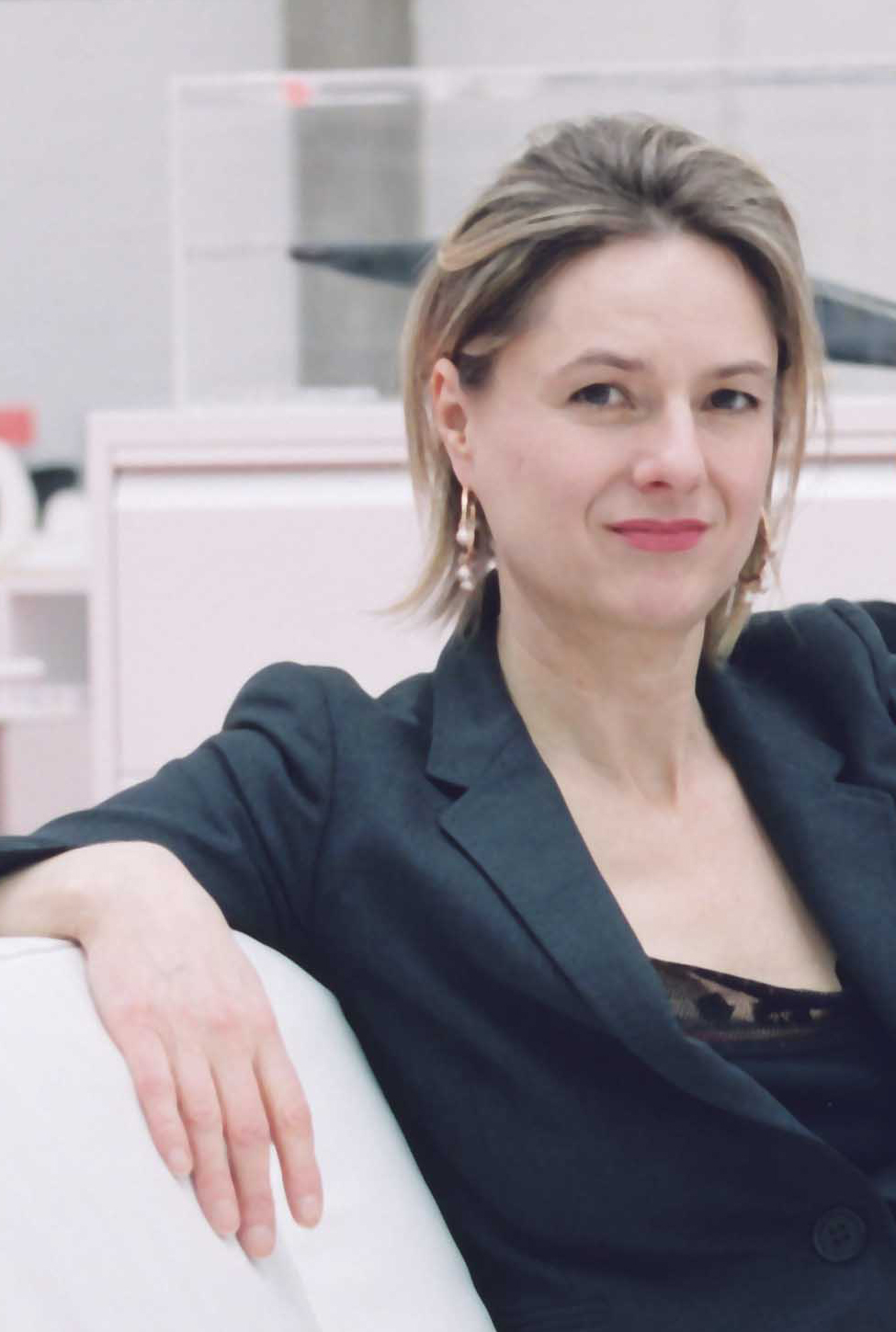
Born in Bridgend, South Wales in 1955, Amanda Levete is known for her innovative practices and making organic and conceptual designs a reality. Levete studied at the Architectural Association School of Architecture in London and worked at firms Alsop & Lyall and Richard Rogers Partnership before forming her own London-based firm AL_A (formerly Amanda Levete Architecture) in 2009.

Among Levete’s notable works are the current transformation of Paris’s famous Galeries Lafayette department store, Wadham College at Oxford University, the Museum of Art, Architecture, and Technology (the MAAT) in Lisbon for the EDP Foundation, and a new entrance, gallery, and courtyard for London’s Victoria and Albert Museum. 

Museum of Art, Architecture and Technology, Lisbon. Credit: Pedro Ribeiro Simões on Wikimedia Commons licensed under the Creative Commons Attribution 2.0 Generic license

Levete is known for her “intuitive and strategic approach to design” which captures the identity of the urban landscape in which a building is located rather than the identity of the building itself. This approach to architecture and design allows Levete’s creations to interact with the space around them and to become a part of a cityscape rather than existing in a vacuum. 

An example of Levete’s intuitive and strategic approach to design, one that interacts with its surroundings, is her design of a SEPSA subway station in Naples, Italy. Levete’s station design simultaneously functions as a work of art and a subway station that allows commuters to travel with ease while interacting with a brilliant art piece every day. At the surface level, the station becomes a central element to Naples’ Traino district which has suffered from lack of infrastructure and neglect in past years. A large, smooth metal circle made in collaboration with renowned sculptor Anish Kapoor resides above the entrance, welcoming commuters in while reflecting and highlighting the surrounding architecture of the neighborhood to the viewer. Together Levete and Kapoor celebrate the already existing infrastructure of the district while bringing something new to it through the combination of beauty and functionality. 

Similarly, Levete’s work on the transformation of the ‘Cupola’ building of Paris’s Galeries Lafayettes celebrates traditional Haussmann-style architecture in order to create an innovative design in a landmark structure. Levete describes this design as a “metamorphosis,” one that acknowledges the importance Galeries Lafayette has to the daily life of Parisians and the architecture of the city of Paris. The Galeries Lafayette project is still in process and Levete plans to celebrate the original craftsmanship of the building while moving it forward into the lives of future generations of shoppers for years and years to come. 

In 2017, Levete was appointed Commander of the Order of the British Empire for services to architecture. In 2018, Levete was awarded the Jane Dew Prize by the Architects Journal and Architectural Review. The Jane Dew Prize is seen as one of the biggest architecture prizes awarded to women and recognizes architects who “raised the profile for women in architecture.” Levete has also been awarded the RIBA Stirling Prize which is presented to “the architects of the building that has made the greatest contribution to the evolution of architecture in the past year.”

Furniture Design Spotlight: Ara Thorose

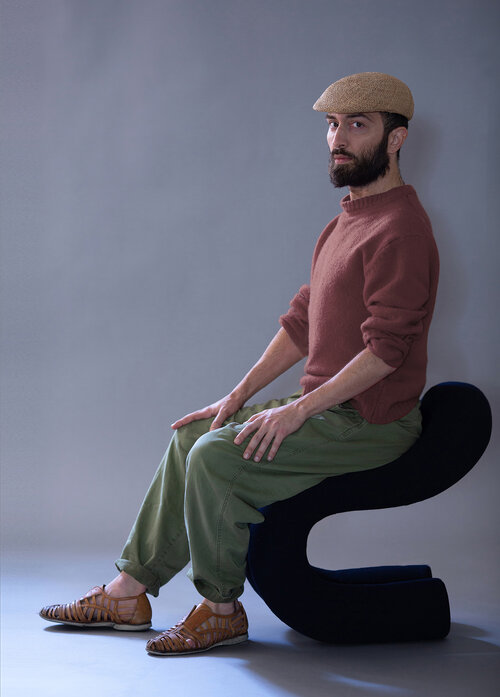
We love being part of a long legacy of people designing in the Modernist discipline. From architects, to sculptors and artists, to furniture designers, many creators continually innovate and find new ways of exploring form and function. One such innovator is Ara Thorose, a queer Armenian American artist and designer currently based out of Brooklyn, whose cylindrical-form furniture pieces are taking the design world by storm. 

Who Is Ara Thorose?

Ara Thorose is a fresh face on the scene. He earned an undergraduate degree from the University of California, Irvine, in Sociology, with a focus on gender and sexuality. Most recently, he went on to earn his MFA in 3D Design from Cranbrook Academy of Art. Cranbrook was founded as an experimental artists academy, and has since held national acclaim as the “incubator” of mid-century modernism in recent decades. Makers who emerge from the school are often agents of change who quickly make a name for themselves, and Thorose is no exception.

Just two years after earning his MFA, Thorose debuted his inaugural work, Tubular Group 01, under his brand Soft Limits, at the Architectural Digest Design Show in 2017. His work in the show garnered critical acclaim for its innovative form and experimentation in cylindrical forms. The design world continued to take notice of Thorose: he was named Up and Coming by Surface Magazine, and Soft Limits received Interior Design magazine’s 2019 Best of Year Award for Accent Seating.

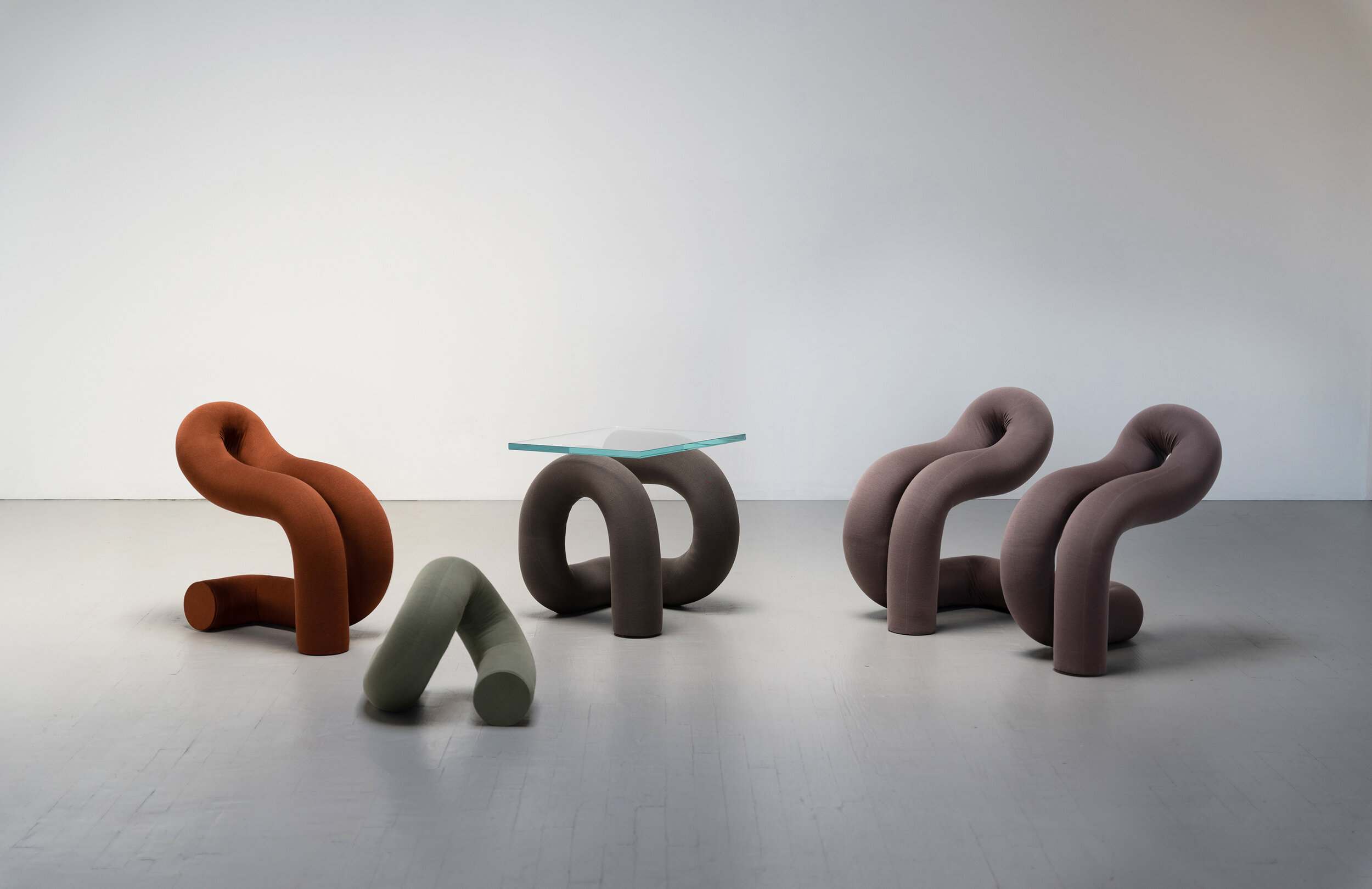
Ulu Group by Ara Thorose. Photography courtesy of Se Yoon Park, shot at Carvalho Park.

Innovative Design in Action

Under his brand, Soft Limits, Ara Thorose designed Ulu Group, a series of cylindrical-form furniture pieces “inspired by the idea of a circle trapped inside of a square.” Most notably, the cylinders in the collection got their circumference from Thorose’s own thigh circumference. Thorose describes this as a humanizing element, which serves to ground the abstract nature of his work. 

On his website, Thorose describes the theory behind Ulu Group, stating: “It represents conflict with no apparent solution. A circle is limitless, while a square is limited, so it’s inherently problematic. By adding a third dimension to it’s premise, there is potential for functional solutions. That’s the inspiration for this series. Each form is a circle traversing cube-like spaces held by furniture. Alternating between U-turns and L-turns, the cylinders push against the boundaries of familiar typologies.”

The collection includes four total pieces — Ulu Chair (orange), Ulu Duo, (mauve), Ulu Table (brown), and Un (green) — made of steel and foam and upholstered in wool and silk. Thorose begins his design process with hand building small-scale maquettes and then sketching his revisions in profile. 

Thorose is a deeply individual figure in the realm of furniture design today. He describes his perspective, stating: “I’m inspired by the notion of autonomy. I view the self as fluid and dynamic. My work explores the creative potential of self awareness without conforming to surroundings. Singular and succinct unto itself. An individual sense of being and order.” 

We look forward to seeing how this point of view develops and grows as Thorose continues to inspire the industry.

Sculpture Spotlight: Sundance

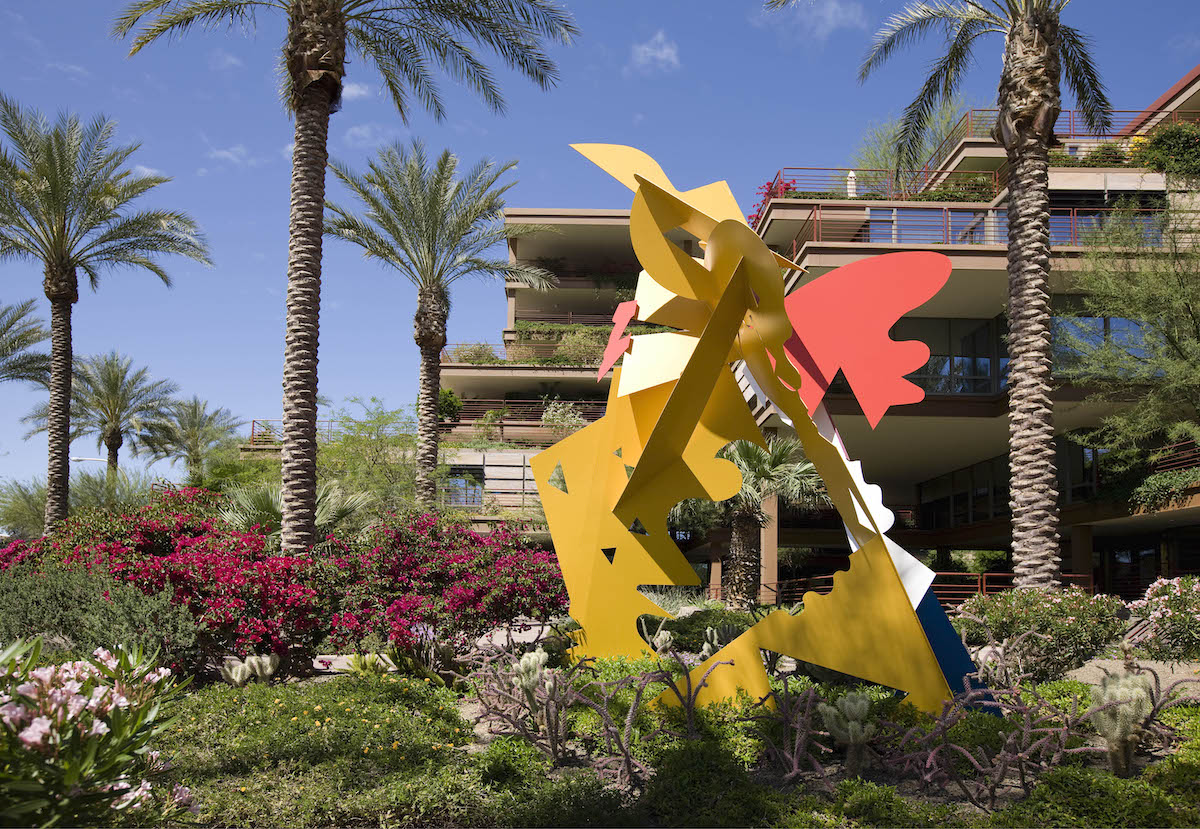
As devout fans of Modernism, at Optima we love to experiment with form and function. That’s how Optima Co-Founder David Hovey Sr. got into sculpture. Combining his love of art with his interest in materials, David Hovey Sr. began manipulating steel to create striking sculptural pieces that play to Optima’s architectural spaces. Today, we’re examining one of his sculptures: Sundance.

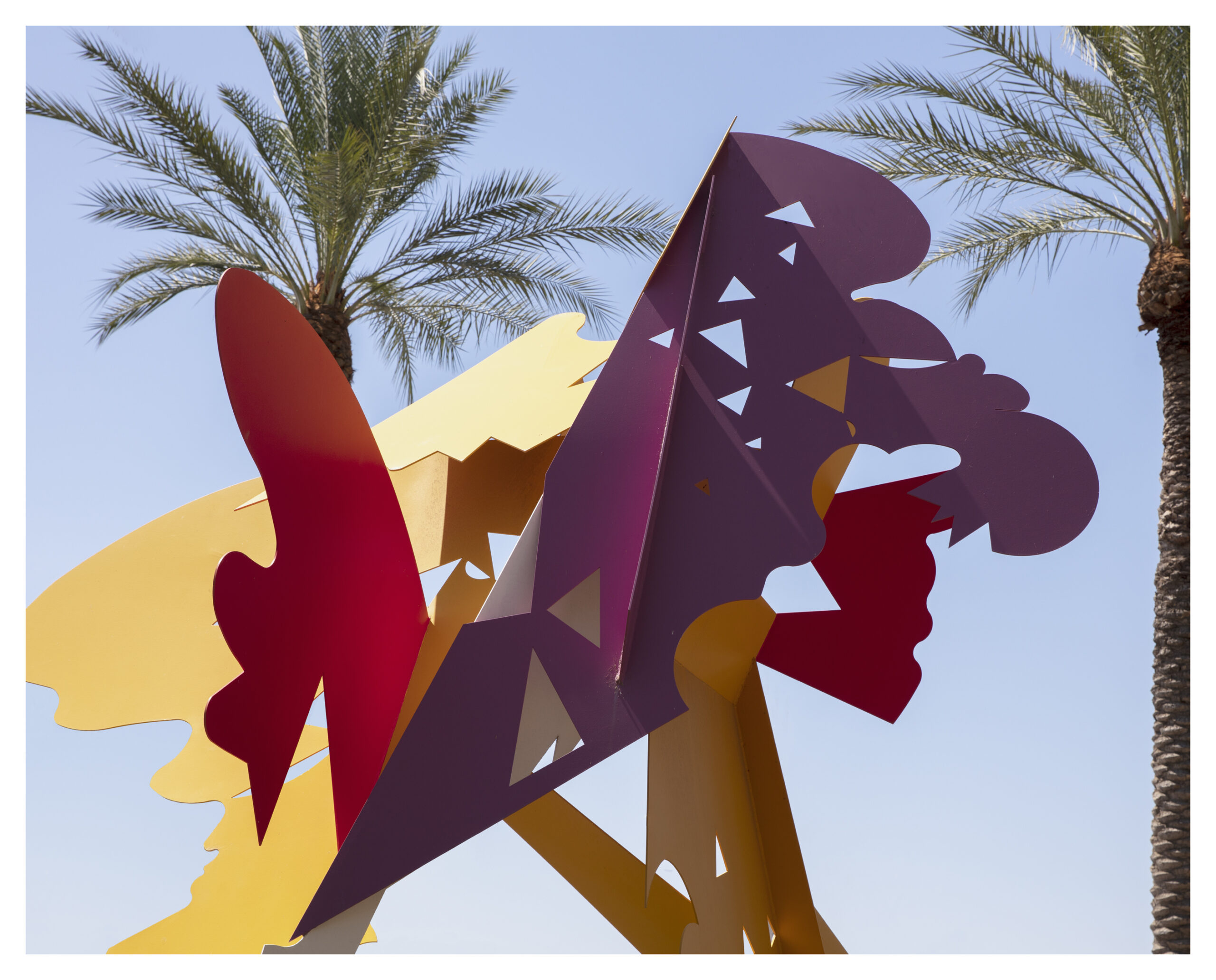
While many of our sculptures manifest in a variety of sizes and colors, Sundance is notable because of its goliath frame. Standing at thirteen feet tall, this impressive structure and its bold angles make a lasting first impression. The piece expresses the nature of the thin steel plate from which it was fabricated, showcasing structural potential with three-dimensional, dynamic components and an inviting sense of openness.

It’s no coincidence that Sundance is nestled in the landscaped courtyard of Optima Camelview Village. Sundance is built literally and metaphorically to connect to the ground, giving the sculpture context and roots within space. Meanwhile, being swathed in vibrant primary hues, the sculpture plays complement to the property’s red architectural details and the vibrant color palette displayed throughout the gardens.

Another perspective of Sundance sculpture

Whether we’re experimenting with form, function, size or color — at Optima we love to playfully implement sculpture as yet another component of thoughtful design.

person name goes here

Maintenance Supervisor

Glencoe, IL


    Acceptable file types: *.pdf | *.txt | *.doc, max-size: 2Mb