The Health Benefits of Jogging

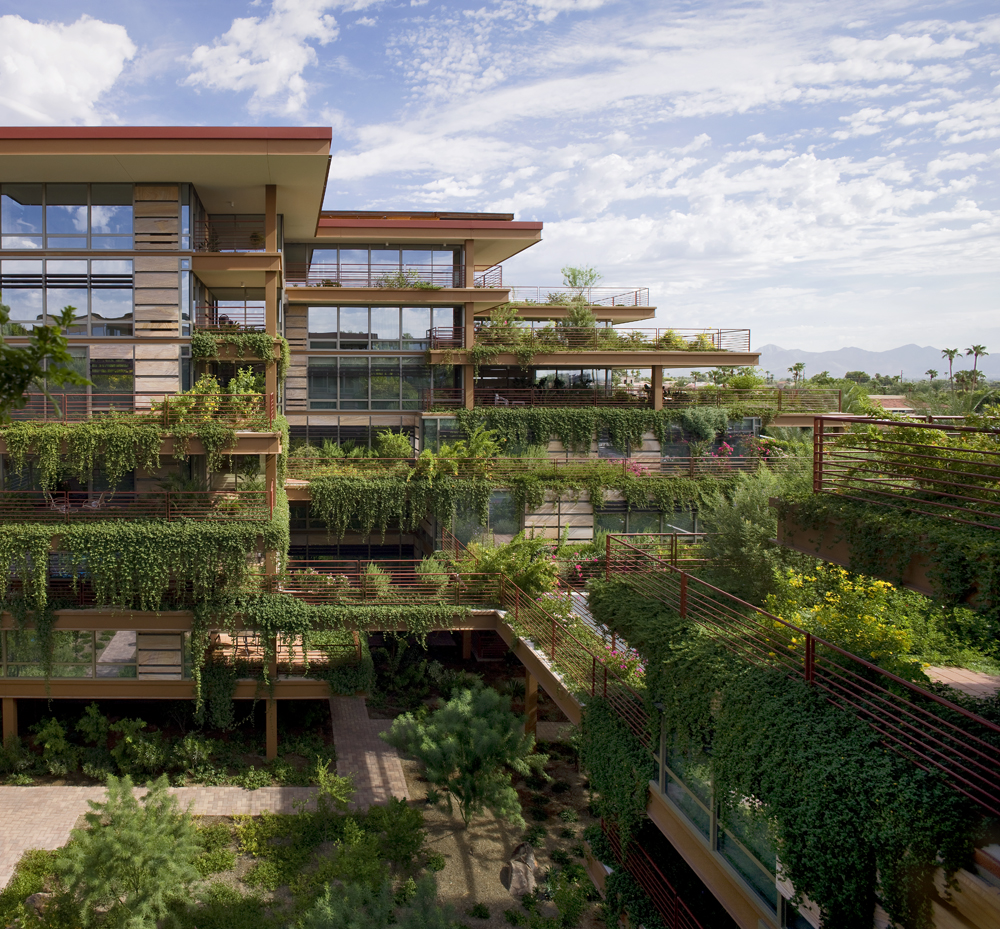
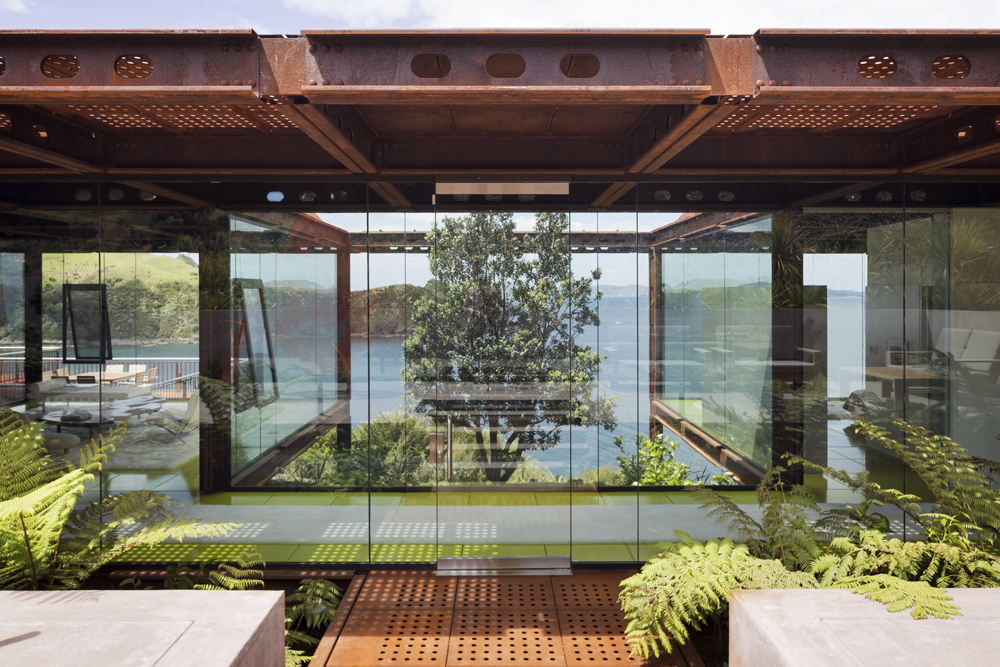
Jogging is a wonderfully minimalist form of exercise that requires nothing more than a free slot of time, a good pair of running shoes and open space. At Optima, it is our priority to build communities in and around accessible environments, where our residents can head out their doors to enjoy a run. There are many health benefits to the sport that might inspire you to give it a try. 

Getting Started

Jogging is not about speed, nor is it about distance — it’s about movement and a slow-and- steady-wins-the-race attitude. One of the activities’ great advantages is that it can be done both individually or within a group. A running club is a fantastic way to meet other runners, form community and stay motivated. Apps like Nike Run Club and Strava track time, distance, and offer guided runs and training programs for beginners and experienced joggers alike. Road Runners Club of America (RRCA) has branches in cities around the country and hosts groups for runners of all levels. In Chicago, RRCA is a perfect option for residents in our Optima Signature and upcoming Optima Lakeview properties, given their incredible proximity to the lakefront trails. And at Optima Kierland, a rooftop running track offers 360° views of the stunning landscape as residents jog outdoors without leaving the building.

Lifetime Health Boost

While jogging relieves pain and increases endorphins, making you happier in the moment, the long-term benefits are also significant. The stress your body endures while jogging actually improves your bone and muscle strength. It’s also excellent for cardiovascular health, improving circulation and maintaining blood pressure while controlling cholesterol and glucose levels. 

A study conducted by Stanford University found that jogging increases longevity and reduces the risk of disability and chronic illness later in life. The habit of regular jogging has been found to add 1 to 3 years to a lifespan.

Positive Mental Impact

Alongside numerous physical benefits, jogging also supports mental wellbeing and overall neurological health. Jogging releases endorphins, which are mood increasing hormones that help to alleviate stress, depression, and leave one feeling calm and rejuvenated. Jogging can also be a meditative activity that helps clear the mind. And when you take your runs outside, you’re also exposed to vitamin D and fresh air which improve overall well being.

Cognitive & Creative Enhancer

As jogging indirectly improves mood and sleep, anxiety and stress levels fall. This leads to sharper thinking and counteracts cognitive disorders like onset dementia. Jogging has also been found to create new brain cells and improve overall cognitive performance. Recent research completed by the British Journal of Sports Medicine discovered that jogging dramatically increases creativity. The more you exercise, the more creative you become. As the activity becomes a regularity, jogging can provide clarity and focus, generating a flow of creativity and new ideas.

Jogging is one of many ways to stay active; it is a wonderful way to maintain your health and get outdoors. For those who jog regularly, the health benefits expand far beyond the immediate moment and leave a lasting impact for years.
The Benefits of Urban Greenspaces

At Optima, we approach every project as an opportunity to explore the best possible ways to create harmony between the built and natural environments to allow our residents to enjoy a wealth of benefits that contribute to a healthier, more sustainable environment.

We understand that greenspaces; parks, gardens, conservatories, roof gardens and residential greenery are crucial to the vitality of urban spaces and the communities where they are found. Population density of urban areas is increasing swiftly. By 2050, it is estimated that 68% of the global population will live in cities. According to the WHO, urban greenspaces promote mental and physical health through the promotion of physical activity, mutual understanding, and mitigating exposure to air and noise pollution as well as excessive heat. 

In the summer, the heat generated by human activity, transport, and industry creates an increased need for energy consumption to cool spaces. Green areas have the ability to absorb that heat and pollution. They also allow urban dwellers to stretch their legs and be outside, improving cardiovascular health and relieving stress. Each space also promotes social cohesion, the coming together of people who would usually not interact with each other due to the individualistic nature of urban living.

Landscaping used to create privacy at Optima Signature

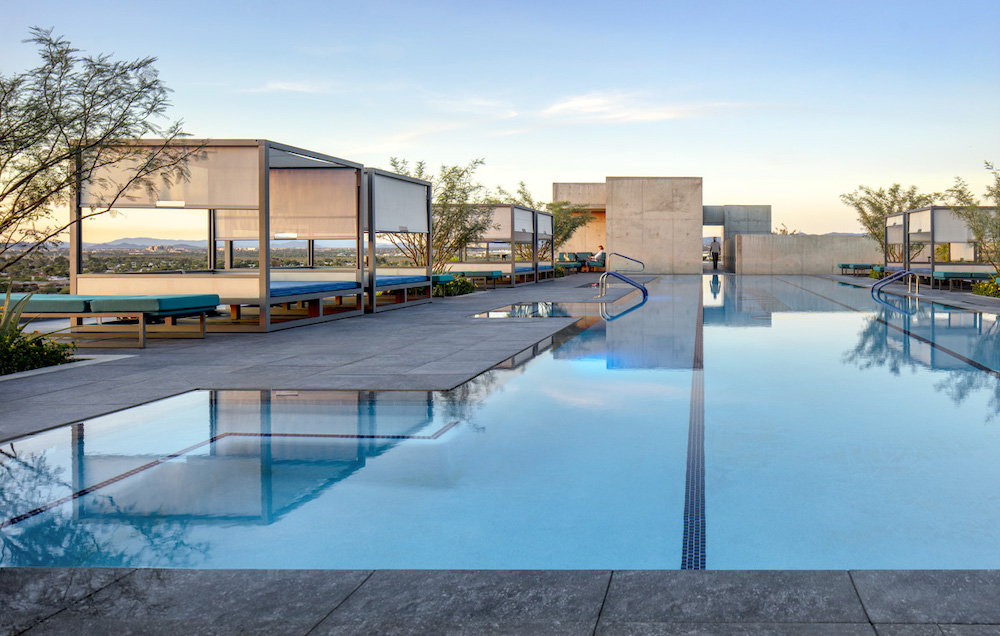
At Optima we recognize the tremendous advantages greenspaces provide. In Chicago, Optima Signature’s inviting plaza filled with lush landscaping and 1.5 acres of amenity space encourages residents to spend time outdoors. Gardens, landscaped fire pits, swimming pools, and outdoor entertainment all radiate the feeling of an oasis within the larger urban environment.

Landscaped Courtyard at Optima Kierland Apartments

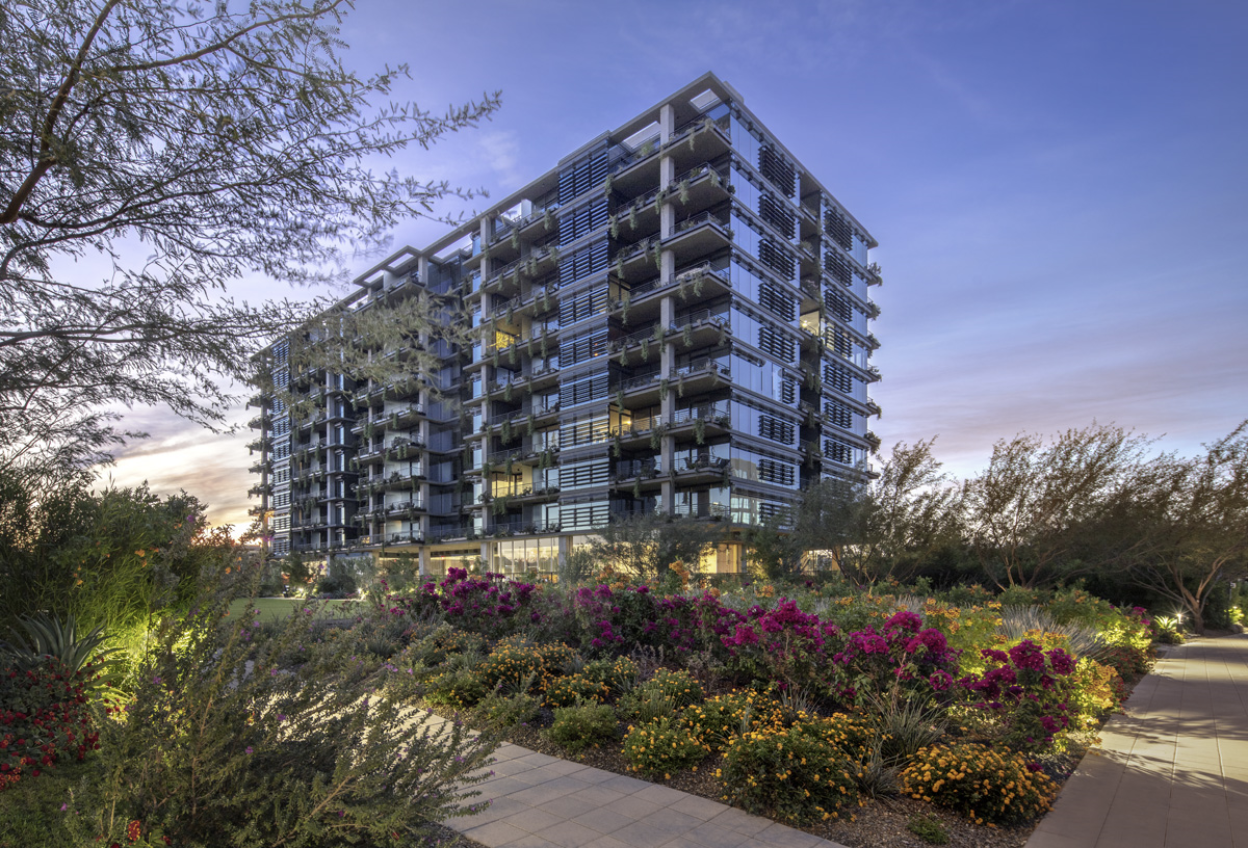
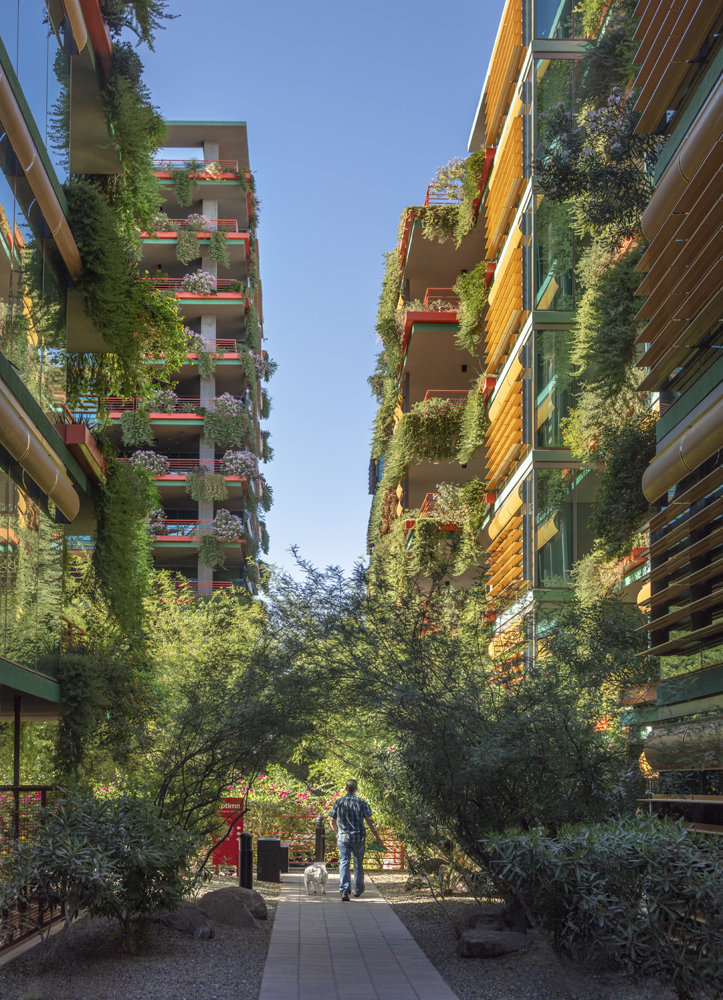
Optima Kierland Center embraces its surrounding beauty and builds off of it. Lush greenery fills the more than 7.5 acres of open space connecting Optima Kierland’s buildings in a park-like setting. Similarly, Optima Sonoran Village utilizes more than half of its 10-acre property to house stunning landscaping, sculpture, and pedestrian paths while mitigating the desert’s harsh climate. We utilize rooftop gardens and our signature vertical landscaping at Optima Sonoran Village, Optima Kierland Apartments, and will be bringing it to Chicago at Optima Verdana, to create an oasis inspired by its surroundings that contribute to the greater environment. This type of green space brings both beauty and positive contributions to their communities. 

Greenspaces make urban living refreshing, enjoyable and social. And as our cities become more and more dense, urban greenspaces become a crucial part of the ecosystem — and of our enhanced quality of life.

Team Member Spotlight: Rebecca Grossman

As we reflect on our values and character as a company, we always come back to the same truth: our team members represent the best of Optima. Recently, we interviewed Rebecca Grossman, Optima Kierland’s Leasing Manager, about her journey to Optima Kierland, how residents and staff have helped create an extended family for her and the impact she has had on Optima.

Tell us a bit about your background and the role you play at Optima.

Before Optima, I worked in retail management for 15 years – 9 of which were in Philadelphia – before I moved to Scottsdale. When the pandemic  began, I realized retail would never be the same. I struggled to figure out what could be next in my career, and where I could take my experience and interest in customer service to a higher level. As part of my search, I found an opening on LinkedIn at the Optima Kierland apartments. Coincidentally, I live directly across the street from the properties! I did my research and realized that everything Optima stands for aligns perfectly with my values and who I am as a person.

I was hired as a Leasing Consultant in March 2020. Just based on who I am and how I work, it was natural for me to take on leadership roles working with our leasing and resident teams, and was promoted three months later to my current position as Leasing Manager. I now manage two leasing consultants and work very closely with our two resident coordinators and nearly 600 residents daily. 

Tell us a bit about the Optima Way and what it means to the Optima Kierland residents and staff.

Something I love in life is building relationships and connections, so the fact that I get to come to work every day and do just that…well, it doesn’t feel like work at all! And what I have learned since joining the Optima team is that my values around relationships and connections is identical to those of the company. In fact, it’s captured in a companywide philosophy called “the Optima Way.” 

The Optima Way is so successful here at Kierland because our team shows a level of empathy for residents and one another that is unmatched. We make sure both residents and staff at Kierland always feel valued, seen and heard. We also sincerely believe that our residents are extended family to us. We care about everyone and take the time to be thoughtful and considerate during all of our interactions. 

Optima has a distinct set of values that really differentiates it from other companies. Which values really speak to the work you do at Optima?

One of our core values at Optima is there is a solution for every problem, and I feel like our team has embraced that value and demonstrates it every day. I try to lead by example and show my team how critical our work and values are so they can strive to that same level of passion – and they do. 

A line of golfers get ready to tee off on a course
Optima Kierland Apartments Golf Outing at the Westin Kierland

Can you give us a few examples of the great programming your team has been doing of late?

One of our upcoming events is an exciting food tour across the city. The company we’re working with will be taking our residents — by party bus —  to four different restaurants where they’ll be served a cocktail and appetizer at each one. We love to think out of the box for activities, and this is so different from anything I’ve ever seen an apartment community do!

We’ve done flower arrangement courses, fitness classes, cookouts and golf tournaments. We take the time to understand our residents’ interests so we can tailor our programs around them. And because our events align with the things our residents care about, each event that we host helps build that community that we strive to create here at Optima Kierland. 

Can you give us a few examples of ways in which your team has gone “above and beyond” for your residents in ways that really make a difference?

We have a resident who has lived with us for a long time, and her dogs mean the whole world to her. Recently, one of them passed away after a long illness. We knew it would be incredibly stressful for our resident to retrieve her dog’s ashes, so we simply took care of it for her.  I feel moments like these reflect the Optima Way; we act out of genuine kindness, generosity and reciprocity all the time — and not because it’s part of our job description. 

In another case, a couple moved to Optima Kierland from Philadelphia, and it was an enormous undertaking for them. I helped organize many details of the move, from getting their car shipped here to having their apartment custom painted. We also organized a surprise birthday party for a resident’s daughter and surprised residents who were honeymooning in Mexico with champagne at their hotel. Doing these small things is simply practicing the Optima Way, and it all adds up to create a sense of trust and family that we all share.  

What are some things you’ve learned during your time at Optima?

I thought that after a successful 15-year career in retail I knew everything there was to know about customer service and building relationships. It turns out that I didn’t know the half of it. I have become a stronger person here. I thought I knew my limits, and then I learned to push farther. We’re always striving for better, and sometimes it’s been intimidating, but I feel like my team and I are the best version of ourselves as a result.

The Health Benefits of Saunas

Saunas have been health staples in cultures around the world for thousands of years. The oldest saunas, found in Finland, are thought to date from around 2,000 BC and used stones to create high temperatures and dry heat in the winters. In Korea, domed structures often warmed by kilns appeared in literature as early as the 15th century. In the Orkney’s of Scotland, stone structures thought to incorporate the use of steam date back to the neolithic age. 

In modern times, the most common saunas used in western culture originate from Northern Europe and have temperatures around 212 degrees Fahrenheit and relatively low humidity. They remain today a staple of health and wellness, and can be found at spas, resorts, poolsides, gyms, and even private homes and bathrooms. 

Saunas are known for their numerous health benefits. When an individual spends time in a sauna, the heat causes their heartbeat to increase and their blood vessels to widen, improving circulation. Saunas are comforting, calm spaces that promote relaxation and, paired with the improvement of circulation, can reduce stress levels and improve overall cardiovascular wellbeing. 

Dry saunas, especially, are known for their positive impact on heart health. They also reduce the symptoms of rheumatic diseases such as fibromyalgia and rheumatoid arthritis. Dry saunas are known for relieving skin conditions such as the itchiness from psoriasis. There is some evidence that dry saunas also may improve athletic performance.

Indoor Sauna at Optima Signature

When it comes to enjoying a sauna, for optimal benefits, most experts recommend around fifteen minutes per sitting and allowing your body time to rehydrate and cool down before resuming normal activities. 

Saunas are a wonderful way to relax and boost both cardiovascular and overall health. The use of saunas is an ages-old practice that prioritizes bodily and mental health, spans around the globe, and persists today.

The Health Benefits of Being Outdoors

Considering we all spent a lot of time indoors in 2020, we’ll take any excuse to get outside this summer. Thankfully, there are numerous mental and physical perks to spending time in the great outdoors, whether it’s on a hiking trail or on your own terrace. Here are just a few of the many health benefits of being outdoors:

Boost Your Mood

Studies have shown being outdoors lowers levels of cortisol, a hormone that’s a marker for stress. Spending some time outside can help with stress, anxiety or depression, not to mention the added physical benefits of just spending a few minutes in the sun. Vitamin D helps with bone growth, regulates your immune system and can help battle depression. Even if it’s just a quick reset, getting out of the house and into nature can really boost your mood.

Improve Your Vision

Just like we’ve all spent more time inside over the past year, we’ve also spent more time on our screens. Whether you’re back in the office or working from home, your eyes probably need a break. Staring at computers, tablets and smartphones for long periods of time can cause Computer Vision Syndrome, but spending time outdoors can alleviate blurred and double vision, red eyes and headaches.

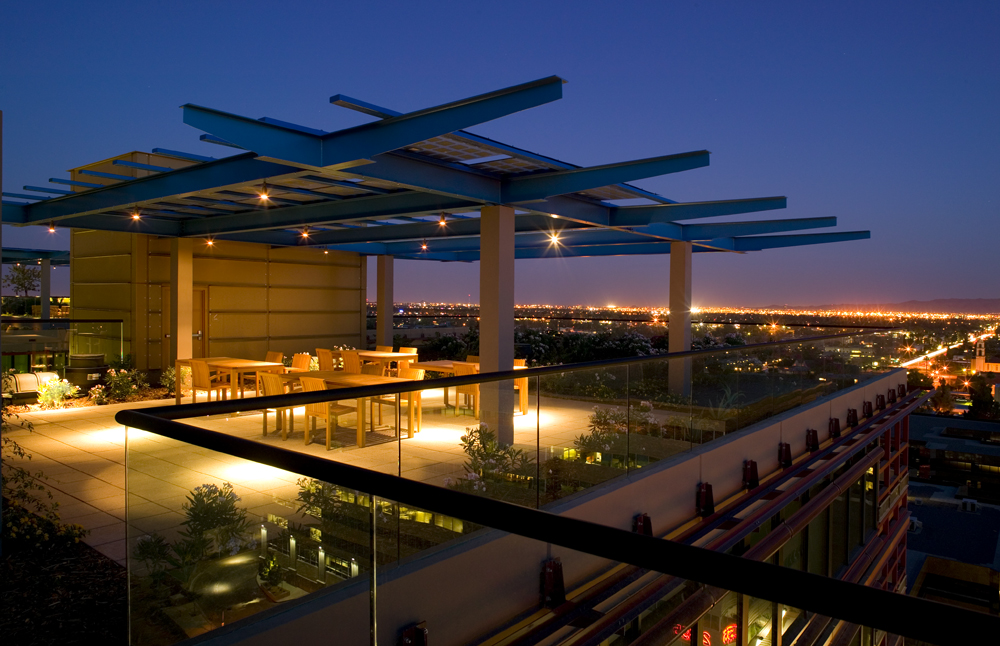
Photo of Optima Signature 7th Floor Outdoor Deck
Optima Signature 7th Floor Outdoor Deck

Refresh Your Focus

Nature and green space lets our brains take a break from the chaos of life (and in some cases has even reduced symptoms of ADHD). Spending more time outdoors is also linked to higher levels of concentration, creativity and improved mental clarity.

We hold these health benefits in high esteem, and it’s one of the many reasons we design our residential and communal spaces to invite the outdoors inside. Connecting to nature is an easy way to take some time and connect to yourself and to the environment around you.

Pickleball 101

With lifestyle integral to condominium and apartment living, at Optima we love to amp up our amenities to the next level. We’re always on the lookout for cutting edge trends and amenities that will cater to our residents’ lifestyles and interests. So when we noticed the increasing popularity of pickleball in the southwest, we happily adapted to incorporate an indoor pickleball court at our latest project, 7180 Optima Kierland. For those that aren’t familiar with the sport, here’s a little pickleball 101:

Pickleball 101

Visually, pickleball appears quite similar to tennis. Played on a badminton-sized court with a modified tennis net, the sport is a combination of many elements of tennis, badminton and ping-pong. Players use a paddle and a plastic ball with holes, and can choose to play as singles or doubles. Originally, pickleball paddles were made with wood, but have evolved as the sport has gained popularity to be made primarily of lightweight composite materials such as aluminum and graphite. As for the holey ball, holes number 26-40 and the ball can come in a variety of colors but must be solid to meet official international specifications.

Playing Pickleball

In gameplay, the ball is served with an underarm stroke below waist level in an upward arc aimed diagonally. Initially, only the serving side may score a point. A point is earned when one side commits an infringement of the rules, or a fault. Faults include not hitting in the opponent’s diagonal court, not hitting beyond the net, not hitting the ball before the second bounce, hitting the ball out of bounds, among others. Serving alternates players, and points can be scored equally throughout the remainder of gameplay. Watch a full video tutorial on playing pickleball here.

A Brief History of Pickleball

Why call it pickleball? It goes without saying that no pickles are actually involved in the sport. Originating in 1965 on Bainbridge Island, pickleball was the DIY invention of three dads attempting to reinvigorate summertime activities but lacking in proper supplies. The three dads, Joel Pritchard, Bill Bell, and Barney McCallum, claim two separate origin stories for the sport’s name. According to Pritchard’s wife, it was named after pickleboats. According to McCallum, the Pirchards had a dog named Pickles, who would chase after the ball, and served as inspiration for the new game’s name. 

Pickleball is truly a sport for everyone, and we hope to cultivate new pickleball fanatics in our communities with the unique amenity.

Team Member Spotlight: Heather Williams

The first time Heather Williams saw an Optima building, she was awestruck. A lifelong Arizona resident, Heather was fascinated by the hanging plants and Modernist architecture that was so different from anything else in the desert and was immediately intrigued. After doing some research, she found that the promises and values at Optima were something she wanted to be a part of. Heather joined our team in 2017 with the opening of the first tower at Optima Kierland Center. Fast-forward to 2020, Heather is now the General Manager at Optima Kierland Apartments and runs the entire property, orchestrating details both large and small (including providing a five-star resident experience and hosting some spectacular Super Bowl parties). We sat down with Heather to talk about her journey and how her experience at Optima has evolved since she first saw our buildings. 

Tell us a bit about your background and the role you play at Optima.

I’ve had a really varied background ranging from marketing to insurance to credit card processing, but they all encompassed high levels of customer service and creating a positive experience for the client. In my role as General Manager, I’ve had to become fluent in all parts of our business operations, so it’s been beneficial to pull from my experience in different industries. The role I’m in now at Optima gives me the opportunity to collaborate with different departments within our organization, so I’m constantly able to learn from some of the brightest minds and best problem solvers I’ve ever encountered. 

What drew you to Optima initially, and what’s kept you working there?

Everything about Optima speaks “exceptional”. I strive to give my best in everything I do and I’m so fulfilled at Optima because I know that all of my colleagues also give their best. When you get the opportunity to work with people who are solution-oriented, genuine and collaborative, a lot of barriers start to come down and you can achieve some pretty incredible things. We have a wealth of resources and communications tools at Optima, so it’s always easy to know what the company’s goals are and what we are trying to accomplish and it’s really inspiring to know you are a part of something bigger than yourself. 

How do you view the concept of community at Optima? How might it differ from other properties/buildings?

The attention to detail in Optima buildings is unparalleled. Everything about the way they are designed lends to creating an experience of living well and that has a huge impact on the way people interact with one another. When people choose Optima, they are choosing a lifestyle and we see a lot of connections with people formed as a result. The wealth of amenities in Optima communities inspire our residents to get out and use these spaces as an extension of their homes and they really get to know their neighbors as a result. We’ve seen so many friendships formed and even a wedding from the relationships people are able to make with one another here! 

Optima Kierland Apartments where Heather Williams is General Manager

Optima has a distinct set of values that really differentiates it from other companies. Which values really speak to the work you’ve done at Optima?

When making decisions, I always have one particular core value in mind – do the right thing even when it’s hard. In our industry, a lot of decisions are bottom-lined and based on budgets. We’re owner managed, so our decisions are not always financially-driven. Everyone at Optima just wants to do right by people. I know without a doubt that our goal on our Property Management team is to create the best possible experience for those who visit and live in our communities, so I try to always view the perspective of the person I’m working with and make the decision to do the right thing, even if that means it creates more work or is more challenging. 

I’m also really inspired by the concept that “we all create” and I feel that every day. I’ve seen ideas at Optima come from all corners and be implemented in record time. It’s a really empowering feeling to know I don’t just work for a company, I’m an active part of it and I can impact how we grow and move forward. 

2019: A Year in Review

As 2019 comes to a close, we reflectively look back on all that’s happened throughout a busy and exciting year. Our team, projects and Optima as a whole have experienced tremendous growth over the last twelve months. Here are just a few of the highlights:

Awards

Our team was honored to win five awards, including AIA Chicago Divine Detail award for Optima Sonoran Village, Architecture MasterPrize and Architizer A+ Finalist Award for Arizona Courtyard House, American Architecture Award for Whale Bay House and Build Magazine’s Luxury Urban Housing Designer of the Year. 

Projects and Properties

This was a big year for development, construction, leasing and more. 

In Arizona, we completed construction and leased up Optima Sonoran Village Phase III, the fifth and final tower at Optima Sonoran Village. 7120 Optima Kierland sold out – and was the fastest selling community in the Valley. We launched sales at 7180 Optima Kierland and are already over 50% sold. We also began construction on both 7140 and 7180 Optima Kierland, both slated for completion in 2020. We also purchased new land in Scottsdale to develop new Optima communities.

In Illinois, we leased up 100% of our commercial and retail space at Optima Signature including business suites. We also purchased new land in Chicago and the North Shore for new developments.

We also launched Optimized ServiceTM, a next-level white-glove approach to our concierge experience.

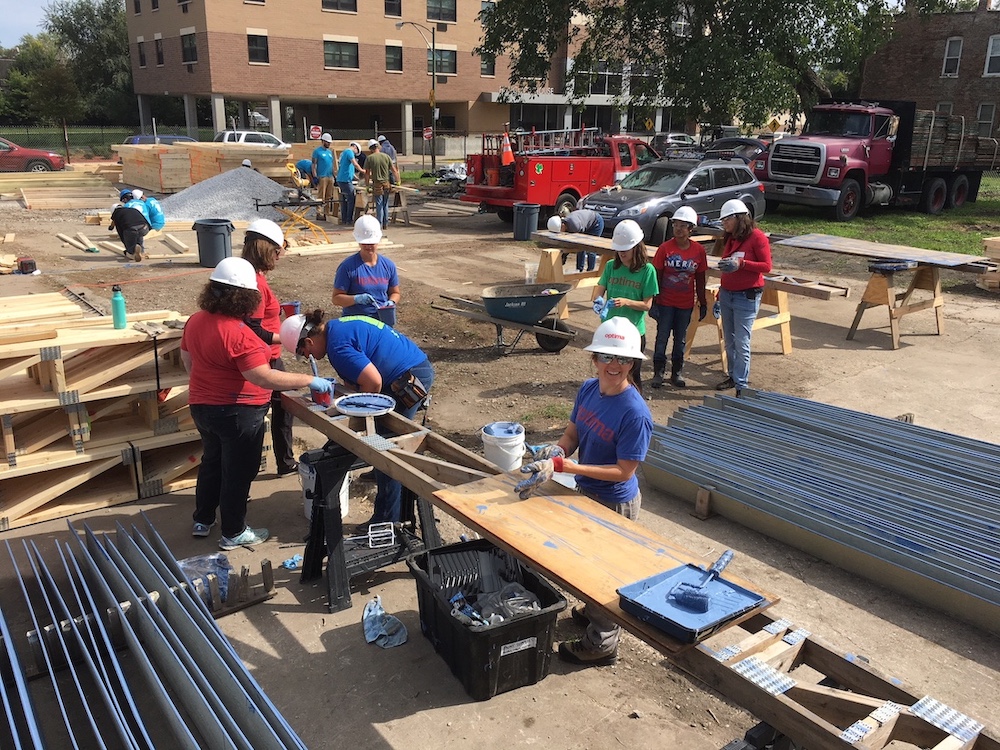
The Optima team volunteering for Habitat for Humanity.

Culture

Working across our entire organization, we formalized our purpose statement and core values to reflect our growth and inspire our path forward. We volunteered: we spent the day with Habitat for Humanity in both AZ and IL, cleaned up the Skokie Lagoons in IL, and worked with animals at Amy’s Farm Sanctuary in AZ. We had fun: we enjoyed axe throwing, bowling, go karting, beaches, barbeques, concerts and high tea. We also learned: our team attended the Metropolitan Planning Council lunch, the TCN Women in the Forefront Luncheon, the Goldie Gala, the Chicago Build Expo and NAA Apartmentalize. 

We can’t thank our leadership, team members and supporters enough for such a fantastic year. As we look towards 2020, we look forward to the new year to come, new milestones to pass and new ways to innovate across our upcoming projects. 

A Brief History of the Terrace

A hallmark of Optima properties is our integration of the built environment with the natural. Oftentimes, we employ terraceslevel platforms incorporated into buildings that allow for plantlife to thrive—that allow our buildings, and their residents, to live in harmony with the surrounding landscape. The usage of terraces is one that dates back for over 12,000 years, evolving over the millennium to be the sophisticated components of urban architecture that they are today.

Terraces of Ancient Times

The word terrace is derived from terra, the Latin word for earth. The technique has been in use for over 12,000 years, first utilized as an ancient farming method in hilly regions. Agricultural terracing involved cutting the land into a series of successively receding flat platforms, much like steps, to allow for more effective farming, by decreasing erosion and surface runoff and increasing the effectiveness of irrigation.  

An illustration of the Hanging Gardens of Babylon.

In 9800 BC, ancient civilizations realized that they could adapt this technique to buildings, and they began to add terraces to their homes and other domestic structures. This first usage was seen across the globe, from the Middle East to the Pacific Islands. The most famous interpretation is undeniably King Nebuchadnezzar’s Hanging Gardens of Babylon, one of the Seven Wonders of the Ancient World. Although no actual proof of its existence has been found, depictions show an ascending series of tiered gardens abundant with plantlife, complete even with a waterfall.

Thousands of years later, from 3000 BC – 600 BC, Mesopotamians grew gardens atop ziggurats, terraced religious temples that allowed for religious spaces to become placed ever higher. The structures were placed upon many layered platforms, and it’s believed that ziggurats were what inspired the Biblical parable The Tower of Babel. 

Terraces continued to be integrated into homes. Around 1500 AD, Venice adopted terrace design to the tops of their homes, called altanas. Altanas were private, slat-floored roofs. They started out as a place to hang laundry out to dry, but continue to be used today as social spaces.

The terraced design of Optima Camelview Village.

Terraces in the Modern Age

Following the progression of altanas as a place to socialize, people began more and more to use the terrace as a location to congregate in privacy. Private rooftop and per-unit terraces became luxury amenities in the 1920s, when building height began to increase due to the adoption of the elevator. At that time, terraces become a status of wealth, allowing for privacy, fresh air and separation from the increasing bustle of life on city-level. 

Today, the use of terraces continues to flourish, finding increased purpose and urgency in response to population growth and a changing environmental climate. They provide private places to reconvene with nature, away from the bustle of the city. Terraces also create sustainable and contributive space, by providing thermal insulation, solar shading to mitigate air pollution, increased biodiversity and enhanced quality of life. 

At Optima, we incorporate terraces to create private social space, to integrate nature into our communities through our signature hanging gardens, and to contribute to our sustainability practices at many of our properties, including Optima Camelview Village, Optima Sonoran Village and Optima Kierland. Terraces at Optima serve as outdoor living space, connecting the outdoor and indoor for a seamless living experience. From agricultural beginnings, the terrace stays true to its roots, allowing us to find harmony with nature.

A Transparency on Glass

Whale Bay House, Optima DCHGlobal, Inc., New Zealand.

For decades, glass has been a stylistic signature of Modernist architecture. From the first Modernist structure ever built to the steel-and-glass aesthetic of Modernist master Ludwig Mies van der Rohe, the material has provided a timeless transparency that is crucial to minimalist design. But glass hasn’t always been as functional as it is aesthetic. 

A History of Glass

Glass is one of the oldest man-made materials, with use dating back to 7000 B.C. It was first utilized for decorative purposes in 3000 B.C. by Egyptians mainly in pottery and other decorative trinkets and first used as windows by the Romans around 500 B.C.

However, at that time, the masonry required to create glass also didn’t allow for larger, stronger pieces to be created, so its use was therefore sequestered to windows and detailing, such as stained glass murals.

In the 19th century, the manufacturing renaissance introduced iron, steel and other materials that provided the strength and durability necessary to support larger glass constructions. The support of these materials, combined with the capability to produce glass in larger sheets, allowed architects to experiment with creating structures utilizing glass in more creative ways.

The Crystal Palace designed by Joseph Paxton.

The Crystal Palace

This new design potential allowed for greenhouses, large railway stations and other public structures to be made of glass. Such new usages inspired Joseph Paxton, an architect in London, to design the Crystal Palace in 1851 using 300,000 sheets of glass. The Crystal Palace was the first architectural creation to utilize an all-glass exterior, and is also considered the first Modernist structure ever created.  

To overcome the harsh effects of a glass exterior, Paxton utilized translucent screens of calico hung externally between the ridge beams of the structure’s roof glazing, covering the entire exposed rooftop and protecting against the transparent building’s vulnerability to heat. This functional feature eventually transitioned into a cornerstone piece of Modernist design. 

7120 Optima Kierland in the Kierland neighborhood of Scottsdale, AZ.

Glass at Optima

The idea of transparency, open space and functional materials are still relevant and desirable today. At Optima, we use floor-to-ceiling glass to create an indoor-outdoor relationship, allowing for sweeping views and connecting our indoor living spaces with the natural spaces just outside.

At 7120 Optima Kierland, we use a combination of low-e, UV-treated glass, perforated sunscreens and horizontal louvers, to create texture and rich variation of shades and shadows, while allowing for breathtaking views.

Optima Signature in the Streeterville neighborhood of Chicago, IL

At Optima Signature, glass preserves the sweeping lake views to the east and dynamic city views in all other directions. Glass also unifies Optima Signature with its sister tower to the west, Optima Chicago Center. While the glass curtainwalls of each building are different — silver-toned in the case Optima Chicago Center, and transparent green for Optima Signature — the podiums share a unifying black ceramic frit glass with dot pattern. Optima Signature expands the palette with areas of red glass that wrap the podium as it extends south to define the east edge of the plaza.

As we reflect on the history of glass and how it has become a viable aesthetic and functional choice when designing today, we return to the material time and again to design and build the stunning Modernist steel-and-glass structures in our portfolio.

person name goes here

Maintenance Supervisor

Glencoe, IL


    Acceptable file types: *.pdf | *.txt | *.doc, max-size: 2Mb