Community Architecture Across The World

Community means everything to us at Optima, which is why we bring thoughtful design to each project, committed to supporting and uplifting every resident. Historically, architecture has been a dominant tool for many to build and sustain communities, and recently, community architecture has taken on a more prominent role in the discourse surrounding living environments. Learn more about community architecture and some of the practice’s most visionary examples below: 

What is Community Architecture?

Community architecture is a collaborative building experience between both an architect and the users of the built space. The movement originated in the mid-20th century when architects across the world began to see that people wanted more say in shaping what they lived in and how they lived. 

Because it was such a radical idea at its inception, some architects who took charge of the movement experienced ridicule. Minette de Silva, in particular, was unsupported in her efforts to build Sri Lanka’s first Public Housing Project in collaboration with its residents. The result, however, was a triumphant success, like many other community architecture projects across the world. 

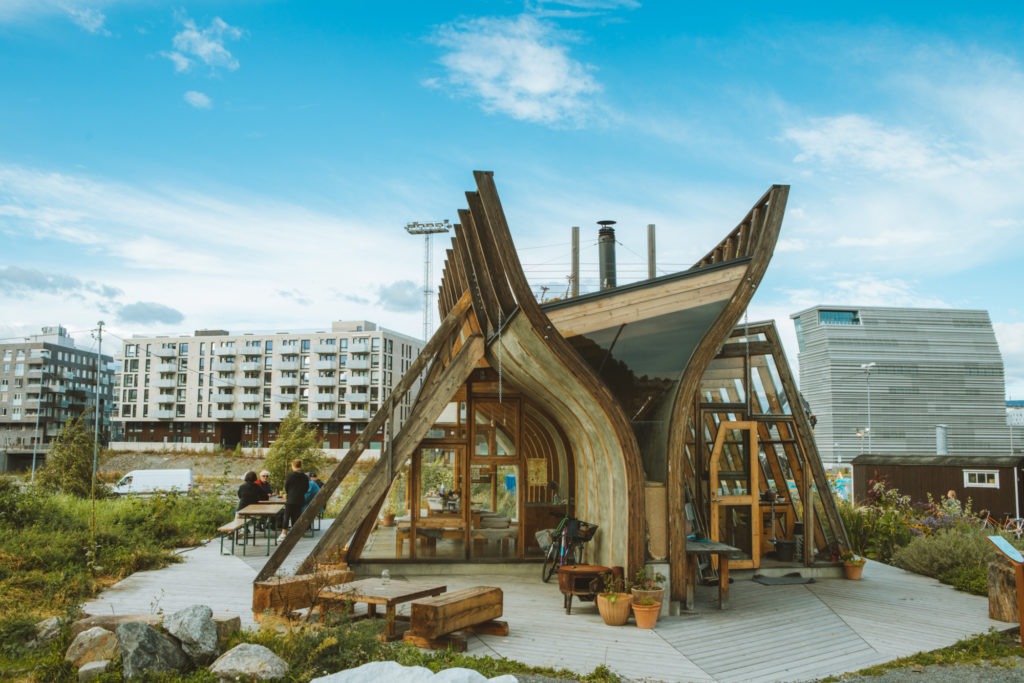
The interior of the Losæter Bakehouse during a community event. Creator: Sébastian Dahl Credit: © Sébastian Dahl (www.sebastiandahl.com) Copyright: Creative Commons BY-NC-SA

Losæter Bakehouse, Oslo

What originated as a mere art project in 2011 has turned into one of the world’s most functional community-built projects. The intricate design behind the main building, the bakehouse, operates as a place of creative production and a gathering space for communal interactions. 

The structure appears still under construction or repair, but the wooden skeleton and window-filled walls intentionally mimic the past. Both the structure’s versatile purpose and its boat-like canopy design are odes to the country’s rich history, reflecting on the cultural significance of Bakehouses and maritime history. 

The Momentary, Bentonville, Arkansas

From serving as a hunting ground for the indigenous Osage nation to being transformed into a cheese factory, the land on which The Momentary resides in Bentonville, Arkansas, has a long, rich history. Today, however, the land is home to the adaptive reuse art museum. The original structure – which is still 80% preserved – was completed in 1947, and, with the help of Wheeler Kearns Architects, the newly constructed museum finished construction in 2020.

Instead of trying to gloss camouflage the branches of history rooted in The Momentary’s land, they intentionally embraced them, designing an accessible hub that supports community members through cultural programming, education, engagement and enjoyment. 

The Night Ministry, Chicago

In 2020, The Night Ministry – an organization encompassing health care, housing, outreach and other social services – welcomed its new home, also designed by Wheeler Kearns Architects, in Chicago’s Bucktown neighborhood. The former manufacturing facility became transformed into the organization’s headquarters and is home to their overnight shelter, The Crib. 

Parts of the original manufacturing facility were repurposed to reduce waste when constructing the new headquarters, including flooring, windows and heavy timber. Vibrant murals around the interior alongside multipurpose programming spaces and a communal kitchen and dining space also help to reflect the collaborative nature The Night Ministry displays. 

The best architecture attracts people and allows them to feel a true sense of ownership of their living environment. And, because more and more architects are discovering the importance of doing just that in their projects, community architecture shows no signs of slowing down. 
A Brief History of the Netherland’s De Stijl Movement

The turn of the 20th century was rich with change in almost all aspects of life. Artists and architects across the globe were more inspired than ever to bring unprecedented works of art to life. Many of which originated in the numerous modernist movements that emerged during this period. Today, we’re exploring De Stijl, a celebrated Dutch movement formed partly as a reaction against Art Deco.

The History of De Stijl

De Stijl was founded in 1917 by a cohort of painters, sculptures, architects and poets in the Netherlands’ largest city, Amsterdam. The art movement is also known as Neoplasticism. However it is more commonly referred to by its traditional name, De Stijl, which says it all for its direction. Meaning ‘the style’ in dutch, nearly all of the artwork and architecture stemmed from a simple vision and philosophy. 

The principles of the movement set to ignore natural form and color. Instead it simplified compositions to only vertical and horizontal lines and palettes to only black, white and primary colors. 

Throughout De Stijl’s lifespan – from 1917 to roughly 1931 – its advocates pushed for full abstraction. However, it never reached the chimeric expressions found in other abstract movements. Artists and architects associated with De Stijl still developed their own visual language, using various avant-garde elements that ranged from basic geometrical figures to intersecting planes and unbent lines.

Much of De Stijl’s work embodied a utopian vision, and realizing that vision was unattainable was one of the resulting factors for its downfall. However, the movement’s continued fame and recognition exists today thanks to the many acclaimed works and artists who contributed to De Stijl. 

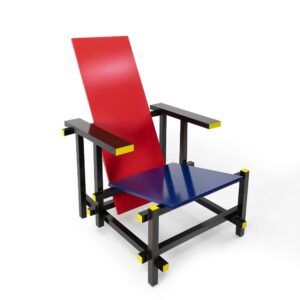
Red & Blue Chair, Gerrit Rietveld, 1923. Credit: defining Design on Flickr Creative Commons, CC BY-NC-SA 2.0 Deed

Celebrated Works

One of De Stijl’s most well-known works came from the Red and Blue Chair. As one of the first explorations of the movement, furniture designer and architect Gerrit Rietveld first designed the chair in 1918 but didn’t fully complete it until five years later, in 1923. 

Sticking to De Stijl’s design philosophy, the Red and Blue Chair makes use of only primary colors, along with black, and is one of the most popular creations of the movement. Rietveld envisioned the chair to be mass-produced but intentionally designed it to appear man-made due to its unique, clearly defined construction. 

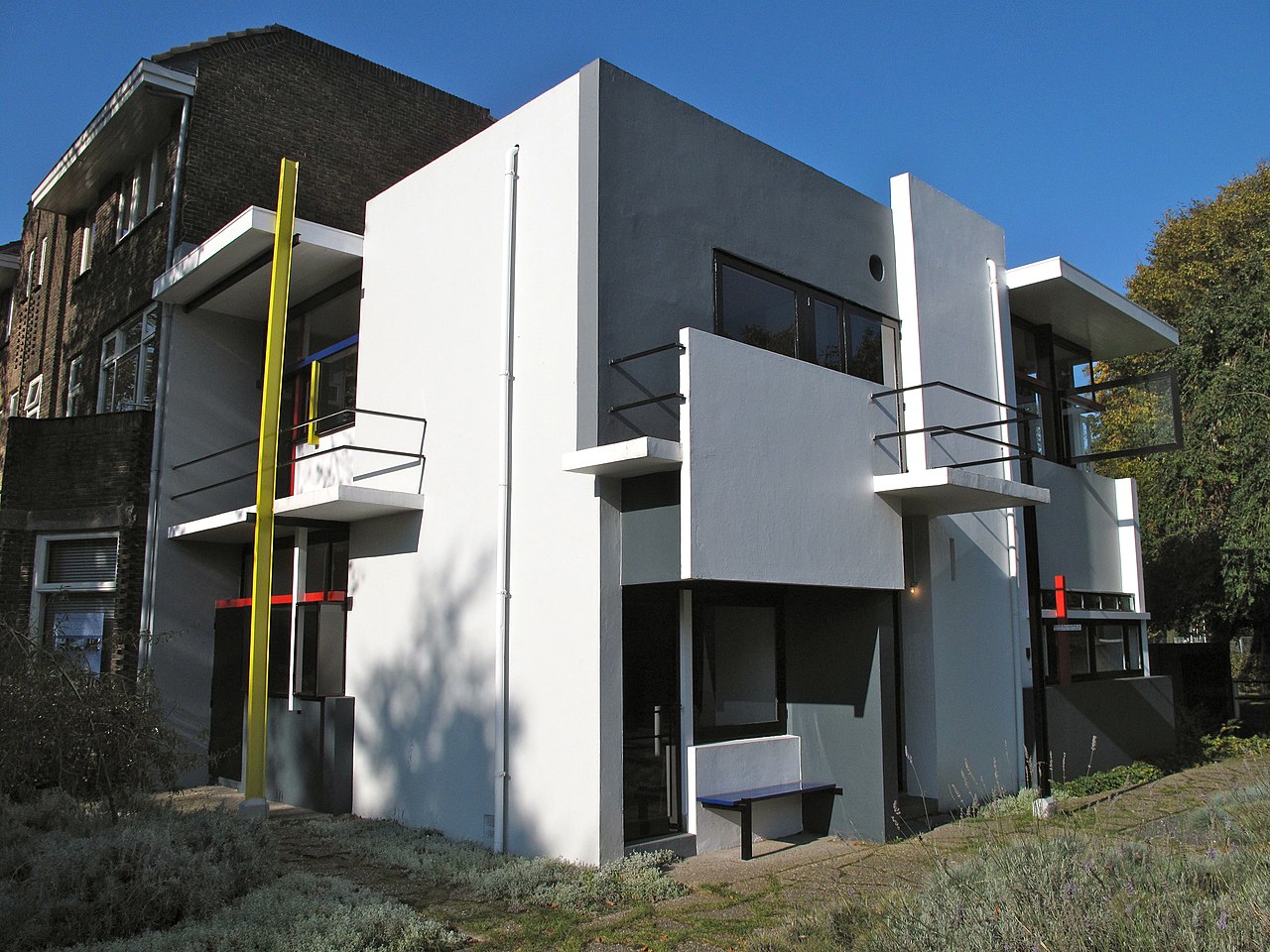
Another well-known work of the movement and the only architectural building which followed all of its aesthetic properties was Rietveld’s Rietveld Schröder House. Built in 1924, the house was a commissioned project for Truss Schröder-Schrader, whose original vision included a grand open space without any walls. 

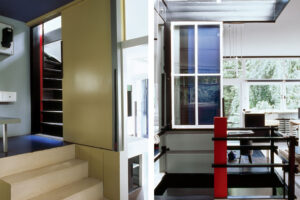
Interior of Rietveld Shroder House
Interior of Rietveld Schröder House. Photo © Ana Lisa Alperovich for Inhabitat, Flickr Creative Commons, CC BY-NC-ND 2.0 Deed

Rietveld delivered on Schrader’s vision, utilizing construction elements that emphasized the building’s form, including various slabs, posts and beams. Making each wall portable, he designed each room as if each was its own movable entity. The design took use of De Stijl’s emblematic color palette of black and white and looked nothing like any of its neighboring builds.

Although it might not be the most notable movement stemming from the Netherland’s, De Stijl’s presence in everything from Dutch literature and paintings to architecture and music communicates just how influential the art movement was throughout the early 20th century.


The Synthesis of Art and Architecture

Art and architecture share a rich, timeless connection rooted in their design, creators and intended meaning. Both forms of expression become envisioned and constructed through similar principles, visual elements and ambition to engage with one’s senses. Today, we’re exploring this essential relationship and what happens when the two worlds collide. 

David Hovey Sr., FAIA, Optima’s CEO and Founder, says it best when describing the linkage between art – in particular, sculptures – and architecture, saying that “architecture is about function, as well as aesthetics, while sculpture is really just about aesthetics.”

Architecture is traditionally informed by functionality first, with aesthetics coming into play as with a significant role. Art, on the other hand, is commonly guided by aesthetics, without any burdens to deliver an object or outcome that is functional. However, both forms of expression are typically influenced by similar social and political factors that affect the environment surrounding the work or structure. 

Centuries-old cultural movements, including the Renaissance, where art imitated life and vice versa, demonstrate the linkage between art and architecture. However,  it wasn’t until the Avant-Garde movements of the late 19th and early 20th centuries that the integration of the two took a new meaning. 

This integration between the disciplines quickly became a core characteristic of modernism and modernist design, and is distinctly present in the work of some of the greatest architects and artists of the time period. Because artists use their art as a tool to shape emotions, modernism emerged as an expectation in which art and architecture would provide a new value when combined. 

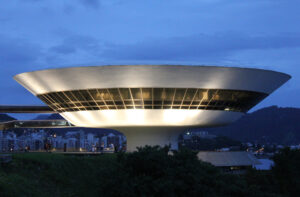
Oscar Niemeyer Museum
The Oscar Niemeyer Contemporary Art Museum in Niterói exhibits the synthesis of art and architecture, displaying bold geometric forms, sculptural curves and vivid murals in a functional structure, reminiscent of a human eye. Credit: Rosa Menkman, Flickr Creative Commons, CC BY 2.0 Deed

The Bauhaus Movement was one of the first to introduce this idea, encouraging the unification of all arts and coupling aesthetics with the technology of the time. Notably, this ideology was cultivated through Le Corbusier’s use of painting and sculpture within his established concepts of architecture. Le Corbusier also argued that it was of equal importance to architects, painters and sculpturists to contribute constructive collaborations to the world by designing and creating in harmony with one another. 

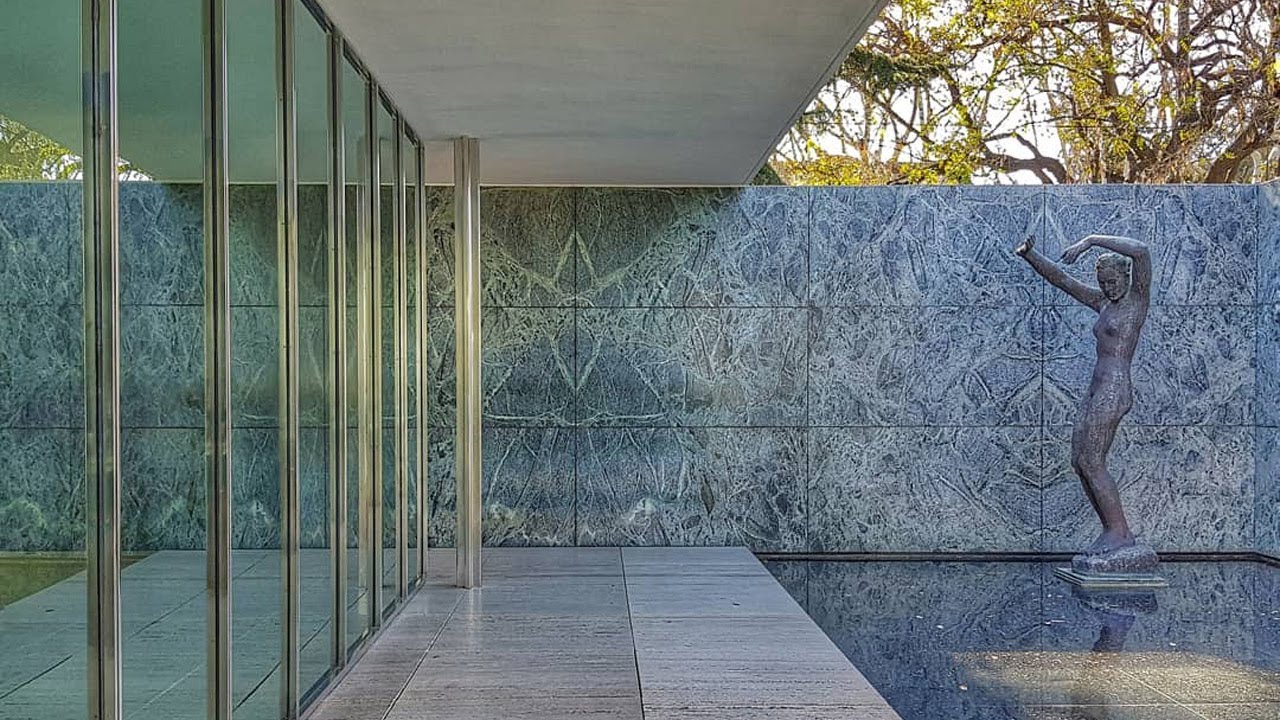
Along with Le Corbusier, various other artists throughout the past century have tried to synthesize art and architecture throughout their work, particularly Oscar Niemeyer, Mies van der Rohe and Zaha Hadid. Today, architects and artists continue to collaborate and integrate their disciplines more than ever, exploring and expanding the dynamic relationship shared between the two.

David Hovey Sr., FAIA, the Artist

Art and architecture are united through a connection of aesthetics. Both emerge from a creative vision to engage the senses and express their unique identity. As we continue to explore the rich stories detailing the career of David Hovey Sr., FAIA, in the newly published catalogue raisonné, it’s a pleasure to unearth the vision behind some of his most ambitious works. 

Alex Marshall, in his thoughtful essay entitled “Brilliant Journey,” reflects on the dimension of David Hovey Sr., FAIA,’s career as an artist:

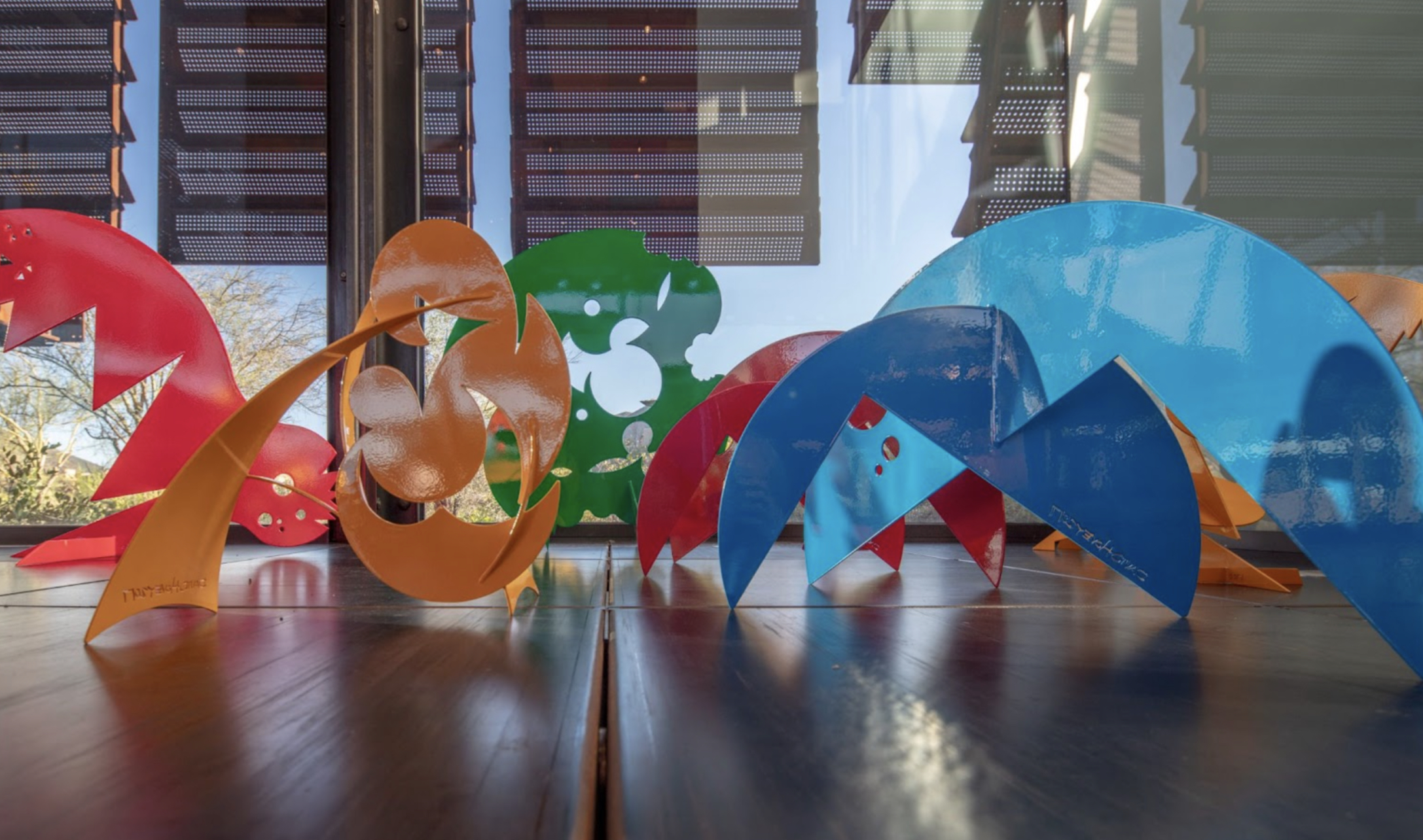
“In front of Optima Signature (2017) on Illinois Street near Michigan Avenue in Chicago and at Camelview Village in Scottsdale are objects composed of smooth, brightly colored steel plates with cutouts in whimsical patterns of swoops, sharp points, and angles. They contrast with the buildings, which have horizontal and vertical lines.

“The objects are works of art, sculptures designed by Hovey Sr. He has taken his love of exploring the possibilities of materials and the creation of spaces, and channeled them to aesthetic ends.

“‘Architecture is about function, as well as aesthetics,’ Hovey Sr. said. ‘While sculpture is really just about aesthetics. You don’t have that functional component. You can do whatever you want. I like that.

“‘Because of my years of working with it as an architect, I feel I’ve developed a special understanding of steel, its material structure, and what can be done with it visually. I’m trying to do something that can’t be done in wood, canvas, or plastic. So I use very thin steel plates, and join them together so that they become very three-dimensional, and create curves and voids and form. It doesn’t really matter if they are a foot high or fifteen feet high.

“Although he has been exploring the idea for years, Hovey Sr.’s practice as a sculptor took a leap forward when he decided to put one of his own pieces in front of Camelview Village in Scottsdale. The municipal government had required Optima to spend $400,000 on a piece of art in front of the building. Hovey Sr. decided to do it himself, using all the money to fabricate, transport, and install the art.

Kiwi at Optima Signature, Chicago, IL

“The process is this: Hovey Sr. makes sketches of his designs, and then gives them to a fabrication shop. The shop produces digital versions of Hovey Sr.’s sketches, and then uses these computerized drawings to make the three-dimensional pieces composed of different planes of steel. The expensive laser cutting machines, some about the size of a small car, draw as a child might draw on a piece of paper, except with a laser that burns precise holes and lines into the plates of metal, to produce what Hovey has set down.

“‘I wanted to take advantage of the most recent technology, so the sculpture I was doing wouldn’t look like something from the nineteenth or twentieth century; it would look like something from the twenty-first century.

“Hovey Sr.’s sculptures also reflect his own temperament. ‘I’m one of those people who like to be active so if I have an hour or two free, I would rather be doing sculpture. It’s my way of relaxing.”

Stay tuned for more inspiring and enlightening excerpts from David Hovey Sr., FAIA. To learn more about the stunning sculptures created by David Hovey Sr., FAIA, that live in Optima communities, explore our website here.

Modernism and African Architecture

Modernist design not only inspires our work at Optima but, for decades, has also inspired the work of countless other architects and movements across the world. It’s always a delight to explore how Modernist design translates through the influences of other cultures. Today, we’re delving into the rich connections between Modernism and African architecture. 

The History

Beginning in the early 20th century, the Modernist Movement traversed the world, leaving its mark on various cultures and countries. Mies van der Rohe and Le Corbusier became pioneers of the movement, and numerous other architects quickly became inspired by their unique perspectives. However, even with its momentum, the movement’s journey to African architecture was prolonged. 

From 1957 to 1966, many African nations declared independence from the European colonizers that ruled them for nearly one hundred years. With this newfound independence, many African countries became inspired by the freedom that came with Modernist design. As elected governments started forming, architecture quickly became an asset to them, and hundreds of Modernist wonders flourished, frequently overlooked by the rest of the world. 

Even though Africa’s countries had vast differences in their culture and economics, they all shared aspirations for modernity – specifically through architecture – and each created an identity of their own. And by the mid-20th century, everything from educational to ceremonial builds filled with rich cultural significance and symbolism sprouted across the continent. 

Notable Builds

One of the first builds of modern architecture in Africa belongs to Burkina Faso’s La Maison du Peuple or House of the People. After the country declared independence from France in 1960, René Faublée sought to build a brutalist structure inspired by the country’s native culture for their newly-formed government to meet. After opening in 1965, La Maison du Peuple served as a popular location for political debates and other democratic exercises. 

The concrete structure features vibrant colors mimicking the textures and patterns of the earth that surround it. The magnificent lanterns on its roof reflect architecture traditional to Mossi, the nation’s native people, and they also provide natural light to its 2,500-seat auditorium while serving as passive ventilation ducts. 

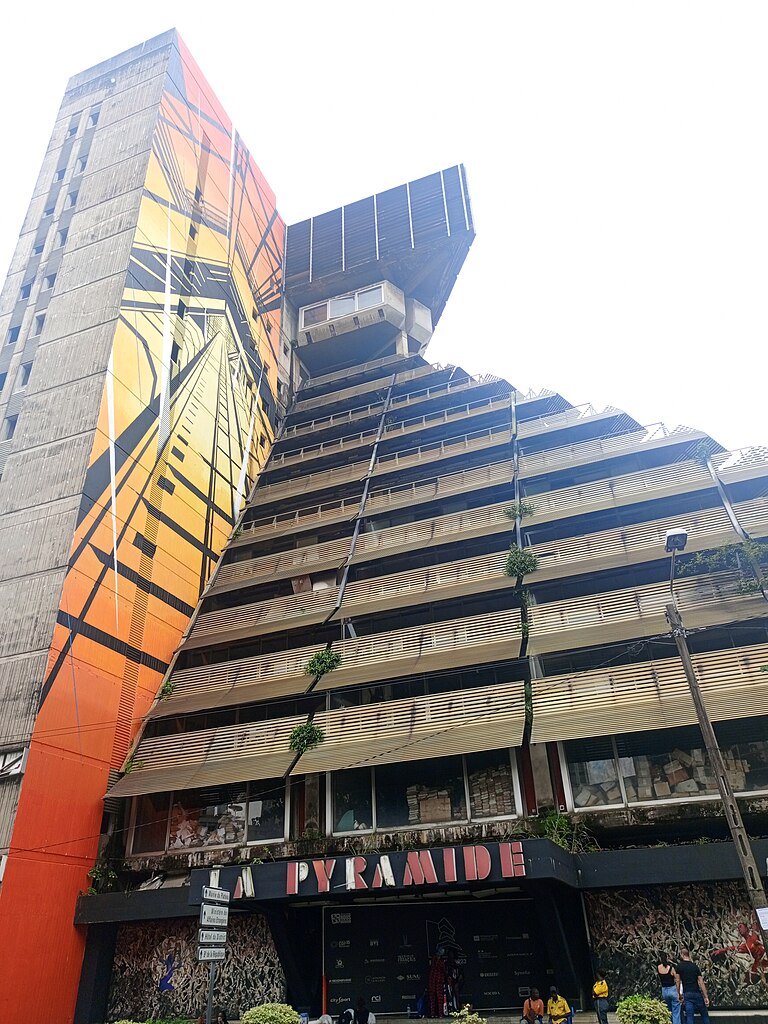
Found in Abidjan, Ivory Coast, La Pyramide is another example of the visionary Modernist designs that sprang up across Africa in the 1960s. Built from 1968 to 1973, it is one of the most famous Modernist buildings in Abidjan, known for being one of the first high-rise buildings in the country. Architect, Rinaldo Olivieri, aimed to capture the bustle of an African market in an urban setting through his design. 

The iconic building exhibits a traditional cascading pyramid shape. Olivieri designed the building to house residences for the country’s elite on its top and shops and boutiques at its base. The building has faced some deterioration over its 60-year lifespan, but the Ivorian Government has plans to update its architecture and make it a tourist attraction in the coming years. 

Independence Arch is another significant example of the power independence had on Modernist architecture in Africa. The concrete arch was funded and built by Accra’s Public Works Department after Ghana’s independence in 1957. Construction finished in 1961 at Accra, Ghana’s Independence Square – the second largest city square in the world – where the beloved arch shares a home with various other monuments symbolizing freedom.

Independence Arch, Accra Ghana
Independence Arch, Accra, Ghana. Credit: Fiona Graham / WorldRemit on Flickr Creaative Commons, CC BY-SA 2.0 Deed

The monument is made of three towering concrete arches that hold two other structures meant for government use in between their peaks. Underneath, the Eternal Flame of African Liberation, lit by Kwame Nkrumah, the first President of Ghana, still burns. 

For decades, African countries brought their perspective and culture to the movement, building some of the world’s most distinctive yet forgotten works of Modernism. Through noticing and appreciating where these styles journey, we gain a greater knowledge and understanding of the world of architecture and architecture throughout the world.

5 Innovative Materials Changing the Future of Architecture

As technology continues to advance, changemakers and visionaries are discovering ways to push the boundaries of sustainable design in architecture. Today, we’re spotlighting five of the most innovative materials currently in development that are setting the stage for the future of architecture and design. 

Green Charcoal Loofah Bricks

Engineered at the Indian School of Design and Innovation in Mumbai, the Green Charcoal Loofah Brick is another revolutionary twist on traditional brick material. Soil, cement, charcoal and organic loofah fibers – the plant commonly used in sponges – make up the lightweight, biodegradable product. 

Similar to the cavernous gaps that are found in loofahs, the bricks’ fibrous network allows it to double as a home for plants and animals to thrive. The bricks’ pours also act as water chambers, which, when filled with water, act as a coolant for the structures they support. While the name might suggest charcoal is a significant part of the material’s build, it only appears on the brick’s surface, purifying the air by absorbing a compound used for growing plants. 

Hemp Rebar

Hemp is one of the most carbon-sequestering and strongest fibers on the planet, making it a perfect material to shift the future of architecture. Engineers at the Rensselaer Polytechnic Institute developed the low-cost, low-carbon alternative to traditional steel rebar. One of the material’s most outstanding features is its ability to avoid corrosion, further extending the potential lifespan of the structure it is used to build. 

The rebar’s sustainable makeup has the potential to decrease construction time and triple the lifespan of the most costly traditional infrastructure — including everything from bridges to dams to seawalls. Its engineers intend the product to be cost-competitive, making it an obvious alternative material choice for future builds. 

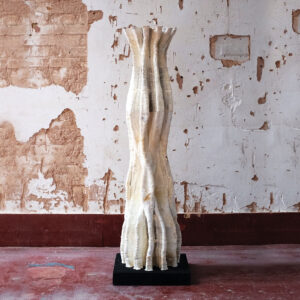
Blast Studio’s 3D Printed Mycelium Collum, Courtesy of Blast Studio

3D Printed Mycelium

An ever-growing number of engineers are discovering how to incorporate mycelium – a root-like structure of fungus that creates a network of threads and branches – into their designs, with a huge impact on advancing sustainable design. One of the teams leading the drive is Blast Studio in London. Their team takes advantage of mycelium’s strong webbing structure to form columns that not only support builds but also grow mushrooms. 

The tree-like structure is made up of a mixture of mycelium fiber and recycled coffee cups. After being constructed through 3D printing, the mycelium eventually consumes the recycled material and grows to command the entire form of the column. Along with cultivating its own food, the dynamic material also produces natural insulation and fire-retardant properties. While mycelium-based materials are still sparse, more and more engineers and architects are beginning to see their advantages in designs. 

Chip[s] Board

One of the best single-use alternatives to fibreboard, corkboard and even wood, Chip[s] Board is finding its place in today’s architecture landscape. Created by Rowan Minkley and Robert Nicoll, the biodegradable material is one of the healthiest building components used on the planet due to its absence of toxic chemicals or resins like formaldehyde. When creating the material, Minkley and Nicoll were set on combining the issues of material and food waste – eventually resulting in the sustainable wood substitute. 

The product’s name is a play on the ingredients used to make it, which includes a blend of potato peel binding agents mixed with fibers from potatoes, bamboo, wood or hops. To develop Chip[s] Board, the blended composite is heat-pressed into a sturdy board that becomes functional in everything from furniture to buildings. 

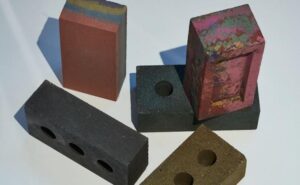
Kenoteq’s K-Briqs made of recycled construction waste, Courtesy of Felix Speller

K-Briq Construction Waste Bricks

Invented by Gabriela Meder, an engineering professor at Edinburgh’s Heriot-Watt University, the K-Briq is one of the leading sustainable and recycled brick materials today. The unfired brick is made of 90% construction waste and produces less than 10% of carbon emission in manufacturing compared to clay bricks, making it an obvious low-carbon alternative in construction.

Designers of 2020’s Serpentine Pavilion – an annual design commission known for its experiential architecture – were one of the first to utilize the brick due to its versatility and similarity to the weight, look and functionality of standard bricks. Meder, who spent ten years developing the K-Briq, still produces it herself through her company Kenoteq

With new forms of sustainable design being created daily, we can’t wait to continue exploring the ways innovative architecture can contribute to a healthier, more sustainable world.

David Hovey Sr., FAIA, A Modernist Philosophy Emerges

As we continue to explore the new David Hovey Sr., FAIA catalogue raisonné, it’s a pleasure to linger over the expansive, thoughtful essay penned by distinguished architecture writer and long-time associate, Cheryl Kent. This examination of Hovey’s career entitled, “The Achievement,” provides new perspectives on his career that give us greater appreciation for what he has cared deeply about, and the impact he has made.

In speaking about Hovey’s core beliefs, Kent explains:

“David Sr. continues as CEO and a principal architect. Now in his mid-seventies, he is beginning to pull back and leave more responsibility to his heirs. Still, he continues to work every day, ‘helping’ as he says ‘wherever I’m needed.’ In 2004, Optima opened an Arizona office but it has been building in the Phoenix-Scottsdale area since 2000. Today, Optima projects routinely gross over one million square feet and sometimes more than two. Over the course of the company’s existence, it has built nearly six thousand residential units with another 950 now in the works. And the pace has picked up. In its early years, the firm did approximately one project a year; now it is likely to have projects in construction in both markets at the same time, and sometimes more than one in each.

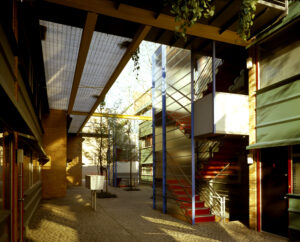
840 Michigan was a 24-unit complex in suburban Evanston built in 1985.

“It is significant that Hovey accomplished this over decades when his design philosophy, modernism — and he does embrace it as a philosophy — was out of step with the architectural mainstream. When many architects had embraced postmodernism beginning in the 1970s arguing for conventional historical references non-cognoscenti could understand and still other architects turned to deconstructivism that no one could understand, Hovey was steadfast in his belief in the tenets of modernism, in the future, in technology, in material honesty, in structural expression, and in architecture’s ability to improve life for people. Architecture, Hovey insists, must be expressive of its time and employ the latest technology. He has made a highly successful career of well-designed housing in a modernist idiom.”

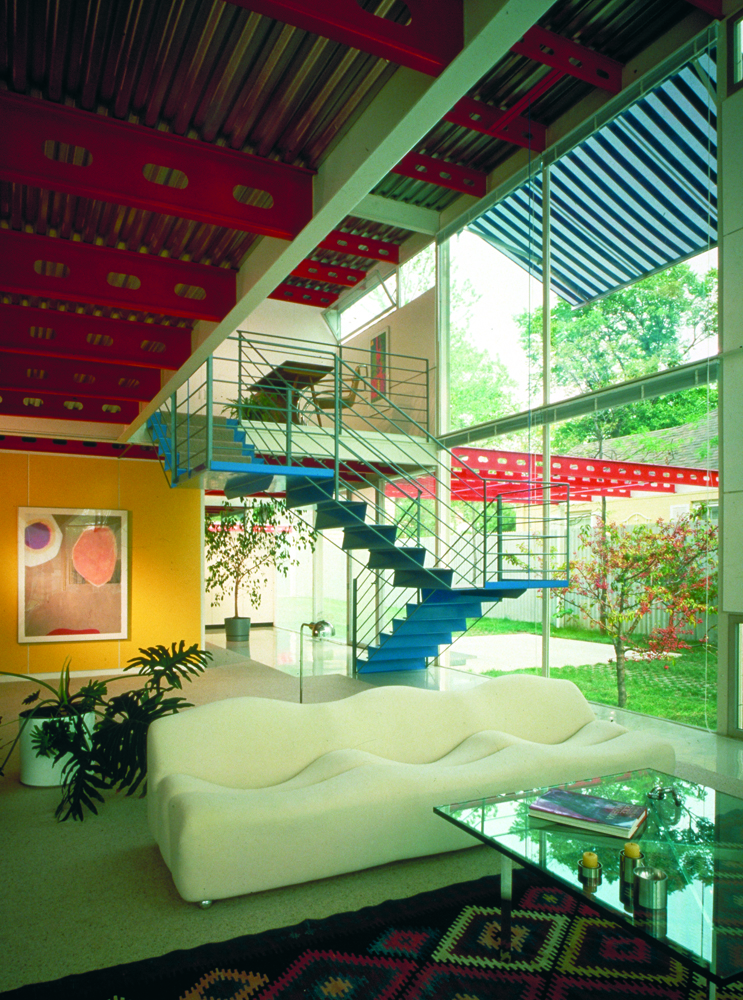
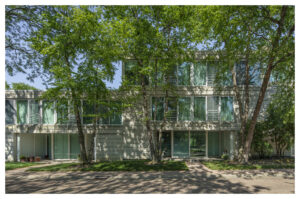
When Hovey tackled North Pointe on the site of an old warehouse in Evanston in 1990, he used a dynamic plan to include 118 townhouses with penthouses and two mid-rise condominiums.

The projects in the early years of Hovey’s career allowed him to hone his practice by continuing to take on greater challenges in location, scope, size and materials — all the while staying true to his core beliefs and principles.

Women in Architecture: Kazuyo Sejima

As part of our ongoing “Women in Architecture” series, we’re putting a spotlight on one of the world’s most cherished architects, Kazuyo Sejima. Throughout her breathtaking portfolio of work, Sejima has exhibited her enigmatic and refined point of view and became the second woman ever to receive the acclaimed Pritzker Architecture Prize. Today, we’re diving into Sejima’s notable life, work and achievements.

The Life and Career of Kazuyo Sejima

Sejima was born in Mito, Ibaraki, Japan in 1956. After discovering her passion for architecture and design at a young age, she began her studies at the Japan Women’s University, where she completed both an undergraduate degree and a graduate degree in architecture. Following her graduation in 1981, Sejima began apprenticing with Toyo Ito – a renowned Pritzker Award-winning architect also from Japan. 

After nearly seven years working with Ito, Sejima felt empowered to launch her architecture firm, Kazuyo Sejima & Associates, in 1987. Directly after opening, Sejima convinced her long-time confidant, whom she worked with under Ito, Ryue Nishizawa, to work with her at her firm. Nishizawa gladly joined Sejima, and nine years later, the pair founded a firm of their own, Sejima and Nishizawa and Associates (SANNA). And, thanks to Sejima and Nishizawa’s visionary designs, SANNA quickly became a nationally renowned firm after only a few years. 

Sejima’s designs are frequently recognized for their vibrant materials and colors, including various types of marble, glass and metals. She also often takes advantage of organic forms and aesthetics in her work, thoughtfully exploring each design as an instrument for human experience. Sejima’s appreciation for sheer glass in many other builds allows for an abundance of natural light, helping to create a more fluid transition between interior and exterior environments. 

Sumida Hokusai Museum
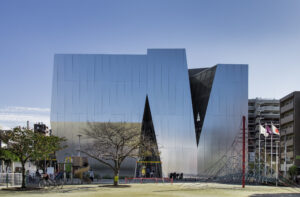
Sumida Hokusai Museum. Credit: Kakidai 2018, Wikimedia, Creative Commons Attribution-Share Alike 4.0 International

Throughout her career, Sejima has expressed the same concern for each of her projects: the functionality of the space’s social uses and their potential for adaptation. This philosophy explains why she doesn’t consider any of her builds finished until each of its inhabitants places pieces of their lives into the space through their various actions and interests. 

Notable Works and Achievements

Sejima translated her vision and architectural philosophy into her first project, Platform House I, in 1987. Sejima built the Platform House in a Japanese suburb and took inspiration from western designs, intermixing traditional Japanese values with European elements of architecture. With her first project, Seijam set out to create a living environment built with a platonic ideal of architecture – where it would function as provisional to the residents based on their actions and lifestyle. 

Throughout the house, Sejima experimented with large spaces, positioning the building’s central living area a half level below the kitchen and a half level above the sleeping floor below. Sejima also adopted her signature use of bright materials throughout the home, utilizing floor-to-ceiling windows in the home to illuminate its interior spaces and a gleaming, corrugated metal roof to signature the movement and human interaction that occurs below it. Following Platform House I,  Sejima designed companion projects: Platform House II and III.

New Museum of Contemporary Art, NYC
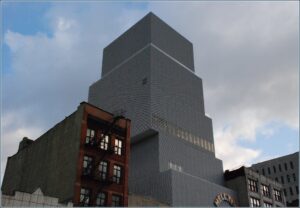
New Museum of Contemporary Art, NYC. Credit: CTG/SF, Flickr Creative Commons CC BY-NC 2.0 Deed

Sejima extended her vision across the world, and in 2007 she, along with Nishizawa, designed the New Museum of Contemporary Art in New York City. Their design was chosen due to its adaptable atmospheres – mirroring the ever-changing nature of contemporary art. From the exterior, the building’s bold design consists of four white cubes that sit on top of one another, further symbolizing the dynamic energy of contemporary culture. After its completion, the building received praise, and Conde Nast Traveler named it one of the architectural New Seven Wonders of the World

Most recently, Sejima constructed a vibrant tribute to renowned Japanese artist Hokusai Katsushika through the Sumida Hokusai Museum in Tokyo, Japan. Sejima thoughtfully designed the building to blend in with its surrounding urban environment, making it more accessible to its visitors. Sticking to her trademark design elements, Sejima used reflective aluminum panels to cover the façade. The building’s exterior also features various slits on all sides, eliminating the notion of a “front” and “back”, and providing outdoor walkways connecting each first-floor area.

Alongside her extraordinary work, Sejima has also received numerous architecture and art awards as well as achievements:

  • Young Architect of the Year, Japan Institute of Architects, 1992
  • Prize of Architectural Institute of Japan, 1998, 2006
  • International Fellowship of the Royal Institute of British Architects, 2007
  • Pritzker Architecture Prize, 2010

Today, Sejima continues to fearlessly voice her unique architectural perspective, gifting the world with her ambitious designs. She currently teaches as a Visiting Professor at Tama Art University and Japan Women’s University. And, succeeding Zaha Hadid in 2015, she leads an architectural design studio at the University of Applied Arts Vienna.

Angie Chache Team Member Spotlight

Our passionate team at Optima is the heart and soul behind each of our communities and embodies all of our values daily. We recently sat down with Angie Chache, Optima Lakeview’s Property Manager, to learn more about her journey to Optima Lakeview and what excites her the most about this extraordinary new property. 

Tell us a bit about your background and the role you play at Optima.

I have been in residential property management for almost 20 years, managing different types of communities in a Property Manager and Regional Manager role. With Optima Lakeview, I am the Property Manager, so I oversee the site itself. I’m responsible for the entire building and its system of operations, and because I’m jumping in just as the building is being completed, it will be my first lease up. I am excited about it!

What drew you to Optima initially, and what’s kept you working there?

Initially, a conversation with Ali Burnham, the Marketing Director, introduced me to the vibrant project they were building here. My first experience with an Optima community was actually Optima Old Orchard Woods; I was drawn to its classical modernist architectural style. So when the opportunity to join the team at Optima Lakeview came up, I was very excited. At Optima, there is this wonderful collaboration between all departments. With most companies, the architect/designer and developer/builder are separate entities. So at Optima, where we do everything essentially under one roof, I observe that things go much more smoothly on the operations side of things.

How do you view the concept of community at Optima? How does it differ from other properties/buildings?

Community at Optima means providing exceptional and curated experiences for our residents. The buildings are designed with extensive amenity spaces so they can seamlessly function as an extension of our residents’ homes. Our tagline at Optima Lakeview is Expect the Extraordinary, which I believe speaks for both the building’s outstanding architecture and the rich community we are creating within it. 

One of our philosophies that encompasses our value around relationships and community is called the Optima Way. The Optima Way sets the stage for Optima experiences that are very unique and customized for every one of our residents. We strive to get to know every resident, what they like, what they don’t like, and how we can make all of their experiences unique. It’s about being encouraged by our company culture to create extraordinary encounters for the residents. When you live in an Optima community, it’s more than just living in any generic apartment; it’s about what residents can enjoy when they’re here and what we can do as a team to curate living experiences just for them. 

There are a lot of luxury properties in the market, but what differentiates us is our suite of services. The resident events we frequently host are incredibly special, including fitness classes and kid-focused events (we’re one of the only communities doing this). And our grand amenity spaces are unlike anything I’ve ever seen. Residents at Optima Lakeview are going to feel like these spaces are an extension of their home. Some areas feel private, and others are great spots to gather with friends…because when you have that much space to spread out, it’s going to feel like home.

Optima has a unique set of values that differentiates it from other company cultures. How does that affect the quality of your work life? What values matter most to you?

My bucket gets filled every day. Yes, there are challenges and days that are hard, but there is also support and fluidity between the departments. We all work for the same company which, on the Property Management side of the business, makes my job so much easier. The two values that speak to me the most are that we build strong lasting relationships and that people are — and always will be — the most important pieces of the puzzle. 

In my career, relationships — whether it be with employees, vendors, or residents — have been at the forefront of my values, and I always want everyone to feel welcomed and appreciated. Optima allows me to curate experiences for people and provide amazing customer service, and it isn’t typical of companies to have the customer at the forefront. Many companies say they value that, but Optima acts on it.

What makes you most proud to be a part of the Optima team?

The beautiful ,innovative designs of our buildings, how we impact our residents’ lives, and the intentional way we work to be a part of the communities we build in. I never really understood the thought put into Optima’s communities before I started working here. We strive to build long-lasting relationships and partner with businesses surrounding our community so our residents and the surrounding businesses can benefit from those partnerships we form.

I’m also proud of the way we give back to the communities where we have built. Recently, we partnered with Lakeview Pantry and worked there for a day, which allowed us to see the lives that are impacted daily by this organization right here in the Lakeview neighborhood. We are excited to partner with them long-term and see how our community can help support such an important cause.

With move-ins scheduled for the spring, what elements of Optima Lakeview should new residents be most excited about?

Everything! We have 198 units with 52-floor plans, which means sometimes there may only be one unit of a particular floor plan, so our uniqueness provides a sense of exclusivity. I can’t wait for residents to see our 7-story atrium that will be filled with an abundance of natural light and the vibrant vertical landscaping that will live inside of it — similar to the vertical landscaping we do on the exteriors of our Arizona communities. We will have 40,000 square feet of amenity space for only 198 residences. Our skydeck with 360-degree views of the city will also have a heated pool and jacuzzi that can be used year-round — even when it’s snowing. And, we’ll have private terraces that range from 300 square feet up to 2,000 square feet, some with private grills and firepits. Our community is like no other in this neighborhood.

New Book Release: Reflections on the Career of David Hovey Sr., FAIA

Hot off the press is the spectacular retrospective of the 40+ year career of David Hovey Sr., FAIA, Optima’s CEO and Founder. David Hovey Sr., released by Images Publishing, is a collector’s item that arrived on bookshelves in January 2022. The monograph opens with a beautiful introductory essay by the late luminary architect Helmut Jahn, who wrote about their decades-long friendship and Hovey’s “staggering” influence on architecture. Entitled “Living Beautifully,” Jahn explains:

“The best thing that can be said about the work of David Hovey Sr. in his chosen field of multi-family and single-family housing is that he builds unique and inventive dwellings for people to live beautifully. That he chooses to play not just the role of the architect but also that of developer, contractor, construction manager, sales and leasing agent, and building operator makes the achievement even more remarkable. As his own client and CEO of his company, Optima, Hovey demonstrates that it’s possible to successfully execute the very different skills of an architect and a developer by applying tremendous knowledge and tenacity and assuming great responsibility. Many who have tried to work as an architect-developer have failed because they did not find the right balance. David Hovey expanded the role of the architect to the level of a master building and in this, he is without equal in his generation.”

A sketch of Optima’s Sterling Ridge

In the words of friend and chronicler, Jahn talks about the arc of Hovey’s career:

“Hovey’s built work is a testament to constant refinement and improvement, each project a step along a path to take on new and bigger challenges, never being afraid of making a mistake by doing something new. The achievements of an architect become more evident with the passing of time. The good buildings become more important, the others will be forgotten.”

In Jahn’s reflections on Hovey’s deep understand of the complex issue of climate change, he shares his thoughts this way:

“David Hovey’s work should be recognized for more than its architectural design. This is particularly evident in his desert buildings where he addresses the important issue of climate change that challenges architecture today. Authorities measure energy consumption as the primary factor in building construction. Looking at energy efficiency alone is the wrong measure. We don’t have an energy problem, we have an emissions problem. Carbon dioxide is the principal culprit in climate change and the building industry contributes a considerable amount of it to the atmosphere.

Optima’s Biltmore Towers

“In Hovey’s buildings, there are strategies that address climate issues. This is demonstrated in the use of many prefabricated lightweight materials for load-bearing or non-load-bearing, enclosing parts. This extends to the use of recycled steel. Hovey regularly employs effective sun-shading devices. His strategies include LED lighting as well as energy-saving heating, air conditioning, and ventilation systems. Sustainability is assured by design and not through additional equipment or devices, which don’t pay off over time. Here, the mind of the architect and developer in one person can best design and build buildings where nothing can be taken away to come closer to perfection. Only through knowledge, determination, and a deep sense of responsibility can these energy goals be achieved, as the buildings show.”

Stay tuned for other inspiring excerpts from David Hovey Sr., along with stunning images of completed structures and his extraordinary sketches. For those who wish to purchase the book, it is available through a number of booksellers online.

person name goes here

Maintenance Supervisor

Glencoe, IL


    Acceptable file types: *.pdf | *.txt | *.doc, max-size: 2Mb