The Oak Circle Historic District

How A 156 Year-Old Chicago Suburb Withstood The Test of Time

Nestled in a corner of Wilmette, IL the 156-year old suburb north of Chicago and located on the Lake Michigan shore, stands the Oak Circle Historic District. It is a small grouping of 15 early twentieth-century houses. Each built primarily in the Craftsmen style with magnificent detailing from the Prairie School of Architecture, both which were born from the Arts and Crafts movement. 

Amazingly, the original integrity of 14 of the houses have survived the onslaught of time, enabling them to join the National Register of Historic Places in 2001.

Walking through the peace and tranquility of the Oak Circle Historic District leaves one bewildered of how graceful the path is. The curvature of the street adds considerable charm and status to Wilmette’s signature brick-paved streets. Venturing deeper, the houses reveal themselves — similar in style while each remains wonderfully and amazingly varied. The Prairie style motifs unabashedly present themselves from one home to the next — horizontal planes, leaded glass windows, the use of brick and wood — all coexisting in aesthetic harmony.

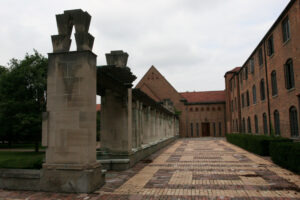
Red vitrified brick
Red vitrified brick. Photo: Historic Pavements

Twelve of the houses on Oak Circle are bungalows, the house type most closely associated with the Arts and Crafts Movement in America. The bungalows, along with the other homes on the block, showcase a variety of features found in Craftsman architecture, as well as the distinctive bands of windows with geometric patterns of small-pane glazing associated with the Prairie style.

The 12 bungalows also exhibit a variety of floor plans. Some are one-story, some one-and-a-half, but no two are exactly alike. True to the Arts and Crafts ideal of being close to nature, the bungalows share a distinctive horizontal emphasis in tandem with the midwestern landscape.

Optima Verdana® in Wilmette

Oak Circle is a treasure trove of sights waiting to be explored. Just only blocks away from the Wilmette public library and a 7-minute walk from Optima Verdana®, it’s a delightful architectural and historical landmark with boundless charm that reminds both residents and visitors why Wilmette remains a vibrant, delightful community!

Arizona Mid-Century Modern Architecture

For those who are always on the hunt for vestiges of mid-century modernism, you’ll have some happy surprises right in Optima®’s own backyard — in Scottsdale. Here you’ll discover a history that is rich in architectural heft, including wholly-intact examples from the city’s 1950s community, where some of the finest mid-century modern structures remain.  

Striking examples of mid-century modernity can be seen in Scottsdale’s commercial buildings scattered across the city, alongside several repurposed pubs and restaurants. Architectural gems can also be found in older neighborhoods. Especially those that were built by Ralph Haver. A local architect who utilized walls of glass, low-pitched roofs, and angled porch posts all packaged within a modestly-sized home.

And don’t miss another example of impeccably-renovated mid-century vernacular in the sleek Hotel Valley Ho. The hotel boasts façades of glass and concrete panels that express arrowhead motifs. Opened in 1956, it was largely a getaway for a number of Hollywood stars. Zsa Zsa Gabor rode horses there. Natalie Wood and Robert Wagner had their wedding reception in the hotel ballroom. And Jimmy Durante used to play piano late at night in the lobby.

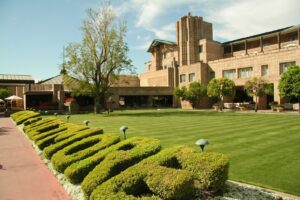
The Arizona Biltmore, a 39-acre resort not far down the road, is another example of the city’s architectural history. The Biltmore is often identified as a Frank Lloyd Wright building, but it was actually designed in collaboration with Albert Chase McArthur, a protege of the great master.

Arizona Biltmore Hotel
Arizona Biltmore Hotel. Credit: Daniel Langer, Flickr Creative Commons CC BY-NC-ND 2.0 Deed

The Biltmore has the dramatic presence of a large-scale Wright building, and is one of only 13 structures that Wright designed and in the area. His students, on the other hand, were involved with many others. For Wright acolytes, any visit to the Phoenix area begins with his winter residence and headquarters, Taliesin West. Now home to the Frank Lloyd Wright Foundation and the Frank Lloyd Wright School of Architecture, and located on the edge of the McDowell Mountains outside of Scottsdale. Which also happens to be where our most recent architectural development will be situated — Optima McDowell Mountain — Wright passed on his genius to an entire generation of eager architects such as Blaine Drake, Vern Swaback, and Heloise Crista.

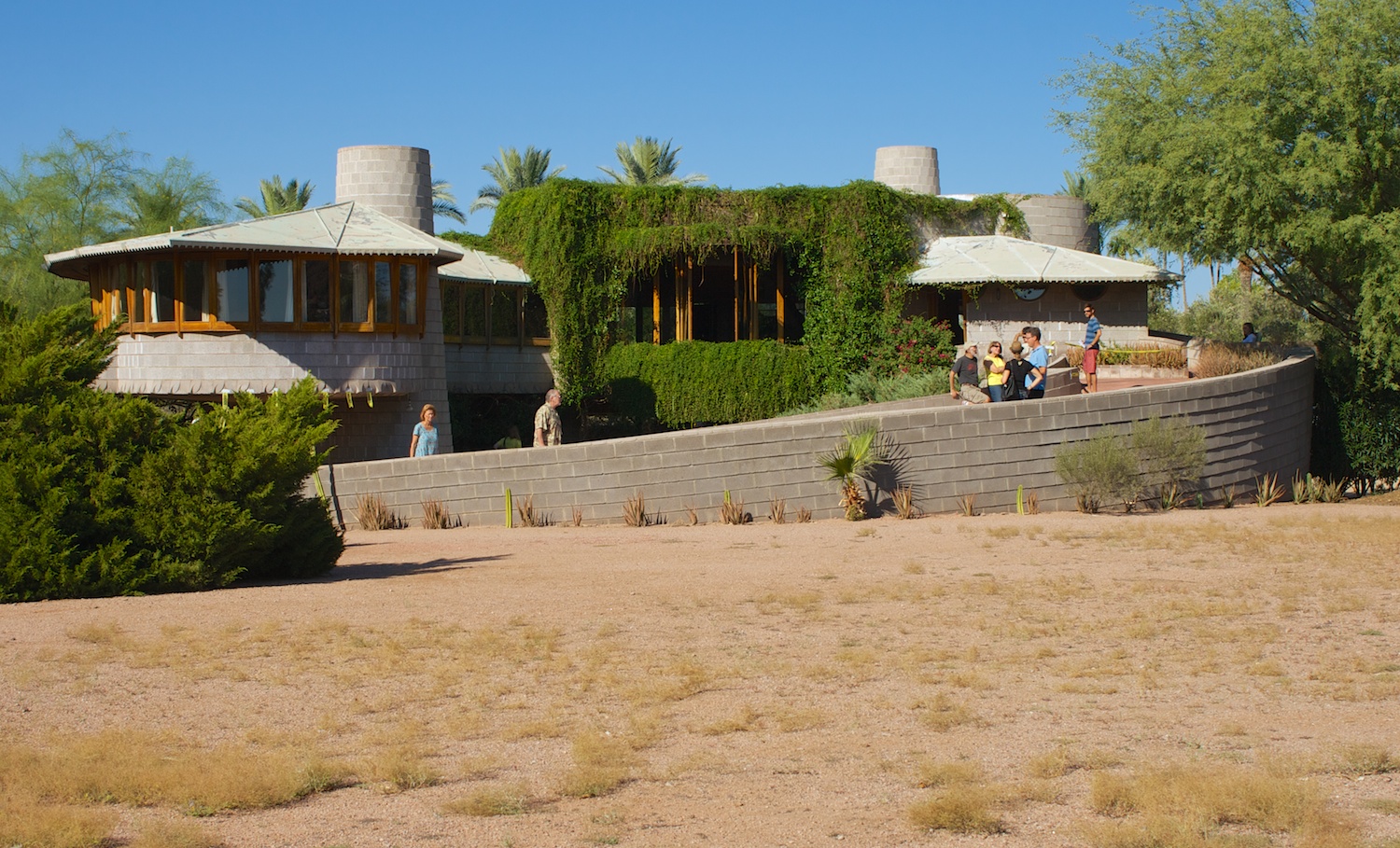
No survey of mid-century modernist architecture is complete without the David and Gladys Wright House. David was one of Wright’s eight children, and the house the elder Wright designed for him was based on a rising spiral (also the design for New York’s Guggenheim Museum) while remaining imaginative and human in scale. The spiral lifts the living quarters above the treetops so that anyone in the house has access to carefully framed panoramic views of the mountains in the distance, and spaces that flow organically and wonderfully into one another.

It’s always a pleasure to connect our “Forever Modern” mantra at Optima® with the broad, deep mid-century modern legacy that lives on in the communities where we work and build!

The Cranbrook Connection: Right Place, Right Time

Connections often happen in the places where we least expect to find them. At Optima®, a connection sprang from a love of modernization, to an idea, backed by an ever-lasting willingness to adapt through experimentation in the right place, at the right time. Imagine our surprise when a number of world renown architects and designers such as Florence Knoll, Charles and Ray Eames, Eero Saarinen, and Harry Bertoia met at Cranbrook Academy of Art at the right place, at the right time, becoming colleagues, collaborators, and lifelong friends. 

The Cranbrook Campus was designed by Eliel Saarinen in the years 1925-1942. He also had help from his wife and artist, Loja, and his kids, Eero and Pipsan at the request of founders — George and Ellen Booth. Everything on campus was highly considered — from the masonry, to the walls, the chairs, textiles, and colors through the use of what they called — total design.  When Eero Saarinen, Florence Knoll, Charles and Ray Eames, and Harry Bertoia were on campus, Cranbrook was essentially a crucible for the beginnings of modernism in which many of these luminary architects and designers practiced and perfected their craft. 

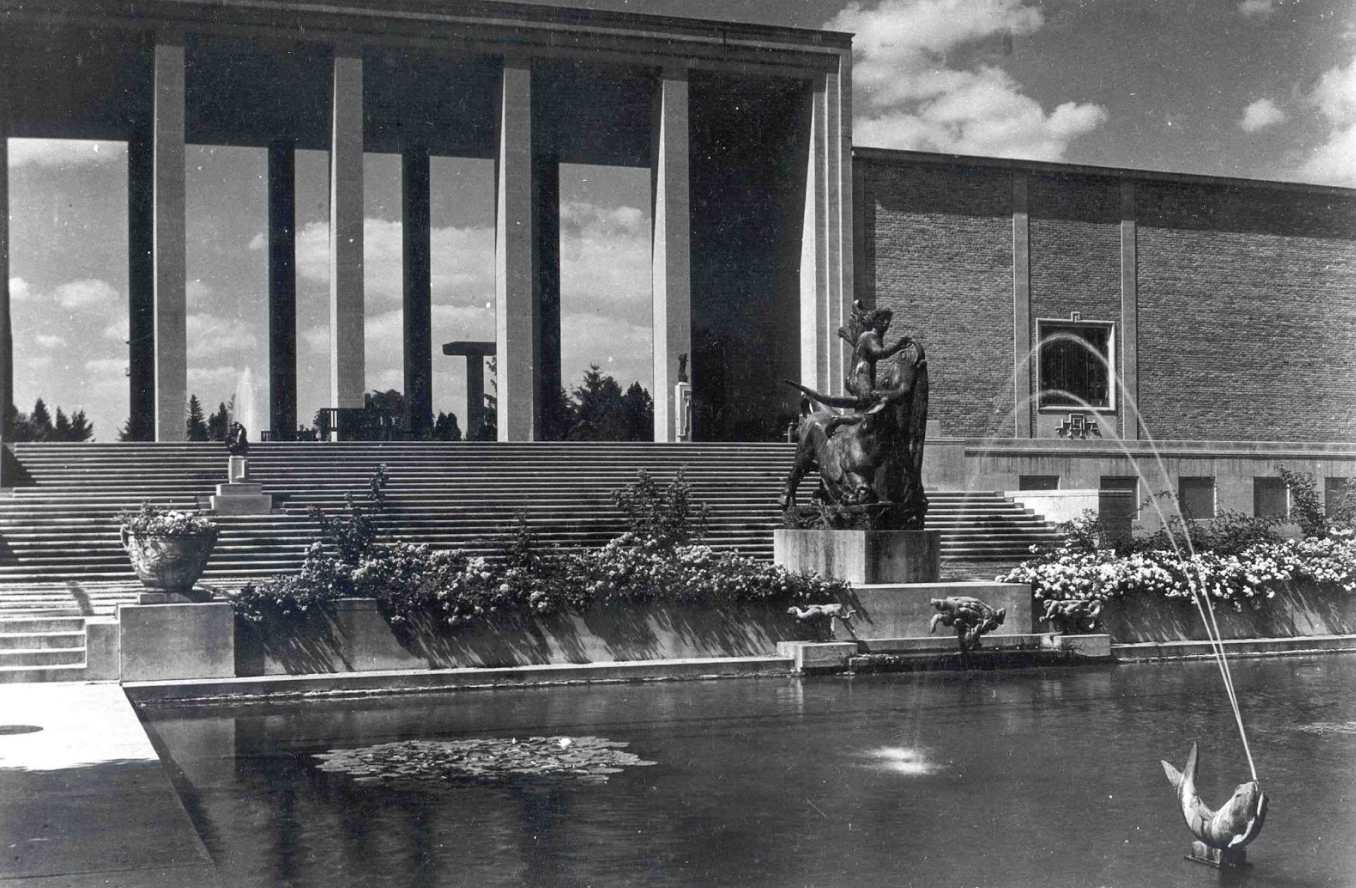
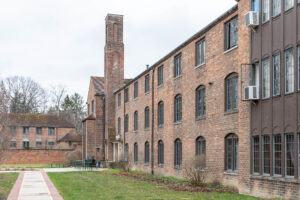
Cranbrook Academy Grounds. Credit: David Brossard, Wikipedia Commons. Uploaded by GrapedApe, CC BY-SA 2.0

In late 2022, the design studio at Herman Miller released a short film entitled, The Cranbrook Connection. The film traces the history of Cranbrook as one of America’s greatest examples of modernist architecture and design, weaving in a thoughtful examination of furniture designed and produced by mid-century visionaries for Herman Miller and Knoll. This sweeping survey brings into sharp focus the staying power of total design, while inspiring us with the power of bringing structure and interior space into harmonic alignment.

During these seminal years, Cranbrook encouraged its students to practice experimentation in design, alongside the use of new materials. Eero and Charles had an interesting obsession with plywood. How it bent, how it felt, and sat in space. They later entered into a number of competitions with and sometimes against one another using this material. At one point, they entered the Organic Design for Home Furnishings competition with a suite of modular furniture using molded plywood chairs, and tables that would come to be the seeds of some of the most successful lines of furniture such as the Eames chair, and Womb chair.

Cranbrook Academy of Art (1940) Eliel Saarienen, Michigan State Historic Preservation Office, Flickr

Today, the Cranbrook Academy of Art remains one of the country’s top-ranked, graduate-only programs in architecture, design, and fine art. Just 75 students are invited to study and live on the Saarinen-designed campus, which features a suite of private studios, state-of-the-art workshops, a renowned Art Museum, and 300 acres of forests, lakes, and streams, all a short drive from Detroit. The focus at Cranbrook is on studio practice in one of 11 disciplines: Architecture, 2D, 3D, and 4D Design, Ceramics, Fiber, Metalsmithing, Painting, Photography, Print Media, and Sculpture.

Landscape + Light: David Wallace Haskins at the Edith Farnsworth House

For the architectural icon Ludwig Mies van der Rohe, his impact continues to resonate throughout the worlds of design, architecture, and art. For our spotlight series, we’re happy to introduce the most recent exhibition of Chicago conceptual artist David Wallace Haskins, Landscape + Light, at the Edith Farnsworth House, which engages in a fantastic dialogue with one of van der Rohe’s most legendary homes.

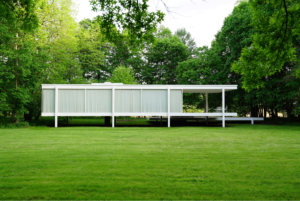
The Edith Farnsworth House, formerly the Farnsworth House, is an historical house designed and constructed by van der Rohe between 1945 and 1951. The house was constructed as a one-room weekend retreat in Plano, Illinois. A rural community 60 miles southwest of downtown Chicago, and was opened to the public in 2004 as a National Historic Landmark.

Over the past decade, Haskins has had the opportunity to create experiential sculptures and architectural interventions in response to various works by van der Rohe. Haskins is one of the few midwestern artists working in the tradition of the Light & Space movement and considers Mies to be one of its earliest pioneers as he was creating minimalist works of light and space thirty years before the movement took hold in southern California in the 1960s. 

As part of the solo exhibition for his 2022 artist-in-residence — Landscape + Light  is composed of three installations across the Farnsworth wooded property including The Memory of Glass, Image Continuous, and Stone Landing. 

Edith Farnsworth House
Memory of Glass, Photo: courtesy of David Wallace Haskins

Memory of Glass examines the recent scientific discovery that certain types of glass retain memories in a form resembling neurons. It envisions Farnsworth House as hearing and remembering an ambient soundscape that has washed over it for the last 70 years. Haskins engineered a way for these sonic memories to emanate from the house. The structure’s 12 large glass panels to reverberate as floor-to-ceiling glass speakers. Sound is both sent inward and outward, further blurring the lines between the indoors and outdoors. “Dissolving the boundary between the interior and exterior world” Haskins notes.

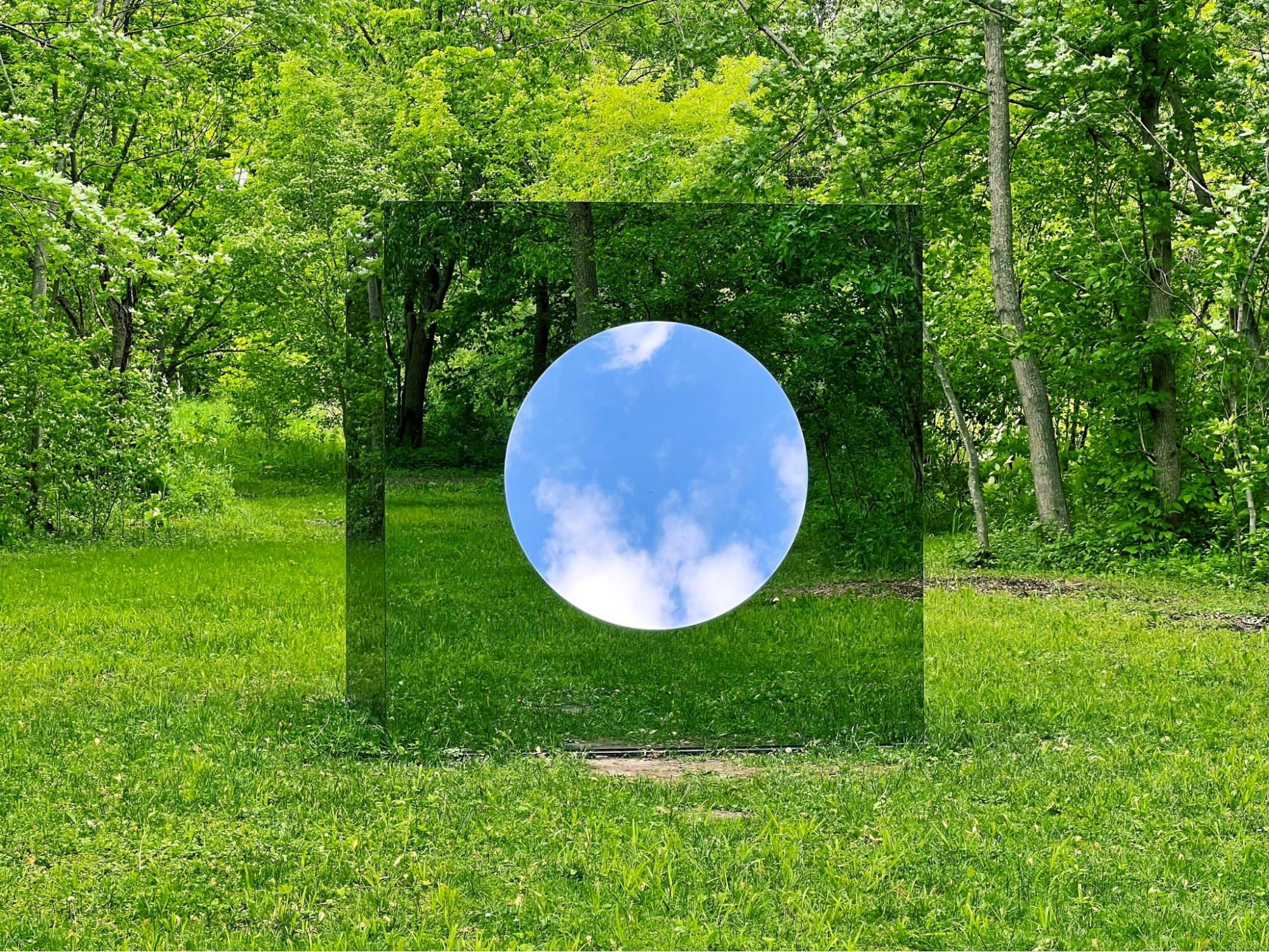
Landscape + Light is also the world premiere of the site-specific sculpture, Image Continuous from Haskins’ Skycube series — fabricated from a ton of skyscraper glass, which is actually half of the glass van der Rohe used to glaze Edith’s home. This visually perplexing sculpture turns the sky inside-out. Thus engaging the spectator as a participant as their position in space shifts. 

Concerning its sculptural presence, Haskins explains: “We tend to ignore the sky as it enwraps and illuminates the landscape, but with Image Continuous, the dynamic is reversed — the landscape enwraps the sky, giving it presence and form. We forget the sky, or troposphere, starts at the ground and rises 10 miles high. Here, we see ourselves in the landscape in relationship with the sky. Whilst allowing us to behold its presence in a truly personal and embodied way.”

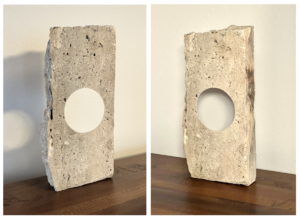
Stone Koan
Stone Koan. Photo: courtesy of David Wallace Haskins

The final installation of Landscape + Light consists of a large meditative monolith from Haskins’ Stone Koan series, made from the original Italian travertine that van der Rohe used to cover the stairs and terrace of Farnsworth House from 1951-2021. Due to severe weathering, these stones were replaced in 2021, allowing Haskins to utilize them to create a number of Stone Koans and a smaller Skycube. 

With our heads and hearts firmly rooted in the Modernist tradition. It’s a joy for the Optima team to see how the legacy of Mies van der Rohe continues to inspire contemporary artists. And if you’re a lover of all things Modernist, you won’t want to miss this extraordinary experience.

Landscape + Light continues through May 2023. Visit the Edith Farnsworth House website to learn more about visits and tours.

Megan Hernandez Team Member Spotlight

At Optima®, our communities would not thrive without the outstanding work from our spirited team of individuals. We recently sat down with Megan Hernandez, People Experience Generalist at Optima, to discuss why she loves being part of such a passionate team and what she has learned throughout her experience here:

Tell us a bit about your background and the role you play at Optima.

My background is in human resources and administration. I spent some time applying this skill set in the finance industry and also worked in the city election space before coming to Optima. At Optima, I’m the People Experience Generalist based in Arizona. An interesting fact is that I lived in Chicago for my whole life before moving to Arizona, so I was able to also meet the Illinois-based team before moving to the Southwest. And now that I’m in Arizona, I am responsible for providing enhanced, more tangible support for our growing number of employees here, focusing on benefits, hiring, employee engagement and other fun things like that.

What drew you to Optima initially, and what’s kept you working there?

I was inspired to take my position at Optima in large part because of the great things I heard from Lisa Lowenthal, our People Experience Director. She went into detail about how Optima truly cares about its employees. I then did my research on the company, studied their history, learned about current projects and plans for the future, and came to understand their involvement in the community. Everything I learned excited me. When I was still living in downtown Chicago, I’d visited Optima Signature. At the time, I was in awe with everything the building offered and the quality of life for its residents, without even realizing it was an Optima property! That was a great discovery and connection to make after the fact, and further reinforced my great admiration for the company and its people. 

I would say the people here keep me motivated and make me feel grounded. There’s a team atmosphere that makes me and everyone here feel welcomed, accepted and part of something.

How do you view the concept of community at Optima? How does it differ from other properties/buildings?

When I think of community at Optima, the first things that come to mind are connection and collaboration. To me, the concept of community at Optima means working together to create and cultivate that connection with other people and our surroundings. I would say that’s true for the Optima team internally but also for the people that we serve, the residents.

We have an understanding that community impacts how we live and how we work. In some ways, the team’s always connected with each other and the residents, and just by doing our part, we’re making a difference and creating an experience for those residents. I’ll also say that community means being able to collaborate and share ideas with people from all parts of the process, whether that be People Experience working with Marketing or working with Property Management, it’s a collaborative culture, and we’re able to touch different parts of the process.

I would say our concept of community is unique because we deliver a first-rate quality of life to residents and to people who work here by creating more than just individual living spaces. We create an environment that encourages you to be present in the moment and stop to marvel at what’s around you. I think that sets us apart from other buildings. And I’ll also say that as a People Experience team member, Optima is full of people that make you feel welcome, and that genuinely want you to have a great experience.

Optima has a unique set of values that differentiates it from other company cultures. How does that affect the quality of your work life? What values matter most to you?

Building strong, lasting relationships comes to mind first. To me, building strong relationships empowers us to be our most authentic selves and gives us the space and insight to support each other. Relationships and a healthy community are the foundation of the great team culture at Optima. We strive to bring out the best in each other on a day-to-day basis and invest in bettering ourselves, in the growth of others on the team, and even in the residents.

I would say I enjoy spending time on our various properties, which allows me to see and experience the connection that these teams have created with the residents. It’s beautiful and unique to Optima. I work at the Camelview Village office, which is close to Sonoran Village, and then Kierland is just right up the road. So I’ve spent some time at all of our different communities, and every time I go, I’m encouraged to go back and spend more time with the team and the people there.

One other value that sticks out to me is that we all create. While People Experience might not be the first team you would necessarily think of as a very creative role, I can say first-hand that it is, because we are encouraged to bring fresh thinking into everything we do.

What are some of the things you have learned in your time at Optima? 

The phrase, ‘you learn something new every day’ is so fitting. One major thing that comes to mind is that the mainstream or standard way of doing things is not always the best way. Optima is vertically integrated, meaning that we control all aspects of our process, and I think that’s a wonderful example of learning new things. I’ve seen in real-time how our model creates a cycle of improvement and encourages communication. One team may see an opportunity for improvement, and they’re able to bring that to other teams, which can spark a discussion, large or small, that can make a positive change. It’s more than just finishing one project and moving on to the next, it’s a cycle of learning and bringing that knowledge with you to the future.

What makes you most proud to be a part of the Optima team?

I would say working at Optima, I’m proud to be part of something that strives for quality and isn’t afraid to set the bar high. I think it’s amazing to be part of a team that takes agency in what we’re doing, from the gorgeous designs to the top-tier resident experiences to the impeccable craftsmanship of our builders. Optima is full of people who want to help in any way that we can however we can, and that mindset is something I can connect with and be proud of. 

Are there any upcoming Optima projects, experiences, etc. that you are most excited about looking at the year ahead?

I’m especially excited to be a part of our growth with Optima Verdana opening in Wilmette this year and construction starting on Optima McDowell Mountain Village in Scottsdale, because my job is helping bring fantastic team members into our Optima family.
An Eero, A Deere, and Clouds: How John Deere and Eero Saarinen Inspired Georgia O’Keeffe’s Largest Painting

Sometime in 1965, on a hot summer day at her Ghost Ranch house in New Mexico, Georgia O’Keeffe would find the motivation to complete her most grandiose painting yet, Sky Above the Clouds IV. Little did we at Optima® know, however, that the luminary architect and industrial designer, Eero Saarinen, alongside legendary agricultural corporation, John Deere, would play a pivotal role in the creation of this monumental painting.

Tracing back to June 4th, 1964 is when the story behind Clouds IV gets interesting. O’Keeffe attended the opening of the new headquarters of Deere in Moline, Illinois. Designed by the office of Eero Saarinen, the structure’s pre-rusted Cor-Ten steel exterior tested the limits of 1960s corporate architecture, veering towards an industrial aesthetic quite unique from Saarinen’s usual swooping curves, as seen with the Gateway Arch in St. Louis.

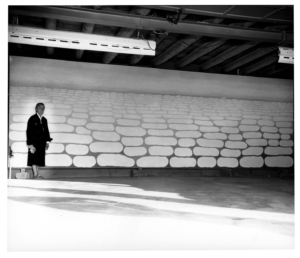
Picture the opening ceremony — a lavish and extravagant affair, showcasing top-of-the-line farm machinery, along with an evening river cruise — with politicians, corporate czars and design stars in attendance. So why was Georgia O’Keeffe, “The Mother of American Modernism” there to begin with? Well, archival photos show that she was mingling with this elite crowd against a backdrop of John Deere tractors. In just about every photo she is seen with her close friend and fellow New Mexican, designer Girard Alexander. Girard had invited O’Keeffe for two reasons. He wanted to showcase his 180-foot-long collage installation documenting the culture and development of John Deere. More importantly, however, was his belief that an O’Keeffe painting would further transform the interior of their cutting edge new headquarters.

Upon her return to New Mexico. O’Keeffe executed a detailed sketch depicting the uniform cumulus clouds that she thought of whenever flying from one destination to another — hence, Sky Above the Clouds I-IV. Where would an O’Keeffe painting go in a building whose every element had been designed and polished to near perfection? 

From its pre-rusted steel exterior, down to the last coat rack and door handle. Girard knew of such a place: the executive dining room. This room was equipped with tantalizing Siamese silk ceiling panels that hung perpendicular to its sublime Portuguese white marble walls. The architectural effect was, by all intents and purposes, cloud-like. Sky Above the Clouds IV would have only elevated this effect, Girard thought, but the Deere team didn’t see it that way, unfortunately, and the commission was axed. 

Georgia O’Keeffe in Garage
Georgia O’Keeffe in Ghost Ranch Garage with “Sky above Clouds IV” (1966), Photo: Ralph Looney

She was in the midst of a busy year. Full of other work, international travel, and even a harrowing knee injury that she was recovering from. Fortunately for us, O’Keeffe persisted in her desire to see Clouds IV to the end. She completed the work, at the age of 77, in the summer of 1965. 

In 1970, Sky above Clouds IV was scheduled to be included in a retrospective of O’Keeffe’s work at the Whitney Museum of American Art, New York, the Art Institute of Chicago and the San Francisco Museum of Art. After being shown in New York and Chicago, the painting remained on loan to the Art Institute because it was too large to pass through the doors at the museum in San Francisco. Ten years later, due to the diligence of O’Keeffe and local patrons, the painting joined the museum’s permanent collection. Today, this 8-foot by 24-foot masterpiece hangs above one of the Art Institute’s grand staircases for all to see.

Super Bowl LVII Live in Phoenix

Picture this, it’s the end of the week, the Sunday before you go back to business-as-usual. “We Will Rock You” by Queen plays as the stadium fills with a triumphant Boom-boom-clap! Boom-boom-clap! And the person next to you sports a Philadelphia Eagles hat almost resembling the mascot. Down on the field, massed bands perform the anthem alongside country music star, Chris Stapleton, and you know (especially the person next to you) that it’s Game-time.

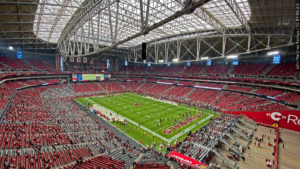
State Farm Stadium Interior
State Farm Stadium Interior. Photo: John Martinez Pavliga, Flickr Creative Commons CC BY 2.0 Deed

Super Bowl XLVII is fast approaching, and the excitement is rapidly growing across the nation among teams and fans. This will be the fourth time the Super Bowl has been hosted in Phoenix (1996, 2007 and 2015 were the previous years), and the city is abuzz with anticipation. The Philadelphia Eagles and Kansas City Chiefs will face off at the award-winning State Farm Stadium in Glendale. The Cincinnati Bengals had the chance to make their second consecutive Super Bowl, but in an unfortunate tragic twist of events they lost to the Kansas City Chiefs 23-20.

State Farm Stadium

State Farm Stadium is home to the Arizona Cardinals Football Club (NFL), the annual Fiesta Bowl, international soccer matches, motorsports, as well numerous other sporting, trade and consumer events and activities. The stadium was designed by renowned New York architect Peter Eisenman at an estimated cost of about $455 million. Completed in August 2006, it has both a retractable playing field and a retractable roof, the first of its kind in North America, to accommodate capacities of 63,000 people, with the flexibility to be expanded for “mega-events” to fit as many as 73,000.

State Farm Stadium
State Farm Stadium, Phoenix, AZ. Photo: State Farm

At Optima we strive to enhance the quality of community and experiences through exceptional design, and the State Farm Stadium serves as a breathtaking reminder of the sophisticated engineering, technology, and design we implement into our own process.

When and Where to Watch Super LVII

Super Bowl 57 will take place in Glendale, AZ, Feb. 12, 2023 at 6:30 p.m. ET.

Even if you’re not in-person to cheer on your favorite team. You can enjoy the game from home with your family. A few streaming services to check out include; Fox Sports website, the Fox Sports app, and the NFL app. You can also stream Super Bowl LVII live on Hulu, fuboTV, Roku TV and Sling TV.

Optima + Sustainability Series: EV Parking

The evidence that electric and hybrid vehicles are gaining traction is on the roads everywhere. From personal vehicles to rideshares and public transport, we are, as a nation, beginning to embrace the importance of reducing carbon emissions by replacing the fossil fuels that traditional gasoline-powered engines use with forms of clean energy. 

Encouraged by the funding made available to help states fund public charging infrastructure, and Illinois’ ambitious goal to get one million electric vehicles (EVs) on the road by 2023, EVs are becoming increasingly desirable. And those who own and manage residential buildings are faced with the challenge to provide ample access to EV battery charging stations that residents need.

At Optima, we have always been sustainability-focused across our entire integrated business model — from design to building materials to landscaping – and EV parking. We began providing EV parking spaces in 2016 and 2017 at 7160 Optima Kierland and Optima Signature with 8 EV parking spaces, which represented only a small portion of the overall spaces in the garage.

Now in April 2023, Optima Verdana in Wilmette will open with 24% of the total spaces dedicated to EVs. In all of our communities — in both Illinois and Arizona — we have continued to increase EV capacity every year based upon resident demand, with the capacity to reach a full 100% at many projects. In recognition for our commitment to EV parking, Optima Sonoran Village won the Salt River Project Champions of Sustainability Award in the Building Communities for Electric Vehicles category.

Car garage
EV Parking Garage

In a recent Bisnow article that explores how future-facing multifamily developers are preparing for the future of electric vehicles, David Hovey Jr., AIA, Optima president and chief operating officer, observes, “Just from a sustainability perspective, obviously, demand is getting higher from both people wanting to be more sustainable … and cities wanting to be more sustainable, as well as just overall demand.”

Sustainability remains one of our most precious values at Optima. And we’re proud to be part of a growing community of property owners and managers that seeks to support sustainable practices on behalf of our residents.

Women In Architecture: Eva Hagberg

Many of the pioneering women in the field of architecture, including Ray Eames, Norma Merrick Sklarek, and Mary Jane Long, earned their reputations on projects they designed, just like their male counterparts. But what if someone was able to have a significant impact on critical thinking within the field without actually designing anything? This is how we came to know Eva Hagberg, a person whose journey into and through architecture has been as interesting as it is purposely unconventional.

Writer, architectural historian, adjunct professor, once secret publicist, activist, and self proclaimed, “worst architectural student the school of architecture has ever seen.” Eva Hagberg is a woman in architecture who prides herself on her ideas and process rather than the execution of building a model for people to see.

Eva’s Backstory

From the age of 11, Hagberg was passionate about design and architecture; and while she earned a BA in the field from Princeton University, she never intended to practice. Rather, she began her professional life writing about architecture, choosing to engage in the field from a vastly different angle — interrogating the relationships between narrative and form.

From her early career as a writer in New York City, Hagberg became a secret publicist for architects and designers who were seeking help in articulating the stories behind their projects. As she functioned as a kind of ghost writer, she took advantage of the freedom to be unknown and unseen — “practically ungoogleable” as Hagberg describes herself. Because she opted to express herself by helping others find their voices, she was able to do the work that interested her the most without being pigeonholed, or specialized — architectural historian, adjunct professor, 77 year-old architect reminiscing about a project done in the 80s — or author of When Eero Met His Match.

Published Books

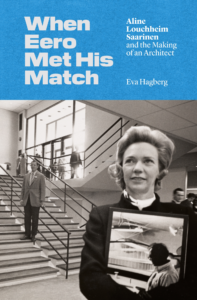
When Eero Met His Match
When Eero Met His Match by Eva Hagberg

What is today a trite proverb — that behind every great man, is a great woman — Eva Hagberg’s When Eero Met His Match is as biographical as it is a poignant love story between critic and publicist Aline Louchheim and architect Eero Saarinen. Aline aided Eero in shaping his identity and prominence as a designer and architect. Throughout the book, Hagberg expresses just how important it is to embrace language and narrative as an integral part of the practice of architecture.

She has also published two architectural books through Monacelli Press, Dark Nostalgia and Nature Framed. Dark Nostalgia seeks to combine psychology, style, architecture, and art to express the reasoning behind our desire to live within lushly nostalgic interiors incorporating wood, velvet, fur, brick, and iron. 

Dark Nostalgia
Dark Nostalgia by Eva Hagberg

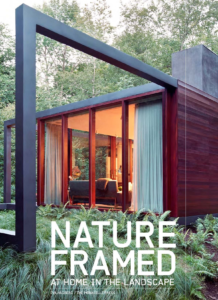
Nature Framed, on the other hand, explores an Optima favorite, the concept of biophilic design. Hagberg views 25 residential projects (framed with nature in mind) from around the United States that take the concept of “green living” to the next architectural level by asking, how close to nature can we be while remaining indoors?

Nature Framed
Nature Framed by Eva Hagberg

As Hagberg herself explains, being the “worst architectural student the school of architecture has ever seen,” had its own set of merits. And because of her willingness to rethink, reframe and recontextualize stories about the built environment, Hagberg has carved her own path through sheer perseverance and a deep attunement to the soul of architecture and those who practice it.

Beyond her BA in architecture from Princeton University, Hagsberg went on to earn an MS in architecture from UC Berkeley. As well as a PhD in Visual and Narrative Culture from UC Berkeley. Today, as a member of the Columbia University Graduate School of Architecture, Planning, and Preservation faculty, her academic work focuses on the theoretical and historical approaches to publicity as a mode of architectural production, and lays out how the modern media system works.

2023 Design Trends: Designing The World of Tomorrow

The ways in which we live, move, and work are changing fast, and we, at Optima®, believe that up-and-coming architectural trends continue to address many of the challenges faced in modern life. Some solutions focus on more space, more storage, less clutter, and more flexibility. Others address affordable rent, resistance to climate change, and sustainability. These trends, along with a  myriad of others, inspire us and those who are at the forefront of designing the world of tomorrow. Here are some of the trends on the horizon in 2023.

Biophilic Urbanism

Biophilia, a term coined by Erich Fromm in 1964, is the human interaction and appreciation for nature. In 2023, this trend is continually on the rise as we seek to develop buildings that are ecologically friendly in their use of resources. Biophilic design can revolutionize the way we manage stress, increase productivity within offices and educational spaces, and improve mental health, through the use of nature inside and outside of buildings.

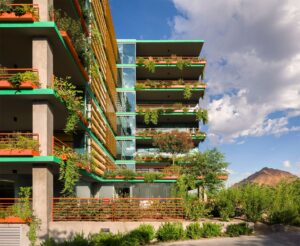
While biophilic design is very much at the forefront of architectural trends, it has been central to our work at Optima for decades. Our passionate connection between the built environment and nature continues to be as fluid as it is concrete, reflected in our signature innovation of vertical landscaping. The widespread adoption of this essential design principle, we are excited to welcome others into the process of bringing people and nature closer together.

Sonoran Village®
Optima Sonoran Village®, Vertical Landscaping

Modular Construction

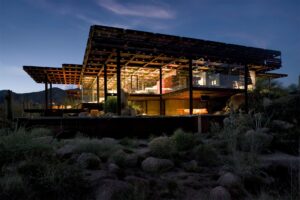
Modular construction has been at the forefront of Optima’s DCHGLOBAL Building System since its conception in 2009 . We began our experimentation with modular construction with Relic Rock, reflecting our commitment to building homes flexibly — in horizontal and vertical directions — sustainably and efficiently anywhere, anytime. 

As part of the broader architectural community seeking modular solutions around the globe, we’re excited by the opportunity to celebrate sustainability and versatility as core values at Optima, while ensuring enduring aesthetics and affordability.

Sonoran Desert, AZ
Relic Rock, Sonoran Desert, AZ

Smart Materials

Through the integration of smart devices in our homes, cars, phones, and wrists comes Smart Materials. Recent developments provide that these materials could eventually respond to changes in pressure, temperature, moisture, and UV radiation, giving architects unfathomable flexibility. Along with an expanded toolkit for designing and building.

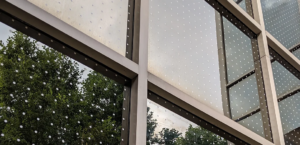
Our respect for materiality and space is important for the 360-degree approach to sustainability, and the inclusion of these new and unexplored materials gets us excited about their potential for the environment at large. Part of our role at Optima has been ensuring the environment remains protected with the inclusion of smart materials such as bird glass or green concrete within many of our buildings.

Bird glass
Bird Safe Glass

Community-Centered Design

It is a universal truth that the built environment functions better if those who use it are involved in the process of creation. Designing buildings with community in mind makes for rich and diverse environments where people can be themselves, while also giving them a sense of ownership in the places where they live, play, and work.  As we enter 2023, we are seeing greater collaboration between architects, developers and their communities across the globe — much the way Optima has partnered with the cities, villages and neighborhoods where we have put down roots for more than 40 years.


person name goes here

Maintenance Supervisor

Glencoe, IL


    Acceptable file types: *.pdf | *.txt | *.doc, max-size: 2Mb