Rooftop Amenities at Optima

Across all of our projects and properties, we believe amenities are essential to building wellness-focused, holistic spaces. From our single-family homes to our multi-family residences, we carefully curate our outdoor and indoor amenities to reflect these values. One of our favorite applications is utilizing our rooftop areas, particularly in our multi-family residences. Although rooftop gardens and green spaces have existed since the Hanging Gardens of Babylon, new technologies have allowed us to expand into sophisticated, expansive systems of features. Optima began using green roofs in Chicago back in the early 1980s, and have evolved our practice to include both green space and amenities throughout our properties in Arizona and Illinois. 

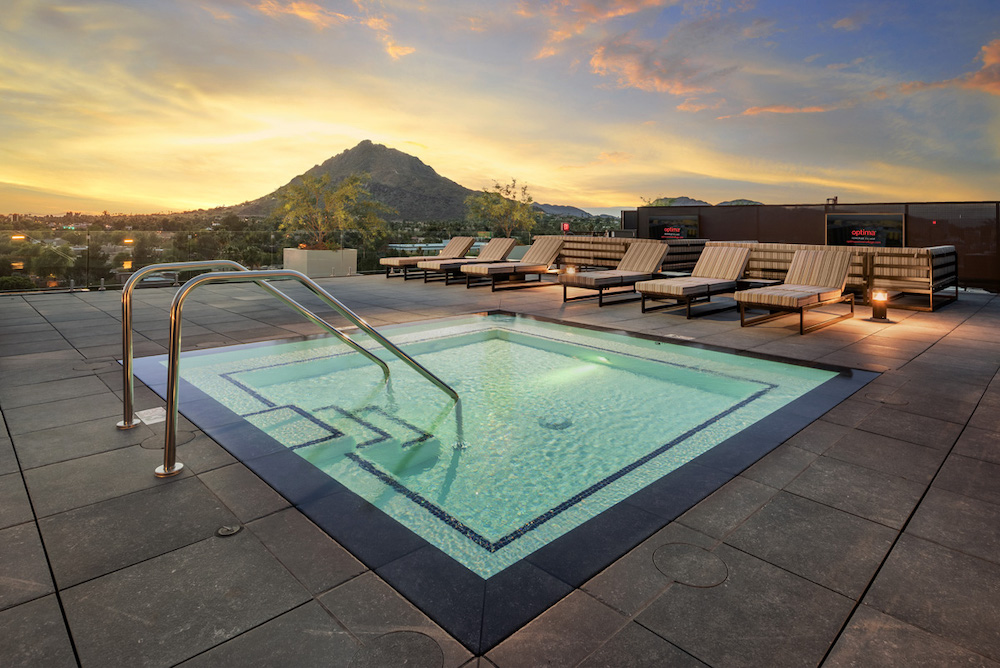
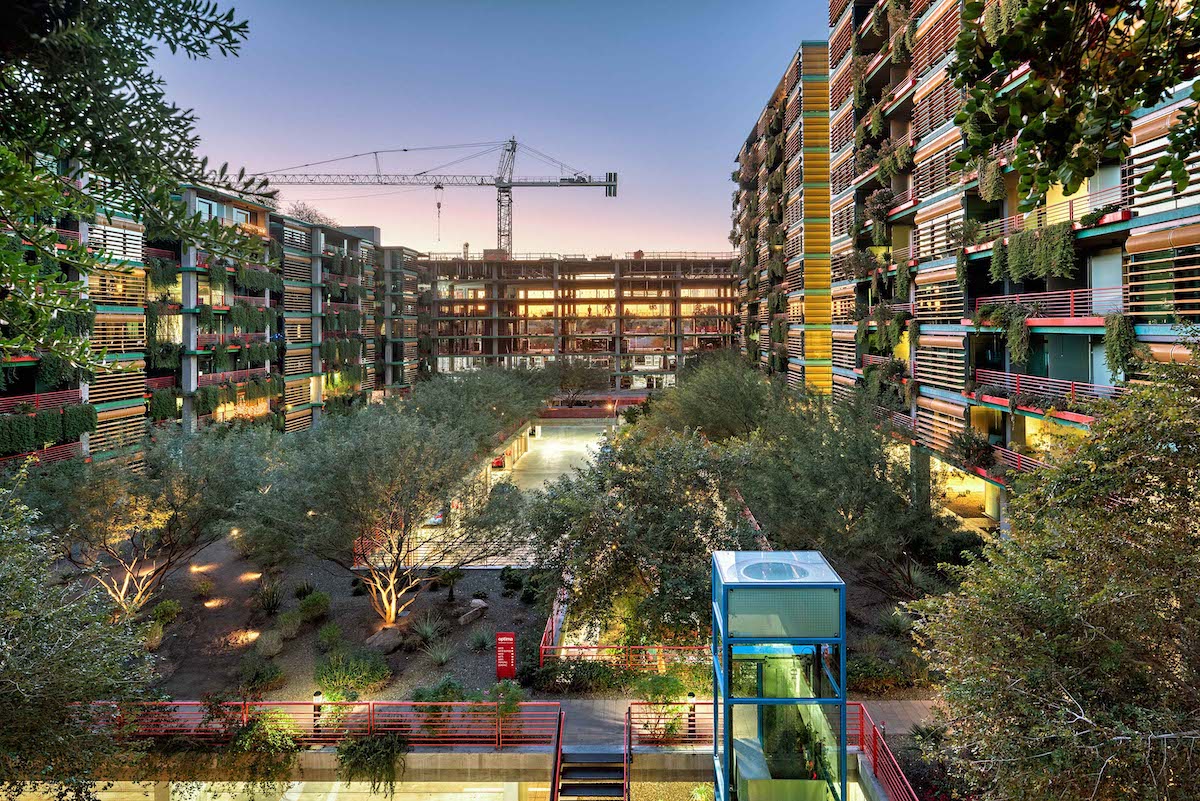
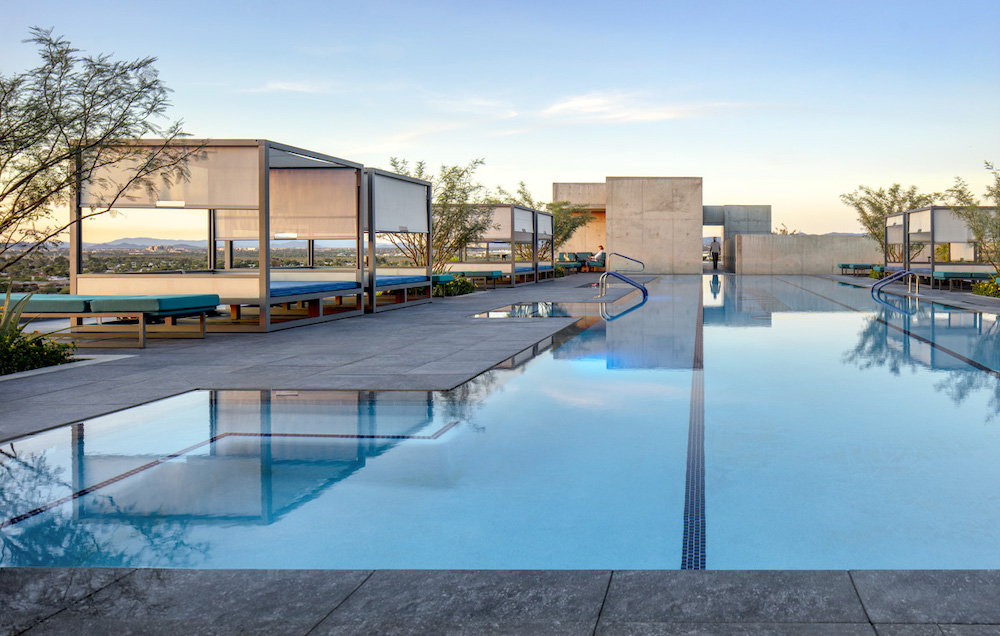
The rooftop views from Optima Sonoran Village.

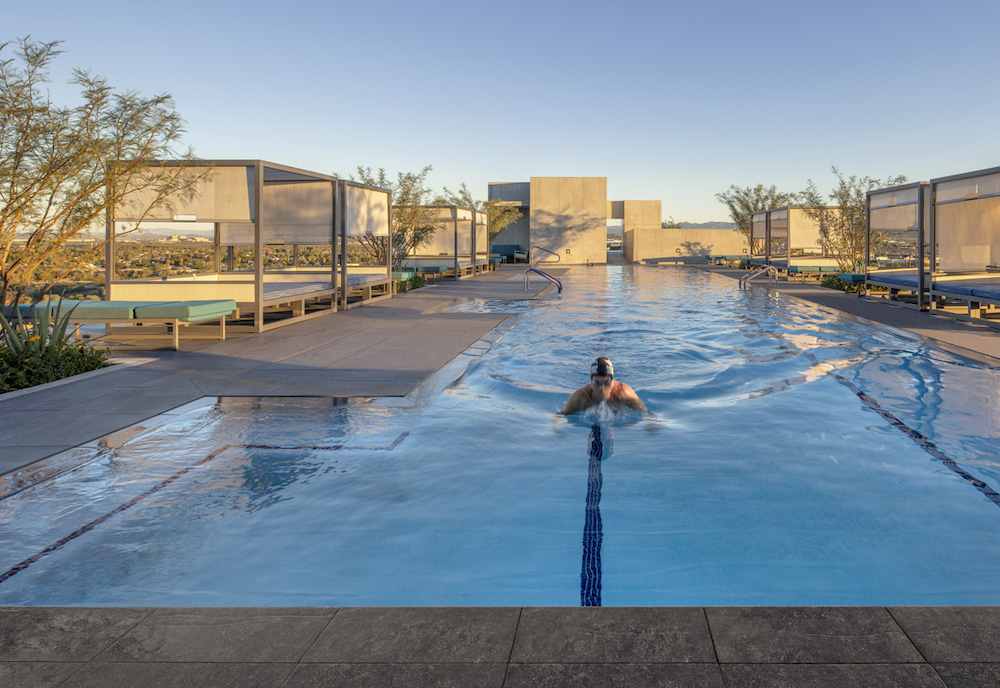
One of our favorite aspects of moving out to Arizona was creating outdoor spaces that celebrated and embraced the desert atmosphere. Our Arizona rooftop amenities include heated pools, built-in seating areas, spas,cold plunges, rooftop running tracks, outdoor yoga studios, entertaining spaces with barbecues and fire pits, and of course, panoramic mountain views. At Optima Sonoran Village in particular, we maximized the small footprint of the building to offer incredible views of Camelback mountain and to create socializing space for residents. 

With state-of-the-art features and unparalleled views of the surrounding environments, our rooftop spaces across our Arizona projects create the perfect backdrop for time spent outside with loved ones. 

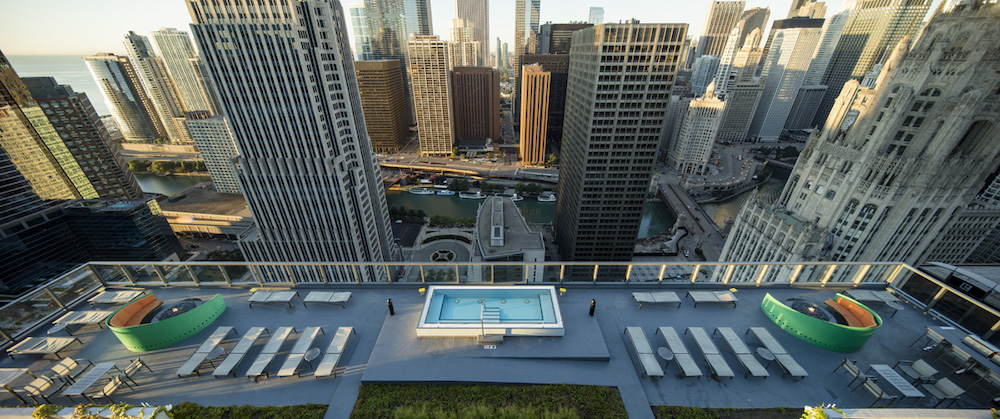
The rooftop at Optima Chicago Center.

Despite the cold Chicago winters, our projects within the city still take advantage of their rooftop space for dynamic city views and amenities for our residents to enjoy. With outdoor heated swimming pools, cabanas and bars, outdoor saunas and steam rooms, outdoor terraces, fire pits, herb gardens, dog parks and outdoor children’s play areas, both Optima Chicago Center and Optima Signature feature plenty of enticing areas and activities. 

Our building amenities are an integral step in our process of creating functional, beautiful and welcoming spaces, and in utilizing our rooftops, we extend our creativity into designing desirable, innovative outdoor space.

Redwood at Optima Signature

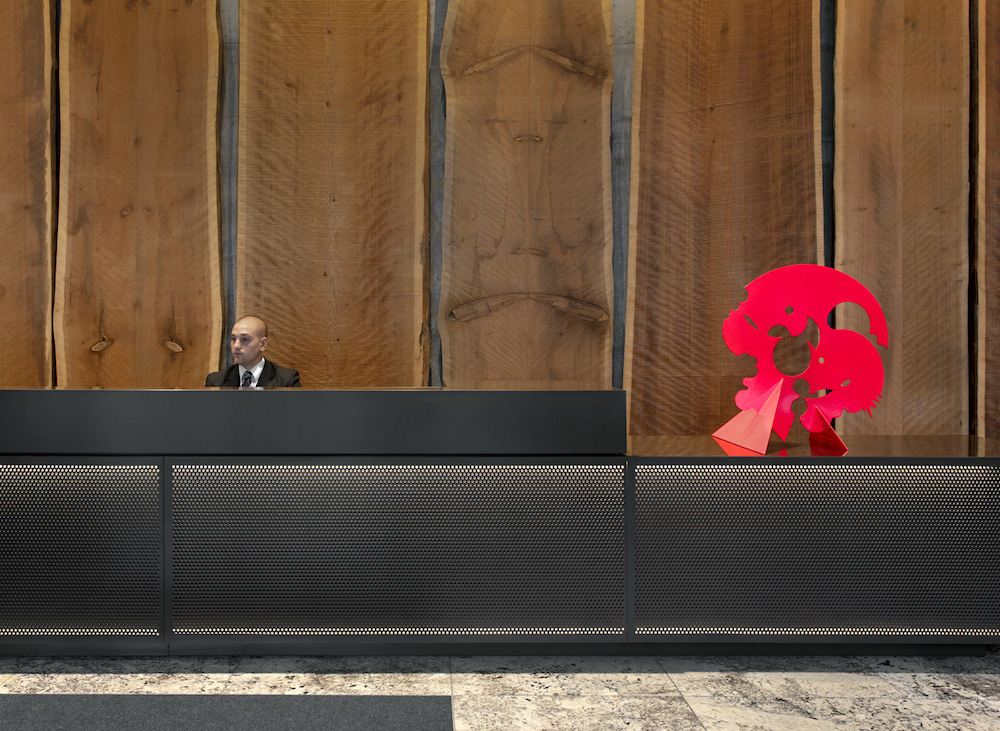
Our design is often driven with sustainability and efficiency in mind. This leads to the thoughtful incorporation of unconventional materials in many of our projects whether that be for the exterior facade or an interior accent. One such detail, the redwood in the lobby at Optima Signature, is an unconventional material that serves to juxtapose the strength of the building’s steel-and-glass exterior.

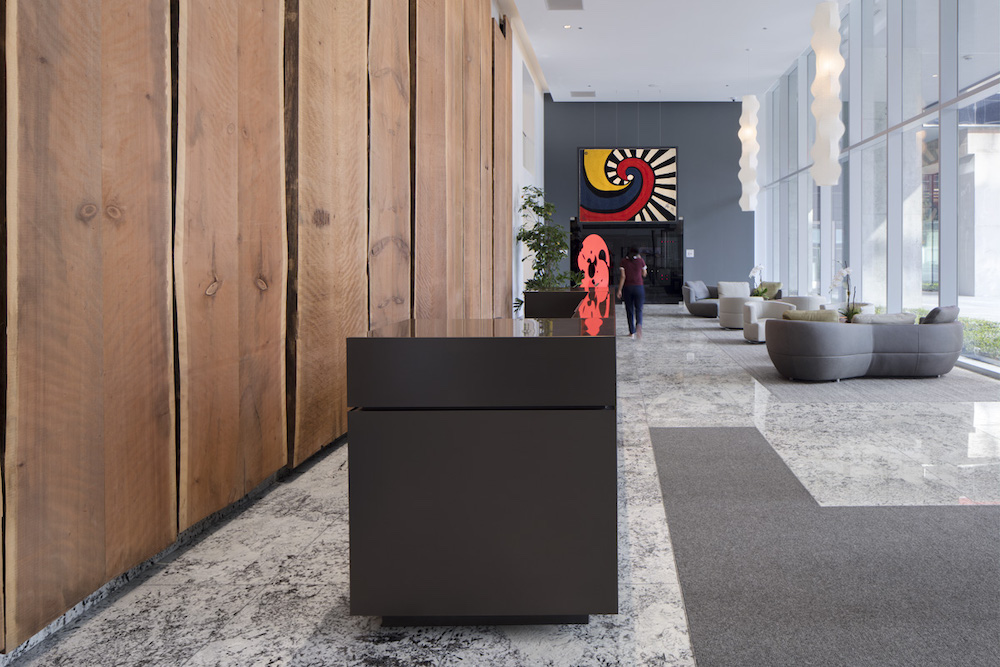
 A striking statement throughout the Optima Signature lobby, the barge wood adds a soft, natural texture behind the front desk, creating a stark contrast to the surrounding steel and glass. The wood lines the north wall of the lobby in long planks and is the first sight to greet residents and visitors when they enter the building. Though now on display for all in our community, the wood came all the way from California in the 1850s.

Barge wood in the lobby at Optima Signature.

The planks are redwood, formed from one massive log that sat on the bottom of the Big River in Mendocino California. This particular log was a “sinker,” the name given to the handful of logs that unfortunately sank during their river journey from a redwood forest to the sawmill at the mouth of the Big River, not far from San Francisco. 

For over 100 years, the log sat at the bottom of the Big River, until it was salvaged by Arky Ciancutti. Ciancutti began a redwood salvage business in the 1970s, raising large redwood logs that had previously sat forgotten at the bottom of the river. This particular log, Ciancutti determined, was from the first growth period of the redwood forest. He knew this because it was more than six feet in diameter and had axe-shaven markings at its ends, indicating that it was cut down, prior to the invention of the “raker tooth” saw of the late 1800s.

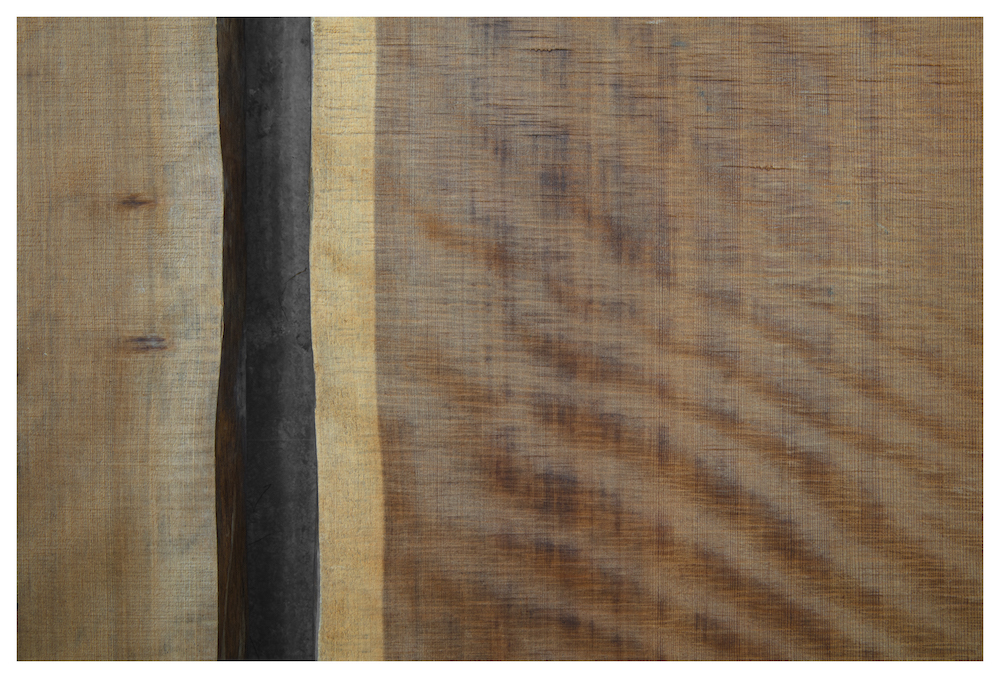
A close-up look at the barge wood at Optima Signature.

Having sat in the river for over one hundred years in mineral-rich water, this redwood log developed a truly rare and unique “curl” pattern within the grain of the wood. To highlight this unique feature, the wood was cut into three-inch-planks that ran the full length of the log. We then carefully installed these planks, with their raw beauty intact, leaving the live edges of the wood as is. The planks were then hung vertically in the lobby space, the orientation the same from which they grew. 

From a river in California to the lobby of a Chicago residential building, our barge wood at Optima Signature has a unique story that connects our urban lobby back to nature, and reflects our commitment to sustainability and longevity. 

A Day at the Art Institute

Architecture is intrinsically linked to art; and designing within the Modernist discipline, we find inspiration from all forms of art. That’s why there’s no better place we can think to spend the day than at the Art Institute of Chicago

The Art Institute is one of the oldest and largest art museums in the United States. Founded in 1879, the museum is an iconic fixture in downtown Chicago’s Grant Park on Michigan Avenue. As a host to 1.5 million people annually, the curatorial efforts there always brings forth something new to see and learn. 

This year, to celebrate 100 Years of Bauhaus, new special exhibitions at the museum shed light on the lasting influence of the iconic design school. That impact has extended into our practice at Optima, with the history of icons like Walter Gropius, Ludwig Mies van der Rohe and other Modernist masters informing how we create today. Visiting the Art Institute gives us the opportunity to see how that impact has spread elsewhere, too, in three phenomenally curated exhibits. If you only have one day to spend at the museum, this is what we recommend seeing:

In a Cloud, in a Wall, in a Chair: Six Modernists in Mexico at Midcentury

For the first time ever, the Art Institute is showing the work of Clara Porset, Lola Álvarez Bravo, Anni Albers, Ruth Asawa, Cynthia Sargent and Sheila Hicks as a group. The exhibition explores the unifying factor that has impacted the work of each of these artists and designers: Mexico. From different generations and mediums, all created work that was boundary-breaking.

In a Cloud, in a Wall, in a Chair: Six Modernists in Mexico at Midcentury is open until January 12, 2020.

Weaving beyond the Bauhaus

Tucked away on the lower level of the museum, this modest exhibit serves an impactful punch. The exhibit traces the diffusion of Bauhaus weaving workshop artists Anni Albers and Marli Ehrman, and their reciprocal relationships with fellow artists and students. The result is a soaring collection of weavings, acting as a conversation between iconic female textile artists.

Weaving beyond the Bauhaus is open until February 17, 2020.

Bauhaus Chicago: Design in the City

When the Bauhaus shut down, its teachers, students and thought disseminated across the world. This exhibition explores the way that instructors and students at ID and IIT adapted the German design philosophy to the United States through an array of medium, spanning from  jewelry, photography, and textiles to furniture, monumental sculpture and urban planning. 

Bauhaus Chicago: Design in the City is open until April 26, 2020.We love the way that art helps us understand the world, and in turn, informs the work we do every day. This collection of exhibits plays off one another beautifully to help deepen that understanding, relating it back to our practice in a context that is at once close and timelessly global. To experience these exhibits and everything the Art Institute has to offer, visit their website.

Neighborhood Spotlights: The Chicago Botanic Garden

It’s no secret that we love the outdoors at Optima. That’s why we are thrilled that our Glencoe office is less than a five-minute drive from the Chicago Botanic Garden, where we’re able to find inspiration and beauty in astounding acres of natural plantlife. To encourage these meditative visits, we have passes for our team to allow them to take a stroll through the gardens for a break and even a lunchtime picnic. 

Open for nearly fifty years, the Chicago Botanic Garden features 27 gardens and four natural areas, sprawling across 385 acres, complete with nine islands and six miles of lake shoreline. With over 2.5 million species of plants, the Garden is a hub drawing people in from all over to visit and learn about horticulture, conservation and sustainability in a beautiful setting. 

Chicago Botanic Garden
The Japanese Gardens on an island at the Chicago Botanic Garden. Credit: Luiz Gadelha Jr. on Flickr Creative Commons, CC BY 2.0 Deed.

Year-round, the Chicago Botanic Garden features a garden set into the stones and terraces beneath a cascading waterfall, hidden rooms within their English Walled Garden, a Japanese Garden that’s the perfect place to find a mindful moment and a secret land filled with model trains traversing across bridges and trestles. We are always thrilled to visit their meticulously cared-for collection of hundreds-of-years-old bonsai trees, or to have a drink or bite to eat at the Garden View Cafe overlooking a peaceful pond.

Right now, the Garden is also hosting Lightscape, an enchanting and exclusive U.S. experience. The exhibition brings a mile of immersive ribbons of light, a garden of fragrant fire, a sparkling tunnel and more to an already breathtaking landscape. Also on display, The Orchid Show features 10,000 brilliant blooms in unexpected ways.  

Whether it’s for a breath of fresh air during a daytime walk or to have a picturesque lunch, we are lucky to have our offices so close to this neighborhood gem. 


Infill Land and Optima’s Beginning

When David Hovey Sr. and Eileen Hovey set out to create Optima in 1977, they had a distinct vision for how to transform their passions into a business. After deciding that David would design and build the projects and Eileen would take charge of sales, they put a second mortgage on their condominium and purchased infill land in the Hyde Park neighborhood of Chicago. That plot of infill land eventually became our first development, but the concept of redevelopment and infill land has benefitted countless cities and urban areas throughout the country. Today, we dive into its history.

The History

The American Planning Association describes infill development as redevelopment that “optimizes prior infrastructure investments and consumes less land that is otherwise available.” Infill development can result in efficient utilization of land resources, reinvestment in areas that are targeted for growth and more efficient delivery of quality public services. Infill buildings are often constructed on vacant or underused property or between existing buildings. Often called “smart growth,” infill development allows for sustainable land development close to a city’s urban core, instead of spreading out. This type of development also helps to renew neighborhoods and create more prosperous communities. 

In Chicago

Following World War II, a series of local and federal initiatives were passed to revitalized aging and decaying parts of Chicago. Major institutions, including Illinois Institute of Technology, took part in the planning and reinvesting of various neighborhoods. New developments and infill on individual lots began to bring new vitality back to the city, with local school improvements and reduced crime rates following behind. 

At Optima

From our plots of land, to designing each residence, to creating fantastic amenity spaces, we’re passionate about bettering the lives of those within our buildings and the environments around them. Starting our first project on infill land, and continuing to do so with many projects for years after, reflects our pursuit of creating beautiful spaces that enhance the human experience.

The Inception of IIT

Where we come from is a large part of who we are today, and Optima founder David Hovey Sr., FAIA is no exception. His long career as an architect is grounded in the education and mentorship that he found during his time at the Illinois Institute of Technology (IIT). Optima’s ties to the school run deep; David Hovey Jr. followed his father’s footsteps in passion and education, also attending IIT. To better understand our founder and our own story, we’re diving deep into the history and inception of the school that helped shape him.

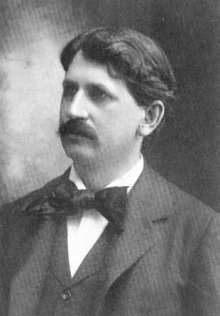
Frank Wakeley Gunsaulus, the minister that gave the Million Dollar Sermon.
Frank Wakeley Gunsaulus, the minister that gave the Million Dollar Sermon. Photo in the Public Domain.

A Million Dollar Sermon

In 1890, Chicago minister Frank Wakeley Gunsaulus delivered the “Million Dollar Sermon.” In a church on the South Side, near the current site of IIT, Gunsaulus declared that with a million dollars, he could build a school where students from all backgrounds could prepare for meaningful roles in a changing industrial society. He believed that the students could learn in practice, not in theory taught at a school to “learn by doing.” 

In response to his vision, Philip Danforth Armour Sr. gave that million dollars. Armour’s money founded the Armour Institute, opened in 1893, a school that offered engineering, chemistry, architecture and library science courses. Two years after that in 1895, another school on Chicago’s south side opened; Lewis Institute offered liberal arts, science and engineering courses for co-ed classes.

47 years later, the Illinois Institute of Technology was created when Armour Institute and Lewis Institute agreed to merge together to form a stronger, singular school.

Mies and IIT

Two years before the merger and the inception of IIT, German architect Ludwig Mies van der Rohe joined the Armour Institute of Technology to head their architecture program and bring a new, rationalized curriculum. Once the new school was created by the two colleges joining, Mies was tasked with designing an entirely new campus for IIT, set apart by his distinct Modernist style in the surrounding urban environs. 

Coming from the Bauhaus, Mies brought with him a new way of thinking about architecture, design, form and function. Because his arrival came at a time of transition, he was able to share his belief system and help shape the curriculum that now makes IIT markedly unique. 

It is this distinctive series of events that led to the creation of this program, passed down from the Bauhaus, to Mies, to IIT, to David Hovey Sr. and David Hovey Jr., eventually shaping the way we think at Optima today. 

Neighborhood Spotlights: Our Favorite Streeterville Spots

Home to Optima Signature and Optima Chicago Center, Streeterville is one of Chicago’s many thriving neighborhoods. Nestled just north of the Loop in downtown, the Streeterville area intersects the art, culture, food and event scenes of the Windy City. Here are just a few of our favorite spots:

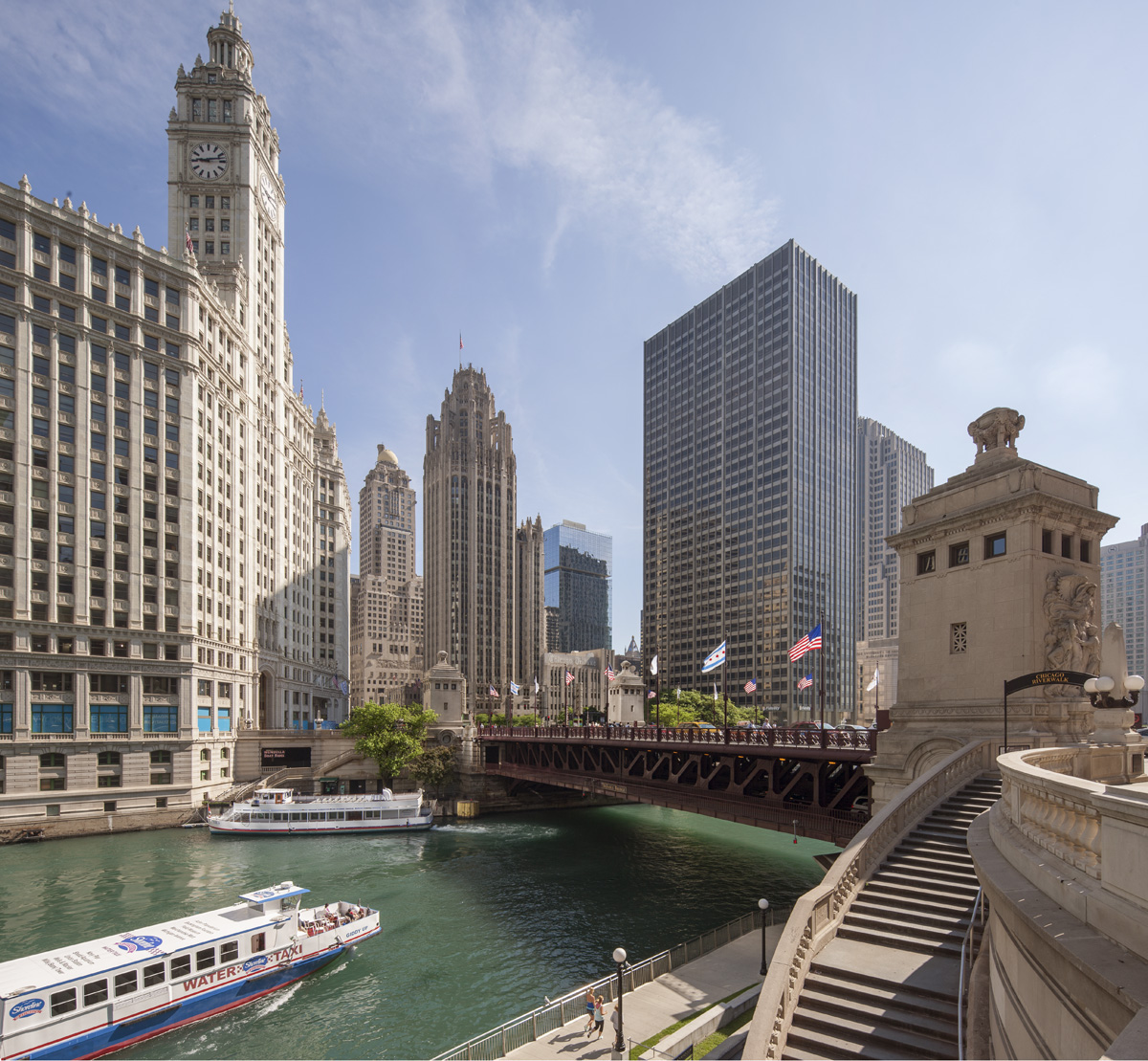
The Chicago Riverwalk

Whether you’re looking for a fun Friday night out or to learn more about Chicago’s history, the Riverwalk is your destination for a good time. Spend an evening at City Winery’s riverside location, hop on an architectural boat tour or go for a quick jog around downtown Chicago. Although best experienced in the city’s warmer months, the Chicago Riverwalk is a fantastic spot for Optima residents, visitors and locals alike. 

The Restaurant Scene

Like the rest of Chicago, Streeterville boasts plenty of amazing restaurants and drinkeries. For a night of fantastic food, The Purple Pig’s tapas, the pasta at Volare Ristorante, or a lobster roll at the Hampton Social are just around the corner. From Sunday brunch to Friday evening date night, Streeterville’s culinary scene doesn’t disappoint. 

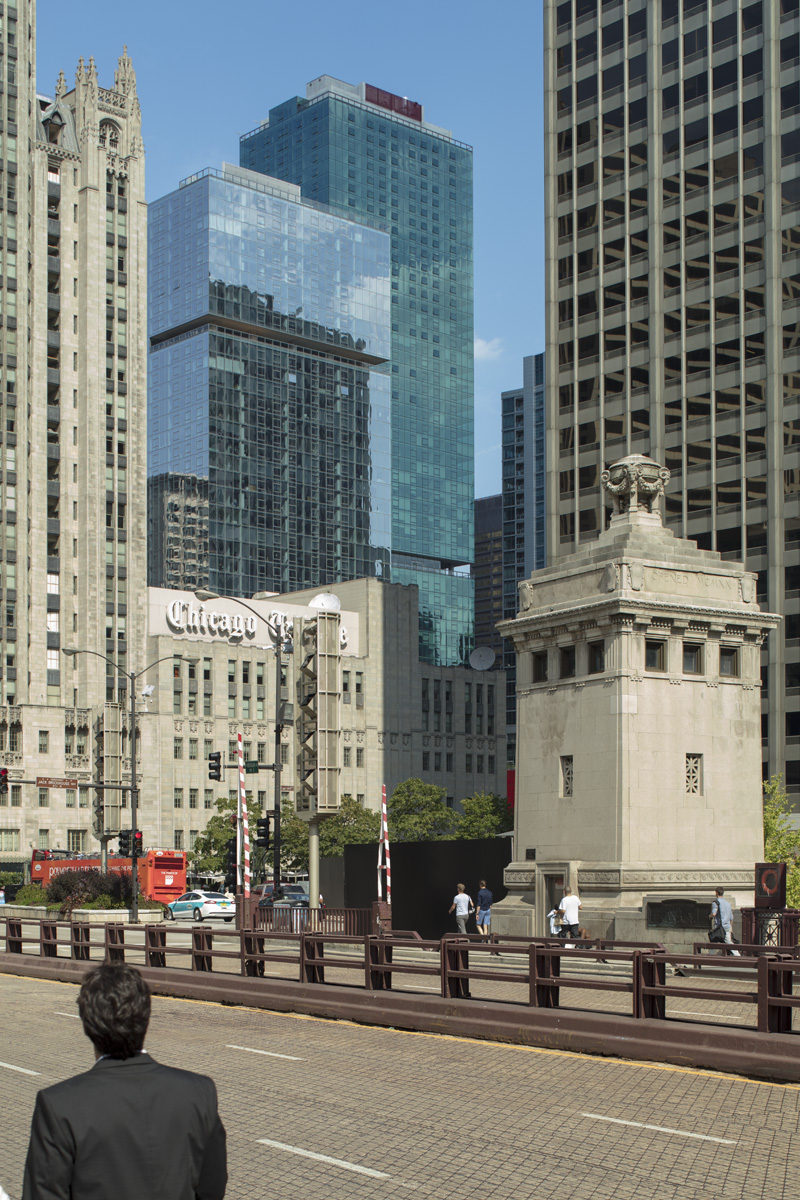
Streeterville, with Optima Signature in the skyline

The Culture

Within Chicago’s vast cultural ecosystem, Streeterville claims a handful of spectacular museums and organizations. The Museum of Contemporary Art, located up Michigan Avenue, is one of the world’s largest contemporary art venues, established in 1967. One of Chicago’s most iconic destinations, Navy Pier is home to the Children’s Museum, the Chicago Shakespeare Theater and events throughout the year, including EXPO Chicago. 

We’re proud to have strong roots in Chicago, and excited to be a contributing part of the Streeterville neighborhood; Stay tuned for more neighborhood spotlights on our other Optima communities.

Inside Our Team: Construction

To fuel our vertically-integrated business model, Optima is composed of strong, multi-faceted teams that ensure an effective and efficient workflow throughout our projects. Ever since our inception, we have recognized the benefits of harnessing collaborative teams, and we’re not alone. According to Forbes, productive team environments are the new vision for successful and satisfying employment. Adaptability, trustworthiness and openness are key components in coordinating team actions and solving challenging problems. 

Now more than ever, teamwork is recognized as a critical part of successful work culture. Our construction team at Optima is no exception; the team is currently working on two buildings in Arizona, just wrapped up another project ahead of schedule and is growing in Illinois as we prepare for upcoming projects in the Chicago market.  

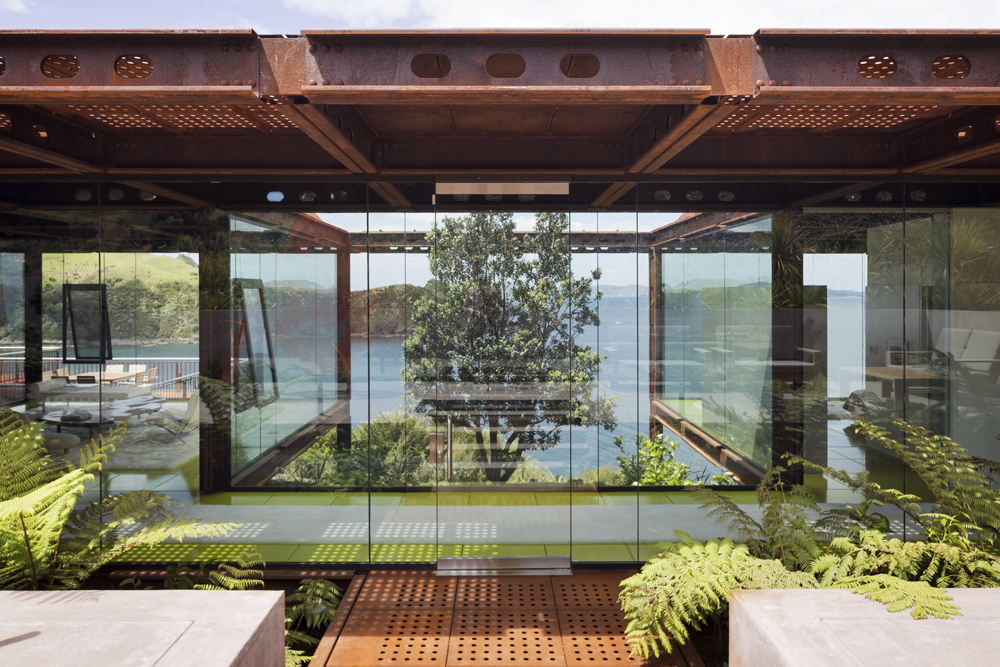
Construction at Whale Bay House, New Zealand

When asked about what makes their team amazing, here are some of the things our construction team members had to say:

“We understand what the needs of the job are and strive towards a common goal to get things done. If someone makes a mistake, they own the mistake and fix it themselves so they learn and grow from the experience.”

“We all pitch in and help one another. If one of us has a problem, we all have a problem and will work together to find an answer.”

“I love the team we have gathered; they are knowledgeable and willing to learn.”

“I absolutely have learned leaps and bounds! I found my passion. Similar to a child in a sugar shop, my brain is soaking up everything like a sponge! I smile just talking about decking, and vetting subs for new partnerships!”

With our holistic business model that encompasses architecture, development, general contracting, sales/brokerage, asset/property management, and shared services, each of our talented teams are part of what makes Optima great. Think you would be a good fit on the Optima team? Check out our current open positions to inquire about joining our team. 


A Transparency on Glass

Whale Bay House, Optima DCHGlobal, Inc., New Zealand.

For decades, glass has been a stylistic signature of Modernist architecture. From the first Modernist structure ever built to the steel-and-glass aesthetic of Modernist master Ludwig Mies van der Rohe, the material has provided a timeless transparency that is crucial to minimalist design. But glass hasn’t always been as functional as it is aesthetic. 

A History of Glass

Glass is one of the oldest man-made materials, with use dating back to 7000 B.C. It was first utilized for decorative purposes in 3000 B.C. by Egyptians mainly in pottery and other decorative trinkets and first used as windows by the Romans around 500 B.C.

However, at that time, the masonry required to create glass also didn’t allow for larger, stronger pieces to be created, so its use was therefore sequestered to windows and detailing, such as stained glass murals.

In the 19th century, the manufacturing renaissance introduced iron, steel and other materials that provided the strength and durability necessary to support larger glass constructions. The support of these materials, combined with the capability to produce glass in larger sheets, allowed architects to experiment with creating structures utilizing glass in more creative ways.

The Crystal Palace designed by Joseph Paxton.

The Crystal Palace

This new design potential allowed for greenhouses, large railway stations and other public structures to be made of glass. Such new usages inspired Joseph Paxton, an architect in London, to design the Crystal Palace in 1851 using 300,000 sheets of glass. The Crystal Palace was the first architectural creation to utilize an all-glass exterior, and is also considered the first Modernist structure ever created.  

To overcome the harsh effects of a glass exterior, Paxton utilized translucent screens of calico hung externally between the ridge beams of the structure’s roof glazing, covering the entire exposed rooftop and protecting against the transparent building’s vulnerability to heat. This functional feature eventually transitioned into a cornerstone piece of Modernist design. 

7120 Optima Kierland in the Kierland neighborhood of Scottsdale, AZ.

Glass at Optima

The idea of transparency, open space and functional materials are still relevant and desirable today. At Optima, we use floor-to-ceiling glass to create an indoor-outdoor relationship, allowing for sweeping views and connecting our indoor living spaces with the natural spaces just outside.

At 7120 Optima Kierland, we use a combination of low-e, UV-treated glass, perforated sunscreens and horizontal louvers, to create texture and rich variation of shades and shadows, while allowing for breathtaking views.

Optima Signature in the Streeterville neighborhood of Chicago, IL

At Optima Signature, glass preserves the sweeping lake views to the east and dynamic city views in all other directions. Glass also unifies Optima Signature with its sister tower to the west, Optima Chicago Center. While the glass curtainwalls of each building are different — silver-toned in the case Optima Chicago Center, and transparent green for Optima Signature — the podiums share a unifying black ceramic frit glass with dot pattern. Optima Signature expands the palette with areas of red glass that wrap the podium as it extends south to define the east edge of the plaza.

As we reflect on the history of glass and how it has become a viable aesthetic and functional choice when designing today, we return to the material time and again to design and build the stunning Modernist steel-and-glass structures in our portfolio.

TCN Chicago Equity Pledge

When women can take their seats at the table, businesses are more likely to reach their full potential. As a business comprised of strong women, Optima is unwavering about empowering women to pursue their passions and lead us towards a better and brighter future. We’re thrilled to partner with The Chicago Network (TCN) for their Equity Principles campaign to achieve gender equity across all levels of organizations, including leadership roles, by 2030.

Since 1979, The Chicago Network has called upon women to foster friendships, support one another, gather in community and empower each other to lead. By creating ongoing mentorship opportunities, partnering with area universities and hosting sessions and events for TCN members, the organization pushes for the betterment of Chicago’s women leaders. The Chicago Network’s latest initiative is The Chicago New Equity Principles, a pledge and toolkit that provides employers with clear, solutions-driven guideposts to create a truly equitable workplace. Through removing barriers, defining success, evolving culture, enhancing community and maintaining accountability, TCN challenges their partner organizations to move towards change. Aiming to achieve a 50% representation of women serving on company boards, as C-suite executives and in senior management roles throughout Chicago by 2030, the campaign seeks to embolden a new generation of leaders. 

As one of the early signers of the campaign, Optima is thrilled to support a cause so crucial to the growth of our organization. We are currently 46% female overall, 43% at the management level and 27% at the executive level. We are also led by an incredible female, Tara Hovey, our President and Chief Operating Officer. We’re off to a good start, and we’re proud of our commitment to meet the Chicago Network goals. 

For more information on the pledge, visit The Chicago Network’s website.

person name goes here

Maintenance Supervisor

Glencoe, IL


    Acceptable file types: *.pdf | *.txt | *.doc, max-size: 2Mb