This holiday season, Optima is giving back to our community through a food drive for Lakeview Pantry. We’re excited to engage with a neighborhood institution near and dear to the Lakeview community and to play our role in their mission to end hunger in Chicago.
Lakeview Pantry celebrated their 50th anniversary this year, having been in operation since 1970. A small and dedicated group of neighbors began the initiative as The People’s Pantry of Lakeview, serving nearly 100 people in their first year. Since then, the pantry has grown to a team of 30 staff and 5,000 volunteers, providing nearly 4 million meals to 100,000 individuals in 2020. Lakeview Pantry has also adapted their services to meet the needs of the community, incorporating Online Market orders and community pop-ups alongside critical social services such as mental health counseling, job search support and crisis intervention.
From Thanksgiving to Christmas, our office is doing its part to collect food donations in-office which will be dropped off at the pantry. It’s important to us to contribute to local causes, especially around the holiday season, when everybody deserves a full belly and a full heart. Last year, we collected food for Deerfield Pantry alongside pet food for Meals on Wheels in Northeastern Illinois.
As we continue progress on Optima Lakeview, we look forward to discovering more ways to give back to our new community in the future.
Modernism wouldn’t be the discipline it is today without the greats that defined it. A name well-known throughout the world, Frank Lloyd Wright is heralded as the “greatest American architect of all time” by the American Institute of Architects. His contributions to architecture have touched all of us at Optima and countless others, leaving behind a monumental legacy.
The Life of Frank Lloyd Wright
Frank Lloyd Wright was born in Richard Center, Wisconsin on June 8, 1867 to a preacher father and teacher mother. His young life was spent travelling for his father’s ministry position, and his parents’ divorce when he was 18 set his family back even further financially. To help out, Wright worked at the same university at which he was studying: University of Wisconsin. Despite his commitment to his family, Wright’s dream of becoming an architect pulled him away from school when he left Madison two years later to move to Chicago.
Frank Lloyd Wright Home and Studio, 1967. Credit: Philip Turner, Library of Congress, Prints & Photographs Division, ILL,16-OAKPA,5-2. Image is in the public domain.
In Chicago, Wright tried working for two different firms before landing at Adler and Sullivan, where he worked under Modernist master Louis Sullivan for six years. At 22, Wright married Catherine Lee Tobin and entered into a five-year-contract with Sullivan in exchange for the loan money Wright would need to build him and his wife their home in Oak Park, a Chicago suburb. Tempted by the need to provide for his family, Wright took on independent residential commissions even though it violated his contract with Sullivan. When Sullivan found out, the two parted ways and did not repair their relationship until twenty years later. It was this separation, however, that pushed Wright out on his own and allowed him to grow his prolific independent career.
Fallingwater by Frank Lloyd Wright. Credit: Somach on Wikimedia Commons, licensed under the Creative Commons Attribution-Share Alike 3.0 Unported license.
The Work of Frank Lloyd Wright
After his separation from Sullivan, Wright started his own firm in 1893. Wright’s career spanned an impressive seven decades, a time period over which he developed his distinctive point of view and style. Wright saw architects as the poets of their time — an artistic historian of sorts. He believed in creating structures that lived in harmony with the natural world, a point of view which he called “organic architecture.”
Wright brought American design to the forefront and was the leader of the Prairie School movement, a distinctly American midwestern style. Hallmarks of Prairie School design include low-pitched roofs, overhanging eaves and open floor plans. These expansive residences mirrored the endless landscape of the Midwestern prairies, and employed materials such as wood to further integrate the manmade with its environment.
Later in his career, Wright also worked in the textile style out West, as well as pioneering a new dichotomy with his 60-house Usonian series. The Usonian homes were another way Wright carved out a language that was distinctly American, uninfluenced by any international predecessors. These homes were marked by their flat roofs and cantilevered overhanging — which became the source of the term “carport.” While out West, Wright also established Taliesin West and other structures near the greater Phoenix area, some of which are close to our Optima communities in Arizona. Just as we’re inspired by the desert scape, Wright was similarly enchanted with the surrounding foliage and existing architecture.
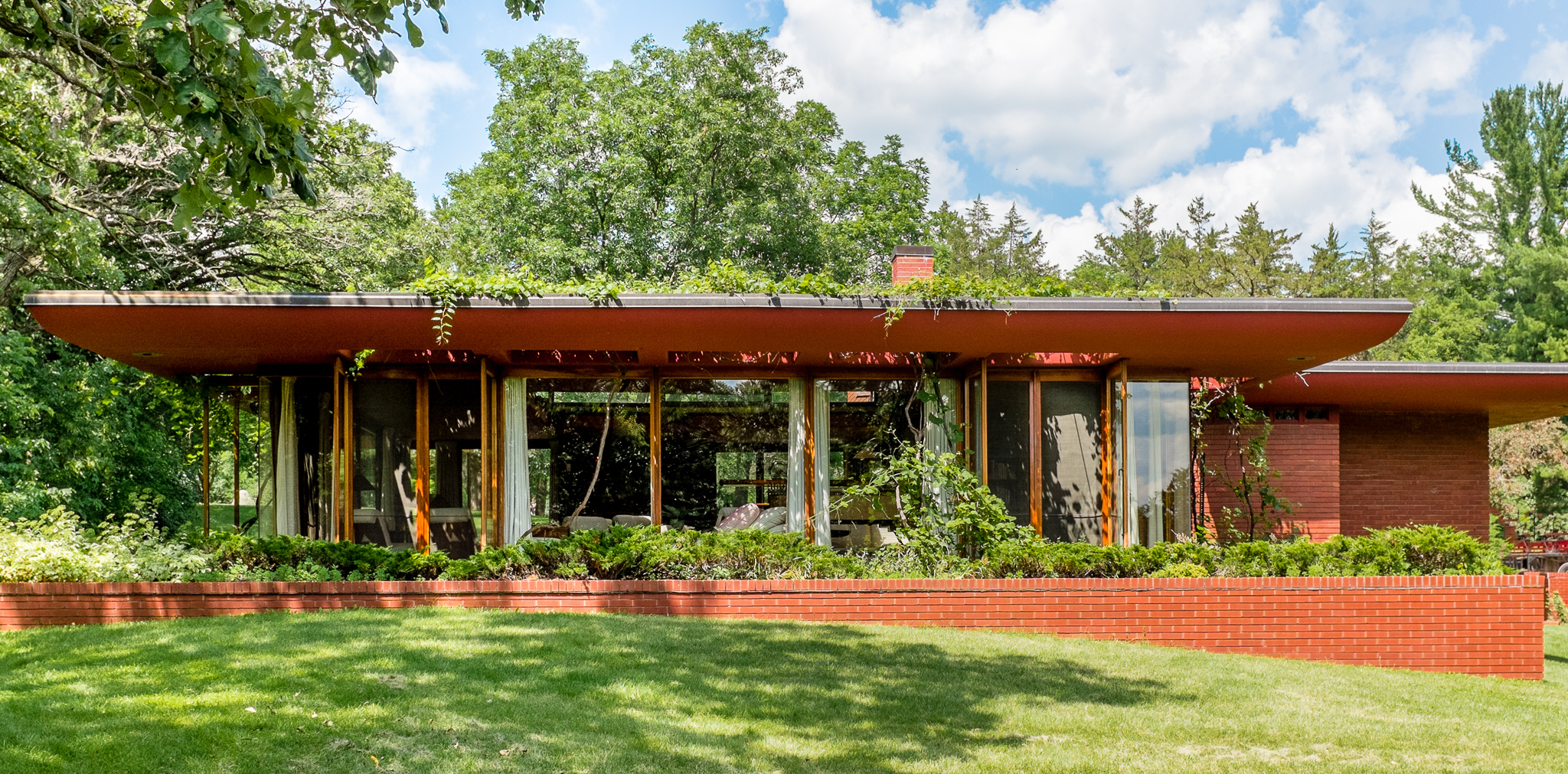
Cedar Rock (Lowell Walter House), 1948, Frank Lloyd Wright — a Usonian house. Credit: AIA Iowa.
With his 70-year career, 500+ completed projects and numerous accolades, this is only the tip of the iceberg in the legacy left behind by Frank Lloyd Wright. It is all these contributions and more that will forever cement Wright as a master of American architecture.
There have been many leading ladies in the history of Modernism; one of whom is Anita Malfatti. Malfatti is widely regarded as the pioneer of the Modernist movement in Brazil — sharing with her home country the style that had already taken American and European culture by storm — and leaving behind a life that would inspire generations to come.
Life in Brazil
Anita Malfatti was born Ana Catarina Malfatti in Sao Paulo in 1889 to a family of immigrants; her father was a civil engineer and her mother was a painter, and a highly-cultured woman. Malfatti’s mother was her primary teacher, and a huge source of inspiration as Malfatti began to explore creatively while growing up. Due to a congenital defect that made her left arm nearly immobile, Malfatti was forced to paint right-handed even though she was left-handed. Nevertheless, Malfatti wasn’t deterred from her passion for the visual arts.
Pursuing art in Brazil was limiting at that time. The country lacked cultural institutions and had a limited scope of art theory compared to its global counterparts. Much Brazilian art at the time was in the classical, romantic style and was concerned with nationalistic interpretations of Brazilian pride and culture. So while Malfatti began her studies at Mackenzie College in Sao Paulo, the local arts scene was not enough to satiate her curiosity, and in 1912, she left for Berlin.
Anita Malfatti, Festejo na Roca. CMMECPC. (2023-10-05). MMEC 029/2015: Retrieved from museum-digital Brazil
The Work of Anita Malfatti
In Berlin, Malfatti spent four years studying at the Royal Academy of the Arts under famous expressionist artists. There she began to hone her artistic style of expressionist portraiture and metal engraving. After, Malfatti returned temporarily home to host her first solo show in Brazil in 1917-1918. The show received negative reception and was seen as too modern, bizarre and self-indulgent.
Despite the uproar at the time, that solo showcase was the first introduction of Cubism, Expressionism, Surrealism and Futurism in Brazil. Recognition of Malfatti’s innovation was soon to come in Brazil. In 1922, Malfatti returned to Sao Paulo festival, The Week of Modern Art, in 1922, alongside other Brazilian Modernist artists (Tarsila do Amaral, Mario de Andrade, Menotti del Picchia, Oswald de Andrade), earning themselves the name “The Group of Five.” The group’s presence that year made revolutionary strides in how Modern art was perceived and utilized in Brazil.
Malfatti continued to explore her artist expression, leaning towards the naive and folkloric later in her life, until she eventually died in 1984. By then, her influence on the artistic DNA of Brazil was undeniable, and her impact on Modernism remains profound today.
Zen gardens are synonymous with peaceful moments, stress reduction and thoughtful design. At Optima Kierland, our exclusive Club One amenity space features a zen garden to encourage those tranquil moments for our residents. To better understand the space and its history, today, we’re taking a look at zen gardens 101.
Purpose and History
As the name suggests, zen gardens were first designed to inspire meditation at Zen Buddhist temples. While Japanese rock gardens (inspired by the Chinese rock gardens that predated them) have been around since at least the Heian period (794-1185), the first rock garden considered a zen garden was built in 1334 by Buddhist monk and zen master Musō Kokushi. The idea was that monks would view the gardens while sitting outside of them and focus on the elements to hone their meditative practice.
The development of zen gardens also pulled inspiration from Japanese ink landscape paintings at that time. Both art forms focused on winnowing down their composition to include only the essential elements of nature, which was then to be surrounded by an abundance of white space (in a painting, the blank page, and in a garden, the sand or gravel).
Elements of Zen Gardens
Zen gardens are defined by their unique stylized landscaping. The main eight elements are composed in intentional, meaningful arrangements. These elements include rocks (ishi), water elements (mizu), plants (shokubutsu), lanterns (tenkeibutsu), the borrowing from existing landscapes (shakkei) and bridges (hashi).
Each element is a meaningful symbol in Japanese culture, and their arrangement in the garden represents and honors that. Typically the gardens are brought together by gravel or sand, which is raked to represent rippling water. Emphasis is also placed on the principles of naturalness (Shizen), simplicity (Kanso), and austerity (koko).
At Optima, we’re honored to borrow from this deep and meaningful tradition. The zen gardens at Optima Kierland seamlessly blend the ancient tradition with the Modernist discipline, utilizing water, landscaping and open space to bring meaningful moments of zen and tranquility to our residents.
We began the Optima story with our roots in Chicago, and we’re thrilled that our next exciting chapter is expanding our portfolio to include our latest project, Optima Lakeview. Like many others who call the neighborhood home, we were drawn to the community’s vibrancy, history and diversity. Today, we’re sharing just a few reasons why we love Lakeview.
In the early 1900s, Lakeview was actually considered a suburb of Chicago and acted as an escape from the bustle of the city. Its shopping and recreational scene attracted visitors back then, just as it attracts residents and visitors now. Whether it’s catching a game at Wrigley Field or enjoying a Chicago summer at the lakefront, the neighborhood is famous for its leisurely attitude and playful spirit. In a typical, non-pandemic year, expect summer street festivals, performances in the Belmont Theater District and the festive Lakeview Holiday Stroll; but despite COVID-19, the area still retains its charm and liveliness.
Fantastic Food & Culinary Fare
No matter what you’re craving, Lakeview has a little bit of everything. Strings Ramen shop has some of the best noodles in the neighborhood, and the city. Ella Elli is known for its ambiance and curated cocktail list. The Chicago Diner offers an impressive take on vegan food (we promise you’ll love it even if you’re not vegan). If you need a few more ideas, The Infatuation has you covered.
Something For Everyone
Lakeview itself encompasses many different sub-neighborhoods, including Sheridan Station Corridor, Northalsted, Southport Corridor, Lakeview East, Lakeview West, Wrigleyville and Northalsted. Residents range from young professionals to families who have been loyal to the neighborhood for generations, and with good reason. The neighborhood is a favorite of long-term residents and new transplants alike, even earning a top spot in Money Magazine’s Best Big Cities.
We’ve already broken ground on Optima Lakeview, and we can’t wait for what’s to come as we become a part of the community!
The legacy of the Bauhaus is an essential thread in Modernism, past and present. But the Bauhaus — both the movement and the school — never would have been possible without the man behind it all: Walter Gropius. Today, we’re paying our respects and exploring the legacy of the Bauhaus founder, also known as one of the the pioneering masters of Modernism.
Fagus Factory (Faguswerk), designed by Walter Gropius and Adolf Meyer in Alfeld, Germany. Photo: Matthias Süßen on Wikimedia Commons, licensed under the Creative Commons Attribution-Share Alike 4.0 International license.
A Promising Start
Born Walter Adolph Georg Gropius in May of 1883, the German architect was destined for great things from the start of his earlier career just 25 years later. In 1908, after studying architecture in Berlin and Munich, Gropius began working with renowned architect and industrial designer Peter Behrens, alongside other powerhouses: Ludwig Mies van der Rohe and Le Corbusier. From that point onward, Gropius’s career accelerated at an upward trajectory, with accomplishments such as Faguswerk, the Fagus Factory that truly put his name on the map in 1913.
The Bauhaus building in Dessau, Germany, designed by Walter Gropius.
The Bauhaus
In 1919, Gropius succeeded the previous master of the Grand-Ducal Saxon School of Arts and Crafts in Weimar — and Gropius then transformed this academy into the Bauhaus. Gropius’s founding philosophy behind the Bauhaus was revolutionary. On a flyer from that time, he stated: “Art and the people must form an entity. Art shall no longer be a luxury of the few but should be enjoyed and experienced by the broad masses. The aim is an alliance of the arts under the wing of great architecture.” The Bauhaus’s legacy became the extension of beauty and quality to every home, through well-designed, industrially-produced products. Though Gropius left the Bauhaus in 1928, the impact of the school remains prevalent across Modernist design today.
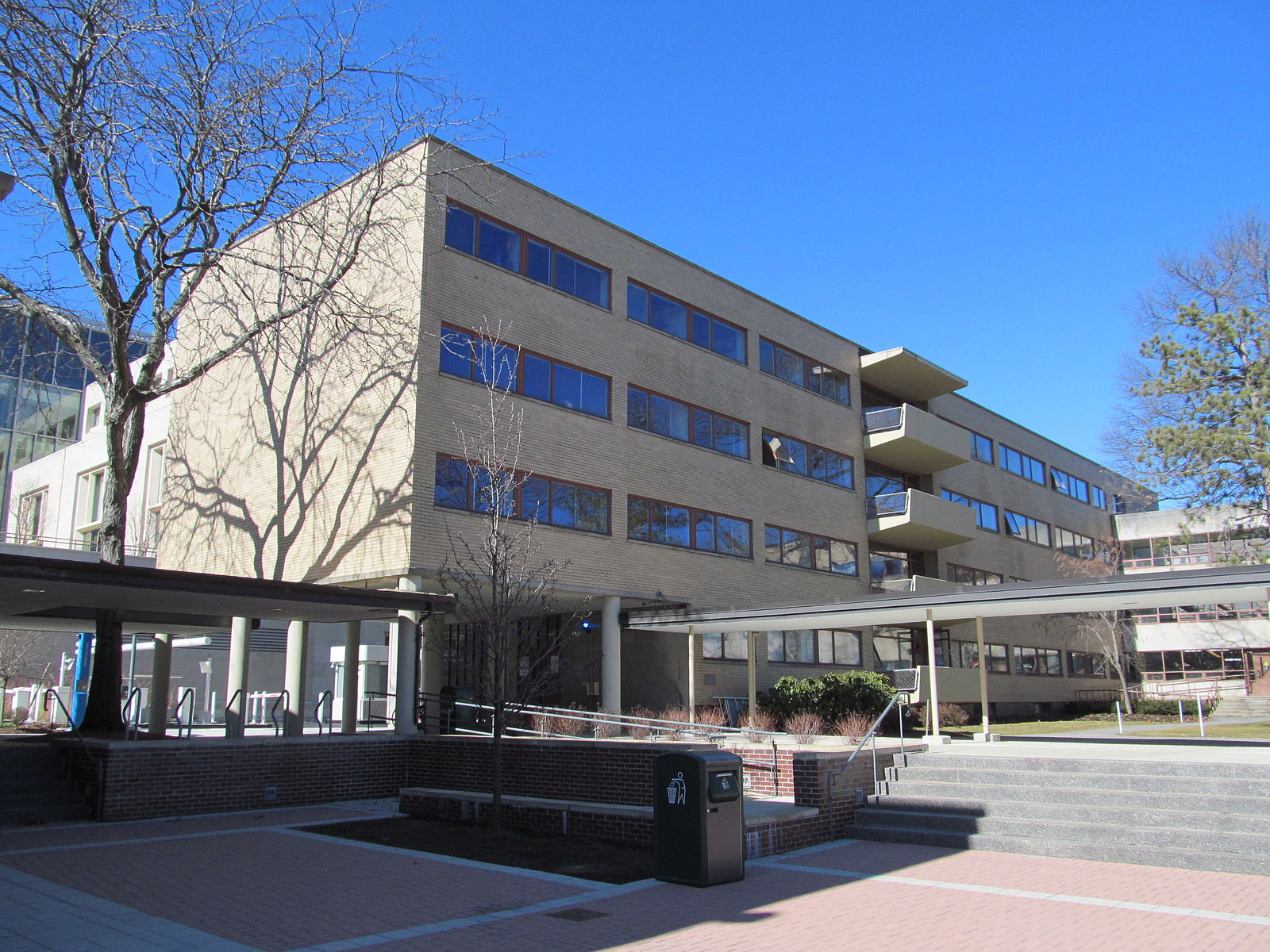
Story Hall at Harvard University, part of the “Gropius dorms” designed by The Architects’ Collaborative. Photo: John Phelan on Wikimedia Commons, licensed under the Creative CommonsAttribution-Share Alike 4.0 International license.
American Footprint
Facing threats under the Nazi regime, Gropius first landed in England and then made his way to the U.S. in 1937. There he became a professor at Harvard and eventually, the Director of the Department of Architecture. In 1946, he founded The Architects’ Collaborative (TAC), another manifestation of his belief in collaboration and teamwork. Alongside the likes of other young architects in Cambridge, the group rose to prominence (with their most well-known work being the Graduate Center at Harvard) and they quickly became one of the most well-known and respected architectural firms in the world.
Today, the legacy of Walter Gropius remains in each structure he created during his lifetime, as well as in the profound impact he had on the architectural world.
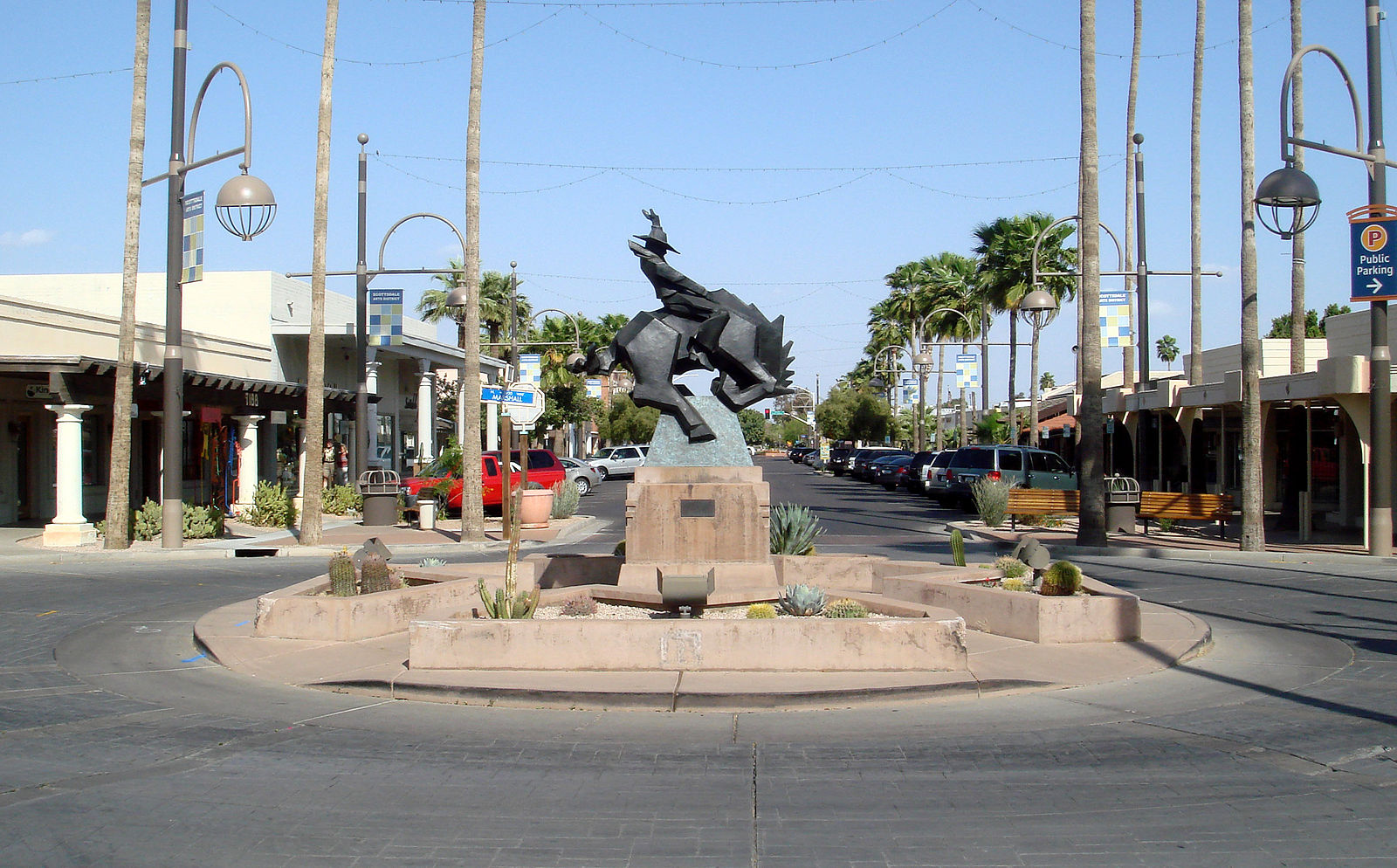
We love Scottsdale for many reasons, one of which is its vibrant and bustling arts scene. Home to the Scottsdale Arts District, the city makes its unique voice heard through striking public art such as Jack Knife by Ed Mell. To understand more about the local arts scene and to celebrate its impact on the city our residents call home, today we’re exploring the work and artistry behind Jack Knife.
Jack Knife boldly commands attention at the intersection of Marshall Way and Main Street in Downtown Scottsdale — the center of the Scottsdale Arts District — mere steps away from Optima Sonoran Village. The piece is the perfect introduction to the city’s history and culture, depicting a rider astride a bucking horse modelled after the official city seal. The bronze sculpture, which sits on a high pedestal, stands over eight feet high. Even more notable: Jack Knife is Ed Mell’s first ever large-scale sculpture.
Completed in 1993, Mell says of his work: “Jack Knife has a reverence for the Old West. It is not traditional, but yet it has a traditional theme. The angularity accelerates the power and energy of the rider and horse, more than accurate depiction.” While the piece may have been his first large-scale experimentation, Mell is one of Arizona’s premier artists.
Mell grew up in Phoenix, and his artistic practice is inspired by the natural beauty and wonder of the desert. He works primarily in oil paint, creating natural expressions of the Western landscape that exhibit striking colors and Cubist elements. This bold, graphic style is translated evidently into Jack Knife, and the artists’ passion for Arizona shines through, too.
It’s passionate creations like these that inspire us every day, and make us proud to call Scottsdale Optima’s second home.
Our love for Modernist architecture at Optima is a language all its own — in more ways than one. As we discuss all things design, keywords in architect lingo begin to permeate the vocabulary of everyone in our offices, from architects to property managers and beyond. In honor of the passion and language we all share (and in follow up to Part I and Part II), today we’re taking another inside look at words you might hear in a day at Optima.
Clerestory
Clerestory refers to the windows in a structure. Also known as a clearstory or an overstory, a clerestory is any high section of the wall that contains windows above eye level. The purpose of these windows (and their altitude) is to invite in sunlight, fresh air or both.
Historically, clerestories were included in large structures such as cathedrals with expansive central halls. While the technique is thought to have originated in ancient Egypt, and carried over to the Byzantine era, this architectural detail is most widely seen in architecture from the Romanesque and Gothic periods. Clerestories are also employed in many transportation vehicles, such as train cars, to provide additional lighting, ventilation and headroom.
At Optima, clerestory windows prove an invaluable tool when creating open-floor-plan Modernist buildings. Employing windows at multiple levels, we’re able to ensure spaces that are flooded with light and that exude an open, airy atmosphere.
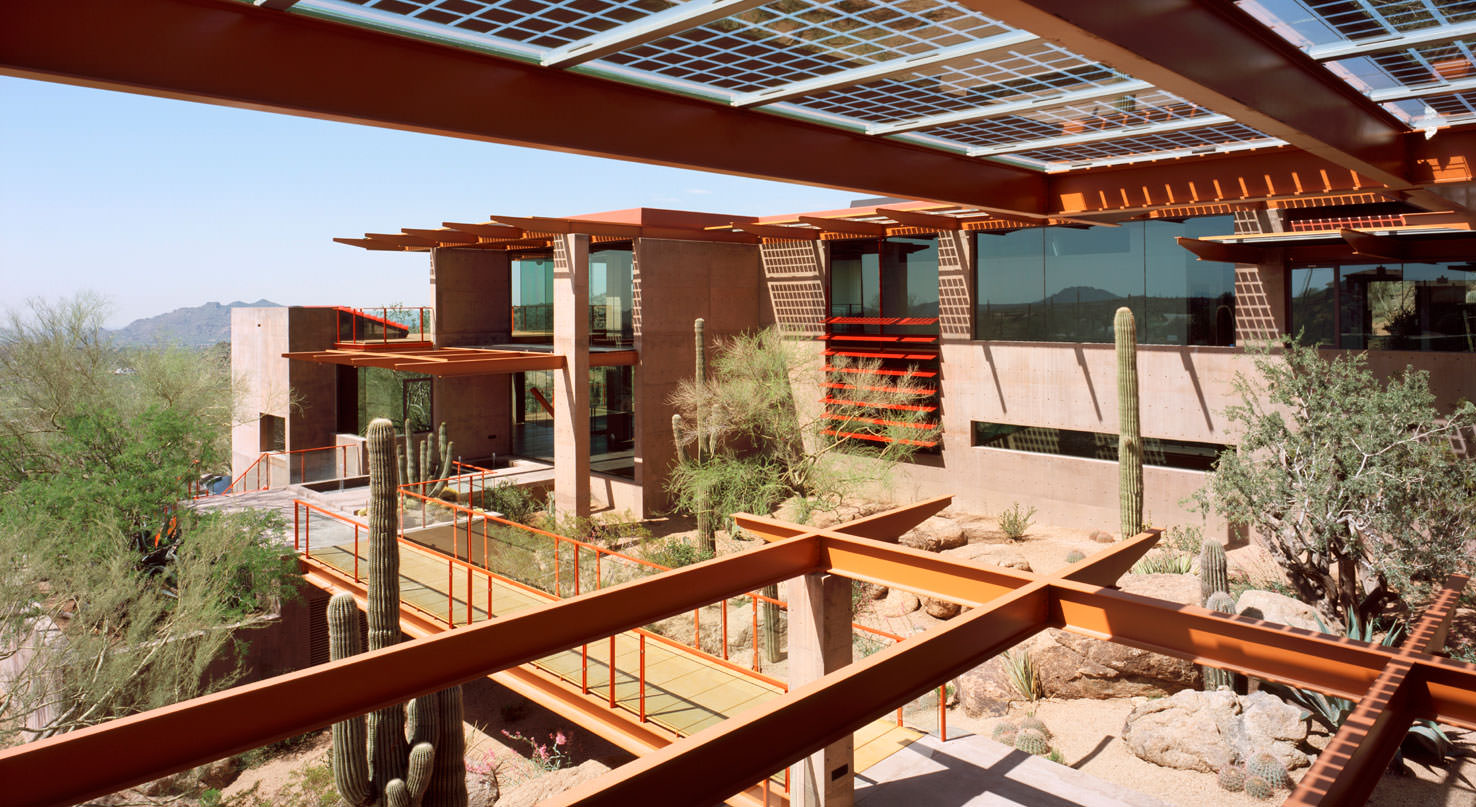
Rectilinear design at Optima Camelview Village in Scottsdale, Arizona.
Rectilinear
Stripped back to its most basic definition, rectilinear is an adjective referring to anything in a straight line. In architecture, however, a rectilinear form then becomes anything that consists of only straight lines. Rectilinear design creates a sense of order and structure within design, and therefore plays well into the Modernist philosophy.
That being said, originally rectilinear style originates from the third historical division of English Gothic architecture (also called The Perpendicular Gothic, or simply, perpendicular). Contradictory to paired back rectilinear form in Modernist design, the rectilinear style of Gothic architecture includes lavish, ornate geometric detailing.
In our own structures, we often employ rectilinear design as an expression of our Modernist sensibilities. The bold, simple geometry of straight lines allows us to best explore ideas of form and function, creating spaces that are at once complex in thought but simple in application.
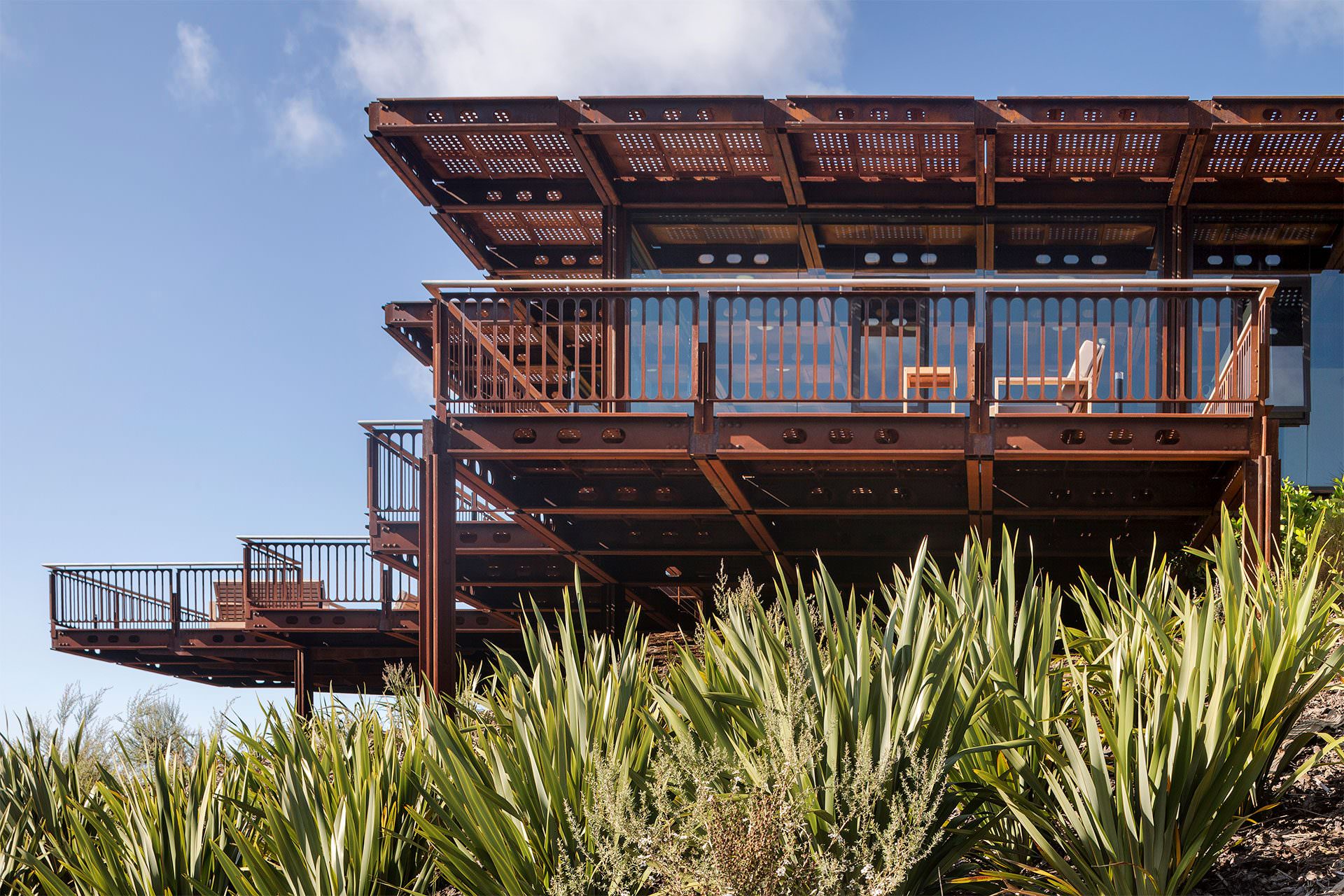
The Optima DCHGlobal Building System at Whale Bay House, Optima DCHGlobal, in New Zealand.
On the Module
Modular architecture refers to the design of any system utilizing separate components that can be connected together to create one, cohesive whole. A highly flexible system, the building-blocks nature of modular architecture allows individual pieces to be easily replaced or repurposed as needed. Building on the module, then, refers to the process of creating a structure out of a module system.
Optima President and Principal Architect, David Hovey Jr., designed his own modular system: the Optima DCHGlobal Building System, a patented structural system that is based on 7’-0” x 7’-0” horizontal module, a 1’-3” vertical module, and a 21’-0” x 21’-0” structural bay with connectors, beams, and column components that are joined together with tension controlled bolts to create a 3-dimensional structural grid allowing for design flexibility in both vertical and horizontal directions. You can see the system employed throughout our Optima DCHGlobal projects, Relic Rock, Arizona Courtyard House and Whale Bay House.
Our buildings and communities wouldn’t thrive without our incredibly talented team members, especially in a year where maintaining clean and safe spaces feels more important than ever. We recently sat down (virtually) with Hunter Gross, the Maintenance Supervisor at Optima Sonoran Village, to talk about how his work makes a difference in our Arizona community.
Tell us a bit about your background and the role you play at Optima.
Out of high school, I went into the construction field and from there I went into a maintenance and cleaning supervisor role in Phoenix. After that, I ended up at Optima. I’ve been here for a year and three months; for a year as a technician, then promoted to supervisor for our Sonoran Village property. In my role as supervisor I am responsible for hiring, training, and guiding our service technicians; we can see 30-40 new service tickets daily and we have a 24-hour completion goal. I am responsible for ensuring service is completed to the Optima standard which often includes following up on many different work orders to see that the residents were satisfied.
What drew you to Optima initially, and what’s kept you working there?
I tend to get bored with day-to-day tasks, but working at Optima gives me different challenges that set a nice change of pace, which keeps me engaged. I also have a team that helps me problem solve, oftentimes working with other Optima teams to find better solutions. Especially this year with the pandemic, everyone was ready and willing to work together.
How does maintaining the buildings at Optima differ from other properties/buildings?
Optima’s design and materials sets them apart and makes them unique; concrete and exposed steel beams often present challenges when making additions or repairs. Thankfully, Optima is structured so we can communicate with the architecture and design team to help determine the best solutions.
Optima’s properties are also very large-scale. Even regular, preventative maintenance takes a longer time since they’re so spread out and populated. We have five different buildings just across Sonoran Village, and just transporting tools from one to the other is a process.
Optima has a distinct set of values that really differentiates it from other companies. Which values really speak to the work you’ve done at Optima?
Definitely our “there’s a solution to every problem” value. Especially in our line of work, we’re always trying our best to find solutions to even minor issues. And whether it’s the architecture, construction or design teams, we have a ton of resources at Optima that allow us to problem solve. This year in particular, that seems more important than ever.
When we set out to build intentional spaces, we extend our design sensibilities into every finish and furnishing. And with most of our selections, each piece has a story behind it. Today, we explore the history of the distinct and iconic Wassily Chair.
The chair itself started with Marcel Breuer, the Hungarian architect and designer. Breuer studied at the Bauhaus under Walter Gropius, quickly becoming his protégé with his outstanding sense of design and ingenuity. By the early 1920s, he was considered a master carpenter at the school. The legend goes that Breuer purchased his first bicycle and was so inspired by the lightness of its frame, he wanted to experiment with something similar in furniture design, using curves and tubing in construction. Thus, the Wassily chair was born.
Fabricated using the techniques of local plumbers, the tubular-steel structure would become Breuer’s signature touch on furniture. At the time, the design was only technologically feasible because German manufacturers had perfected the process for seamless steel tubing. Without a welding seam, the tubing could be bent without collapsing. The structure was finished by straps of fabric, pulled tightly to create a sturdy but comfortable place to sit. Like many other designs in the Modernism movement, the Wassily Chair has been mass-produced since the 1920s, its allure is still impactful today. At present, the trademark name rights to the design are owned by Knoll, who integrated the Wassily Chair into their catalog in the 1960s.
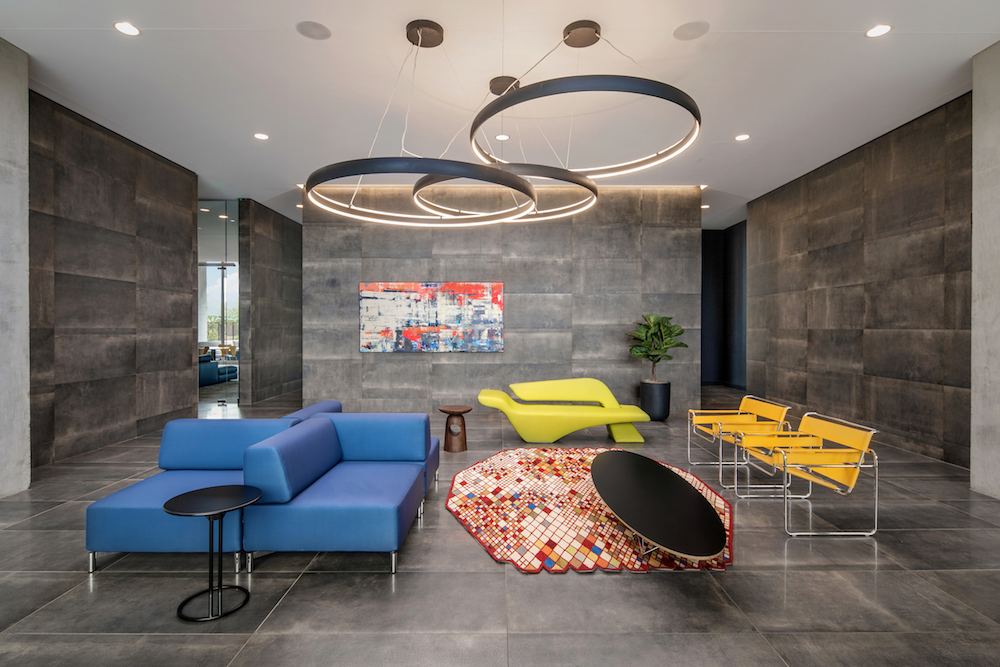
Whether it welcomes residents as they enter the lobby or invites conversation in an amenity space, the Wassily Chair plays perfectly with the design aesthetic and sensibility of our spaces at Optima.