A Brief History of Irrigation

Lush, verdant landscapes are a cornerstone of Optima communities. We’ve spent years of research and application honing our landscaping, arriving today at an innovative vertical planting system that incorporates self-containing irrigation and drainage. But just what is irrigation, why is it so important and how did we arrive at this solution? Today, we’re taking a closer look at the history of irrigation.

While our own landscaping research has gone on for decades, the history of irrigation dates back at least 8,000 years. The earliest known systems of irrigation originated in Egypt and Mesopotamia in 6,000 B.C. Fighting against the flooding of the Nile several months each year, ancient civilizations pioneered a technique to divert flood waters to nearby crop fields, thereby utilizing excess flood water for crops that would otherwise be difficult to grow due to lack of resources.  

This ancient technique is credited as the basis of agricultural economies and societies across the world. As the process of applying controlled amounts of water to plants at needed intervals, irrigation aids in growing agricultural crops and maintaining vegetation in a way that conserves water, preserves soil nutrients and saves time and energy. 

Before the Egyptian and Mesopotamian approach, primitive irrigation likely involved laborers carrying buckets of water from rivers and wells to water their crops. Increased innovation to control water flow where desired included innovations such as irrigation canals, dams, dikes, aqueducts and water storage facilities. 

Nowadays, modern irrigation systems have evolved to include reservoirs, tanks and wells, with reservoirs serving to collect water from natural sources such as lakes and rainwater runoff. As our global agricultural output continues to rise, irrigation protects against droughts and famines, ensuring successful and widespread crop yields. 
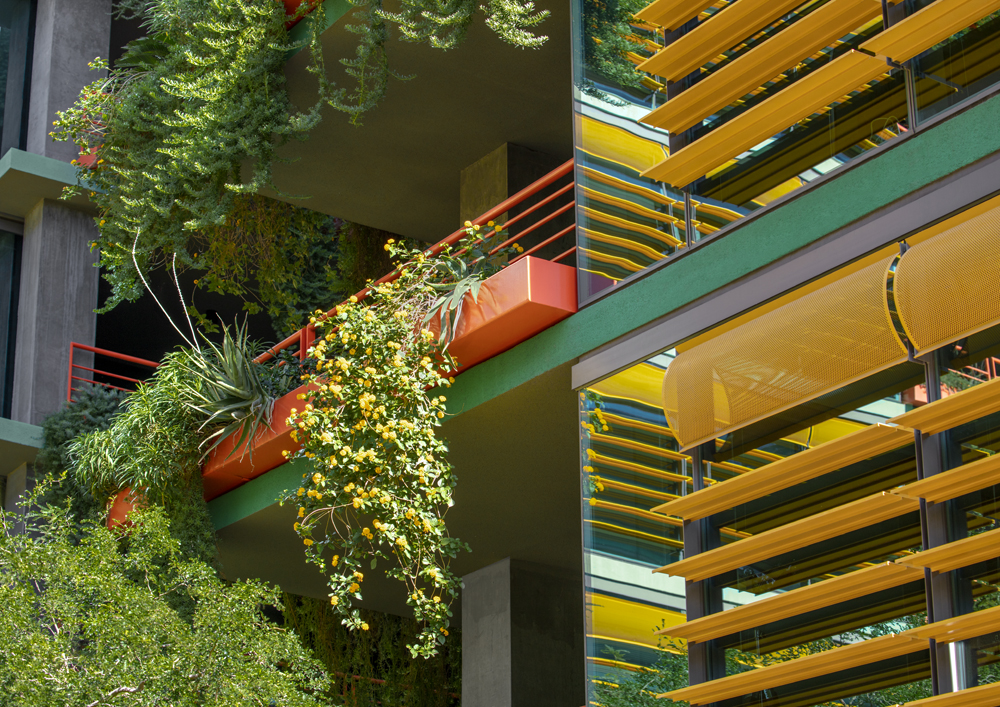
Self-contained Irrigation at Optima Sonoran Village

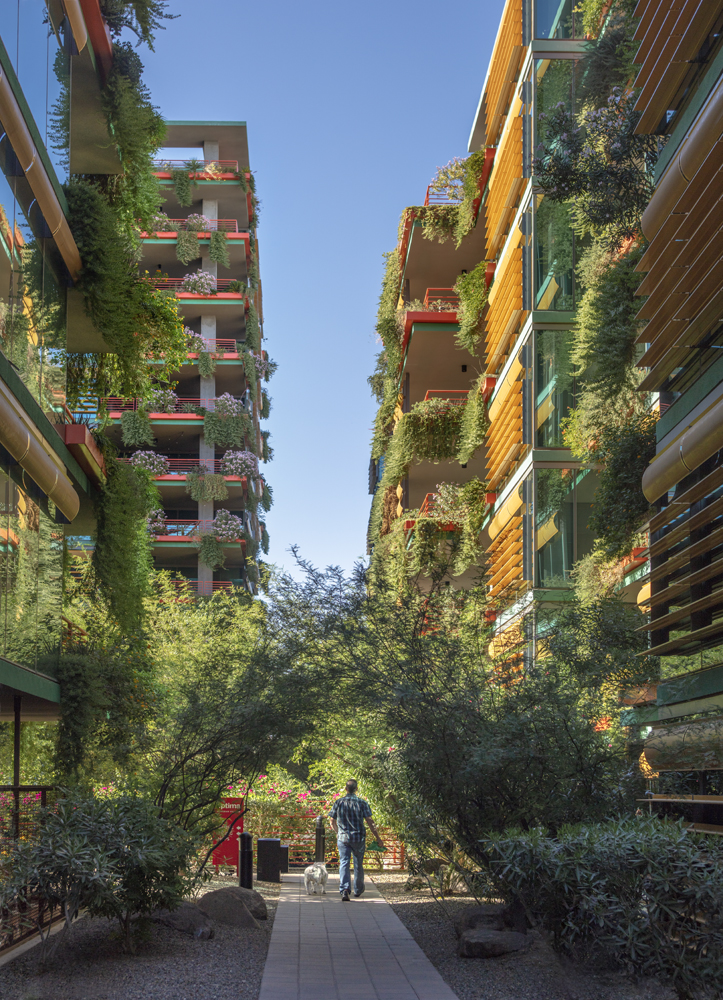
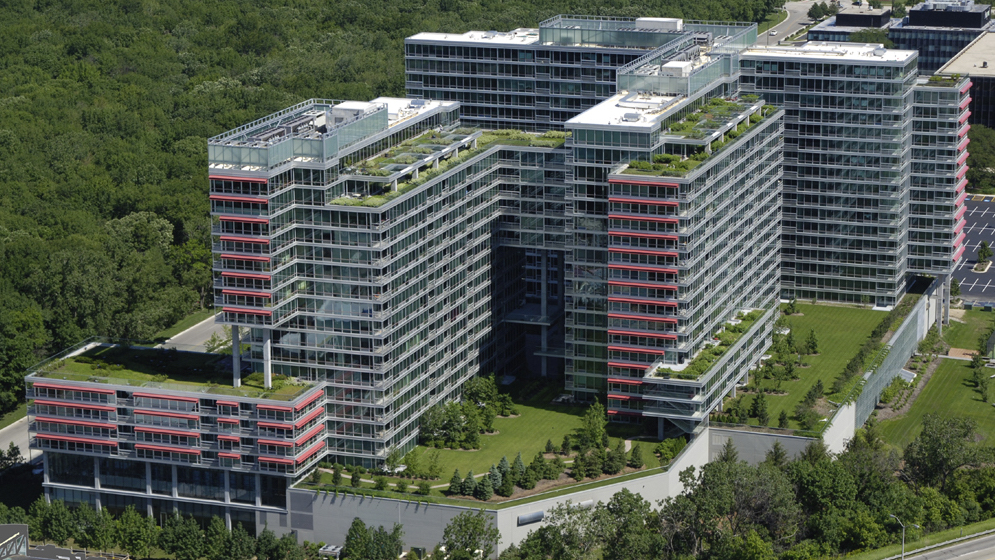
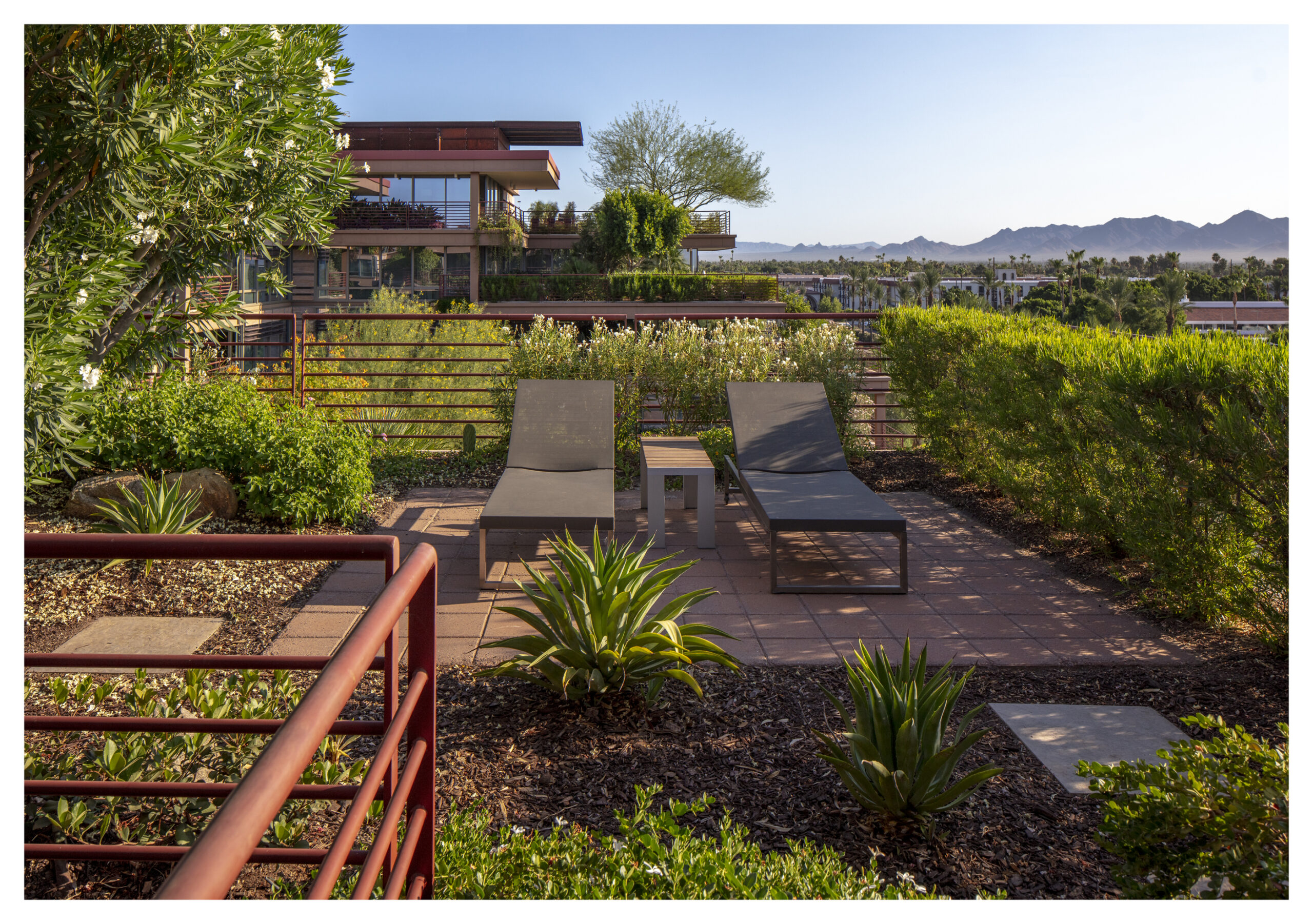
At Optima Kierland Apartments and Optima Sonoran Village, our self-containing irrigation and drainage system enables a palette of vibrantly colored plants at the edge of each floor to grow both up and over the edge of the building, culminating in a beautiful rooftop garden. Thanks to the innovations of many civilizations before us, these gardens are easy to maintain, and a beautiful natural respite for all our residents to enjoy.
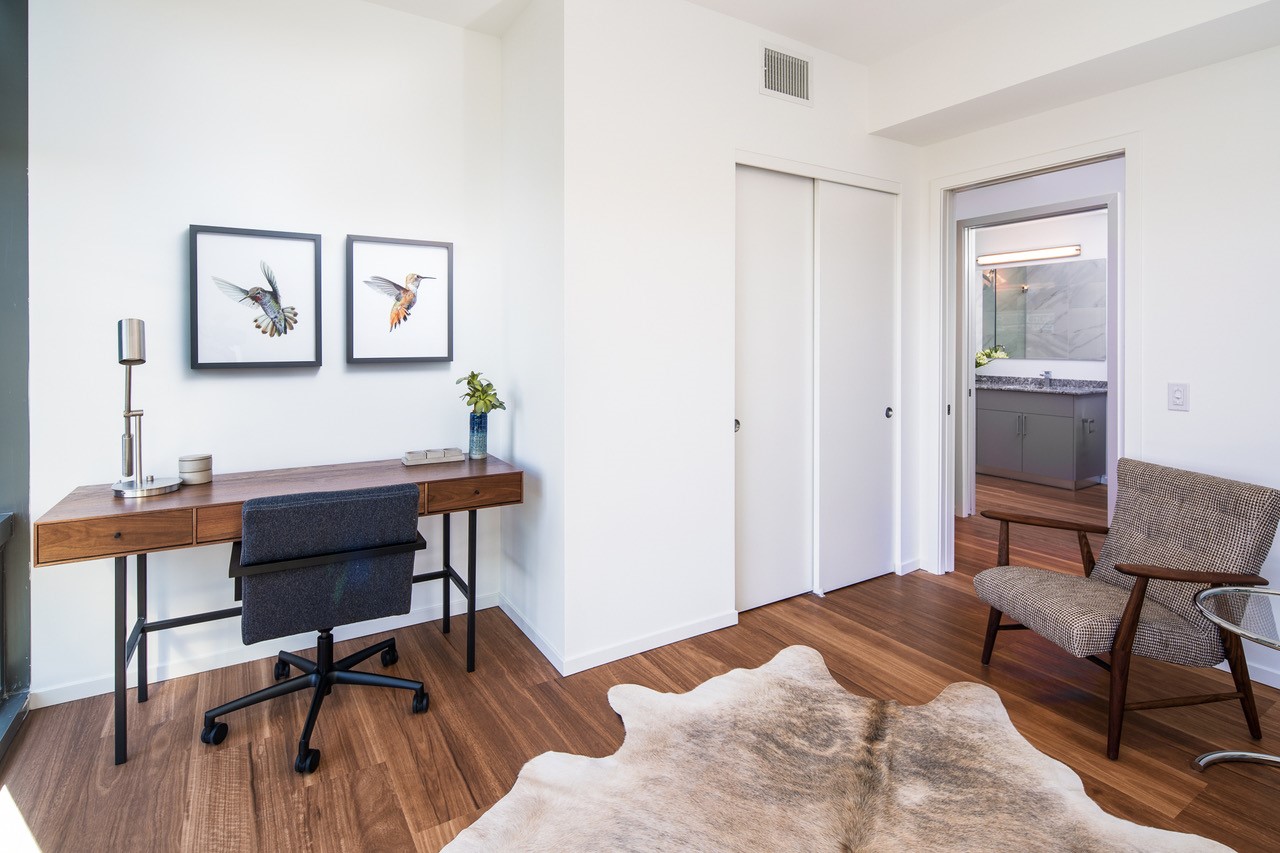
Working From Home at Optima

At Optima, we’ve always been dedicated to building communities that provide a balanced lifestyle for our residents. From carefully curated retail partners to an abundance of outdoor space, we thoughtfully incorporate elements that respond to the needs of our residents. With the recent rise in remote working, and in celebration of National Work from Home Week, this week we’re honing in on how residents can best utilize Optima communities to support their remote productivity.

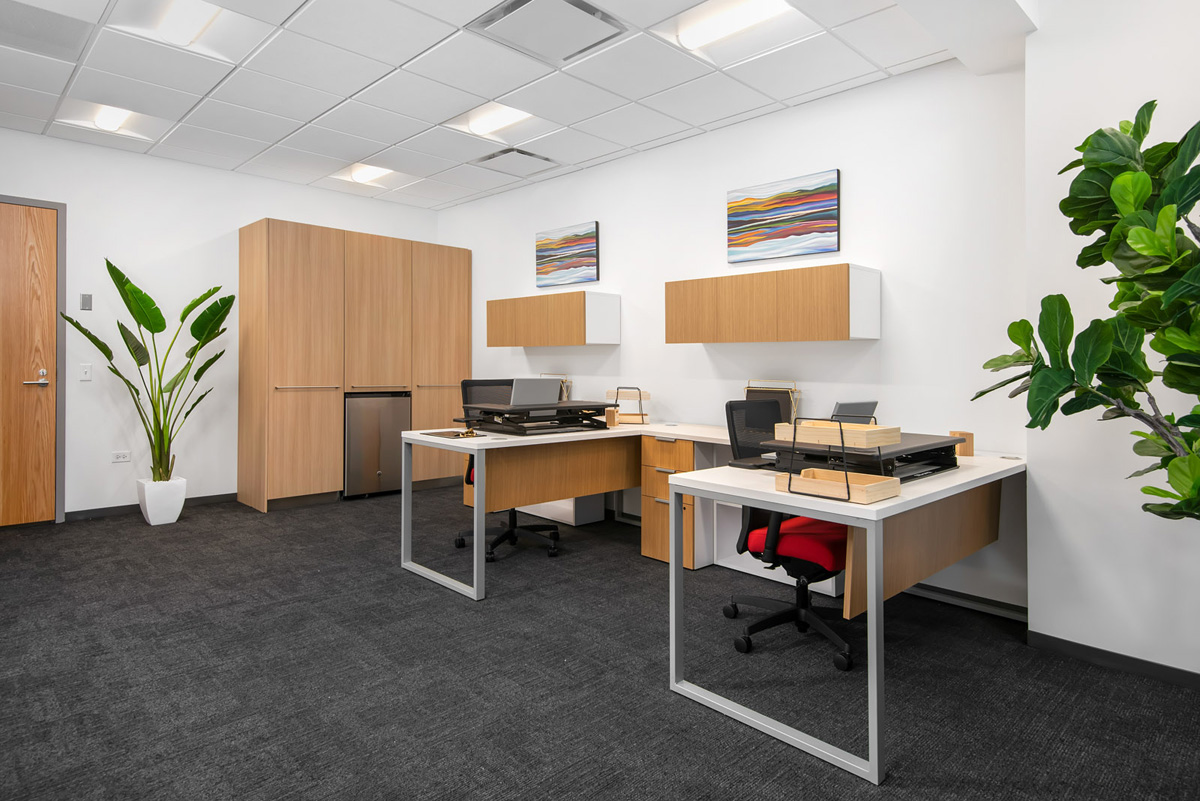
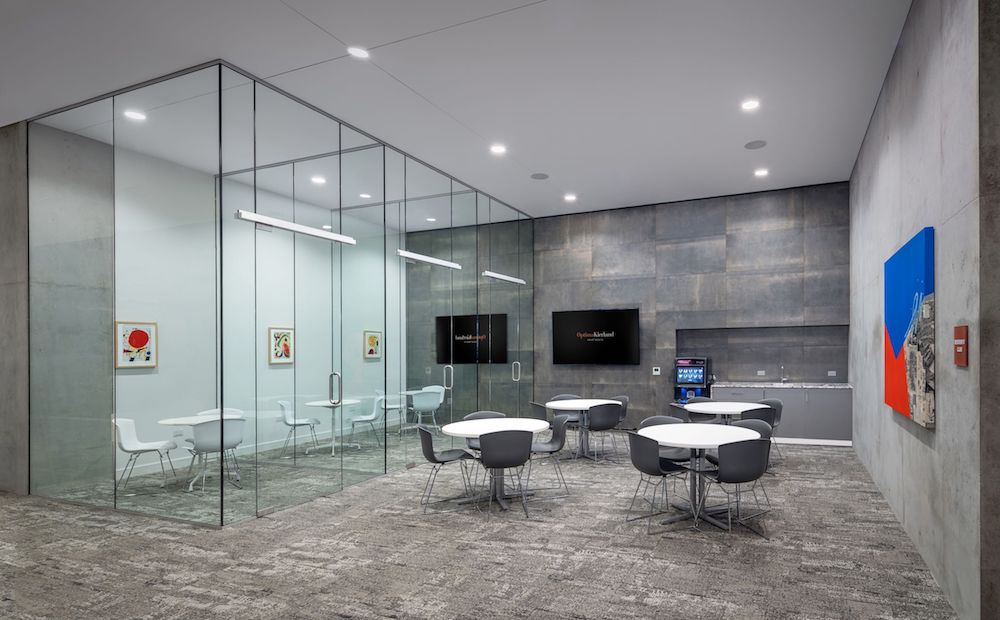
Private huddle rooms and work tables at Optima Kierland Apartments

Dedicated, At-Home Work Spaces

Across all of our properties, from Arizona to Illinois, we incorporate a dedicated work-from-home space within each apartment. As we learned earlier this year, curating a distinct work zone at home improves productivity and limits distractions. The designs of our buildings also lend themselves to staying focused. The abundant floor-to-ceiling glass windows in each Optima building invites in plenty of natural light. Studies show that exposure to sunlight helps regulate sleep cycles, and our well-restedness therefore contributes to more satisfied, productive workdays. And the beautiful views in both Arizona and Chicago don’t hurt either. 

Business Suite at Optima Signature

Business-Centric Amenities

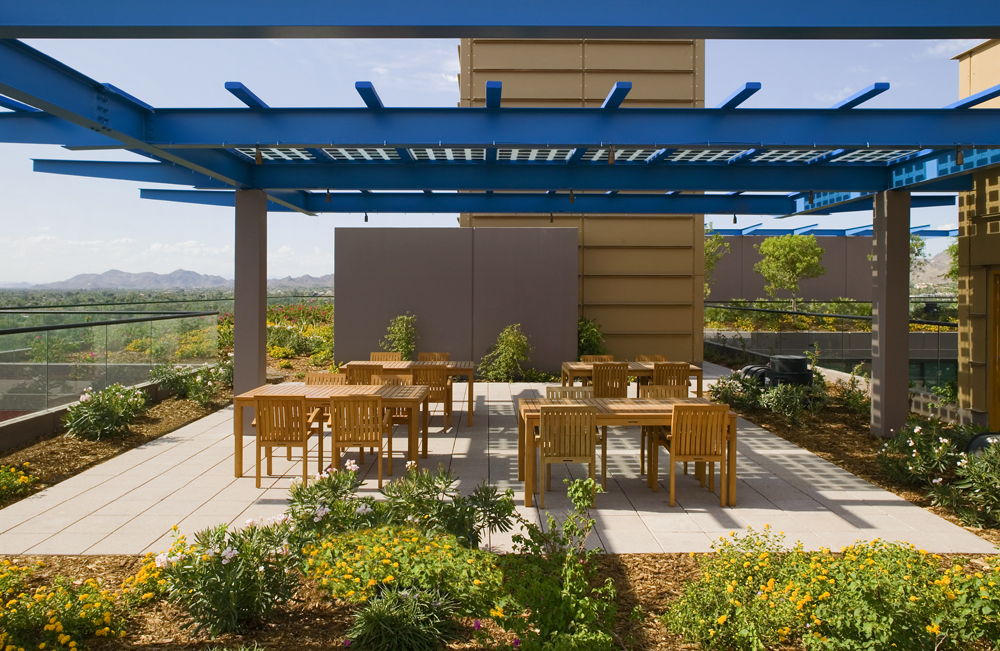
If ever you need a change of pace from your in-home workspace, our communities offer an abundance of business-centric amenities to meet your every need. Optima Signature, Optima Sonoran Village and Optima Kierland Center all feature on-site conference rooms and business rooms, and the new tower at Optima Kierland Apartments even features private huddle rooms with work spaces. Optima Signature and Optima Sonoran Village also both offer their own on-site business suites

Celebrating Live-Work-Play Balance

Optima’s on-site retail tenants offer the perfect midday spot, whether it’s to break up your workday or to provide a setting for your next lunch meeting. At Optima Signature, Egg Harbor Cafe provides not only the perfect place for lunch (meetings), but you can meet over breakfast too! Meanwhile, at Optima Sonoran Village, Kaleidoscope Juice is the perfect place for a quick break or a longer breakfast or lunch occasion. Or, for those having a busy day, Optima Signature also boasts onsite concierge and room service, ready to serve all your needs.

At times, work can be stressful, but we’re here to help make each work day easier, more comfortable and more enjoyable. 

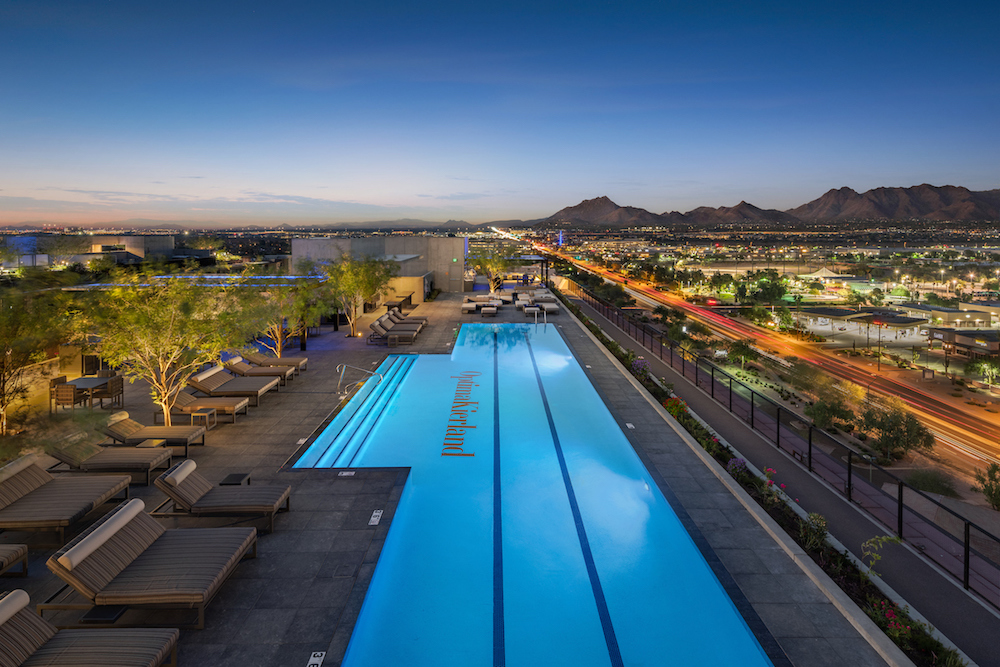
The Sky Deck at Optima Kierland

When you live in the middle of a gorgeous desertscape, nothing beats scenic views of the surrounding mountains. Optima Kierland is nestled in the middle of North Scottsdale’s urban core, but we still wanted residents to relish the nearby nature. Each building at Optima Kierland includes a signature Sky Deck, which doesn’t just include spectacular views; they also house a range of unique, extensive amenities.

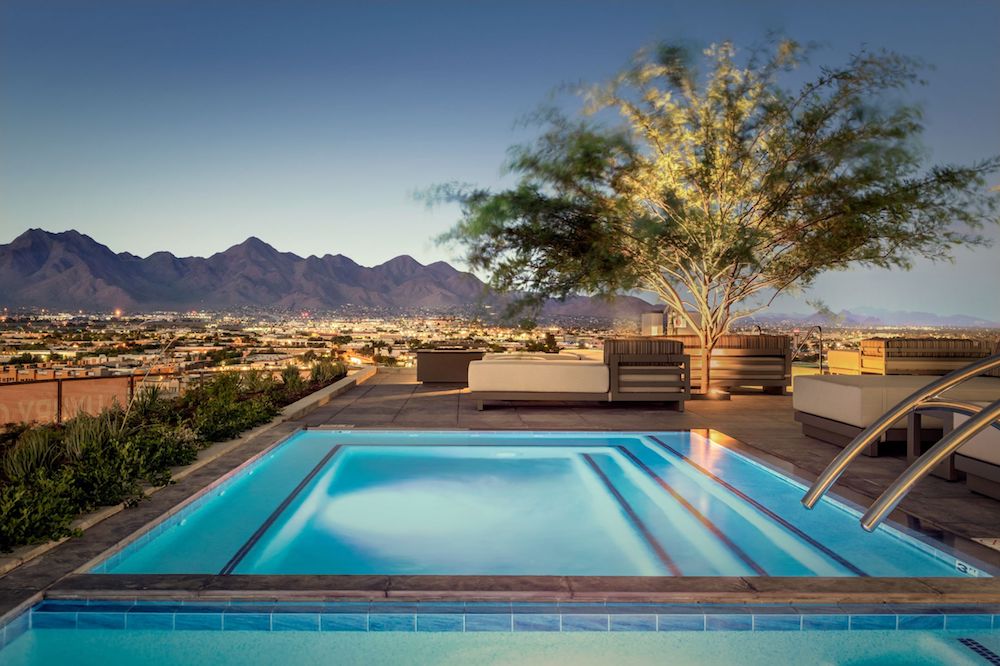
The Sky Deck at 7180 Optima Kierland

It’s no secret that amenity spaces are a growing expectation in the real estate world, and we pride ourselves on innovating with our amenities while also paying homage to the surrounding environment. Each of Optima Kierland’s towers overlooks underpassed, panoramic mountain views, and the amenity spaces keep residents active, inspired and entertained. Signature Sky Deck amenities include heated lap pools, lounge areas, and glass-enclosed sauna for a spa-like experience. Spas and a rooftop yoga studio offer additional methods for a little R&R. For al fresco fitness, the new Sky Deck’s rooftop running and walking tracks.. And for entertaining friends and family, the fire pits, barbecues, bars and outdoor theaters are perfect for coming together. 

Across all four buildings in Optima Kierland, each Sky Deck exemplifies our dedication to inventive, distinctive amenity spaces that leave a lasting impact on our residents. Because our communal spaces are focused on both physical and emotional health, they promote a balanced, engaging and fun lifestyle. For us, amenities aren’t just selling points; they allow us to truly improve the lives of those living in our spaces. 

The Phoenix Desert Botanical Garden

When Optima expanded to Arizona in 2000, we were enthralled by the new frontier and its unique climate. To this day, we continue to be inspired by the desert landscape — and there’s no better place to indulge that passion and find new inspiration than at the Phoenix Desert Botanical Garden. The gardens, which are located just a short drive from Optima Biltmore Towers in Phoenix, and Optima Sonoran Village and Optima Camelview Village in Scottsdale, are also perfect activity for our residents.

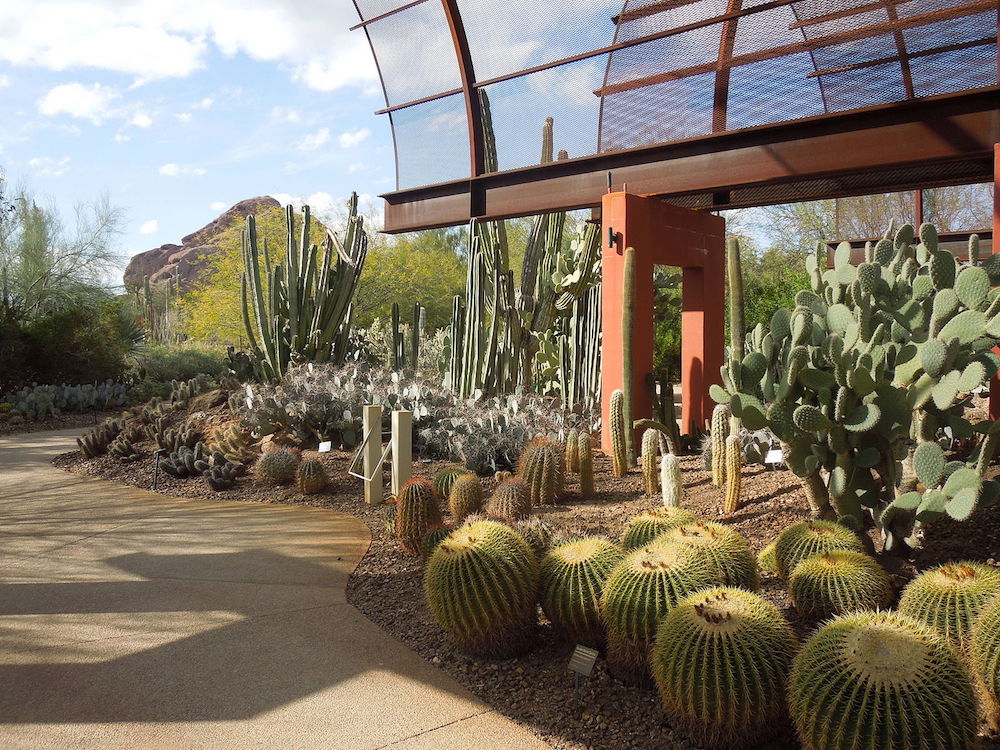
The Phoenix Desert Botanical Garden

The Desert Botanical Garden

The Desert Botanical Garden in Phoenix is a 140-acre sprawling wonderland of flora and fauna nestled among the red rocks of the Papago Butte. Visitors can see thousands of species of towering cacti, lush trees, alluring succulents and brilliant flowers from not just Arizona, but all over the world. Overall, 50,000+ plants cover five thematic trails, and the garden is proud to care for 485 rare and endangered species among that number.

The garden was first established back in 1939, when a small but passionate group of Arizonians were compelled to act and preserve the beautiful desert environs. Among them was Swedish botanist Gustaf Starck, who rallied others to the cause with a posted sign reading “Save the Desert.” Eight decades later, Desert Botanical Garden has expanded, thanks to the generous investment and care of many. Alongside its impressive collection of plantlife, the garden also offers specialized tours, special events, seasonal exhibits, concerts, family exhibits and two places to dine: Gertrude’s restaurant and the Patio Cafe. 

The Desert Botanical Garden has reopened during COVID-19 with increased safety precautions in place. Tickets must be reserved in advance, but the garden’s limited occupancy amidst its sprawling gardenscape makes it the perfect place for socially distanced fun. Whether you’re looking to reconvene with nature or just while away the day in a beautiful setting, the Desert Botanical Garden is the perfect place to find inspiration and relaxation.

Modernist Graphic Design

Modernism is one of our cornerstones at Optima; it informs everything from our designs to our methodologies. And though the movement is often talked about in reference to architecture, art, sculpture and interior design, Modernism also had a significant impact on graphic art. Today, we’ll dive into Modernist graphic design and its impact on visual communications.

Changes in Vienna

By the end of the 19th century, artists were growing tired of traditional, conservative forms of art. In Vienna, a group of artists led by Gustav Klimt dubbed themselves the Vienna Secession and broke away from the artistic institutions in Austria’s capital at the time. The group explored uncharted territory in form, composition and expression, sparking similar experimentations in other nearby countries such as France and Germany. Rich paint strokes and realism translated into flat color and stylistic typography, expressions that would pave the way for graphic art. 

Army recruiting poster, designed by James Montgomery Flagg, 1917
Army recruiting poster, designed by James Montgomery Flagg, 1917. Image in public domain.

The World at War

When World War I began, graphic design was already used for commercial, corporate and aesthetic purposes. Its new role would be political, used in posters and propaganda during the war. Advancements in mass color printing allowed for efficient production of messages to raise funds, encourage enlistment and boost morale. The turmoil and challenges faced in both World Wars would ultimately inspire the first wave of true Modernism within graphic design. 

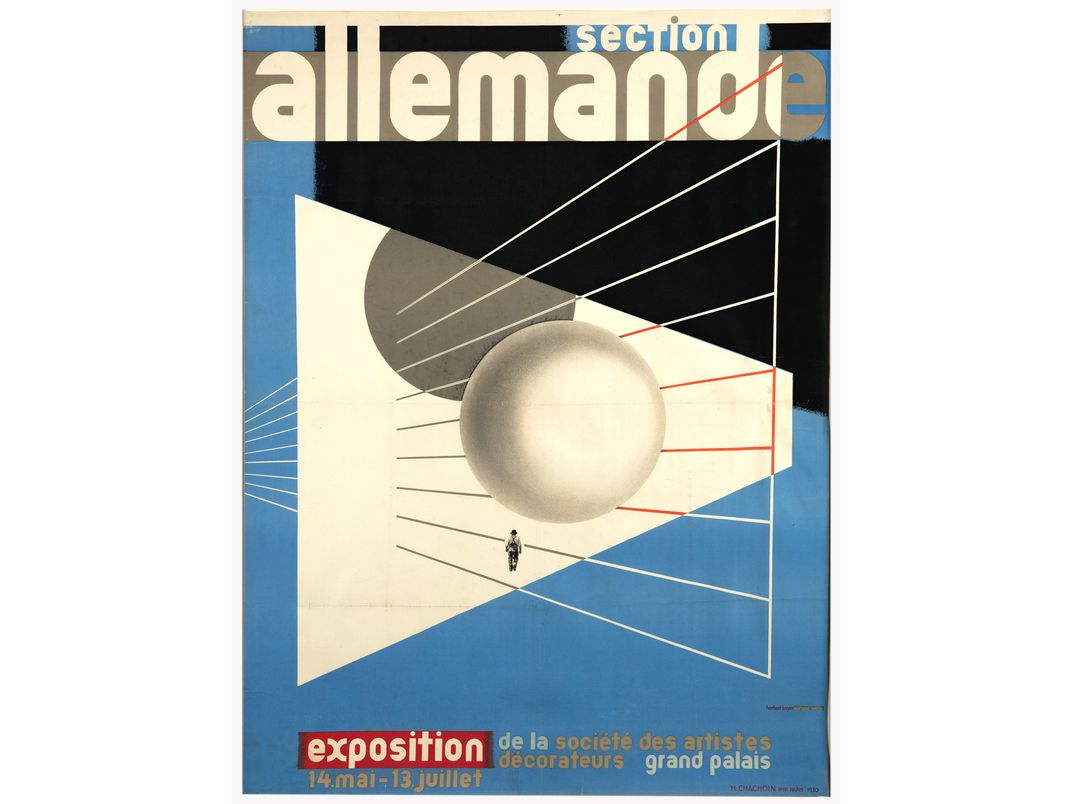
Poster designed by Herbert Bayer, 1930
Poster designed by Herbert Bayer, 1930. Credit: kitchener.lord on Flickr Creative Commons, CC BY-NC-ND 2.0 Deed

Modern Experiments

Across Europe and in America, graphic designers took inspiration from broader artistic movements such as Cubism, Futurism, De Stijil and Surrealism. In Germany, the Bauhaus movement also had a significant impact on graphic design; thick lines, primary colors and disrupting white space were just as striking in 2-D format as they were in architecture or sculpture. Eventually, Modernist design was defined by abstract expression, bold type and primary colors and shapes. These designers approached the work objectively, emphasizing the rational over the expressive (and emphasizing the classic Modernist belief that form follows function). 

As the Nazis rose to power in the 1930s, Modernist experiments in all practices were denounced, and many artists, architects and designers immigrated to the United States. Although Modernist design was disrupted in its growth, it remains one of the most impactful movements in the history of graphic design. Even our own website has elements of Modernist designs with asymmetry, primary colors and bold typography. Every facet of Modernism inspires what we do, from architecture and sculpture, to the graphic arts. 

The Optima Connect Program

We believe that building community extends beyond architecture and design. Community is a crucial component to how we design our properties — ensuring that residents and neighbors alike feel more connected through what we do. In support of this, we created the Optima Connect program, which encourages truly holistic community connections.

Optima Connect is a program that offers exclusive benefits and discounts at local businesses. Like our Optimized Service program, the goal of Optima Connect is to provide an added everyday convenience that brings ease, comfort and joy to our residents. The program also serves to bolster local businesses and ramp up support, creating a friendly community ecosystem. 

Through Optima Connect at Optima Sonoran Village and Optima Kierland Apartments, residents can enjoy exclusive and luxury benefits such as BOGO tickets at Ballet Arizona, discounted fitness classes and up to 20% off at nearby restaurants — just to name a few. To peruse the full list of Optima Connect benefits available to Optima Sonoran Village residents, visit here.

Supporting community growth and connection amongst our residents and neighbors is something we care deeply about at Optima.  As Jamie Springer, Regional Manager in Arizona, explains:

It’s really made us a stronger part of the community. It’s a dual partnership that gives discounts to our residents and helps promote local businesses. We seek Optima Connect partners for events — especially virtual events right now, like mixology and cooking classes — to introduce residents to nearby businesses. We want residents to feel connected to the community outside of our buildings and create a neighborhood feel with places they can walk to.

From the Optima Connect program, to the careful and thoughtful selection process that goes into choosing retail tenants at our properties, we know that our relationship to the spaces around us deepens our sense of belonging. 

A Brief History of the Plaza

At Optima, we’re believers that exceptional design has the power to inspire awe and wonder, and to enhance the human experience. One such component of design, the plaza, is a perfect example of this: designed as an open, public space, plazas create hubs for community activity and human connection. To learn more about the role this seminal piece of design has in creating public space, we’re diving into the history of the plaza.

Plaza Mayor, Madrid. Credit: Francisco Anzola on Wikimedia Commons, licensed under the Creative Commons Attribution 3.0 Unported license

The First Plazas

From colonial cities in Spanish America to the Spanish East Indies, there were several types of plazas serving as the center of community life. The plaza mayor often referred to the space centered between several administrative, religious and government buildings. The plaza de armas, meanwhile, served as a rallying space for troops, and the plaza de toros translates, quite literally, to bullring.

Perhaps the most significant example of such plazas is the Plaza Mayor in Madrid, Spain. Dating back to 1619, the plaza was constructed during the reign of Philip III by architect Juan de Herrera. Though the plaza saw several disasters since then and was reconstructed an equal number of times, it remained (and still remains) a pivotal public fixture in Madrid. Plaza Mayor has served many diverse purposes, from being the site of a marketplace, to bullfights, to military parading ground, to public executions, to even trials during the Spanish Inquisition and crowning ceremonies. 

Evolving over time to a space of leisure, the Plaza Mayor is now the site of outdoor cafes, restaurants and, inevitably, tourists. It draws people in with yoga workshops, concerts and festivals — a far cry from its dabbles in militant history. The Spanish plaza is also related to the Italian piazza, with both belonging under the umbrella term “town square,” which includes city squares, plazas, piazzas and city greens.

The Modern Day Plaza

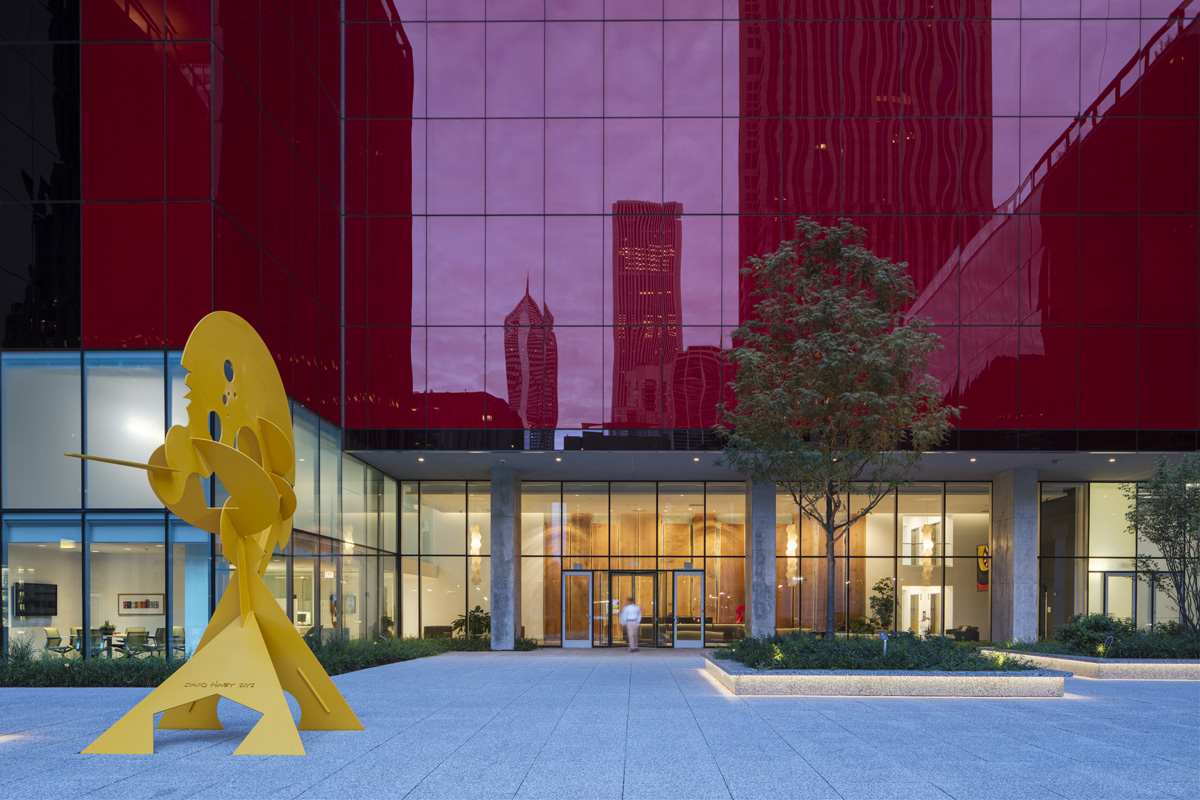
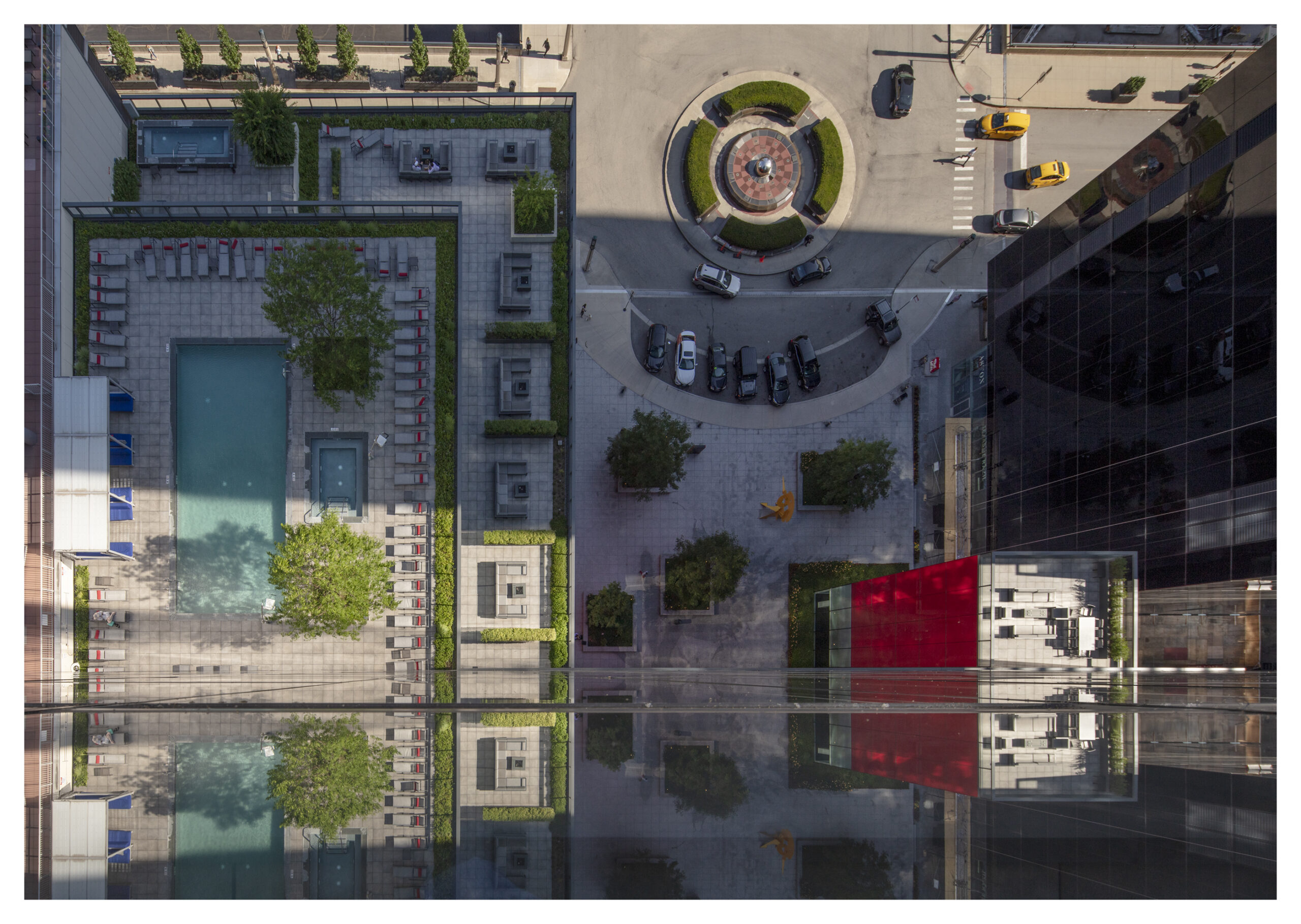
Following in the footsteps of Madrid’s adaptable Plaza Mayor, the modern day plaza can refer to a multitude of spaces with a multitude of purposes. Within our own portfolio, a prime example of a plaza is at Optima Signature and Optima Chicago Center. By sliding the podium of Optima Signature North and juxtaposing Optima Chicago Center to the West and South, the buildings create a dynamic plaza space, which features lush landscaping, planters and benches. Kiwi, a large-scale sculpture designed by Optima founder David Hovey Sr, adds to the visual energy of the space. 

Aerial view of the plaza at Optima Signature and Chicago Center

Now, plazas refer to open spaces within neighborhoods that boost economic vitality, pedestrian mobility and safety as well as providing aesthetically pleasing areas. No matter the interpretation of the word, there’s always one belief at the core, and that’s gathering and celebrating community. 

Pickleball 101

With lifestyle integral to condominium and apartment living, at Optima we love to amp up our amenities to the next level. We’re always on the lookout for cutting edge trends and amenities that will cater to our residents’ lifestyles and interests. So when we noticed the increasing popularity of pickleball in the southwest, we happily adapted to incorporate an indoor pickleball court at our latest project, 7180 Optima Kierland. For those that aren’t familiar with the sport, here’s a little pickleball 101:

Pickleball 101

Visually, pickleball appears quite similar to tennis. Played on a badminton-sized court with a modified tennis net, the sport is a combination of many elements of tennis, badminton and ping-pong. Players use a paddle and a plastic ball with holes, and can choose to play as singles or doubles. Originally, pickleball paddles were made with wood, but have evolved as the sport has gained popularity to be made primarily of lightweight composite materials such as aluminum and graphite. As for the holey ball, holes number 26-40 and the ball can come in a variety of colors but must be solid to meet official international specifications.

Playing Pickleball

In gameplay, the ball is served with an underarm stroke below waist level in an upward arc aimed diagonally. Initially, only the serving side may score a point. A point is earned when one side commits an infringement of the rules, or a fault. Faults include not hitting in the opponent’s diagonal court, not hitting beyond the net, not hitting the ball before the second bounce, hitting the ball out of bounds, among others. Serving alternates players, and points can be scored equally throughout the remainder of gameplay. Watch a full video tutorial on playing pickleball here.

A Brief History of Pickleball

Why call it pickleball? It goes without saying that no pickles are actually involved in the sport. Originating in 1965 on Bainbridge Island, pickleball was the DIY invention of three dads attempting to reinvigorate summertime activities but lacking in proper supplies. The three dads, Joel Pritchard, Bill Bell, and Barney McCallum, claim two separate origin stories for the sport’s name. According to Pritchard’s wife, it was named after pickleboats. According to McCallum, the Pirchards had a dog named Pickles, who would chase after the ball, and served as inspiration for the new game’s name. 

Pickleball is truly a sport for everyone, and we hope to cultivate new pickleball fanatics in our communities with the unique amenity.

A Brief History of the Green Roof

A cornerstone of Optima design is the integration of sustainable and enjoyable green roofs. Since our inception, we’ve honed our techniques and evolved our green roofs to be cutting edge additions to each community and its environment. As we reflect on the growth of our own approach to the craft, we’re reflecting on green roof evolution overall with a brief history.

The green roof at Optima Biltmore Towers

A Quick Background on the Green Roof

A green roof (also sometimes called a living roof) is a roof of a building that is partially or completely covered with vegetation. This vegetation is often supported with a growing medium and planted over a waterproofing membrane, and can include additional layers such as a root barrier, drainage and irrigation systems as more complex components. Green roofs are aesthetic and also highly functional building components, serving to absorb rainwater, provide insulation, create a habitat for wildlife, lower urban air temperatures and mitigate the heat island effect. 

The green roof at Camelview Village

A Brief History of the Green Roof

Green roofs date back thousands of years. In ancient times, green roof structures began as sod roofs above caves, with “rooftop” earth and plantlife used for agricultural, dwelling and ceremonial purposes. The downfall of these sod roofs was a lack of protection against burrowing animals and lack of waterproofing ability. Inarguably, the most famous (and most sophisticated) ancient green roofs were the Hanging Gardens of Babylon, one of the Seven Wonders of the Ancient World, constructed around 500 B.C. Built over arched stone beams, the hanging gardens were indeed waterproofed by the inventive layering of reeds and thick tar. 

Modern green roof technology blossomed in the 1960s, when Germany pioneered new, reliable technology that provided sophisticated irrigation and protection against roof ingress. With its invention, Germany was able to market and develop the new green roof technology on a large scale like never seen before.

There are two types of green roofs: intensive and extensive. Intensive green roofs have deep soil layers, widely varied plantlife and increased weight-bearing and stress load (therefore requiring higher maintenance). Extensive green roofs have thin soil depth and less layers, a simplicity that allows for easier maintenance and makes them the more accessible option. In the 1980s, the widespread introduction of extensive green roof technology further propelled the practice. The dynamic and customizable technology means that buildings have the option of choosing which green roof is right for them, and therefore a larger population can take part in the sustainable practice of growing green roofs.

Green roofs have certainly evolved since their inception, and we can’t wait to see what new innovations in the coming years will bring for design, architecture and sustainability. 

Our Beliefs: All In, All the Time

Our beliefs are the principles that unite us, that inspire us each and every day to work toward a shared vision. One of those beliefs — all in, all the time — speaks to our unparalleled dedication, drive and willingness to do everything we can in the pursuit of exceptional design, from the small details to the big picture. We’re constantly at the drawing board with all cylinders firing, ensuring that what we deliver is in its best, most efficient form. That’s Modernism, and that’s Optima.

Our ability to commit so fully is made possible by our vertically integrated business model. Tired of the traditional red tape within real estate development companies, Optima founder David Hovey Sr. wanted to do something different, to start a company built around its dedication to exceptional design. We’re as passionate about the small details as we are about the big picture, and we operate at a pace — and with degrees of precision and attentiveness — that are unparalleled in the real estate development world. We invite the challenge of doing something that others say cannot be done, because we know that it can. 

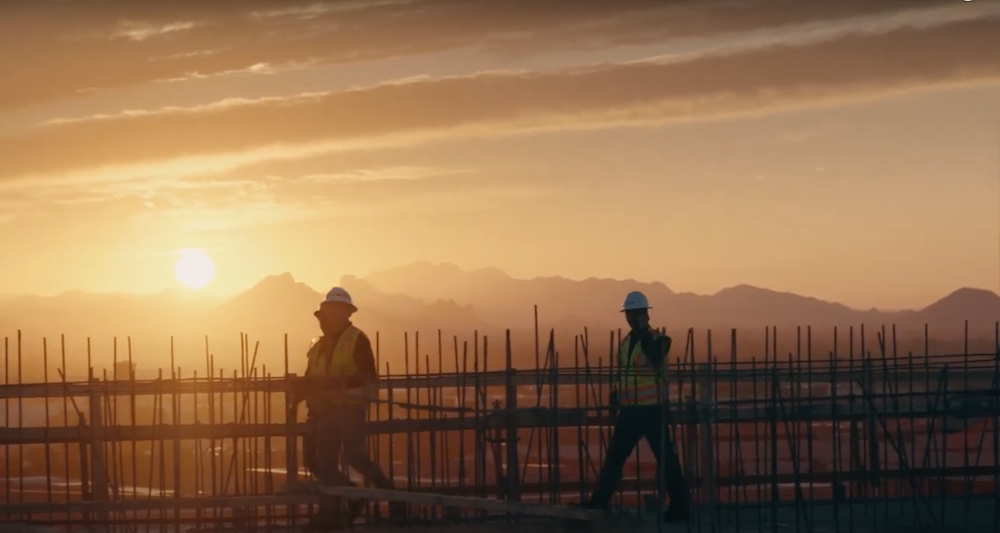
Thus far 2020 hasn’t been short of challenges, but our team has faced them head-on, from staying inspired to keeping focused through COVID-19. To keep Optima Kierland construction on track, our Arizona construction team worked tirelessly. They adapted through increased safety measures, adjusted schedules and constant communication to make sure everything still ran smoothly.

No matter the situation, we are adaptable and equipped to respond to challenges as they arise. More than just committed to a shared vision, we’re nimble and quick on our feet, bringing unique and innovative solutions that yield better results. To be all in, all the time — it’s not just built into our DNA, it’s built into how we navigate our work and our world every day.

person name goes here

Maintenance Supervisor

Glencoe, IL


    Acceptable file types: *.pdf | *.txt | *.doc, max-size: 2Mb