The design of interior space doesn’t end with architecture. A key component to creating engaging environments at Optima is the inclusion of art — particularly sculpture. Optima co-founder David Hovey Sr., FAIA explores new ways of expressing space, form and function through his monumental, three-dimensional sculptures in brilliantly-hued steel, including Duo, ultimately adding a new vibrancy to our carefully curated communities.
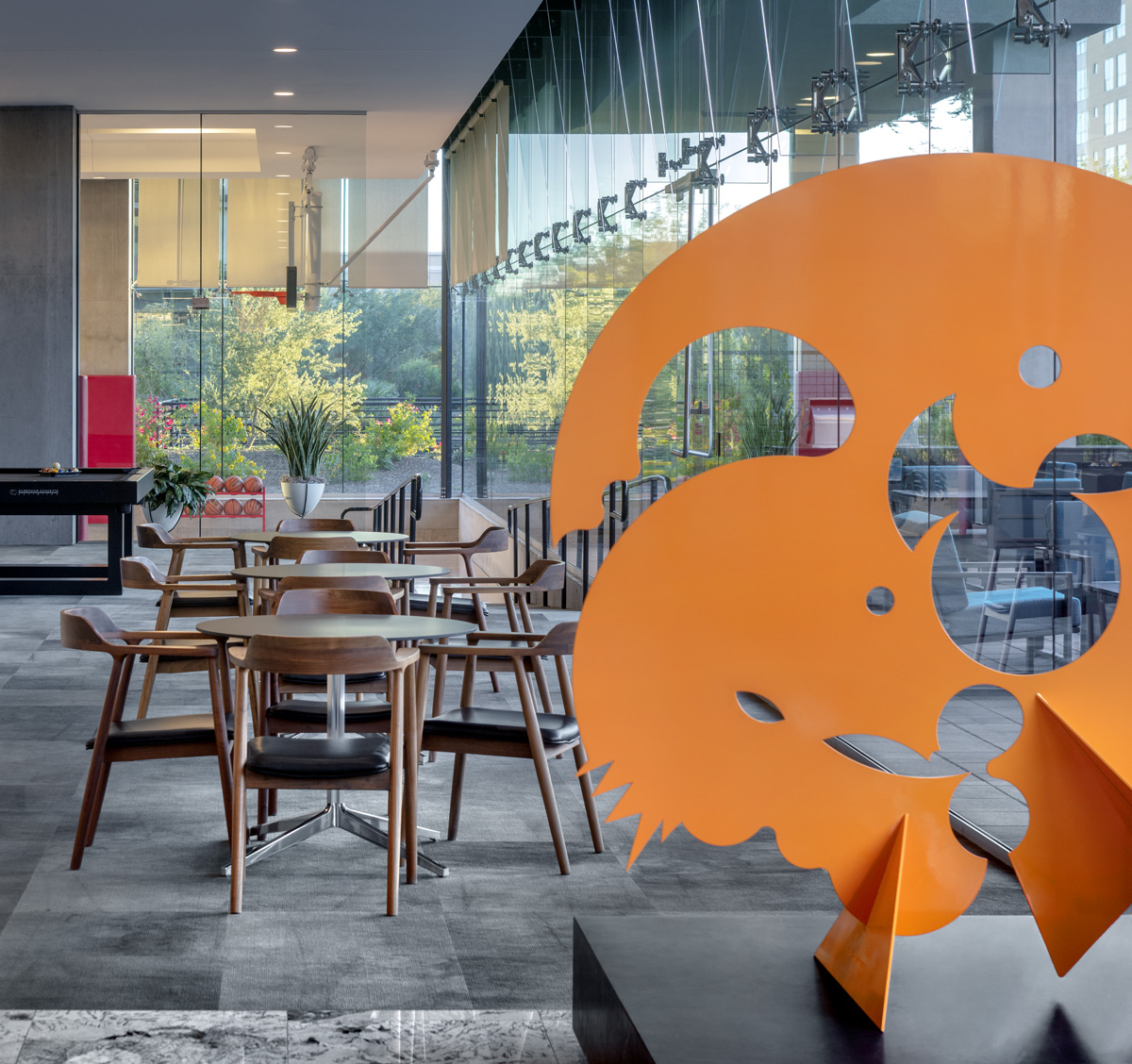
Duo at the 7160 Optima Kierland Residence Club, Scottsdale, AZ
Originally created as a large-scale piece, Duo is a striking and abstract silhouette that evokes the image of a man and woman gazing into one another’s eyes. Hovey states that often, he doesn’t approach a piece of steel with the intention of drawing out specific imagery. Rather, he imagines how to explore form and function through the size, shape, voids and shadows, lights and sounds that emanate from the manipulation of the material. With Duo, Hovey sought to craft a study of duality and opposites through curved lines, fierce angles, symmetry and asymmetry. The human-like quality that resulted is part of the intriguing and surprising discovery from the sculpture’s true expression.
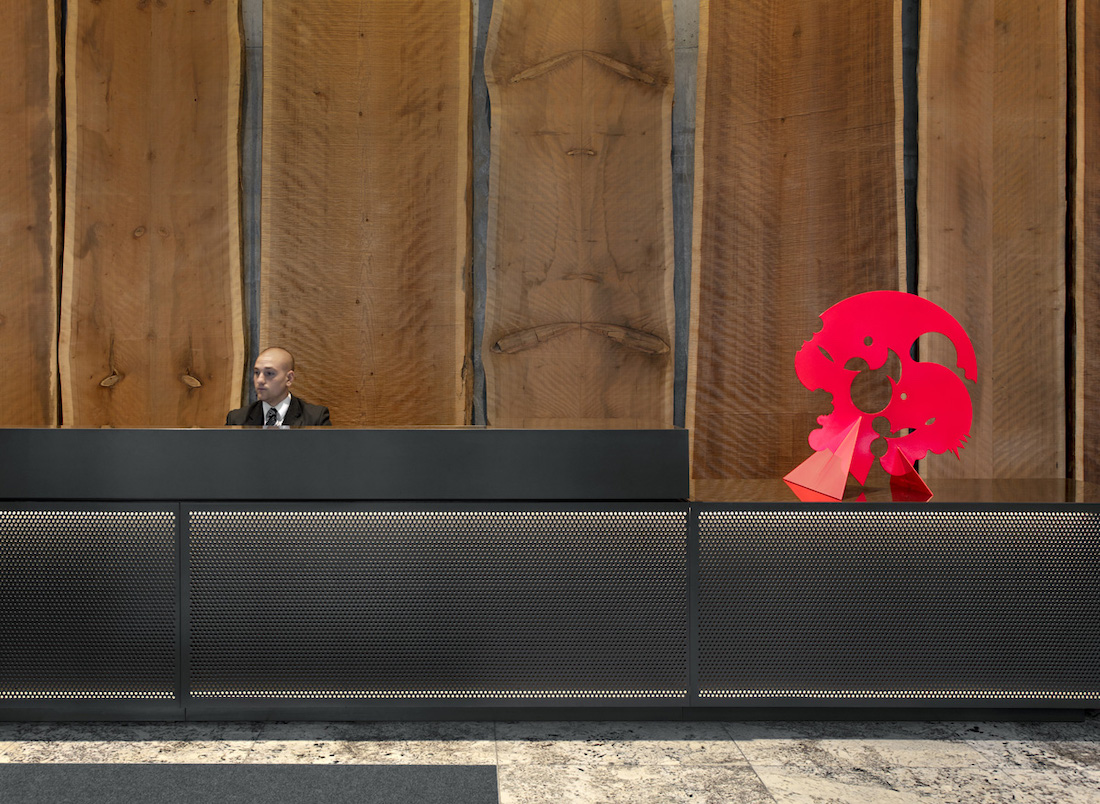
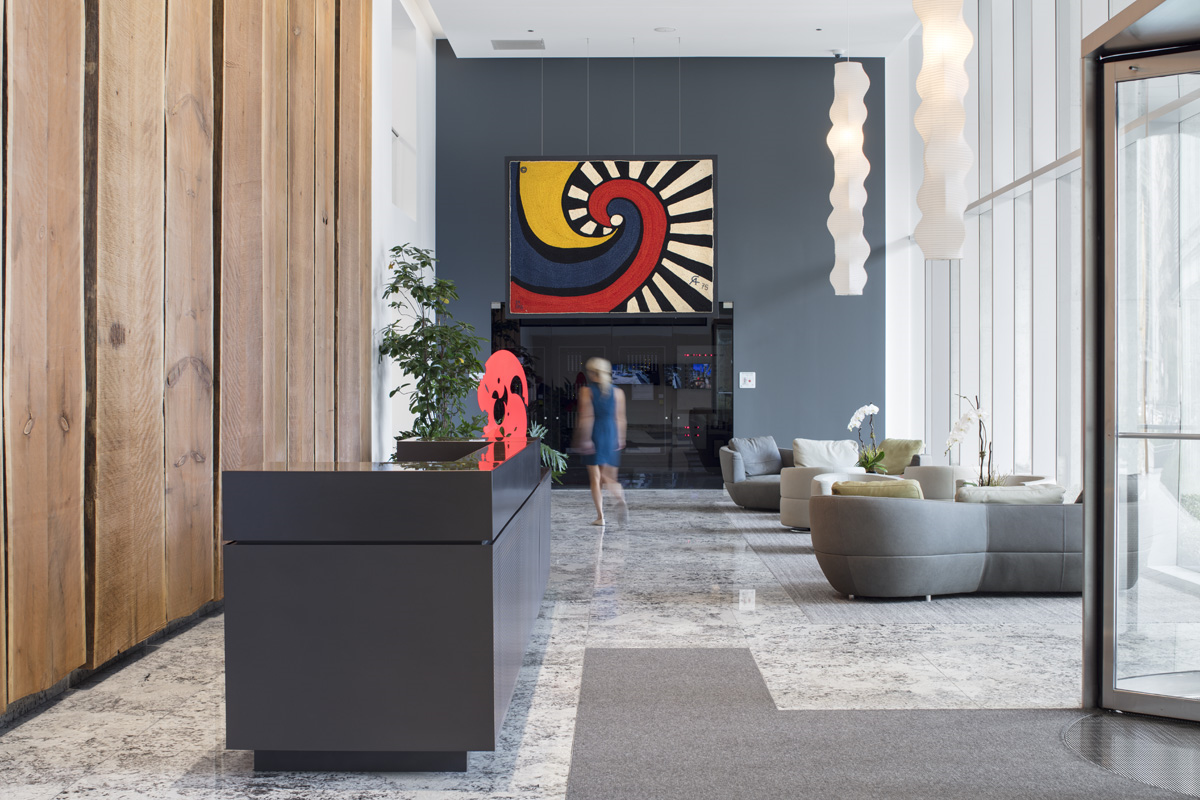
Duo now takes many sizes and colors, with one iteration adorning the front desk at Optima Signature in a brilliant pop of red. Not only does the inclusion of sculpture add a new dimension to the spaces that we design, but it allows a new avenue for exploration, discovery and expression.
To fuel our vertically-integrated business model, Optima is composed of strong, multi-faceted teams that ensure an effective and efficient workflow throughout our projects. Ever since our inception, we have recognized the benefits of harnessing collaborative teams, and we’re not alone. According to Forbes, productive team environments are the new vision for successful and satisfying employment. Adaptability, trustworthiness and openness are key components in coordinating team actions and solving challenging problems.
Now more than ever, teamwork is recognized as a critical part of successful work culture. Our construction team at Optima is no exception; the team is currently working on two buildings in Arizona, just wrapped up another project ahead of schedule and is growing in Illinois as we prepare for upcoming projects in the Chicago market.
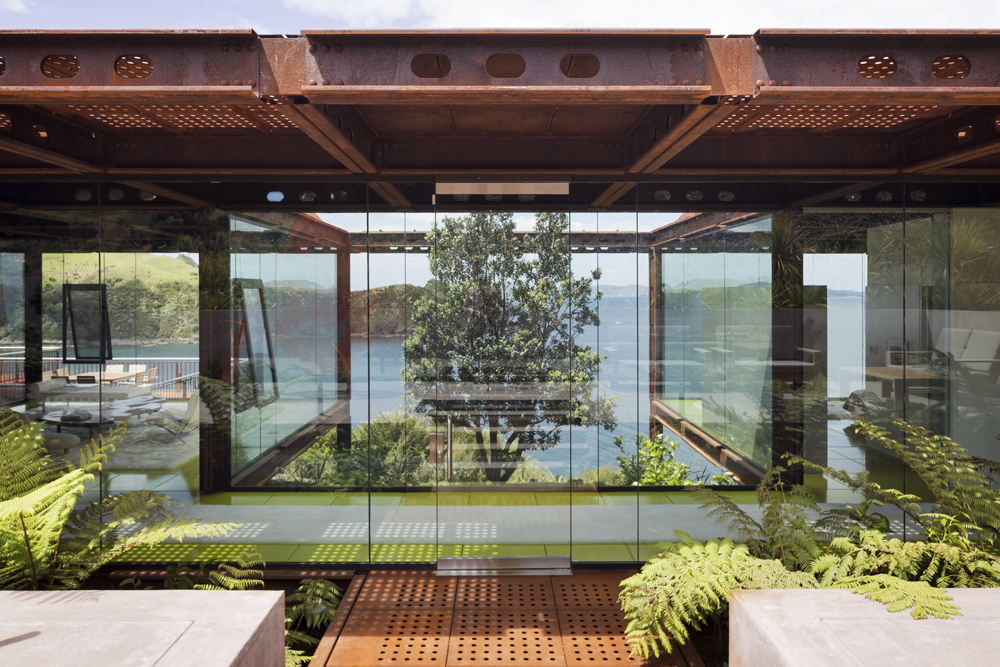
Construction at Whale Bay House, New Zealand
When asked about what makes their team amazing, here are some of the things our construction team members had to say:
“We understand what the needs of the job are and strive towards a common goal to get things done. If someone makes a mistake, they own the mistake and fix it themselves so they learn and grow from the experience.”
“We all pitch in and help one another. If one of us has a problem, we all have a problem and will work together to find an answer.”
“I love the team we have gathered; they are knowledgeable and willing to learn.”
“I absolutely have learned leaps and bounds! I found my passion. Similar to a child in a sugar shop, my brain is soaking up everything like a sponge! I smile just talking about decking, and vetting subs for new partnerships!”
With our holistic business model that encompasses architecture, development, general contracting, sales/brokerage, asset/property management, and shared services, each of our talented teams are part of what makes Optima great. Think you would be a good fit on the Optima team? Check out our current open positions to inquire about joining our team.
Whale Bay House, Optima DCHGlobal, Inc., New Zealand.
For decades, glass has been a stylistic signature of Modernist architecture. From the first Modernist structure ever built to the steel-and-glass aesthetic of Modernist master Ludwig Mies van der Rohe, the material has provided a timeless transparency that is crucial to minimalist design. But glass hasn’t always been as functional as it is aesthetic.
A History of Glass
Glass is one of the oldest man-made materials, with use dating back to 7000 B.C. It was first utilized for decorative purposes in 3000 B.C. by Egyptians — mainly in pottery and other decorative trinkets — and first used as windows by the Romans around 500 B.C.
However, at that time, the masonry required to create glass also didn’t allow for larger, stronger pieces to be created, so its use was therefore sequestered to windows and detailing, such as stained glass murals.
In the 19th century, the manufacturing renaissance introduced iron, steel and other materials that provided the strength and durability necessary to support larger glass constructions. The support of these materials, combined with the capability to produce glass in larger sheets, allowed architects to experiment with creating structures utilizing glass in more creative ways.
The Crystal Palace designed by Joseph Paxton.
The Crystal Palace
This new design potential allowed for greenhouses, large railway stations and other public structures to be made of glass. Such new usages inspired Joseph Paxton, an architect in London, to design the Crystal Palace in 1851 using 300,000 sheets of glass. The Crystal Palace was the first architectural creation to utilize an all-glass exterior, and is also considered the first Modernist structure ever created.
To overcome the harsh effects of a glass exterior, Paxton utilized translucent screens of calico hung externally between the ridge beams of the structure’s roof glazing, covering the entire exposed rooftop and protecting against the transparent building’s vulnerability to heat. This functional feature eventually transitioned into a cornerstone piece of Modernist design.
7120 Optima Kierland in the Kierland neighborhood of Scottsdale, AZ.
Glass at Optima
The idea of transparency, open space and functional materials are still relevant and desirable today. At Optima, we use floor-to-ceiling glass to create an indoor-outdoor relationship, allowing for sweeping views and connecting our indoor living spaces with the natural spaces just outside.
At 7120 Optima Kierland, we use a combination of low-e, UV-treated glass, perforated sunscreens and horizontal louvers, to create texture and rich variation of shades and shadows, while allowing for breathtaking views.
Optima Signature in the Streeterville neighborhood of Chicago, IL
At Optima Signature, glass preserves the sweeping lake views to the east and dynamic city views in all other directions. Glass also unifies Optima Signature with its sister tower to the west, Optima Chicago Center. While the glass curtainwalls of each building are different — silver-toned in the case Optima Chicago Center, and transparent green for Optima Signature — the podiums share a unifying black ceramic frit glass with dot pattern. Optima Signature expands the palette with areas of red glass that wrap the podium as it extends south to define the east edge of the plaza.
As we reflect on the history of glass and how it has become a viable aesthetic and functional choice when designing today, we return to the material time and again to design and build the stunning Modernist steel-and-glass structures in our portfolio.
This fall, we honor the historical significance of 2019, which marks 100 years since the Bauhaus movement was founded. 100 Years of Bauhaus, a centenary exhibition, gives us the opportunity to look back on a school of thought that has not only influenced our own design, but the design and thinking of the world for over a century.
The Bauhaus School of Design was borne out of necessity 100 years ago during the harsh political climate of post-World War I Germany. Founded by architect Walter Gropius, the school sought to combat the rise of industrialist manufacturing that was swiftly outpacing human craft and comfort. The ease and speed at which product was created at that time had greatly diminished aesthetic value and the way that design affect those that interacted with it. Things were, quite literally, looking bleak.
The Bauhaus solution was to bring back craftsmanship, combined with fine arts to make it stronger. The school aimed to combine all art forms in order to create one unified piece of art that could bring a sense of beauty and wonder back to the viewer. The Bauhaus did this through a sharp focus on form, function and aesthetic, ultimately creating art products that were abstractly beautiful and evocative.
Stacking Tables designed by Josef Albers. Credit: Florent Darrault on Flickr Creative Commons, CC BY-SA 2.0 Deed.
Most notable products of the Bauhaus school were furniture and wallpaper — including Marcel Breuer’s tubular steel “Wassily Chair,” inspired by his bicycle, and Josef Albers’ stacking tables.
In 1933, the school was closed due to the increasing pressues of Nazi Germany, causing its students and members to disperse across the world. As the disciples of Bauhaus spread, so too did its unique theory and ways of thinking and creating. The last director of the Bauhaus before its closing, Ludwig Mies van der Rohe, came to Chicago, where he rethought and revitalized the architecture program and campus at Illinois Institute of Technology (IIT). Mies’ vision for IIT earned the school the title of “the second school of design,” with the Bauhaus being the first. His involvement at the Bauhaus heavily influenced the new architecture program at IIT, and therefore influenced David Hovey Sr., co-founder of Optima, as he studied there years later.
One can see the influence of the Bauhaus, Mies and the Modernist masters that came before us in the designs of Optima. Like the Bauhaus, we place a heavy emphasis on form and function in all that we design; and like Mies, our work places emphasis on open space and revealing materials. When Gropius first decided that the Bauhaus School of Design must involve all processes into the creation of one, higher art form, it set in motion the ideologies and design principles that have shaped who we are today.
Today, Bauhaus thoughts and designs continue to influence all fields of design — and if something isn’t made in the Bauhaus school of thought, it was probably made in counter-response to it. At Optima, we continue to be influenced by, and inspired by, the fascinating, careful and unique emphasis that the Bauhaus has brought to the way we create.
For our projects, design doesn’t stop on the outside of our buildings. We carefully curate each and every interior to be an activating space that is at once beautiful and inviting. As part of that careful curation, many of our spaces feature furniture designed by Isamu Noguchi, a Japanese American artist, landscape architect, sculptor and furniture designer.
The Mid-century Modern “Airplane” Bimorphic Coffee Table, designed by Isamu Noguchi, at 7120 Optima Kierland.
The Style of Isamu Noguchi
Born in 1904, Isamu Noguchi became one of the 20th century’s most critically acclaimed and important sculptors. His sculptural work covered a wide range of creations, spanning from sculptures, gardens, furniture and lighting designs, ceramics, architecture and set designs. Midway through his career, Noguchi became inspired by the idea of a more reduced form, focusing on an abstract and Modernist approach to create intriguing designs that elicited emotional reactions.
“Everything is sculpture,” Isamu Noguchi once said. “Any material, any idea without hindrance born into space, I consider sculpture.” Noguchi believed that as a sculptor, he could shape space to give it order and meaning, contextualized by the surroundings in which it existed.
It was only natural that furniture fell into his wheelhouse. Perhaps his most popular work, Noguchi designed a glass-topped table in 1947 to be produced by Herman Miller. The base of the table is made up of two identical wooden pieces, reversed and connected, and topped with a heavy plate glass top. When first sold, the table was marketed in the Herman Miller catalogue as “sculpture-for-use” and “design for production.” Noguchi strongly believed in producing his designs for mass market in order to bring fine art into the home.
At Optima, we are proud to showcase Noguchi’s furniture within our own spaces, designs which serve to amplify and activate the evocative Modernist exteriors and interiors of our buildings.
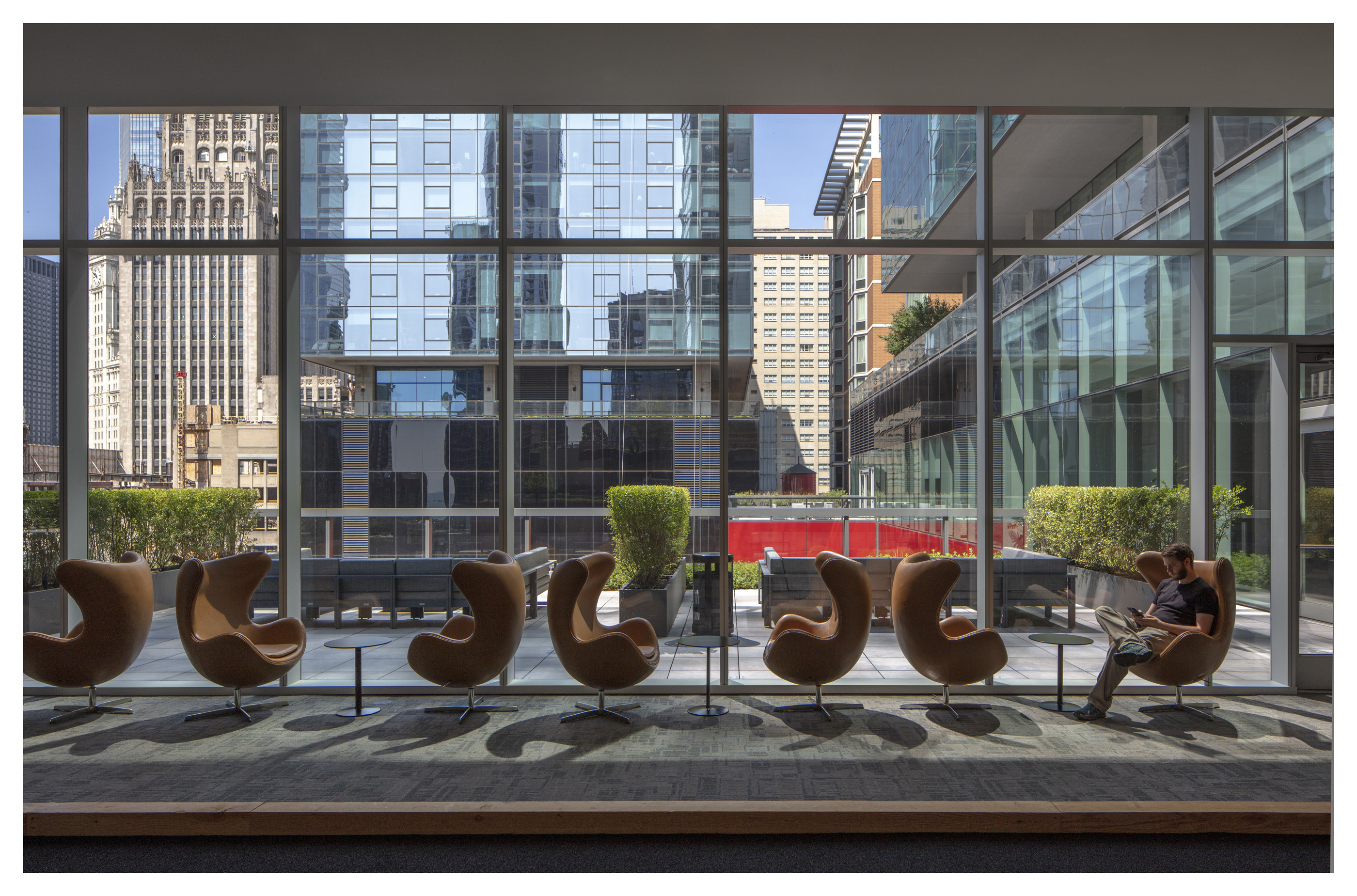
Of the many interior design pieces within our buildings, the egg chair is arguably the most distinct. Its round shape, curved edges and cocoon-like nature are as inviting as they are fascinating. A staple accent in many Optima projects, the Egg chair has its own colorful past that has led it to its present-day prominence throughout the world of interior design.
A Scandinavian Start
In the mid-1950s, the Scandinavian Airlines System enlisted Arne Jacobsen to design downtown Copenhagen’s Royal Hotel. Jacobsen, a Danish architect and designer, is one of the best-known designers of the 20th century and one of the pioneers of Danish modern design. He was a crucial contributor to architectural Functionalism and his keen sense of proportion is most well-known throughout his wide range of furniture designs.
In designing the Egg chair, Jacobsen kept in mind both function and form with a chair that would allow travelers passing through the hotel to relax, swivel and recline. The high, curving sides allowed for a bit of privacy, a much-needed amenity after a long journey. The chair was lightweight at only 17 pounds, allowing the hotel staff to move and rearrange them as necessary. Even 60 years after its first debut, the Egg chair is still an iconic piece of design history, beloved by both residential and commercial spaces.
Optima Old Orchard Woods | Skokie, IL
The Eggs at Optima
Throughout our residential spaces, Egg chairs serve as a complementary accent piece to our Modernist buildings, reflecting the same passion for form and function. The curvaceous seat is adaptable, pairing well with everything from white walls to colorful surroundings. As they did when they were first designed, egg chairs serve a variety of functional purposes: a fresh pop of color, a nod to the Modernist style, a place to relax at the end of the day or a cosy reading spot to enjoy your favorite book. However they’re utilized, these design icons are a Modernist staple and one of our favorite pieces of unique furniture.
It’s no secret that we love color at Optima, and we carefully curate our interior furniture, textures and designs to reflect the vibrancy of our spaces. Our curated artwork is no exception, and throughout the halls of projects such as Optima Signature, Alexander Calder’s bright works greet residents with bold tones and distinct shape. A multimedia artist whose influence spans across decades, Calder’s work creates a meaningful connection to a rich piece of art history.
Calder’s Past
Born in Pennsylvania in 1898, Calder came from a family of artists; his grandfather and father both had rich careers as sculptors and his mother was a professional portrait artist. Though his family had artistic roots, they supposedly did not want him to follow in their footsteps. Calder began studying mechanical engineering in New Jersey, bouncing between jobs all while still being inspired by create. By the 1920s, Calder had moved back to New York to pursue a career as an artist.
Calder’s Artistic Career
After studying in New York, Calder moved to Paris where he studied, established a studio and met his future wife. While living in Paris, Calder joined the ever-growing network of avant-garde artists, including Fernand Léger, Jean Arp and Marcel Duchamp. Throughout his life, Calder maintained a strong connection to France, naming many of his works in French regardless of their location. After a lifetime of impactful creativity and exploration, Calder died unexpectedly of a heart attack in 1976, leaving behind an expansive and far-reaching legacy.
Calder’s Legacy
Over his career, Calder produced a wide range of work, spanning from sculpture, to stage sets, paintings, prints and jewelry. Like previous generations of Calders, he was also a recognized large-scale sculptor. Flamingo, one of his more notable works in Chicago, adorns the Federal Plaza with beautiful form and the famous “Calder Red” color. We’re thrilled and honored to have the works of Alexander Calder throughout our buildings, and hope they bring a bright source of inspiration to those who view and enjoy them.
Our story is influenced and molded by those that came before us. The vision for Optima was seeded during David Hovey Sr.’s time at the Illinois Institute of Technology (IIT), where he studied under the program built by modern architectural legend, Ludwig Mies van der Rohe. To understand where modern design is today, it’s insightful to look back on the legacy of Mies van der Rohe.
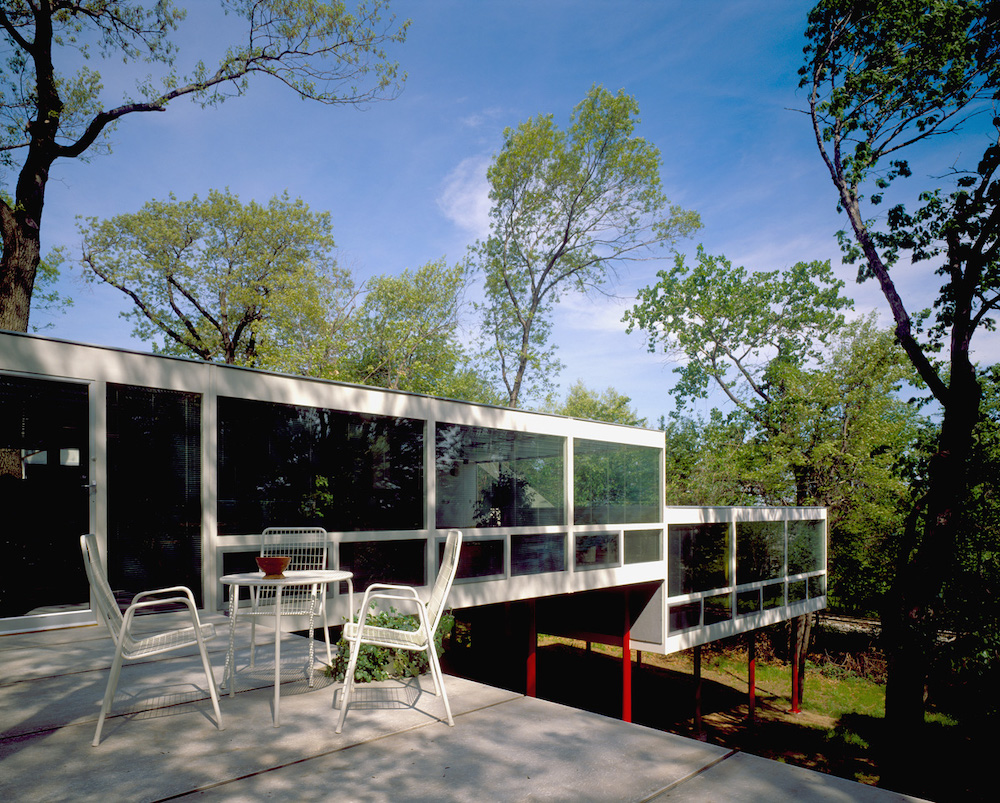
Ludwig Mies van der Rohe’s Farnsworth House, designed and constructed between 1945 and 1951. Credit: Victor Grigas on Wikimedia Commons, licensed under the Creative Commons Attribution-Share Alike 3.0 Unported license.
Mies van der Rohe
Mies was a German-born architect and educator, born in 1886 in Aachen, Germany, with Chicago becoming his adoptive hometown later in life. One of the 20th century’s greatest architects, he designed with an emphasis on open space and revealing materials. His steel-and-glass aesthetic defined modern architecture; he himself referred to it as “skin-and-bones architecture.” Mies didn’t design with style in mind, but rather, considered the philosophy of design within the frame of functionalist and industrial concerns at the time. “Less is more,” the legendary aphorism, was first said by Mies in reference to his architectural work.
Destined for greatness, Mies’ first commissioned project (Riehl House) came to him at the age of 21 while he was working for Bruno Paul. What really set his design aesthetic apart, however, was the Barcelona Pavilion. Designed for the 1929 International Exposition in Barcelona, Spain, the temporary structure was the most powerfully pared-down building imaginable. Consisting of horizontal and vertical slab elements, it fulfilled the minimum requirements to define space — nothing has ever personified “less is more” in quite the same way. As Mies garnered attention, he became the director of the Bauhaus school of design in Germany in 1930. He remained there until the school closed in 1933 under the mounting pressure of the Nazi regime, and it was at this point in time that Mies took his leave from Europe.
An Educator and Architect in America
Mies arrived in the US in 1938, heralding in a new era for his life and the life of architecture in Chicago. He was head of the architecture department of IIT from 1938-1958, and when Mies’ position was announced, he was introduced by the one and only Frank Lloyd Wright himself. It was virtually unheard of for Wright to admire the work of another architect — and vocalize his admiration no less — but in his introductory speech, Wright said of Mies: “I admire him as an architect, respect and love him as a man. Armour Institute, I give you my Mies van der Rohe. You treat him well and love him as I do. He will reward you.”
Wright knew what an influence Mies would have on IIT and on architecture. The period of transition allowed Mies to entirely redesign the school’s program and campus both — he “rationalized” the curriculum by returning to the basics. At IIT, students focused first on learning to envision and draw their creations, then master the features, functions and materials involved in building, in order to finally evolve as architects whose discipline was enmeshed with the fundamental principles of design and construction.
A Lasting Legacy
Mies has left his mark in many places — along the Chicago skyline, across the IIT campus and on our work here at Optima.The fundamental principles behind Modernist design influence how we create and think here, and the innovative and groundbreaking thinking of Mies is something that we seek to embody in our everyday operations. To this legend, we say thank you for paving the way and inspiring us all.
A subtle but enhancing feature of many Optima projects, our sculptures adorn courtyards, amenity floors and common spaces. David Hovey Sr’s devotion to space and form translates from architecture to three-dimensional pieces, which are placed throughout our buildings to add a distinct aesthetic flair to our Modernist spaces.
Greeting both residents and visitors at the entrance of Optima Signature, the sculpture Kiwi was named after the same bird native to New Zealand, where David Hovey Sr was born. Although the sculpture is reminiscent of an animal, Hovey’s vision was something much more abstract. Starting out as a handful of freehand drawings, the sculpture was layered until it formed a tall, stacked piece. Set against the bold red of Optima Signature, Kiwi’s bright yellow color pops amidst the neutral-toned buildings within downtown Chicago.
The finishing touch on Kiwi’s Optima Signature location was installation; the base was carefully cemented into the ground to protect it from the bustle of downtown and the intense Chicago weather. Aside from its prominent location at Optima Signature, Kiwi is also featured at Relic Rock and Whale Bay House.
David Hovey Sr’s passion for sculpture reflects our collective passion for enhancing the spaces we build and exploring new interpretations of form, color and design. Stay tuned for more features on our other sculpture pieces.
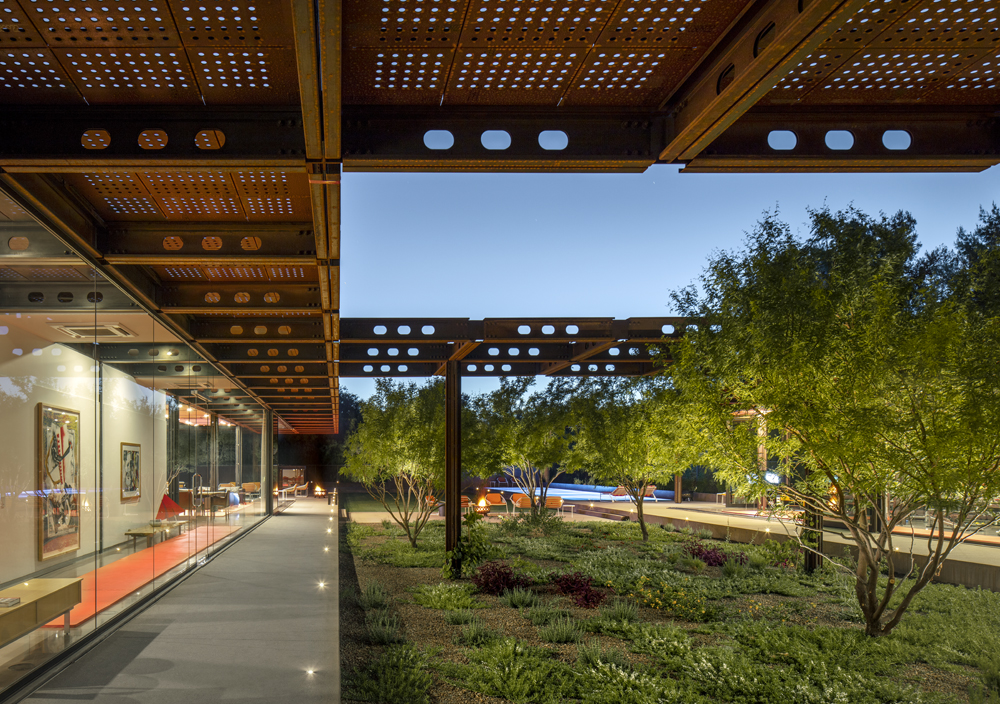
An iconic architectural design feature of many Optima projects, the courtyard is a long-beloved piece of home and history. A space designed for peace, socializing and beauty, the courtyard has a rich history that has led to its modern interpretations.
It’s estimated that the first courtyard houses made an appearance around 6000BC in the Jordan Valley, used for purposes ranging from cooking, sleeping, working, gardening or even housing animals. Before courtyards, open fires were used within a central place in a home, with a small hole in the ceiling for the smoke to escape. Gradually, the holes became larger and evolved into open courtyards more similar to what exists today.
Courtyards are an iconic staple in many cultures throughout the world, though they vary in style and function. The central uncovered area in Roman architecture was referred to as an atrium, and would often contain a central pool used to collect rainwater and a garden. In China, the courtyard was a central space for multiple homes and families, and used as a place for privacy and tranquility. The medieval European courtyard was used for working, gathering and protection. With such a rich and diverse history, it’s no surprise that the courtyard continues to withstand the test of time.
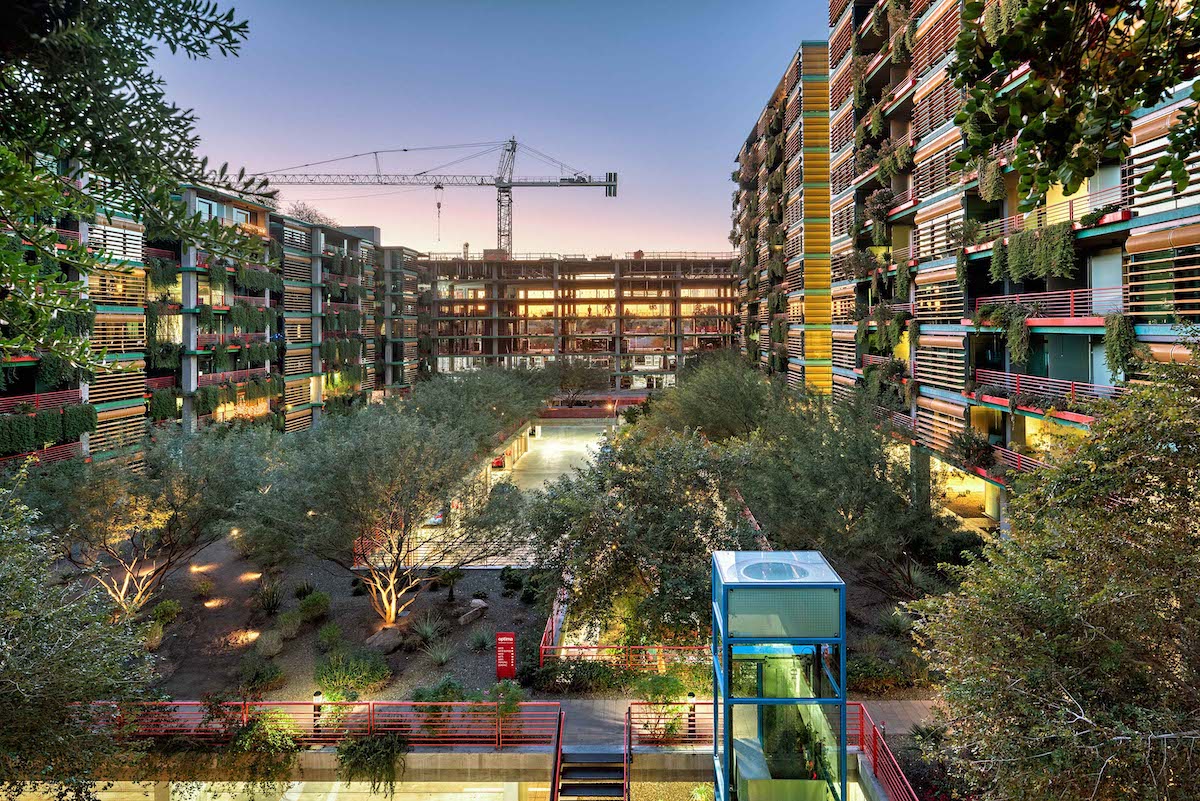
Traditionally, courtyard homes are prevalent in temperate climates, since the open space helps maintain a cool temperature. To take advantage of the functional and aesthetic benefits of the courtyard, many of our Arizona projects feature courtyard greenspaces. Our Arizona Courtyard House is even named after the feature that makes it unique; outside and inside flow together to create a seamless layout and beautiful views of the landscape. The home is arranged with the main house to the south and east, and a fitness center and lap pool to the north creating a private courtyard in the center.
The essence of a courtyard is the physical expression of the concept of connection, and ours are built with the hope that they will provide a peaceful oasis in which residents can reconnect to their friends, family and the surrounding environment.