Chicago History: The South Shore Cultural Center

At Optima, our appreciation for timeless architecture and design runs deep, and there’s no better way to feed that passion than by paying a visit to the historic South Shore Cultural Center. On the corner of 71st St and South Shore Drive sits the large, brick building with landscaped gardens, a golf course, beach access, and unbeatable lake views. Many do not know that the structure exists, and many more drive by every day without realizing the rich history of the center and its grounds. The South Shore Cultural Center is one of Chicago’s hidden gems with astounding architecture, interior design, and a wealth of history.

History

The South Shore Cultural Center was originally founded in 1905 to function as a country club similar to the Athletic and Union League clubs downtown.

Designed in the Mediterranean revival style by the architecture firm, Marshall and Fox, the club initially served the wealthy, white population of the South Shore neighborhood and offered stables, a nine-hole golf course, tennis courts, and a bowling green, along with a ballroom, and a private beach.

In the early 1960s, the demographic of the South Shore neighborhood began to change as black families integrated into the neighborhood, and white families left for the suburbs. Originally only open to white Protestants, by 1967, the club became open to anyone who wanted to join.

By 1973, struggling financially, the club liquidated its assets, and in 1975, the property was sold to the Chicago Park District.

Today

Thanks to a coalition of neighborhood activists and historic preservationists, the club’s original facilities remain standing today and are open to the public.

The Cultural Center serves as the home to the South Shore Cultural Center School of the Arts, an organization that provides community art classes, youth and teen programming, art and dance studios, a kiln, and the Paul Robeson Theatre.

The ballroom and banquet facilities can be rented for special events, and the golf course, beaches, and nature center remain open to the public.
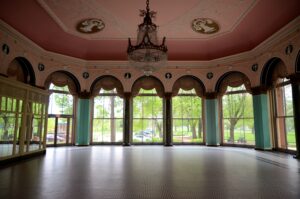
A large chandelier is centered in the middle of a pink ceiling in a grand dining room with windows spanning the length of the wall.
South Shore Cultural Center Dining Room. Credit: on Flickr Creative Commons, CC BY-NC 2.0 Deed

Visit

The South Shore Cultural Center is easy to access from downtown on Lake Shore Drive. The Chicago Lakefront Trail also runs past the center, so it is possible to visit by bicycle. Plan a round of golf or bring the family for a beach day and picnic. 

The Cultural Center also functions as a sort of museum with plaques explaining the building’s history and architecture.

Schedule your visit and learn more about the center here

A Brief History of Modernist Furniture

The modernist architecture movement gained traction in the late 19th century and was influenced by the post-war notion of practicality and eliminating excess. 

Notable modernist architects include Ludwig Mies van der Rohe, Frank Gehry, and Zaha Hadid. Along with designing structures, these architects also designed furniture that would harmonize with their buildings, while making their works more accessible to many.

Prior to the modernist movement, furniture was seen as ornamentation. Rather than taking comfort and practicality into consideration, the value of furniture was determined by the amount of time and level of craftsmanship that went into its production. The Industrial Revolution enabled the mechanization of furniture production, enabling furniture to become affordable and functional rather than ornaments reserved for the wealthy.

Modernist principles of furniture considered the interaction of the design and the user, creating designs that fit with the human form rather than forcing bodies to conform to the furniture.

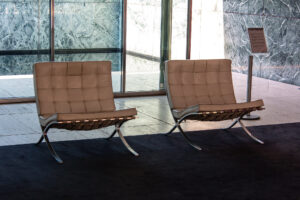
Two Barcelona Chairs sit next to each other in front of glass windows.
Barcelona Chairs, designed by Mies van der Rohe

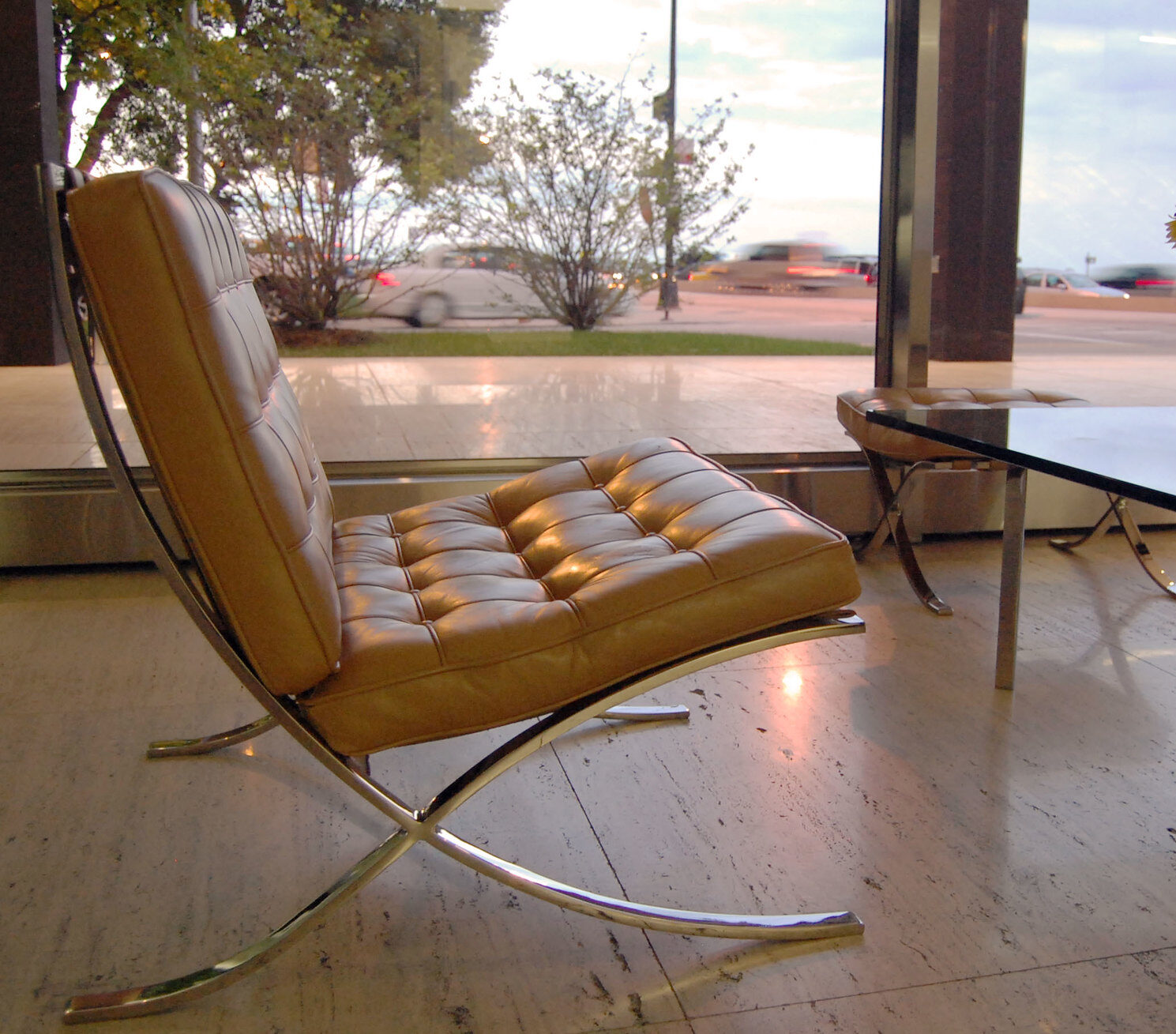
Ludwig Mies van der Rohe’s 1929 Barcelona Chair was inspired by the simplicity of ancient folding chairs. Supported on each side by two chrome-plated flat steel bars, the Barcelona Chair is upholstered in leather and combines simple elegance with comfort. Mies van der Rohe designed the Barcelona chair to sit in the lobbies of his buildings, where they accent the architecture and blend in with the surrounding space. 

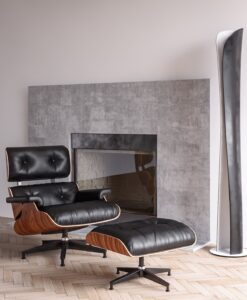
The Eames Lounge Chair sits in front of a marble fire place.
Eames Lounge Chair, designed by Charles and Ray Eames

The Eames Lounge Chair, another iconic piece of modernist furniture, was released in 1956 and designed by Charles and Ray Eames. The Eames Lounge Chair is a rare example of modernist furniture that was not designed to be mass-produced and affordable. Yet, the chair still relied on the principles of simplicity, practicality, and comfort core to modernist furniture design. The chair, inspired by the English Club Chair, is composed of molded plywood and leather and became a cultural icon for its un-design-like appearance that invites sitters to rest for hours within the chair’s leather cushions.

The Noguchi Table
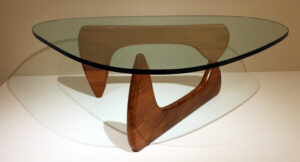
Noguchi Table, designed by Isamu Noguchi

Japanese-American artist and industrial designer, Isamu Noguchi, designed the famed Noguchi Table for the furniture company, Herman Miller. The Noguchi Table is a sleek glass-topped table supported by two curved pieces of wood at the base. The table became popular for its ability to fit both in the domestic and corporate spaces. 

The ability for modernist furniture to fit effortlessly into any space combined with its practicality made modernist designs into classic pieces recognized across generations. Modernist furniture can be found in suburban households and steel office buildings alike. Families gather around Noguchi Tables for chess games and curl up into Eames Lounge Chairs with long novels. Business moguls and architects meet in Barcelona Chairs and sign documents over Noguchi Tables. The versatility of modernist furniture and ease with which it is produced revolutionized how the general public views furniture and furniture’s place in the spaces it takes up.

Ellison Keomaka’s Art at 7140 Optima Kierland

Pairing unique, tasteful works of art with our buildings is an integral part of design expression with Optima projects. We recently sat down with artist Ellison Keomaka, to discuss the process and inspiration for his most recent contributions to 7140 Optima Kierland. – you can read more about our history with Keomaka here

While creating commissioned artwork for 7180 Optima Kierland last year, Keomaka was simultaneously working on pieces for 7140. “Because I was working on these two bodies of work at the same time, much of the inspiration for the 7140 artwork flowed from what I was creating for 7180,” says Keomaka. 

Armed with an understanding of the building’s design, materiality and sense of space, Keomaka decided to explore a grand palette, bold textures, and adventurous methods — “a playground of color and an exciting experiment,” explains Keomaka. 

Letters From Home at 7140 Optima Kierland

Partially inspired by his own experience in the military, Letters From Home is an “assemblage work” as Keomaka explains, “that speaks to the emotional stories of soldiers receiving letters from home.” The assemblage includes images from issues of Life Magazine that date back to World War II, with two blocks of bright blue and red that meet to form a shape that resembles the back of an envelope.

Some Kind of Sunset at 7140 Optima Kierland

Keomaka’s personal favorite, Some Kind of Sunset captures the idea of the endless shifts in the sun’s position. Working over a period of two months, Keomaka used pearlescent and fluorescent paints to animate the surface of the canvas, allowing the colors to adapt and change with changes in the natural light striking the surface throughout the day.

Desert Dance at 7140 Optima Kierland

As the title suggests, Keomaka created this piece as a kind of dance that responded to music he was listening to while painting. “Working with music is a big part of my artistic practice,” Keomaka states. “For this work, I was listening to a playlist that included Kanye West, Coldplay and movie soundtracks, and I used my brushstrokes and color choices to respond to the eclectic mix,” he shares.

The Space Between at 7140 Optima Kierland

Comprised of vertical bands of bright colors, The Space Between may seem like it is one of the more simple works of art created by Keomaka for 7140 Optima Kierland. However, color and texture are precisely what make this piece stand out. Keomaka mixed primary colors to create unique hues that live in the spaces between yellow, blue and red, while using a squeegee tool to control the flow and texture of the paint on the canvas to add to the sense of flatness and precision.

Keomaka’s bold and experimental artwork echoes the creative brilliance and ingenuity that we care deeply about at Optima. His ability to translate these artistic gestures into works that activate the public spaces at 7140 Optima Kierland add immeasurably to the beauty and warmth of the interior environment — for residents as well as for all who pass through the building.

The Health Benefits of Saunas

Saunas have been health staples in cultures around the world for thousands of years. The oldest saunas, found in Finland, are thought to date from around 2,000 BC and used stones to create high temperatures and dry heat in the winters. In Korea, domed structures often warmed by kilns appeared in literature as early as the 15th century. In the Orkney’s of Scotland, stone structures thought to incorporate the use of steam date back to the neolithic age. 

In modern times, the most common saunas used in western culture originate from Northern Europe and have temperatures around 212 degrees Fahrenheit and relatively low humidity. They remain today a staple of health and wellness, and can be found at spas, resorts, poolsides, gyms, and even private homes and bathrooms. 

Saunas are known for their numerous health benefits. When an individual spends time in a sauna, the heat causes their heartbeat to increase and their blood vessels to widen, improving circulation. Saunas are comforting, calm spaces that promote relaxation and, paired with the improvement of circulation, can reduce stress levels and improve overall cardiovascular wellbeing. 

Dry saunas, especially, are known for their positive impact on heart health. They also reduce the symptoms of rheumatic diseases such as fibromyalgia and rheumatoid arthritis. Dry saunas are known for relieving skin conditions such as the itchiness from psoriasis. There is some evidence that dry saunas also may improve athletic performance.

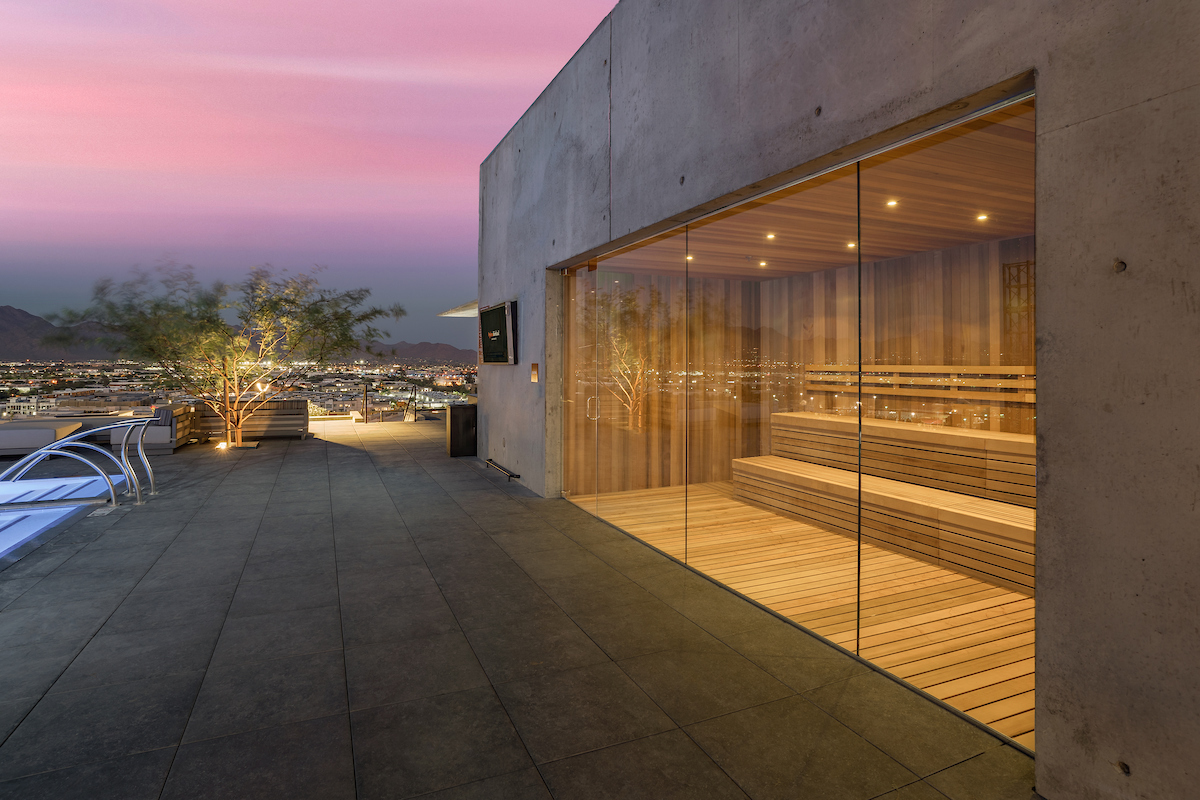
Indoor Sauna at Optima Signature

When it comes to enjoying a sauna, for optimal benefits, most experts recommend around fifteen minutes per sitting and allowing your body time to rehydrate and cool down before resuming normal activities. 

Saunas are a wonderful way to relax and boost both cardiovascular and overall health. The use of saunas is an ages-old practice that prioritizes bodily and mental health, spans around the globe, and persists today.

Women in Architecture: Denise Scott Brown

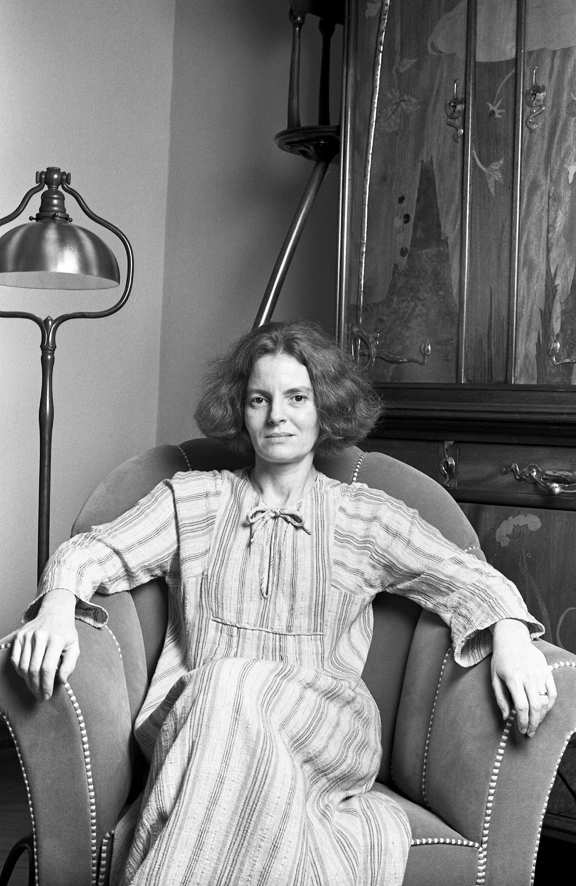
Denise Scott Brown knew from the age of five that she wanted to be an architect. Born in 1931 Northern Rhodesia (now Zambia), Scott Brown pursued her dream by spending her summers working for architects and studying at the University of Witwatersrand in South Africa.

In 1952, Scott Brown moved to London to work for modernist architect, Frederick Gibberd. While in London, Scott Brown won admission to the prestigious Architectural Association School of Architecture before moving to Philadelphia, Pennsylvania in 1958 to study at the University of Pennsylvania’s planning department and obtain a master’s degree in city planning and architecture.

In 1967, Scott Brown joined Robert Venturi’s architectural firm, Venturi and Raunch, where she became principal in charge of planning in 1969. Scott Brown’s approach to architecture with Venturi was to understand a city in terms of social, economic, and cultural perspectives and to use these perspectives a set of complex systems in which to build a structure.

With Venturi, Scott Brown designed the Bryn Mawr College Campus Center as well as a campus plan in 1997 which considered the campus’s physical character as originally shaped by famous planners and architects Calvert Vaux, Frederick Olmsted, Louis Kahn, and more. The student body of Bryn Mawr College, having grown, needed an expanded campus, and Scott Brown planned an expansion that celebrated the campus’s original orthogonal pattern while accommodating the students’ needs. 

Another of Scott Brown’s designs is for the Japanese Nikko Hotel chain, in which Scott Brown merged the ideals of western comfort with Japanese Kimono patterns to celebrate the heritage of the hotel chain while catering to the western audience. 

In 1989, Venturi and Raunch was renamed to Venturi, Scott Brown and Associates, celebrating Scott Brown’s contributions to the firm. The firm is known as one of the most influential architecture firms of its time and is celebrated for radical theories of design while approaching its practice clearly and comprehensively.

In 1991, Robert Venturi was awarded the Pritzker Architecture Prize, while Scott Brown was not recognized for her contributions to Venturi’s work. Scott Brown boycotted the award ceremony. In 2013, a student organization titled Women in Design started by Caroline Amory James and Arielle Assouline-Lichten at the Harvard School of Design started a petition for Scott Brown to receive joint recognition for the Pritzker Architecture Prize. Though Scott Brown has still not been awarded joint recognition for the Pritzker Prize, in 2017, she won the prestigious Jane Dew Prize. 

Throughout her career, Scott Brown struggled to be recognized as an equal partner at a male-dominated firm. In 1975, Scott Brown wrote an essay titled “Room at the Top? Sexism and the Star System in Architecture,” though Scott Brown did not publish the essay until 1989 out of fear of damaging her career. The essay became an immediate hit, and Scott Brown has continued to advocate for women in architecture throughout her life.

An Inside Look at Architect Lingo, Part V

Interior of Relic Rock, Optima DCHGlobal, demonstrating the Corbusian principle of the free ground plan

An intricate and technical field, the world of architecture produces a unique dictionary of jargon all its own. At Optima, our team works in a highly collaborative atmosphere where we all, from architects to property managers to construction superintendents, share ideas and hold conversations across disciplines — so naturally we all encounter the lingo of our architects. As part of our ongoing series “An Inside Look at Architect Lingo,” today we continue to decode the secret language that we’ve all come to know and love.

Corbusian

Just like the word Miesian from our previous installment in this series, Corbusian is a homological word that nearly explains itself. It refers to anything of, pertaining to, or characteristic of the Swiss architect Le Corbusier. Of the many narratives and philosophies he published, Le Corbusier famously published the seminal L’Espirit Nouveau in 1920, revealing his famous “five points of architecture.”

These five points include the pilots (a grid of concrete or steel columns replaces the load-bearing walls), the roof garden (vegetation or landscaping that covers a rooftop), the free ground plan (the absence of load-bearing walls allows flexible use of the living space, which can be divided by screen elements), the horizontal windows (cut through the non-load-bearing walls along the facade and provide the apartment with even light), and the free façade (pen and closed sections on the façade enable the separation and connection of the exterior design from the building structure). Anything including these characteristics, then is Corbusian.

Rendering of Optima Verdana

Mullion 

As exotic as the word sounds, the definition for mullion is pretty simple. A mullion is any vertical element that forms a division between units of a window, door, or screen. This division can be both functional or purely decorational. When dividing adjacent window units, the primary purpose of a mullion is to provide a rigid support to the glazing of the window. 

In Modernist architecture then, where endless glass curtain walls abound, the mullion becomes an integral part of maintaining the structural integrity of these all-glass fixtures. 

Muntin

Muntin is not to be confused with the above mullion, though the two do share similarities. Muntin refers to a rabbeted (or recessed) member for holding edges of window panes within a window sash. Muntins are also sometimes called glazing bars or sash bars. These days, muntins are often decorative in nature, ranging from the simple to the complex – often a counterintuitive design element in Modernist disciplines.

However, as you might recall from our blog on the history of glass, at one point in time it was extremely rare to obtain large panes of glass. Everything was built by patching very small and very expensive panes of glass together, and in this context, muntins were extremely critical.

Stay tuned for future features on the world of architecture lingo at Optima.

Modern vs. Contemporary Architecture

Whether it’s in reference to decor or design, the terms modern and contemporary are often used interchangeably. While this detail may be easily overlooked, the difference between the two styles is notable, especially in the world of architecture. Today, we’ll break down the distinction between modern vs contemporary architecture, and why it matters.

Simply put, contemporary design refers to styles relevant in the present moment, whereas Modernism refers to a style defined in the past. As we’ve covered in previous posts, Modernism has an expansive history, which was most notably defined between 1900 and 1960. Contemporary design can change based on what’s currently trending, and often changes based on widespread taste. Modernism remains defined by traditions and practices from the original Modernist movement.

So why do these two styles often get confused? Firstly, Modernism is a timeless style that often translates as contemporary because even after almost a century, its elements are still beautiful. It’s why our own use of materials, natural light and structure have stood the test of time at Optima. Secondly, current contemporary design does share some similarities to Modernism. Glass and metal materials, floor-to-ceiling windows and minimal color palettes are all popular architectural details right now. Even curated residential green space, a signature Modernist feature in our projects for decades, are trending with the house plant craze. With contemporary architecture and design borrowing elements from Modernism, it makes sense that they often get swapped out for each other. 

If you want to learn how to spot the difference, it’s worth studying Modernism first so you know what to look for in true Modernt pieces and buildings (our own blog is a great resource for that). Some things to look for: open floor plans, asymmetry, large panels of windows or glass walls, lack of ornamentation and highly functional spaces. Function over form was the mantra of Modernism, and it still informs Modernist interpretations now. If the building or space includes anything trendy or cutting-edge for the year —  like some of Architectural Digest’s 11 Most Anticipated Buildings of 2020 — it’s probably more appropriately categorized as contemporary. 

Although the two styles are similar, there’s no replicating the impact and legacy of Modern architecture. Our love for Modernism inspires us to recognize and appreciate it when we see it, and we hope our readers share the sentiment.

The Work of SOFTLINE

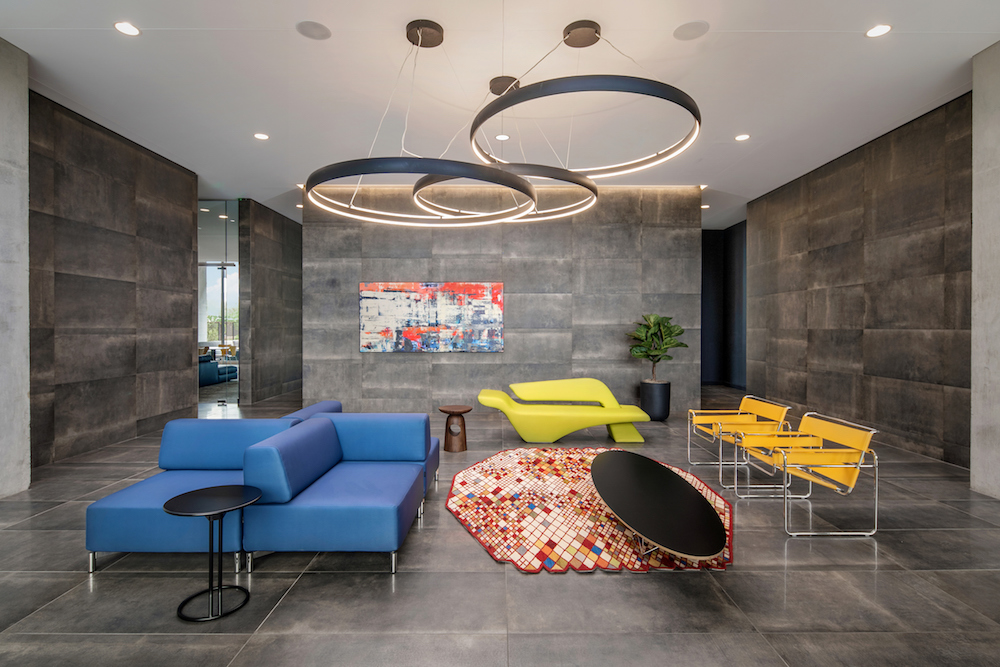
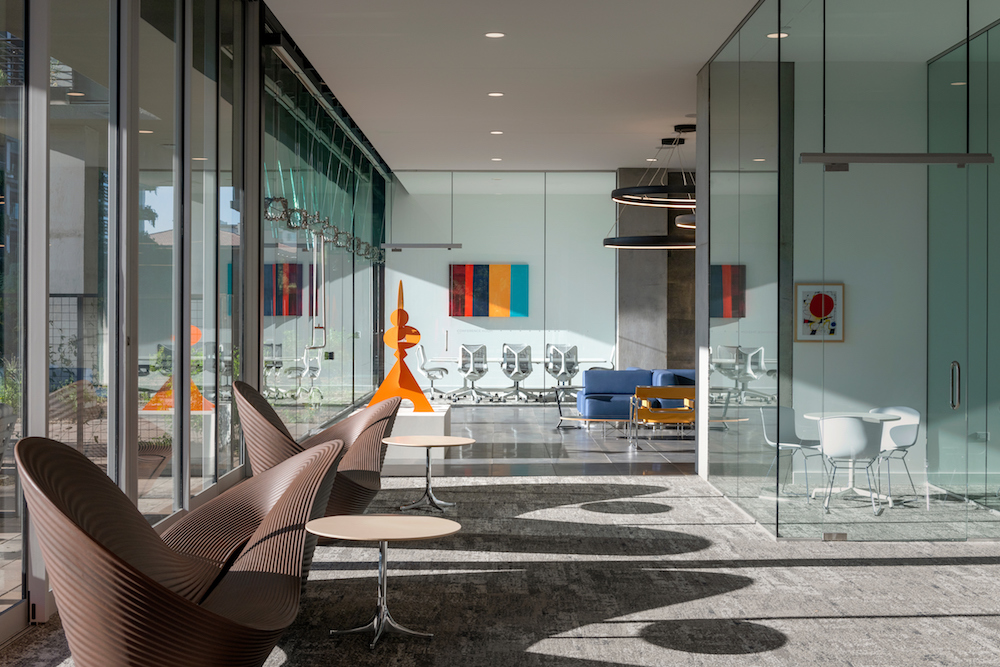
At Optima, our passion for Modernism shines through in all aspects of design, from the art we hang on the walls to the furniture we select. For Optima Kierland Apartments, we handpicked standout statement pieces from Danish furniture designer SOFTLINE, including the modular sofa and sculptural bench pictured above.

SOFTLINE started in Denmark in 1979 with a commitment to creating innovative, iconic and high-quality furniture. True to the essence of Modernist design, their pieces explore the limits of form and function. While their furniture unabashedly explores sculptural forms, SOFTLINE places an emphasis on modular furniture that’s able to be arranged in a variety of configurations and used for many purposes. And of course, each piece is swathed in a bold color as a finishing touch.

The amenity floor at Optima Kierland Apartments features Pierce, a bench designed by Karim Rashid for SOFTLINE. Rashid describes the bench’s undulating form as sensual and sculptural. Pierce is made up of two interconnected pieces that can’t exist without one another, creating an integral equilibrium that defies gravity. Rashid himself has been dubbed by Time magazine as “the most famous industrial designer of all the Americas” and the “Prince of Plastic.” 

Playing perfect complement to Pierce is the striking blue modular sofa, PLANET. The highly adaptable modular sofa was designed for Softline by Stine Engelbrechtsen so that those employing the piece can “create their own universe.” PLANET’s simple design and soft edges embody the ultimate in comfort, while the silver metal legs give the airy effect of the sofa hovering just above the ground. At Optima Kierland Apartments, we configured PLANET’s modular pieces so that residents can privately enjoy a section for quiet time, or convene together comfortably. 

These eye catching pieces are the perfect place for residents to relax or meet with friends, all the while being invigorated by the energy of the vibrant design around them.

The Folly Bench by Ron Arad

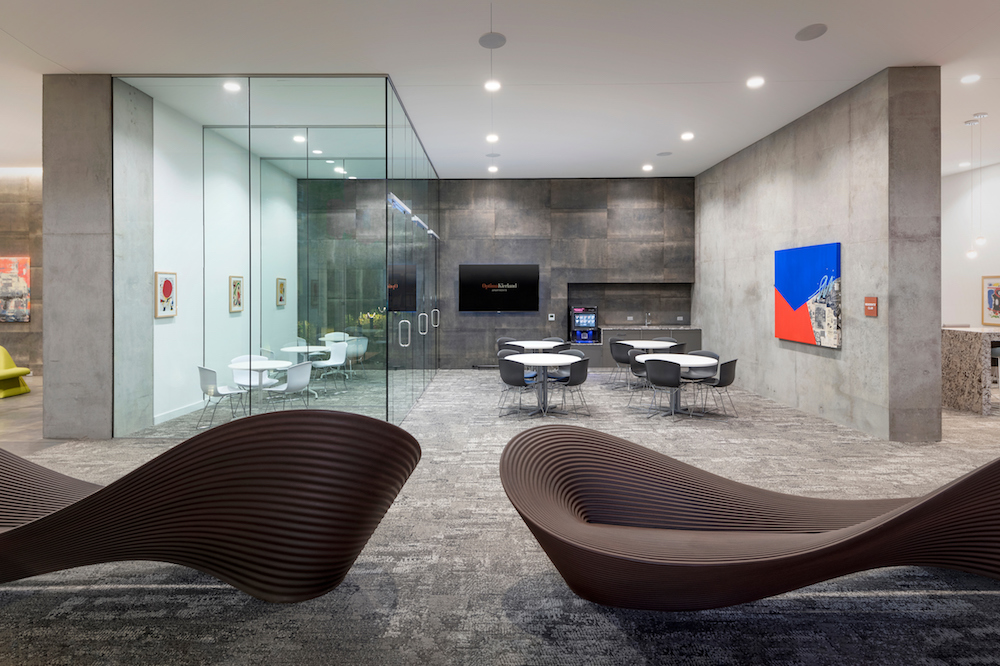
It’s no secret that we take pride in showcasing statement Modernist furniture throughout our communities, from the Wassily chair to the Egg chair to the Barcelona chair. That’s why we get excited when fresh designs are added to the mix. The Folly bench, designed by Ron Arad for Magis, exemplifies new furniture being designed in the Modernist discipline — and makes a great addition to our space at the new 7140 Tower at Optima Kierland Apartments. 

Ron Arad was born in Tel Aviv and studied at both the Bezalel Academy of Art and Design in Jerusalem and at the Architectural Association in London. He has established the design practice One Off Ltd., design and architecture firm Chalk Farm and opened his own studio in Italy, Ron Arad Studio. He’s best known for unique and sculptural chairs that meld high-tech materials with found objects. Of his own practice, he says, “Some people confuse function with being practical. You can make a chair that’s totally impractical, but it’s still a chair because it’s about sitting.”

The Folly bench, designed for Magis by Ron Arad, in the 7140 Tower at Optima Kierland Apartments

Arad exemplifies just that philosophy with the Folly bench, designed for Italian design firm Magis. The sculptural form of the bench provides immediate intrigue with its dramatically sweeping, undulating curves. Despite its drama, the bench’s seat and back surfaces merge seamlessly, creating an undeniably comfortable place to sit any which way. Furthermore, the bench is molded in “nearly indestructible polyethylene,” making it available for both indoor and outdoor use.

Gracefully dotting the amenity floor in the new 7140 Tower at Optima Kierland Apartments, the Folly bench beckons as an artful installation, and a truly functional piece of furniture. 

Modern Design for Your Home

Recently, we explained what exactly makes up Modern furniture and how to spot it. But what if you’re looking to bring a bit of Modernism into your own space? Considering our own affinity for Modern pieces and design, we love seeing the style applied across homes, condominiums or apartments. So if you’re looking for tips on modern design for your home, here’s where to start:

Form Follows Function

Modernism’s top rule is “form follows function,” essentially meaning that any decor or furnishings should reflect its intended purpose. Anything that doesn’t have a practical purpose can be eliminated, so Modern spaces are often very minimal. However, Modernism also celebrates the expression of form. Le Corbusier lounges or Barcelona chairs all embrace unique shapes and features in bright, joyful colors. Look for pieces that explore color, textures, and material, all while staying functional. 

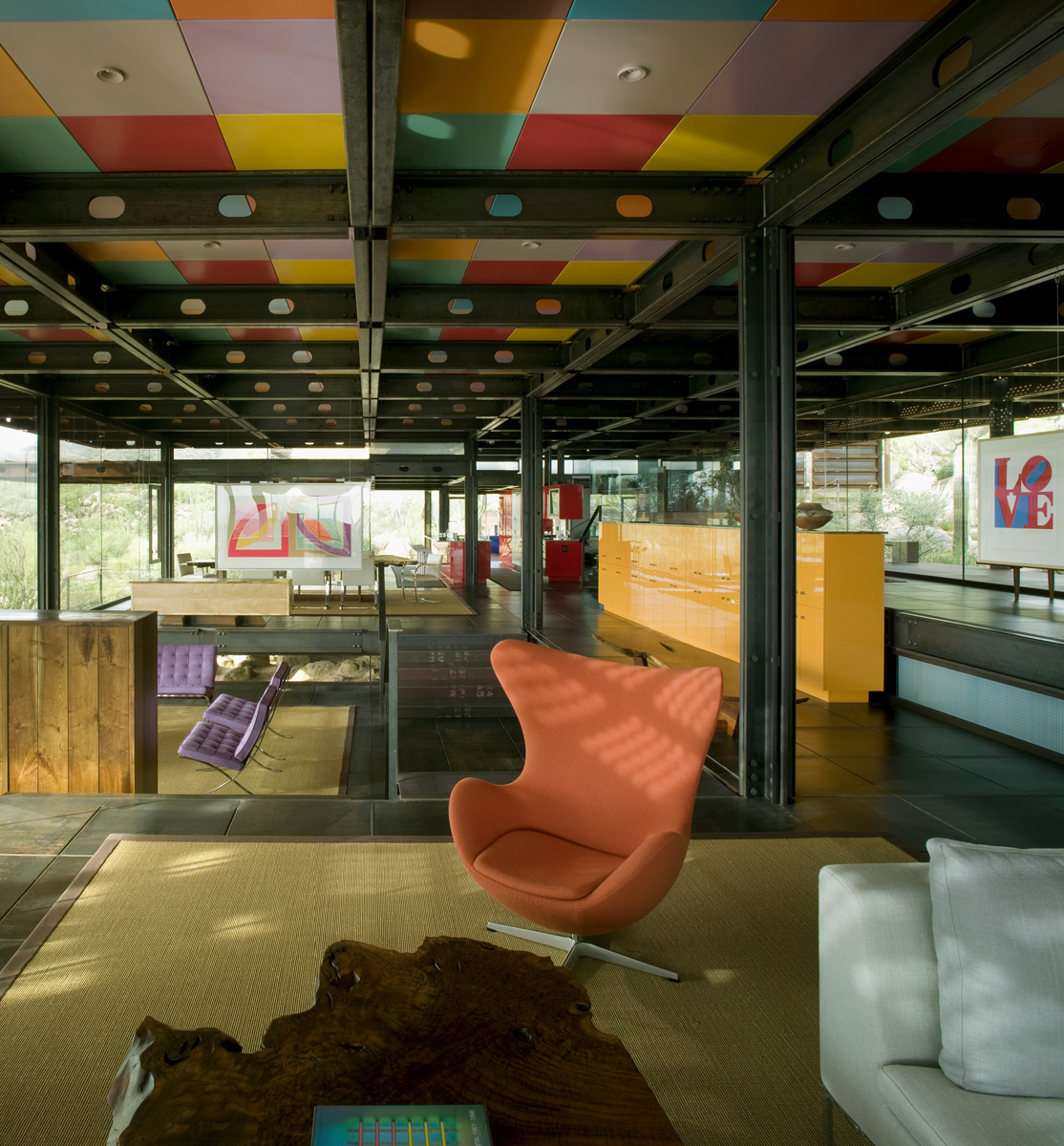
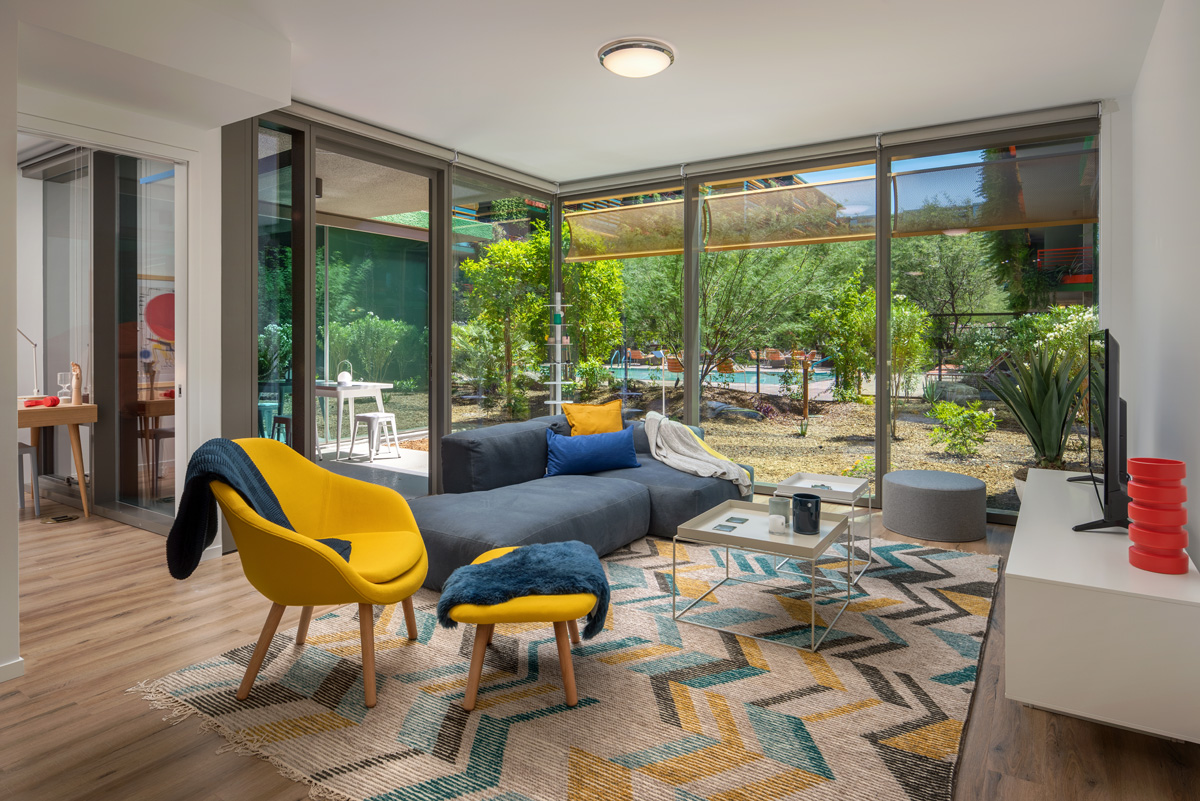
Colorful modernist furniture and courtyard view at Optima Sonoran Village
Courtyard view at Optima Sonoran Village

Bring the Outside Inside

Modernist architecture celebrates expansive windows and natural light, as do Modern interiors. Keep windows unobstructed when possible, and keep any blinds or curtains minimal in color. If you feel inspired by the green space at Optima, get a few houseplants to add pops of green. Or if your seasonal weather cooperates, get creative with container gardening

Contemporary vs Modern

Contemporary and Modern are often confused when dealing with interior design, but it’s important to note the different. Contemporary style isn’t attached to any specific era; it changes as time evolves. So Contemporary design would currently refer to anything in demand in 2020. Whereas Modern design specifically refers to a movement in art, design, architecture and of course, furniture. 

If you want to hunt for Modern pieces to add to your own home, here are a few shop recommendations to check out. Or even better, peruse your local thrift store or furniture restoration shop for truly authentic Modern furniture and decor.

person name goes here

Maintenance Supervisor

Glencoe, IL


    Acceptable file types: *.pdf | *.txt | *.doc, max-size: 2Mb