Women in Architecture: Jane Drew

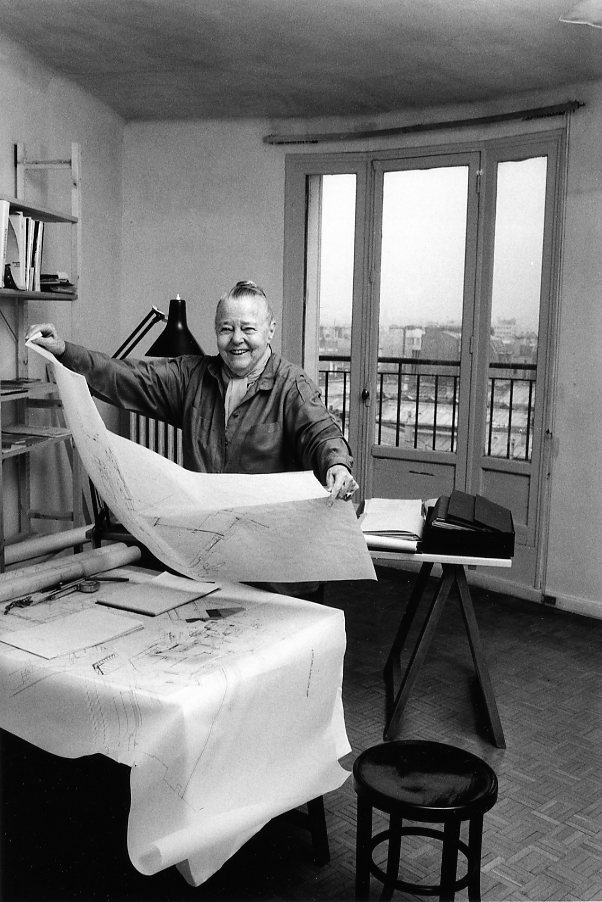
As part of our ongoing “Women in Architecture” series, we’re spotlighting another luminary in the field: Jane Drew. As the spearhead of the Modernist Movement in London, Jane Drew prevailed as a determined leader in a male-dominated profession, as she changed the lives of many by directing her career to explore the intersections of architecture and wellness.

The Life of Jane Drew

Drew was born on March 24, 1911, in Thornton Heath, Croydon, in South London. Her father was a surgical instrument designer and founder of the Institute of British Surgical Technicians, and her mother was a school teacher who greatly encouraged Drew’s interest and appreciation for art and nature. 

After graduating high school, Drew began her study at one of the most prestigious and competitive architectural schools in the world, the Architectural Association School of Architecture in London. Following five years of study, during which she married fellow architect James Thomas Alliston, Drew propelled herself into the architecture world working for Joseph Hill. During her employment, Drew was introduced to Bohemianism, which fostered her musical, artistic, literary and spiritual pursuits and had a lasting impact on her career. 

Following her divorce in 1939, Drew became heavily involved in the International Congresses of Modern Architecture (CIAM), introducing her to Swiss architect Le Corbusier. Eventually, under the guidance of the CIAM, Drew became a principal founder of the Modern Movement in Britain alongside Henry Moore, Elizabeth Lutyens, and her future husband, Maxwell Fry. 

Inspired by the abundance of talent surrounding her, Drew’s illustrious architectural career blossomed in the 1940s. She opened her firm at the beginning of the decade and only employed female architects, giving them a unique platform for professional and creative pursuit. Due to constraints posed by World War II, much of Drew’s work was limited to London. However, in 1944 she was appointed as the assistant town-planning advisor to the resident minister for the British West African colonies, which would change the trajectory of her career forever. 

Career and Accolades

Alongside the great heartbreak, World War II brought to London came new opportunities, especially for Drew and her husband, who had established a new firm in London: Fry, Drew and Partners. In 1947 she began designing a series of new schools in Ghana and Nigeria. With cultural appreciation in mind, Drew and Fry worked around the unique topography to incorporate native motifs and create a new architecture style for the new nation, now known as Tropical Modernism. 

In 1951, Indian Prime minister Pandit Nehru approached the couple in hopes they would develop the new capital of the Indian state Punjab, Chandigarh. The couple eagerly accepted his offer and began working with Le Corbusier to create their most celebrated architectural work. The couple experimented with new forms of design in the country and discovered methods to integrate schools, health facilities, and swimming baths into housing structures, affecting the future of housing designs throughout India.

Drew’s triumphant accomplishments didn’t stop there; she garnered even greater acclaim during the latter half of her career. Some of her most renowned works included designing the interior of London’s Institute of Contemporary Arts building (an organization that she helped establish), the School for the Deaf in Herne Hill, London, and buildings for the Open University in Milton Keynes, England. 

Drew continued her involvement in architecture after her retirement in 1973 and served on the Council of the Royal Institute of British Architects, of which she was a lifelong fellow. And, shortly before her death in 1996, she was awarded Dame Commander of the Order of the British Empire. 

Throughout her distinguished career, Drew’s passion for conscious design prevailed through her modern work. With every new project, Drew took away an abundance of new knowledge, forever shaping her future work and fashioning the process of thoughtful decision-making that remains in architecture today. 

Meet the Winner of the Redesign the World Contest

As champions of leading-edge, thoughtfully-designed spaces built to inspire communities, we enjoy sharing the visionary work of others who continue to impact the world’s landscape. In early 2021, Dezeen, the internationally-acclaimed architecture, interiors and design magazine, launched its Redesign the World 2021 competition. More than 100 firms submitted their ideas for rethinking planet Earth, and Dezeen has provided a platform to showcase the 15 most visionary, radical solutions to ending environmental issues. 

Dezeen launched the contest in partnership with Epic Games and architectural visualization tool Twinmotion. The competition sought revolutionary solutions and asked contestants several ambitious questions, including: where and how will everyone live; how will vital ecosystems flourish; and most importantly, what would a redesigned planet resemble? 

Each proposal consisted of an in-depth narrative, still images and a short video animation depicting the landscape. And, following more than two months of deliberation, Dezeen published all of the top submissions here, including the winning entry: Fernando Donis’ Frame City.

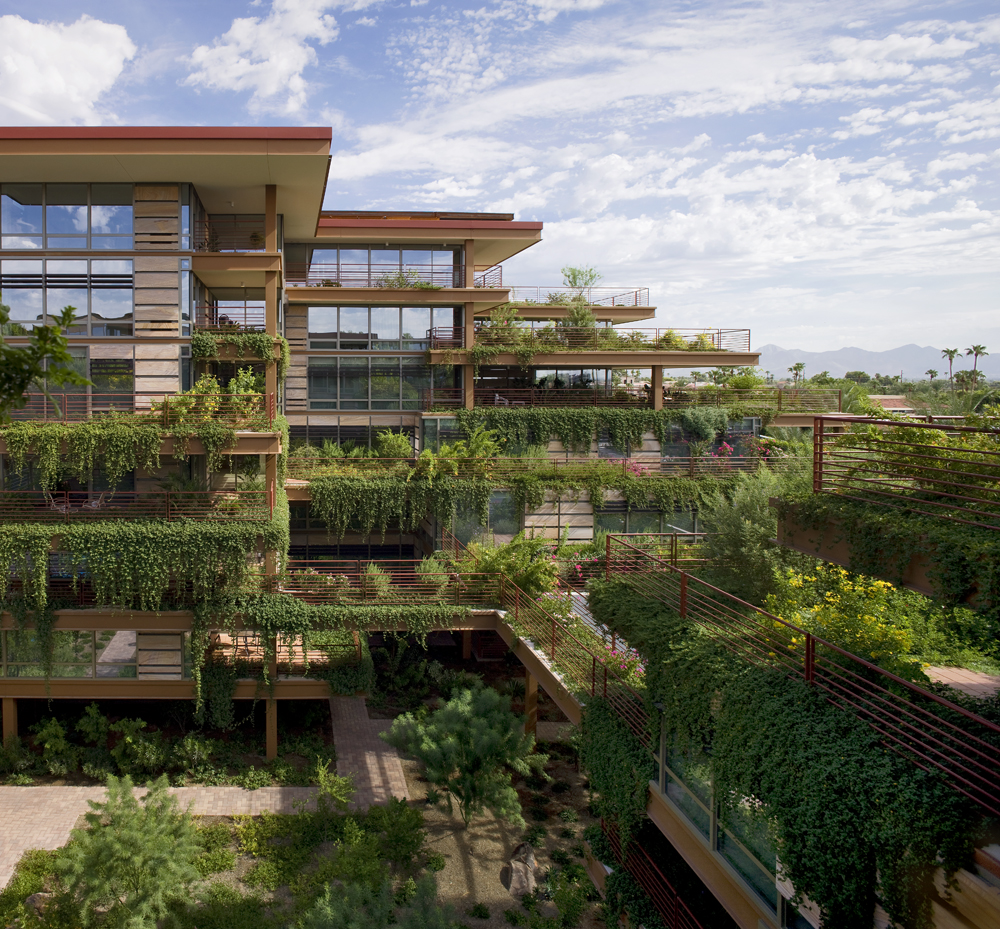
Donis, a celebrated architect known for designing CCTV Headquarters and managing the international architect firm Donis, constructed an idealized environment in which nature and humanity coexist. In his design, Donis established new forms of topography formed by terrace-like structures made of timber, depicting a vibrant natural landscape filled with lush greenery intended to house millions of people. The inspired landscape takes advantage of the most sustainable transportation methods and produces an environment where diverse networks of cultural exchange would thrive.

Like Optima, Donis envisions a world where nature and infrastructure become one, and innovative, thoughtful design leads the direction for an excelling world. You can read more about Fernando Donis and his vision behind Frame City here.  

Optima Lakeview Brings WiredScore Certification to Chicago Multifamily Developments

As employment and living spaces continue to blur, residents are seeking communities that foster technology for both entertainment and work purposes, empowering them to define the way they live. At Optima, we are proud to share that our newest multifamily development, Optima Lakeview, meets those demands and is the first multifamily development to achieve the WiredScore Home Gold certification in North America.

“At a time when people are working from home more than ever before, Optima Lakeview is proud to be a leader in ensuring residents can access a fast and reliable wireless connection throughout the building – whether they are in their home or using one of the many amenity areas,” said David Hovey Jr., AIA, President. “People’s reliance on technology has only increased since the pandemic, so we’re excited to show our residents our commitment to meeting their technology needs in their new home. At Optima Lakeview, residents and their guests can confidently use their devices wherever and whenever as they’ll always have strong connectivity.”

In 2019, WiredScore launched its first Home certification in the UK, and after great success, they expanded, launching WiredScore Home in North America in June 2021. Optima’s partnership with WiredScore began prior to the formal launch in September 2020. Since then, they have provided essential guidance on leading technology features that matter most for our residents’ experiences, leading to the exceptional standards of a high-quality, resilient digital network that Optima Lakeview meets.

We sat down recently with Michelle Eichengrun, Client Success Manager at WiredScore, to talk about the experience working with the Optima team. “Achieving WiredScore Home Gold certification acknowledges Optima’s position as a leader in innovation,” Eichengrun explains, “and recognizes the vast technological and digital connectivity advancements that Optima Lakeview offers its residents. The road to certification was an intense one, grounded in a rigorous evaluation process that focused on five essential aspects of modern living: masterplanning, infrastructure, services, monitoring and innovation. Every step of the way, we were impressed with the responsiveness of the Optima team, the excellence of their design, and their commitment to investing in future-proof technology for their residents.”

Residents in Optima Lakeview will benefit from best-in-class digital connectivity features accessible across the entire seven-story development. The building will be home to a cellular repeater system to improve mobile performance even in the most confined locations. Three internet connectivity providers will be available to tenants: AT&T, RCN and Comcast. With same-day sign-up and speed options available, residents will be able to stream movies, play games, digitally communicate with loved ones and start remote work the moment they move in. 

Fast and secure Wi-Fi will stretch throughout Optima Lakeview’s extensive amenity areas, allowing tenants to remain connected throughout the whole building. Each residence will also contain dedicated and protected media panels for telecommunications equipment. 

“In today’s world, connectivity is no longer the renter’s problem; it’s now the owner’s responsibility to provide them with the best technological experiences,” Eichengrun says, “and Optima Lakeview has taken the responsibility to provide seamless and aspirational digital technology features for residents — so they don’t have to.” 

We continue looking towards the future, designing each of our multifamily properties with exceptional programming, service and technology in mind, and WiredScored’s Gold Certification of Optima Lakeview is a reflection of our commitment to these values. To learn more about Optima Lakeview visit our website. To learn more about WiredScore Certification, please visit wiredscore.com.

A Brief History of the Skylight

One of Optima’s hallmark design principles is bridging outdoor and indoor environments through thoughtful architecture. Throughout history, many features of design have supported that same principle. Today, we’re exploring an ancient feature of architecture that continues to evolve with time and make its mark in delightful new ways — the skylight. 

History 

The concept of using natural light to brighten a room isn’t new. The skylight’s origin can be traced back to Ancient Roman architecture and design. The extravagant feature was regularly included in many Roman construction feats and was often referred to as an oculus. One of the most famous skylights of its time, the oculus at the Pantheon in Rome, still welcomes vibrant rays into the church today.

Over time, glass became a sought-after resource for use in grand development features like the skylight. As the industrial revolution began, more and more innovative architectural advancements came into play, including the fabrication of architectural glass work, allowing a growing number of architects to experiment with skylight design.

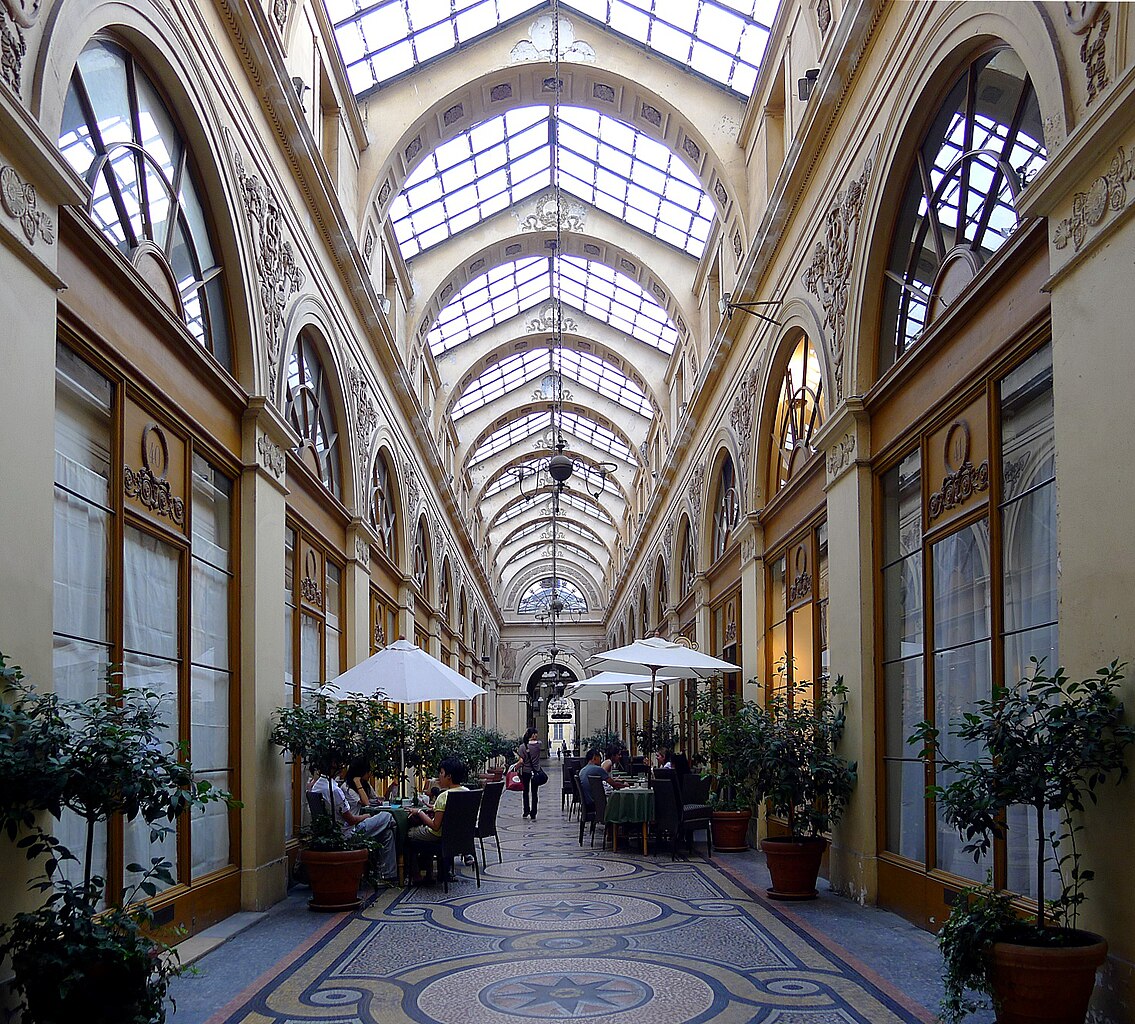
Architects around the world began incorporating skylights in their designs, which allowed them to play with volume, natural light and interior space in exciting new ways — much to the delight of their patrons who commissioned their work. Many of the most celebrated buildings erected from the mid-18th century through the early 19th century featured skylights, including the opulent Palace of Versailles and the elegant arcades of the Galerie Vivienne and Passage Jouffroy.

Optima Lakeview

Our newest luxury residential development, Optima Lakeview, is dedicated to pushing the boundaries to offer a fresh, elevated sense of home; as part of the vision, we chose to orient the entire building design around a seven-story atrium, replete with a fixed in place, geometric skylight fabricated from steel and coated in our signature Optima Red.  Beyond the design itself, the use of skylights floods the interior volume with natural light, offering residents and visitors a constant boost to their health and wellbeing. 

Natural light floods into the atrium and other extraordinary amenity spaces at Optima Lakeview

Today

The skylight has continued to evolve and expand its purpose. Modern adaptations, benefitting from new design thinking coupled with sophisticated engineering and materials, allow for more observable connections to outdoor environments and sustainable building standards, including energy and temperature conservation. 

Today’s design professionals working on projects ranging from commercial buildings to retail centers to private residences continue to break new ground with skylights that provide exciting new features such as roof windows and other retractable roof lights that expose the outdoors. And with the ongoing research and interest in natural light’s many health benefits by scientists and architects alike, there is no doubt that the iconic skylight will continue evolving, with forward-thinking architects pushing the boundaries.

Women in Architecture: Marion Mahony Griffin

Often unrecognized for her immense contributions to the Prairie School, Marion Mahony Griffin was a leader in the architectural world for many years, paving the way for the countless women who followed her. Today, as part of our ongoing “Women in Architecture” series, we’re exploring the inception of the iconic architect and designer and where her extensive experience led her. 

The Life of Marion Mahony Griffin

A Chicago native, Mahony was born in 1871 to Jeremiah Mahony, a journalist, and Clara Hamilton, a teacher. After the tragic events of the Great Chicago Fire, in which her family’s house was destroyed, her family relocated to the Chicago suburb of Winnetka where she spent the majority of her childhood. Inspired by how rapidly the landscape around her was changing — and encouraged by her cousin Dwight Perkins, an American architect — Mahony was drawn to the idea of furthering her education at the Massachusetts Institute of Technology. 

Mahony graduated from MIT in 1894 and was only the second woman to receive an architecture degree from the school (after the World’s Columbian Exposision’s Women’s building designer, Sophia Hayden). She soon moved back to Chicago where she became the first woman in modern history to sit for, and be granted, an architectural license in the United States, benefiting from the fact that Illinois was the first state in America to allow women to hold licenses.

Ward W. Willits House, designed by Marion Mahony Griffin. Credit: Teemu008 on Flickr Creative Commons, CC BY-SA 2.0 Deed

While in Chicago, Mahony spent two years working with her cousin Dwight Perkins at his studio in Steinway Hall (which Perkins also designed), where a diverse crowd of innovative artists and architects from the Prairie School could always be found. Soon after she left her cousin’s firm, she discovered another young Chicago architect also working in the building, Frank Lloyd Wright. Hired as Wright’s first employee, Mahony worked on and off with him for the next 14 years and became a significant contributor to his practice. 

Ward W. Willits House, Highland Park, Illinois, 1902, One of the numerous intricate watercolor renderings Mahony created for Wright during her employment, Courtesy of Frank Lloyd Wright Foundation

Career and Achievements

While working for Wright, Mohony provided intricate architectural renderings for his designs, becoming an essential participant in his work and leaving her without credit — a recurring theme throughout her career. Today, the renderings are acknowledged as her creations and she is recognized as one of the greatest architectural illustrators. 

Mahony completed numerous independent projects while working for Wright including Evanston’s All Souls Unitarian Church. The intimate church featured an abundance of alluring stained glass in its skylights, windows and numerous other light fixtures. 

Eventually, Mahony left Wright’s studio to work with her husband, Walter Burley Griffin, a fellow architect and leading member of the Prairie School. Together, Griffin and Mahony created their most renowned work, the design of Prairie School residences in Mason City, Iowa, Rock Crest – Rock Glen. The nationally-recognized historic district features eight elaborate Prairie School homes that surround the city’s Willow Creek. 

In 1914 the couple relocated to Australia, where Mahony’s watercolor renderings of Griffin’s design were chosen as the plan for the country’s new capital, Canberra. In Australia, Mahony’s commission’s increased dramatically. One of her final and most well-known works is Melbourne’s Capitol Theatre. The theatre’s opulent decor and avant-garde ceilings and walls were designed to invoke a crystalline cave, and showed a new side of Mahony’s architectural gifts.

Today, Mahony’s extensive experience and portfolio speak for themselves, and she is finally recognized as a trailblazer for architecture and design, and as an original member of the Prairie School.

Romanticism to Ruin: Two Lost Works of Sullivan and Wright

Chicago is fortunate to have a rich architectural tradition. From the city’s first skyscraper built in 1885 to the transcending towers that look over the urban landscape today, architecture is at the forefront of Chicago’s role as a world-class city. At Optima, we are grateful to be part of an ecosystem that appreciates thoughtful and purposeful design. In the spirit of celebrating some of Chicago’s most prominent architects, we are delighted to see an exhibition at Wrightwood 659 that brings two magnificent lost buildings, designed by luminary architects to the public.

Romanticism to Ruin: Two Lost Works of Sullivan and Wright can be seen at Wrightwood 659, located just south of Optima Lakeview. This collection offers a glimpse into the rich history of two buildings designed by renowned architects Frank Lloyd Wright and Louis H. Sullivan. Though few connections are evident between the two structures at first glance, a deeper dive uncovers the rich relationship between the Garrick Theatre in Chicago and the Larkin Administration Building in Buffalo.

Photo of the Garrick Theatre
The Garrick Theatre, 1891, Photo courtesy of The Richard Nickel Committee and Archive

Reconstructing The Garrick

At the time of its completion in 1892, the Garrick Theatre, with a capacity of 1,300 seats, was among the tallest buildings in Chicago. Sullivan and his firm partner, Dankmar Adler, designed the exquisite structure to reflect the German heritage of its original investors, but made every development choice with careful thought for the theatre’s visitors. As the historic structure faded with time, its decline accelerated, and in 1961, amid much controversy and disagreement, the theatre was razed and replaced with a parking structure.

Reconstructing the Garrick uses stencils, fragments, drawings, photography and narrative to bring the lost architectural treasure back to life. Some of Sullivan’s most opulent designs for the Garrick included numerous terracotta portraits of well-known German men of the arts that protruded from the Theatre’s upper floors. Fragile ornamentation and vibrantly-colored plasters consisting of gold, jade and salmon, salvaged before and after the building’s demolition, are on view as part of the exhibition, offering access to delightful details of this grand structure that have been long-forgotten.

Photo of the Larkin Administration Building
Larkin Administration Building, 1934, Larkin Company photography collection

Reimagining the Larkin

Razed in 1906, the Larkin Administration Building, owned by Darwin D. Martin, was Wright’s first commercially-designed structure and allowed him to apply his innovative and pioneering techniques to a much larger scale. The building, designed and constructed for the Larkin Soap Company, was groundbreaking in its own right as a center where all of the company’s products were both manufactured and mailed. However, at the forefront of Wright’s mind was designing for workability.

Wright and Martin both understood that an ordered, well-lit and harmonious environment would champion the workers. The five-story red brick building included numerous modernized mechanics, including air conditioning, built-in desk furniture and suspended toilets. Wright designed most of the building’s furniture himself, and many pieces are on display within the exhibition. Deemed by critics and architects at the time as the finest commercial building in the world, the Larkin also seamlessly unified technology with the nature that surrounded it with its rooftop garden, recreation areas and water lily ponds.

Unlike the Garrick, after years of deterioration, there was little fight to save the Larkin. However, today both buildings hold greater significance than ever before. The Gerrick and the Larkin prove how transcendent architecture is defined not only by its material and look, but also by the lasting impression it stamps into history.

Romanticism to Ruin is currently open to visitors Fridays and Saturdays through the end of December 2021. You can reserve tickets to the exhibit here.


Women in Architecture: Amanda Williams

As part of our ongoing “Women in Architecture” series at Optima, we’re taking a look at another spearheading female figure: Amanda Williams. Similar to many of the women in this series, she is a pioneer in her field. Trained as an architect, Williams blurs the line between visual arts and modern architecture. Learn more about her remarkable life and work below. 

The Life of Amanda Williams

Amanda Williams was born in 1974 in Evanston, Illinois. However, she grew up in Chicago’s Southside Gresham neighborhood. She graduated from Cornell University in 1997, where she studied architecture and was a member of one of the nation’s most prominent honor societies. After graduating, Williams moved to San Francisco and worked for a commercial architecture firm for six years before returning to her hometown to focus on her love of painting.

Back in Chicago, Williams discovered The Center Program. The Hyde Park Arts Center’s capstone program is a one-of-a-kind opportunity for groundbreaking artists. While in the program, fellow artist Trisha Van Eck challenged Williams to take her talents a step further and paint on a larger architectural scale. Her response led to some of her most recognized and celebrated work today. 

Throughout her practice, Williams uses vibrant color to draw attention to the complexities and intersections of race, place and value within cities. Her paintings, sculptures and installations are all created to examine how the mundane can be viewed through a new lens and question the state of urban space throughout the country. Notable Work

Amanda Williams. Color(ed) Theory: Currency Exchange, Safe Passaage, 2014-16. Photograph by Amanda Williams. https://www.instagram.com/awstudioart/.

In 2015, Williams debuted her most famous project, Color(ed) Theory at Chicago’s Architecture Biennial. The critically acclaimed exhibition, featured in The New York Times, examines race and space on Chicago’s South Side. With the help of family and friends, Williams repainted eight abandoned houses in the Englewood neighborhood between 2014 and 2016 as part of the exhibition. Each house was decorated with specific colors Williams found in products targeted towards Black consumers. Still standing today, the eight eye-opening houses continue to push for further discussions on the complexities of race and space Chicago and around the world.

Chicago is home to another one of William’s most well-known pieces. Located at The Arts Club of Chicago, Uppity Negress was a site-specific exterior installation created in 2017. The work investigates the claim of courtyards as either public or private areas and addresses the vast roles that gender and race play in urban accessibility. 

While much of Williams’ work is located in or near Chicago, her aptitude for creation has led her across the United States. In early 2019, Williams was chosen alongside acclaimed artist Olalekan Jeyifous to design Brooklyn’s newest monument dedicated to Rep. Shirley Chisholm, part of a larger city-wide initiative known as She Built NYC. The monument is soon to be completed and will sit at the Parkside entrance to the neighborhood’s Prospect Park. 

Alongside her transformative work, Williams has been a recipient of many architecture and art awards as well as achievements throughout her career:

  • Chicago’s 3Arts Award, 2014
  • United States Artists Fellow, 2018
  • New Generation Leader, Women in Architecture Awards, 2021
  • Obama Presidential Center Design Team

Williams has lectured at esteemed schools including Washington University, California College of the Arts, Illinois Institute of Technology and her alma mater. Today, she continues to forge a lane of her own and blend traditional visual art techniques with the complexity of architectural design.

Modernist Movements in South America

Countless architects and designers across the world and throughout history share the same passion and appreciation for Modernist design that we hold at Optima. One of our industry’s greatest delights is exploring how design translates through the lenses of other cultures and countries. Today, we’re exploring the ever-important Modernist movements from South America. 

Modernismo in Brazil

Modernisimo, founded in Brazil, began in the wake of World War I and influenced Modernist movements around the world. A rebellion against European artistic and aesthetic influence, Modernismo brought Brazilian life and thought into the modern era through the celebration of the culture’s rich traditions of folklore, architecture, art and style. 

By the 1930s, after decades of success, Modernisimo splintered into factions of artists, thinkers and creatives, but the movement’s influence on later art, sculpture, literature and architecture remains prominent. Brazilian architects and designers such as Lina Bo Bardi adopted concepts of Modernisimo in their own practices, creating world-renowned structures that are still celebrated and used today. 

Casa Luis Barragán. Credit: washingtonydc on Flickr Creative Commons, CC BY-NC-SA 2.0 Deed

Other Movements

Brazil is not the only South American country with a strong Modernist legacy. In Colombia, Venezuela, Mexico and Argentina, Modernism involved active divergence from Spanish influences and was a form of artistic and political protest. 

Architects such as Luis Barragán in Mexico and Carlos Raúl Villanueva in Venezuela began designing structures that departed from classic European designs to create a modern visual vocabulary celebrating the traditions and legacies of their home countries. These architects became globally renowned for their work and are considered among the founders of Modernism.

The Casa Luis Barragán in Mexico City, designed by Barragán, is one of the most internationally transcendent pieces of contemporary architecture in the world. Composed of smooth grey, orange, pink and brown cement façades, the structure served as Barragán’s private residence and studio and took influence from Mexican tradition and vernacular. It is the only individual property in Latin America that is listed as a United Nations Education, Scientific and Cultural Organization World Heritage Site. 

Similarly, Raúl Villanueva’s design for the campus and buildings of the Ciudad Universitaria de Caracas utilized Modernist principles and Venezuelan cultural history combined with urban and architectural planning to construct Venezuela’s center of higher education.

Like all artistic movements, South American Modernism served as inspiration for and reflection of Modernist movements internationally, including Europe and America. Today, the impact of the postwar South American Modernist movements can be found abroad and in the work of many famed architects. 

With Optima’s strong connection to Modernism, we continue to study, admire and garner inspiration from the rich traditions that took root in other cultures and remain relevant and vital today.

Women in Architecture: Jeanne Gang

Perhaps one of the most well-known architects of her time, especially in Chicago, Jeanne Gang is the founder and leader of Studio Gang. Born 1964 in Belvidere, Illinois, a small town on the northern border of Illinois, she was raised with the prairies of the midwest and proximity to Chicago’s architectural legacy. 

Gang studied at the University of Illinois before going on to earn a Master of Architecture with Distinction from Harvard Graduate School of Design. After Harvard, she studied abroad in Switzerland and France as a Rotary Fellow before joining Dutch architect and design theorist, Rem Koolhaas and his architectural firm, OMA in Rotterdam. 

In 1997, she established Studio Gang, her own practice headquartered in Chicago. The studio’s mission is to use design to connect people to each other, their communities, and the environment. Soft details that reflect the light of the lake and suggest rippling columns of water can easily be identified as Studio Gang’s work.

Aqua Tower, designed by Jeanne Gang, 2009. Credit: (vincent desjardins) on Wikimedia Commons, licensed under the Creative Commons Attribution 2.0 Generic license

Studio Gang Around Chicago

Much of Gang’s work is a prominent part of Chicago’s landscape. Her designs can be found across the city, from O’Hare International Airport to the Loop to Uchicago dorms. Over the years, the studio’s work has become integral to Chicago’s rich architectural legacy. Gang’s 2010 Aqua Tower, situated at 225 N Columbus Dr in downtown Chicago, takes inspiration from terrestrial topography. The facade emulates the contours of a topographic map and reflects light in a way similar to the wave patterns of Chicago’s Lake Michigan. The tower combines a hotel, offices, apartments, and a green roof into a vertical community that facilitates human interaction.

In addition to the studio’s practice, Studio Gang is a strong supporter of climate action. As a member of the Active Transportation Alliance and Architects Advocate Action on Climate Change, the firm supports sustainable forms of transportation in urban environments and radical change in the building sector in regards to climate.

In effort to take climate action, Studio Gang has submitted a design to the C40 Reinventing Cities competition titled Assemble Chicago, a carbon-neutral residential community next to the main branch of Chicago’s public library. The proposed project would provide housing for the downtown workforce including those who earn as little as minimum wage. The design is also eco-conscious and works to reduce carbon pollution, minimize waste, and promote urban biodiversity. 

Studio Gang in the World

Jeanne Gang’s designs can be found across the globe from a powerhouse in Beloit, Wisconsin to the Kaohsiung Maritime Cultural & Pop Music Center in Kaohsiung, Taiwan. Wherever their location and whatever their purpose, the structures focus on immersing themselves in their environment both aesthetically and through their contributions to their ecosystems. Gang’s designs take inspiration from the topography and ecology of their surroundings and concern themselves with how they can bolster the environment and human communities around them, creating the perfect harmony between architecture and nature. 

The thoughtfulness of Studio Gang’s work has been recognized by receiving numerous awards. 

  • MacArthur Fellowship, 2011
  • Cooper Hewitt, Smithsonian Design Museum’s National Design Award for Architecture, 2013
  • Named Woman Architect of the year by Architectural Review, 2016
  • Royal Institute of British Architects International Fellowship, 2018

Gang currently serves as a Professor in Practice at the Harvard Graduate School of Design and lectures frequently around the world. Her studio continues to present unique and conscious designs to the architectural landscape, working to build a sustainable future and sustainable communities.

Eileen Gray’s E-1027 Reopens to the Public

Previously, in our Women in Architecture Series, we highlighted the streamlined, industrial style of the modernist designer and architect Eileen Gray, which you can read here. Of her many projects, Gray’s French Riviera villa, E-1027, remains most notable. Over time, the grandiose structure fell into ruins, but following an extensive restoration project, Gray’s Villa E-1027 has reopened to the public.  

In its prime, one of the property’s most beloved visitors was Le Corbusier. Following his death, the villa experienced neglect from numerous tenants for years. However, the property was purchased in 1999 by the French agency, Conservatoire du littoral, to oversee its protection and preservation. Later, in 2014 they established the Cap Moderne Association to manage the rehabilitation. After six years of comprehensive restoration work, the E-1027 villa mirrors the original design that was completed in 1929 by Gray and her husband, Jean Badovici. 

The project aimed to restore both the exterior environment and the interior fixtures of the villa. Inside, new built-in and free-standing furniture and artwork reflect the villa’s original lived-in state from nearly a century ago. Visitors are invited to consider how Gray pioneered an interpretation of modernist warmth with welcoming internal fixtures that contrast the villa’s sometimes cold, concrete structure. 

On the exterior, vibrant blue awnings covering the outdoor walkways offset the villa’s bright white walls. The “house by the sea” is intended to be a living organism within the structure’s larger atmosphere. Surrounded by lush greenery and landscaping on its north and south-west sides and built on pilotis just above a plunging cliff into the sea, the villa successfully fulfills Gray’s goal of being harmoniously integrated into its environment.

Timed tours of this modernist wonder are currently available for small groups looking for a getaway. You can learn more about E-1027 and how to visit it on Cap Moderne’s website here

person name goes here

Maintenance Supervisor

Glencoe, IL


    Acceptable file types: *.pdf | *.txt | *.doc, max-size: 2Mb