The Ennis House: Frank Lloyd Wright’s Most Documented Work

From Taliesin and Taliesin West to his home and studio in Chicago, Frank Lloyd Wright’s iconic architectural contributions continue to remain beloved treasures of modernism. And while many of the buildings attract tourists from across the world, one home, in particular, separates itself as his most documented property, and whether you know it or not, you’ve probably seen it yourself. 

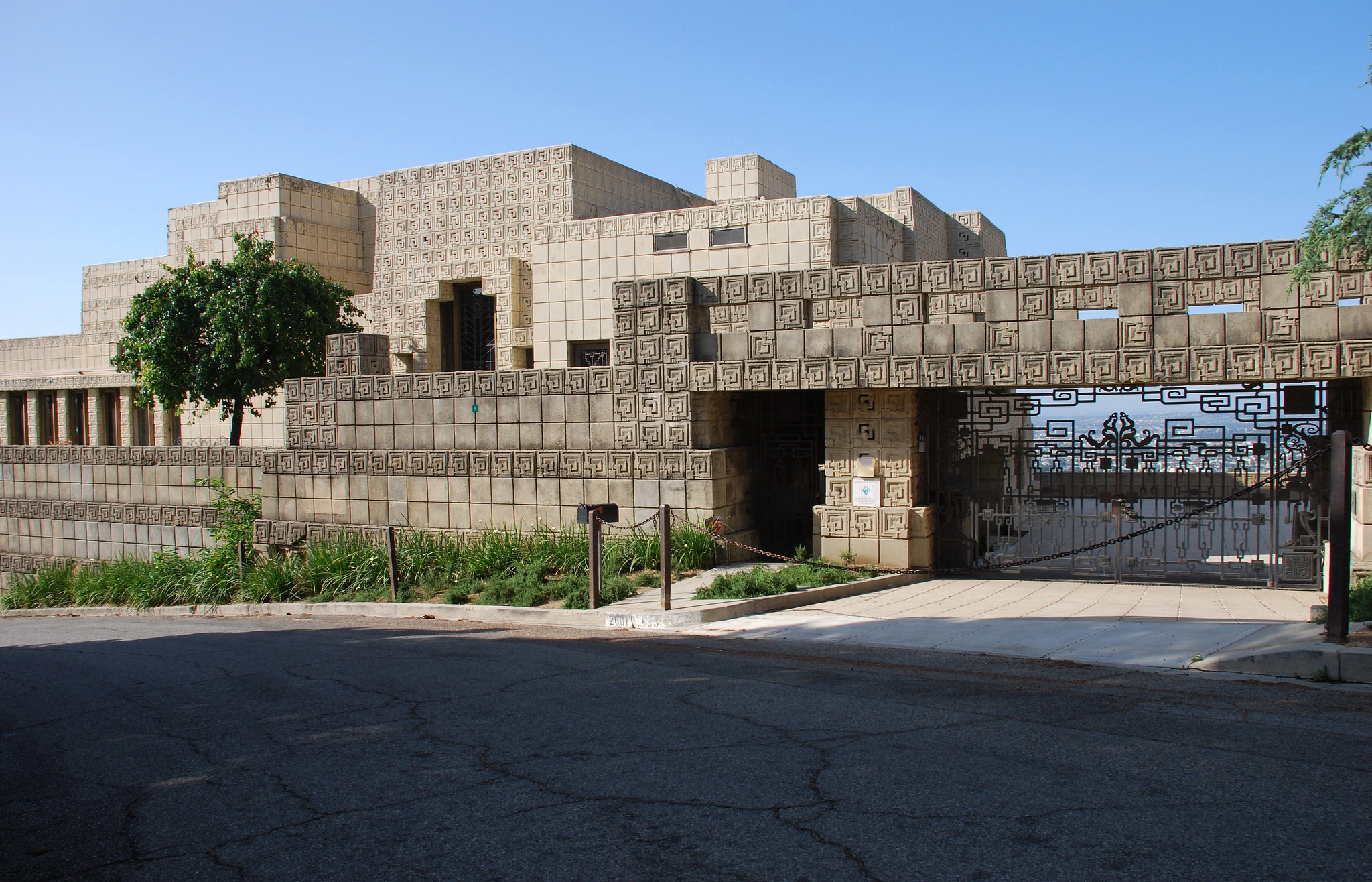
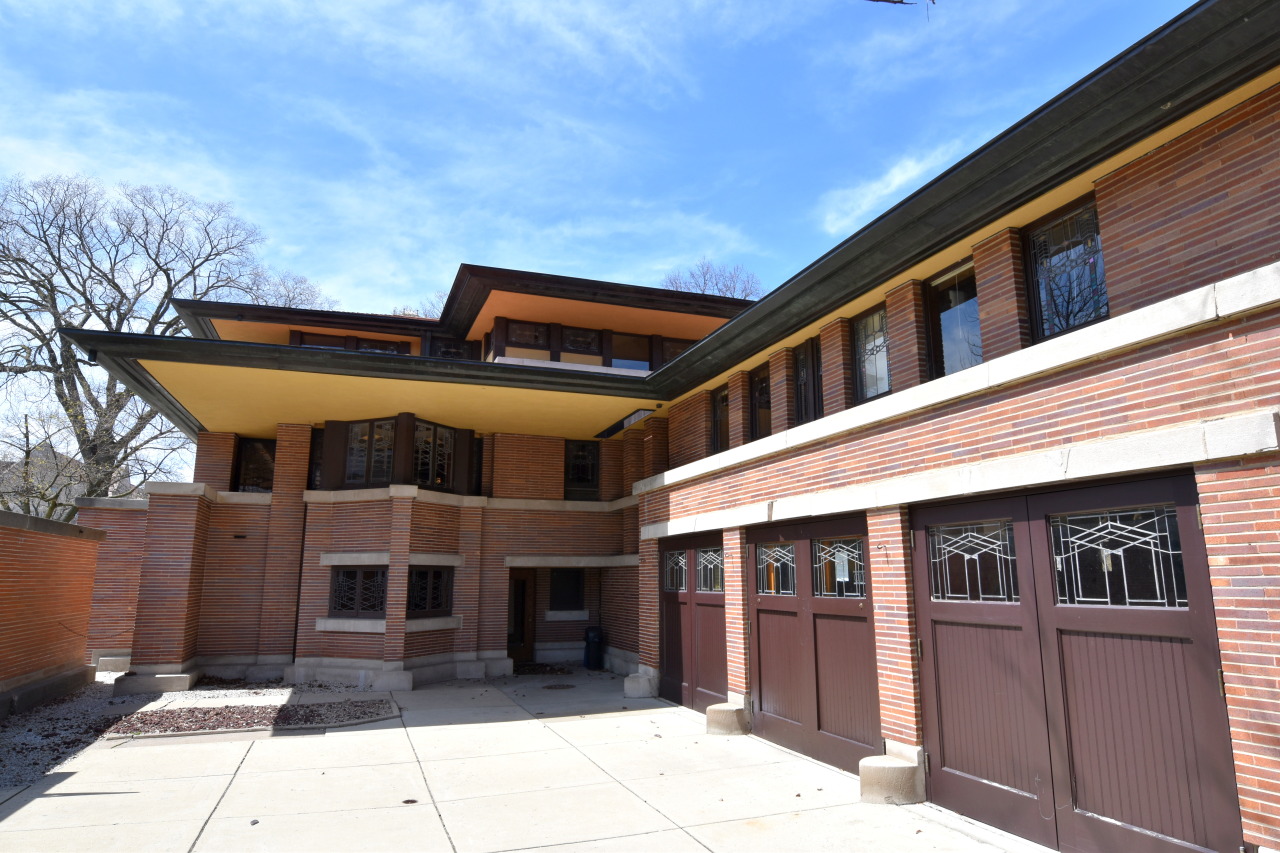
Built in 1924, the Ennis House was only the second home Wright built in California. Situated in the Los Feliz neighborhood, Wright embraced the Mayan Revival style of the time and area, utilizing 27,000 concrete molds in a block construction to create the famous house. Along with the custom textile block design, Ennis House features a tall loggia spine and grand pool on its northern terrace, one of the house’s most glamorous features. 

Although the house was built as a residence for Charles and Mabel Ennis, its exotic design immediately attracted the eyes of Hollywood filmmakers. In 1933 it was used as a shooting location for the first time, but it wasn’t until 1959 that it acquired unnatural recognition for the time as the exterior facade for the B movie House on Haunted Hill. The home remained a popular destination for films for decades, showcasing its impressive interior for the 1975 film, The Day of the Locust

However, in 1982 the home reached new levels of fame after appearing in Blade Runner. While it was only actually filmed for one exterior scene, the director was so entranced by the textile blocks that casts of them were created for sets elsewhere in the movie. The tall ceilings from the cathedral-like dining room and fireplaces were also popularly used in films thanks to their haunting nature. 

Since 1933, features from the iconic house have made appearances in more than 80 films, alongside various commercials, magazine covers and music videos. The Ennis House is designated a city, state and national landmark and added to the U.S. National Register of Historic Places in 1976. It remains privately owned today, but thanks to its inspiring and timeless architectural design, it remains a desired location for anyone looking to capture the perfect shot.

Women in Architecture: Natalie de Blois

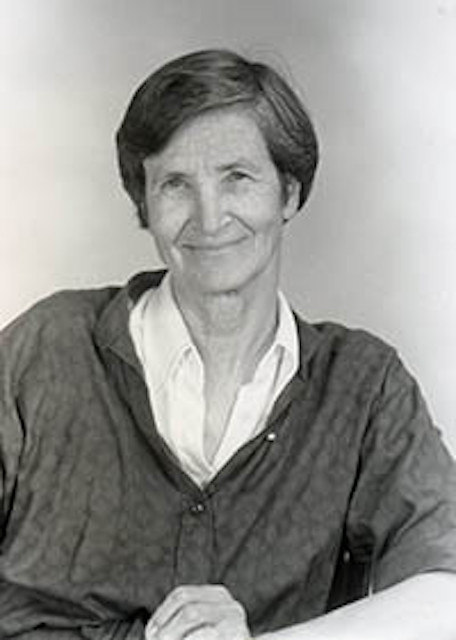
As part of our ongoing “Women in Architecture” series, we’re spotlighting a designer who generously contributed to the refined elegance of American modernism, Natalie de Blois. As an early advocate for women in architecture, de Blois became well-known in feminist architecture circles around the world. Learn more about her incredible life and career below: 

The Life of Natalie Griffin de Blois

De Blois was born on April 2, 1921, in Paterson, New Jersey. Following three generations of engineers in her family, she knew by the age of 10 that she wanted to become an architect. Supported by her father, de Blois’ interests in art and architecture flourished; thanks to him, she enrolled in a mechanical drawing course in school, which was typically limited to male students at the time. 

The class not only helped de Blois evolve her drawing skills for what would become her passion, but it also introduced her to the bias she would experience throughout her career. In 1939, she visited the New York World’s Fair in Flushing Meadows, further expanding her understanding and vision for modern architecture.

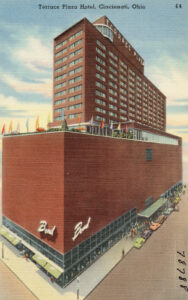
Skidmore, Owings & Merrill, Natalie de Blois, a postcard of the Terrace Plaza Hotel, Cincinnati, Ohio, 1940

De Blois enrolled at Western College for Women in Oxford, Ohio but soon transferred to Columbia University after they changed their architecture school’s admission policy. While at Columbia, de Blois worked for various firms drafting various presentations and projects

Notable Works and Achievements 

Following her graduation in 1944, de Blois immediately received her first position at Ketchum, Gina and Sharpe, a firm she admired for their dedication to modern design. However, she left due to gender bias less than a year after starting. But, while one door closed, another opened at Skidmore, Owings & Merrill (SOM), where de Blois’ talents were finally celebrated. 

Lever House
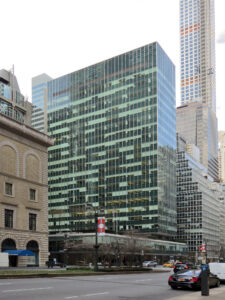
Skidmore, Owings & Merrill, Natalie de Blois, Lever House, Park Avenue NYC, 1952. Credit: Gabriel Fernandes on Flickr Creative Commons CC BY-SA 2.0 Deed

At SOM, de Blois contributed to seminal design proposals including the United Nations Headquarters and Lincoln Center, but it wasn’t until 1948 that she led her first project, Terrace Plaza Hotel in Cincinnati. The hotel immediately received praise for its modern, luxurious look and high-tech amenities for the time. She also contributed designs to many of the firm’s other significant projects, including Manhattan’s Lever House, completed in 1952 and the Pepsi-Cola Headquarters, finished in 1960, perhaps the most complete example of her most modernist design aesthetic.

In 1961, de Blois relocated to work for SOM’s Chicago office, where she was promoted to Associate Partner. In Chicago, she prioritized advocating for women in her field and was a founding member of Chicago Women in Architecture and was appointed to the AIA Chicago Taskforce on Women in Architecture in 1974. However, de Blois left the firm the same year and moved to Texas, where she completed her career in architecture, later becoming a professor at the University of Texas School of Architecture. 

Equitable Building
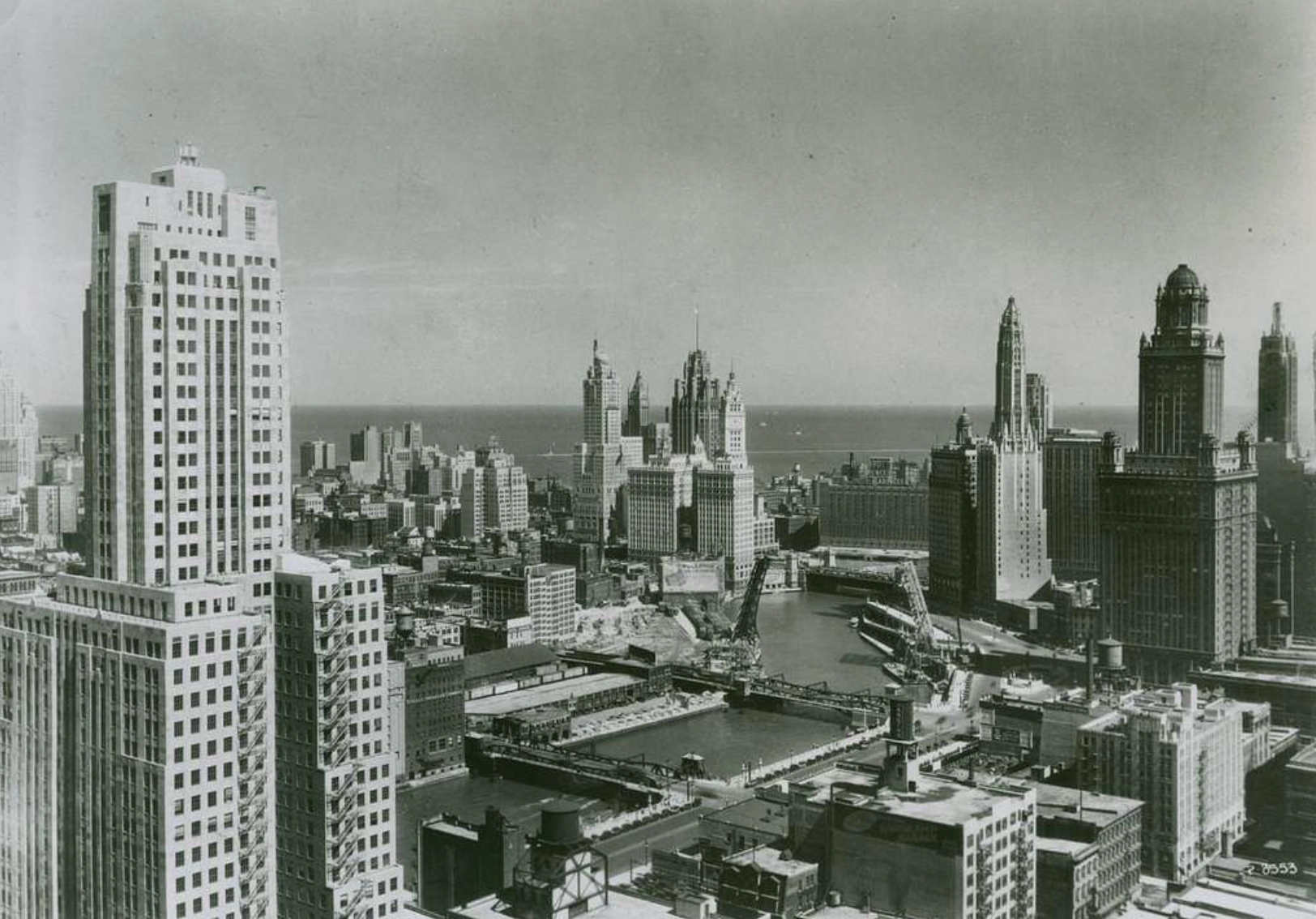
Skidmore, Owings & Merrill, Natalie de Blois, Equitable Building, Chicago, Illinois, 1965. Credit: Warren LeMay on Wikimedia licensed under the Creative Commons Attribution-Share Alike 2.0 Generic license

Alongside her revolutionary work, de Blois has received various design awards and achievements, including: 

  • Fellow, American Institute of Architects, 1974
  • Edward J. Romieniec, FAIA, Award for Outstanding Educational Contributions, Texas Society of Architects, 1998
  • Tallest woman-designed building in the world, 270 Park Avenue, from 1960 until 2009  

Throughout her illustrious career, de Blois’ proved to be a force to be reckoned with. And, in her lifelong pursuit of gender equality, she proved that women could compete at the highest levels of the architecture profession, empowering the careers of countless women who followed her.

Modern Interpretations of Le Corbusier’s Celebrated Designs

Celebrated as the pioneer of modernist architecture, Le Corbusier’s contributions to architecture and design remain as significant as ever. And although much of his work is nearly a century old, designers continue to draw inspiration from his inventive principles. Take a look at how designers are still responding to Le Corbusier’s theories of modernism today. 

This year, the international contemporary art gallery, Galerie Philia, displayed Héritages. Found at Cité Radieuse, a Le Corbusier housing complex built in 1952, the exhibit featured works by eight international designs referencing the functionality and minimalist design elements Le Corbusier famously employed through his work. 

And although the exhibition featured work from multiple designers, each piece united through a visual response or reinterpretation of Le Corbusier’s theories. While some artists showcased work heavily influenced by Le Corbusier in the exhibition’s “resonance” area, others provided pieces opposing his theories in the “dissonance” area. 

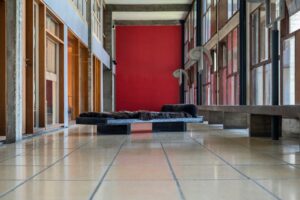
Arno Declerq’s steel daybed in the “resonance” room, Photo by Maison Mounton Noir

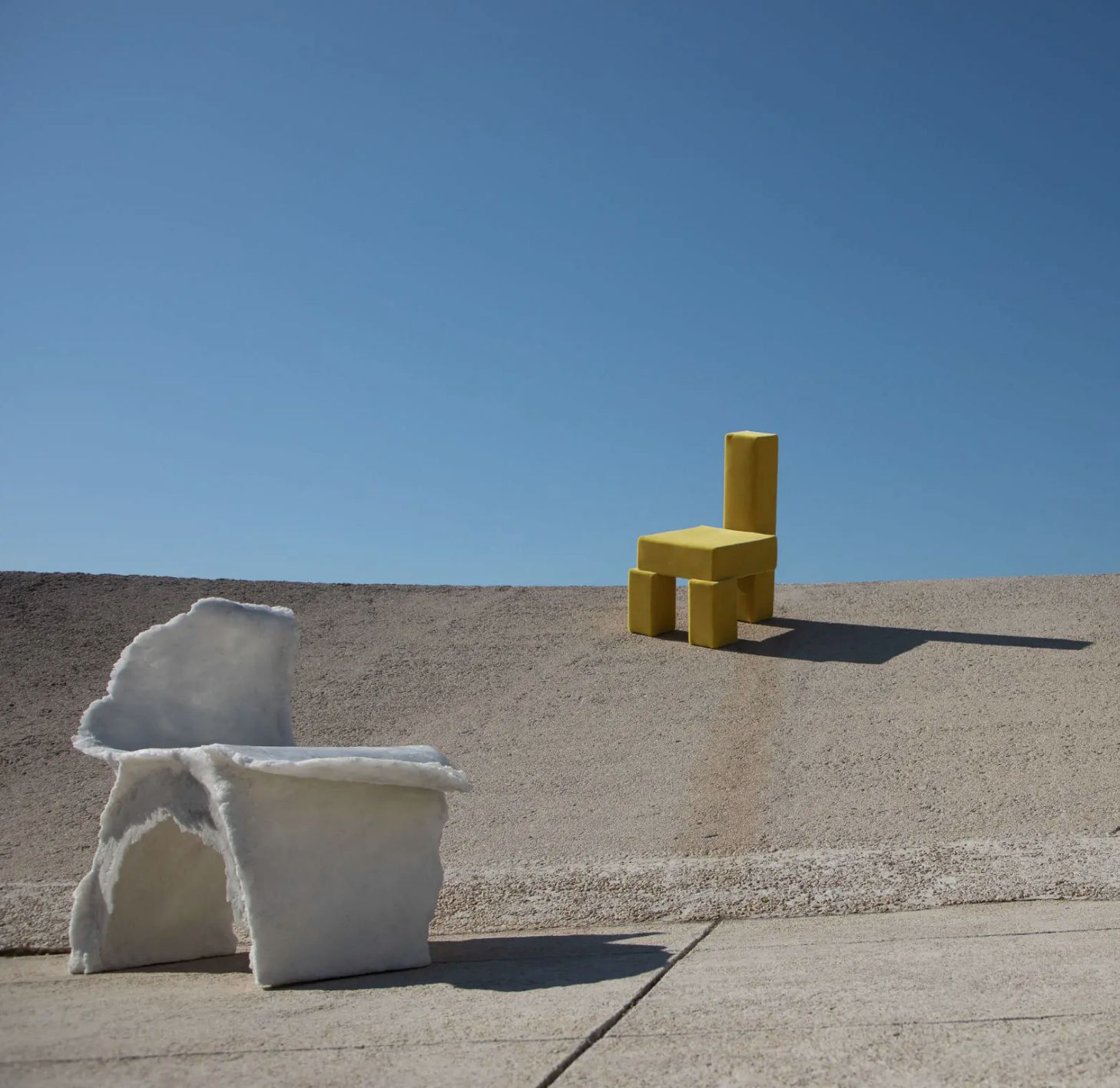
Belgian designer Arno Declercq contributed a sculptural daybed for the “resonance” room, inspired by both Le Corbusier’s famous furniture designs and his architectural contributions. The minimalist design features a structure of steel, a material Le Corbusier often used throughout his architecture. Paired with the daybed, architect and designer Pietro Franceschini contributed a chunky brutalist chair upholstered with vibrant yellow velvet, deeply inspired by Le Corbusier’s bold yet functional armchair designs. 

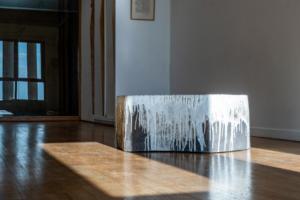
In the exhibit’s “dissancane” room, American visual artist Jojo Corväiá explores imbalance with his standout ceramic table. Using volcanic clay, Corväiá designed the table with the intent of displaying its cracks and irregularities, a practice from which Le Corbusier strayed. Designer Roxane Lahidji also contributed to the room, adding a sculpted chair of marbled salts. The stretched seat and arched base make reference to the fragility of organic designs. 

Jojo Corväiá’s volcanic clay table in the “dissonance” room, Photo by Maison Mounton Noir

In addition to the furniture, artist Flora Temnouche created three oil paintings for the space. The paintings touch on the inertia of nature, partially inspired by the sparse relationship to nature Le Corbusier’s approach to design and architecture employed.

Considered one of the most influential figures in contemporary design, Le Corbusier’s work continues to create inspiration across the world today. And, thanks to Galerie Philia’s Héritages exhibition, artists and designers continue to honor and reflect the transformative work, bringing it new meaning and life. Explore the rest of the exhibition’s bold work here!

Architecture as Subject in Art

If you look closely, architecture and its influence are in almost everything, from the clothes someone is wearing on the street to the more obvious building they may be walking past. We’ve previously touched on the inherent connections that architecture and fashion share, but arguably even more significant is architecture’s relationship with fine art. Today, we’re exploring how some artists have adopted architecture as a subject in their art throughout history. 

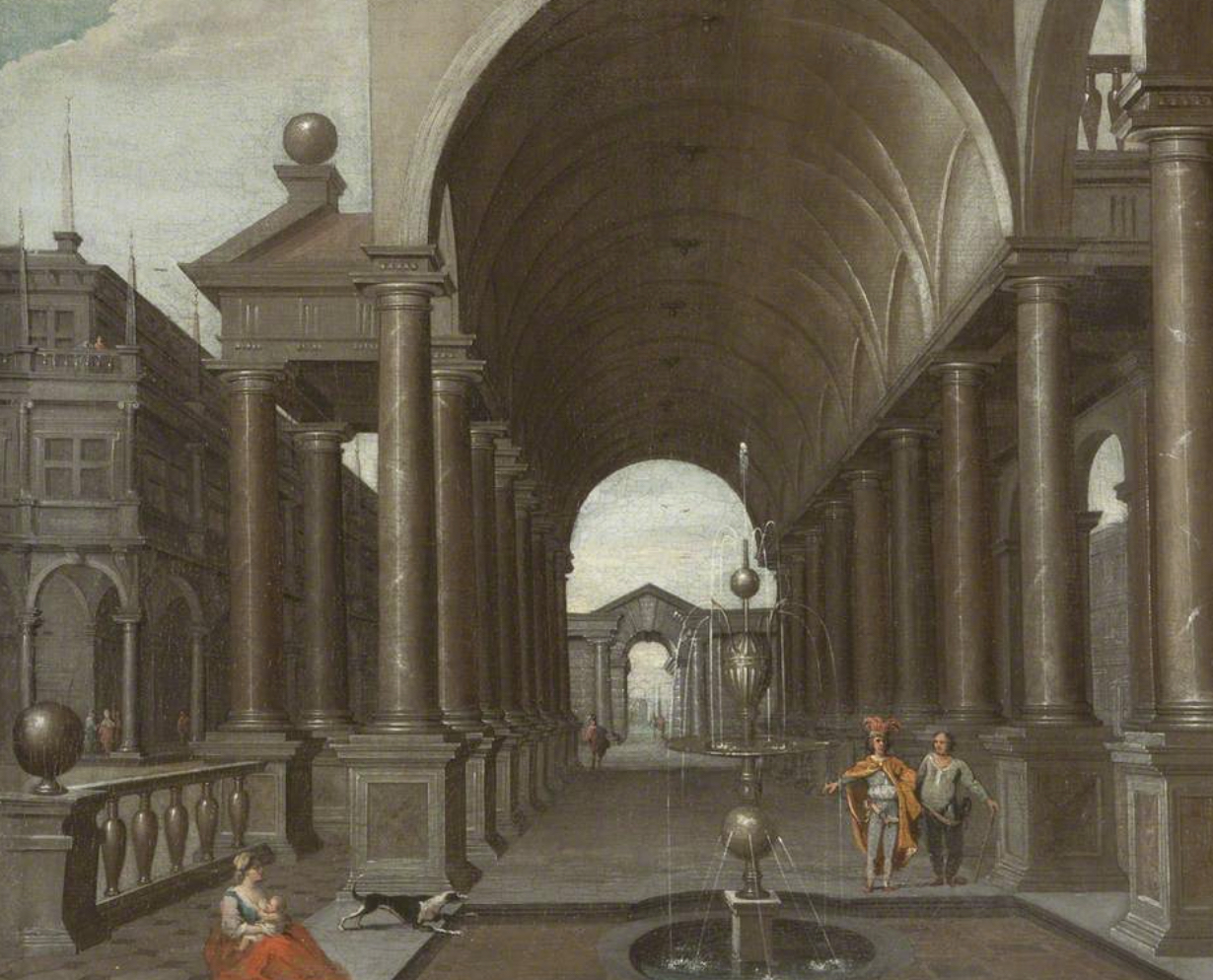
In Western art it wasn’t until the 16th century that architectural paintings popularized across Europe as an independent genre. The genre encouraged artists to use architecture as the predominant subject in the painting by using both exterior and interior views. Before then, architecture was mainly used as a background, providing balance for the rest of the painting. 

The genre centralized in Flanders and the Netherlands with artists like Hans Vredeman de Vries, and it became a staple of the Dutch Golden Age art. Vredeman de Vries’ Fountain in the Courtyard of a Palace is one of the earliest architectural paintings, leaving a great influence on the art and architecture of Europe for decades. The painting displays grand Corinthian columns lining a stretched arcade. The arcade leads to a lavish courtyard in the background and, in the foreground, a fountain. 

Oath of the Horatii, Jacques-Louis David, 1784

In 1784, French painter Jacques-Louis David’s Oath of the Horatii became a triumph among the public and remains renowned today. The large painting depicts a Roman legend of a dispute between two cities. In the foreground, six life-size figures pose like actors on a stage, each displaying a different character. The geometry and depth of the setting’s architecture become emphasized due to David’s use of harsh, slanted light throughout the space. 

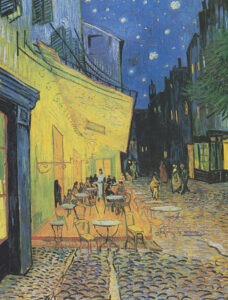
Café Terrace at Night, Vincnet van Gogh, 1888

Vincent van Gogh’s Café Terrace at Night is another acclaimed architectural painting. Van Gogh completed the oil painting in 1888 in Arles, France. The setting exhibits a brightly lit terrace of a coffee house under a night sky. To the right, a tree’s branches slightly come into view above a lighted store underneath, and in the background, a shaded church tower ascends above the city.

Like fashion, the connection between art and architecture is innate. Artists may find inspiration from the unique architecture around them, while architects may discover influence from a specific style of architecture in painting. And for decades to come, these collaborations will continue to happen, expanding and advancing the art and architectural world.

The Culture of Planning

Planning is a routine process for many. From making a grocery list to thinking about where to vacation next, it’s part of everything we do. And like our daily lives, throughout history, the effects of planning have been known to shift dramatically from time to time. In his latest book 194X: Architecture, Planning, and Consumer Culture on the American Home Front, author Andrew M. Shanken details the imperfect bond that architecture and the culture of planning shared in 20th-century America. 

Planning as Culture

While architects and planners experienced anticipation that influenced the shifting in trends in the early 20th century, it wasn’t until the 1930s that anticipation flourished and turned into action. The suspense that overlapped with The Great Depression at the time flooded people’s heads with creativity, innovation and radical ideas, affecting everything from the economy and pop culture to the booming architecture that followed the time. And at a time when shared pursuits for shaping America’s future were booming, planning became an overpowering cultural motto.

While planning certainly existed before this, it wasn’t until the intricate planning projects of the New Deal that pushed the approach to the mainstream. At the time, the word planning became associated with various figurative characteristics, like the future, comfort, stability and ultimately, radical change. From the planning of a single house to that of one of the country’s largest projects, everything had an interconnected tie in responding to the crises at the time. However, it was soon apparent that planning was culturally and historically contingent. 

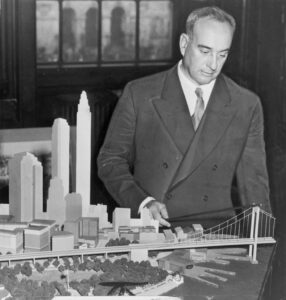
American urban planner Robert Moses with a model of New York City’s Battery Bridge, 1939, Courtesy of the Library of Congress

The End of Planning

Following WWII in the mid-1940s, Americans anticipated a boom in architecture across the country. However, as the country looked towards the inspiration that came with postwar planning, some began to question the intent behind the approach. And soon after speculations began to rise in 1943, society’s thoughts shifted. 

Preparations for the building boom that was thought to follow WWII quickly reversed. The modern builds architects had designed to express progression were turned on their heads and looked at, like planning, as hindrances. Architects at the time also found it difficult to forge a coherent agenda for post-war architecture and planning, further detaching the culture of planning from the public.

The culture of planning then shifted from mutual anticipation for the future that created inspiration to detached ideas that resisted individualism. However, Shanken believes that America’s passion for planning is ever-present. “This mission rests dormant in American culture, awaiting the right conditions to reassert itself,” he says. “Clearly, the culture of planning still has things to teach us.”

Stay tuned for more on the visionary designs of American architecture across the decades. For those interested in learning more about the wartime vision of postwar architecture, 194X: Architecture, Planning, and Consumer Culture on the American Home Front is available through a number of booksellers online.

A Brief History of Outdoor Living Spaces

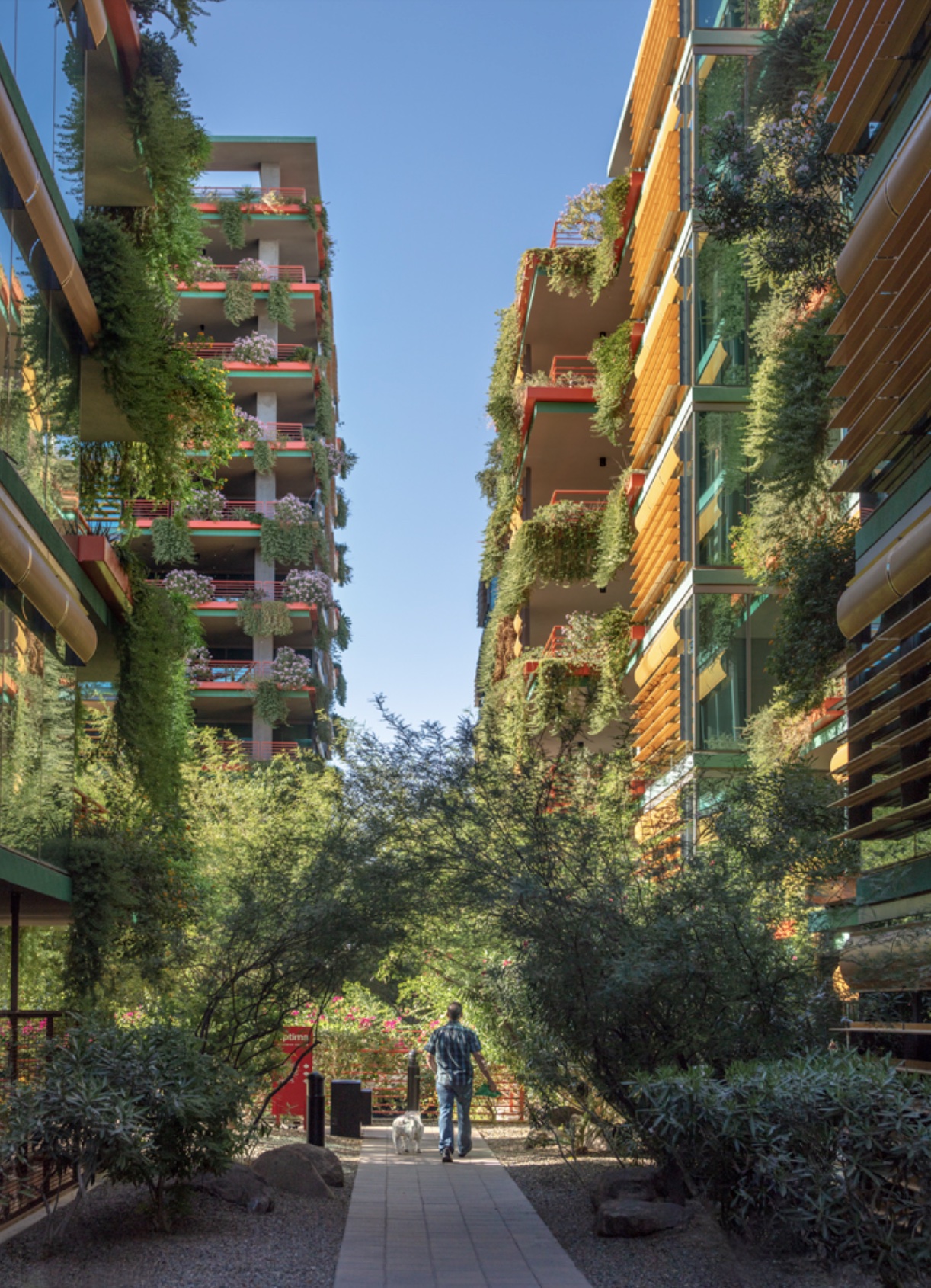
While interior spaces make an argument for being the heart of a home, outdoor areas – like private terraces and sky decks – contribute space just as important for residents, especially in cities. At Optima, we recognize and share this appreciation for access to nature, which is one of the reasons residents in all of our communities have access to vibrant private terraces and communal rooftop sky decks. Today, we’re diving more into the history behind the beloved outdoor extensions. 

A private terrace at Optima Lakeview

Balconies and terraces have been an integral aspect of architecture across the world for millennia. Thanks to their assistance in increasing air circulation and illuminating the interiors of buildings, Ancient Greece helped popularize the functionality of balconies more than 2,000 years ago. Balconies and terraces continued as popular architectural additions across Europe for centuries, but it wasn’t until the year 1500 that the rooftop terrace was created, transferring the lush area from the facade of buildings to the roof. 

While these outdoor spaces were popular across the world, utilizing outdoor space for leisure wasn’t a focus for many homes until the mid-20th century. Before this, outdoor spaces, backyards, were popularly used to support families with livestock and gardens. But, as time shifted, so did the purpose of outdoor living spaces, changing from areas made to sustain families to those made to support leisure activities and entertainment. 

The sky deck at Optima Lakeview

Today, balconies, terraces and sky decks remain integral to the architecture of urban landscapes, functioning as modern-day backyards and greenspaces for city residents. Since their inception, outdoor living spaces have continued to evolve with time, changing purpose and look, and we can’t wait to see what innovations in the coming years will bring for design, architecture and sustainability.

Women in Architecture: Mary Colter

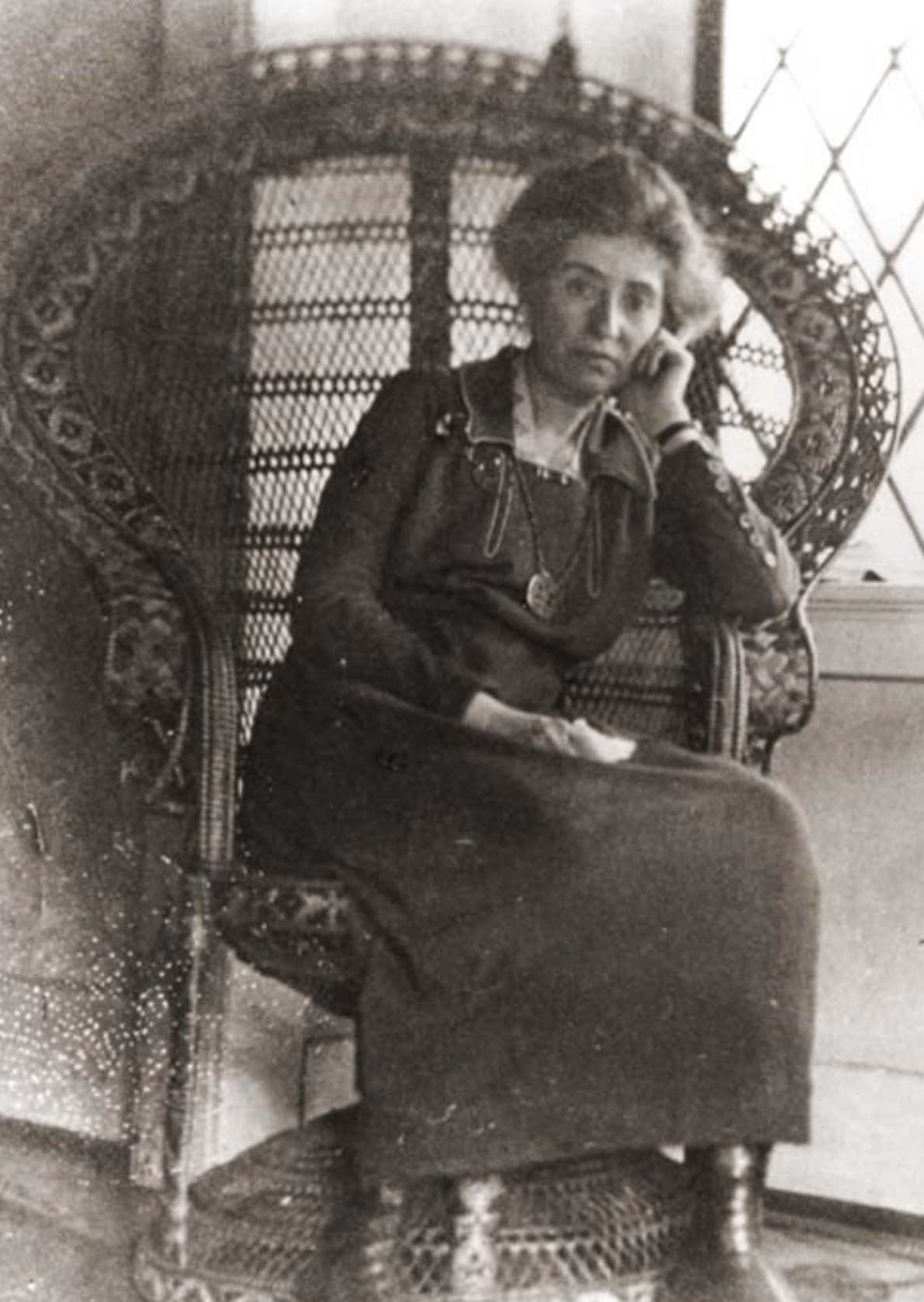
In the late 19th century when few women were to be found in the architecture field, Mary Colter disrupted the landscape with lasting impact. Her career was founded on lifelong passions that began with deep curiosity about Native American culture and a love of Arts and Crafts architecture that she was exposed to as a young girl. Learn more about her inspiring life and work below:

The Life of Mary Colter

Colter was born on April 4, 1869, in Pittsburgh, Pennsylvania, where she was raised by her merchant father, William Colter, and milliner mother, Rebecca Colter. As a child, Colter moved across America with her family, living in towns from Colorado to Texas before calling St. Paul, Minnesota home for the rest of her youth. In St. Paul, she acquainted herself with the large Sioux community in the city, immersing herself in their art and culture while profoundly influencing her architectural practice. 

After graduating high school at just 14 years old, Colter moved with her mother and enrolled in Oakland’s California School of Design, where she studied art and design. In California, she not only advanced her drawing skills but discovered an appreciation for architecture, thanks to an apprenticeship at a local firm. In 1891, she returned to St. Paul, where she found herself teaching art, design and architecture at Mechanics Arts High School for more than 15 years. Students of Colter later found themselves winning awards at the 1893 World’s Columbian Exposition and the 1904 Saint Louis World’s Fair. 

Hopi House, Grand Canyon National Park, Mary Colter, 1905. Credit: NPS Copyright, courtesy of the National Park Service

Notable Works and Achievements 

In 1902, with her newfound recognition, Colter was appointed Chief Architect at the Fred Harvey Company in St. Paul, where she completed designs for 21 hotels, shops and rest areas along numerous railways across the Western United States. Many of Colter’s designs featured characteristics she quickly became known for, including narrow windows, low ceilings, courtyards and being built into the Earth. 

Throughout her career, Colter designed a series of buildings in the Grand Canyon National Park, including the most recognized of the series, Hopi House, in 1905. In the build, Colter employed various indigenous builders, artists and craftsmen in the area to help with her “re-creation.” The completed design exhibits a rectangular, Hopi pueblo structure, finished with stone masonry, mud-coated ceilings and other precise details that model the traditional dwelling type. Hopi House and three other buildings designed by Colter in Grand Canyon National Park were later named National Historic Landmarks in 1987.

The interior of La Posada Hotel, mixing Spanish Colonial Revival with Native American influences, Mary Colter, 1930, Courtesy of La Posada Hotel

Outside of Grand Canyon National Park, Colter left her mark on other famed designs, including what she stated was her masterpiece, La Posada Hotel in Winslow, Arizona. Completed in 1930, the hacienda-style hotel features Spanish Colonial Revival characteristics in its design. Colter’s say in La Posada’s design stretched from the building’s facade and gardens to its interior and dishware. 

Although she grew up in the Midwest, Colter had an enormous influence across the western states, thanks to her curiosity and drive. Blending Spanish Colonial Revival style with Native American cultural elements, Colter helped shape much of the architecture that remains intact in the Southwest today and became a voice for many who didn’t have one at the time.

How Arcosanti is Still Evolving Today

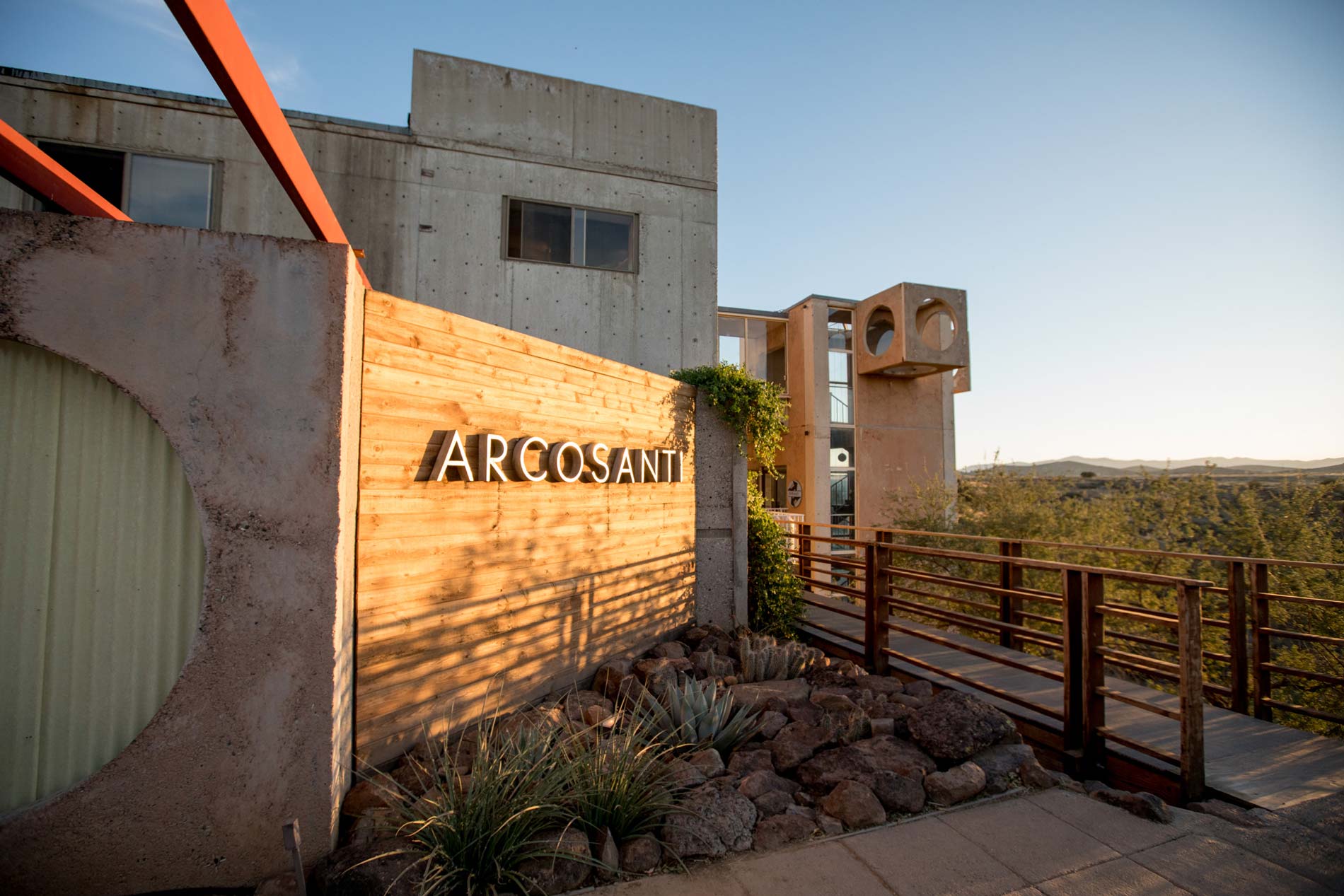
Although 50 years old, Paolo Soleri’s visionary planned city, Arcosanti, is still thriving today. For the last five decades, the magnificent community exhibited the best of Soleri’s philosophy, fusing architecture and ecology and providing a home for many educational resources. However, currently the famed property is entering a new era, pushing the boundaries of Soleri’s philosophy further than ever. 

Liz Martin-Malikian, CEO of Arcosanti under the Cosanti Foundation states that while the community’s first half-century focused on Soleri’s vision, the next half-century will focus on the collective. Not only does the community aim to unearth more behind arcology, but they also plan to collaborate and partner with various groups, including local Indigenous populations. 

Shiro, a shelter by TSOA student, Micehle Yeels. Credit: Designboom®

Many of Arcosanti’s resources are provided to students of The School of Architecture, a crucial feature of the community. One of the key programs constantly bringing new life to the planned city is The Shelter Program. The capstone design project encourages students to design and build single-occupancy structures for future students throughout the community. 

While preserving Arcosanti’s historic past, Martin-Malikian is embracing the future by decoding Soleri’s philosophy of arcology – starting by reframing the community’s vision around its cultural landscape. Along with debuting a Cosanti Indigenous Residency, a new Indigenous co-design program provides a new opportunity to combine sustainability with passive and culturally diverse designs. 

Biopod 1, a shelter by TSOA student, Soloman Edelmen. Credit: Designboom®

Arcosanti has always existed as a hub for innovation and inspiration. And today, with a spotlight on collective, the planned city is preparing to embrace its regional heritage more than ever before. To explore more about Arcosanti, and stay up to date on their events and programming, head to their website here.

Women of the Bauhaus

In “The Other Art History: The Forgotten Women of Bauhaus,” an in-depth piece that was published on July 13, 2018 on Artspace by Jillian Billard, we have the opportunity to understand the enormous impact a group of women visionaries had in shaping the Bauhaus.

We learn from Billard that the Bauhaus was dedicated to “interdisciplinary innovation” by combining design and craft through a new model of fostering community as the basis for learning instead of traditional teacher-student interactions. And with this new model as a defining principle, the Bauhaus community was ripe for welcoming and supporting women artists.

As Billard explains, Walter Gropius, who founded the Bauhaus School of Design in Weimar, Germany in 1919, stipulated that the school would be open to “any person of good repute, regardless of age or sex.” So while women were allowed to study at the school, they were directed into practices commonly regarded as “women’s work” –– textiles and weaving — while their male counterparts were encouraged to be architects, sculptors, and painters.

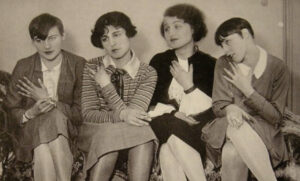
Photo of Alexa von Porewski, Lena Amsel, Rut Landshoff, unknown by Bauhaus photographers Umbo and Paul Citroen), before 1929. Berlinische Galerie, Photographic Collection.

Billard reminds us that the artists most closely associated with the Bauhaus were men, including Josef Albers, Marcel Breuer, Wassily Kandinsky and Paul Klee. At the same time, history has treated the women in the movement as the counterparts of these great artists. In the past ten years, as many have revisited the Bauhaus participants in a more accurate art historical context, we have had the opportunity to celebrate the incredible women artists and the contributions they made. 

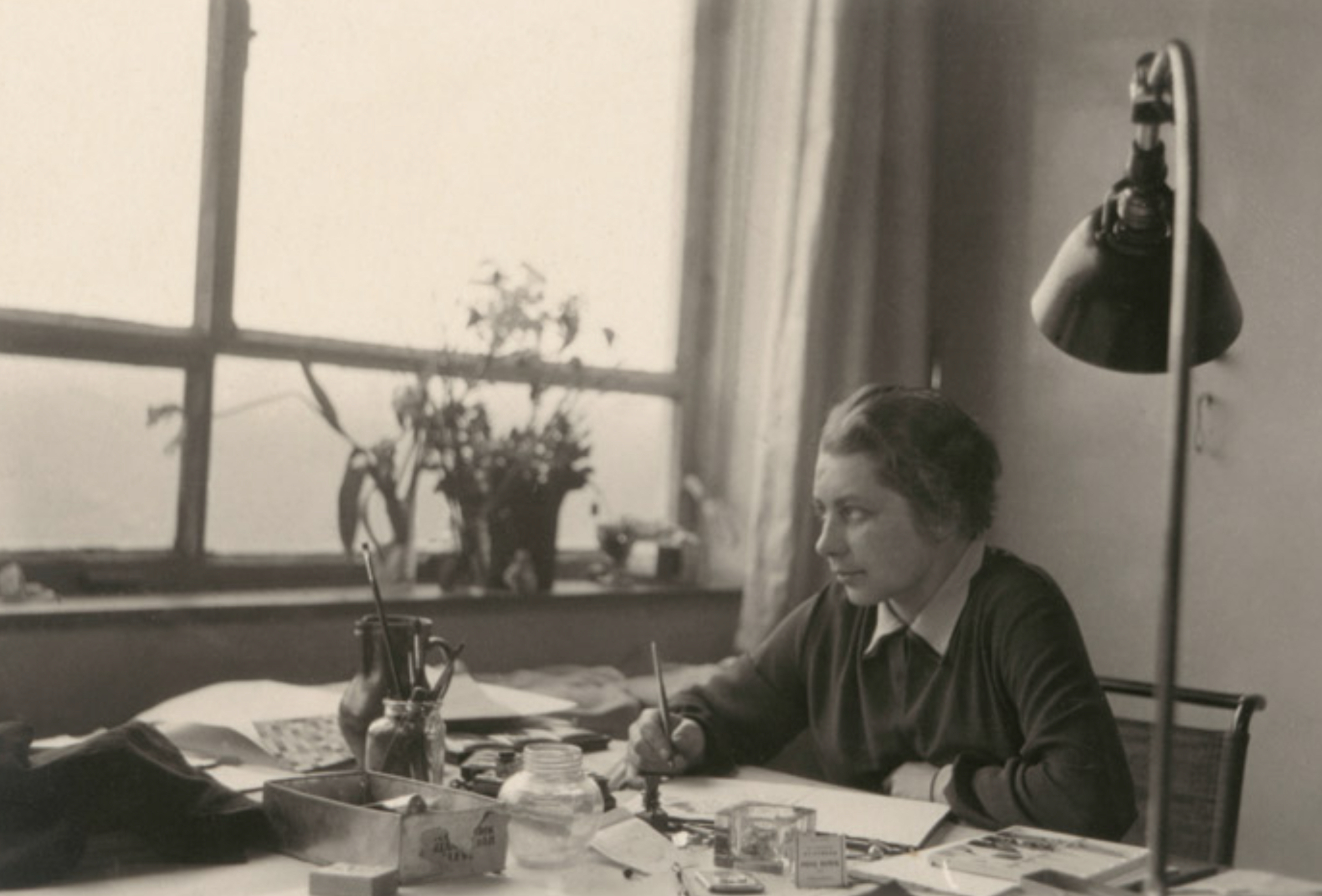
In “The Women of the Bauhaus,” an extensive thesis presented by Corinne Julius in Blueprint on September 3, 2019, we learn of the rise to prominence of Gunta Stölzl, only one of six students certified as a Master weaver. As head of the department from 1929 to 1931, she ushered in the transition from individual pictorial weaving to modern industrial designs, while also implementing the study of mathematics. Her bold artistic experiments include creating the mercerised cotton and Eisengarn fabric for Breuer’s tubular-steel chairs while leading joint projects with the Polytex Textile Company.

Julius describes Marianne Brandt as a brilliant metalwork artist who joined the Bauhaus as a workshop assistant and eventually took over as acting director in 1928 from László Moholy-Nagy. As both artist and administrator, Brandt helped solidify the role of industrial design 

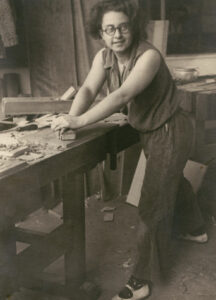
Wera Meyer-Waldeck entered the Bauhaus in 1927, studying with Marcel Breuer in the carpentry workshop making furniture. Over the next several years, she studied in the construction and architecture departments, and went on to establish a distinguished career with a focus on sustainable housing.

And the list goes on. As we shared in Female Weavers and the Bauhaus, virtually every aspect of the Bauhaus and its artistic practices has been informed by a group of women with talent, vision and unapologetic courage. They, along with their male counterparts, continue to inspire the timelessness of Modernist thinking-and-doing. And in every part of our holistic design thinking at Optima, we celebrate their contributions.

Wera Meyer-Waldeck in the carpentry workshop at Bauhaus Dessau in 1930, photographed by Gertrud Arndt. Credit: VG Bild-Kunst, Bonn 2019 / Bauhaus-Archiv, Berlin

For further reading on 45 luminary women of the Bauhaus, Bauhaus Women: A Global Perspective, written by Elizabeth Otto and Patrick Rössler and published in 2019 by Bloomsbury Publishing, is an excellent resource, along with A Tribute to Pioneering Women Artists (Taschen, 2019), written by Patrick Rössler.

Furniture Spotlight: Tulip Tables

As we continue to tour the public spaces at Optima communities to highlight the impeccably-curated collection of Modernist furnishings, it is always a delight to set our sights on Tulip tables, designed by the luminary architect, Eero Saarinen.

Eero Saarinen (1910-1961), the Finnish architect who conceived the St. Louis Gateway Arch, along with many other well-known structures including the Washington Dulles International Airport, also received enormous recognition for his modernist furniture designs produced by Knoll, including the Womb™ Chair.

Legend has it that Saarinen approached Florence Knoll in 1955 with his desire to explore new approaches to furniture design, evolving from his background in sculpture and a desire to create a table with a single leg.

A drawing of the Tulip Table by Eero Saarinen

So in the late 1957, Saarinen proved true to his word and broke tradition by introducing a collection of tables, initially referred to as Saarinen Tables. They feature a single central base, made from single pieces of cast aluminum and finished in black, white or platinum, that appeared to “grow like a flower” with a stem-like base, as opposed to having the more traditional standing legs. With this simple, organic shape that included a slender neck and elegant, organic proportions, the base became the focus of a large series of tables that came to be known as Tulip Tables. 

With options for circular and oval tops with tapered edges in a variety of sizes and heights, Tulip Tables were conceived from an integrated design framework that supports a cohesive human experience. They were an immediate hit once they became commercially available, in part because the single base provides visual lightness while inviting people to gather around a table unencumbered by legs. Tulip Tables delighted both residential and commercial furniture buyers with an array of color choices as well, with tops constructed of laminate or wood veneers, or made from natural materials like granite or coated Arabescato marble.

The Tulip Table found in an Optima Lakeview residence

While design trends come and go, a precious few furniture pieces remain timeless and iconic. Saarinen’s Tulip Tables are among those —  ever-elegant, minimal and sophisticated.

person name goes here

Maintenance Supervisor

Glencoe, IL


    Acceptable file types: *.pdf | *.txt | *.doc, max-size: 2Mb