Culinary Modernism: Cloth and Flame

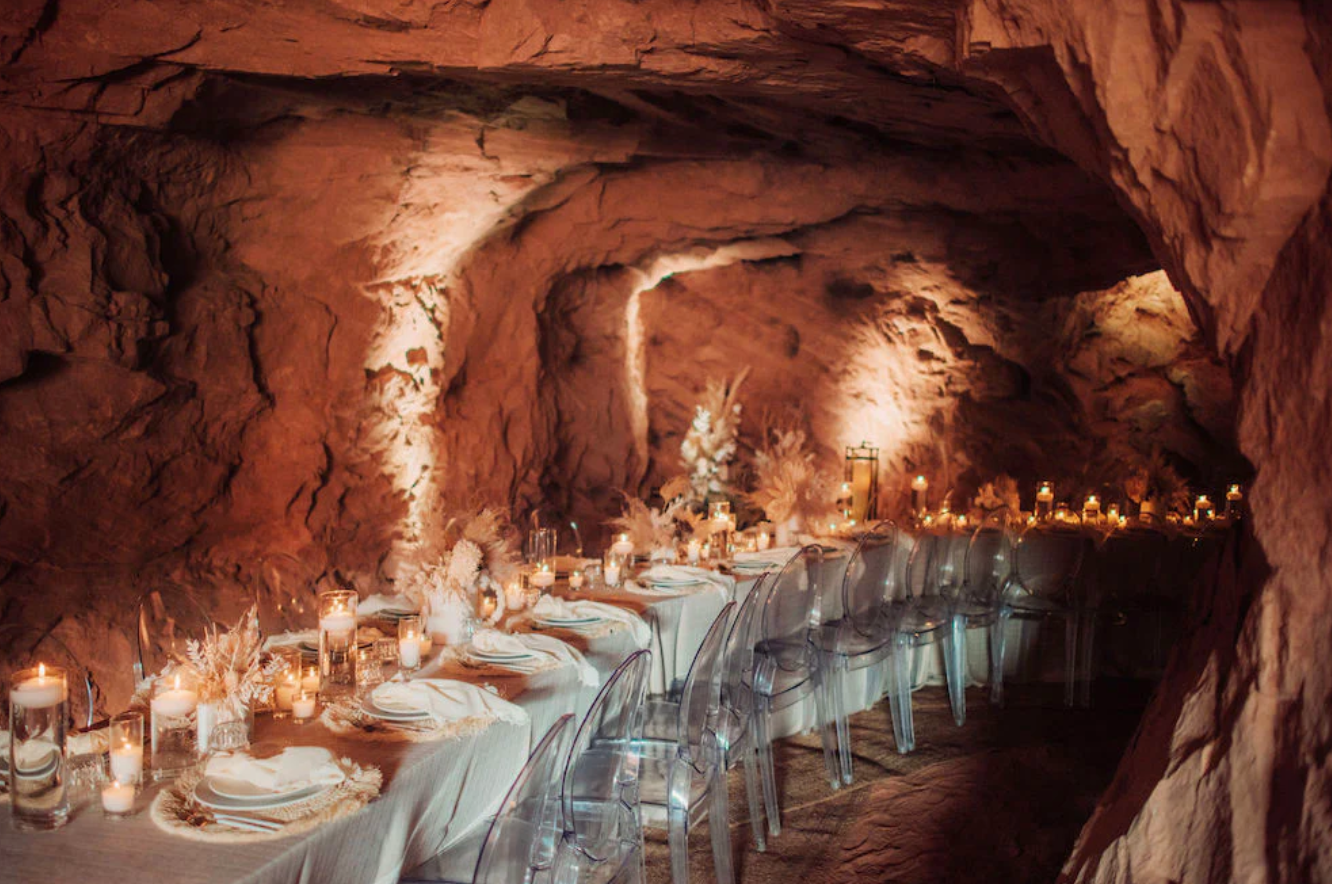
From mountain sides and deserts to urban rooftops and beyond, Cloth & Flame has been curating extraordinary dining experiences as experiential journeys — transcending the bounds of traditional restaurants and leading diners into a world where nature, architecture, and gourmet cuisine intertwine.

Cloth & Flame is the brainchild of the Phoenix-based husband-and-wife team, Matt Cooley & Olivia Laux, visionaries who believe that dining could be so much more than just food on a plate. To them, it’s about fostering connections and creating memories. With events in breathtaking locations across all 50 states, from Alaskan mountainsides and Arizona deserts to Oregon forests, their reach is as vast as their vision. Their events offer a respite from the digital age’s hustle, transporting guests to serene locales.
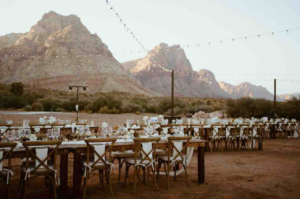
Cloth and Flame Event in Arizona. Photo: Cloth and Flame

In a recent event promoted as “Flagstaff Fadeway,” Cloth & Flame brought an exclusive long-table dinner to the stunning lawn of the High Country Motor Lodge in Flagstaff, part of a weekend music festival inspired by the beauty of Northern Arizona. The festival offered its few hundred guests the opportunity to experience deeply intimate musical performances, kicking off with a five-course menu.

In an era when dinner events can be predictable, routine affairs, Cloth & Flame breaks the mold, ensuring that every event is a surprise and that no two experiences are the same. And with all of the outdoor venues, Cloth & Flame demonstrates profound respect for the environment. They look for spectacular settings and provide the landowners an alternative income source, potentially preserving these areas from development. Moreover, a portion of their dinner proceeds is directed to conservancies dedicated to protecting our planet’s wild and wonderful spaces.
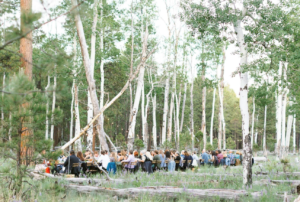
Aspen Forest, Arizona. Photo: Hailey Golich

At Cloth & Flame dinners, strangers become friends under starlit skies, conversations flow unhindered, and in this temporary commune, bonds are forged that last a lifetime. Cloth & Flame’s invitation is open to everyone. Whether you have a culinary dream to chase or are simply open to exploring theirs, gastronomic adventure is on the horizon.

Cloth & Flame serves up a return to authenticity, to the raw beauty of nature, and to the simple pleasure of a meal shared in good company. So, the next time you yearn for a break from the ordinary, remember that somewhere, atop a mountain or in the heart of a desert, a table awaits you. And at this table, you’ll not just find food, but an experience, a story, and perhaps, a piece of yourself that you never knew existed.

Interested in embarking on a culinary journey with Cloth & Flame? Follow the link here.
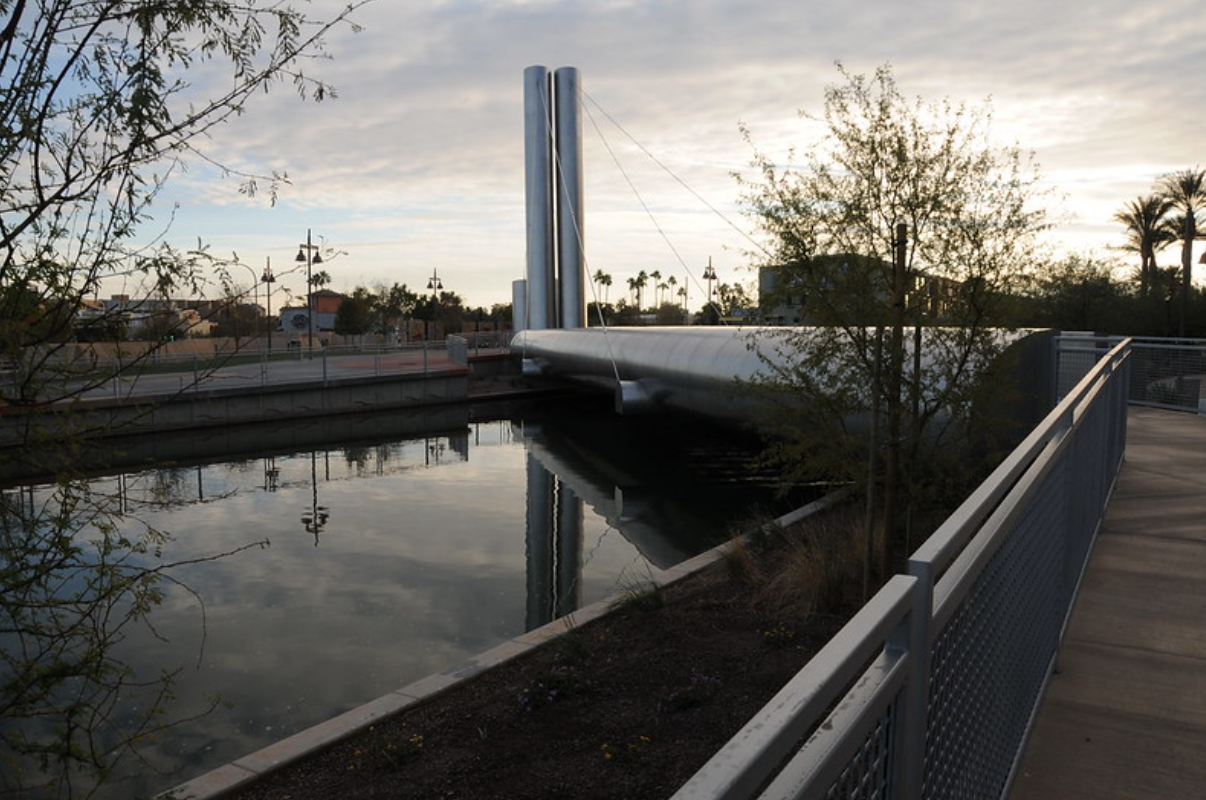
The Soleri Bridge and Plaza

Modern structures that serve as both functional and breathtaking forms of art speak to us at Optima®, including the Soleri Bridge and Plaza at the Scottsdale Waterfront, in close proximity to Optima Sonoran Village®. The bridge and its adjoining plaza, envisioned by the renowned artist, architect, and philosopher Paolo Soleri, have become emblems of Scottsdale’s artistic soul, resonating deeply with locals and tourists alike.

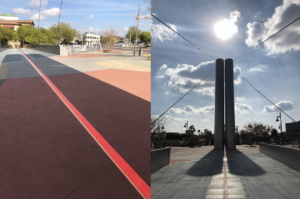
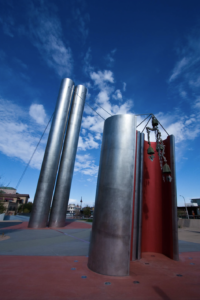
The bridge is an architectural spectacle that functions as a dynamic, organic solar calendar. Anchored by two towering 64-foot pylons, its south side spans 27 feet, tapering to 18 feet on the north. Its precise alignment with true north allows it to play a mesmerizing game with the sun. The 6-inch gap between the pylons lets the sun cast an ever-changing shaft of light, marking solar events as the seasons shift. On the summer solstice, the sun at its zenith leaves no shadow, while on the winter solstice, the shadow stretches its longest, almost reaching the bridge itself. 

Soleri Solar Calendar and Solstice Shadow. Photo: Jennifer Gill

Adjacent to the bridge, the plaza is an expansive 22,000-square-foot expanse, adorned with monolithic panels reminiscent of the aesthetics of Cosanti and Arcosanti. Each of these earth-cast panels, crafted meticulously over eight months using desert earth, water, and cement, weighs 3,500 pounds, and bears the intricate handwork of Soleri and his personal assistant, Roger Tomalty. The panels frame the plaza and lead towards the Goldwater Bell assembly, a fusion of Soleri’s commitment to architecture and ecology.

The story behind the project is as captivating as the structures themselves. A luminary in his field, Soleri has brought to life a concept he terms “arcology.” The bridge and plaza exemplify this philosophy, sharing an appreciation for our inherent connection to the sun and nature. Despite designing bridges for six decades, the Soleri Bridge was a first-of-its-kind commission for the then 91-year-old maestro.

Initiated by Scottsdale Public Art in 1990, the journey of the bridge and plaza from conception to completion was one of evolution and collaboration. As the canal’s surroundings transformed over two decades, so did the bridge’s design. The addition of the Waterfront Residences and commercial areas in 2007 provided the bridge with a context. Following funding and city approvals in 2008, the project took flight.

Soleri Bridge and Goldwater Bell. Photo: Yisong Yue

The unveiling of the bridge on December 11, 2010, was nothing short of a spectacle. A thousand-strong crowd converged on Old Town Scottsdale to witness the dedication. The event, a week shy of the winter solstice, showcased the bridge’s solar prowess, as attendees observed the sun’s shadow move between the pylons. 

The Soleri Bridge and Plaza encapsulate Scottsdale’s rich heritage, blending history with contemporary artistry. They stand as a testament to a city that cherishes the past, celebrates the present, and looks forward to the future, all while emphasizing the harmony between humanity and nature.

Women in Architecture: Elizabeth Diller

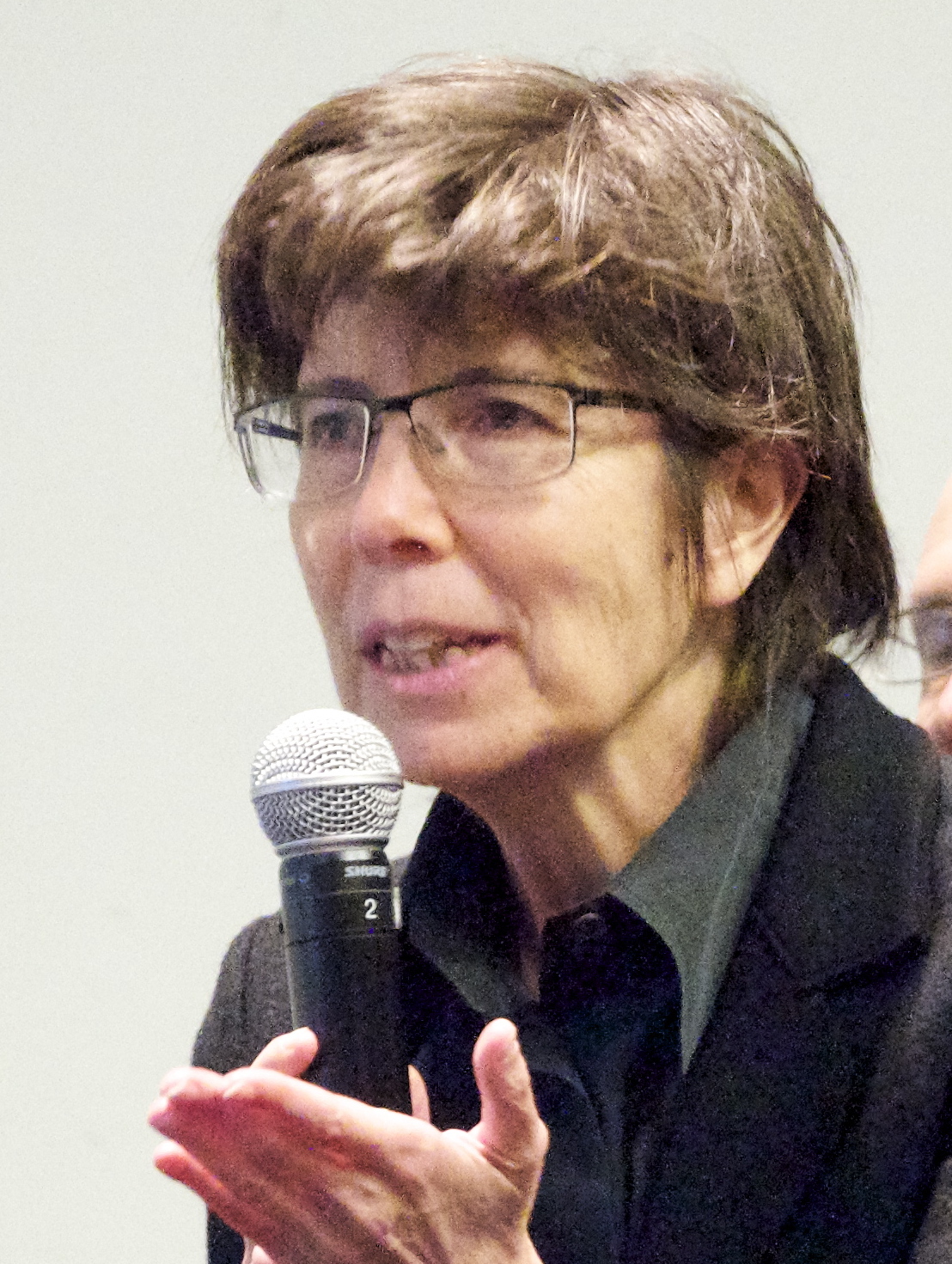
In our ongoing “Women in Architecture” series, we’re highlighting Elizabeth Diller, a visionary who turns metaphors into brick and mortar and continues to challenge conventional architecture. 

The Life of Elizabeth Diller
Elizabeth Diller was born in 1954 in Łódź, Poland, and moved with her parents, who were Holocaust survivors, to the United States when she was six. She was deeply affected by the social unrest of the late 1960s, which ultimately led her to enroll in the Cooper Union School of Architecture in 1970 which, at the time, was a creative hotbed and home to avant-garde design.

Initially, Elizabeth intended to pursue art or filmmaking, but ultimately found herself captivated by alternative methods of space-making. Even then, she was much more interested in the East Village music and art scene than in her classes. It wasn’t until Elizabeth met one of Cooper Union’s design professors, Ricardo Scofidio, that she became fully invested in design. After graduation, Diller and Scofidio became both romantic and creative partners, and emerged as prominent conceptual artists, focusing on comically dark design hacks and advancing the idea that “anything can be architecture” in their 1994 book, Flesh. This conceptual approach that challenged traditional architecture also earned them the coveted MacArthur Fellowship (known as the “Genius Grant”) in 1999.

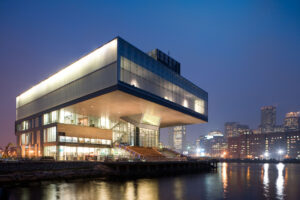
The Institute of Contemporary Art, Boston, designed by Diller Scofidio + Renfro Architects. Credit: Institute of Contemporary Art on Flickr Creative Commons. Licensed under CC BY-SA 2.0. 

Notable Works
By 2000, Diller Scofidio projects were gaining considerable traction and scale, as demonstrated by their design for the Blur Building at the Swiss Expo in 2002. Utilizing a cloud of mist produced by 31,500 high-pressure nozzles over Lake Neuchâtel, this project encapsulated the team’s belief that architecture isn’t just about concrete unmovable structures, but can be an immersive, sensory experience. And as the partnership expanded to include Charles Renfro, the trio transformed the very essence of what a building could represent. 

In 2006, their firm took on the ambitious project of renovating a historic elevated train line in Manhattan’s Chelsea neighborhood. The result? The High Line, an urban park that floats amidst the skyscrapers, becoming an iconic piece of the city’s architectural landscape.

During the 2010s, Diller’s stature in the world of architecture expanded greatly as the firm undertook a host of ambitious, institutional and municipal projects, culminating in designing a massive extension to New York City’s Museum of Modern Art (MoMA) in 2019 as spaces for  modern and contemporary installations. Beyond allowing the museum to grow its exhibition footprint, this project redefined urban space, blurring the lines between public and private, museum and city.

Just north of Chelsea, this stunning structure boasts a movable shell, allowing it to be reconfigured based on how the interior space is programmed. More recently, the team has undertaken numerous cultural and institutional projects, including the London Centre for Music and revitalizing the historic Geffen Hall at Lincoln Center, further securing a place for Diller and her partners in the architectural canon by creating a new language of contemporary design. 

Elizabeth Diller’s journey redefines the essence of architecture, merging innovation with functionality. Her transformative works extend beyond physical spaces to influence the cultural fabric of society. And her legacy is not solely in the impressive silhouettes of her buildings but in the way she inspires future generations to envision and craft the world anew.

The 2023 Canal Convergence

As residents of Optima Sonoran Village® know, Scottsdale is a treasure trove of vibrant cultural events, artistic showcases, and community gatherings. Among these, the Canal Convergence stands out, brilliantly illuminating the Scottsdale Waterfront every year, beckoning both locals and visitors for an immersive experience of art, light, and much more.

Sym by AlexP. Photo: Canal Convergence

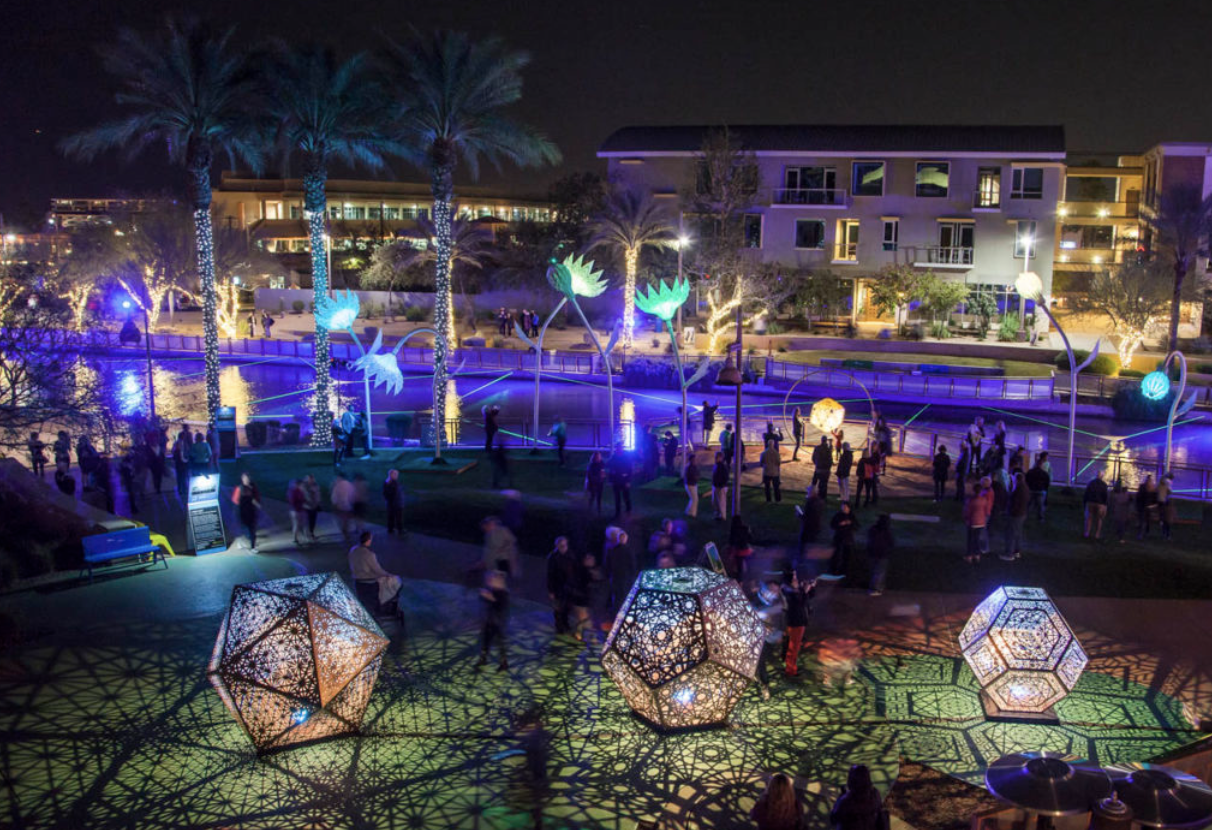
The Canal Convergence, a free, annual 10-night extravaganza, beautifully melds light, art, and water along the waterfront. Each year, artists from around the globe captivate audiences with their large-scale public artworks. For 2023, attendees will be treated to mesmerizing pieces like Sym by AlexP, the playful Flario by Walter Productions, the geometric Dice by Montreal-based studio Iregular, the fluid Aquatics by Philipp Artus, and several other awe-inspiring installations like Light Forest, Octavius, Ripple, and Spectrum Swing. Beyond these installations, the event is also a hub for live performances, music, dance, creative workshops, and so much more, including food trucks and a beer and wine garden.

Dice by Iregular.

What makes each Canal Convergence special is its central theme. This year, it dives deep into “The Power of Play,” highlighting its profound significance in our lives. Play isn’t reserved just for children; it’s a vital aspect of human existence, molding our learning, creativity, and social interactions. As the sun sets and the artworks come to life, attendees can immerse themselves in the wonders of play, feeling its influence firsthand.

For those ready to dive into this magical experience, the event runs from Nov. 3–12, 2023, at the Scottsdale Waterfront. Starting from 6 p.m. each evening, the event extends until 10 p.m. on the 3rd, 4th, 10th, and 11th of November, and until 9 p.m. on the other nights. For those wondering about parking, there’s ample free space in the parking garages around Old Town Scottsdale.

Octavious by Petter Hazel.

To residents and beyond, the Canal Convergence is a heartfelt celebration of creativity, unity, and reflection. Don’t miss the chance to be part of this enchanting blend of play, light, and art!

The Scottsdale Civic Center

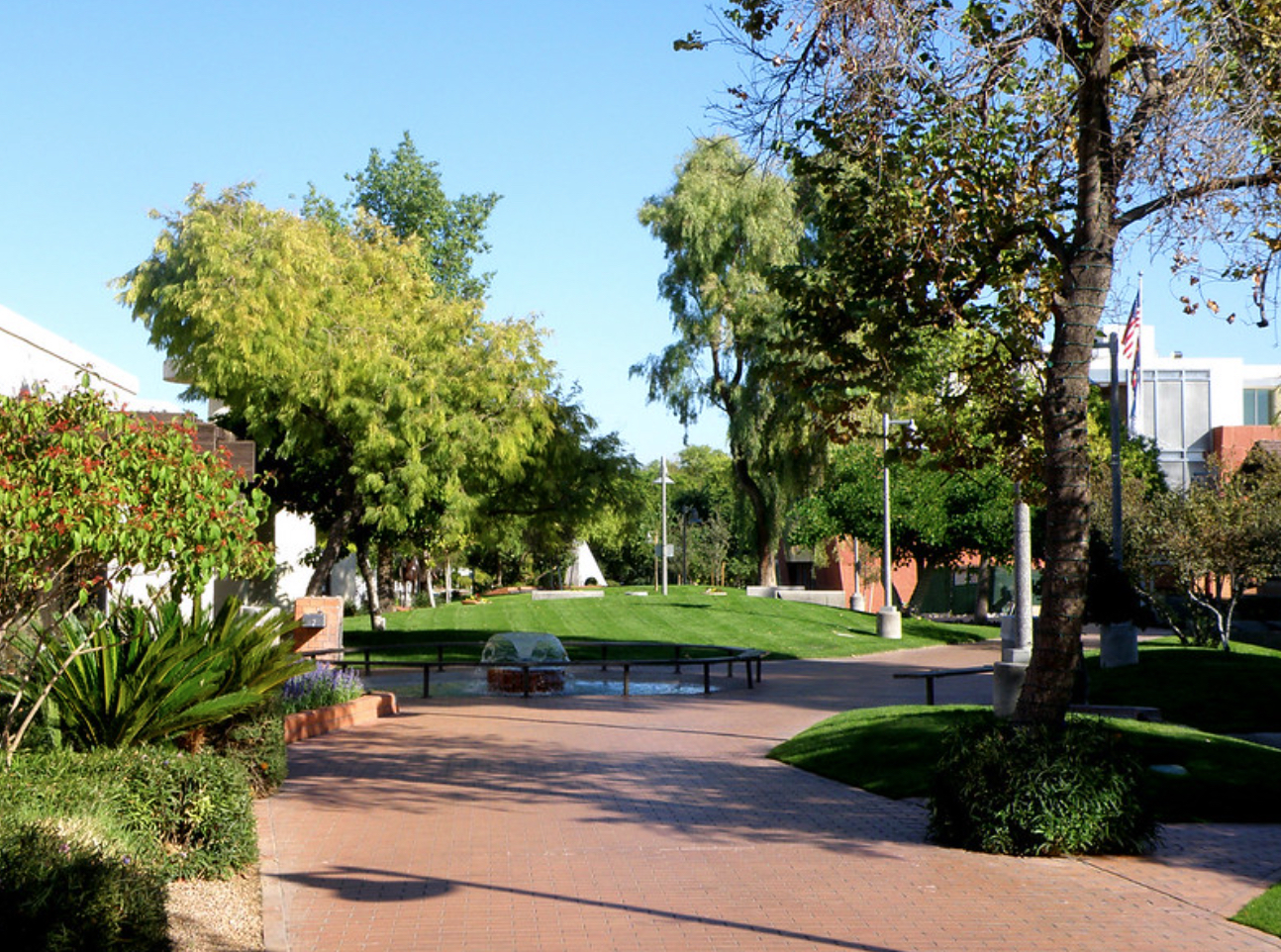
The Scottsdale Civic Center, situated in Old Town, serves as a cultural hub for the entire city, including our residents at Optima Sonoran Village®. It seamlessly balances Scottsdale’s historical identity as “The West’s Most Western Town” with modern influences, making it a popular focal point where the city’s heritage intertwines with its more recent cultural and artistic expressions. 

This urban oasis is surrounded by some of Scottsdale’s most vital facilities, including City Hall, Civic Center Library, Center for the Performing Arts, and Scottsdale Museum of Contemporary Art. It’s both a retail center and a retreat, marked by its lush greenery, tranquil fountains, and eclectic sculptures. You can also enjoy views of Camelback Mountain, which becomes particularly captivating at dusk, offering a serene environment for relaxation and cultural immersion.

The Civic Center dates back to 1966 when a master plan by local architectural firm Bennie M. Gonzales Associates was adopted, emphasizing the seat of town governance as “an open invitation for citizens to participate in their government.” Bennie M. Gonzales, with his distinct Southwestern modernist style, led the planning and design process during the center’s foundational years. His designs are characterized by their harmony with the environment and their use of natural materials, which can be seen in the kiva-like City Hall, the Civic Center Library (built in 1968) and the Scottsdale Center for the Performing Arts (constructed in 1975).

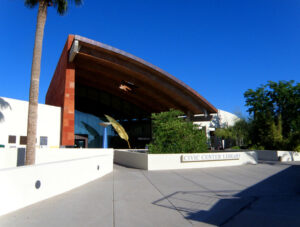
Scottsdale Civic Center Library. Photo: Kevin Bondelli

Decades later, award-winning architect Will Bruder further shaped the Civic Center, designing the Scottsdale Museum of Contemporary Art (constructed in 1999). His design paid homage to the curved facades of the neighboring Scottsdale Center for the Performing Arts.

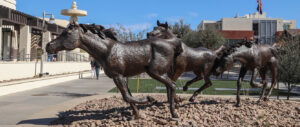
Sculptures including Robert Indiana’s LOVE sculpture and George-Ann Tognoni’s The Yearlings further amplify the center’s art scene. Adjacent to them, the Scottsdale Center for the Performing Arts, with its stages and galleries, has hosted notable events like the Arizona Concours d’Elegance, enriching the center’s aesthetic and cultural offerings.

George-Ann Tognoni’s The Yearlings at the west entrance to the Civic Center.
Photo: Scottsdale Public Art

The Scottsdale Civic Center has recently seen major renovations, with its western two-thirds reopening back in January 2023. With plans to showcase 80 annual outdoor events over the next several years, ranging from national touring acts and orchestras to dance ensembles and community events, the Civic Center remains committed to cultural vibrancy and communal engagement.

Keen on exploring upcoming Civic Center events? Follow the link here for more information.

Great Chicago Writers: Gwendolyn Brooks

It’s always a pleasure to talk about literary giants with Chicago roots who have had profound impacts on both local history and the broader literary world. It goes without saying that no conversation about Chicago greats could happen without exploring the life and work of the legendary Gwendolyn Brooks.

Born in Topeka in 1917, Brooks relocated to Chicago while still an infant. The city’s pulsating cultural heartbeat and intricate socio-political fabric soon formed the canvas for her poetic masterpieces. Behind her ambition stood her parents: her father, a janitor with dreams of becoming a doctor, and her mother, a schoolteacher and a classically trained pianist. Both supported Gwendolyn’s passion for reading and writing.

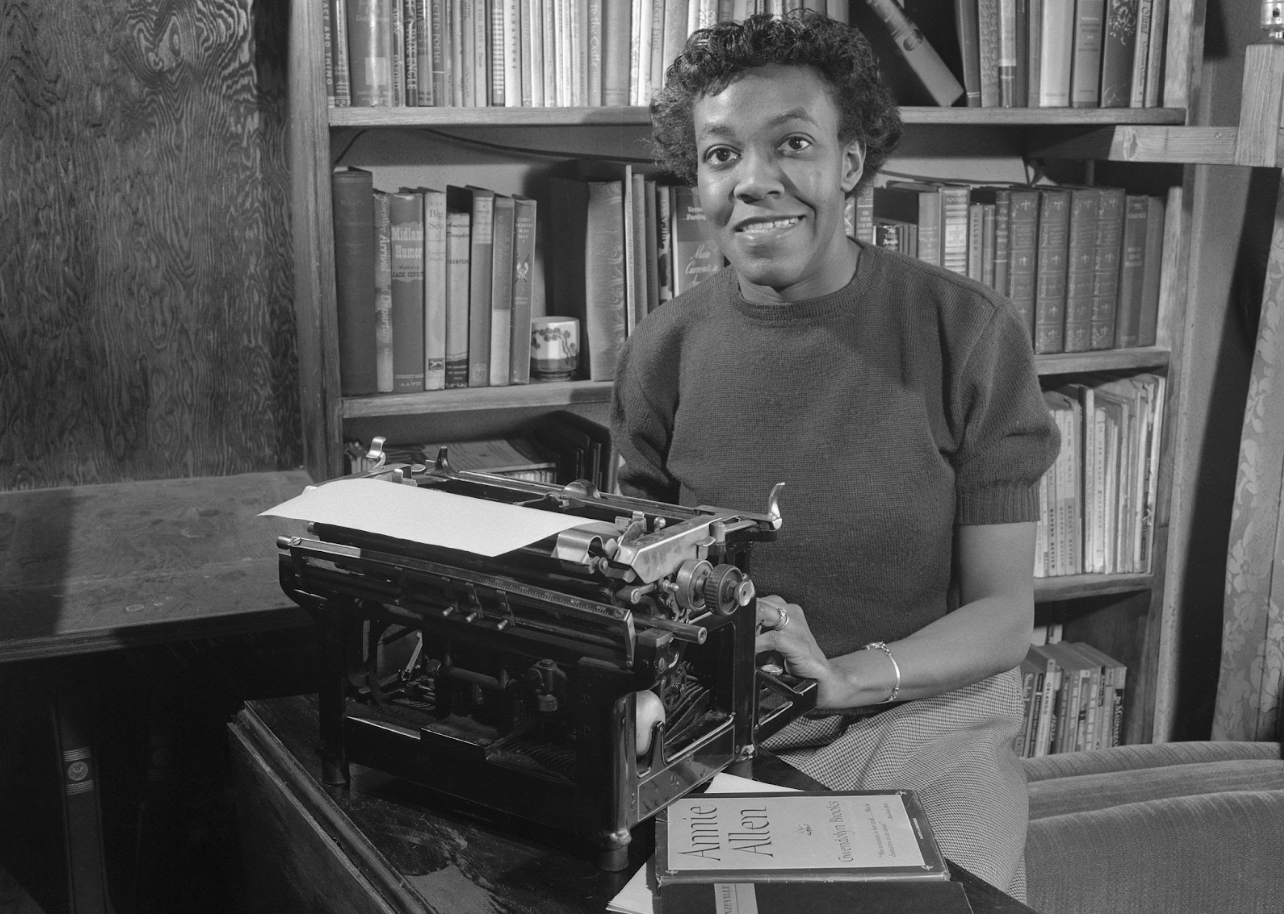
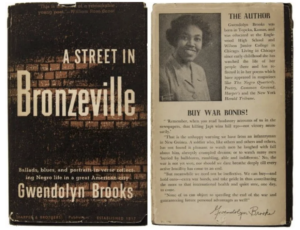
By the age of 13, Brooks had already marked her literary beginnings, publishing her first poem, “Eventide,” in American Childhood. Her poetic prowess grew from there, and by 17, she became a regular contributor to the Chicago Defender. After her time at junior college and a stint working for the National Association for the Advancement of Colored People (NAACP), Brooks further refined her craft in various poetry workshops and alongside Chicago literary peers, Richard Wright and Langston Hughes. This diligent nurturing of her talent culminated in her first poetic collection, A Street in Bronzeville, in 1945.

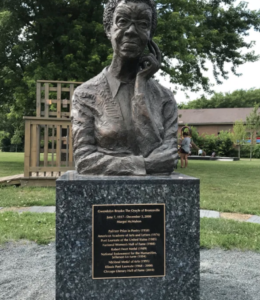
Gwendolyn Brooks: The Oracle of Bronzeville Monument found in Brooks Park

Brooks’s identity as an influential African American poet, author, and educator is underscored by her portrayal of the day-to-day challenges faced by African Americans. Her poetry and prose traversed a spectrum of themes – from intimate personal experiences to the African American quest for justice and recognition.

Gwendolyn’s vast literary repository boasts significant works. A Street in Bronzeville (1945) offers insights into urban Black life in Chicago. Annie Allen (1949) is a poignant exploration of a young Black girl’s journey to womanhood, and it also made Brooks the first Black poet to win the Pulitzer Prize in 1950. Maud Martha (1953), her only novel, depicts the complexities of prejudice from both white people and lighter-skinned African Americans. In 1960, she wrote The Bean Eaters, showcasing her evolving poetic style and featuring the renowned We Real Cool. Over the course of her career, Gwendolyn Brooks authored over 20 poetry collections.

A Street in Bronzeville, Gwendolyn Brooks, 1945

She also garnered numerous honors, including the establishment of the Gwendolyn Brooks Cultural Center at Western Illinois University in 1970 and her appointment as Illinois’s poet laureate in 1976. Several schools have been named in her honor, reflecting her enduring impact on education. In 1985, she was appointed Consultant in Poetry to the Library of Congress. The centenary of her birth in 2017 was celebrated with special events, reinforcing her lasting literary influence.

Interested in delving deeper into Gwendolyn Brooks’ literary world? Explore her expansive collections available on the Poetry Foundation.

Optima and the 2023 Chicago Marathon: A Neighborhood Affair

The 2023 Bank of America Chicago Marathon has come and gone, but its legacy endures. It’s no longer about the anticipation; it’s about reflection and reveling in the history set onto Chicago’s streets.

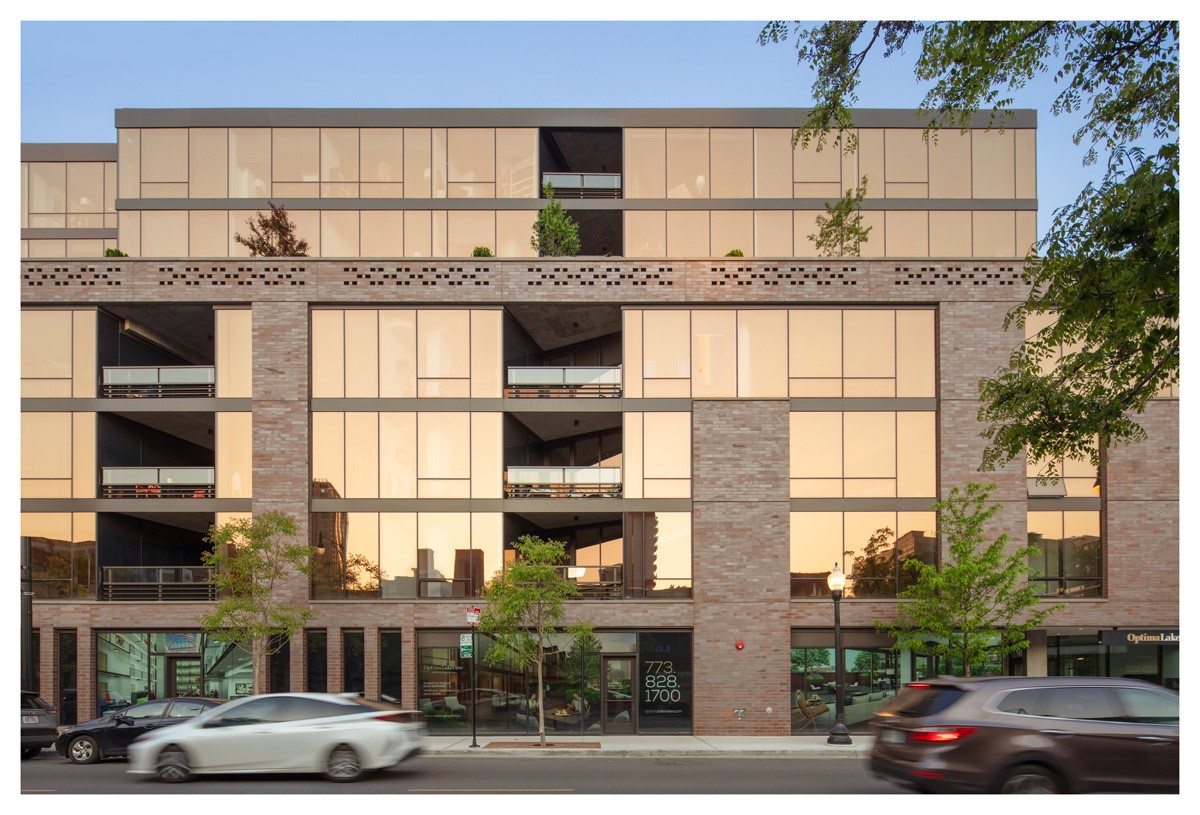
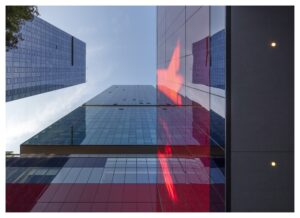
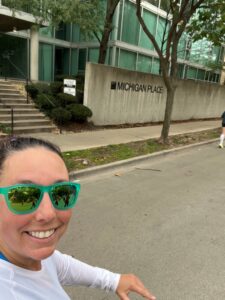
The marathon looped through 29 emblematic neighborhoods, each revealing its distinct character and vibrancy. Beginning in Grant Park, the race stretched as far north as Wrigleyville before heading back south past the United Center and the Illinois Institute of Technology and finally up Michigan Ave to the finish line. The streets came alive as residents and fans cheered throughout each of Chicago’s neighborhoods, showcasing the city’s passionate spirit. Notably, at various milestones of the course, Optima’s architectural marvels illuminated the route. Racers passed by Optima Signature & Optima Chicago Center at the initial mile, were given a mid-race boost past Optima Lakeview at mile 8, and, as the finish line beckoned, Michigan Place at mile 22 offered a familiar cheer.

A worm’s-eye view of Optima Signature, which marathon participants passed in the first mile of the run

This year’s marathon wasn’t just another race. It made global headlines. Kelvin Kiptum clinched a new world record for men, finishing in a swift 2:00:35. Sifan Hassan’s debut on U.S. soil couldn’t have been more impactful as she set a new women’s course record with a time of 2:13:38. Marcel Hug and Catherine Debrunner also both set course records in wheelchairs, showcasing the Marathon’s inclusive spirit.

Kelvin Kiptum standing next to his world record time

Closer to home, we burst with pride as Optima’s very own Marketing Director, Ali Burnham, took to the streets, blending personal determination with Optima’s ethos of community involvement. 

Optima’s Marketing Director, Ali Burnham, spotted Michigan Place on the 22nd mile of the marathon route

The 2023 marathon underscores what we’ve always believed — Chicago is a city of unparalleled spirit and energy. And at Optima, we’re committed to embedding ourselves within the heartbeat of Chicago’s most iconic events. For our residents, events like these are not distant spectacles, but neighborhood affairs. The Chicago Marathon exemplifies this, turning morning routines into once-in-a-lifetime viewing opportunities.

Get Ready to Watch the Chicago Marathon

Autumn in Chicago isn’t just about the crisp air, colorful leaves, and pumpkin-spiced everything. It’s also about the thrilling sound of thousands of feet pounding the pavement, as the city gears up for the iconic Bank of America Chicago Marathon. For our residents at Optima Signature and Optima Lakeview, this October isn’t just any other month; it’s a front-row seat to one of the world’s premier running events.

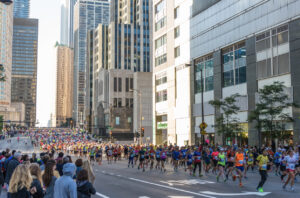
Circle Sunday, October 8, 2023, on your calendar. The marathon unfolds in Grant Park, with gradual starts ensuring smooth sailing. For those not racing, join the celebration at Abbott 27.2 Fest from 9:30 a.m. until 4 p.m. near the start line for a day full of music, food and fun. While Grant Park’s start and finish zones have some viewing restrictions, the race course offers numerous sweet spots for spectator cheering and encouragement.

The first mile of the marathon, Image via Flickr by Paladin27

The annual footrace is truly a global gathering, where more than 45,000 runners from every state in the U.S., and over 100 countries worldwide come together. Taking the runners on a grand tour, the 26.2-mile route dives deep into the city’s heart, stretching from Wrigleyville to the North, Pilsen and Little Italy to the West and the historic Douglass, near Guaranteed Rate Field, to the South. 

The prestigious event is more than just a marathon; it’s one of only six World Marathon Majors across the globe. For Optima Signature and Optima Lakeview residents, you have the privilege of stepping right outside to cheer on the incredible racers. And for the Optima Verdana community, consider making the short trip down from Wilmette. It’s a spectacle you won’t want to miss. You can find more details about the iconic event here!

Great Chicago Writers: Jane Addams

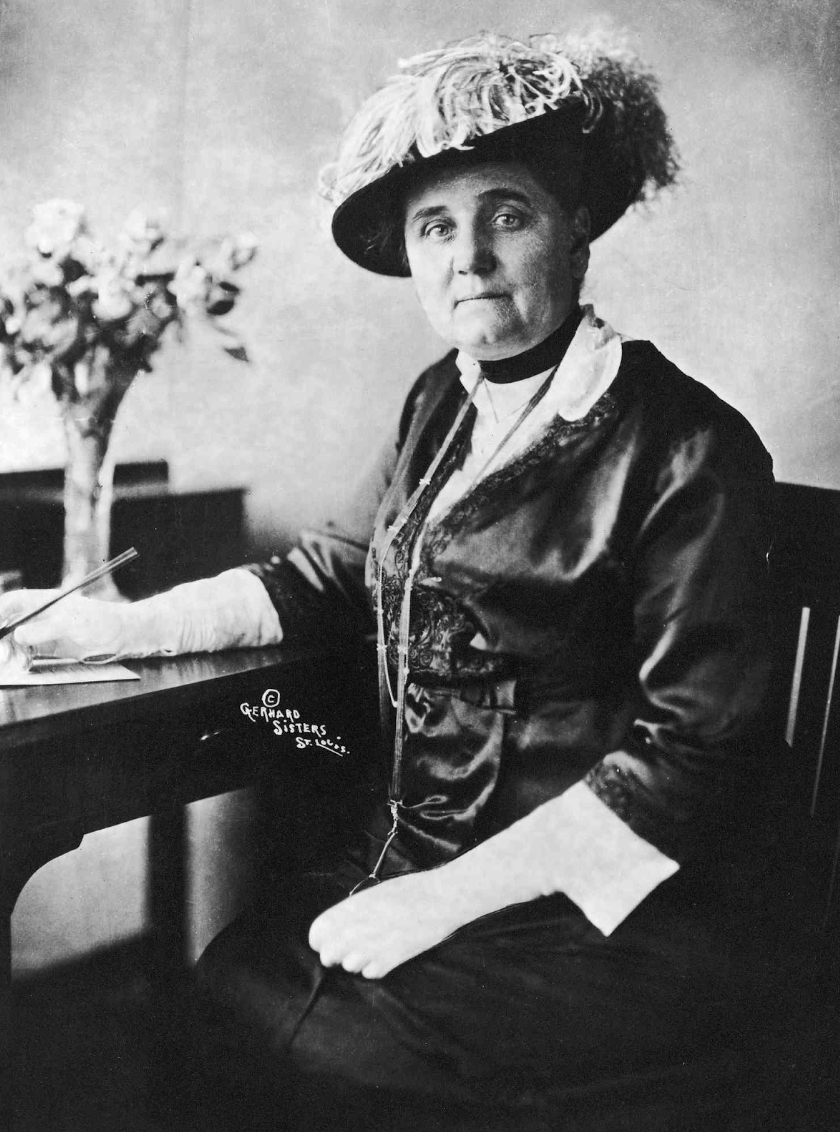
It’s such a pleasure spotlighting legendary Chicagoans who have left a lasting impression on our local history and beyond, including the twentieth-century icon, Jane Addams.

Born in 1860 in Cedarville, IL into a prosperous family, Because Addams’ family allowed her to benefit from education from an early age, she was able to graduate from the Rockford Female Seminary. Later, Addams traveled to Europe, where she was introduced to London’s Toynbee Hall, a trailblazing settlement house that worked to address the causes and impacts of poverty in the city’s East End. Her visit to Toynbee Hall left a lasting impression, paving the way for her co-founding Hull House in Chicago in 1889 — one of the earliest settlement houses in the U.S. that has become the Jane Addams-Hull-House Museum at the University of Illinois-Chicago campus.

Hull House offered educational and social services to immigrants and Chicago’s underserved communities, positioning Addams as a leader of the Progressive Era. Her advocacy spanned a multitude of diverse causes: women’s rights, peace, public health, and broad-spectrum social reform. In recognition of her contributions, Addams was honored as the first American woman to receive the Nobel peace prize in 1931.

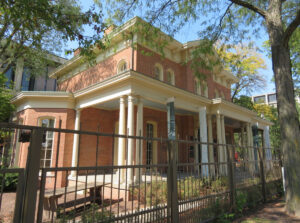
Jane Addams-Hull-House Museum. Photo: Sean Marshall

Her experiences at Hull House — and with the Progressive movement more broadly — set Addams on her trajectory as a gifted writer. Her writing career was already in full throttle in 1909 with the release of The Spirit of Youth and the City Streets, which shared Addams’ keen understanding of the unique needs of urban youth. She used the book to advocate for enhanced recreational spaces and deeper engagement for Chicago’s underserved young people, while illuminating the dire consequences of growing up in an environment where poverty and lack of access to a better quality of living prevail.

Having found an audience for her explorations of daily life in Chicago, Addams published Twenty Years at Hull-House in 1910, giving readers a look at life inside the settlement house and its impact on the community. 

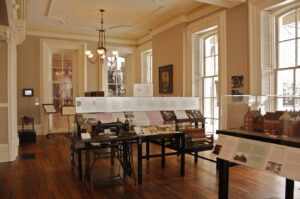
Inside the Hull House. Photo: At Home in Chicago

The Long Road of Woman’s Memory, which Addams’ completed in 1916, is another exceptional factual account of her expansive impact on women’s rights in America. In it, she gracefully navigates the terrain of personal and collective memories to demonstrate their influence on women’s lived experiences and the larger tapestry of history.

Over the course of her career, Jane Addams authored 11 books and hundreds of essays, editorials, and columns. And more than a century later, the resonance of Addams’s literary contributions remains undeniably profound, echoing through time into our modern world. 

Keen on exploring Addams’ legacy further? Then enjoy a visit to the Jane Addams-Hull-House Museum. The hours of operation are 10:00am to 4:50pm, Tuesday to Friday, and on Sundays from 12:00 to 4:50pm. A suggested donation for admission is $5 per person (University of Illinois Chicago faculty, staff, and students are granted complimentary entry).

Visit the Shakespeare Garden at Northwestern University

With Optima’s passion for having nature within reach, it’s no wonder that we are drawn to sumptuous gardens in and around the communities where we build. Imagine our delight in discovering the Shakespeare Garden on the Northwestern University campus, with its rich mix of history and modernity.

Planted in 1917, the Shakespeare Garden has had its home on Northwestern’s Evanston campus for over a century. Emerging from the vision of The Garden Club of Evanston members, it was crafted both as a wartime gesture of solidarity with Britain and to commemorate the 300th anniversary of Shakespeare’s passing.

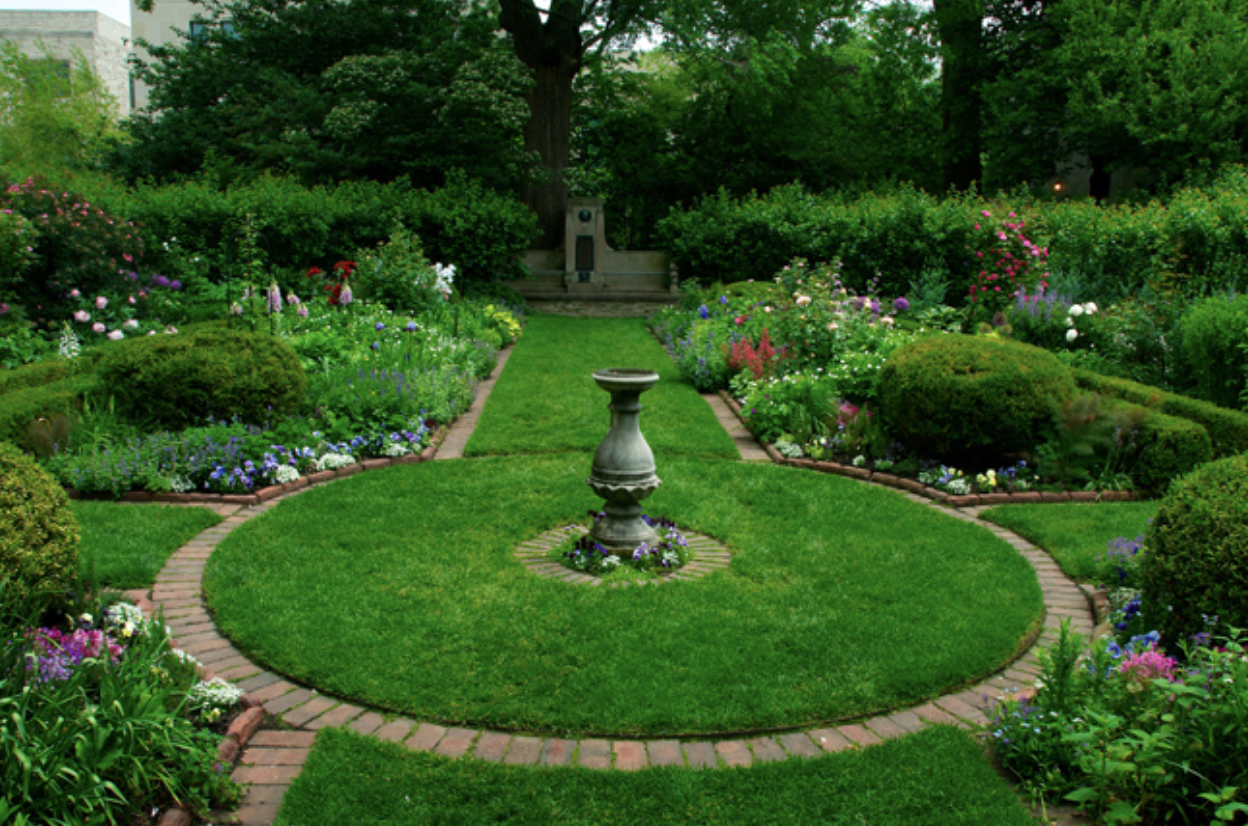
Measuring 70 by 100 feet, this garden sits just north of the Frank W. Howes Memorial Chapel, bordered by hawthorn hedges that create an intimate haven. As you enter, the garden reveals a curated collection of flora mentioned in Shakespeare’s works. From fragrant lavender and vibrant marigolds and daffodils in Winter’s Tale, to the rosemary and pansies in Hamlet.

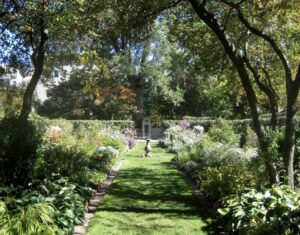
Jens Jensen, the illustrious Danish-American landscape architect, brought this garden to life. Known for his influential works on Chicago’s West Side, including Garfield Park and Columbus Park, Jensen took inspiration from Sir Francis Bacon’s essays on gardens. On entering the Shakespeare Garden, you are greeted by two Hawthorn trees, symbolic bridges between the Prairie and the garden. These trees, along with the foundational hawthorns that germinated from French seeds, have stood the test of time, providing a consistent backdrop to this historic site.

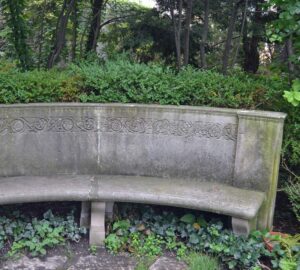
Elizabethan-style stone bench. Photo: In Memoriam mmmmarshall

Over the decades, the Shakespeare Garden has seen numerous enhancements. In 1929, an Elizabethan-style stone bench and a captivating fountain became part of this serene landscape. The fountain, a generous donation by architect Hubert Burnham, showcases a bronze relief of Shakespeare’s visage crafted by the French-American sculptor, Leon Hermant. Further augmentations followed, including the addition of a sundial in 1990 and later, a reshaping of the garden’s layout based on the recommendations of the English garden designer, John Brookes.

Hawthorn Trees in Shakespeare Garden. Photo: Wikipedia Commons

Brookes’ suggestions, which included moving the sundial to the garden’s center and adding antique brick edging, have given the garden a touch reminiscent of traditional English gardens. This shift also marked the garden’s evolution from a knot garden to a more fluid, perennial-focused design.

Northwestern’s Shakespeare Garden is not only a place for quiet reflection but also a venue for countless weddings, tours, and cherished moments. It’s entirely free and open to the public, but special tours and events may have to be scheduled.

person name goes here

Maintenance Supervisor

Glencoe, IL


    Acceptable file types: *.pdf | *.txt | *.doc, max-size: 2Mb