When women can take their seats at the table, businesses are more likely to reach their full potential. As a business comprised of strong women, Optima is unwavering about empowering women to pursue their passions and lead us towards a better and brighter future. We’re thrilled to partner with The Chicago Network (TCN) for their Equity Principles campaign to achieve gender equity across all levels of organizations, including leadership roles, by 2030.
Since 1979, The Chicago Network has called upon women to foster friendships, support one another, gather in community and empower each other to lead. By creating ongoing mentorship opportunities, partnering with area universities and hosting sessions and events for TCN members, the organization pushes for the betterment of Chicago’s women leaders. The Chicago Network’s latest initiative is The Chicago New Equity Principles, a pledge and toolkit that provides employers with clear, solutions-driven guideposts to create a truly equitable workplace. Through removing barriers, defining success, evolving culture, enhancing community and maintaining accountability, TCN challenges their partner organizations to move towards change. Aiming to achieve a 50% representation of women serving on company boards, as C-suite executives and in senior management roles throughout Chicago by 2030, the campaign seeks to embolden a new generation of leaders.
As one of the early signers of the campaign, Optima is thrilled to support a cause so crucial to the growth of our organization. We are currently 46% female overall, 43% at the management level and 27% at the executive level. We are also led by an incredible female, Tara Hovey, our President and Chief Operating Officer. We’re off to a good start, and we’re proud of our commitment to meet the Chicago Network goals.
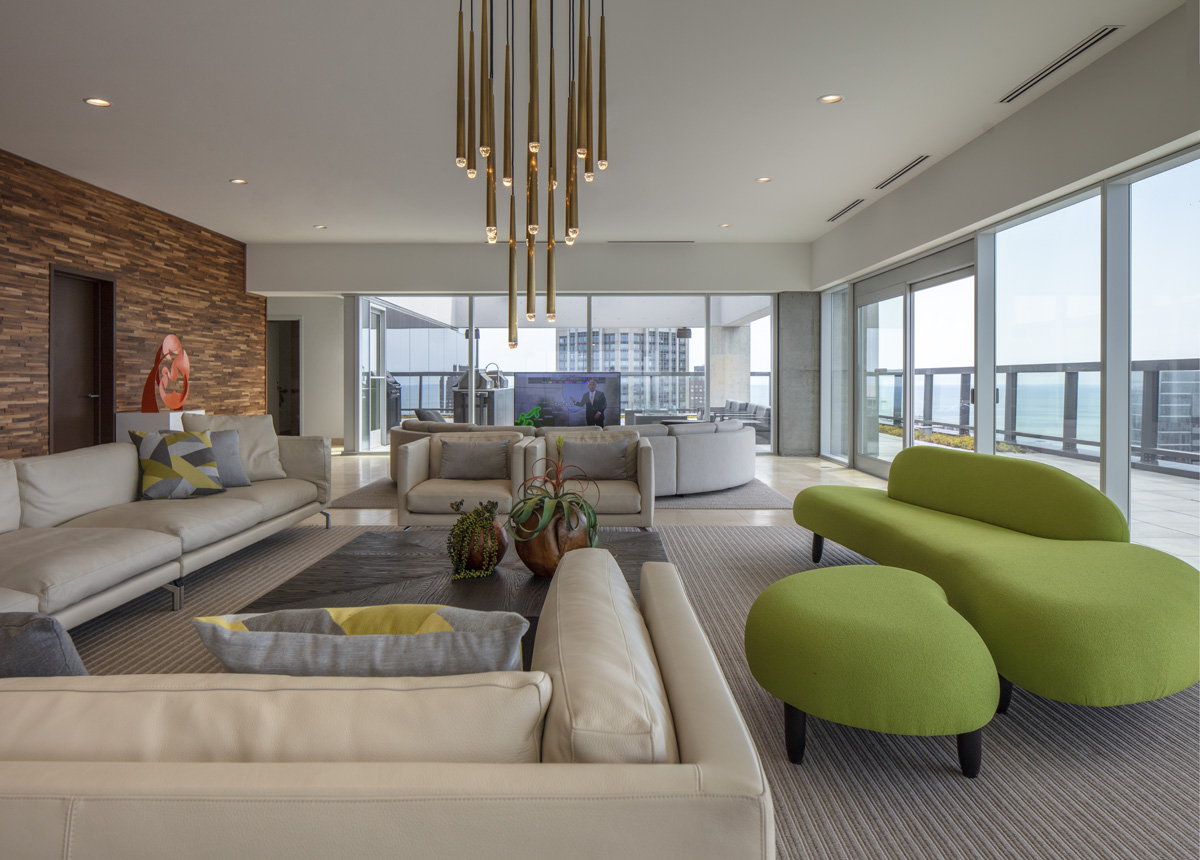
For our projects, design doesn’t stop on the outside of our buildings. We carefully curate each and every interior to be an activating space that is at once beautiful and inviting. As part of that careful curation, many of our spaces feature furniture designed by Isamu Noguchi, a Japanese American artist, landscape architect, sculptor and furniture designer.
The Mid-century Modern “Airplane” Bimorphic Coffee Table, designed by Isamu Noguchi, at 7120 Optima Kierland.
The Style of Isamu Noguchi
Born in 1904, Isamu Noguchi became one of the 20th century’s most critically acclaimed and important sculptors. His sculptural work covered a wide range of creations, spanning from sculptures, gardens, furniture and lighting designs, ceramics, architecture and set designs. Midway through his career, Noguchi became inspired by the idea of a more reduced form, focusing on an abstract and Modernist approach to create intriguing designs that elicited emotional reactions.
“Everything is sculpture,” Isamu Noguchi once said. “Any material, any idea without hindrance born into space, I consider sculpture.” Noguchi believed that as a sculptor, he could shape space to give it order and meaning, contextualized by the surroundings in which it existed.
It was only natural that furniture fell into his wheelhouse. Perhaps his most popular work, Noguchi designed a glass-topped table in 1947 to be produced by Herman Miller. The base of the table is made up of two identical wooden pieces, reversed and connected, and topped with a heavy plate glass top. When first sold, the table was marketed in the Herman Miller catalogue as “sculpture-for-use” and “design for production.” Noguchi strongly believed in producing his designs for mass market in order to bring fine art into the home.
At Optima, we are proud to showcase Noguchi’s furniture within our own spaces, designs which serve to amplify and activate the evocative Modernist exteriors and interiors of our buildings.
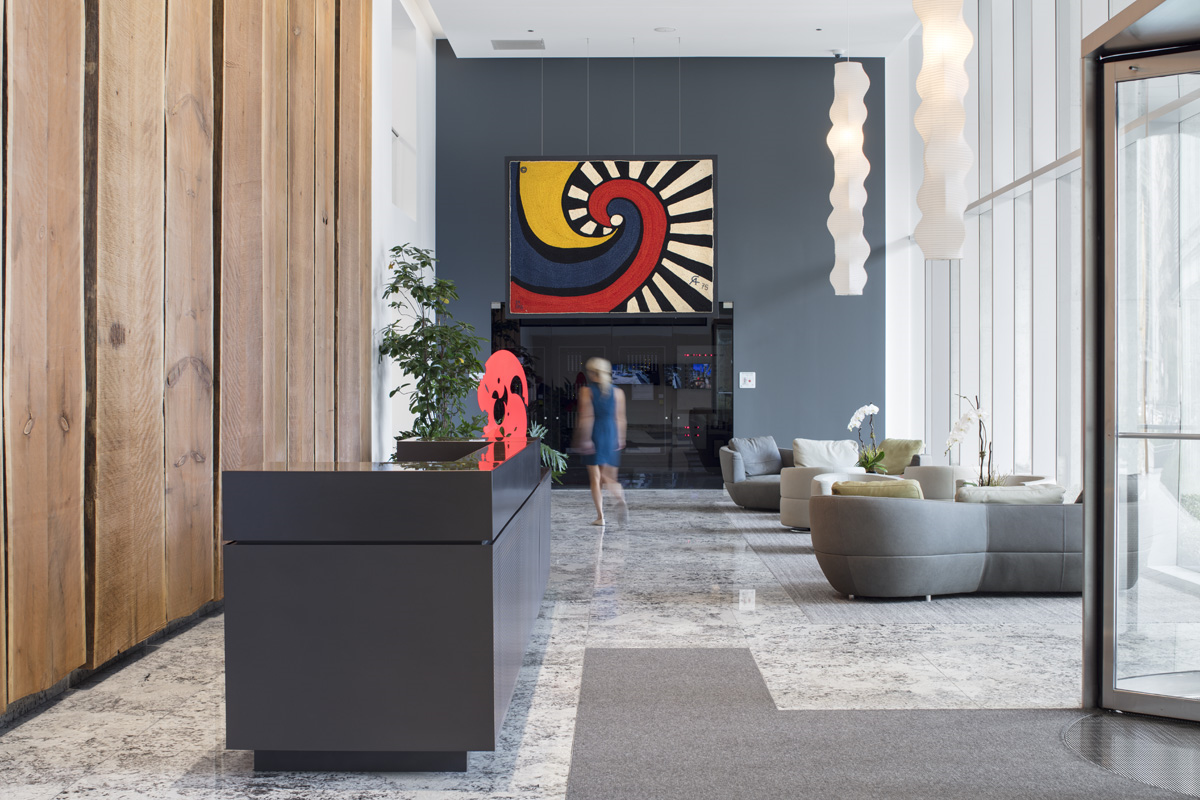
It’s no secret that we love color at Optima, and we carefully curate our interior furniture, textures and designs to reflect the vibrancy of our spaces. Our curated artwork is no exception, and throughout the halls of projects such as Optima Signature, Alexander Calder’s bright works greet residents with bold tones and distinct shape. A multimedia artist whose influence spans across decades, Calder’s work creates a meaningful connection to a rich piece of art history.
Calder’s Past
Born in Pennsylvania in 1898, Calder came from a family of artists; his grandfather and father both had rich careers as sculptors and his mother was a professional portrait artist. Though his family had artistic roots, they supposedly did not want him to follow in their footsteps. Calder began studying mechanical engineering in New Jersey, bouncing between jobs all while still being inspired by create. By the 1920s, Calder had moved back to New York to pursue a career as an artist.
Calder’s Artistic Career
After studying in New York, Calder moved to Paris where he studied, established a studio and met his future wife. While living in Paris, Calder joined the ever-growing network of avant-garde artists, including Fernand Léger, Jean Arp and Marcel Duchamp. Throughout his life, Calder maintained a strong connection to France, naming many of his works in French regardless of their location. After a lifetime of impactful creativity and exploration, Calder died unexpectedly of a heart attack in 1976, leaving behind an expansive and far-reaching legacy.
Calder’s Legacy
Over his career, Calder produced a wide range of work, spanning from sculpture, to stage sets, paintings, prints and jewelry. Like previous generations of Calders, he was also a recognized large-scale sculptor. Flamingo, one of his more notable works in Chicago, adorns the Federal Plaza with beautiful form and the famous “Calder Red” color. We’re thrilled and honored to have the works of Alexander Calder throughout our buildings, and hope they bring a bright source of inspiration to those who view and enjoy them.
Reflecting back to 1978, one of the first pillars of the Optima promise was a dedication to a multidisciplinary approach. David Hovey Sr, then new to the architecture world, wanted to escape from the corporate red tape that surrounded a traditional architect-developer relationship. Oftentimes, he observed that bankers and corporations were given more power over specific projects and the integrity of the building was overlooked. His vision was that architecture would lead the process, and the first iteration of the Optima Business Model was born.
Our process is a vertical one; we oversee architecture, development, general contracting, sales brokerage, property management and support. Because we’ve built an integrated process and are involved with every step, we welcome potential challenges and take pride in seeing our projects through from start to finish. Our model gives us a distinct advantage over others in the industry, and allows us to have a flexible and fluid project timeline.
From project inception to construction, we’re constantly working on ways to improve and adapt. During the construction of Optima Signature, our architectural team implemented strategies to improve efficiency, including condensing the coordination of mechanical, electrical, plumbing and fire protection systems, and producing documents on-site, reducing the process from days to hours. Originally scheduled for completion in February 2018, our vertical integration methods allowed the building to be completed in June 2017.
Even once a building is finished, we continue to be involved with and invested in our projects. We manage most of our multi-family properties, ensuring everything from amenities to retail spaces enrich the lives of their respective communities. Our intention is always to create a positive, lasting impact on our tenants, communities and environments, and our vertical integration model allows us to pursue that desire more fully.
Our story is influenced and molded by those that came before us. The vision for Optima was seeded during David Hovey Sr.’s time at the Illinois Institute of Technology (IIT), where he studied under the program built by modern architectural legend, Ludwig Mies van der Rohe. To understand where modern design is today, it’s insightful to look back on the legacy of Mies van der Rohe.
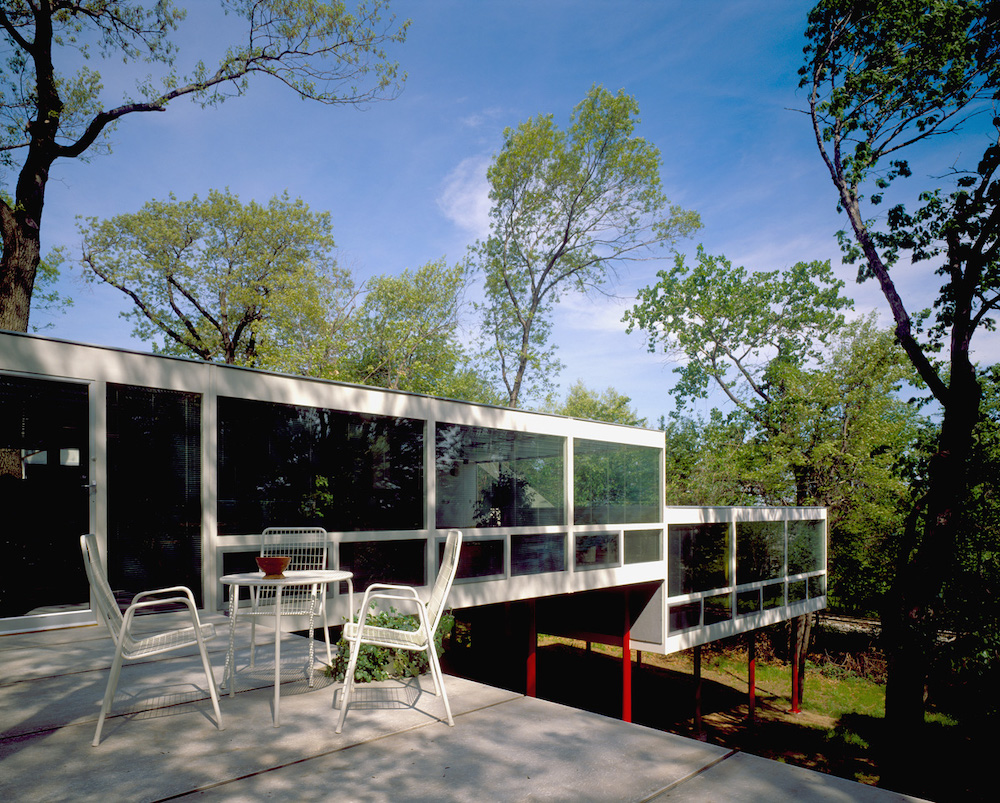
Ludwig Mies van der Rohe’s Farnsworth House, designed and constructed between 1945 and 1951. Credit: Victor Grigas on Wikimedia Commons, licensed under the Creative Commons Attribution-Share Alike 3.0 Unported license.
Mies van der Rohe
Mies was a German-born architect and educator, born in 1886 in Aachen, Germany, with Chicago becoming his adoptive hometown later in life. One of the 20th century’s greatest architects, he designed with an emphasis on open space and revealing materials. His steel-and-glass aesthetic defined modern architecture; he himself referred to it as “skin-and-bones architecture.” Mies didn’t design with style in mind, but rather, considered the philosophy of design within the frame of functionalist and industrial concerns at the time. “Less is more,” the legendary aphorism, was first said by Mies in reference to his architectural work.
Destined for greatness, Mies’ first commissioned project (Riehl House) came to him at the age of 21 while he was working for Bruno Paul. What really set his design aesthetic apart, however, was the Barcelona Pavilion. Designed for the 1929 International Exposition in Barcelona, Spain, the temporary structure was the most powerfully pared-down building imaginable. Consisting of horizontal and vertical slab elements, it fulfilled the minimum requirements to define space — nothing has ever personified “less is more” in quite the same way. As Mies garnered attention, he became the director of the Bauhaus school of design in Germany in 1930. He remained there until the school closed in 1933 under the mounting pressure of the Nazi regime, and it was at this point in time that Mies took his leave from Europe.
An Educator and Architect in America
Mies arrived in the US in 1938, heralding in a new era for his life and the life of architecture in Chicago. He was head of the architecture department of IIT from 1938-1958, and when Mies’ position was announced, he was introduced by the one and only Frank Lloyd Wright himself. It was virtually unheard of for Wright to admire the work of another architect — and vocalize his admiration no less — but in his introductory speech, Wright said of Mies: “I admire him as an architect, respect and love him as a man. Armour Institute, I give you my Mies van der Rohe. You treat him well and love him as I do. He will reward you.”
Wright knew what an influence Mies would have on IIT and on architecture. The period of transition allowed Mies to entirely redesign the school’s program and campus both — he “rationalized” the curriculum by returning to the basics. At IIT, students focused first on learning to envision and draw their creations, then master the features, functions and materials involved in building, in order to finally evolve as architects whose discipline was enmeshed with the fundamental principles of design and construction.
A Lasting Legacy
Mies has left his mark in many places — along the Chicago skyline, across the IIT campus and on our work here at Optima.The fundamental principles behind Modernist design influence how we create and think here, and the innovative and groundbreaking thinking of Mies is something that we seek to embody in our everyday operations. To this legend, we say thank you for paving the way and inspiring us all.
At Optima, we don’t just construct buildings, we create communities. At every step of our process, from selecting location, to construction, to leasing and renting out our retail space, we make decisions leveraging what we can provide to enhance our residents’ lives and the lives of the people in the surrounding neighborhood.
At Optima Signature in Chicago, our retail tenants include Egg Harbor Cafe, Guidepost Montessori School, RUNAWAY Fitness, Bedazzled Nails and GoodVets. These amenities enhance the lives of our residents and neighbors, creating onsite amenities and vibrant gathering places that encourage connection and socialization. Not only are our retail tenants adding to Optima Signature, but they contribute to the greater Streeterville community — Egg Harbor is a beloved breakfast staple in the Chicago suburbs, and their Optima Signature location will be their debut in downtown Chicago. And Guidepost Montessori School was the first of its kind for the neighborhood.
At Optima Sonoran Village in Scottsdale, one of our retail tenants, Kaleidoscope Juice, has become a place where people can meet old and new friends over a meal, juice or coffee throughout the day. Residents might meet someone in the gym at Optima Sonoran Village and decide to reconvene on their patio — having the retail space to gather deepens connections within the community, allowing residents to get to know their neighbors.
When selecting our tenants, it’s vital to our mission that the retail we bring to our communities is additive, contributing new spaces for our residents to use and bringing much needed and desired resources to the neighborhoods we call home.
A subtle but enhancing feature of many Optima projects, our sculptures adorn courtyards, amenity floors and common spaces. David Hovey Sr’s devotion to space and form translates from architecture to three-dimensional pieces, which are placed throughout our buildings to add a distinct aesthetic flair to our Modernist spaces.
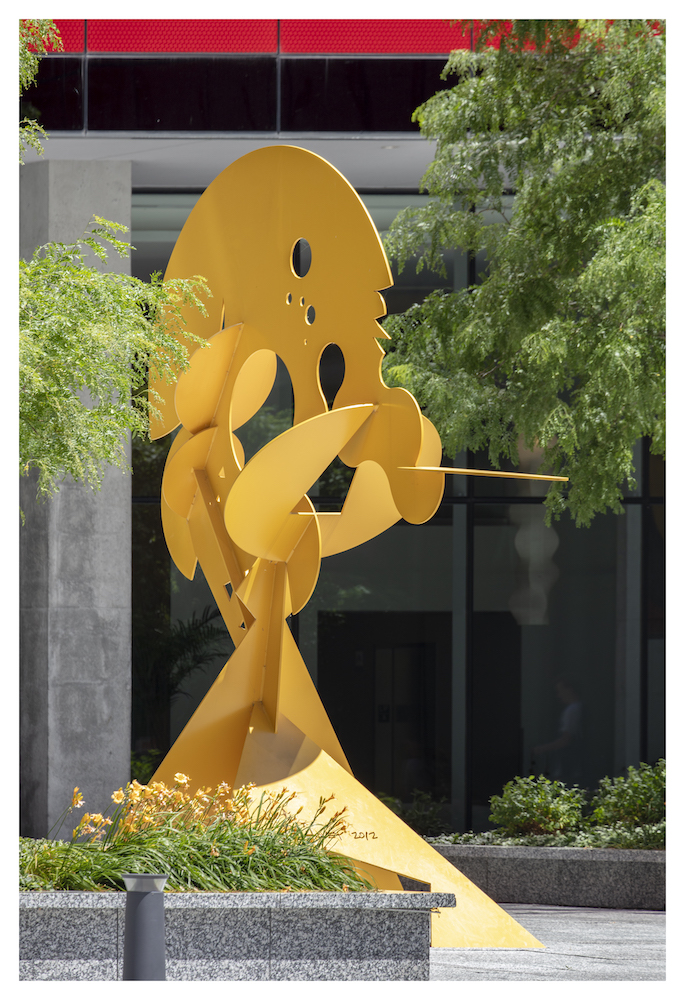
Greeting both residents and visitors at the entrance of Optima Signature, the sculpture Kiwi was named after the same bird native to New Zealand, where David Hovey Sr was born. Although the sculpture is reminiscent of an animal, Hovey’s vision was something much more abstract. Starting out as a handful of freehand drawings, the sculpture was layered until it formed a tall, stacked piece. Set against the bold red of Optima Signature, Kiwi’s bright yellow color pops amidst the neutral-toned buildings within downtown Chicago.
The finishing touch on Kiwi’s Optima Signature location was installation; the base was carefully cemented into the ground to protect it from the bustle of downtown and the intense Chicago weather. Aside from its prominent location at Optima Signature, Kiwi is also featured at Relic Rock and Whale Bay House.
David Hovey Sr’s passion for sculpture reflects our collective passion for enhancing the spaces we build and exploring new interpretations of form, color and design. Stay tuned for more features on our other sculpture pieces.
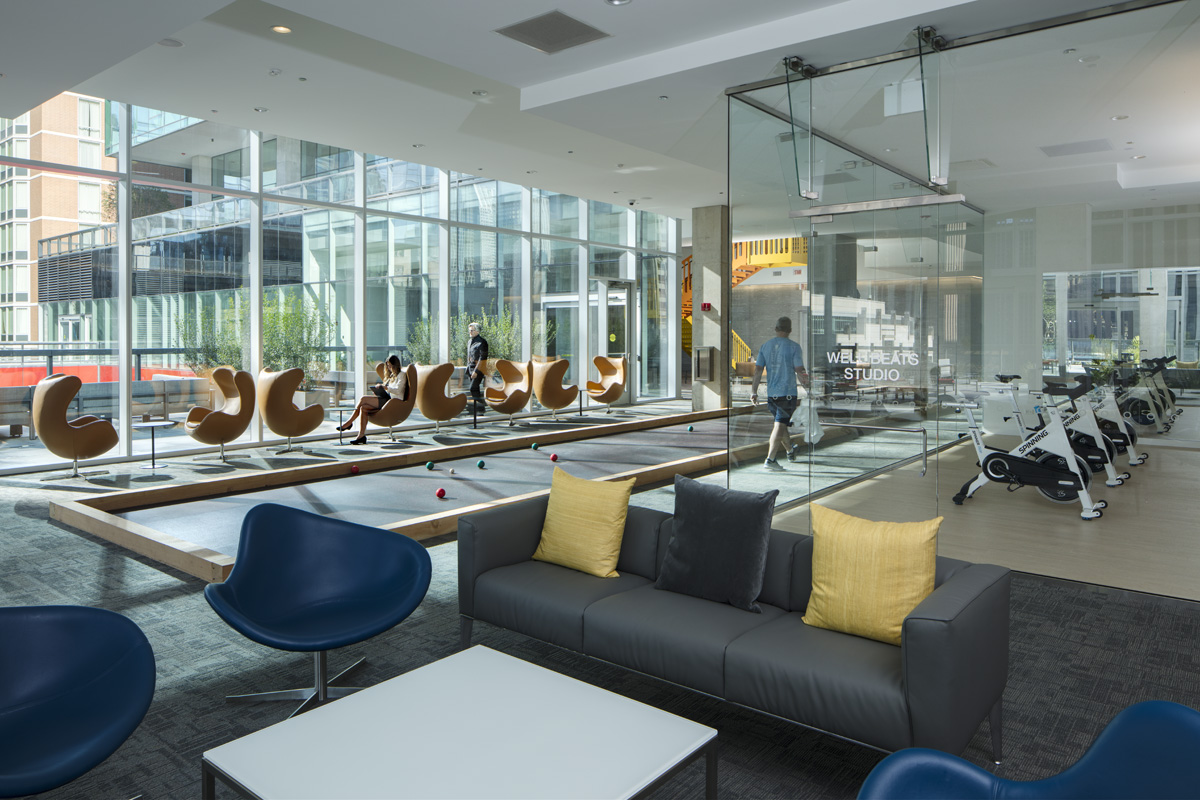
As with most luxury high rises in downtown Chicago, Optima Signature includes spaces specifically dedicated to resident amenities. Unlike most luxury high rises, Optima Signature’s amenity spaces span 1.5 acres across several floors, creating an unparalleled living experience for residents. We curate our amenity spaces with wellness in mind, designing to meet the physical and mental health needs of the people who enjoy our space.
Let the Light In
With floor-to-ceiling windows that show off breathtaking views of our Streeterville neighborhood, our amenity floors are the perfect spot to work from home and soak up some extra Vitamin D. In addition to energizing a space, natural light can help ward off seasonal depression, which is essential for the long Chicago winters. It can also aid in regulating your natural sleep cycle, which can seriously impact your mood. So whether residents are catching up on emails or catching up with friends, our amenity spaces are the perfect place to soak up some sun.
Get Active
Optima Signature features resort-style indoor and outdoor heated swimming pools, a cutting-edge fitness center, basketball, squash and bocce ball courts, golf simulator and putting green, yoga studio and more; needless to say there are plenty of ways for residents to get active and stay in shape. And with spa amenities such as indoor and outdoor saunas and steam rooms, decompressing after a long workout (or a long day at work) is always convenient.
Be Social
Along with physical wellness, Optima Signature’s amenities also provide resources for social wellness, which research shows increases mindful habits and lowers depression rates. Club 52, a residents-only club and amenity floor, features an outdoor kitchen, wine lockers, community lounge, and an outdoor terrace, allowing residents to mingle and get to know each other. On Level 20, the coffee bar, library, movie theater, demonstration kitchen, business center, conference room and coworking space encourages residents to connect with their friends and family.
From pools to green spaces, each of our projects feature aspects of healthy living. Helping our residents stay well is part of how we enhance the lives of those who live in our buildings, and how we stay connected to each of our projects.
Optima buildings are distinguished by our Modernist design, and by our signature pops of color. Because color can influence design, and in turn, influence those that experience our design, the color decisions we make are purposeful and serve to enhance and activate our architecture and the spaces around it.
Theory and Psychology
Color is fundamental to the Modernist tradition. Much of color theory was born out of the Bauhaus modernist art school, where four artists changed the way we talk about color today: Johannes Itten, Wassily Kandinsky, Paul Klee and Josef Albers. Itten, particularly, created the color sphere with primary, secondary and tertiary tones, was the first to determine warm and cool tones, and was a pioneer in associating different colors with emotions.
Today, the study of color and their relationship to human emotion is called color psychology. In the first 30 seconds of viewing an object, our brains make a quick judgment and react to what we see. Color plays a large part in this response; for people, tones and hues are tied to specific emotions and feelings. On a biological/physical level, when we see colors, that vision is transferred over to the brain, which in turn signals to our endocrine system to release specific hormones that create a correlating feeling or mood to what we’ve seen. Armed with this insight, we integrate color into our design solutions to create an emotional impact. But our use of color goes beyond.
Color in Optima Design
In our Arizonian desert residences, we select hues to complement the vegetation of the desert, seamlessly blending our architecture with its environs; indoor with outdoor. At Sterling Ridge, concrete walls merge with the earth, making the home an extension of the land. The result is a harmonious design, one that enhances our building and the land around it. Orange and red color details serve to give an exciting pop of color against a cohesive, blended pallet.
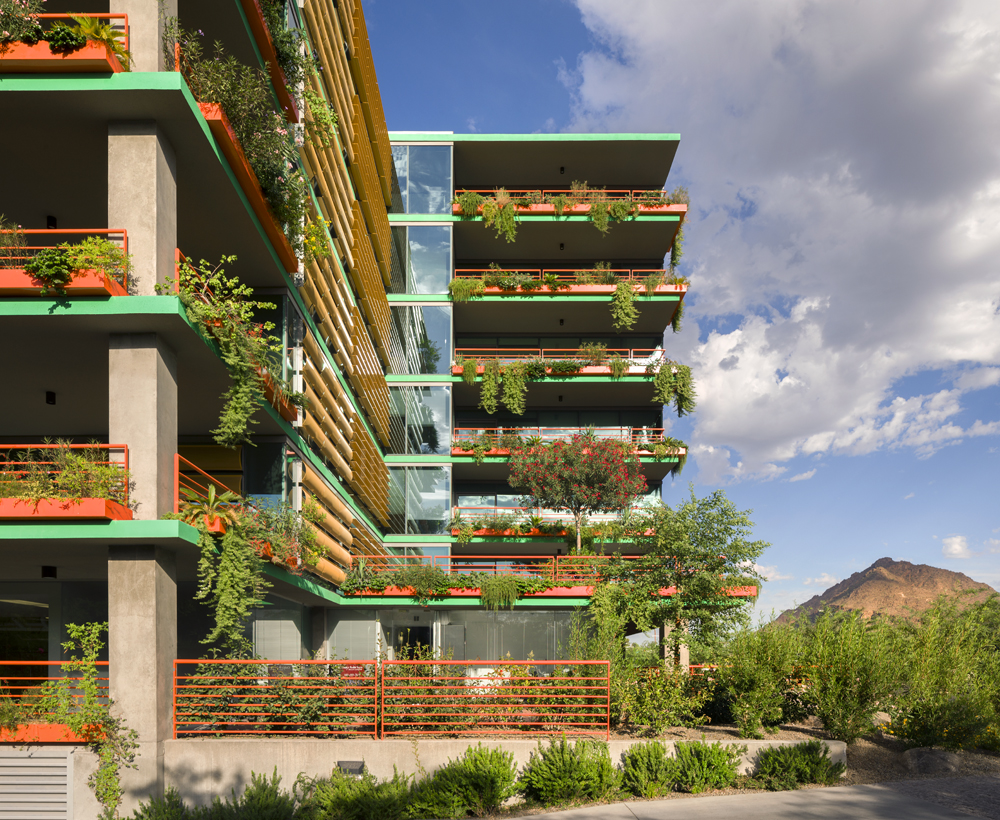
In many of our condos and multifamily residences, we use color in the exterior facade to compliment the surroundings of the building. At Optima Sonoran Village, orange, yellow and green details are drawn from actual colors found in the surrounding lush landscaping. The hues were inspired by the area’s desert flowers, serving to draw out the naturally occurring colors of the terrain.
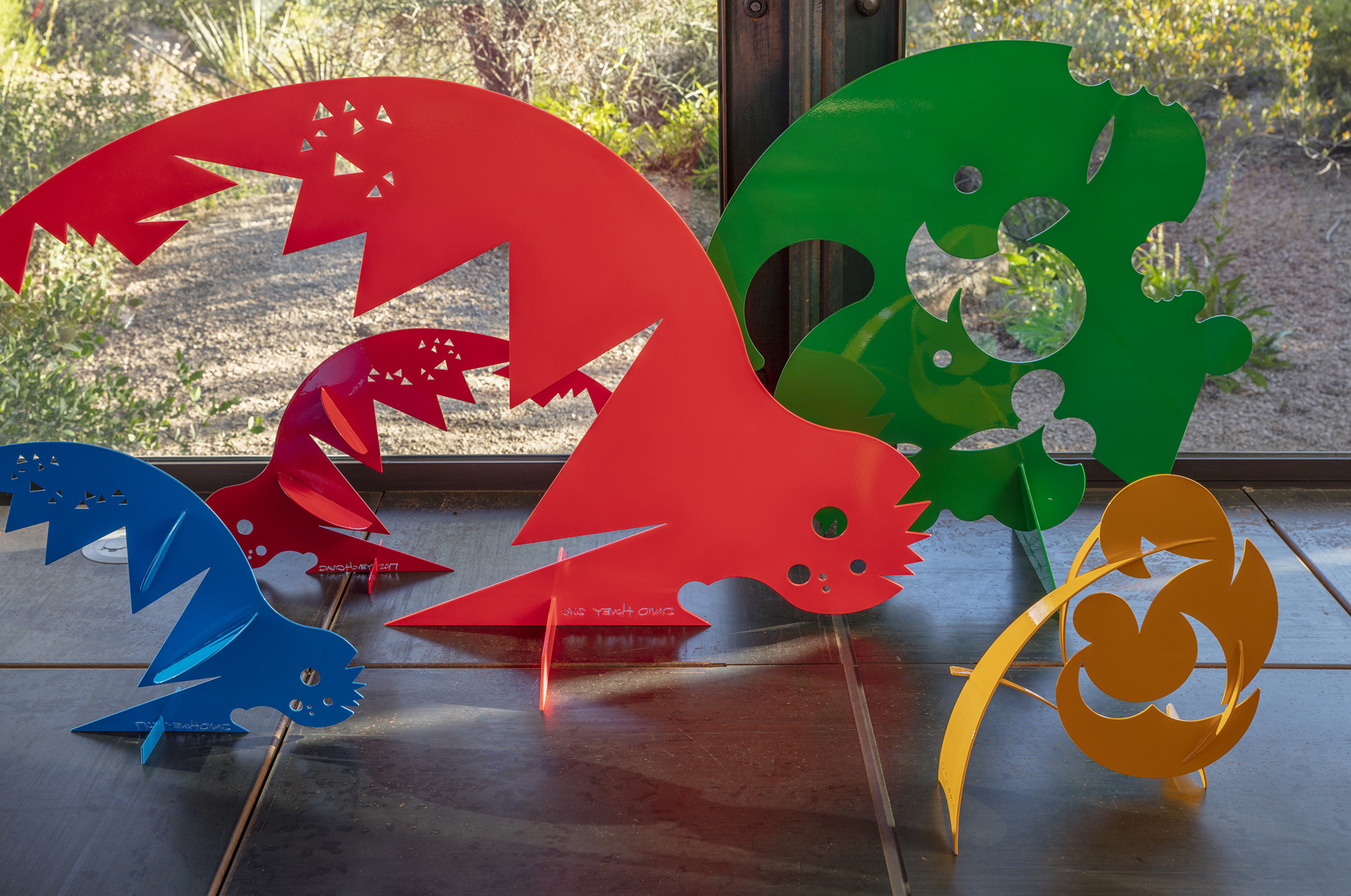
Color isn’t just important in our building design — we incorporate color into all of our design practices, including experimental color play with our sculptures. Often executed in different colors depending on the surrounding space, sculpture is another facet to Optima in which we experiment with shades and hues. Color has a long and storied history, but for us, it’s a continuing exploration that has us learning more each day.
Ask any real estate broker what the three most important things to consider when renting or buying a home are and they’ll say location, location, location. According to The New York Times, the phrase location, location, location has been in use since at least 1926 — that means that for nearly a century, this is one thing in real estate that hasn’t changed.
Here at Optima, location has always been an integral part of our development process. As the owner, architect, developer and general contractor of our own communities, we see location in a multifaceted way.
Location as Sustainability
As developers, when we seek out land for a new property, we view our search from a responsible, sustainable approach. We prioritize infill developments so that we effectively utilize the land as well as prioritizing valuable open green space. Our very first project in 1978 was urban renewal land in Hyde Park at S Kenwood Ave and E 54th St, and since then we’ve carried on that pattern.
Location as Design Sensibility
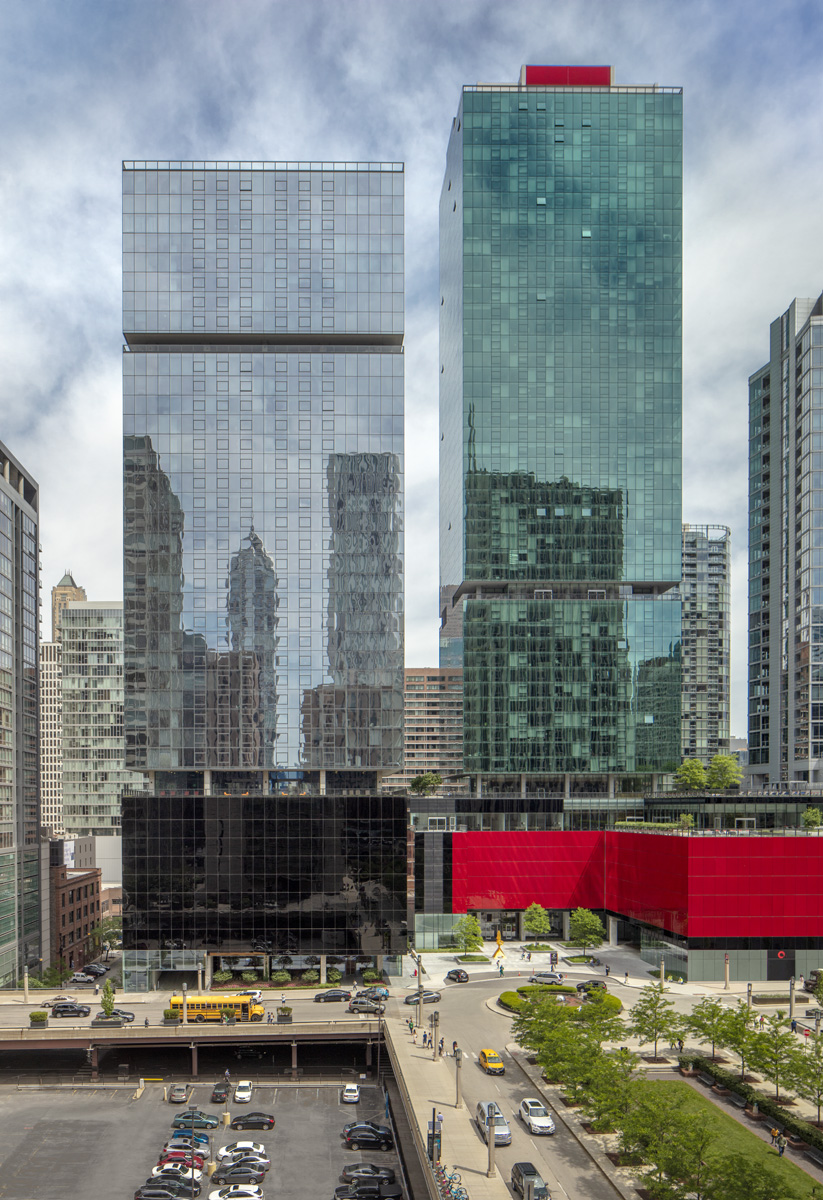
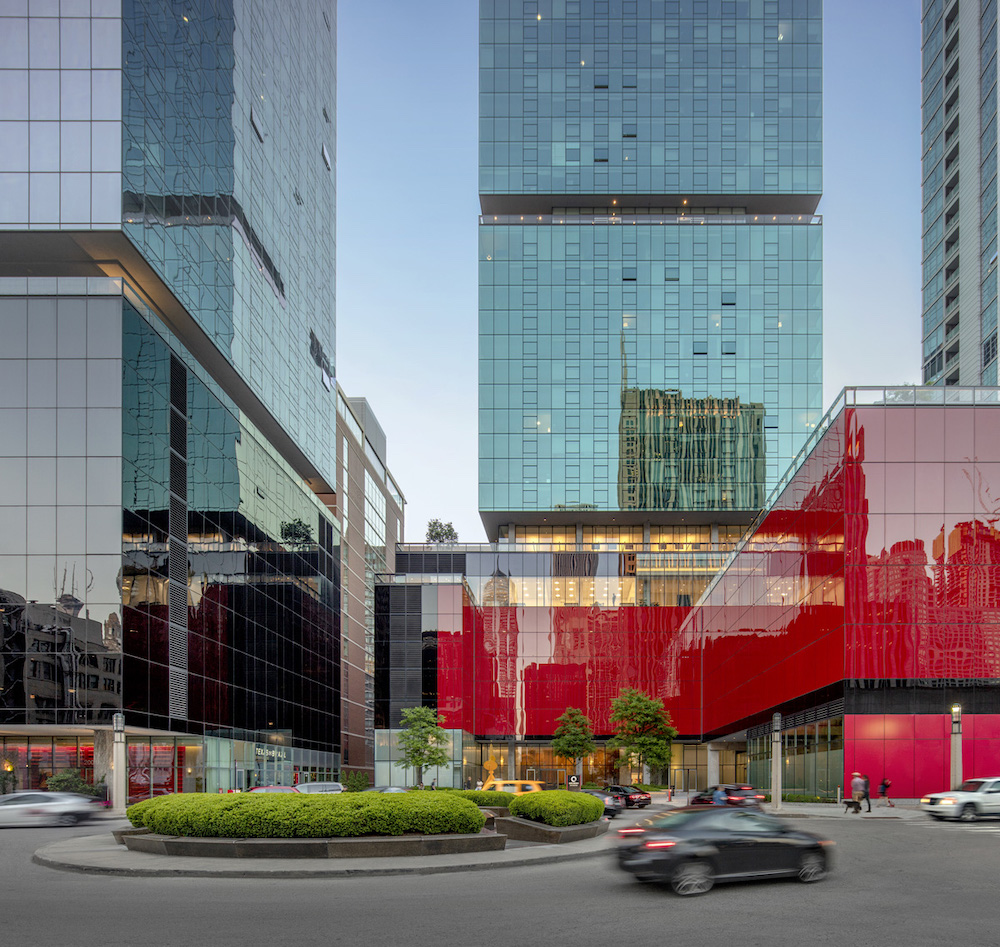
As architects, our practice and design are informed by the context of a new development. We are mindful of the existing architecture in an area, considering both how our building will stand out against the rest while also considering how our new addition will complement its surroundings. With Optima Signature in Streeterville, our sleek, Modernist skyscraper stands out amongst the historical beauties that surround it, creating a juxtaposition that adds complexity and intrigue to the skyline.
The Nature of Location
As we continue to redefine our roots in modernism, it’s also important to celebrate the fundamental connection between design and nature. Our communities merge indoor and outdoor into a single, holistic experience. Whether in the desert of Arizona or the grid of Chicago, it’s critical to us that our communities are informed by and embrace the nature of the surrounding area. When building desert residence Shadow Caster, we integrated the design of the home with the sloping of the land, creating a bridge feature and courtyard that holistically connect the indoor and outdoor experience of the residence.
Location as an Amenity
As owners, we know what people look for in their community. We also select locations for our properties based on the amenities of the surrounding area. We believe that the homes we build extend beyond their own doors — for our residents, their neighborhood is a large part of their living experience, from the view outside their window, to the transportation they take to work, to the restaurants, bars and shops that they frequent in the area. It’s all vital to the way that we build not just homes, but communities. At 7160 and 7180 Optima Kierland, the Scottsdale location is ripe with amenities. The multi-phase Optima Kierland project is located within steps of Scottsdale Quarter and Kierland Commons, two of the best entertainment areas in all of Scottsdale.