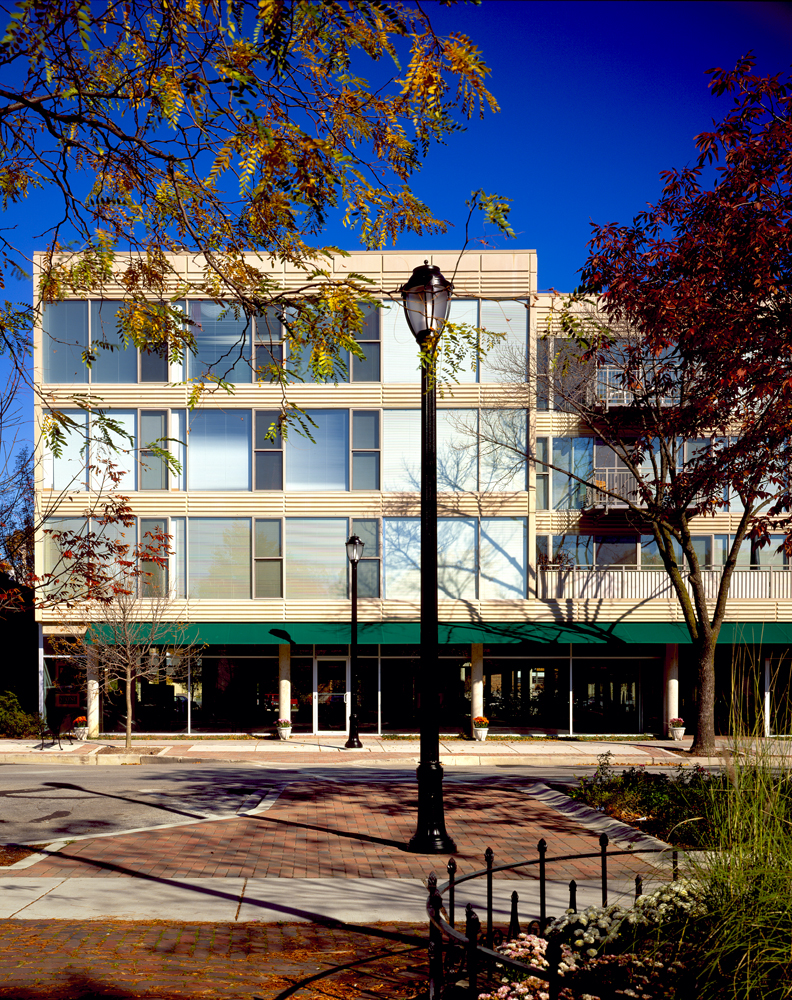
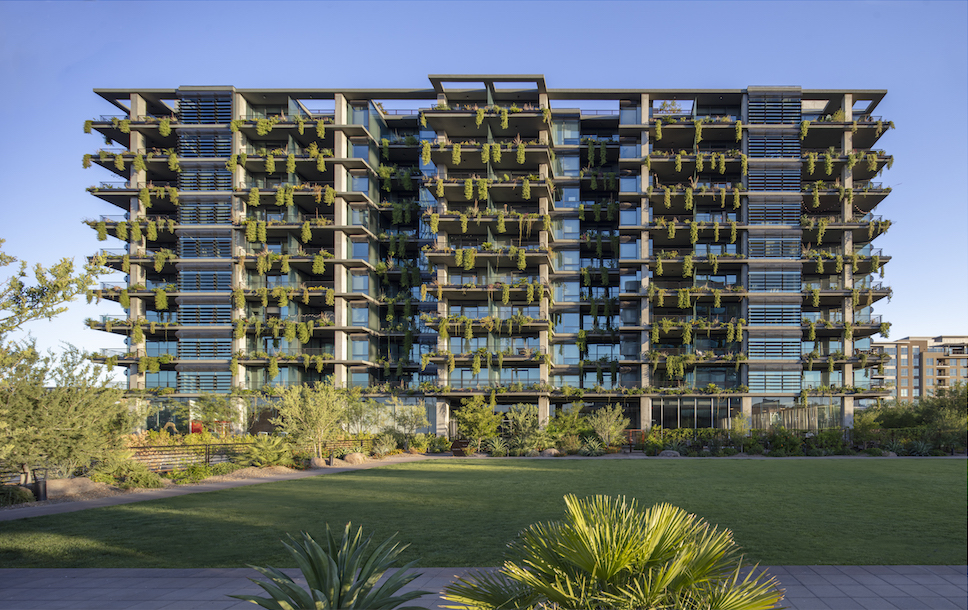
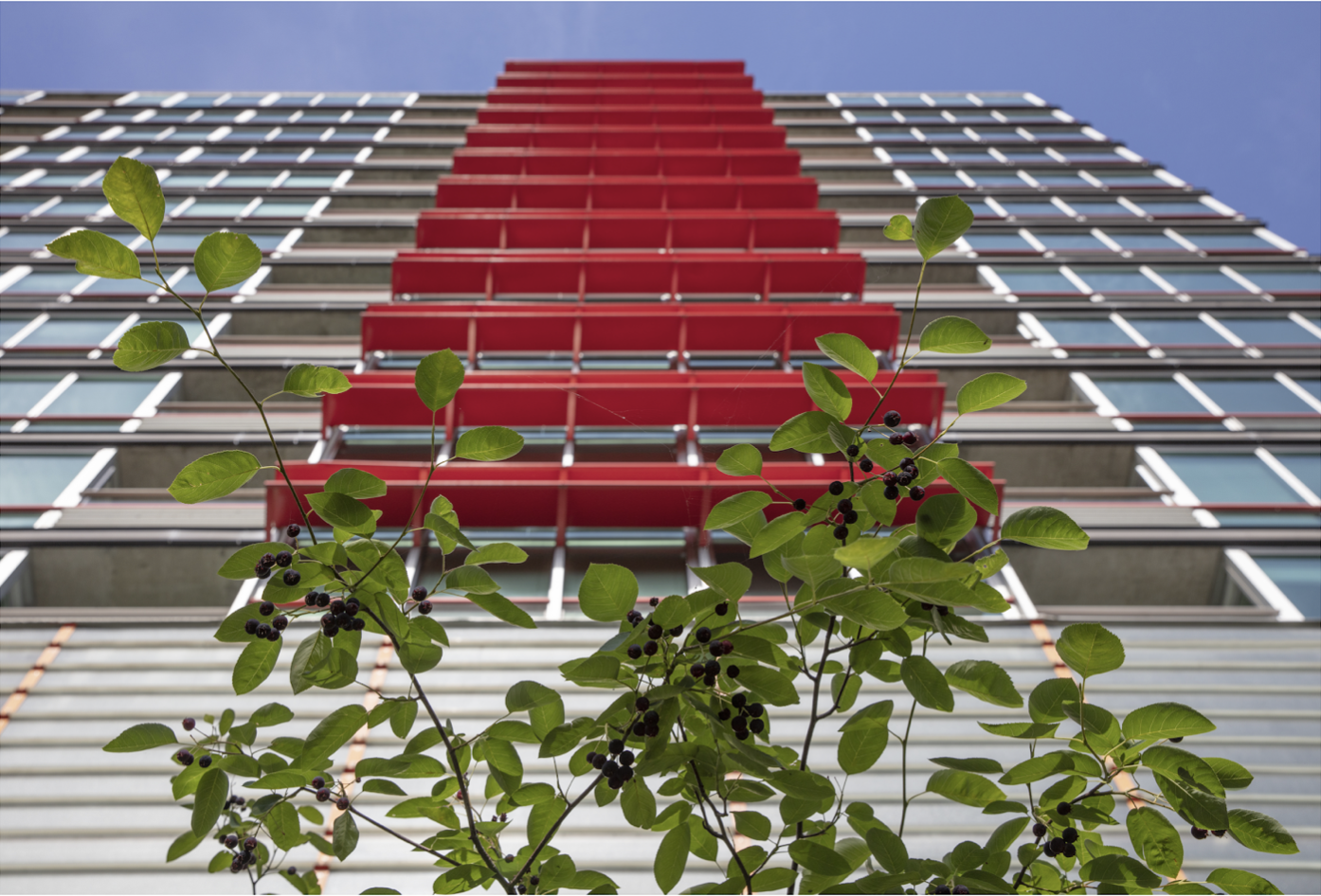
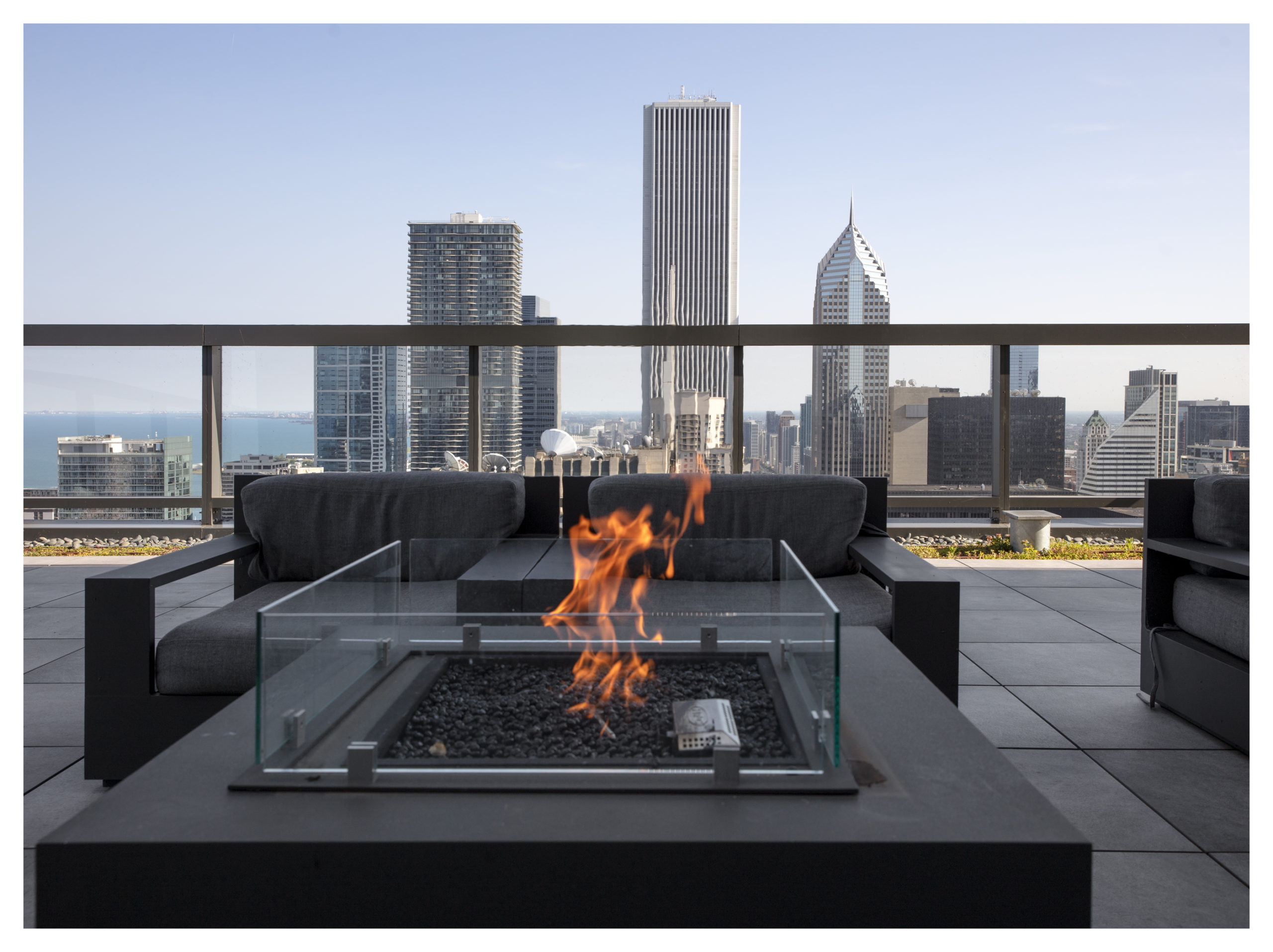
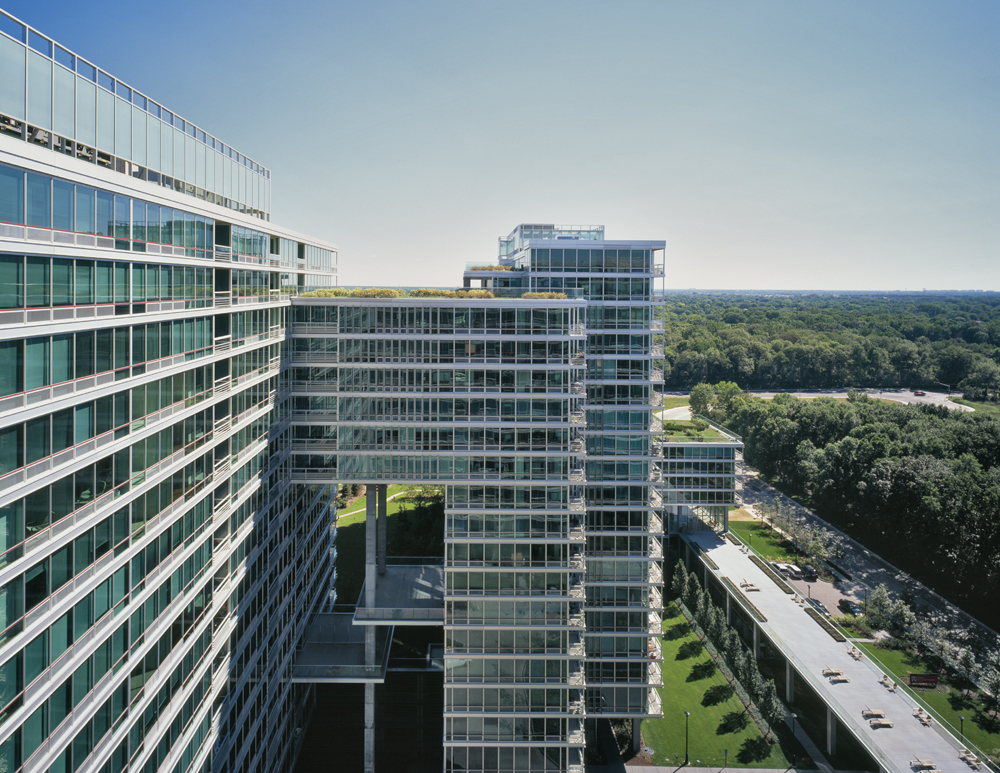
The serene Chicago-suburbs neighbor of Evanston, Wilmette offers proximity to the hustle and bustle of the city while also serving as an oasis of coffee shops, local boutiques and expansive parkscapes. Wilmette is home to three of our communities, Lake Courts, 1618 Sheridan Road and Optima Center Wilmette, and today we’re spotlighting why we, our residents and our commercial tenants love this Chicago suburb.
Outdoor Leisure
Bordered by Lake Michigan on the east and sprawling golf courses on the west, Wilmette is the perfect suburban hub for those that love leisurely outdoor activities. For lakefront fanatics, Gillson Park is an expansive reserve with beach access, perfect for swimming, sailing, picnicking, tennis, hiking and more. For casual and competitive golf hobbyists alike, Wilmette Golf Club is the best public golf course challenge in the area.
Bahai Temple. Credit: Teemu008 on Wikimedia Commons, icensed under the Creative Commons Attribution-Share Alike 2.0 Generic license
Cultural Institutions
No Chicago suburb is complete without the inclusion of a wide-ranging and diverse array of cultural institutions. Wilmette is the proud home to the Baháʼí House of Worship, one of only eight of its kind. The continental temple is an architectural marvel, worth the visit just to explore its gardens and interior and learn more about the faith. The Wilmette Historical Museum is also a fantastic local resource for learning more about the city’s story and roots.
Shopping and Dining
Wilmette’s central business district, conveniently located near public transportation, is a distinctively different shopping experience that includes an abundance of restaurants and specialty stores. Explore the Wilmette French Market, an outdoor shopping experience with produce, jewelry and more. Restaurants in the area include everyone’s favorite, Walker Bros. Original Pancake House, Convito Cafe and Market, Pescadero and countless more.
Stay tuned for more neighborhood spotlights on our other Optima communities.
At Optima, all aspects of our work are deeply saturated by the passion and values instilled in Our Beliefs. Our team unifies around these beliefs, enabling us to create more collaboratively, to communicate more effectively and to be collectively inspired by a shared vision. One belief — freedom to innovate — speaks to the degrees of freedom that we enjoy, allowing us to continually instill our work with inventive thinking and approaches.
As a vertically-integrated business, we serve as the owner, the architect, the general contractor, the developer, and property manager, allowing us to keep our hands on all parts of the process. With a full-throttle, approach to every aspect of building, from inception to execution, inherently we hold unique degrees of freedom and adaptability.
7160 Optima Kierland
Take when we were building 7160 Optima Kierland, the first tower of Optima Kierland Apartments, for example: we were able to shift on a dime and seize opportunity when it was presented. At the time of construction, we identified a rapid increase in market demand for three-bedroom units and quickly adapted mid-build, creating three-bedroom units, even after concrete had been poured.
As project architect, we modified plans and ensured no adverse cost impact resulted, coordinating with our design team maintaining bathrooms and shafts in their original location. As general contractor for the project, we engaged quick responses from partners without affecting project delivery.
Each and every day we make our decisions based on what we believe is right, without compromising our vision. The freedom to innovate is at the core of this decision making process — driving our work each and every day to be better, more efficient and more inventive.
Sculptures are art made architectural; dramatic corners, inventive materials and a consideration of space and its voids. At Optima, our appreciation for sculpture runs deep, with Optima co-founder David Hovey Sr. expanding the design reach of Optima to include his own original sculptures. Indulging in our love for the craft, we’re exploring Chicago’s public art, piece-by-piece. This week, it’s all about Alexander Calder’s famous Flamingo.
The Calder Flamingo
Though you might not notice it immediately as a flamingo, every Chicagoan is familiar with the long and graceful arcs of the famous red Flamingo sculpture designed by Alexander Calder. Calder is a seminal Modernist multi-media artist perhaps best known for his many whimsical mobile creations.
The Flamingo, however, is the antithesis of his mobile sculptures set apart by their dynamic motion — he referred to the goliath sculpture as a “stabile,” a freestanding abstract sculpture made in the style of a mobile but sitting rigid and stationary. It is this peculiar approach that gives The Flamingo an inevitable feeling of potential energy, instilling an almost alien vitality to the Federal Plaza where it lives.
Weighing in at 50 tons and made of steel, the sculpture feels anything but heavy in the space it occupies. Its arches and voids invite passerby to walk beneath and through the art on their way to surrounding office buildings in the plaza — including the Ludwig Mies van der Rohe-designed Kluczynski Federal Building.
The sculpture was designed specifically for this space, to add a lightness and balance to the severity of the Federal Building’s Modernist lines. Unveiled on October 25, 1974, at the same time that Calder’s Universe mobile was unveiled at the Willis Tower, the momentous, art-filled occasion was declared “Alexander Calder Day” and even featured a circus parade.
The festivity, spirit and joy of this sculpture and its history are apparent to all that visit it on display in Chicago, adding yet another meaningful and momentous sculpture to our city’s iconic and artful culture.
Just north of Chicago, Evanston merges the best of city and suburban living with a quaint-yet-thriving downtown, ample access to public transportation, the Northwestern University campus and a prime lakeside location. The site of high-rise buildings downtown, beautiful historic houses on tree-lined streets, and several Optima condominiums (Optima Towers, Optima Views, Optima Horizons, 840 Michigan, North Pointe), today we’re diving into what makes Evanston a great place to call home.
Bahai Temple. Credit: Teemu008 on Wikimedia Commons, licensed under the Creative Commons Attribution-Share Alike 2.0 Generic license
Arts & Culture
While Chicago’s iconic museums are only a purple-line train ride away, Evanston is home to its own thriving local art scene. The Block Museum of Art at Northwestern University hosts dynamic and global art exhibits, while institutions such as the Mitchell Museum of the American Indian and the Halim Time & Glass Museum showcase unique exhibits of their own. Right next to Evanston, the Wilmette neighborhood is home to the Bahai Temple, a stunningly architected house of worship that’s worth a visit just for a summertime stroll through its gardens alone.
Shopping and Dining
Evanston’s downtown core is the proud home to hyperlocal boutiques and restaurants that range from traditional staples to niche experiences. For more adventurous shoppers, The Spice House is a global fresh-ground store going sixteen years strong, while Dave’s Down to Earth Rock Shop is a rock/jewelry/bead shop with a basement fossil museum. Meanwhile, Vintage Garage Chicago is a monthly flea market that takes place in the lot just next door to Optima Views.
It’s also never hard to find a good bite to eat in Evanston, with fan-favorites like Found, a hot spot offering seasonal farm-to-table fare, and Dinkel’s Bakery, the only place to be on Fat Tuesday.
Urban Nature Experiences
With a prime lakeside location, naturally Evanston has an abundance of lush parks, beaches and lakefront trails perfect for strolling, jogging and biking. Evanston’s lakeshore is also home to the historic Grosse Pointe Lighthouse, an iconic landmark bordered by the beautiful Harley Clarke Mansion and Lighthouse beach. And closer to downtown, the Merrick Rose Garden offers temporary reprieve from streets and storefronts for those who want to stop and smell the roses.
Stay tuned for more neighborhood spotlights on our other Optima communities.
Achieving work-life balance has taken on new gravity as we shelter-in-place. At Optima, our teams are with you every step of the way to ensure you have a productive workday, and find daily fulfillment and joy in the comfort of your home. Here are just a few of the ways our properties are already optimized for people’s remote working needs:
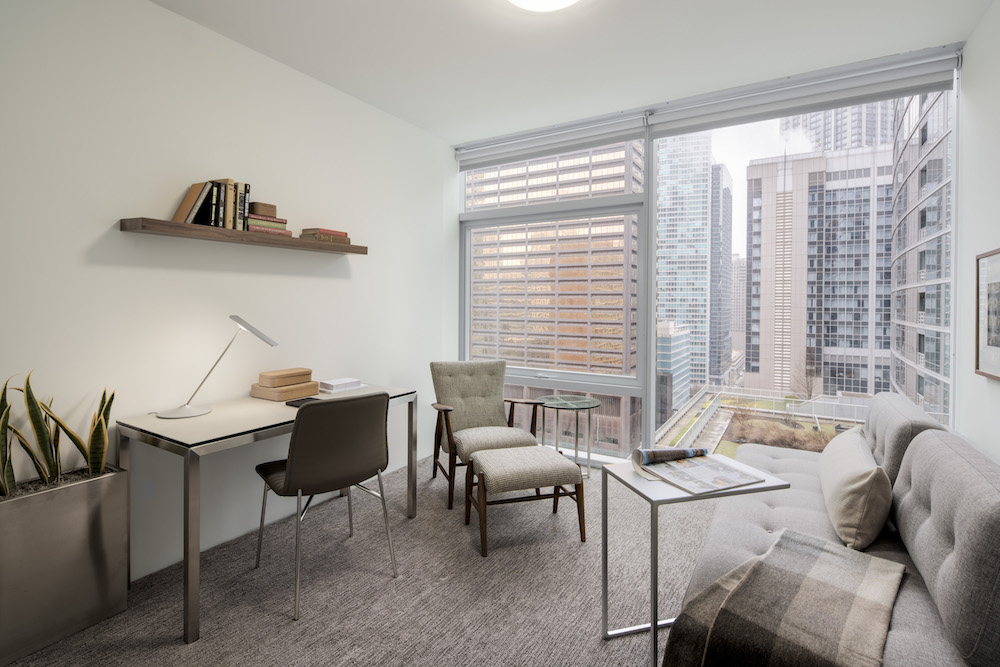
Home office space at Optima Signature
Distinct Work Zones
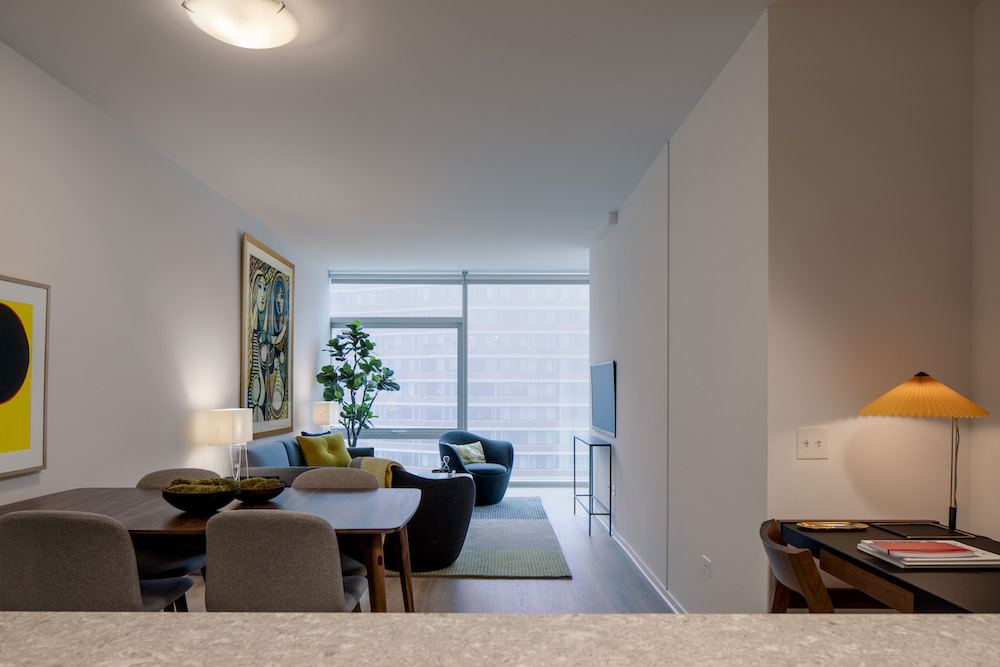
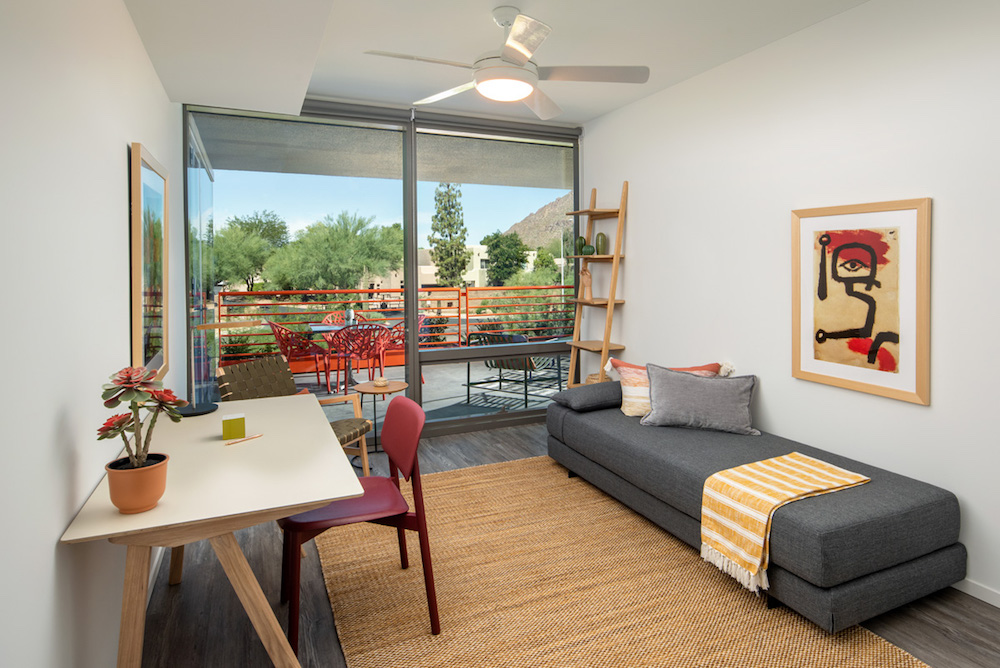
One of the biggest challenges when working from home is achieving a healthy separation between work and life. At our multifamily communities, each home is designed to have space for a desk and at-home workspace. With the opportunity to have a dedicated work zone, you’ll be able to create an environment that is conducive to your daily success and that allows you to tackle any challenge.
Home office space at Optima Sonoran Village
Connection to Nature
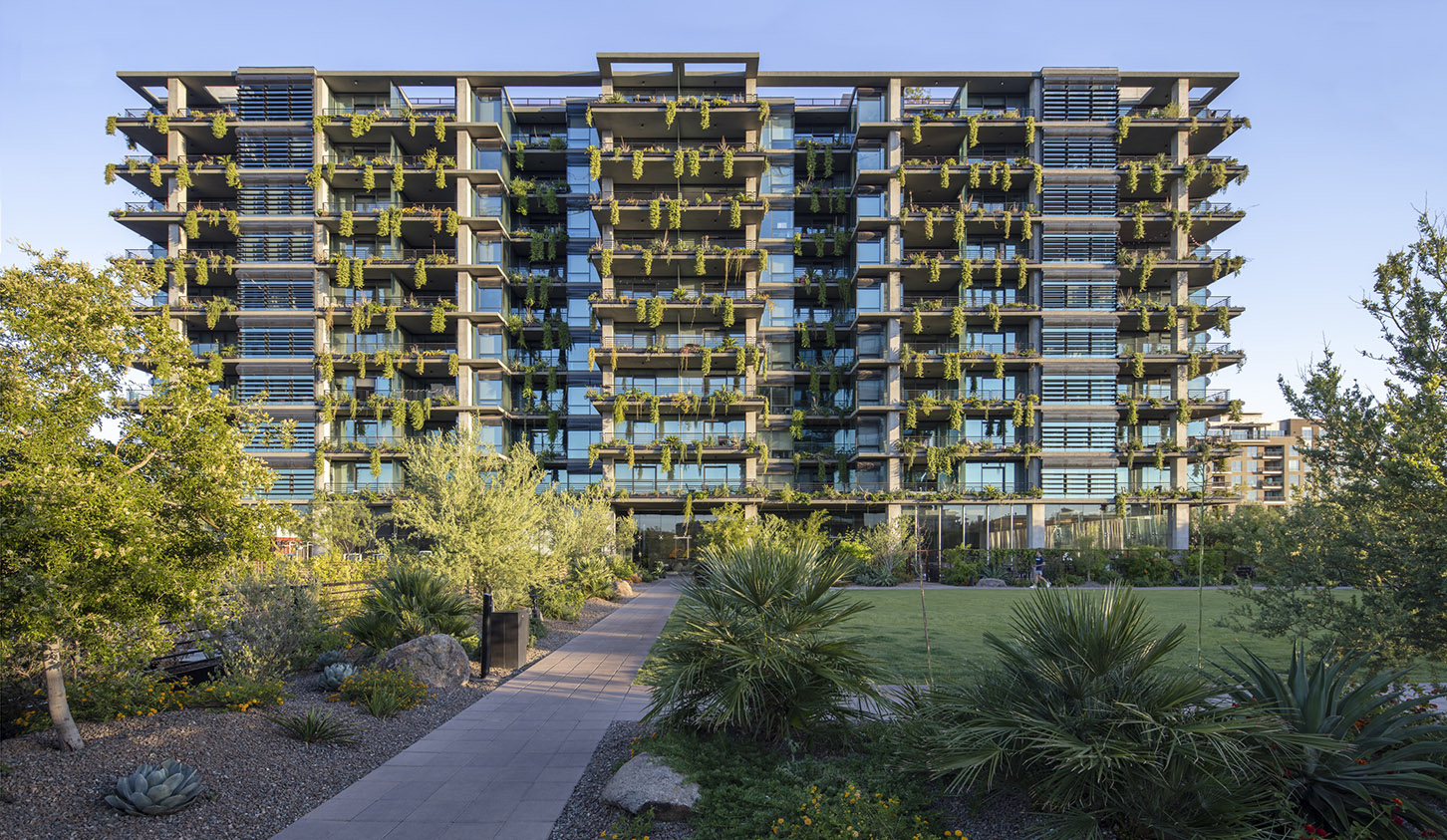
A shelter-in-place order doesn’t mean we have to separate ourselves entirely from the outdoors. It’s important to continue finding sensitive ways to get your daily dose of sunshine. With the integration of the built and natural environment integral to our design sensibilities, all of our communities feature vast outdoor spaces, with many homes offering significant outdoor living spaces. These outdoor spaces are the perfect place to take advantage of weather on a nice day — like having an outdoor picnic on your balcony.
Engaging Digital Programming
Our property management teams are committed as ever to ensuring that our communities and residents stay connected — with one another and with their daily patterns. We’ve been hard at work putting together virtual event series and fitness classes that allow Optima residents to enjoy a full array of digital amenities from the comfort of their own home. Some of this programming includes digital patio workouts with a fitness trainer at Optima Sonoran Village, digital fitness classes with an onsite trainer at Optima Signature and even building-wide movie, trivia and comedy nights at Optima Kierland Apartments.
As we continue to shelter-in-place and practice social distancing, our buildings and our teams are ready to collaborate and come together to make being home even more enjoyable for our communities.
As part of our culture at Optima, our team is aligned around a set of beliefs that provides unity, clarity and meaning to the work we do everyday. One belief — committed to lasting impact — addresses our dedication to design solutions that raise the bar, withstanding the aesthetic test of time to leave a positive, lasting impact on people and the built environment that surrounds them.
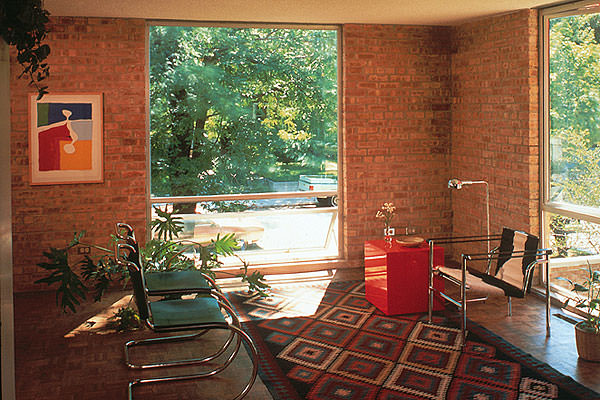
From our earliest days, we have approached our work with this mindset. Our first project was in 1978 — a condominium complex at South Kenwood Avenue and East 54th Street in Hyde Park. We acquired the in-fill property at auction, and built six townhouses using Chicago common brick (they are still standing and occupied today). This project established a throughline that stays with us to this day, as we continue to pursue each project with the same intention, inspired by the people who live in and around them.
Interior of South Kenwood and East 54th Street
As a natural outgrowth of our focus on people and the places they inhabit, we pay particular attention to how interior space is designed and experienced. Whether it’s our multi-family residences or single family homes, each is outfitted with a multitude of amenities, outdoor spaces and thoughtful design. We also deliberately curate the commercial spaces within our multi-family properties to benefit our residents, tailoring the selection of retailers to include restaurants & juice bars, schools, veterinary services or health & wellness spaces that align with the mix of residents and their needs.
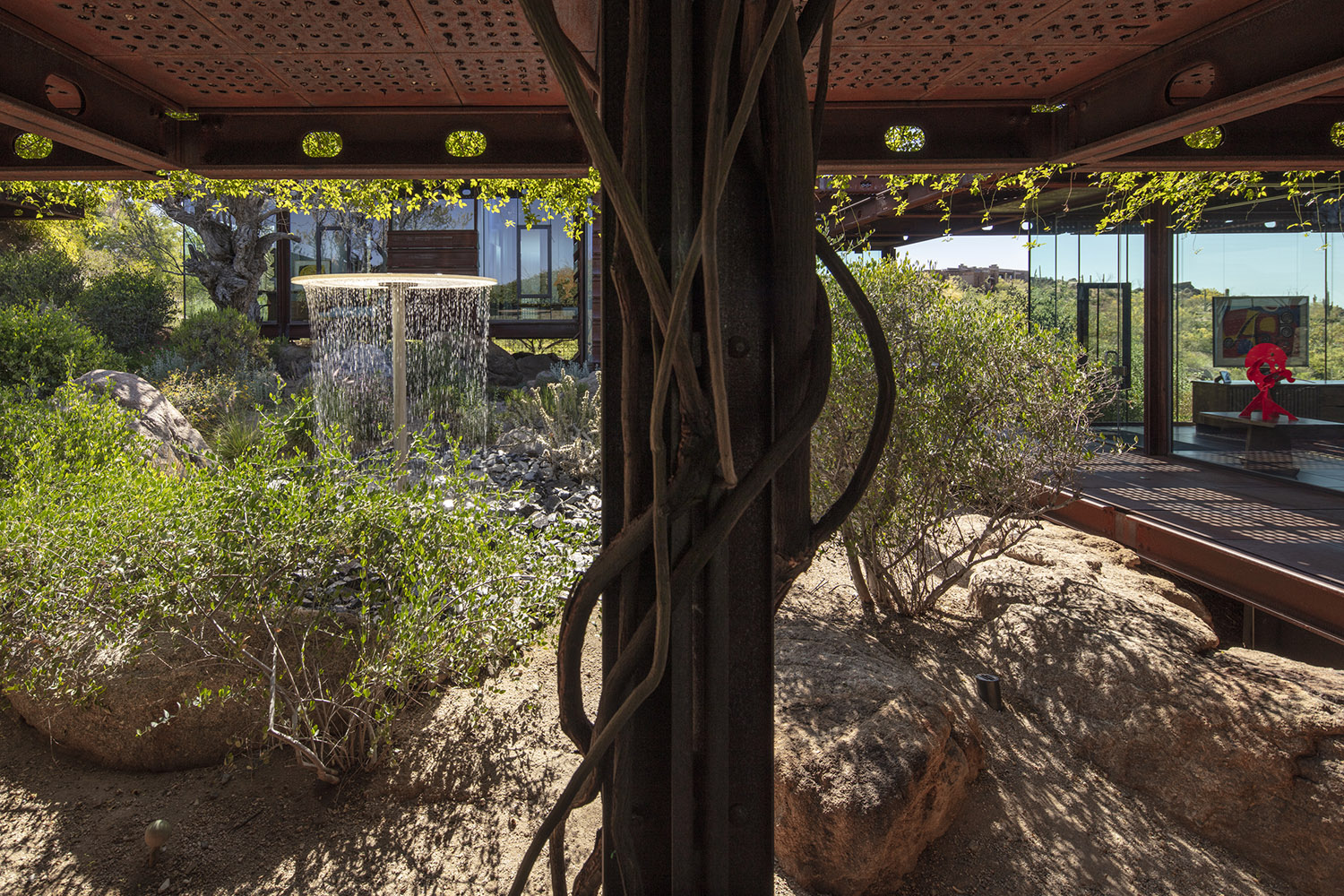
Our passion for buildings that last also translates into how our projects impact our earth. From LEED and IgCC certifications to conscious materials, we design with eco friendly functionality in mind. In building Relic Rock, we utilized design and materials to reduce the need for electricity and heat, lowering the building’s environmental burden. As we continue to grow in our practices, we will continue to implement more conscious design to ensure that our buildings work harmoniously with the surrounding nature.
Courtyard Fountain “Cooling Tower” at Relic Rock.
Through each project and with each detail large or small, we strive to improve our communities and the lives of our residents for years to come. Stay tuned for more features on our beliefs as we dive deeper on what makes Optima function and thrive.
Chicago is home to the world’s first skyscraper, and since that momentous milestone, has remained a pioneer in the architectural world. But what gives Chicago its trendsetting je ne sais quoi? A unique history drives the diverse array of styles and voices that have forever marked architecture in Chicago, and in the world.
Epicenter of Manufacturing
By the mid-19th century, Chicago was an essential trading hub, with imports and exports flowing in and out via the Illinois and Michigan Canal and railways. Impressive stockyards, manufacturing, banking and other commercial industries, combined with the country’s first comprehensive sewage system, drew in a large, urban population. That population flocked to a concentrated city-center, where buildings shot skywards to keep pace with the growth.
The Great Chicago Fire
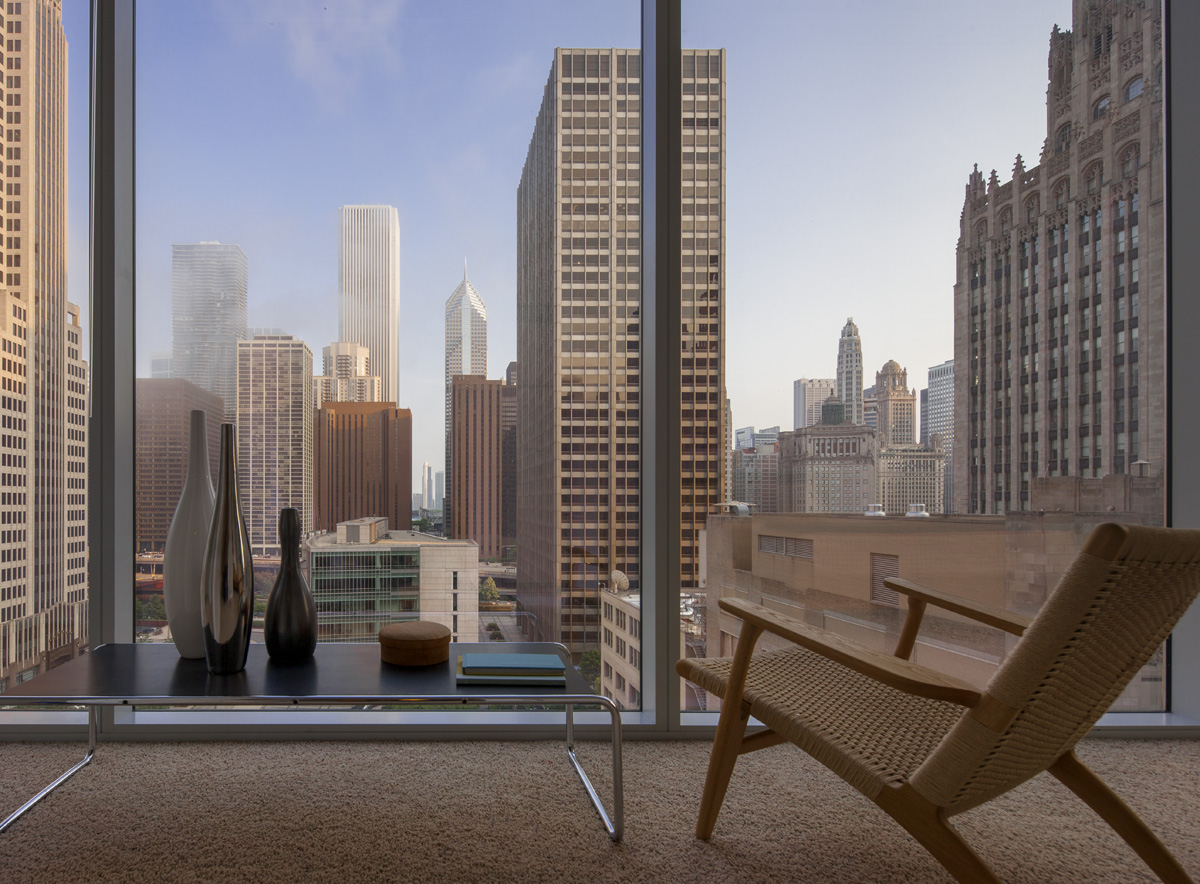
Chicago grew quickly, and fell just as fast. In 1871, the Great Chicago Fire destroyed 17,500 buildings, leaving devastation in its wake and demanding the city rebuild. With the chance to start fresh, Chicago rebuilt bigger, better and smarter. A city grid was established, adding order and intentionality. Propelled by two crucial inventions, safety elevators and the Bessemer Convertor, Chicago architects could also build higher than ever before. It was during this time that the world’s first skyscraper, the ten-story Home Insurance Company, was built, marking the dawn of a new era in architecture.
City views from an apartment at Optima Signature
The Burnham Plan
Chicago reached an all-time-high during the Chicago World’s Fair of 1893, with 27.5 global visitors flocking to the city. Planning for the city’s continuous and rapid growth, director of the fair, Daniel Burnham proposed the 1909 Plan of Chicago, or simply the “Burnham Plan.” Their utopian design for the city included lakefront improvement, increased transportation systems and an abundant outer park system. Though not every component outlined came to fruition, the Burnham Plan left a profound mark on contemporary urban planning.
A sweeping view from Club 52 at Optima Signature
Modernism Rises
While the Burnham Plan was classically-influenced, up and coming Chicago architects shared new ideas. Louis Sullivan led the legion of Chicago School architecture under the motto “form forever follows function,” a creed later adopted by the Modernist movement. As Sullivan pioneered a new class of skyscrapers that had international impact, his mentee, Frank Lloyd Wright, explored architecture closer to the ground with his Prairie homes. These innovative thinkers helped drive the diversity of Chicago’s architecture, creating a skyline that is storied, varied, impressive and influential.
Optima adds our own voice into the mix, designing in the Modernist discipline and applying new approaches, to honor a legacy of harmonious and mixed voices in Chicago.
As part of our commitment to building strong communities, we often turn our efforts outward and partner with local businesses and nonprofits that share our beliefs and passions. Recently, our teams in Arizona and Illinois both rallied and collaboratively supported a cause together, volunteering with Feed My Starving Children.
Feed My Starving Children (FMSC) is a nonprofit dedicated to eradicating child hunger in both body and spirit. Their organization believes that hope starts with food, and coordinates with food distribution partners that stay with communities for the long haul, empowering them to move from relief to development. By providing proper nourishment and nutrition to children in need, FMSC is unlocking their full potential, helping children grow and thrive.
On Thursday, February 13, thirteen Optima team members from offices in Arizona and Illinois volunteered at their respective locations. Over the course of the day, we assembled food donations and packed 164 boxes bound for communities in need, providing 35,424 meals. These meals will be enough to feed 96 children for an entire year. In addition to dedicating our time, our team made a donation that will feed three families for one year.
Our team members cherished the experience. Heather Williams, Community Manager at Optima Kierland Center in Arizona said, “Volunteering with Feed My Starving Children was an eye-opening experience. It’s heartbreaking to think about the number of children and adults that face starvation as a reality. The work this organization is doing to help feed families across the globe is inspiring and I am really grateful to have had the opportunity to contribute in a small way.”
Tarryn deKock from the People Experience team in Glencoe agreed, “It was such a rewarding, fun, feel good day spent with my team members, giving back to those less fortunate. I felt so grateful for what we have and how lucky we are!”
To learn more about Feed My Starving Children and how you can help end childhood hunger, visit their website here.
Home to Optima Old Orchard Woods, Skokie, IL was once referred to as “The World’s Largest Village.” With easy access to nearby Chicago and ample transportation options, Skokie is connected to the urban while grounded in local community spirit. Here are a few of our favorite spots:
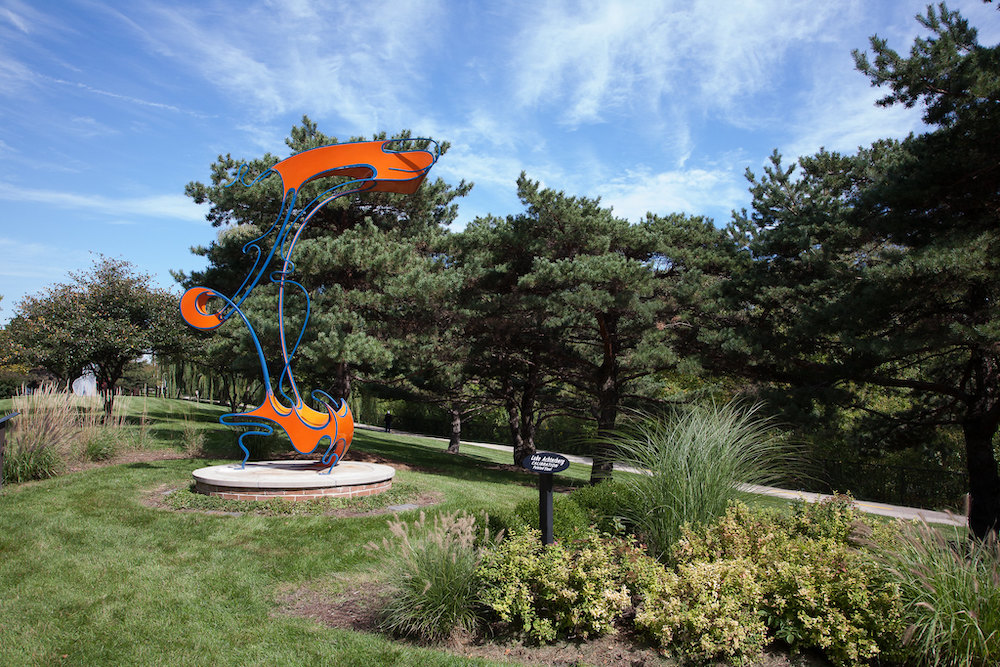
Collaboration, a sculpture by Luke Achterberg, at Skokie Northshore Sculpture Garden.
Explore Public Art in Skokie
At Optima, our appreciation for public sculpture runs deep — and Skokie is the perfect place to experience the medium. Running alongside the Chicago River is Skokie Northshore Sculpture Park, a two-mile long expanse of lushly landscaped walkways and bike trails home to over 60 sculptures. The sculptures come in all shapes, sizes and styles, and the garden even hosts a “New Turf” and “Young Artists” gallery to truly expand its offerings.
Go Shopping… Outdoors
Skokie is home to Westfield Old Orchard Mall, an upscale shopping center that features a courtyard schema where shoppers can amble away the day, window shopping at department stores and brand-name fashion retailers, catching a bite at a well-known eatery or enjoying people-watching fountain-side.
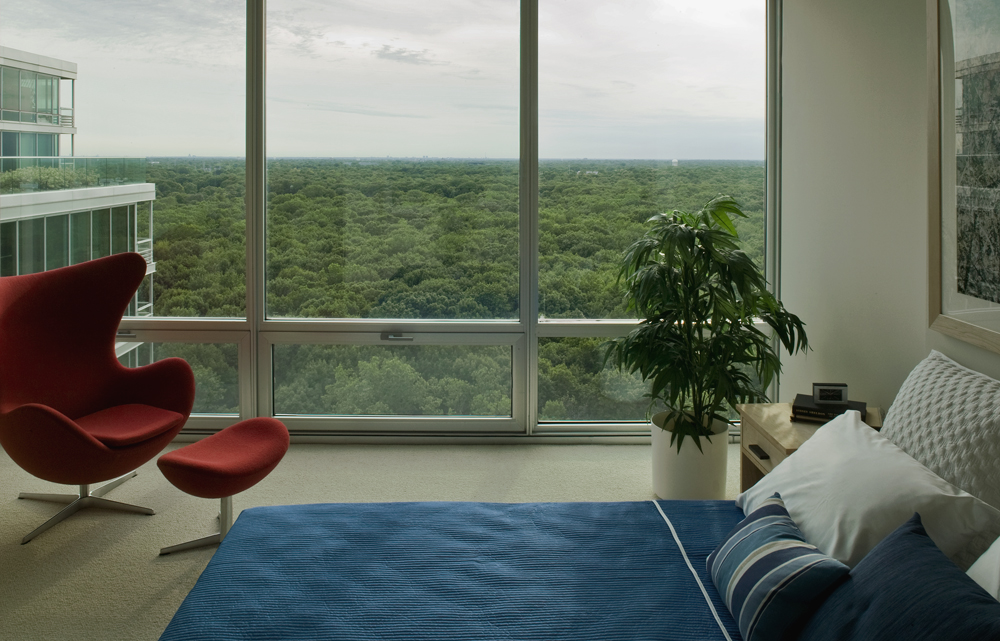
A sweeping view of Harms Woods Forest Preserve from Optima Old Orchard Woods.
Reconvene with Nature
Nature is calling at Optima Old Orchard Woods, with floor-to-ceiling glass walls in every residence overlooking the lush trees of Harms Woods Forest Preserve. This popular forest preserve, conveniently located nextdoor, provides a gorgeous setting for casual hikers, horseback riders and cyclists alike to breathe the fresh air and convene with nature. Thanks to years of dedicated restoration efforts, visitors can also enjoy a thriving ecosystem of flora and fauna.
Discover Your Favorite Dining
Beautiful and centrally-located Downtown Skokie is host to an abundance of dining and drinking options. The diverse culture of the neighborhood brings tastes from every part of the world: Zhivago creates continental plates with a Russian twist, while Kabul cooks up stylish and classic Afghan cuisine and Libertad promises a culinary adventure into the Latin American landscape.
In Skokie, there’s always something new to discover. Stay tuned for more neighborhood spotlights on our other Optima communities.
At Optima, we’re in constant pursuit of better and smarter ways of creating, which is why we often employ prefabrication, from our multifamily properties to our desert dwellings. Prefabrication describes the process of building elements off-site in a factory or workshop, and then later fitting those elements together on-site. This carefully calculated process has revolutionized the industry, allowing builders to cut down on time, cost and labor needed to create a structure. To understand just how vastly the industry and the way that we build has transformed, we’re taking a deep-dive into the world and history of prefabrication.
Whale Bay House, Optima DCHGlobal.
Early Origins
Naturally, the idea of building pieces separately before putting them all together in place is centuries old. Prefabrication is inspired by building techniques that date as far back as Mesopotamian civilization and Roman fort-building. In fact, the earliest known example of prefabrication comes from around 3800 BC, when the oldest engineered roadway, the Sweet Track in England, was built using timber sections that were constructed off-site.
Prefabrication techniques were used to erect giant structures in Sri Lanka, to rebuild the Portuegese capital after the great Lisbon earthquake of 1755 and even in 19th century Australia, when a large number of prefabricated houses were imported from the U.K. No matter the circumstances, from building large to building wide, the streamlined technique allowed for increased control, lowered cost and expedited process.
Relic Rock, Optima DCHGlobal.
Industrialization and Modernism on the Rise
Prefabricated farm buildings and bungalows were the first readily available structures on the market, around since the early 19th century. Most notable during that time was London carpenter Henry Manning’s prefabricated Portable Cottage, which was transported to Australia. Affordable housing was created using the technique, too, supplying homes for 49ers during the 1848 California Gold Rush and to refugees of war during World War II.
Prefabrication was also an integral tool in rising Modernist architecture. The first ever Modernist structure, The Crystal Palace designed by Joseph Paxton, was built in 1851 using this method. Like The Crystal Palace, Modernist design was rooted in materials such as exposed steel and glass, which were perfectly suited for prefabricated builds as they were most often used in the simple and functional Modernist structural patterns.
Construction on Whale Bay House, Optima DCHGlobal.
Prefab Concrete and Steel
As the prefabrication practice continued to grow, technical developments such as the development of sheet steel, the improvement in alloys, the use of lightweight aggregates and the promotion of precast reinforced concrete pushed the field even further. Concrete and steel in particular proved to be highly efficient materials in the prefabrication process, with pre-poured concrete allowing for more flexibility, and prefabricated steel sections reducing in-field risk during cutting and welding. These components have proven especially crucial to simplifying the construction process in buildings where a particular part or form is repeated numerous times.
Created by Optima President David Hovey Jr., Optima DCHGlobal has created The Optima DCHGlobal Building System, a patented prefabricated architectural system that is flexible in both horizontal and vertical directions, sustainable up to the net-zero level, multi-generational, and able to be built quickly and efficiently in any location, climate or terrain.
His invention of this system has created award-winning residences, such as Relic Rock and Whale Bay House. We continue to utilize the latest in steel technology, and often employ elements of concrete, to create our simple yet stunning Modernist structures.
As we continue to look forward to a future of innovating and finding new ways of creating, we are humbled to look back at the history of prefabrication and how the technique has grown, allowing us to grow, too.