Green Space Spotlight: Optima Camelview Village

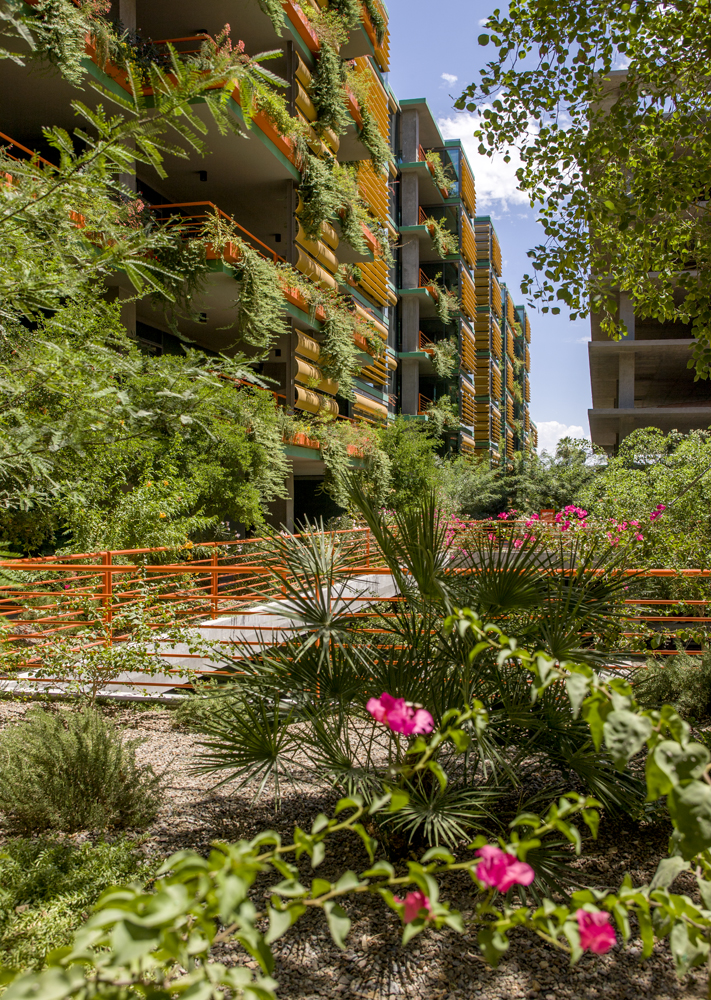
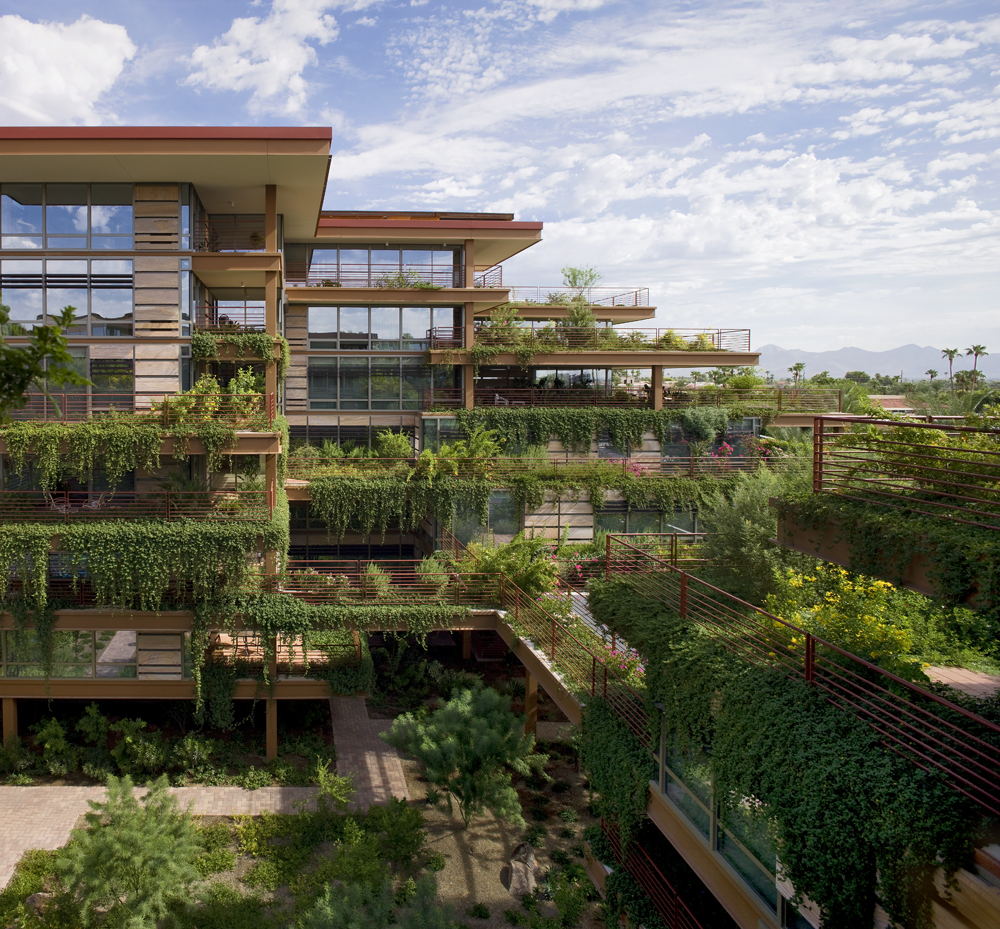
Optima Camelview Village landscaping is an oasis inspired by the surrounding mountains and Native American desert communities. What resulted: eleven terraced, bridge-linked buildings with courtyards that created ample opportunity to utilize our signature vertical landscaping to dramatic, and environmentally impactful, effect.

Optima Camelview Village, Scottsdale, Arizona.
Optima Camelview Village, Scottsdale, Arizona

Private Terraces

Each and every residence at Optima Camelview Village features a private terrace. The terraces are made all the more beautiful by an abundance of verdure, with lush landscaping that provides a pop of color alongside ample privacy and shade. The terraces, and their landscaping, also play into the complex layered language of shading, textures and colors that create depth and complexity throughout the community. 

The landscaping on the terraces was complicated due to the intricate geometry of Optima Camelview Village and necessitated designing for each individual terrace. By creating proper conditions for the plant life to thrive, with a specialized vacuum that deposits specially-tailored dirt for each mini-garden, we were able to make them work. 

Rooftop Gardens

The community sits on a 13-acre site, including an impressive 23-acres of rooftop gardens spread across the eleven buildings that make up Optima Camelview Village. The intense greenery that thrives atop the buildings serves as a haven for the natural wildlife of Arizona, as well as for the residents who live in the community. 

Optima Camelview Village, Scottsdale, Arizona

A Collaborative Effort

We worked with experts at Arizona State University for several years to get our landscaping just right. It’s crucial that the greenspace at Optima communities not only provides an aesthetic beauty, but that it contributes to the greater environment. With the help of ASU, we ensured that Optima Camelview Village’s landscaping is sustainable, with positive consequences such as re-oxygenation of the air, reduced dust and smog levels, reduced ambient noise, detainment of stormwater and thermal insulation and shielding from the desert sun.  

As always, we consider the additive value of our built communities not just in the lives of those that call Optima Camelview Village home, but of the planet that we ourselves call home.
A Transparency on Glass

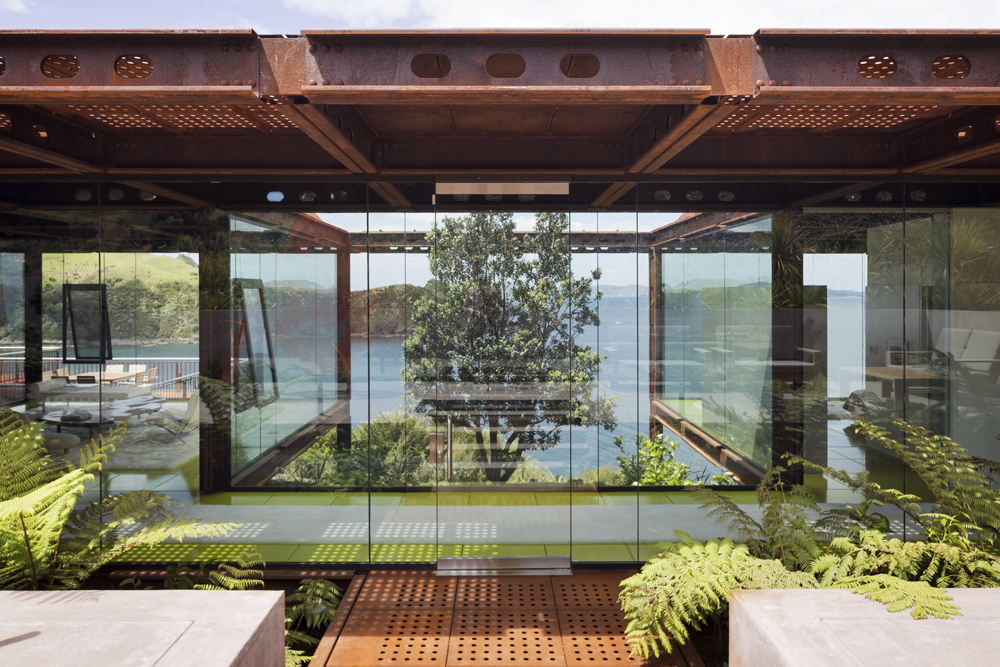
Whale Bay House, Optima DCHGlobal, Inc., New Zealand.

For decades, glass has been a stylistic signature of Modernist architecture. From the first Modernist structure ever built to the steel-and-glass aesthetic of Modernist master Ludwig Mies van der Rohe, the material has provided a timeless transparency that is crucial to minimalist design. But glass hasn’t always been as functional as it is aesthetic. 

A History of Glass

Glass is one of the oldest man-made materials, with use dating back to 7000 B.C. It was first utilized for decorative purposes in 3000 B.C. by Egyptians mainly in pottery and other decorative trinkets and first used as windows by the Romans around 500 B.C.

However, at that time, the masonry required to create glass also didn’t allow for larger, stronger pieces to be created, so its use was therefore sequestered to windows and detailing, such as stained glass murals.

In the 19th century, the manufacturing renaissance introduced iron, steel and other materials that provided the strength and durability necessary to support larger glass constructions. The support of these materials, combined with the capability to produce glass in larger sheets, allowed architects to experiment with creating structures utilizing glass in more creative ways.

The Crystal Palace designed by Joseph Paxton.

The Crystal Palace

This new design potential allowed for greenhouses, large railway stations and other public structures to be made of glass. Such new usages inspired Joseph Paxton, an architect in London, to design the Crystal Palace in 1851 using 300,000 sheets of glass. The Crystal Palace was the first architectural creation to utilize an all-glass exterior, and is also considered the first Modernist structure ever created.  

To overcome the harsh effects of a glass exterior, Paxton utilized translucent screens of calico hung externally between the ridge beams of the structure’s roof glazing, covering the entire exposed rooftop and protecting against the transparent building’s vulnerability to heat. This functional feature eventually transitioned into a cornerstone piece of Modernist design. 

7120 Optima Kierland in the Kierland neighborhood of Scottsdale, AZ.

Glass at Optima

The idea of transparency, open space and functional materials are still relevant and desirable today. At Optima, we use floor-to-ceiling glass to create an indoor-outdoor relationship, allowing for sweeping views and connecting our indoor living spaces with the natural spaces just outside.

At 7120 Optima Kierland, we use a combination of low-e, UV-treated glass, perforated sunscreens and horizontal louvers, to create texture and rich variation of shades and shadows, while allowing for breathtaking views.

Optima Signature in the Streeterville neighborhood of Chicago, IL

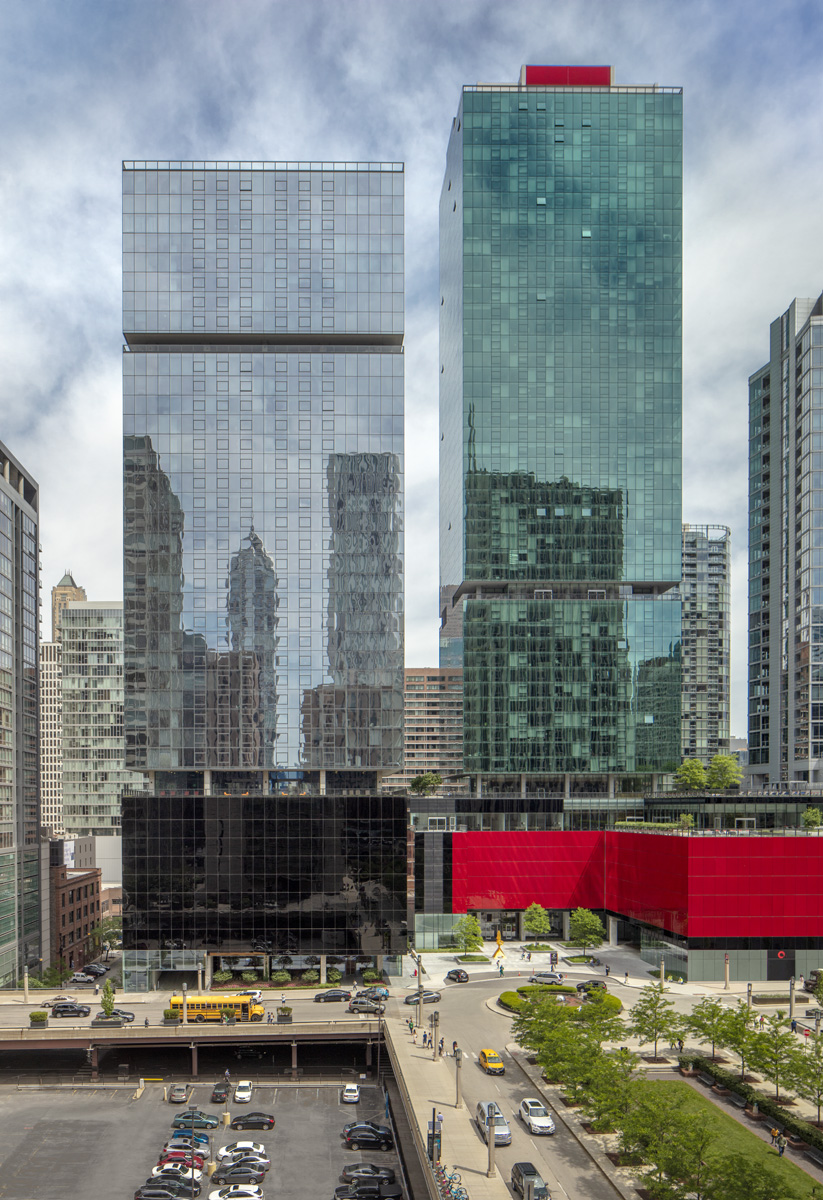
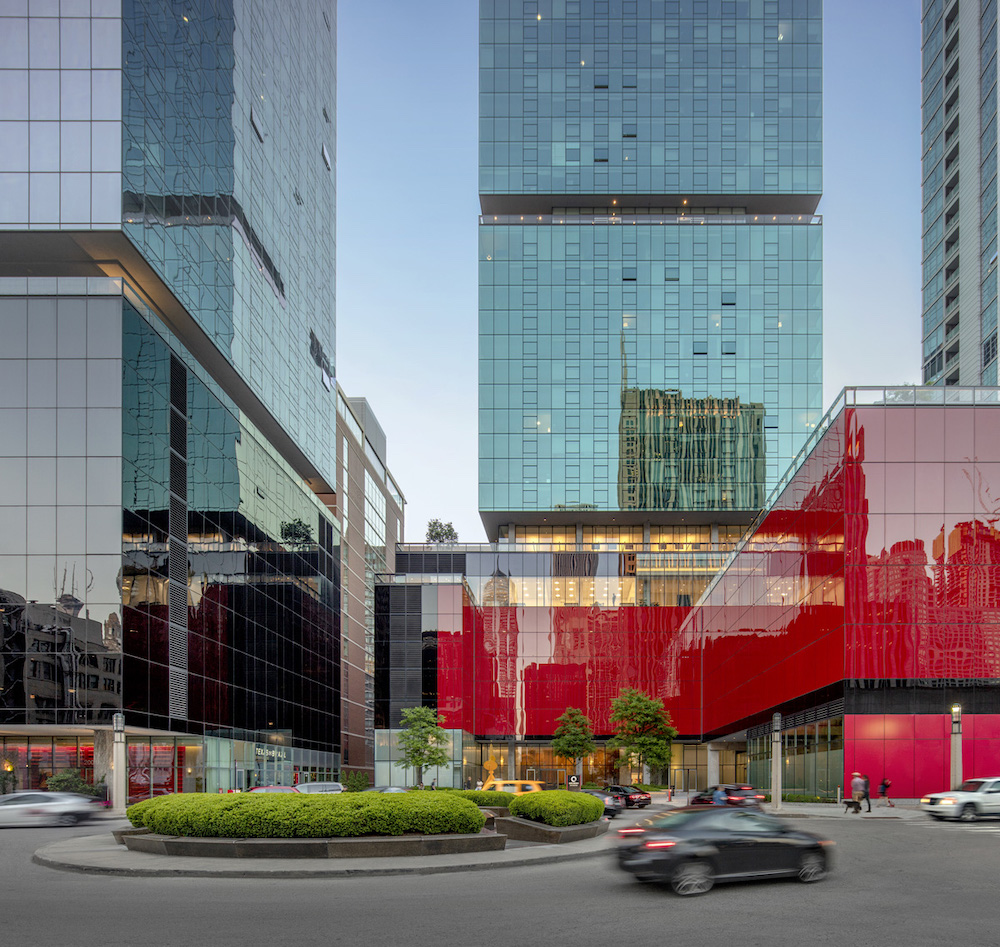
At Optima Signature, glass preserves the sweeping lake views to the east and dynamic city views in all other directions. Glass also unifies Optima Signature with its sister tower to the west, Optima Chicago Center. While the glass curtainwalls of each building are different — silver-toned in the case Optima Chicago Center, and transparent green for Optima Signature — the podiums share a unifying black ceramic frit glass with dot pattern. Optima Signature expands the palette with areas of red glass that wrap the podium as it extends south to define the east edge of the plaza.

As we reflect on the history of glass and how it has become a viable aesthetic and functional choice when designing today, we return to the material time and again to design and build the stunning Modernist steel-and-glass structures in our portfolio.

Isamu Noguchi Spotlight

For our projects, design doesn’t stop on the outside of our buildings. We carefully curate each and every interior to be an activating space that is at once beautiful and inviting. As part of that careful curation, many of our spaces feature furniture designed by Isamu Noguchi, a Japanese American artist, landscape architect, sculptor and furniture designer.

The Mid-century Modern “Airplane” Bimorphic Coffee Table, designed by Isamu Noguchi, at 7120 Optima Kierland.

The Style of Isamu Noguchi

Born in 1904, Isamu Noguchi became one of the 20th century’s most critically acclaimed and important sculptors. His sculptural work covered a wide range of creations, spanning from sculptures, gardens, furniture and lighting designs, ceramics, architecture and set designs. Midway through his career, Noguchi became inspired by the idea of a more reduced form, focusing on an abstract and Modernist approach to create intriguing designs that elicited emotional reactions.  

“Everything is sculpture,” Isamu Noguchi once said. “Any material, any idea without hindrance born into space, I consider sculpture.” Noguchi believed that as a sculptor, he could shape space to give it order and meaning, contextualized by the surroundings in which it existed. 

It was only natural that furniture fell into his wheelhouse. Perhaps his most popular work, Noguchi designed a glass-topped table in 1947 to be produced by Herman Miller. The base of the table is made up of two identical wooden pieces, reversed and connected, and topped with a heavy plate glass top. When first sold, the table was marketed in the Herman Miller catalogue as “sculpture-for-use” and “design for production.” Noguchi strongly believed in producing his designs for mass market in order to bring fine art into the home. 

At Optima, we are proud to showcase Noguchi’s furniture within our own spaces, designs which serve to amplify and activate the evocative Modernist exteriors and interiors of our buildings.


The Playful Work of Alexander Calder

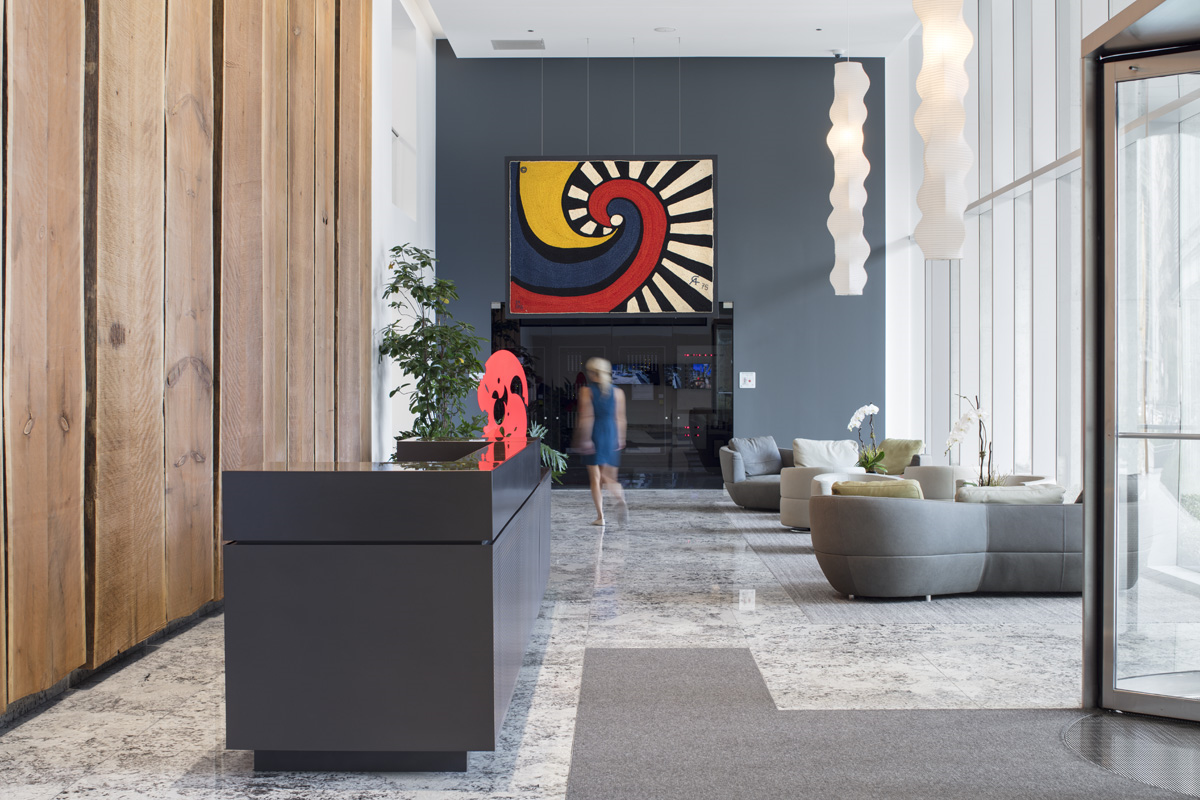
It’s no secret that we love color at Optima, and we carefully curate our interior furniture, textures and designs to reflect the vibrancy of our spaces. Our curated artwork is no exception, and throughout the halls of projects such as Optima Signature, Alexander Calder’s bright works greet residents with bold tones and distinct shape. A multimedia artist whose influence spans across decades, Calder’s work creates a meaningful connection to a rich piece of art history.

Calder’s Past

Born in Pennsylvania in 1898, Calder came from a family of artists; his grandfather and father both had rich careers as sculptors and his mother was a professional portrait artist. Though his family had artistic roots, they supposedly did not want him to follow in their footsteps. Calder began studying mechanical engineering in New Jersey, bouncing between jobs all while still being inspired by create. By the 1920s, Calder had moved back to New York to pursue a career as an artist. 

Calder’s Artistic Career

After studying in New York, Calder moved to Paris where he studied, established a studio and met his future wife. While living in Paris, Calder joined the ever-growing network of avant-garde artists, including Fernand Léger, Jean Arp and Marcel Duchamp. Throughout his life, Calder maintained a strong connection to France, naming many of his works in French regardless of their location. After a lifetime of impactful creativity and exploration, Calder died unexpectedly of a heart attack in 1976, leaving behind an expansive and far-reaching legacy. 

Calder’s Legacy

Over his career, Calder produced a wide range of work, spanning from sculpture, to stage sets, paintings, prints and jewelry. Like previous generations of Calders, he was also a recognized large-scale sculptor. Flamingo, one of his more notable works in Chicago, adorns the Federal Plaza with beautiful form and the famous “Calder Red” color. We’re thrilled and honored to have the works of Alexander Calder throughout our buildings, and hope they bring a bright source of inspiration to those who view and enjoy them. 


Vertical Integration: The Optima Business Model

Reflecting back to 1978, one of the first pillars of the Optima promise was a dedication to a multidisciplinary approach. David Hovey Sr, then new to the architecture world, wanted to escape from the corporate red tape that surrounded a traditional architect-developer relationship. Oftentimes, he observed that bankers and corporations were given more power over specific projects and the integrity of the building was overlooked. His vision was that architecture would lead the process, and the first iteration of the Optima Business Model was born. 

Optima Biltmore Towers viewed from the courtyard, with each tower looming in the sky above

Our process is a vertical one; we oversee architecture, development, general contracting, sales brokerage, property management and support. Because we’ve built an integrated process and are involved with every step, we welcome potential challenges and take pride in seeing our projects through from start to finish. Our model gives us a distinct advantage over others in the industry, and allows us to have a flexible and fluid project timeline. 

From project inception to construction, we’re constantly working on ways to improve and adapt. During the construction of Optima Signature, our architectural team implemented strategies to improve efficiency, including condensing the coordination of mechanical, electrical, plumbing and fire protection systems, and producing documents on-site, reducing the process from days to hours. Originally scheduled for completion in February 2018, our vertical integration methods allowed the building to be completed in June 2017.

Even once a building is finished, we continue to be involved with and invested in our projects. We manage most of our multi-family properties, ensuring everything from amenities to retail spaces enrich the lives of their respective communities. Our intention is always to create a positive, lasting impact on our tenants, communities and environments, and our vertical integration model allows us to pursue that desire more fully. 


Community Growth and the Importance of Retail Space

At Optima, we don’t just construct buildings, we create communities. At every step of our process, from selecting location, to construction, to leasing and renting out our retail space, we make decisions leveraging what we can provide to enhance our residents’ lives and the lives of the people in the surrounding neighborhood. 

At Optima Signature in Chicago, our retail tenants include Egg Harbor Cafe, Guidepost Montessori School, RUNAWAY Fitness, Bedazzled Nails and GoodVets. These amenities enhance the lives of our residents and neighbors, creating onsite amenities and vibrant gathering places that encourage connection and socialization. Not only are our retail tenants adding to Optima Signature, but they contribute to the greater Streeterville community Egg Harbor is a beloved breakfast staple in the Chicago suburbs, and their Optima Signature location will be their debut in downtown Chicago. And Guidepost Montessori School was the first of its kind for the neighborhood.

At Optima Sonoran Village in Scottsdale, one of our retail tenants, Kaleidoscope Juice, has become a place where people can meet old and new friends over a meal, juice or coffee throughout the day. Residents might meet someone in the gym at Optima Sonoran Village and decide to reconvene on their patio — having the retail space to gather deepens connections within the community, allowing residents to get to know their neighbors. 

When selecting our tenants, it’s vital to our mission that the retail we bring to our communities is additive, contributing new spaces for our residents to use and bringing much needed and desired resources to the neighborhoods we call home.


Optima Sculpture Spotlight: Kiwi

A subtle but enhancing feature of many Optima projects, our sculptures adorn courtyards, amenity floors and common spaces. David Hovey Sr’s devotion to space and form translates from architecture to three-dimensional pieces, which are placed throughout our buildings to add a distinct aesthetic flair to our Modernist spaces. 

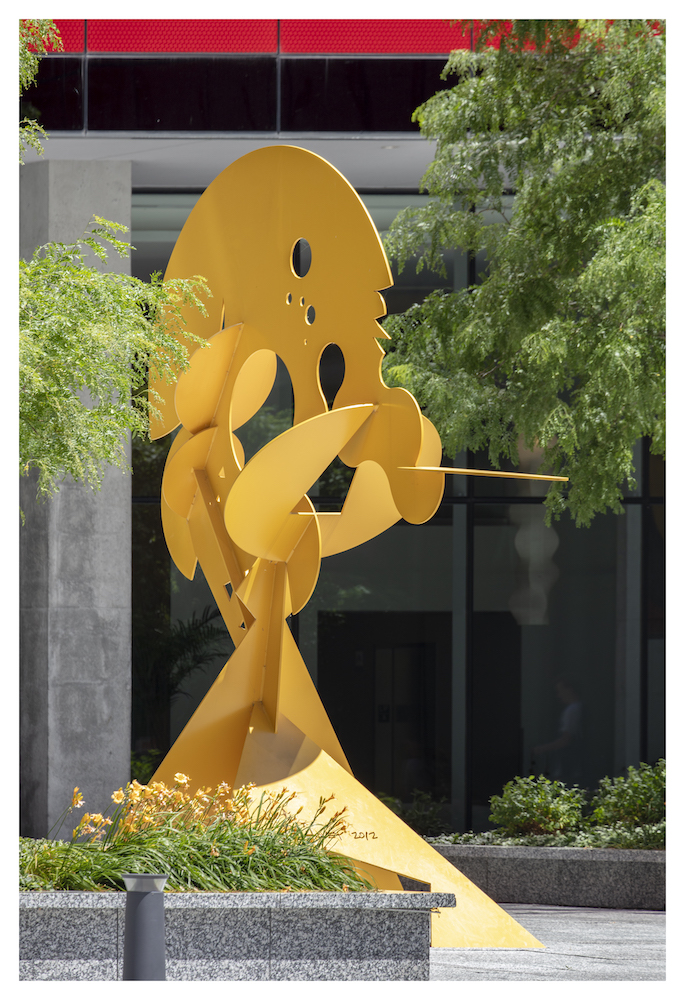
Greeting both residents and visitors at the entrance of Optima Signature, the sculpture Kiwi was named after the same bird native to New Zealand, where David Hovey Sr was born. Although the sculpture is reminiscent of an animal, Hovey’s vision was something much more abstract. Starting out as a handful of freehand drawings, the sculpture was layered until it formed a tall, stacked piece. Set against the bold red of Optima Signature, Kiwi’s bright yellow color pops amidst the neutral-toned buildings within downtown Chicago. 

A yellow abstract sculpture, Kiwi, stands before Optima Signature.

The finishing touch on Kiwi’s Optima Signature location was installation; the base was carefully cemented into the ground to protect it from the bustle of downtown and the intense Chicago weather. Aside from its prominent location at Optima Signature, Kiwi is also featured at Relic Rock and Whale Bay House

David Hovey Sr’s passion for sculpture reflects our collective passion for enhancing the spaces we build and exploring new interpretations of form, color and design. Stay tuned for more features on our other sculpture pieces. 

A Brief History of The Courtyard

An iconic architectural design feature of many Optima projects, the courtyard is a long-beloved piece of home and history. A space designed for peace, socializing and beauty, the courtyard has a rich history that has led to its modern interpretations. 

It’s estimated that the first courtyard houses made an appearance around 6000BC in the Jordan Valley, used for purposes ranging from cooking, sleeping, working, gardening or even housing animals. Before courtyards, open fires were used within a central place in a home, with a small hole in the ceiling for the smoke to escape. Gradually, the holes became larger and evolved into open courtyards more similar to what exists today. 

Courtyards are an iconic staple in many cultures throughout the world, though they vary in style and function. The central uncovered area in Roman architecture was referred to as an atrium, and would often contain a central pool used to collect rainwater and a garden. In China, the courtyard was a central space for multiple homes and families, and used as a place for privacy and tranquility. The medieval European courtyard was used for working, gathering and protection. With such a rich and diverse history, it’s no surprise that the courtyard continues to withstand the test of time. 

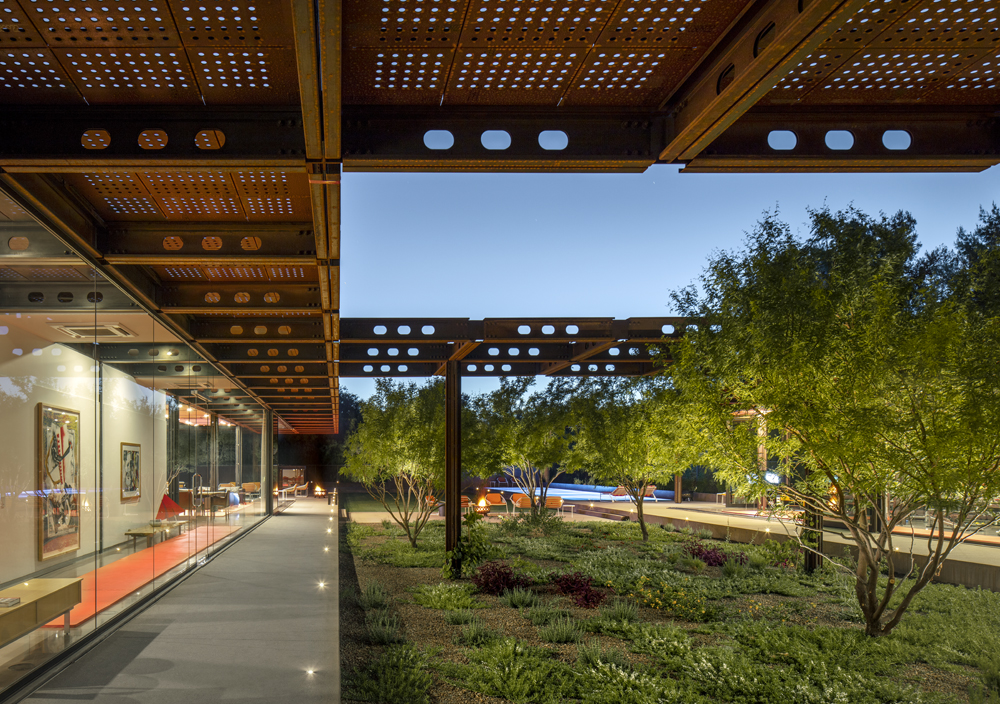
A courtyard at one of the Optima homes in Arizona.

Traditionally, courtyard homes are prevalent in temperate climates, since the open space helps maintain a cool temperature. To take advantage of the functional and aesthetic benefits of the courtyard, many of our Arizona projects feature courtyard greenspaces. Our Arizona Courtyard House is even named after the feature that makes it unique; outside and inside flow together to create a seamless layout and beautiful views of the landscape.  The home is arranged with the main house to the south and east, and a fitness center and lap pool to the north creating a private courtyard in the center.

The essence of a courtyard is the physical expression of the concept of connection, and ours are built with the hope that they will provide a peaceful oasis in which residents can reconnect to their friends, family and the surrounding environment.

Wellness at Optima Signature

As with most luxury high rises in downtown Chicago, Optima Signature includes spaces specifically dedicated to resident amenities. Unlike most luxury high rises, Optima Signature’s amenity spaces span 1.5 acres across several floors, creating an unparalleled living experience for residents. We curate our amenity spaces with wellness in mind, designing to meet the physical and mental health needs of the people who enjoy our space. 

Let the Light In

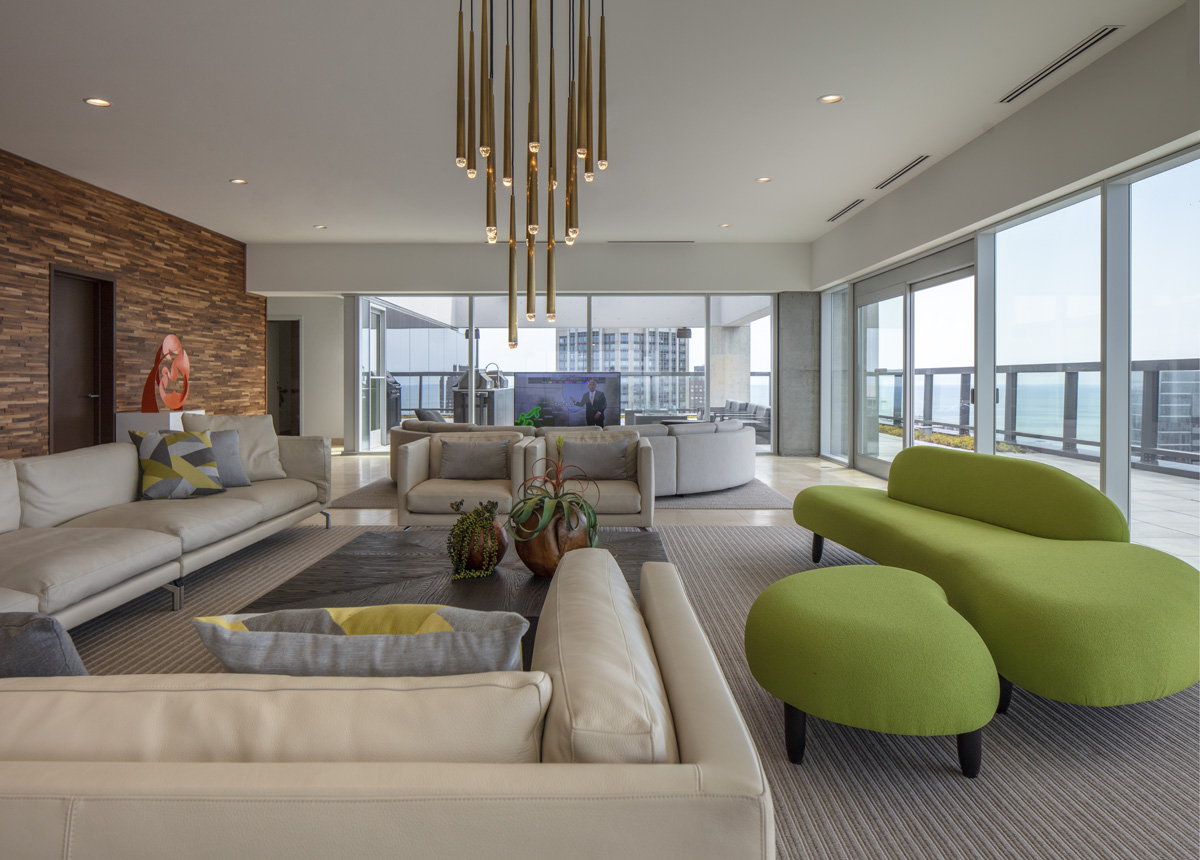
With floor-to-ceiling windows that show off breathtaking views of our Streeterville neighborhood, our amenity floors are the perfect spot to work from home and soak up some extra Vitamin D. In addition to energizing a space, natural light can help ward off seasonal depression, which is essential for the long Chicago winters. It can also aid in regulating your natural sleep cycle, which can seriously impact your mood. So whether residents are catching up on emails or catching up with friends, our amenity spaces are the perfect place to soak up some sun.

We curate our amenity spaces at Signature with wellness in mind, designing to meet the physical and mental health needs of the people who enjoy our space. 

Get Active

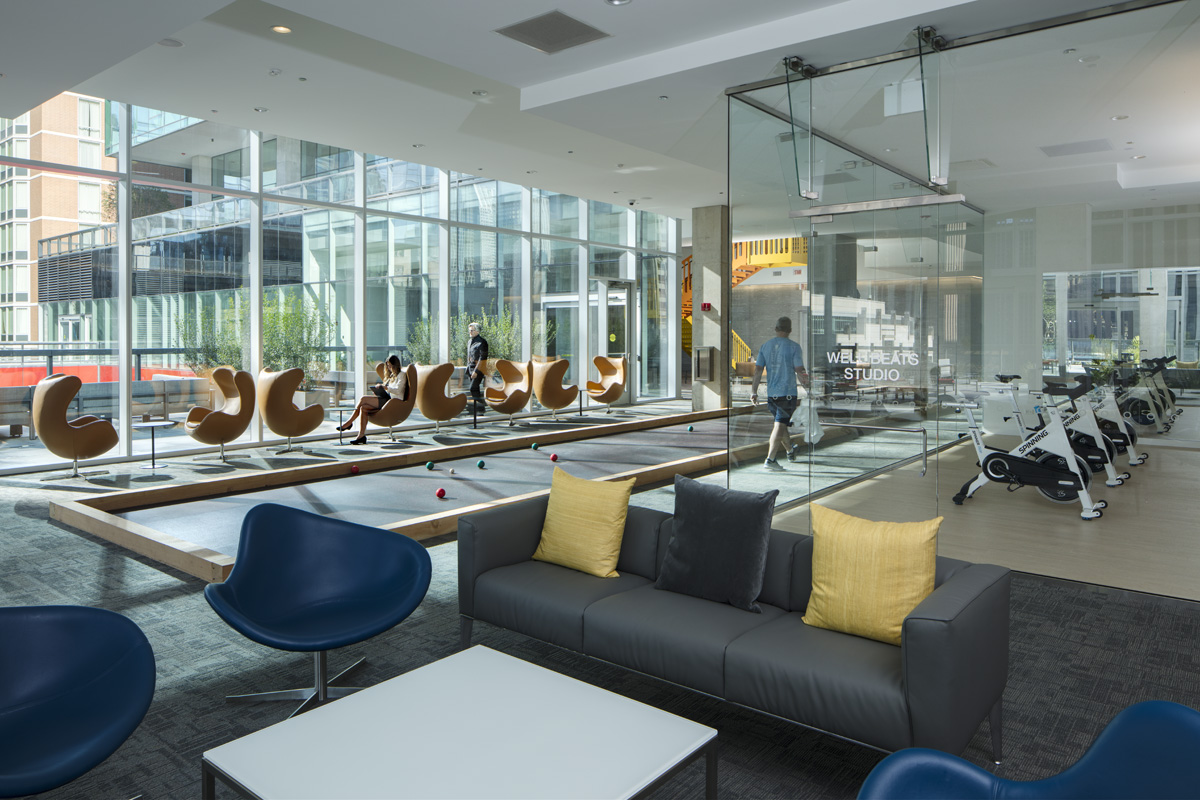
Optima Signature features resort-style indoor and outdoor heated swimming pools, a cutting-edge fitness center, basketball, squash and bocce ball courts, golf simulator and putting green, yoga studio and more; needless to say there are plenty of ways for residents to get active and stay in shape. And with spa amenities such as indoor and outdoor saunas and steam rooms, decompressing after a long workout (or a long day at work) is always convenient. 

We curate our amenity spaces at Signature with wellness in mind, designing to meet the physical and mental health needs of the people who enjoy our space. 

Be Social

Along with physical wellness, Optima Signature’s amenities also provide resources for social wellness, which research shows increases mindful habits and lowers depression rates. Club 52, a residents-only club and amenity floor, features an outdoor kitchen, wine lockers, community lounge, and an outdoor terrace, allowing residents to mingle and get to know each other. On Level 20, the coffee bar, library, movie theater, demonstration kitchen, business center, conference room and coworking space encourages residents to connect with their friends and family.

From pools to green spaces, each of our projects feature aspects of healthy living. Helping our residents stay well is part of how we enhance the lives of those who live in our buildings, and how we stay connected to each of our projects.

Green Space Spotlight: Optima Sonoran Village

At Optima, one of the cornerstones of our design process is the green space in our communities. With Optima Sonoran Village situated on a ten acre site in downtown Scottsdale, there was an abundance of space to become green. Of the ten acres, six of them are open space that not only mediate the harsh desert climate but also create visually stunning landscaped areas to be enjoyed by residents and the community.

https://www.optimaweb.com/color-design/

Lush Landscaping and Pedestrian Paths

Courtyard walking paths wind throughout the property, guiding public pedestrians into and through the development and its centralized courtyards. Surrounding the paths is a varied palette of plantlife. This colorful landscaping against the signature Optima pops of color provides a vibrancy and complement to the more subdued, natural hues of the surrounding desert. 

At Optima Sonoran Village in downtown Scottsdale, an abundance of green space enhances the surrounding community.

Original Public Art

Placed within the courtyards are five original David Hovey sculptures, which range in size up to ten feet. As expansive and evocative pieces of public art, these sculptures activate the spaces that they occupy, and enhance the experience of those passing through. 

Green Space as Mediator

The greenspace at Optima Sonoran Village also serves to mitigate the heat island effect, where dense urban areas experience warmer temperatures due to human activity. To reduce the urban heat island experienced in Scottsdale, the abundant landscaping throughout the courtyards provides shade and cooling through evapotranspiration — the release of water into the atmosphere from plant surfaces. 

At Optima Sonoran Village in downtown Scottsdale, an abundance of green space enhances the surrounding community.

Outdoor Amenities

Nestled within the courtyards and their intricate spread of walking paths are exceptional outdoor amenities. A large fountain serves as a dazzling display and a centerpiece around which to lounge and relax. Farther in, an outdoor resort pool with lounge chairs, umbrellas and firepits is made private by the surrounding landscaping.

The greenery continues, drawing the eye upward to the building’s spectacular vertical landscaping and creating a whole immerse experience. The effect of walking through the property’s greenspace, backdropped by dusky desert mountains, is one of entering a lush oasis. 

As an installation in downtown Scottsdale and with paths open to the public, the greenspace at Optima Sonoran Village is enhancing not only the community of the development, but of its surrounding area too. 

person name goes here

Maintenance Supervisor

Glencoe, IL


    Acceptable file types: *.pdf | *.txt | *.doc, max-size: 2Mb