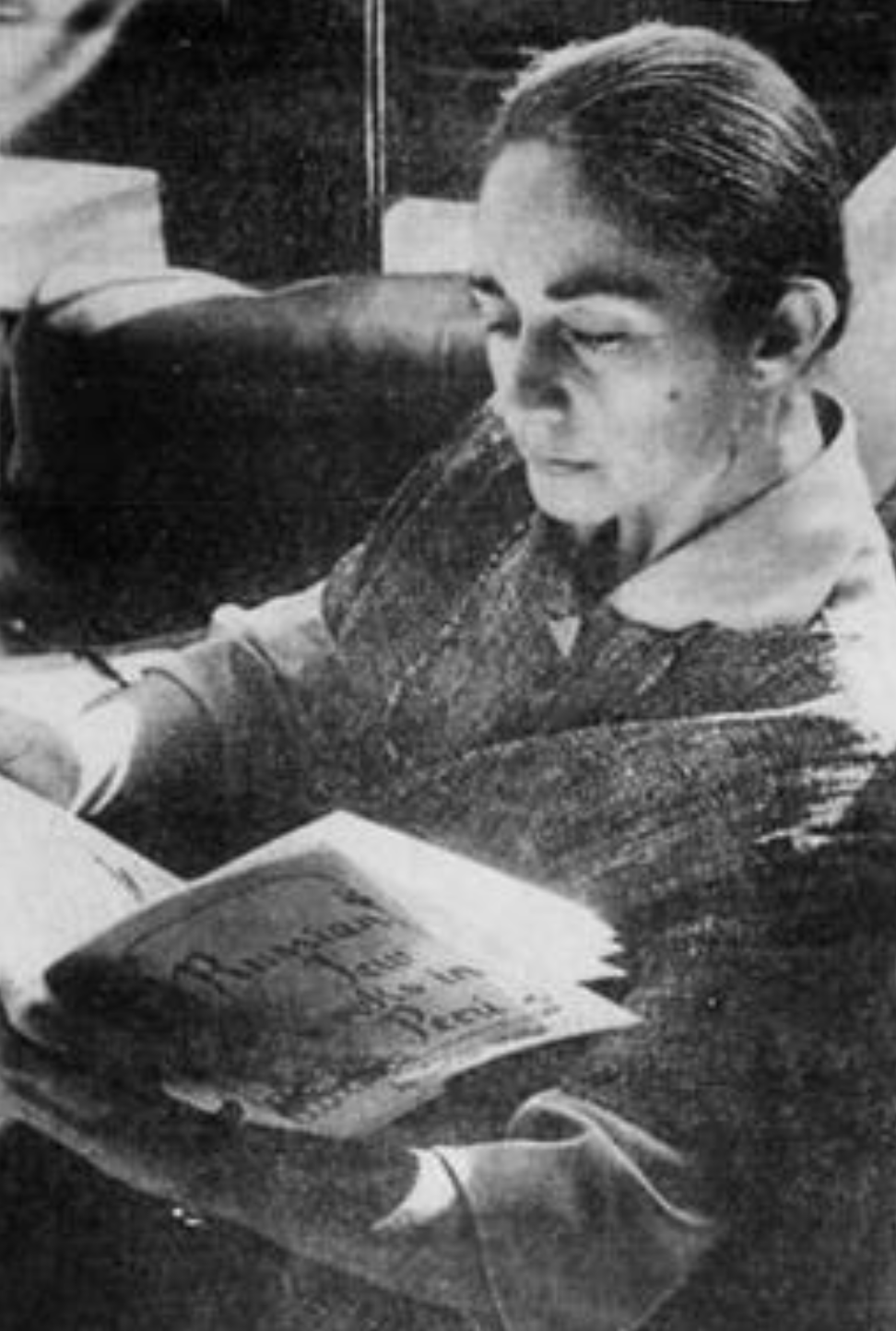
Women in Architecture: Violeta Autumn

As part of our ongoing “Women in Architecture” series, we’re sharing the story of Violeta Autumn, whose distinguished career was committed to environmental protectionism and inclusion in the industry. Autumn’s designs earned her numerous accolades and recognition, and her work serves as an inspiration for architects today. Learn more about her life and career below.

The Life of Violeta Autumn
Violeta Autumn was born in 1930 Chiclayo, Peru to Russian Jewish immigrants and lived there until her family relocated to Oklahoma when she was 14. After graduating high school, Autumn attended the University of Oklahoma, where she studied under the legendary architect Bruce Goff and became the third woman to graduate from the school with a Bachelor of Architecture in 1953. In her future work, Autumn took inspiration from Goff’s use of organic design.

After completing her education, Autumn traveled across Europe during the summer, where she met her husband, Sanford Autumn, a psychologist. Autumn and her husband relocated to the San Francisco area after returning from Europe, and she obtained her California architect’s license soon after, in 1957.
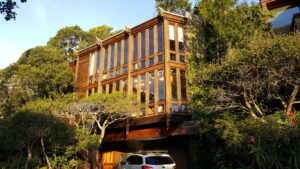
Cliff House, Violeta Autumn Residence in Sausalito, CA. Credit: Sausalitoarchitect on Wikimedia Commons, licensed under CC BY-SA 3.0.

Notable Works and Achievements
Autumn’s architectural experience began with preparing construction drawings for Harold Dow, a Palo Alto-based architect. For several years, she illustrated renderings and designed murals for other architects and authors, but in 1959 she ventured out on her own, designing and building her own home and architectural studio in Sausalito, California as a first project. As her design vocabulary evolved, she continued to draw from other architects she worked with and admired, including Frank Lloyd Wright (with whom she apprenticed) and John Lautner, who went on to have a stellar career as a modernist architect in South California.

Autumn worked with engineer Haluk Akol to translate organic architecture philosophies into the home’s vertical cliff site. The building featured exposed concrete buttresses to stabilize the unique structural system, a two-story copper hood for its fireplace and unstained redwood. After its completion in the early 1960s, the home was widely celebrated, including features in Progressive Architecture and Look magazines.

Autumn received her U.S. citizenship in 1963 and quickly became involved in aspects of local government, from joining her local Community Appearances Advisory Board to being named commissioner of the Planning Commission and to becoming a Sausalito City Councilwoman. Much of her work in public office mirrored her philosophies in architecture. She became largely known for her strong environmental protectionism along with the redevelopment of a host of important waterfront projects in the San Francisco Bay area.

Following her career in local government, Autumn partnered with fellow University of Oklahoma architectural graduate John Marsh Davis to create Davis-Autumn & Associates. Together, the two completed a host of projects, many of which are wineries still in existence in Sonoma and Napa Valley today, including Joseph Phelps Vineyards, Rutherford Hill Winery, Sullivan Vineyards and their most acclaimed, Souverain Winery. Designed and opened in 1974, the Souverain Winery won the American Institute of Architects Bay Area Honor Award for Design Excellence.

Violeta Autumn’s contributions to the field of architecture have left an indelible mark. Her work helped pave the way for future generations of practitioners who strive to create innovative, environmentally-friendly designs that prioritize community and inclusivity.
George Frederick Keck: How A Modernist Master Shaped the Chicago Skyline

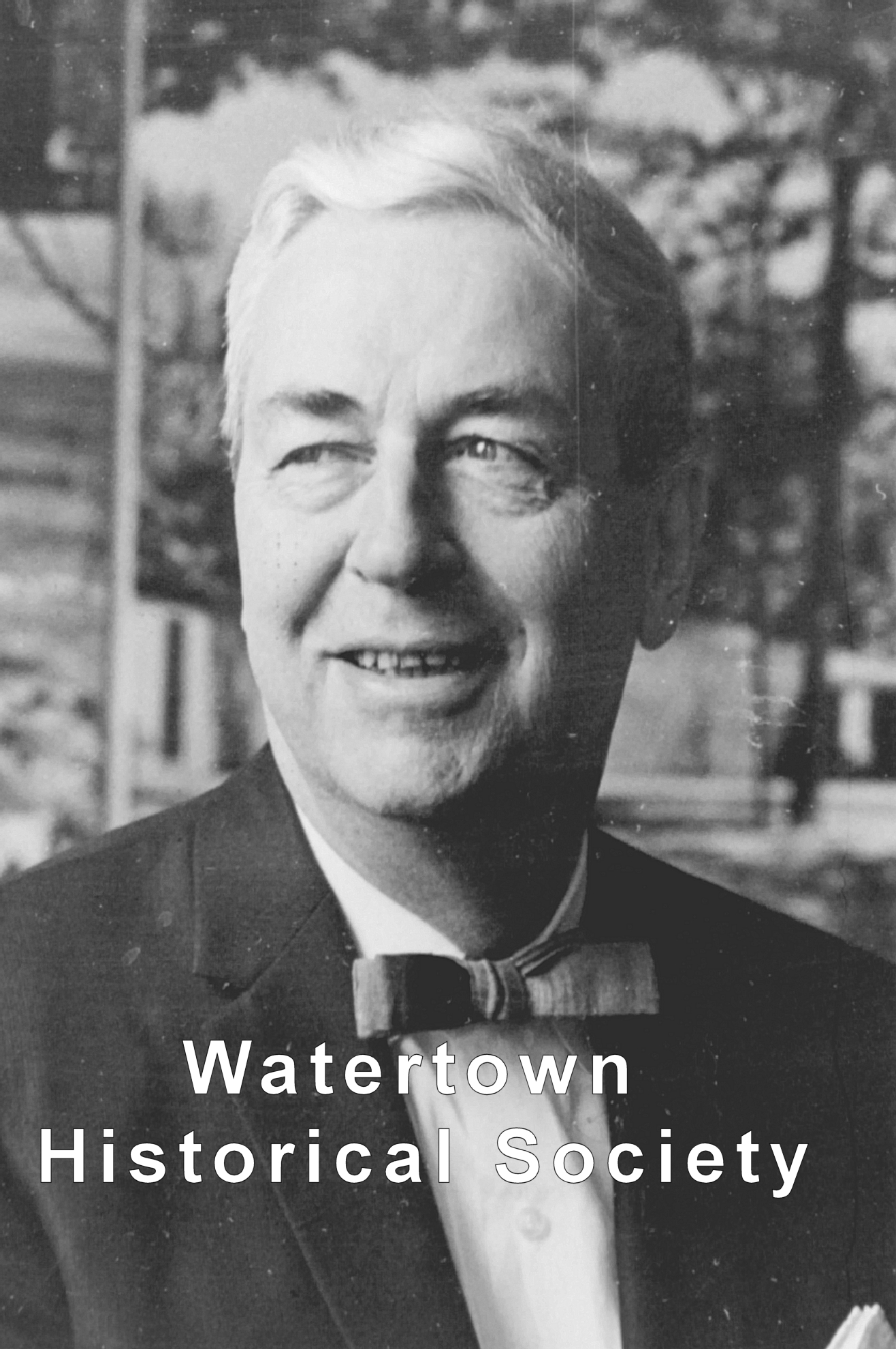
Chicago has long been a hotbed for Modernist architecture, with the likes of Ludwig Mies van der Rohe, Frank Lloyd Wright, and Walter Gropius all calling the city home at various points in their careers. At Optima®, we are always delighted to showcase the groundbreaking work of Modernist architects who have left an indelible mark on our urban landscape. Today, we are opening the aperture to focus on George Fred Keck, an architect whose innovative designs and pioneering spirit greatly influenced the development of modern architecture in Chicago and beyond.

Born in 1895 in Watertown, Wisconsin, George Fred Keck was destined to become a trailblazer in the world of Modernist architecture. After studying at the University of Illinois at Urbana-Champaign, Keck established his own firm with his brother William in 1926 — Keck & Keck. The siblings’ shared passion for Modernism and sustainability led them to create designs that were both environmentally-conscious and ahead of their time.

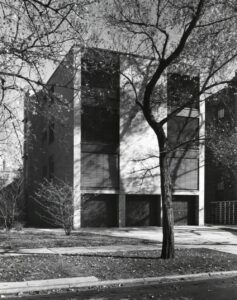
Keck-Gottschalk-Keck Apartments. Photo: Ryerson & Burnham Archives Archival Image Collection

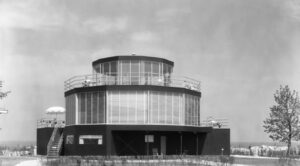
Keck’s most famous work is undoubtedly the House of Tomorrow, a groundbreaking design he created for the 1933 Chicago World’s Fair, also known as the Century of Progress Exposition. The house showcased innovative ideas such as floor-to-ceiling glass walls, central air conditioning, and even an attached garage with an electric door opener. These cutting-edge features not only made the House of Tomorrow a sensation at the fair, but also laid the groundwork for the modern home as we know it today. 

With Keck’s commitment to sustainable design came a fascination with solar energy. In the early 1940s, he and his brother William designed the first solar-powered house in the United States. Known as the Keck-Gottschalk-Keck Apartments and located at 5551 South University Avenue in Hyde Park, this remarkable dwelling relied on south-facing windows and a solar heating system to maximize the capture and use of solar energy. This early foray into sustainable design would pave the way for future architects to embrace environmentally conscious practices.

House of Tomorrow. Photo: Chicago History Museum, Hedrich Blessing Collection

As we celebrate the life and work of George Fred Keck, we at Optima® are once again reminded of the transformative power of Modernist architecture. Keck’s innovative designs, environmental consciousness, and commitment to pushing the boundaries of architectural form have left an unforgettable mark on the city of Chicago and on the world of architecture.

Alison and Peter Smithson: The Dynamic Duo That Transformed Modern Architecture

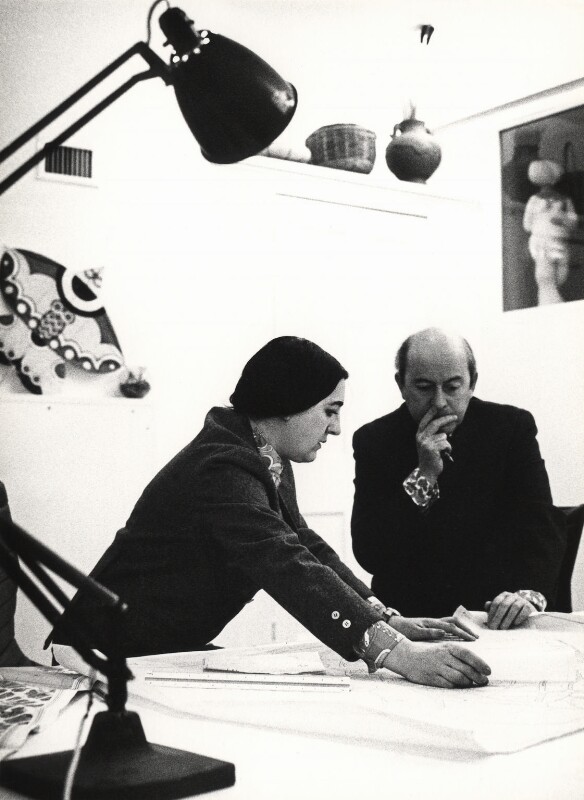
Today, Optima® is delighted to highlight both the exceptional career of Alison Smithson (1928-1993) and the influential partnership with Peter Smithson (1923-2003), her husband and lifelong collaborator. As visionary British architects, they jointly shaped the modernist architectural movement with their pioneering New Brutalist approach, drawing inspiration from the works of Mies Van der Rohe and Le Corbrusier. Their collaborative efforts have left a lasting legacy in the field, inspiring future generations of architects, both men and women.

Alison Smithson was born in Sheffield, England, and pursued architecture at the King’s College, Durham in Newcastle (later the Newcastle University School of Architecture, Planning and Landscape), then University of Durham, between 1944 and 1949. It was during her studies that she met Peter Smithson. United by their passion for architecture, Alison and Peter shared a desire to challenge the conventional norms of their time.

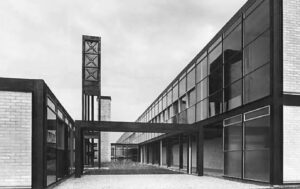
Hunstanton School in Norfolk, 1949-1959. Photo: Wikiarquitectura

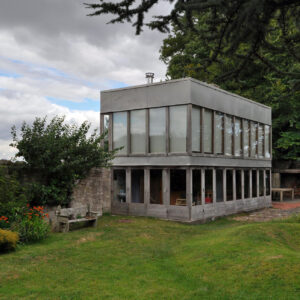
The Smithsons’ professional partnership was defined by groundbreaking projects that had significant impact on the modernist architectural movement. One of their early works, the Hunstanton School in Norfolk, exemplified the New Brutalist movement with its minimalist design and exposed structural elements. Other iconic projects include the Economist Building in London, the Robin Hood Gardens housing complex, and their own home, the Smithson House, in Wiltshire.

Alison and Peter Smithson were known for pushing the boundaries of modernist design and reimagining architectural norms. They sought to create buildings that were functional and also contextually sensitive and responsive to the needs of their occupants. By blending elements of Brutalism, modernism, and regionalism in their designs, the Smithsons carved out a unique architectural identity. They played a crucial role in the formation of Team 10, a group of designers who aimed to redefine architectural discourse, moving away from the rigid functionalism of the International Style.

The Smithsons’ innovative designs and unwavering commitment to challenging conventions have left an indelible mark on architectural history. As a woman practitioner, Alison Smithson paved her own way, while Peter Smithson’s steadfast support and collaboration underscored the importance of teamwork and partnership in the profession.

The Smithson House in Wiltshire. Photo: seier+seier, Flickr Creative Commons

At Optima®, we take immense pride in honoring the work of Alison and Peter Smithson. Their unique partnership, innovative approach to design, and significant influence on architectural movements have contributed greatly to the field. By celebrating their collaboration, we aim to inspire future generations of architects to embrace diverse perspectives and partnerships in the pursuit of architectural excellence.

In the Shadows of Giants: The Overlooked Genius of Harry Weese

When we talk about the architectural giants of the Modern era, names like Frank Lloyd Wright and Ludwig Mies van der Rohe come to mind. These masters of design have left an indelible mark on our cities and towns, and their legacies continue to inspire and influence generations of architects. But what about those talented visionaries who have been overshadowed, whose work is often overlooked in the annals of architectural history? Today we’ll take a look at one such figure, Harry Weese, a brilliant architect who made a significant impact on the world of design, yet never quite garnered the same level of recognition as his contemporaries. 

Harry Weese was born in 1915 in Evanston, Illinois. Even from a young age, he displayed a keen interest in architecture. His passion led him to study architecture at the Massachusetts Institute of Technology (MIT) and later at the Cranbrook Academy of Art, where he formed lifelong friendships with renowned architects; Eero Saarinen, and Charles and Ray Eames. Despite this impressive educational background, Weese struggled to find his footing in the competitive world of architecture, but that didn’t stop him from garnering attention.

Seventeenth_Church_of_Christ_Scientist_Chicago_2019-1498
Seventeenth Church of Christ Scientist, Chicago. Photo: Paul R. Burley, CC BY-SA 4.0 Deed

His career began to gain momentum in the 1950s, as he designed several noteworthy buildings in Chicago. One of the earliest examples of his work, the Seventeenth Church of Christ, Scientist, showcased his ability to blend functionality with aesthetics, while respecting the religious context of the building. 

As the years passed, Weese gradually earned the respect of his peers and clients. He designed everything from public buildings and universities to private residences, each project showcasing his unique approach to architecture. His firm completed over 200 new buildings and renovations that span mostly across the midwest, but his commissions also took him across the globe to Ghana, India, Saudi Arabia, and Singapore.

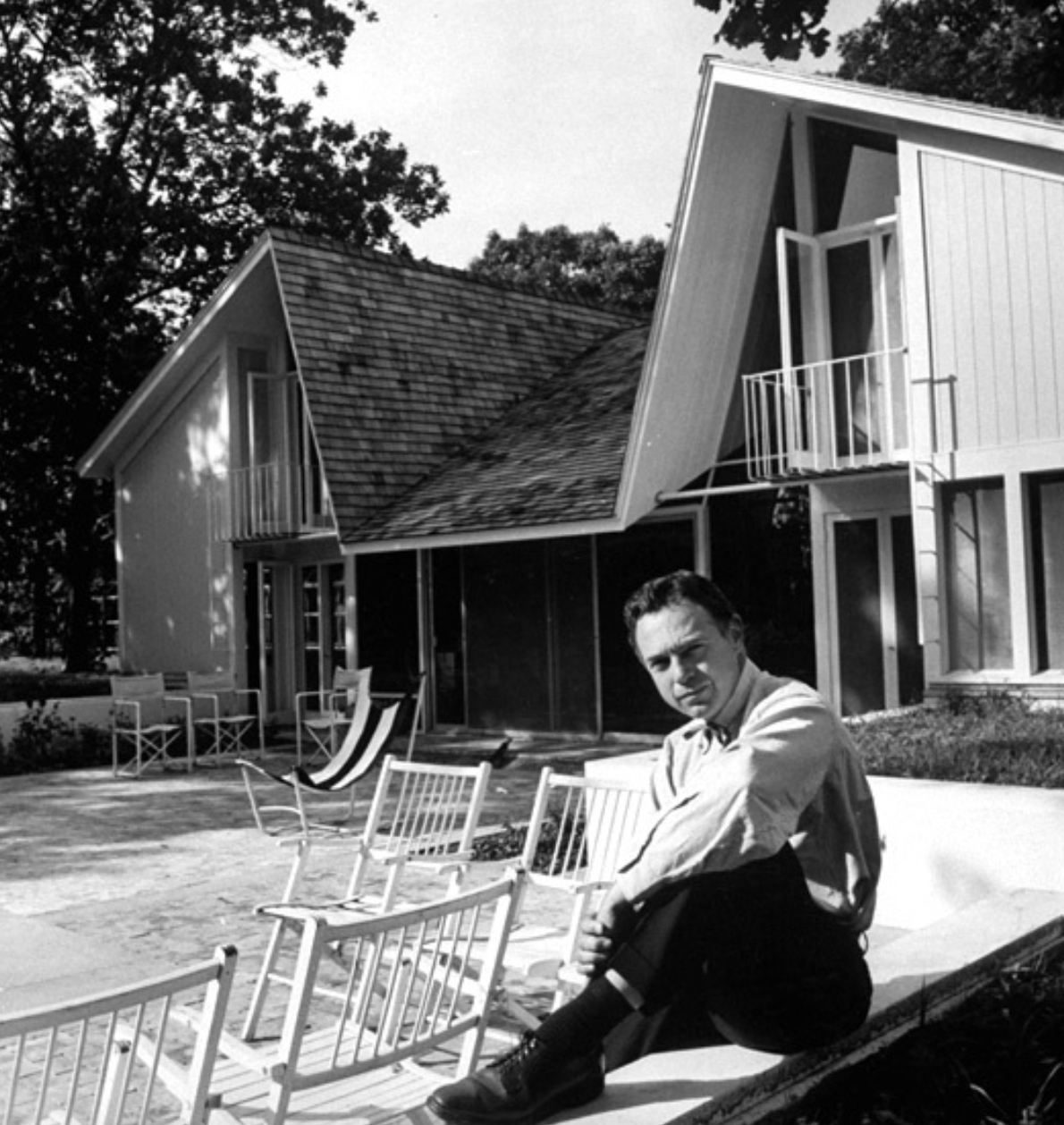
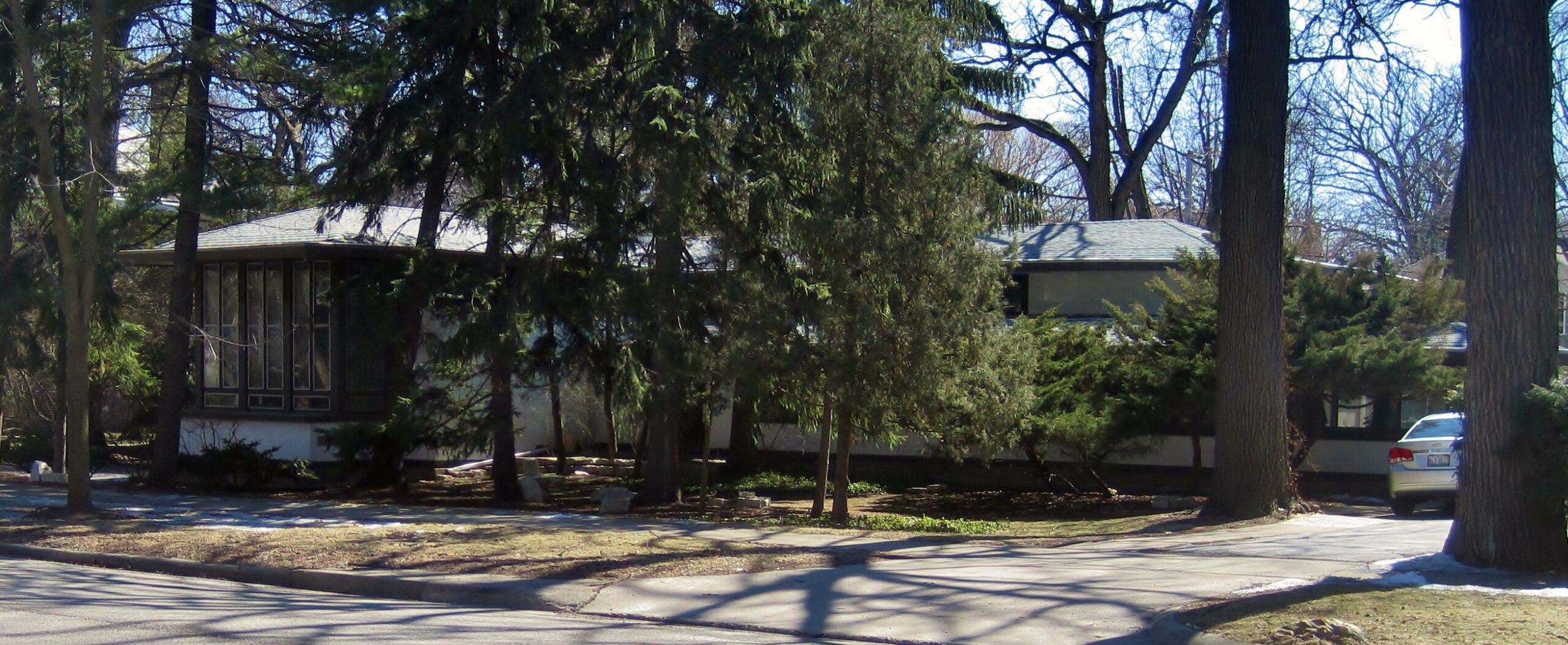
One of Weese’s most enchanting designs can be found in the idyllic town of Wilmette. Known as The Robert and Suzanne Drucker House, this private residence epitomizes Weese’s ability to harmoniously blend nature and architecture. The home features an open-plan layout, with large windows that invite the outdoors in, creating a seamless connection between the interior and exterior spaces. The Drucker House is a testament to Weese ‘s skill in crafting spaces that are both functional and aesthetically pleasing, while respecting the environment and the needs of its occupants.

Chicago River Cottages
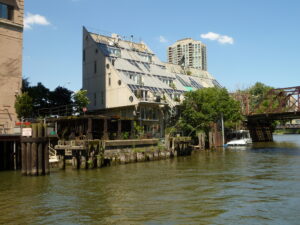
Chicago River Cottages designed by Harry Weese. Credit: Jonathan Byrne CC BY-NC 2.0 Deed

Beyond residential architecture, Weese made significant contributions to the field of urban planning and revitalization. He was deeply concerned about the decline of American cities and the loss of their architectural heritage. In the 1960s and 1970s, he embarked on several ambitious projects to preserve and reinvigorate urban spaces. One of his most notable accomplishments was the restoration of the Chicago Riverfront, transforming a previously neglected area into a vibrant, bustling hub of activity.

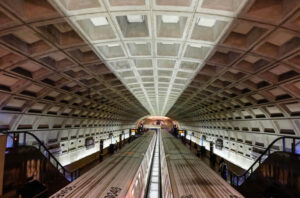
Washington, D.C. Metro System. Photo: Sara Cottle/Unsplash

Weese’s vision extended far beyond Chicago, as he also worked on the design of the Washington, D.C. Metro system. His innovative approach to public transportation and his commitment to creating aesthetically pleasing, user-friendly stations helped to shape the face of the nation’s capital and earned him widespread acclaim.

For those who have the privilege of experiencing Harry Weese’s work firsthand, the impact of his designs is undeniable. His creations have left a lasting mark on the communities they inhabit, and at Optima®, we’re proud to be a part of a shared sensibility and set of architectural traditions.

Local Wilmette Landmarks: Frank J. Baker House

Have you ever stumbled upon a remarkable architectural gem that leaves you captivated by its design and history? The Frank J. Baker House, located at 711 Lake Avenue in Wilmette, is one such marvel that deserves a spotlight for its unique charm and intriguing background, along with its significance as a National Registered Landmark. It’s such a pleasure to be able to showcase this modernist architectural wonder that’s just a stone’s throw from Optima Verdana®.

Historical Background

Constructed in 1909, the Frank J. Baker House is a prime example of the Prairie School architectural style, which flourished between the late 19th and early 20th centuries. This style was characterized by horizontal lines, overhanging eaves, and an emphasis on integrating the building with its natural surroundings. 

The house was designed by architect Frank Lloyd Wright, and commissioned by Frank J. Baker, a successful businessman with a passion for art and architecture. Throughout its history, the Baker House has undergone several renovations and restorations, all aimed at preserving its architectural integrity and adapting it to the needs of modern living. Today, the house remains a private residence, treasured by its owners, Amy and Eric Bauer. 

Connection to Wilmette Landmarks

The Frank J. Baker House is also an integral part of the rich architectural tapestry of Wilmette’s collection of landmark structures, including the Robert and Suzanne Drucker House, and Oak Circle Historic District. Together they exemplify timeless modernist architecture at its best and offer an engaging and educational experience for all design enthusiasts.

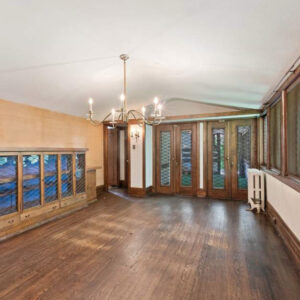
Interior of Frank J. Baker House. Photo: @Properties

Architectural Features

One of the most striking features of the Baker House is its harmonious integration with the landscape. The house boasts a low-pitched roof, wide eaves, and extensive use of natural materials, allowing it to blend seamlessly with its surroundings. This unity of architecture and nature is a cornerstone of the Prairie School design philosophy.

Inside the Baker House, you’ll find a spacious, open floor plan that allows for an easy flow between rooms. The generous use of windows and natural light creates an airy, inviting atmosphere, while the built-in furniture and custom woodwork showcase the craftsmanship and attention to detail that went into designing and constructing the home.

Impact on Modern Architecture

It’s a rare pleasure to see such a pristine example of Wright’s genius and the influence of the Prairie School on modern architecture — with its clean lines, simplicity, and connection to nature — up close. At Optima®, as we continue to design living spaces that blend form and function, we draw inspiration from architectural masterpieces like this every day.

Women in Architecture: Isabel Roberts

As part of our ongoing “Women in Architecture” series, we’re spotlighting one of America’s most overlooked architects. As one of only two women in the original Prairie School, Isabel Roberts immediately became an inspiration for women architects in the early 20th century. Learn more about her riveting life and career below: 

The Life of Isabel Roberts
Isabel Roberts was born on March 7, 1871, in Mexico, Missouri. Her parents were natives of the eastern coast; her father was a mechanic from Utica, New York, and her mother was from Prince Edward Island, Canada. Growing up, Roberts and her family moved often; traveling from Missouri to Providence, Rhode Island, to South Bend, Indiana. 

At 18 years old, Roberts moved to New York City, where she studied architecture at the Atelier Masqueray-Chambers from 1899-1901. The atelier was the first in the nation to teach architecture with the principles used by École des Beaux-Arts in Paris. Architects Emmanuel Louis Masqueray and Walter B. Chambers founded the school to forge more rewarding educational and professional opportunities for women in architecture at the time. 

Isabel Roberts House. Credit: Oak Park Cycle Club on Wikimedia Commonshttps://commons.wikimedia.org/wiki/File:Isabel_Roberts_House.jpg. Licensed under CC BY-SA 2.0 deed.

Notable Works and Achievements
In 1901 after completing school at the Atelier Masqueray-Chambers, Roberts moved to Illinois to take a position under Frank Lloyd Wright in his Oak Park office. She worked with Wright alongside a team of six others, which included Marion Mahony Griffin, the only other woman in the group that would become known as the Prairie School. 

Roberts’ impact while working for Wright is commonly underestimated as she contributed her design expertise to various projects, primarily after he left Oak Park for Europe in 1909. Some of her most notable projects include K.C. DeRhodes House in South Bend, Indiana – a commission for a friend of the Roberts family – the Laura Gale House in Oak Park and the Stohr Arcade Building in Chicago. 

Commissioned by Isabel’s mother, Mary, the Isabel Roberts House in River Forest, Illinois, was another of Roberts’ illustrious designs with Wright. Completed in 1908, the home’s intricate arrangement contained a warm brick hearth at its core and utilized a mixture of half-story levels to connect living areas. The Prairie School design featured other innovative additions for the time, including a vaulted ceiling, diamond-paned windows and a grand octagonal balcony.

A Brief History of the Attached Garage

For those tireless fans of Frank Lloyd Wright — unarguably one of the greatest architects of the 20th century — we are delighted to shine a light on one of his innovations that rarely attracts attention. It’s the attached garage.

In a brilliant process of cultural sleuthing, conceptual artist Olivia Erlanger and architect Luis Ortega Govela embarked on a project that culminated in the 2018 publication of Garage by MIT Press. With elegance, wit and panache, the authors tell this tale of Robie House, completed in 1910:

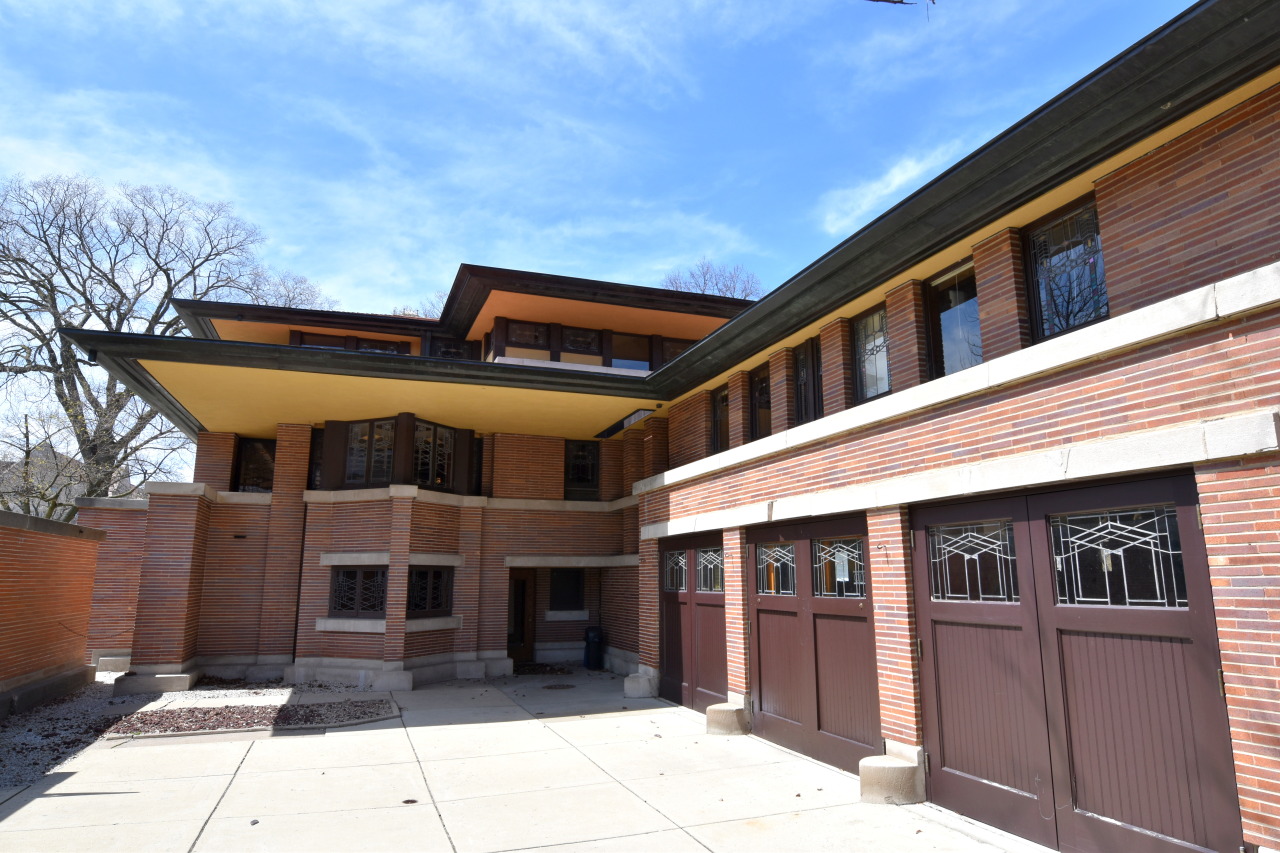
“In the quiet darkness of South Woodlawn Avenue, Frank Lloyd Wright molded and adapted the American home for the automobile. The small rectangular windows of Wright’s Robie House cast rectilinear shadows across the sidewalk. In the moonlight, the red hydrangeas lining the second-floor balcony appeared black, to be identified only by their smell. With no “front” or “back,” the building looms, imperious and totemic. To the pedestrian it looks like a Japanese woodblock puzzle: the riddle of how to enter, or exit, persists until one encounters an oversized gate leading to a three-car garage. The Robie House is known by many as the cornerstone of modernism, but its status as the first home with an attached garage seems to have been forgotten. The garage struck architectural academics as so banal that it became nothing more than a footnote in Wright’s illustrious history.

The garage was invented to domesticate the car. At the end of the nineteenth century, the car made its entrance into the stage of history to replace the horse. Initially it was a temperamental machine, and people were reluctant to incorporate it into their daily lives. The machine had yet to develop the technology necessary to be used regularly, so it was mostly kept in the stable, next to the other animals. Yet at the same time the car needed so much upkeep that mostly they were stored in communal parking lots where the first auto mechanics would constantly be preparing cars for the type of local roads that existed at the time.

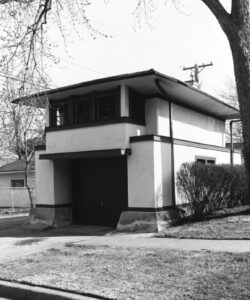
Following the completion of Robie House, Wright was commissioned by Emma Martin to design an attached garage for her Oak Park home in his characteristic Prairie style

If the human entrance to the house was secretive, the one designed for the machine was not. Inside the yard, the garage doors dominate the space. It is here that the garage claims its rightful position on the front of the plot with a direct and easy connection to the street. If we go by Wright’s poetic hand, in 1910 the garage was symbolically integrated into the familial structure. This relationship between home and garage, family and car, would not reappear in architecture until the early 1920s, making the Robie House a premonition of the future.”

For a deeper dive into the history of the garage as a space of creativity (think tech start-ups and musicians), grab a copy of Garage and make time to visit Robie House. Enjoy!

The Ennis House: Frank Lloyd Wright’s Most Documented Work

From Taliesin and Taliesin West to his home and studio in Chicago, Frank Lloyd Wright’s iconic architectural contributions continue to remain beloved treasures of modernism. And while many of the buildings attract tourists from across the world, one home, in particular, separates itself as his most documented property, and whether you know it or not, you’ve probably seen it yourself. 

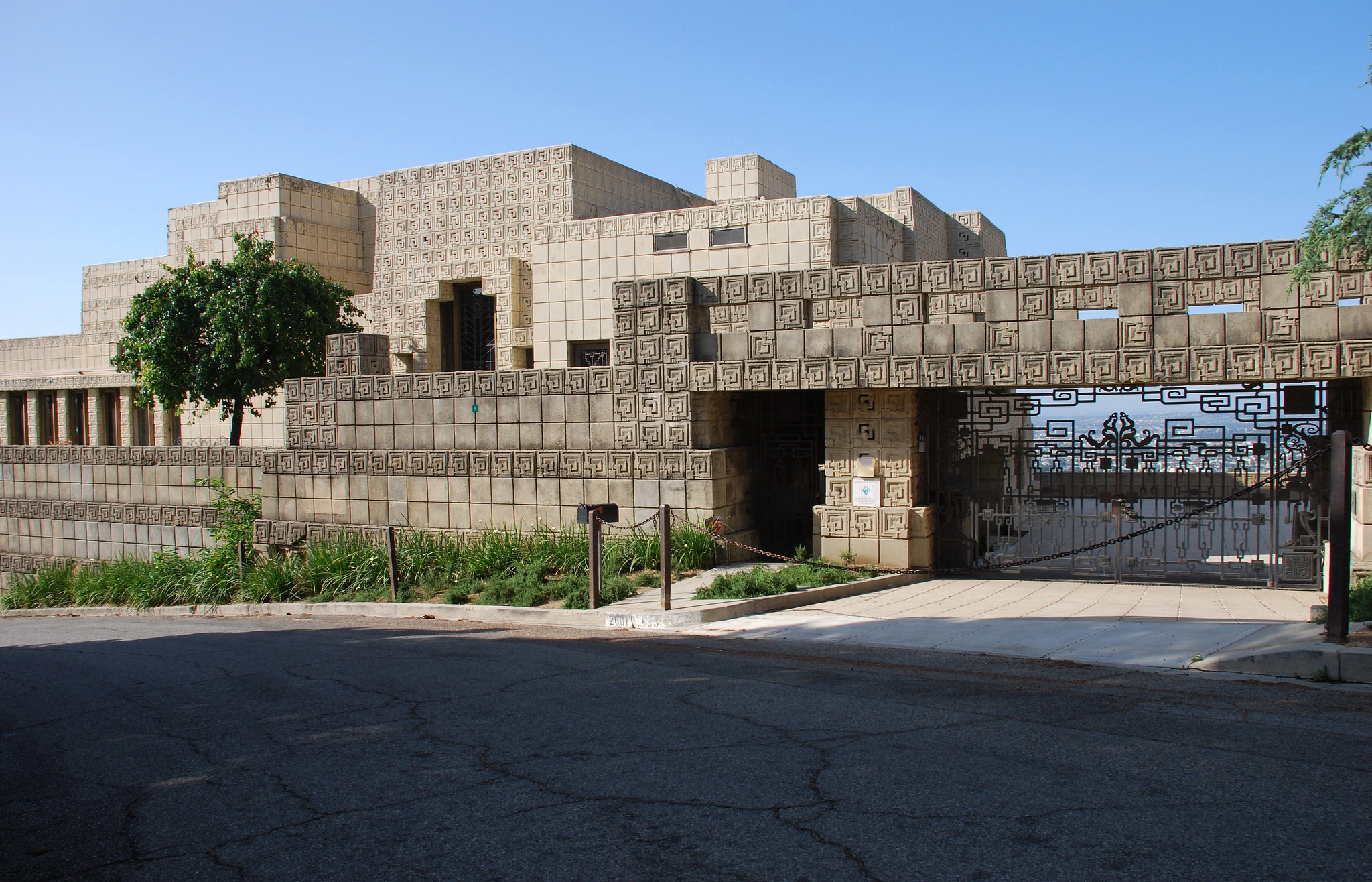
Built in 1924, the Ennis House was only the second home Wright built in California. Situated in the Los Feliz neighborhood, Wright embraced the Mayan Revival style of the time and area, utilizing 27,000 concrete molds in a block construction to create the famous house. Along with the custom textile block design, Ennis House features a tall loggia spine and grand pool on its northern terrace, one of the house’s most glamorous features. 

Although the house was built as a residence for Charles and Mabel Ennis, its exotic design immediately attracted the eyes of Hollywood filmmakers. In 1933 it was used as a shooting location for the first time, but it wasn’t until 1959 that it acquired unnatural recognition for the time as the exterior facade for the B movie House on Haunted Hill. The home remained a popular destination for films for decades, showcasing its impressive interior for the 1975 film, The Day of the Locust

However, in 1982 the home reached new levels of fame after appearing in Blade Runner. While it was only actually filmed for one exterior scene, the director was so entranced by the textile blocks that casts of them were created for sets elsewhere in the movie. The tall ceilings from the cathedral-like dining room and fireplaces were also popularly used in films thanks to their haunting nature. 

Since 1933, features from the iconic house have made appearances in more than 80 films, alongside various commercials, magazine covers and music videos. The Ennis House is designated a city, state and national landmark and added to the U.S. National Register of Historic Places in 1976. It remains privately owned today, but thanks to its inspiring and timeless architectural design, it remains a desired location for anyone looking to capture the perfect shot.

How Arcosanti is Still Evolving Today

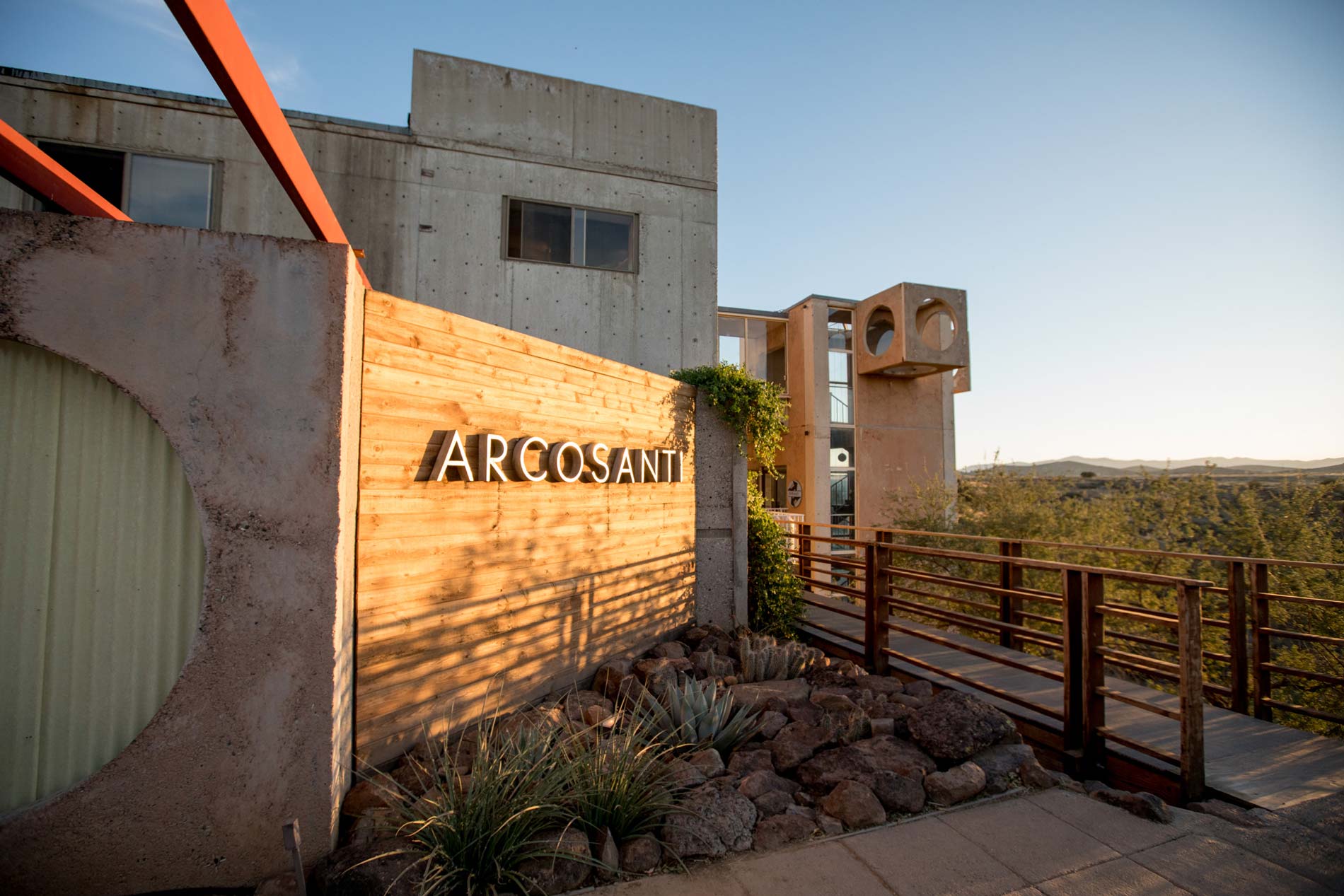
Although 50 years old, Paolo Soleri’s visionary planned city, Arcosanti, is still thriving today. For the last five decades, the magnificent community exhibited the best of Soleri’s philosophy, fusing architecture and ecology and providing a home for many educational resources. However, currently the famed property is entering a new era, pushing the boundaries of Soleri’s philosophy further than ever. 

Liz Martin-Malikian, CEO of Arcosanti under the Cosanti Foundation states that while the community’s first half-century focused on Soleri’s vision, the next half-century will focus on the collective. Not only does the community aim to unearth more behind arcology, but they also plan to collaborate and partner with various groups, including local Indigenous populations. 

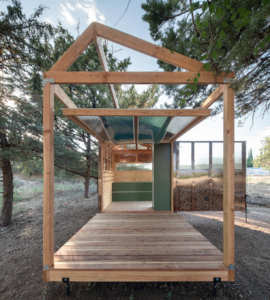
Shiro, a shelter by TSOA student, Micehle Yeels. Credit: Designboom®

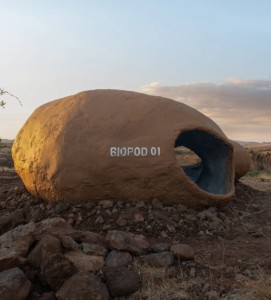
Many of Arcosanti’s resources are provided to students of The School of Architecture, a crucial feature of the community. One of the key programs constantly bringing new life to the planned city is The Shelter Program. The capstone design project encourages students to design and build single-occupancy structures for future students throughout the community. 

While preserving Arcosanti’s historic past, Martin-Malikian is embracing the future by decoding Soleri’s philosophy of arcology – starting by reframing the community’s vision around its cultural landscape. Along with debuting a Cosanti Indigenous Residency, a new Indigenous co-design program provides a new opportunity to combine sustainability with passive and culturally diverse designs. 

Biopod 1, a shelter by TSOA student, Soloman Edelmen. Credit: Designboom®

Arcosanti has always existed as a hub for innovation and inspiration. And today, with a spotlight on collective, the planned city is preparing to embrace its regional heritage more than ever before. To explore more about Arcosanti, and stay up to date on their events and programming, head to their website here.

A Brief History of Architecture in the Expressionist Movement

Although many know expressionism for its evocative poetry and painting, expressionist architecture was also a subsect of the Modernist Movement. While coexisting with the minimalist rigor of the Bauhaus, this avant-garde style allowed designers to explore new, radical perspectives, gifting to the world some of the most dynamic, expressive architecture of the 20th century. 

Origins of Expressionism

Expressionism originated in the late 1800s from a small group of artists based in Germany. The artists who founded the movement felt that 19th-century impressionism – which commanded the art world – was out of touch with the social climate of the times due to the various changes that came with the Industrial Revolution. This feeling of detachment helped inspire what would soon be known as expressionism.  

Acclaimed painters like Van Gogh, Paul Gauguin, Edvard Munch and Francis Bacon all contributed remarkable works of art throughout the movement, but artists who worked with other mediums also adopted the ideals that expressionists held close. Because of the vivid colors and distorted lines and angles associated with expressionism, German cinematography, in particular, took advantage of the moody standards. 

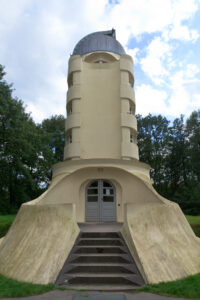
Einstein Tower by Erich Mendelsohn. 1921
Einstein Tower, Erich Mendelsohn, 1921. Credit: H. Raab on Flickr Creative Commons, CC BY-NC-ND 2.0 Deed

After more than 30 years of commanding the art world itself, expressionists became banned from showing and selling their work in Germany, where the majority of the artists lived. The result left many artists suppressed, eventually leading to various radical movements, including Abstract Expressionism, Pop-Art, Minimalism and in the late 20th century, Neo-Expressionism. 

Expressionism in Architecture

Expressionist architecture took advantage of the many characteristics associated with the movement’s other works of art, including distortion of form, themes of romanticism, expression of inner experience and the conception of architecture as a work of art, among others. Much of the movement’s builds featured Gothic, Romanesque and Rococo affinities. 

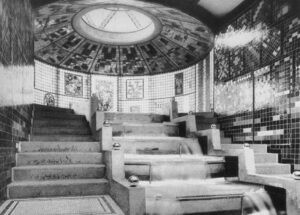
Glass Pavilion’s interior featuring the seven-tiered waterfall. Public Domain photo.

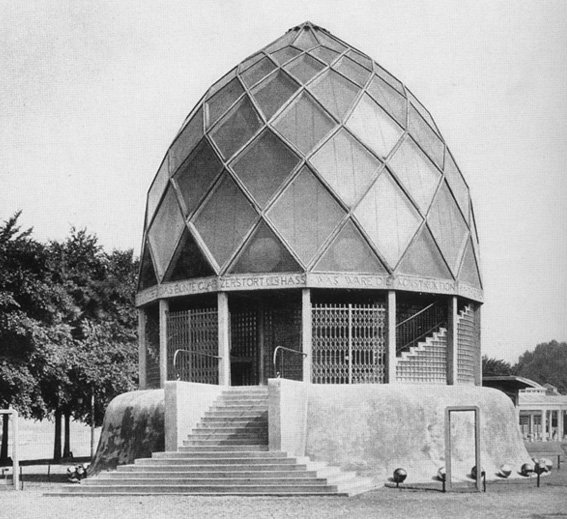
Bruno Taut’s Glass Pavilion is one of the earliest examples of expressionist architecture. The structure was built in 1914 as a feature of the Cologne Deutscher Werkbund Exhibition. Constructed using only concrete and glass, the exterior of the pavilion showcases a vibrantly colored prismatic dome and a grand staircase. The interior of the building featured a kaleidoscope of color from the crown above it and a seven-tiered cascading waterfall.

The Einstein Tower is another striking example of expressionist-style architecture. The observatory was built by German Architect Erich Mendelsohn from 1919 to 1921 and was envisioned to hold a solar telescope. Mendelsohn designed the building to reflect the radical theories formed by Einstein – specifically his theory of motion. The structure is built with brick but covered with stucco to give it its smooth, tidal-like exterior. 

More recent examples of expressionist-style architecture include Walt Disney Concert Hall designed by Frank Gehry in Los Angeles, the Lotus Temple designed by Fariborz Sahba in Delhi, and Zaha Hadid’s Vitra Fire Station in Weil am Rhein. 

person name goes here

Maintenance Supervisor

Glencoe, IL


    Acceptable file types: *.pdf | *.txt | *.doc, max-size: 2Mb