With our deep connection to Modernist furniture and designers, it’s no wonder that we continue to gravitate to the classic beauty of Arne Jacobsen’s Pot™ as an essential seating element in the public spaces within Optima communities.
Jacobsen, the prolific Danish designer of the Egg Chair and the Swan Chair, also created the Pot™ in 1959 for the SAS Royal Hotel in Copenhagen. In 2018 the Pot™ was relaunched with a fresh take on Jacobsen’s lounge chair, revitalized for the modern interior; the original design has been preserved, but the seat and materials have been reconsidered to offer fresh options in both fabrics and leathers.
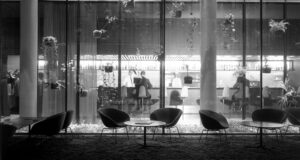
Originally, the Pot™ decorated both the Orchid Bar and Winter Garden in the SAS Royal Hotel, Copenhagen’s first high-rise. Alongside Jacobson’s other furniture designs in the Royal Hotel, including the Swan and Egg chairs, he exclusively utilized the Pot™ to complement the organic aesthetic found in the Orchid Bar and Winter Garden. The chair was also placed on every floor in the hotel across from the elevators to function as a recognizable meeting point.
The Pot™ found in SAS Royal Hotel’s Orchid Bar
In its original conception, the Pot™ was a quiet design, meant to mimic a leaf floating in the air. And while the shape has a compact quality, it is both comfortable and spacious.
Be on the lookout for the ways we have incorporated this timeless gem into our lobbies and other social spaces next time you visit an Optima Community!
As part of our ongoing “Women in Architecture” series, we’re spotlighting someone who was at the forefront of architectural experimentation in the mid-twentieth century, Anne Tyng. Tyng pioneered the inclusion of complex geometry as a source for form in architecture and design and became an expert in the field. Learn more about her extraordinary life and work below:
The Life of Anne Tyng
Anne Griswold Tyng was born in Lushan, Jiangxi province, China, on July 14, 1920. Although her family lived in China at the time, their roots traced back to the Massachusetts Bay colonies, and they frequently visited the United States for family trips. Tyng’s love for design sparked when she was just a child, and she often recalled how she would carve whole cities out of the soft stone surrounding her family’s properties.
At 18, Tyng moved permanently to the U.S., where she attended Radcliffe College in Cambridge, MA, to study fine arts. During her final year, however, she discovered the Cambridge School of Architecture and Landscape Architecture — the first institution to provide design training to women only — and began taking classes there.
After her graduation in 1942, she went on to further her architecture studies at Harvard, studying with renowned architects like Marcel Breuer and Bauhaus founder Walter Gropius. In 1944, Tyng was among the first women to complete their studies at Harvard, and later she became the only woman to enter the architecture licensing exam in 1949. Tyng finished her education nearly 30 years later when she was awarded a Ph.D. from the University of Pennsylvania.
Anne Tyng and Louis Kahn, at his architectural practice, 1947. Photo courtesy of the Anne Griswold Tyng Collection and the Architectural Archives of the University of Pennsylvania
In 1945, Tyng moved to Philadelphia and began working for Louis Kahn’s architecture firm, Stonorov and Kahn. Khan and Tyng became close collaborators, and her passion for geometric form influenced many of the firm’s designs of the time. In 1964, she left the firm, where she had been a partner, and began developing more solo projects until the end of her career.
Notable Work and Achievements
Although she became a successful architect, Tyng was also passionate about mathematics. Thanks to the versatility and flexibility of architecture, this allowed her to conflate her interests and focus on space frame architecture — creating light-filled spaces using interlocking geometric forms of architecture.
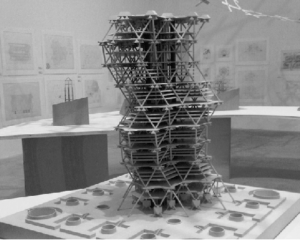
Louis Kahn and Anne Tyng, Model of the proposed City Tower for Philadelphia, 13 x 17 cm, 1953, ” Visionary Architecture, ” exhibition at the Museum of Modern Art, “The Changing Concept of Proportions”: Architecture, Mathematic and Geometry from Architectural Principles in the Age of Humanism to the Techno-Organic Movement. The Journal of Art Theory and Practice. 18. 123-144. 10.15597/17381789201418123.
Many of Tyng’s earliest works can be traced back to the influences she left in Kahn’s designs, including the Yale University Art Center (1953), Philadelphia City Tower (1957) and the Trenton Bath House (1956), all of which included triangles or cubes in their forms. However, her former residence, the Tyng House, is where her personal style is most celebrated.
Built in the 1950s, the single-family home features slotted windows, a pyramidal timber-framed ceiling and metal screened openwork staircases. And although the exterior of the house appears ordinary at first, a closer look reveals a mansard roof and large parlor-floor windows.
In the late 1960s, after falling in love with Maine’s Mount Desert Island, Tyng designed the Four-Poster House. In her design, Tyng took inspiration from the surrounding ecology, and she strived to make the home an organic outgrowth of the wooded area. Using logs, cedar shake and tree trunks, the house was framed similar to a four-poster bed with four central columns.
Alongside her transformative work, Tyng has been a recipient of many architecture awards and achievements, including:
First woman licensed as an architect in the state of Pennsylvania
Fellow of the American Institute of Architects, 1975
Academician of the National Academy of Design, 1975
Selected by the United States to participate in the First International Congress of Women Architects, 1976
Tyng’s career was devoted to understanding the synthesis of geometrical shape and human consciousness within architecture, and because of her extraordinary contributions, the spatial potential of architecture was pushed further than ever before.
Community means everything to us at Optima, which is why we bring thoughtful design to each project, committed to supporting and uplifting every resident. Historically, architecture has been a dominant tool for many to build and sustain communities, and recently, community architecture has taken on a more prominent role in the discourse surrounding living environments. Learn more about community architecture and some of the practice’s most visionary examples below:
What is Community Architecture?
Community architecture is a collaborative building experience between both an architect and the users of the built space. The movement originated in the mid-20th century when architects across the world began to see that people wanted more say in shaping what they lived in and how they lived.
Because it was such a radical idea at its inception, some architects who took charge of the movement experienced ridicule. Minette de Silva, in particular, was unsupported in her efforts to build Sri Lanka’s first Public Housing Project in collaboration with its residents. The result, however, was a triumphant success, like many other community architecture projects across the world.
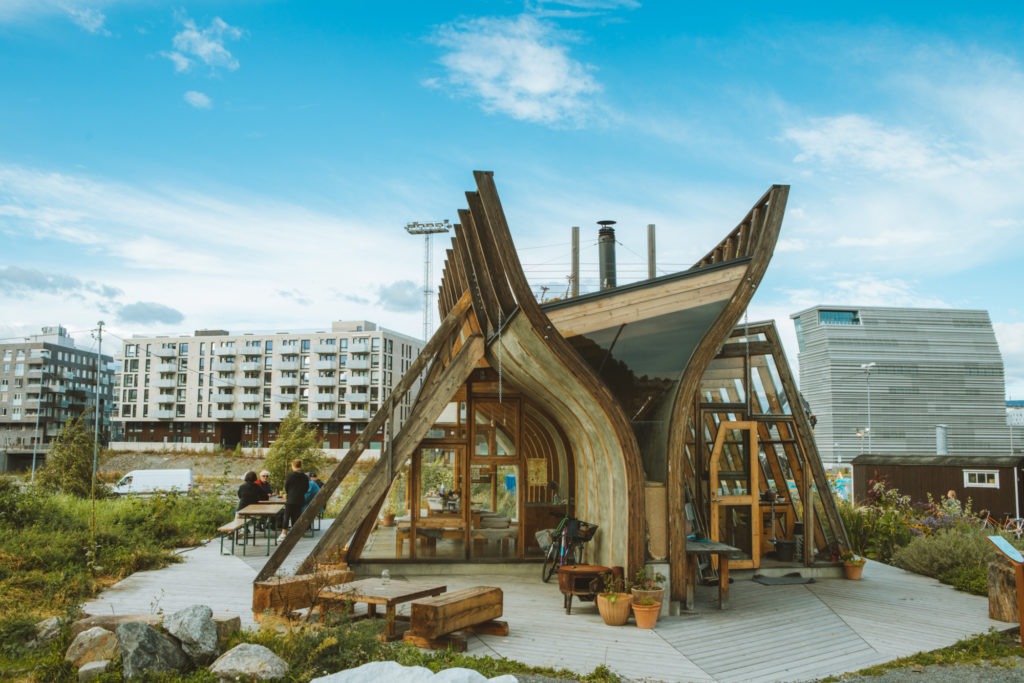
What originated as a mere art project in 2011 has turned into one of the world’s most functional community-built projects. The intricate design behind the main building, the bakehouse, operates as a place of creative production and a gathering space for communal interactions.
The structure appears still under construction or repair, but the wooden skeleton and window-filled walls intentionally mimic the past. Both the structure’s versatile purpose and its boat-like canopy design are odes to the country’s rich history, reflecting on the cultural significance of Bakehouses and maritime history.
From serving as a hunting ground for the indigenous Osage nation to being transformed into a cheese factory, the land on which The Momentary resides in Bentonville, Arkansas, has a long, rich history. Today, however, the land is home to the adaptive reuse art museum. The original structure – which is still 80% preserved – was completed in 1947, and, with the help of Wheeler Kearns Architects, the newly constructed museum finished construction in 2020.
Instead of trying to gloss camouflage the branches of history rooted in The Momentary’s land, they intentionally embraced them, designing an accessible hub that supports community members through cultural programming, education, engagement and enjoyment.
In 2020, The Night Ministry – an organization encompassing health care, housing, outreach and other social services – welcomed its new home, also designed by Wheeler Kearns Architects, in Chicago’s Bucktown neighborhood. The former manufacturing facility became transformed into the organization’s headquarters and is home to their overnight shelter, The Crib.
Parts of the original manufacturing facility were repurposed to reduce waste when constructing the new headquarters, including flooring, windows and heavy timber. Vibrant murals around the interior alongside multipurpose programming spaces and a communal kitchen and dining space also help to reflect the collaborative nature The Night Ministry displays.
The best architecture attracts people and allows them to feel a true sense of ownership of their living environment. And, because more and more architects are discovering the importance of doing just that in their projects, community architecture shows no signs of slowing down.
Chicago and Scottsdale, home to lively Optima Communities, have much in common, including some of the best farmers markets to be found anywhere in the country. As summer approaches, each city comes more alive with a broad array of markets and fairs. Today, we’re spotlighting some of the favorites in each city:
Chicago’s Farmers Markets
Chicago’s French Market is one of the city’s nontraditional options, taking a cue from its European namesake and occurring indoors. Found in the same building as the Ogilvie Metra Train Station, and only a short walk from Optima Signature, the market is host to more than 30 local vendors – a mix of entrepreneurs and family-owned businesses – that supply neighborhood favorites and cultural luxuries. You can visit the French Market daily, except Sundays, from 7 a.m. to 5:30 p.m.
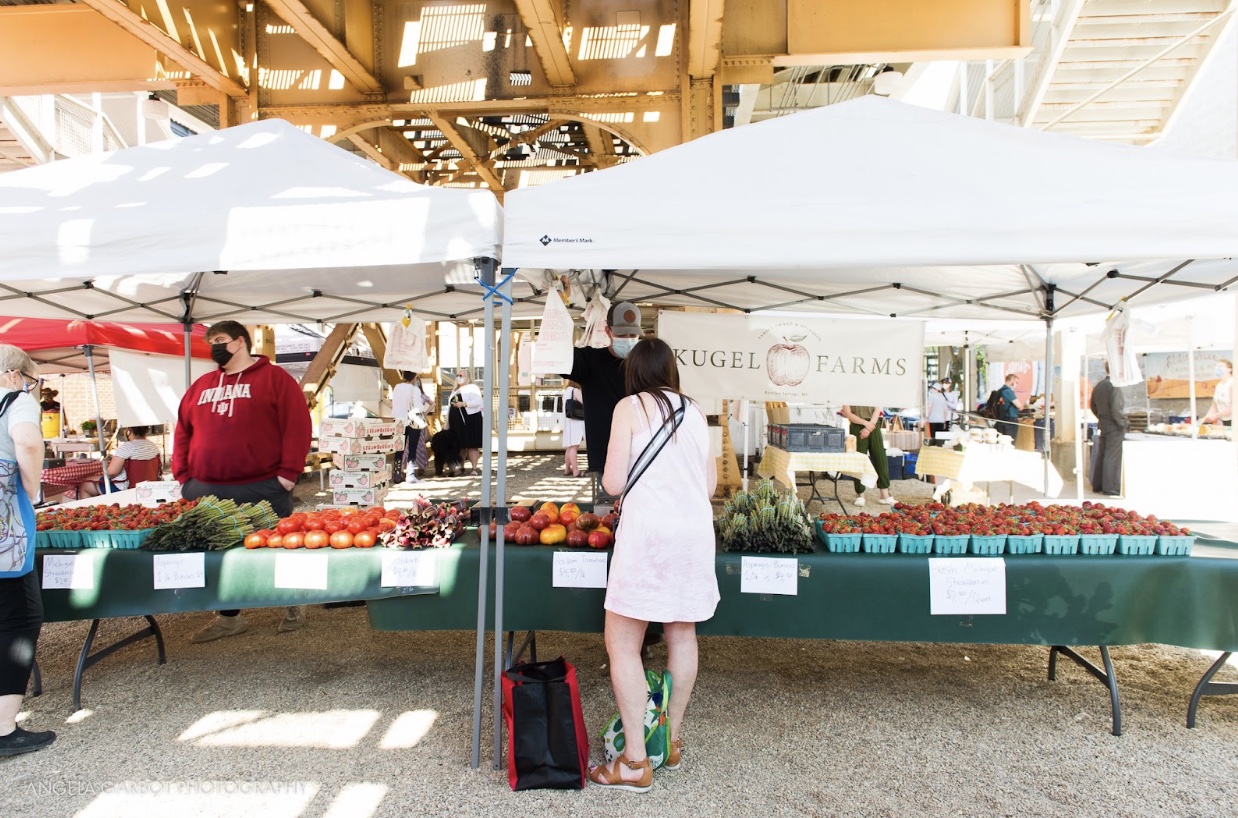
Tucked beneath the Western Brown Line Stop is Chicago’s Lincoln Square Market. Although it has limited hours, Tuesdays from 7 a.m. to 12 p.m. and Thursdays from 3 to 7 p.m., it’s a must-stop for residents. Local farmers, food purveyors and artisans fill the space each week, bringing everything from fresh produce to homemade hot sauce. And, if you go, make sure not to miss the local food trucks found in the area during the market!
For Optima Lakeview residents, Low-line Market on Southport is closest. The carefully curated market takes place every Tuesday from June to October and has a variety of favorite vendors that include The Hive Supply, Elsie Mae’s Pies and Lyons Fruit Farm. The market is part of Lakeview’s larger Low-line project, which helps to connect the neighborhood through a half-mile walkway and garden underneath the CTA ‘L’ tracks.
Roadrunner Park Farmers Market, Scottsdale
Scottsdale’s Farmers Markets
One of the largest farmers markets in the area, the Uptown Farmers Market features nearly 100 vendors at the North Phoenix Baptist Church every Saturday from 7 to 11 a.m. Those who visit will find everything from local produce and plants to cocktails and cookies. The market, which is only a 20 minute trip from Optima Sonoran Village, frequently has a variety of food trucks to grab a quick snack from while shopping!
Found in Roadrunner Park just East of State Route 51, Roadrunner Park Farmers Market is open all year from 7 to 11 a.m. on Saturdays. Although the market is smaller, it carries a mix of amazing products that include hand-crafted items, fresh fruits and vegetables and baked goods. And, since it’s in the park, you can spend the rest of your day at the children’s playground, fishing pond, swimming pool or soccer field!
For those looking to travel outside of the city, Carefree Farmers Market, found directly 15 miles north of Kierland Commons and Optima Kierland, makes the perfect choice. The market takes place every Friday throughout the summer from 8 to 11 a.m. and is known for its assortment of local treasures. Vendors change weekly, but favorite goods include artisan jellies, locally-made salsas and freshly baked bread.
This summer, make some plans to support local businesses and vendors by venturing out and exploring what your nearest farmers market has to offer!
Although many know expressionism for its evocative poetry and painting, expressionist architecture was also a subsect of the Modernist Movement. While coexisting with the minimalist rigor of the Bauhaus, this avant-garde style allowed designers to explore new, radical perspectives, gifting to the world some of the most dynamic, expressive architecture of the 20th century.
Origins of Expressionism
Expressionism originated in the late 1800s from a small group of artists based in Germany. The artists who founded the movement felt that 19th-century impressionism – which commanded the art world – was out of touch with the social climate of the times due to the various changes that came with the Industrial Revolution. This feeling of detachment helped inspire what would soon be known as expressionism.
Acclaimed painters like Van Gogh, Paul Gauguin, Edvard Munch and Francis Bacon all contributed remarkable works of art throughout the movement, but artists who worked with other mediums also adopted the ideals that expressionists held close. Because of the vivid colors and distorted lines and angles associated with expressionism, German cinematography, in particular, took advantage of the moody standards.
After more than 30 years of commanding the art world itself, expressionists became banned from showing and selling their work in Germany, where the majority of the artists lived. The result left many artists suppressed, eventually leading to various radical movements, including Abstract Expressionism, Pop-Art, Minimalism and in the late 20th century, Neo-Expressionism.
Expressionism in Architecture
Expressionist architecture took advantage of the many characteristics associated with the movement’s other works of art, including distortion of form, themes of romanticism, expression of inner experience and the conception of architecture as a work of art, among others. Much of the movement’s builds featured Gothic, Romanesque and Rococo affinities.
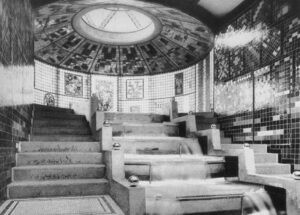
Glass Pavilion’s interior featuring the seven-tiered waterfall. Public Domain photo.
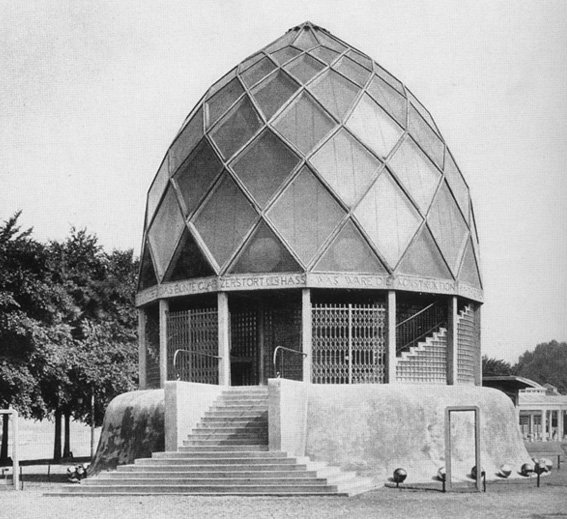
Bruno Taut’s Glass Pavilion is one of the earliest examples of expressionist architecture. The structure was built in 1914 as a feature of the Cologne Deutscher Werkbund Exhibition. Constructed using only concrete and glass, the exterior of the pavilion showcases a vibrantly colored prismatic dome and a grand staircase. The interior of the building featured a kaleidoscope of color from the crown above it and a seven-tiered cascading waterfall.
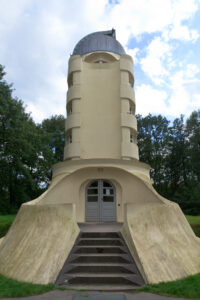
The Einstein Tower is another striking example of expressionist-style architecture. The observatory was built by German Architect Erich Mendelsohn from 1919 to 1921 and was envisioned to hold a solar telescope. Mendelsohn designed the building to reflect the radical theories formed by Einstein – specifically his theory of motion. The structure is built with brick but covered with stucco to give it its smooth, tidal-like exterior.
More recent examples of expressionist-style architecture include Walt Disney Concert Hall designed by Frank Gehry in Los Angeles, the Lotus Temple designed by Fariborz Sahba in Delhi, and Zaha Hadid’s Vitra Fire Station in Weil am Rhein.
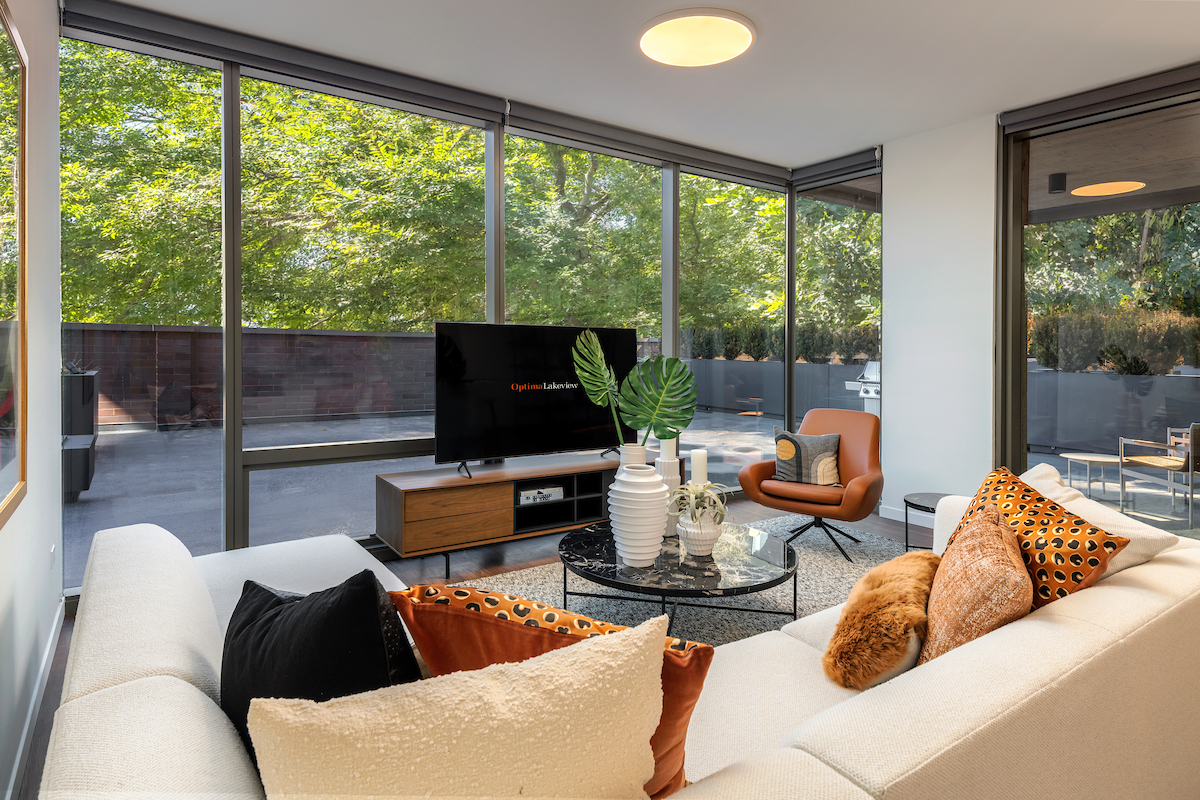
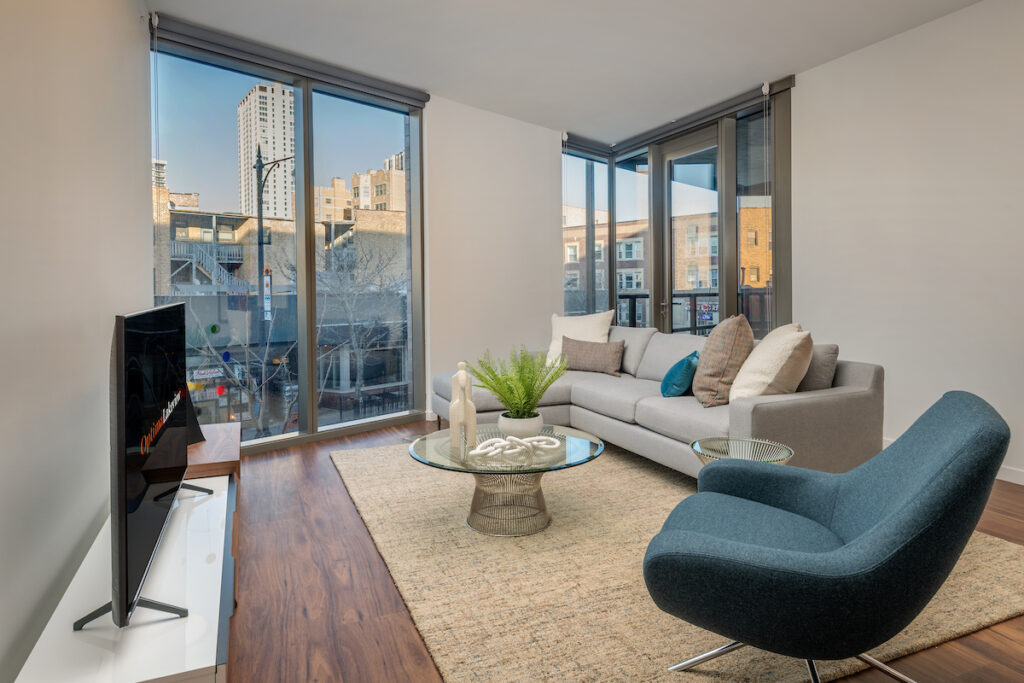
As with all of the exquisitely curated furniture selections at Optima, the focus is always on comfort and functionality, timeless minimalist design, flawless engineering and superb materials The NOOMI chair, the brainchild of renowned Danish designer, Susanne Grønlund, is no exception, and fits handsomely into the interior spaces of our latest development, Optima Lakeview.
Since 1991, Grønlund and her studio in Aarhaus, Denmark have earned a reputation for innovative, thoughtful design that’s rooted in Scandinavian traditions. In creating her Noomi Swivel chair in 2013, she set out to combine aesthetics with practicality. Recognizing that people want to sit comfortably AND easily turn to speak to others in an intimate setting, Grønlund designed a soothing, smooth-swiveling chair on a 360-degree base.
With references to branches on a tree, the delicate and slightly bent legs seize the upper part of the NOOMI Chair and create a strong graphic expression where steel and fabric meet in harmony. The frame is light, but distinctive with an elegant humanly-contoured shape that makes the soft, rounded upper part of the chair — with its strong backrest and traditional manual padding — look like it’s hovering above the floor.
The Noomi Chair in a two-bedroom residence at Optima Lakeview
With the focus on form and function, Grønlund took great pains to ensure maximum comfort with the NOOMI Chair. The angle of the backrest to the seat has been carefully resolved, and the wide armrests are comfortable. The chair invites various sitting positions as it signals the priorities of comfort and rest.
With such flawless design, it isn’t a surprise that the NOOMI chair has garnered a number of awards, including the Good Design® Award (2017) and German Design Award (2018).
We’re not only happy to have NOOMIs welcoming residents in Optima Lakeview but in many of our other communities at Optima, where the ideals of form and function continue to inspire all of us.
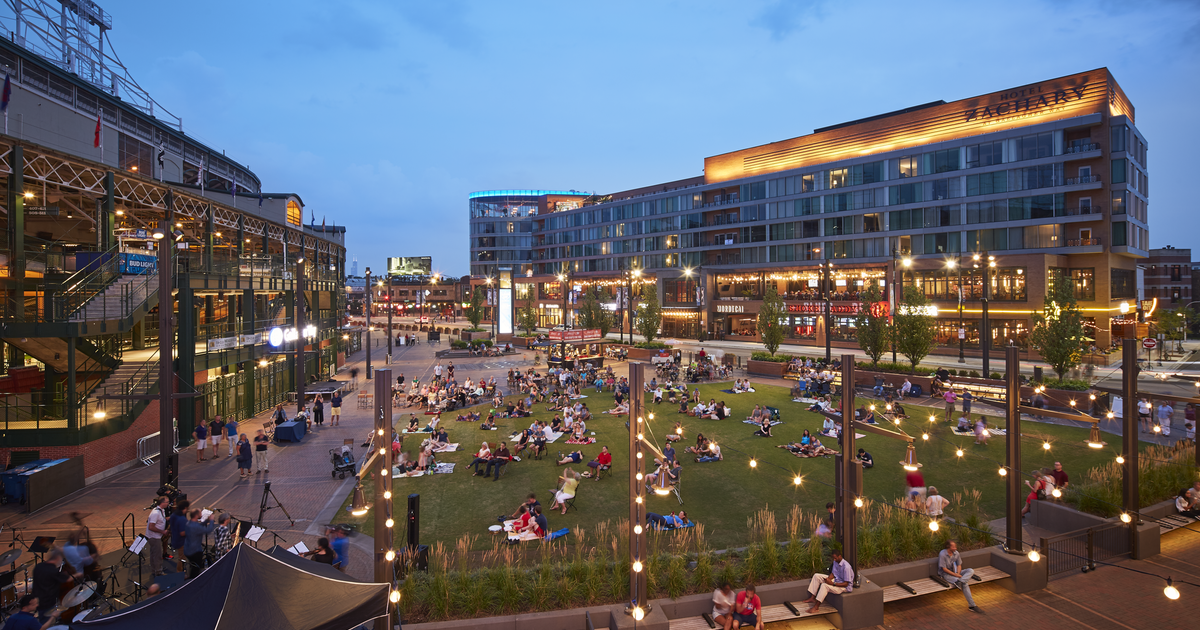
Summer in Chicago brings warm weather, vibrant colors and endless activities that stretch from Lake Michigan to the suburbs. Gallagher Way, the outdoor event space adjacent to Wrigley Field and just blocks from Optima Lakeview, offers some of the city’s most unique seasonal activities for people of all ages — all for free! Today, we’re highlighting some of their current and upcoming programs:
Fitness Series
Running from May through the end of September, Gallagher Way’s fitness series is perfect for anyone who loves being active outdoors. And no matter where your passion for fitness lies, there is sure to be a class that sparks your interest.
Every Tuesday and Thursday at 7 a.m, guests are invited to bring their own yoga mats for a one-hour morning yoga session led by Five Keys Yoga. Other classes in the series include Run Club with Movement Gym every Tuesday at 6 p.m. and high-intensity training every Monday and Wednesday at 7 a.m. for those looking to push themselves.
Music Box Theatre Movies
One of Lakeview’s most treasured venues, Music Box Theatre, is partnering with Gallagher Way beginning May 25 to showcase 12 music-themed movies on the venue’s video board. Most Wednesdays starting at 6 p.m., movies range from classics like Dirty Dancing and School of Rock to family flicks like Encanto and Mamma Mia!
Guests are encouraged to bring a snack if they’d like, but for those who forget, Gallagher Way’s on-site concession stand won’t disappoint. And while seating is free, guests can reserve VIP seating for only $30 which includes a beverage, treat from Jeni’s Ice Cream, popcorn from Garrett Popcorn Shop and a souvenir cup.
French Market
Select Thursdays from 4 to 8 p.m. through September, Gallagher Way hosts the European-inspired French Market. More than 20 vendors make up each market, displaying everything from handmade pasta to jams, candles and soaps. The French Market is ideal for a casual night where you can enjoy post-work drinks and warm weather.
Along with the various unique vendors, the French Market is also home to a different performer each week, ranging in genre from Chicago Blues to Latin Jazz. Kids can enjoy the Craft Corner, where they can create a new masterpiece each week!
Dog Day
One of the best perks of summer is being able to spend quality time outside with your furry friend, and Gallagher Way feels the same, which is why they’re hosting Dog Day on May 29 from 12 to 5 p.m. Neighbors are encouraged to bring their dogs down for a day full of treats and games.
Local dog-friendly vendors will be on-site, along with drinks, lawn games and more for dog owners. In addition, the Anti-Cruelty Society will be hosting a supply drive for dogs and cats in need.
Chicago’s summer months are precious, so make the most of them while they’re here! Head to the Gallagher Way website to learn more about these events and other summer 2022 programming here.
The turn of the 20th century was rich with change in almost all aspects of life. Artists and architects across the globe were more inspired than ever to bring unprecedented works of art to life. Many of which originated in the numerous modernist movements that emerged during this period. Today, we’re exploring De Stijl, a celebrated Dutch movement formed partly as a reaction against Art Deco.
The History of De Stijl
De Stijl was founded in 1917 by a cohort of painters, sculptures, architects and poets in the Netherlands’ largest city, Amsterdam. The art movement is also known as Neoplasticism. However it is more commonly referred to by its traditional name, De Stijl, which says it all for its direction. Meaning ‘the style’ in dutch, nearly all of the artwork and architecture stemmed from a simple vision and philosophy.
The principles of the movement set to ignore natural form and color. Instead it simplified compositions to only vertical and horizontal lines and palettes to only black, white and primary colors.
Throughout De Stijl’s lifespan – from 1917 to roughly 1931 – its advocates pushed for full abstraction. However, it never reached the chimeric expressions found in other abstract movements. Artists and architects associated with De Stijl still developed their own visual language, using various avant-garde elements that ranged from basic geometrical figures to intersecting planes and unbent lines.
Much of De Stijl’s work embodied a utopian vision, and realizing that vision was unattainable was one of the resulting factors for its downfall. However, the movement’s continued fame and recognition exists today thanks to the many acclaimed works and artists who contributed to De Stijl.
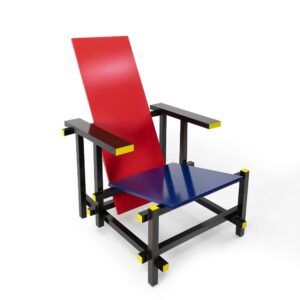
One of De Stijl’s most well-known works came from the Red and Blue Chair. As one of the first explorations of the movement, furniture designer and architect Gerrit Rietveld first designed the chair in 1918 but didn’t fully complete it until five years later, in 1923.
Sticking to De Stijl’s design philosophy, the Red and Blue Chair makes use of only primary colors, along with black, and is one of the most popular creations of the movement. Rietveld envisioned the chair to be mass-produced but intentionally designed it to appear man-made due to its unique, clearly defined construction.
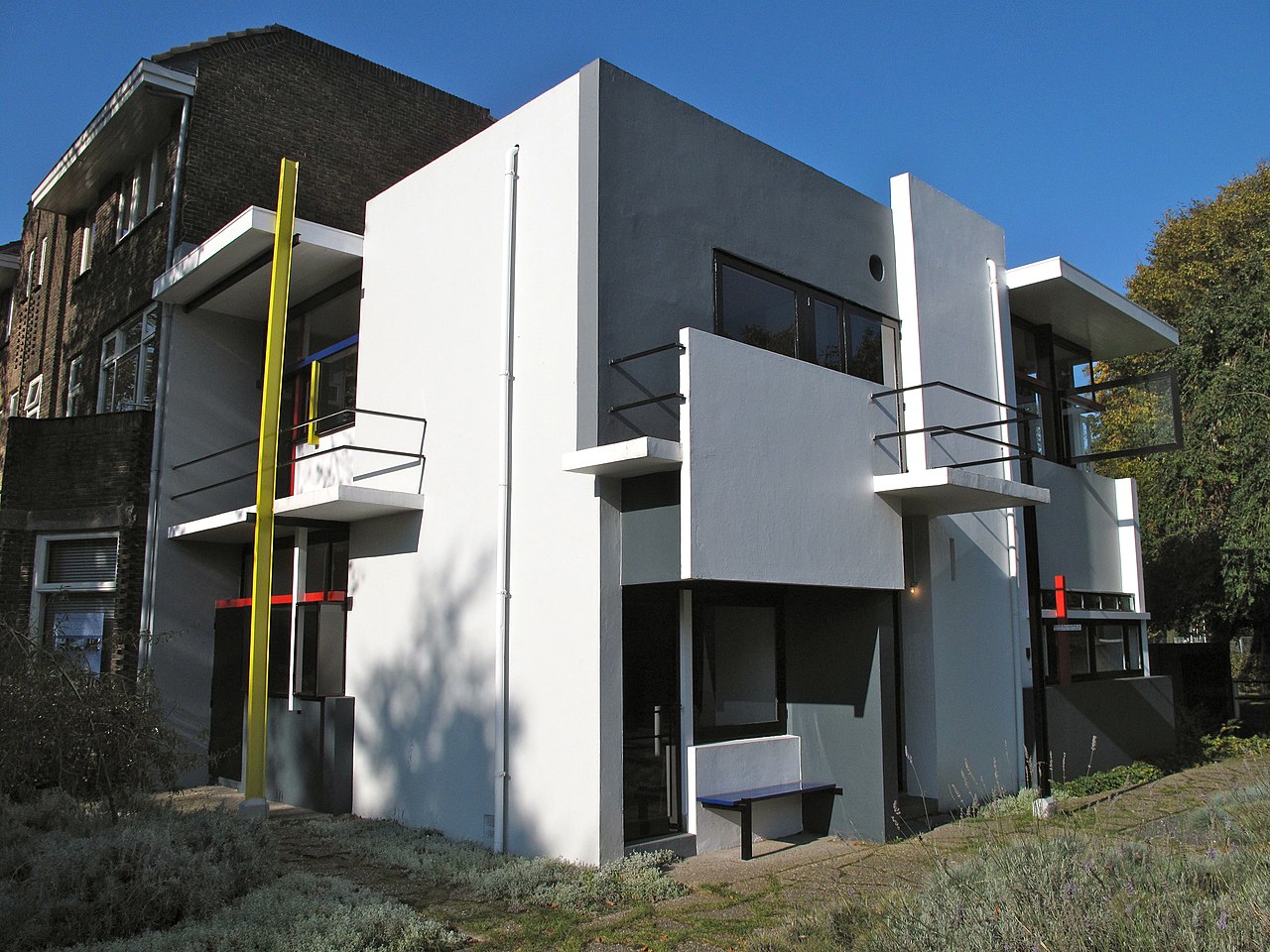
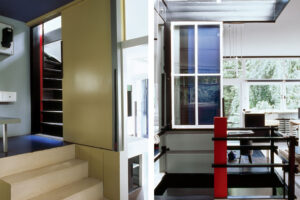
Another well-known work of the movement and the only architectural building which followed all of its aesthetic properties was Rietveld’s Rietveld Schröder House. Built in 1924, the house was a commissioned project for Truss Schröder-Schrader, whose original vision included a grand open space without any walls.
Rietveld delivered on Schrader’s vision, utilizing construction elements that emphasized the building’s form, including various slabs, posts and beams. Making each wall portable, he designed each room as if each was its own movable entity. The design took use of De Stijl’s emblematic color palette of black and white and looked nothing like any of its neighboring builds.
Although it might not be the most notable movement stemming from the Netherland’s, De Stijl’s presence in everything from Dutch literature and paintings to architecture and music communicates just how influential the art movement was throughout the early 20th century.
Whether you’re in Chicago or Scottsdale, immersive art exhibitions are quickly becoming the latest trend, unveiling a new approach for art lovers to savor their favorite works and artists. What separates these shows from what you would expect to see at a traditional museum or gallery space?
The History of Immersive Art
While immersive art may seem like a new phenomenon to many of us, immersive experiences can be traced back centuries. One of the finest examples can be found in the architecture of the middle ages. Employing stained glass in the construction of churches was often used to create an otherworldly experience for patrons. As natural light floods through each window, colors fill the interior, telling a vibrant visual story.
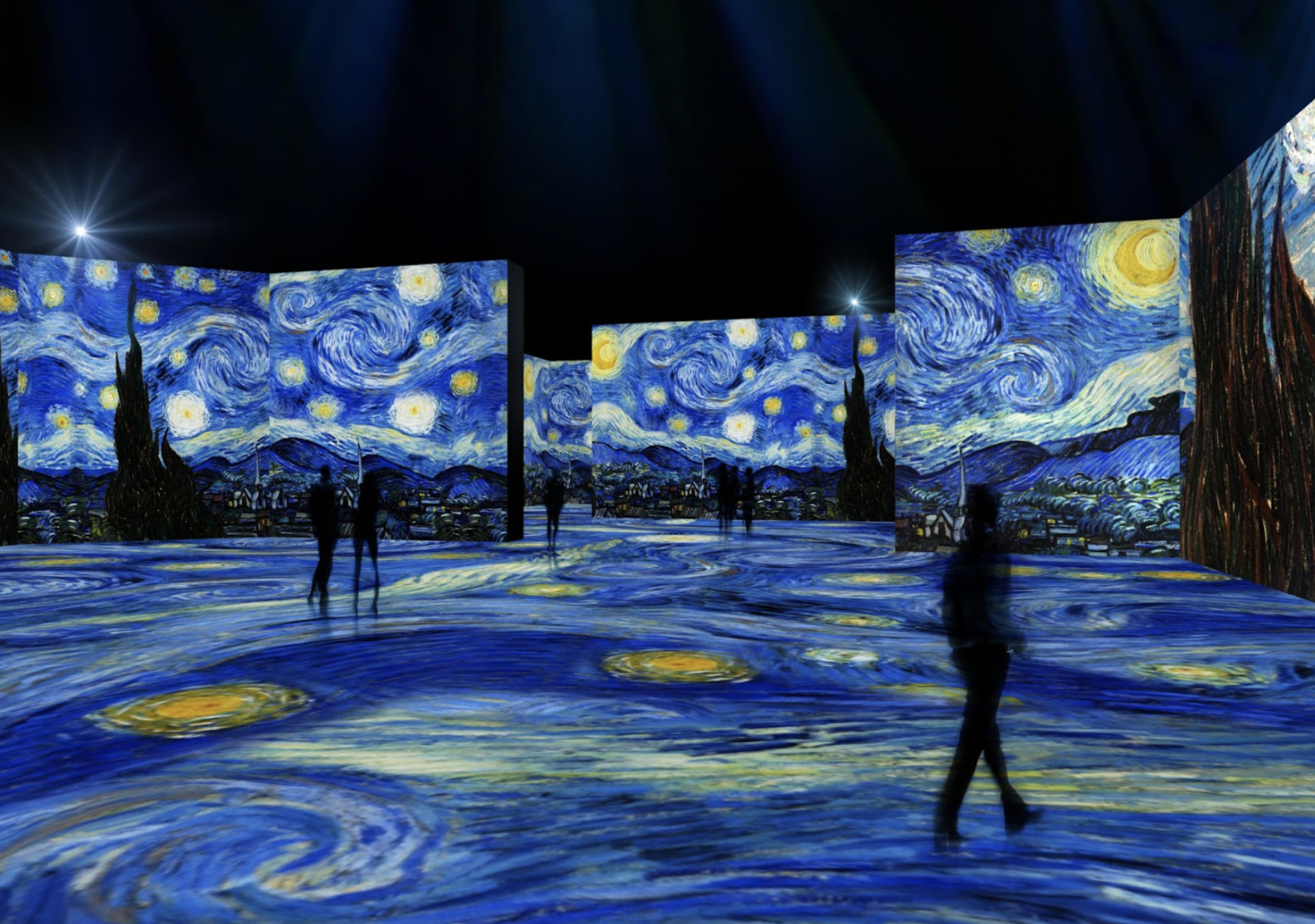
More recently, thanks to the help of modern technologies that include virtual reality, holography and digital projection, immersive experiences have transformed how we can view works of art, enabling us to explore each piece as a protagonist within it.
The objective of immersive art lies in entertainment, taking 2D environments and metamorphosing them into 3D worlds often filled with accompanying music. Video projection mapping programmed individually for each immersive environment makes sure that every inch of the space is sure to be covered, further enveloping the audience in the engaging work.
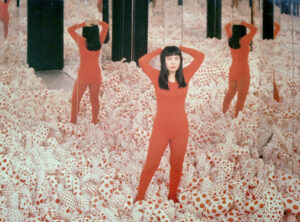
And while many spaces are utilizing immersive technology to revamp older works, ambitious artists are also constructing their own participatory installations. Yayoi Kusama, a Japanese artist, has been creating immersive work since the 1960s. Kusama’s most famous installation, InfinityMirror Room—Phalli’s Field, uses dozens of mirrors to augment the perception of the stuffed polka dot sculptures she created, and because of those mirrors, casts the visitor as the work’s subject.
Chicago offers a variety of immersive art experiences. Just South of Lincoln Park and within close proximity to Optima Signature and Optima Lakeview at Lighthouse ArtSpace, the Van Gogh, and Frida Kahlo exhibits continue to run throughout the summer, transporting visitors into both of the artist’s worlds. Other, more traditional immersive art experiences include the Museum of Illusions, Sky Shows at the Adler Planetarium, the upcoming Museum of Ice Cream exhibit coming to The Shops at Tribune Tower and the Illinois Holocaust Museum’s onging exhbit, The Journey Back: A VR Expeerience.
Scottsdale and Phoenix also offer a variety of engaging installations to choose from. Just walking distance from Optima Sonoran Village is Scottsdale’s Lighthouse Artspace, found in the heart of Old Town Scottsdale, is home to the Immersive Van Gogh and Klimt exhibits scheduled to run through July. Wonderspaces, another extraordinary venue in Scottsdale Fashion Square, features an evolving lineup of interactive installations and signature cocktails.
Immersive art has always been a revolutionary way to interact with different crafts, and thanks to technology, not only is it becoming more innovative but more accessible. With the trend on the rise, there’s sure to be no shortage of immersive art experiences, and we’re excited to see what modernisations come next.
Throughout history, architecture has taken various shapes and forms, influenced by the rich context that surrounds each creation. As technology advances and philosophies continue to evolve, so do the characteristics of architecture and its landscape. Today, we’re feeding our curiosity about a fresh vision for the future of architecture that embraces the decentralized principles of Web3, the construction of digital landscapes in the Metaverse.
The Metaverse
Coined by American author Neal Stephenson in his 1992 novel Snowcrash, the Metaverse was conceived as the successor to the Internet and establishes Stephenson’s vision of what a digital world in the near future resembles. Today, the Metaverse is broadly defined as a fully-realized digital world that exists beyond the analog world we live in and refers to a variety of virtual experiences, environments and assets.
While the Metaverse is a far-reaching landscape, the freedom and encouragement to creatively innovate leaves everyone, from amateur designs to adept architects, an enormously untapped environment to build new worlds.
What Architecture Looks Like in the Metaverse
Architecture in the Metaverse exhibits everything from fully-realized cities to intimate digital houses to virtual furniture pieces. Since the Metaverse is decentralized, meaning no one person or entity has control over the network, users have the ability to shape their 3D surroundings in any way imaginable.
The majority of the digital creations in the Metaverse exist as NFTs, or non-fungible tokens, which certifies them as totally unique, in turn assigning them value. While NFTs are more generally associated with digital assets such as images, GIFs, songs and videos, they can also include forms of digital architecture, artwork and even land.
In March 2021, Krista Kim sold the Metaverse’s first NFT-backed digital home, Mars House. Designed entirely by Kim, the virtual design which overlooks a mountain range mirrors her philosophy of meditative design. Color gradients ranging from fuchsia to turquoise fill the open-plan design and help characterize the house as a ‘light sculpture’ as Kim defines it.
Other famous architectural designs in the Metaverse include Andrés Reisinger and Alba de la Fuente’s modernist Winter House, Bjarke Ingels Group’s Viceverse office space and Zaha Hadid Architects’ virtual city, Liberland Metaverse.
Although fully digitized, architecture in the Metaverse is created with the same inspiration used in the construction of traditional architecture. And as the world and architectural landscape continue to change around us, more and more designers and architects will continue to find opportunities in virtual landscapes, constructing digital assets with a similar passion, vision and thoughtfulness found in the designs that surround us here on Earth.