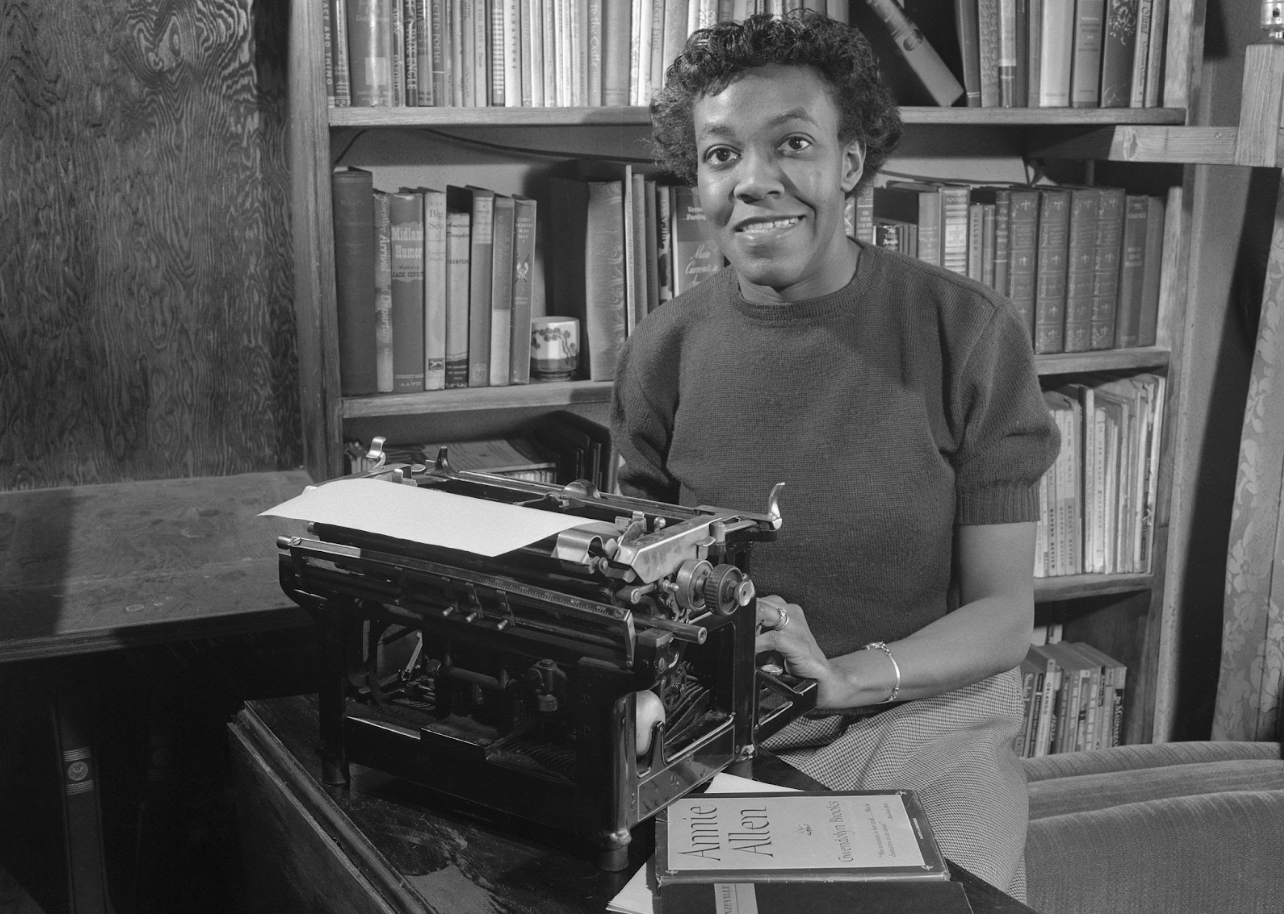
Great Chicago Writers: Gwendolyn Brooks

It’s always a pleasure to talk about literary giants with Chicago roots who have had profound impacts on both local history and the broader literary world. It goes without saying that no conversation about Chicago greats could happen without exploring the life and work of the legendary Gwendolyn Brooks.

Born in Topeka in 1917, Brooks relocated to Chicago while still an infant. The city’s pulsating cultural heartbeat and intricate socio-political fabric soon formed the canvas for her poetic masterpieces. Behind her ambition stood her parents: her father, a janitor with dreams of becoming a doctor, and her mother, a schoolteacher and a classically trained pianist. Both supported Gwendolyn’s passion for reading and writing.

By the age of 13, Brooks had already marked her literary beginnings, publishing her first poem, “Eventide,” in American Childhood. Her poetic prowess grew from there, and by 17, she became a regular contributor to the Chicago Defender. After her time at junior college and a stint working for the National Association for the Advancement of Colored People (NAACP), Brooks further refined her craft in various poetry workshops and alongside Chicago literary peers, Richard Wright and Langston Hughes. This diligent nurturing of her talent culminated in her first poetic collection, A Street in Bronzeville, in 1945.
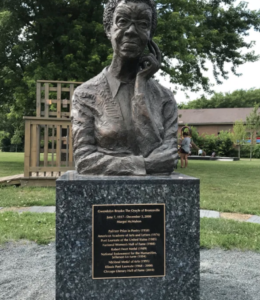
Gwendolyn Brooks: The Oracle of Bronzeville Monument found in Brooks Park

Brooks’s identity as an influential African American poet, author, and educator is underscored by her portrayal of the day-to-day challenges faced by African Americans. Her poetry and prose traversed a spectrum of themes – from intimate personal experiences to the African American quest for justice and recognition.

Gwendolyn’s vast literary repository boasts significant works. A Street in Bronzeville (1945) offers insights into urban Black life in Chicago. Annie Allen (1949) is a poignant exploration of a young Black girl’s journey to womanhood, and it also made Brooks the first Black poet to win the Pulitzer Prize in 1950. Maud Martha (1953), her only novel, depicts the complexities of prejudice from both white people and lighter-skinned African Americans. In 1960, she wrote The Bean Eaters, showcasing her evolving poetic style and featuring the renowned We Real Cool. Over the course of her career, Gwendolyn Brooks authored over 20 poetry collections.
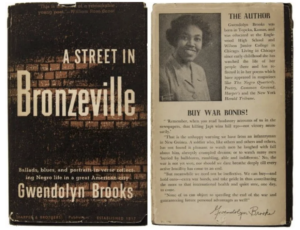
A Street in Bronzeville, Gwendolyn Brooks, 1945

She also garnered numerous honors, including the establishment of the Gwendolyn Brooks Cultural Center at Western Illinois University in 1970 and her appointment as Illinois’s poet laureate in 1976. Several schools have been named in her honor, reflecting her enduring impact on education. In 1985, she was appointed Consultant in Poetry to the Library of Congress. The centenary of her birth in 2017 was celebrated with special events, reinforcing her lasting literary influence.

Interested in delving deeper into Gwendolyn Brooks’ literary world? Explore her expansive collections available on the Poetry Foundation.
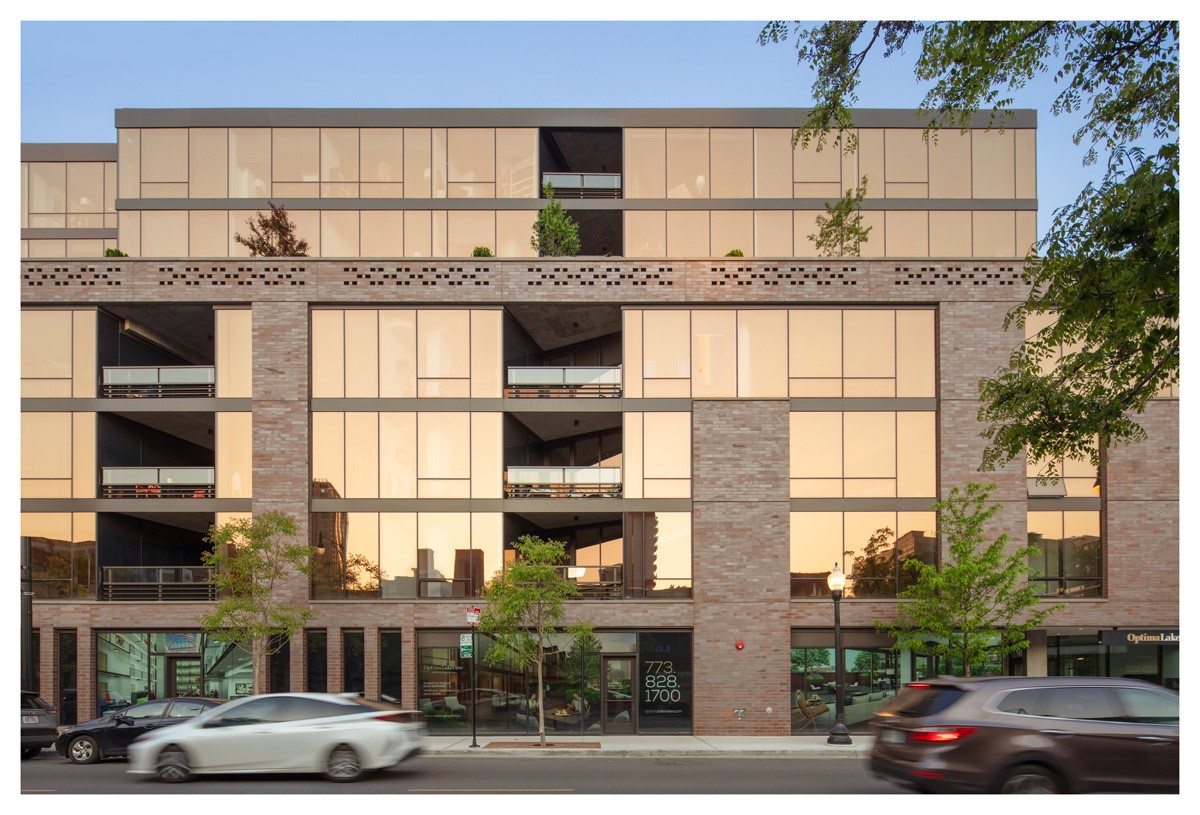

Optima and the 2023 Chicago Marathon: A Neighborhood Affair

The 2023 Bank of America Chicago Marathon has come and gone, but its legacy endures. It’s no longer about the anticipation; it’s about reflection and reveling in the history set onto Chicago’s streets.

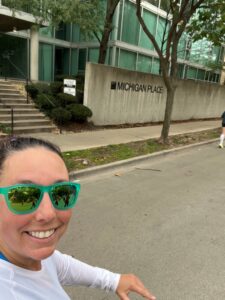
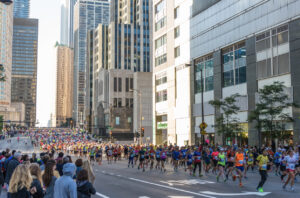
The marathon looped through 29 emblematic neighborhoods, each revealing its distinct character and vibrancy. Beginning in Grant Park, the race stretched as far north as Wrigleyville before heading back south past the United Center and the Illinois Institute of Technology and finally up Michigan Ave to the finish line. The streets came alive as residents and fans cheered throughout each of Chicago’s neighborhoods, showcasing the city’s passionate spirit. Notably, at various milestones of the course, Optima’s architectural marvels illuminated the route. Racers passed by Optima Signature & Optima Chicago Center at the initial mile, were given a mid-race boost past Optima Lakeview at mile 8, and, as the finish line beckoned, Michigan Place at mile 22 offered a familiar cheer.

A worm’s-eye view of Optima Signature, which marathon participants passed in the first mile of the run

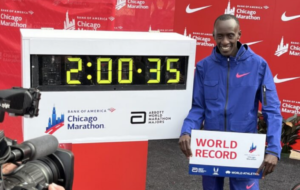
This year’s marathon wasn’t just another race. It made global headlines. Kelvin Kiptum clinched a new world record for men, finishing in a swift 2:00:35. Sifan Hassan’s debut on U.S. soil couldn’t have been more impactful as she set a new women’s course record with a time of 2:13:38. Marcel Hug and Catherine Debrunner also both set course records in wheelchairs, showcasing the Marathon’s inclusive spirit.

Kelvin Kiptum standing next to his world record time

Closer to home, we burst with pride as Optima’s very own Marketing Director, Ali Burnham, took to the streets, blending personal determination with Optima’s ethos of community involvement. 

Optima’s Marketing Director, Ali Burnham, spotted Michigan Place on the 22nd mile of the marathon route

The 2023 marathon underscores what we’ve always believed — Chicago is a city of unparalleled spirit and energy. And at Optima, we’re committed to embedding ourselves within the heartbeat of Chicago’s most iconic events. For our residents, events like these are not distant spectacles, but neighborhood affairs. The Chicago Marathon exemplifies this, turning morning routines into once-in-a-lifetime viewing opportunities.

Get Ready to Watch the Chicago Marathon

Autumn in Chicago isn’t just about the crisp air, colorful leaves, and pumpkin-spiced everything. It’s also about the thrilling sound of thousands of feet pounding the pavement, as the city gears up for the iconic Bank of America Chicago Marathon. For our residents at Optima Signature and Optima Lakeview, this October isn’t just any other month; it’s a front-row seat to one of the world’s premier running events.

Circle Sunday, October 8, 2023, on your calendar. The marathon unfolds in Grant Park, with gradual starts ensuring smooth sailing. For those not racing, join the celebration at Abbott 27.2 Fest from 9:30 a.m. until 4 p.m. near the start line for a day full of music, food and fun. While Grant Park’s start and finish zones have some viewing restrictions, the race course offers numerous sweet spots for spectator cheering and encouragement.

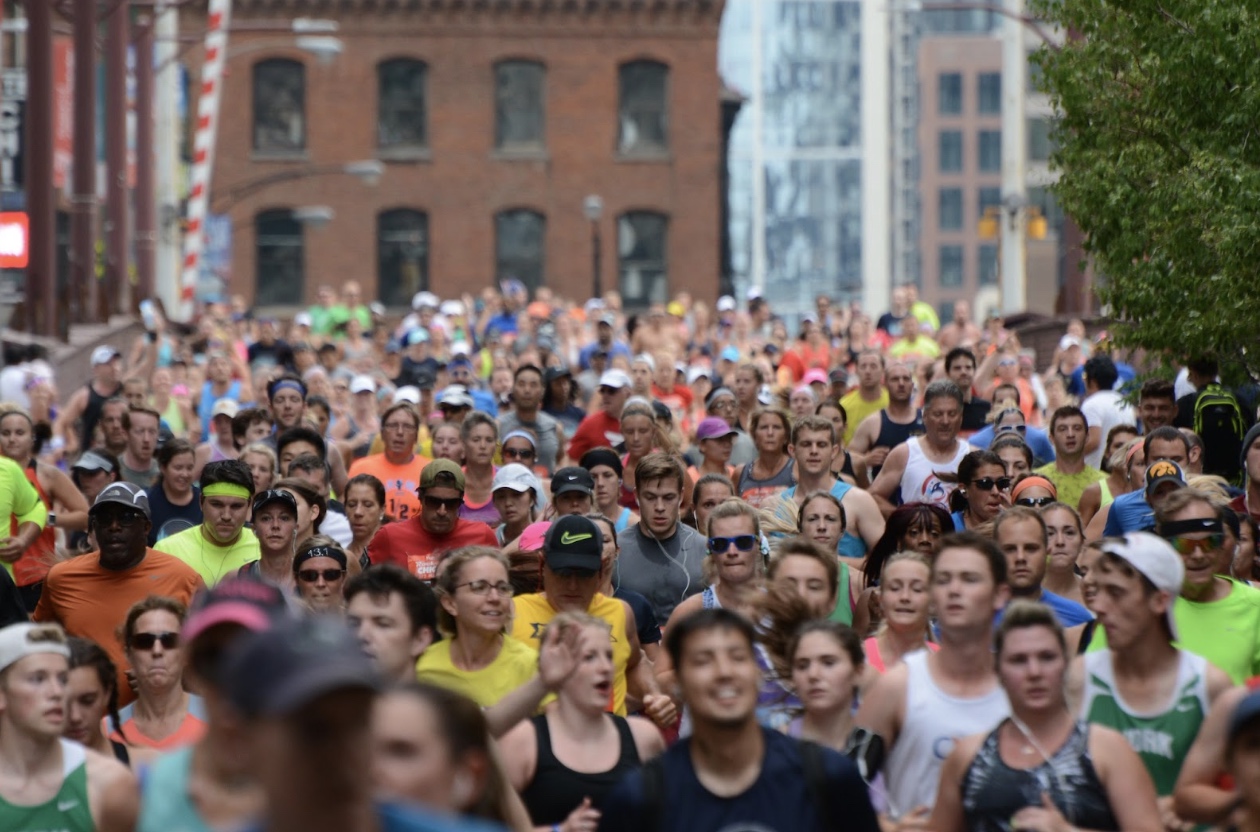
The first mile of the marathon, Image via Flickr by Paladin27

The annual footrace is truly a global gathering, where more than 45,000 runners from every state in the U.S., and over 100 countries worldwide come together. Taking the runners on a grand tour, the 26.2-mile route dives deep into the city’s heart, stretching from Wrigleyville to the North, Pilsen and Little Italy to the West and the historic Douglass, near Guaranteed Rate Field, to the South. 

The prestigious event is more than just a marathon; it’s one of only six World Marathon Majors across the globe. For Optima Signature and Optima Lakeview residents, you have the privilege of stepping right outside to cheer on the incredible racers. And for the Optima Verdana community, consider making the short trip down from Wilmette. It’s a spectacle you won’t want to miss. You can find more details about the iconic event here!

Great Chicago Writers: Jane Addams

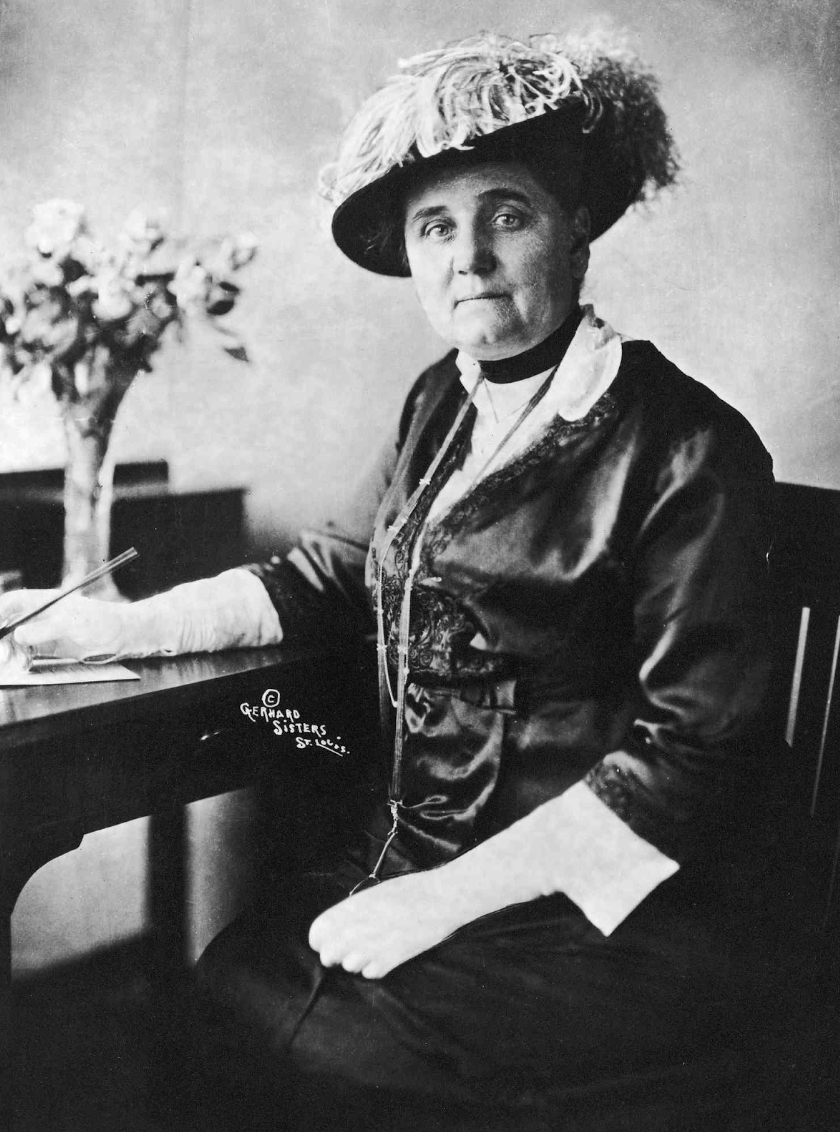
It’s such a pleasure spotlighting legendary Chicagoans who have left a lasting impression on our local history and beyond, including the twentieth-century icon, Jane Addams.

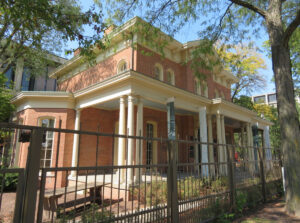
Born in 1860 in Cedarville, IL into a prosperous family, Because Addams’ family allowed her to benefit from education from an early age, she was able to graduate from the Rockford Female Seminary. Later, Addams traveled to Europe, where she was introduced to London’s Toynbee Hall, a trailblazing settlement house that worked to address the causes and impacts of poverty in the city’s East End. Her visit to Toynbee Hall left a lasting impression, paving the way for her co-founding Hull House in Chicago in 1889 — one of the earliest settlement houses in the U.S. that has become the Jane Addams-Hull-House Museum at the University of Illinois-Chicago campus.

Hull House offered educational and social services to immigrants and Chicago’s underserved communities, positioning Addams as a leader of the Progressive Era. Her advocacy spanned a multitude of diverse causes: women’s rights, peace, public health, and broad-spectrum social reform. In recognition of her contributions, Addams was honored as the first American woman to receive the Nobel peace prize in 1931.

Jane Addams-Hull-House Museum. Photo: Sean Marshall

Her experiences at Hull House — and with the Progressive movement more broadly — set Addams on her trajectory as a gifted writer. Her writing career was already in full throttle in 1909 with the release of The Spirit of Youth and the City Streets, which shared Addams’ keen understanding of the unique needs of urban youth. She used the book to advocate for enhanced recreational spaces and deeper engagement for Chicago’s underserved young people, while illuminating the dire consequences of growing up in an environment where poverty and lack of access to a better quality of living prevail.

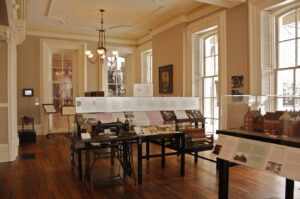
Having found an audience for her explorations of daily life in Chicago, Addams published Twenty Years at Hull-House in 1910, giving readers a look at life inside the settlement house and its impact on the community. 

Inside the Hull House. Photo: At Home in Chicago

The Long Road of Woman’s Memory, which Addams’ completed in 1916, is another exceptional factual account of her expansive impact on women’s rights in America. In it, she gracefully navigates the terrain of personal and collective memories to demonstrate their influence on women’s lived experiences and the larger tapestry of history.

Over the course of her career, Jane Addams authored 11 books and hundreds of essays, editorials, and columns. And more than a century later, the resonance of Addams’s literary contributions remains undeniably profound, echoing through time into our modern world. 

Keen on exploring Addams’ legacy further? Then enjoy a visit to the Jane Addams-Hull-House Museum. The hours of operation are 10:00am to 4:50pm, Tuesday to Friday, and on Sundays from 12:00 to 4:50pm. A suggested donation for admission is $5 per person (University of Illinois Chicago faculty, staff, and students are granted complimentary entry).

Visit the Shakespeare Garden at Northwestern University

With Optima’s passion for having nature within reach, it’s no wonder that we are drawn to sumptuous gardens in and around the communities where we build. Imagine our delight in discovering the Shakespeare Garden on the Northwestern University campus, with its rich mix of history and modernity.

Planted in 1917, the Shakespeare Garden has had its home on Northwestern’s Evanston campus for over a century. Emerging from the vision of The Garden Club of Evanston members, it was crafted both as a wartime gesture of solidarity with Britain and to commemorate the 300th anniversary of Shakespeare’s passing.

Measuring 70 by 100 feet, this garden sits just north of the Frank W. Howes Memorial Chapel, bordered by hawthorn hedges that create an intimate haven. As you enter, the garden reveals a curated collection of flora mentioned in Shakespeare’s works. From fragrant lavender and vibrant marigolds and daffodils in Winter’s Tale, to the rosemary and pansies in Hamlet.

Jens Jensen, the illustrious Danish-American landscape architect, brought this garden to life. Known for his influential works on Chicago’s West Side, including Garfield Park and Columbus Park, Jensen took inspiration from Sir Francis Bacon’s essays on gardens. On entering the Shakespeare Garden, you are greeted by two Hawthorn trees, symbolic bridges between the Prairie and the garden. These trees, along with the foundational hawthorns that germinated from French seeds, have stood the test of time, providing a consistent backdrop to this historic site.

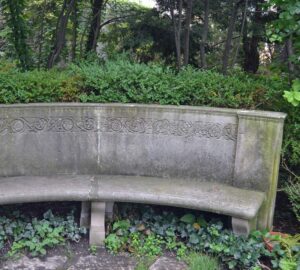
Elizabethan-style stone bench. Photo: In Memoriam mmmmarshall

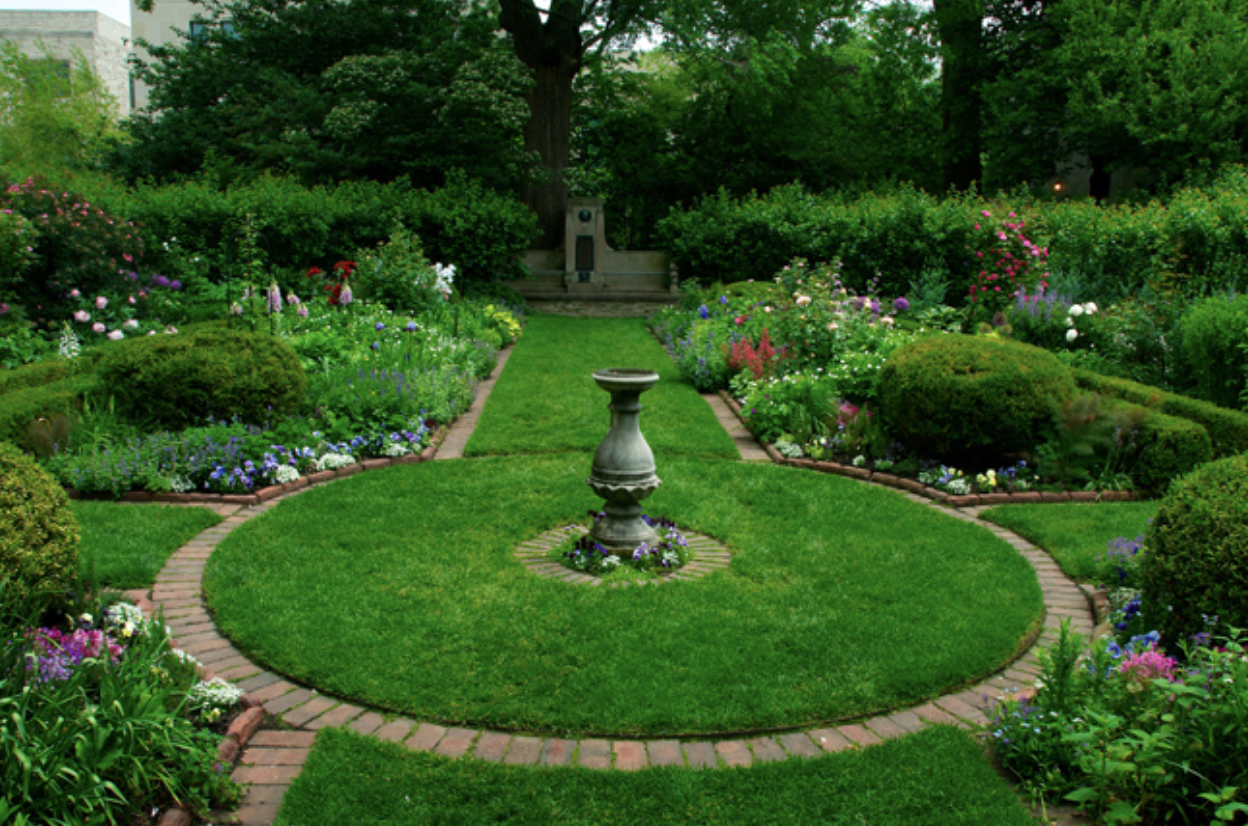
Over the decades, the Shakespeare Garden has seen numerous enhancements. In 1929, an Elizabethan-style stone bench and a captivating fountain became part of this serene landscape. The fountain, a generous donation by architect Hubert Burnham, showcases a bronze relief of Shakespeare’s visage crafted by the French-American sculptor, Leon Hermant. Further augmentations followed, including the addition of a sundial in 1990 and later, a reshaping of the garden’s layout based on the recommendations of the English garden designer, John Brookes.

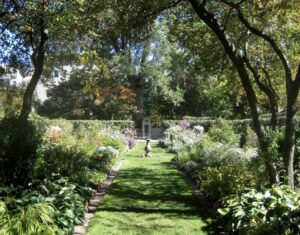
Hawthorn Trees in Shakespeare Garden. Photo: Wikipedia Commons

Brookes’ suggestions, which included moving the sundial to the garden’s center and adding antique brick edging, have given the garden a touch reminiscent of traditional English gardens. This shift also marked the garden’s evolution from a knot garden to a more fluid, perennial-focused design.

Northwestern’s Shakespeare Garden is not only a place for quiet reflection but also a venue for countless weddings, tours, and cherished moments. It’s entirely free and open to the public, but special tours and events may have to be scheduled.

Exploring the Mitchell Museum of the American Indian

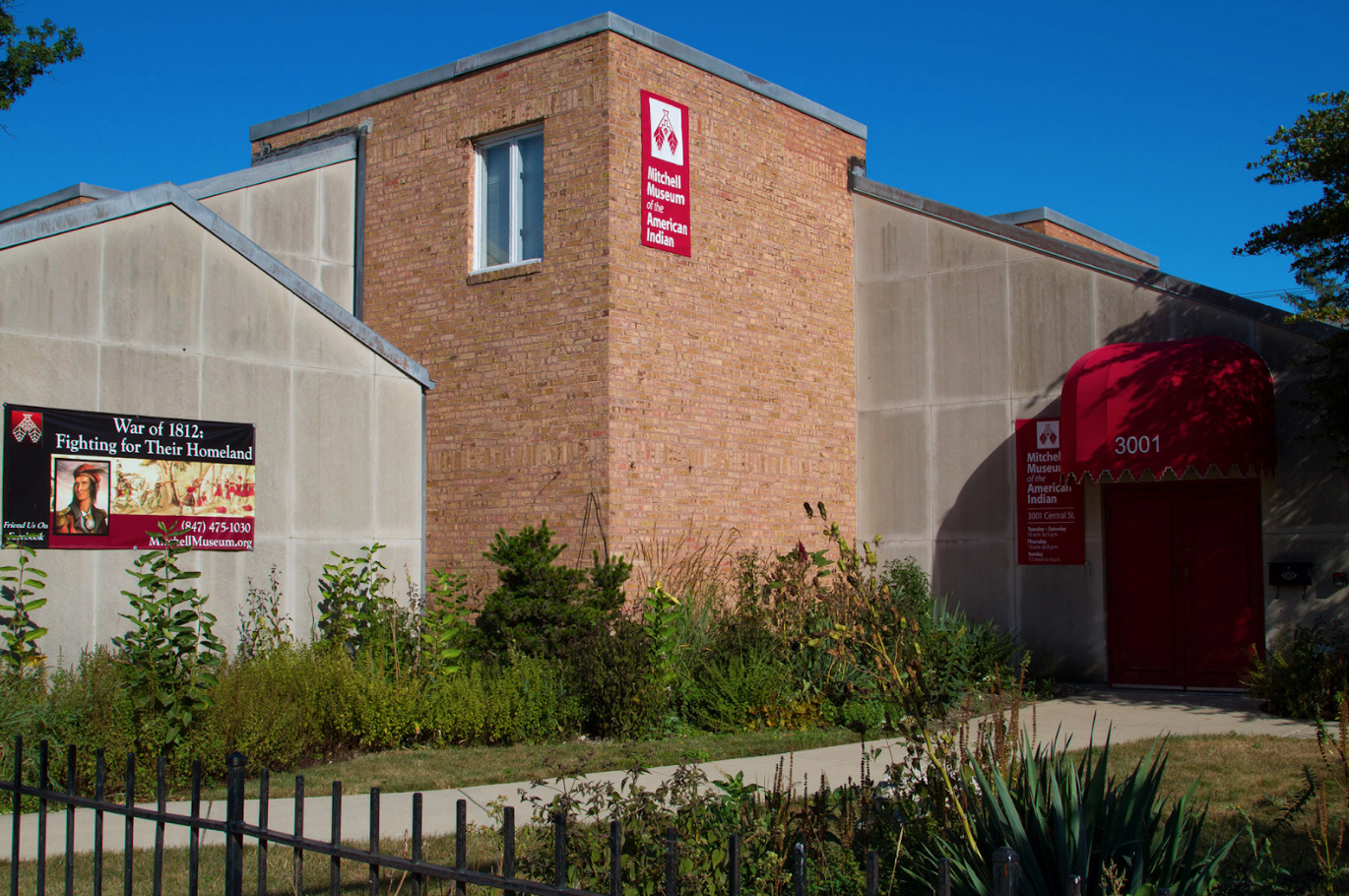
Located in Evanston, the Mitchell Museum of the American Indian is a testament to the deeply entrenched histories and cultures of North American indigenous peoples. For Optima Verdana® and Optima Lakeview® residents, the museum is a treasure trove, making it an ideal destination for a weekend visit or a day of exploration.

At its core, the museum is a dedicated guardian of indigenous cultures, dedicated to preserving the stories, arts, and traditions of the diverse cultures that make up North America’s historical fabric. 

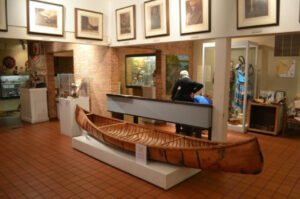
The museum boasts an impressive collection, with artifacts from the Paleo-Indian period to present day. This vast arc of time provides an educational experience for visitors of all ages. For children, it’s a unique opportunity to connect with rich histories through hands-on exhibits, such as the full-sized birchbark canoe in the Woodlands Gallery, that offer tactile experiences that make learning immersive and engaging. Meanwhile, adults can appreciate the deeper nuances and intricate details of indigenous artistry and traditions across various tribes and regions.

Birchbark canoe in the Woodlands Gallery. Photo: Central Street Evanston

As with all great museums, there’s joy and discovery in visiting often. Its collections, encompassing regions from the Woodlands to the Arctic, ensure there’s always something new to discover. whether you’re captivated by the beadwork designs of the Plains or the stone carvings from the Arctic.

The museum is a place to connect, understand, and appreciate a vital part of America’s heritage. With its mix of education, preservation, and continuous innovation, it stands out as a vital cultural destination for all. The Mitchell Museum of the American Indian, is open Monday-Friday from 10am-5pm and Saturday from 10am-3pm. For ticket information, click here.

Highlights Near Optima Verdana®: Green Bay Trail

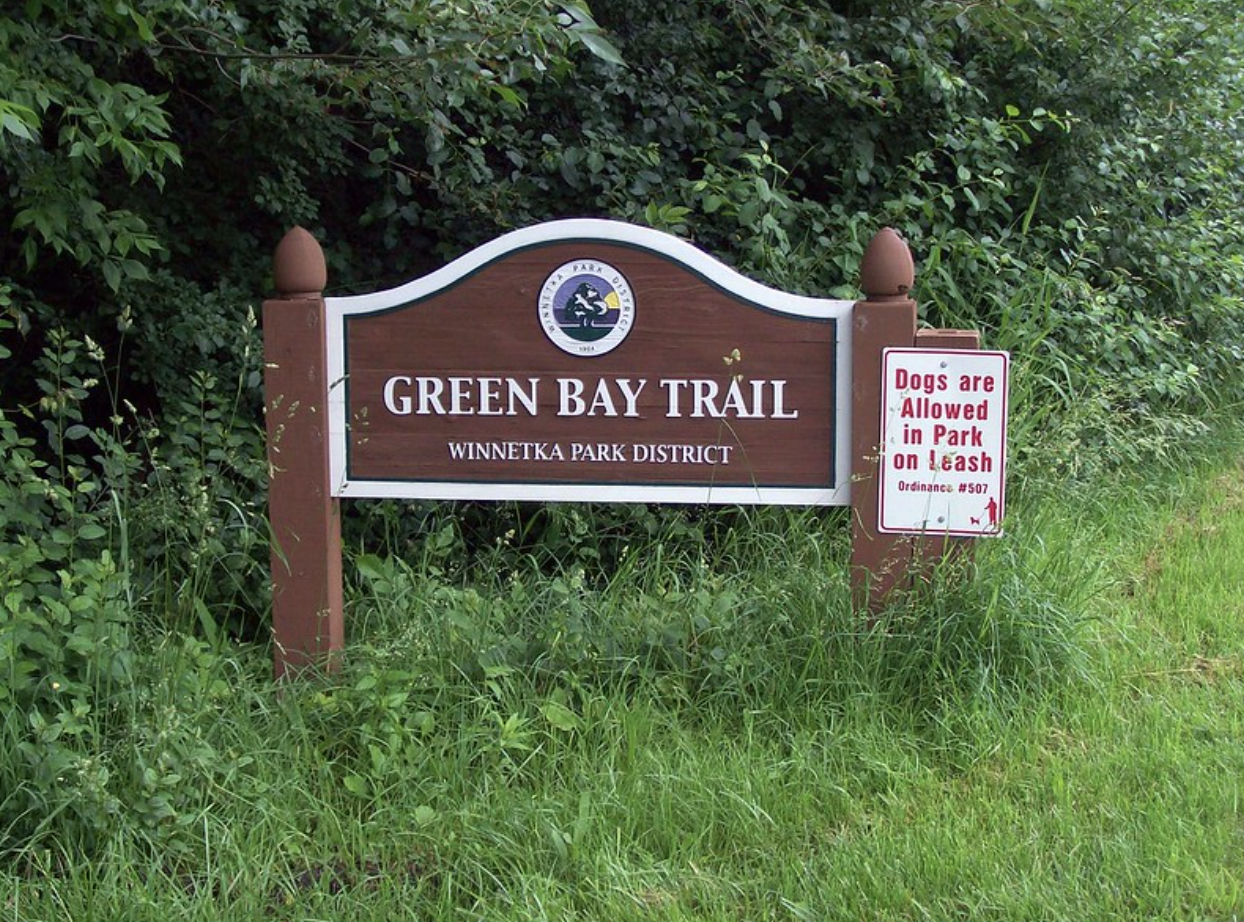
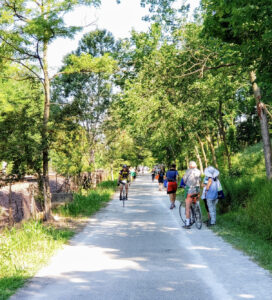
For Optima Verdana® residents who have a penchant for outdoor activities and scenic views, the Green Bay Trail is a must-visit. This 9-mile asphalt and crushed stone trail runs parallel with Chicago’s Metra commuter rail line and weaves through Kenilworth, Winnetka, and Highland Park. Flanked by eateries, shops, parks, and stunning residences, the trail offers a unique blend of nature and urban vibes for bikers and hikers alike!

What’s especially captivating about the Green Bay Trail is its heritage. It stands on what was once the route of the former Chicago, North Shore & Milwaukee electric railroad. Following its path, visitors are essentially retracing the steps of history from downtown Wilmette to Highland Park. Beyond being a route for history buffs, the Trail also provides families with even the youngest of riders a leisurely day out. 

While daily commuters use Green Bay Trail to reach Metra stations, tourists and locals frequent it for recreational purposes to access Starting from Wilmette, you might be immediately captivated by the pristine beachfront atmosphere, juxtaposed beautifully with bustling business districts. And if approaching Highland Park on an early summer evening, you might get a glimpse of the euphoric energy emanating from Ravinia®, one of the region’s most celebrated music venues.

Green Bay Trail. Photo Credit: Illinois Bone and Joint Institute

For those looking to extend the adventure, at the Braeside Metra Station, the trail offers a gateway to the Chicago Botanical Gardens via the North Branch Trail. And for those who conclude their journey at the St. John’s Avenue trailhead, they’ll find a slew of amenities like restrooms, playgrounds, and parks, courtesy of the adjacent rail line. 

Living at Optima Verdana® isn’t just about unrivaled luxury; it’s about experiencing the richness of the community and embracing the outdoors. So, dive deep into history, bask in nature, or simply hit the Green Bay Trail for an invigorating walk or relaxing ride. No matter the season, weather or time of day, new experiences await each and every time.

Exploring The Oak Park Conservatory

We’re always on the lookout for treasured locales to share with our residents, and today, we’ve struck botanical gold. Allow us to introduce you to the Oak Park Conservatory, a lush oasis that’s steeped in history and teeming with life.

Established in 1914, the Oak Park Conservatory has deep roots, beginning as a modest municipal greenhouse. Over the decades, it has grown both in size and reputation, securing its place as one of the premier historical conservatories in the U.S. What makes this conservatory genuinely enchanting, however, isn’t just its venerable age but the myriad plants in its diverse collection.

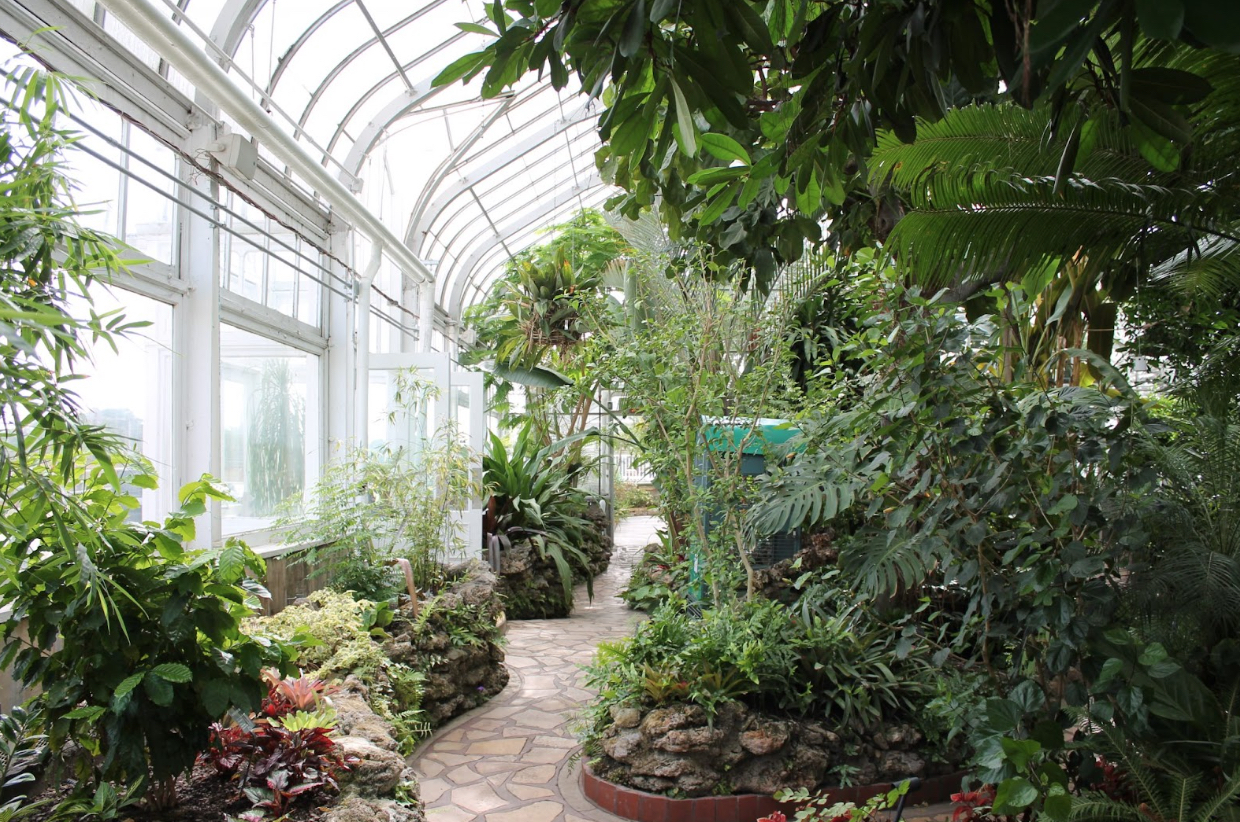
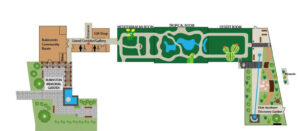
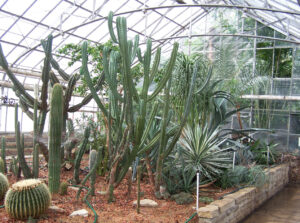
Step inside, and you’re immediately transported across varied climates. The Tropical Room surrounds you with the sights and sounds of a vibrant jungle, where banana trees graze the ceiling, and orchids display their intricate beauty. There’s also the Mediterranean Room, a warm escape filled with olive trees and fragrant herbs, evoking images of sunlit European coastlines. For those fascinated by resilient plant species, the Desert Room offers a captivating exploration of cacti and succulents, each telling tales of survival in some of the planet’s harshest terrains.

Oak Park Conservatory Map

But the Oak Park Conservatory is more than a visual treat. It’s a hub for education and inspiration. For those with green thumbs or even just a touch of plant curiosity, the conservatory hosts workshops and programs throughout the year, ensuring every visit offers something new and enlightening.

Conservation remains at the heart of the conservatory’s mission. Alongside showcasing the beauty of the plant kingdom, it’s dedicated to the preservation of endangered plant species. By emphasizing sustainable gardening practices, the conservatory underscores the vital relationship we share with our environment.

Desert Room. Photo: Park District of Oak Park

While the interior rooms captivate the senses, the conservatory’s outdoor demonstration gardens shouldn’t be overlooked. These plots are more than just pretty spaces; they serve as living examples of sustainable gardening practices, providing invaluable insights for enthusiasts and casual gardeners alike.

The Friends of the Oak Park Conservatory (FOPCON) plays an integral role in the conservatory’s success and vibrancy. This dedicated non-profit organization tirelessly supports the conservatory, championing its value through fundraising, education, and community programs. So, whether you’re a seasoned botanist, a gardening novice, or someone seeking a serene escape, the conservatory promises a journey of discovery. Embrace its rich history, marvel at the beauty of nature, and leave with a renewed appreciation for the botanical world.

Discover The National Museum of Mexican Art

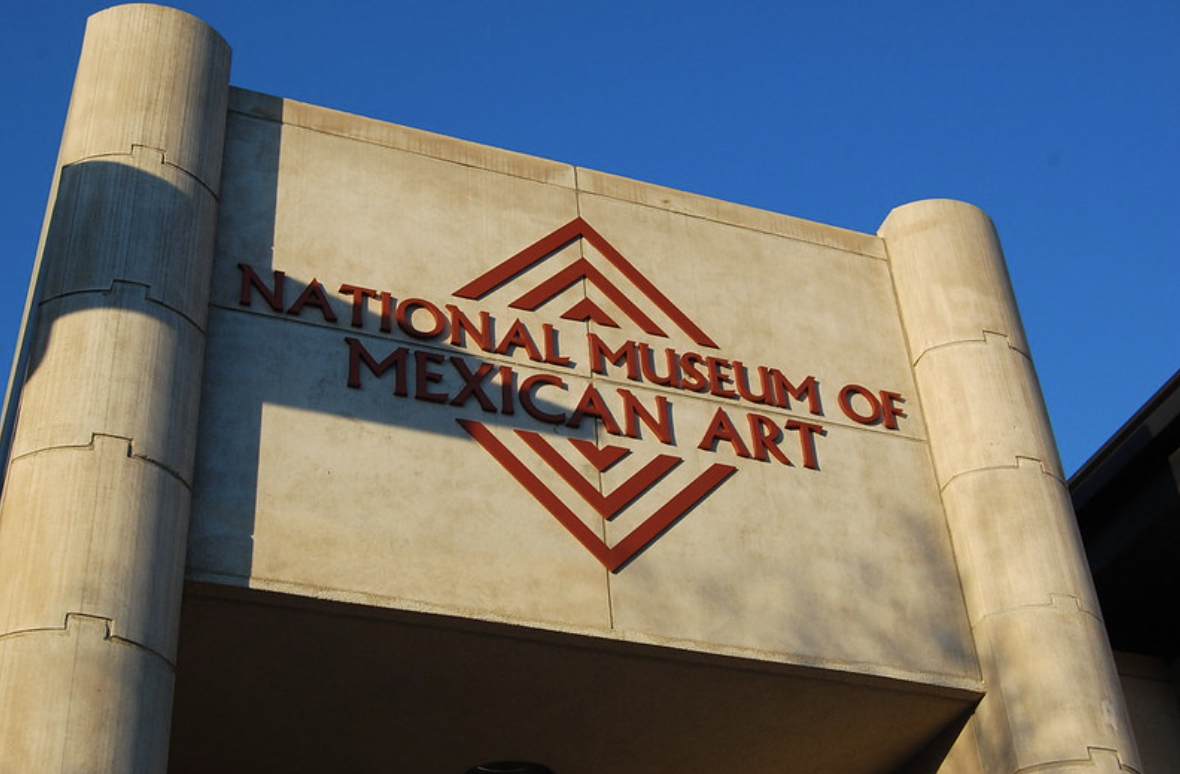
We’re constantly on the hunt for cultural gems to introduce to residents in our communities, so it’s a pleasure to spotlight a cornerstone of Chicago’s vibrant art scene: The National Museum of Mexican Art (NMMA). Situated in the heart of the Pilsen neighborhood, this museum is a testament to the depth, diversity, and dynamism of Mexican culture.

Founded in 1982 by Carlos Tortolero, NMMA emerged from a vision to represent Mexican, Chicano, and Latino arts and culture. Today, it stands as a bridge between Mexico’s past and the evolving identity of Mexican-Americans in the contemporary U.S.

NMMA’s collection is awe-inspiring, boasting over 10,000 pieces spanning 3,000 years. From ancient artifacts to modern-day masterpieces, every corner of the museum narrates tales of creativity, resilience, and passion. Whether you’re captivated by traditional folk art, contemporary sculpture, intricate textiles, or evocative photography, there’s a narrative waiting for you.

One of the standout exhibitions that has become an annual tradition, is the Day of the Dead (Día de los Muertos) showcase. This inspired installation dives deep into the fascinating rituals associated with this revered celebration, presenting art that is reflective and celebratory.


Beaded work, New Awakening, 2003 (detail)
Beaded work, New Awakening, 2003 (detail). Photo: Damian Entwisle, Flickr Creative Commons

The museum is not just about viewing art; it’s an immersive learning experience. With a host of educational programs, workshops, and guided tours, visitors are invited to explore the contexts, histories, and techniques behind the artworks.

Beyond the art itself, the museum’s location in Pilsen, a neighborhood full of Mexican heritage, enriches the experience. The vibrant murals, local eateries, and community events complement a visit to the museum.

As we admire the modern wonders of Chicago, we also treasure the institutions that ground us in cultural richness. Embark on a journey to the National Museum of Mexican Art, and emerge with a renewed appreciation for the beauty and complexity of Mexican art and culture. Best of all, admission is always free. Visit Tuesday through Sunday from 10 am to 5 pm.

Noble-Seymour-Crippen House – Chicago’s Oldest Existing Building

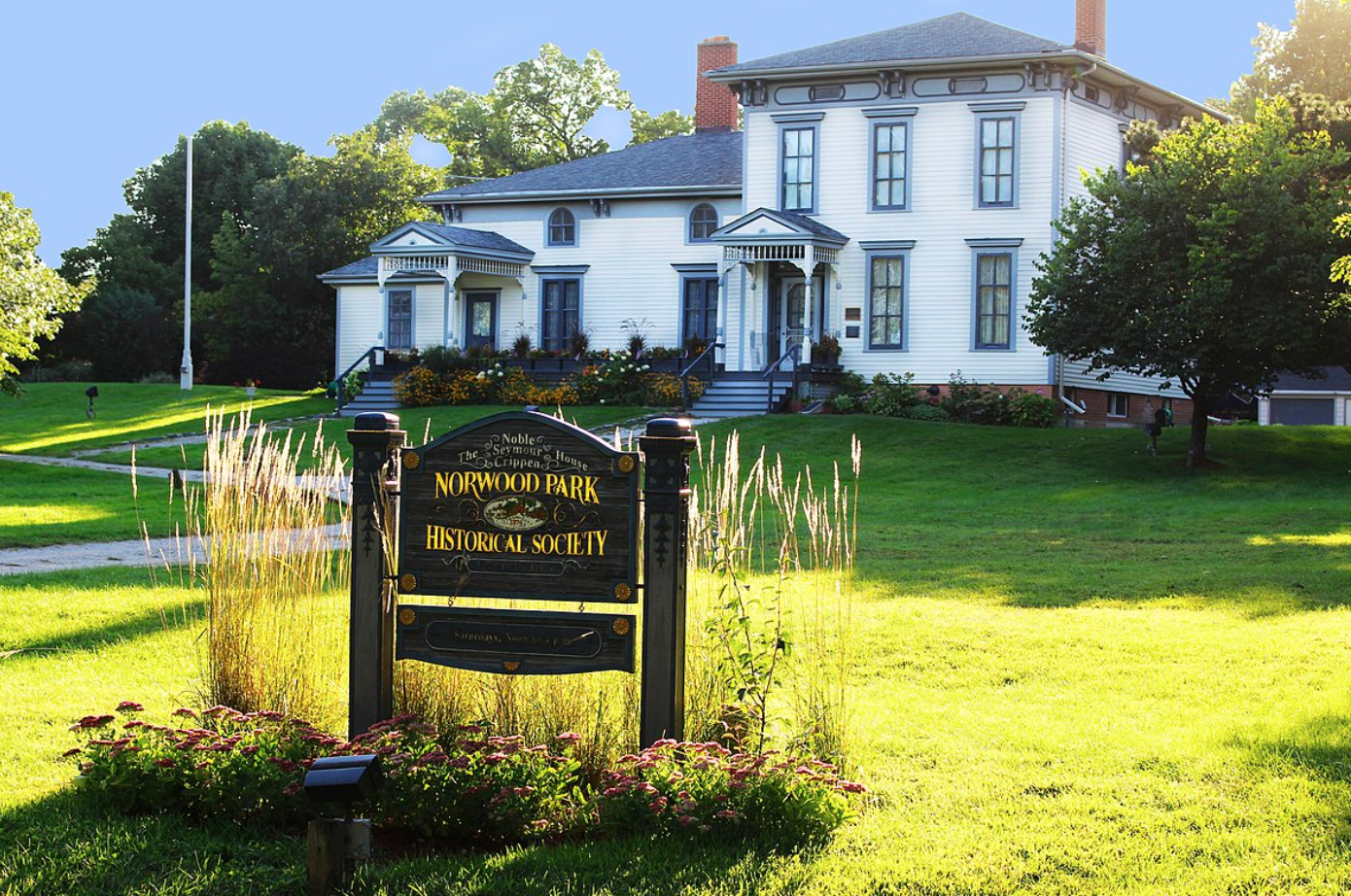
Optima® is always thrilled to illuminate the quiet corners that resonate with historical depth. One such gem, tucked away in the Norwood Park neighborhood, is the Noble-Seymour-Crippen House. More than a mere building, this house is a piece of Chicago’s history, a testament to its rich past and the dreams of its earliest settlers.

The Noble-Seymour-Crippen House, with roots tracing back to 1833, is not only older than the City of Chicago itself but also stands as its oldest existing house. Its age, however, isn’t the only characteristic that makes this house noteworthy. Every brick, beam, window and wall, tells a tale of the city’s journey and the individuals who crafted its narrative.

The residence, initially a modest one-story frame farmhouse, was the brainchild of settler and entrepreneur Mark Noble. However, as Chicago burgeoned, so did the house’s grandeur.

By 1868, Thomas Seymour, its new owner, and a prominent member of Chicago’s Board of Trade, transformed it into a sprawling two-story Victorian haven.

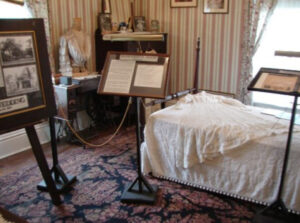
Margaret Crippen’s Bedroom. Photo: Norwood Park Historical Society

Yet, the true distinction of the Noble-Seymour-Crippen House lies in its ties to the city’s pioneers: Mark Noble, Thomas Seymour, and the later contributions of the Crippen family. Each influenced Chicago’s burgeoning tapestry. Their legacies, encapsulated within the house’s walls, serve as a living testament to their contributions.

The house, designated a Chicago Landmark in 1987, is the proud home of the Norwood Park Historical Society, where visitors can go on a historical odyssey through Chicago’s early epochs. Its woodwork, decorative elements, and aura transport you back in time, providing a tangible connection to the city’s origins.

For those who enjoy exploration, the Noble-Seymour-Crippen House isn’t merely a landmark; it serves as a journey, a step back in time during the city’s formative years. As we revel in the grand architectural marvels of today, places like this remind us of our city’s foundation. Next time you find yourself longing for a touch of historical elegance, visit the house, and immerse yourself in another page of Chicago’s vibrant story.

person name goes here

Maintenance Supervisor

Glencoe, IL


    Acceptable file types: *.pdf | *.txt | *.doc, max-size: 2Mb