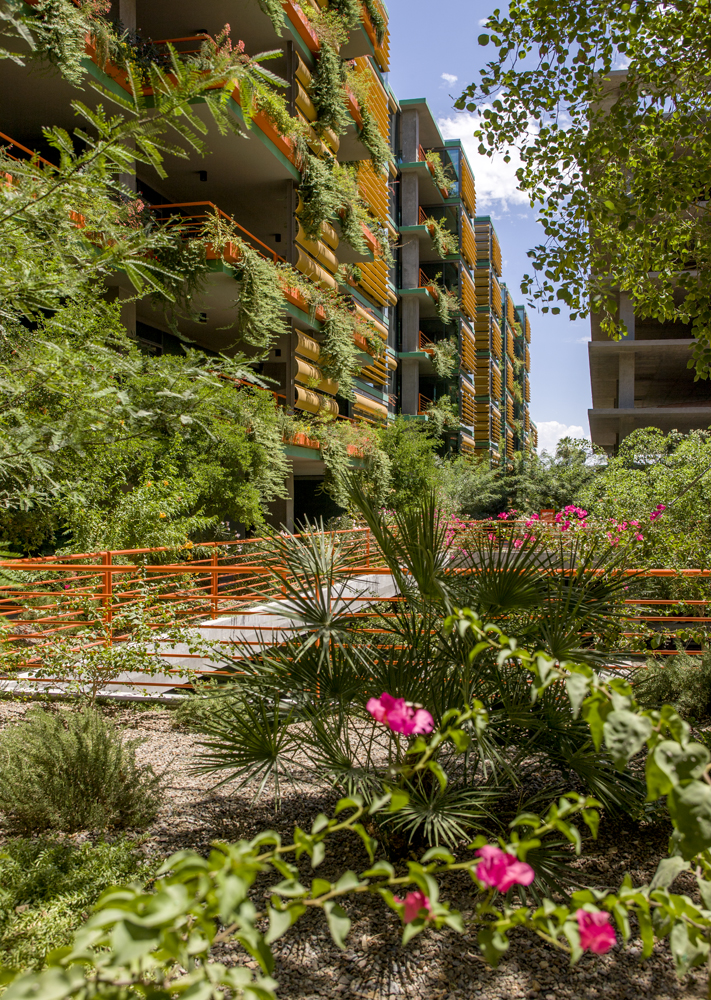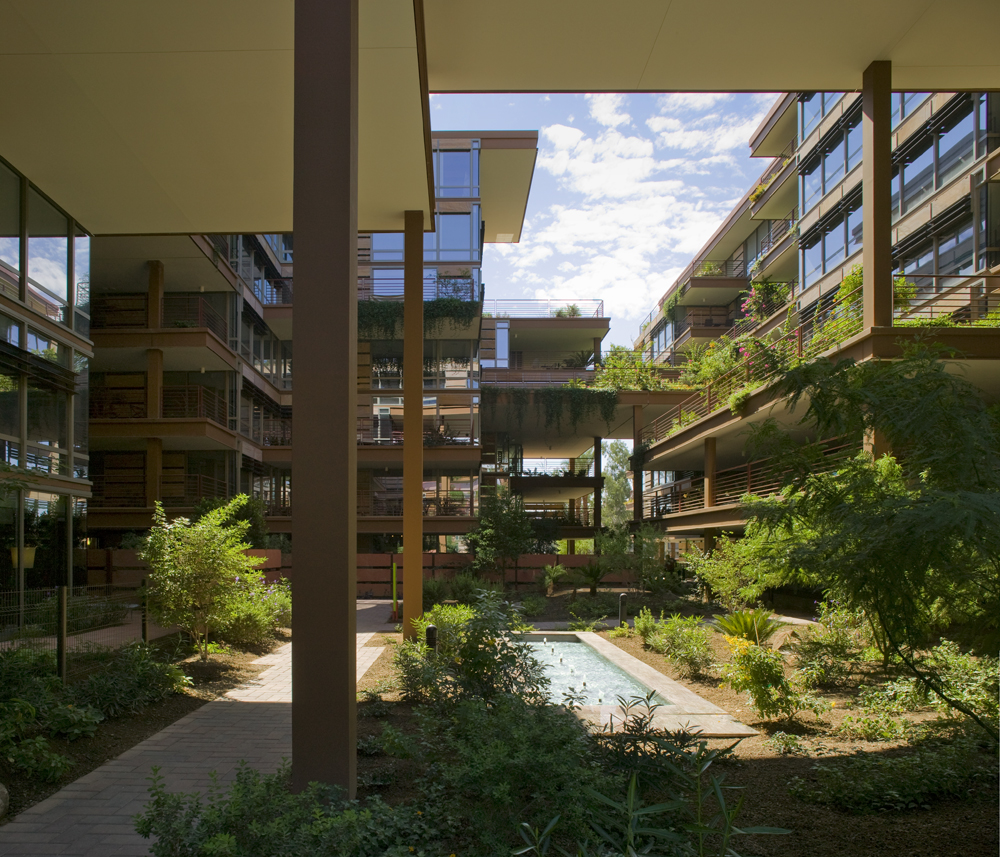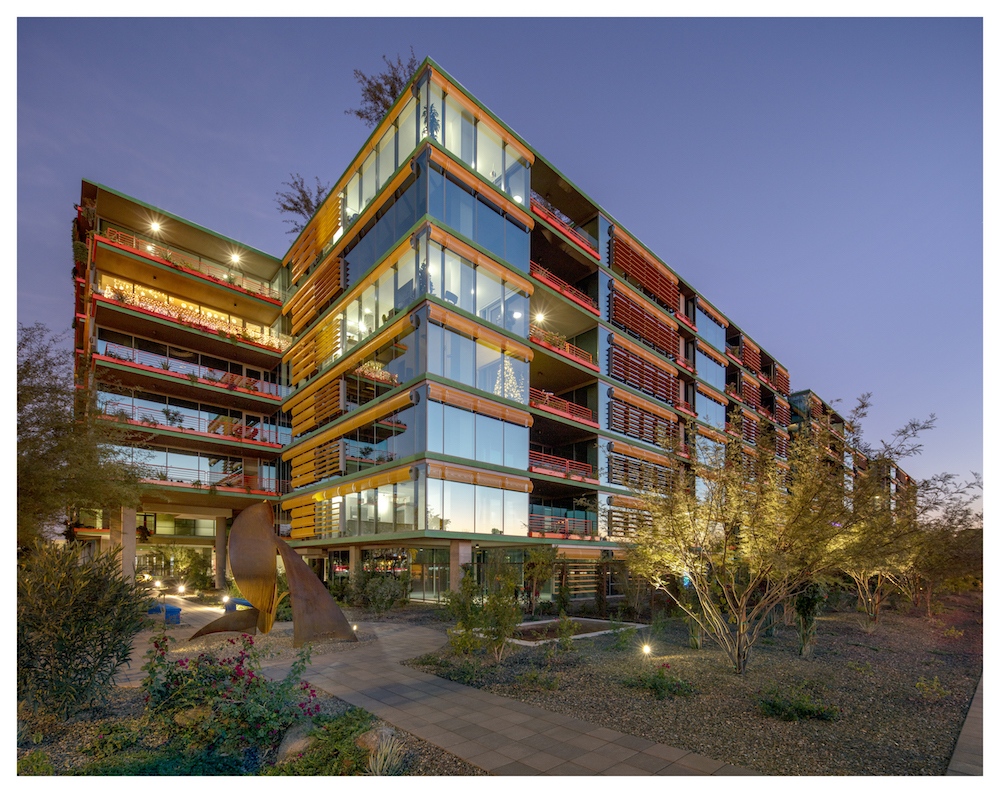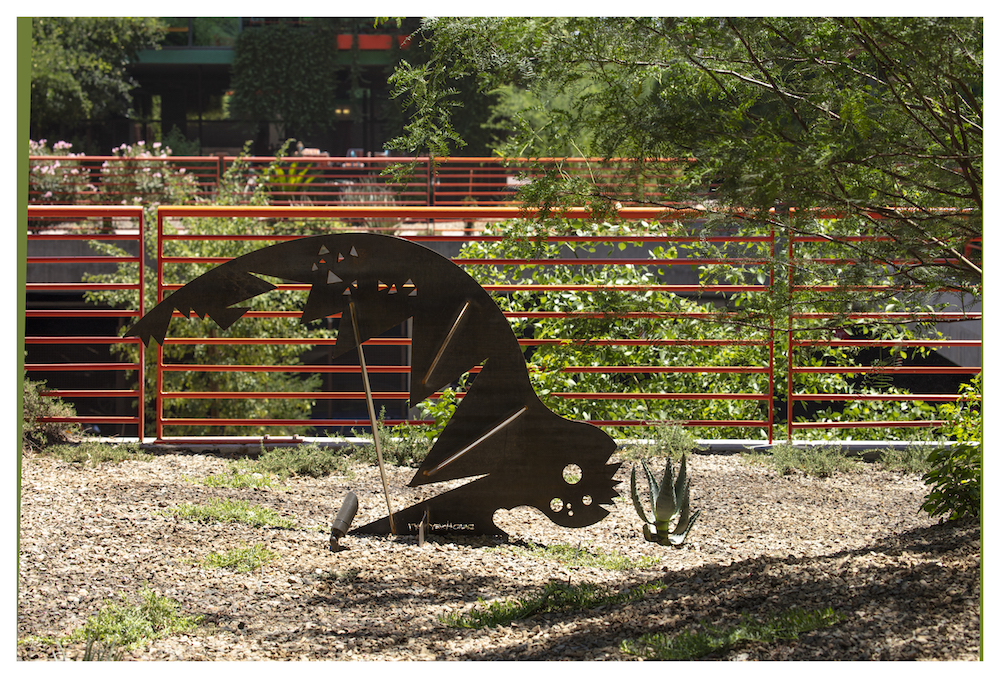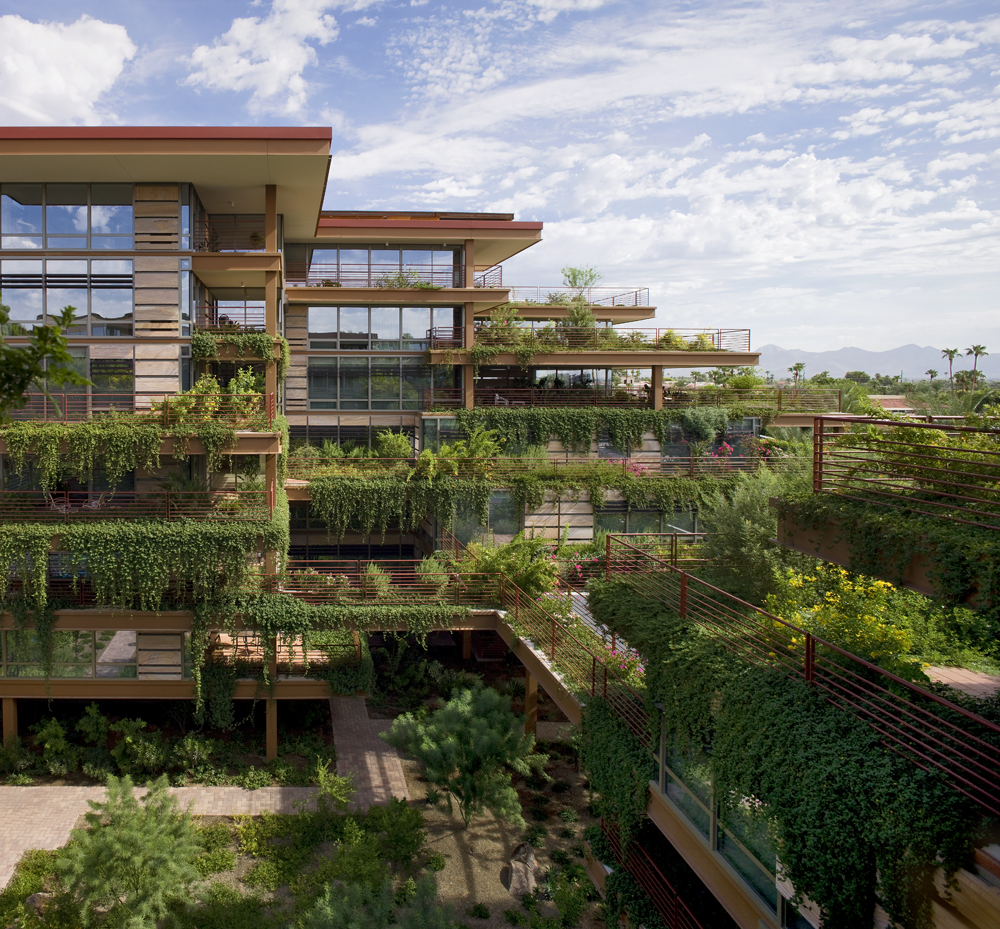
Our Signature Vertical Landscaping System

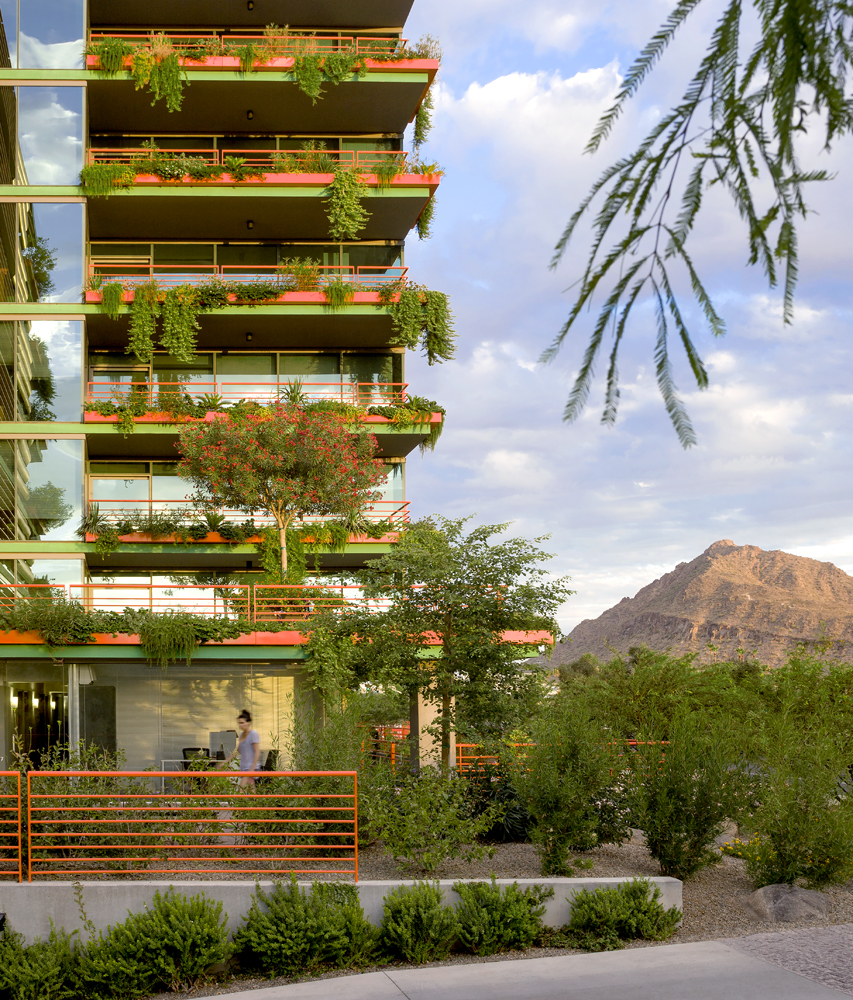
With every project, we ask ourselves how the natural land around us influences, affects and works in tandem with the structures we build. Seeking to holistically integrate the natural and built environments led us to develop our next-generation vertical landscaping system. The lush green element, utilized in many of our Arizona properties, is a cornerstone feature of Optima communities, a key component to our sustainability initiatives and so much more.
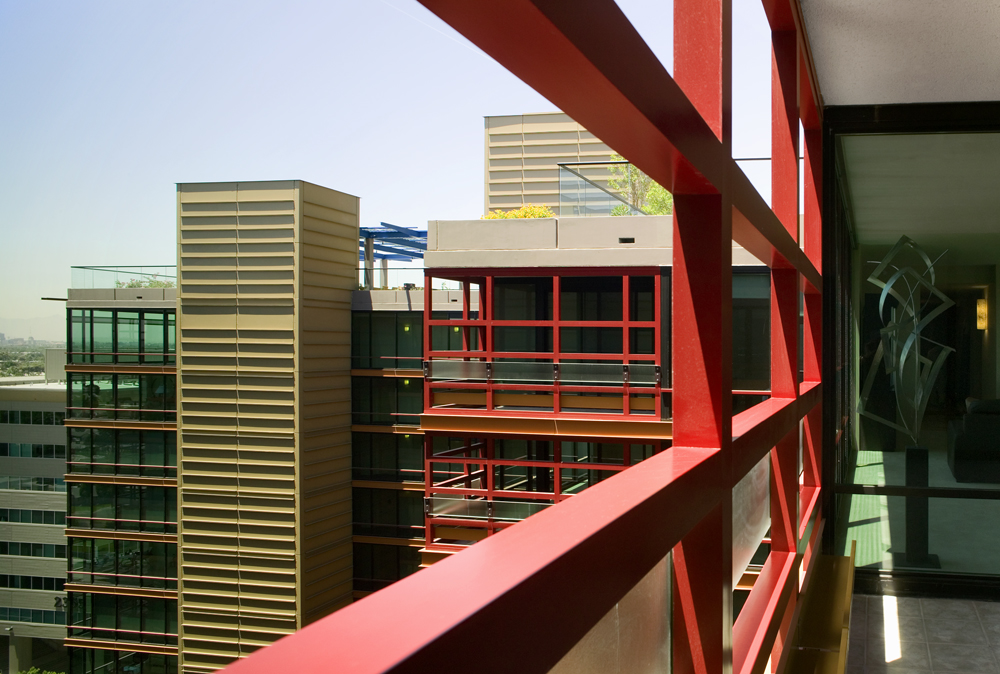
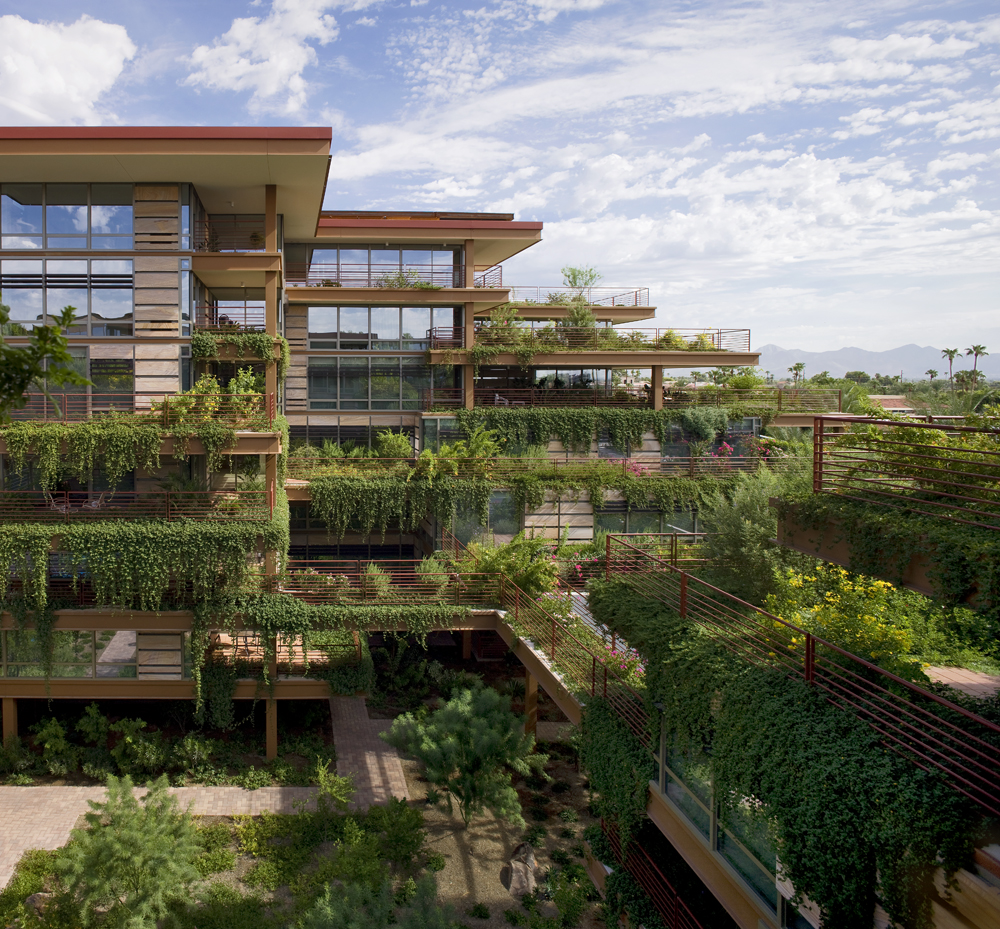
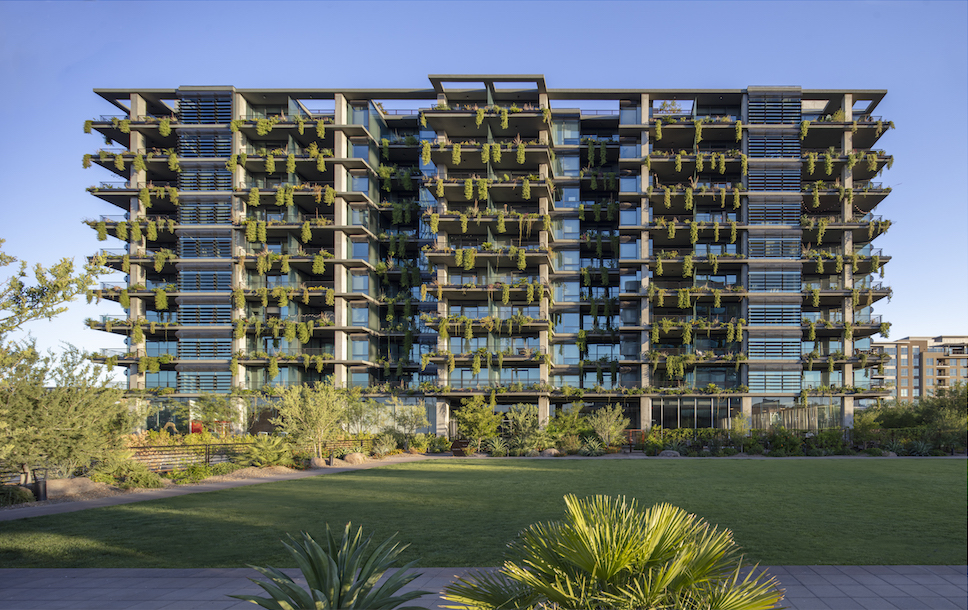
Our signature vertical landscaping system at Optima Kierland Center.
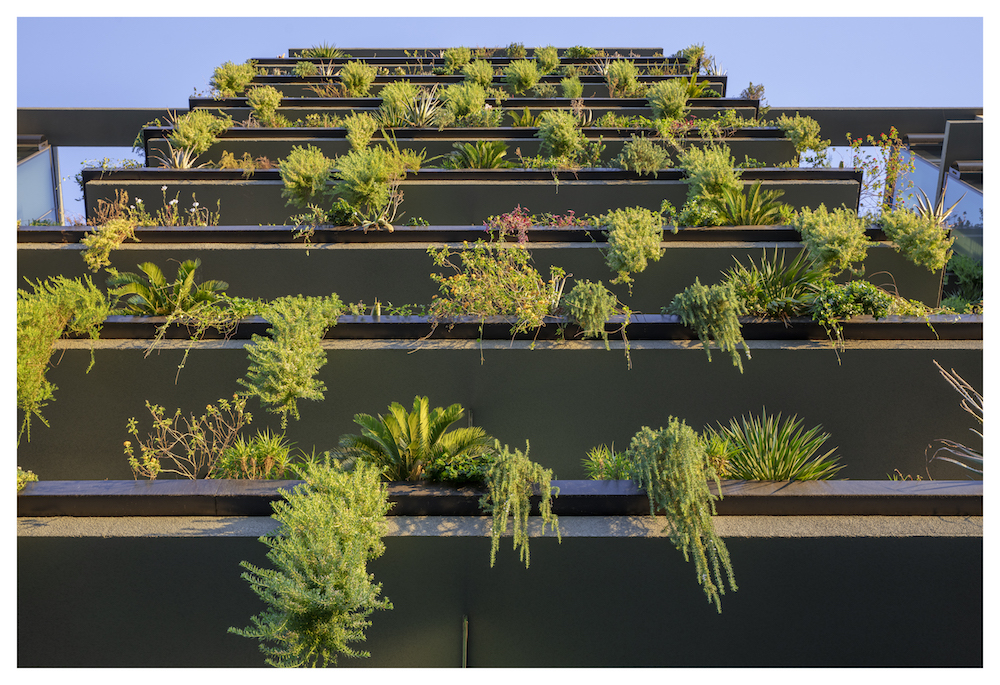
Our signature vertical landscaping system at Optima Kierland Apartments®.

Aesthetic Enhancement

On its surface level, our signature vertical landscaping system serves to enhance the natural beauty of our communities. The lush verdure enables a palette of vibrantly colored plants at the edge of each floor to grow both up and over the edge of the building. This creates beautiful, private terrace gardens for each unit in buildings like Optima Camelview Village, Optima Kierland Center, and Optima Sonoran Village. The intense greenery also plays bold juxtaposition to our building’s facade, where concrete and glass work work in harmony to celebrate the relationship between the built and natural environment, with glass blurring the boundaries between indoor and outdoor, home and garden. 
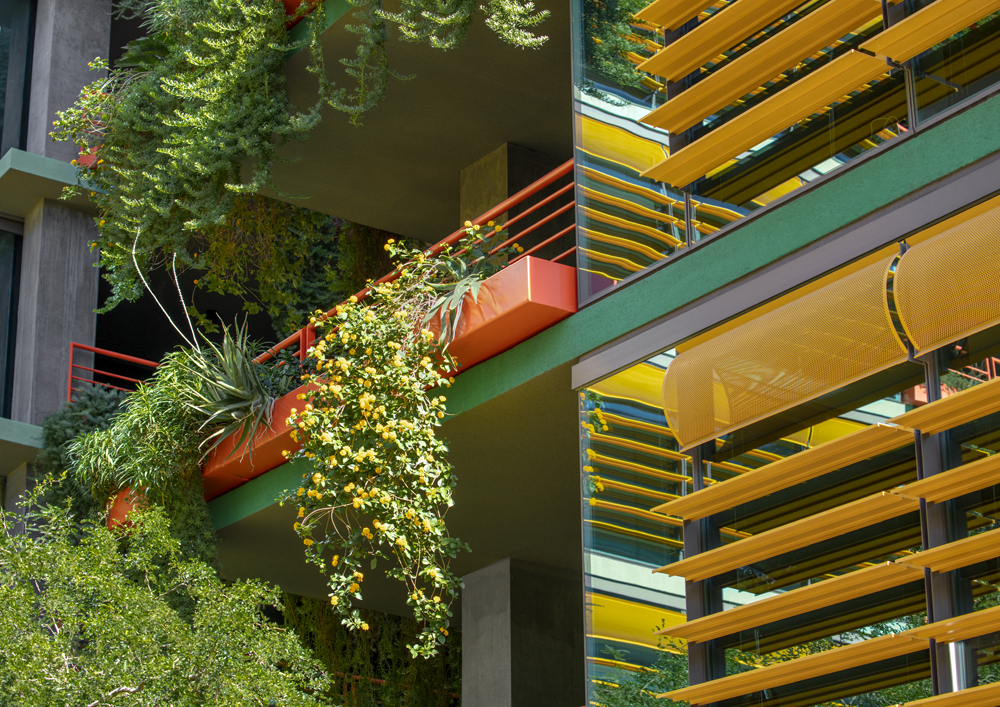
Our signature vertical landscaping system at Optima Sonoran Village.
Our signature vertical landscaping system at Optima Sonoran Village.®

Functional, Sustainable Beauty 

Our signature vertical landscaping system isn’t just for aesthetic value — it plays a crucial role in maintaining a healthy and sustainable environment. The system, with self-containing irrigation and drainage, provides a haven for urban wildlife, promotes evaporative cooling, re-oxygenates the air, reduces dust and smog levels, reduces ambient noise, detains stormwater and thermally insulates and shields residents from the desert sun, all of which contributes to a sustainable urban environment. Residents also experience the direct impact of being surrounded by nature, with the vertical landscaping system serving as a connection to nature and added source of privacy.

Like all good design, our vertical landscaping system is a natural study in form and function. We’re proud to pioneer a system that contributes to the natural beauty of the environment, and helps preserve it, too.
An Inside Look at Architect Lingo, Part II

Our team is joined together by a love of exceptional design so naturally, design is our shared language. From property managers to accountants to architects, we’ve all come to know and love the architect lingo that helps us communicate our passions, our creations and our vision. In celebration — and in follow up to February’s blog we’re sharing Part II of our inside look at architect lingo.

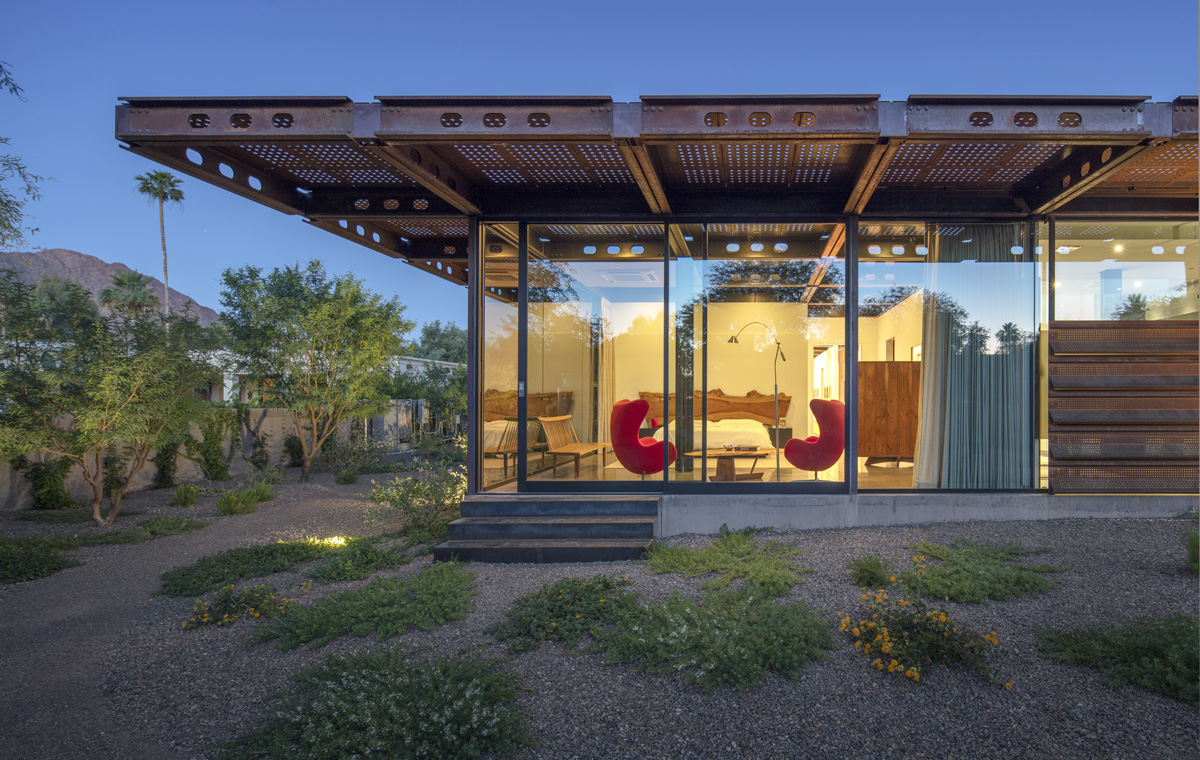
Juxtaposed facade and surrounding landscape at Optima Sonoran Village
Juxtaposed facade and surrounding landscape at Optima Sonoran Village.

Juxtaposition

Juxtaposition refers to the fact of two things being placed close together with a contrasting effect. It’s the intentional creation of, and analysis of, a relationship that brings about exciting new realizations and discoveries, bringing added layers of meaning to each individual object and their relation to one another. 

In architecture, the use of juxtaposition becomes particularly striking, manifesting on a large scale in entire building facades. With everything we build at Optima, we consider the relationship — or juxtaposition — between the built and natural environment. How does each entity influence and illuminate the other to positive effect? In our desert dwellings, juxtaposition occurs between the organic beauty of the arid landscape and the bold, Modernist facade of the houses, built in concrete and glass to intentionally illuminate their counterpart. 

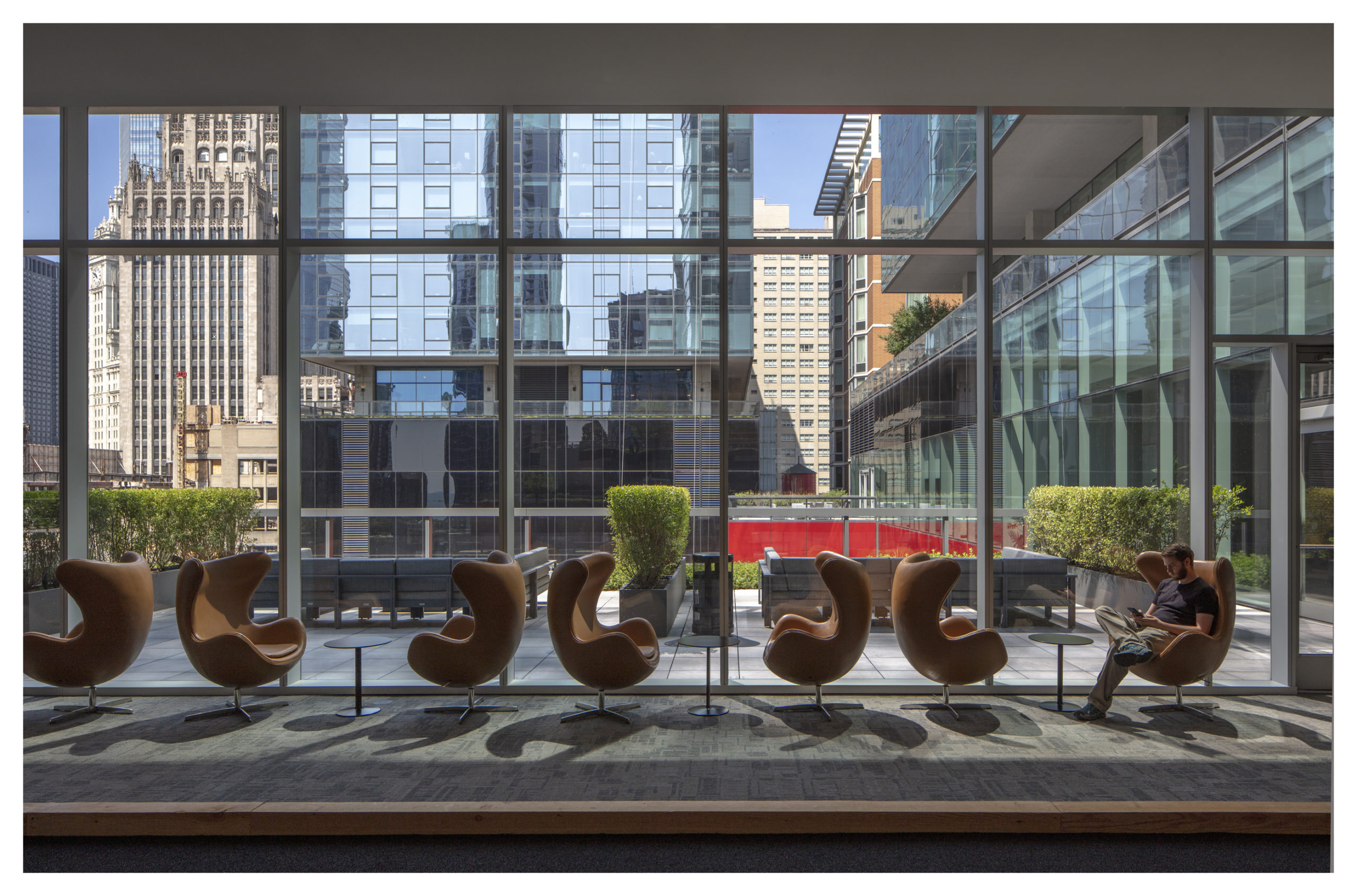
Looking out the windows at Optima Biltmore Towers
Looking out the windows at Optima Biltmore Towers.

Fenestration

Derived from the Latin word fenestrae (windows), fenestration is defined as the arrangement of any holes in a building’s facade. More specifically, this usually refers to the doors and windows on the elevation of a building. 

From the most basic standpoint, fenestration allows for the entry and exit of people into and out of a structure. That being said, fenestration historically posed a challenge to architects, because poking holes in a structure can weaken its resiliency. With Modern construction and increasingly durable building hardware, architects are freed up to explore fenestration with more liberty and inventiveness, going beyond the practical to examine decorative approaches.

The terraced design of Optima Camelview Village
The terraced design of Optima Camelview Village.

Terrace

Terraces originated as a series of flat areas made on a slope for cultivation purposes, but have evolved into any level or paved area next to a building. Their uses vary widely, from still being tied to agricultural practices to now being a place of leisure and pleasure. 

At Optima, our approach to the terrace is with respect to its landscaping origins we employ terraces that allow our buildings, and their residents, to live in harmony with the surrounding landscape. We see the relationship between cultivating plantlife and cultivating relaxing spaces as intrinsically related.

Stay tuned for future features on the world of architecture lingo at Optima.

Modern Furniture 101

As our tagline “Forever Modern” implies, Modern design is integrated into every part of our business and our work. Our inspired interiors are no exception; full of Modernist artwork, sculpture and furniture, the interiors of our properties reflect the same principles and aesthetic. So what exactly is Modern furniture, and what distinguishes it from other furniture styles? 

A Brief History

Like Modernism itself, Modern furniture design developed in a post-World War II environment that necessitated cutting excess waste, focusing on functionality, and reevaluating the practicality of materials in design. Compared to the decorative styles before it like Victorian, Art Nouveau and Neoclassical, Modernism was a striking departure into new territory. This drastic shift from ornate, decorative pieces to minimal pieces is attributed to new technology, changes in design philosophy and the direction of architecture at the time. Since then, Modern furniture has become an iconic part of interior design history. 

How to Spot Modern Furniture 

Functionality, clean lines, smooth shapes, bold colors and minimal design are all common aspects to Modern furniture. Most iconic pieces of Modern furniture pioneered new uses of materials such as glass, steel and leather, so those are common signs to look for. Odds are, you’ve seen Modern furniture before, especially if you’re in the design or real estate industry. Barcelona chairs, Noguchi coffee tables and Le Corbusier lounges are commonplace in many residential buildings and homes, in the United States and around the world. 

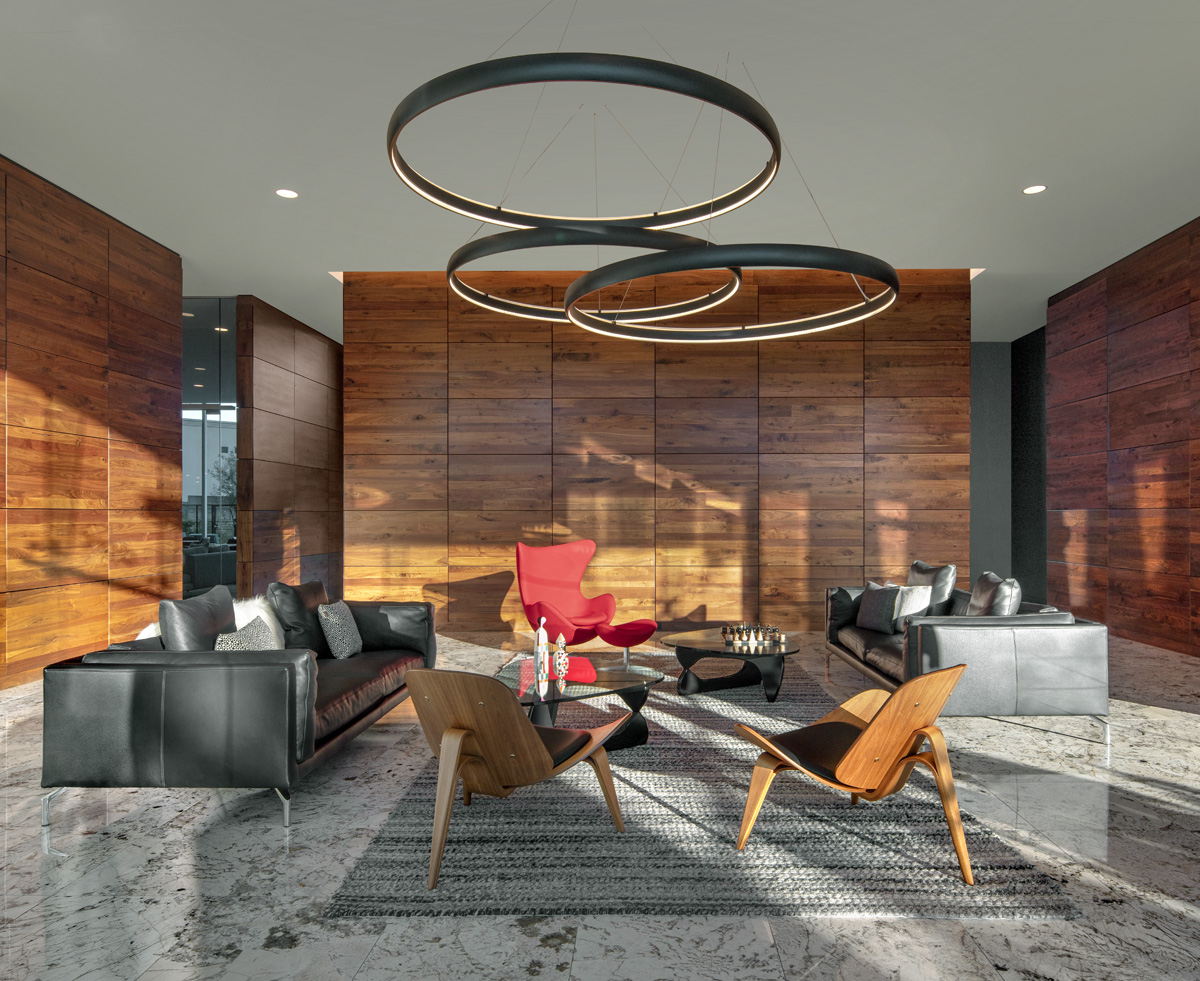
Amenity space at Optima Signature

To explore the individual and detailed history behind the pieces, here’s a more complete list of popular Modern furniture pieces. Within our practices at Optima, Modern furniture plays a critical role in completing our vision for each space we create. Our Modernist sense of design through architecture and furnishings helps us tell a holistic, intentional story through design. Without this consistency, our buildings and amenity spaces would seem incomplete. Though rooted in the past, Modern furniture integrates beautifully with a bright, inspired future. 

The History of Landscape Design

Landscape design is an integral part of our communities, from our signature vertical landscaping system to intentionally designed sculpture gardens. Each element in our terraces, courtyards and gardens is placed with careful consideration for the aesthetic, function and enjoyment of our residents — inspired by the thought and evolution of centuries of landscape design that came before us. Today, we’re diving deep into that history of landscape design to understand where the craft came from, and where it’s at today.

Ancient Origins of Landscape Design

At the core of landscape design’s history is agricultural development. Beauty and aesthetic function evolved from there, with ancient Japanese gardens designed to facilitate meditation and spiritual connection and ancient Chinese gardens designed as both reflective and social spaces. The two marked features of landscape design are softscaping, utilizing living elements such as trees and flowers, and hardscaping, utilizing non-living additions such as water features, paths, statues and patios. In Japanese gardens, water features were often incorporated in hardscaping while in Chinese gardens, the plants in softscaping often had symbolic, spiritual meaning.

Popularization of Landscape Design

Despite these ancient origins likely dating even further back, the earliest recorded example of landscape design is said to be the Hanging Gardens of Babylon from the 6th century BC. Even then, landscape design isn’t said to have been popularized until it reached the ancient Romans. Their accreditation for the landscape design’s rise is due in part to the fact that they transformed it from something only done for the elites to a practice applied in every home garden. 

From the ancient Romans, landscape design lost momentum during the Middle Ages and was rediscovered by Italy, France and England, respectively, in the 17th century, and was applied to elaborate piazzas, ornate gardens, large parks and even Versailles. The 17th century also saw the rise of cottage-style landscape design, a compact form of gardening that would eventually serve as inspiration for modern day suburban landscaping.

Landscape design at Optima Camelview Village

Landscape Design in the US Today

In the late 19th century, Frederick Law Olmstead became known as the “Father of American Landscape Architecture.” His aesthetic incorporated sweeping lawns into building design, influencing the US Capital, Central Park in NYC and city planning in Chicago and Cleveland. In 1988, Olmstead founded the American Society of Landscape Architects and classes in the field began to be offered at Harvard in 1900. 

Between evolving urban and suburban landscapes, people’s desire for increased, organized greenspace led to the development of highly evolved outdoor landscaping, gardens and living spaces. The landscape design at Optima reflects this highly evolved trend, incorporating terraces, courtyards, green rooftops and gardens to provide our residents with ways to connect their living spaces with the natural world.

You can learn more about the landscape design at Optima in our green space spotlights on Optima Kierland Center and Optima Sonoran Village.

The Work of Georgia O’Keeffe

We would be remiss to talk about Modernism without showcasing the women who helped pioneer the movement. One woman in particular, the luminary artist Georgia O’Keeffe, earned herself the nickname the “Mother of American Modernism.” Today, we honor her contributions to Modernism by diving deep into her life and work.

The Life of Georgia O’Keeffe

Born in 1887 in a farmhouse in Wisconsin, Georgia O’Keeffe decided at an early age (10) to become an artist. In 1905, she began her serious formal art training at the School of the Art Institute of Chicago (SAIC). She later denounced formal education, feeling too constricted by the strict guidelines that art should imitate what was found in nature. 

It wasn’t until 1912 that O’Keeffe discovered the work of Arthur Wesley Dow, and was inspired by the way he uniquely interpreted subject matters, rather than following traditional modes of artistic creation. From there, O’Keeffe gave permission to herself to experiment in forms that furthered her self-expression and development of style. 

Georgia O’Keeffe, Series 1, No 8, 1917. Public Domain.

The Work of Georgia O’Keeffe

Georgia O’Keeffe is best known for her abstract oil paintings, including many close-ups of flowers. Though many muse the flowers were a symbol for female anatomy, O’Keeffe rejected that interpretation often. Her work was concerned with emphasizing shape and color to illuminate small details.

In 1929, O’Keeffe moved to New Mexico, attempting to escape the socially and artistically oppression of her fame. Partly inspired by a desire to shake Freudian affixations of meaning to her work, and greatly inspired by the native landscape, there O’Keeffe painted New Mexico landscapes and images of animal skulls. 

O’Keeffe’s desert escape and reinvention of inspiration mirrors that of Optima’s own journey, when we expanded to Arizona. We know just how transformative the arid landscape, surprisingly lush desert greenery and culture of the southwest can influence one’s creative scope.

Even in her southwestern escape, O’Keeffe remained heavily in the public eye. Featured in one-woman retrospectives at both the Art Institute of Chicago and the The Museum of Modern Art in Manhattan in the 40’s, O’Keeffe became the first woman to ever have a retrospective at the latter. The next three decades saw her style and subject focus evolve, but it was a quiet period until in 1970, when the Whitney Museum of American Art held a retrospective of her work and brought back buzz. 

While O’Keeffe died in 1986, critical acclaim and love for her work remains. In 2014, her 1932 painting Jimson Weed sold for $44,405,000 — more than three times the previous world auction record for any female artist — demonstrating the art world’s acknowledgment of O’Keefe’s unapologetic vision and pioneering a style.

The Sculpture Garden at Optima Sonoran Village

At Optima, our appreciation and curiosity about materials — and how those materials are expressed — extends beyond architecture and into the artistic medium of sculpture. The sculpture garden at Optima Sonoran Village is home to several original sculptures by Optima founder David Hovey Sr., and exemplifies how art can influence and impact the space it resides within.

Silver Fern, an original Optima sculpture by David Hovey Sr.

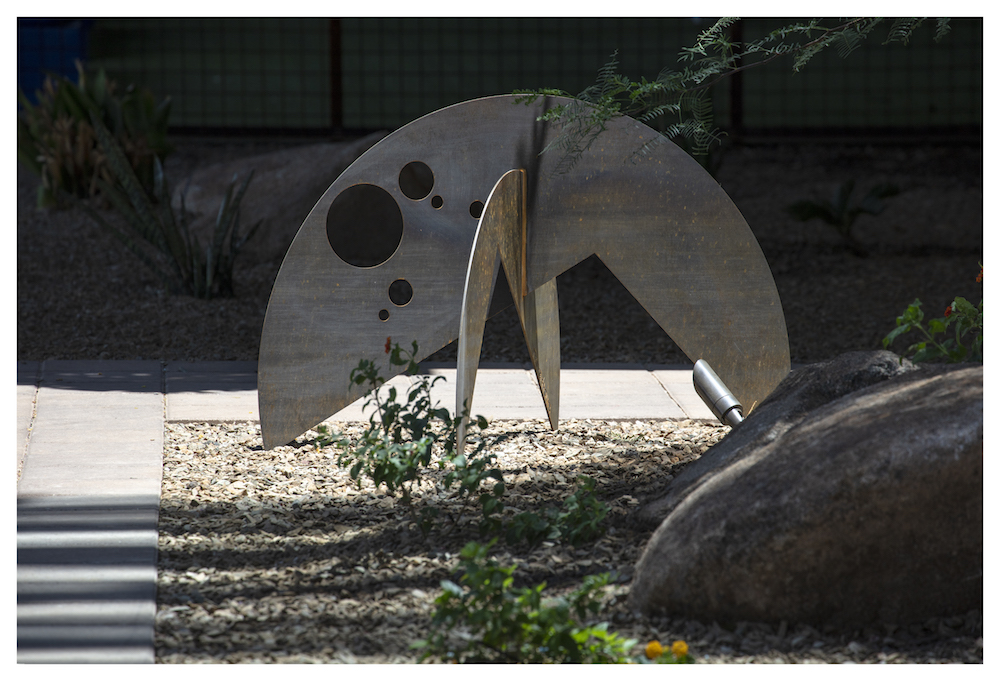
The garden includes five original David Hovey Sr. sculptures: Curves and Voids, Silver Fern, Triangles, Intersecting Arches and Duo. Originally created as a large and monumental sculpture, Duo is crafted out of steel to create a striking silhouette alluding to a man and a woman gazing at one another. Meanwhile, Curves and Voids expresses steel and its potential through grand, sweeping curves. The voids are laser cut within the sculpture’s steel planes; the holes provide gaps and textures that contrast and play off of the sculpture’s curves.

Intersecting Arches, an original Optima sculpture by David Hovey Sr.

Each original sculpture within the garden is just one of many variations of a design. David Hovey Sr. often experiments with color, size and orientation within his sculpture designs to breathe new life into the same form, placing these iterations across Optima communities. At the sculpture garden at Optima Sonoran Village, Hovey Sr. chose to use Corten steel rather than coat the sculptures in bold hues. He did so to ensure that rather than competing with the building’s vibrant facade, the sculptures would complement the community. Of the five sculptures, Curves & Voids is large-scale, and the other four remain of modest size. 

We invite anyone who visits Optima Sonoran Village to take a stroll through the sculpture garden, to immerse themselves in the art form and to discover how sculpture can transform the space it’s within. 

Ray Eames: A Pioneer in American Architecture

A talented artist, designer and filmmaker, Ray Eames is a well-known name throughout the architecture and design industries. The name Eames itself carries weight; Ray Eames was half of the husband-and-wife duo that made an enormous impact on modern design. Though her husband, Charles, received most of the praise and spotlight during their partnership due to the gender conventions of their time, Ray was a powerful voice and creative in her own regard. Today, we look back on her life and contributions to the world of design.

Born in Sacramento, California in 1912, Ray was passionate about art from an early age, expressing interest in dance, illustration and art history. After pursuing art as a student for years, Ray eventually found her way to New York, fully immersed in the abstract art scene. By 1940, she decided to pursue a holistic approach to art and design at the Cranbrook Academy of Art, in Michigan, where she then met her husband, Charles. Upon meeting Charles, Ray took her strengths in color, form and structure and applied them to furniture design, and the two began a creative and life partnership that would thrive for decades.

Although Charles had a more public profile, Ray worked full-time and was equally devoted to their work. Together, they explored new, inventive designs for furniture, products, short films and architecture. Their own house is arguably the greatest representation of their architectural work. A structure of steel and glass, the Eames House is an iconic piece of modern architecture, with Ray’s background in abstract art informing the Mondrianesque panels on the front façade.

Eames House. Credit: IK’s World Trip on Flickr Creative Commons, CC BY 2.0 Deed

The Eameses worked as partners from 1941 until 1978 when Charles passed away. Their collaboration and creative vigor continues to inspire to this day, and is even reminiscent of our own David Hovey Sr. and Eileen Hovey, who have built Optima while also building a life and family together. 

To read more about the life and work of Ray Eames, check out a recent feature by The New York Times

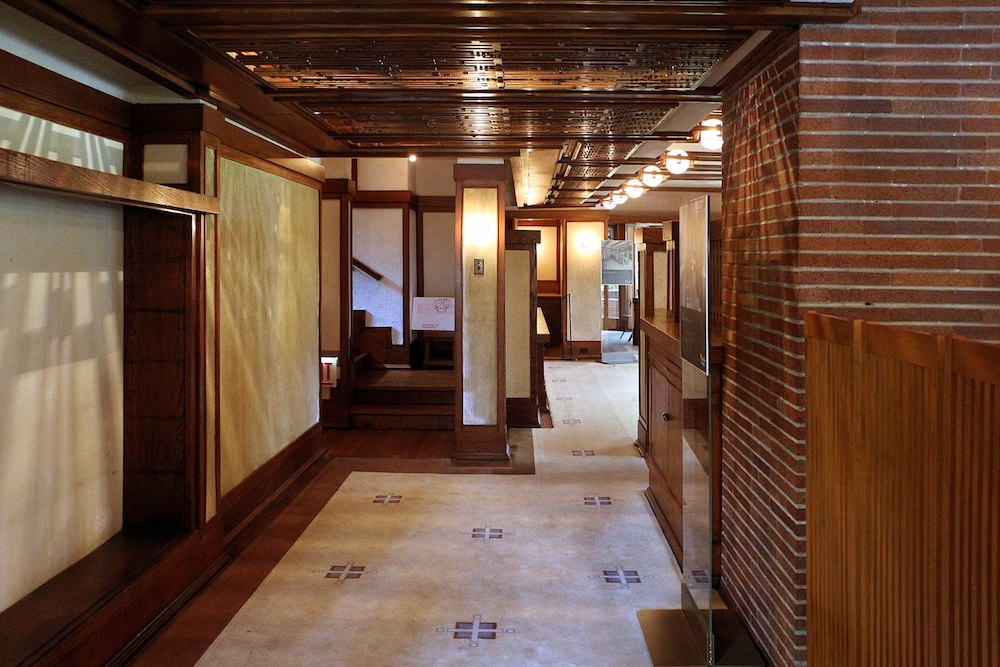
Frank Lloyd Wright Site Virtual Tours

At Optima, we believe that design has the power to inspire awe and wonder — and even to unite us in challenging circumstances. We’re seeing proof of this, as the architectural world makes leaps and bounds to innovate and ensure we can continue sharing our love for exceptional design, even while social distancing. As part of this response, a dozen historic sites designed by Modernist master Frank Lloyd Wright have teamed up to offer a series of weekly virtual tours.

12 Weeks of Frank Lloyd Wright

A collaborative partnership between Frank Lloyd Wright participating sites, with leadership from the Frank Lloyd Wright Building Conservancy, the Frank Lloyd Wright Foundation and Unity Temple Restoration Foundation, the virtual tour series kicked off on April 2. The idea behind the series is to keep the doors to historic Frank Lloyd Wright sites open, at least virtually, so that architecture lovers can continue to experience beauty and inspiration from home. It deeply resonated with our own values when the foundation stated: “Wright’s works bring people together in harmony with the natural world, reminding us that we are all connected, even when we’re apart.”

The series, which will run until at least July 15, brings a new immersive video experience shared every week on Thursday at 1 PM EST, united by the hashtag #WrightVirtualVisits. Participating sites are publishing videos, each to their own social media platforms, in the hopes of introducing the sites to a wider audience and providing interesting and informal glimpses into the sites’ history and design.

For a full overview of the tour series, and to discover participating sites, visit the event page here

Our Beliefs: Freedom to Innovate

At Optima, all aspects of our work are deeply saturated by the passion and values instilled in Our Beliefs. Our team unifies around these beliefs, enabling us to create more collaboratively, to communicate more effectively and to be collectively inspired by a shared vision. One belief — freedom to innovate — speaks to the degrees of freedom that we enjoy, allowing us to continually instill our work with inventive thinking and approaches.

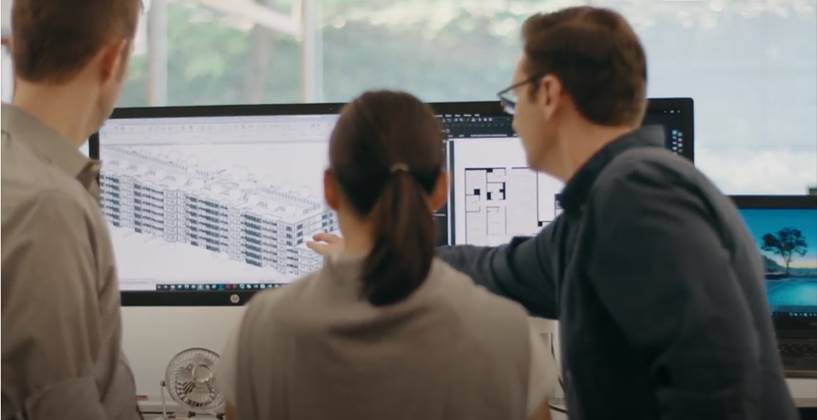
As a vertically-integrated business, we serve as the owner, the architect, the general contractor, the developer, and property manager, allowing us to keep our hands on all parts of the process. With a full-throttle, approach to every aspect of building, from inception to execution, inherently we hold unique degrees of freedom and adaptability.

7160 Optima Kierland

Take when we were building 7160 Optima Kierland, the first tower of Optima Kierland Apartments, for example: we were able to shift on a dime and seize opportunity when it was presented. At the time of construction, we identified a rapid increase in market demand for three-bedroom units and quickly adapted mid-build, creating three-bedroom units, even after concrete had been poured.

As project architect, we modified plans and ensured no adverse cost impact resulted, coordinating with our design team maintaining bathrooms and shafts in their original location. As general contractor for the project, we engaged quick responses from partners without affecting project delivery. 

Each and every day we make our decisions based on what we believe is right, without compromising our vision. The freedom to innovate is at the core of this decision making process — driving our work each and every day to be better, more efficient and more inventive.

Chicago’s Public Art: The Calder Flamingo

Sculptures are art made architectural; dramatic corners, inventive materials and a consideration of space and its voids. At Optima, our appreciation for sculpture runs deep, with Optima co-founder David Hovey Sr. expanding the design reach of Optima to include his own original sculptures. Indulging in our love for the craft, we’re exploring Chicago’s public art, piece-by-piece. This week, it’s all about Alexander Calder’s famous Flamingo.

The Calder Flamingo

Though you might not notice it immediately as a flamingo, every Chicagoan is familiar with the long and graceful arcs of the famous red Flamingo sculpture designed by Alexander Calder. Calder is a seminal Modernist multi-media artist perhaps best known for his many whimsical mobile creations.

The Flamingo, however, is the antithesis of his mobile sculptures set apart by their dynamic motion — he referred to the goliath sculpture as a “stabile,” a freestanding abstract sculpture made in the style of a mobile but sitting rigid and stationary. It is this peculiar approach that gives The Flamingo an inevitable feeling of potential energy, instilling an almost alien vitality to the Federal Plaza where it lives.

Weighing in at 50 tons and made of steel, the sculpture feels anything but heavy in the space it occupies. Its arches and voids invite passerby to walk beneath and through the art on their way to surrounding office buildings in the plaza  — including the Ludwig Mies van der Rohe-designed Kluczynski Federal Building.

The sculpture was designed specifically for this space, to add a lightness and balance to the severity of the Federal Building’s Modernist lines. Unveiled on October 25, 1974, at the same time that Calder’s Universe mobile was unveiled at the Willis Tower, the momentous, art-filled occasion was declared “Alexander Calder Day” and even featured a circus parade. 

The festivity, spirit and joy of this sculpture and its history are apparent to all that visit it on display in Chicago, adding yet another meaningful and momentous sculpture to our city’s iconic and artful culture.

person name goes here

Maintenance Supervisor

Glencoe, IL


    Acceptable file types: *.pdf | *.txt | *.doc, max-size: 2Mb