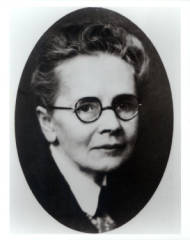
Women in Architecture: Julia Morgan


As part of our ongoing “Women in Architecture” series at Optima, we’re taking a look at another pioneering female figure: Julia Morgan. Like many of the women in this series, Morgan boasts a series of industry firsts. Morgan was the first woman admitted to the architecture program at l’École nationale supérieure des Beaux-Arts in Paris, and the first woman architect licensed in California. Learn more about her extraordinary life and work below:

The Life of Julia Morgan

Julia Morgan was born on January 20, 1872, to parents Charles Bill Morgan and Eliza Woodland Parmelee Morgan as the second of five children. Morgan was also born into generational wealth — her mother Eliza was the daughter of a cotton trader and millionaire. This financial mobility also provided geographic mobility. The Morgans lived on the West Coast, but travelled often to New York to visit mother Eliza’s parents. It was on one of these trips that Julia Morgan (now age six) met her older cousin Lucy Thornton, who was married to successful architect Pierre Le Brun. 

Morgan kept in touch with Le Brun, who encouraged her to pursue higher education, and in 1890, Morgan did just that. She went on to study engineering at the University of California, where she was often the only woman in her math, science, and engineering courses. When she graduated in 1894 (with honors, no less), Morgan became the first woman to earn a B.S. degree in engineering at Berkeley. Encouraged by her professor and mentor, architect Bernard Maybeck, Morgan then went on to be the first woman admitted to study architecture at Maybeck’s alma mater, the prestigious École nationale supérieure des Beaux-Arts in Paris.

Morgan was able to apply to the architecture program thanks in large part to a union of French women artists who pressured the school. When Morgan went to Paris and met this group of women, they introduced her to feminist ideology. And though the Beaux-Arts program prohibited older scholars and Morgan’s 30th birthday (and deadline as a student) approached, Morgan nonetheless earned her certificate in architecture — making her the first woman to do so at the Beaux-Arts, and trumping the certificate completion time of her mentor Maybeck by two years. 

Hearst Greek Theatre, University of California, Berkeley. Credit: Sanfranman59 on Wikimedia Commons, Multi-license with GFDL and Creative Commons CC-BY-SA-2.5 and older versions (2.0 and 1.0)

The Work of Julia Morgan

Morgan’s extraordinary track record and changemaker ways also carried over to her career. After her education and experience in Paris, she returned to California where she worked with  San Francisco architect John Galen Howard, the supervisor of the University of California Master Plan. In this role, she was the primary designer for the Hearst Greek Theater and also provided the decorative elements for the Hearst Mining Building.

In 1904, Morgan became the first woman to obtain an architecture license in California and she opened her own office in San Francisco shortly after. In addition to being a woman of firsts, Morgan also became a woman that could withstand a series of natural disasters. When her office burned down in 1906, she reopened just a year later in the heart of San Francisco’s financial district. Meanwhile, her first reinforced concrete structure, the 72-foot bell tower at Mills College, El Campani, was constructed in 1904 — and just two years later, famously survived the 1906 San Francisco earthquake unscathed.

Casa Grande Hearst Castle, designed by Julia Morgan. Credit: Daderot on Wikimedia Commons, made available under the Creative Commons CC0 1.0 Universal Public Domain Dedication

The survival of the bell tower launched Morgan’s career and rounded out her reputation, while the devastating aftermath of the earthquake provided countless opportunities to rebuild local structures. Morgan famously redesigned the landmark Fairmont Hotel in San Francisco in just one year, using her new signature: earthquake-resistant reinforced-concrete. This project greatly impressed the Hearst family — among many others — and earned Morgan future projects such as the Hearst Castle (one of the most defining projects of her career) and the opportunity to design a series of YWCA (Young Women’s Christian Association) buildings across California. 

Though Morgan’s accolades are highly impressive, she lived a notably modest and quiet personal life, having never married, written or spoken much about herself. Despite these humble traits, Morgan nevertheless leaves an ongoing legacy in the strides she made for women in architecture, and the iconic structures she left behind. 
Modernist Getaways For Your Next Vacation

As things begin to reopen, it’s only natural to daydream about future travels and interesting destinations. And while you’re at it, consider dreaming about a stay in an architectural masterpiece. Today, we’re sharing a few ways to discover Modernist architectural gems for your next vacation.

Welcome Beyond

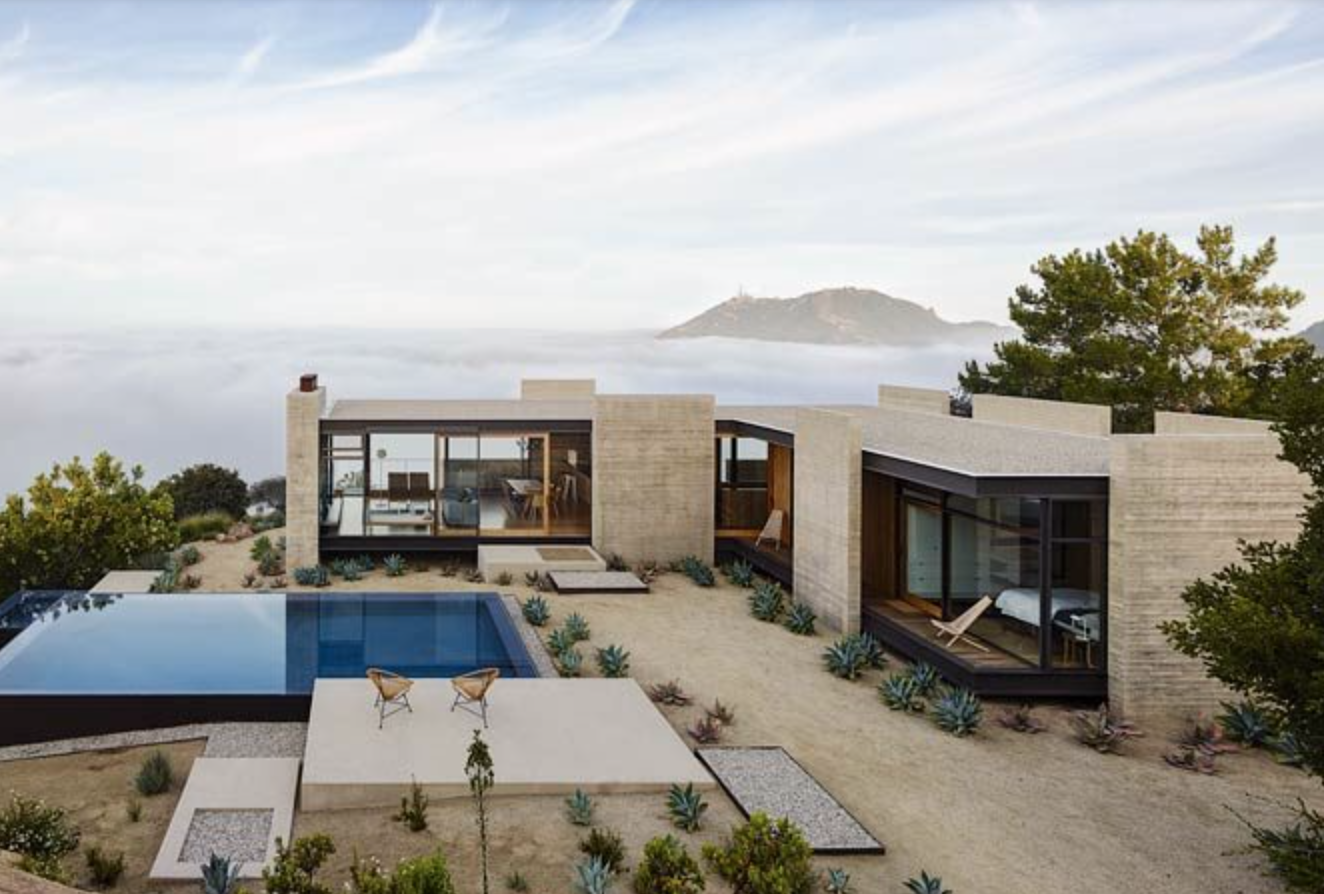
Welcome Beyond is a German website created by brothers Oliver and Chris Laugsch. The two personally curate a selection of handpicked vacation rentals and small hotels across 38 countries. Though their selections cover a broad swath of architectural styles, each shares the common thread of high-caliber design.Our favorite of their five picks in the US is Saddle Peak House in Los Angeles — this Modernist retreat exemplifies the best in design integrated into its natural environment.

Ramp House in Austin, Texas; photo courtesy of Boutique Homes.

Boutique Homes

Despite its name, Boutique Homes features rentals that defy “quaint” in the traditional sense. Developers Veronique Lievre and Heinz Legler yield over a decade of experience designing, building and decorating in the hospitality industry to provide best-in-class selections to the refined vacationer’s eye. Their site’s collection spans numerous countries, architectural styles and budgets to provide something for every type of design lover.

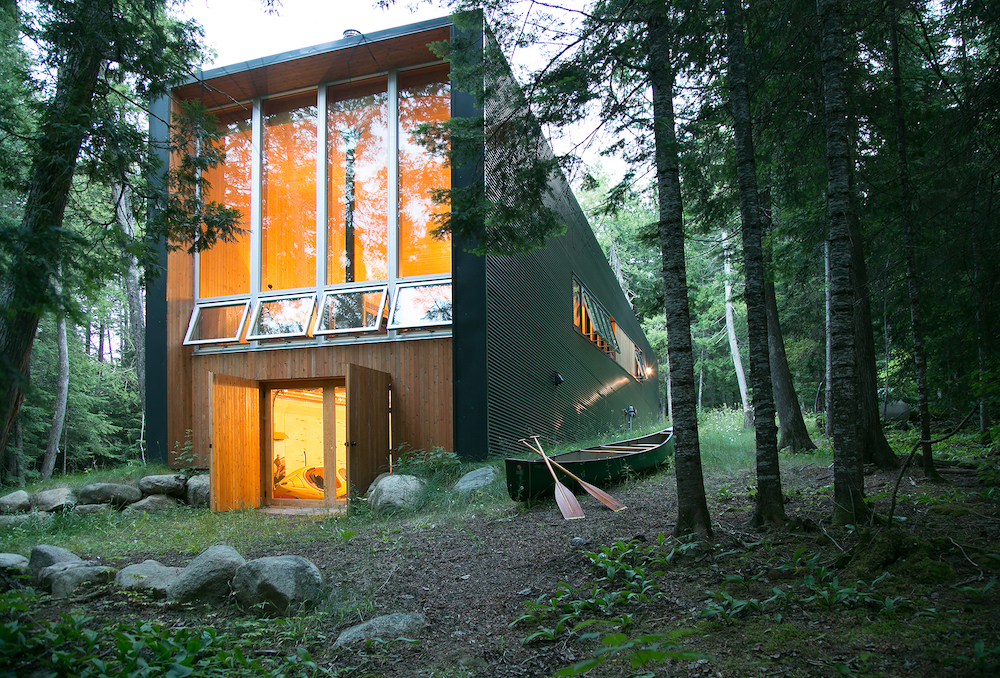
Gunflint Lake Cabin in Grand Marais, Minnesota; photo courtesy of PlansMatter.

PlansMatter

PlansMatter, founded by architectural enthusiasts Connie Lindor and Scott Muellner, resulted from their own passion for finding unique vacation destinations. They love nothing more than staying in a place with “architectural intentions and a story to tell” and wanted to make it easier for others to find just that, too. Their international roster includes both jaw-dropping vacation rentals and hotels like you’ve never seen before.

Kid & Coe

Kid & Coe founder Zoie Kingsberry Coe started this family-friendly vacation rental finder after travelling the world with her own kids in tow. Eager for more baby-friendly stays that didn’t make compromises in design excellence, Coe makes sure no other parents ever experience her own travel woes. The site features rentals, hotels and most recently — a home swap program.

We hope that this summer brings new chances for wonderful travel adventures!

Modern Museums Around the World

As lovers of great design, Optima’s appreciation for both architecture and art itself runs deep, and there’s no better place to indulge this passion than at a modern museum of art. And with modern art and Modernist architecture sharing so much in common, it’s no wonder that many of these institutions are often housed in innovative and captivating buildings. Today, we’re taking a look at some of the best modern museums around the world — from the collections they contain to the structures that define them.

Guggenheim Museum Bilbao – Bilbao, Spain

The Guggenheim Museum Bilbao is a museum of modern and contemporary art designed by Canadian-American architect Frank Gehry, located in Bilbao, Spain. You’ll recall from our Subsects of Modernist Architecture Series that Gehry was part of the Deconstructivism movement on Modernism in the 1980s. This museum, established in 1997, boasts an impressive collection of modern art, as well as site-specific installations from artists such as Jeff Koons. The building itself has been described as “the greatest building of our time” by architect Philip Johnson, and “a fantastic dream ship of undulating form in a cloak of titanium,” by critic Calvin Tomkins in The New Yorker.

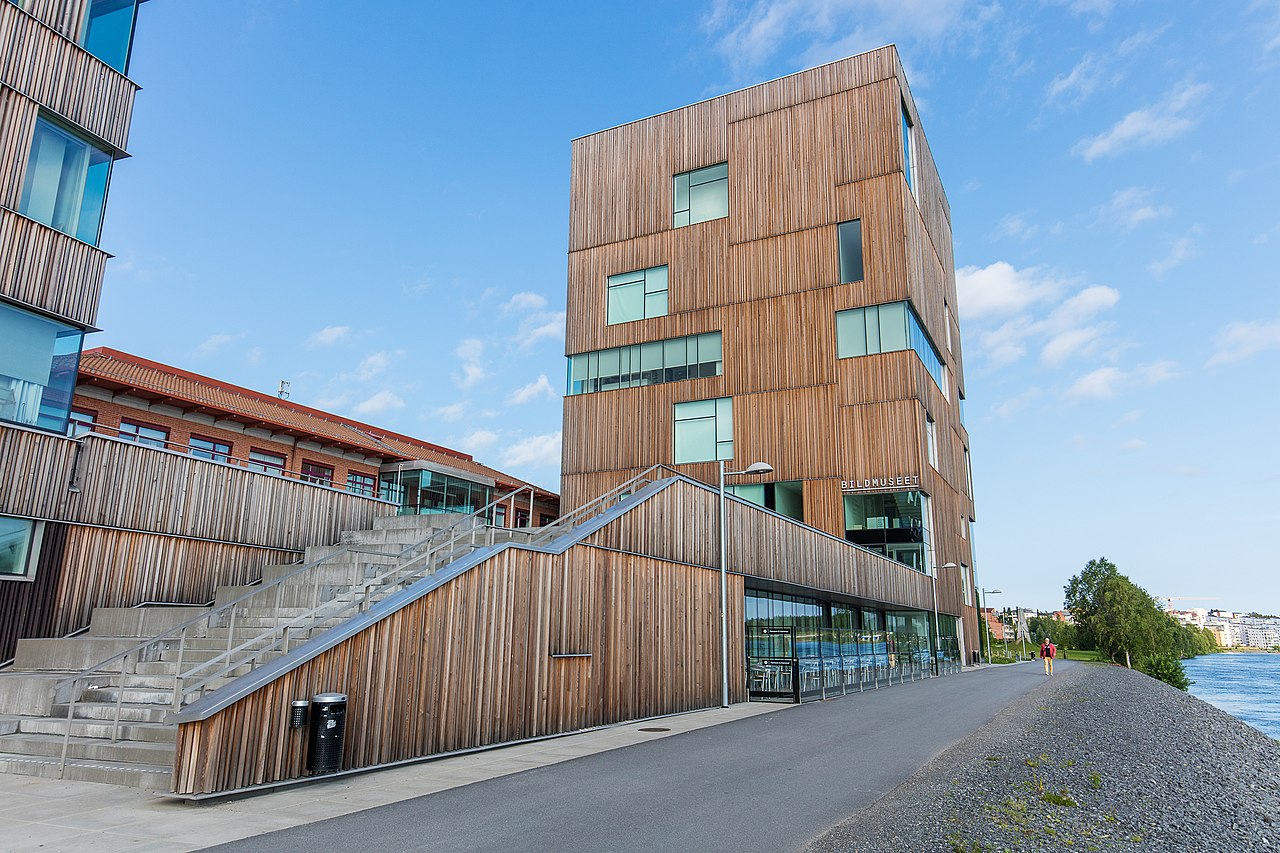
Bildmuseet – Umeå, Sweden

Bildmuseet is one of Sweden’s foremost venues for international contemporary art, a part of Umeå University and the public heart of its arts campus. The strikingly Modern building was designed by Henning Larsen Architects in collaboration with White. A living and breathing work of art itself, the building’s facade is made of Siberian larch wood that fades to a silver-grey color over time. In its lifetime, Bildmuseet was nominated in 2013 for the Swedish Kasper Salin Prize and the European Mies van der Rohe Prize and has been described as one of the world’s most beautiful university museums. 

Zeitz Museum of Contemporary Art Africa. Credit: Axxter on Wikimedia Commons, licensed under the Creative Commons Attribution-Share Alike 4.0 International license

Zeitz Museum of Contemporary Art Africa – Cape Town, South Africa

Zeitz Museum of Contemporary Art Africa (or Zeitz MOCCA, for short) is a contemporary art museum in Cape Town, South Africa, and boasts the title of being the largest museum of contemporary African art in the world. The building, which was commissioned through a public/private partnership between the V&A Waterfront and German businessman, Jochen Zeitz, is actually made from a converted historic 1921 grain silo. According to Zeitz MOCAA records, “The architects, Heatherwick Studio, aimed to conserve and celebrate the original structure’s industrial heritage, while simultaneously excavating large open spaces from the 42 densely-packed concrete cylinders from which it was comprised.”

Niteroi Contemporary Art Museum — Rio de Janeiro, Brazil

It’s no surprise that the
Niteroi Contemporary Art Museum, located in Rio de Janeiro, Brazil, is one of the city’s main landmarks. The futuristic building was designed by Oscar Niemeyer with the assistance of structural engineer Bruno Contarini. Thanks to its strategic design, this museum offers more than just art to admire — the tall, angled windows offer sweeping views of Guanabara Bay and Sugarloaf Mountain. Beneath the structure, architect Niemeyer also designed a reflecting pool that surrounds the cylindrical base “like a flower.”

As an artform all on its own, the architecture of these museums stands strong alongside their impressive modern art collections. 


The Subsects of Modernist Architecture, Part IV

Our “Subsects of Modernist Architecture” series explores the many trickle-down pockets of Modernist design throughout the years. In this last installment of the series, we’re taking a look at the late-century styles that have continued to carry on the legacy of Modernist design — and that will continue to influence and inspire many generations and future subsects to come. 

Postmodernism 

Postmodernist architecture emerged in the 1960s as a reaction to the severe and repetitive nature of Modernist architecture, particularly the International Style. While Modernist had previously been celebrated for its lack of ornamentation and rigid uniformity, architects in the camp of Postmodernism were ready for a boisterous change.

The movement was first introduced by architect and urban planner Denise Scott Brown and architectural theorist Robert Venturi in their seminal work, Learning from Las Vegas. In this timeless book, Brown and Venturi doubled down on their ideas about postmodernist design, which Venturi formalized in his later book, Complexity and Contradiction in Architecture. He wrote:

“I am for messy vitality over obvious unity… I prefer ‘both-and’ to ‘either-or’, black and white, and sometimes gray, to black or white… An architecture of complexity and contradiction must embody the difficult unity of inclusion rather than the easy unity of exclusion.”

While Mies van der Rohe’s famous adage was “less is more”, Venturi’s pushback saying became “less is a bore.” As Postmodernism flourished in the 1980s and 1990s, Brown & Venturi led the charge alongside other architects such as Michael Graves, Philip Johnson and Charles Moore. 

High-tech

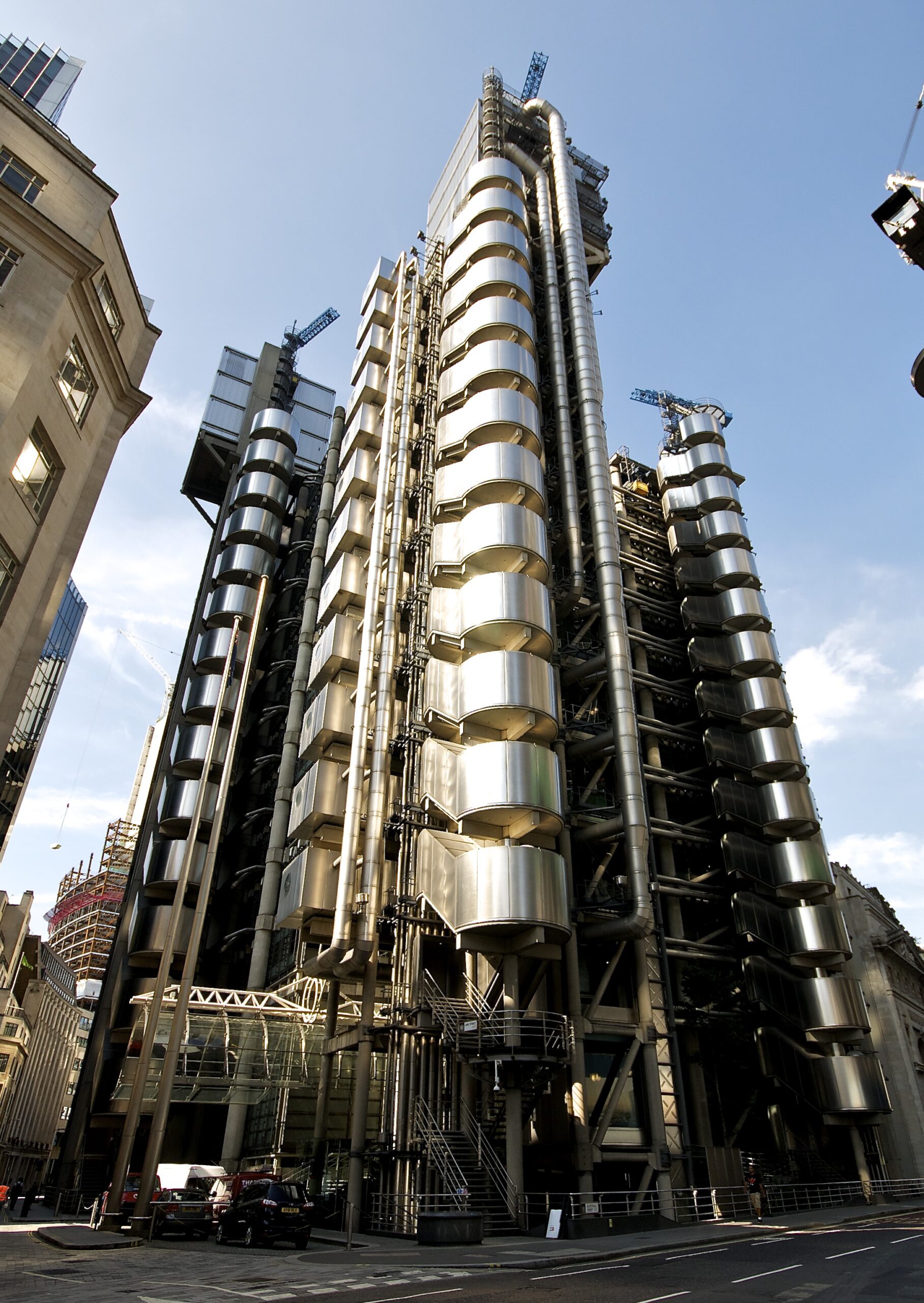
As Postmodernist thinking evolved during the 1970s, High-tech architecture (also known as Structural Expressionism) was born. Just as the name suggests, High-tech began to incorporate the latest technological innovations building materials into its design. Like traditional Modernist architecture, High-tech commonly employed steel, glass and concrete in building exteriors — but to much different effect. Still, the influence of Modernist masters such as Le Corbusier, Walter Gropius and Mies van der Rohe remains evident. 

High-tech architecture was heavily influenced by factory aesthetics, incorporating large central spaces, hanging or overhanging floors, and highly-adaptable, reconfigurable spaces as key design elements. The polycentric usage of these central spaces was defined by the term “omniplatz” — referring to the idea that a building shouldn’t have one, defined function, but rather remain able to perform a range of functions. Feelings of openness, transparency and honesty were central to High-tech design, coupled with considerations of adaptability and sustainability. Despite its technological roots, this subsect was indeed modeled on highly human-centric thinking.

Deconstructivism

Deconstructivism appeared on the scene in the 1980s. Inspired by its Postmodernist counterparts, Deconstructivism seeks to imply fragmentation of buildings through an absence of obvious harmony, continuity or symmetry. The result is a feeling of unpredictability and carefully controlled chaos all at once.

The name was earned by the movement’s chief aims to “disassemble” architecture and to break traditional rules and boundaries. The architectural movement also heavily drew inspiration from French philosophy. Key architects who worked in this style include Zaha Hadid, Peter Eisenman, Frank Gehry, Rem Koolhaas, Daniel Libeskind and Bernard Tschumi.

All these styles and more make up the legacy that created Modernist design as we know it today.

Exploring Optima Communities: Golf at Optima Kierland

As with all of our projects, the residences at Optima Kierland join indoors with the great outdoors. And a quintessential part of life outdoors in Arizona is relishing the beautiful weather with a few hours on a golf course. Here are just a few ways residents enjoy golf at Optima Kierland.

Just down the road from our Kierland Community, The Westin Kierland Golf Club brings first-rate golf experiences to the neighborhood. Voted one of America’s 9 most cheerful golf courses by Golf Digest, the course offers the perfect place to spend a morning or afternoon. The surrounding views of the mountains don’t hurt either. Other nearby golf courses also include the Scottsdale Silverado Golf Club, TPC Scottsdale Champions Course, Gainey Ranch Golf Club and Stonecreek Golf Club, so residents have plenty of options. Optima Kierland even recently started a golf club for the residents, so neighbors can get to know one another on the courses.

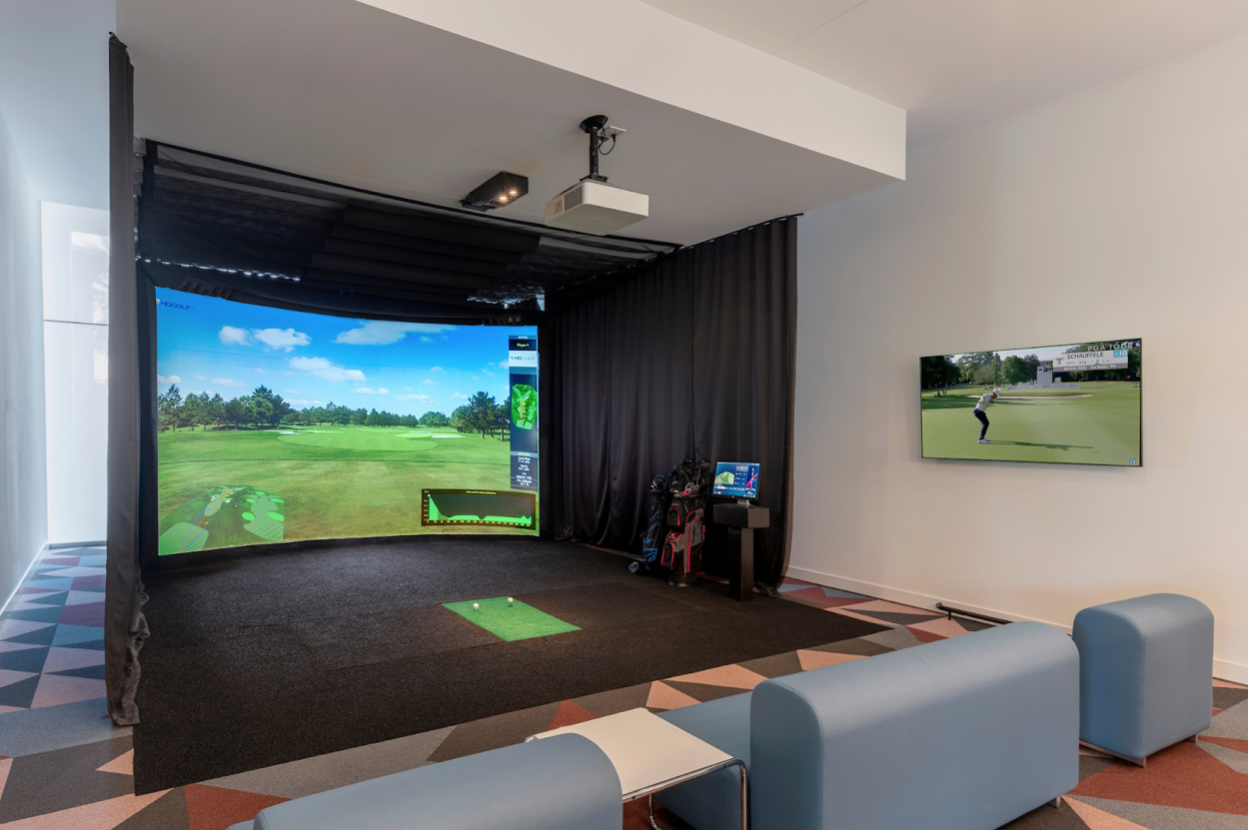
golf simulator at Optima property

For those who prefer to practice and play in the comforts of home, each building at Optima Kierland features a golf simulator, located in the game rooms of our exclusive residents club. Although there’s no true replacement for playing a full game outdoors, it’s a great alternative for anyone looking for a convenient way to improve. Whether it’s an hour lunch break while working from home, or a way to wake up on a weekend, residents at Optima Kierland have everything they need to perfect their golfing skills.

Golfing is one of the activities that draws people to the Phoenix area, so we’re thrilled that Optima Kierland can be a hub for golf enthusiasts and connect them to a larger like-minded, passionate community. 

The Skydeck at Optima Lakeview

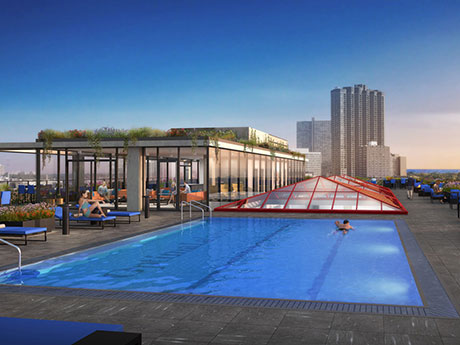
With the snow and cold finally behind us in Chicago, citydwellers are finally — once again  — able to enjoy the warmer weather. But as we all know, winter will come back eventually, and for many it’s a deterrent for embracing Chicago year round. The default routine is for most people to hunker down and avoid the cold, but we had a different vision in mind for our latest project. As we were designing Optima Lakeview, we wanted the amenity spaces to actually embrace the cold. The Skydeck at Optima Lakeview will be one-of-a-kind, built for year-round use with plenty of ways to stay physically and mentally healthy, even in the dead of winter.

The Optima Lakeview Skydeck will include heated, spa-grade plunge and swimming pools, and heaters and fire pits for staying cozy, even on chilly nights. Our design process was highly inspired by ski resorts, and how one can go from hopping off the slopes to jumping into a hot tub. But instead of a remote resort, Optima Lakeview residents can experience the same sensation in Lakeview’s thriving urban neighborhood. Rest and relaxation are all possible amidst colder weather, and as we’ve covered in past blog posts, combining a gym session or workout with hydrotherapy sessions or a quick swim is a great way to stay active. 

The Skydeck at Optima Lakeview isn’t just a hub for wellness; it’s a place to connect with community, friends and loved ones as well. The space will also feature a glass-enclosed party room and grills, perfect for entertaining. The Skydeck is just one piece of Optima Lakeview’s 40,000 square feet of amenity spaces — including an indoor basketball court, golf simulator, fitness center and more — that are best experienced often and with others. 

We hope the Skydeck at Optima Lakeview will help you Find your inspiration™ to take care of yourself, whether in July or January! Stay tuned for more updates on Optima Lakeview, or learn more here.

Furniture Design Spotlight: Ara Thorose

We love being part of a long legacy of people designing in the Modernist discipline. From architects, to sculptors and artists, to furniture designers, many creators continually innovate and find new ways of exploring form and function. One such innovator is Ara Thorose, a queer Armenian American artist and designer currently based out of Brooklyn, whose cylindrical-form furniture pieces are taking the design world by storm. 

Who Is Ara Thorose?

Ara Thorose is a fresh face on the scene. He earned an undergraduate degree from the University of California, Irvine, in Sociology, with a focus on gender and sexuality. Most recently, he went on to earn his MFA in 3D Design from Cranbrook Academy of Art. Cranbrook was founded as an experimental artists academy, and has since held national acclaim as the “incubator” of mid-century modernism in recent decades. Makers who emerge from the school are often agents of change who quickly make a name for themselves, and Thorose is no exception.

Just two years after earning his MFA, Thorose debuted his inaugural work, Tubular Group 01, under his brand Soft Limits, at the Architectural Digest Design Show in 2017. His work in the show garnered critical acclaim for its innovative form and experimentation in cylindrical forms. The design world continued to take notice of Thorose: he was named Up and Coming by Surface Magazine, and Soft Limits received Interior Design magazine’s 2019 Best of Year Award for Accent Seating.

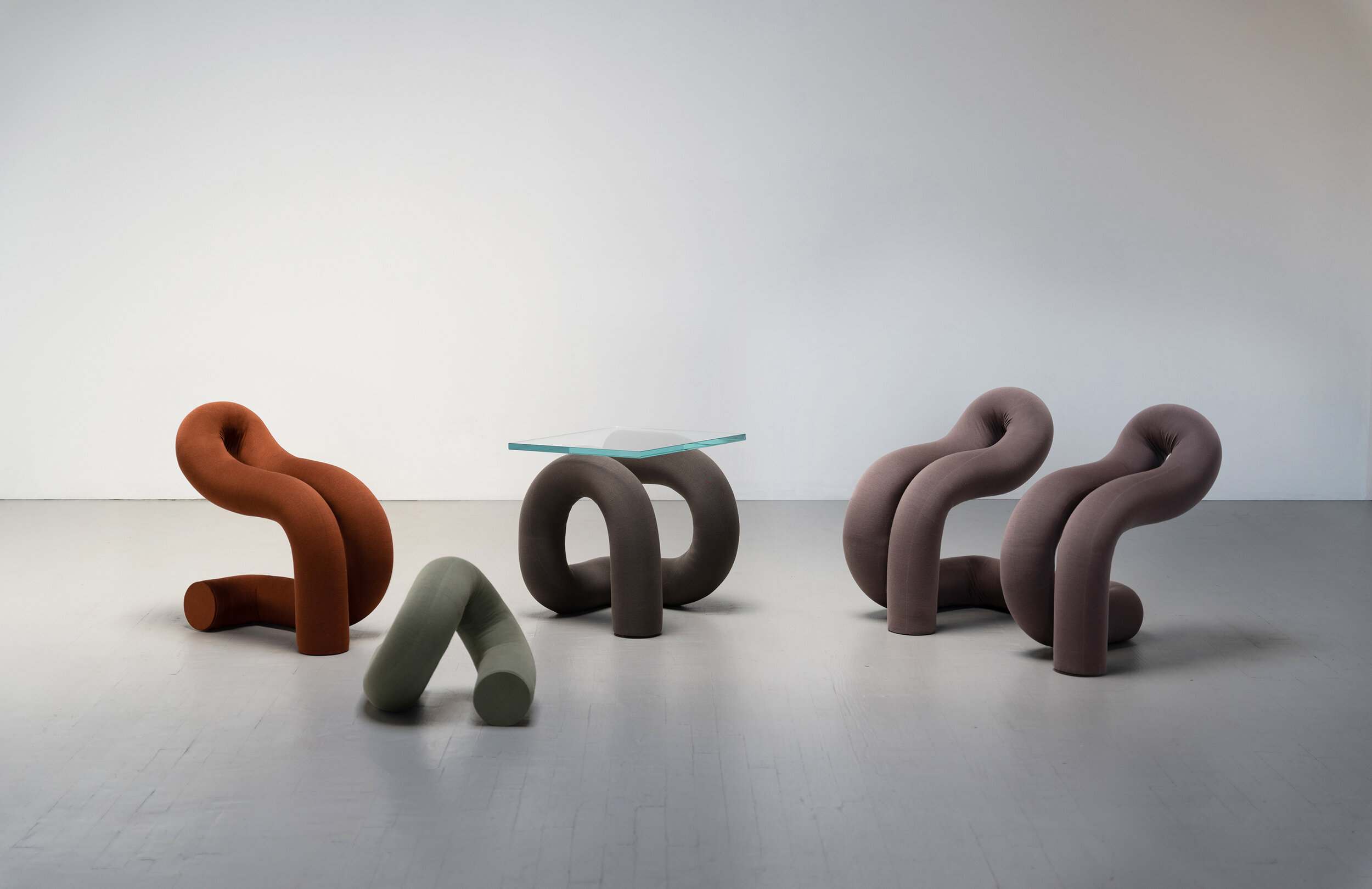
Ulu Group by Ara Thorose. Photography courtesy of Se Yoon Park, shot at Carvalho Park.

Innovative Design in Action

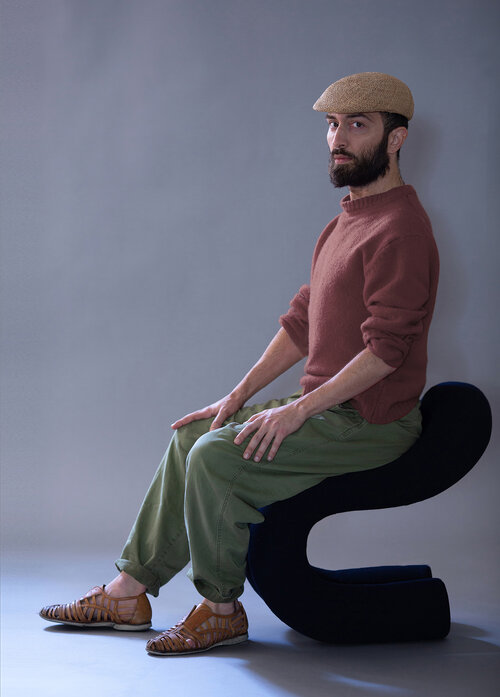
Under his brand, Soft Limits, Ara Thorose designed Ulu Group, a series of cylindrical-form furniture pieces “inspired by the idea of a circle trapped inside of a square.” Most notably, the cylinders in the collection got their circumference from Thorose’s own thigh circumference. Thorose describes this as a humanizing element, which serves to ground the abstract nature of his work. 

On his website, Thorose describes the theory behind Ulu Group, stating: “It represents conflict with no apparent solution. A circle is limitless, while a square is limited, so it’s inherently problematic. By adding a third dimension to it’s premise, there is potential for functional solutions. That’s the inspiration for this series. Each form is a circle traversing cube-like spaces held by furniture. Alternating between U-turns and L-turns, the cylinders push against the boundaries of familiar typologies.”

The collection includes four total pieces — Ulu Chair (orange), Ulu Duo, (mauve), Ulu Table (brown), and Un (green) — made of steel and foam and upholstered in wool and silk. Thorose begins his design process with hand building small-scale maquettes and then sketching his revisions in profile. 

Thorose is a deeply individual figure in the realm of furniture design today. He describes his perspective, stating: “I’m inspired by the notion of autonomy. I view the self as fluid and dynamic. My work explores the creative potential of self awareness without conforming to surroundings. Singular and succinct unto itself. An individual sense of being and order.” 

We look forward to seeing how this point of view develops and grows as Thorose continues to inspire the industry.

Frederick Law Olmsted and American Landscape

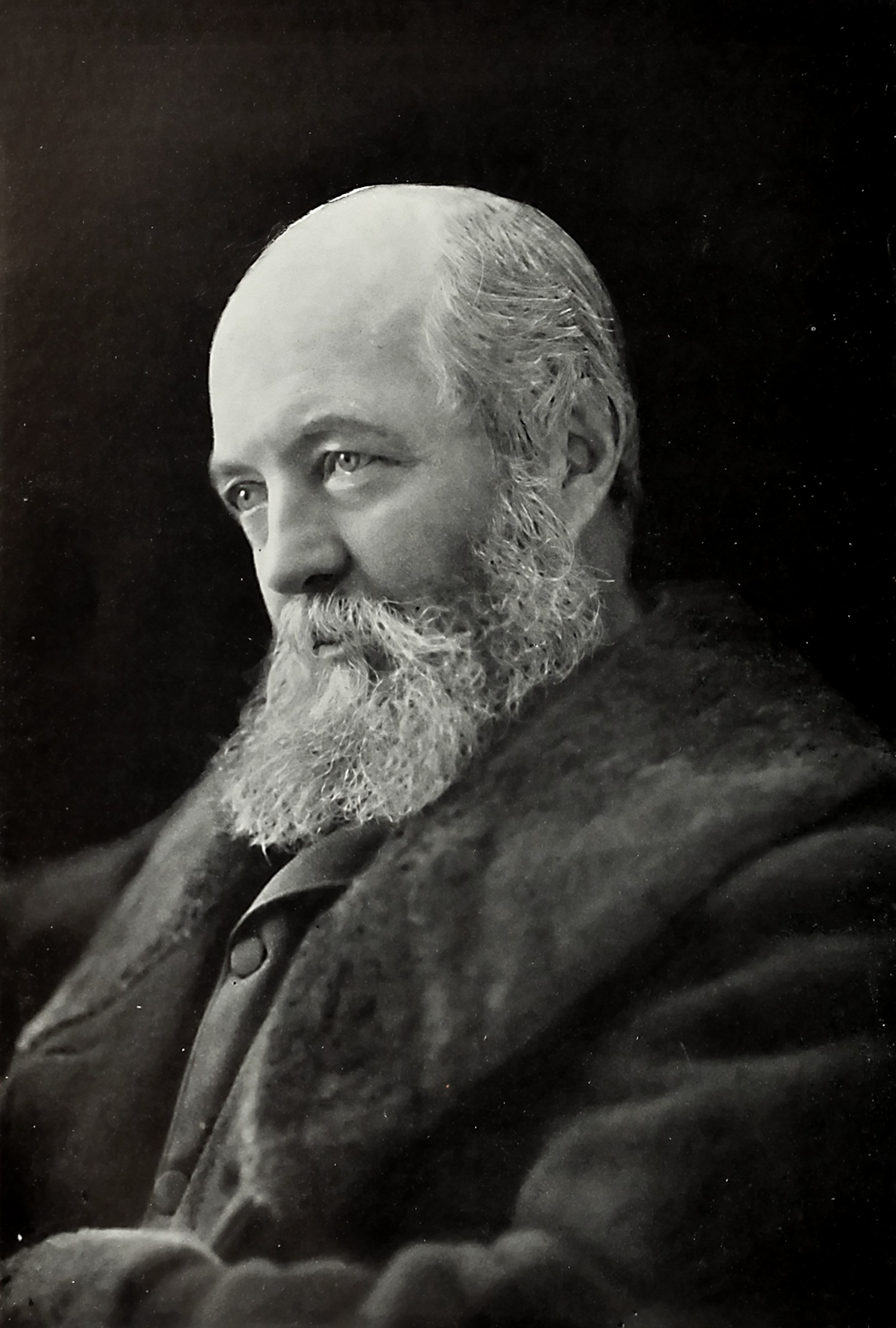
Even if you haven’t heard the name of Frederick Law Olmsted before, there’s no doubt you’ve come across his work. If you’ve ever visited Central Park or read about Chicago’s World’s Columbian Exposition of 1893, you’ve seen Olmsted’s fingerprints across urban design. Olmsted was an American landscape architect, journalist, social critic, and public administrator. Widely considered to be the father of American landscape architecture, Frederick Law Olmsted’s life and work were vastly impactful to cities across the world.

From a young age, Olmsted was immersed in greenery. He was born in Hartford, Connecticut in1822, and his father had his own interests in nature, people, and places. Olmsted lived on a farm for years before deciding on a career in journalism, which took him over to England. There, his visits to public gardens sparked inspiration that would form his later works. His profession in journalism would take a sudden turn in the 1850s, with the help of his mentor, Andrew Jackson Downing.

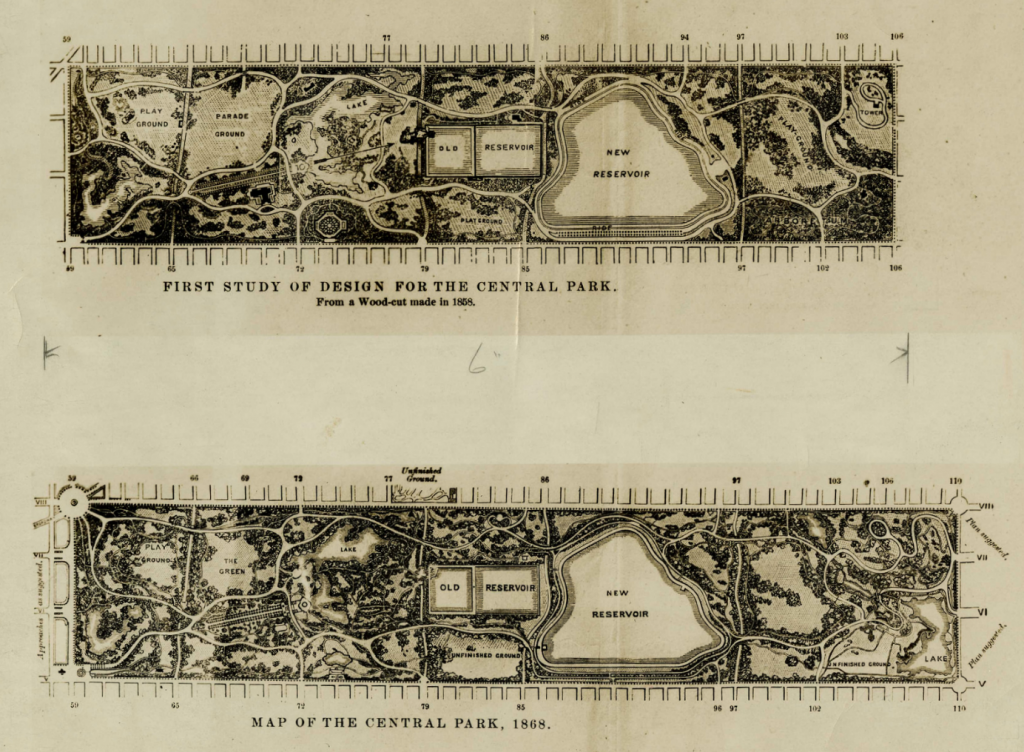
Downing was a landscape architect himself, and was one of the first to propose developing New York’s Central Park. He introduced Olmsted to English-born architect Calvert Vaux and their plans for the vast green space. Tragically Downing passed away, and Olmsted was left to fill his shoes in presenting their design. Prior to this, Olmsted had never created or executed a landscape design, but his theories and political contacts were invaluable. With the Central Park project won, Olmsted’s name began to explode across the industry.

Early designs for Central Park. Image courtesy of the National Park Service, Frederick Law Olmsted National Historic Site

Over the years, Olmsted worked on the designs for Prospect Park in New York City, Walnut Hill Park in New Britain, Connecticut, Cadwalader Park in Trenton, New Jersey and more. His reach extended into larger urban planning initiatives, such as the country’s first coordinated system of public parks and parkways in Buffalo, New York and the country’s oldest state park, the Niagara Reservation in Niagara Falls, New York. Olmsted also had a large impact on the city of Chicago; his design for Jackson Park, Washington Park and the Midway Plaisance are still in existence today. 

Frederick Law Olmsted’s legacy on American landscape and urban design is a lasting one, and his work a medium of art all its own. As his fellow Chicago planner colleague and friend, Daniel Burnham, once said, “an artist, he paints with lakes and wooded slopes; with lawns and banks and forest covered hills; with mountain sides and ocean views.”

The Subsects of Modernist Architecture Part II

A few weeks ago on our blog, we began exploring the subsects of Modernist architecture and covered the Bauhaus, De Stijl and Constructivism movements. Modernism took the world by storm at the time of its invention — reimagining everything from painting to furniture to the built environment. Over time, that impact has continued to evolve and morph into many different directions. Here’s just a few of those iterations:

Expressionism

Expressionism is the fourth subsect of Modernism to emerge in the discipline’s early years. This architectural style existed simultaneously with the Bauhaus style, but stood in stark contrast to its counterpart. While Bauhaus architecture emphasized clean, linear design, Expressionism was an outburst of artistic emotion, encouraging fragmentation and distortion to express extreme feelings. These feelings were borne from the political turmoil at the time, when the German Revolution of 1919 led many to a utopian outlook and a romantic socialist agenda. 

Functionalism 

As the name suggests, functionalism emphasizes one of the core traits of modernism: “form follows function.” The style, which emerged in Europe in the 1930s, touted that the design of a building should reflect its function and purpose. In the wake of World War I, this philosophy played its part in the larger desire to create a new and better world for people. This socialist and humanist philosophy was evident in many of the designs from this subsect of Modernism. 

Minimalism

Minimalism is another subsect of Modernist architecture that emerged mid-century. Inspired by its predecessors, the De Stijl and Bauhaus movements, Minimalism is perhaps one of the most recognizable Modernist styles. Distinguished by its straight-forward design, stripped of ornamentation and decoration, Minimalism drove design back to its bare essentials. The movement was inspired by the hustle and bustle of urban life as well as influenced by Japanese architecture. Figures such as Ludwig Mies van der Rohe popularized the design; it continued to evolve throughout the decades and can be seen in contemporary Modernist architecture today.

Stay tuned for more features on the many subsects of Modernist architecture.

Women in Architecture: Norma Merrick Sklarek

From well-known figures like Charlotte Perriand to lesser-known names like Eileen Gray, countless women have left their mark on the history of architecture. As part of our Women in Architecture series, today we’re taking a look at another pioneering figure: Norma Merrick Sklarek, a woman who paved the way for generations of African American woman architects to follow.

Norma Merrick Sklarek

Norma Merrick Sklarek was born on April 15, 1926, in Harlem, New York. Her parents were both immigrants from Trinidad; her father was a doctor and her mother was a seamstress. Sklarek grew up going to predominantly white schools, where she excelled in math, science and fine arts, encouraged by her father. In fact, he was the one who initially suggested she pursue a career in architecture. 

Sklarek pursued education at Barnard College for a prerequisite year before enrolling at the School of Architecture at Columbia University. Her experience was challenging, but nevertheless she persisted and went on to graduate in 1950 as one of two women and the only African American in her class.

Pacific Design Center
Pacific Design Center, Los Angeles. Credit: Kent Kanouse, Flickr Creative Commons CC BY-NC 2.0 Deed

Career and Work

After graduation, Sklarek faced both gender and racial discrimination in her job hunt and was rejected by nineteen firms. She told a newspaper in 2004, “They weren’t hiring women or African Americans, and I didn’t know which it was [working against me].” She took on a civil service job as a draftsperson for the city of NY, but refused to settle. While working for the city, she took the architectural licensing examination in 1954 and became the first licensed African American woman architect in the state of New York. (Later, this accomplishment would earn her the nickname “the Rose Parks of Architecture.)

As a single mother, Sklarek’s own mom watched her kids while she worked at a variety of architectural firms. The first cordoned her to menial tasks, such as designing bathrooms, while the second gave her more responsibility. At her third firm job, Sklarek noticed her supervisor was particularly scrutinous of her. She carpooled with a white male colleague who was consistently late to work; her boss critiqued Sklarek’s own punctuality but never made mention of the man’s. In response, Sklarek bought her own car. 

In 1959, she became the first African American woman member of the American Institute of Architects and in 1960, the first Black woman licensed as an architect in California. Sklarek rose in rank at her third architectural firm job, overseeing other staff and production processes. Like many women in the field, she remained cordoned to project manager positions, rather than becoming a project architect, despite her aptitude and keen sensibilities. 

She worked on prestigious projects such as the California Mart, Fox Plaza, Pacific Design Center, San Bernardino City Hall, and the U.S. Embassy in Tokyo. She also continued to accumulate accolades throughout her career, including becoming the first African American woman elected to the College of Fellows of the American Institute of Architects in 1980. Five years later in 1985, Sklarek co-founded Siegel Sklarek Diamond, the largest woman-owned architectural field in the country and became the first African American woman to co-own an architectural practice. Throughout her lifetime, she served on numerous boards, became an esteemed educator and prioritized mentoring other aspiring architects. She was proud to be a role model for others, acting as a figure that she herself had not had access to on her own journey.

Norma Merrick Sklarek was a pioneer of her own time, and remains today a figure of inspiration for anyone who faces discrimination and prejudice in their field. She proved that you are not what others believe you to be, and fought for others to be able to step into their full potential and leave their own marks on the architectural world.

person name goes here

Maintenance Supervisor

Glencoe, IL


    Acceptable file types: *.pdf | *.txt | *.doc, max-size: 2Mb