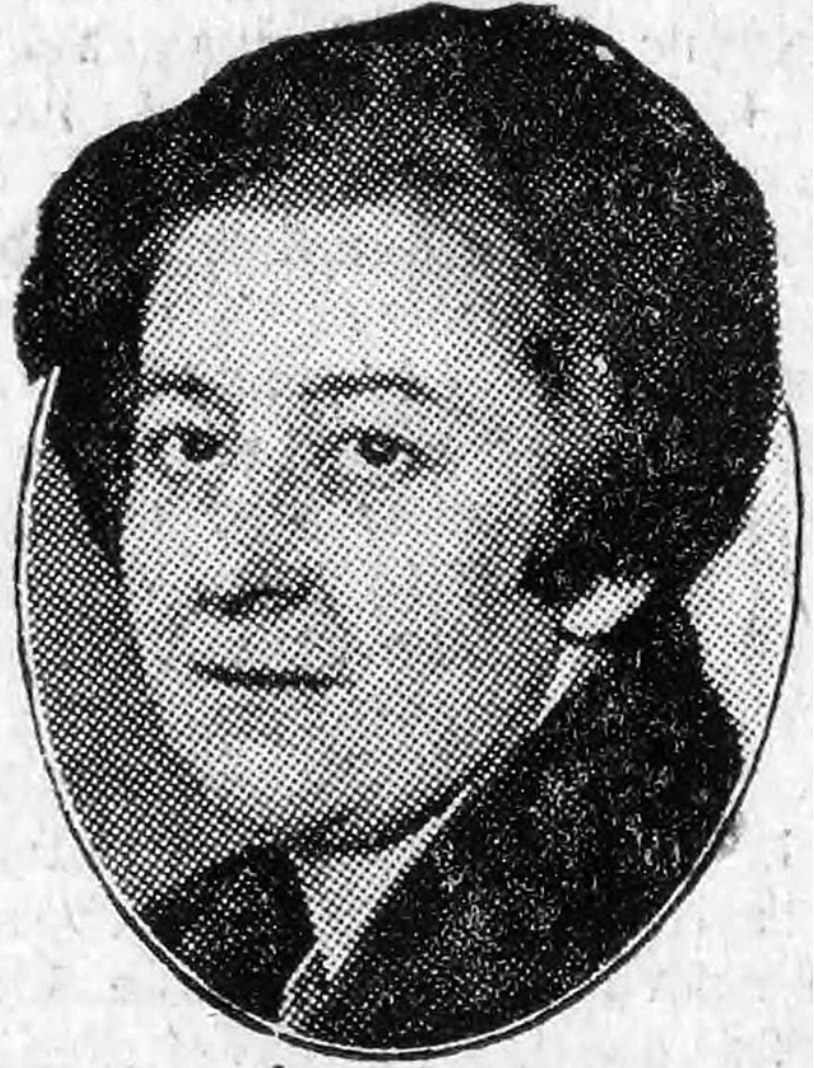
Optima® delights in celebrating the visionaries of modern architecture, individuals whose innovative designs have profoundly impacted the spaces we work and inhabit. Among these luminaries is a woman who left a remarkable imprint on her era and the course of modern architecture: Elisabeth Scott. Today, we pay homage to this trailblazer, whose architectural genius transformed the landscape of theater design.
Born in 1898 in the quaint English county of Bournemouth, Scott was nurtured within a family that recognized and fostered her creative prowess. Her odyssey began with her enrollment at the Architectural Association School in London. At the time, it was one of the few institutions breaking the gender barrier by welcoming women into its architecture program.
Scott’s career had a dramatic turning point when she entered the international competition for the design of the new Shakespeare Memorial Theatre in Stratford-upon-Avon, now known as the Royal Shakespeare Theatre. At just 29, Scott eclipsed nearly 70 competitors, securing her position as the youngest and the first female architect to clinch an international competition. Her triumphant design broke away from the conventional proscenium arch stage, marking a modernist departure that enhanced the intimate engagement between actors and audiences.
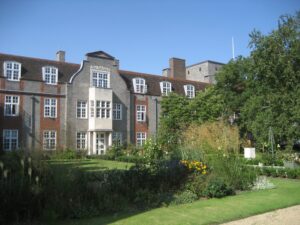
However, the Shakespeare Memorial Theatre was only the beginning of Scott’s illustrious portfolio. She further honed her architectural craft by designing an array of other significant structures. Among these were the Pier Theatre in Bournemouth, the Fawcett Building for Newnham College in Cambridge, and the Marie Curie Hospital in Hampstead. Each creation was a testament to Scott’s ability to envisage and realize structures that were not only aesthetically pleasing but also served the needs of the greater community.
We’re honored to pay tribute to the remarkable journey and enduring legacy of Elisabeth Scott. She dared to chart her own course in an era when the architectural field was almost exclusively male. Her trailblazing efforts underscored not just her exceptional architectural prowess but also her dedication to empowering society through conscious, innovative design.
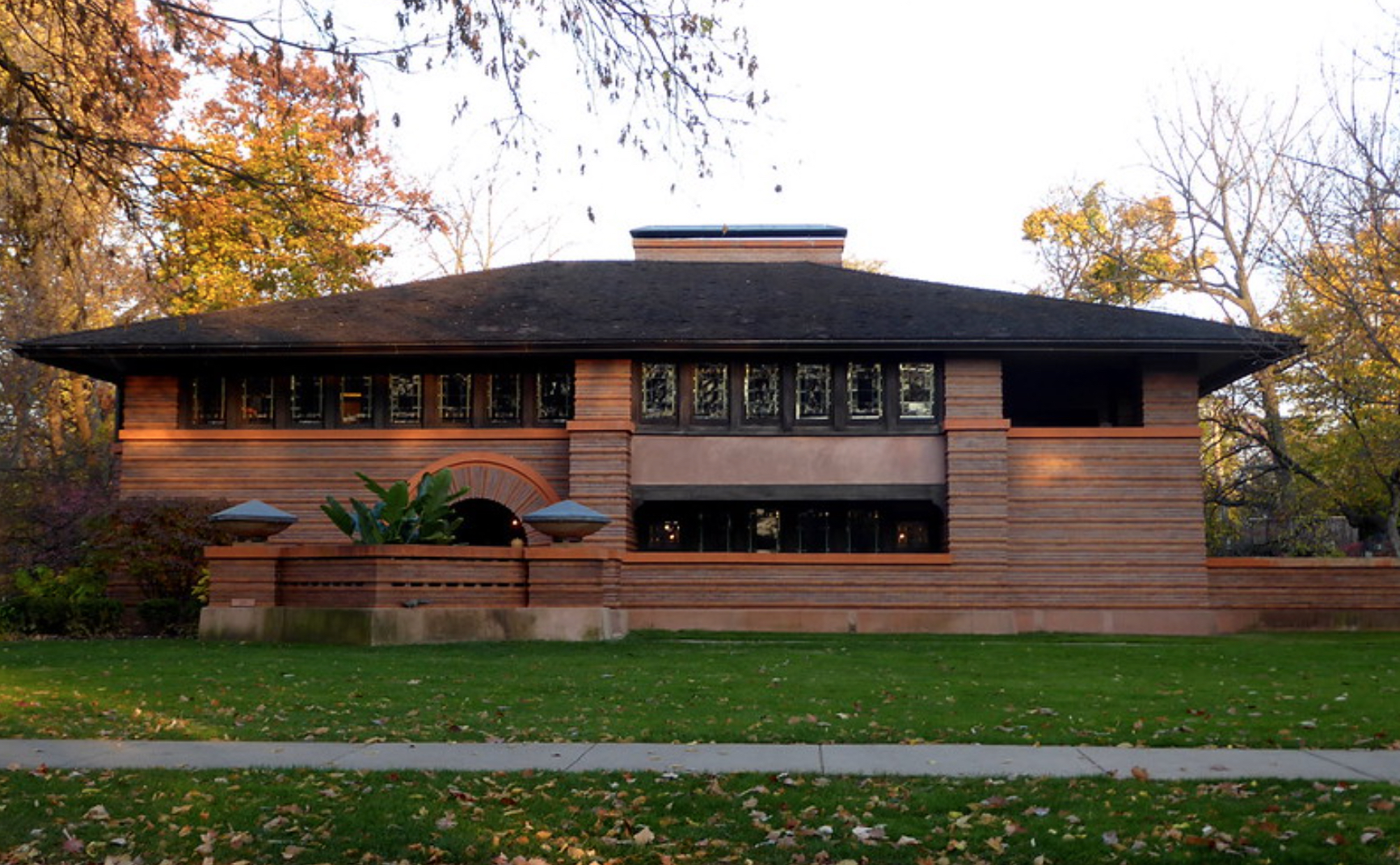
Just a few miles west from Optima Signature®, in the heart of Oak Park, sits a quiet, residential gem that stands as yet another testament to the genius of America’s most iconic architect, Frank Lloyd Wright. This architectural marvel, the Arthur Heurtley House, isn’t just a house, but an embodiment of Wright’s early Prairie School style that continues to endure as a remarkable example of design innovation and integrity.
Constructed in 1902 during a transformative epoch in Wright’s illustrious career, the Heurtley House is an expression of Wright’s creative evolution. The robust brick structure and distinct horizontal orientation lay over the landscape seamlessly, epitomizing Wright’s commitment to designing in sympathy with nature – a signature of his design philosophy.
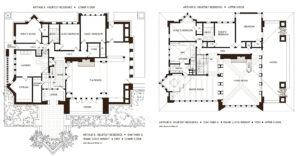
Arthur B. Heurtley House Floor Plan
Look closer, and the house’s intricate design elements come into sharp focus. The low-pitched hip roof with deep overhangs, the bands of art glass windows, and the central chimney mass all contribute to an emphasis on the home’s horizontality while offering an elegant vertical counterpoint. The material palette – a medley of Roman brick, limestone, and plaster – not only reinforces the building’s robust character but also harmonizes the house with its environment, establishing continuity that is both visually striking and inviting.
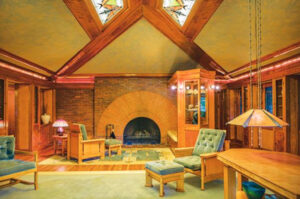
Inside, the Heurtley House continues to narrate the story of Wright’s architectural vision. The choice of natural materials, from the art glass windows to wooden trims and panels, exudes a warm, homey charm. The open floor plan, a distinctive characteristic of Wright’s Prairie style, allows a free flow of space and the dining room has a vaulted, wood banded ceiling with a prow shaped bay of art glass and a ribbon of leaded windows facing west, seamlessly inviting a flood of natural light.
Living Room, Arthur B. Heurtley House. Photo: James Caulfield
The interior furnishings, custom-designed by Wright as part of the home’s construction, ensure a consistent aesthetic narrative throughout the house. This meticulously detailed approach, down to the furniture, reveals Wright’s relentless pursuit of architectural harmony and holistic design.
Over a century later, the Arthur Heurtley House continues to shine as a beacon of architectural brilliance and its presence — a tribute to Wright’s vision and the timeless beauty of his Prairie style. As always, we take immense delight in celebrating these iconic modernist structures. They not only enrich our architectural landscape but also provide a rich source of inspiration for our own commitment to design, innovation, and community.
Tucked in the vibrant downtown of the Glencoe community — just down the road from Optima Verdana®, stands the Writers Theatre, a monument to the creative spirit and architectural prowess. A testament to the convergence of the arts, architecture, and community, the Writers Theatre is a touchstone of cultural life across the North Shore. At Optima®, we share a deep appreciation for such special places that elevate design and aesthetic experiences while enriching the community.
Conceived in 1992, the Writers Theatre was designed to celebrate the raw power and intimacy of the written word. It is a professional theater company that, since its inception, has nurtured a strong commitment to the appreciation of intricate writing and profound performances. This dedication has earned the theatre numerous awards, including the 2016 Regional Theatre Tony Award and being called “America’s finest regional theater company” by The Wall Street Journal.
The current structure, designed by the internationally acclaimed architect Jeanne Gang of Studio Gang Architects, was unveiled in 2016, offering a splendid canvas for the theatre’s vision — to be a socially vibrant venue that redefines the audience-performer interaction. And Gang’s design does just that, by providing a sense of inclusion and participation that blurs the lines between the stage and the audience.
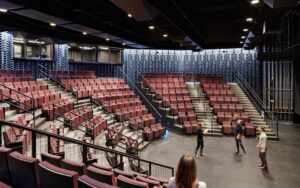
The Writers Theatre’s Alexandra C. & John D. Nichols stage
As you step inside, you’ll notice the theatre houses two stages. The primary Alexandra C. & John D. Nichols stage, accommodating 250 people, captures the essence of a traditional theatre, while the secondary Gillian theatre, a more intimate space, caters to 99 patrons, making each performance a personal experience. Architecturally, the building’s wood truss system is both aesthetically striking and acoustically vital, further enhancing the audience’s experience.
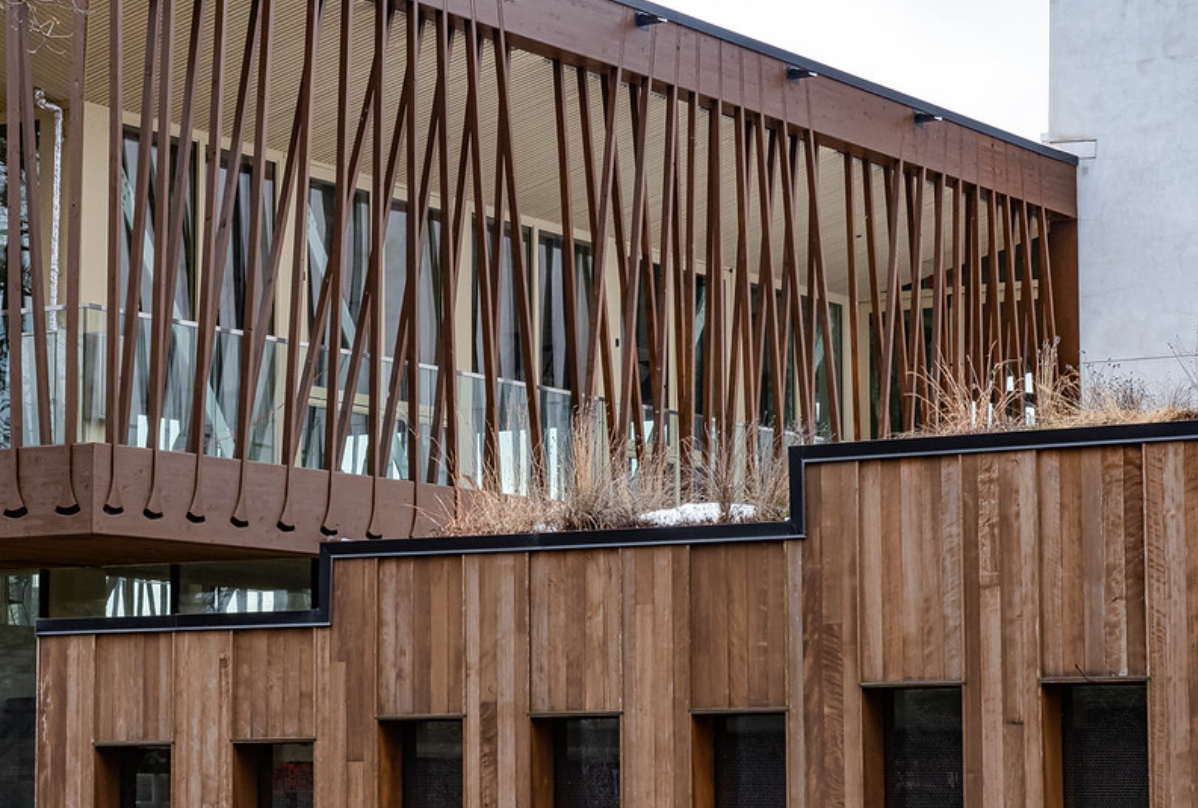
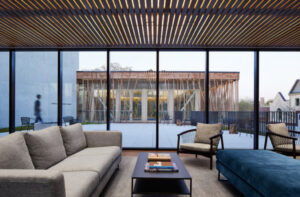
A rooftop pavilion and patrons’ lounge are not just architectural details but social spaces. In essence, the Writers Theatre transcends the function of a theatre, transforming into a hub for community activities and social interaction.
The Writer’s Theatre’s patrons lounge and pavilion, Courtesy of Steve Hall and Hedrich Blessing
Looking into the Writers Theatre’s story, we see an embodiment of Optima®’s values— the fusion of beautiful design, functional spaces, and community enrichment. We take great pride and joy in showcasing gems like the Writers Theatre, a testament to what can be achieved when creative storytelling meets architectural brilliance.
As we celebrate the Writers Theatre and its remarkable journey, we’re reminded of the importance of places that are not just seen, but felt. Spaces that invite you in, captivate your senses, and leave an enduring impression. And at Optima®, we remain committed to creating and appreciating spaces that, like the Writers Theatre, stand as enduring testaments to design, culture, and community. Explore some of their upcoming events and shows here!
We don’t just dwell in the realm of innovative, world-class architecture. We also take delight in the allure of the great outdoors, especially those spaces that bring joy to communities. In that spirit, we’re thrilled to introduce you to the picturesque Gillson Park, located on the lakefront, northeast of the iconic Baha’i Temple and only 2 miles from Optima Verdana®, it’s a lively and vibrant oasis located in the charming village of Wilmette.
Gillson is more than your average park. It’s a haven packed with fun, relaxation, and natural splendor. Located on the stunning shores of Lake Michigan, the park is spread over an impressive 60 acres and offers a slew of engaging activities for everyone.
For the beach lovers, Gillson Park features a pristine sandy beach. Sunbathing, swimming, or simply dipping your toes in the cool waters – it’s your personal paradise by the lake. And for those who crave an adrenaline rush, the park’s Sailing Beach provides sailboat rentals to chase the horizon.
Gillson Sailing Beach, Photo: rickdean911, Flickr Creative Commons
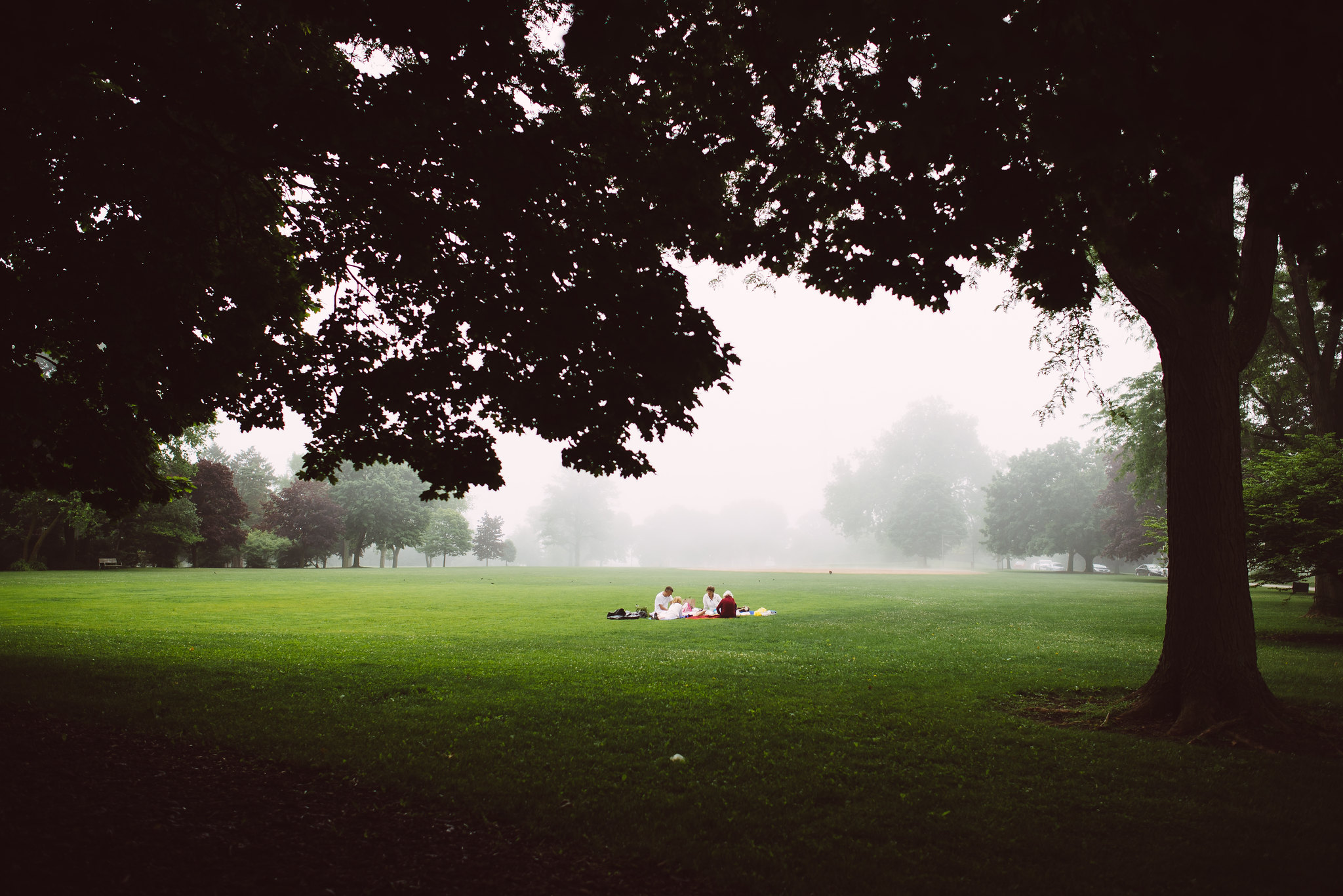
Not to mention the fact that the park’s serene landscape adorned with mature trees offers the perfect backdrop for a delightful alfresco meal. And if you’re looking to fire up the grill, the park provides designated picnic and barbeque areas to make your summer cookout a breeze.
For sport enthusiasts, Gillson Park is nothing short of a playground. From volleyball to tennis courts, it’s a haven for friendly competition and fun games. And let’s not forget about the younger visitors – the park houses a fantastic playground and a “Tot Lot” play area, ensuring hours of endless fun for the little ones.
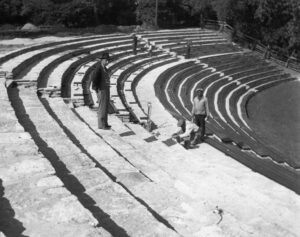
Construction of the Wallace Bowl in Gillson Park, 1937, Courtesy of the Wilmette Historical Museum
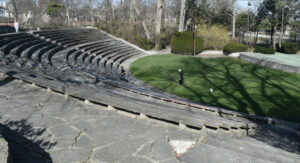
Perhaps one of Gillson Park’s crown jewels is the Wallace Bowl, an outdoor amphitheater that serves as the stage for their Sounds of Summer concert performances, movie nights, and theater performances.
The natural beauty of the park is another captivating aspect. Walk along the trails, explore the bird habitat, or lose yourself in the breathtaking beauty of the Wild Flower garden. Gillson Park’s allure lies in its ability to marry leisure and nature effortlessly.
Wallace Bowl in Gillson Park, 2023, Photo: Wikimedia Commons
As we wind down our exploration of Gillson Park, we remind ourselves that spaces like this encapsulate the essence of community living. They bring us closer to nature, offer a sense of belonging, and provide an array of activities for all ages. Gillson Park is not just a testament to Wilmette’s charming character, but it’s also an invitation for everyone to step out and embrace the summer sun in all of its glory!
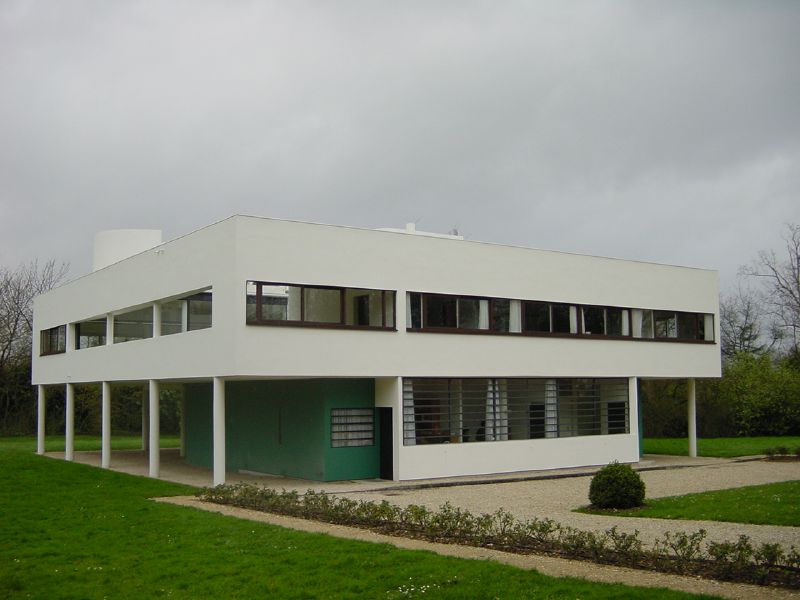
At Optima®, we have a deep appreciation for remarkable architectural creations that capture the essence of their time. Today, we voyage to Poissy, France, to explore the famous Villa Savoye – a residence that stands as a symbol of the Modernist movement and a testament to the genius of the Swiss-born architect, Le Corbusier.
Inaugurated in 1931, the Villa Savoye encapsulates Le Corbusier’s vision of what a home should be: a “machine for living,” embodying functionality, form, and harmony with the surrounding environment. Distinctly modern, yet timeless in appeal, Villa Savoye is the quintessential realization of Le Corbusier’s Five Points of Architecture.
The free designing of the ground plan, a central tenet of Le Corbusier’s philosophy, is showcased brilliantly in Villa Savoye. The open layout creates a fluidity of movement within the house, each room transitioning seamlessly into the next. The façade, free from structural constraints, features an elegant composition of horizontal windows, providing abundant natural light and stunning panoramic views of the surrounding landscape.
The villa also embodies the principle of free design of the façade, resulting in a strikingly minimalist exterior that foregoes decorative excess in favor of simple geometric forms. The ramp and the roof garden, other key aspects of Le Corbusier’s Five Points, add layers of functionality and aesthetic interest. The ramp provides a gentle, processional path through the villa, while the roof garden reclaims the green space sacrificed by the building’s footprint.
Interior of Villa Savoye. Photo: Timothy Brown, Flickr Creative Commons
At the heart of this architectural marvel is Le Corbusier’s concept of architectural promenade – the notion that architecture is best experienced moving through space and time. The journey through Villa Savoye is a continuous narrative, each room a chapter, each view a verse, unfolding the poetry of Le Corbusier’s architectural vision.
We revel in the opportunity to celebrate this modernist gem, designed by a pioneer of the movement, Le Corbusier, as an embodiment of innovation, artistic expression, and the timeless human desire for harmony between our creations and the world they inhabit. Just like Villa Savoye, Optima® is committed to creating spaces that respect and enhance their environment, thus contributing to the enduring legacy of architectural excellence.
Situated just a short drive from Optima Verdana in Wilmette, the Chicago Botanic Garden stands as an architectural testament to the harmonious blend of art, nature, and community. It is a verdant oasis that transcends the traditional boundaries of urban landscaping, offering visitors an unforgettable experience.
This sprawling sanctuary covers an impressive 385 acres, strategically mapped out into 27 distinct gardens and four natural areas. It’s not just a garden; it’s a living canvas where architectural genius and nature’s beauty come together in a vibrant display of community spirit. Strolling through the winding paths reveals the careful landscape curations. The structures dotting the garden offer more than functionality; they’re creative landmarks contributing to a magical environment. From the modern flair of the energy-efficient Regenstein Learning Campus or the timeless elegance of the English Walled Garden’s trellis design, each corner unfurls a tale of architectural innovation.
These architectural marvels are not standalone elements. They enrich the landscape, facilitating coexistence between tranquil spaces like the Japanese Garden and the energetic vibes of the Model Railroad Garden. Such diverse experiences demonstrate the incredible potential when architecture underpins community spaces. It’s a place where families spend sunny afternoons, where friendships blossom over shared plant care tips, and where the community comes together to celebrate the natural beauty that is inherent in the surrounding city. The garden encapsulates the essence of community living – shared spaces that inspire, invigorate, and engage.
The Sensory Garden, Chicago Botanic Garden
In addition to its aesthetic charm and natural beauty, the Chicago Botanic Garden bustles with an array of special events. This summer, visitors can immerse themselves in the Love in Bloom exhibition, a captivating showcase of floral beauty, running until September 24, 2023. The After Buzz Hours offers a unique twist, allowing visitors to chat with garden scientists over cocktails. These events represent just a glimpse into the Garden’s dynamic calendar, which can be fully explored on their official website.
The Chicago Botanic Garden is more than an assortment of plants or an architectural accomplishment. It stands as a beacon of what can be achieved when architecture and nature unite.
Visiting hours are 10 AM to 8 PM daily, with tickets available for purchase on their website.
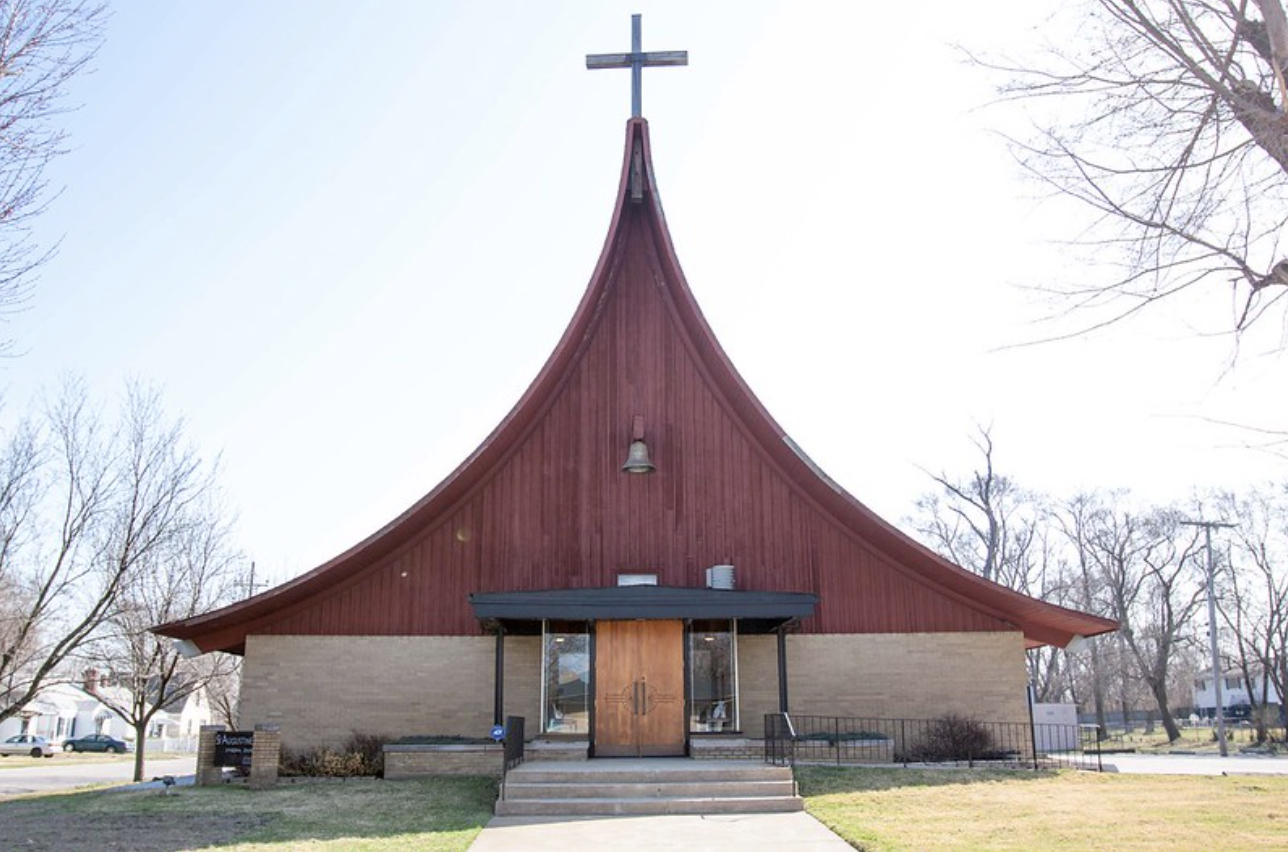
At Optima®, we are continually fascinated by the architectural masterpieces that exemplify the harmony between design and the narratives they hold. Today, we cast the spotlight on an architectural gem from the Mid-century Modern era, St. Augustine’s Episcopal Church in Gary, Indiana, designed by Edward Dart.
In the steel town of Gary, just across the Illinois border from Chicago, 30 African-Americans chartered a new Episcopal mission in 1927. The congregation weathered its early years to grow strong and financially stable by the mid-1950s, leading to the decision to commission their own place of worship. The conception of this project was nurtured by the Great Migration, which saw many African-Americans migrating from the South to Gary, drawn by job opportunities in the thriving steel industry.
By 1955, St. Augustine’s (fondly referred to as ‘St. Aug’s’) embarked on the purchase of a pipe organ. When discussions veered towards the building of their own church, the organ sales representative suggested Edward Dart, an architect whose style would come to define the church’s distinctive look.
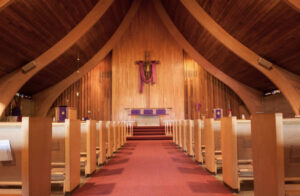
The collaboration between Edward Dart, a white architect from New Orleans, and St. Aug’s, a Black Episcopal mission, was unusual for the mid-1950s. Yet, over the course of four years, their shared vision resulted in an architectural design that incorporated local materials like Indiana limestone, honoring both the community’s roots and Dart’s signature style. Completed in 1959 at a cost of $120,000, St. Augustine’s Episcopal Church received the AIA Citation of Merit and the Church Architectural Guild’s Honor Award almost immediately.
St. Augustine’s Episcopal Church in Gary, IN. Photo: National Register of Historic Places
Despite the acclaim, the church’s congregation remained largely unseen, their presence neutralized in the predominantly white architectural narrative of the era. This erasure was eventually rectified in 1961 when the mission was granted full parish status, two years after the building was completed. Today, the congregation stands strong and the church continues to radiate its original beauty.
At Optima®, we find structures like St. Augustine’s Episcopal Church deeply fascinating, serving as profound expressions of the era’s architectural ethos that enrich our understanding of space, design, and community. St. Augustine’s Episcopal Church remains an enduring testament to Dart’s genius, a beacon of the Mid-century Modernist spirit that continues to captivate architects and designers worldwide.
As part of our ongoing “Women in Architecture” series, we’re sharing the story of Glenda Kapstein, an activist for architectural innovation and environmental consciousness. Her impressive body of work has not only redefined the architectural landscape of her home country but has also served as an inspiration for architects worldwide. Discover the remarkable journey of her life and career below:
The Life of Glenda Kapstein
Born and raised in Santiago, Chile, Glenda Kapstein was a curious and imaginative child. The city’s skyline, with its mix of colonial charm and modern ambition, made it the perfect place to fall in love with architecture at a young age. One of her earliest inspirations was Cantalao, a project dedicated to the culture and people of Chile, promoted by Chilean poet Pablo Neruda.
Kapstein decided to pursue architecture as a career, enrolling at the University of Valparaíso in 1959 and spent two years of school studying across Europe before finally graduating in 1967. Following her graduation, she moved to Spain to work with Spanish Architects Antonio and José Camuñas, who were hired to complete more than 3,000 houses in and around Madrid. Kapstein continued to pick up a mixture of jobs, from working as the Regional Director of Tourism in Antofagasta, Chile, to teaching at the Catholic University of the North (UCN). However, she eventually left to help UCN establish an architecture department and create a study laboratory of her own. With her laboratory, Kapstein was able to explore her interests in how climate dictates architecture.
The House of Spiritual Exercises of the Alonso Ovalle Foundation in Antofagasta, 1991, Courtesy of Carla Monforte Kapstein
Fuelled by the desire to broaden her perspectives, in 1994, Kapstein pursued her Master’s degree from the prestigious Pontificia Universidad Católica de Chile. The university’s broad and holistic approach to architecture further nurtured her growing passion and seeded her design philosophy with the importance of context and cultural relevance. There, she was surrounded by an inspiring blend of cultures, perspectives, and design philosophies that further refined her approach toward architecture.
Notable Works and Achievements
In her professional work, Kapstein worked to shape architecture that was not just aesthetically appealing but also ecologically responsible and socially sensitive. She viewed architecture as a powerful medium to express the historical, environmental, and social context of a place. As a result, her designs sought to harmoniously blend these elements, creating spaces that were both functional and meaningful.
Intermediate space within The House of Spiritual Exercises of the Alonso Ovalle Foundation in Antofagasta, 1991, Courtesy of Carla Monforte Kapstein
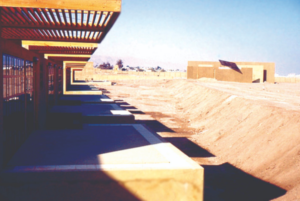
The most iconic example of Kapstein’s vision is the House of Spiritual Exercises of the Alonso Ovalle Foundation in Antofagasta. Built in 1991, this project stands out as a beacon of sustainable architecture, with its design seamlessly integrating with the natural landscape. The build, executed under Kapstein’s leadership with fellow architect Osvaldo Muñoz, is characterized by various intermediate spaces linking the interiors with the exterior desert. It incorporates innovative, energy-efficient features that minimize environmental impact while providing a state-of-the-art space to celebrate Chile’s rich biodiversity and cultural heritage. The project was a finalist for the Mies van der Rohe Pavilion Award for Latin American architecture in 1998 and the PLEA International Award in 2003, and was sadly demolished in 2019 for unknown reasons against the wishes of Kapstein’s family.
Another testament to Kapstein’s architectural philosophy is her work on the expansion of the Hotel Tulor in San Pedro de Atacama, a desert tourism hotspot. Still committed to ecological responsibility and cultural resonance, Kapstein incorporated local materials and traditional construction methods, resulting in an addition that seamlessly blended with the desert landscape and paid homage to the Atacama people’s heritage. Her design employed sustainable practices like passive cooling and heating to reduce energy consumption. The Hotel Tulor project underlines Kapstein’s distinct approach to architecture, combining innovation, sustainability, and cultural sensitivity, further establishing her as one of Chile’s most influential architects.
Rooms at Hotel Tulor, San Pedro de Atacama, made of adobe, wood and stone
Glenda Kapstein’s life and career are a testament to her commitment, creativity, and vision. Her journey serves as an inspiration for aspiring architects, especially women, reminding us all that architecture is not just about creating structures, but about creating stories, preserving heritage, and designing a sustainable future.
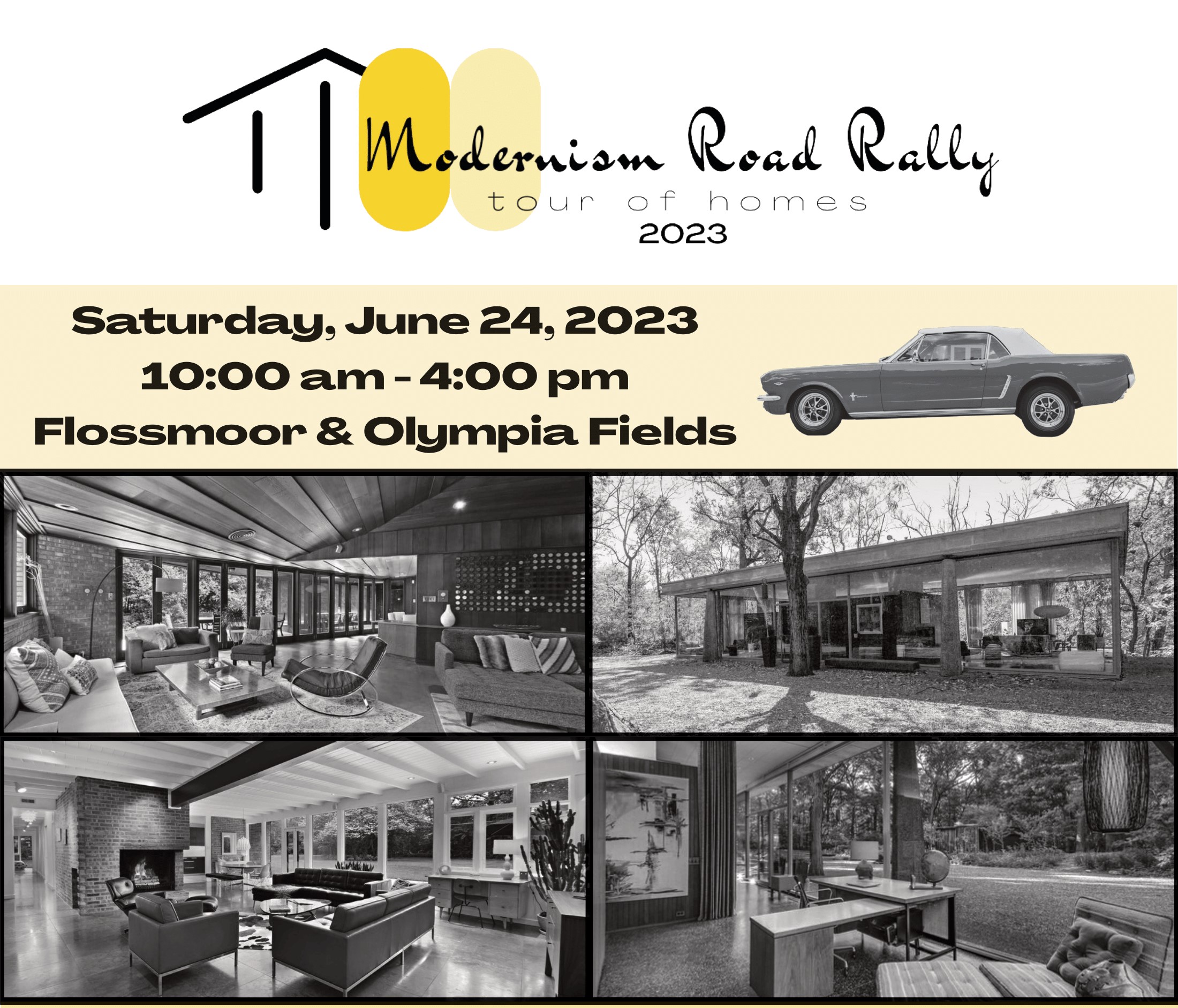
At Optima®, we are always excited to share unique architectural experiences that reflect our passion for design. So mark your calendars, Modern enthusiasts, we have some fantastic news for you! The second biennial Modernism Road Rally Tour of Homes is returning to celebrate the Mid Century Modern architectural legacy of Chicagoland. Launched in 2021, this biennial event takes place in different community areas of Chicagoland. This year’s edition will lead you through the captivating south suburban enclaves of Flossmoor and Olympia Fields.
The 2023 Modernism Road Rally Tour showcases homes designed by renowned midcentury architects such as Keck & Keck, Edward Dart, and Bertrand Goldberg, as well as architects like Edward Humrich, John McPherson, and John S. Townsend. Participants will have the opportunity to admire the exteriors and enjoy limited interior tours of select homes, offering an intimate glimpse into these architectural gems.
The event organizers have partnered with the Foundation for the Preservation of Flossmoor History for this year’s edition. A percentage of the proceeds will contribute to the restoration of the historic Wagner Building, which is scheduled to open in time for Flossmoor’s Centennial in 2024.
Conservatory Vintage & Vinyl, situated in the charming 1920s-era downtown Flossmoor, will serve as the event headquarters. After exploring the architectural marvels, participants can join the post-event party at the Flossmoor Station Restaurant & Brewery, a former railroad stop transformed into a lively social hub.
Flossmoor, founded in 1924, experienced a construction slowdown during World War II, followed by rapid postwar development. Its neighboring community, Olympia Fields, started in 1913, primarily as golf cottages surrounding the famous Olympia Fields Country Club. Post-World War II, the legendary modernist subdivisions of Graymoor and Country Club Woods were developed, boasting numerous outstanding examples of Mid Century Modern architecture.
Participants can purchase tickets for the tour, post-tour party, and sculpture tour online. The event also offers a trolley shuttle service along the entire tour route on Saturday, included in the ticket price (reservation required at the time of ticket purchase). Event check-in will be available at Conservatory Vintage & Vinyl for all paid attendees on Friday, June 23, from 12:00 PM to 6:00 PM, and Saturday, June 23, from 8:00 AM to 6:00 PM.
The second biennial Modernism Road Rally Tour is an exciting opportunity for architecture enthusiasts to delve into the fascinating world of Mid Century Modern design in Chicagoland. At Optima®, we are delighted to share this event with you and hope you enjoy exploring the rich architectural heritage of Flossmoor and Olympia Fields. Don’t miss out on this unique experience, and be sure to reserve your tickets here in advance!
Please note that there will be no walk-up ticket sales available.
At Optima®, we are always delighted to showcase the works of Modernist architects who have made waves in the field. One such architect, whose innovative designs and extraordinary imagination have left a lasting impression, is John Lautner. Today, we’ll explore the unique characteristics of Lautner’s architectural style, highlighting his inspirations and the significance of his contributions to the field.
John Lautner (1911-1994), born in Marquette, MI, had a distinctive style that was shaped by his early apprenticeship under the legendary Frank Lloyd Wright, as well as by his own profound interest in engineering, organic architecture, and the natural world. Lautner’s designs are characterized by their seamless integration with the environment, imaginative use of materials, and bold, sculptural forms.
One of the fundamental aspects of Lautner’s architectural style was his ability to harmoniously blend his structures with their surrounding landscape. Drawing inspiration from Wright’s organic architecture principles, Lautner believed that buildings should not only respect their natural environment but also enhance it. His designs often feature extensive use of glass, allowing for unobstructed views and creating a synchronicity between the interior and exterior spaces.
His fascination with engineering and materiality allowed him to push the boundaries of conventional architectural design. He frequently employed innovative construction techniques, such as the use of cantilevers, to create seemingly gravity-defying spaces. Additionally, Lautner’s designs often incorporated a diverse range of materials, including concrete, steel, and timber, as well as experimental materials like sprayed-on concrete (gunite).
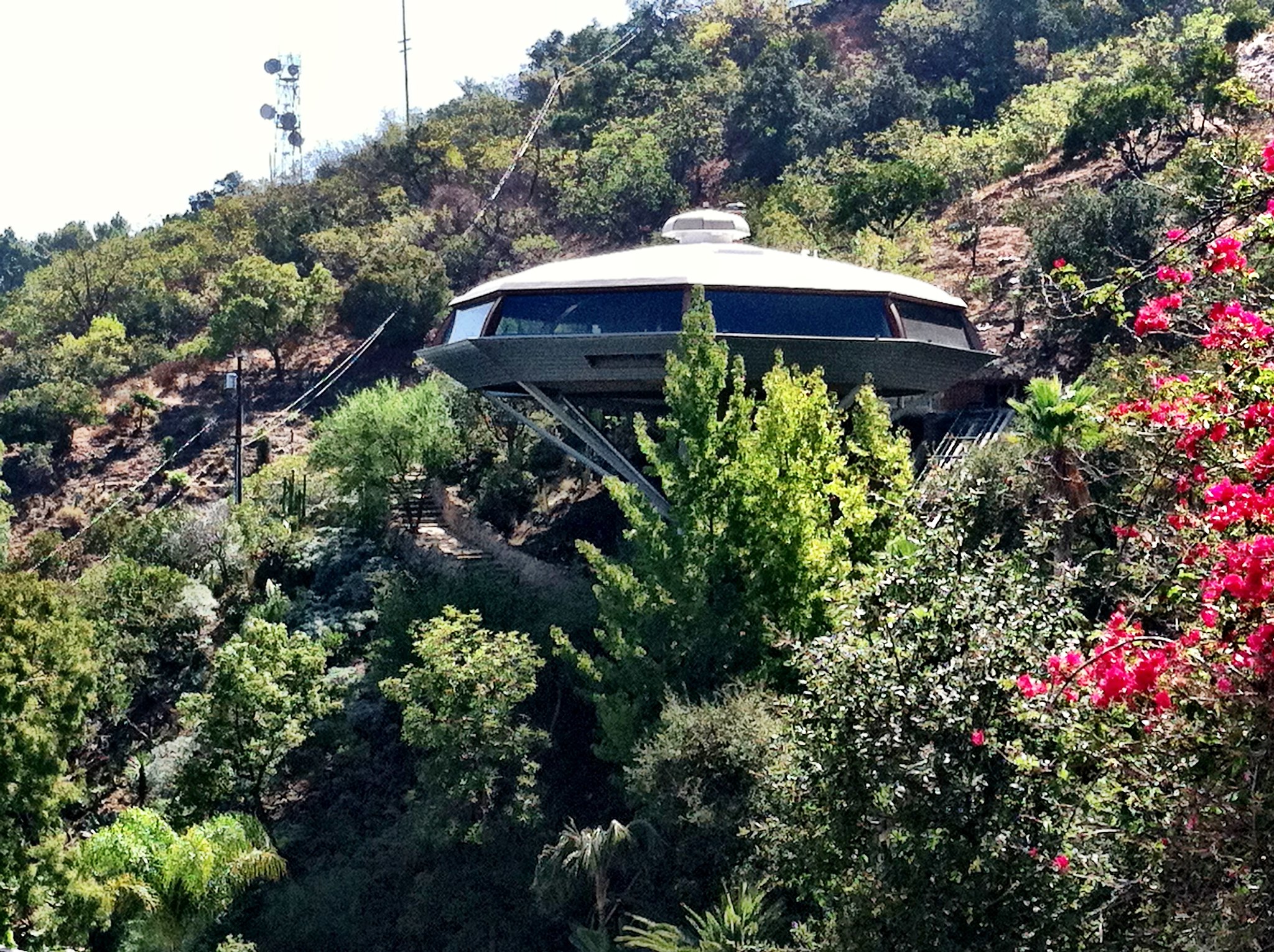
One of Lautner’s most notable projects showcasing his innovative use of materials is the Chemosphere (1960), a futuristic octagonal house perched atop a single concrete column in the Hollywood Hills. The house appears to float above the landscape, demonstrating Lautner’s ability to create a sense of weightlessness and otherworldly charm.
Lautner’s architectural style is characterized by a sense of spatial fluidity, as he sought to create open, flowing interiors that defied conventional notions of rooms and boundaries. His designs often feature sweeping curves and dramatic angles, resulting in dynamic, visually captivating spaces.
The Elrod House (1968) in Palm Springs, for example, demonstrates Lautner’s mastery of spatial fluidity. With its iconic conical roof and open-plan living spaces, the house appears to grow organically from the rocky landscape. This seamless connection between interior and exterior spaces is further emphasized by the use of retractable glass walls, which allow the residents to fully experience the surrounding desert environment. Also, did we mention that the Elrod House was featured in the 1971 James Bond film, Diamonds Are Forever?
While Lautner’s architectural style was undoubtedly influenced by his time spent working under Wright, his experiences working with other luminary architects like Richard Neutra and Rudolph Schindler helped him shape a unique vision and dedication to experimentation.
We take immense pleasure in celebrating the contributions of Modernist architects like John Lautner, whose groundbreaking designs continue to inspire and captivate. His iconic structures stand as testaments to the power of imagination and the importance of embracing the ever-evolving landscape of design.