Modernist Graphic Design

Modernism is one of our cornerstones at Optima; it informs everything from our designs to our methodologies. And though the movement is often talked about in reference to architecture, art, sculpture and interior design, Modernism also had a significant impact on graphic art. Today, we’ll dive into Modernist graphic design and its impact on visual communications.

Changes in Vienna

By the end of the 19th century, artists were growing tired of traditional, conservative forms of art. In Vienna, a group of artists led by Gustav Klimt dubbed themselves the Vienna Secession and broke away from the artistic institutions in Austria’s capital at the time. The group explored uncharted territory in form, composition and expression, sparking similar experimentations in other nearby countries such as France and Germany. Rich paint strokes and realism translated into flat color and stylistic typography, expressions that would pave the way for graphic art. 

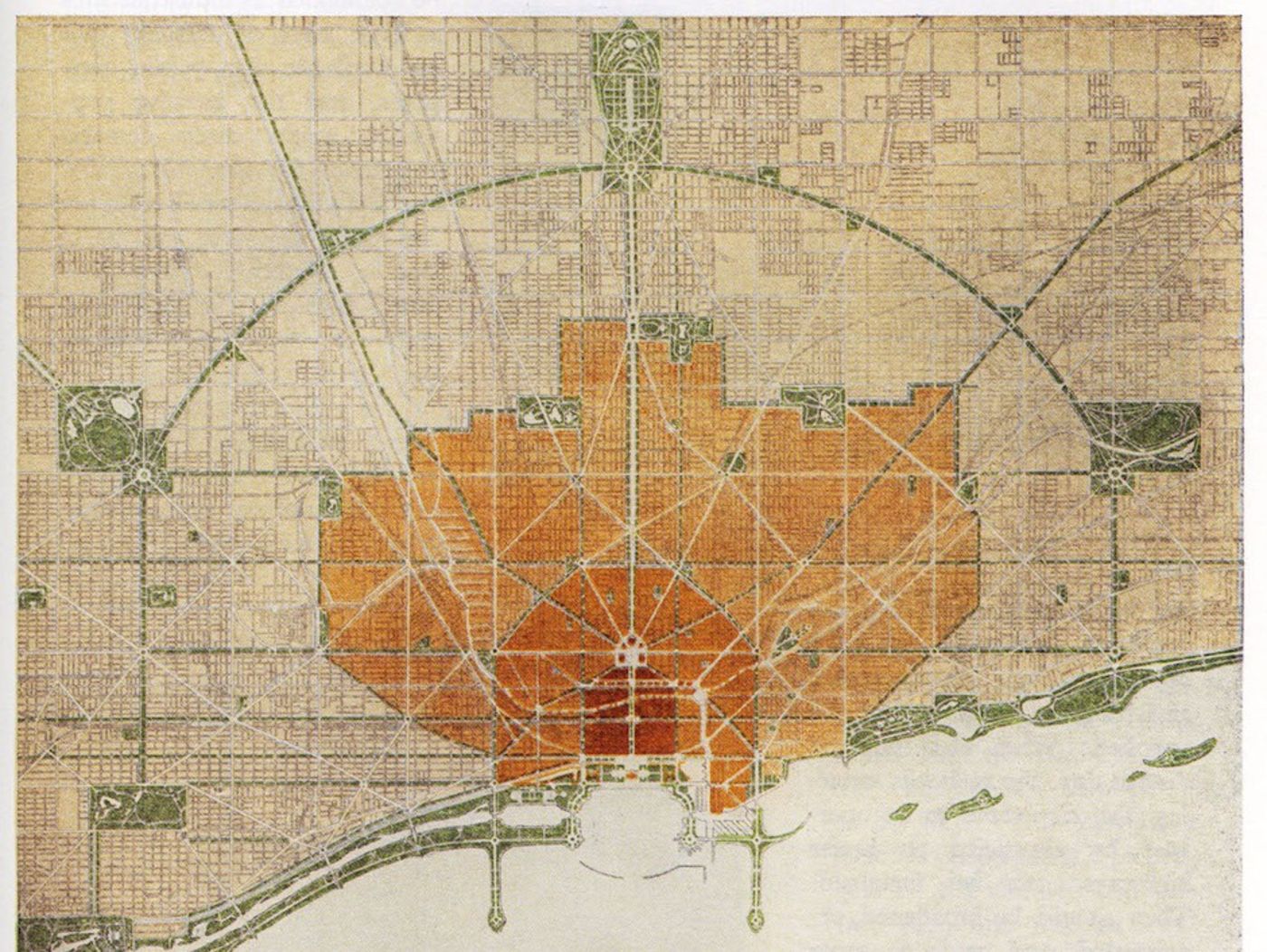
Army recruiting poster, designed by James Montgomery Flagg, 1917
Army recruiting poster, designed by James Montgomery Flagg, 1917. Image in public domain.

The World at War

When World War I began, graphic design was already used for commercial, corporate and aesthetic purposes. Its new role would be political, used in posters and propaganda during the war. Advancements in mass color printing allowed for efficient production of messages to raise funds, encourage enlistment and boost morale. The turmoil and challenges faced in both World Wars would ultimately inspire the first wave of true Modernism within graphic design. 

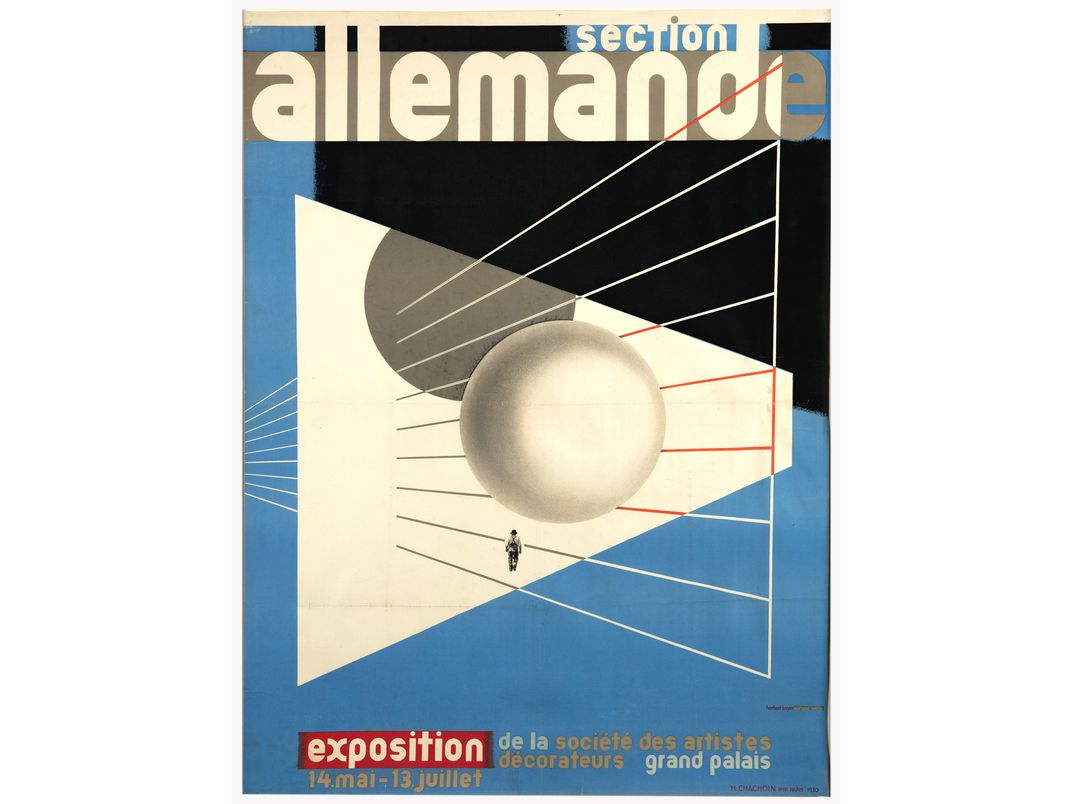
Poster designed by Herbert Bayer, 1930
Poster designed by Herbert Bayer, 1930. Credit: kitchener.lord on Flickr Creative Commons, CC BY-NC-ND 2.0 Deed

Modern Experiments

Across Europe and in America, graphic designers took inspiration from broader artistic movements such as Cubism, Futurism, De Stijil and Surrealism. In Germany, the Bauhaus movement also had a significant impact on graphic design; thick lines, primary colors and disrupting white space were just as striking in 2-D format as they were in architecture or sculpture. Eventually, Modernist design was defined by abstract expression, bold type and primary colors and shapes. These designers approached the work objectively, emphasizing the rational over the expressive (and emphasizing the classic Modernist belief that form follows function). 

As the Nazis rose to power in the 1930s, Modernist experiments in all practices were denounced, and many artists, architects and designers immigrated to the United States. Although Modernist design was disrupted in its growth, it remains one of the most impactful movements in the history of graphic design. Even our own website has elements of Modernist designs with asymmetry, primary colors and bold typography. Every facet of Modernism inspires what we do, from architecture and sculpture, to the graphic arts. 

Bocce 101

At Optima, we don’t just build homes, we build communities — that’s because fostering a sense of connection is an integral part of our process, and an integral part of the resident experience. We aim to create spaces where people can meet, play and entertain, whether that’s with other residents of the building or with their friends and family (or a mix of both). And that’s why at our Chicago community, Optima Signature, we added bocce ball courts to one of our four dedicated amenity floors. The highly social and engaging sport not only provides our residents with competitive fun, but it’s an occasion to connect over, too.

According to the Chicago Tribune, the U.S. has seen an explosion of “social bocce” playing across the country. Those seeking exciting new ways to spend time with family and friends have flocked to the casual sport now being played at restaurants, bars and park districts all over. But perhaps what attracts people to the sport even more is its accessibility. Bocce ball is an incredibly beginner-friendly game, and bocce courts are also easy to maintain for the sites that host them.

Bocce is played on courts made of soil or asphalt, typically up to 90 feet long and between 8 and 13 feet wide. Games are played between two opposing players or teams of 2-4, where players “bowl” bocce balls down the court and attempt to get their ball closest to the “jack.” Bocce balls are hefty, spherical balls made from wood, metal, baked clay or plastic. Players/teams receive one point for each ball that is closest to the jack, with most games ending around 7-13 points scored. Considering the space needed while playing, it’s also a great game for social distancing. 

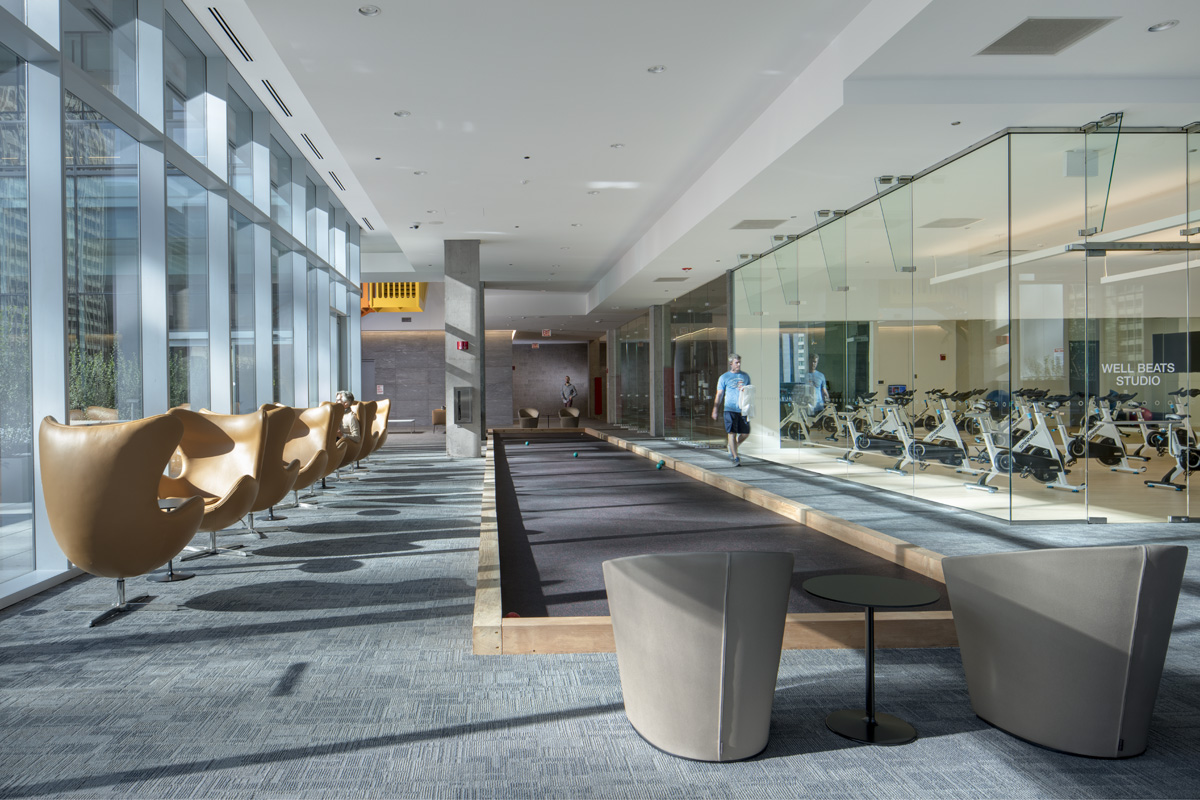
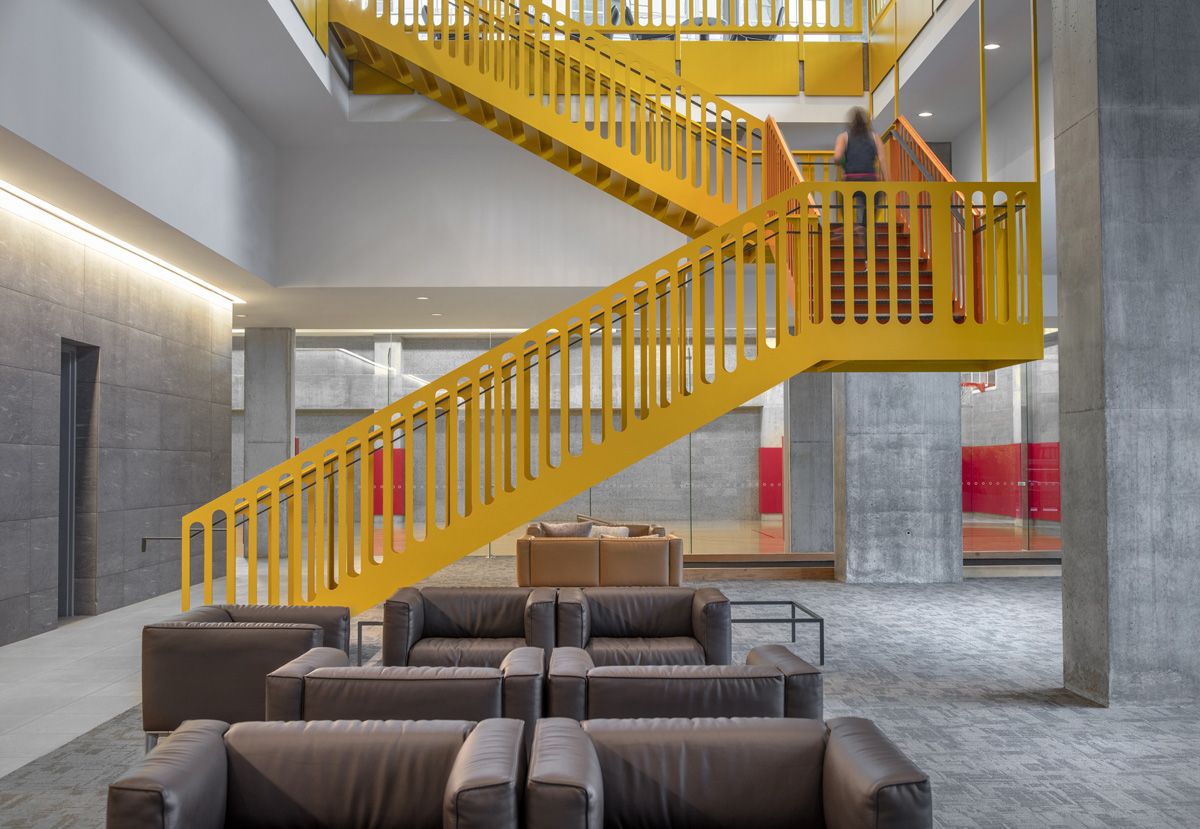
The bocce ball court at Optima Signature occupies an open, inviting space between other amenities on the seventh and eighth floors. These dedicated amenity floors, designed to be a gathering space for residents, include features like a putting green, golf simulator, WELLBEATS cycling studio, indoor basketball court and an open lounge area with Egg chairs, perfect for spectators of the game. Bocce ball is a natural fit in the mix, cultivating a lively environment where residents can come together over fun, shared activities.

Chicago’s Public Art: Joan Miró’s Chicago

Our reverence for sculpture and for the cities in which we operate collide to create a deep appreciation for the public art of Chicago. And as we explore the craft in the city we love, we’re doing deep dives into famous public works from downtown to vibrant neighborhood pockets. This week, it’s all about Joan Miro’s Chicago.

History of Miro’s Chicago

This iconic sculpture by iconic artist Joan Miro was first titled The Sun, The Moon and One Star but is known now as Miro’s Chicago. Originally, Miro was commissioned by Brunswick Corporation in 1969 to design a sculpture, but the project halted when Brunswick withdrew funding. In 1979, Chicago’s first female mayor Jane Byrne reinvigorated the project, promising to fund the first half of the project if others would commit to funding the second half. Together, foundations, institutions and individuals rallied to commit that final stretch of funding, and Miro himself reduced the cost of construction by completely donating his design to the city. It’s only appropriate, then, that Miro’s Chicago is an iconic fixture in the city, as it was brought to fruition by collaborative and impassioned locals.

Visiting Miro’s Chicago

The sculpture is tucked modestly away in a narrow plaza between the Cook County Administration Building and the Chicago Temple Building in Chicago’s downtown financial district. The plaza, known as Brunswick Plaza, is directly south of the Daley Center and nearly directly south of another iconic Chicago public art piece, the Chicago Picasso

Miro’s Chicago, in its modest and peaceful crevice downtown, makes for a serene location for local workers to have lunch outside. The concrete, bronze and ceramic tile façade towers to almost 40 feet tall, and its curving figure has earned the nickname “Miss Chicago.” The large pedestal beneath the sculpture invites passerby to sit and marvel either at the statue above, or the striking Chicago architecture even farther above. As a piece of public art, it does exactly what we at Optima know and love sculpture for: it elicits an emotional experience from its viewer, while activating the incredible architectural space around it.

Sculpture Spotlight: Silver Fern

As devout fans of Modernism, at Optima we love to experiment with form and function. That’s how Optima Co-Founder David Hovey Sr. got into sculpture. Combining his love of art with his interest in materials, David Hovey Sr. began manipulating steel to create striking sculptural pieces that play complement to Optima’s architectural spaces. Today, we’re examining one of his sculptures: Silver Fern.

Silver Fern in the 7160 tower at Optima Kierland Apartments

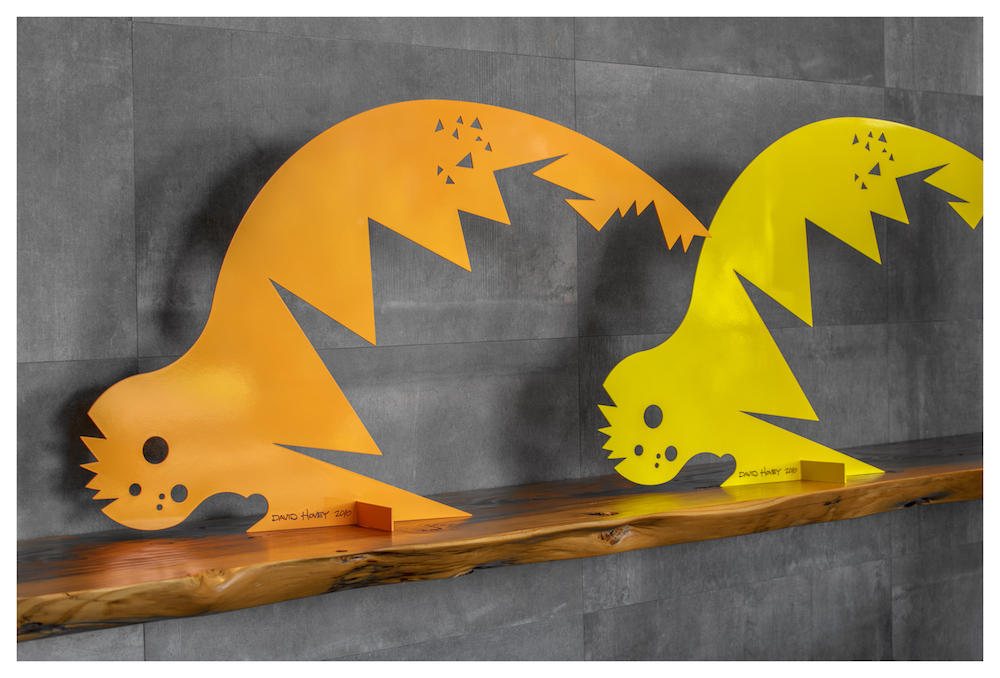
Like all original Optima sculptures, Silver Fern is a piece that has many versions, varying in both size and color. But what never changes is the form of the piece: Silver Fern is a uniquely two-dimensional sculpture. Silver Fern’s two-dimensionality allows the sculpture to explore the nature of a flat piece of steel, given depth through other experimental plays. The smooth piece of steel is laser cut with circles and triangles that create depth through shadows and voids. Meanwhile, jagged edges and sharp corners play perfect juxtaposition to the soft, sweeping curve of the steel, further illuminating the material’s multifaceted ways of being.

Silver Fern at 7180 Optima Kierland

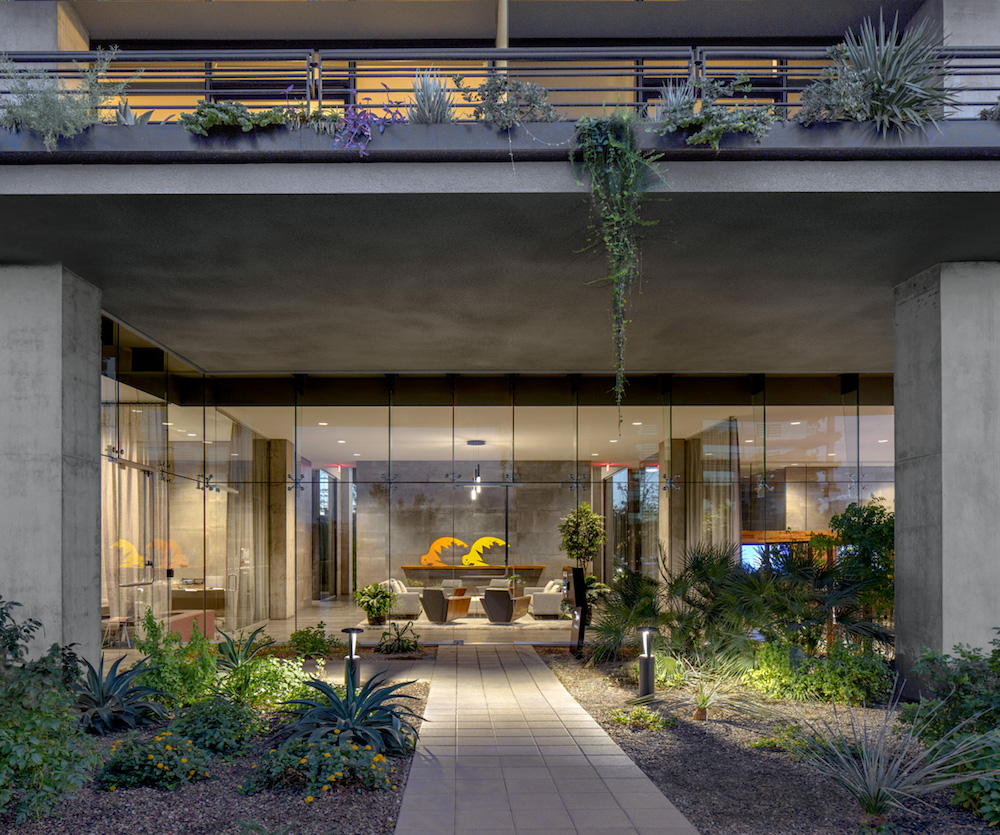
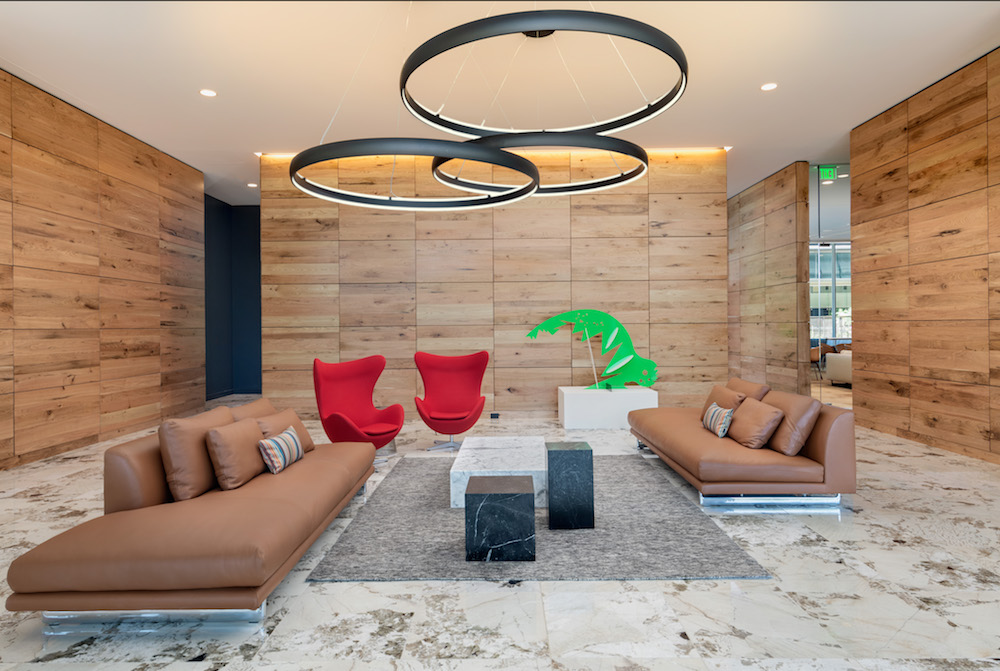
The sculpture’s many adaptable forms play perfectly in our various communities. In the 7160 tower at Optima Kierland Apartments, two iterations of Silver Fern pose side-by-side, one in brilliant orange and one in striking yellow, their curves blending together to create an undulating pattern. The sculptures are seen through the front glass curtain wall by anyone walking up through the courtyard, activating the space with energy from the get-go. Meanwhile at 7180 Optima Kierland, a Silver Fern piece swathed in neon green plays bold contrast to Modernist red chairs in the lobby.

Whether we’re experimenting with form, function, size or color — at Optima we love to playfully implement sculpture as yet another component of thoughtful design.

Pet-Friendly Amenities at Optima

Though 68% of all US households own a pet, finding a condo or apartment that allows pets can be quite the treasure hunt. And even when pets are allowed, there’s still a big difference between having a pet policy and being pet-friendly.

To overcome this challenge for renters and owners, pet-friendly buildings are including additional amenities or offerings that welcome and celebrate the community of pet-lovers and their furry companions. Particularly in urban areas, these pet-friendly inclusions become crucial to the convenience and happiness of animal owners and their pets.

At Optima, we constantly push ourselves to innovate and include exceptional features that elevate the resident experience, from installing pickleball courts to carefully choosing retail tenants that meet our residents needs. Over the past few years, improving the resident experience has also meant amping up our amenity offerings for oft-overlooked residents: our four-legged friends. Here’s a closer look at pet-friendly amenities at Optima:

Dog Park at Optima Sonoran Village

Optima Sonoran Village

Situated in the heart of urban Scottsdale, Optima Sonoran Village makes the optimal home for pet-owners with the inclusion of a community pet park. Beyond this dedicated space, Optima Sonoran Village has several acres of open space with walking paths, making it the perfect place for a morning dog walk. Each apartment at Optima Sonoran Village also features a private terrace, so your pet can get some fresh air at any time of day, without you even having to leave home.

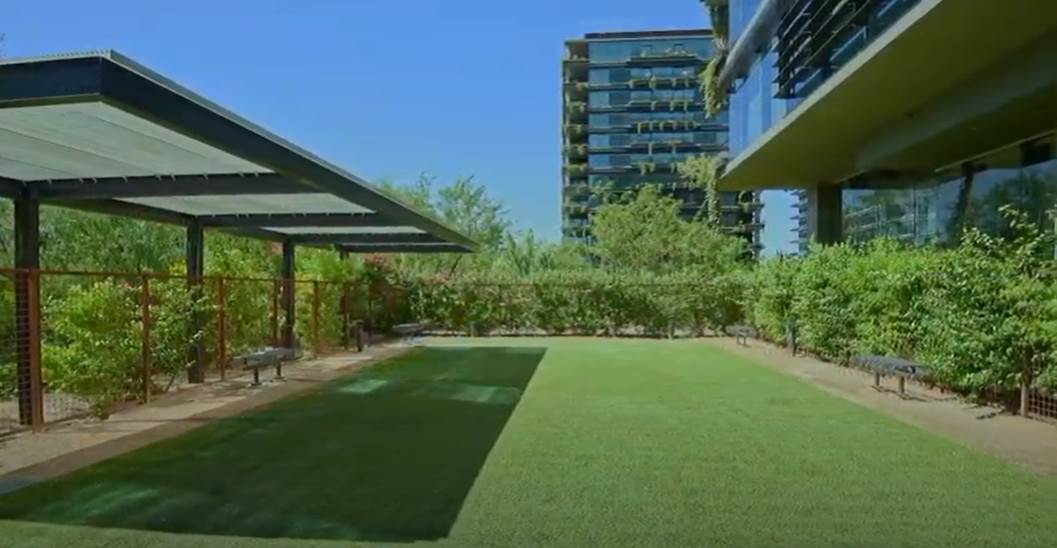
Dog park in the 7160 tower at Optima Kierland Apartments

Optima Kierland Apartments

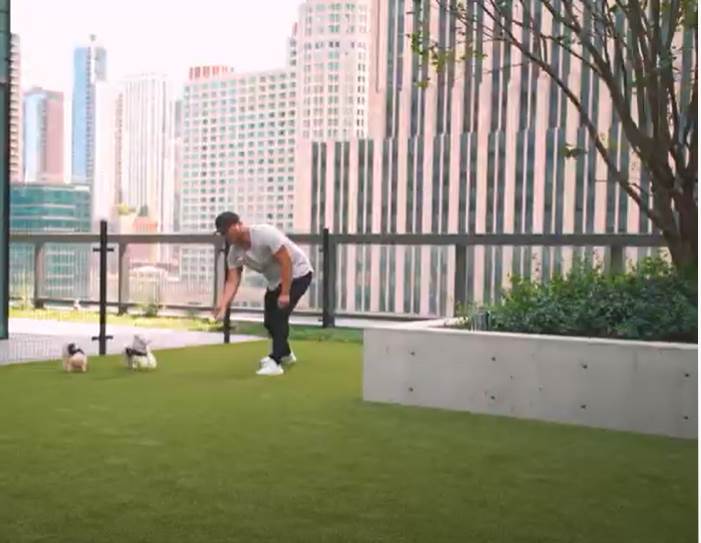
At Optima Kierland Apartments, our pet-friendly amenities at each tower include a dog park and pet spa. Residents and their pet companions can also make use of the sprawling green space that surrounds the properties, where getting exercise for your pet never requires going far and even better, each unit’s private terrace offers outdoor space right within the bounds of your own home. The community even features a pet spa, so after a day of play, you can make sure your furry companion comes back to your apartment sparkly clean.


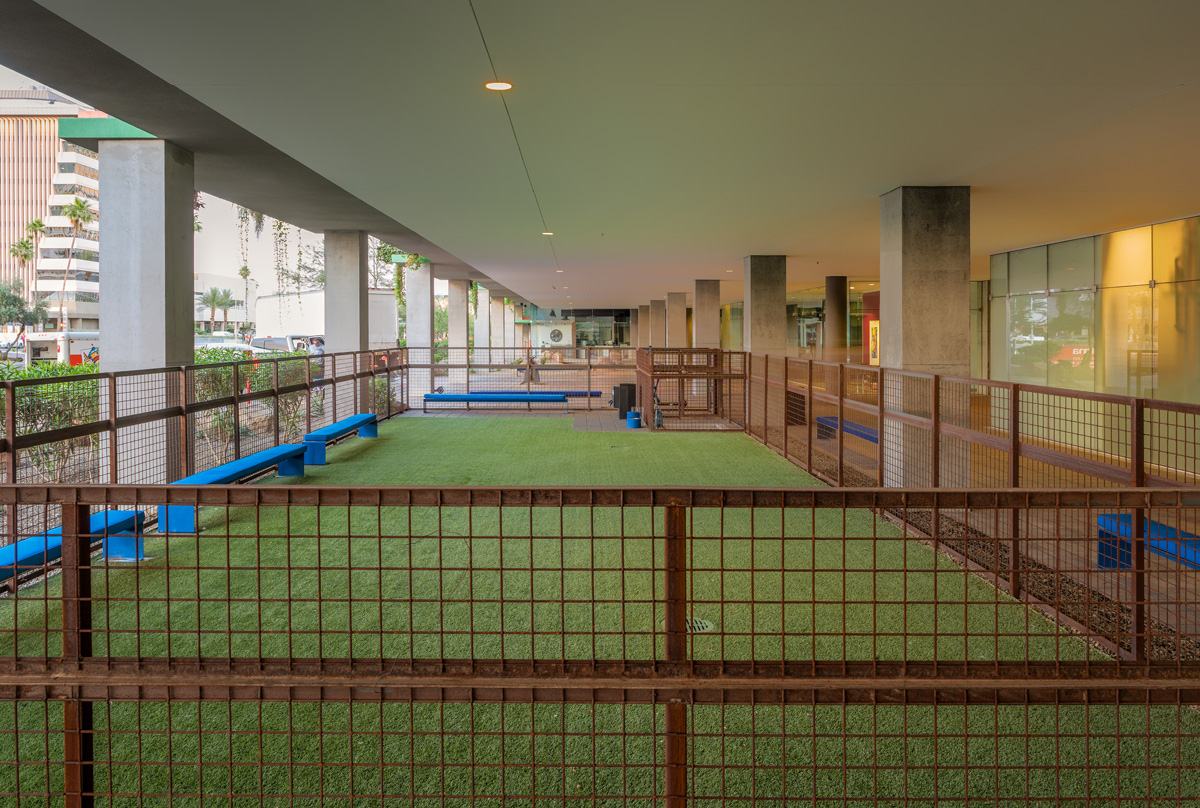
Outdoor dog park at Optima Signature

Optima Signature

At Optima Signature, our package of pet-friendly extras includes both indoor and outdoor dog parks as well as grooming facilities. We’ve even gone so far as to choose retail tenant GoodVets for our community here — a choice made specifically to respond to residents’ needs. Beyond on-site pet-friendly amenities, Optima Signature’s proximity to the riverfront and lakefront make it easy to take an adventure into the city with your pet.

Particularly in urban areas, we recognize that finding the perfect space for your pets to thrive can be tough, so we strive to make our residents’ lives easier and more enjoyable — for people and pups alike.

A Brief History of the Plaza

At Optima, we’re believers that exceptional design has the power to inspire awe and wonder, and to enhance the human experience. One such component of design, the plaza, is a perfect example of this: designed as an open, public space, plazas create hubs for community activity and human connection. To learn more about the role this seminal piece of design has in creating public space, we’re diving into the history of the plaza.

Plaza Mayor, Madrid. Credit: Francisco Anzola on Wikimedia Commons, licensed under the Creative Commons Attribution 3.0 Unported license

The First Plazas

From colonial cities in Spanish America to the Spanish East Indies, there were several types of plazas serving as the center of community life. The plaza mayor often referred to the space centered between several administrative, religious and government buildings. The plaza de armas, meanwhile, served as a rallying space for troops, and the plaza de toros translates, quite literally, to bullring.

Perhaps the most significant example of such plazas is the Plaza Mayor in Madrid, Spain. Dating back to 1619, the plaza was constructed during the reign of Philip III by architect Juan de Herrera. Though the plaza saw several disasters since then and was reconstructed an equal number of times, it remained (and still remains) a pivotal public fixture in Madrid. Plaza Mayor has served many diverse purposes, from being the site of a marketplace, to bullfights, to military parading ground, to public executions, to even trials during the Spanish Inquisition and crowning ceremonies. 

Evolving over time to a space of leisure, the Plaza Mayor is now the site of outdoor cafes, restaurants and, inevitably, tourists. It draws people in with yoga workshops, concerts and festivals — a far cry from its dabbles in militant history. The Spanish plaza is also related to the Italian piazza, with both belonging under the umbrella term “town square,” which includes city squares, plazas, piazzas and city greens.

The Modern Day Plaza

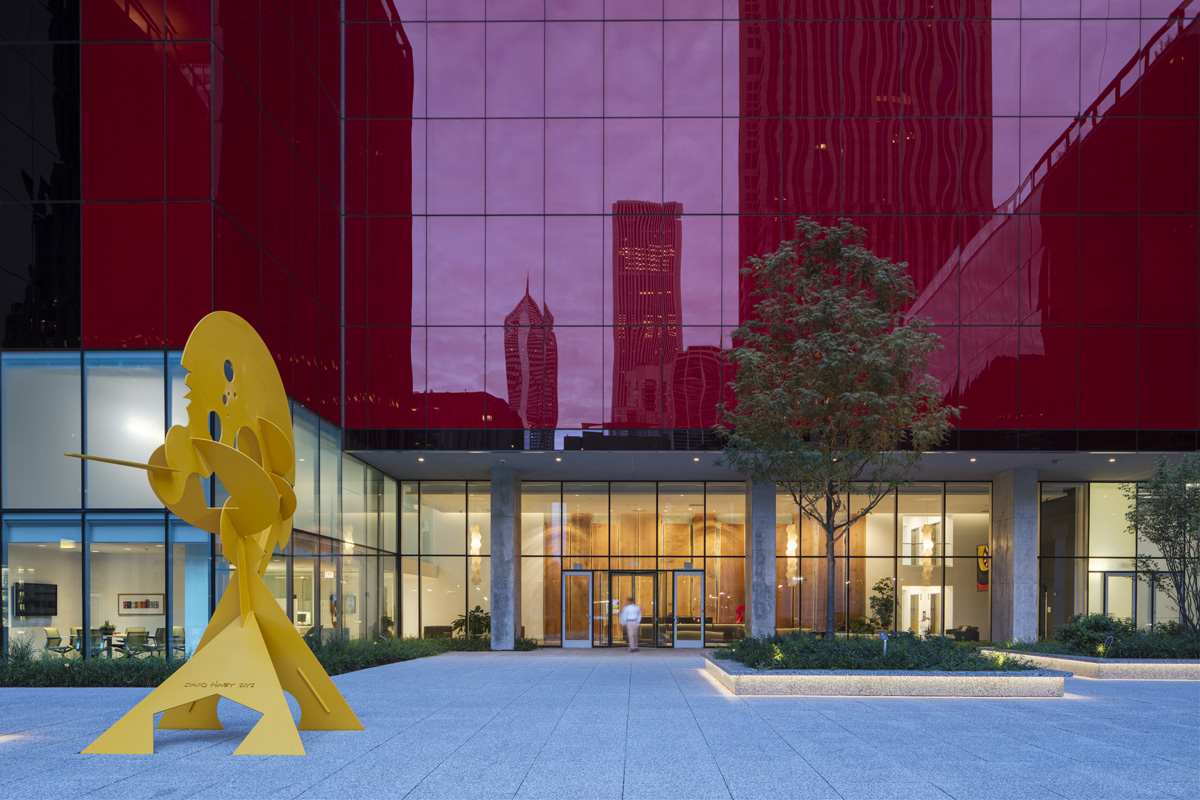
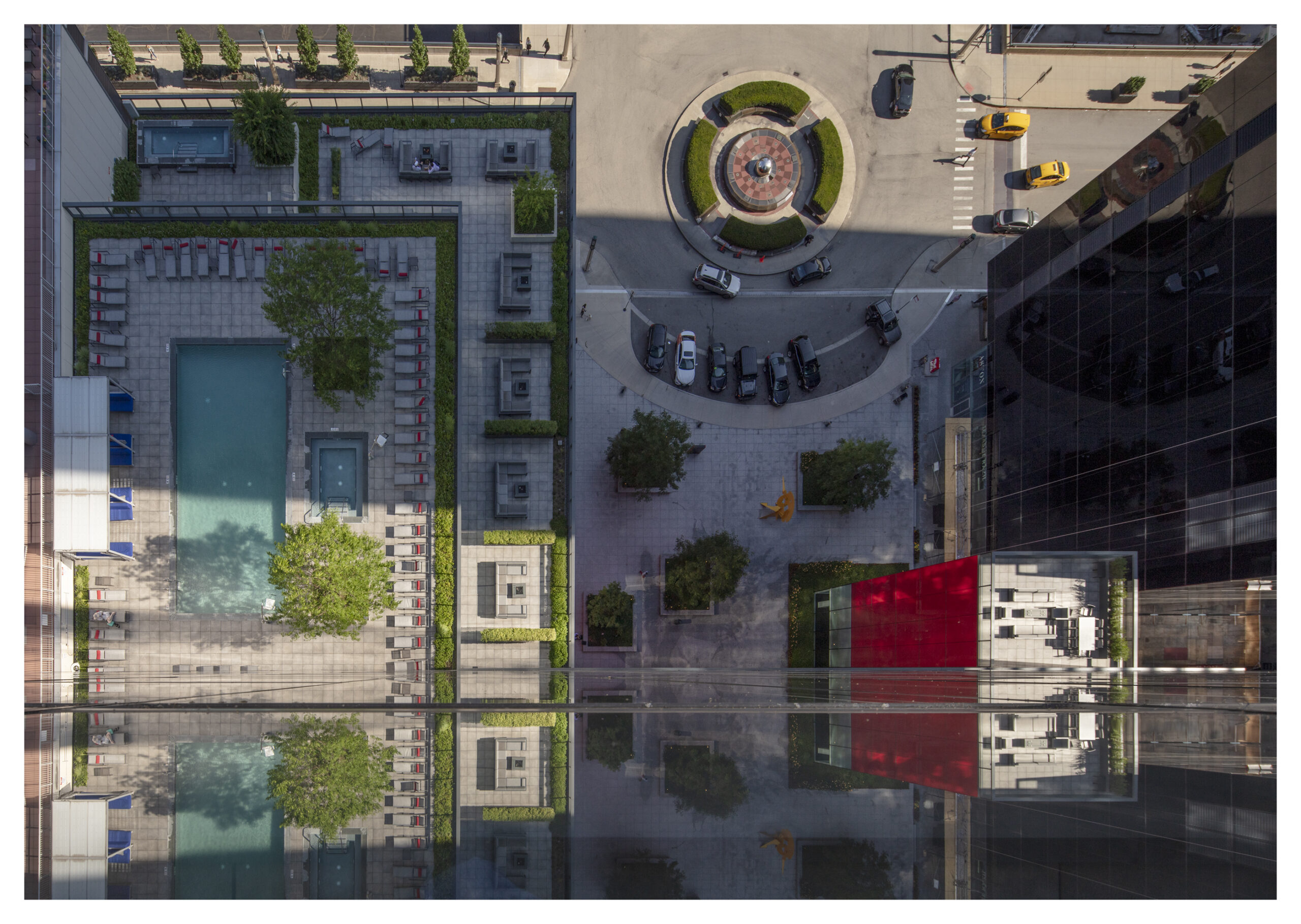
Following in the footsteps of Madrid’s adaptable Plaza Mayor, the modern day plaza can refer to a multitude of spaces with a multitude of purposes. Within our own portfolio, a prime example of a plaza is at Optima Signature and Optima Chicago Center. By sliding the podium of Optima Signature North and juxtaposing Optima Chicago Center to the West and South, the buildings create a dynamic plaza space, which features lush landscaping, planters and benches. Kiwi, a large-scale sculpture designed by Optima founder David Hovey Sr, adds to the visual energy of the space. 

Aerial view of the plaza at Optima Signature and Chicago Center

Now, plazas refer to open spaces within neighborhoods that boost economic vitality, pedestrian mobility and safety as well as providing aesthetically pleasing areas. No matter the interpretation of the word, there’s always one belief at the core, and that’s gathering and celebrating community. 

The Evolution of Amenities

Location, location, location” has always been the sage advice in real estate, but experts think in the coming years, that may shift to “amenities, amenities, amenities.” In the industry arms race, amenities have skyrocketed to the forefront of renters ⁠— and buyers ⁠— minds in recent years. And with any trend, amenities is one that’s constantly evolving, growing and incorporating new ideas that ultimately lead to greater longevity. 

Navigating Recovery and a New Generation

After the housing market crash of 2007-2008, many people opted to rent rather than buy, whether it was out of preference or for financial security reasons. That change in preference, combined with the rise of millennials in the home buyer/renter market, placed new emphasis on the multifamily market. Millennials began to eschew the suburbs in favor of multifamily buildings in urban cores, and prioritized access to local amenities and public transportation. 

With the transition to multifamily properties, residents became more and more open to sacrificing a ‘traditional’ home in exchange for more shared amenity spaces. With amenity offerings spanning from the recreational (gyms, pools, sport courts) to the everyday-practical (libraries, coworking space) to health and wellness focused (spas, outdoor space), the trade-off is well worth-it to most. Amenities offer access to a lifestyle and a community focus that may be well beyond a given resident’s price range, creating increased opportunity within their own home while still remaining in budget.

The Sky Deck at 7140 Optima Kierland

Amenities at Optima

In our pursuit of designing impactful spaces, amenities at Optima have similarly evolved to meet the needs and expectations of our residents. As Optima Signature was underway, we saw that an increasing number of people were working from home, so we incorporated spaces to stay focused and inspired. Our amenity spaces at Signature are numerous, and they include a conference room, library, powered and connected seating areas (indoor and outdoor as well as business suites. A productive at-home office space is well balanced with 1.5 acres of amenities, creating the perfect balance of work and play for Signature residents. 

At our latest project, Optima Kierland Center, the amenities were designed to take advantage of the great outdoors and surrounding desert, both in common spaces and individual residences. Party rooms, fitness spaces, yoga and wellness spaces were designed to be indoor-outdoor, oftentimes using retracting glass walls to join the two. Though wellness amenities are common now, amenities at Kierland include spa-calibur steam rooms and saunas, a rooftop running track, pickleball and basketball courts, full-service fitness centers, and stunning panoramic mountain views to get residents excited to enjoy the outdoors. 

Ultimately, we love creating spaces that don’t just respond to trends, but truly meet the needs of the people who will interact with them daily. Amenities are just one of the ways we create a lasting impact and a fantastic living experience for our residents.

Our Beliefs: All In, All the Time

Our beliefs are the principles that unite us, that inspire us each and every day to work toward a shared vision. One of those beliefs — all in, all the time — speaks to our unparalleled dedication, drive and willingness to do everything we can in the pursuit of exceptional design, from the small details to the big picture. We’re constantly at the drawing board with all cylinders firing, ensuring that what we deliver is in its best, most efficient form. That’s Modernism, and that’s Optima.

Our ability to commit so fully is made possible by our vertically integrated business model. Tired of the traditional red tape within real estate development companies, Optima founder David Hovey Sr. wanted to do something different, to start a company built around its dedication to exceptional design. We’re as passionate about the small details as we are about the big picture, and we operate at a pace — and with degrees of precision and attentiveness — that are unparalleled in the real estate development world. We invite the challenge of doing something that others say cannot be done, because we know that it can. 

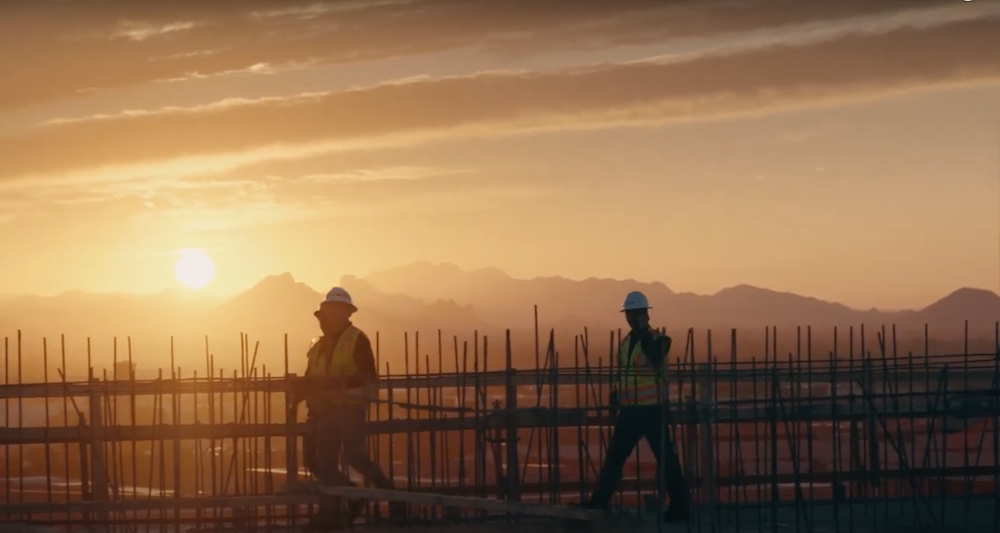
Thus far 2020 hasn’t been short of challenges, but our team has faced them head-on, from staying inspired to keeping focused through COVID-19. To keep Optima Kierland construction on track, our Arizona construction team worked tirelessly. They adapted through increased safety measures, adjusted schedules and constant communication to make sure everything still ran smoothly.

No matter the situation, we are adaptable and equipped to respond to challenges as they arise. More than just committed to a shared vision, we’re nimble and quick on our feet, bringing unique and innovative solutions that yield better results. To be all in, all the time — it’s not just built into our DNA, it’s built into how we navigate our work and our world every day.

Chicago’s Public Art: Crown Fountain

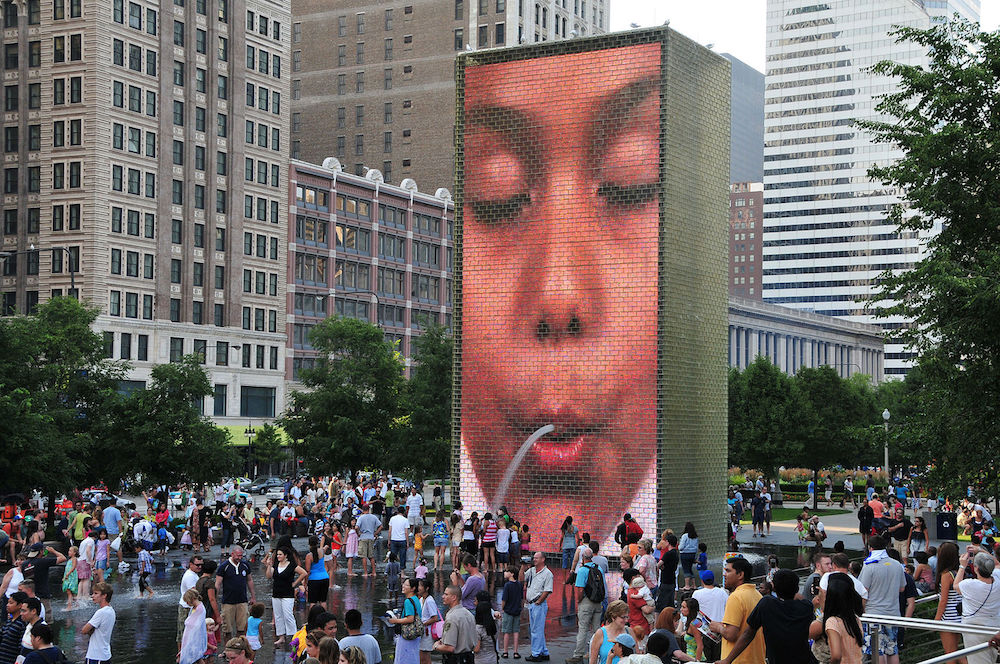
As we continue to explore Chicago’s public art, we recognize and celebrate that sculpture comes in all shapes, forms and purposes. Today, we’re exploring an iconic Chicago fixture, oft-overlooked in the medium: Millennium Park’s Crown Fountain. Alongside being the perfect place to cool off on a hot summer day in the city — or to people watch — Crown Fountain is a fascinating and experimentally expressive work of sculptural art.

Designed by Spanish artist Jaume Plensa, Crown Fountain consists of two fifty-foot glass block towers at opposite ends of a shallow reflecting pool. The towers project video footage of faces, collected from 1,000 different Chicago residents, and spurt water from an outlet in the screen centered on the video projections’ mouths. The interactive sculpture is a reference to the traditional use of gargoyles, often used as the source of water projects in fountains, where the mythical creatures’ eruption of water symbolizes giving life. Overall, construction took six months and cost $17 million, adding Crown Fountain to Chicago’s collection of world-renowned public art in July of 2004.

The video footage of the faces projected was a collaborative project between the artist, the School of the Art Institute of Chicago (SAIC) and Columbia College Chicago (CCC). 75 ethnic, social and religious organizations were asked to nominate individuals for the project, and those individuals were then filmed by SAIC students using professional-grade equipment. Filming the footage was such an intensive process that it became an informal master’s course in public art. Overall, 1,051 subjects were filmed and 960 subjects’ footage is utilized for the sculpture.

Crown Fountain was inevitably one of Millennium Park’s most controversial installations. Many were worried that the height of the towers would interrupt the architecture of the public park. Yet the sculpture won its place in the public heart with its quirkiness and comfort, inviting all to laugh and play with it. Crown Fountain’s legacy, like the legacy of Chicago, is one that celebrates community, playfulness, art and innovation.

Chicago’s Public Art: Agora

At Optima, our appreciation for sculpture runs deep, with Optima co-founder David Hovey Sr. expanding the design reach of Optima to include his own original sculptures. Indulging in our love for the craft, we’re exploring Chicago’s public art, piece-by-piece. This week, it’s all about Agora, by Polish sculptor and fiber artist Magdalena Abakanowicz (1930-2017).

Agora

It’s hard to miss the sculpture Agora, prominently displayed on the southwest side of Grant Park in Chicago. The 106-foot tall creation consists of a cluster of headless, walking figures, each made out of hollow and faded cast iron that was crafted in a Polish foundry. The artwork invites viewers to walk through the figures and contemplate. The figures themselves appear to be milling about in a crowd, all aimed in different directions. 

The name Agora is a reference to the urban meeting places of Ancient Greek city states. The artist, Abakanowicz, grew up during World War II with an intense fear of crowds, and that claustrophobia is reflected in her work. Inspired, or rather horrified by, the groupthink of that time and Soviet rule, Abakanowicz brought the sculpture to life. She began working on creating large headless figures in the 1970s, using burlap and resin before the final cast iron form, and the sculpture was formally installed in Chicago in 2006. 

Agora is Magdalena Abakanowicz’s largest permanent installation. However, she’s well known for her other textile sculptures and biomorphic forms, the most famous of which are her Abakans creations. The overwhelming response to her Abakans is what launched her to an international art spotlight, where she’s now regarded as one of Poland’s most internationally acclaimed artists. 

We’re honored to celebrate the innovation, creativity, work and life of Magdalena Abakanowicz, a phenomenal woman and artist.

person name goes here

Maintenance Supervisor

Glencoe, IL


    Acceptable file types: *.pdf | *.txt | *.doc, max-size: 2Mb