Team Member Spotlight: Heather Williams

The first time Heather Williams saw an Optima building, she was awestruck. A lifelong Arizona resident, Heather was fascinated by the hanging plants and Modernist architecture that was so different from anything else in the desert and was immediately intrigued. After doing some research, she found that the promises and values at Optima were something she wanted to be a part of. Heather joined our team in 2017 with the opening of the first tower at Optima Kierland Center. Fast-forward to 2020, Heather is now the General Manager at Optima Kierland Apartments and runs the entire property, orchestrating details both large and small (including providing a five-star resident experience and hosting some spectacular Super Bowl parties). We sat down with Heather to talk about her journey and how her experience at Optima has evolved since she first saw our buildings. 

Tell us a bit about your background and the role you play at Optima.

I’ve had a really varied background ranging from marketing to insurance to credit card processing, but they all encompassed high levels of customer service and creating a positive experience for the client. In my role as General Manager, I’ve had to become fluent in all parts of our business operations, so it’s been beneficial to pull from my experience in different industries. The role I’m in now at Optima gives me the opportunity to collaborate with different departments within our organization, so I’m constantly able to learn from some of the brightest minds and best problem solvers I’ve ever encountered. 

What drew you to Optima initially, and what’s kept you working there?

Everything about Optima speaks “exceptional”. I strive to give my best in everything I do and I’m so fulfilled at Optima because I know that all of my colleagues also give their best. When you get the opportunity to work with people who are solution-oriented, genuine and collaborative, a lot of barriers start to come down and you can achieve some pretty incredible things. We have a wealth of resources and communications tools at Optima, so it’s always easy to know what the company’s goals are and what we are trying to accomplish and it’s really inspiring to know you are a part of something bigger than yourself. 

How do you view the concept of community at Optima? How might it differ from other properties/buildings?

The attention to detail in Optima buildings is unparalleled. Everything about the way they are designed lends to creating an experience of living well and that has a huge impact on the way people interact with one another. When people choose Optima, they are choosing a lifestyle and we see a lot of connections with people formed as a result. The wealth of amenities in Optima communities inspire our residents to get out and use these spaces as an extension of their homes and they really get to know their neighbors as a result. We’ve seen so many friendships formed and even a wedding from the relationships people are able to make with one another here! 
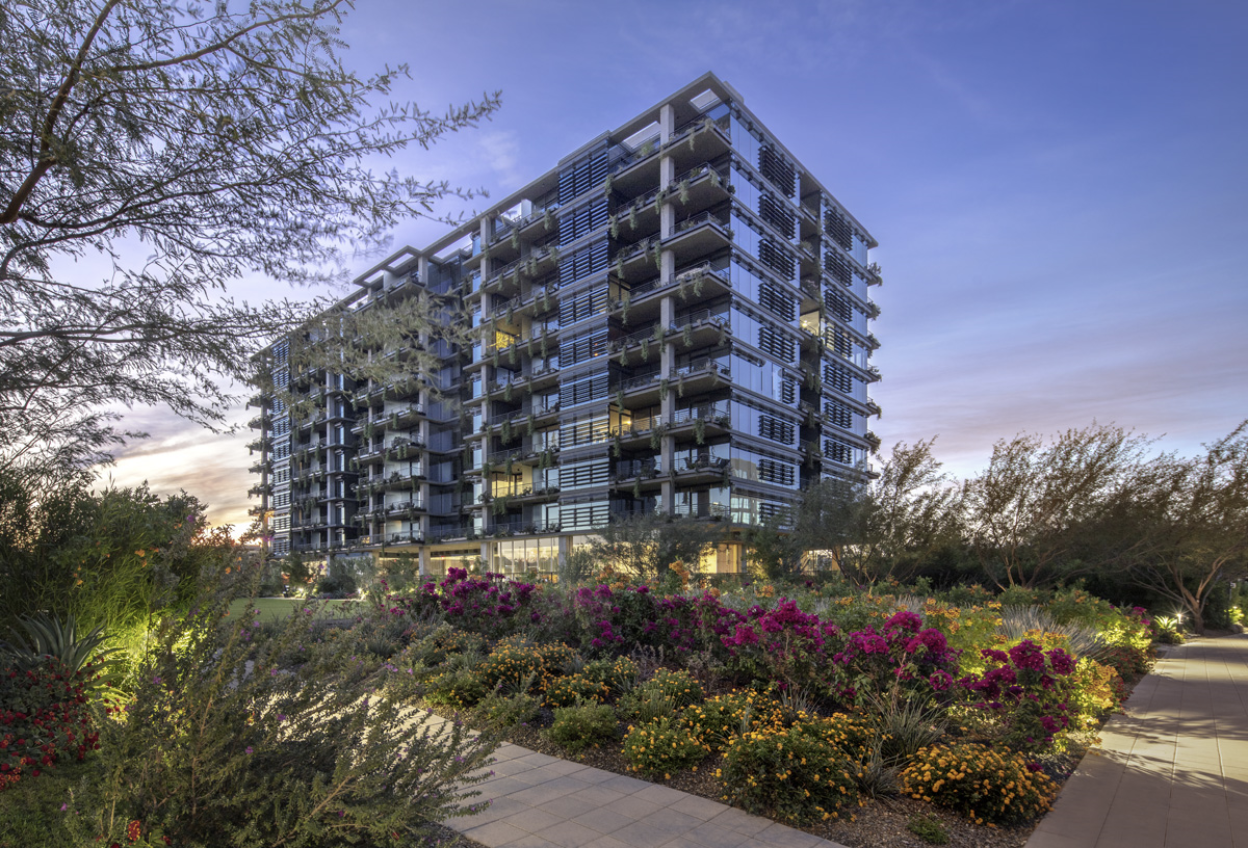
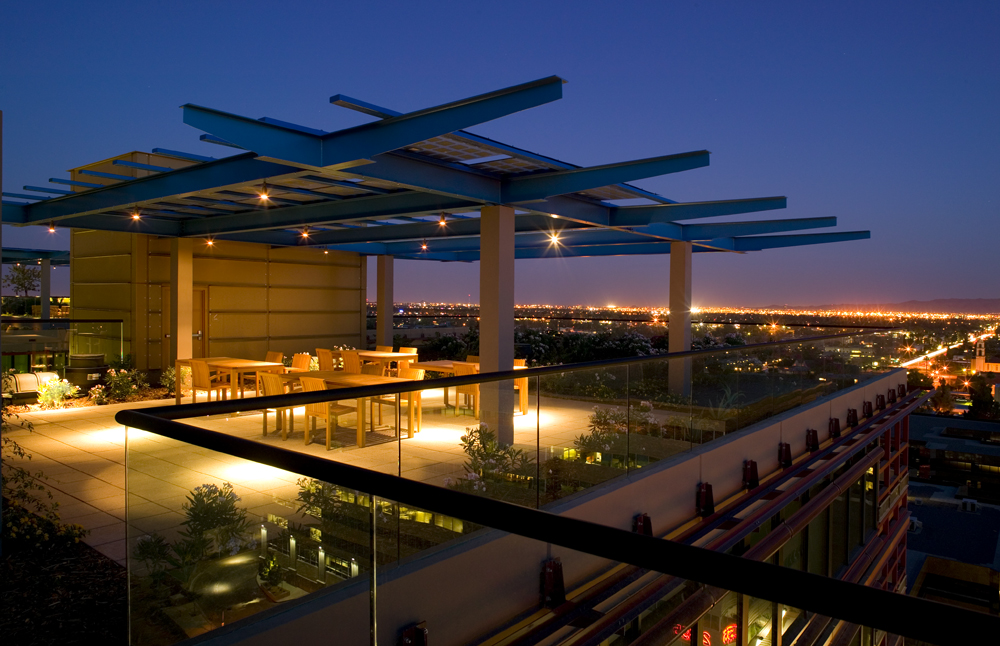
Optima Kierland Apartments where Heather Williams is General Manager

Optima has a distinct set of values that really differentiates it from other companies. Which values really speak to the work you’ve done at Optima?

When making decisions, I always have one particular core value in mind – do the right thing even when it’s hard. In our industry, a lot of decisions are bottom-lined and based on budgets. We’re owner managed, so our decisions are not always financially-driven. Everyone at Optima just wants to do right by people. I know without a doubt that our goal on our Property Management team is to create the best possible experience for those who visit and live in our communities, so I try to always view the perspective of the person I’m working with and make the decision to do the right thing, even if that means it creates more work or is more challenging. 

I’m also really inspired by the concept that “we all create” and I feel that every day. I’ve seen ideas at Optima come from all corners and be implemented in record time. It’s a really empowering feeling to know I don’t just work for a company, I’m an active part of it and I can impact how we grow and move forward. 
2019: A Year in Review

As 2019 comes to a close, we reflectively look back on all that’s happened throughout a busy and exciting year. Our team, projects and Optima as a whole have experienced tremendous growth over the last twelve months. Here are just a few of the highlights:

Awards

Our team was honored to win five awards, including AIA Chicago Divine Detail award for Optima Sonoran Village, Architecture MasterPrize and Architizer A+ Finalist Award for Arizona Courtyard House, American Architecture Award for Whale Bay House and Build Magazine’s Luxury Urban Housing Designer of the Year. 

Projects and Properties

This was a big year for development, construction, leasing and more. 

In Arizona, we completed construction and leased up Optima Sonoran Village Phase III, the fifth and final tower at Optima Sonoran Village. 7120 Optima Kierland sold out – and was the fastest selling community in the Valley. We launched sales at 7180 Optima Kierland and are already over 50% sold. We also began construction on both 7140 and 7180 Optima Kierland, both slated for completion in 2020. We also purchased new land in Scottsdale to develop new Optima communities.

In Illinois, we leased up 100% of our commercial and retail space at Optima Signature including business suites. We also purchased new land in Chicago and the North Shore for new developments.

We also launched Optimized ServiceTM, a next-level white-glove approach to our concierge experience.

The Optima team volunteering for Habitat for Humanity.

Culture

Working across our entire organization, we formalized our purpose statement and core values to reflect our growth and inspire our path forward. We volunteered: we spent the day with Habitat for Humanity in both AZ and IL, cleaned up the Skokie Lagoons in IL, and worked with animals at Amy’s Farm Sanctuary in AZ. We had fun: we enjoyed axe throwing, bowling, go karting, beaches, barbeques, concerts and high tea. We also learned: our team attended the Metropolitan Planning Council lunch, the TCN Women in the Forefront Luncheon, the Goldie Gala, the Chicago Build Expo and NAA Apartmentalize. 

We can’t thank our leadership, team members and supporters enough for such a fantastic year. As we look towards 2020, we look forward to the new year to come, new milestones to pass and new ways to innovate across our upcoming projects. 

A Brief History of the Terrace

A hallmark of Optima properties is our integration of the built environment with the natural. Oftentimes, we employ terraceslevel platforms incorporated into buildings that allow for plantlife to thrive—that allow our buildings, and their residents, to live in harmony with the surrounding landscape. The usage of terraces is one that dates back for over 12,000 years, evolving over the millennium to be the sophisticated components of urban architecture that they are today.

Terraces of Ancient Times

The word terrace is derived from terra, the Latin word for earth. The technique has been in use for over 12,000 years, first utilized as an ancient farming method in hilly regions. Agricultural terracing involved cutting the land into a series of successively receding flat platforms, much like steps, to allow for more effective farming, by decreasing erosion and surface runoff and increasing the effectiveness of irrigation.  

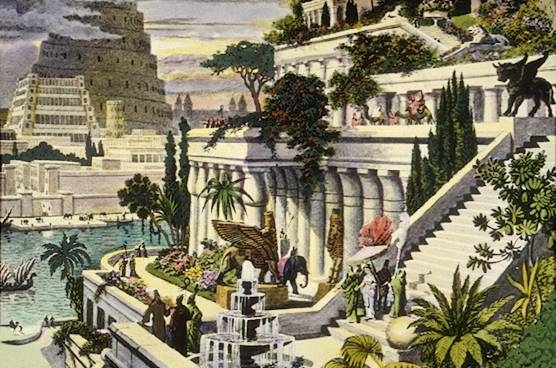
An illustration of the Hanging Gardens of Babylon.

In 9800 BC, ancient civilizations realized that they could adapt this technique to buildings, and they began to add terraces to their homes and other domestic structures. This first usage was seen across the globe, from the Middle East to the Pacific Islands. The most famous interpretation is undeniably King Nebuchadnezzar’s Hanging Gardens of Babylon, one of the Seven Wonders of the Ancient World. Although no actual proof of its existence has been found, depictions show an ascending series of tiered gardens abundant with plantlife, complete even with a waterfall.

Thousands of years later, from 3000 BC – 600 BC, Mesopotamians grew gardens atop ziggurats, terraced religious temples that allowed for religious spaces to become placed ever higher. The structures were placed upon many layered platforms, and it’s believed that ziggurats were what inspired the Biblical parable The Tower of Babel. 

Terraces continued to be integrated into homes. Around 1500 AD, Venice adopted terrace design to the tops of their homes, called altanas. Altanas were private, slat-floored roofs. They started out as a place to hang laundry out to dry, but continue to be used today as social spaces.

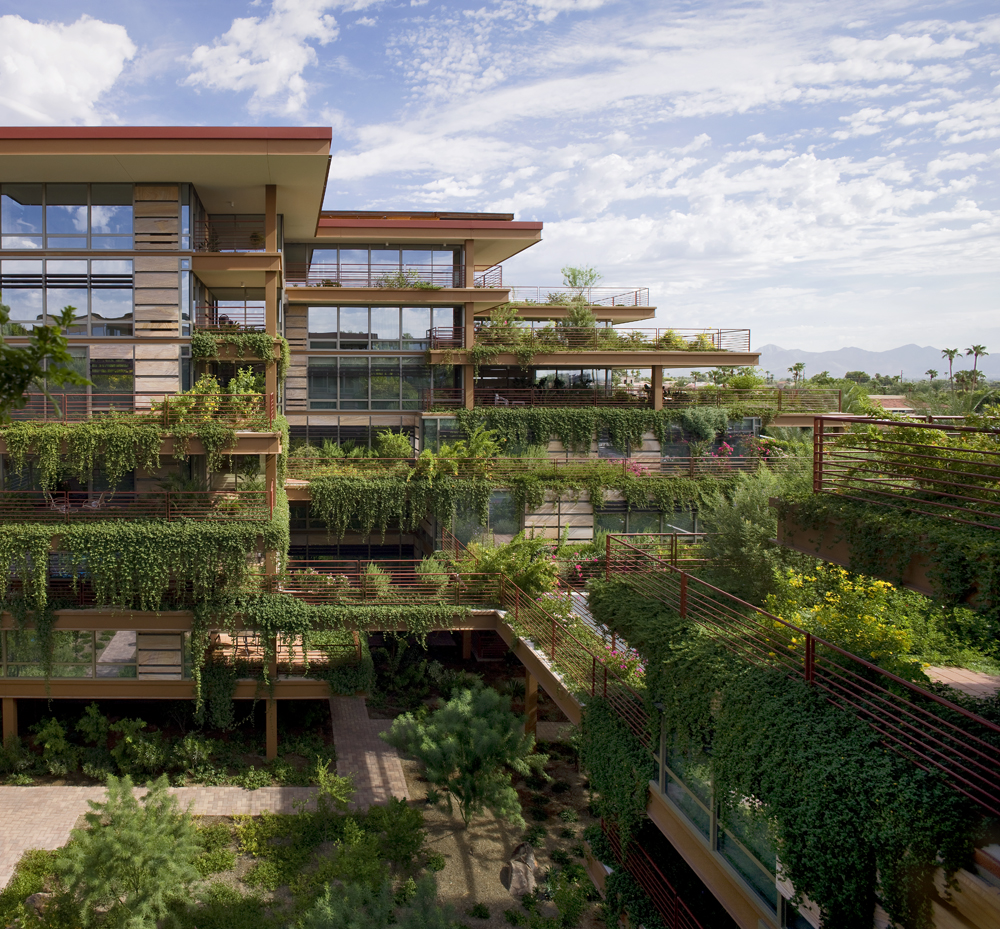
The terraced design of Optima Camelview Village.

Terraces in the Modern Age

Following the progression of altanas as a place to socialize, people began more and more to use the terrace as a location to congregate in privacy. Private rooftop and per-unit terraces became luxury amenities in the 1920s, when building height began to increase due to the adoption of the elevator. At that time, terraces become a status of wealth, allowing for privacy, fresh air and separation from the increasing bustle of life on city-level. 

Today, the use of terraces continues to flourish, finding increased purpose and urgency in response to population growth and a changing environmental climate. They provide private places to reconvene with nature, away from the bustle of the city. Terraces also create sustainable and contributive space, by providing thermal insulation, solar shading to mitigate air pollution, increased biodiversity and enhanced quality of life. 

At Optima, we incorporate terraces to create private social space, to integrate nature into our communities through our signature hanging gardens, and to contribute to our sustainability practices at many of our properties, including Optima Camelview Village, Optima Sonoran Village and Optima Kierland. Terraces at Optima serve as outdoor living space, connecting the outdoor and indoor for a seamless living experience. From agricultural beginnings, the terrace stays true to its roots, allowing us to find harmony with nature.

A Transparency on Glass

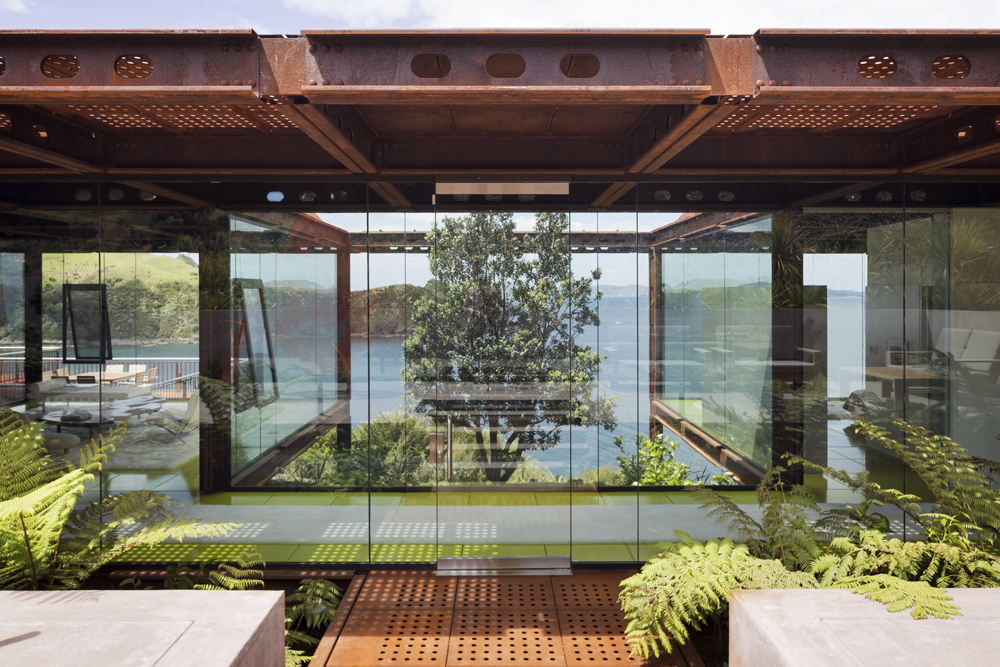
Whale Bay House, Optima DCHGlobal, Inc., New Zealand.

For decades, glass has been a stylistic signature of Modernist architecture. From the first Modernist structure ever built to the steel-and-glass aesthetic of Modernist master Ludwig Mies van der Rohe, the material has provided a timeless transparency that is crucial to minimalist design. But glass hasn’t always been as functional as it is aesthetic. 

A History of Glass

Glass is one of the oldest man-made materials, with use dating back to 7000 B.C. It was first utilized for decorative purposes in 3000 B.C. by Egyptians mainly in pottery and other decorative trinkets and first used as windows by the Romans around 500 B.C.

However, at that time, the masonry required to create glass also didn’t allow for larger, stronger pieces to be created, so its use was therefore sequestered to windows and detailing, such as stained glass murals.

In the 19th century, the manufacturing renaissance introduced iron, steel and other materials that provided the strength and durability necessary to support larger glass constructions. The support of these materials, combined with the capability to produce glass in larger sheets, allowed architects to experiment with creating structures utilizing glass in more creative ways.

The Crystal Palace designed by Joseph Paxton.

The Crystal Palace

This new design potential allowed for greenhouses, large railway stations and other public structures to be made of glass. Such new usages inspired Joseph Paxton, an architect in London, to design the Crystal Palace in 1851 using 300,000 sheets of glass. The Crystal Palace was the first architectural creation to utilize an all-glass exterior, and is also considered the first Modernist structure ever created.  

To overcome the harsh effects of a glass exterior, Paxton utilized translucent screens of calico hung externally between the ridge beams of the structure’s roof glazing, covering the entire exposed rooftop and protecting against the transparent building’s vulnerability to heat. This functional feature eventually transitioned into a cornerstone piece of Modernist design. 

7120 Optima Kierland in the Kierland neighborhood of Scottsdale, AZ.

Glass at Optima

The idea of transparency, open space and functional materials are still relevant and desirable today. At Optima, we use floor-to-ceiling glass to create an indoor-outdoor relationship, allowing for sweeping views and connecting our indoor living spaces with the natural spaces just outside.

At 7120 Optima Kierland, we use a combination of low-e, UV-treated glass, perforated sunscreens and horizontal louvers, to create texture and rich variation of shades and shadows, while allowing for breathtaking views.

Optima Signature in the Streeterville neighborhood of Chicago, IL

At Optima Signature, glass preserves the sweeping lake views to the east and dynamic city views in all other directions. Glass also unifies Optima Signature with its sister tower to the west, Optima Chicago Center. While the glass curtainwalls of each building are different — silver-toned in the case Optima Chicago Center, and transparent green for Optima Signature — the podiums share a unifying black ceramic frit glass with dot pattern. Optima Signature expands the palette with areas of red glass that wrap the podium as it extends south to define the east edge of the plaza.

As we reflect on the history of glass and how it has become a viable aesthetic and functional choice when designing today, we return to the material time and again to design and build the stunning Modernist steel-and-glass structures in our portfolio.

person name goes here

Maintenance Supervisor

Glencoe, IL


    Acceptable file types: *.pdf | *.txt | *.doc, max-size: 2Mb