Modern Furniture 101

As our tagline “Forever Modern” implies, Modern design is integrated into every part of our business and our work. Our inspired interiors are no exception; full of Modernist artwork, sculpture and furniture, the interiors of our properties reflect the same principles and aesthetic. So what exactly is Modern furniture, and what distinguishes it from other furniture styles? 

A Brief History

Like Modernism itself, Modern furniture design developed in a post-World War II environment that necessitated cutting excess waste, focusing on functionality, and reevaluating the practicality of materials in design. Compared to the decorative styles before it like Victorian, Art Nouveau and Neoclassical, Modernism was a striking departure into new territory. This drastic shift from ornate, decorative pieces to minimal pieces is attributed to new technology, changes in design philosophy and the direction of architecture at the time. Since then, Modern furniture has become an iconic part of interior design history. 

How to Spot Modern Furniture 

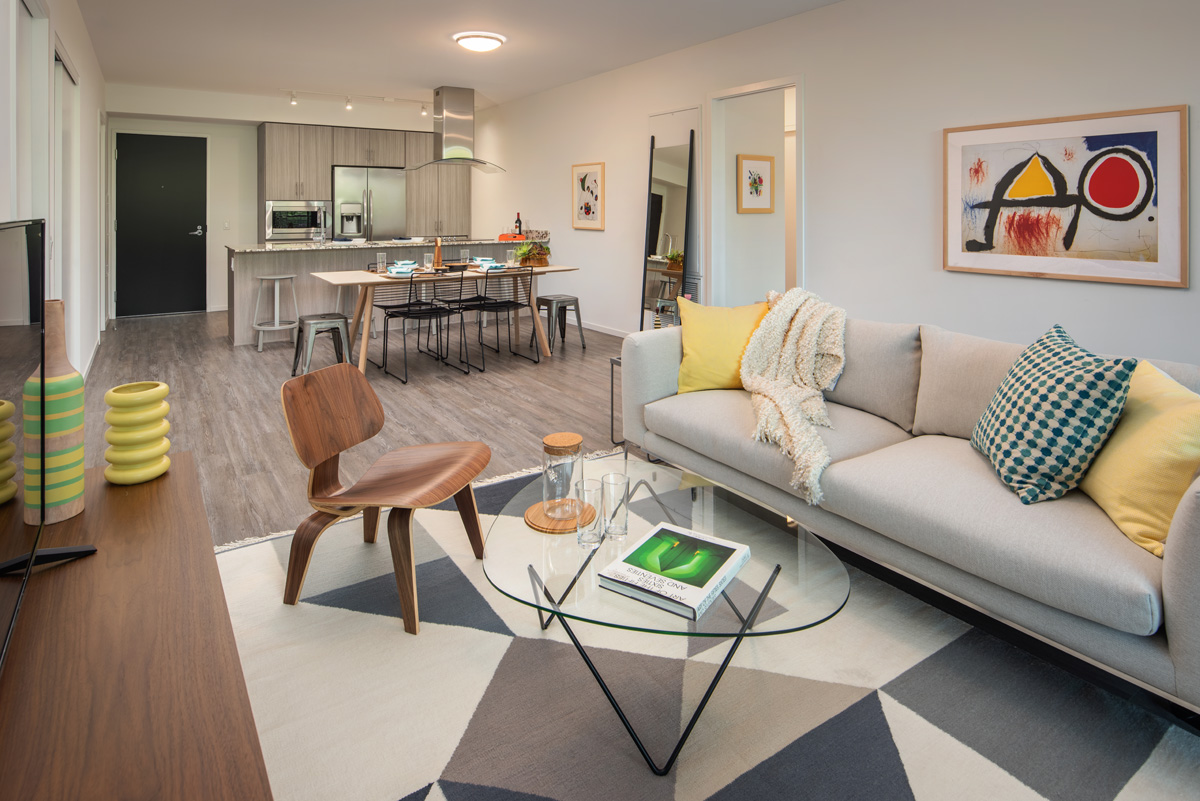
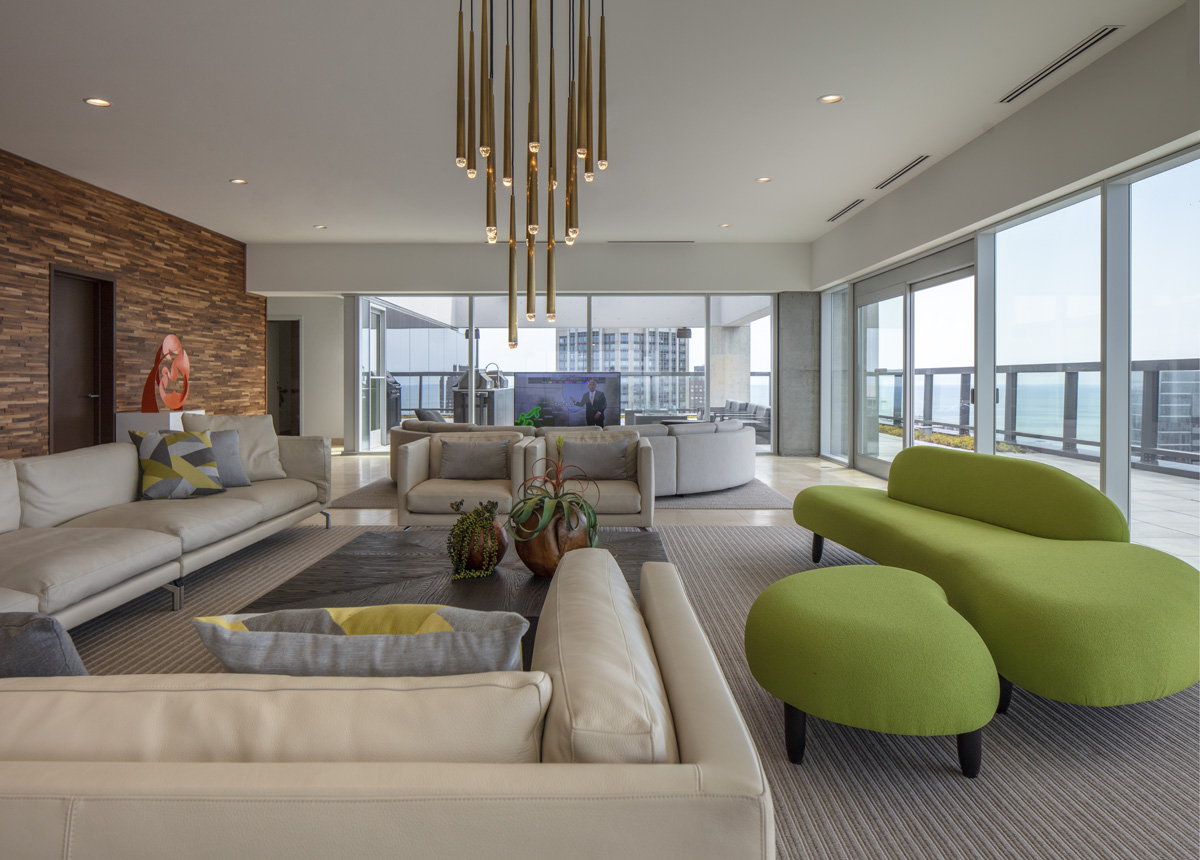
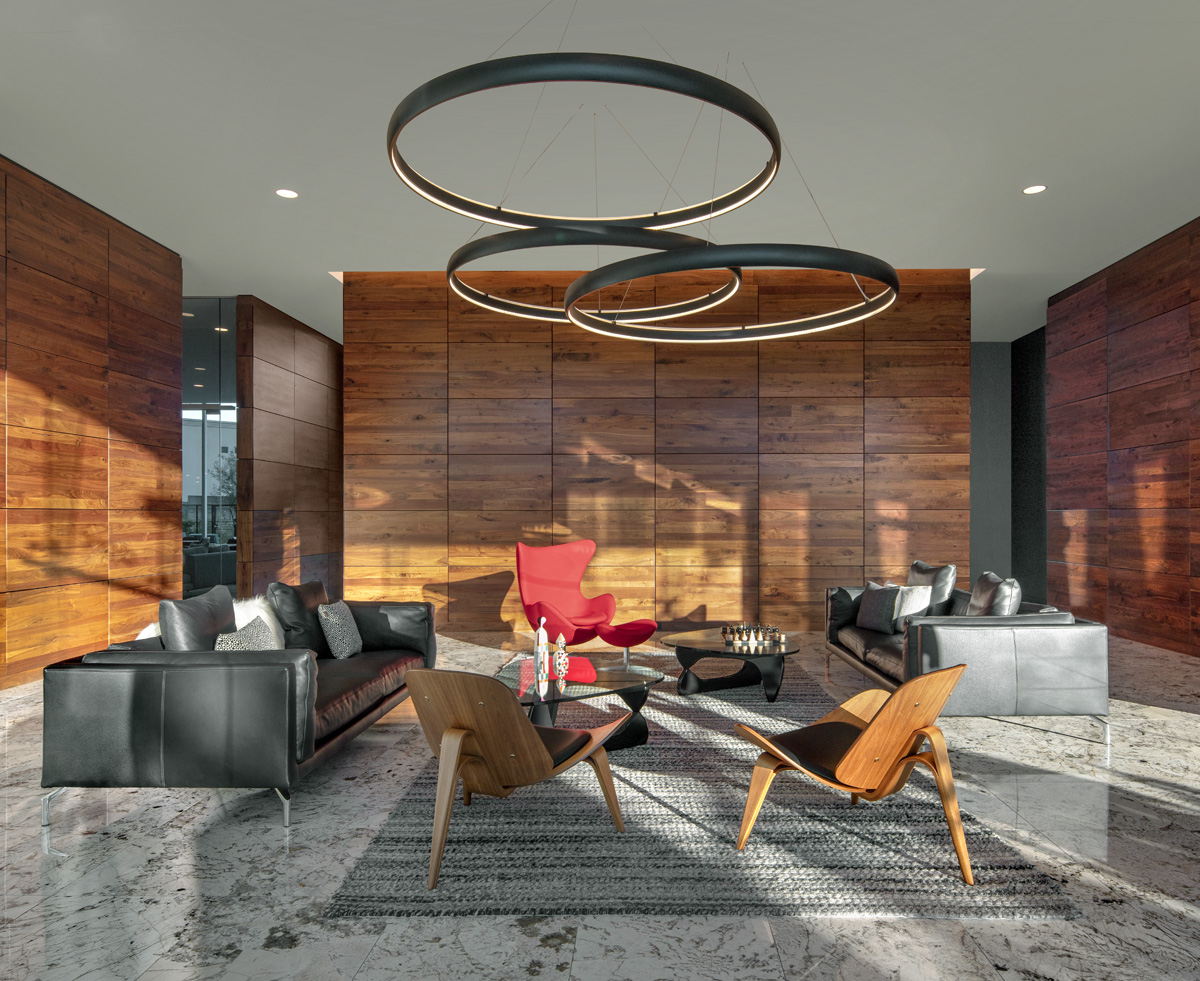
Functionality, clean lines, smooth shapes, bold colors and minimal design are all common aspects to Modern furniture. Most iconic pieces of Modern furniture pioneered new uses of materials such as glass, steel and leather, so those are common signs to look for. Odds are, you’ve seen Modern furniture before, especially if you’re in the design or real estate industry. Barcelona chairs, Noguchi coffee tables and Le Corbusier lounges are commonplace in many residential buildings and homes, in the United States and around the world. 
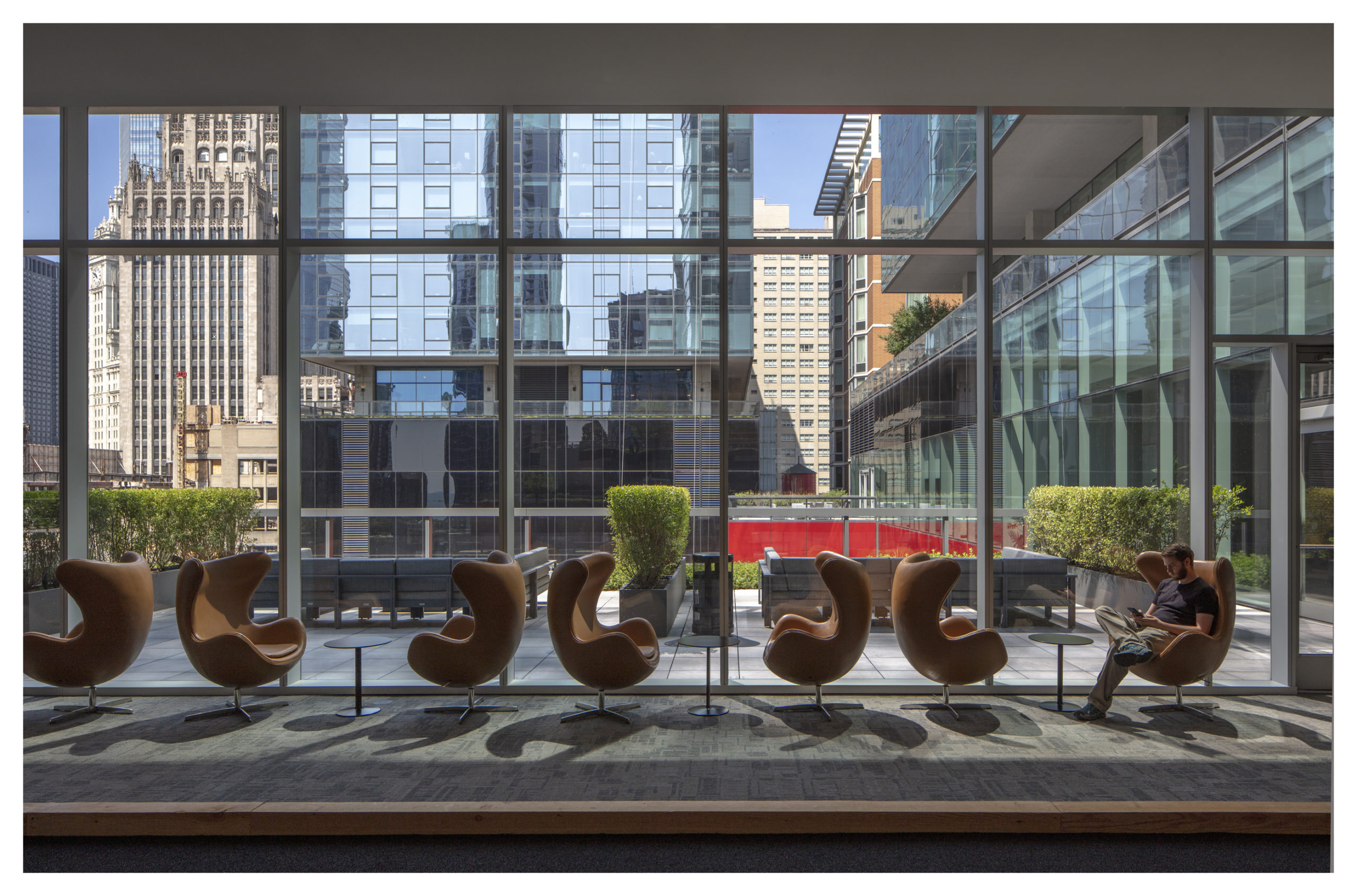
Amenity space at Optima Signature

To explore the individual and detailed history behind the pieces, here’s a more complete list of popular Modern furniture pieces. Within our practices at Optima, Modern furniture plays a critical role in completing our vision for each space we create. Our Modernist sense of design through architecture and furnishings helps us tell a holistic, intentional story through design. Without this consistency, our buildings and amenity spaces would seem incomplete. Though rooted in the past, Modern furniture integrates beautifully with a bright, inspired future. 
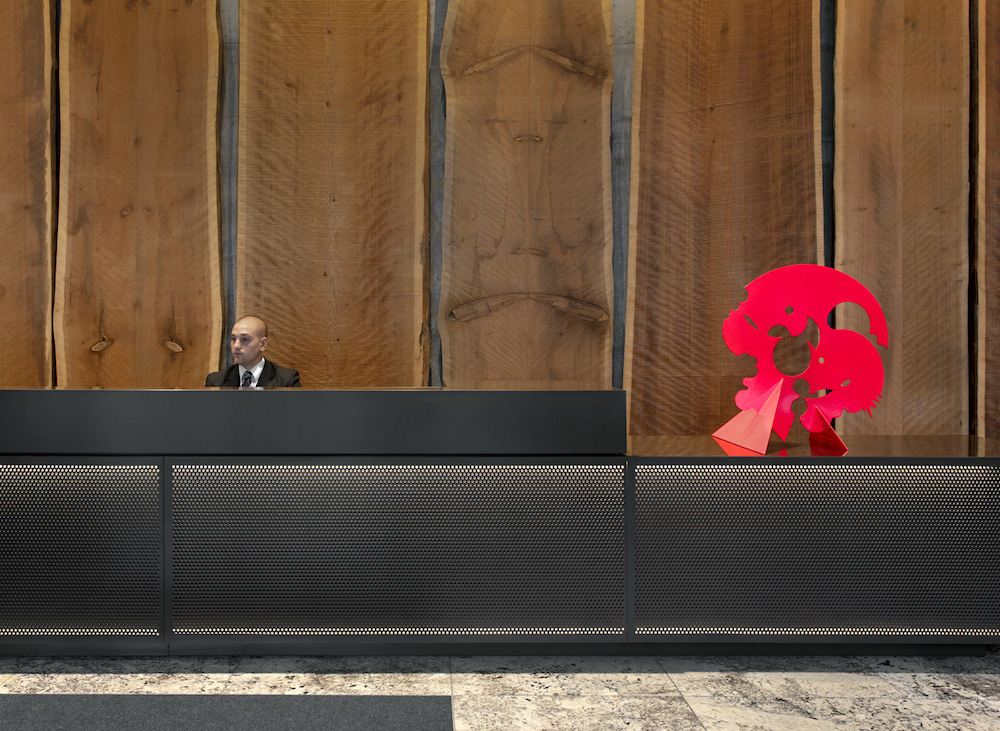
Redwood at Optima Signature

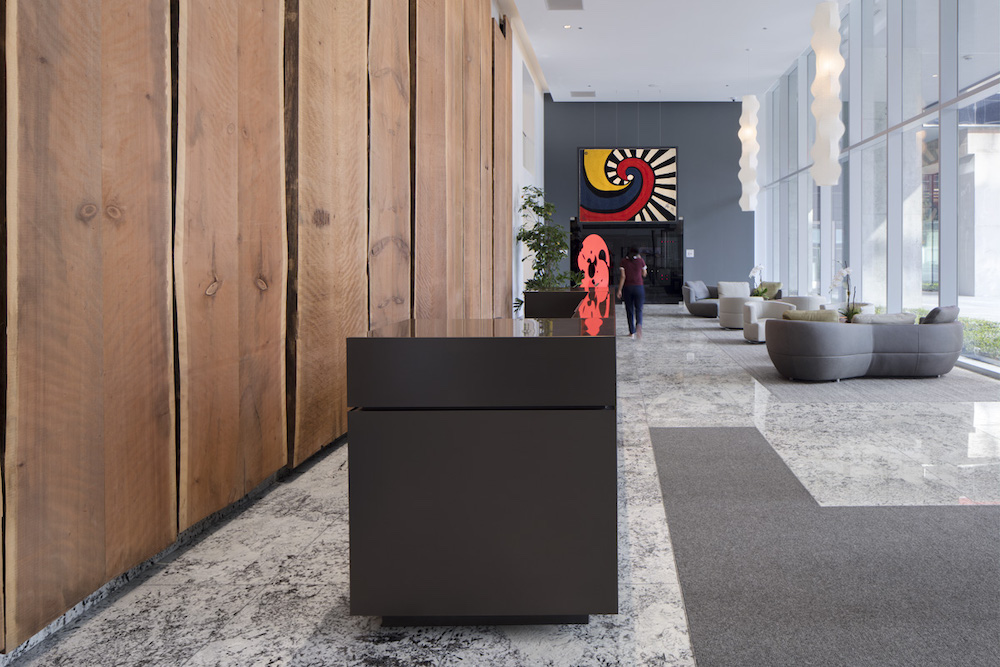
Our design is often driven with sustainability and efficiency in mind. This leads to the thoughtful incorporation of unconventional materials in many of our projects whether that be for the exterior facade or an interior accent. One such detail, the redwood in the lobby at Optima Signature, is an unconventional material that serves to juxtapose the strength of the building’s steel-and-glass exterior.

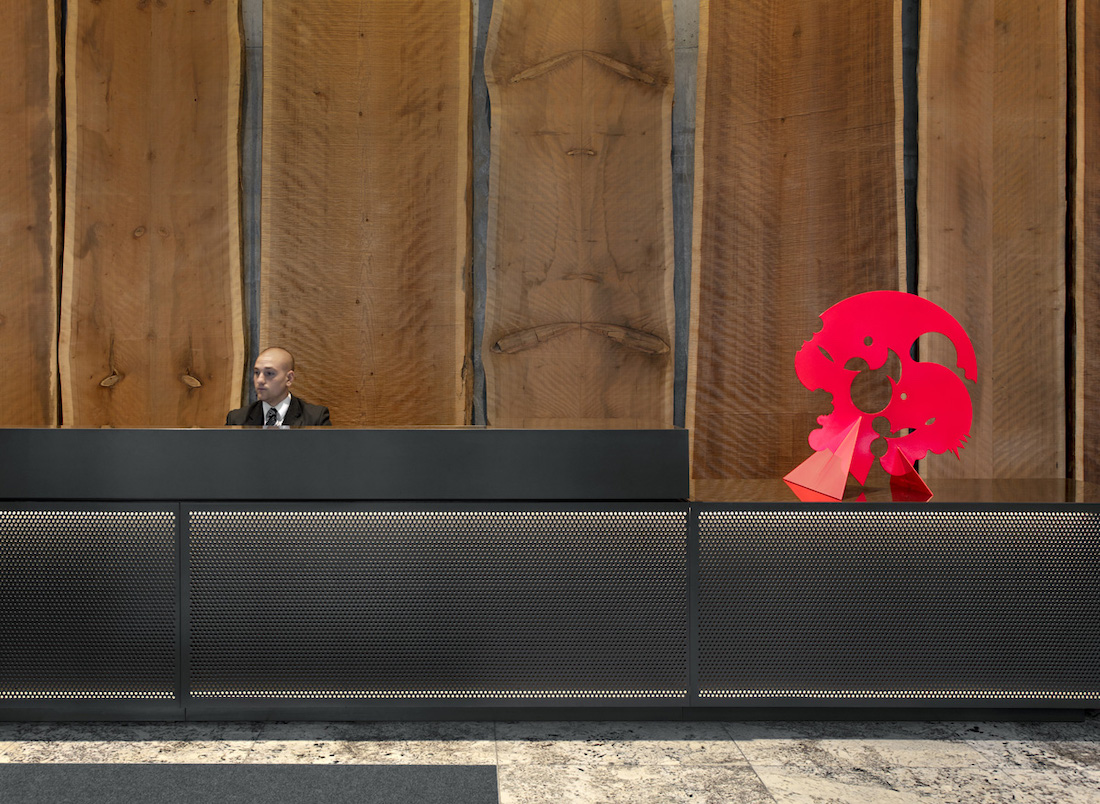
 A striking statement throughout the Optima Signature lobby, the barge wood adds a soft, natural texture behind the front desk, creating a stark contrast to the surrounding steel and glass. The wood lines the north wall of the lobby in long planks and is the first sight to greet residents and visitors when they enter the building. Though now on display for all in our community, the wood came all the way from California in the 1850s.

Barge wood in the lobby at Optima Signature.

The planks are redwood, formed from one massive log that sat on the bottom of the Big River in Mendocino California. This particular log was a “sinker,” the name given to the handful of logs that unfortunately sank during their river journey from a redwood forest to the sawmill at the mouth of the Big River, not far from San Francisco. 

For over 100 years, the log sat at the bottom of the Big River, until it was salvaged by Arky Ciancutti. Ciancutti began a redwood salvage business in the 1970s, raising large redwood logs that had previously sat forgotten at the bottom of the river. This particular log, Ciancutti determined, was from the first growth period of the redwood forest. He knew this because it was more than six feet in diameter and had axe-shaven markings at its ends, indicating that it was cut down, prior to the invention of the “raker tooth” saw of the late 1800s.

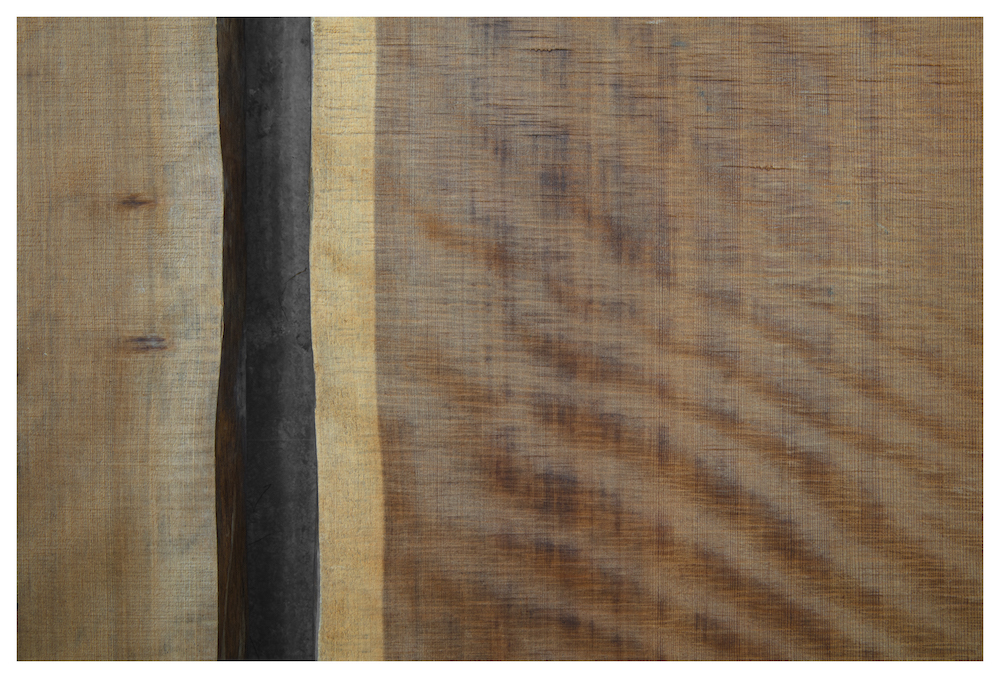
A close-up look at the barge wood at Optima Signature.

Having sat in the river for over one hundred years in mineral-rich water, this redwood log developed a truly rare and unique “curl” pattern within the grain of the wood. To highlight this unique feature, the wood was cut into three-inch-planks that ran the full length of the log. We then carefully installed these planks, with their raw beauty intact, leaving the live edges of the wood as is. The planks were then hung vertically in the lobby space, the orientation the same from which they grew. 

From a river in California to the lobby of a Chicago residential building, our barge wood at Optima Signature has a unique story that connects our urban lobby back to nature, and reflects our commitment to sustainability and longevity. 

Optima Sculpture Spotlight: Duo

The design of interior space doesn’t end with architecture. A key component to creating engaging environments at Optima is the inclusion of art — particularly sculpture. Optima co-founder David Hovey Sr., FAIA explores new ways of expressing space, form and function through his monumental, three-dimensional sculptures in brilliantly-hued steel, including Duo, ultimately adding a new vibrancy to our carefully curated communities.


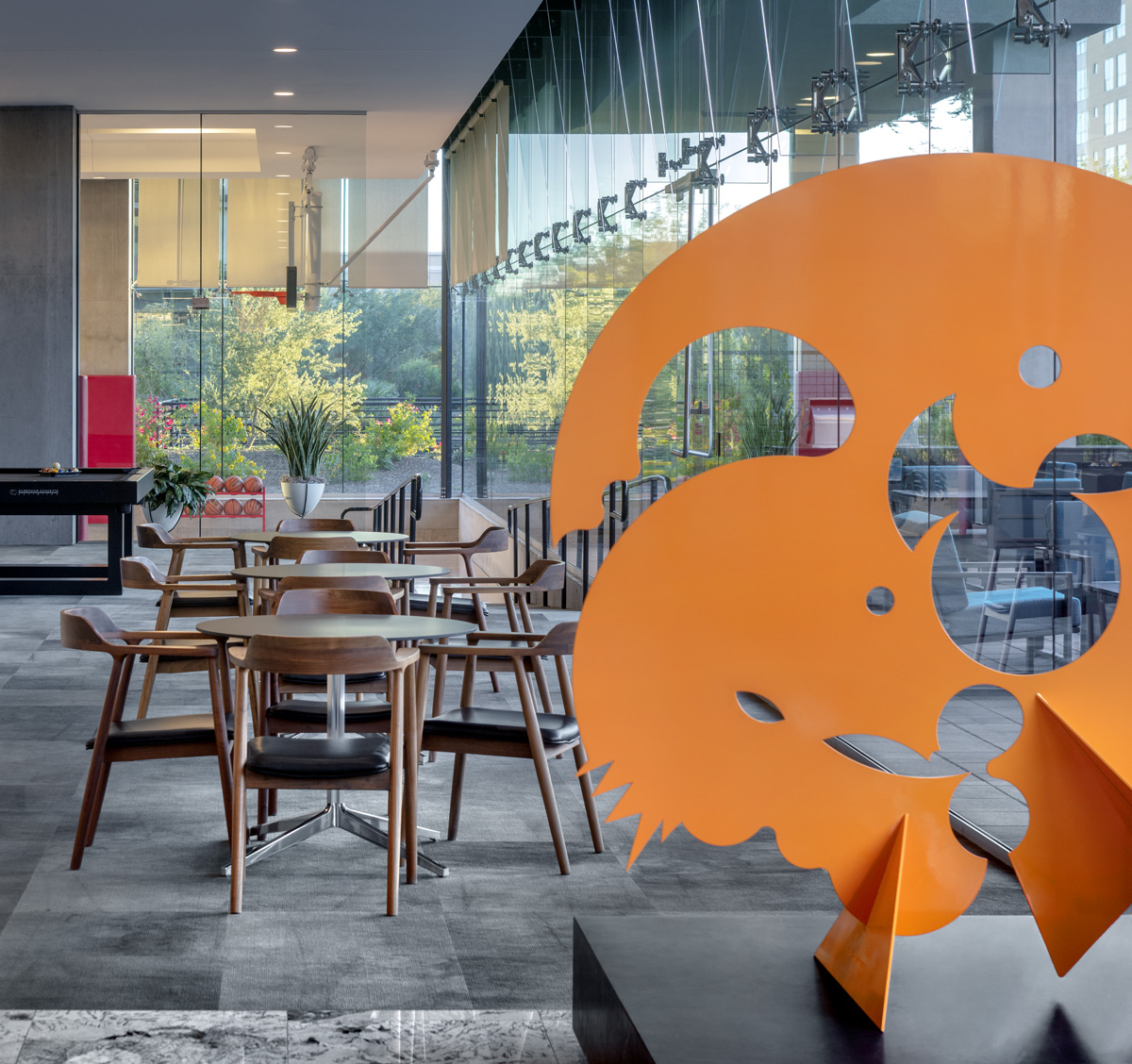
Duo at the 7160 Optima Kierland Residence Club, Scottsdale, AZ

Originally created as a large-scale piece, Duo is a striking and abstract silhouette that evokes the image of a man and woman gazing into one another’s eyes. Hovey states that often, he doesn’t approach a piece of steel with the intention of drawing out specific imagery. Rather, he imagines how to explore form and function through the size, shape, voids and shadows, lights and sounds that emanate from the manipulation of the material. With Duo, Hovey sought to craft a study of duality and opposites through curved lines, fierce angles, symmetry and asymmetry. The human-like quality that resulted is part of the intriguing and surprising discovery from the sculpture’s true expression.

Duo now takes many sizes and colors, with one iteration adorning the front desk at Optima Signature in a brilliant pop of red. Not only does the inclusion of sculpture add a new dimension to the spaces that we design, but it allows a new avenue for exploration, discovery and expression.

The Work of Joan Miró

It’s no secret that we love color. We believe that color, like art, brings a new dimension to the beautiful spaces that we design. That’s why the colorful and surrealist work of the Spanish painter, Joan Miró, is a natural fit to enliven the walls of our communities.

Portrait of Joan Miró
Portrait of Joan Miró. Photo in Public Domain

The Life of Joan Miró

Miró was born in 1893 in the seaside town of Barcelona. He grew up influenced by the beauty and culture of his city, and surrounded by the arts with a watchmaker father and goldsmith mother. His began drawing as a young child, though he diverted from his true calling when he went to business school for college. After school, Miró worked as a clerk, but quickly found his way back to art, evolving through several styles and artists’ circles and leaving an influential mark in his wake. 

The Art of Joan Miró

Miró’s early work was inspired by Vincent van Goh and Paul Cezanne. By 1919 and his first trip to Paris, Miró began to dabble in geometric, patterned art inspired by the Cubists. In the early 1920s, Miró began to draw inspiration from Sigmund Freud and the Marxists, joining the ranks of the groundbreaking surrealists with work marked by lines, organic shapes and color. Miró himself once said, “I try to apply colors like words that shape poems, like notes that shape music.”

The Red Sun, 1950, Joan Miró at Optima Sonoran Village

We are proud to enliven our interior spaces with the art of Joan Miró, and are deeply moved by the power of his works and words. Miró’s work adorns the walls of a handful of units at Optima Sonoran Village, playing off the lively interiors and lush outside landscape. Like Miró, we too, try to apply colors, and art, to shape the beautiful spaces that we design.

Isamu Noguchi Spotlight

For our projects, design doesn’t stop on the outside of our buildings. We carefully curate each and every interior to be an activating space that is at once beautiful and inviting. As part of that careful curation, many of our spaces feature furniture designed by Isamu Noguchi, a Japanese American artist, landscape architect, sculptor and furniture designer.

The Mid-century Modern “Airplane” Bimorphic Coffee Table, designed by Isamu Noguchi, at 7120 Optima Kierland.

The Style of Isamu Noguchi

Born in 1904, Isamu Noguchi became one of the 20th century’s most critically acclaimed and important sculptors. His sculptural work covered a wide range of creations, spanning from sculptures, gardens, furniture and lighting designs, ceramics, architecture and set designs. Midway through his career, Noguchi became inspired by the idea of a more reduced form, focusing on an abstract and Modernist approach to create intriguing designs that elicited emotional reactions.  

“Everything is sculpture,” Isamu Noguchi once said. “Any material, any idea without hindrance born into space, I consider sculpture.” Noguchi believed that as a sculptor, he could shape space to give it order and meaning, contextualized by the surroundings in which it existed. 

It was only natural that furniture fell into his wheelhouse. Perhaps his most popular work, Noguchi designed a glass-topped table in 1947 to be produced by Herman Miller. The base of the table is made up of two identical wooden pieces, reversed and connected, and topped with a heavy plate glass top. When first sold, the table was marketed in the Herman Miller catalogue as “sculpture-for-use” and “design for production.” Noguchi strongly believed in producing his designs for mass market in order to bring fine art into the home. 

At Optima, we are proud to showcase Noguchi’s furniture within our own spaces, designs which serve to amplify and activate the evocative Modernist exteriors and interiors of our buildings.


A Brief History of The Egg Chair

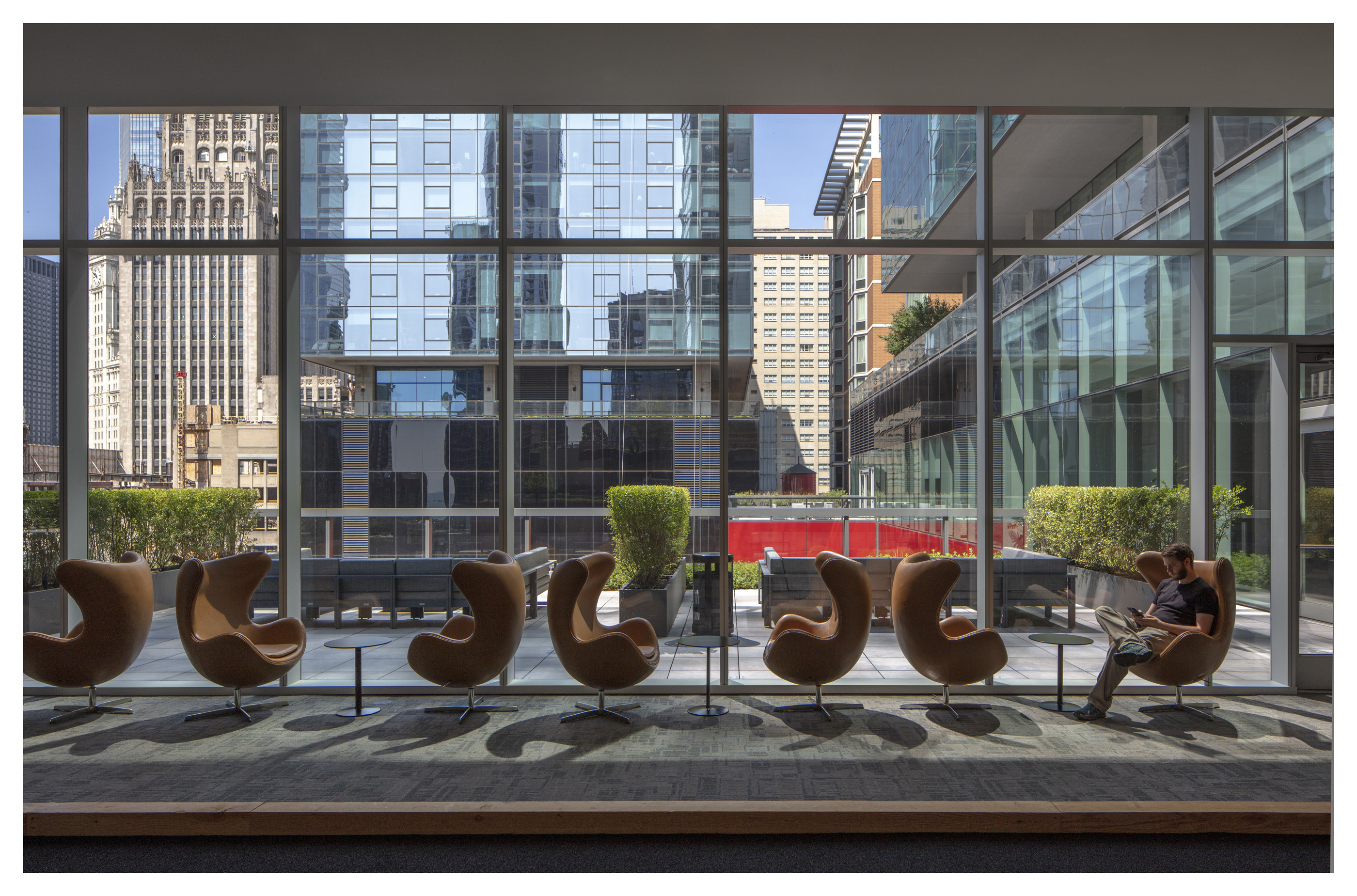
Of the many interior design pieces within our buildings, the egg chair is arguably the most distinct. Its round shape, curved edges and cocoon-like nature are as inviting as they are fascinating. A staple accent in many Optima projects, the Egg chair has its own colorful past that has led it to its present-day prominence throughout the world of interior design. 

A Scandinavian Start

In the mid-1950s, the Scandinavian Airlines System enlisted Arne Jacobsen to design downtown Copenhagen’s Royal Hotel. Jacobsen, a Danish architect and designer, is one of the best-known designers of the 20th century and one of the pioneers of Danish modern design. He was a crucial contributor to architectural Functionalism and his keen sense of proportion is most well-known throughout his wide range of furniture designs. 

In designing the Egg chair, Jacobsen kept in mind both function and form with a chair that would allow travelers passing through the hotel to relax, swivel and recline. The high, curving sides allowed for a bit of privacy, a much-needed amenity after a long journey. The chair was lightweight at only 17 pounds, allowing the hotel staff to move and rearrange them as necessary. Even 60 years after its first debut, the Egg chair is still an iconic piece of design history, beloved by both residential and commercial spaces. 

The Egg chair has a colorful past that has led it to its present-day prominence throughout the world of interior design.
Optima Old Orchard Woods | Skokie, IL

The Eggs at Optima

Throughout our residential spaces, Egg chairs serve as a complementary accent piece to our Modernist buildings, reflecting the same passion for form and function. The curvaceous seat is adaptable, pairing well with everything from white walls to colorful surroundings. As they did when they were first designed, egg chairs serve a variety of functional purposes: a fresh pop of color, a nod to the Modernist style, a place to relax at the end of the day or a cosy reading spot to enjoy your favorite book. However they’re utilized, these design icons are a Modernist staple and one of our favorite pieces of unique furniture.

person name goes here

Maintenance Supervisor

Glencoe, IL


    Acceptable file types: *.pdf | *.txt | *.doc, max-size: 2Mb