Our Beliefs: All In, All the Time

Our beliefs are the principles that unite us, that inspire us each and every day to work toward a shared vision. One of those beliefs — all in, all the time — speaks to our unparalleled dedication, drive and willingness to do everything we can in the pursuit of exceptional design, from the small details to the big picture. We’re constantly at the drawing board with all cylinders firing, ensuring that what we deliver is in its best, most efficient form. That’s Modernism, and that’s Optima.

Our ability to commit so fully is made possible by our vertically integrated business model. Tired of the traditional red tape within real estate development companies, Optima founder David Hovey Sr. wanted to do something different, to start a company built around its dedication to exceptional design. We’re as passionate about the small details as we are about the big picture, and we operate at a pace — and with degrees of precision and attentiveness — that are unparalleled in the real estate development world. We invite the challenge of doing something that others say cannot be done, because we know that it can. 

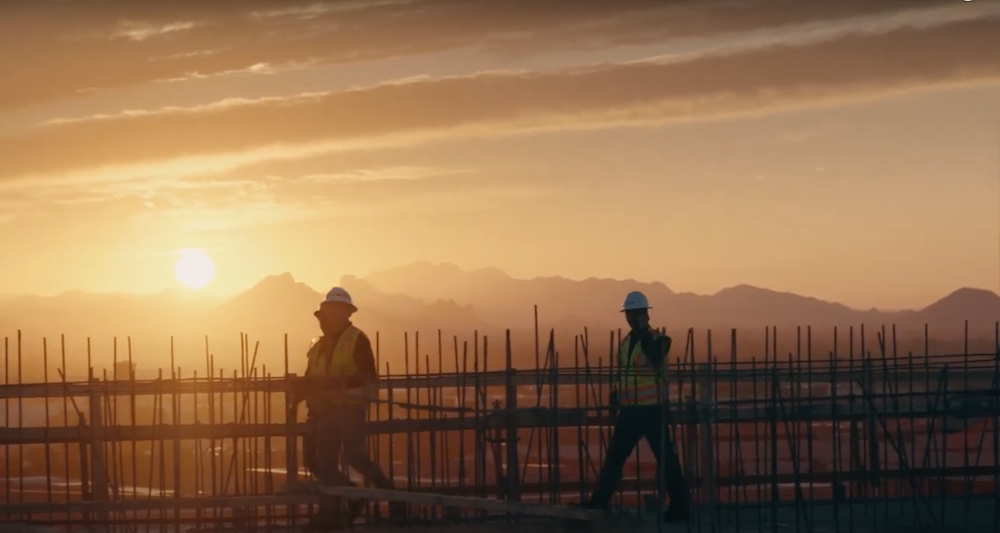
Thus far 2020 hasn’t been short of challenges, but our team has faced them head-on, from staying inspired to keeping focused through COVID-19. To keep Optima Kierland construction on track, our Arizona construction team worked tirelessly. They adapted through increased safety measures, adjusted schedules and constant communication to make sure everything still ran smoothly.

No matter the situation, we are adaptable and equipped to respond to challenges as they arise. More than just committed to a shared vision, we’re nimble and quick on our feet, bringing unique and innovative solutions that yield better results. To be all in, all the time — it’s not just built into our DNA, it’s built into how we navigate our work and our world every day.
Modern Design for Your Home

Recently, we explained what exactly makes up Modern furniture and how to spot it. But what if you’re looking to bring a bit of Modernism into your own space? Considering our own affinity for Modern pieces and design, we love seeing the style applied across homes, condominiums or apartments. So if you’re looking for tips on modern design for your home, here’s where to start:

Form Follows Function

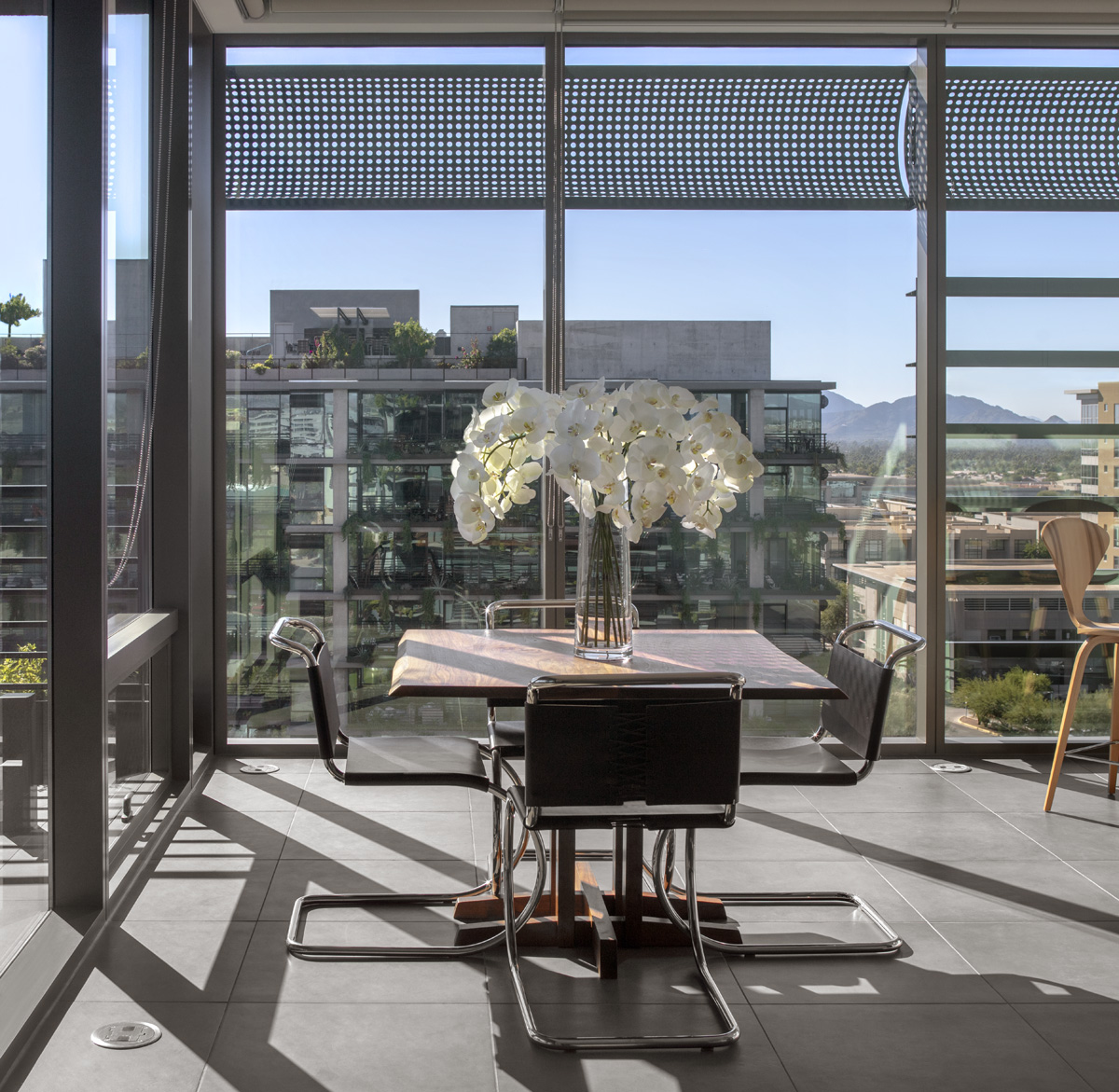
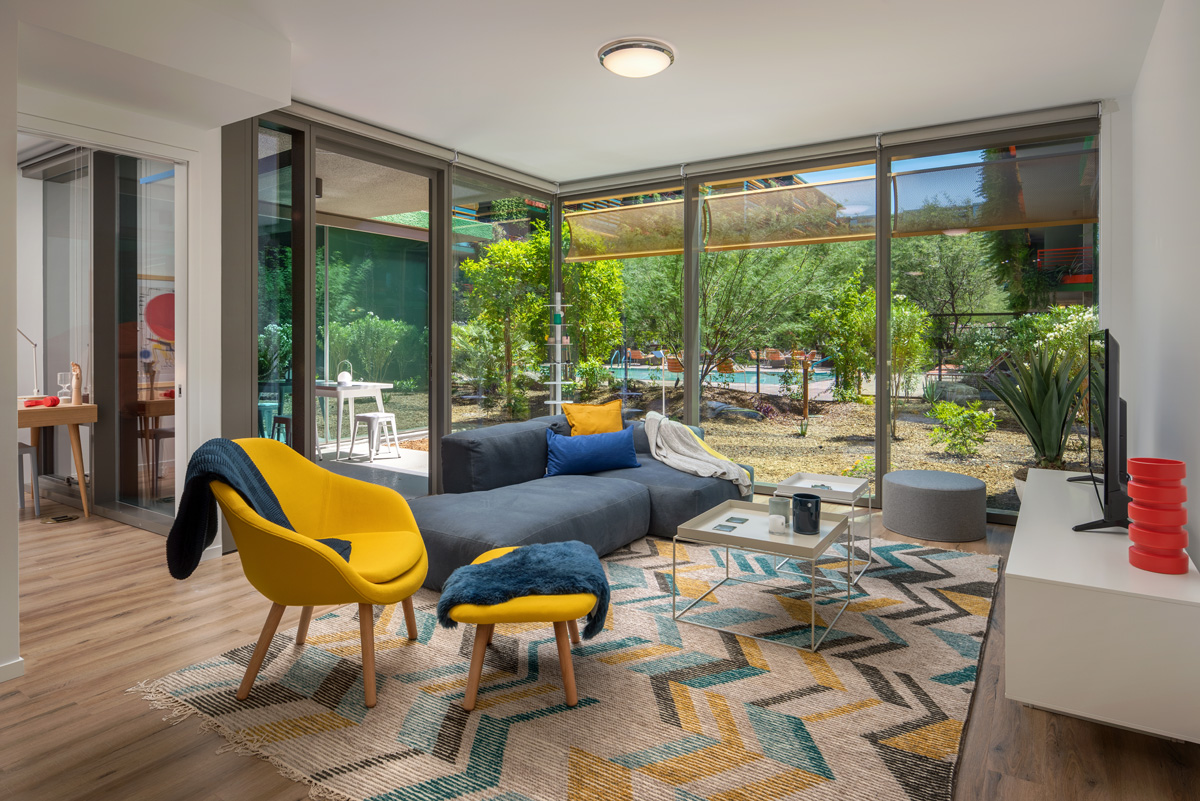
Modernism’s top rule is “form follows function,” essentially meaning that any decor or furnishings should reflect its intended purpose. Anything that doesn’t have a practical purpose can be eliminated, so Modern spaces are often very minimal. However, Modernism also celebrates the expression of form. Le Corbusier lounges or Barcelona chairs all embrace unique shapes and features in bright, joyful colors. Look for pieces that explore color, textures, and material, all while staying functional. 

Colorful modernist furniture and courtyard view at Optima Sonoran Village
Courtyard view at Optima Sonoran Village

Bring the Outside Inside

Modernist architecture celebrates expansive windows and natural light, as do Modern interiors. Keep windows unobstructed when possible, and keep any blinds or curtains minimal in color. If you feel inspired by the green space at Optima, get a few houseplants to add pops of green. Or if your seasonal weather cooperates, get creative with container gardening

Contemporary vs Modern

Contemporary and Modern are often confused when dealing with interior design, but it’s important to note the different. Contemporary style isn’t attached to any specific era; it changes as time evolves. So Contemporary design would currently refer to anything in demand in 2020. Whereas Modern design specifically refers to a movement in art, design, architecture and of course, furniture. 

If you want to hunt for Modern pieces to add to your own home, here are a few shop recommendations to check out. Or even better, peruse your local thrift store or furniture restoration shop for truly authentic Modern furniture and decor.

Charlotte Perriand and Le Corbusier’s Chaise

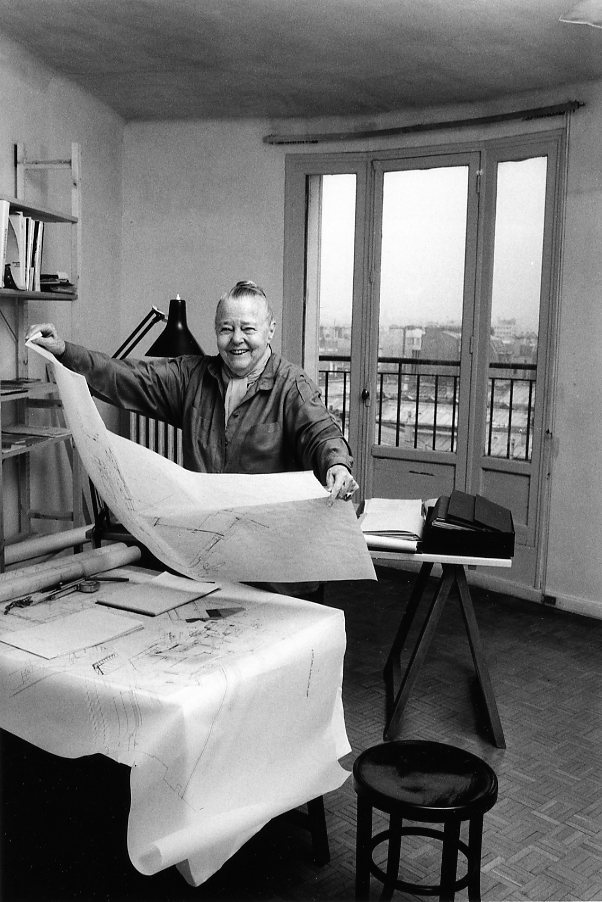
Many know the name Le Corbusier, but not nearly enough people are familiar with Charlotte Perriand, the French architect and designer behind Le Corbusier’s renowned chaise lounge. It was against all odds that Perriand even began working for Le Corbusier, as she was famously turned away from his atelier with the line: “We don’t embroider cushions here.” Celebrating her strong point of view and strong-headed nature, today we’re exploring the work and complicated relationships of Charlotte Perriand.

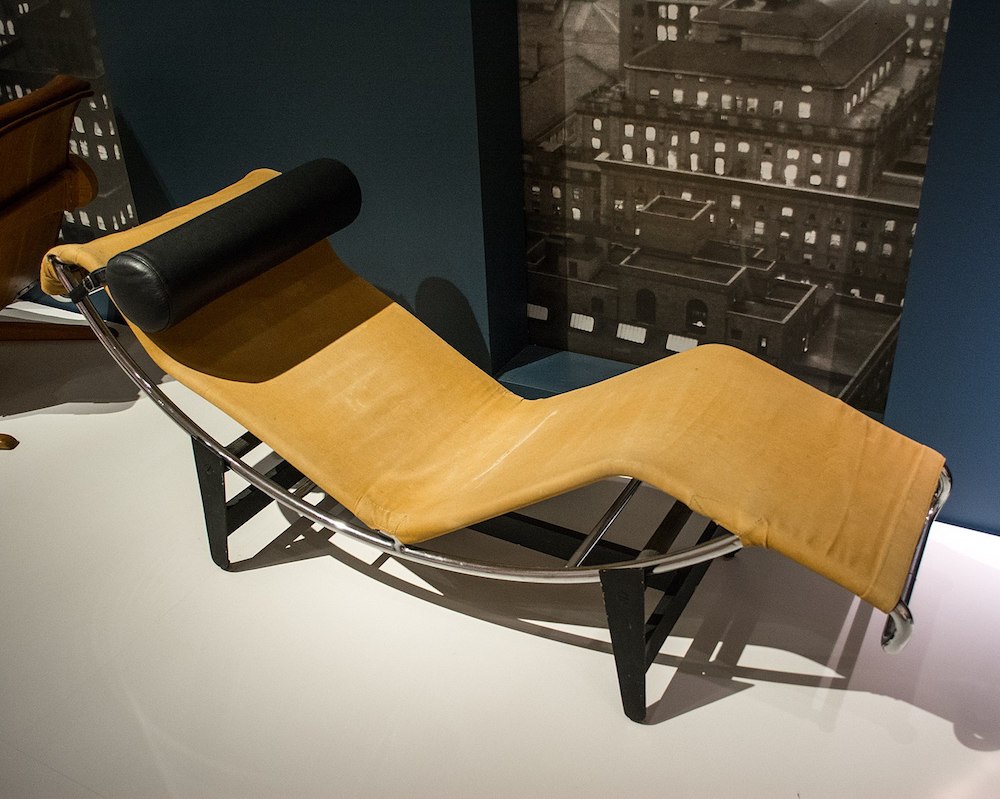
The Le Corbusier LC4 Chaise Lounge, designed by Charlotte Perriand, Le Corbusier and Pierre Jeanneret
The Le Corbusier LC4 Chaise Lounge, designed by Charlotte Perriand, Le Corbusier and Pierre Jeanneret. Credit: Tim Evanson on Wikimedia Commons, licensed under the Creative Commons Attribution-Share Alike 2.0 Generic license.

The Work of Charlotte Perriand

Around 1925, Charlotte Perriand began exhibiting her work in galleries, shortly after graduating from school. Perriand used her own apartment as a place to test out her tastes, renovating the space using a built-in wall bar made of aluminium, glass and chrome and a card table with built-in pool-pocket drink holders. In 1927, she recreated this design as the Bar sous le Toit (“Bar under the roof” i.e. “in the attic”) at the 1927 Salon d’Automne. The Bar sous le Toit installation was reflective of Perriand’s machinelike style, which was unique for women designers at the time. She unabashedly employed materials like aluminium, steel and leather, also a departure from the previously reigning style of design, which was mainly crafted from rare woods. This remarkable and innovative installation is what first put her name on the map.

Charlotte Perriand and Le Corbusier

In 1927 (at just 24 years old), Perriand waltzed in Le Corbusier’s atelier asking for a job, and it was then that she was met with: “We don’t embroider cushions here.” That was the same year her Bar sous le Toit premiered at Salon d’Automne; and when Le Corbusier’s cousin, Pierre Jeanneret, took Le Corbusier to see the exhibit, Le Corbusier changed his tune. Recognizing Perriand’s undeniable talent, Le Corbusier apologized and hired her as a furniture designer.

The trio — Perriand, Le Corbusier and Jeanneret — collaborated closely, “like three fingers on one hand,” according to Perriand. Together, they designed the LC4 Chaise Lounge, which they described as a “machine for sitting.” The chaise became one of the most seminal pieces of Modernist furniture in history — and that was just one part of their collaborations together. Perriand worked with Le Corbusier for a decade, helping to publicize and innovate his atelier and designs until she made the decision to step “out of his shadow and into a successful career of her own.”

Chicago’s Public Art: Crown Fountain

As we continue to explore Chicago’s public art, we recognize and celebrate that sculpture comes in all shapes, forms and purposes. Today, we’re exploring an iconic Chicago fixture, oft-overlooked in the medium: Millennium Park’s Crown Fountain. Alongside being the perfect place to cool off on a hot summer day in the city — or to people watch — Crown Fountain is a fascinating and experimentally expressive work of sculptural art.

Designed by Spanish artist Jaume Plensa, Crown Fountain consists of two fifty-foot glass block towers at opposite ends of a shallow reflecting pool. The towers project video footage of faces, collected from 1,000 different Chicago residents, and spurt water from an outlet in the screen centered on the video projections’ mouths. The interactive sculpture is a reference to the traditional use of gargoyles, often used as the source of water projects in fountains, where the mythical creatures’ eruption of water symbolizes giving life. Overall, construction took six months and cost $17 million, adding Crown Fountain to Chicago’s collection of world-renowned public art in July of 2004.

The video footage of the faces projected was a collaborative project between the artist, the School of the Art Institute of Chicago (SAIC) and Columbia College Chicago (CCC). 75 ethnic, social and religious organizations were asked to nominate individuals for the project, and those individuals were then filmed by SAIC students using professional-grade equipment. Filming the footage was such an intensive process that it became an informal master’s course in public art. Overall, 1,051 subjects were filmed and 960 subjects’ footage is utilized for the sculpture.

Crown Fountain was inevitably one of Millennium Park’s most controversial installations. Many were worried that the height of the towers would interrupt the architecture of the public park. Yet the sculpture won its place in the public heart with its quirkiness and comfort, inviting all to laugh and play with it. Crown Fountain’s legacy, like the legacy of Chicago, is one that celebrates community, playfulness, art and innovation.

Creative Container Gardening

In cities throughout the country, container gardening is a staple in multifamily housing where space may be limited. And while at home during shelter-in-place orders, many were inspired to test out their green thumbs. We’ve always prioritized green spaces within our projects, from rooftop foliage to lush vertical landscapes, and we love to see our residents doing the same. For those looking to get creative with container gardening, here are a few ideas and inventions to help inspire:

Know Your Basics

This may seem like a no-brainer, but understanding factors like lighting, drainage and materials can drastically affect which plants thrive on a patio or terrace. You’ll also have to choose between annuals, perennials, herbs or greenery. And of course, consider your location. Plants that thrive in Arizona’s climate may not translate well into Chicago’s weather. Knowing your home’s plant hardiness zone can help you decide what to grow. 

Embrace Edible Greens

Don’t let growing your own food or herbs intimidate you; it can be done, even if you have limited space. In fact, gardening your produce in containers can actually help you control growing conditions and potential pests. Larger pots, proper drainage, and potting mix specifically designed for containers will help your efforts. For an extra growth boost, plant flowers that will attract pollinators. For more in-depth tips, the Old Farmer’s Almanac has extensive resources for all things container gardening. 

Try New Technology

It’s 2020, so gardening technology has evolved to meet your needs. If you travel often or forget to water your plants, invest in self-watering planters. If you want a show-stopping tower of plants,  The Farmstand takes container gardening to the next level, with options to grow 200+ varieties of plants with minimal user effort. Or if you want to keep track of the health of your plants from your smartphone, check out devices like the Parrot Flower Power

Whether it’s in Illinois or Arizona, our passion for bringing the outdoors inside serves to inspire and welcome. We hope it inspires our Optima community members to do the same. 

Our Signature Vertical Landscaping System

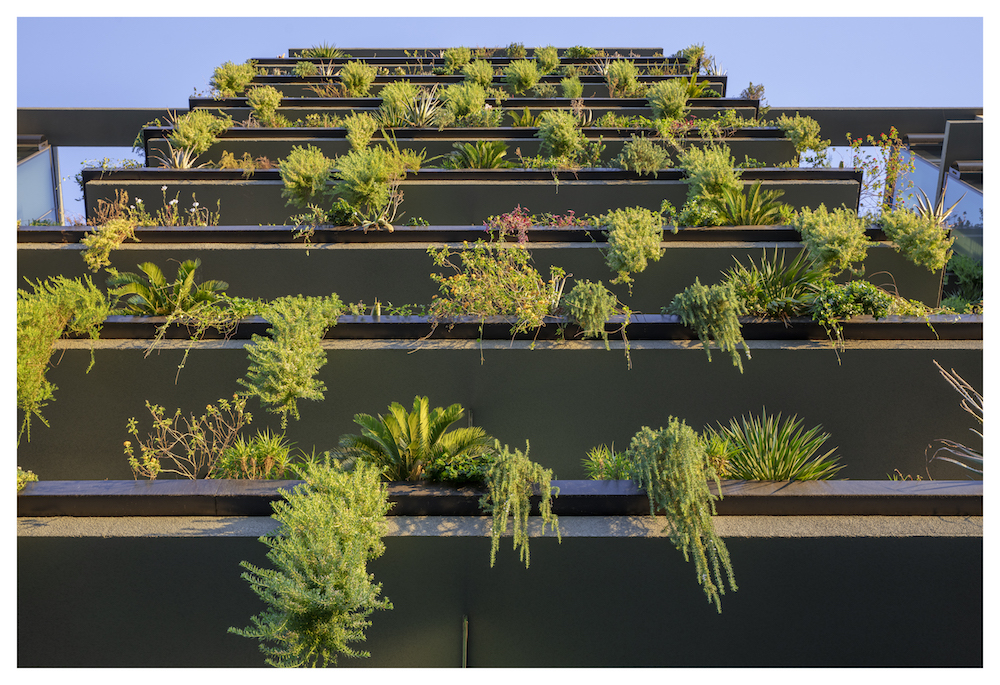
With every project, we ask ourselves how the natural land around us influences, affects and works in tandem with the structures we build. Seeking to holistically integrate the natural and built environments led us to develop our next-generation vertical landscaping system. The lush green element, utilized in many of our Arizona properties, is a cornerstone feature of Optima communities, a key component to our sustainability initiatives and so much more.

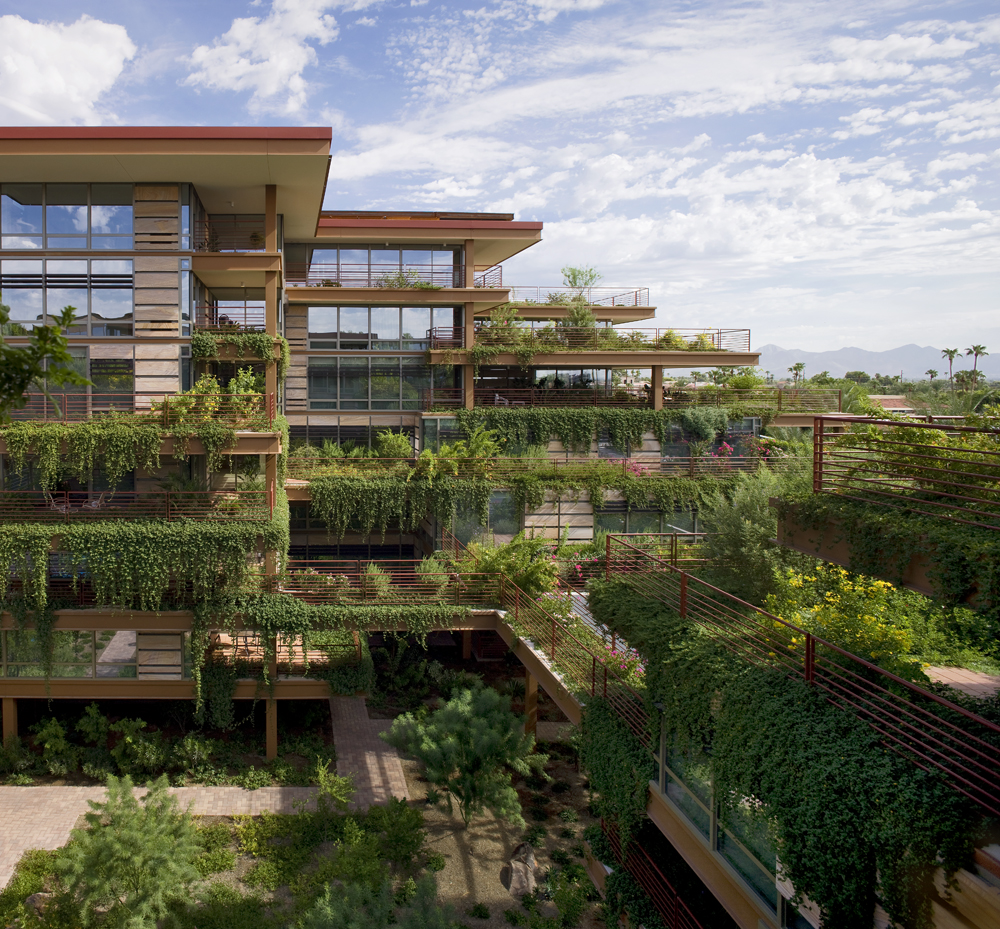
Our signature vertical landscaping system at Optima Kierland Center.
Our signature vertical landscaping system at Optima Kierland Apartments®.

Aesthetic Enhancement

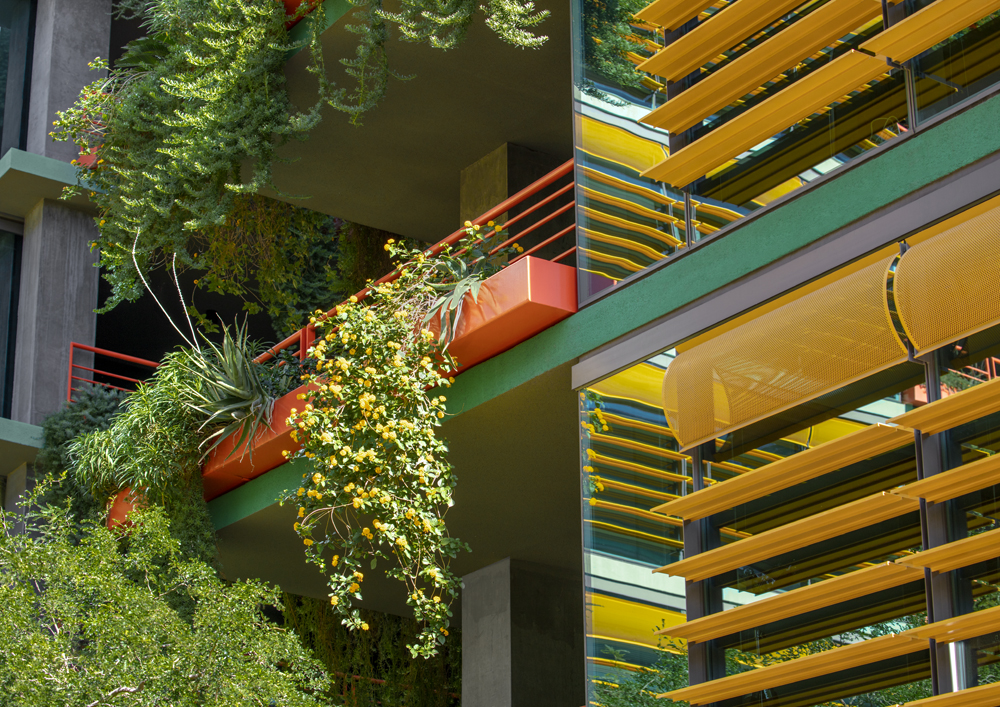
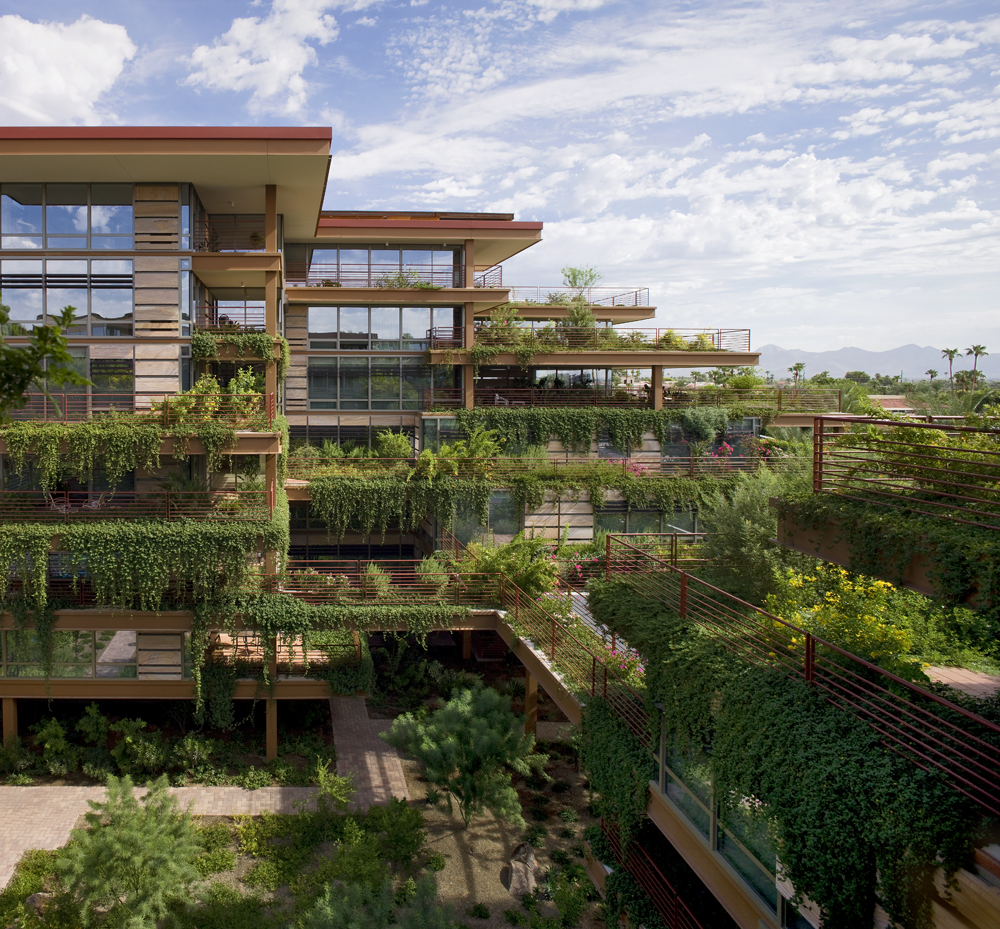
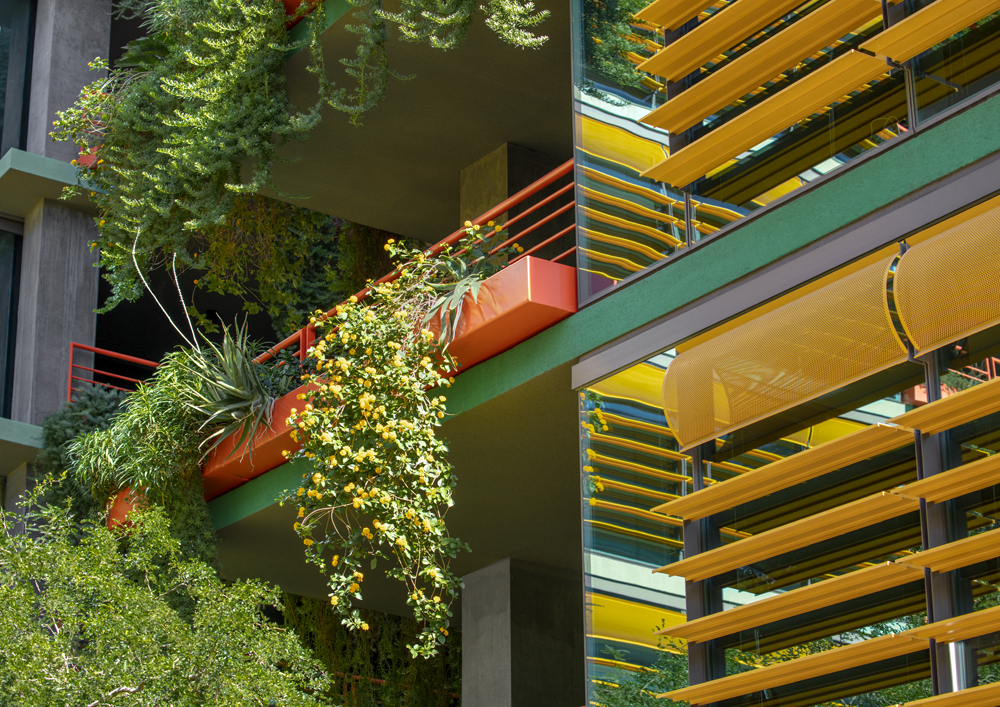
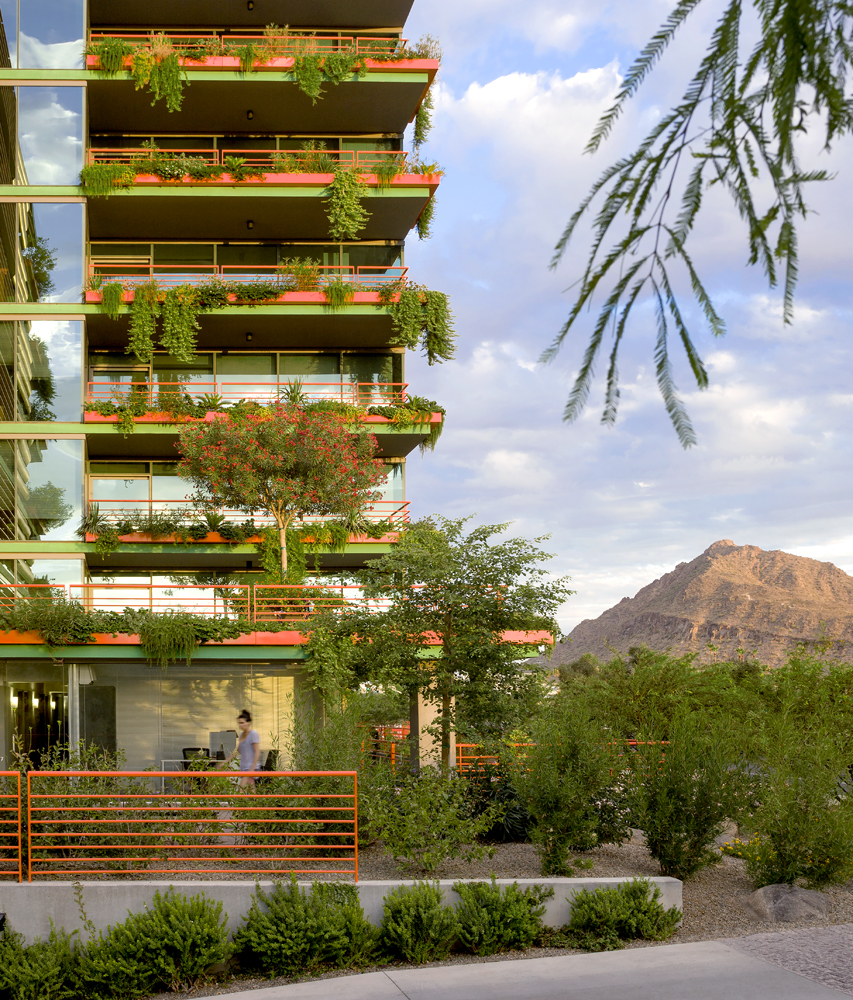
On its surface level, our signature vertical landscaping system serves to enhance the natural beauty of our communities. The lush verdure enables a palette of vibrantly colored plants at the edge of each floor to grow both up and over the edge of the building. This creates beautiful, private terrace gardens for each unit in buildings like Optima Camelview Village, Optima Kierland Center, and Optima Sonoran Village. The intense greenery also plays bold juxtaposition to our building’s facade, where concrete and glass work work in harmony to celebrate the relationship between the built and natural environment, with glass blurring the boundaries between indoor and outdoor, home and garden. 

Our signature vertical landscaping system at Optima Sonoran Village.
Our signature vertical landscaping system at Optima Sonoran Village.®

Functional, Sustainable Beauty 

Our signature vertical landscaping system isn’t just for aesthetic value — it plays a crucial role in maintaining a healthy and sustainable environment. The system, with self-containing irrigation and drainage, provides a haven for urban wildlife, promotes evaporative cooling, re-oxygenates the air, reduces dust and smog levels, reduces ambient noise, detains stormwater and thermally insulates and shields residents from the desert sun, all of which contributes to a sustainable urban environment. Residents also experience the direct impact of being surrounded by nature, with the vertical landscaping system serving as a connection to nature and added source of privacy.

Like all good design, our vertical landscaping system is a natural study in form and function. We’re proud to pioneer a system that contributes to the natural beauty of the environment, and helps preserve it, too.

An Inside Look at Architect Lingo, Part II

Our team is joined together by a love of exceptional design so naturally, design is our shared language. From property managers to accountants to architects, we’ve all come to know and love the architect lingo that helps us communicate our passions, our creations and our vision. In celebration — and in follow up to February’s blog we’re sharing Part II of our inside look at architect lingo.

Juxtaposed facade and surrounding landscape at Optima Sonoran Village
Juxtaposed facade and surrounding landscape at Optima Sonoran Village.

Juxtaposition

Juxtaposition refers to the fact of two things being placed close together with a contrasting effect. It’s the intentional creation of, and analysis of, a relationship that brings about exciting new realizations and discoveries, bringing added layers of meaning to each individual object and their relation to one another. 

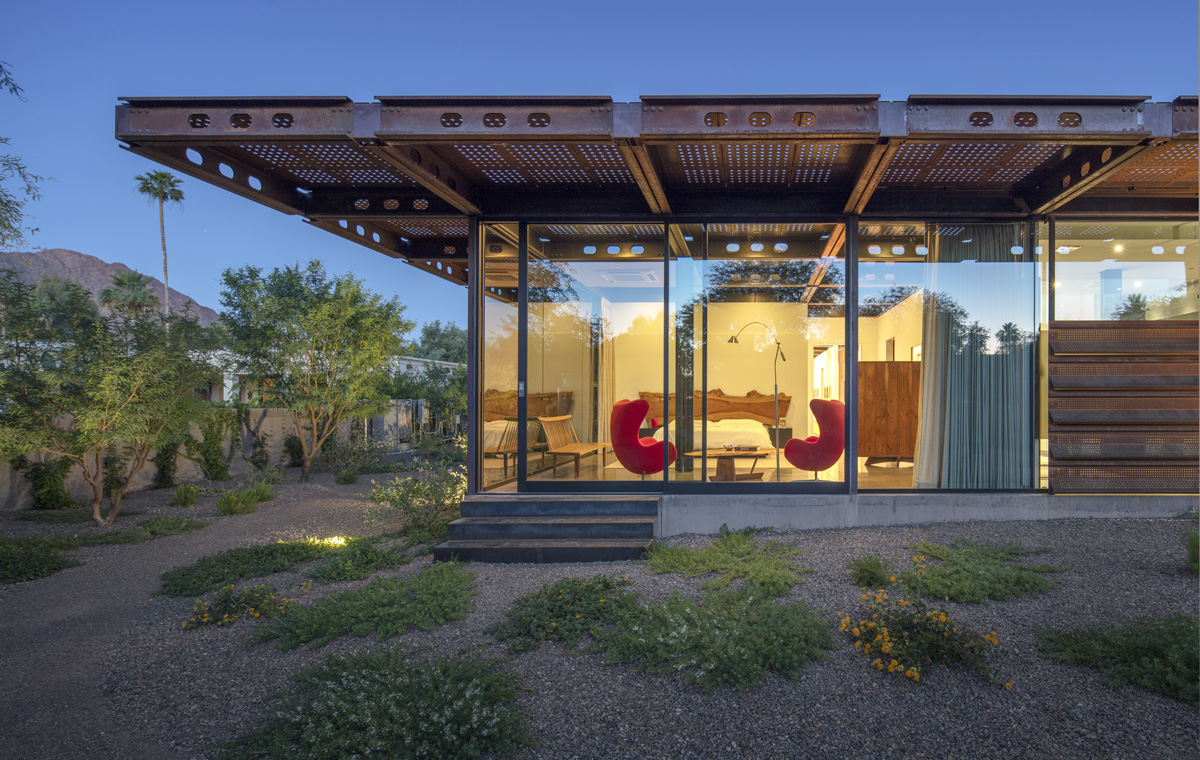
In architecture, the use of juxtaposition becomes particularly striking, manifesting on a large scale in entire building facades. With everything we build at Optima, we consider the relationship — or juxtaposition — between the built and natural environment. How does each entity influence and illuminate the other to positive effect? In our desert dwellings, juxtaposition occurs between the organic beauty of the arid landscape and the bold, Modernist facade of the houses, built in concrete and glass to intentionally illuminate their counterpart. 

Looking out the windows at Optima Biltmore Towers
Looking out the windows at Optima Biltmore Towers.

Fenestration

Derived from the Latin word fenestrae (windows), fenestration is defined as the arrangement of any holes in a building’s facade. More specifically, this usually refers to the doors and windows on the elevation of a building. 

From the most basic standpoint, fenestration allows for the entry and exit of people into and out of a structure. That being said, fenestration historically posed a challenge to architects, because poking holes in a structure can weaken its resiliency. With Modern construction and increasingly durable building hardware, architects are freed up to explore fenestration with more liberty and inventiveness, going beyond the practical to examine decorative approaches.

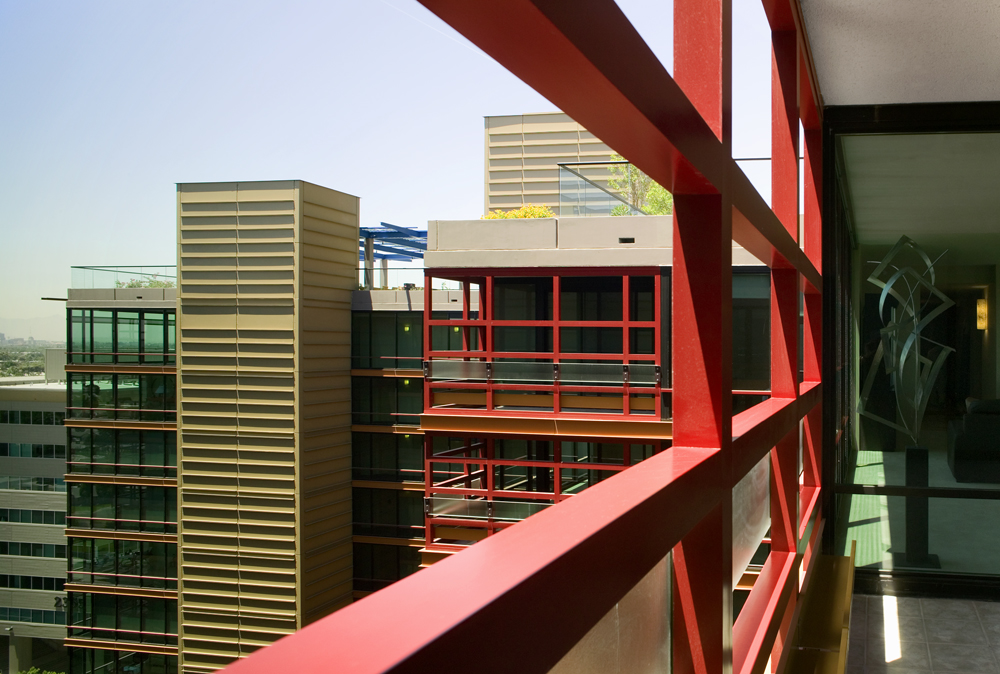
The terraced design of Optima Camelview Village
The terraced design of Optima Camelview Village.

Terrace

Terraces originated as a series of flat areas made on a slope for cultivation purposes, but have evolved into any level or paved area next to a building. Their uses vary widely, from still being tied to agricultural practices to now being a place of leisure and pleasure. 

At Optima, our approach to the terrace is with respect to its landscaping origins we employ terraces that allow our buildings, and their residents, to live in harmony with the surrounding landscape. We see the relationship between cultivating plantlife and cultivating relaxing spaces as intrinsically related.

Stay tuned for future features on the world of architecture lingo at Optima.

Inside Our Team: Accounting

The backbone of our success at Optima is the way our team seamlessly communicates, collaborates and comes together. Back in February, we got to know our property management team, and today, we’ll dive into what makes our accounting team so fantastic. 

With accounting operating as “the language of business,” we rely on our accounting team to communicate crucial financial information both internally and with our stakeholders. Their ability to communicate through numbers, data and insights is crucial when we seek to build out strategic partnerships, make high-level decisions and continue operating seamlessly, efficiently and smartly. 

We couldn’t do what we do without the help of our accounting team — and they couldn’t do what they do without an internal accounting team that celebrates its own culture and values. Here’s what they had to say about working on the accounting team

When asked what makes the team work, Chrissy Battistella, Optima’s Controller, says “Compatible personalities and great leadership.” Aurelia Mustafa, a Property Accountant, second that, saying it’s “a balance blend of personalities and communication.”

As for what they love most about working on the accounting team? Battistella says, “The people. Each team member contributes equally to the team, we all lend a hand to one another when needed. There is always an open line of communication between all the team members and each with their coach.” Szilvia Springer, a Senior Staff Accountant, adds, “Everyone has clear responsibilities, there is no micromanagement. We know what and when to get done.”

With the team being so tight-knit, it’s only natural that they learn from one another on a daily basis. Battistella says what she learned from her coworkers is “patience and teamwork. It takes a lot as a coach to effectively manage my time helping each team member, but they are all patient and respectful of my time as I am of theirs.” Mustafa chimes in, sharing, “They are a sense of support though we work on entirely different projects.  Our weekly meetings allow our team to express ourselves speaking on projects we are working on and that sometimes lead to personal conversations in an organic way where we find ourselves exchanging opinions/experiences.”

With our holistic business model that encompasses architecture, development, general contracting, sales/brokerage, asset/property management, and shared services, each of our talented teams are part of what makes Optima great. Think you would be a good fit on the Optima team? Check out our current open positions to inquire about joining our team.

Chicago’s Public Art: Agora

At Optima, our appreciation for sculpture runs deep, with Optima co-founder David Hovey Sr. expanding the design reach of Optima to include his own original sculptures. Indulging in our love for the craft, we’re exploring Chicago’s public art, piece-by-piece. This week, it’s all about Agora, by Polish sculptor and fiber artist Magdalena Abakanowicz (1930-2017).

Agora

It’s hard to miss the sculpture Agora, prominently displayed on the southwest side of Grant Park in Chicago. The 106-foot tall creation consists of a cluster of headless, walking figures, each made out of hollow and faded cast iron that was crafted in a Polish foundry. The artwork invites viewers to walk through the figures and contemplate. The figures themselves appear to be milling about in a crowd, all aimed in different directions. 

The name Agora is a reference to the urban meeting places of Ancient Greek city states. The artist, Abakanowicz, grew up during World War II with an intense fear of crowds, and that claustrophobia is reflected in her work. Inspired, or rather horrified by, the groupthink of that time and Soviet rule, Abakanowicz brought the sculpture to life. She began working on creating large headless figures in the 1970s, using burlap and resin before the final cast iron form, and the sculpture was formally installed in Chicago in 2006. 

Agora is Magdalena Abakanowicz’s largest permanent installation. However, she’s well known for her other textile sculptures and biomorphic forms, the most famous of which are her Abakans creations. The overwhelming response to her Abakans is what launched her to an international art spotlight, where she’s now regarded as one of Poland’s most internationally acclaimed artists. 

We’re honored to celebrate the innovation, creativity, work and life of Magdalena Abakanowicz, a phenomenal woman and artist.

Inside the Phoenix Art Museum

We know and love Phoenix, home to Optima Biltmore Towers, as an urban oasis and cultural hub, where the arts are everywhere you look. At the center of Phoenix’s ever-evolving and expanding arts scene is the Phoenix Art Museum, an institution that’s been around for sixty years. 

History of the Museum

Although the museum has been around for 60 years, its community ties go even deeper. In 1915, just three years after Arizona achieved statehood, the Phoenix Women’s Club was formed. The club used their platform to establish an art exhibition committee, whose goal was to improve the quality of art offerings at the Arizona State Fair and to purchase one piece of art each year. Their vision, and collection, became the foundational basis for the museum’s collection today, now consisting of more than 20,000 art objects.

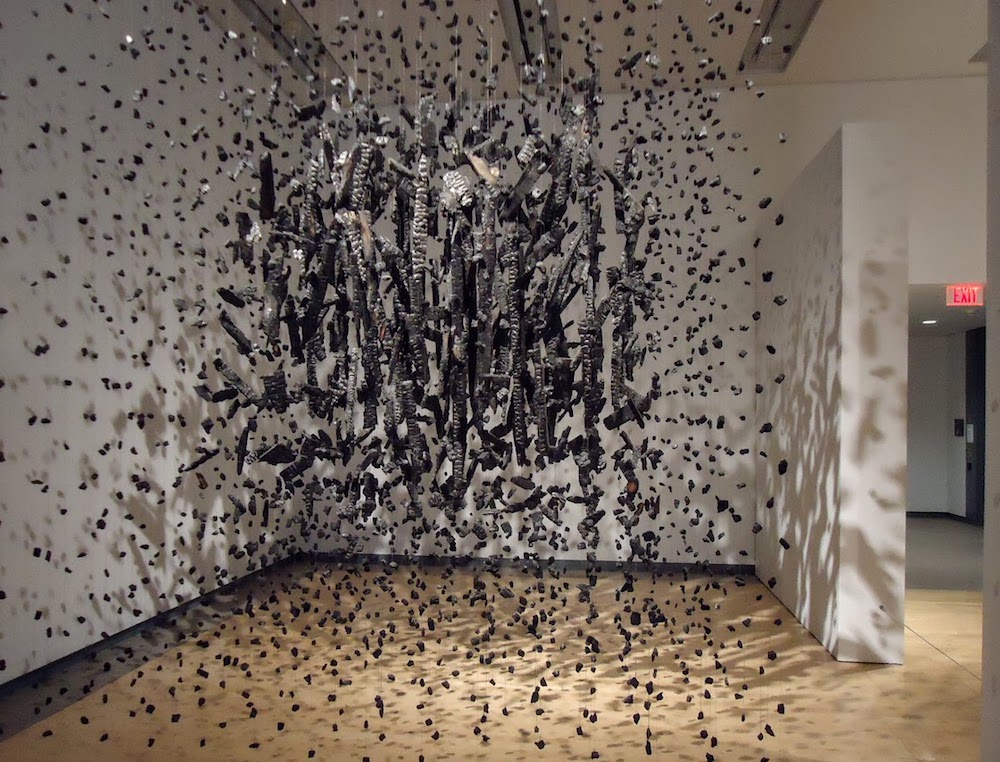
Sculptural exhibit at the Phoenix Art Museum
Credit: Tomwsulcer on Wikimedia Commons, made available under the Creative Commons CC0 1.0 Universal Public Domain Dedication.

The Museum Today

Today, the Phoenix Art Museum is considered the largest art museum in the southwestern United States, engaging 300,000 local and visiting art lovers alike each year. Their mission? “To ignite imaginations, create connections, and serve as a vibrant destination, a brave space, for all people who wish to experience the transformative power of art.” They don’t just operate as a museum to achieve this — they’re a vibrant community center and host to festivals, live performances, independent art films and educational programs, both inside and outside the museum walls.

For those planning their visit, expect to enjoy American, Asian, European, Latin American, Western American, modern and contemporary art and fashion design, as well as an interactive children’s space, photography exhibitions (held in partnership with the Center for Creative Photography) and a landscaped sculpture garden. 

There’s no shortage of things to discover, whether you’re a first-time or regular visitor. While the museum is temporarily closed due to COVID-19, you can explore their full list of collection onlines here. And when their doors do open once more, you can learn more about planning your visit here, or view a calendar of upcoming events here.

person name goes here

Maintenance Supervisor

Glencoe, IL


    Acceptable file types: *.pdf | *.txt | *.doc, max-size: 2Mb