2019: A Year in Review

As 2019 comes to a close, we reflectively look back on all that’s happened throughout a busy and exciting year. Our team, projects and Optima as a whole have experienced tremendous growth over the last twelve months. Here are just a few of the highlights:

Awards

Our team was honored to win five awards, including AIA Chicago Divine Detail award for Optima Sonoran Village, Architecture MasterPrize and Architizer A+ Finalist Award for Arizona Courtyard House, American Architecture Award for Whale Bay House and Build Magazine’s Luxury Urban Housing Designer of the Year. 

Projects and Properties

This was a big year for development, construction, leasing and more. 

In Arizona, we completed construction and leased up Optima Sonoran Village Phase III, the fifth and final tower at Optima Sonoran Village. 7120 Optima Kierland sold out – and was the fastest selling community in the Valley. We launched sales at 7180 Optima Kierland and are already over 50% sold. We also began construction on both 7140 and 7180 Optima Kierland, both slated for completion in 2020. We also purchased new land in Scottsdale to develop new Optima communities.

In Illinois, we leased up 100% of our commercial and retail space at Optima Signature including business suites. We also purchased new land in Chicago and the North Shore for new developments.

We also launched Optimized ServiceTM, a next-level white-glove approach to our concierge experience.
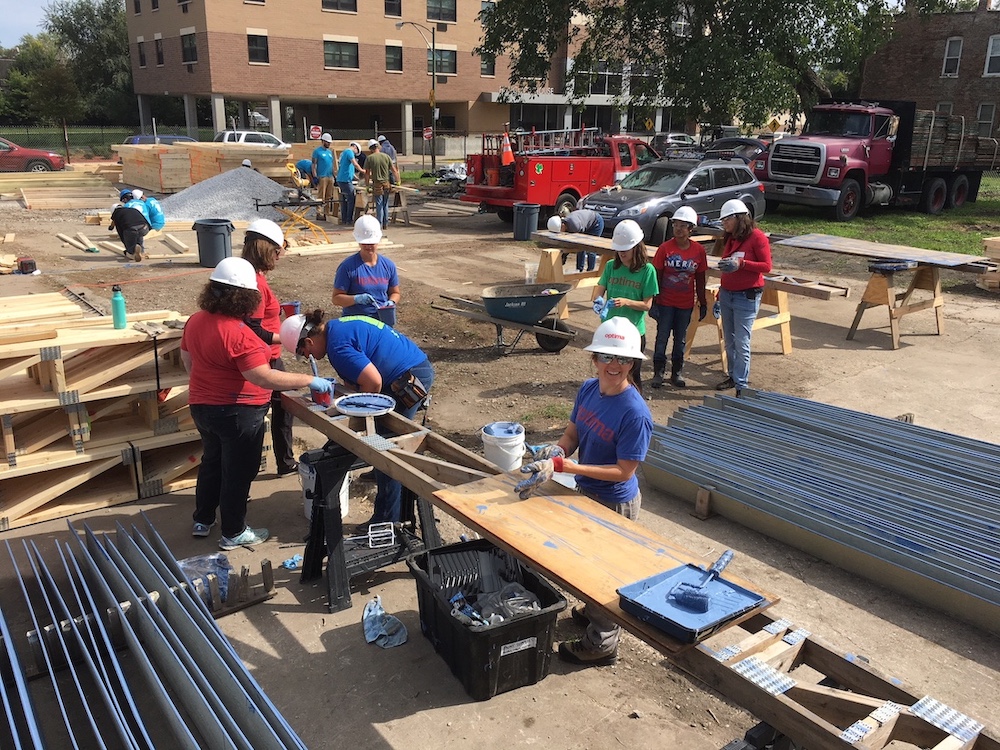
The Optima team volunteering for Habitat for Humanity.

Culture

Working across our entire organization, we formalized our purpose statement and core values to reflect our growth and inspire our path forward. We volunteered: we spent the day with Habitat for Humanity in both AZ and IL, cleaned up the Skokie Lagoons in IL, and worked with animals at Amy’s Farm Sanctuary in AZ. We had fun: we enjoyed axe throwing, bowling, go karting, beaches, barbeques, concerts and high tea. We also learned: our team attended the Metropolitan Planning Council lunch, the TCN Women in the Forefront Luncheon, the Goldie Gala, the Chicago Build Expo and NAA Apartmentalize. 

We can’t thank our leadership, team members and supporters enough for such a fantastic year. As we look towards 2020, we look forward to the new year to come, new milestones to pass and new ways to innovate across our upcoming projects. 
Optimized Service at Optima

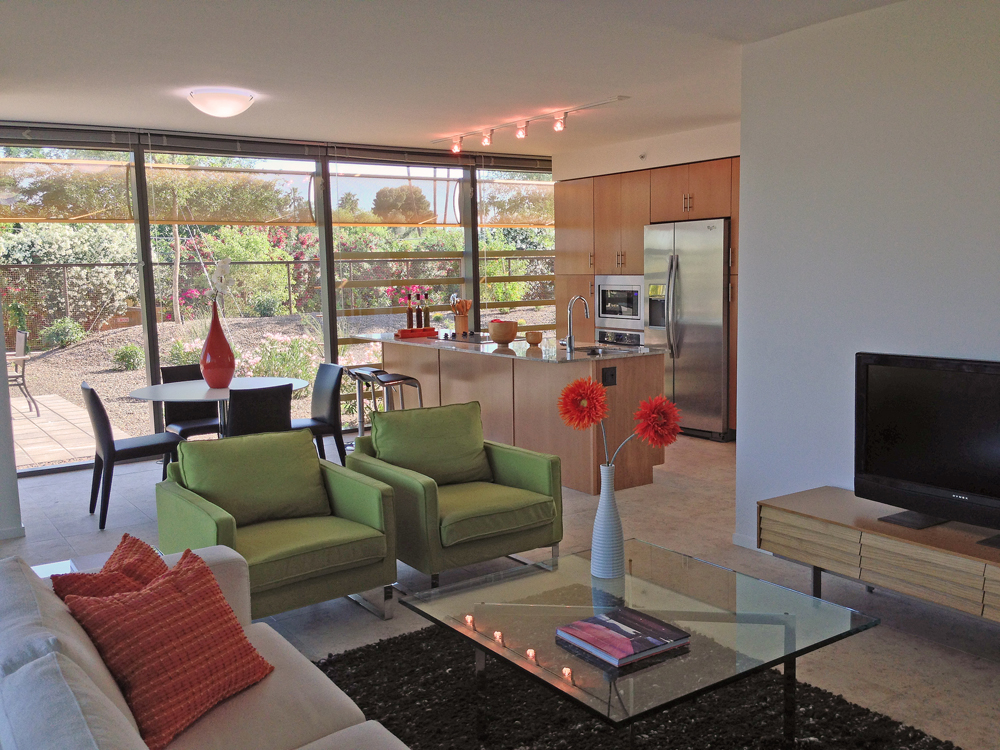
With everything we do at Optima, we set out to deepen the human experience. In support of this mission, this year we launched Optimized Service, an innovative in-home concierge program that is the first of its kind in Arizona. 

Optimized Service takes concierge services to the next level, providing conveniences for our residents within the comfort of their homes, with our professional in-house teams working around the clock. Complimentary services include dry cleaning pickup and delivery to the closet, in-home plant watering, thermostat adjustments and package delivery to your front door within 24 hours of package delivery to the building. 

The program augments the virtual concierge at Optima, which offers our residents the ability to call, email or text for assistance with booking reservations, appointments, coordinating travel and other similar tasks. 

We see our new hospitality-grade service as the perfect addition to the abundant amenities offered across all of our Arizona luxury rental communities. In our continuous pursuit of service, we seek to provide our residents with an unparalleled living experience. 

The New Architecture: Integrating the Built and Natural Environment

In a recent New York Times article, author Karrie Jacobs wrote that the “hard barriers between the designed environment and the natural one are softening maybe for good.” 

Jacobs went on to say, “Designers today are rebalancing the relationship between architecture and nature, with the goal of increasing the quality of life, especially in urban settings.” 

The NYTimes article features several new and innovative works by global architects who are designing to fuse outdoor and indoor, with structures that are both influenced by and have influence on their environment. We love to see the innovation taking place throughout the architecture world, and the continued conversation surrounding how design can evolve to appreciate nature.

From the beginning, our work at Optima has celebrated this fundamental connection between design and nature as a way of enhancing the human experience. Since our founding in the late 70s, we have been utilizing Modernist design to create homes that are an extension of their environment and integrate nature into the lives of those that live in them.

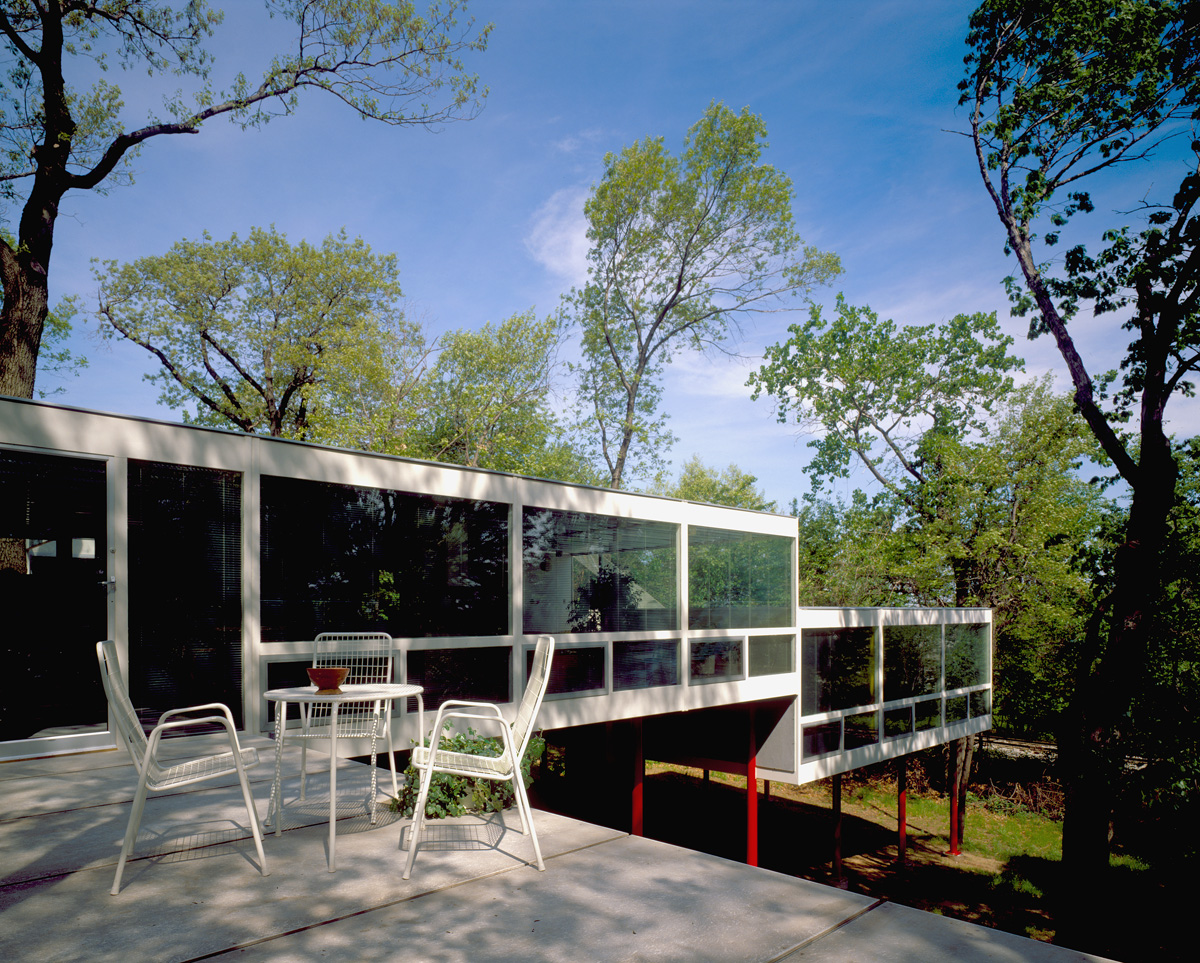
Sandy Knoll, Optima, Homewood, Illinois

One of our first residences, Sandy Knoll, demonstrated how modular housing could integrate a home into a steep, challenging wooded knoll. What resulted was a beautiful home that preserved the integrity and grace of its site, with mature trees and local Illinois vegetation creating the views out of glass-paneled walls. 

Since then, we have continuously challenged ourselves to evolve new ways of incorporating nature into our design. Green space has always been a large component to the communities that we build, and our move to Arizona has only deepened our intimate understanding of landscaping.

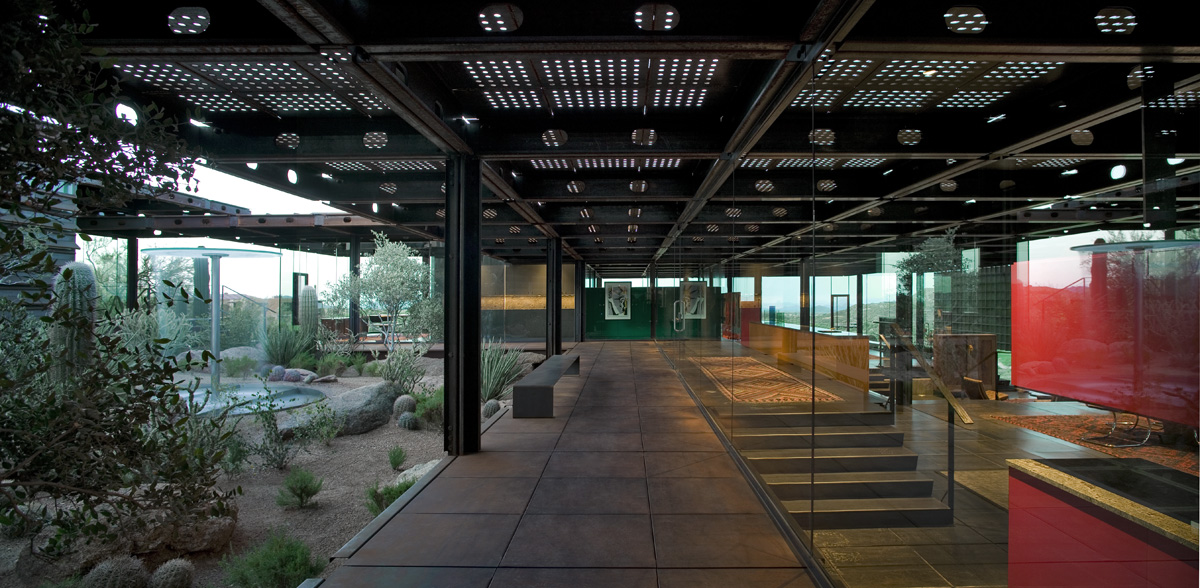
Relic Rock, Optima DCHGlobal, Scottsdale, Arizona

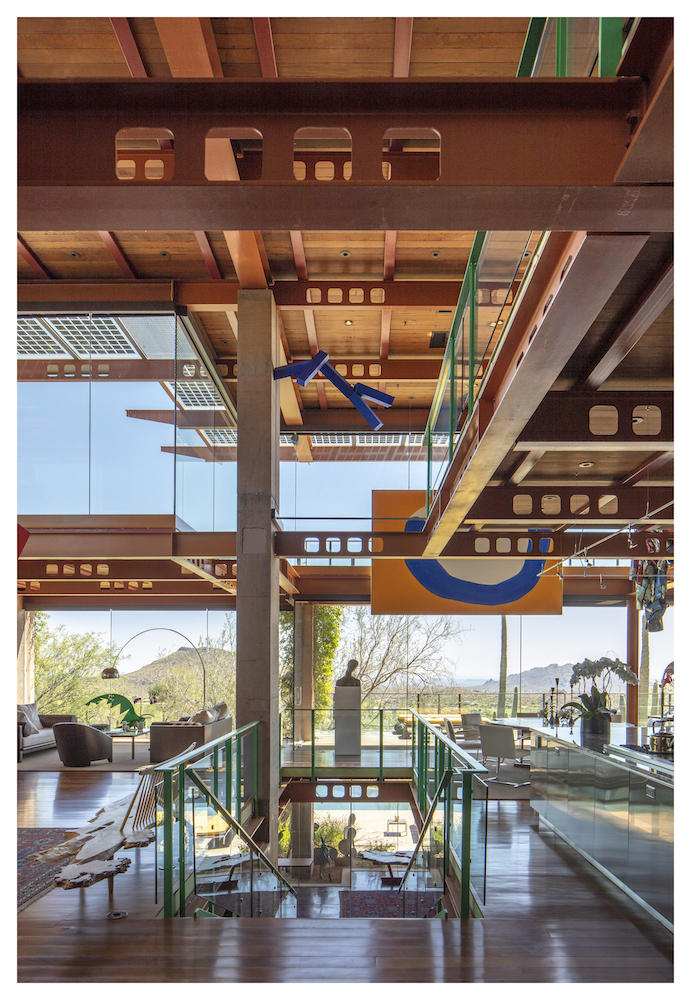
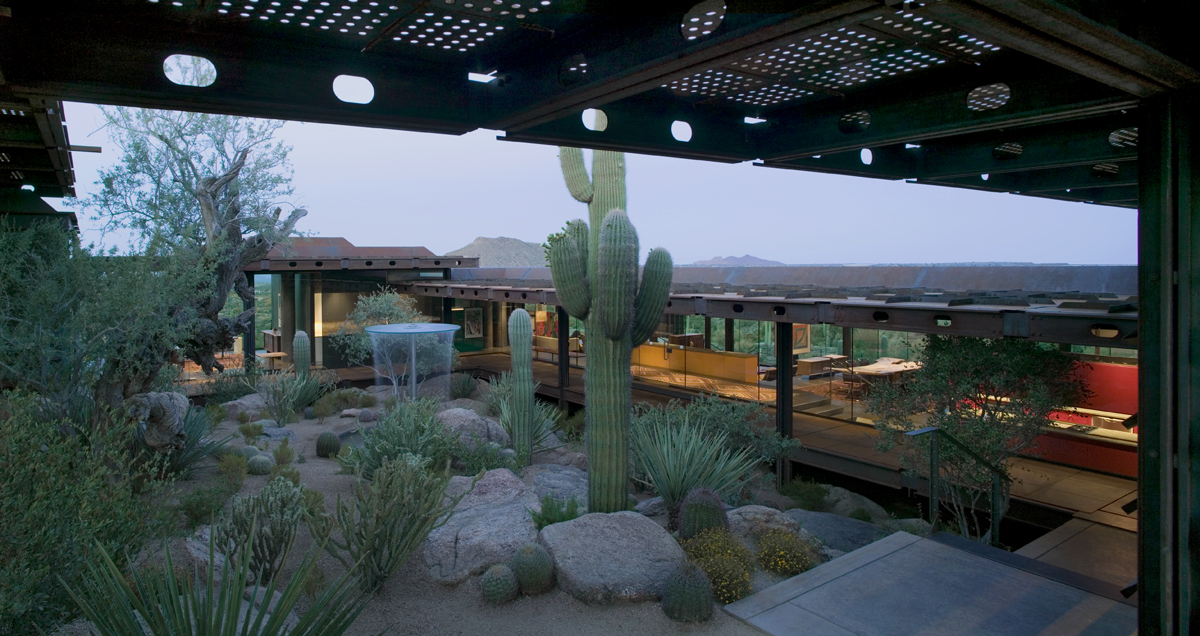
Our desert dwellings incorporate the elevation, vegetation and climate of the desert into every facet of design, from bridged courtyards to the materials and colors used for each home’s exterior. Glass curtainwalls also provide uninterrupted, panoramic views of the sweeping landscape, so that the mountains of the desert feel a part of each home.

Optima Sonoran Village, Scottsdale, Arizona

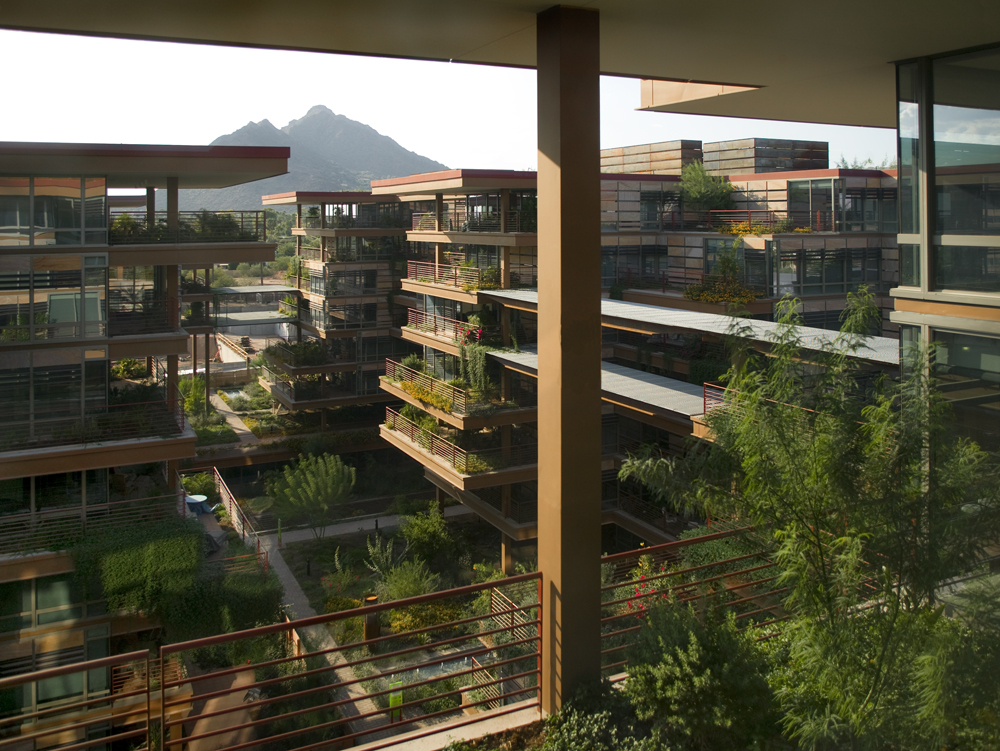
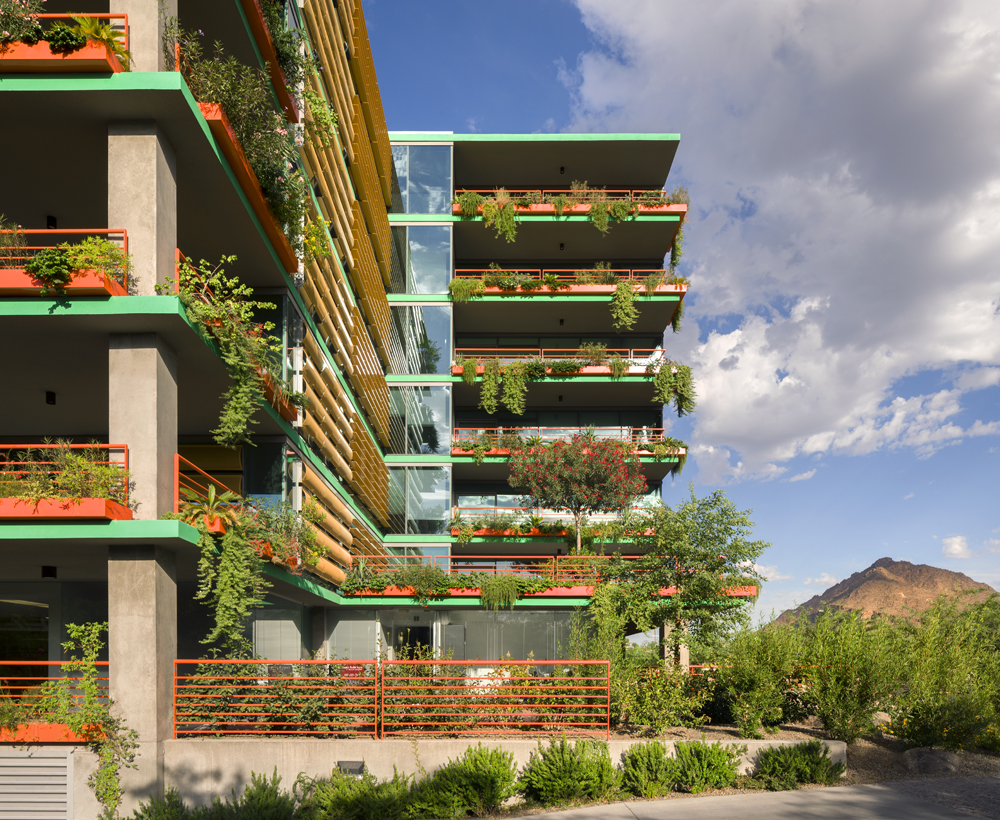
In our multifamily work, we incorporate the Optima vertical landscaping system to create protection, privacy and beauty. For us, lush landscaping vertically and horizontally across our communities is an integral part of creating connection – a connection that is both physically inviting and spiritually inviting, as our design seeks to connect people with their surrounding environment.

We look forward to the future, to constantly pushing the boundaries and exploring how to further unify the built and natural environment. We’re excited that the work we do is part of a larger conversation in the architecture world and can’t wait to see what we, and others, do next for architecture and for the earth.

Desert Dwellings: Laboratories to Test Our Tastes

Optima’s residential work goes back to 1982, when Sheridan Elm in Winnetka, IL first allowed us to challenge the status quo. Sandy Knoll and Ravine Bluff followed, each an exploration of the steel-and-glass Modernist aesthetic on our own terms. Ultimately, however, it was our geographic leap to designing homes in the Arizona desert that drew our practice, and design, into a new realm. Our desert dwellings serve as laboratories in which we are able to test our tastes and stretch the boundaries of our thinking.

Shadow Caster, Optima, Scottsdale, Arizona.

A New Frontier

In moving out to Arizona in the early 2000s, our intention was to build in a physical environment that was drastically different than our Chicago beginnings. Our team, led by David Hovey Jr., needed to utilize the outdoor space year-round, an interesting new challenge in comparison to Midwest seasons. Over the years, our desert homes have included  Shadow Caster, Cloud Chaser, Vanishing Rain, and Sterling Ridge. While our Illinois residences were straight-forward, functionalist modular builds, the Desert Homes are deepened and complexified by the multi-layered and defined spaces within. 

Our desert residences also allowed us to test changes in traditional components of Optima architecture, like our all-glass facades. Traditionally, transparency into such a hot region is ineffective for temperature control. However we were able to experiment with landscaping and solar screening that would help to shield our structures from direct sun and subsequent heat, while still allowing seamless desert views. We also discovered new methods of landscaping, creating shallow and bridged beds, as well as self-irrigating planter boxes, in order to create the vibrant verdure of the landscaping seen today at Optima Camelview Village, Optima Sonoran Village and 7160 Optima Kierland

 Relic Rock, Optima DCHGlobal, Scottsdale, Arizona.

Relic Rock, Optima DCHGlobal, Scottsdale, Arizona.

A New Way of Seeing

With a new office in Arizona, we were able to utilize current technology to form a project flow for both areas. About this time in 2001, technology was improving from an architecture standpoint; things were moving from a 2-D CAD design system into a 3-D building information modeling system. This allowed us to communicate effectively through our offices, helped our executive team take on more responsibility and started the process for multi-family projects in Arizona. 

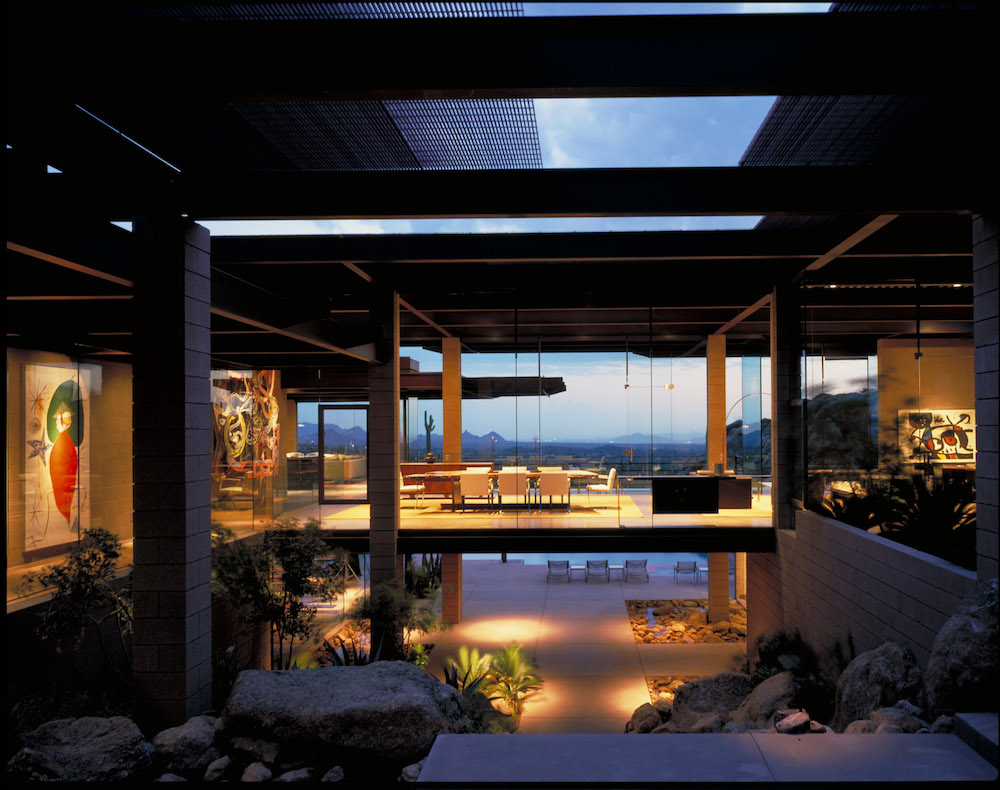
Part of this expansion in Arizona was the introduction of Optima DCHGlobal, which acted as another laboratory for some of the processes we envisioned for large-scale buildings, especially with the transformation from 2-D design into 3-D BIM systems. The vision for Optima DCHGlobal was to create a customizable, flexible and standardized system, which resulted in additional desert dwellings, Relic Rock and Arizona Courtyard House. Through our desert laboratories, we have explored not only how to create beautiful spaces, but how to make them sustainable and adaptable across all types of geographic environments. 

The discoveries that we make through our desert dwellings don’t exist in isolation. With each new home, we uncover more of what makes our design uniquely us, and how to create our vision in the best way possible, so that we can bring it to each and every project that we undertake, no matter the type of home or type of terrain.

Inside Our Team: Construction

To fuel our vertically-integrated business model, Optima is composed of strong, multi-faceted teams that ensure an effective and efficient workflow throughout our projects. Ever since our inception, we have recognized the benefits of harnessing collaborative teams, and we’re not alone. According to Forbes, productive team environments are the new vision for successful and satisfying employment. Adaptability, trustworthiness and openness are key components in coordinating team actions and solving challenging problems. 

Now more than ever, teamwork is recognized as a critical part of successful work culture. Our construction team at Optima is no exception; the team is currently working on two buildings in Arizona, just wrapped up another project ahead of schedule and is growing in Illinois as we prepare for upcoming projects in the Chicago market.  

Construction at Whale Bay House, New Zealand

When asked about what makes their team amazing, here are some of the things our construction team members had to say:

“We understand what the needs of the job are and strive towards a common goal to get things done. If someone makes a mistake, they own the mistake and fix it themselves so they learn and grow from the experience.”

“We all pitch in and help one another. If one of us has a problem, we all have a problem and will work together to find an answer.”

“I love the team we have gathered; they are knowledgeable and willing to learn.”

“I absolutely have learned leaps and bounds! I found my passion. Similar to a child in a sugar shop, my brain is soaking up everything like a sponge! I smile just talking about decking, and vetting subs for new partnerships!”

With our holistic business model that encompasses architecture, development, general contracting, sales/brokerage, asset/property management, and shared services, each of our talented teams are part of what makes Optima great. Think you would be a good fit on the Optima team? Check out our current open positions to inquire about joining our team. 


Green Space Spotlight: Optima Camelview Village

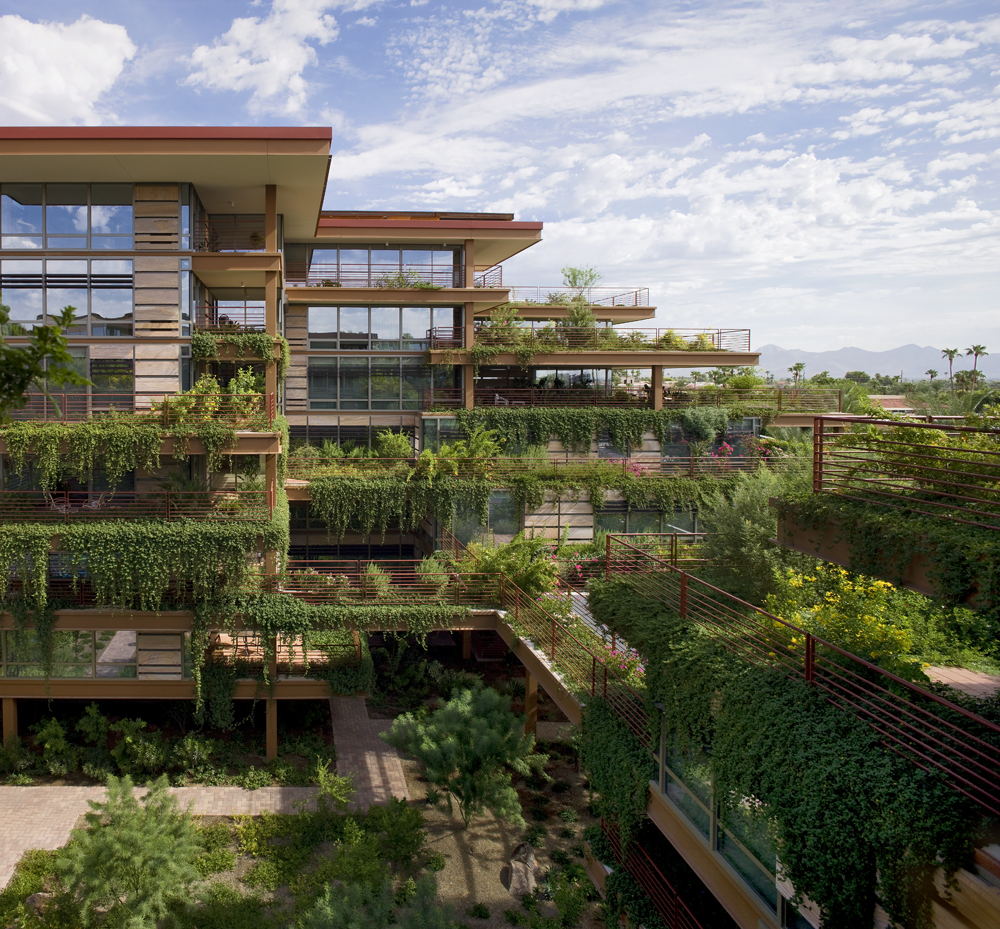
Optima Camelview Village landscaping is an oasis inspired by the surrounding mountains and Native American desert communities. What resulted: eleven terraced, bridge-linked buildings with courtyards that created ample opportunity to utilize our signature vertical landscaping to dramatic, and environmentally impactful, effect.

Optima Camelview Village, Scottsdale, Arizona.
Optima Camelview Village, Scottsdale, Arizona

Private Terraces

Each and every residence at Optima Camelview Village features a private terrace. The terraces are made all the more beautiful by an abundance of verdure, with lush landscaping that provides a pop of color alongside ample privacy and shade. The terraces, and their landscaping, also play into the complex layered language of shading, textures and colors that create depth and complexity throughout the community. 

The landscaping on the terraces was complicated due to the intricate geometry of Optima Camelview Village and necessitated designing for each individual terrace. By creating proper conditions for the plant life to thrive, with a specialized vacuum that deposits specially-tailored dirt for each mini-garden, we were able to make them work. 

Rooftop Gardens

The community sits on a 13-acre site, including an impressive 23-acres of rooftop gardens spread across the eleven buildings that make up Optima Camelview Village. The intense greenery that thrives atop the buildings serves as a haven for the natural wildlife of Arizona, as well as for the residents who live in the community. 

Optima Camelview Village, Scottsdale, Arizona

A Collaborative Effort

We worked with experts at Arizona State University for several years to get our landscaping just right. It’s crucial that the greenspace at Optima communities not only provides an aesthetic beauty, but that it contributes to the greater environment. With the help of ASU, we ensured that Optima Camelview Village’s landscaping is sustainable, with positive consequences such as re-oxygenation of the air, reduced dust and smog levels, reduced ambient noise, detainment of stormwater and thermal insulation and shielding from the desert sun.  

As always, we consider the additive value of our built communities not just in the lives of those that call Optima Camelview Village home, but of the planet that we ourselves call home.

A Transparency on Glass

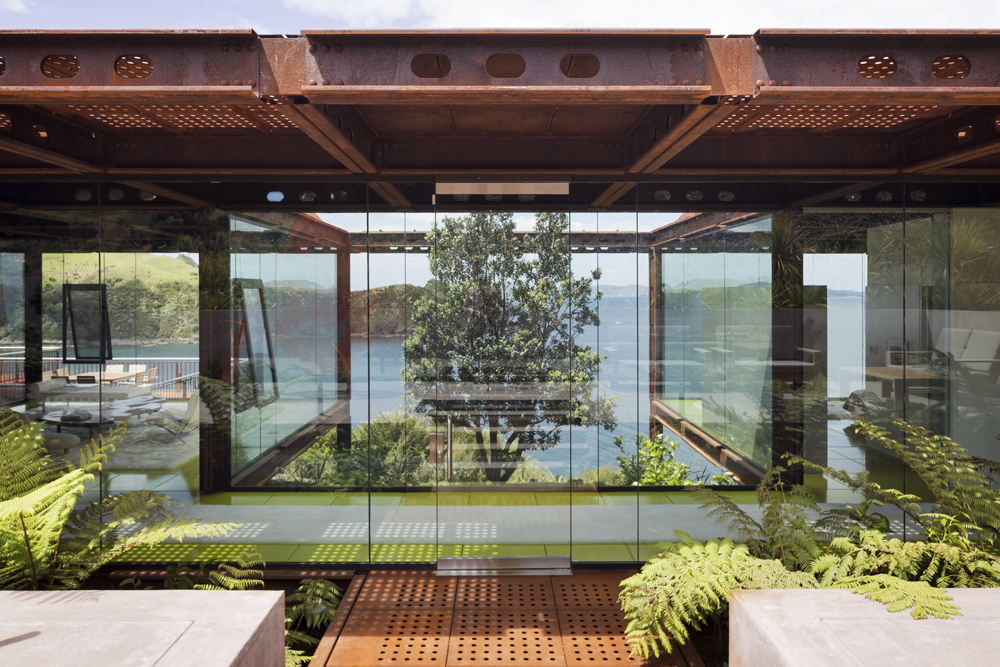
Whale Bay House, Optima DCHGlobal, Inc., New Zealand.

For decades, glass has been a stylistic signature of Modernist architecture. From the first Modernist structure ever built to the steel-and-glass aesthetic of Modernist master Ludwig Mies van der Rohe, the material has provided a timeless transparency that is crucial to minimalist design. But glass hasn’t always been as functional as it is aesthetic. 

A History of Glass

Glass is one of the oldest man-made materials, with use dating back to 7000 B.C. It was first utilized for decorative purposes in 3000 B.C. by Egyptians mainly in pottery and other decorative trinkets and first used as windows by the Romans around 500 B.C.

However, at that time, the masonry required to create glass also didn’t allow for larger, stronger pieces to be created, so its use was therefore sequestered to windows and detailing, such as stained glass murals.

In the 19th century, the manufacturing renaissance introduced iron, steel and other materials that provided the strength and durability necessary to support larger glass constructions. The support of these materials, combined with the capability to produce glass in larger sheets, allowed architects to experiment with creating structures utilizing glass in more creative ways.

The Crystal Palace designed by Joseph Paxton.

The Crystal Palace

This new design potential allowed for greenhouses, large railway stations and other public structures to be made of glass. Such new usages inspired Joseph Paxton, an architect in London, to design the Crystal Palace in 1851 using 300,000 sheets of glass. The Crystal Palace was the first architectural creation to utilize an all-glass exterior, and is also considered the first Modernist structure ever created.  

To overcome the harsh effects of a glass exterior, Paxton utilized translucent screens of calico hung externally between the ridge beams of the structure’s roof glazing, covering the entire exposed rooftop and protecting against the transparent building’s vulnerability to heat. This functional feature eventually transitioned into a cornerstone piece of Modernist design. 

7120 Optima Kierland in the Kierland neighborhood of Scottsdale, AZ.

Glass at Optima

The idea of transparency, open space and functional materials are still relevant and desirable today. At Optima, we use floor-to-ceiling glass to create an indoor-outdoor relationship, allowing for sweeping views and connecting our indoor living spaces with the natural spaces just outside.

At 7120 Optima Kierland, we use a combination of low-e, UV-treated glass, perforated sunscreens and horizontal louvers, to create texture and rich variation of shades and shadows, while allowing for breathtaking views.

Optima Signature in the Streeterville neighborhood of Chicago, IL

At Optima Signature, glass preserves the sweeping lake views to the east and dynamic city views in all other directions. Glass also unifies Optima Signature with its sister tower to the west, Optima Chicago Center. While the glass curtainwalls of each building are different — silver-toned in the case Optima Chicago Center, and transparent green for Optima Signature — the podiums share a unifying black ceramic frit glass with dot pattern. Optima Signature expands the palette with areas of red glass that wrap the podium as it extends south to define the east edge of the plaza.

As we reflect on the history of glass and how it has become a viable aesthetic and functional choice when designing today, we return to the material time and again to design and build the stunning Modernist steel-and-glass structures in our portfolio.

A Brief History of The Courtyard

An iconic architectural design feature of many Optima projects, the courtyard is a long-beloved piece of home and history. A space designed for peace, socializing and beauty, the courtyard has a rich history that has led to its modern interpretations. 

It’s estimated that the first courtyard houses made an appearance around 6000BC in the Jordan Valley, used for purposes ranging from cooking, sleeping, working, gardening or even housing animals. Before courtyards, open fires were used within a central place in a home, with a small hole in the ceiling for the smoke to escape. Gradually, the holes became larger and evolved into open courtyards more similar to what exists today. 

Courtyards are an iconic staple in many cultures throughout the world, though they vary in style and function. The central uncovered area in Roman architecture was referred to as an atrium, and would often contain a central pool used to collect rainwater and a garden. In China, the courtyard was a central space for multiple homes and families, and used as a place for privacy and tranquility. The medieval European courtyard was used for working, gathering and protection. With such a rich and diverse history, it’s no surprise that the courtyard continues to withstand the test of time. 

A courtyard at one of the Optima homes in Arizona.

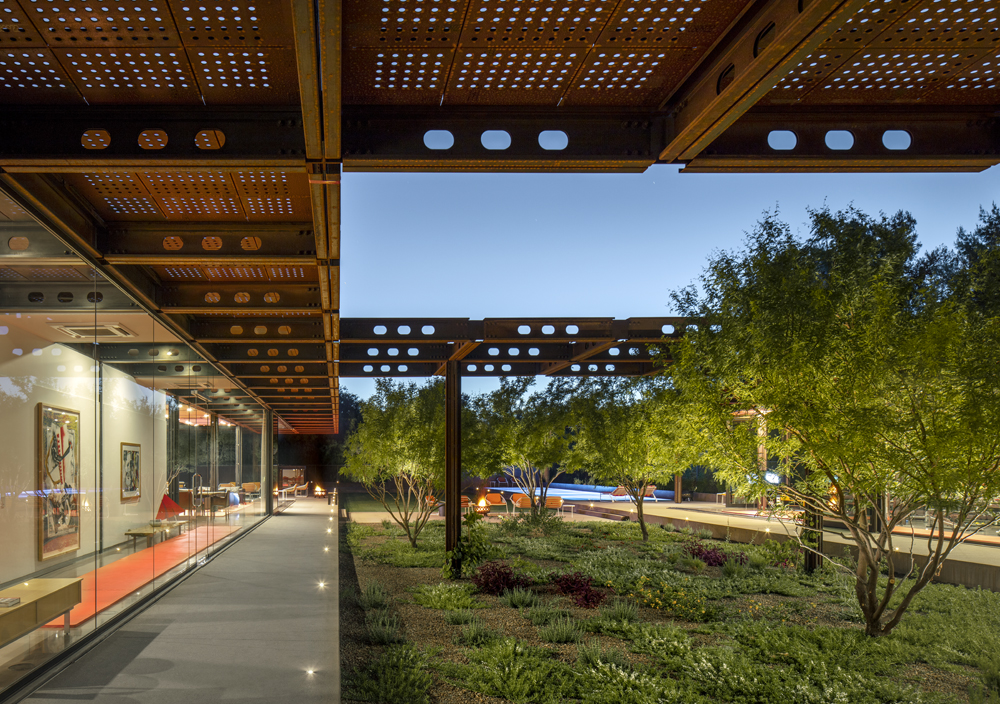
Traditionally, courtyard homes are prevalent in temperate climates, since the open space helps maintain a cool temperature. To take advantage of the functional and aesthetic benefits of the courtyard, many of our Arizona projects feature courtyard greenspaces. Our Arizona Courtyard House is even named after the feature that makes it unique; outside and inside flow together to create a seamless layout and beautiful views of the landscape.  The home is arranged with the main house to the south and east, and a fitness center and lap pool to the north creating a private courtyard in the center.

The essence of a courtyard is the physical expression of the concept of connection, and ours are built with the hope that they will provide a peaceful oasis in which residents can reconnect to their friends, family and the surrounding environment.

Green Space Spotlight: Optima Sonoran Village

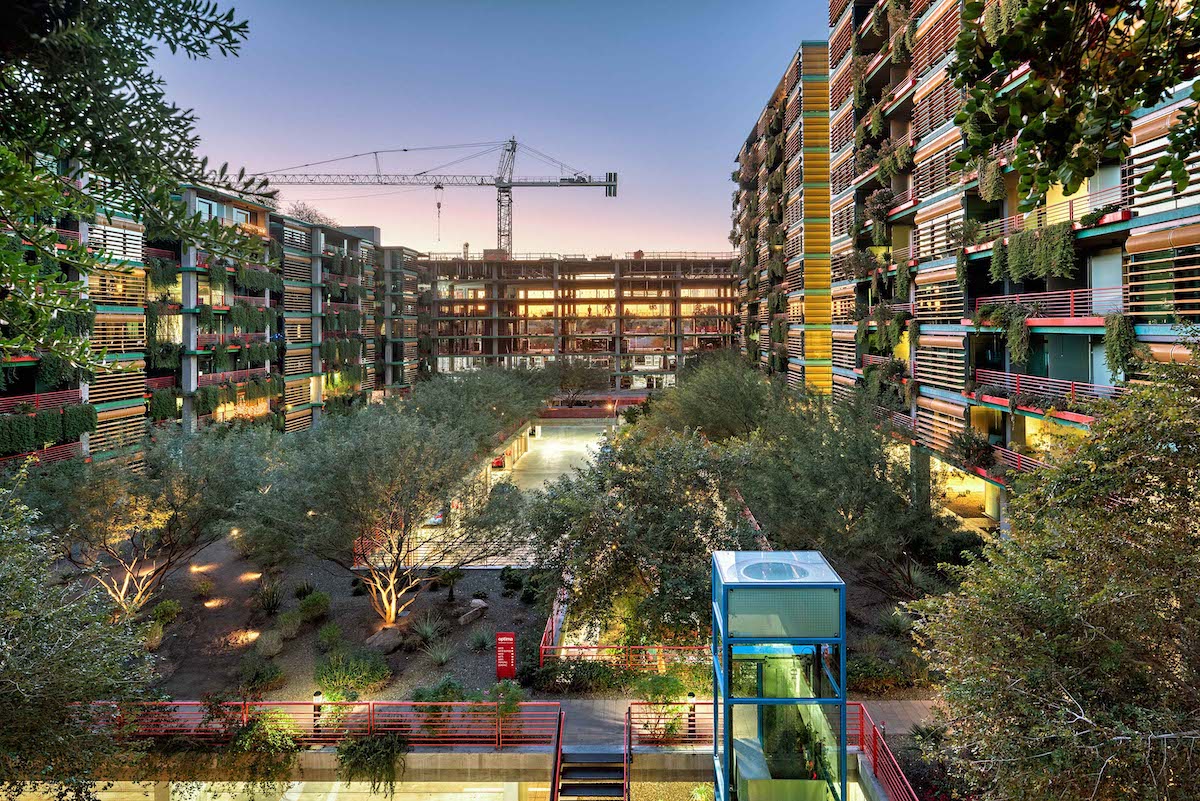
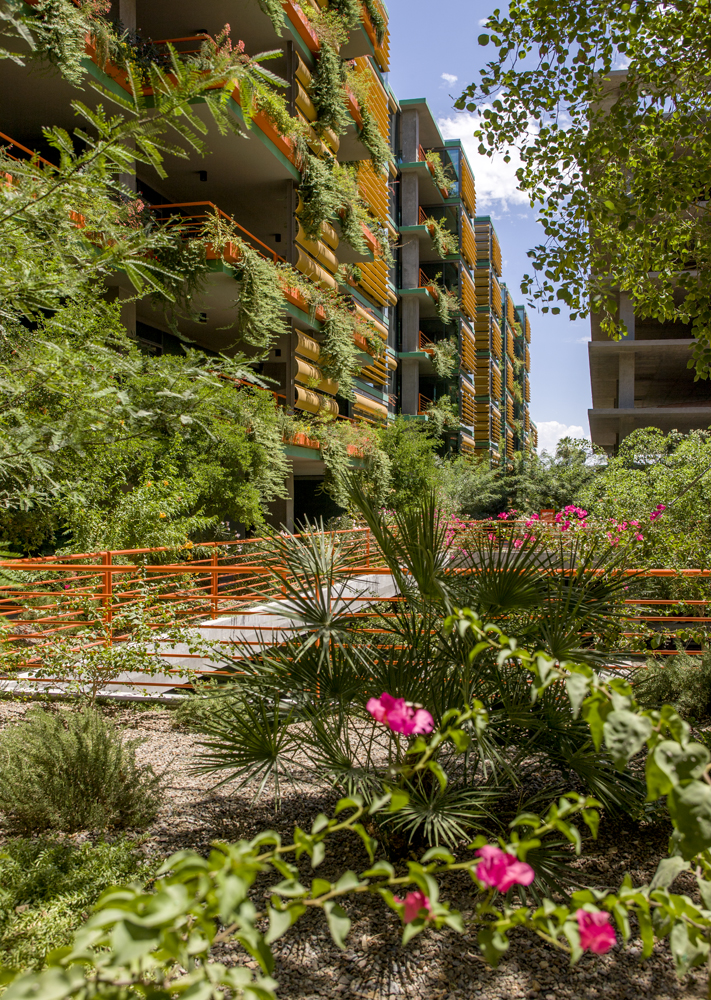
At Optima, one of the cornerstones of our design process is the green space in our communities. With Optima Sonoran Village situated on a ten acre site in downtown Scottsdale, there was an abundance of space to become green. Of the ten acres, six of them are open space that not only mediate the harsh desert climate but also create visually stunning landscaped areas to be enjoyed by residents and the community.

https://www.optimaweb.com/color-design/

Lush Landscaping and Pedestrian Paths

Courtyard walking paths wind throughout the property, guiding public pedestrians into and through the development and its centralized courtyards. Surrounding the paths is a varied palette of plantlife. This colorful landscaping against the signature Optima pops of color provides a vibrancy and complement to the more subdued, natural hues of the surrounding desert. 

At Optima Sonoran Village in downtown Scottsdale, an abundance of green space enhances the surrounding community.

Original Public Art

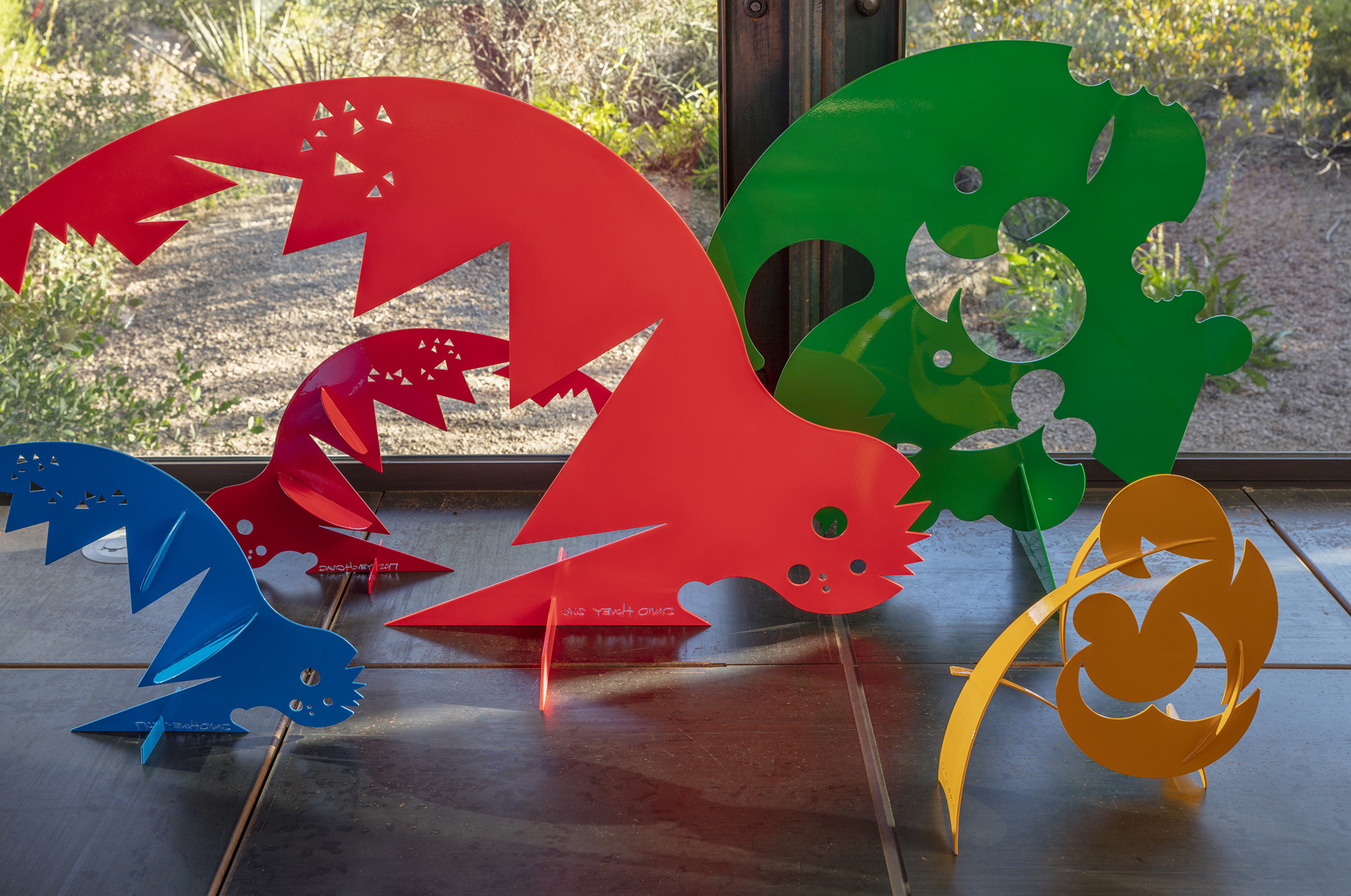
Placed within the courtyards are five original David Hovey sculptures, which range in size up to ten feet. As expansive and evocative pieces of public art, these sculptures activate the spaces that they occupy, and enhance the experience of those passing through. 

Green Space as Mediator

The greenspace at Optima Sonoran Village also serves to mitigate the heat island effect, where dense urban areas experience warmer temperatures due to human activity. To reduce the urban heat island experienced in Scottsdale, the abundant landscaping throughout the courtyards provides shade and cooling through evapotranspiration — the release of water into the atmosphere from plant surfaces. 

At Optima Sonoran Village in downtown Scottsdale, an abundance of green space enhances the surrounding community.

Outdoor Amenities

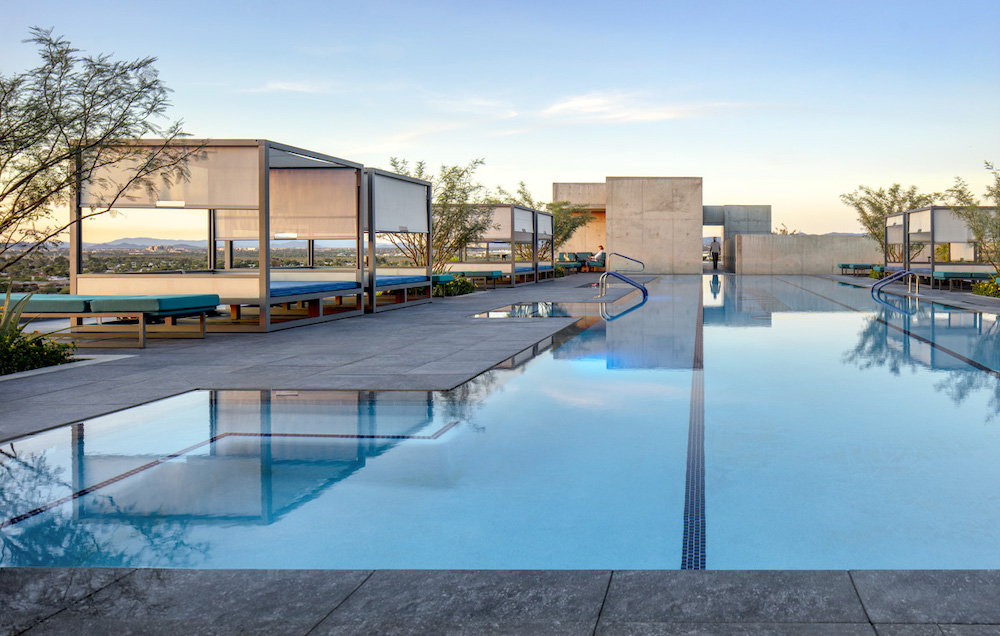
Nestled within the courtyards and their intricate spread of walking paths are exceptional outdoor amenities. A large fountain serves as a dazzling display and a centerpiece around which to lounge and relax. Farther in, an outdoor resort pool with lounge chairs, umbrellas and firepits is made private by the surrounding landscaping.

The greenery continues, drawing the eye upward to the building’s spectacular vertical landscaping and creating a whole immerse experience. The effect of walking through the property’s greenspace, backdropped by dusky desert mountains, is one of entering a lush oasis. 

As an installation in downtown Scottsdale and with paths open to the public, the greenspace at Optima Sonoran Village is enhancing not only the community of the development, but of its surrounding area too. 

Live Colorfully: How Color Influences Design

Optima buildings are distinguished by our Modernist design, and by our signature pops of color. Because color can influence design, and in turn, influence those that experience our design, the color decisions we make are purposeful and serve to enhance and activate our architecture and the spaces around it. 

Theory and Psychology

Color is fundamental to the Modernist tradition. Much of color theory was born out of the Bauhaus modernist art school, where four artists changed the way we talk about color today: Johannes Itten, Wassily Kandinsky, Paul Klee and Josef Albers. Itten, particularly, created the color sphere with primary, secondary and tertiary tones, was the first to determine warm and cool tones, and was a pioneer in associating different colors with emotions. 

Today, the study of color and their relationship to human emotion is called color psychology. In the first 30 seconds of viewing an object, our brains make a quick judgment and react to what we see. Color plays a large part in this response; for people, tones and hues are tied to specific emotions and feelings. On a biological/physical level, when we see colors, that vision is transferred over to the brain, which in turn signals to our endocrine system to release specific hormones that create a correlating feeling or mood to what we’ve seen. Armed with this insight, we integrate color into our design solutions to create an emotional impact. But our use of color goes beyond.

Because color can influence design, and in turn, influence those that experience our design, the color decisions we make are purposeful and serve to enhance and activate our architecture and the spaces around it. 

Color in Optima Design

In our Arizonian desert residences, we select hues to complement the vegetation of the desert, seamlessly blending our architecture with its environs; indoor with outdoor. At Sterling Ridge, concrete walls merge with the earth, making the home an extension of the land. The result is a harmonious design, one that enhances our building and the land around it. Orange and red color details serve to give an exciting pop of color against a cohesive, blended pallet.

Because color can influence design, and in turn, influence those that experience our design, the color decisions we make are purposeful and serve to enhance and activate our architecture and the spaces around it. 

In many of our condos and multifamily residences, we use color in the exterior facade to compliment the surroundings of the building. At Optima Sonoran Village, orange, yellow and green details are drawn from actual colors found in the surrounding lush landscaping. The hues were inspired by the area’s desert flowers, serving to draw out the naturally occurring colors of the terrain.  

Color isn’t just important in our building design we incorporate color into all of our design practices, including experimental color play with our sculptures. Often executed in different colors depending on the surrounding space, sculpture is another facet to Optima in which we experiment with shades and hues. Color has a long and storied history, but for us, it’s a continuing exploration that has us learning more each day.

person name goes here

Maintenance Supervisor

Glencoe, IL


    Acceptable file types: *.pdf | *.txt | *.doc, max-size: 2Mb