Declining Rents And Investor Concern Forcing Mixed-Use Developers To Rethink Retail

Optima Inc. Senior Vice President Mark Segal said his firm won’t change its retail strategy. It just broke ground on Optima Lakeview, a 198-unit luxury apartment complex at 3460 North Broadway St. in Chicago’s Lakeview neighborhood near Wrigley Field. It will also have 14K SF of commercial space.

“While obviously dealing with COVID-19 presents challenges, we believe that over time, some normalcy will return, along with the ability of people to resume activities they have done in the past,” he said.

The company populated its Optima Signature tower, which opened in 2017 in affluent Streeterville, with an eclectic mix of retailers, including many service providers that residents see as amenities. Streeterville retail tenants include a restaurant, a full-service veterinarian, a fitness studio and a nail salon. Segal said the firm has a similar vision for Lakeview.

And although the company also made room for nontraditional users such as Guidepost Montessori at Magnificent Mile, a new elementary school that now occupies 14K SF, Segal said he still has great confidence in traditional retail. He points to recent stats that show brick-and-mortar retail is stronger than many realize.

At the pandemic’s height, e-commerce accounted for 16.1% of all retail spending, not much higher than pre-pandemic times, Linneman Associates principal and former Wharton School professor Peter Linneman said during Walker & Dunlop’s Oct. 21 Walker Webcast. E-commerce accounted for 11.8% of retail sales in Q1 2020 before the pandemic began.

“This was the perfect storm to test if e-commerce could overtake brick-and-mortar for good, and e-commerce failed miserably,” Linneman said.

Read the full feature at Bisnow

Visit Optima Signature for more information
Biophilic Design Is the Latest Buzz in Multifamily

High-rise apartments are getting more in touch with nature. Living on the 40th or 45th floor, for example, can make tenants feel far away from it—and since the pandemic, apartment dwellers are craving closer ties to greenery. In response, more plants are coming to rooftops, lobbies, and balconies.

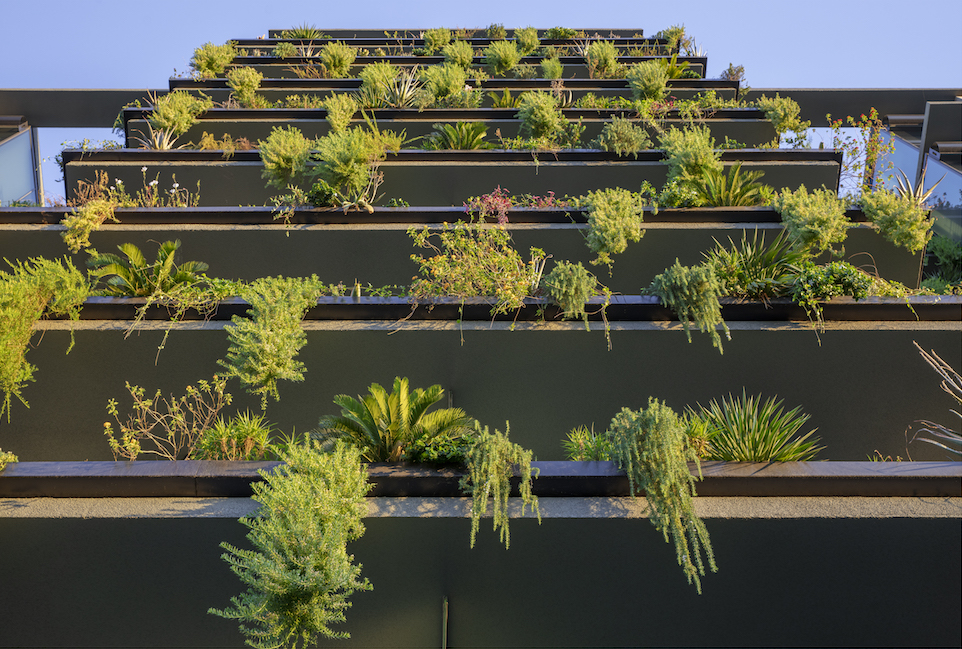
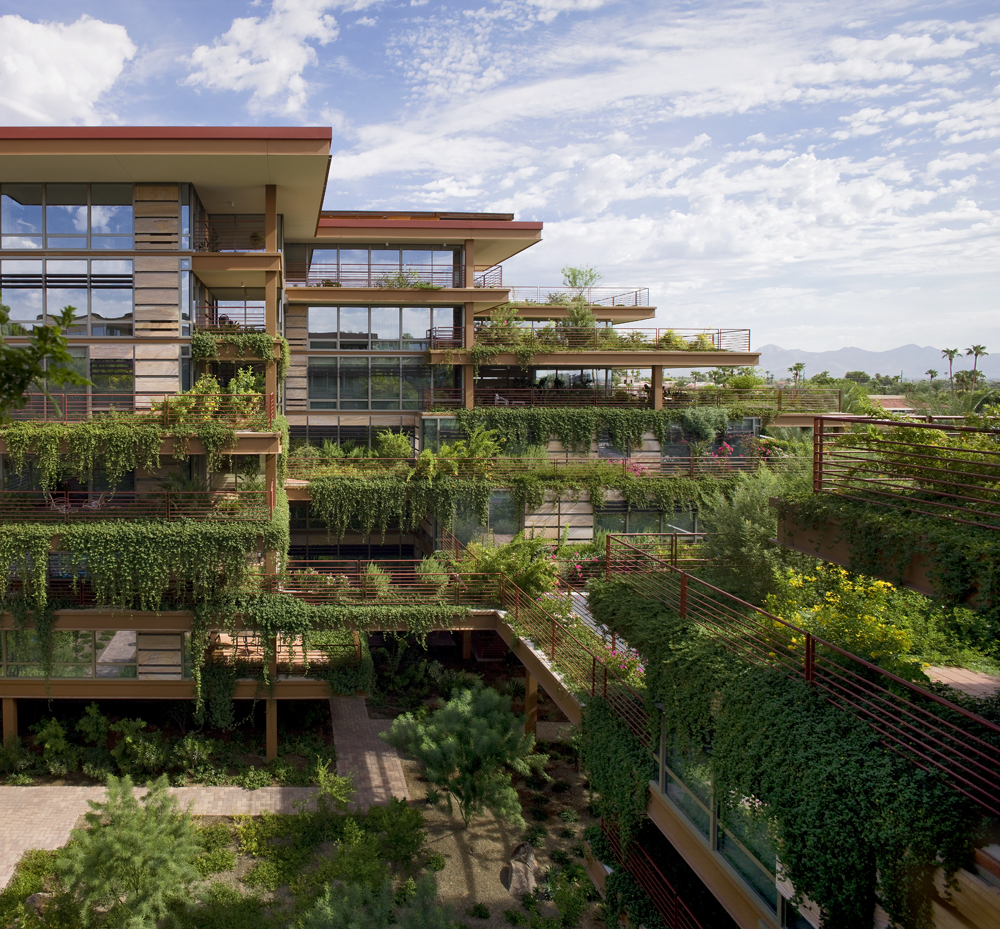
Optima Inc. has been adding biophilic design principles to its communities for more than 40 years. It has been offering green roofs, courtyards, and gardens. A vertical landscaping system is on display at its Optima Camelview Village in Scottsdale, Ariz. Several colorful plants grow up and over the ledge of private terraces on each floor of the building.

“This system helps enhance the natural beauty of our projects by allowing a palette of vibrantly colored plants to grow up and over the edge of each private terrace on every floor of the building,” David Hovey Jr., president and COO of Optima Inc., told Multi-Housing News earlier this year.


Read more on REALTOR Magazine

Optima Opens Luxury Rentals in Lakeview

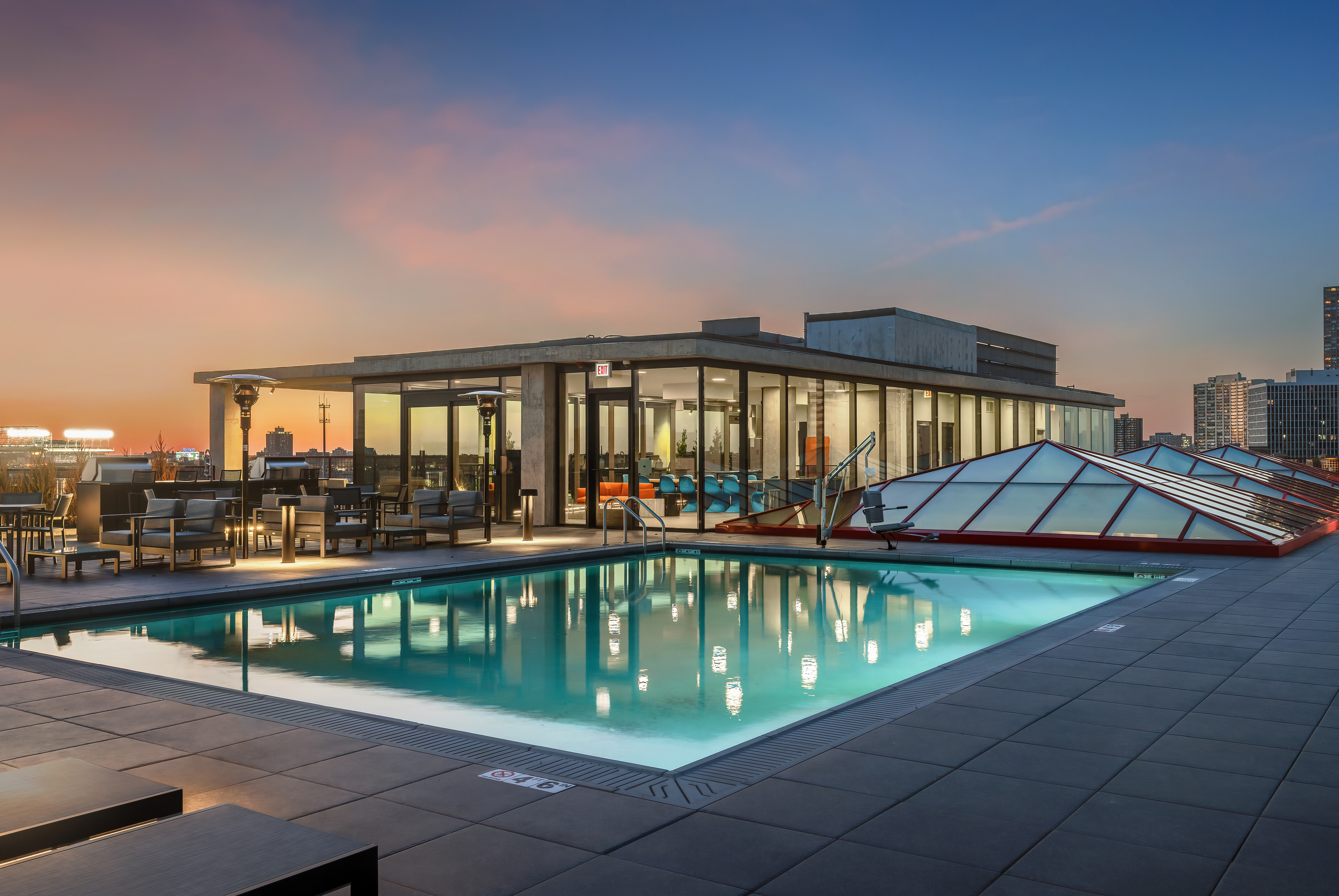
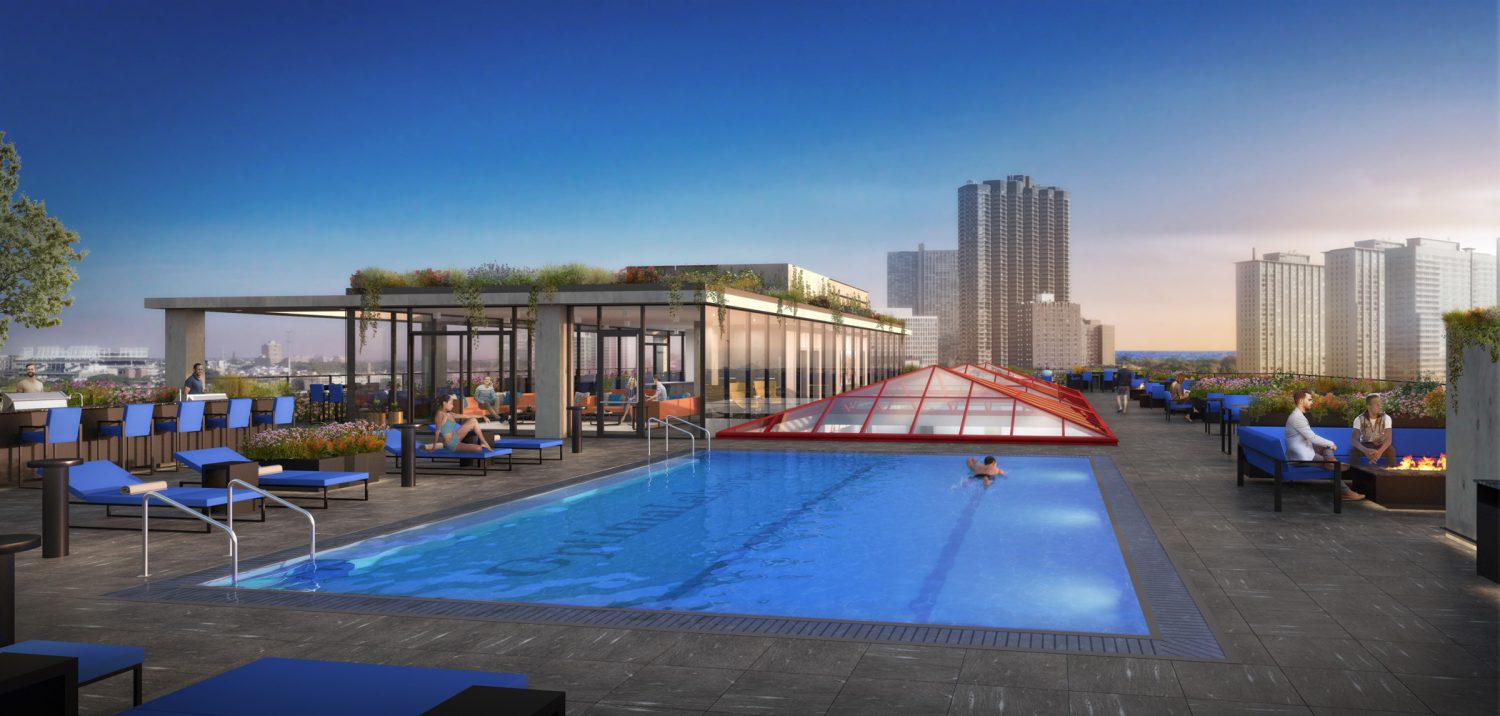
Design-driven development firm Optima, Inc. held the grand opening of its 198-unit Optima Lakeview luxury rental apartment building at 3478 N. Broadway in Chicago’s Lakeview neighborhood, featuring the region’s first year-round rooftop pool.

“We’re excited to bring to market Optima Lakeview, a development as vibrant and dynamic as the surrounding Lakeview neighborhood for which it’s named,” said David Hovey Jr., president, COO and principal architect of Optima. The project was designed by Optima’s CEO and founder, David Hovey Sr.

Currently 35% leased, Optima Lakeview offers one-, two- and three-bedroom floor plans with high-end finishes and smart home technology. Rents start at $2,500 per month.

“Lakeview residents who watched the building take shape were among the first to sign a lease with a majority saying the primary reasons were our architectural design, amenity package that spans 40,000 square feet, resident programming and convenient location,” Hovey added


Read more on Connect CRE

Visit Optima Lakeview for more details

Optima Lakeview wins Green Architecture Award from the Green GOOD DESIGN Sustainability Awards

Optima Lakeview has received a 2024 Green Good Design Award. The Green GOOD DESIGN Sustainability Awards’ goal is to recognize outstanding individuals, companies, organizations, governments, and institutions all over the world – together with their products, services, programs, ideas, and concepts that have forwarded exceptional thinking and inspired greater progress toward a healthier and more sustainable universe.

Learn more from Green GOOD DESIGN Sustainability Awards site.

Some 2020 Trends May Just Last

Home builders learned long ago to bring the outdoors in, and now apartment developers are doing the same. “With more people spending time at home, it’s important to thoughtfully create a variety of spaces that allow residents to find inspiration in their natural surroundings and recharge,” says architect David Hovey, president of Optima Inc.
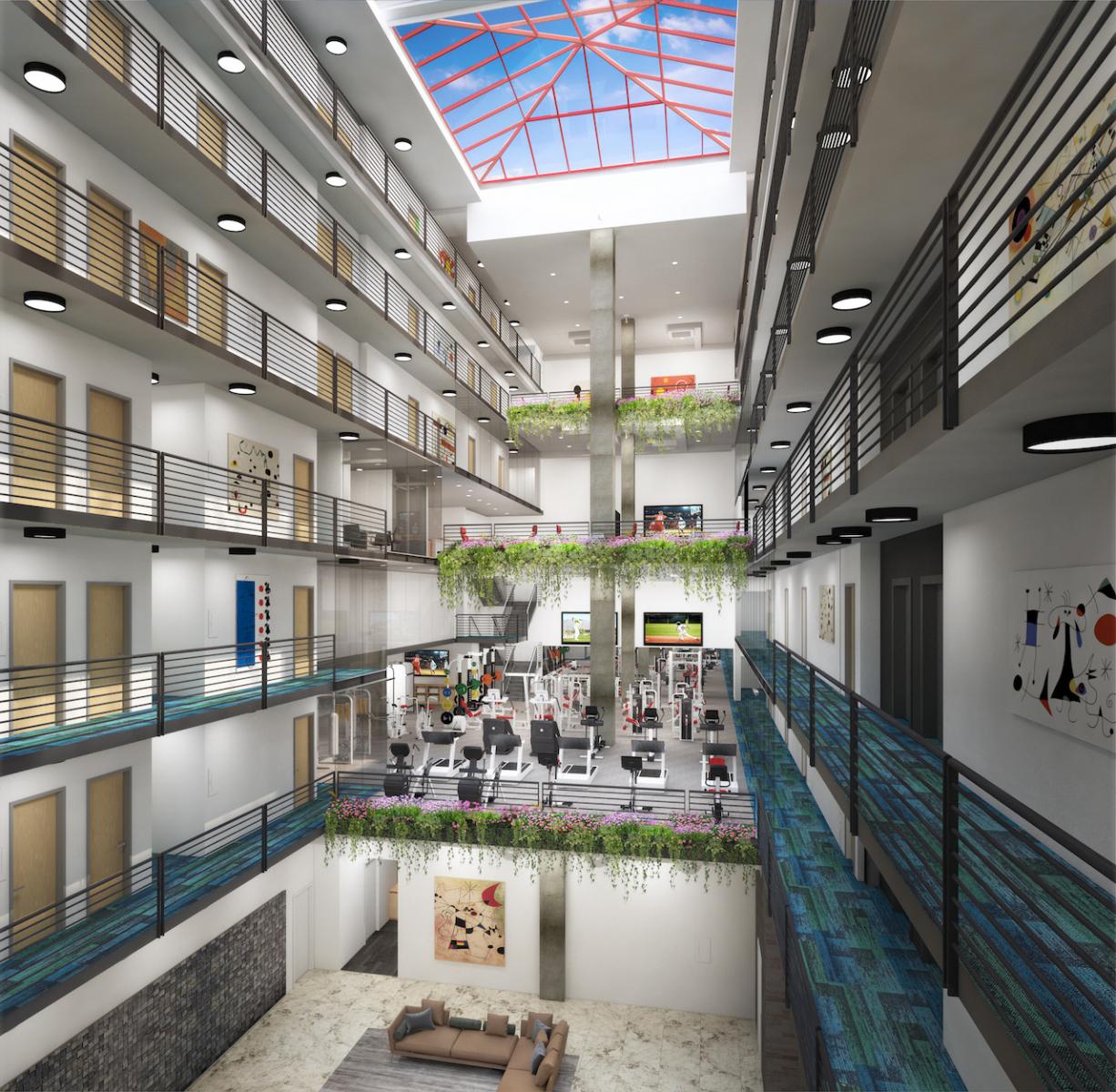
Optima Inc. has long made biophilic design a hallmark of its work, but it’s going greener still with three new projects. In the Chicago area, for example, Optima Lakeview will feature a distinctive landscaped interior atrium that will run through the building’s seven-story core and bring light into both the residential and retail areas of the building.

In Scottsdale, Ariz., Optima Kierland offers a dramatic vertical landscaping system that can be seen from every one of the 363 rental units and 433 condo apartments. And for the recently announced rental project in downtown Wilmette, Ill., Optima will import the landscaping model it is creating in Arizona, including hand-selected plants that will stay green year-round.

“Because we serve as both architect and developer on our projects,” says Hovey, “it makes it easier to prioritize these green spaces, which not only improve the air quality for our residents, but also those living near our buildings, as vertical gardens filter pollutants and carbon dioxide out of the air.”

Read the full feature on Multi-Housing News

Visit Optima Lakeview and Optima Kierland for more details

Optima Releases New Renderings of Lakeview Rentals

Optima, Inc. has released two new renderings of its Optima Lakeview, a rental project in the North Side’s Lakeview neighborhood. Set to welcome first move-ins next spring, Optima Lakeview is a seven-story, 198-unit community rising on the site of the former Treasure Island store.

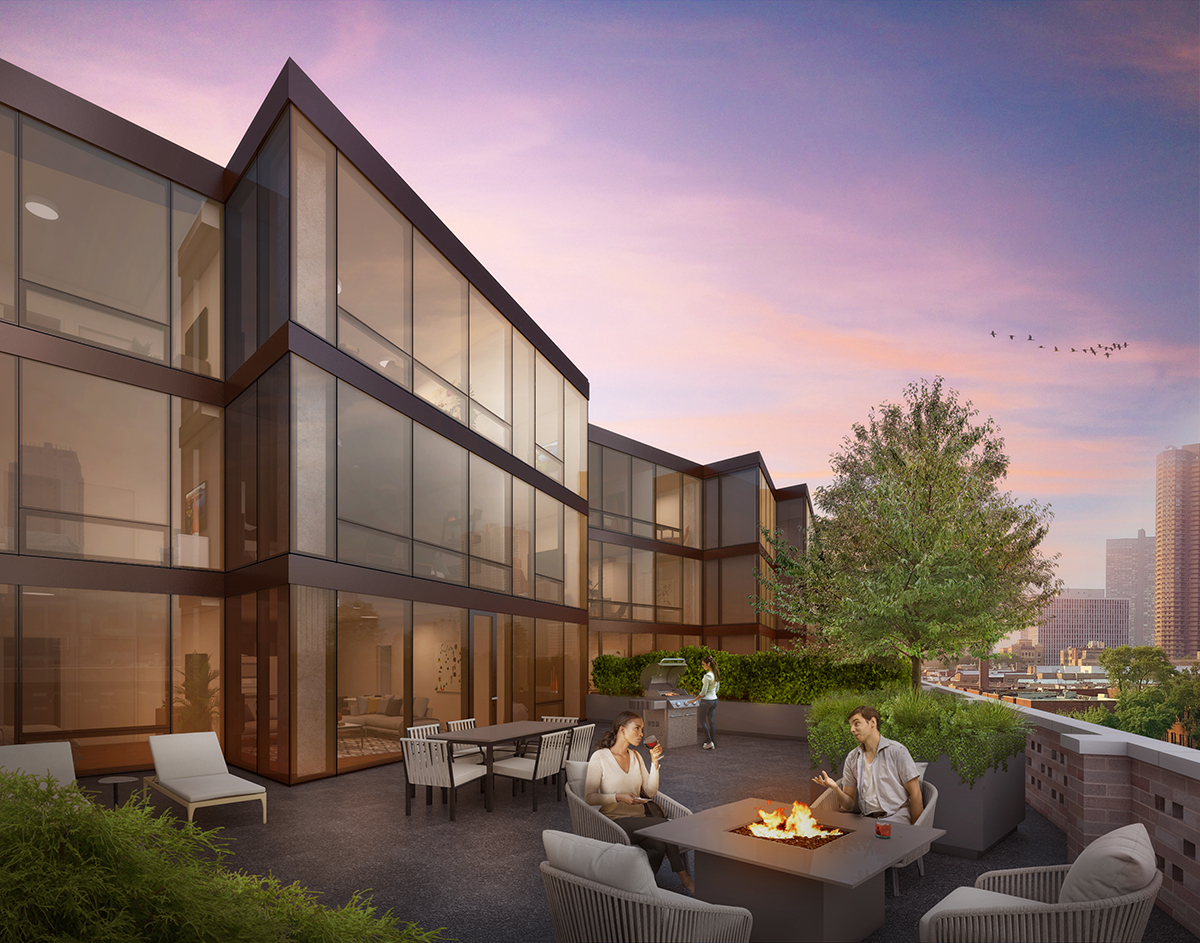
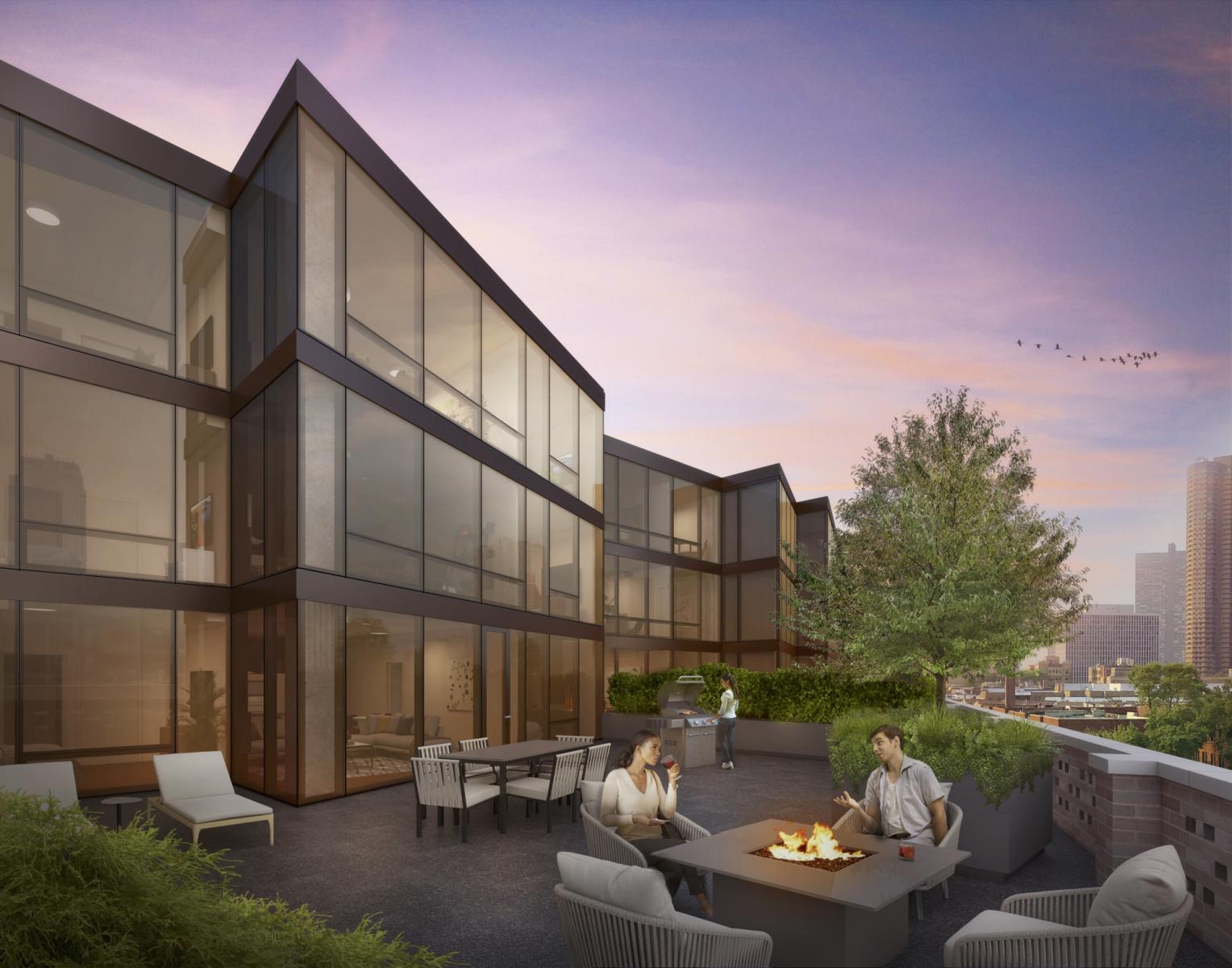
Optima designed the building to feature a series of setbacks that provide for outdoor landscaped terraces on the upper levels of the building that will feature built-in grills and fire pits. An atrium will run through its seven-story core and be topped with a skylight to bring in ample natural light.

Designed well before the pandemic by David Hovey Sr., FAIA, co-founder and CEO of Optima, Inc., Optima Lakeview will feature biophilic elements to connect residents to fresh air and ample sunlight as well as year-round amenities, such as the rooftop pool.


Read more on Connect Chicago

Visit Optima Lakeview for more details

Masters of the Southwest: A Father-Son Duo is Redefining Sustainable Desert Living

On a sunny winter day, residents of Optima Kierland are pursuing their morning rituals—walking the dog, working out in the fitness room, running on a track around the rooftop pool, powering up a Zoom call in the lounge, heading to the underground garage for the commute to work. But the 1,000-unit condo and rental complex, spread across five towers, is not your typical brown-box-and-a-balcony multifamily project so prevalent around the Valley. Instead, it is a sustainable, architectural tour-de-force, balancing concrete and glass, shade and sunlight, voids and cubic forms, all cooled with lush plantings that defy boundaries between outside and in.

The project is one of the latest achievements by father-and-son architects David Hovey Sr. and David Hovey Jr., who, along with other family members, run Optima, headquartered in Scottsdale and Chicago. Known for their edgy, architecturally striking designs of multifamily complexes and innovative construction techniques and materials, the Hoveys—and their company—have found the secret sauce to success. Optima is a soup-to-nuts company that develops, designs, builds and manages projects, overseeing everything from site selection to specifying kitchen sink faucets.
“I’ve been a fan of the Hoveys’ architecture for a long time,” says architect Anthony Floyd, who heads Scottsdale’s green building program and has worked with the Hoveys on sustainability strategies for several of their projects. “They’ve changed how we view multifamily housing here. What they create is unlike what we’ve seen in Arizona—or even the world.”

The history of this modernist dynasty began with Hovey Sr. Born in New Zealand to a Kiwi mother and a U.S. Marine father, he moved with his family to Chicago when he was 15 years old. “Chicago is the foremost city in the world for modern architecture,” Hovey Sr. says. “Being there sparked my interest in architecture.”

Hovey Sr. enrolled in the Illinois Institute of Technology, where Mies van der Rohe had served as dean and shaped the school’s modernist bent. “Mies was no longer at IIT when I studied there,” he remembers, “but some of us went to his house one night and didn’t leave until 4 a.m. He lived in an old brick apartment—not one of his designs—because he didn’t want to be constantly accosted by clients.”

During college, Hovey Sr. worked as an assistant to the curator of contemporary art at the Art Institute of Chicago, igniting his love of modern art and inspiring his later work in metal sculpture. His first job out of school was with a small firm, but, wanting to experience a larger office, Hovey Sr. signed on with noted Chicago architect Helmut Jahn, working there for four years during the 1970s.  

“My son and I are contemporary architects. We are interested in the design, materials and technologies of the 21st century. We’re not interested in allusions to the past.”

David Hovey Sr., FAIA, architect

But there was always an itch to do his own thing. “My IIT professor, Arthur Takeuchi, always said that an architect was the low man on the totem pole when it came to projects,” Hovey Sr. recalls. “He said the best outcome was to be not only the designer but also the developer and client.”

Heeding those words, Hovey Sr. launched Optima in suburban Chicago in 1978, along with his wife, Eileen Sheehan Hovey, who handled the real estate component of their projects. Before long, they were specializing in design-driven multifamily complexes around the city and, later, joined by their children, Tara Hovey, who handles financial strategies for the company, and David Jr., who earned his master’s in architecture at his father’s alma mater and now serves as CEO.

Frequent winter visitors to Scottsdale, the family opened a second Optima office in the desert in the early 2000s, sensing a market that was open to innovative modernist housing. By then, Hovey Jr. was helping push forward Optima’s shape-shifting experimentations with design, materials and construction methods. “When I was working as a construction superintendent on our job sites,” says Hovey Jr., “I observed inefficiencies between architecture and construction that could be improved by prefabrication.”

Though they became known for apartments and condos, the father and son have long experimented with techniques and approaches by building single-family spec homes, completing several over the years in North Scottsdale. “We had to find a new language for architecture here in Arizona,” Hovey Sr. says. “Studying Frank Lloyd Wright’s shelters, we learned to design optimum structures in the desert, ones that celebrated the indoor-outdoor relationship and incorporated sustainable features, such as solar power and passive cooling. We took what we learned from these spec homes and translated that into our multifamily work.”

After completing their first Arizona project, the Biltmore Optima, the Hoveys wanted to include landscaped roofs and terraces for the next site, Optima Camelview. Hovey Jr. worked with ASU to study desert plants in terrace- and rooflike beds at a site in Glendale. “We looked at about 150 kinds of plants and trees,” Hovey Jr. notes. “We learned which survived in extreme sun or shaded spots and which didn’t.”

Optima Camelview, a condominium project, won accolades and awards for its—literal—green design of lushly landscaped terraces, as well as other sustainable strategies, such as shaded glass walls, underground parking and public open space. Optima Sonoran Village, rental apartments in downtown Scottsdale, followed, expanding on the design theme, as did the recently completed Optima Kierland. Under construction now is Optima McDowell Mountain, which will be a six-tower development of rental apartments and condos, mixing in street-level retail and even more amenities and green elements, such as rainwater harvesting, than the previous projects. 

As the Hoveys moved forward with projects, they developed relationships with core groups of craftspeople, such as Jerry Barnier, founder of Suntec Concrete. “We started working together about 15 years ago,” says Barnier, “and we found that the Hoveys are very receptive to pushing the design forward efficiently. They understand what works and what doesn’t when it comes to construction. They push everyone to do their best work.”

Despite recent pushback about high-density development in some parts of the Valley, the Hoveys are secure in their place in the desert’s urban landscape. “Having density and height on a site allows us to create open space that’s accessible to the public—and not just our building residents,” Hovey Sr. points out. “It also gives us room to have setbacks that are landscaped. Our McDowell Mountain project is planned around a central park open to everyone.”

Always looking for future possibilities, the father and son prefer to concentrate on one or two projects at a time. “Each development we do is a progression, a journey of how we envision people living in the 21st century.”

Optima Sonoran Village in downtown Scottsdale has five residential towers set around landscaped courtyards with views of Camelback Mountain. Each apartment has plant-fringed balconies that add to the greenscape.
A stint working at The Art Institute of Chicago sparked David Hovey Sr.’s love of contemporary art and his own work as a sculptor, including “Kiwi,” which graces an Optima project in Chicago.
Optima Kierland Center, the Hoveys’ most recent project, is a series of condo and  apartment dwellings offering luxe amenities, including cooling landscaping, rooftop pools and running tracks, a golf simulator and a dog “spa” for washing pooches.
In the heart of the Camelback Corridor, Biltmore Towers was the Hoveys’ first foray into the Arizona multifamily market and featured unique design elements, such as recessed balconies, red trellises and orange sunscreens.
Optima Verdana in suburban Chicago includes retail offerings at street level and apartments above.
The Camelview Village condo development put Optima on the local design radar, with innovations such as landscaped balconies and open space, as well as an edgy, modernist design. According to architect and Scottsdale’s green building head, Anthony Floyd, both David Hovey Sr. and David Hovey Jr. lived in units on site. “That’s what I call proof of concept,” says Floyd. “They could see what worked—and what didn’t.”
In downtown Chicago, Optima Signature and Chicago Center includes 42- and 57-story towers, with forms, details and colors inspired by Russian painter Kazimir Malevich and American artist Donald Judd.
Also in Chicago, the Lakeview project features indoor open space as a response to the climate.
“Curves and Voids,” a sculpture by David Hovey Sr., graces the gardens at Sonoran Village.

“Our single-family homes are experimental. They are our ‘Case Study’ projects from which we take ideas and apply them to our multifamily work.”

—David Hovey Sr., architect and Optima founder

Read more on Phoenix Home + Garden

Pandemic Puts Outdoor Amenities, Middle Markets into Multifamily Spotlight

The impact of COVID-19 on the multifamily sector may not have been as severe as its effect on the retail or office asset classes, but there are still many ways that those professionals active in the multifamily space adapted to pandemic-driven changes. Some of these adjustments, such as virtual apartment tours, are likely permanent.

Here are four pandemic-related trends expected to influence the multifamily sector in 2021, according to a roundup of Midwest-based real estate experts.

Incorporating biophilic design

With the COVID-19 pandemic encouraging Americans to stay outdoors for gatherings in effort to reduce transmission of the virus, there is a greater emphasis on the outdoors and nature. Expect multifamily developers to focus more on bringing the outdoors in via building designs, floor plans and amenities. Large outdoor terraces and rooftop amenity areas are becoming increasingly prevalent in new projects, particularly those in urban environments.

At Optima Lakeview, a Chicago-area multifamily project currently under construction, developer Optima Inc. incorporated a landscaped interior atrium that will run through the building’s core and bring in natural light.

“Green spaces not only improve the air quality for our residents but also those living near our buildings because vertical gardens filter pollutants and carbon dioxide out of the air,” says David Hovey Jr., president of Optima.

Read the full feature on RE Business Online

Visit Optima Lakeview for more details

Exterior Construction Finalizes At Optima Lakeview In Lakeview East

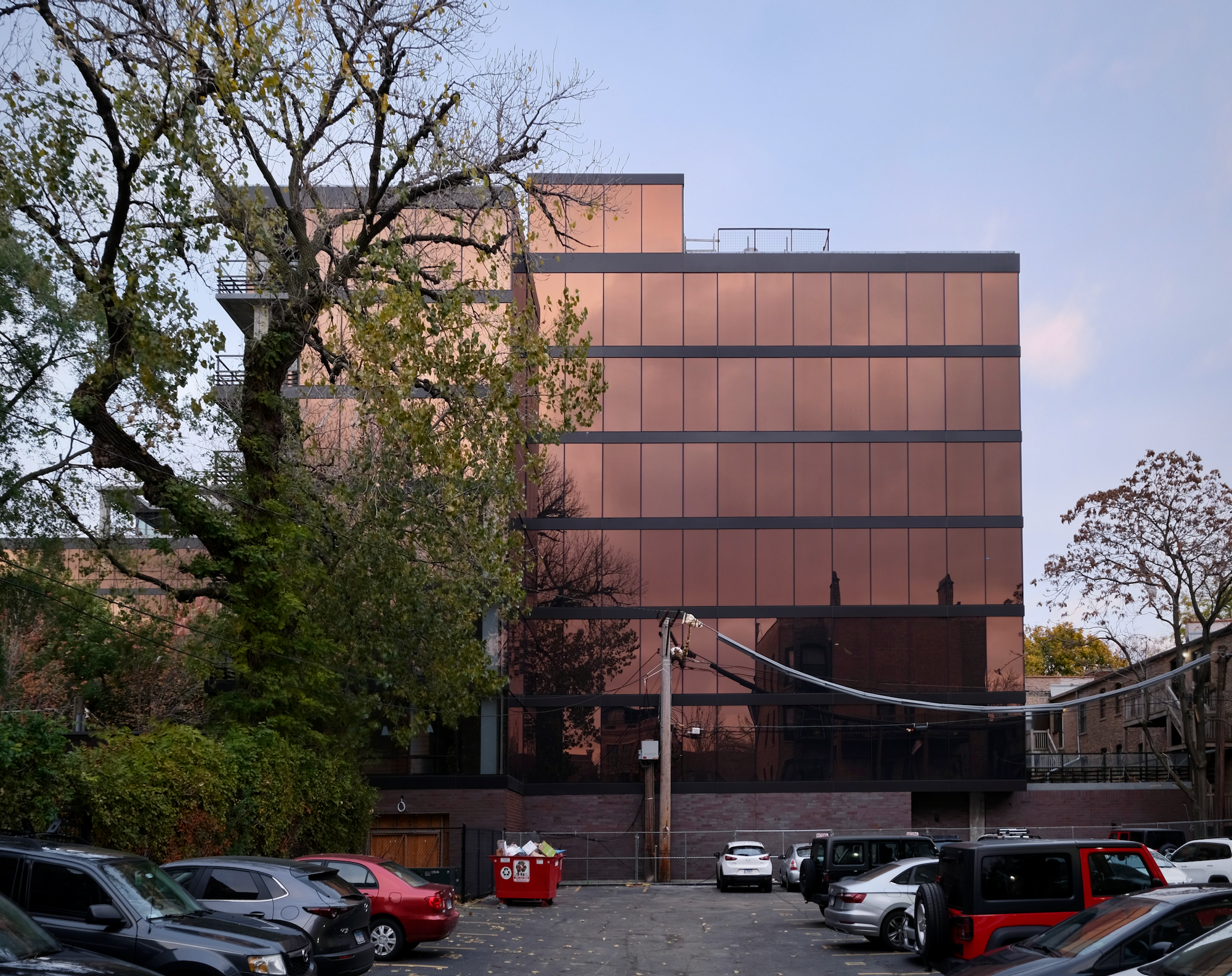
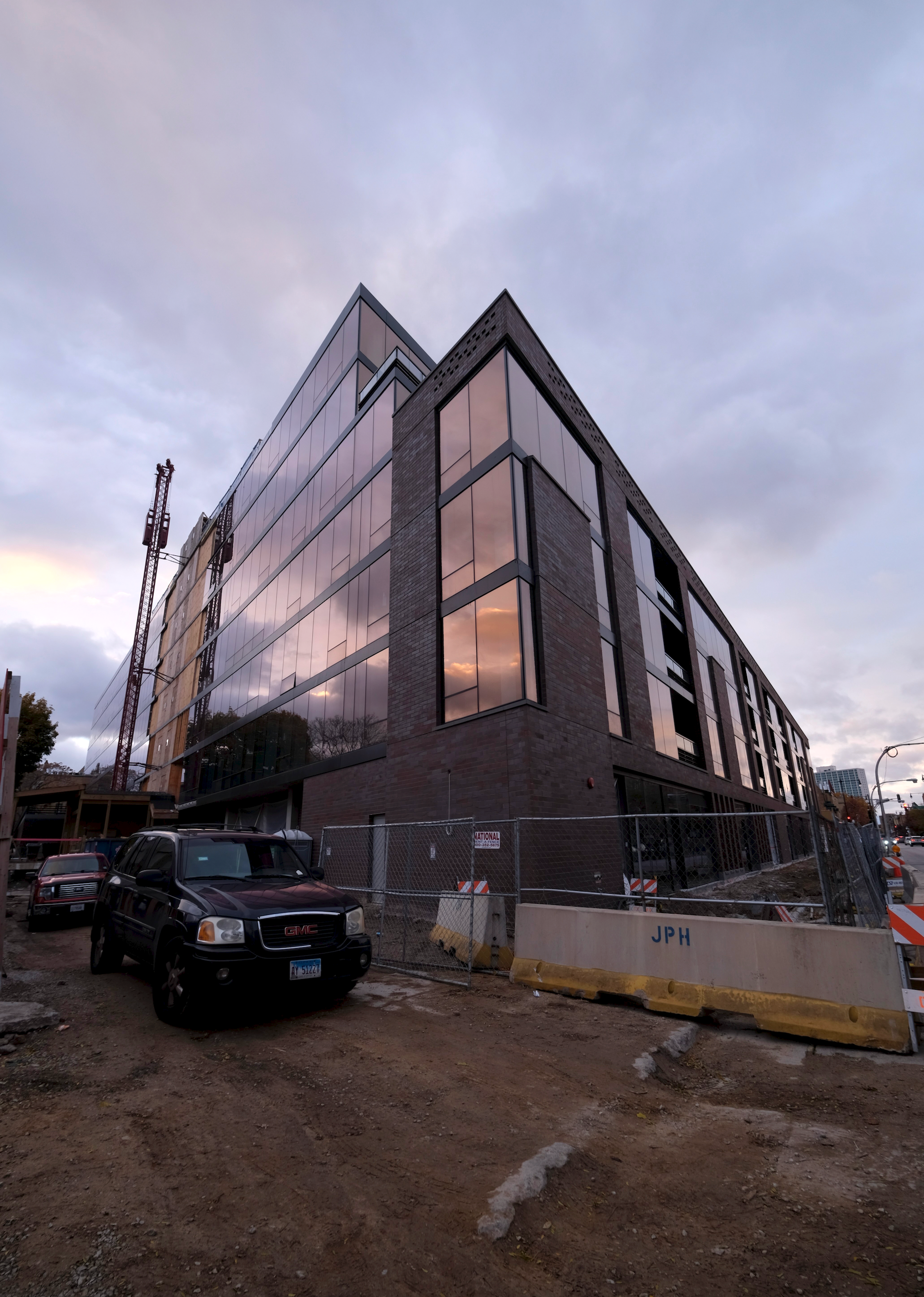
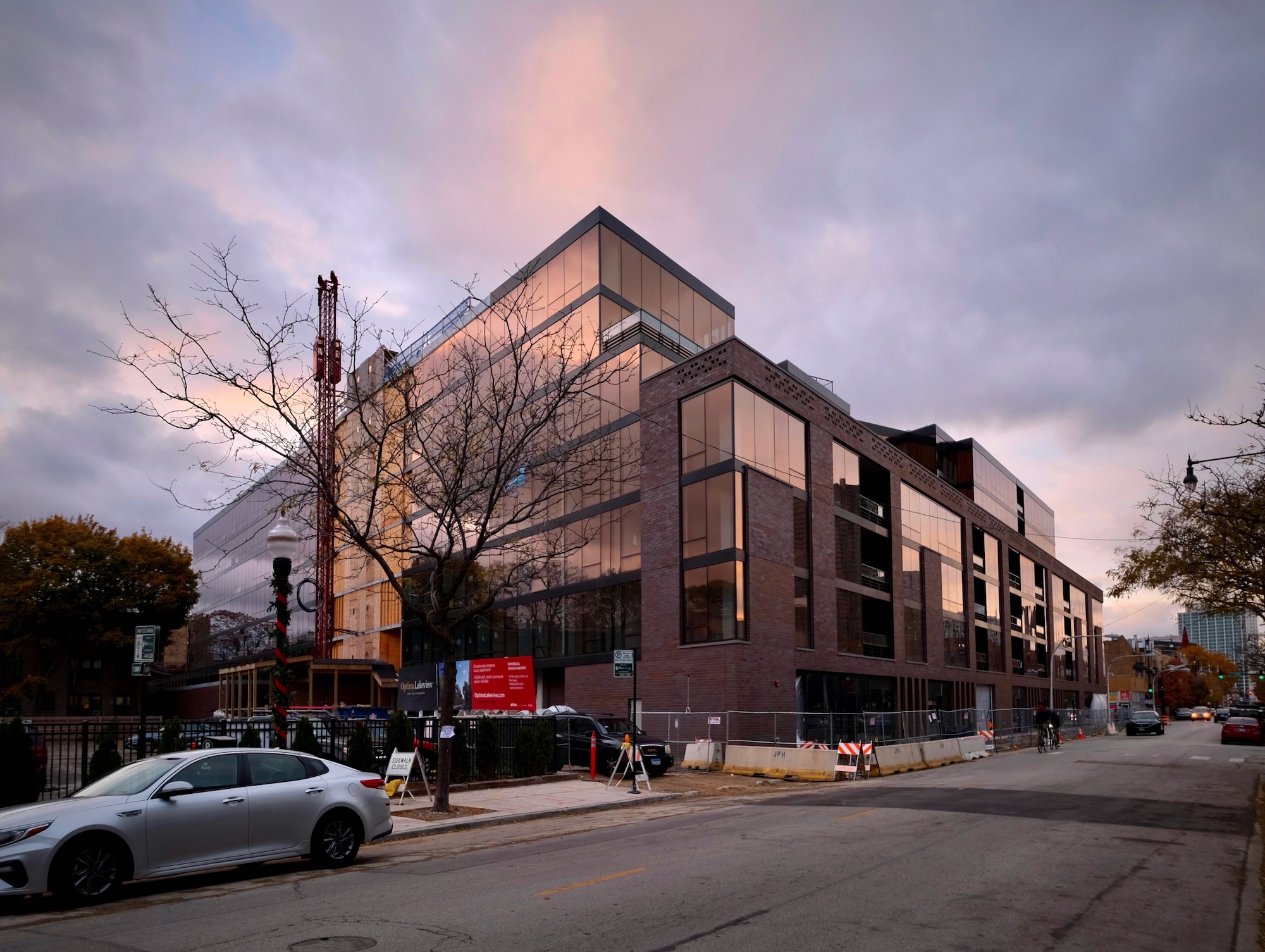
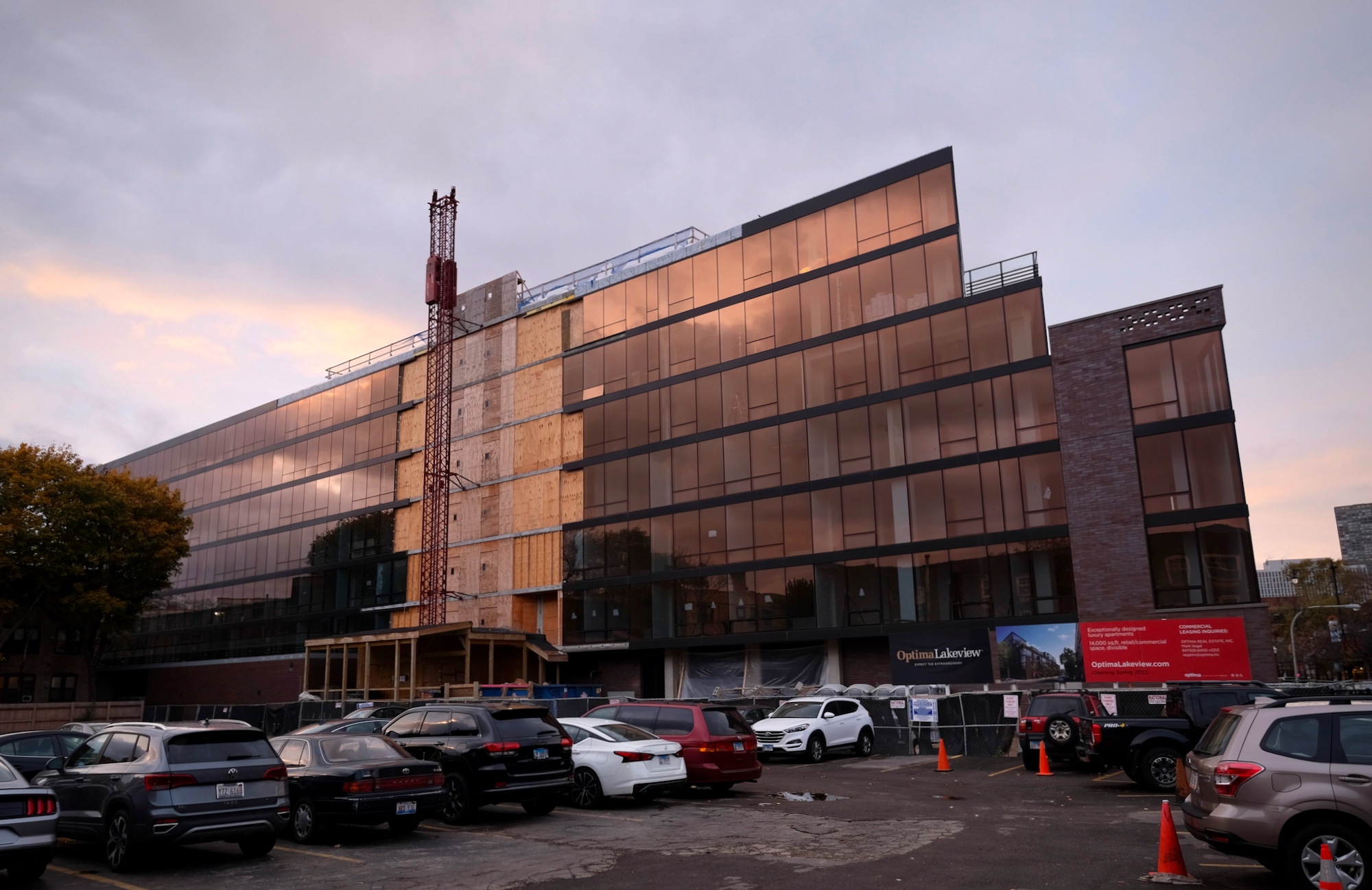
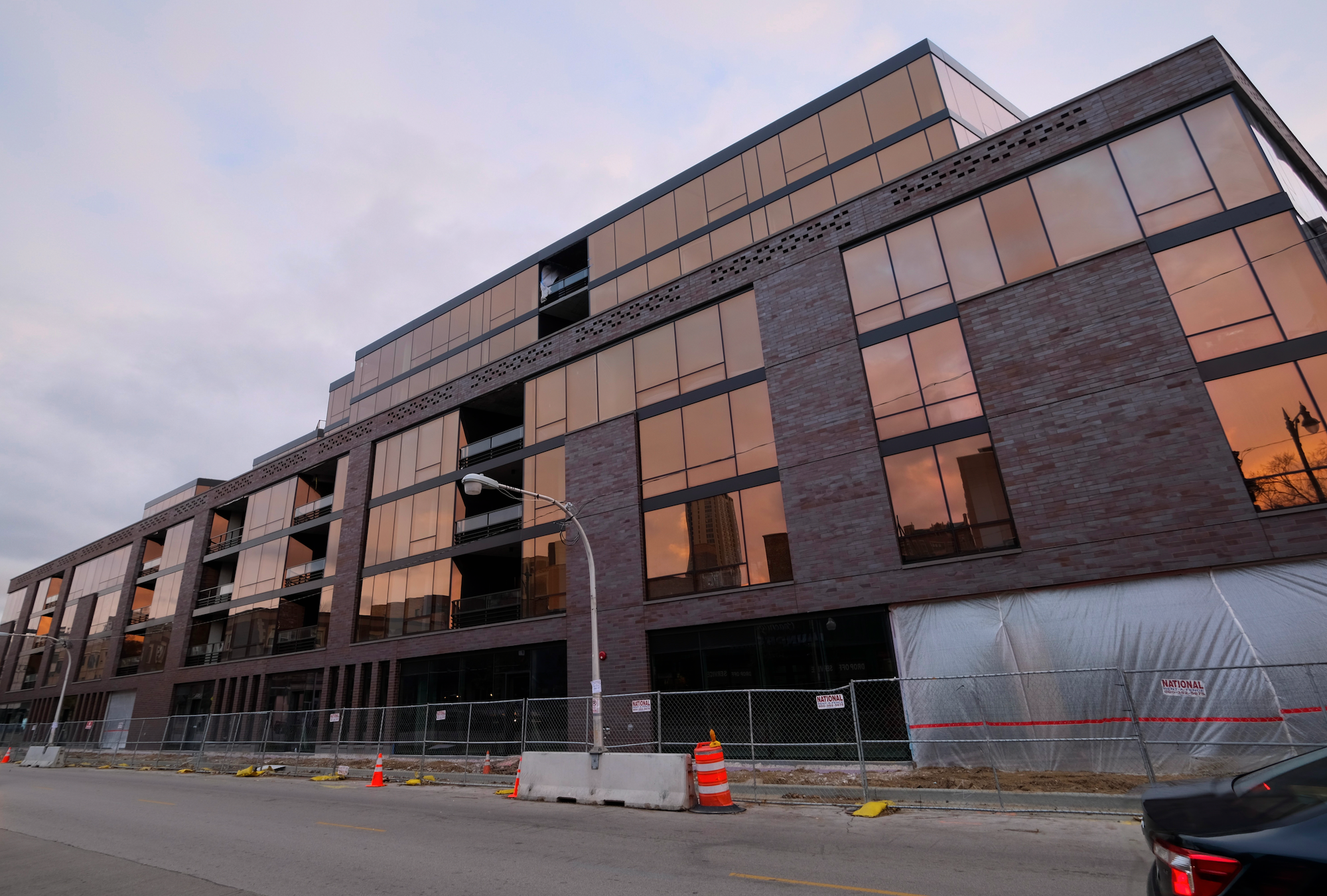
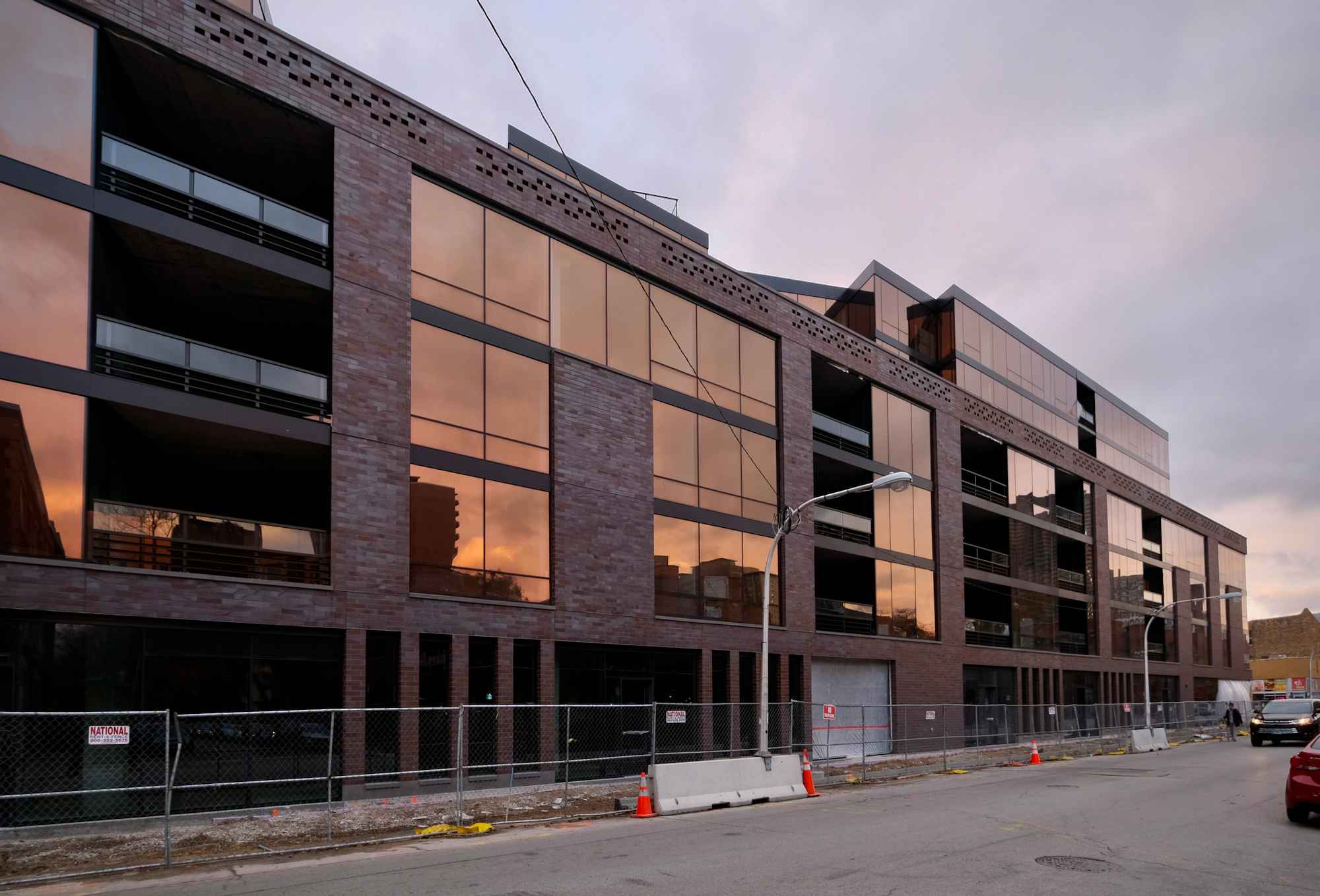
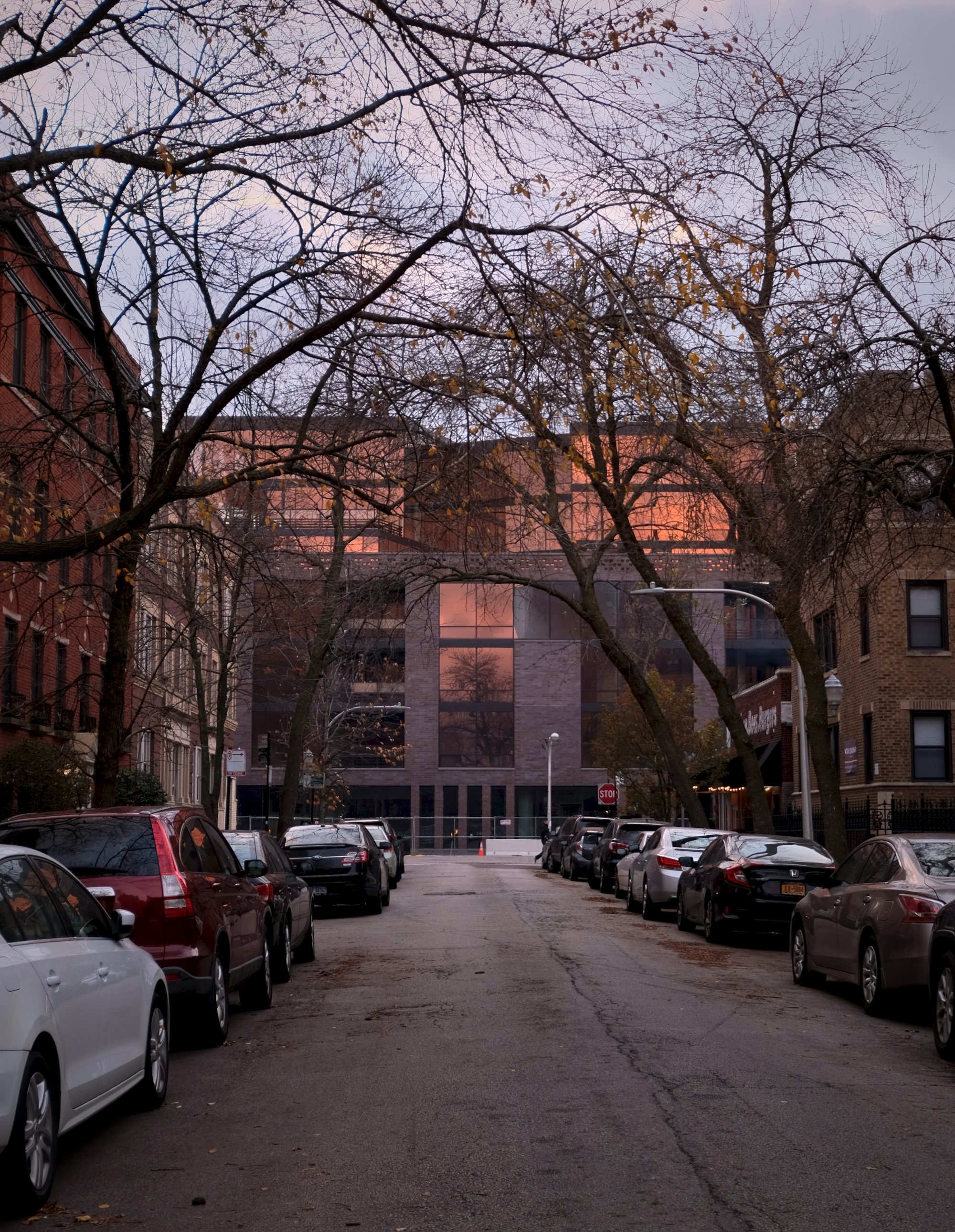
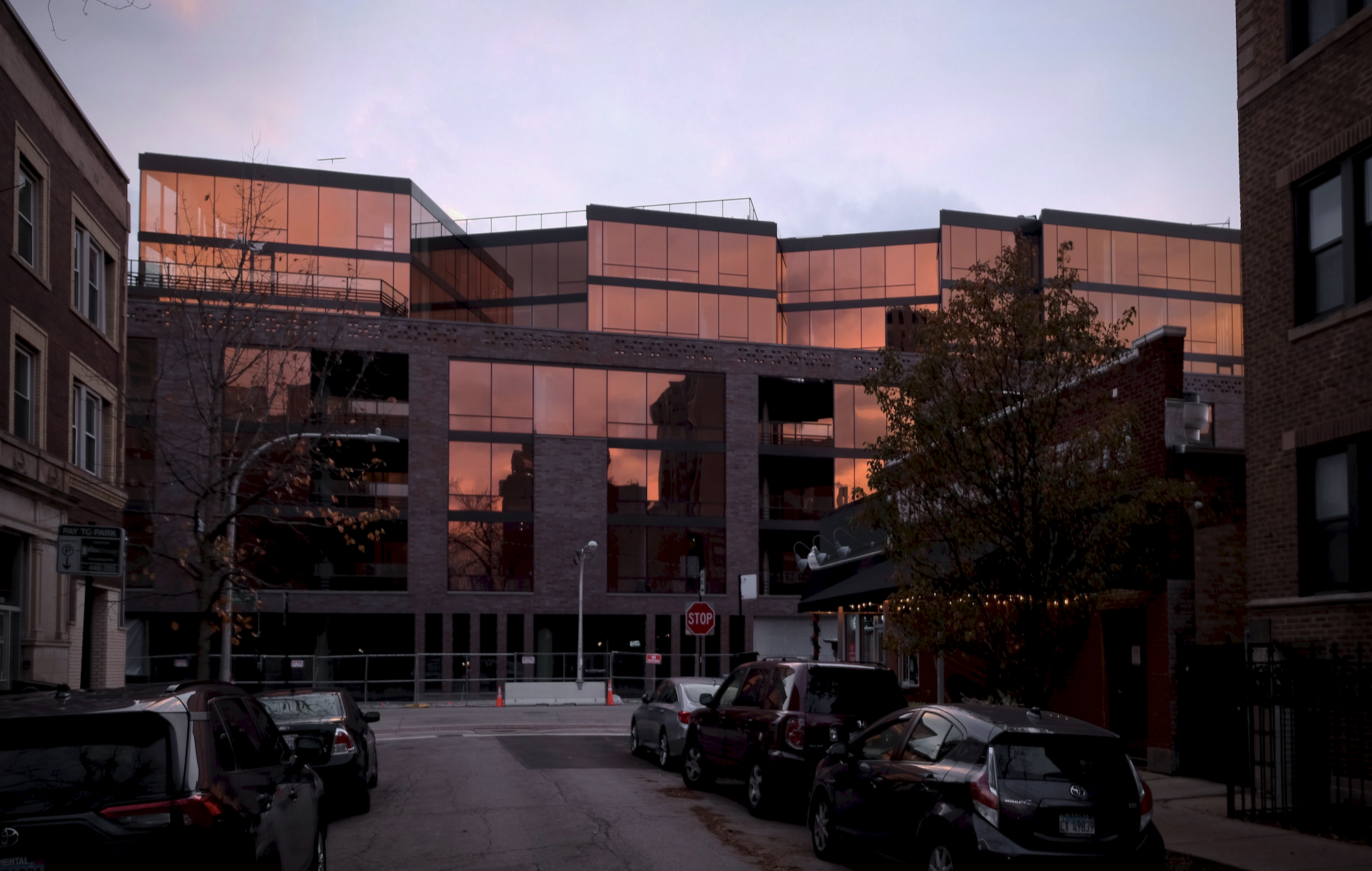
Final facade work is wrapping up for Optima‘s seven-story mixed-use building known as Optima Lakeview, located in Lakeview East. Residing at 3460 N Broadway on the former site of a Treasure Island Foods grocery store and parking lot, the development involves a 14,000-square-foot retail component and 198 apartment units on the upper floors. These rentals range from one- through three-bedroom layouts.

Optima Lakeview

Optima Lakeview. Photo by Jack Crawford

Optima Lakeview

Optima Lakeview. Photo by Jack Crawford

Optima Lakeview

Optima Lakeview. Photo by Jack Crawford

Optima Lakeview (center)

Optima Lakeview (center). Photo by Jack Crawford

Optima Lakeview will offer a marked number of amenities, spanning more than 40,000 square feet. These spaces include an indoor basketball court, a golf simulator and putting green, a fitness center, a dog park, a children’s center, a demonstration kitchen, and a co-working space with conference rooms. Notably, the edifice will be capped by a sprawling rooftop skydeck with a pool and expansive views of the lake, Wrigleyville area, and downtown.

Optima Lakeview rooftop pool and deck

Optima Lakeview rooftop pool and deck. Rendering by Optima

Optima Lakeview

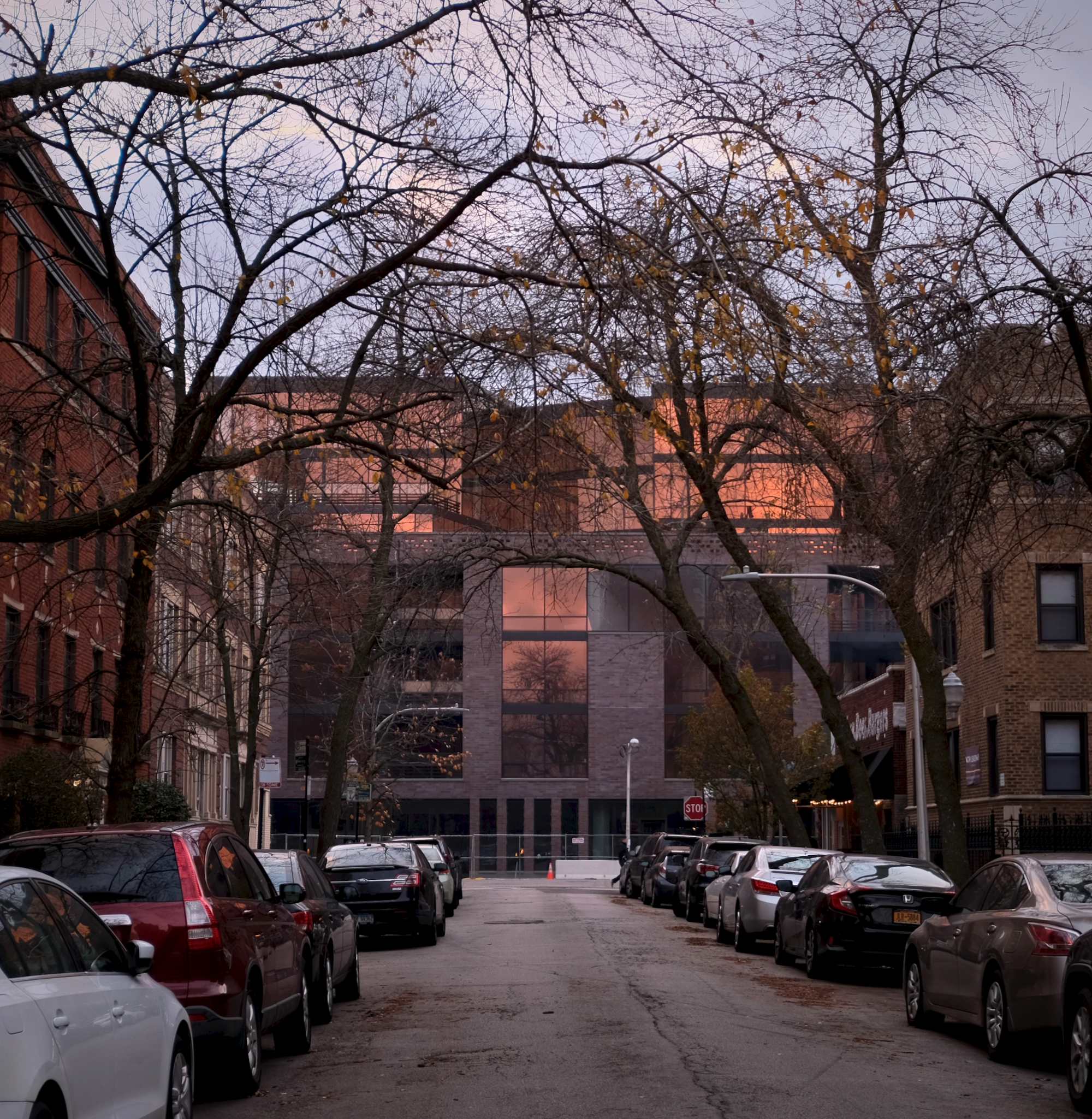
Optima Lakeview. Photo by Jack Crawford

Optima Lakeview

Optima Lakeview. Photo by Jack Crawford

Optima Lakeview

Optima Lakeview. Photo by Jack Crawford

Other resident features comprise of an in-home concierge program, exclusive benefits and discounts connecting to the local vicinity, and a unique package of various in-house services which include in-home plant watering, thermostat adjustments, and front-door package delivery.

Optima Lakeview private terrace

Optima Lakeview private terrace. Rendering by Optima

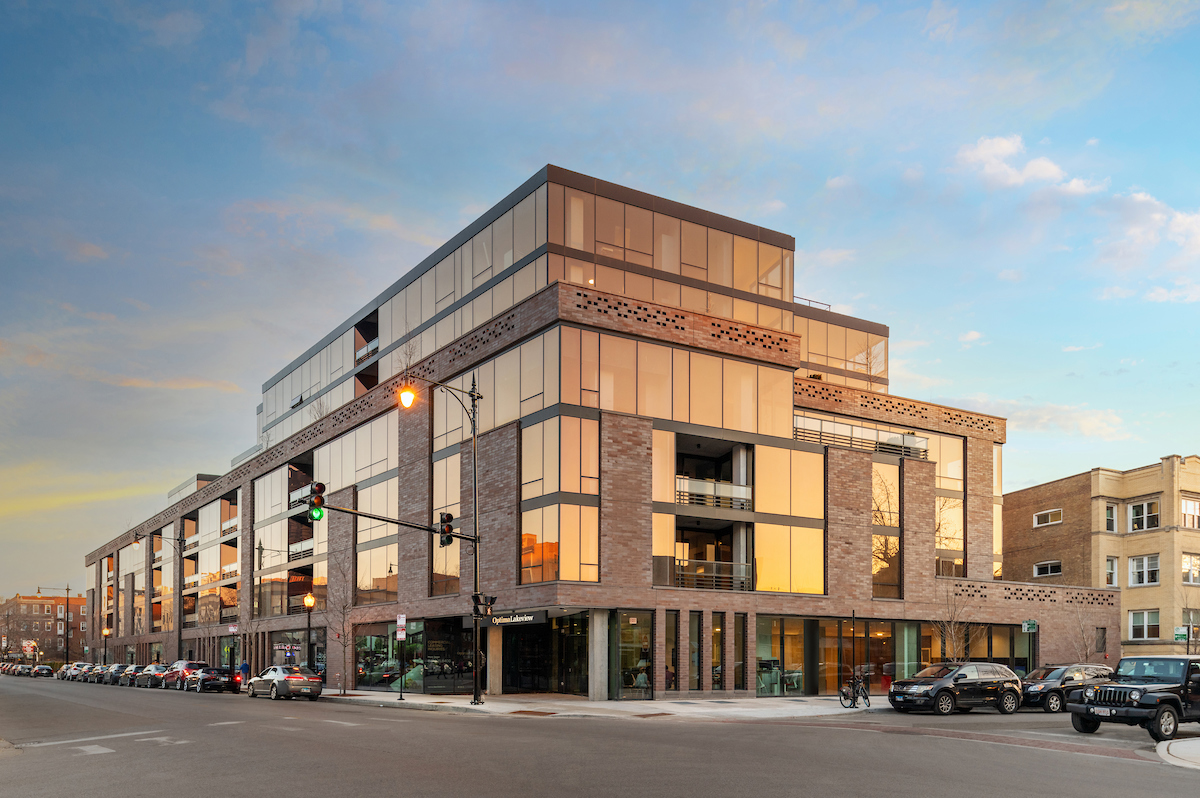
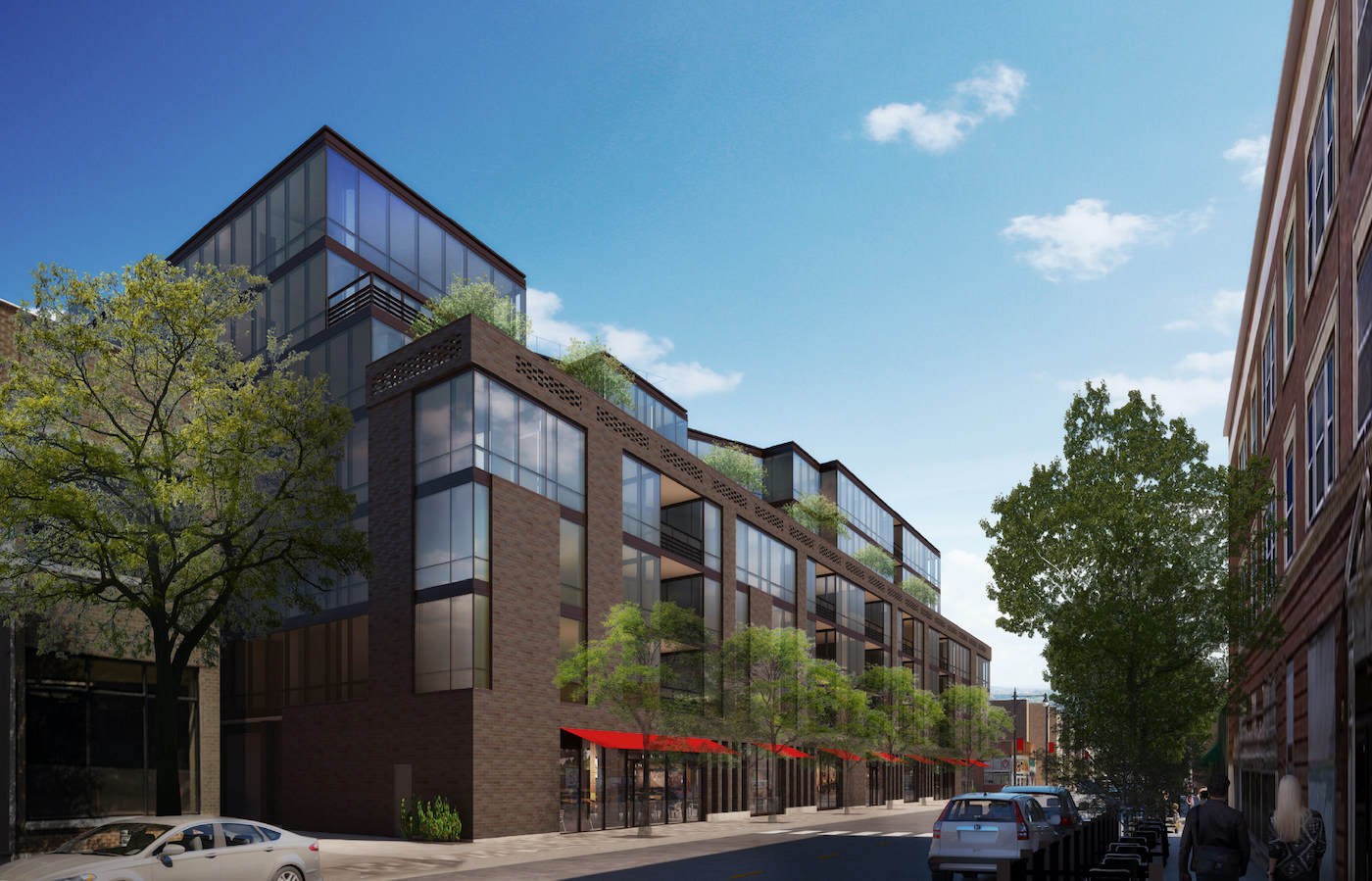
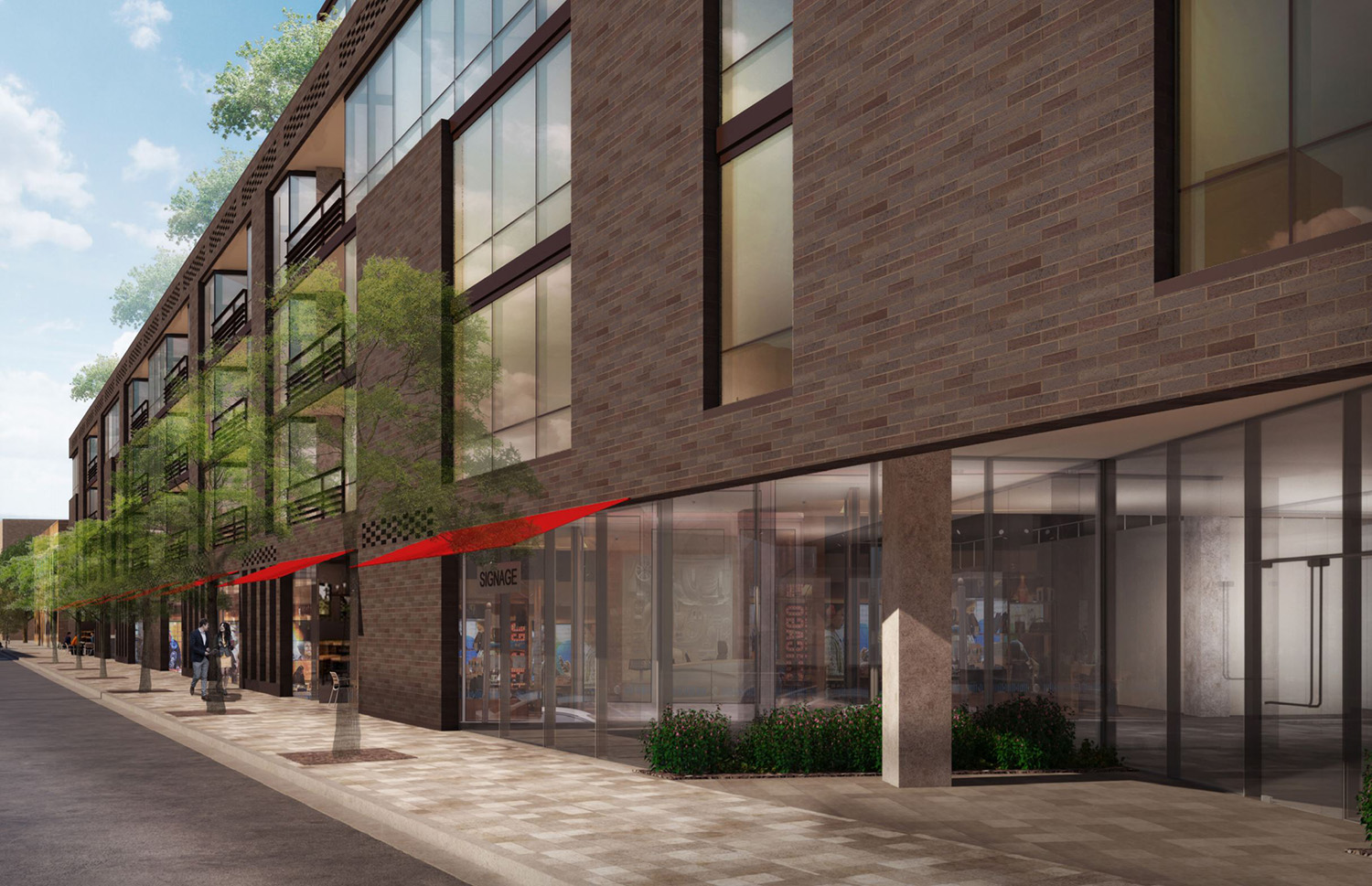
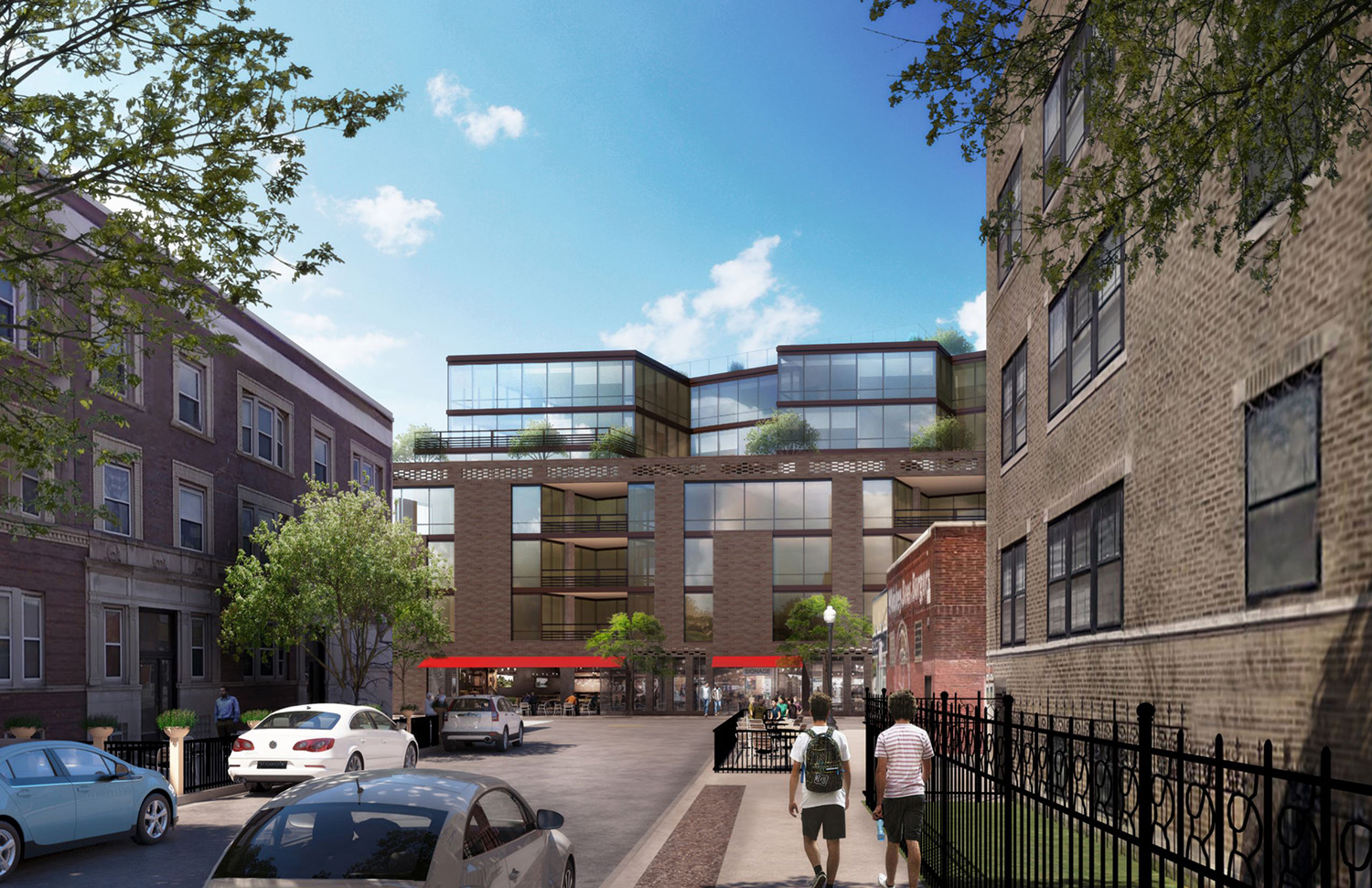
Streetscape View at 3460 N Broadway. Rendering by Optima Inc

Streetscape View at 3460 N Broadway. Rendering by Optima Inc

Optima Lakeview

Optima Lakeview. Photo by Jack Crawford

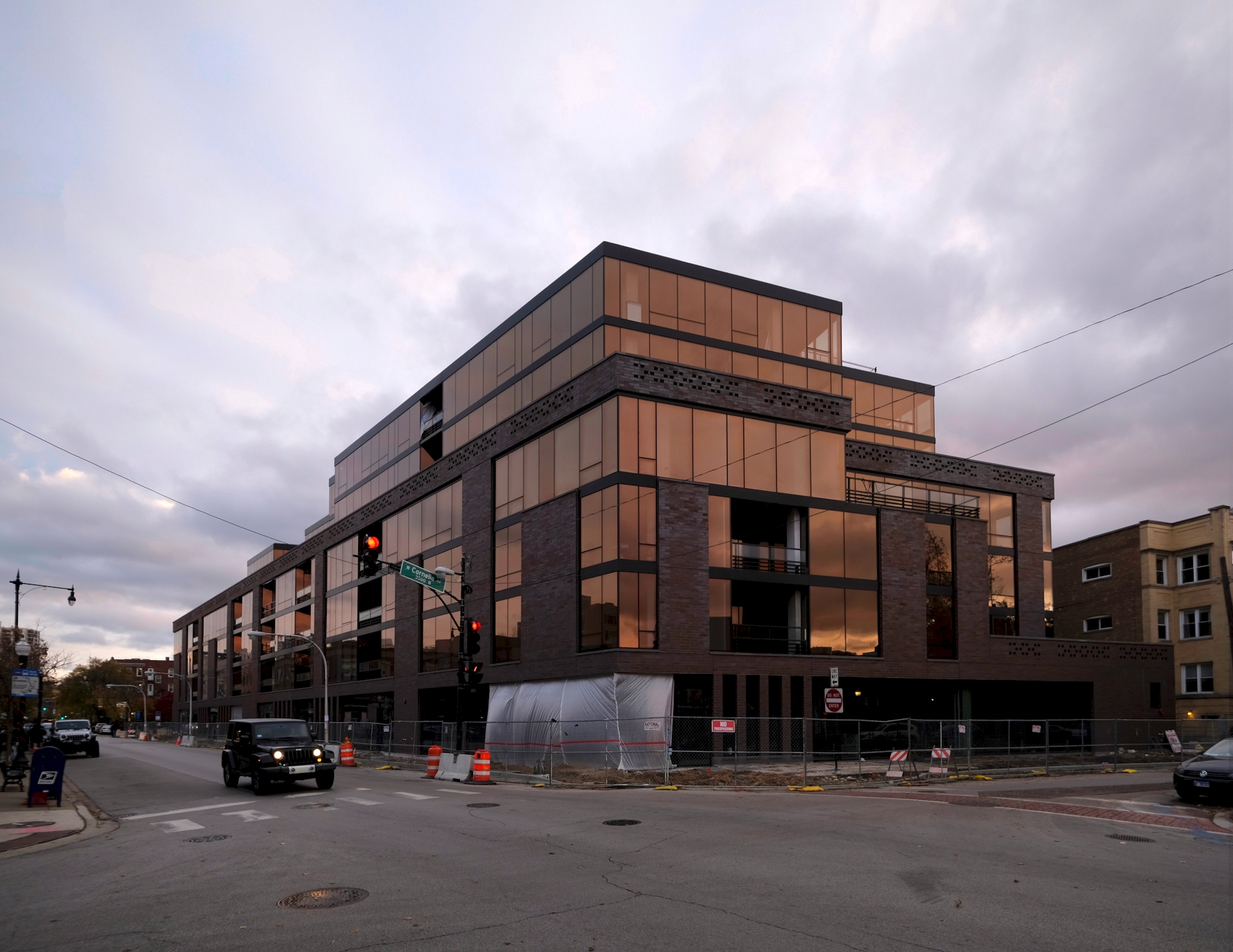
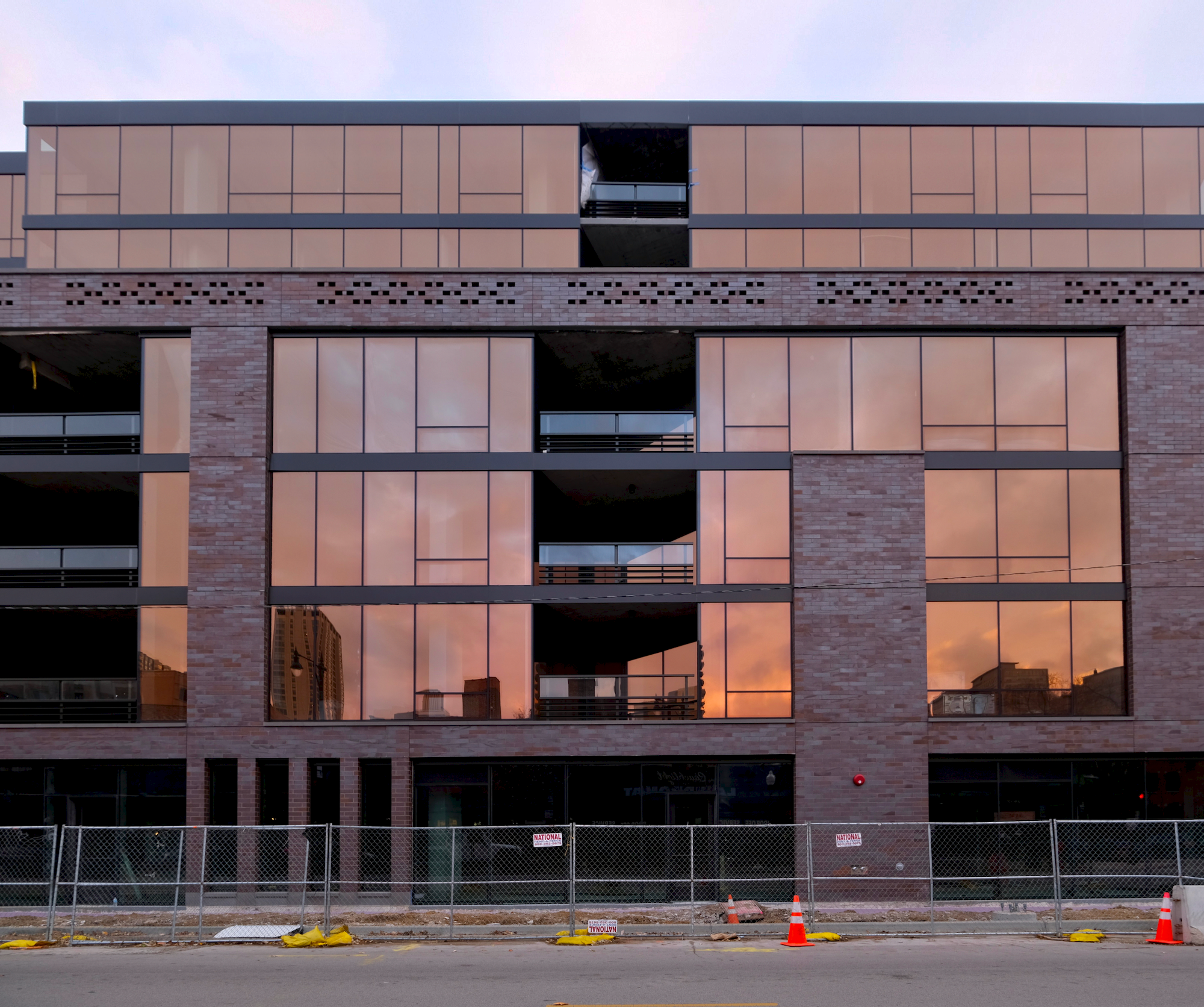
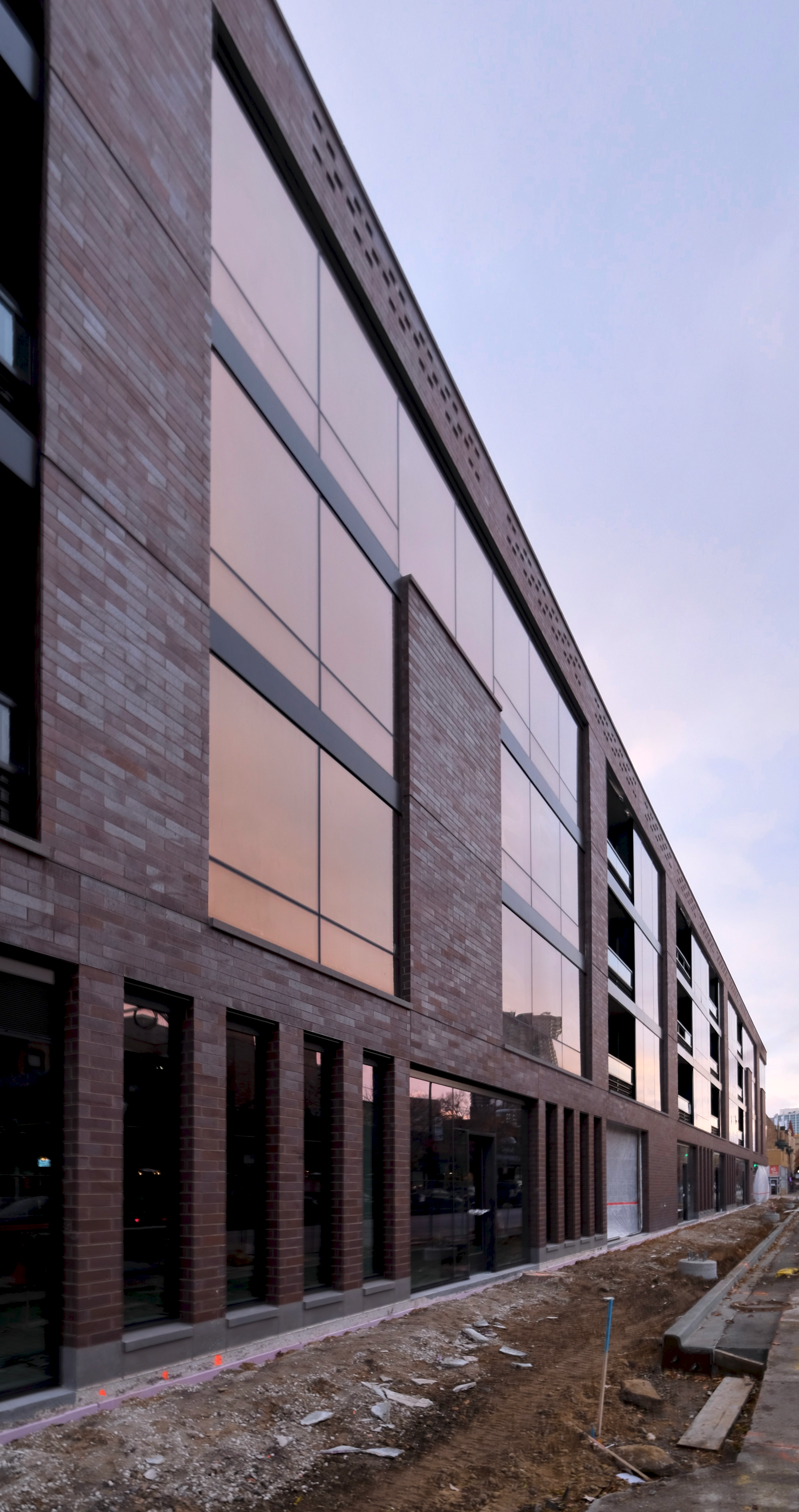
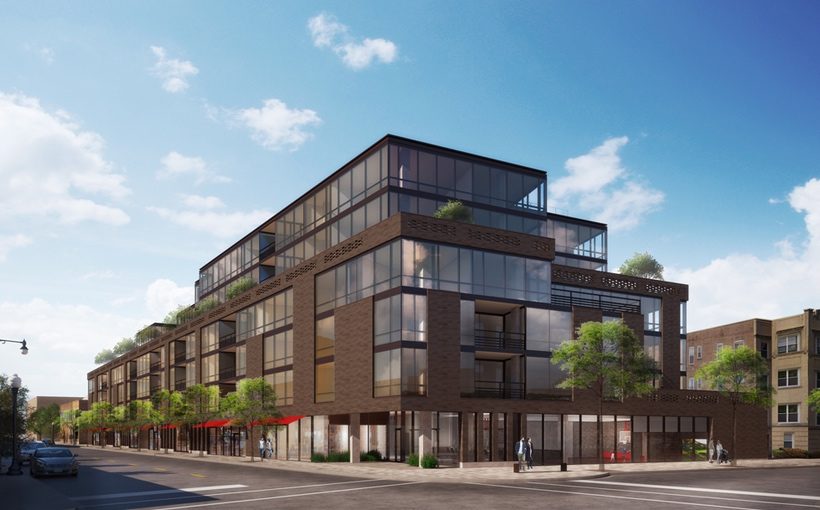
Given Optima’s all-encompassing role in the project, CEO and architect David Hovey Sr. is behind the contemporary design. The massing’s trapezoidal footprint conforms to the angled plot. The top three floors are also recessed from the lower four to allow for sprawling private terraces. As far as the exterior, the first four floors are enveloped in a dark brick and metal facade with recessed balconies, while the upper three are finished in a more minimalist glass and metal curtain wall.

Optima Lakeview

Optima Lakeview. Photo by Jack Crawford

Optima Lakeview

Optima Lakeview. Photo by Jack Crawford

Optima Lakeview interior atrium

Optima Lakeview interior atrium. Rendering by Optima

The structure’s interior layout is also unique in that both the apartments and amenities are accessible via a full-height interior atrium. The atrium integrates both a skylight and various decorative flora. Since YIMBY’s last update on the project, Optima has released additional renderings of this central interior scheme.

View of 3460 N Broadway. Rendering by Optima Inc

View of 3460 N Broadway. Rendering by Optima Inc

Optima Lakeview

Optima Lakeview. Photo by Jack Crawford

In addition to the 94 off-street parking spaces and storage for 208 bikes, residents will also find a host of public transit options within immediate proximity. Those looking for bus access can find Route 36 at the corner of Broadway & Cornelia. Other bus options within close walking distance include Routes 8, 22, 77, 135, 146, 152, and 156. Anyone looking to board the CTA L Red Line will have access to Addison station via an 11-minute walk northwest. Additional L service for all three of the Brown, Purple, and Red Lines is available at Belmont station, a 16-minute walk southwest.

Optima Lakeview

Optima Lakeview. Photo by Jack Crawford


Read more on Chicago YIMBY

Visit Optima Lakeview for more details

person name goes here

Maintenance Supervisor

Glencoe, IL


    Acceptable file types: *.pdf | *.txt | *.doc, max-size: 2Mb