The Scottsdale Civic Center

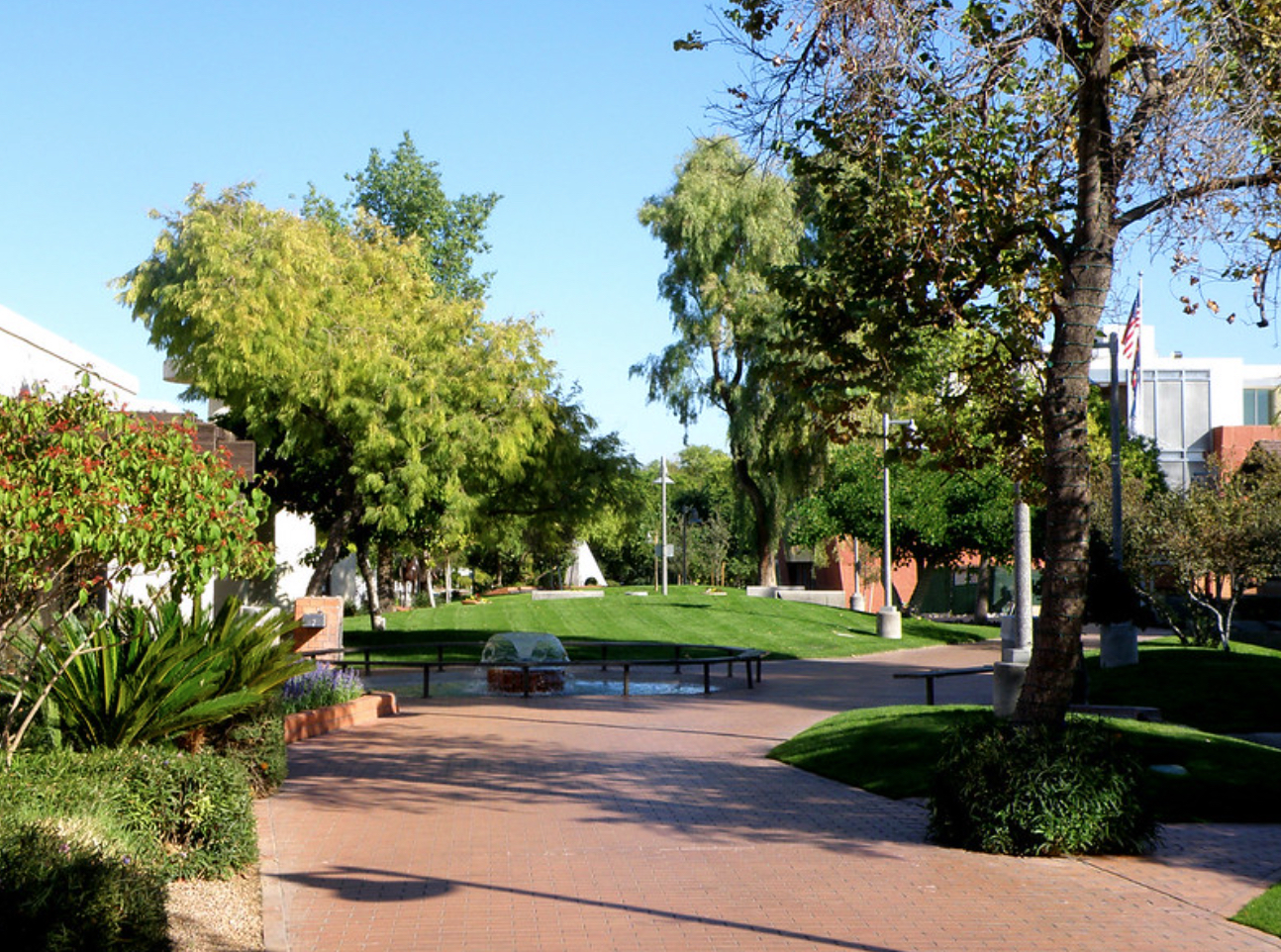
The Scottsdale Civic Center, situated in Old Town, serves as a cultural hub for the entire city, including our residents at Optima Sonoran Village®. It seamlessly balances Scottsdale’s historical identity as “The West’s Most Western Town” with modern influences, making it a popular focal point where the city’s heritage intertwines with its more recent cultural and artistic expressions. 

This urban oasis is surrounded by some of Scottsdale’s most vital facilities, including City Hall, Civic Center Library, Center for the Performing Arts, and Scottsdale Museum of Contemporary Art. It’s both a retail center and a retreat, marked by its lush greenery, tranquil fountains, and eclectic sculptures. You can also enjoy views of Camelback Mountain, which becomes particularly captivating at dusk, offering a serene environment for relaxation and cultural immersion.

The Civic Center dates back to 1966 when a master plan by local architectural firm Bennie M. Gonzales Associates was adopted, emphasizing the seat of town governance as “an open invitation for citizens to participate in their government.” Bennie M. Gonzales, with his distinct Southwestern modernist style, led the planning and design process during the center’s foundational years. His designs are characterized by their harmony with the environment and their use of natural materials, which can be seen in the kiva-like City Hall, the Civic Center Library (built in 1968) and the Scottsdale Center for the Performing Arts (constructed in 1975).
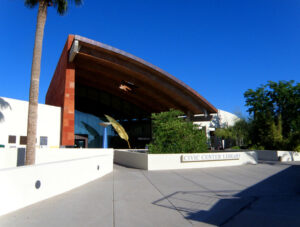
Scottsdale Civic Center Library. Photo: Kevin Bondelli

Decades later, award-winning architect Will Bruder further shaped the Civic Center, designing the Scottsdale Museum of Contemporary Art (constructed in 1999). His design paid homage to the curved facades of the neighboring Scottsdale Center for the Performing Arts.

Sculptures including Robert Indiana’s LOVE sculpture and George-Ann Tognoni’s The Yearlings further amplify the center’s art scene. Adjacent to them, the Scottsdale Center for the Performing Arts, with its stages and galleries, has hosted notable events like the Arizona Concours d’Elegance, enriching the center’s aesthetic and cultural offerings.
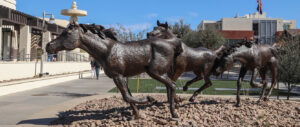
George-Ann Tognoni’s The Yearlings at the west entrance to the Civic Center.
Photo: Scottsdale Public Art

The Scottsdale Civic Center has recently seen major renovations, with its western two-thirds reopening back in January 2023. With plans to showcase 80 annual outdoor events over the next several years, ranging from national touring acts and orchestras to dance ensembles and community events, the Civic Center remains committed to cultural vibrancy and communal engagement.

Keen on exploring upcoming Civic Center events? Follow the link here for more information.
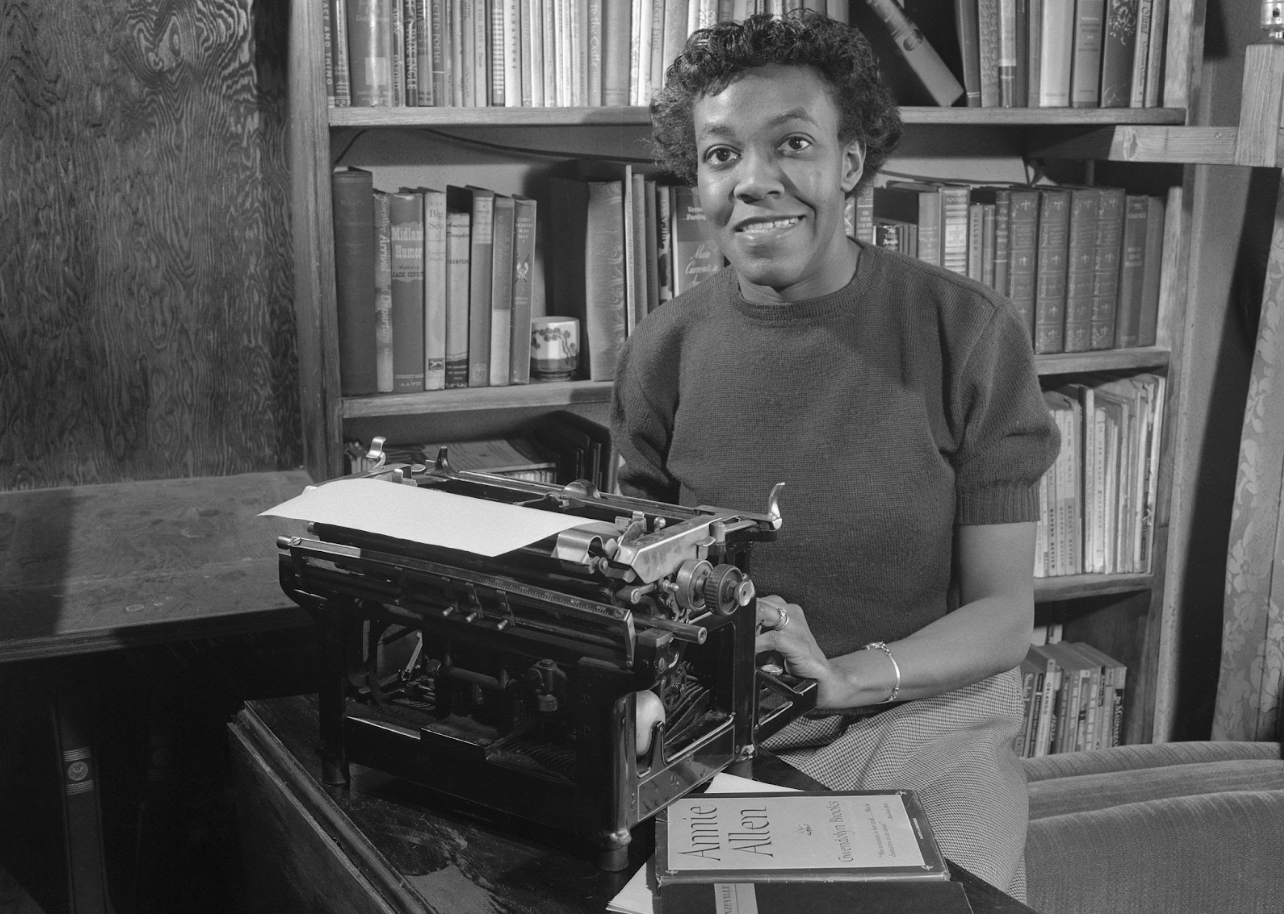
Great Chicago Writers: Gwendolyn Brooks

It’s always a pleasure to talk about literary giants with Chicago roots who have had profound impacts on both local history and the broader literary world. It goes without saying that no conversation about Chicago greats could happen without exploring the life and work of the legendary Gwendolyn Brooks.

Born in Topeka in 1917, Brooks relocated to Chicago while still an infant. The city’s pulsating cultural heartbeat and intricate socio-political fabric soon formed the canvas for her poetic masterpieces. Behind her ambition stood her parents: her father, a janitor with dreams of becoming a doctor, and her mother, a schoolteacher and a classically trained pianist. Both supported Gwendolyn’s passion for reading and writing.

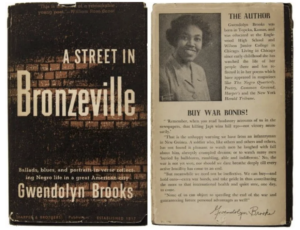
By the age of 13, Brooks had already marked her literary beginnings, publishing her first poem, “Eventide,” in American Childhood. Her poetic prowess grew from there, and by 17, she became a regular contributor to the Chicago Defender. After her time at junior college and a stint working for the National Association for the Advancement of Colored People (NAACP), Brooks further refined her craft in various poetry workshops and alongside Chicago literary peers, Richard Wright and Langston Hughes. This diligent nurturing of her talent culminated in her first poetic collection, A Street in Bronzeville, in 1945.

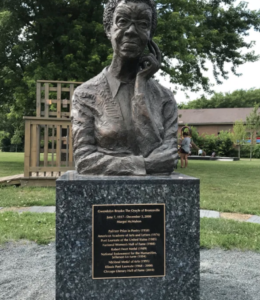
Gwendolyn Brooks: The Oracle of Bronzeville Monument found in Brooks Park

Brooks’s identity as an influential African American poet, author, and educator is underscored by her portrayal of the day-to-day challenges faced by African Americans. Her poetry and prose traversed a spectrum of themes – from intimate personal experiences to the African American quest for justice and recognition.

Gwendolyn’s vast literary repository boasts significant works. A Street in Bronzeville (1945) offers insights into urban Black life in Chicago. Annie Allen (1949) is a poignant exploration of a young Black girl’s journey to womanhood, and it also made Brooks the first Black poet to win the Pulitzer Prize in 1950. Maud Martha (1953), her only novel, depicts the complexities of prejudice from both white people and lighter-skinned African Americans. In 1960, she wrote The Bean Eaters, showcasing her evolving poetic style and featuring the renowned We Real Cool. Over the course of her career, Gwendolyn Brooks authored over 20 poetry collections.

A Street in Bronzeville, Gwendolyn Brooks, 1945

She also garnered numerous honors, including the establishment of the Gwendolyn Brooks Cultural Center at Western Illinois University in 1970 and her appointment as Illinois’s poet laureate in 1976. Several schools have been named in her honor, reflecting her enduring impact on education. In 1985, she was appointed Consultant in Poetry to the Library of Congress. The centenary of her birth in 2017 was celebrated with special events, reinforcing her lasting literary influence.

Interested in delving deeper into Gwendolyn Brooks’ literary world? Explore her expansive collections available on the Poetry Foundation.

Optima and the 2023 Chicago Marathon: A Neighborhood Affair

The 2023 Bank of America Chicago Marathon has come and gone, but its legacy endures. It’s no longer about the anticipation; it’s about reflection and reveling in the history set onto Chicago’s streets.

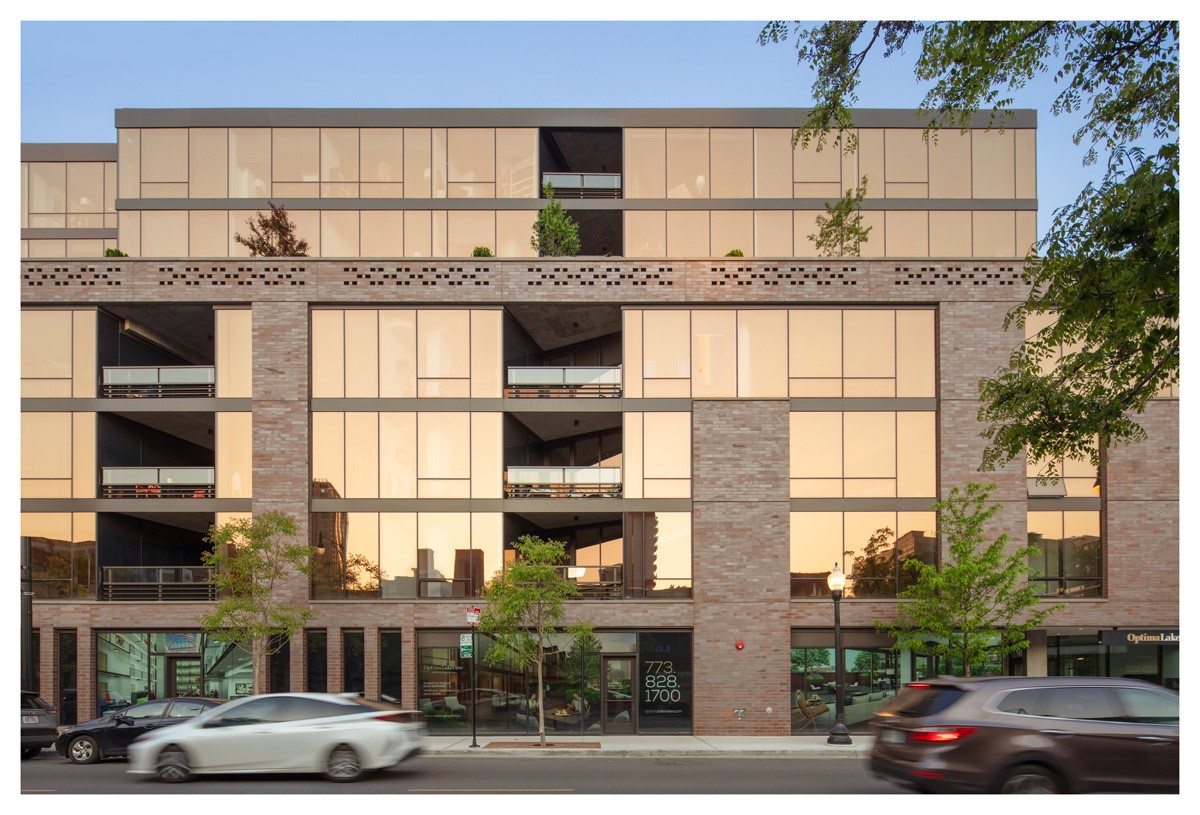
The marathon looped through 29 emblematic neighborhoods, each revealing its distinct character and vibrancy. Beginning in Grant Park, the race stretched as far north as Wrigleyville before heading back south past the United Center and the Illinois Institute of Technology and finally up Michigan Ave to the finish line. The streets came alive as residents and fans cheered throughout each of Chicago’s neighborhoods, showcasing the city’s passionate spirit. Notably, at various milestones of the course, Optima’s architectural marvels illuminated the route. Racers passed by Optima Signature & Optima Chicago Center at the initial mile, were given a mid-race boost past Optima Lakeview at mile 8, and, as the finish line beckoned, Michigan Place at mile 22 offered a familiar cheer.

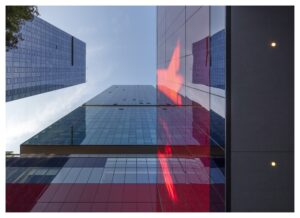
A worm’s-eye view of Optima Signature, which marathon participants passed in the first mile of the run

This year’s marathon wasn’t just another race. It made global headlines. Kelvin Kiptum clinched a new world record for men, finishing in a swift 2:00:35. Sifan Hassan’s debut on U.S. soil couldn’t have been more impactful as she set a new women’s course record with a time of 2:13:38. Marcel Hug and Catherine Debrunner also both set course records in wheelchairs, showcasing the Marathon’s inclusive spirit.

Kelvin Kiptum standing next to his world record time

Closer to home, we burst with pride as Optima’s very own Marketing Director, Ali Burnham, took to the streets, blending personal determination with Optima’s ethos of community involvement. 

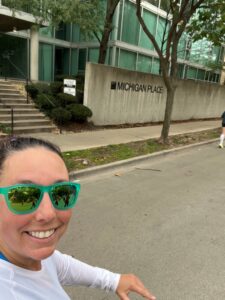
Optima’s Marketing Director, Ali Burnham, spotted Michigan Place on the 22nd mile of the marathon route

The 2023 marathon underscores what we’ve always believed — Chicago is a city of unparalleled spirit and energy. And at Optima, we’re committed to embedding ourselves within the heartbeat of Chicago’s most iconic events. For our residents, events like these are not distant spectacles, but neighborhood affairs. The Chicago Marathon exemplifies this, turning morning routines into once-in-a-lifetime viewing opportunities.

Get Ready to Watch the Chicago Marathon

Autumn in Chicago isn’t just about the crisp air, colorful leaves, and pumpkin-spiced everything. It’s also about the thrilling sound of thousands of feet pounding the pavement, as the city gears up for the iconic Bank of America Chicago Marathon. For our residents at Optima Signature and Optima Lakeview, this October isn’t just any other month; it’s a front-row seat to one of the world’s premier running events.

Circle Sunday, October 8, 2023, on your calendar. The marathon unfolds in Grant Park, with gradual starts ensuring smooth sailing. For those not racing, join the celebration at Abbott 27.2 Fest from 9:30 a.m. until 4 p.m. near the start line for a day full of music, food and fun. While Grant Park’s start and finish zones have some viewing restrictions, the race course offers numerous sweet spots for spectator cheering and encouragement.

The first mile of the marathon, Image via Flickr by Paladin27

The annual footrace is truly a global gathering, where more than 45,000 runners from every state in the U.S., and over 100 countries worldwide come together. Taking the runners on a grand tour, the 26.2-mile route dives deep into the city’s heart, stretching from Wrigleyville to the North, Pilsen and Little Italy to the West and the historic Douglass, near Guaranteed Rate Field, to the South. 

The prestigious event is more than just a marathon; it’s one of only six World Marathon Majors across the globe. For Optima Signature and Optima Lakeview residents, you have the privilege of stepping right outside to cheer on the incredible racers. And for the Optima Verdana community, consider making the short trip down from Wilmette. It’s a spectacle you won’t want to miss. You can find more details about the iconic event here!

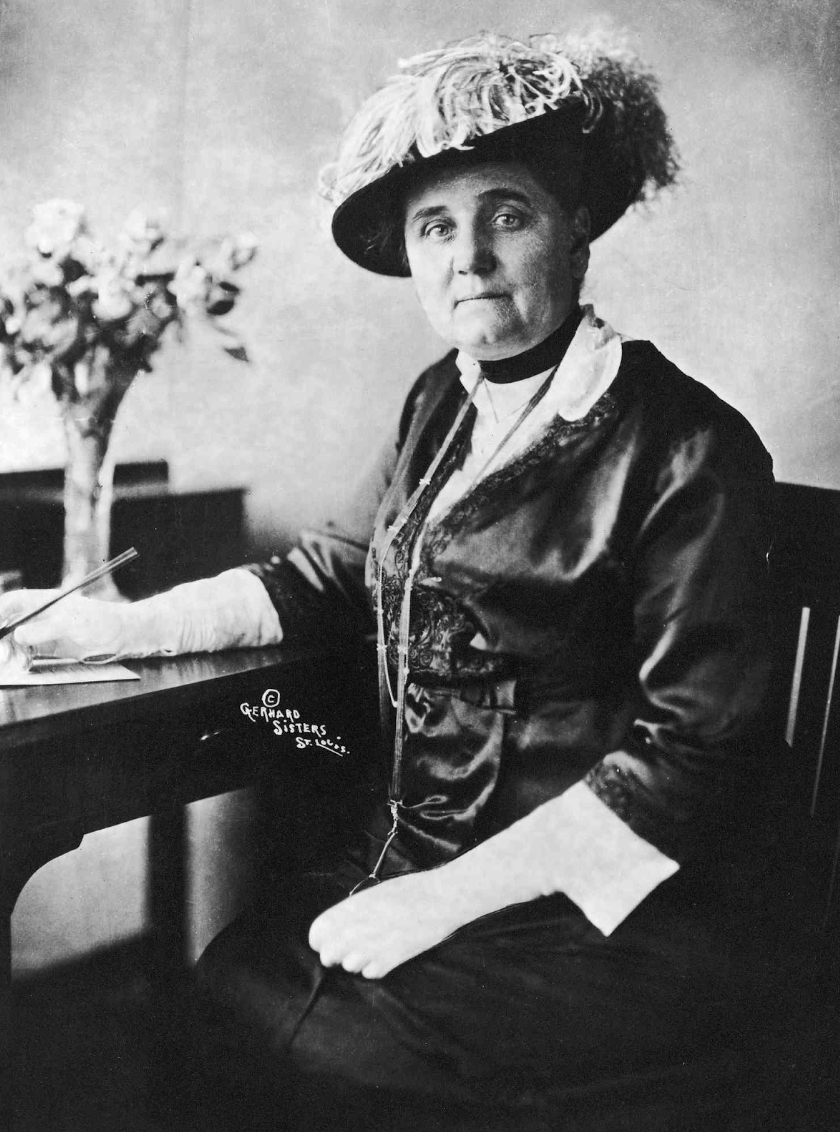
Great Chicago Writers: Jane Addams

It’s such a pleasure spotlighting legendary Chicagoans who have left a lasting impression on our local history and beyond, including the twentieth-century icon, Jane Addams.

Born in 1860 in Cedarville, IL into a prosperous family, Because Addams’ family allowed her to benefit from education from an early age, she was able to graduate from the Rockford Female Seminary. Later, Addams traveled to Europe, where she was introduced to London’s Toynbee Hall, a trailblazing settlement house that worked to address the causes and impacts of poverty in the city’s East End. Her visit to Toynbee Hall left a lasting impression, paving the way for her co-founding Hull House in Chicago in 1889 — one of the earliest settlement houses in the U.S. that has become the Jane Addams-Hull-House Museum at the University of Illinois-Chicago campus.

Hull House offered educational and social services to immigrants and Chicago’s underserved communities, positioning Addams as a leader of the Progressive Era. Her advocacy spanned a multitude of diverse causes: women’s rights, peace, public health, and broad-spectrum social reform. In recognition of her contributions, Addams was honored as the first American woman to receive the Nobel peace prize in 1931.

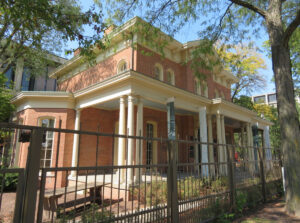
Jane Addams-Hull-House Museum. Photo: Sean Marshall

Her experiences at Hull House — and with the Progressive movement more broadly — set Addams on her trajectory as a gifted writer. Her writing career was already in full throttle in 1909 with the release of The Spirit of Youth and the City Streets, which shared Addams’ keen understanding of the unique needs of urban youth. She used the book to advocate for enhanced recreational spaces and deeper engagement for Chicago’s underserved young people, while illuminating the dire consequences of growing up in an environment where poverty and lack of access to a better quality of living prevail.

Having found an audience for her explorations of daily life in Chicago, Addams published Twenty Years at Hull-House in 1910, giving readers a look at life inside the settlement house and its impact on the community. 

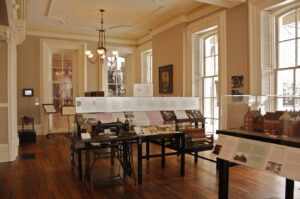
Inside the Hull House. Photo: At Home in Chicago

The Long Road of Woman’s Memory, which Addams’ completed in 1916, is another exceptional factual account of her expansive impact on women’s rights in America. In it, she gracefully navigates the terrain of personal and collective memories to demonstrate their influence on women’s lived experiences and the larger tapestry of history.

Over the course of her career, Jane Addams authored 11 books and hundreds of essays, editorials, and columns. And more than a century later, the resonance of Addams’s literary contributions remains undeniably profound, echoing through time into our modern world. 

Keen on exploring Addams’ legacy further? Then enjoy a visit to the Jane Addams-Hull-House Museum. The hours of operation are 10:00am to 4:50pm, Tuesday to Friday, and on Sundays from 12:00 to 4:50pm. A suggested donation for admission is $5 per person (University of Illinois Chicago faculty, staff, and students are granted complimentary entry).

Visit the Shakespeare Garden at Northwestern University

With Optima’s passion for having nature within reach, it’s no wonder that we are drawn to sumptuous gardens in and around the communities where we build. Imagine our delight in discovering the Shakespeare Garden on the Northwestern University campus, with its rich mix of history and modernity.

Planted in 1917, the Shakespeare Garden has had its home on Northwestern’s Evanston campus for over a century. Emerging from the vision of The Garden Club of Evanston members, it was crafted both as a wartime gesture of solidarity with Britain and to commemorate the 300th anniversary of Shakespeare’s passing.

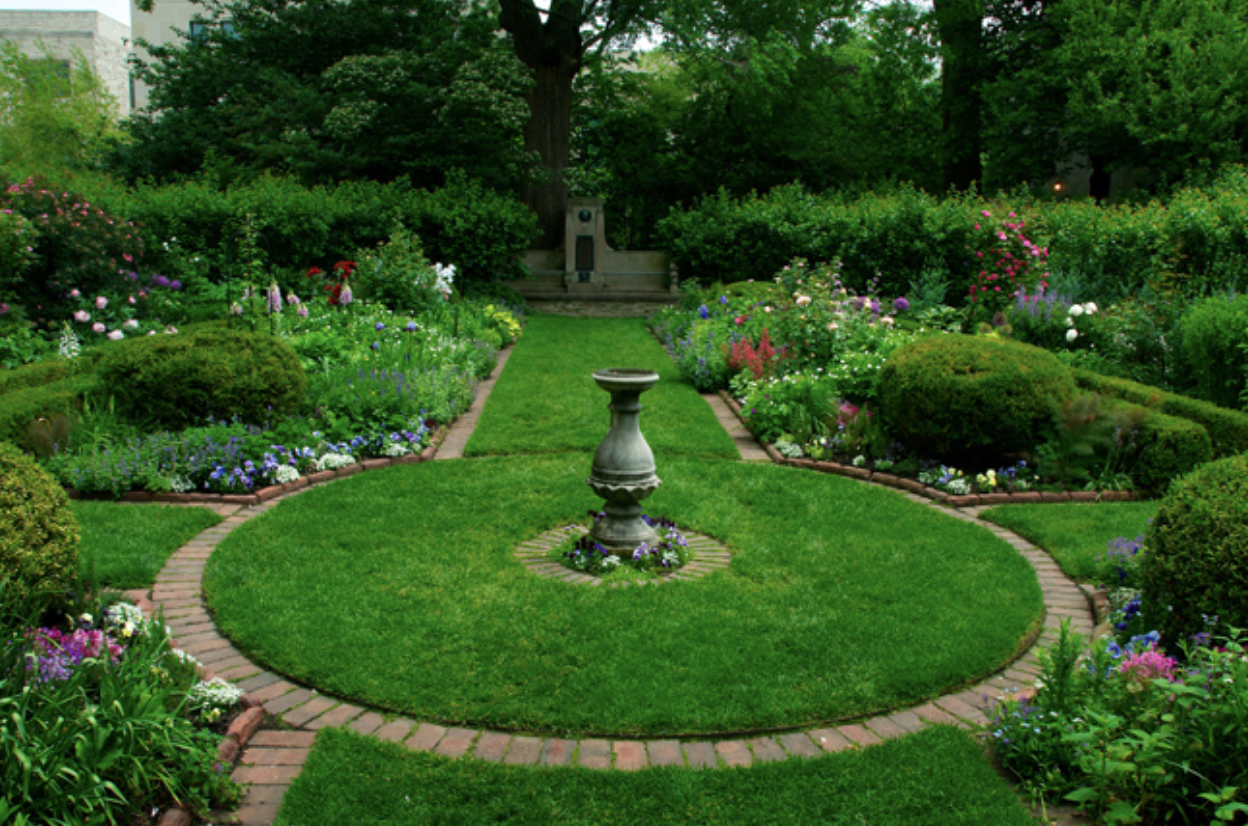
Measuring 70 by 100 feet, this garden sits just north of the Frank W. Howes Memorial Chapel, bordered by hawthorn hedges that create an intimate haven. As you enter, the garden reveals a curated collection of flora mentioned in Shakespeare’s works. From fragrant lavender and vibrant marigolds and daffodils in Winter’s Tale, to the rosemary and pansies in Hamlet.

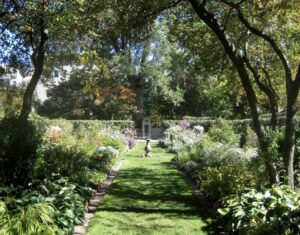
Jens Jensen, the illustrious Danish-American landscape architect, brought this garden to life. Known for his influential works on Chicago’s West Side, including Garfield Park and Columbus Park, Jensen took inspiration from Sir Francis Bacon’s essays on gardens. On entering the Shakespeare Garden, you are greeted by two Hawthorn trees, symbolic bridges between the Prairie and the garden. These trees, along with the foundational hawthorns that germinated from French seeds, have stood the test of time, providing a consistent backdrop to this historic site.

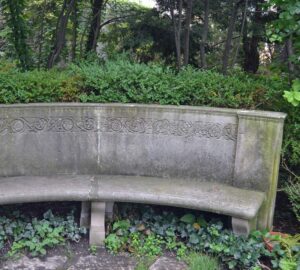
Elizabethan-style stone bench. Photo: In Memoriam mmmmarshall

Over the decades, the Shakespeare Garden has seen numerous enhancements. In 1929, an Elizabethan-style stone bench and a captivating fountain became part of this serene landscape. The fountain, a generous donation by architect Hubert Burnham, showcases a bronze relief of Shakespeare’s visage crafted by the French-American sculptor, Leon Hermant. Further augmentations followed, including the addition of a sundial in 1990 and later, a reshaping of the garden’s layout based on the recommendations of the English garden designer, John Brookes.

Hawthorn Trees in Shakespeare Garden. Photo: Wikipedia Commons

Brookes’ suggestions, which included moving the sundial to the garden’s center and adding antique brick edging, have given the garden a touch reminiscent of traditional English gardens. This shift also marked the garden’s evolution from a knot garden to a more fluid, perennial-focused design.

Northwestern’s Shakespeare Garden is not only a place for quiet reflection but also a venue for countless weddings, tours, and cherished moments. It’s entirely free and open to the public, but special tours and events may have to be scheduled.

Chicago Architectural Biennial 2023: This Is a Rehearsal

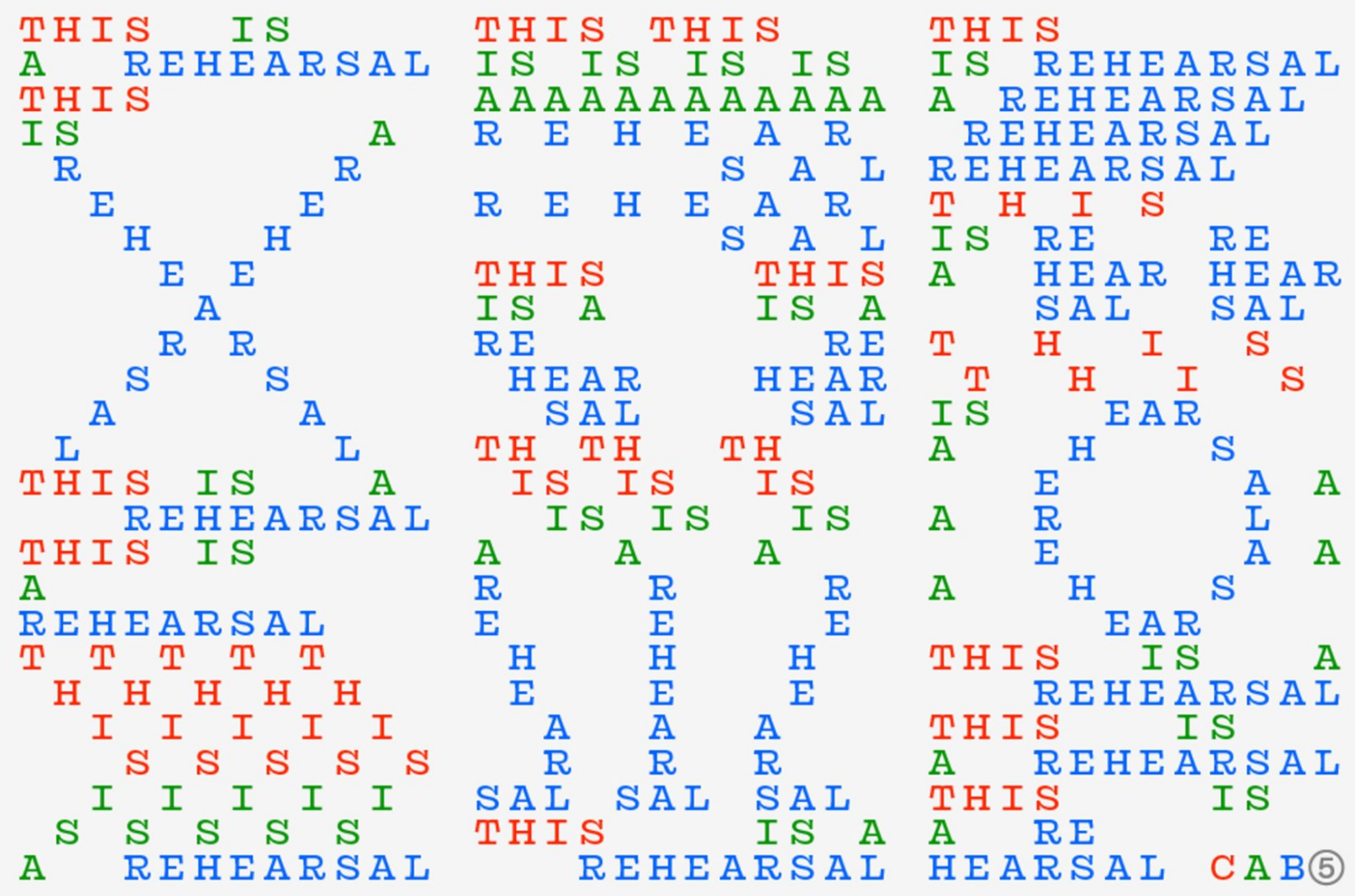
As Chicago’s architectural landscape continually evolves, the fifth edition of the Chicago Architecture Biennial offers a fresh, reflective look into the heart of urban transformation. Beginning September 21, 2023, CB5 invites locals and visitors alike to participate in a series of immersive events and discussions. Here’s what you can expect from the 2023 Biennial This Is a Rehearsal.

Diving into this year’s theme, This Is a Rehearsal, serves as an exciting reminder that cities, much like the instants of life, are in endless evolution. Through this lens, CB5 emphasizes the importance of continuous dialogue, trial, and reinvention in urban designs. CB5 explores how countries around the world share political, environmental and economic issues and how each may address them differently through art, architecture and public involvement. It’s not just about the buildings but the stories they tell and the communities they foster.

Floating Museum, a Chicago-based arts collective, is the lead artistic team behind CB5, pushing boundaries and charting new territories in urban discourse. Their integrative approach promises an engaging mix of conversations, challenging conventions, and setting the stage for tomorrow’s architectural landscape. CB5 expands on Floating Museums’ existing beliefs and work, all exploring the relationships between the built environment and ourselves. 

With over 80 contributors from Chicago and the global stage, the Biennial is a testament to diverse, inventive thought. The contributors, ranging from artists and architects to educators and thinkers, breathe life into various corners of the city, from Lakeview’s artful streets to North Lawndale’s historic boulevards. It’s more than just an exhibition; it’s a city-wide celebration of innovation. 

Local contributors include Grow Greater Englewood, Urban Growers Collective, Project Onward, the Poetry Foundation and the Southside Community Art Center. Contributors from around the United States and the globe include Storefront for Art and Architecture, the Buell Center at Columbia University, SpaceShift and Stoss Landscape Urbanism

Marking its commencement on September 21st, the Biennial unfolds various installations across the city. A special opening celebration is slated for November 1st, showcasing extensive exhibitions at renowned locations like the Chicago Cultural Center and the Graham Foundation. The programs invite viewers to engage in conversations around food and material production, water reclamation and discussions around construction and power in relation to land use and rights. Whether you’re a seasoned architect, a design enthusiast, or just a curious mind, there’s something for everyone.

Women In Architecture: Ruth Rivera Marín

As part of our ongoing “Women In Architecture” series, we’re sharing background on a trailblazing architect and educator who rooted her work in humanitarianism, Ruth Rivera Martín. From her radical contributions to Mexican architecture to the inspiration she instilled in her students, Martín’s impact is unquestionable. Learn more about her life and accomplishments below:  

The Life of Ruth Rivera Marín

Rivera Marín was born in Mexico City on June 18, 1927. Born into an environment of artistic flair, Ruth Rivera Marín hailed from a lineage steeped in creativity and brilliance. The daughter of iconic muralist Diego Rivera and writer Guadalupe Marín, she lived in a world where artistry was the language of expression. This rich background not only influenced her early life but also provided a foundation that would shape her approach to architecture.

Eager to carve her own niche, Rivera Marín pursued her architectural education at the College of Engineering and Architecture at the National Polytechnic Institute. With determination, she emerged as its first female student, breaking conventional norms. Under the mentorship of architectural luminaries like Mario Pani and Hannes Meyer, Rivera Marín honed her skills, adopting a unique vision that merged traditional elements with modern passions. 

Notable Works and Achievements

Rivera Marín’s illustrious career is a blend of iconic designs and transformative contributions to the field of architecture. In a world predominantly led by men, she rose as the first female professor of architecture at the National Polytechnic Institute, paving the way for future generations of women in the field. Beyond this, her pivotal role in founding the National College of Architects speaks volumes of her dedication to elevating architectural standards and practices in Mexico.

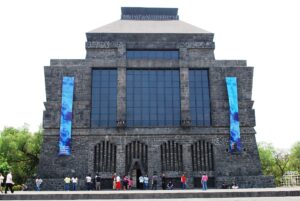
Facade of the Anahuacalli Museum in Mexico City. Credit: Alejandro Linares Garcia on Wikimedia Commons. Licensed under CC BY-SA 4.0.

Her design elements reflected a deep understanding of urban development. She was instrumental in crafting various housing projects in Mexico City, where her creations transcended traditional designs. Her most recognized work was the Anahuacalli Museum in Coyaoacán, which she built with her father and fellow architect Juan O’Gorman. Each of her designs resonated with Mexican modernity, finding a perfect balance of aesthetic allure and functional utility.

Arguably her most profound impact lies in her role as an educator. Rivera Marín’s tenure as a professor has touched the lives of countless students, instilling in them a love for architecture and design. Especially for female students, she was more than just a professor; she was a beacon of inspiration, showing them that with passion and perseverance, they too could redefine the boundaries in the architectural landscape.

Ruth Rivera Marín’s contributions are deeply etched in Mexican architectural history. Her edifices stand as landmarks of her visionary prowess. However, beyond brick and mortar, her true legacy is in the minds she influenced and the paths she paved for future architects. She remains an enduring symbol of dedication, talent, and groundbreaking achievements, inspiring countless individuals to dream big and break barriers.

Phoenix’s Fabulous Fox West Coast Theater: Then and Now

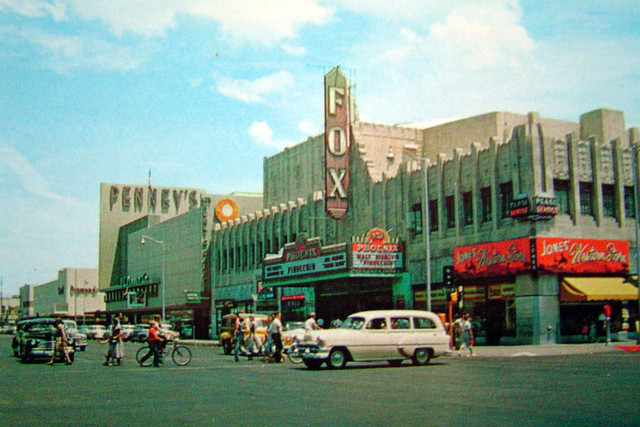
At the intersection of Washington and First Street in downtown Phoenix, the Fabulous Fox West Coast Theater once stood as an emblem of the city’s cinematic and architectural heritage. For locals and visitors, it was a chapter of shared memories, community, and an ode to a bygone era. 

The Fabulous Fox was part of a chain of marquee-lit venues that began to pop up in cities across the U.S. in the 1920s, just as the motion picture industry — and the novel entertainment of “going to the movies” — took America by storm. Officially opening its doors in July 1931, it was strategically located down the street from the legendary Adams Hotel. This locale once housed the first Phoenix City Hall and fire station, adding layers of history to the theater’s presence.

Designed by the acclaimed architect S. Charles Lee, this 1,800-seat marvel swiftly became the center of entertainment in the city — perhaps due, to some degree, to being the first air-conditioned hall in Phoenix, offering respite from Arizona’s heat.

Beyond its steel and terra-cotta faced concrete walls, the Fox Theater captured the shared experience of collective gasps, laughter, and moments of poignant silence. And as Phoenix came alive as a 20th century American city, the Moderne-Deco façade, the grand billboard announcing the week’s films, and the flashing marquee lights were integral to its vibrant downtown nightscape.

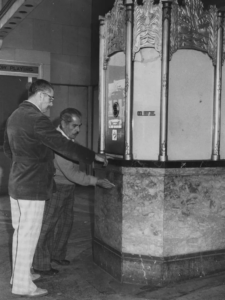
Ticketing booth at the Fabulous Fox West Coast Theater
Ticketing booth at the Fabulous Fox West Coast Theater. Photo: Phoenix Gazette

Inside the building, guests were greeted by a floating staircase, futuristic lamp posts, crystal chandeliers, and elaborate frescos. These intricate designs, combined with the desert-themed candy counter, reflected an eclectic blend of global luxury and local charm.

Despite its significance, the theater lost its luster with a shift of commercial activity to the suburbs. By 1975, with the property under Phoenix ownership, the decision was made to demolish it, followed by an auction, where remnants of its architectural elegance, from chandeliers to ceiling panels, were sold.

Today, the ground where the Fox Theater once stood is part of the city’s evolving landscape. Once lying vacant and later serving as a parking lot for the America West Arena, is now poised as the site for RED Development’s mixed-use project, including a Fry’s Food Store.

For longtime residents and history buffs, it remains a cherished memory, and as Phoenix continues to grow and change, it’s vital to remember and celebrate the landmarks, like the Fox Theater, that laid the city’s cultural foundation.

Discover the McDowell Sonoran Preserve

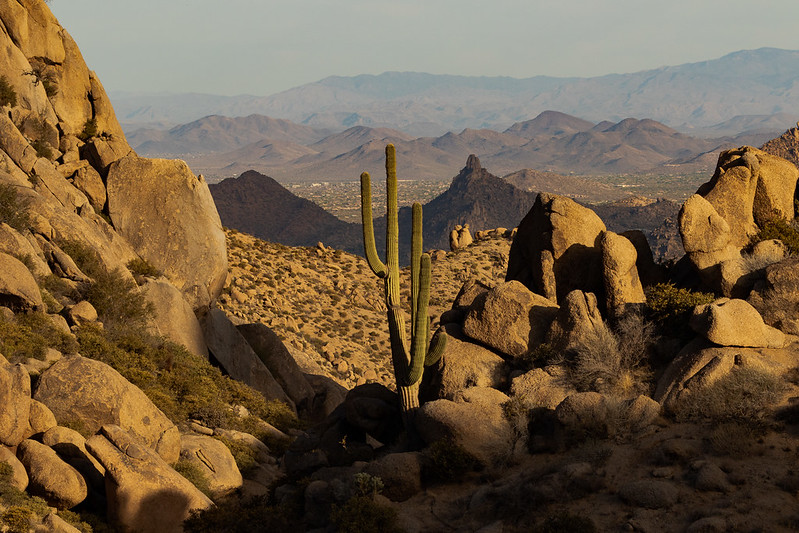
We’re always thrilled to spotlight attractions for our residents at Optima Kierland Apartments, including the McDowell Sonoran Preserve. Nestled in the heart of Arizona’s picturesque landscape, this preserve stands as a testament to Scottsdale’s dedication to preserving the captivating beauty and wonder of the Sonoran Desert. This urban preserve offers a haven for flora, fauna, and eager adventurers alike.

The Preserve’s history began on January 1, 1994, when Scottsdale formally dedicated the initial area of the preserve, which then consisted of three parcels of land totaling approximately five square miles. Since then, this preserve has grown and flourished, now spanning 27,800 acres, and deeply intertwined with the passionate efforts of the McDowell Sonoran Conservancy. This non-profit organization, in collaboration with the City of Scottsdale, has been a driving force in the completion and sustainability of the preserve. Their dedication ensures that this part of the Sonoran Desert remains untouched for future generations. The Conservancy also plays a vital role in managing the land and maintaining the extensive trail network.

Gateway Trailhead Building View
View of the Gateway Trailhead Building. Photo: Al_HikesAZ

Apart from its breathtaking vistas, the McDowell Sonoran Preserve boasts a range of facilities designed to enhance the visitor experience. Major trailheads include the Gateway Trailhead, Tom’s Thumb, and Brown’s Ranch. These provide free parking, access to a variety of trails, and restroom facilities. With an extensive network of non-motorized, multi-use trails, visitors can indulge in activities ranging from hiking, biking, and horseback riding. The paths cater to all skill levels – from gentle terrains to challenging ascents. 


Cactus Wren on a cactus.
Cactus Wren. Photo: Rick Cameron

The McDowell Sonoran Conservancy offers guided hikes, where knowledgeable guides share insights about the desert ecosystem, its history, and its inhabitants. But the preserve is more than just a recreational spot. Through the McDowell Sonoran Conservancy, it offers a variety of educational programs designed to foster public awareness and appreciation of the desert ecosystem.

The McDowell Sonoran Preserve is more than a slice of “untainted desert;” it’s an experience. Its vastness captures the essence of the Sonoran Desert, providing those with a penchant for exploration an opportunity to connect with nature. With its diverse activities, rich history, and the backing of a dedicated conservancy, the preserve promises something for everyone. And for Optima Kierland Apartment residents, whether you’re an avid hiker, a curious student, or simply someone to find peace amidst nature’s splendor, the McDowell Sonoran Preserve awaits only five miles away.

person name goes here

Maintenance Supervisor

Glencoe, IL


    Acceptable file types: *.pdf | *.txt | *.doc, max-size: 2Mb