The Career of Helmut Jahn

The Life of Helmut Jahn

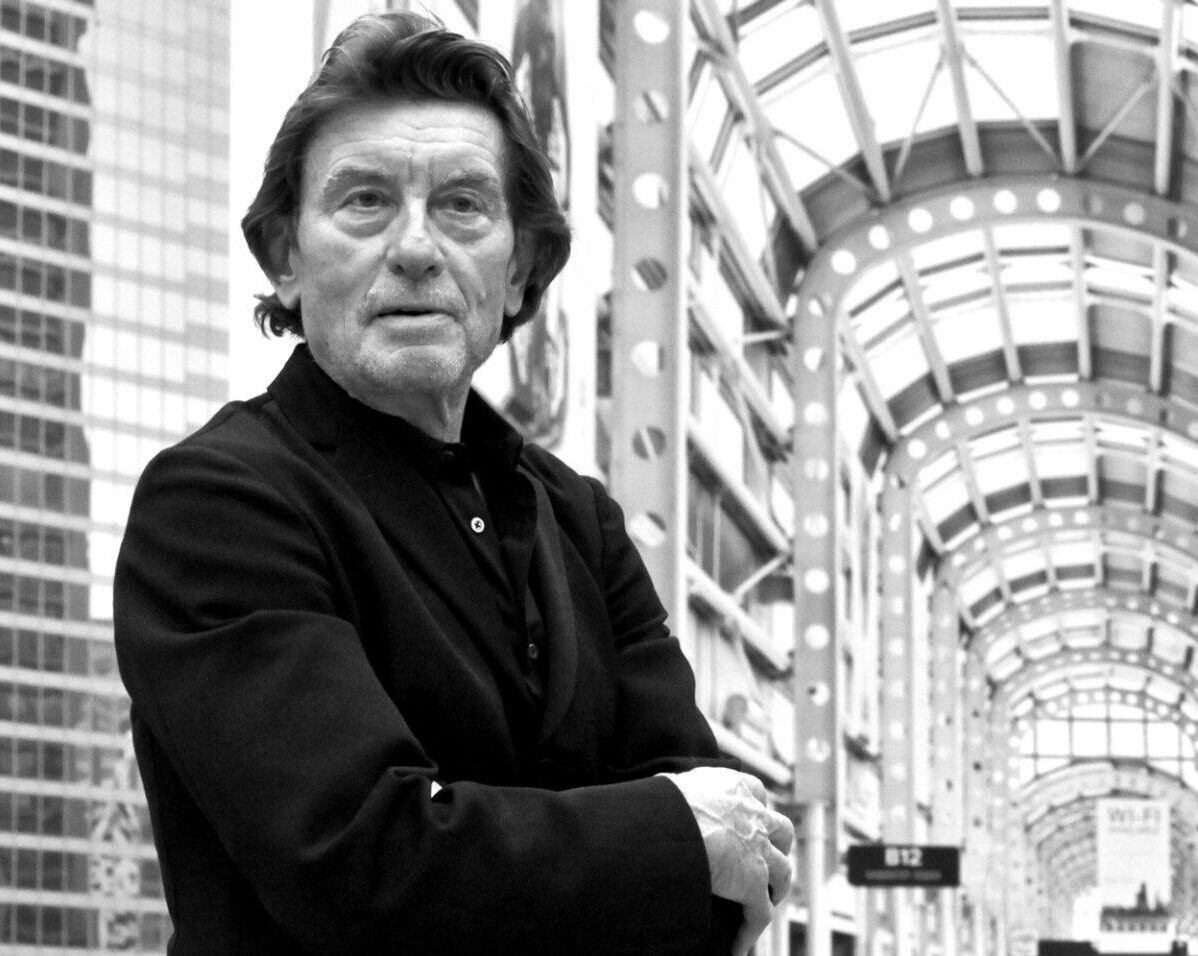
The German-American architect Helmut Jahn, who passed away in May 2021, holds a special place in the hearts of Chicagoans, as he made the city his home throughout his stellar international career. He was also a close friend and colleague of Optima founder, David Hovey Sr., FAIA.

Born in 1940 near Nuremberg, Germany, Jahn witnessed the destruction — and later reconstruction — of the town where he grew up during and after World War II. Because of this intimate and personal experience, he was inspired to study architecture and design as a way to participate in the process of stabilizing and beautifying the places where people live.

Jahn moved to Munich to study architecture, and relocated to Chicago in 1966 to further his studies under renowned architects Myron Goldsmith and Fazlur Khan at IIT. His career was forged when joining C. F. Murphy Associates, which was renamed JAHN in 2012 following Charles Murphy’s retirement. 

Much of the work Jahn created took inspiration from the modern aesthetic he adopted while at ITT; he also pulled from the influences of postmodernism, the Art Deco style of the ‘30s and eclecticism throughout his career. In the late 1970s and early ‘80s, Jahn’s mark on architecture really began as he transitioned from smaller projects to legacy-defining skyscrapers.

The Works of Helmut Jahn

James R. Thompson Center, Chicago

In 1985 Jahn designed the State of Illinois Building (renamed the James R. Thompson Center in 1994), located in Chicago, which serves as the second home to the Illinois state government. From the moment its doors opened to the public, it became one of Jahn’s most controversial designs, with mixed reviews that ranged from unabashed praise to outrage. 
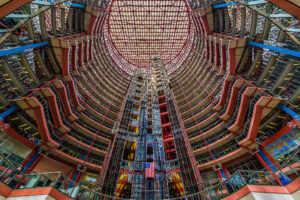
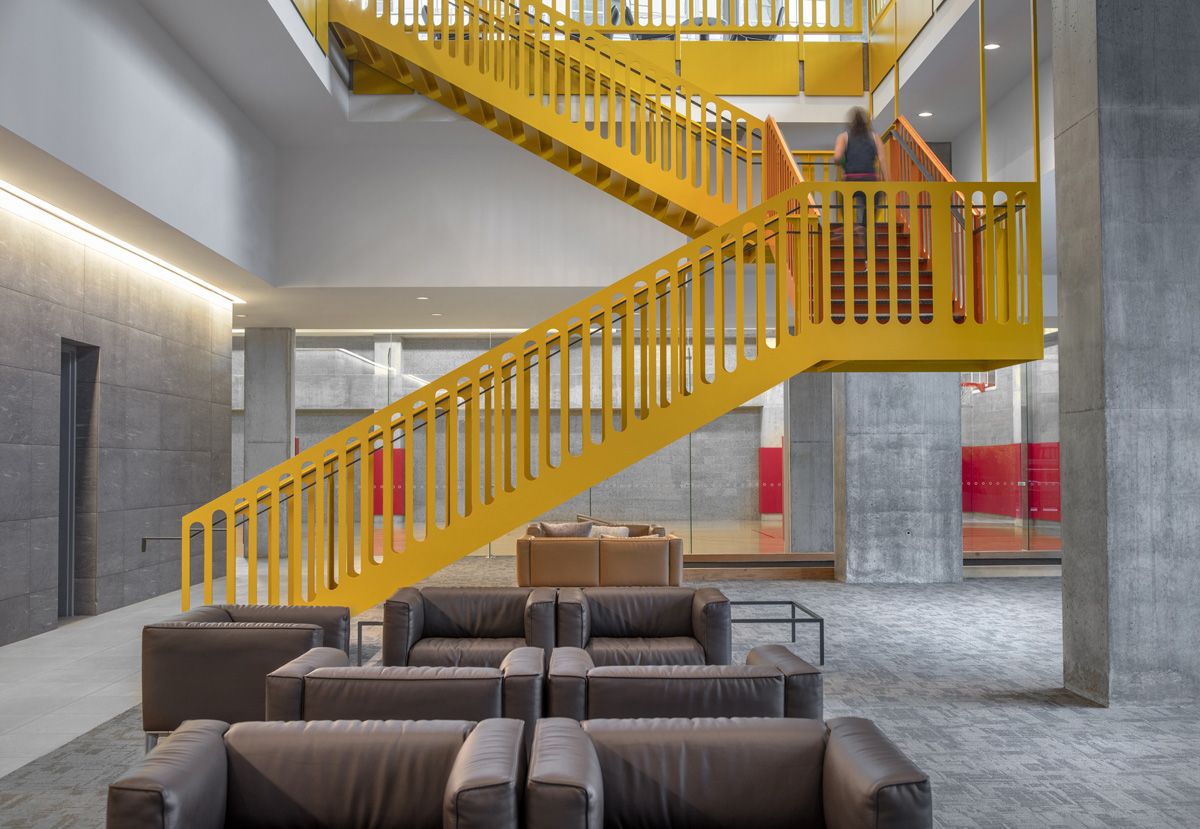
The photos shows a rounded interior of a building fitted with bright colors of steel railings, staircases and beams.
The atrium inside the James R. Thompson Center in Chicago, designed by Helmut Jahn

The building, with a grand atrium at its center, has a distinctive circular shape that references the Illinois State Capitol building in Springfield. While the structure was considered futuristic at the time, in part due to the use of advanced architectural tectonics, it also incorporated design elements that were reminiscent of the grandeur of large public spaces of the past.

Over the years, many of Illinois’ most senior officeholders (including governors) have proposed selling the structure, much to the criticism of architects and architecture devotees concerned about the building’s future. And while the future of the building remains in question, the 17-story structure is internationally known and considered a momentous piece of postmodern architecture.
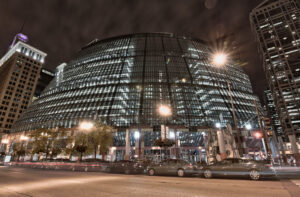
A round shaped building is lit up with lights from it's inside in the dark night.
The exterior of the James R. Thompson Center, designed by Helmut Jahn

Sony Center, Berlin

Built in 2000 at the Potsdamer Platz in Berlin, Germany, the Sony Center stands as one of Jahn’s more recent architectural feats. After the city’s ruin during WWII, the original site — the infamous Nazi People’s Court — was stuck in the Berlin Wall’s No Man’s Land, and was left to decay. Once the Berlin Wall fell in 1989, the city looked to rehabilitate much of the forgotten architecture. 

Jahn undertook the project of this transformational urban marketplace with a desire to honor the meaning of building on and around abandoned structures. In the process, he successfully blended historic remnants and modern aesthetics to create an open, free-flowing space for all to enjoy.  

The grouping of eight buildings that makes up the Sony Center are a mix of residential, commercial and public space. Each structure is enveloped in glass, directing the flow of light and augmenting the feeling of transparency throughout the complex. The 102 meter-long roof that sits atop the complex, built by Waagner-Biro, has become an iconic feature in its own right. The medley of steel, glass and translucent fabrics, which is often illuminated in bright colors, furthers the fluid design that Jahn intended.
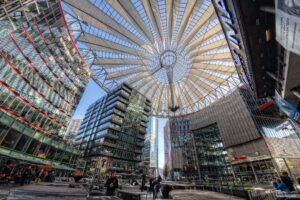
A wide lens photo captures four buildings faced with glass with a large fanned roof that is open above them.
A rendering of the Pritzker Military Archives Center in Sommers, Wisconsin, designed by Helmut Jahn

Pritzker Military Archives Center

The Pritzker Military Archives Center located in Sommers, Wisconsin, is one of Jahn’s final projects. The construction, which started in 2020, is taking place in conjunction with the development of a new Memorial Park Center. The center will advance the mission of the Pritzker Museum and Library to restore and preserve their ever-expanding collections. 

The state-of-the-art structure will feature an immersive 9,400 square-foot Gallery Center open to the public. The Gallery will house artifacts and exhibits provided by the parent museum and library located in Chicago. The front of the building will feature floor-to-ceiling glass frames that illuminate the interior. Brilliant red steel beams will stretch beyond the facade, creating a dramatic rooftop extending boldly beyond the building’s entrance. 

Construction on the Pritzker Military Archives Center is underway and moving swiftly; the entire Memorial Park Center will take nearly a decade to be completed.
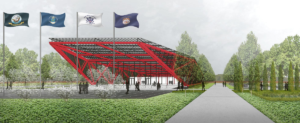
A rendering presents a bright red steel structure with four flag poles with flags flying in its front. Around the structure green grass and trees fill the area.
The interior forum of the Sony Center in Berlin, designed by Helmut Jahn

Chicago Architecture Center Exhibit

Honoring Jahn’s accomplishments and extraordinary engineering feats, the Chicago Architecture Center (CAC) has curated the exhibit Helmut Jahn: Life + Architecture. The exhibit includes an expansive compilation of ephemera including photography, sketches and models of Jahn’s most iconic works. 

For those interested in learning more about Jahn’s exemplary career in architecture and beyond, Helmut Jahn: Life + Architecture is free with admission to the CAC. The exhibit is open from 10 a.m. to 5 p.m. daily until October 31. You can purchase vouchers and learn more about future exhibits here.


Summertime in Chicago

Summertime in Chicago brings an abundance of sunshine, blue skies, and long days to spend exploring everything the city has to offer. Optima Signature, located just east of Michigan Avenue’s Magnificent Mile, is perfectly positioned to access the best of the city’s summer activities. Here are just a few of the many adventurous things to do this summer in Chicago:

Farmer’s Markets

Every Tuesday from 7 am – 2 pm through October 26, the Streeterville Organization of Active Residents (SOAR) Farmer’s Market sets up in the plaza of the Museum of Contemporary Art just blocks away from Optima Signature. The SOAR market features a diverse array of local vendors and seasonal produce including Back of the Yards Coffee, a woman and Latinx owned coffee company based in Chicago’s south side, Bennison’s Bakery based out of the North Shore, flowers from Oosterhoff & Son Flowers, and numerous farms from Indiana and Wisconsin. 

Of course, a visit to the Museum of Contemporary Art is always fun after a day at the market. The museum champions the new and unexpected in contemporary art and culture and has an exhibit on Chicago Comics: 1960s to Now through October 3.

Just a short bike or bus ride away, the Green City Market in Lincoln Park runs from 7 am to 1 pm on Wednesdays and Saturdays, May through October. The market features sustainable vendors and community programming. Chef’s and vendors offer wholesale pricing on their fresh products and many local restaurants use the market to obtain ingredients. 

After visiting the market, be sure to explore the Lincoln Park Zoo, the Lincoln Park Conservatory, and the nature boardwalk.

A group of kayaks floating down a body of water

The Chicago River

Spending a hot day on the water is a perfect Chicago summer activity. Optima Signature’s proximity to the Chicago River makes e-boating or kayaking a perfect outdoor activity. 

Urban Kayaks located on the Chicago River Walk provides guided kayak tours and rentals seven days a week through the end of the summer. Chicago Electric Boat Company, also located on the River Walk, offers environmentally-friendly electric boat rentals that can be exhilarating experiences for water novices and experts alike.

Chicago’s River Walk, open until 11 pm, offers beautiful views of the city and the river’s bridges, restaurants, and cafes, and is a perfect place to end a summer day.

For Chicago residents and visitors alike, the summer months are precious. So while we still have these long, warm days and sunny skies, make sure you venture out to enjoy the bounty at the iconic neighborhood farmers markets and the unique access to our namesake river!

Best Day Trips Close to the Chicago Area

Although Chicago is a huge city with plenty to explore, sometimes you just need a break from the bustle and noise. For our fellow Chicago residents who might need a weekend getaway this summer, here are the best day trips close to the Chicago area:

Indiana Dunes National Park. Credit: Paul J Everett on Flickr Creative Commons, CC BY 2.0 Deed

Indiana Dunes National Park

Chicago boasts some great beaches, but for something different, Indiana Dunes National Park is worth the drive over state borders. The park features over three miles of lakeshore lined with sand dunes, marshes, grasslands and forests. If you’re feeling adventurous, you can try their Three Dune Challenge and climb three of their tallest dunes in one day. 

Rockford, IL

Less than 100 miles northwest of Chicago, Rockford’s charm is just a quick road trip away. You can’t miss the Anderson Japanese Gardens, one of North America’s premiere Japanese gardens with over 12 acres of streams, waterfalls, koi-filled ponds and more. The Discovery Center Museum or the Burpee Museum of Natural History are great spots for kids and families to explore.

Milwaukee, WI

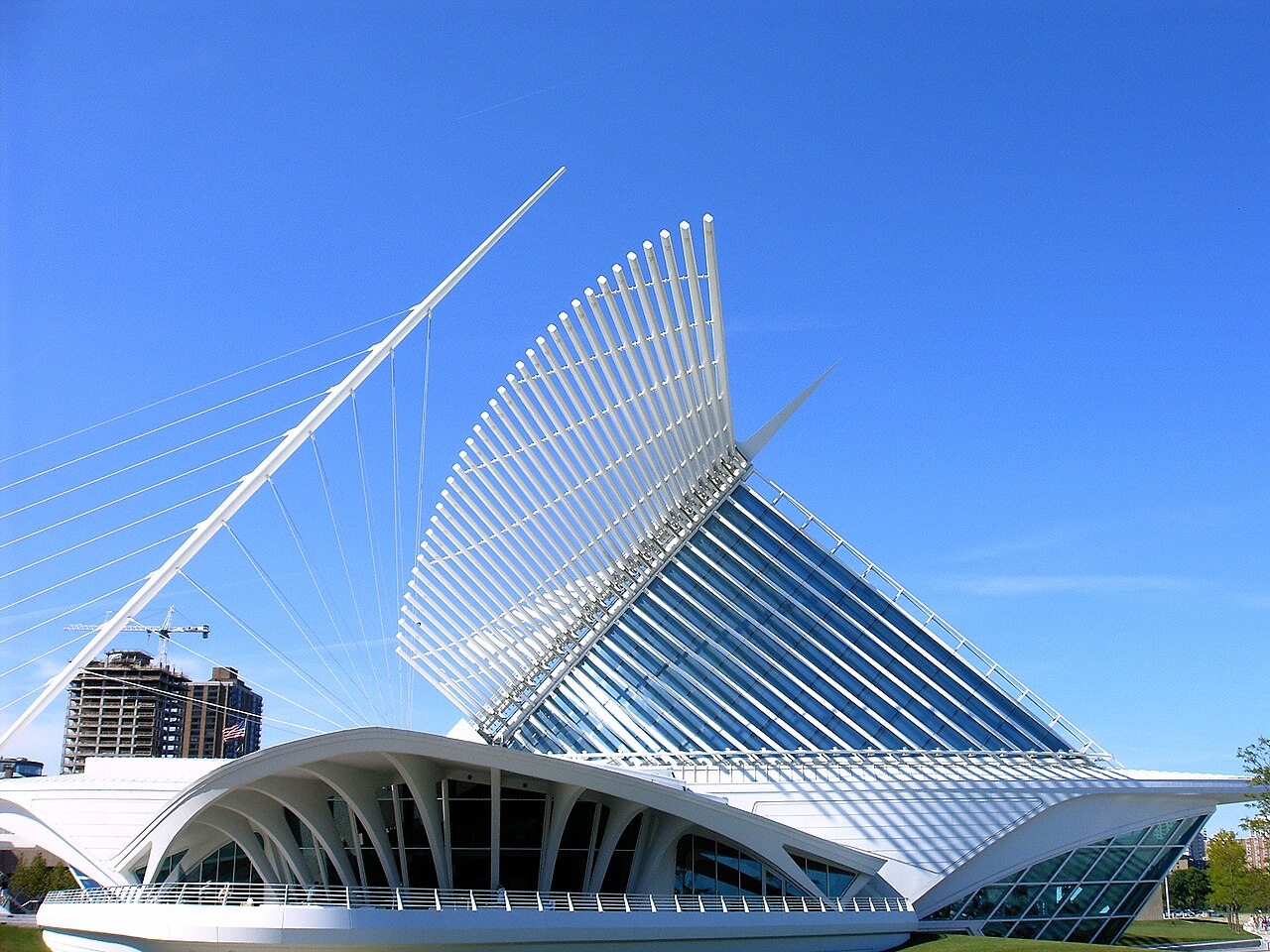
Whether you get there by car or Amtrak train, Milwaukee’s downtown has something for everyone. Murals and public art line the streets full of boutique shops, perfect for exploring without an agenda. Don’t miss the Milwaukee Art Museum, one of the city’s many museums, for the exhibits and the architecture of the building itself. Milwaukee is also a city for beer enthusiasts, with a few historic gems related to the Pabst Brewing Company.

Oak Park, IL

This one is right in Chicago’s suburbs, but we can’t skip over Oak Park’s ties to legendary architect Frank Lloyd Wright. His home and studio are in Oak Park, as are a series of other Prairie-style homes he designed. Take one of the many architectural tours dedicated to Wright’s work in the neighborhood.

Whether you’re exploring new museums, different scenery or a piece of architecture history, we hope this inspires you to find your new favorite getaway from the city!

The Benefits of Retail Space in Mixed-Use Buildings

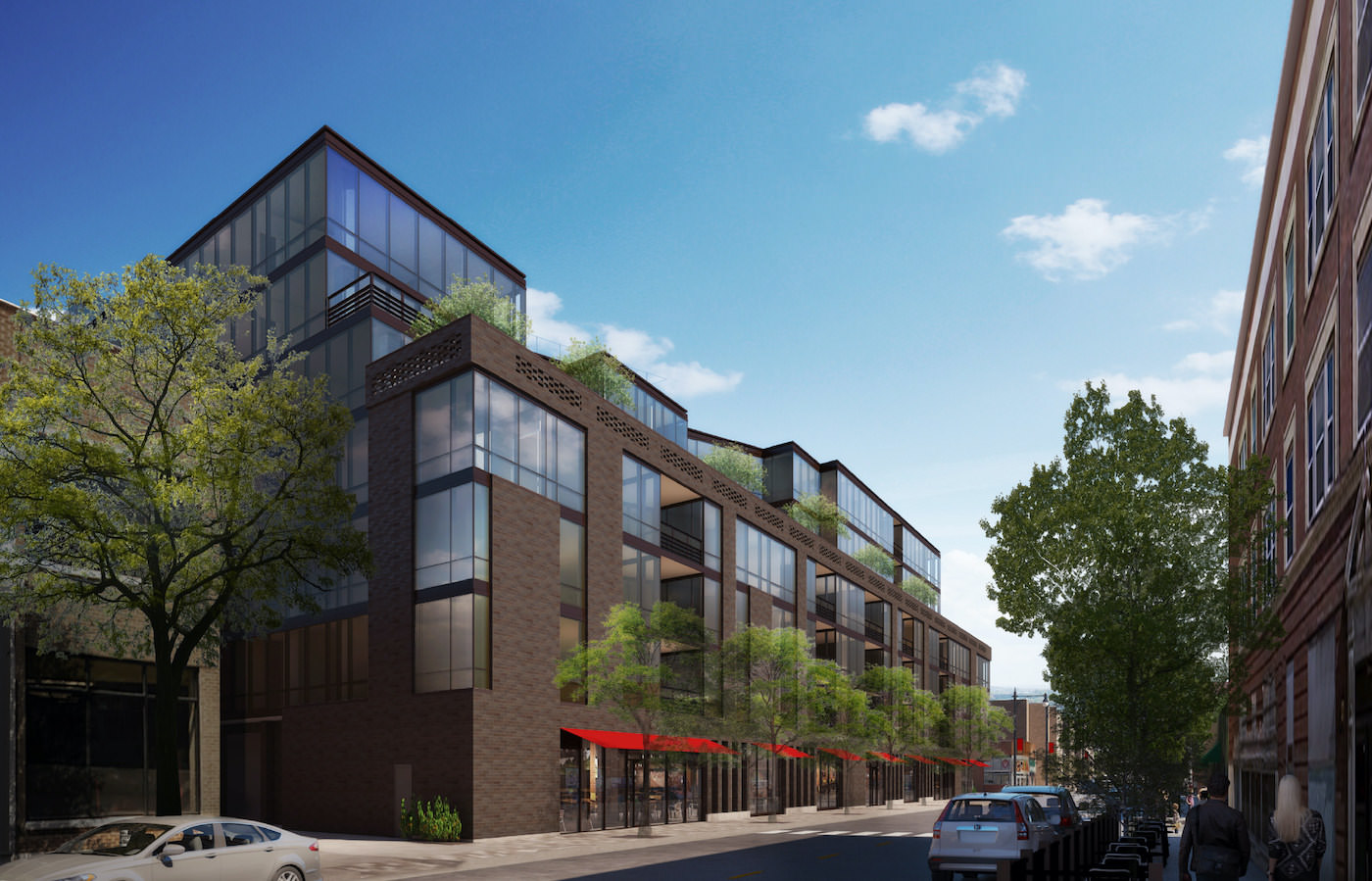
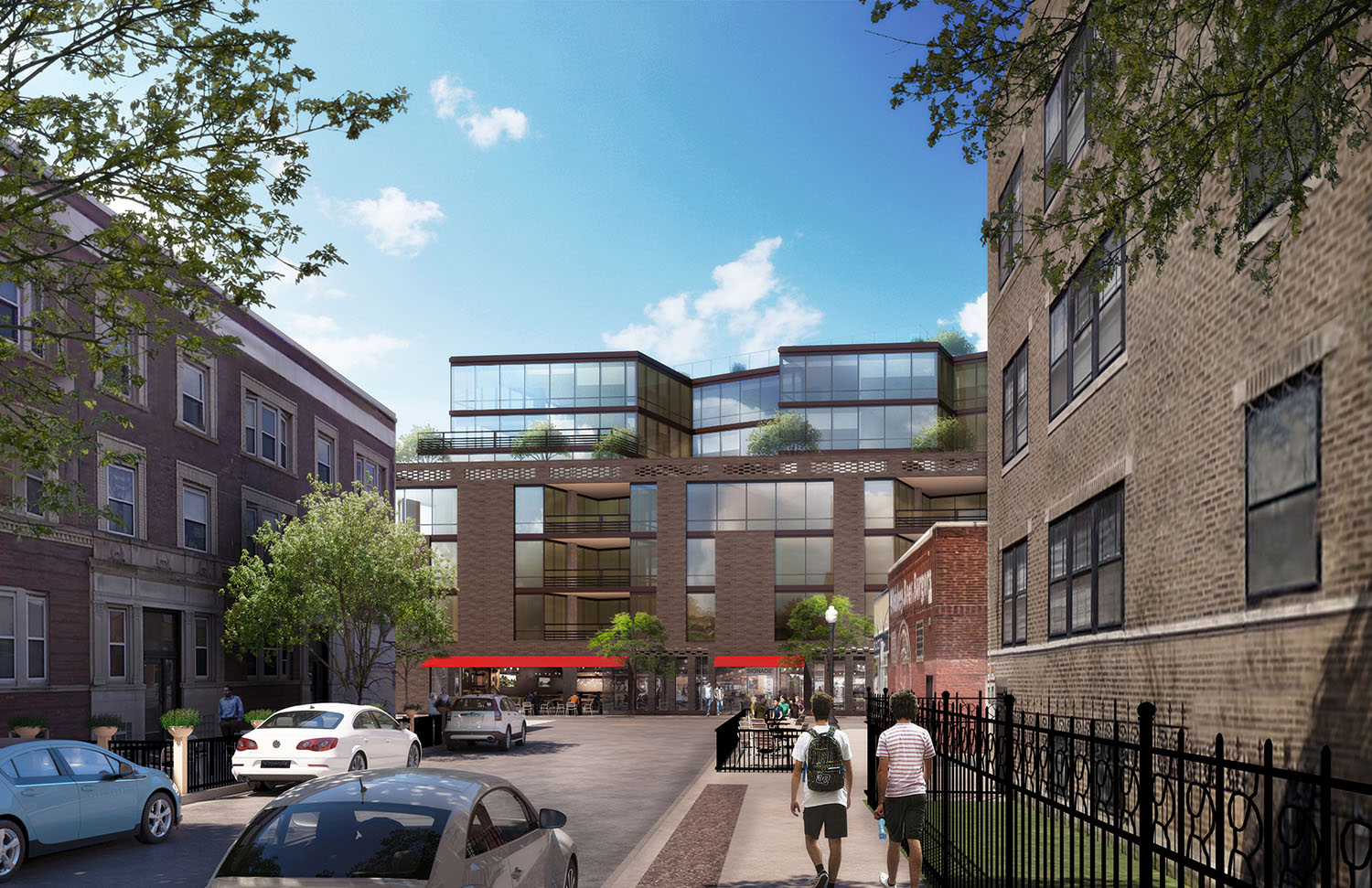
Our latest development to break ground, Optima Lakeview, is a mixed-use building that’s bringing in-demand and exciting retail space to the Lakeview neighborhood of Chicago. Combining residential and retail into one building (earning the name “mixed-use”) is a time-old way to reap benefits for both residents and businesses alike. So what exactly are those benefits? 

Understanding Mixed-Use Buildings

For starters, let’s define what a mixed-use building is. A mixed-use building (MXD) is a building with three or more significantly-sized, revenue-producing businesses, whether those businesses are offices, retail stores, restaurants or other hospitality locales. The purpose of MXDs is to maximize the efficiency and value of a limited space, especially in urban areas, where space is in high demand. 

In addition to the underway Optima Lakeview, many other Optima projects are also mixed-use buildings. Optima Signature, our luxury condo community in Chicago’s Streeterville neighborhood, features retail tenants such as Bedazzled Nail Salon, GoodVets Veterinarian Office, Egg Harbor Cafe, Guidepost Montessori School, Runaway Fitness and an interior connection to the Whole Foods nextdoor. 

Retail-space-filled plaza at Optima Signature
Retail-filled plaza at Optima Signature

Benefits of Retail Space 

Introducing mixed-use buildings into a neighborhood means retail space is closer than ever to residential. For residents, this translates into a more pedestrian-friendly experience: their needs are accessible and within walking distance. For the environment, increased walkability also means less pollution from transportation. And for business-owners, their storefronts gain increased exposure as people stroll by, leading to increased sales and success. Overall, mixed-use buildings lead to a stronger sense of community and better quality of life for both residents and businesses. 

At Optima, we make the most of our retail space by thoughtfully hand-selecting each business. Retail space in our residential buildings is yet another amenity that serves to enhance the lives not just of our own residents, but of the surrounding community, too.

The History of Transit-Oriented Developments

Our latest underway project, Optima Lakeview, is a transit-oriented development in the vibrant Lakeview neighborhood of Chicago. Unless you’re familiar with the world of urban planning, the term transit-oriented development may be unfamiliar to you. When it comes to city design, transit-oriented development is a type of urban development that maximizes the amount of residential, business and leisure space within walking distance of public transport, including buses, trains or subways. Today, we’re taking a closer look at the history of transit-oriented developments within the United States, and how they’ve impacted cities across the country.

A Brief History

Although the concept of transit-oriented development (or TOD) wasn’t officially named until the 1990s, the pieces existed long before. After WWII, the mass production of automobiles allowed more people to move to the suburbs, and also created highly congested cities and roads. City planners and officials called for mass-transit use in urban areas, and federal funding was allocated to cities in need of new systems. New hubs of public transit were followed by housing and businesses, which helped create concentrated communities that benefited from the walkability. As urban planning grew and expanded as a practice, the term transit-oriented development was coined, and many cities and industry professionals have since spent time, resources and research to pinpoint how TODs lead to vibrant communities. 

The Impact of Transit-Oriented Developments

As an initial response to the increase in vehicles going in and out of cities, TODs have successfully reduced congestion in cities, and reaped the environmental benefits. With more commuters and residents taking trains, TODs create a sustainable alternative to getting around. Less cars create a walkable, pedestrian-friendly environment, creating options for healthier lifestyles. And with more foot traffic, local businesses have a greater chance of thriving. 

Residential buildings play a huge part in creating transit-oriented communities. As a transit-oriented development, Optima Lakeview combines residential, commercial retail and leisure space, all within walking distance of an abundance of public transportation options. We’re thrilled to be part of the Lakeview community and to create a place where our residents can live, work and play. 

Giving Back: Lakeview Pantry

This holiday season, Optima is giving back to our community through a food drive for Lakeview Pantry. We’re excited to engage with a neighborhood institution near and dear to the Lakeview community and to play our role in their mission to end hunger in Chicago.

Lakeview Pantry celebrated their 50th anniversary this year, having been in operation since 1970. A small and dedicated group of neighbors began the initiative as The People’s Pantry of Lakeview, serving nearly 100 people in their first year. Since then, the pantry has grown to a team of 30 staff and 5,000 volunteers, providing nearly 4 million meals to 100,000 individuals in 2020. Lakeview Pantry has also adapted their services to meet the needs of the community, incorporating Online Market orders and community pop-ups alongside critical social services such as mental health counseling, job search support and crisis intervention.

From Thanksgiving to Christmas, our office is doing its part to collect food donations in-office which will be dropped off at the pantry. It’s important to us to contribute to local causes, especially around the holiday season, when everybody deserves a full belly and a full heart. Last year, we collected food for Deerfield Pantry alongside pet food for Meals on Wheels in Northeastern Illinois. 

As we continue progress on Optima Lakeview, we look forward to discovering more ways to give back to our new community in the future. 

The Optima Connect Program

We believe that building community extends beyond architecture and design. Community is a crucial component to how we design our properties — ensuring that residents and neighbors alike feel more connected through what we do. In support of this, we created the Optima Connect program, which encourages truly holistic community connections.

Optima Connect is a program that offers exclusive benefits and discounts at local businesses. Like our Optimized Service program, the goal of Optima Connect is to provide an added everyday convenience that brings ease, comfort and joy to our residents. The program also serves to bolster local businesses and ramp up support, creating a friendly community ecosystem. 

Through Optima Connect at Optima Sonoran Village and Optima Kierland Apartments, residents can enjoy exclusive and luxury benefits such as BOGO tickets at Ballet Arizona, discounted fitness classes and up to 20% off at nearby restaurants — just to name a few. To peruse the full list of Optima Connect benefits available to Optima Sonoran Village residents, visit here.

Supporting community growth and connection amongst our residents and neighbors is something we care deeply about at Optima.  As Jamie Springer, Regional Manager in Arizona, explains:

It’s really made us a stronger part of the community. It’s a dual partnership that gives discounts to our residents and helps promote local businesses. We seek Optima Connect partners for events — especially virtual events right now, like mixology and cooking classes — to introduce residents to nearby businesses. We want residents to feel connected to the community outside of our buildings and create a neighborhood feel with places they can walk to.

From the Optima Connect program, to the careful and thoughtful selection process that goes into choosing retail tenants at our properties, we know that our relationship to the spaces around us deepens our sense of belonging. 

The Evolution of Amenities

Location, location, location” has always been the sage advice in real estate, but experts think in the coming years, that may shift to “amenities, amenities, amenities.” In the industry arms race, amenities have skyrocketed to the forefront of renters ⁠— and buyers ⁠— minds in recent years. And with any trend, amenities is one that’s constantly evolving, growing and incorporating new ideas that ultimately lead to greater longevity. 

Navigating Recovery and a New Generation

After the housing market crash of 2007-2008, many people opted to rent rather than buy, whether it was out of preference or for financial security reasons. That change in preference, combined with the rise of millennials in the home buyer/renter market, placed new emphasis on the multifamily market. Millennials began to eschew the suburbs in favor of multifamily buildings in urban cores, and prioritized access to local amenities and public transportation. 

With the transition to multifamily properties, residents became more and more open to sacrificing a ‘traditional’ home in exchange for more shared amenity spaces. With amenity offerings spanning from the recreational (gyms, pools, sport courts) to the everyday-practical (libraries, coworking space) to health and wellness focused (spas, outdoor space), the trade-off is well worth-it to most. Amenities offer access to a lifestyle and a community focus that may be well beyond a given resident’s price range, creating increased opportunity within their own home while still remaining in budget.

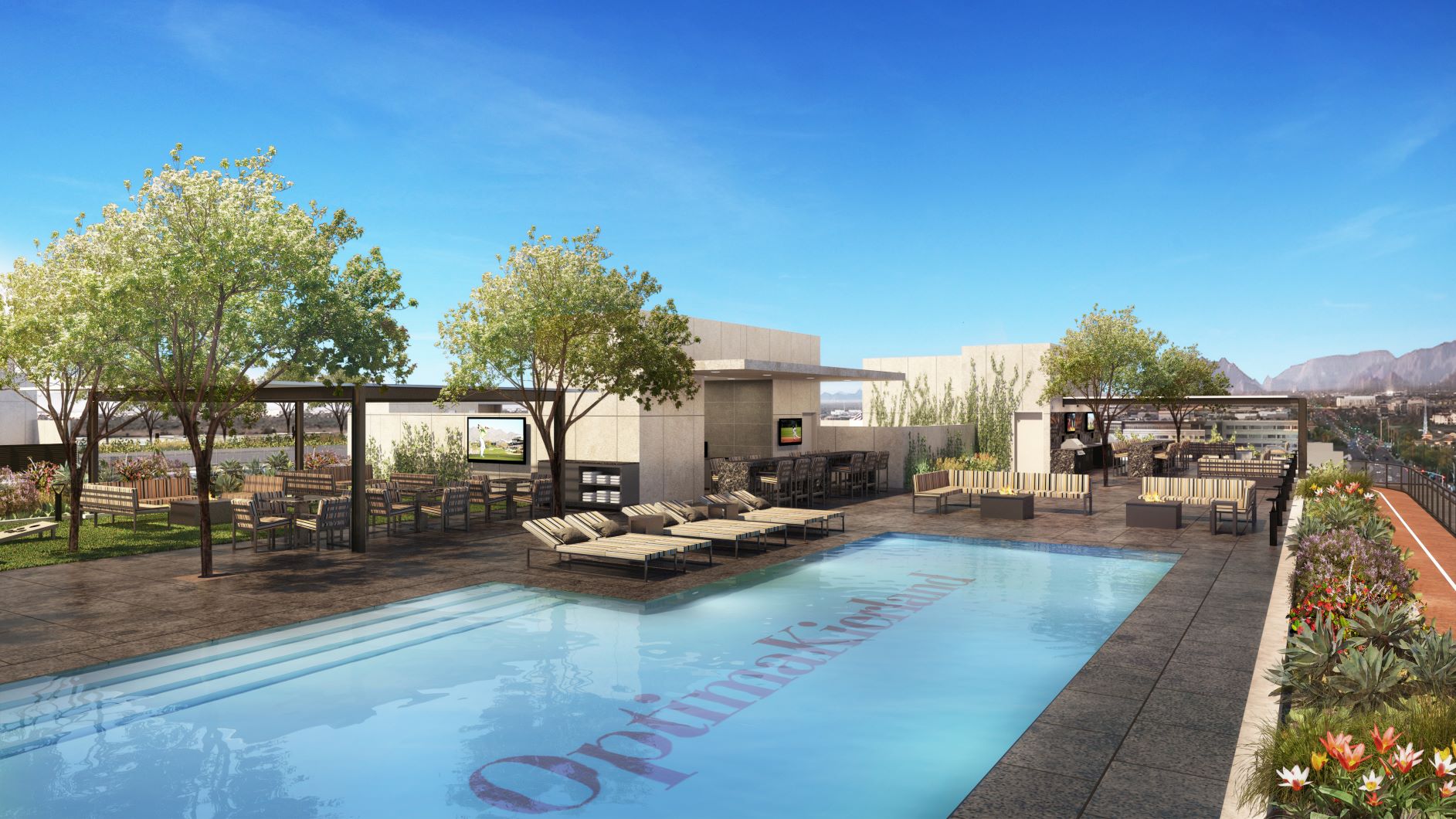
The Sky Deck at 7140 Optima Kierland

Amenities at Optima

In our pursuit of designing impactful spaces, amenities at Optima have similarly evolved to meet the needs and expectations of our residents. As Optima Signature was underway, we saw that an increasing number of people were working from home, so we incorporated spaces to stay focused and inspired. Our amenity spaces at Signature are numerous, and they include a conference room, library, powered and connected seating areas (indoor and outdoor as well as business suites. A productive at-home office space is well balanced with 1.5 acres of amenities, creating the perfect balance of work and play for Signature residents. 

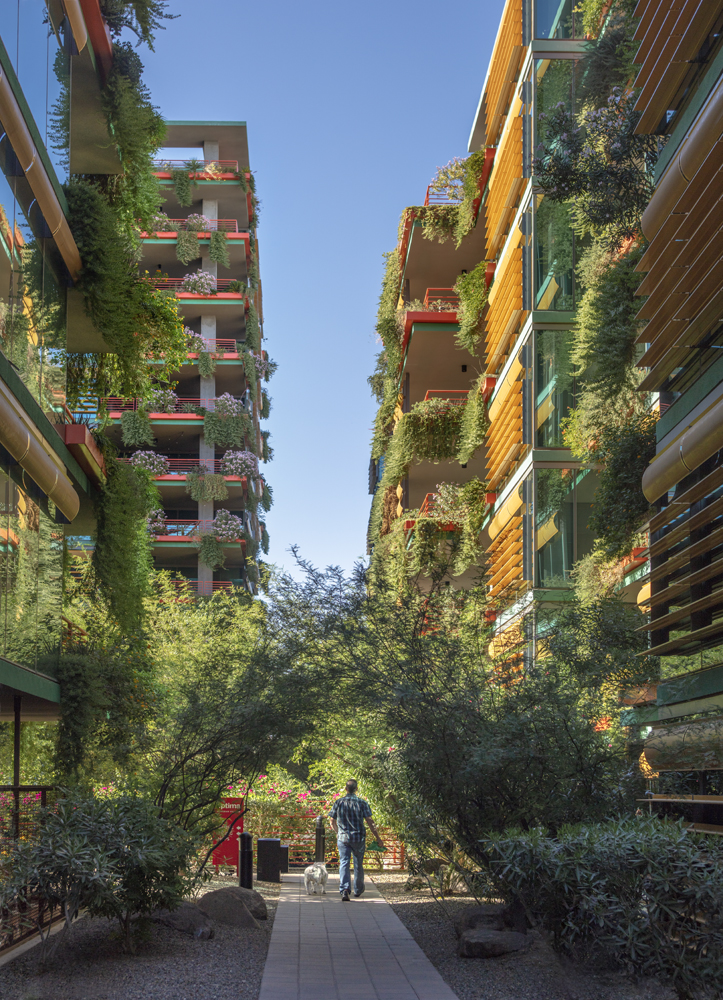
At our latest project, Optima Kierland Center, the amenities were designed to take advantage of the great outdoors and surrounding desert, both in common spaces and individual residences. Party rooms, fitness spaces, yoga and wellness spaces were designed to be indoor-outdoor, oftentimes using retracting glass walls to join the two. Though wellness amenities are common now, amenities at Kierland include spa-calibur steam rooms and saunas, a rooftop running track, pickleball and basketball courts, full-service fitness centers, and stunning panoramic mountain views to get residents excited to enjoy the outdoors. 

Ultimately, we love creating spaces that don’t just respond to trends, but truly meet the needs of the people who will interact with them daily. Amenities are just one of the ways we create a lasting impact and a fantastic living experience for our residents.

Inside the Phoenix Art Museum

We know and love Phoenix, home to Optima Biltmore Towers, as an urban oasis and cultural hub, where the arts are everywhere you look. At the center of Phoenix’s ever-evolving and expanding arts scene is the Phoenix Art Museum, an institution that’s been around for sixty years. 

History of the Museum

Although the museum has been around for 60 years, its community ties go even deeper. In 1915, just three years after Arizona achieved statehood, the Phoenix Women’s Club was formed. The club used their platform to establish an art exhibition committee, whose goal was to improve the quality of art offerings at the Arizona State Fair and to purchase one piece of art each year. Their vision, and collection, became the foundational basis for the museum’s collection today, now consisting of more than 20,000 art objects.

Sculptural exhibit at the Phoenix Art Museum
Credit: Tomwsulcer on Wikimedia Commons, made available under the Creative Commons CC0 1.0 Universal Public Domain Dedication.

The Museum Today

Today, the Phoenix Art Museum is considered the largest art museum in the southwestern United States, engaging 300,000 local and visiting art lovers alike each year. Their mission? “To ignite imaginations, create connections, and serve as a vibrant destination, a brave space, for all people who wish to experience the transformative power of art.” They don’t just operate as a museum to achieve this — they’re a vibrant community center and host to festivals, live performances, independent art films and educational programs, both inside and outside the museum walls.

For those planning their visit, expect to enjoy American, Asian, European, Latin American, Western American, modern and contemporary art and fashion design, as well as an interactive children’s space, photography exhibitions (held in partnership with the Center for Creative Photography) and a landscaped sculpture garden. 

There’s no shortage of things to discover, whether you’re a first-time or regular visitor. While the museum is temporarily closed due to COVID-19, you can explore their full list of collection onlines here. And when their doors do open once more, you can learn more about planning your visit here, or view a calendar of upcoming events here.

The Paimio Sanatorium: Architectural Solutions in a Pandemic

At its core, architecture is a response to its surrounding environment. Every space in which we live, work, or play is carefully designed with intention, usually reacting to the wants or needs of the people around them. Oftentimes during a crisis, such as a pandemic, architectural solutions can make the difference between life and death. Located in southwestern Finland, the Paimio Sanatorium epitomizes the crucial part architecture plays in the health and wellness of our communities. 

Terrace of Paimio Sanatorium. Credit: Tiina Rajala on Wikimedia Commons,
Creative Commons Attribution-Share Alike 4.0

Completed in 1932, the Sanatorium was designed to house recovering tuberculosis patients. The building was designed by Alvar Aalto, who won the commission after an architectural competition for the project in 1929. Following Modernist design, Aalto included large windows, roof terraces, and a sleek aesthetic. As per most Modernist structures, function was also a priority. At the time, the only known ‘cure’ for tuberculosis was rest, fresh air and sunshine. The Sanatorium offered just that, with balconies and outdoor spaces for patients to enjoy while recuperating. From easy-to-sanitize surfaces to color choices, Aalto designed the entire building around the needs of patients and staff. 

By the 1950s, antibiotics ushered in the end of the disease, and eventually the Paimio Sanatorium was converted into a general hospital. Today, it stands as a reminder of the power of design, and how it can nurture and inspire change in the world. 

For more information, you can read Cultured Magazine’s full feature on the Paimio Sanatorium here.

person name goes here

Maintenance Supervisor

Glencoe, IL


    Acceptable file types: *.pdf | *.txt | *.doc, max-size: 2Mb