Anne Lacaton: Redefining Generosity in Architecture

As our Women in Architecture series continues, we turn our attention to Anne Lacaton, an architect whose work stands as both a design philosophy and a social statement. Through her Paris-based practice Lacaton & Vassal, founded with Jean-Philippe Vassal in 1987, she has championed an approach that is at once radical and humane—reimagining how architecture can improve lives through restraint, adaptability, and an unwavering respect for what already exists.

Lacaton’s work is guided by a deceptively simple principle: never demolish, always add, transform, and reuse. Where others see outdated buildings, she sees potential. Her architecture resists spectacle and excess, instead offering generosity through space, light, and life. This ethos has reshaped social housing in Europe, challenged conventional notions of urban renewal, and offered a compelling model for sustainable design that prioritizes people over prestige.

Born in Saint-Pardoux, France, in 1955, Lacaton studied at the École Nationale Supérieure d’Architecture in Bordeaux and later in Dakar, Senegal—a formative experience that expanded her understanding of how architecture responds to both climate and culture. Together with Vassal, she began exploring a design language rooted in economy, flexibility, and care. Their earliest works—lightweight pavilions, experimental houses, and reimagined apartments—revealed an architectural intelligence that merged technical ingenuity with social conscience.

FRAC Nord-Pas de Calais Contemporary Art Museum. Photo is from the official announcement for Anne Lacaton and Jean-Philippe Vassal being named the 2021 Pritzker Architecture Prize Laureates. Photo copyright of Philippe Ruault, courtesy of the Pritzker Architecture Prize.

Among Lacaton & Vassal’s most celebrated projects is the Transformation of 530 Dwellings in Bordeaux (2017), a public housing retrofit that became a manifesto for architectural renewal. Instead of demolishing and rebuilding, the team expanded each unit with winter gardens and balconies, doubling living space while keeping residents in place. The result was not only more sustainable but profoundly more human—offering residents dignity, comfort, and beauty without displacement.That same philosophy runs through other transformative works: the Tour Boils-le-Prêtre in Paris, the Palais de Tokyo renovation, and the FRAC Nord-Pas de Calais contemporary art museum. Each project demonstrates how design can be both pragmatic and poetic—doing more with less, and doing it for the public good.

In 2021, Anne Lacaton and Jean-Philippe Vassal received the Pritzker Architecture Prize, the field’s highest honor. The jury cited their “commitment to a restorative architecture,” one that enriches lives rather than consumes resources. It was a moment that solidified Lacaton’s place among the most important architects of our time—not because she builds monuments, but because she redefines what value in architecture truly means.

For residents of Optima® communities, Lacaton’s work offers a resonant parallel. Her designs, like Optima’s own, embrace light, openness, and flexibility—qualities that elevate daily life while honoring context and sustainability. Both approaches reveal how thoughtful design can cultivate community, adapt over time, and bring nature meaningfully into the home.

At Optima®, we often speak of architecture as a living system, one that evolves with its inhabitants. Lacaton’s work embodies that same belief. Her buildings are never static; they invite transformation. They remind us that the most responsible act of design may be not to start over, but to see what already exists with new eyes. They also remind us that to create well is to care: for people, for resources, for the future. In her words, “Transformation is an opportunity to do better—beautifully.”

Walking Chicago: Discovering the City, One Block at a Time

Chicago is a walking city—not just along the lakefront or river, but through the layers of its architecture, neighborhoods, and hidden interiors. For residents of Optima Signature® and Optima Lakeview®, exploring on foot means stepping into the city’s living history. From grand architectural landmarks to quiet courtyards, walking tours offer a deeper connection to the place we call home.

Discovering Interiors: Inside Chicago Walking Tours
If you’ve ever found yourself gazing up at Chicago’s ornate facades and wondering what lies beyond the lobby doors, Inside Chicago Walking Tours was made for you. Founded and led by architectural historian Hillary Marzec, this local company invites participants to step inside the city’s most captivating interiors—those marble-clad stairwells, gilded ceilings, mosaic floors, and tucked-away corridors that most passersby never see. Each tour unfolds as a kind of urban story, told through space rather than slides, connecting the dots between architectural movements, materials, and the evolution of downtown life.


Charnley-Persky Home on Astor Street. Credit: Warren LeMay on Flickr Creative Commons. Licensed under CC BY-SA 2.0.

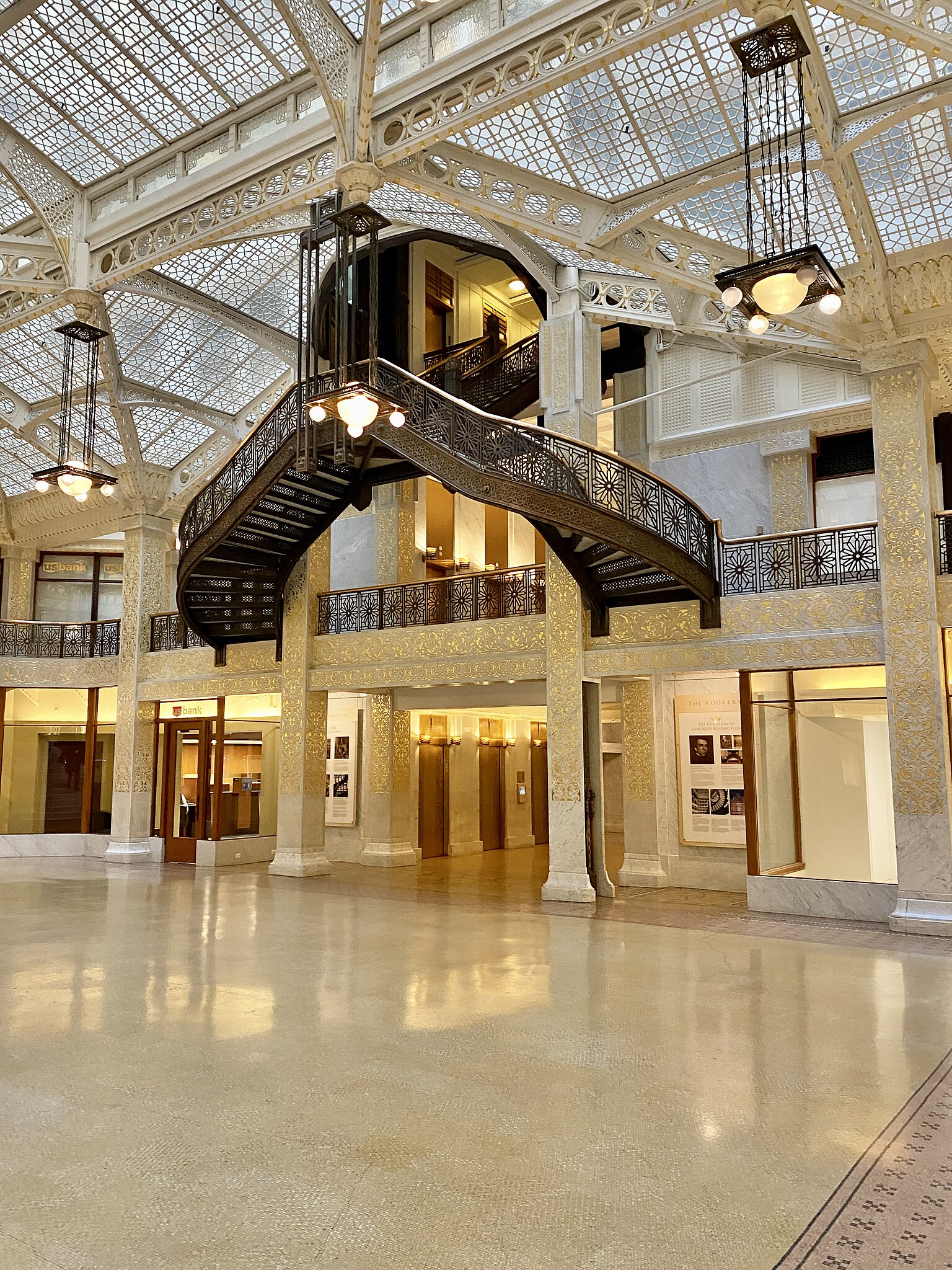
Over the course of about two hours and a mile or so of walking, you’ll move through an ever-changing sequence of design eras: art deco masterpieces, modernist minimalism, and the quietly revolutionary spaces that link them. The pace is conversational, with plenty of moments to pause and take in the craftsmanship that defines Chicago’s skyline from the inside out. What makes these tours especially memorable is their intimacy—the groups are small, the access is privileged, and the insight is deeply personal. It’s one thing to admire the exterior of the Rookery or the Marquette Building; it’s another to stand within their lobbies and see how sunlight, stone, and steel work together in ways that shaped modern architecture itself.

For residents of Optima® communities in Chicago, joining an Inside Chicago Walking Tour is as easy as stepping out your front door. Many routes begin within walking distance of River North and Streeterville, making it an ideal weekend ritual or an eye-opening outing to share with visiting friends. Beyond entertainment, it’s a reminder that architecture is not just something we look at—it’s something we live within, every day.

Neighborhood Narratives
Of course, not all walking tours are about interiors. Beyond the Loop, the city’s neighborhoods reveal stories of resilience, reinvention, and design in motion. Companies like L Stop Tours mix architecture, local history, and even short “L” rides to give visitors and locals alike a feel for the city’s shifting character—each neighborhood like a new chapter in a continuing story. Brick of Chicago, meanwhile, focuses on the humble beauty of materials themselves, tracing the evolution of Chicago one brick at a time, from bungalow rows to industrial lofts. And if you prefer to wander at your own pace, self-guided walking-tour apps like GPSmyCity allow you to turn any afternoon into a self-curated adventure.

No matter where you walk, you’ll find Chicago’s essence in its details: the rhythm of cornices along Milwaukee Avenue, the cool geometry of Mies van der Rohe’s steel and glass, the warmth of a hand-laid tile in a century-old entryway. Walking invites you to see, not just move—to notice the play of light on limestone or the reflection of a skyline in a shop window.

The Optima® Perspective
For those who live within Optima®’s Chicago communities, walking is already woven into daily life. The buildings themselves are expressions of movement and connection—terraces that open to the sky, glass that mirrors the city around it, courtyards that invite pause. Stepping out from Optima Signature® or Optima Lakeview®, the best of Chicago lies just beyond your threshold: the Riverwalk’s awe-inspiring turns, the grand boulevards of the city, and the intimate side streets where creativity thrives.

Whether you join a guided tour or set your own path, walking through Chicago offers something rare—a living lesson in how architecture shapes experience. Every step reveals another layer of design and human ingenuity, another moment where the city’s past meets its unfolding present, reminding us that connection between place and possibility is the very heart of home.


Scottsdale in Fall: A Guide to Sun-Soaked Days and Cool, Design-Forward Nights

When mornings turn crisp and evenings slide into patio-perfect, Scottsdale’s fall is all about effortless indoor–outdoor living. Use this mix-and-match guide as your seasonal playbook—prep in your light-filled kitchen, step onto a shaded terrace, and head out from Optima Kierland Apartments®, Optima Sonoran Village®, or Optima McDowell Mountain® for days that feel both energizing and easy. Pick one outdoor anchor, one cultural moment, and one patio plan; everything else flexes around the weather and your energy.

Outdoor & Nature

  • Sunrise-to-sunset trails (Gateway Loop, Tom’s Thumb, Brown’s Ranch): Start with a golden-hour climb, break for a long lunch, then wander gentle loops as the light softens; choose distances to match your mood.
  • After-monsoon magic: Watch brittlebush, desert marigold, and late blooms pop while creosote releases that rain-washed scent—proof the Sonoran has its own version of “fall color.”
  • Top sunrise & golden-hour overlooks: Seek ridgelines and west-facing saddles for wide frames and long shadows; pack a compact tripod and let the desert do the styling.
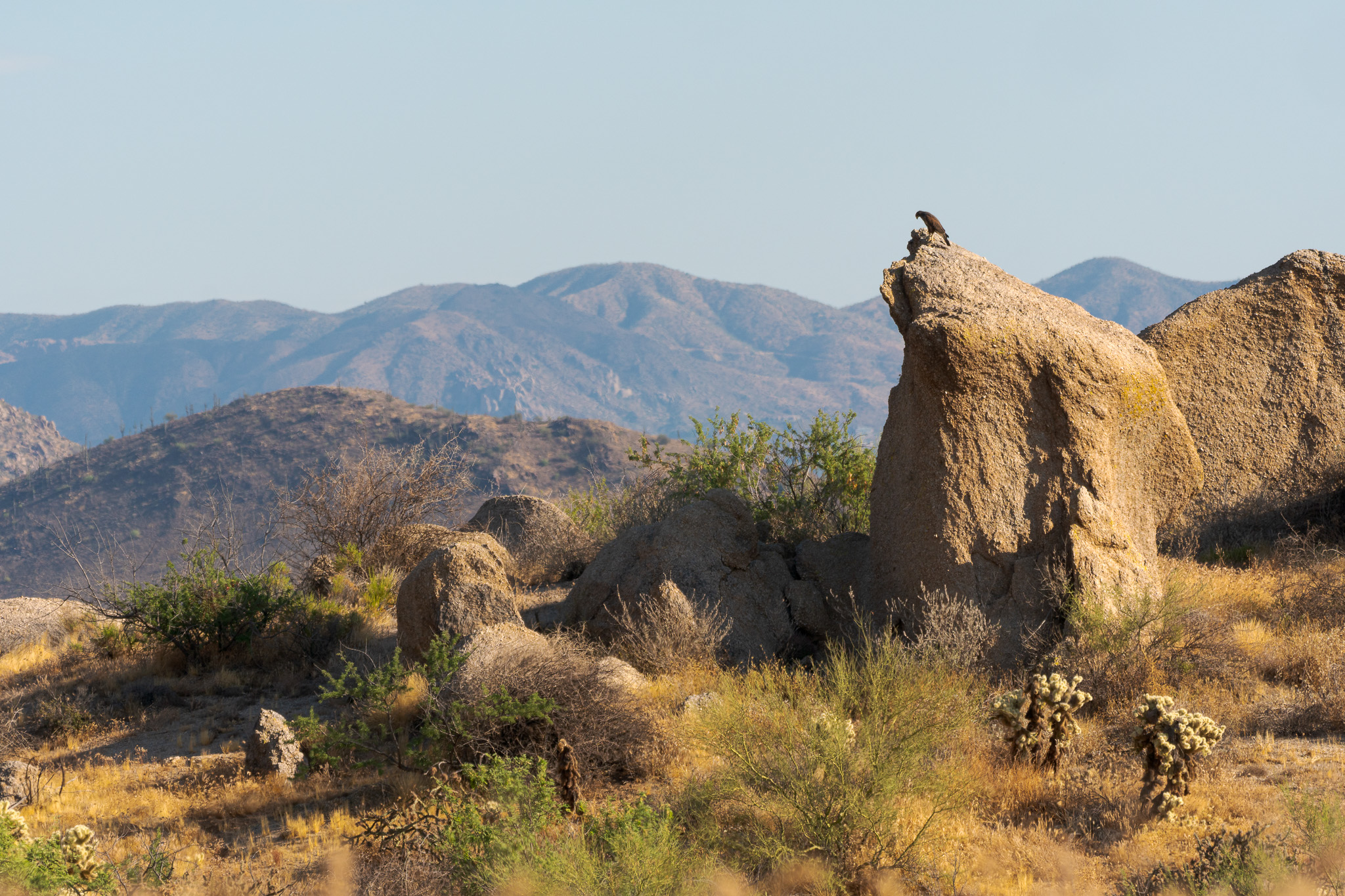
  • Fall birding (Preserve + Salt River): Cooler temps bring flycatchers, thrashers, and raptors; move slow, pause often, and let sound lead your eyes.
  • Lower Salt water days: Kayak or tube mellow stretches; keep 50+ feet from wild horses, never feed, and yield shoreline space so they can pass.
  • Stargazing close to town: Clearer, cooler nights mean crisp constellations—carry a red-light flashlight, a layers-friendly jacket, and a thermos for the full effect.
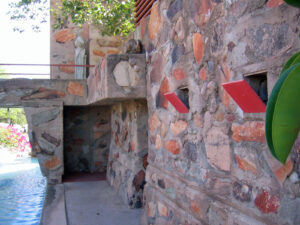
Closeup view of Taliesin West. Credit: Daniel Langer on Flickr Creative Commons. Licensed under CC BY-NC-ND 2.0.

Arts, Culture & Design

  • Scottsdale ArtWalk, fall edition: Stroll gallery clusters, then slip to a nearby bite; plan a loop that finishes at the Waterfront for reflections after dark.
  • Architecture in autumn light: Low sun sharpens planes and casts generous shadows; bring a phone lens kit and hunt for textures—block, rammed earth, corten, glass.
  • Taliesin West at dusk: Arrive early, linger late; look for how warm interior light meets the desert’s blue hour—Wright’s drama is all timing.
  • Public art, cooler temps: Make a walkable circuit through Old Town and the Waterfront; let sculptures be your wayfinding beacons.
  • Season preview (performing arts & museums): Pair a matinee or exhibit with a sunset stroll and a patio dinner—culture as a three-stop mini-itinerary.

Food, Drink & Patios

  • Patio season playbook: Prioritize spaces with shade by day and gentle heat at night; share plates, linger over mocktails, and let conversation stretch.
  • A Sonoran take on fall flavors: Mesquite, prickly pear, chiltepin, and pumpkin bring desert character to simple meals—great for balcony gatherings.
  • Coffee carts & sunrise sips: Grab a pre-trail cappuccino or cold brew and watch the sky change from coral to cobalt.
  • Farmers-market fall haul: Stock chiltepin, citrus, greens, and local breads; build balcony dinners around one bold ingredient and a good olive oil.

Wellness & Lifestyle

  • Outdoor fitness circuit: Combine trail yoga at sunrise, midday pickleball, and easy evening laps—add sauna/steam recovery back at home.
  • Reset rituals: Breathwork and short meditations land differently under open sky; alternate warm spa soaks with cool night air for thermal contrast.
  • Balcony → great room styling: Layer throws, lanterns, and low-profile planters; warm light make evenings feel intimate.
  • Desert-smart fall planting: Lean into aloe, angelita daisy, and blue chalk sticks in fast-draining containers—color now, durability through winter.

Community & Events

  • Signature Waterfront festivals: Plan arrivals around golden hour so music, lights, and canal reflections align; rideshare in, stroll out.
  • Film, fashion, and fall openings: Stack an exhibit, a screening, and a late patio bite; book tickets first, everything else flexes.
  • Dog-friendly fall: Cool sidewalks mean more patios and longer loops; carry water, watch paw pads, and enjoy the meet-and-sniff scene.

Quick Getaways & Day Trips

  • Aspens & red rock (Flagstaff, Oak Creek, Sedona): Leave early, chase gold leaves, and be back for a Scottsdale sunset—one tank, big payoff.
  • Hot-air balloon mornings: Layers, hat, and camera strap; the desert’s geometry makes itself known from 1,000 feet up.
  • Verde Valley wine in sweater-weather: Tasting rooms, short walks, and scenic overlooks—keep snacks and a light jacket in the car.

Daily Cues

  • Why the desert teaches minimalism: Light, shadow, and honest materials do the heavy lifting; edit down and let negative space breathe.
  • The science of “why fall feels better”: Cooler nights, stable circadian cues, and longer outdoor time lift mood—lean into morning light exposures.
  • Desert safety refresher: Cooler ≠ casual—carry water, sun protection, and a layer; tell someone your route and respect early sunsets.

As the season settles in, think of this guide less as an itinerary and more as a mood: slower mornings, golden edges, and easy nights that spill from balcony to patio to starlit sky. From Optima Kierland®, Optima Sonoran Village®, and Optima McDowell Mountain®, everything you need is already within reach—clean lines, vivid light, and the kind of everyday rituals that turn fall into a feeling. Choose one thing, savor it, and let the desert do the rest.


Architecture & Design in Sweater Weather: a Fall Field Guide

When the lake breeze turns crisp and shadows lengthen, autumn on Chicago’s North Shore becomes a master class in light, material, and proportion—best of all, it’s right outside your door — especially if you’re an Optima Verdana® resident. Use this Wilmette-centric guide to plan close-to-home mini adventures that feed your design eye and make the most of golden hour.

Lakefront icons up close
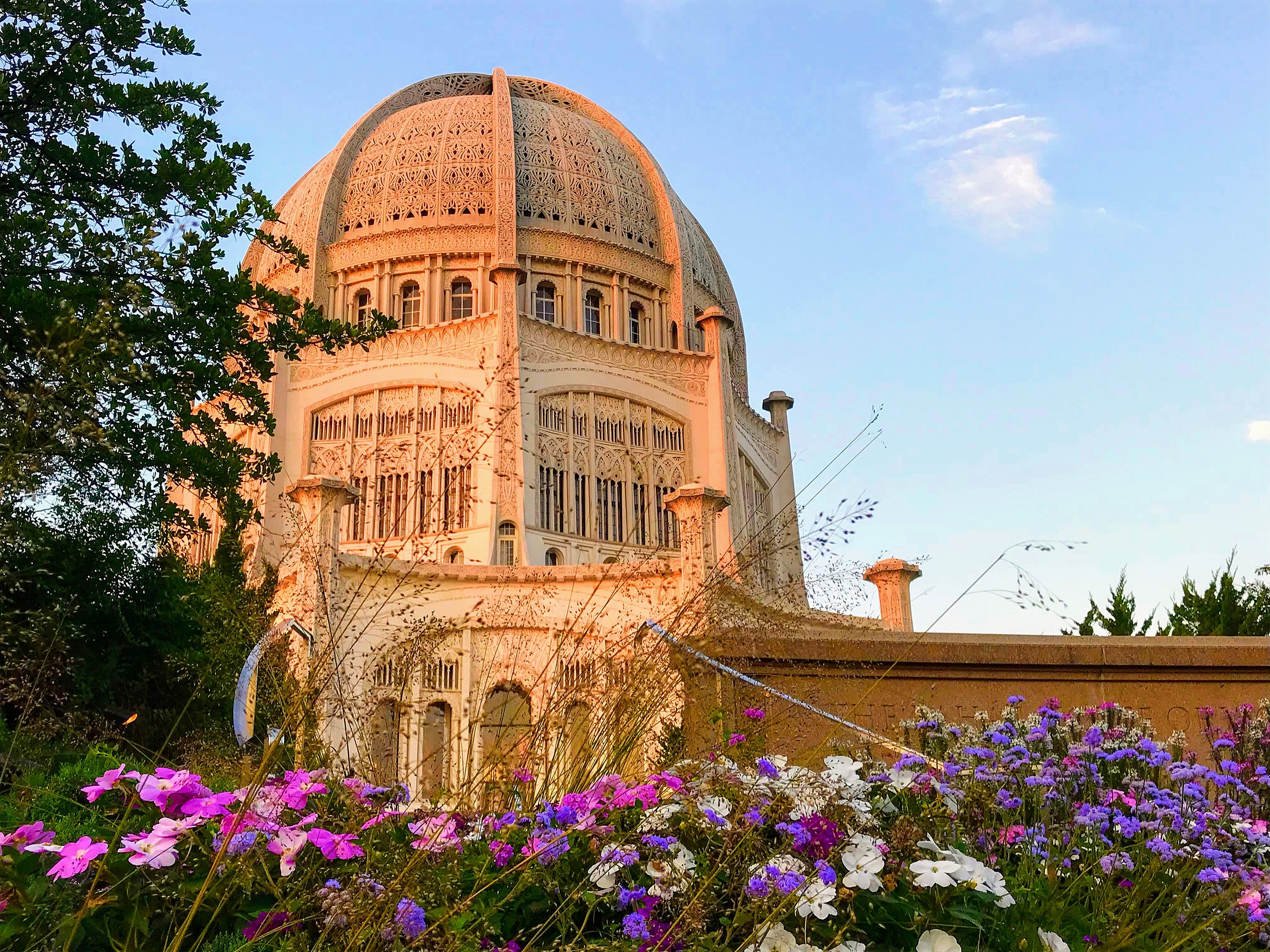
Start with a timeless pairing: the Bahá’í House of Worship and nearby Gillson Park. The Temple’s nine-sided plan, lace-like ornament, and reflecting pools reward slow looking. Arrive just after sunrise or a bit before sunset; low angle light pulls crisp relief from the façade and softens the surrounding gardens. Frame wide to celebrate symmetry, then go tight on repeating motifs for pattern studies.

Walk (or bike) to Gillson for a material contrast—granular sand, limestone revetments, weathered wood, dune grass. Photograph edges: water meeting stone, shadow crossing boardwalk, footprints fading in a breeze. Pro tip: switch your phone to “pro” mode (or lock exposure) and under-expose by a third stop to keep sky detail; an inexpensive clip-on polarizer cuts glare and deepens lake tone.

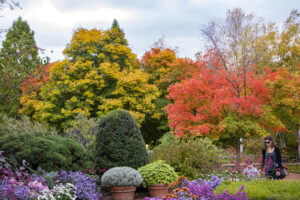
A cloudy autumn day at the Chicago Botanic Garden. Credit: Bob Simpson on Flickr Creative Commons. Licensed under CC BY-NC-SA 2.0.

North Shore Modernism in fall light: a self-guided look from Prairie to Mid-Century
The North Shore is a living survey of clean lines and honest materials. Plot a quiet, sidewalk-only loop through Wilmette and neighboring Evanston to study signatures that read beautifully in autumn:

  • Prairie lineage: broad eaves, low rooflines, banded windows, and strong horizontal brick courses that echo the flat Midwest horizon.
  • Streamlined Mid-Century: flat or low-pitch roofs, clerestory and corner windows, vertical cedar, and disciplined detailing—no ornament, just proportion.
  • Material truth: brick, stone, wood, and glass doing what they do best; fall light reveals the depth of joints, mortar, and grain.

Etiquette matters: admire from public sidewalks, skip close-ups of private interiors, and let the architecture—not the address—be the subject. Pack a small sketchbook; noting eave thickness or window rhythm sharpens your eye for your own home styling back at Optima Verdana®.

Chicago Botanic Garden: balcony design lessons from world-class landscapes
A short drive or bike ride delivers big ideas you can scale to a terrace. As you wander, translate garden moves into balcony rules of thumb:

  • Repetition as rhythm: repeat one plant or pot three times for calm; it reads like a chorus line.
  • Edit for structure: one evergreen “anchor” (boxwood cone, dwarf pine) + one textural foil (fine grass) + one seasonal accent = a composition that holds through winter.
  • Texture over color: in cooler months, contrast leaf shape, blade width, and seedhead silhouette; color is the bonus, not the driver.
  • Frame a view: position a taller planter to edge a sightline; negative space is part of the design.

Quick recipes for a North Shore fall container:

  1. Dwarf conifer + blue fescue + trailing ivy (evergreen backbone with movement)
  2. Boxwood ball + heuchera (bronze) + ornamental kale (winter-hardy color)
  3. Switchgrass (compact) + winter pansies + birch branches (height, bloom, sculptural line)

Use fast-draining soil, elevate pots on risers, and topdress with pea gravel or black lava for a clean, modern finish.

Public art, small towns: a walkable Wilmette + Evanston sculpture stroll
Make an afternoon of human-scale civic design. Begin near downtown Wilmette and work your way south by Metra or bike to Evanston. Seek out village-green pieces, library-adjacent works, and storefront installations—fall’s angled light throws generous shadows and makes sculpture pop against brick and limestone. In Evanston, loop through Fountain Square, then toward the Northwestern University campus greens and Lake Michigan for larger outdoor works that borrow the lake and sky as backdrops.

Treat public art as wayfinding: each piece becomes a node on your map, connecting pocket parks, storefronts, and cafés. Pause to note plinth vs. at-grade installations, how materials weather, and how pieces invite (or deny) touch and seating. Grab a warm drink and end at the shoreline for a last look at form against the horizon.

Pack light, look long

  • Layer up, bring a small cloth for lens/glasses, and charge your phone.
  • For photos: think edge, pattern, proportion; shoot wide, then isolate detail.
  • Back home, translate what you saw: edit surfaces, group objects in threes, and let light do more of the work.

In sweater weather, Wilmette becomes your studio: icons, Modernist lines, living landscapes, and civic sculpture—each a short, inspiring journey from your front door.


Four Peaks Oktoberfest at Tempe Beach Park: A Celebration of Season and Spirit

As October arrives in Sonoran Desert, a subtle shift happens. The mornings cool, the sunsets deepen, and the air hums with anticipation. It’s the moment when Scottsdale and its neighbors step outside again—ready for art festivals, long walks, and evenings spent under string lights. For residents of Optima Kierland Apartments®, Optima Sonoran Village®, and Optima McDowell Mountain®, this season marks a great time to explore one of Arizona’s most beloved fall traditions: the Four Peaks Oktoberfest at Tempe Town Lake, a weekend of music, culture, and community that captures the essence of desert autumn.

Now in its 52nd year, this iconic celebration transforms Tempe Beach Park into a lakeside Bavarian village, complete with steins, pretzels, and polka. Presented by Four Peaks Brewing Co. and benefiting Tempe Sister Cities, the festival unfolds October 10–12, 2025, offering three days of festive energy that manages to feel both global and distinctly local.

View of the Four Peaks Oktoberfest grounds. Credit: Four Peaks Oktoberfest Instagram

What makes this event special isn’t just the beer—though the lineup of Four Peaks brews and imported German styles is reason enough to raise a glass. It’s the way the festival brings people together. You’ll find families with strollers wandering between carnival rides, college students singing along to local bands, and longtime Arizonans who have made Oktoberfest a yearly ritual. It’s a shared celebration of community, where every sound—from an accordion riff to a cheer at the stein-holding contest—seems to echo off the lake itself.

Music fills every corner of the park, with two stages running throughout the weekend. Traditional oompah bands share the spotlight with Arizona favorites like The Black Moods and Roger Clyne & The Peacemakers, whose desert rock energy feels perfectly matched to the open-air setting. Between sets, laughter rolls through the crowd from local stand-up comedians, and the steady rhythm of the Gemütlichkeit spirit keeps everyone swaying.

For those who crave a little friendly competition, Oktoberfest delivers. The stein-holding and bratwurst-eating contests draw enthusiastic participants, while the ever-popular wiener dog races bring out the most joyful cheers of the weekend. There’s even the annual Runnin’ for the Brats 5K and 10K, which turns the lakeside trails into a sea of runners in lederhosen—an only-in-Tempe tradition that rewards every finisher with free festival entry.

Food is another highlight. Local vendors and chefs serve up classic German fare—sausages, schnitzels, pretzels the size of plates—alongside Arizona-inspired twists and festival favorites. Pair a Four Peaks Kilt Lifter or a seasonal craft brew with a seat near the water, and it’s easy to forget you’re in the desert at all.

What distinguishes the Four Peaks Oktoberfest from its European counterparts is its sense of place. The view of Tempe Town Lake shimmering beyond the tents, the palm-lined paths filled with laughter, the effortless mingling of cultures—it all adds up to something uniquely Southwestern. Beneath the Bavarian music and beer steins lies a deeper current: the festival’s dedication to supporting youth exchange programs through Tempe Sister Cities, strengthening connections between communities around the world.

For residents of Optima® communities, Oktoberfest is a celebration that’s about connection, adaptability, and joy. It’s an invitation to gather, to celebrate, and to savor the best of fall in the desert—where architecture, culture, and landscape all meet in perfect harmony. Visit the Oktoberfest website and make your plans for a great fall weekend!

Chicago Fashion Week 2025: A Citywide Style Story Begins Oct. 9

For residents of Optima Lakeview® and Optima Signature®, Chicago Fashion Week is a front-row invitation to experience the city’s creative pulse up close. Kicking off Thursday, October 9, 2025, and running through October 19, the celebration unfolds across neighborhoods you already frequent, from the lakefront to the South Side, turning everyday city routes into runways and retail into discovery.

What to expect
This year’s edition expands with more than 50 happenings, ranging from intimate atelier showcases to marquee runway productions and design-forward conversations. Expect a mix of emerging talent and established names, markets that foreground sustainable and small-batch makers, and salons that unpack the business of fashion. It’s a festival designed to be navigated—plot a few anchor shows, then weave in smaller activations to meet designers, touch product, and discover your next favorite label.

Opening night and early-week energy
The festivities start with an official launch gathering—an energetic opener that brings designers, models, stylists, and fashion lovers together before the catwalks take over. The first weekend typically moves fast: think daytime markets and atelier visits, followed by evening runways spanning streetwear, couture, and experimental design. For Optima residents, that means easy multi-stop itineraries: start with a neighborhood pop-up, hop the train for a gallery-adjacent show, then close the night with a downtown after-event.

Credit: Raden Prasetya on Unsplash

Citywide Highlights
One of Chicago Fashion Week’s strengths is its zip-code fluency. South Side markets spotlight independent makers; River North and the Loop host museum- and gallery-linked events; West Side studios open their doors for behind-the-scenes peeks. Midweek programming often elevates sustainability—upcycled collections, circular-fashion talks, and collaborative showcases—while closing weekend tends to bring cross-cultural runway moments and grand finales. The city’s creative economy is the co-star here, and each neighborhood adds its own texture.

For the Fashion Community—and the Curious
The calendar is designed with access in mind. Listings note whether events are ticketed, RSVP-only, or open to the public, making it simple to map a plan that fits your budget and interests. Students and early-career creatives will find portfolio-minded talks; boutique owners can scout new lines; and style-curious Chicagoans can sample the energy without committing to a full slate of shows. Pro tip: mix formats—pair a runway with a market and a talk—to experience the breadth of the week in just a few moves.

How to Join In
Start by browsing the official schedule and snagging tickets to a couple of must-see events. Use filters—Runway, Market, Education, In-Store, Social—to balance spectacle with substance. If you’re industry-facing, block time for salon-style conversations on branding, production, and supply chains. New to fashion week? Choose one neighborhood each day, plan a pre-show bite, and build in travel time between venues.

Tailor-made for Optima® Living
Living at Optima Lakeview® or Optima Signature® makes the logistics effortless. From the Lakeview neighborhood, Red/Purple/Brown Line access puts runways and pop-ups a quick train ride away; from Streeterville, you’re minutes from River North galleries, the Mag Mile’s retail orbit, and downtown venues. Before the show, meet neighbors in a lounge or on a terrace to compare looks; after, wind down at home-level wellness amenities. It’s the rare city event that flows seamlessly with the Optima® lifestyle—walkable, connected, design-forward, and social at its core.

Mark your calendar for October 9–19, curate your itinerary, and let Chicago Fashion Week 2025 reframe what the city’s style—and your own—can be. Visit the website for all the details!


A Conversation with TEDxWilmette Co-organizer Ami Campbell

We sat down with Ami Campbell, Optima Verdana® resident and TEDxWilmette Co-organizer, to learn more about the upcoming edition of the series, taking place on Saturday, October 4, 2025 from 1-3PM at the Wilmette Community Recreation Center.

For readers new to the event, how do you describe TEDxWilmette?
We’re a community of fearless women who deliberately elevate ideas for the greater good—of our communities and the world. Community is the starting point: volunteers, sponsors, and audiences form “micro-communities” that help good ideas scale beyond any one person.

TEDxWilmette began as TEDxWilmetteWomen. Why the shift—and what stayed the same?
Using “Women” in the name ties a local event to the national TEDWomen weekend and theme. After our first year, we wanted more flexibility—to choose our own theme and timing—so we moved to a general TEDx license. What hasn’t changed is our center of gravity: we remain a women-led, women-focused platform. Men absolutely attend and support us (including on our executive board), but our purpose is to make sure women’s ideas have a powerful stage.

Volunteer staff, 2024 TEDxWilmette. Credit: TEDxWilmette.

How does TEDx licensing work at the local level?
TED licenses one TEDx per geography and renews annually based on quality and audience feedback. Licenses are free, events are volunteer-run and nonprofit, speakers aren’t paid, and sponsors don’t speak from the stage. The guardrails exist for a reason: to keep the platform about ideas—not promotion.

This year’s theme is “#ActuallyYouCan.” Why this message now?
Many people feel things in the world aren’t going so great—and that can be paralyzing. “#ActuallyYouCan” is a choice to be part of the solution. It speaks to individual agency and collective action: you can do big things and small things that matter, and together we can do even more.

Walk us through your curation process. What makes a talk “TED-ready” for your stage?
We run a dual pipeline. We proactively invite promising voices from our growing network of past speakers and partners, and we keep a public application open. Then we look for three things:

  1. A strong, transferable idea (not just a personal story) with a clear call to action.
  2. Communication chops—applicants submit a short video and interview with our team.
  3. Coachability. We invest months in speaker development, and the talk almost always evolves dramatically. We also shape a balanced program—age, background, sector—because the theme must be broad enough to hold many perspectives.

What’s the through-line for the 2025 lineup?
Curiosity and empowerment. Get curious—then act on what you learn. You’ll hear:

Annie Aggens on adventure as a mindset: how to apply an explorer’s frame to everyday life.

Kayce Ataiyero on the role of local journalism in re-knitting community ties—and why it needs our support.

Gizelle Clemens on “wells” of connection that sustain us, drawing on her own journey and the ethos of community care.

Amber Johnson, Ph.D.
on asking better questions to build real relationships in an age of loneliness.

Tara May
on neurodiversity at work and the curiosity it takes to collaborate across different brains.

Stacey Woehrle, CPA, CDFA
on getting curious about money—especially for women—and why understanding finances changes everything.

You mentioned “convergence” in our conversation. Where do you see it beyond the main event?
In our salon series. We pair speakers for interactive conversations so audiences can dive deeper and watch ideas intersect in real time. It’s one more way we build community around the talks.

What does success look like for TEDxWilmette?
People engaging with each other—and with the ideas—after the stage lights fade. We’ve watched collaborations spark: a local café that sponsors us now hosts our salons; our local news outlet began distributing its new print edition there. None of that is “ours,” but we helped create the conditions where it could happen. That’s the win.

What have other TEDx teams around the country learned from your approach—and what do you prioritize internally?
Two things. First, co-leadership and care for volunteers. Three co-organizers share the load, and we invest in team connection because the work (and joy) is collective. Second, speaker coaching. We bring in performance experts and stay with speakers for months so the final talk is both deeply authentic and professionally honed. We’ve had speakers tell us the experience was “night and day” compared with other events.

How can members of the Wilmette community and beyond get involved this year?
Come to the event, then come back for salons. Follow @tedxwilmette and keep an eye on the website for details. We’re also always looking for thoughtful volunteers to help produce the experience—from stage and speaker support to audience experience and community outreach—so head to our website and sign up here.

And if you’re values-aligned, consider sponsoring. Ticket revenue covers less than half of production costs—sponsors truly make the show possible. We’re especially grateful to Optima Verdana®, our platinum sponsor this year.

Event snapshot

• Date & time: Saturday, October 4, 2025, 1–3 p.m.
• Venue: Wilmette Community Recreation Center
• Theme: #ActuallyYouCan
• Format: Six live talks filmed before a 300-person audience (6th annual)
• Learn more: tedxwilmette.com, @tedxwilmette

Alfred Caldwell Lily Pool: A Prairie-Style Sanctuary for City Living

For residents of Optima® communities in Chicago, the city offers countless opportunities to immerse in architecture, design, and cultural life. But sometimes the most rewarding experiences come not from towering skylines or bustling streets, but from stepping into spaces that embrace tranquility and the natural world. The Alfred Caldwell Lily Pool in Lincoln Park is one such treasure—a Prairie-style oasis that feels worlds away from the city, yet lies just a short trip from Optima Lakeview® and Optima Signature®.

A Prairie Vision in the Heart of Chicago
Designed in the 1930s by Alfred Caldwell, a landscape architect deeply influenced by Frank Lloyd Wright and the Prairie School, the Lily Pool is a masterwork of naturalistic design. Caldwell’s goal was to capture the spirit of the Midwestern prairie, weaving together native plants, winding stone paths, a serene lagoon, and intimate pavilions into a seamless whole.

For Optima® residents who value architectural beauty, the Lily Pool resonates on multiple levels—it is at once a work of design genius, a feat of ecological restoration, and a peaceful retreat that aligns with the same principles of harmony between people and place that inspire our own communities.

October view of the Alfred Caldwell Lily Pool. Credit: alanscottwalker on Wikimedia Commons. Licensed under CC BY-SA 2.0.

From Decline to Restoration
Like many historic landscapes, the Lily Pool endured decades of neglect before being meticulously restored in 2002 by the Chicago Park District and the Lincoln Park Conservancy. Today, it is listed as a National Historic Landmark and thrives as both an ecological haven and a cultural gem. Its revival mirrors a philosophy we share at Optima®: that thoughtful design and stewardship can breathe new life into spaces, transforming them into enduring sources of inspiration and connection.

An Immersive Experience for Every Season
Visiting the Lily Pool is an experience that changes with the seasons—an idea Optima® residents will appreciate, as our own buildings are designed to celebrate natural light and seasonal rhythms.

  • In spring, wildflowers bloom along the winding paths.
  • Summer brings a spectacle of lilies floating across the lagoon.
  • Autumn sets the surrounding trees ablaze with color.
  • Even in winter, the stark beauty of stone and still water offers a contemplative retreat.

For visitors, the Lily Pool is a perfect destination for a morning meditation, an afternoon sketching session, or a weekend walk with family and friends. It is also a birdwatcher’s paradise, with more than 200 species spotted throughout the year—a reminder of the rich biodiversity that exists right in the heart of the city.

Community, Culture, and Reflection
Beyond its natural beauty, the Lily Pool provides opportunities to connect with Chicago’s broader cultural community. The Lincoln Park Conservancy offers guided tours that enrich an afternoon visit with history and insight, while volunteer programs invite city-dwellers to play an active role in its stewardship.

For Optima® residents, engaging with places like the Lily Pool extends the experience of living in our communities—spaces where design fosters connection, health, and well-being. Just as our buildings integrate lush green courtyards, rooftop gardens, and tranquil common areas, the Lily Pool provides another venue for reflection, inspiration, and community.

An Enduring Legacy
Alfred Caldwell once envisioned his Lily Pool as a “spiritual place,” and nearly a century later, it still fulfills that purpose. And with the Lily Pool’s reopening, it offers a beautiful escape and a powerful reminder that great design—whether in a home, a building, or a public garden—has the ability to transform the way we live.

Click here for more information about hours, access, and events.

Skokie Lagoons in Sweater Weather: Easy Paddles, Reflections, and Bird-Watching Basics

When the air turns crisp and the light gets that late-afternoon gold, Skokie Lagoons becomes an easy, close-to-home escape for Optima Verdana® residents. Tucked just north of Chicago, the lagoons stretch across 894 acres between Winnetka, Northfield, and Glencoe, with the Forest Preserves of Cook County maintaining the network. This series of seven interlinked lagoons, carved out of the Skokie River floodplain in the 1930s by the Civilian Conservation Corps, was designed both as flood control and as a public recreation haven. Today, it remains one of the most beloved green spaces on the North Shore—a carefully engineered landscape that feels entirely natural.

Extending across 894 acres, Skokie Lagoons are a prime destination for water exploration, featuring public boat access, canoe and kayak rentals, fishing, biking and hiking trails and picnic areas. It’s the kind of fall outing that feels restorative without a lot of logistics: a calm paddle, mirror-smooth water for photos, and frequent bird cameos—all within a short drive or bike ride.

Why Fall Works Here
Autumn brings cooler temps, gentler winds, and glassier water, which makes the lagoons perfect for relaxed, beginner-friendly paddling. The site itself is a tranquil network of pools, channels, and islands—so you can choose a short meander or string together a longer loop without ever feeling exposed to big water.

Getting on the Water
Launch at the Tower Road Boat Launch, where the Forest Preserves’ concession typically offers seasonal canoe and kayak rentals (life vests included). If you don’t own a boat—or you’re hosting friends—rentals keep things spontaneous; just check current hours before you go.

Sunset paddle on the Skokie Lagoons. Credit: @fpdcc Instagram.

From Tower Road, ease into the nearest lagoon and hug the shoreline. Narrow channels reward slow travel: tree canopies reflect like stained glass in the water, and you’ll spot turtles sunning on half-submerged logs. If you prefer to stay put, choose a quiet cove, drift, and watch the scene change color as clouds move—fall’s version of a meditation session. Pack a thermos, a light layer, and a dry bag for your phone or camera, then let the route unfold intuitively. (If you’re biking from Optima Verdana®, lock up at the launch and keep essentials minimal.)

Bird-Watching, Made Easy
You don’t need to be an expert to enjoy the migration show. In fall, the lagoons are known for warblers, thrushes, and flycatchers moving through the treetops, while the edges host herons and egrets. Scan snags for kingfishers and look up occasionally—raptors like osprey cruise the corridor this time of year. Bring compact binoculars if you have them; otherwise, use the paddle-pause-listen method and let the birds reveal themselves.

Comfort, Safety, and good Etiquette
Dress for “cold start, warm finish”: a lightweight base, a fleece or sweater, and a wind-blocking layer you can shed. Even on easy water, wear your PFD (personal flotation device), keep phones in a zip bag, and give anglers wide space along the banks. Rentals include required safety gear; private boats should follow Forest Preserves rules and avoid disturbing wildlife or sensitive shoreline.

Make it an Optima Verdana® Day
The beauty of a Lagoons outing is how naturally it fits Optima Verdana® living. Prep a simple picnic in your light-filled kitchen, then roll out for a late-morning paddle and a slow shoreline stroll. On your return, a stop in downtown Wilmette for coffee turns the micro-adventure into a full fall ritual. Back home, warm up in the sauna or curl up with a book by the window—you’ve had your dose of nature, close to home.


Desert-Smart Fall Planting: Low-water Perennials and Container Ideas that Thrive Through Winter

When Scottsdale’s mornings turn crisp and the light softens, fall becomes planting season—a chance for Optima Sonoran Village®, Optima Kierland Apartments®, and Optima McDowell Mountain® residents to refresh outdoor spaces with containers that look effortless now and carry color, texture, and bloom well into winter. With the Sonoran Desert as your muse, the goal is simple: plant smart, water less, and design for year-round enjoyment.

Why Fall is the Moment
Cooler nights and mild days help roots establish before the brief winter chill, so plants settle in with less stress and less water. And as autumn continues, you’ll also benefit from gentler sun angles and calmer afternoon heat, which means new plantings transition quickly.

Choose the Right Cast
When planning for your planting, think in three roles—structure, spark, and spill—to build sculptural, modern containers that offer clean lines.

  • Structure (architectural forms): dwarf agaves (Agave ‘Blue Glow’), red yucca (Hesperaloe parviflora), aloe hybrids (winter bloomers), golden barrel cactus (Echinocactus grusonii), deer grass (Muhlenbergia rigens).
  • Spark (seasonal color + pollinator value): autumn sage (Salvia greggii), Parry’s penstemon (Penstemon parryi), angelita daisy (Tetraneuris acaulis), blackfoot daisy (Melampodium leucanthum), damianita (Chrysactinia mexicana), Spanish lavender (‘Goodwin Creek’).
  • Spill (edge-softening): trailing rosemary, blue chalk sticks (Senecio serpens), trailing lantana (use sparingly—can frost-nip but rebounds), ice plant (Delosperma).
Golden barrel cactus. Credit: Public Domain Pictures.

Herbs that Love Our Winter
Fall is prime time for a small culinary pot—rosemary, thyme, oregano, and sage stay fragrant through winter, need little water, and elevate weeknight cooking. Tuck a chiltepin pepper into a sunny corner if you like a quick hit of heat; it’s compact and handsome in containers.

Design like a Desert Modernist
Choose a tight palette—charcoal, terracotta, or weathered steel—to echo Optima’s materiality. Cluster containers in odd numbers, mixing heights for rhythm without clutter. A 1–2″ topdress of decomposed granite or black lava rock sharpens the silhouette, moderates soil temperature, and reduces evaporation.

Container (and Soil) Essentials
Use pots with generous drainage and a fast-draining cactus/succulent mix amended with pumice or perlite. Containers dry out faster than ground soil; the trick is deep, infrequent watering: saturate, then let the top few inches dry before watering again. Self-watering inserts work for herbs; architectural succulents prefer classic drainage. On higher floors, wind can wick moisture—grouping pots creates a microclimate and visual cohesion.

Sun, Shade, and Microclimates
Most desert natives want full morning sun and light afternoon shade. On south- and west-facing terraces, place heat-tolerant structure plants forward and nestle bloomers behind them. In cooler snaps, pull aloe and tender succulents closer to a wall or column that radiates stored heat.

Frost-smart Strategy
Scottsdale’s occasional frost arrives fast and leaves quickly. Keep a lightweight frost cloth or old bedsheet on hand for one-night cold snaps, and consider rolling caddies for larger pots. Many choices above are frost-tolerant; aloes appreciate a bit of protection on the coldest nights, especially in exposed containers.

Watering + Feeding, the Low-water Way
In fall, water weekly to establish (adjust for exposure), then ease off in winter—often every 10–14 days is plenty. Avoid frequent sips; roots want a thorough soak. Feed sparingly with a slow-release, low-nitrogen fertilizer at planting and skip mid-winter boosts.

Three foolproof combos:

  1. Blue Glow agave + angelita daisy + blue chalk sticks — crisp geometry with sunny dots of bloom.
  2. Red yucca + damianita + trailing rosemary — coral spikes in spring, golden cushions, and evergreen spill.
  3. Aloe hybrid + autumn sage + ice plant — winter flowers for hummingbirds and a tidy, textural edge.

Life at Optima®, in Bloom
The best part of desert-smart planting is how seamlessly it fits Optima living: prep in your light-filled kitchen, step onto a shaded terrace for golden-hour watering, and enjoy color, fragrance, and visiting pollinators all winter long—with far less maintenance and water. If you’re new to container gardening, your Optima management team can share any community guidelines for plants and irrigation accessories. Then it’s just you, the view, and containers that carry the season forward—quietly, beautifully, and sustainably.

person name goes here

Maintenance Supervisor

Glencoe, IL


    Acceptable file types: *.pdf | *.txt | *.doc, max-size: 2Mb