The Art of the Celebration: How Optima Communities Come Alive Through Events

A beautifully designed building is a starting point. The courtyards, the sky decks, the residents’ clubs and rooftop pools, these spaces are built to support a certain quality of life. But the quality of life they produce depends on something architecture alone cannot deliver: the people inside them, and what brings them together.

At Optima, resident events have always been understood as the living expression of the design philosophy. The same care that goes into the placement of a planter on a rooftop terrace goes into the calendar of events that fills that terrace with people on a Saturday evening. The two are inseparable. One creates the stage. The other is the performance.

The Events That Define a Community

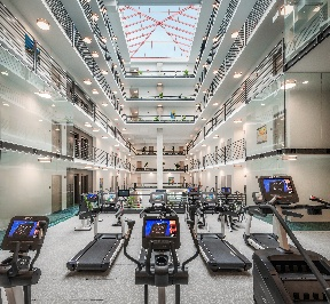
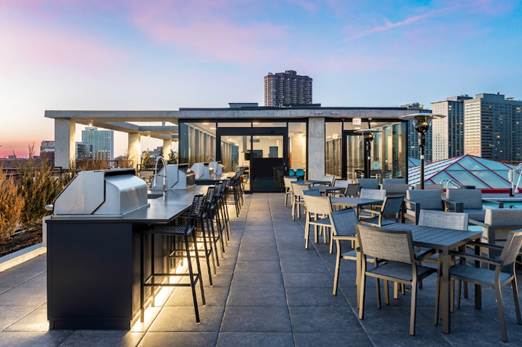
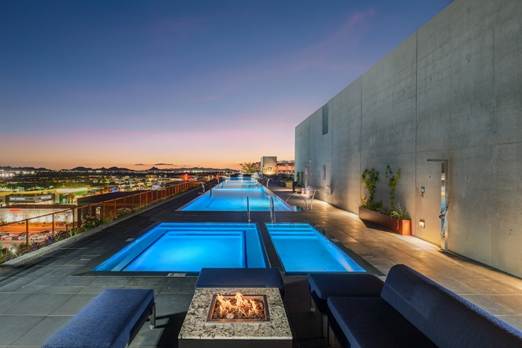
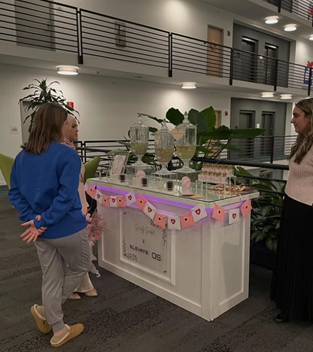
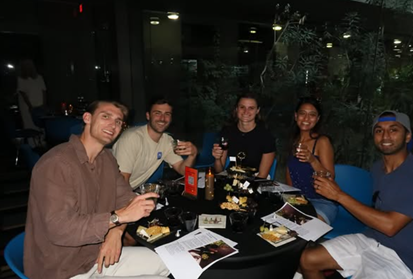
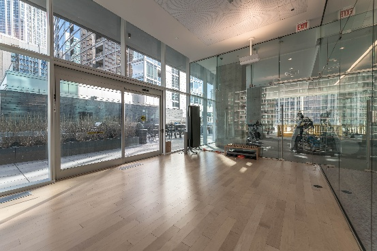
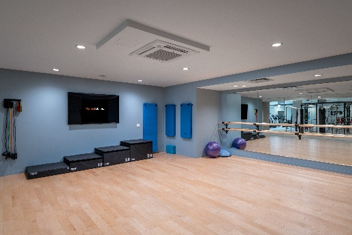
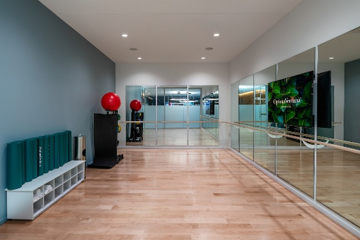
Across Optima communities, the events calendar is as varied as the communities themselves. In Scottsdale, rooftop movie nights on the sky decks draw residents together under the desert stars. Wine and cheese evenings in the residents’ club create the kind of unhurried, low-stakes social environment where the neighbor you have passed in the corridor for six months becomes someone you actually know. Fitness classes on the rooftop, led by instructors who know the community by name, turn a morning workout into a social ritual that residents build their week around.

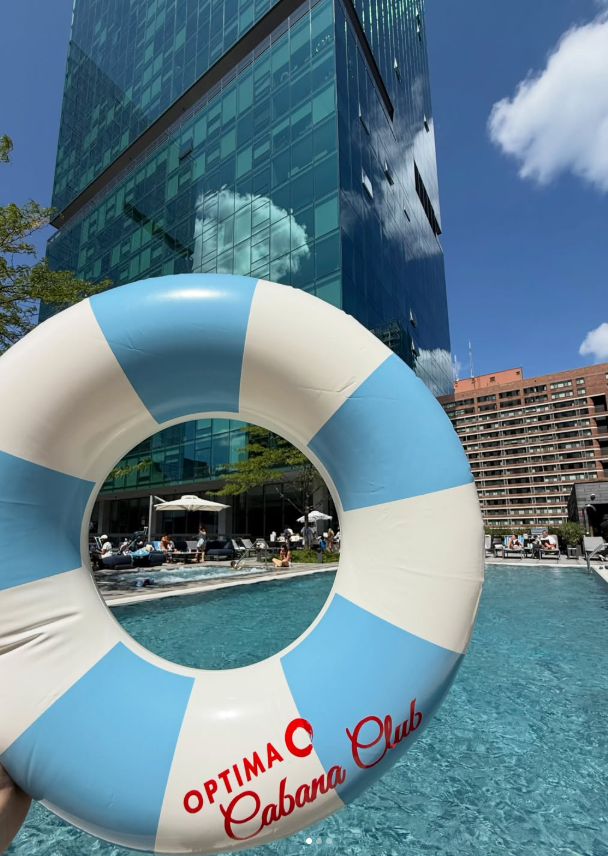
At Optima Sonoran Village, the heart of the events calendar is the community itself, six acres of lushly landscaped courtyards, two resort-style pool areas, and a 19,000-square-foot residents’ club that gives the management team the spaces to create events worth showing up for. Poolside gatherings on summer evenings. Holiday celebrations in the residents’ lounge. Fitness classes that move between the rooftop and the pool deck with the seasons. At Optima Sonoran Village, the Old Town Scottsdale location means the neighborhood is always part of the story, with the energy of one of Arizona’s most vibrant communities right outside, and the calm of the courtyard waiting when residents return.

At Optima Kierland, each of the towers runs its own dedicated events calendar, exclusive to that tower’s residents, organized around the specific character of the sky deck and residents’ club that belong to that building. A movie night on the 7190 rooftop is a different evening than one on the 7140 deck, with a different group of neighbors and a different view of the North Scottsdale skyline. That specificity of community, the sense that these events belong to your building, not just the broader property, is part of what makes the Optima Kierland experience genuinely unlike living anywhere else in North Scottsdale.

At Optima McDowell Mountain, the drama of the Sonoran Desert setting gives events a quality of place that is difficult to replicate anywhere else. Group sunrise hikes from the front door into the desert, organized by the management team and attended by residents who discover that the person who lives two floors above them shares the same appreciation for early morning desert light. Community barbecues on the sky deck where the views of the McDowell Mountains provide the setting and the only obligation is to show up.

In Chicago, events take on the character of their neighborhoods. At Optima Lakeview, the proximity to Wrigley Field means game-day gatherings on the rooftop sky deck that become annual traditions, the kind of event that residents plan their summer around and bring friends to. Holiday parties in the glass-enclosed party room. Summer rooftop dinners with the Chicago skyline as the backdrop. At Optima Signature, the setting of 57 stories above Streeterville makes resident events feel genuinely unlike anything available anywhere else in the city, from Club 52 sky terrace gatherings for Apex residents to building-wide celebrations that make the most of one of the most extraordinary residential addresses in Chicago.

At Optima Verdana on the North Shore, the scale of 100 residences gives events an intimacy that larger communities cannot replicate. A wine tasting in the library lounge becomes an evening where every face is familiar. A rooftop gathering with the Bahá’í Temple visible to the north becomes the kind of evening that residents describe when they explain why they chose to live here.

The People Behind the Events

None of this happens without the people who make it happen. At Optima, the property management teams who run our communities, the managers, the leasing teams, the resident coordinators who know residents by name and take the experience of living here personally, are the architects of the events calendar. They understand what each community needs because they are present in it every day. They know which residents are new and need an introduction, which events reliably draw people out, and which moments in the calendar deserve something more than the ordinary.

This is what Optima means by community management: not the administration of a building but the cultivation of the life inside it.

Why It Matters

There is a particular feeling that comes with living somewhere that takes your experience seriously enough to celebrate it. The opening of a new tower. The holidays that mark the turning of the year. The ordinary Tuesday evening that becomes extraordinary because the team organized something worth showing up for. These moments accumulate. Over time, they are what residents remember about a place, not the square footage, not the finishes, but the evenings on the rooftop with neighbors who became friends, the mornings that started with a group hike into the desert, the sense that the community they live in is genuinely alive.

At Optima, the art of the celebration is part of the art of building. The spaces are designed to be worth gathering in. The events ensure that the gathering actually happens. And the result is communities that feel, in the truest sense of the word, like home.

Come experience the lifestyle firsthand. Explore Optima’s communities and discover the events, amenities, and moments that make each one distinct.

The New Home Office: How Optima Designs for the Way We Work Now

The way people work has changed more in the last five years than in the previous fifty. Remote work, hybrid schedules, and the collapse of the hard boundary between office and home have fundamentally altered what people need from the places they live. The home office is no longer a luxury addition. It is a primary space, one that needs to function as well as any professional environment, and feel as considered as every other room in the home.

At Optima, that shift wasn’t a surprise. The integration of work into residential communities has been part of the design philosophy since 2010, when Optima Camelview Village introduced the first on-site commercial business suites into a luxury residential community. The thinking behind that decision has only become more relevant with time.

Designed for Work, From the Inside Out

Every Optima floor plan is designed to accommodate a dedicated workspace. That separation matters, a defined work zone improves focus, reduces distraction, and makes it easier to close the day and return to the rest of life. Floor-to-ceiling glass fills every residence with natural light throughout the working day. And the views, the McDowell Mountains, the Chicago lakefront, the Old Town Scottsdale rooftops, are working conditions that most offices cannot replicate.

Optima McDowell Mountain Huddle Rooms

When You Need to Step Outside the Apartment

Across Optima communities, business centers, conference rooms, and private huddle rooms provide professional-grade settings for the calls that need a quiet room and the workdays when the apartment needs a rest. At Optima Signature, fully furnished commercial business suites, available to both residents and non-residents, take that offer further: private offices ranging from single-desk to multi-workstation, all with access to Optima Signature’s full amenity program.

At Optima Lakeview, the seven-story skylit atrium functions as the most restorative change of environment a building can provide, no commute, just light and greenery and the ambient life of the community. At Optima Sonoran Village, Kaleidoscope Juice provides the coffee-shop moment without leaving the building. At Optima Signature, Egg Harbor Cafe and on-site concierge handle the rest. The vertical landscaping visible from every Optima terrace, shown by research to reduce cortisol and improve focus, turns a work-from-home morning into something genuinely different from a conventional office day.

Optima Kierland Conference Room

The Home You Work In

Optima communities have met the shift to remote and hybrid work not because work-from-home amenities were added in response to demand, but because the design philosophy, that a home should support the full complexity of the life lived inside it, was already pointing in the right direction. Not as a feature. As a foundation.

Come see the spaces that make working from home genuinely work. Explore Optima communities and experience the details that define each one.

The Pickleball Effect: What a Sport Reveals About How We Want to Live

Every sport has a moment when it stops belonging to enthusiasts and starts belonging to everyone. Pickleball had that moment a few years ago, and it hasn’t slowed down. It’s now the fastest-growing sport in the United States, spreading onto rooftops, amenity decks, and residential buildings across the country.

The question for anyone designing places to live isn’t whether to take it seriously. It’s what it’s telling us.

What Pickleball Actually Reveals

Pickleball didn’t get popular by accident. It got popular because it quietly solved a problem residential design has wrestled with for decades: how to bring people of different ages and fitness levels into the same space, on the same side of the net, and send them home with the kind of easy familiarity that turns neighbors into a community.

Players of all ages can compete. The court fits where a tennis court cannot. And the social architecture of the game, the partners, the between-point chatter, the standing around afterward, isn’t a side effect. It’s the product.

Pickleball Court at Optima McDowell Mountain

Optima Was Already Ahead

At Optima, sport has never been an amenity line item. It’s part of how the buildings were designed to feel.

The rooftop running tracks at Optima Kierland exist because the architects thought about how residents might want to spend a morning. The Olympic-length rooftop pools at Optima McDowell Mountain are there because daily practices are what give a community its rhythm. Movement isn’t layered onto the experience of living here. It is the experience.

Pickleball arrived at Optima before the broader conversation caught up:

  • Optima Kierland — 7190 Tower features a covered outdoor pickleball arena, one of the first at a luxury community in North Scottsdale, plus a full indoor basketball court striped for pickleball.
  • Optima McDowell Mountain — Indoor and outdoor courts will be built into every one of the six buildings, alongside rooftop pools, running tracks, and fitness centers with views of the Sonoran Desert.
  • Optima Sonoran Village — The indoor basketball and pickleball court anchors a 19,000-square-foot residents’ club designed for the kind of daily, unplanned use that builds real connection.
  • Optima Lakeview & Optima Signature — Indoor courts keep play going through Chicago winters, where indoor sport space isn’t a luxury; it’s what makes an amenity actually usable.
  • Optima Verdana — On the North Shore, the fitness facilities carry the same intent: give residents every reason to stay active, together, as part of the daily rhythm of the building.
Pickleball Court at Optima Kierland

The Community a Sport Builds

The most useful thing pickleball has done for residential design isn’t adding courts. It’s making something visible that was always true: shared spaces are only as good as the life inside them.

A pickleball court is a rectangle with a net. A pickleball court where Tuesday games start on their own, where residents who’d never met become regular partners, that’s something no architectural drawing can fully capture.

From Old Town and North Scottsdale to the edge of the Sonoran Preserve to Chicago and the North Shore, Optima has always treated sport as one of the most reliable paths to that outcome. Pickleball is just the latest expression of a philosophy that’s been there from the start: the best amenity is the one that brings people together, not once, at the grand  opening, but every week, for as long as residents choose to call the place home.

Come see the spaces that bring people together. Explore Optima communities and experience the details that define each one.

Water in the Desert: How Optima Is Rethinking Resource Conservation at Scale

The Colorado River has been in sustained drought for more than twenty years. Its average flow has declined nearly 20% since 2000. Arizona is currently facing an 18% reduction in its Colorado River allocation. The guidelines that govern the river’s allocation among seven states are being renegotiated, and the outcome will shape the future of water in the American Southwest for decades.

These are not abstract concerns for a developer building in North Scottsdale. They are the conditions on the ground, and they are the conditions Optima McDowell Mountain was designed to address.

The Numbers

At the lower level of the 22-acre site, an underground concrete vault is designed to capture and store approximately 210,000 gallons of rainwater. That system, the largest private rainwater harvesting system in the United States, collects stormwater that falls on the site and repurposes it for on-site irrigation, removing all irrigation demand from Scottsdale’s municipal supply.

The result: residences at Optima McDowell Mountain are designed to use half as much water as the average Scottsdale multifamily residence, and a quarter as much as the average Scottsdale single-family home. In a city actively managing for a future with less water, that is not a marginal improvement. It is a different order of magnitude.

Beyond the rainwater system, Optima has secured 2,750 acre-feet of water through a partnership with the City of Scottsdale, equivalent to more than 30 years of full residential and commercial occupancy, deposited directly into Scottsdale’s water system to support the city’s long-term supply.

The Building Systems

Water conservation at Optima McDowell Mountain is embedded in the architecture, not layered onto it. The vertical landscaping system allows drought-resistant plants to cascade down the facades of all six buildings. Providing natural insulation and reducing the urban heat island effect that drives additional cooling demand. Xeriscape landscaping, drip irrigation, and native plantings across 75% of the site reduce water requirements while creating a landscape genuinely suited to the Sonoran Desert.

Optima McDowell Mountain is the first development in Arizona built under both the International Energy Conservation Code (IECC), providing an additional 9% energy savings over the previous code, and the International Green Construction Code (IgCC). Solar panels, high-performance VRF heating and cooling systems, induction cooktops in every residence, 100% underground parking, and EV charging complete a sustainability program that David Hovey Jr. has described as the culmination of everything Optima has worked toward over four decades.

What It Means

The question facing developers in the American Southwest is no longer whether to take water seriously. That conversation is over. The question is how seriously, and at what scale. Optima McDowell Mountain provides one answer: seriously enough to install the largest private rainwater harvesting system in the country, and to design every building system, from the facades to the mechanical plant to the vertical gardens, around the imperative of using less.

Experience a different standard of desert living. Schedule a tour at Optima McDowell Mountain today.

Designed to Sit In: The Furniture & Objects That Shape Optima’s Spaces

At Optima, design doesn’t stop at the building’s exterior. It runs all the way through, into every lobby, every residents’ club, every lounge and business center and sky deck where people arrive, pause, gather, or simply choose to stay a little longer. The furniture and objects that furnish our shared spaces are chosen with the same deliberateness as every architectural decision: for their form, their quality, their relationship to the architecture around them, and their ability to make a common area feel genuinely worth spending time in.

This is what the Forever Modern philosophy looks like in practice, not as a tagline, but as a daily commitment to placing objects of genuine design merit in the places where people actually live.

A Shared Design Lineage

Optima’s furniture curation begins with a conviction inherited from the same tradition that shaped its architecture: that the best furniture, like the best buildings, should be honest about its materials, resolved in its form, and designed to serve the person using it rather than merely impress them. That conviction leads, naturally and repeatedly, to the great names of modernist furniture design, the designers who worked at the same intersection of art, architecture, and craft that has always defined Optima’s own practice.

It’s worth understanding the historical thread. Many of the designers whose work appears in Optima communities knew each other, they taught at the same schools, competed for the same commissions, and pushed each other toward increasingly refined solutions to the same fundamental questions about how designed objects should behave in space. Florence Knoll, Charles and Ray Eames, Eero Saarinen, and Harry Bertoia all crossed paths at Cranbrook Academy of Art. Ludwig Mies van der Rohe shaped the IIT program that shaped Optima’s own founder. The furniture in our communities isn’t assembled from a catalog of prestigious names. It is an expression of a specific design lineage, one that runs from the Bauhaus through Mies, through IIT, and through every building Optima has ever built.

Pieces That Define Our Communities

The Barcelona Chair, designed by Ludwig Mies van der Rohe and Lilly Reich for the 1929 International Exposition in Barcelona, can be found at every Optima community without exception. Initially conceived as seating for Spanish royalty overseeing the opening ceremony, it was built from two chrome-plated flat steel bars on each side and leather cushion planes held together by hidden stainless buttons: a structure that is simultaneously a feat of engineering and an object of great calm beauty. Mies designed it to sit in the lobbies of his own buildings, to accent the architecture and belong to the space. At Optima Sonoran Village it holds its place in the residents’ club against the backdrop of the lushly landscaped courtyards. Optima Kierland it anchors the residents’ clubs across all five towers. At Optima Signature it occupies a building that draws its design language directly from the modernist tradition Mies built, making its presence not a gesture toward history but a genuine expression of it. That a piece designed nearly a century ago remains the right choice for a 21st-century residential community tells you something important about genuine design: it doesn’t date, it deepens.

The Eames Lounge Chair and Ottoman, first produced in 1956 and still manufactured by Herman Miller to almost the same specification, appears at every Optima community with its characteristic warmth and authority. Charles and Ray Eames spent years developing the three-dimensional molding process that would give the chair its curved plywood shell, building their Kazam! machine from bicycle parts and spare timber, pressing veneer against plaster molds with a hand-inflated membrane. The resulting chair, supple leather over molded wood, set on a six-legged base, tilted at an optimal angle, debuted on national television in 1956 and entered MoMA’s permanent collection almost immediately. The Eameses described it as having the warm, redemptive look of a well-used first baseman’s mitt. At Optima Verdana it sits in the library lounge as an invitation to the unhurried North Shore Saturday the building was designed around. Optima McDowell Mountain it offers the natural counterpoint to a community built around movement, the rooftop run finished, the cold plunge done, the chair waiting. At Optima Sonoran Village, Optima Kierland, and Optima Signature it is a daily presence in residents’ clubs and lounges: a special refuge, as the Eameses intended, from the strains of modern living.

Eames Lounge Chair and Ottoman

The lobby of Optima Lakeview is anchored by one of the most distinctive pieces in the entire Optima collection: the Cloverleaf Sofa by Verner Panton, designed in 1969/1970 for his Visiona 2 exhibition, a commission from Bayer AG to imagine the interior environments of the future. A snake-like configuration of four connected circular seats, its ergonomic form encourages spontaneous, multi-directional, face-to-face conversation. It is simultaneously a piece of design history, a work of art, and an extraordinarily welcoming place to sit. Against the backdrop of Optima Lakeview’s seven-story skylit atrium, with its hanging gardens and vibrant red beams, it transforms a lobby into a space worthy of a design museum, one that residents walk through every single day.

The Cloverleaf Sofa

The Womb Chair by Eero Saarinen, commissioned by Florence Knoll in 1946 with the instruction that she wanted a chair she could sit in sideways, any way she liked, like a basket of pillows, appears at Optima Lakeview and across almost all Optima communities as an invitation to exactly that kind of unhurried freedom. Saarinen’s solution was a molded fiberglass shell upholstered in fabric, set on thin steel legs, wrapping around the body from every direction. It became a cultural icon upon release, appearing in a 1958 Coca-Cola campaign and on the cover of the Saturday Evening Post, and at Optima communities from Scottsdale to the North Shore it fulfills a quieter purpose: it is simply the most comfortable chair in the room.

The Tulip Table by Eero Saarinen, designed after Saarinen approached Florence Knoll in 1955 with his desire to clear what he called the slum of legs beneath every table ever made, appears in Optima Lakeview residences and throughout our communities as an elegant, weightless presence: a single white pedestal supporting a round top, the clutter of structure resolved into a single serene form. The Opera Chair by Busk+Herzog brings a contemporary voice to Optima Lakeview’s business center, high-backed and enveloping, designed for the resident who needs concentration without isolation. At Optima Kierland, the Planet and Pierce configurations serve the same purpose across the business centers of all five towers: chairs for the way people actually use common areas today, sometimes sociably, often in quiet concentration, needing just enough shelter to think.

The Tulip Table

Knoll’s curated collection, whose 40-plus designs belong to MoMA’s permanent collection, provides the seating, tables, and additional pieces that ground the shared spaces at Optima Signature, Optima Verdana, Optima McDowell Mountain, and across our broader portfolio in the design tradition they deserve. The Noomi Chair appears at Optima Lakeview, Optima Verdana, Optima Signature, and other communities as a contemporary expression of the same ergonomic intelligence and material refinement that defines the classics alongside it. Together these pieces give every Optima community’s shared spaces a consistent design vocabulary, not a uniform look, but a shared quality of intention and craft that residents feel without always being able to name.

The Noomi Chair

Why It Matters

A common area furnished with great design is not the same as one furnished with expensive furniture. The difference lies in intention, whether pieces were chosen to impress or to serve, to fill space or to shape it. At Optima, the furniture in every shared space is part of a considered design conversation that begins with the architecture and doesn’t end until the last object is placed and the light falls across it for the first time.

The result, from Optima Sonoran Village and Optima Kierland in Old Town and North Scottsdale to Optima McDowell Mountain at the edge of the Sonoran Preserve; from Optima Lakeview and Optima Signature in Chicago to Optima Verdana on the North Shore, is shared spaces that feel genuinely alive. That have character, warmth, and a quality of attention that residents experience differently over time: the Cloverleaf Sofa in Optima Lakeview’s lobby on a grey November afternoon, the Eames Lounge Chair at Optima Verdana after a long week, the Barcelona Chair at Optima Kierland in the particular quality of a North Scottsdale morning. Great furniture, like great architecture, rewards sustained attention. At Optima, both are present in the same building, and both belong to the residents who come home to them every day.

Come experience the spaces for yourself. Schedule a tour at an Optima community today.

From the Rooftop: Why Optima’s Sky Decks Are Unlike Any Other in the City

There is a moment that happens to almost every new resident of an Optima community. They take the elevator to the top for the first time, step out onto the sky deck, and stop. Not because they weren’t expecting something good, they were. But because what’s actually there exceeds what they imagined was possible from the roof of a residential building.

That reaction isn’t accidental. It’s the result of a design philosophy that has treated the sky deck not as a finishing touch, but as one of the most important spaces in the entire community.

A Design Decision, Not an Amenity Package

At Optima, the rooftop is designed with the same intentionality as any residence. Every sky deck begins with a fundamental question: what does the specific setting of this building demand, and how do we build something that honors it? The answer at each community is different, shaped by the landscape, the climate, the views, and the particular character of the neighborhood below. The result is that no two Optima sky decks are alike. They share a standard, but not a template.

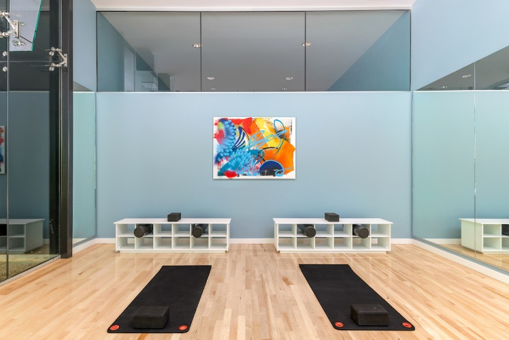
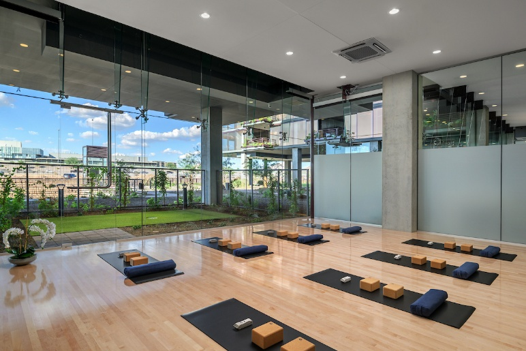
David Hovey Jr. has described how the sky decks have evolved over time in direct response to how residents live, with bigger pools, more shaded gathering areas, yoga studios with open sliding glass walls, saunas and cold plunges, outdoor theaters, and the quarter-mile running track that made its debut at Optima Kierland. Each iteration built on the last. Each one asked: what would make this better?

Optima Kierland: A Sky Deck for Every Tower

At Optima Kierland, the sky deck isn’t a shared amenity, it’s a private one. Each of the five towers has its own dedicated sky deck, exclusive to that tower’s residents. It’s a design decision that transforms a rooftop from a communal convenience into something that genuinely feels like yours.

The 7190 tower’s sky deck is the most recent evolution: an Olympic-length heated pool, a quarter-mile running track that follows the perimeter of the roof, a spa and cold plunge, lounge seating, fire pits, an outdoor bar and kitchen with TVs, and the most breathtaking unobstructed views of the McDowell Mountains in North Scottsdale. In the earlier towers, glass-enclosed saunas, heated lap pools, yoga studios, outdoor theaters, and rooftop gardens round out sky decks that have set the standard for what rooftop living in the desert can be. Arizona’s first rooftop running track was born here, because the architects who designed the buildings also designed the life that happens on top of them.

Optima McDowell Mountain: Six Decks, Six Panoramas

At Optima McDowell Mountain, every one of the six buildings will have its own rooftop sky deck, each one will offer a 50-meter Olympic-length pool, a running track that follows the building’s perimeter, outdoor fire pits, lounge seating, arbors covered in vines, and outdoor kitchens with barbecues and dining spaces. The views rotate with the desert compass: the McDowell Mountains to the east, Camelback Mountain to the south, Pinnacle Peak to the north, and sunsets to the west that light the sky in every shade of amber, rose, and gold. No seat on any of these rooftops offers the same view twice.

Rooftop Deck at Optima McDowell Mountain

Optima Lakeview: Chicago, Unobstructed

In Chicago, the sky deck takes on an entirely different character. At Optima Lakeview, the rooftop sky deck places residents above the Lakeview neighborhood with panoramic views that sweep from the lakefront to Wrigley Field, a cityscape that is one of the most extraordinary in the country. The heated pool is designed for year-round use, a deliberate choice that ensures the deck never closes regardless of what a Chicago winter decides to do. Fire pits, lounge seating, a glass-enclosed party room, an outdoor theater, and barbecue areas ensure that whether the evening calls for a quiet drink above the city or a gathering of neighbors, the space is ready.

Optima Lakeview Sky Deck

Optima Signature: Elevated Living Across Four Amenity Levels

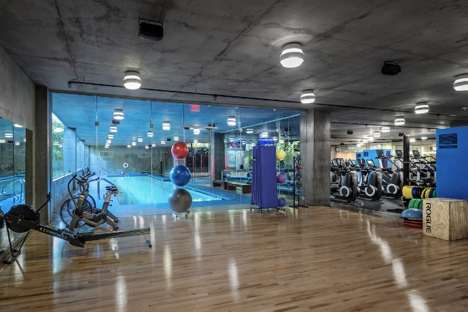
At Optima Signature, the experience is different, and intentionally so. Rather than a single rooftop sky deck, Optima Signature distributes its amenity spaces across four floors, giving residents multiple ways to engage with the city depending on the hour and the occasion. The heated indoor and outdoor pools sit within an amenity experience that spans 1.5 acres and includes a 40-yard indoor running track, multiple spas, indoor and outdoor saunas, and men’s and women’s locker rooms with steam rooms, as well as a Level 20 library and residents’ lounge with views of the lake and the skyline, and the exclusive Club 52 sky terrace for Apex residents. From 57 stories above Streeterville, Lake Michigan stretches unbroken to the east, the Chicago River winds through the city to the south, and the skyline fills every other direction. The result is not one elevated moment but a building-wide experience of height and light and city, one that changes with every season, every floor, and every time of day.

Optima Verdana: The North Shore, Elevated

At Optima Verdana, the sky deck takes its cue from the particular quality of North Shore light and the intimate scale of Wilmette’s village character. The glass-enclosed heated lap pool with retractable walls opens to fresh outdoor air when the season allows, year-round swimming in a setting that frames sweeping views of the Wilmette treetop canopy and the Bahá’í Temple to the north. A sun deck, barbecues, herb gardens, a bocce court, fire pits, and a party room with a chef’s kitchen make the rooftop at Verdana a space that reflects both the ambition and the quieter, more considered pace of North Shore living.

Optima Verdana

Optima Sonoran Village: A Desert Oasis, Ground to Rooftop

At Optima Sonoran Village, the elevated outdoor experience is distributed across the community rather than concentrated at a single point. Tower 15, the community’s most recent tower, offers its residents an exclusive rooftop sky deck with views of Camelback Mountain, an outdoor kitchen, fire pits, a spa, and a sun deck scaled for intimacy rather than spectacle.

For the broader community, the outdoor life unfolds across 6.1 acres of lushly landscaped grounds: two resort-style pool areas with spas, saunas, outdoor kitchens, fire pits, and lounge seating under the Scottsdale sky. The glass-enclosed 19,000-square-foot fitness center overlooks the lap pool, dissolving the boundary between inside and out even in the middle of a workout. A sculpture garden of five original David Hovey Sr. works in natural Cor-Ten steel, a putting green, and courtyard walking paths complete an outdoor experience designed to make the desert feel like an amenity, one that rewards every hour of the day differently, from the blue cool of early morning to the amber light of an Arizona evening.

Why the Sky Deck Becomes the Heart

A building can have extraordinary residences and still feel anonymous. What turns a building into a community is the shared space, the place where neighbors become familiar, where a Sunday afternoon becomes something worth looking forward to, where the city or the desert or the lake reminds you why you chose to live here. At Optima, the sky deck is designed to be that place.

It works because it’s never designed generically. It works because the pool is the right size, in the right place, oriented to the right view. Because the fire pit is close enough to the lounge seating to make a conversation easy, and far enough from the pool to give the space room to breathe. Because the running track goes where the best views are. Because every detail, from the shade structure to the bar placement to the choice of materials underfoot, was considered by the same people who designed the building below.

At Optima, the sky deck isn’t the amenity at the top. It’s part of the design from the very beginning.

Come see the view for yourself. Schedule a tour at an Optima community today.

From Canvas to Courtyard: The Artists Shaping Optima Spaces

At Optima, art has never been an afterthought. From the founding conviction that architecture should engage the whole person, the mind as much as the body, the eye as much as the foot, the inclusion of original art in our communities has been a design principle, not a decoration strategy. The artists whose work lives in Optima spaces were chosen, commissioned, and collaborated with for the same reason every other decision at Optima is made: because the quality of daily life depends on it.

David Hovey Sr., FAIA — Sculptor

The artistic identity of every Optima community begins with its founder. David Hovey Sr., FAIA, architect, developer, and sculptor, has expanded the design reach of Optima to encompass both the buildings and the art that inhabits them. His love of contemporary art was ignited during his time as a student assistant to the curator of contemporary art at the Art Institute of Chicago, and his practice as a sculptor grew from the same fascination with materials that drives his architecture: a deep curiosity about what steel can express beyond structure.

Hovey’s sculptures, each one an original work appearing across Optima communities in different colors, sizes, and orientations, are conceived in direct dialogue with the buildings they inhabit. Kiwi, born from freehand drawings and named after the native New Zealand bird from the country of his birth, commands the sweeping entry plaza at Optima Signature with a bold color and distinctive form that gives the building an identity all its own. Curves and Voids anchors the entry plaza at Optima Verdana, grand sweeping steel curves interrupted by laser-cut voids that catch the North Shore light differently in every season. The sculpture garden at Optima Sonoran Village houses five original Hovey works in natural Cor-Ten steel, Silver Fern, Duo, Triangles, Intersecting Arches, and Curves and Voids, distributed through the courtyards so that art is encountered on the way to the pool, not in a gallery setting reserved for special occasions.

As Hovey himself has said: architecture is about function as well as aesthetics. Sculpture is really just about aesthetics. You don’t have that functional component. At Optima, that freedom, to make something purely for the sake of beauty, is taken as seriously as any structural decision.

Kiwi Sculpture

The Painters Behind Our Walls

The art that fills Optima communities doesn’t exist in isolation. It belongs to a longer conversation, one that spans generations of artists and movements, and that Optima has been actively building for decades.

Alexander Calder’s bold, graphic works greet residents throughout Optima Signature, their bright tones and distinct forms carrying the playful rigor that made him one of the most influential artists of the 20th century. A multimedia artist whose output spanned sculpture, stage sets, paintings, prints, and jewelry, Calder brought a sense of movement and wit to everything he made, qualities that feel just as alive in an Optima lobby as they did in the Parisian avant-garde circles where he first made his name.

Pablo Picasso’s brightly colored work adorns the walls of Optima buildings across the portfolio. His range was extraordinary, Cubism, Surrealism, Neoclassicism, the Blue Period, the Rose Period, and his lifelong refusal to settle into a single style is part of what makes his work so enduring. A Picasso on the wall isn’t just a piece of art history. It’s a reminder that the most interesting spaces, like the most interesting artists, are always evolving.

At Optima Sonoran Village, the surrealist works of Joan Miró bring their own vivid energy. Born in Barcelona and shaped by the color and culture of the city, Miró moved through Cubism before finding his own language of organic shapes, bold lines, and pure color. Works like Figure in Front of the Sun and The Red Sun hang in units at Optima Sonoran Village, playing off the lively interiors and lush desert landscape outside. Miró once described his use of color as being like words that shape poems, and in these spaces, that intention is felt.

Paul Klee is another presence felt throughout Optima Signature. Trained in music before turning to visual art, Klee brought an almost compositional sensibility to his canvases, geometric forms layered with humor, color theory pushed into something deeply personal. His work touched Expressionism, Cubism, Surrealism, and Absurdism without being fully claimed by any of them, and his tenure teaching at the Bauhaus gave his ideas an influence that spread far beyond his own hand. His work Garden View, on display at Optima Signature, is structured yet alive, precise yet full of feeling.

These are just a few of the artists whose work lives in Optima communities, each one chosen with the same deliberateness as every architectural decision, and each one adding something that no floor plan ever could.

Paul Klee’s Garden View at Optima Signature

Contemporary Art and Furniture — The Curated Environment

Beyond the commissioned works, Optima communities are shaped by a broader program of contemporary art and furniture selected with the same deliberateness as every architectural decision. At Optima Lakeview, the Cloverleaf Sofa by Verner Panton, one of the most influential furniture designers of the 20th century, occupies the lobby as both seating and sculpture, a piece that embodies the same innovative spirit as the building around it. Throughout our communities, art and furniture are chosen to complement the architecture, set off the spaces, and bring shape, color, and texture to the experience of daily life, ensuring that every common area, every corridor, every amenity floor feels considered and alive.

Why It Matters

The environments we inhabit shape who we become, what we notice, what we value, how carefully we pay attention. A home filled with great art doesn’t just look extraordinary. It asks something of the people who live inside it: to slow down, to look more carefully, to be surprised. At Optima, that invitation is extended every day, in every sculpture encountered on the way to the pool, every painting noticed differently on a Tuesday than it was on a Sunday, every piece of furniture that makes a common space feel genuinely worth spending time in. Art isn’t applied to our communities. It belongs to them.

Come see the art that lives here. Schedule a tour at an Optima community today.

Living Alongside Art: How Sculpture Transforms a Community

Most people experience great art on a schedule, a museum visit, a gallery afternoon, a curated occasion. At Optima, we’ve always believed that great art shouldn’t require an appointment. It should be part of the texture of daily life, as present and as natural as the light that fills our buildings each morning.

Art as Architecture, Not Addition

At Optima, the relationship between art and architecture isn’t decorative, it’s structural. From the earliest stages of design, public art and sculpture are considered alongside the placement of walls, windows, and open space. The result is that art in Optima communities doesn’t feel installed or displayed. It feels native, as though the building and the artwork emerged from the same intention, which in many cases they did. This is a direct expression of Optima’s founding design philosophy: that the built environment should engage the whole person. The mind, not just the body. The eye, not just the foot.

The Encounter You Didn’t Plan

There is a particular quality to discovering art when you’re not looking for it. A sculpture anchoring the courtyard at Optima Sonoran Village seen differently in the morning than at dusk. A commissioned work in the lobby of Optima Lakeview that stops you on the way to the elevator on a Wednesday. A large-scale piece on the terrace at Optima Kierland that you’ve passed a hundred times but only truly noticed today, in this light, at this angle. At Optima Verdana, David Hovey Sr., FAIA’s sculpture Curves and Voids stands at the building’s entry, present every morning on the way out, every evening on the way in, always offering something new to those who look.

These unplanned encounters accumulate. Quietly, persistently, they enrich the daily experience of a place and remind residents that they live somewhere that considers beauty not a luxury but a necessity.

Optima Sonoran Village

Sculpture and the Identity of a Place

Every sculpture in an Optima community is an original work by David Hovey Sr., FAIA, the architect, artist, and founder whose creative vision is the foundation of everything Optima builds. Just as Hovey’s architecture is designed in direct response to each community’s setting, light, and landscape, his sculptures are conceived with the same specificity. These are not works selected from a catalog or acquired after the fact. They are created as part of the community itself, expressions of the same design intelligence that shaped the building they live alongside.

That connection between sculptor and architect being one and the same produces something rare: a seamless relationship between the built environment and the art within it. At Optima Signature, Kiwi, born from Hovey’s freehand drawings, commands the sweeping entry plaza with a boldness of color and form that gives one of Chicago’s most significant residential towers an identity that is unmistakably its own. At Optima Verdana, Curves and Voids anchors the building’s entry with grand sweeping steel and laser-cut voids that catch the North Shore light differently in every season. Each work is singular. Each belongs entirely to the place it calls home.

Optima Signature

The Everyday Experience of Living With Art

At Optima, art extends beyond the sculptures in our plazas and courtyards. Throughout every community, contemporary art and furniture are chosen with the same deliberateness as every architectural decision, selected to complement the building’s design, set off our spaces, and bring shape, color, and texture to the experience of daily life. A carefully curated piece in a lobby. Furniture in a common area that is as considered as it is comfortable. Works that give a corridor a sense of destination. These choices are part of the same design language that runs through every Optima community, and they are what make the difference between a beautiful building and a place that genuinely feels like home.

Residents who live alongside meaningful art tend to describe something difficult to quantify but easy to feel: a sense that their home takes them seriously. That beauty here is a foundation, not an afterthought. Over time, the art woven through an Optima community, from David Hovey Sr., FAIA’s original sculptures to the contemporary works and furniture throughout the shared spaces, becomes part of each resident’s relationship with home. A shared reference point between neighbors. A source of daily pleasure as light changes across seasons. A quiet reminder that this place rewards attention.

An Invitation to Look More Carefully

In a world that rewards speed, an artwork that asks for your full attention for a moment is a quiet shift in pace. A home that offers those moments, day after day, around every corner and across every season, is something genuinely rare. That is what Optima’s commitment to public art is built to provide. Not spectacle, but depth. Not decoration, but meaning that grows.

Come see the art that lives here. Schedule a tour at an Optima community and experience a home worth looking at.

What It Means to Live the Optima Way

At Optima, we’ve spent nearly five decades asking the same question: what does it mean to build a community where people genuinely thrive? The answer lives in the quality of light through a window on a Tuesday morning. In the conversation that starts in a courtyard between neighbors who didn’t yet know each other. In the feeling, hard to name but impossible to miss, that the place you’ve come home to was built by people who cared deeply. That feeling has a foundation. It’s what we call the Optima way.

A Growth Mindset, Built Into Everything

Since Optima’s founding, growth has been defined on our own terms, not by market cycles, but by a continuing journey to expand what’s possible in the built environment. That mindset shows up in the willingness to ask harder questions about how a building should relate to light, to nature, and to the people inside it, and to keep pushing until the answer is genuinely right.

The Freedom to Innovate

At Optima, we control every aspect of the design, development, and management process, and that integration is what gives us the freedom to make decisions based on what we believe is right, without compromise. It’s the reason the living facades at Optima Sonoran Village and Optima Kierland exist. The reason the atrium at Optima Lakeview was built around greenery and light. The reason Optima McDowell Mountain’s rooftop running track offers 360-degree desert views. When you own the entire process, you can hold the vision all the way to the end.

Optima McDowell Mountain

Committed to Lasting Impact

Everything Optima builds is designed to withstand the aesthetic test of time. We challenge what’s accepted and defy what’s expected. At Optima Signature, that means a 57-story LEED-certified tower redefining sustainable luxury on the Chicago lakefront. At Optima Verdana, it means bringing the full ambition of Optima’s design philosophy to the North Shore. The goal is never the moment. It’s always the bigger picture.

Optima Signature

Passion for Creating Together

At Optima, everyone creates. Our culture is defined by openness and collaboration, the belief that the best ideas can come from anywhere. That culture shapes what we build: communities where residents feel genuinely considered, and shared spaces designed to bring people together. The passion for creating together doesn’t stop at the property line.

All In, All the Time

We are as passionate about the small details as we are about the big picture. The weight of a door handle. The material chosen for a countertop because it gets more beautiful with use. These are not finishing touches at Optima. They are the whole point, because residents experience them every single day, and every single day is worth getting right.

What It Means for You

To live the Optima way is to live somewhere built by people who believe architecture is one of the most powerful forces for human good, and who act on that belief at every scale, without compromise.

Come experience what living the Optima way actually feels like. Schedule a tour at an Optima community today.

How Green Building Design Protects Your Health — Not Just the Planet 

Sustainable architecture gets a lot of attention for what it does for the environment. But there’s a quieter, more personal story worth telling, about what it does for the people living inside it. At Optima, green building design has always been both things at once: responsible to the planet, and deeply beneficial to the resident. 

Nature Built into the Building Itself 

One of the most visible expressions of Optima’s sustainable philosophy is our living architecture. The lushly planted vertical gardens at Optima Sonoran Village, Optima Kierland and Optima McDowell Mountain aren’t decorative, they regulate building temperature, filter air, and create a buffer from the desert heat. The soaring skylit atrium at Optima Lakeview fills the heart of the building with natural light and greenery year-round. At Optima Verdana, landscaped terraces maintained year-round with Optima’s signature vertical gardening system ensure that living greenery is present at every level of the building, from the ground floor to the rooftop sky deck. These systems aren’t added on. They’re woven into the architecture itself, which is precisely what makes them work. 

Optima Lakeview Atrium

The Air You Breathe at Home 

At Optima, we select eco-friendly materials, prioritize advanced ventilation, and choose finishes that don’t compromise the environment residents breathe every day. The result is that the air inside an Optima residence is often cleaner than the air outside, a quiet, invisible benefit that residents feel without always being able to name. 

Comfort, Quiet, and Better Sleep 

A sustainably designed building maintains a more consistent internal temperature, reducing the swings that make a home feel like it’s fighting the climate rather than coexisting with it. Thoughtfully engineered walls, windows, and rooflines keep Optima interiors regulated and calm, whether facing an Arizona summer or a Chicago winter. And the denser, higher-quality materials used in sustainable construction also happen to be excellent acoustic insulators. Less noise means lower cortisol, better sleep, and a nervous system that gets to rest. 

Optima Kierland’s Patio

Sustainability and Luxury Are the Same Value 

At Optima, we’ve never seen sustainability and luxury as competing ideas. The most responsible home to build, one that breathes cleanly, connects residents to nature, and endures beautifully over time, is also, by design, one of the finest homes to live in. Across every Optima community, every green choice is equally a choice in favor of the quality of resident life. 

The planet benefits. But so does everyone who comes home here each evening. 

Experience it for yourself. Schedule a tour at an Optima community today. 

person name goes here

Maintenance Supervisor

Glencoe, IL


    Acceptable file types: *.pdf | *.txt | *.doc, max-size: 2Mb