Balancing Energy and Design: Current Trends in Feng Shui

In recent years, the ancient Chinese art of feng shui has found renewed relevance, evolving to meet the needs of a modern, fast-paced world. Rooted in the idea that the arrangement of our surroundings influences the flow of qi—or life force—feng shui offers both a design philosophy and a way of living that prioritizes harmony, vitality, and connection. At Optima®, where architecture is conceived as a seamless blend of form and function, many of today’s most prominent feng shui trends align closely with our own design principles.

Biophilic Elements for Energy Flow
One of the strongest trends in contemporary feng shui is the incorporation of nature to encourage balance and rejuvenation. This is especially visible in the use of plants, water features, and natural materials to create a vibrant indoor environment. In feng shui, these elements help activate positive energy and create a bridge between interior spaces and the natural world.

Optima®’s communities—whether it’s the lush, green courtyards of Optima Kierland Apartments® or the serene pool decks of Optima Signature®—are designed with this principle in mind. Here, biophilic design doesn’t just bring nature indoors; it integrates greenery into the building’s structure, ensuring that residents experience nature as a daily, effortless part of life.

Light as a Vital Energy Source
In feng shui, light represents the strongest form of yang energy, enhancing vitality, clarity, and warmth. Modern practitioners emphasize maximizing natural light, using it not only to illuminate but to energize.

This is a philosophy deeply embedded in Optima®’s approach to architecture. Expansive floor-to-ceiling windows, open floor plans, and thoughtful building orientation capture and diffuse sunlight throughout the day. Whether it’s the soft morning light in a Wilmette residence at Optima Verdana® or the dramatic desert sunsets seen from an Optima Sonoran Village® terrace, the design supports the feng shui belief that light is as essential to our well-being as air and water.
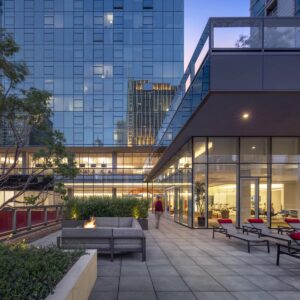
Residents at Optima Signature® take in skyline views while enjoying access to indoor and outdoor heated pools year-round, making every day feel like a restoring retreat from the hustle of the city.

Decluttering as a Design Mindset
Minimalism and feng shui share common ground in advocating for spaces free of unnecessary clutter. In feng shui, clutter obstructs the natural flow of qi, while minimalism uses open, purposeful spaces to create a sense of calm and order.

At Optima®, interiors are intentionally designed to allow residents to move freely and to furnish their spaces in ways that reflect personal meaning rather than excess. Built-in storage solutions and thoughtful spatial planning provide both aesthetic and energetic clarity, echoing the feng shui principle that the most powerful rooms are those with breathing space.

Balanced Color Palettes
Color plays a central role in feng shui, with each hue corresponding to one of the five elements—wood, fire, earth, metal, and water. Current trends embrace softer, nature-inspired palettes to promote tranquility, accented with purposeful pops of color to encourage specific energies, such as prosperity (greens), passion (reds), or stability (browns).

Optima® applies a similarly thoughtful approach to color, ensuring that palettes work in harmony with the building’s environment. For example, desert-inspired neutrals and earth tones complement the Arizona landscape, while in Chicago, deeper tones may contrast against the skyline while still maintaining balance within interiors and shared spaces.

Flow and Connectivity
Perhaps the most universal principle linking modern feng shui to Optima®’s architectural philosophy is the concept of flow. In feng shui, pathways—both physical and energetic—should be unobstructed, guiding movement and vision effortlessly through a space.

Optima® designs prioritize this same sense of flow. From sightlines that draw the eye toward nature or artwork, to communal areas that encourage organic movement and social connection, every element is positioned to create ease and continuity.

In today’s design landscape, feng shui is not about rigid rules or decorative superstitions—it’s about creating environments that feel alive, supportive, and in tune with the people who inhabit them. This modern interpretation mirrors Optima®’s own belief that architecture should enhance quality of life through thoughtful integration of space, light, color, and nature. By weaving together ancient wisdom and contemporary innovation, both feng shui and Optima®’s design philosophy remind us that when our environments are in balance, our lives are too.
Designing for the Mind: The Emerging Field of Neuroarchitecture

At Optima®, our communities are guided by a deep belief that architecture can nurture, inspire, and elevate the human spirit. This philosophy has long aligned with Modernism’s embrace of light, space, and form. Today, a growing field of study known as neuroarchitecture is helping to explain, through the lens of science, why certain spaces make us feel calm, creative, or connected.

What is Neuroarchitecture?
Neuroarchitecture sits at the intersection of neuroscience, psychology, and architecture. It seeks to understand how the built environment influences brain function and emotional well-being. Using tools like functional MRI scans, eye-tracking studies, and biometric sensors, researchers can observe how different architectural elements—light, ceiling height, materials, spatial flow—affect cognitive performance, stress levels, and even hormone production.

At its core, neuroarchitecture is about recognizing that our brains are not passive observers of space. Instead, they are actively shaped by it. This emerging field offers a scientific foundation for what architects and designers have long intuited: the spaces we inhabit affect how we think, feel, and behave.

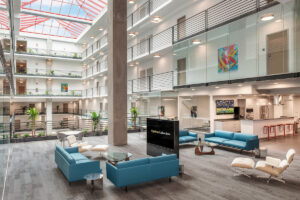
At Optima Lakeview®, the amenity spaces are integrated into the voluminous center atrium, providing beautifully designed, flowing spaces to gather or seek quiet moments.

The Brain’s Response to Space
Research in neuroarchitecture reveals that certain design features can measurably influence brain activity. For example:

  • Natural Light: Exposure to daylight regulates our circadian rhythms, boosts serotonin, and can enhance mood and productivity.
  • Ceiling Height: Taller ceilings have been linked to more expansive thinking, while lower ceilings can promote focus and concentration.
  • Nature Integration: Biophilic design—bringing natural forms, materials, and greenery into a space—reduces stress and promotes cognitive restoration.
  • Spatial Flow: Open, interconnected layouts encourage movement, social interaction, and a sense of freedom.

These findings are helping architects make more informed decisions, creating spaces that are not only beautiful but also neurologically supportive.

A New Lens on Modernist Principles
Modernist architecture, with its emphasis on functional beauty, open floor plans, and abundant light, often aligns naturally with neuroarchitectural insights. In Optima® communities, expansive windows flood interiors with daylight, green courtyards and gardens bring nature to residents’ doorsteps, and thoughtful spatial layouts encourage both solitude and connection.

For example, the lush vertical landscaping at Optima Sonoran Village® is not only visually striking—it offers residents a daily, tangible connection to the calming effects of nature. At Optima Verdana®, the indoor–outdoor flow of common spaces provides social engagement opportunities while supporting mental ease and relaxation.

Applications Beyond Residential Design
Neuroarchitecture’s potential extends far beyond homes. In schools, its principles can help create environments that improve focus and learning outcomes. In healthcare, design elements informed by neuroscience can reduce patient anxiety and promote faster recovery. Even in workplaces, carefully tuned lighting, acoustics, and layouts can enhance creativity, collaboration, and employee well-being.

The Future of Building for the Brain
As technology enables us to measure and analyze human responses to space with increasing precision, neuroarchitecture is likely to become an essential part of the design process. Architects and developers will have more data-driven insights to tailor environments to specific human needs—whether that’s reducing stress, encouraging collaboration, or sparking innovation.

For Optima®, this convergence of science and design reinforces a long-held commitment: that great architecture is not just about form, but about the lives lived within it. Neuroarchitecture offers a language and framework for understanding the deep connection between space and self—a connection we have been honoring through Modernist design for decades.

In the end, neuroarchitecture doesn’t replace the artistry of building; it enriches it. By aligning the principles of design with the biology of the brain, we can create spaces that are not only aesthetically compelling, but also profoundly supportive of human well-being—places where people don’t just live, but truly thrive.

Riding the Rails of Time: A Brief History of the Chicago “L”

To know Chicago is to know the “L”—a beloved, bustling fixture of city life that rumbles overhead and snakes underground, connecting neighborhoods and stories across more than a century. Short for “elevated,” the “L” isn’t just a transit system. It’s an enduring emblem of Chicago’s ingenuity, resilience, and urban identity.

At Optima®, we understand how essential great transportation is to vibrant city living. That’s why communities like Optima Lakeview® and Optima Signature® are conveniently located near key “L” lines, giving residents seamless access to everything the city has to offer—whether it’s a quick ride downtown to work or a weekend trip to the Garfield Park Conservatory.

Born from Innovation—and Necessity
The origins of the “L” date back to the late 19th century, when Chicago was growing at breakneck speed. After the Great Fire of 1871, the city underwent a massive rebuilding and expansion effort. But with growth came congestion: horse-drawn streetcars and cable cars clogged the streets, and pedestrians competed with carts, carriages, and early automobiles. The city needed a new way to move people quickly and efficiently—without taking up precious surface space.

Enter the elevated train.

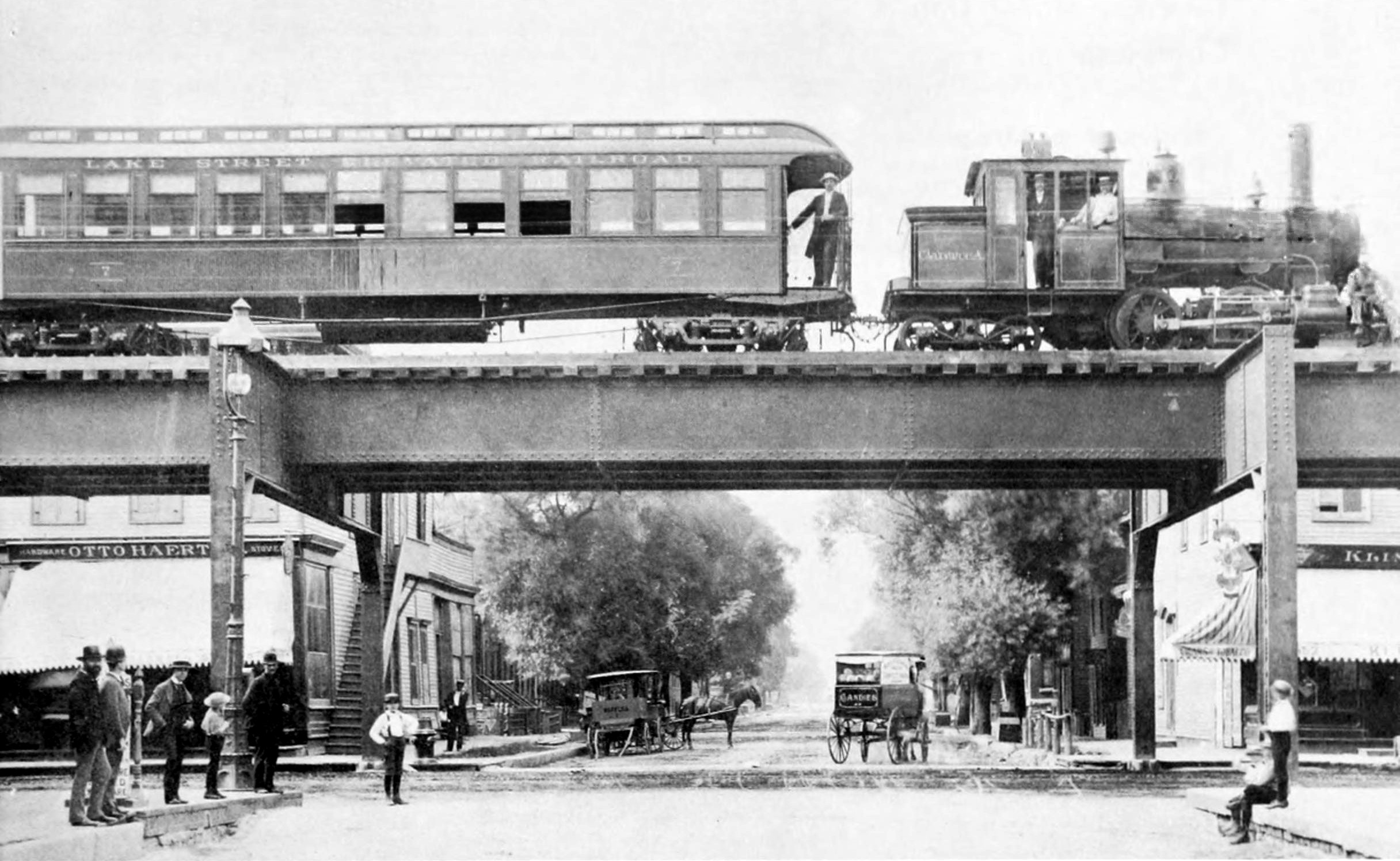
On June 6, 1892, the first “L” train made its inaugural run along the South Side Rapid Transit line, carrying passengers from 39th Street to Congress Street in wooden cars powered by steam locomotives. Though the ride was loud, dirty, and a bit jarring, it offered an exciting new alternative: a bird’s-eye commute through the city.

By the turn of the century, electric power had replaced steam, and the “L” had begun to form its now-familiar loop downtown. In 1897, a series of elevated lines were linked by a rectangular circuit known as the “Union Loop,” giving the central business district its nickname and the system a structural heart.

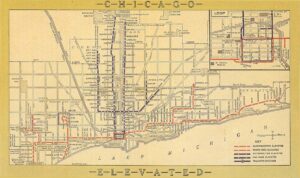
Map of elevated rapid transit lines in Chicago. Contains lines run by four companies; the Metropolitan West Side Elevated Railroad, South Side Elevated Railroad, Northwestern Elevated Railroad, and Oak Park Elevated Railroad. Credit: https://www.chicago-l.org/maps/route/maps/1913map.jpg

The Loop: More Than a Track
The creation of the Loop helped define downtown Chicago itself, transforming transit in the process. Architecturally and socially, the Loop became a boundary and a bridge. It concentrated commerce, created a gravitational pull for development, and gave the city its skyline rhythm—steel girders and train cars cutting across sun-drenched streets.

Over time, the “L” evolved into a system of color-coded lines that stretch from Evanston to the South Side, from Oak Park to O’Hare. The system remains one of only a few in the U.S. that still includes elevated tracks in the urban core.

For residents of Optima Lakeview®, nestled in a neighborhood rich with character on Chicago’s North Side, the nearby Brown Line offers a direct route to the Loop—perfect for daily commutes or weekend adventures. Meanwhile, Optima Signature®, located in the heart of Streeterville, puts residents just steps away from multiple “L” stops and transit hubs, making it easy to explore every corner of the city.

Moments of Modernization
The 20th century brought dramatic change to the “L.” Wooden cars gave way to streamlined steel ones. Manual controls were replaced by automatic signals. The system expanded, integrating suburban commuter services and adopting new lines to meet the needs of a shifting population.

Notably, the 1950s saw the launch of the Congress Line, which ran down the median of the newly built Eisenhower Expressway—a pioneering combination of rail and highway planning. The 1980s and 1990s ushered in renovations to aging stations, and the naming system changed to colors in 1993, simplifying what had become a complex array of named lines.

Today’s “L” is a 24/7 operation—one of the few major urban rail systems in the world to run all day, every day.

Cultural Icon, Civic Backbone
More than just infrastructure, the “L” is a character in the story of Chicago. It’s been immortalized in films like The Fugitive and While You Were Sleeping, and it’s a regular presence in television shows like Chicago P.D. and Shameless. Its stations and cars have hosted jazz musicians, protestors, lovers, tourists, and tired workers heading home.

It’s a place of overheard conversations, lost gloves, spontaneous poetry, and democratic density—where millionaires and minimum-wage workers share space and time, bound by steel rails and a common destination.

Looking Forward
In recent years, the Chicago Transit Authority (CTA) has invested heavily in modernization. Projects like the Red & Purple Modernization Program aim to replace century-old infrastructure and increase capacity. Plans are also underway to extend the Red Line further south, connecting communities that have historically been underserved by public transit.

And while challenges remain—aging infrastructure, funding gaps, and fluctuating ridership—the “L” continues to adapt. It has survived two world wars, the Great Depression, the rise of the automobile, and the COVID-19 pandemic. Each time, it has emerged with new relevance.

A Ride Worth Taking
For newcomers, the “L” can feel like a puzzle: clattering tracks, cryptic transfers, platforms suspended above intersections. But to longtime Chicagoans, it’s second nature—a steady, familiar hum in the background of daily life. It’s not just how they get from place to place. It’s part of where they’re from, ensuring the city’s culture, commerce, and creativity are always within reach.

An Evening of Music Under the Stars: Evanston Symphony Orchestra’s Summer Pops Concert Returns to the Wallace Bowl

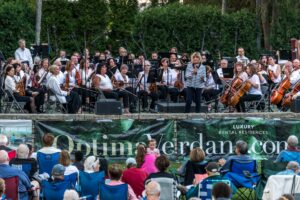
There’s something magical about live music on a summer evening—especially when it’s free, family-friendly, and performed in one of the North Shore’s most scenic outdoor venues. On Tuesday, August 19, 2025, the Evanston Symphony Orchestra returns to Wilmette’s iconic Wallace Bowl for its annual Summer Pops Concert, presented with pride by Optima Verdana®.

This cherished community tradition brings neighbors together for an unforgettable night of music under the open sky in Gillson Park. With no tickets or reservations required, the concert is free and open to all—inviting families, friends, and music lovers to gather and enjoy a joyful celebration of summer and sound.

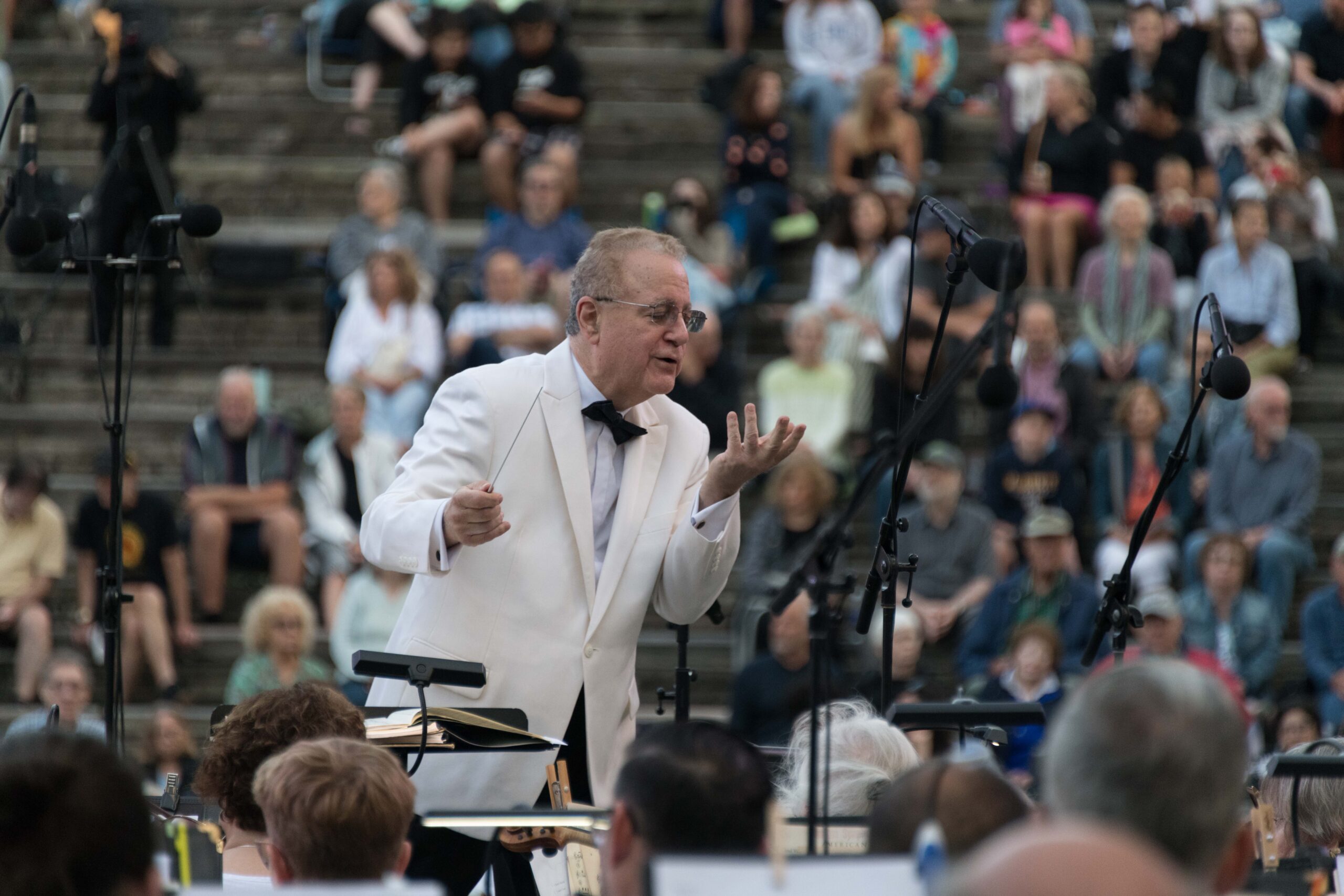
Eileen Hovey, Optima® Cofounder and CEO, makes opening remarks at the Evanston Symphony Orchestra’s Summer Pop Concert in 2023. Credit: Evanston Symphony Orchestra.

A Spirited and Sophisticated Program
Under the baton of Music Director Lawrence Eckerling, the Evanston Symphony will perform a vibrant and varied program that blends classical elegance with Broadway flair, cinematic power, and Motown soul:

  • Rossini – Overture to The Barber of Seville
  • Strauss Jr. – Artist’s Life Waltzes, Op. 316
  • Tyzik – Hot Soul Medley featuring hits like I Heard It Through the Grapevine, My Girl, Touch Me In The Morning, Reach Out I’ll Be There, and Love Machine
  • Saint-Saëns – Bacchanale from Samson and Delilah
  • Schwartz / arr. Ricketts – Highlights from Wicked including No One Mourns the Wicked, The Wizard and I, Dancing Through Life, Popular, and Defying Gravity
  • John Williams – Theme from Schindler’s List (featuring Julie Fischer, violin)
  • John Williams – Imperial March from The Empire Strikes Back
  • Sousa – Stars and Stripes Forever

With iconic crowd-pleasers, lush orchestral works, and a toe-tapping soul medley, the evening promises something for everyone—whether you’re a classical music enthusiast, a Broadway fan, or just looking to enjoy a memorable night beneath the stars.

You can watch and listen to a preview of the Summer Concert from Maestro Eckerling here: https://www.youtube.com/watch?v=OXbzwASPDyE

A Beloved Setting with Deep Community Roots
The Wallace Bowl, nestled within Gillson Park, is a treasured open-air amphitheater that has hosted generations of performances since its construction in 1931. Surrounded by trees and located just steps from Lake Michigan, it offers a unique and intimate atmosphere that amplifies the magic of live music.

Presented by Optima Verdana®
Just minutes away from the Wallace Bowl, Optima Verdana® is proud to sponsor this year’s concert as part of its ongoing support of local arts and community engagement. For Optima Verdana® residents, the performance is both a musical event and a celebration in their own backyard.

The concert begins at 7:00 PM, and attendees are encouraged to bring lawn chairs, blankets, and picnic baskets for a relaxed evening of entertainment.

Whether you’re discovering the Evanston Symphony for the first time or returning for a favorite summer tradition, this night of music by the lake is not to be missed.

ESO is partnering with Baker Demonstration School, which will provide fun child activities before and during the concert, including an instrument petting zoo.


Work Smarter, Live Better: Optima® Scottsdale Communities Are Made for the Workcation Lifestyle

With remote work reshaping how—and where—we live, the “workcation” has emerged as a compelling new model. As a lifestyle shift, it’s a way to blend productivity and leisure in a setting that supports both the hustle and the exhale. And in Scottsdale, where the sun shines more than 300 days a year and the desert landscape fuels inspiration, there’s no better place to make work feel like a privilege than within an Optima® community.

Whether it’s Optima Sonoran Village®, Optima Kierland Apartments®, or Optima McDowell Mountain®, each Optima community is uniquely designed for those who crave a seamless work-life blend, offering a powerful alternative to the standard office—or the standard vacation.

Where Desert Beauty Meets Digital Productivity
Scottsdale has long been known for its natural splendor, award-winning dining, and cultural vibrancy. Now, it’s becoming a destination of choice for professionals looking to recharge without stepping away from their careers. The city’s infrastructure—from high-speed connectivity to world-class access to nature—makes it easy to plug in by morning and power down by sunset.

But while hotels and co-working spaces offer short-term convenience, Optima® communities provide something far more valuable: a place where remote work becomes a lifestyle. Picture a Zoom call with Camelback Mountain as your backdrop, a brainstorming session poolside under the Arizona sun, or a post-meeting hike just minutes from your front door.

Bike trails at Optima McDowell Mountain offer easy access to the surrounding desert and mountains

Optima® Living: Built for the Workcation Life
Each Optima® community in Scottsdale is thoughtfully designed with the remote professional in mind. Spacious, light-filled residences come equipped with high-speed internet, flexible floor plans, and floor-to-ceiling windows that transform everyday work into something extraordinary. Whether you’re immersed in a project from a sunlit balcony or catching up on emails from a sleek kitchen island, your workspace never feels routine.

At Optima Sonoran Village®, you’re steps from Old Town’s art galleries, wine bars, and walkable charm. Optima Kierland Apartments® puts you in the heart of North Scottsdale, surrounded by upscale shopping and dining—with a sky deck that rivals any resort. Optima McDowell Mountain®, nestled at the edge of the preserve, offers serene mountain views, lush landscaping, and a peaceful setting that makes focus feel effortless.

Wherever you land, you’ll find an environment curated for both calm and clarity—making it easier to hit deadlines without sacrificing your sense of place.

Amenities That Inspire and Restore
The workcation model means access to experiences that recharge the mind and body. At Optima®, it’s all right outside your door. Break up your workday with a rooftop swim, a steam in the sauna, or a workout in a state-of-the-art fitness center. Take meetings from the lounge, sketch ideas in a sun-drenched courtyard, or unwind with yoga as the sun sets behind the mountains.

Need a reset between back-to-back video calls? Step into a landscaped oasis designed with biophilic principles that bring the natural world closer. These are not amenities for the sake of luxury—they’re tools for staying grounded, focused, and creatively engaged.

Connection Without Commute
One of the great challenges of remote work is isolation—but Optima® communities offer the opposite: connection. From resident events and on-site clubs to casually crossing paths in shared green spaces, you’ll find opportunities to meet neighbors, spark new friendships, and even build collaborative networks.

With flexible leasing and furnished residences available, these communities offer a smooth landing whether you’re staying for a season or finding your next long-term home.

The Ultimate Work-Life Balance, Just Outside Your Door
Optima®’s Scottsdale communities place you in close proximity to everything that makes the city ideal for a workcation: canal paths for early-morning runs, desert trails for evening reflection, and a cultural calendar that includes world-class art, music, and cuisine. From sunrise yoga to rooftop happy hours, the rhythm of life here is naturally restorative.

Your Desert Office Awaits
Choosing a workcation in Scottsdale doesn’t mean pausing your ambition—it means supporting it with space, beauty, and balance. And in an Optima® residence, those values aren’t aspirational—they’re built into every square foot.

So go ahead: bring your laptop, bring your goals, bring your appetite for sunshine and spacious living.


Volunteer at Elmwood Dunes Preserve’s Workday on August 7, 2025

Just steps from Optima Verdana®, Elmwood Dunes Preserve is a green space that serves as a living classroom and testament to what community involvement can achieve. We’re thrilled to support this event and encourage residents to participate in a meaningful day of stewardship.

Join Friends of Elmwood Dunes at the preserve (Elmwood Avenue, Wilmette) for a hands‑on workday on Thursday, August 7, 2025, dedicated to habitat restoration. All are welcome—from beginners to seasoned volunteers. Come prepared to dig in, make connections, and leave your mark—helping preserve Wilmette’s natural heritage and bringing people together in service of nature.

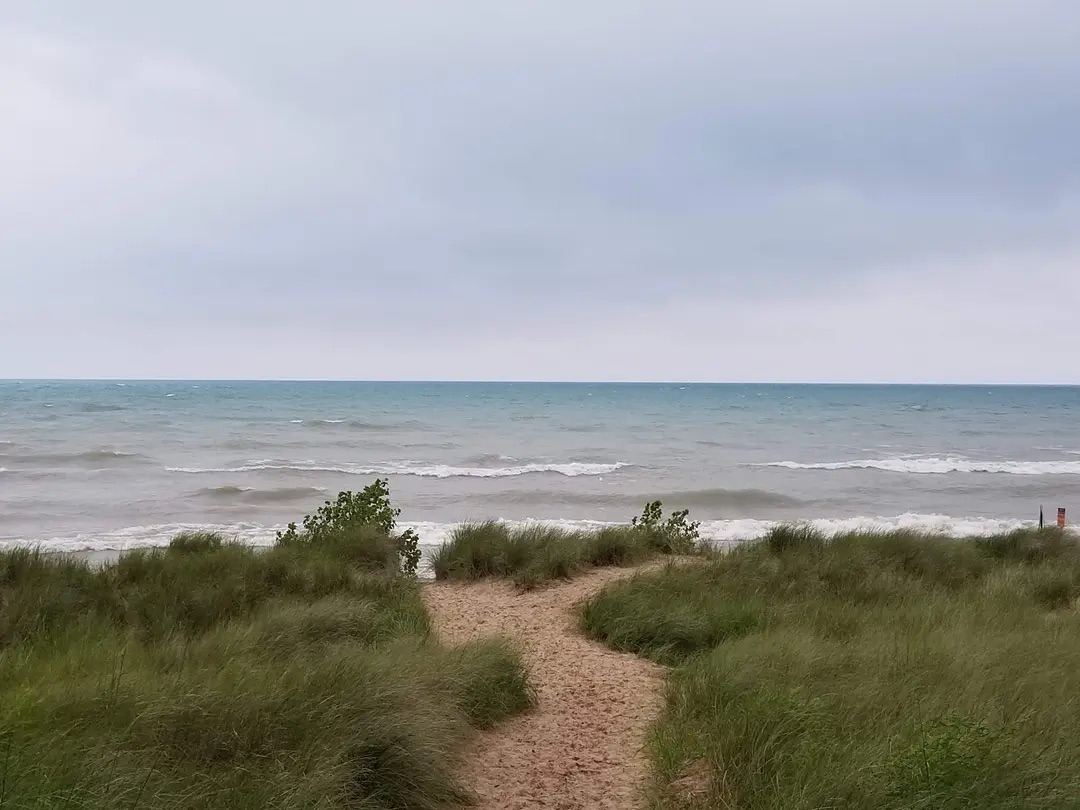
Credit: OB on Google Maps. Licensed under CC BY 2.0.

The team will:

  • Remove invasive shrubs that threaten native plant communities
  • Clear brush and maintain pathways
  • Sustain the integrity of the restored dune and swale ecosystem

Elmwood Dunes Preserve  is Wilmette’s last natural bluff-and-dune ecosystem, restored over several years with the help of community volunteers. Today, it’s home to over 50 native plant species and serves as habitat for migratory birds and endangered flora.

This stewardship workday continues that legacy—reclaiming the space from invasive species and strengthening its ecological resilience into the future.

What to Expect
This two-hour workday offers:

  • A fulfilling outdoor activity under the morning sun
  • A chance to learn about local ecology and conservation practices
  • A community of fellow nature lovers, working toward a shared goal
  • An invitation to return as the seasons change (other upcoming workdays: September 11, etc.)

Quick Info
Summer Stewardship Workday
Date & Time: Thursday, August 7, 2025, 8:00 am – 10:00am
Location: Elmwood Dunes Preserve (Elmwood Avenue, Wilmette)
Hosted by: Friends of Elmwood Dunes & Wilmette Park District
What to Bring: Gloves, water, long pants, closed-toe shoes (tools provided)

Come explore, serve, and celebrate this beautiful preserve. Bring friends or family, or sign up for future stewardship days—let’s make this summer both restorative and impactful.

How to Get a Street Named After You in Chicago

At Optima®, we’re proud to be an integral part of Chicago, a city whose grand landmarks and marquee attractions also offer a quieter layer of civic storytelling—one that lives not in guidebooks, but on the corners of our daily routes. Look up as you stroll through neighborhoods like Bronzeville, Pilsen, or Andersonville, and you may spot a green-and-white street sign with an extra name perched above the official one: Honorary John Doe Way, Honorary Sister Mary Johnson Avenue, or Honorary Mr. G’s Corner. These signs are small in scale but monumental in meaning.

They’re part of one of Chicago’s most heartfelt hidden gems—an unassuming tradition that honors the people who have helped shape the soul of the city. Unlike statues or plaques, honorary street signs don’t draw crowds or headlines. They blend into the cityscape, quietly reminding us that greatness often begins at the block level.

So, how does someone come to be recognized with an honorary street sign? Who gets to join this constellation of civic recognition? It’s not about celebrity or wealth—it’s about service, vision, and making a tangible difference in the lives of others. The process, like the program itself, is rooted in neighborhood pride, grassroots initiative, and a deep love for the people who make Chicago what it is.

Here’s how it works.

Credit: Gamtja on Wikimedia Commons, 25 May 2016. Licensed under the Creative Commons Attribution-Share Alike 4.0 International license.

What Is an Honorary Street Sign?
Before diving into the process, it’s important to note that these tributes are honorary. The signs don’t change a street’s official name or mailing address. Instead, they mark a stretch of road—typically one or two blocks long—as a commemorative space. They serve as visible, public reminders of people who have shaped their communities in meaningful ways.

Step 1: Make Your Case
The first step is having someone—often a family member, friend, community organization, or local alderperson—propose the idea. The nominee must have a strong connection to Chicago and a history of service or achievement. While many honorees are well-known, the program also celebrates local heroes: educators, volunteers, faith leaders, and others who might not be famous, but are deeply admired in their neighborhoods.

A general rule of thumb: the honoree should be someone whose contributions reflect positively on the city and whose name on a sign would inspire civic pride.

Step 2: Gather Support
Next, the proposer needs to gather community support. This often includes letters from residents, business owners, schools, or religious institutions in the area where the honorary street would be installed. These letters help demonstrate that the honoree is respected, appreciated, and deserving of public recognition.

In some cases, a petition may be circulated to collect signatures from neighbors and local stakeholders. This step reinforces the idea that the sign isn’t just a symbolic gesture—it’s a tribute endorsed by the community.

Step 3: Work With the Alderman

Every Chicago ward has an alderperson who serves as the elected representative on City Council. The proposal for an honorary street must go through the alderman whose ward includes the proposed location. If the alderman supports the initiative, they’ll sponsor a formal ordinance to bring before the City Council.

Often, the honoree or their supporters work with the alderman’s office to determine an appropriate location for the sign—usually near the honoree’s home, workplace, or site of community impact.

Step 4: City Council Approval
Once the ordinance is introduced, it goes to the City Council Committee on Transportation and Public Way for consideration. If approved, it moves on to the full City Council for a final vote.

These ordinances are typically passed without controversy—especially when they’re backed by strong community support and championed by a local alderman.

Step 5: The Sign Goes Up
Once approved, the city’s Department of Transportation installs the honorary sign. A small dedication ceremony may follow, often attended by the honoree (if living), their family, and members of the community. It’s a moment of celebration—an intersection between personal legacy and public space.

More Than a Name
Chicago’s honorary street names form a patchwork of personal histories stitched into the urban fabric. They mark the places where ordinary people have done extraordinary things—where music was played, meals were served, minds were shaped, and lives were lifted.

Getting a street named after you in Chicago is more than an honor. It’s a signpost of memory, a landmark of gratitude, and a permanent part of a city that never forgets the people who make it great.

Want to learn more about the rich history of Chicago’s honorary street signs? Check out the Honorary Chicago website!

Swami Vivekananda in Chicago: A Legacy of Unity, Spirit, and Cross-Cultural Exchange

At Optima®, we believe architecture is more than a physical framework—it’s a philosophy that invites openness, transcends boundaries, and honors the intersection of global ideas. That belief echoes in the legacy of Swami Vivekananda, a figure whose time in Chicago helped usher in a new era of interfaith dialogue, spiritual inquiry, and cultural understanding. Much like the buildings we create—spaces designed for light, clarity, and connection—Vivekananda’s message brought ancient wisdom into the modern world with elegance and intention.

In the long and colorful history of Chicago, few moments have been as spiritually transformative—or as globally resonant—as a speech delivered in 1893 by a young Hindu monk from India. Standing before a crowd at the World’s Parliament of Religions, Swami Vivekananda opened his remarks with five simple words: “Sisters and brothers of America.”

What followed was a thunderous standing ovation, a moment of cultural connection so profound that it would echo far beyond the hall where he spoke. That address not only marked the West’s formal introduction to Hinduism—it signaled the beginning of a new era in global interfaith dialogue.

Swami Vivekananda Shrine-Hindu Temple of Greater Chicago, located in Lemont, IL. Credit: hakkun on Wikimedia Commons, licensed under the Creative Commons Attribution-Share Alike 3.0 Unported license.

The Parliament of Religions: A Turning Point
Held in conjunction with the 1893 World’s Columbian Exposition, the Parliament of Religions was the first formal gathering of representatives from the world’s major faiths. It was envisioned as a celebration of spiritual diversity, but for many in attendance, it also reinforced Eurocentric ideas about religion and progress.

Enter Swami Vivekananda, a 30-year-old monk in saffron robes, who had traveled from India with little more than conviction and a deep knowledge of Vedanta philosophy. Though virtually unknown when he arrived, Vivekananda quickly captivated audiences with his eloquence, humility, and message of spiritual unity.

In his speech, he emphasized the ancient Hindu ideals of tolerance, pluralism, and the universality of truth. “We believe not only in universal toleration,” he declared, “but we accept all religions as true.” This radical idea—that no single faith holds a monopoly on truth—was as startling to some as it was inspiring to others.

Chicago as the Gateway
Chicago was more than just the setting for Vivekananda’s speech—it was the launchpad for his global influence. After the Parliament, he remained in the city for several months, supported by local patrons who offered lodging and helped organize lectures. He gave talks in homes, churches, and halls throughout the city, deepening his engagement with Western audiences hungry for alternative approaches to spirituality.

During his time in Chicago, Vivekananda made a deliberate effort to bridge Eastern and Western thought. He spoke of the Atman (the inner self), of karma and rebirth, but also of ethics, service, and compassion in ways that resonated with both intellectuals and laypeople. He demystified Hinduism not by watering it down, but by connecting its ancient wisdom to universal human experience.

Chicago, with its industrial muscle and cultural ambition, became an unlikely home for a spiritual revolution. From here, Vivekananda would go on to tour other parts of the U.S. and Europe, but his time in Chicago laid the foundation. It gave him a platform—and more importantly, it gave the West a new way to understand the East.

Legacy in the Modern World
Swami Vivekananda’s visit changed the Western understanding of religion itself. He was one of the first to articulate the idea that spirituality could be experiential, rather than dogmatic. His teachings influenced generations of thinkers, including Aldous Huxley, Joseph Campbell, and even leaders of the American civil rights movement.

Today, Chicago continues to honor his legacy. A plaque at the Art Institute of Chicago commemorates his speech. Across the city and beyond, yoga centers, interfaith dialogues, and global spiritual movements still trace their roots back to that singular moment in 1893.

A Global Voice Born in Silence
Swami Vivekananda’s message began in meditative silence on the banks of the Ganges—but it found its voice in Chicago. In a city known for building skyscrapers and railroads, he built something else entirely: a bridge of understanding between East and West, body and soul, self and world.

At Optima®, we celebrate that same spirit of interconnectedness—across cultures, disciplines, and design philosophies. Just as Vivekananda invited the world to see unity in difference, we continue to craft spaces that bring people together in light, openness, and shared humanity. His words still resonate, reminding us that sometimes the most enduring monuments are not made of stone—but of speech, spirit, and the courageous act of imagining a more unified world.


Staging Summer: Your Guide to Chicago’s Outdoor Theater Season

When summer arrives in Chicago, the city’s parks and plazas transform into living stages—inviting neighbors, families, and theater lovers to share in a uniquely local tradition: outdoor performances under the stars. From Shakespearean comedies to circus-inspired spectacles, this year’s lineup is as diverse as it is delightful. Even better? Most shows are free.

For residents of Optima® communities—whether you’re catching a performance steps from Optima Signature® in Streeterville, enjoying a lakeside evening near Optima Lakeview®, or planning a city night out from Optima Verdana® in Wilmette—Chicago’s outdoor theater scene is the perfect way to engage with the city’s cultural vibrancy. Here are the standout productions of Summer 2025:

Love’s Labour’s Lost— Midsommer Flight
Now through Aug. 3 at parks across Chicago

Midsommer Flight’s twelfth season brings a lively take on Shakespeare’s tale of a king and his court who vow to renounce love—until a group of witty women tests their resolve. Performed in natural light, with no amplification, the show feels at once intimate and immediate. You’ll find them at Nichols Park, Gross Park, Kelvyn Park, Winnemac Park, and Touhy Park. Bring a blanket, snacks, and your sense of humor. Free and perfect for an impromptu neighborhood evening.

A Midsummer Night’s Dream — Chicago Shakespeare Theater
July 10–Aug. 14 at 15+ parks and festivals citywide

In a brisk 45-minute format, this whimsical adaptation of A Midsummer Night’s Dream is ideal for families. Stops include Navy Pier, Wicker Park Fest, Ping Tom Park, Garfield Park, and Rainbow Beach. With so many performances across the city, there’s likely one just a short ride from any Optima® community. Don’t miss this dreamlike, mobile theater experience. Free.


Wheaton Park District Instagram

Broadway in Your Backyard — Porchlight Music Theatre
July 14–23 at six neighborhood parks

Porchlight’s fifth annual series brings Broadway’s greatest hits to your local park, featuring numbers from Hamilton, The Wiz, Hello, Dolly!, and more. With performances in Welles Park, Portage Park, Ping Tom Park, and Northcenter Town Square, this musical revue is a crowd-pleaser within walking or biking distance for many Optima residents. Free.

The Queen’s Museum — Citadel Theatre
July 17–20 at Lake Forest Open Lands

A queen. Pirates. Dancing. Set against the lush natural backdrop of Lake Forest Open Lands, this family-friendly outdoor musical blends adventure and whimsy. Tickets are $20—a worthwhile outing for families at Optima Verdana® seeking a North Shore performance under the stars.

Book Up!— Goodman Theatre & DCASE
July 23–Aug. 10 at 10+ Chicago parks

A circus-inspired, early childhood performance about a magical librarian and her book cart, followed by interactive workshops. Designed for children under five, this free program is part of Goodman Theatre’s “100 Free Acts of Theater” series and is a charming daytime option for families at Optima Lakeview® or Optima Signature®.

Broadway in Chicago Summer Concert
Aug. 11 at Jay Pritzker Pavilion, Millennium Park

For one unforgettable night, Millennium Park fills with music from hit shows like Parade, Hell’s Kitchen, and MJ the Musical. It’s the ultimate sampler of Broadway energy—just steps from home for residents of Optima Signature®. Free.

Ice Cream Circus! — Lookingglass Theatre & Actors Gymnasium
Aug. 17–24 at five Chicago parks

A playful fusion of theater, circus arts, and magic, this wordless, all-ages show is part of the Chicago Park District’s “Night Out in the Parks.” Performances at Seneca Park (just two blocks from Optima Signature®), Gill Park, and beyond make this a must-see for kids and grown-ups alike. Free.

The Winter’s Tale — Wheaton Park District
Aug. 28–30 at Memorial Park, Wheaton

A free outdoor Shakespeare production in the western suburbs, complete with a preshow puppet show. A fun excursion for Optima Verdana® residents looking to round out the summer with more Shakespeare—and a little suburban magic. Free.

A City-Wide Celebration of Storytelling
Chicago’s outdoor theater season reflects what makes this city extraordinary: neighborhood spirit, cultural accessibility, and the joy of shared experience. For Optima® residents across Chicago and Wilmette, these productions are more than just entertainment—they’re invitations to connect with the city, your community, and the stories that shape us all.


Refined Desert Living: Inside the Apartment Residences at Optima McDowell Mountain®

In the heart of North Scottsdale, where rugged mountains meet expansive desert skies, Optima McDowell Mountain®  redefines what it means to live well. Thoughtfully designed and rooted in the principles of Modernism, the apartment residences at 7220 Optima McDowell Mountain® offer sanctuary.

Every element of these rental residences is guided by the Optima® vision: beautiful, functional, and deeply attuned to the natural environment. Here, design serves a higher purpose—elevating daily life, inviting connection, and capturing the singular serenity of desert living.

Modern Architecture Meets Timeless Comfort
From the moment you enter an apartment residence, you’re greeted by expansive views framed by floor-to-ceiling windows, which draw the outside in and flood each home with natural light. Clean lines and open layouts create a sense of calm and flow, while generous private terraces extend living spaces into the open air—perfect for sunrise coffee or sunset contemplation.

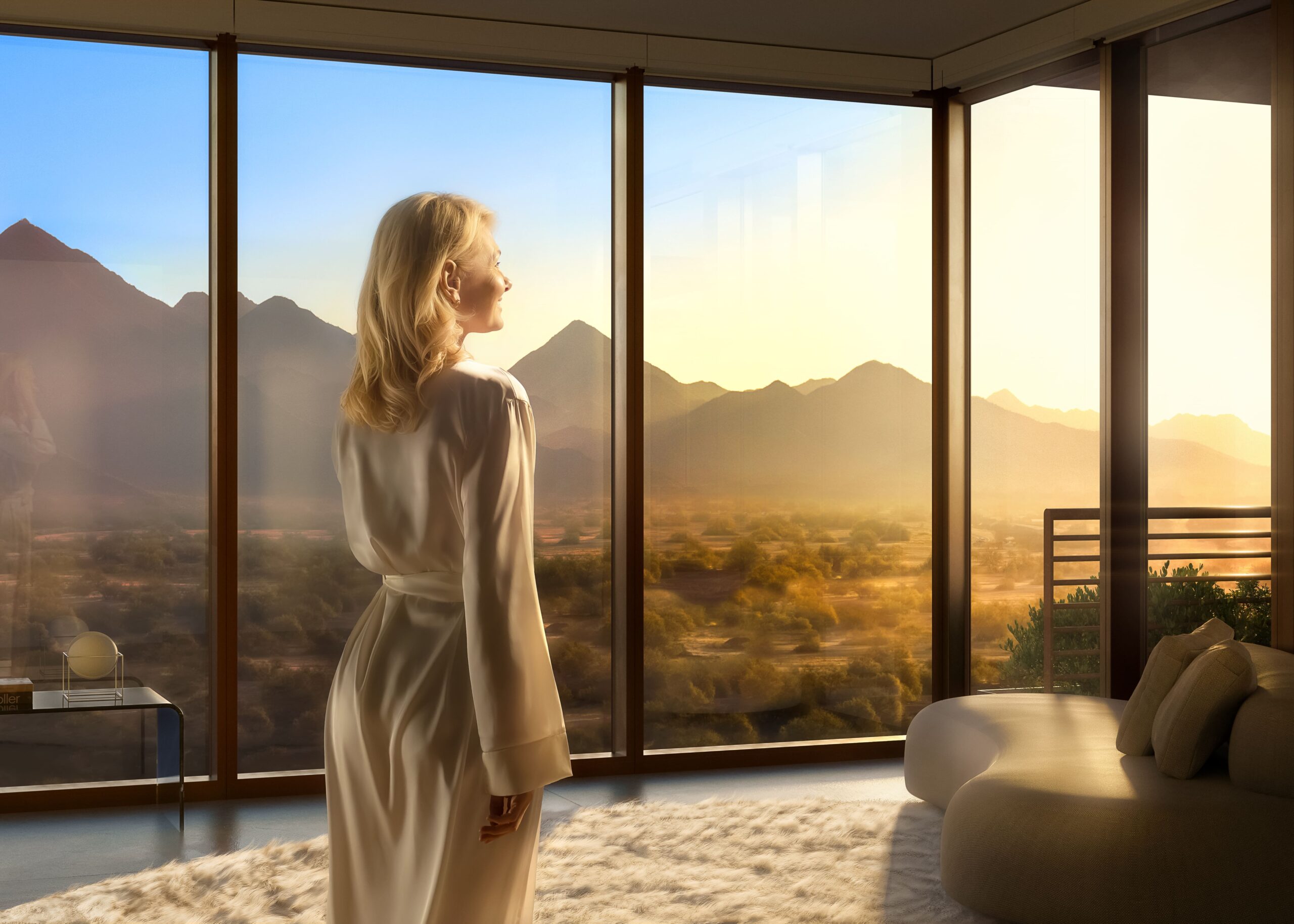
Spacious primary bedroom at 7220 Optima McDowell Mountain® with expansive views

Thoughtful Interiors Designed for Living Well
Each apartment is a masterclass in materials and modern elegance. Luxurious plank flooring, high ceilings, and modern lighting set a sophisticated tone, while contemporary cabinetry, quartz countertops, and full-tile backsplashes bring polish and function to the kitchens. Kitchen islands with pendant lighting make the space both a showpiece and a gathering place—ideal for quiet nights in or entertaining guests. In every room, the finishes are intentional, the layouts intuitive. Walk-in closets, full-size washers and dryers, and smart home-ready wiring offer the practical comforts of a well-appointed home—without ever sacrificing style.

Smart Design, Seamless Living
Beyond aesthetics, these apartments are designed to support a truly modern lifestyle. Each unit is equipped with energy-efficient appliances, including stainless steel refrigerators, dishwashers, and ranges, blending performance with sleek design. USB outlets, central climate control, and ample storage make every detail of life a little easier and more enjoyable.

In select units, double vanities, separate soaking tubs, and upgraded appliance packages take everyday luxury to the next level—providing elevated options for those seeking even more refinement in their surroundings.

A Home That Reflects the Landscape
Optima McDowell Mountain® is deeply informed by its desert setting, and that connection to place is woven into every residence. From the natural color palettes to the expansive views of the McDowell Mountains, the design philosophy honors the land—bringing harmony between home and environment.

Life, Elevated
More than just a beautiful place to live, the apartments at 7220 Optima McDowell Mountain offer access to a lifestyle shaped by wellness, convenience, and community. With immediate access to the tower’s exceptional amenities—including a rooftop Olympic-length pool, indoor/outdoor fitness center, and tranquil lounge areas—residents experience the best of both private retreat and social connection.

At Optima McDowell Mountain®, apartment living becomes something extraordinary. It’s where architecture uplifts, where design serves the soul, and where home feels like a natural extension of your best life.

Interested in renting? To explore available floor plans or schedule a private tour, visit our site here.

person name goes here

Maintenance Supervisor

Glencoe, IL


    Acceptable file types: *.pdf | *.txt | *.doc, max-size: 2Mb