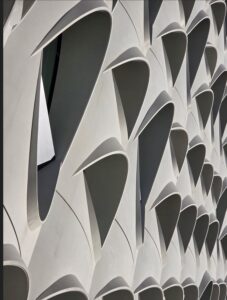
Populus Hotel: A Statement in Carbon-Positive Design

At Optima®, our commitment to sustainability and innovative architecture drives us to spotlight groundbreaking developments that align with our values. The recently opened Populus Hotel in Denver stands as a testament to what’s possible when design meets environmental responsibility.

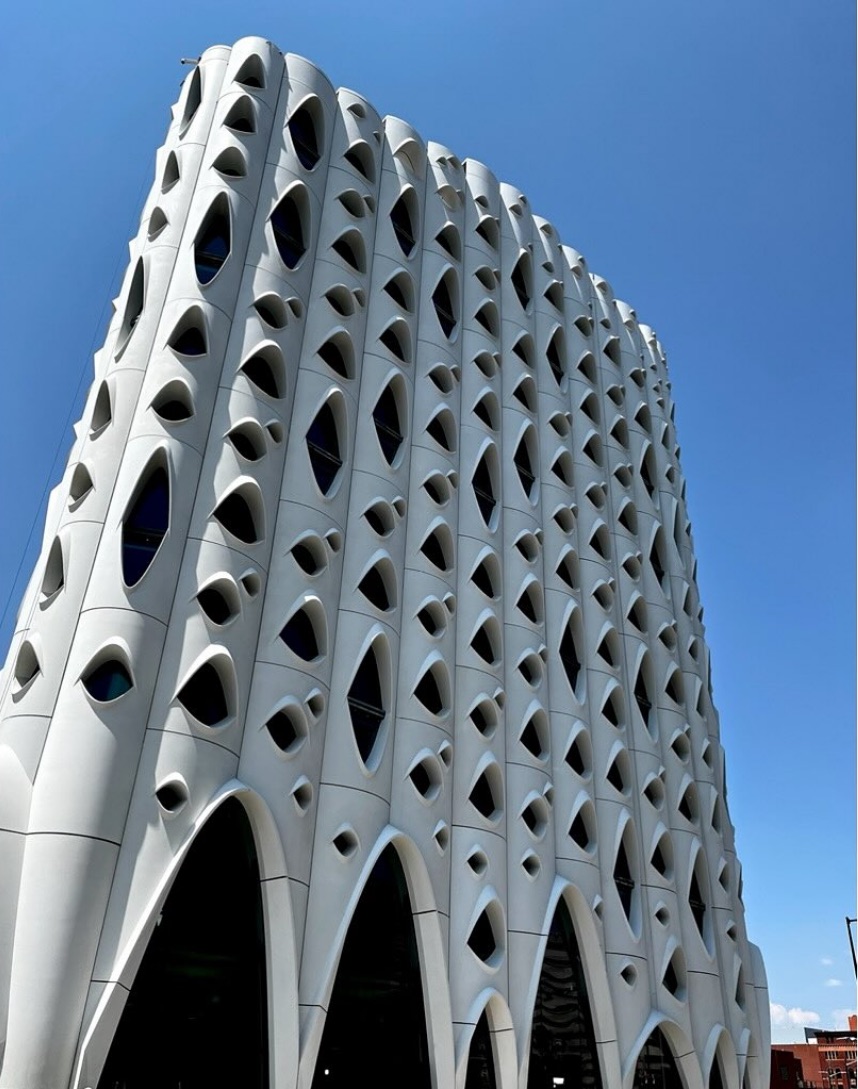
Populus is a 265-room hotel that opened in late 2024 and is being hailed as the first carbon-positive hotel in the United States. In practice, “carbon positive” means Populus will sequester more carbon dioxide than the combined embodied and operational emissions of the building over its entire lifecycle. The project’s developers, Urban Villages, and architects, Studio Gang, infused a deep environmental ethos into the design – from its aspen tree-inspired facade to its zero-waste operations – to ensure the hotel doesn’t just neutralize its carbon footprint, but actually leaves the planet ‘better than we found it’. According to its creators, Populus plans to overcompensate for its emissions by 400–500% through a mix of low-carbon construction, eco-friendly operations, and an ambitious tree-planting campaign. The hotel even launched a public “Road to Carbon Positive” dashboard to transparently track its carbon metrics (embodied vs. operational emissions and offsets) in real time.

A signature element of Populus’s sustainability plan is its massive tree-planting and reforestation effort, which provides a direct, nature-based carbon sink for the hotel’s emissions:

  • Initial Reforestation (Embodied Carbon Offset): To compensate for the one-time carbon cost of construction, Populus’s developer planted over 70,000 trees in Colorado’s forests even before the hotel opened. Specifically, Urban Villages worked with the U.S. Forest Service and partners to reforest 172+ acres in Gunnison County with native Engelmann spruce seedlings. This area was chosen to restore forest devastated by a beetle-kill epidemic, meaning the project not only sequesters carbon but also helps revive a damaged ecosystem. Over their lifetimes, these 70,000 trees are expected to sequester an amount of CO₂ equivalent to Populus’s entire core-and-shell construction emissions. In other words, the building’s embodied carbon is effectively “paid back” as the new forest matures. (Notably, this approach was favored over simply buying offsets because it creates a visible local legacy and biodiversity benefits in Colorado.)
Detail of facade. Credit: jahorne on Threads
  • “One Night, One Tree” – Continuous Offsetting: Populus’s climate impact doesn’t stop at construction. The hotel has an ongoing commitment to plant a tree for every guest night as part of its operations. In 2024 (its opening year), this will result in roughly 20,000 additional trees planted. Looking ahead, Populus aims to plant at least 55,000 trees in 2025 through this program, and continue at pace for each subsequent year. All trees are planted in collaboration with forestry experts to ensure they thrive – for example, in areas of the White River and Grand Mesa national forests that need reforestation after wildfires or pest damage. The species selected (like lodgepole pine, Douglas fir, and spruce) are chosen for climate resilience and ecological appropriateness. As these trees grow, they will absorb tens of thousands of tons of CO₂ over the coming decades, directly counterbalancing the hotel’s operational emissions. Urban Villages emphasizes that this isn’t just offsetting – it’s rebuilding forests. “We’re not just buying carbon credits, we’re reforesting Colorado forests,” said Jon Buerge, the company’s president. The result is a virtuous cycle: the more guests who stay at Populus, the more trees get planted, and the more carbon is pulled out of the atmosphere.

Sustainable Design vs. Traditional Building Practices
Populus stands out by integrating sustainability at every level, often in ways that contrast with traditional hotel development:

  • Low-Carbon Materials: Conventional buildings often rely on materials like standard concrete and steel that carry a high carbon footprint. Populus instead opted for innovative low-carbon materials wherever possible. For instance, the use of fly-ash blended concrete (Holcim’s ECOPact) substantially cut concrete-related emissions. The design also incorporates repurposed and natural materials inside: reclaimed wood from Colorado and Wyoming (e.g. wood from old snow fencing) was used for finishes, and even the lobby bar features panels made from MycoWorks Reishi™, a leather-like material grown from mushroom mycelium. By forgoing many “heavy-carbon” materials in favor of greener alternatives, Populus achieved a much lower embodied carbon than a typical project of its size.
  • No On-Site Parking Garage: Most urban hotels include multi-level parking garages built with carbon-intensive concrete and steel. Populus took the unusual step of providing zero on-site parking, making it the first new-build hotel in downtown Denver without a parking structure. This decision eliminated a huge source of embodied carbon (and aligns with the hotel’s site being a former gas station they wanted to symbolically transform). Instead of catering to cars, the building was designed to encourage walking, biking, and public transit use by guests. Architect Jeanne Gang “decided not to add street-level parking, but instead activate each of the three sides of the building” for pedestrian engagement. In an automobile-centric city, this is a bold departure – one that reduces emissions from both construction and guest transportation. Traditional hotels rarely sacrifice parking, whereas Populus treats car-free design as key to its sustainability mission.
  • Energy Efficiency & Renewables: Populus is built to operate with a minimal carbon footprint, unlike many older buildings. It is equipped with high-performance insulation and window designs (each window has an overhanging “lid” that provides shade and channels rainwater) to reduce heating/cooling loads. All electricity needed is procured from 100% renewable sources, and efficient appliances and systems further cut energy use. In contrast, a traditional hotel might draw power from the grid (often fossil-fueled) and use standard HVAC and lighting, resulting in significant annual CO₂ emissions. By locking in renewables and efficiency from day one, Populus ensures a lower operational carbon baseline than most buildings can achieve.
  • Waste Reduction and Circularity: Typical hospitality operations generate large amounts of waste (food waste, single-use plastics, etc.) that end up in landfills, producing methane and other greenhouse gases. Populus addresses this through innovative measures. It installed an on-site biodigester that composts 100% of the hotel’s food waste, turning scraps into soil nutrients that go back to local farms. The hotel also eliminated single-use plastics and provides reusable items (like refillable water bottles) to guests. In partnership with local farms and organizations, Populus practices “table-to-farm” sourcing and composting, creating a circular loop that typical hotels simply don’t have. These steps further shrink the operational carbon footprint (for example, less waste transport and landfill methane) while exemplifying sustainability to guests.

Setting a New Standard
Populus serves as a model for sustainable hospitality, demonstrating that luxury and environmental responsibility can coexist. Its commitment to carbon positivity challenges the industry to rethink traditional practices and embrace innovative solutions for a more sustainable future.

At Optima®, we are inspired by such pioneering projects and remain dedicated to integrating sustainable practices into our communities, ensuring that design excellence and environmental stewardship go hand in hand.

Swami Vivekananda in Chicago: A Legacy of Unity, Spirit, and Cross-Cultural Exchange

At Optima®, we believe architecture is more than a physical framework—it’s a philosophy that invites openness, transcends boundaries, and honors the intersection of global ideas. That belief echoes in the legacy of Swami Vivekananda, a figure whose time in Chicago helped usher in a new era of interfaith dialogue, spiritual inquiry, and cultural understanding. Much like the buildings we create—spaces designed for light, clarity, and connection—Vivekananda’s message brought ancient wisdom into the modern world with elegance and intention.

In the long and colorful history of Chicago, few moments have been as spiritually transformative—or as globally resonant—as a speech delivered in 1893 by a young Hindu monk from India. Standing before a crowd at the World’s Parliament of Religions, Swami Vivekananda opened his remarks with five simple words: “Sisters and brothers of America.”

What followed was a thunderous standing ovation, a moment of cultural connection so profound that it would echo far beyond the hall where he spoke. That address not only marked the West’s formal introduction to Hinduism—it signaled the beginning of a new era in global interfaith dialogue.

Swami Vivekananda Shrine-Hindu Temple of Greater Chicago, located in Lemont, IL. Credit: hakkun on Wikimedia Commons, licensed under the Creative Commons Attribution-Share Alike 3.0 Unported license.

The Parliament of Religions: A Turning Point
Held in conjunction with the 1893 World’s Columbian Exposition, the Parliament of Religions was the first formal gathering of representatives from the world’s major faiths. It was envisioned as a celebration of spiritual diversity, but for many in attendance, it also reinforced Eurocentric ideas about religion and progress.

Enter Swami Vivekananda, a 30-year-old monk in saffron robes, who had traveled from India with little more than conviction and a deep knowledge of Vedanta philosophy. Though virtually unknown when he arrived, Vivekananda quickly captivated audiences with his eloquence, humility, and message of spiritual unity.

In his speech, he emphasized the ancient Hindu ideals of tolerance, pluralism, and the universality of truth. “We believe not only in universal toleration,” he declared, “but we accept all religions as true.” This radical idea—that no single faith holds a monopoly on truth—was as startling to some as it was inspiring to others.

Chicago as the Gateway
Chicago was more than just the setting for Vivekananda’s speech—it was the launchpad for his global influence. After the Parliament, he remained in the city for several months, supported by local patrons who offered lodging and helped organize lectures. He gave talks in homes, churches, and halls throughout the city, deepening his engagement with Western audiences hungry for alternative approaches to spirituality.

During his time in Chicago, Vivekananda made a deliberate effort to bridge Eastern and Western thought. He spoke of the Atman (the inner self), of karma and rebirth, but also of ethics, service, and compassion in ways that resonated with both intellectuals and laypeople. He demystified Hinduism not by watering it down, but by connecting its ancient wisdom to universal human experience.

Chicago, with its industrial muscle and cultural ambition, became an unlikely home for a spiritual revolution. From here, Vivekananda would go on to tour other parts of the U.S. and Europe, but his time in Chicago laid the foundation. It gave him a platform—and more importantly, it gave the West a new way to understand the East.

Legacy in the Modern World
Swami Vivekananda’s visit changed the Western understanding of religion itself. He was one of the first to articulate the idea that spirituality could be experiential, rather than dogmatic. His teachings influenced generations of thinkers, including Aldous Huxley, Joseph Campbell, and even leaders of the American civil rights movement.

Today, Chicago continues to honor his legacy. A plaque at the Art Institute of Chicago commemorates his speech. Across the city and beyond, yoga centers, interfaith dialogues, and global spiritual movements still trace their roots back to that singular moment in 1893.

A Global Voice Born in Silence
Swami Vivekananda’s message began in meditative silence on the banks of the Ganges—but it found its voice in Chicago. In a city known for building skyscrapers and railroads, he built something else entirely: a bridge of understanding between East and West, body and soul, self and world.

At Optima®, we celebrate that same spirit of interconnectedness—across cultures, disciplines, and design philosophies. Just as Vivekananda invited the world to see unity in difference, we continue to craft spaces that bring people together in light, openness, and shared humanity. His words still resonate, reminding us that sometimes the most enduring monuments are not made of stone—but of speech, spirit, and the courageous act of imagining a more unified world.


A Journey Through Mid-Century Modernism at the Cranbrook Museum

At the heart of American Modernism, there’s a powerful throughline—one that threads from classroom to gallery, from Bauhaus roots to bold American reinvention. Cranbrook Art Museum’s current exhibition, Eventually Everything Connects: Mid-Century Modern Design in the U.S., illuminates that lineage with grace, depth, and resonance. For those familiar with Optima®’s architectural ethos, the exhibition reads like a love letter to the movement that inspired it—an affirmation that Modernism is not just history, but a living, breathing influence on how we build and live today.

The exhibition takes its title from a famous Charles Eames quote—apt, given that Eames and his wife Ray are central figures in both the show and the broader Cranbrook legacy. As Optima® readers know from past explorations of design history, Charles Eames studied architecture at Cranbrook and later taught there, absorbing and transmitting the school’s experimental spirit. In fact, many of the visionaries featured in Eventually Everything Connects—Florence Knoll, Harry Bertoia, and Eero Saarinen among them—passed through the doors of this Michigan-based institution before reshaping American design forever.

Herman Miller’s Lounge Chair Wood (LCW) designed by Charles Eames and Ray Kaiser Eames. Original public domain image from Saint Louis Art Museum.

Curated with a reverent yet contemporary eye, the exhibition is more than a retrospective—it’s a sensory map of how ideas traveled, evolved, and ultimately converged to shape the Mid-Century Modern aesthetic. Furniture, textiles, ceramics, and graphic design pieces sit alongside architectural models and immersive digital storytelling. The result is a tapestry of influence—one that echoes in the clean lines and honest materials of Optima® communities, from the desert forms of Optima McDowell Mountain® to the lush, elevated designs of Optima Lakeview® in Chicago.

One of the show’s strengths lies in how it foregrounds the network of mentorship and collaboration that defined the era. Florence Knoll’s revolutionary approach to spatial planning, for example, is shown in conversation with Eliel and Eero Saarinen’s architectural philosophy—both deeply rooted in Cranbrook’s pedagogical DNA. Harry Bertoia’s sculptural experimentation, so present in his iconic chairs and sound sculptures, emerges as a counterpoint to the rigorous geometry of Herbert Matter’s photography and Ray Eames’ textile work.

This interdisciplinary cross-pollination is something Optima® has long championed. As we’ve explored in previous posts, the company’s founder, David Hovey Sr., FAIA, drew from these very ideas—bringing together structure, landscape, interiors, and lifestyle into a cohesive vision. At Optima®, the architect is not only the builder, but the planner, developer, and often, the designer of the furniture and finishes themselves. It’s a spirit lifted directly from Cranbrook’s holistic approach.

Eventually Everything Connects also serves as a timely reminder of Modernism’s social ambition. Many of the objects on display—like mass-produced modular furniture or Bauhaus-influenced graphics—emerged from a belief in accessible, democratic design. That ethos continues in Optima®’s own work today, particularly in the integration of nature, wellness, and community across properties. The idea that beautiful design should enhance everyday life isn’t just an aesthetic—it’s a mission.

For visitors, the exhibition isn’t simply a walk through time; it’s an invitation to reconsider the spaces we inhabit today. As we stand inside the clean volumes and sunlit courtyards of Optima Verdana® or admire the breezeways and outdoor corridors of Optima Signature® , we feel the resonance of these mid-century ideals made modern once again.

In short, Eventually Everything Connects is more than an exhibition—it’s a mirror held up to a movement that continues to shape how we live and dream. For those who call an Optima® community home—or for anyone inspired by the ongoing legacy of Modernist design—it’s a pilgrimage well worth making.

The exhibition runs through September 21, 2025. Information about visiting the Cranbrook Museum, curated tours, special events, and the 400-page exhibition book published with Phaidon can be found here.

Exploring Chicago’s Architectural Roots: The “Brick of Chicago” Tour

In a city celebrated for its architectural legacy, few elements are as enduring and evocative as the humble brick. It’s the material that literally built Chicago—layer by layer, block by block—and continues to tell stories of resilience, craftsmanship, and community. Enter the “Brick of Chicago” Tour, a captivating journey through the city’s neighborhoods that reexamines architecture not just as structure, but as cultural memory.

Led by Chicagoan Will Quam, a self-professed “brick enthusiast” and architectural educator, the “Brick of Chicago” Tour invites participants to walk through the city’s streets with fresh eyes. Quam’s passion for masonry is contagious; what begins as a lesson in material science becomes a deeper meditation on history, artistry, and the city’s ever-evolving identity. Whether it’s the bold polychrome patterns of terra cotta from the early 20th century or the subtle color variations in reclaimed Chicago Commons brick, the tour brings a tactile beauty to the urban landscape—one that many passersby might otherwise overlook.

@brickofchicago. A close up of green glazed bricks on N Western Avenue, Humboldt Park.

Chicago’s reputation as an architectural capital is often tied to its steel-frame skyscrapers, Prairie School residences, and Modernist icons. But the “Brick of Chicago” Tour shifts the spotlight to the more granular, often unsung artistry of masonry. Along the way, participants learn about the origins of the clay, the evolution of kiln technology, and the cultural forces that shaped the look and feel of entire neighborhoods.

For residents of Optima Lakeview® and Optima Signature®, the tour offers more than a historical curiosity—it’s a reminder of how texture and materiality continue to shape life in Chicago today. Optima’s own design ethos, while rooted in modernism, shares a reverence for the expressive power of building materials. While Optima’s architecture often emphasizes glass, steel, and lush greenery, it exists in dialogue with the historic palette of the city—recognizing that innovation thrives when it honors context.

At Optima Lakeview®, residents live in a neighborhood that wears its brickwork proudly. From the traditional greystone flats to the repurposed industrial buildings, Lakeview tells a story of layered time—one that pairs seamlessly with Optima’s forward-thinking design. Just blocks away, the tour explores how the city’s historic brickyards contributed to the reddish hue that still defines many of the area’s façades.

Meanwhile, in Streeterville, Optima Signature® rises as a beacon of contemporary living—soaring glass, sweeping views, and cutting-edge amenities. And yet, even here, surrounded by the gleaming skyline, the surrounding architecture pays tribute to the city’s brick heritage. From the nearby Water Tower’s limestone resilience to the classic façades of Northwestern’s law school buildings, the balance between old and new remains a defining Chicago principle.

In a sense, the “Brick of Chicago” Tour isn’t just about buildings. It’s about seeing. It’s about developing an eye for detail, an appreciation for labor, and a love for the quiet stories embedded in walls. For Optima residents—many of whom are drawn to design, urban living, and a sense of place—it’s the perfect way to deepen their connection to the city they call home.

Chicago’s bricks may be fixed in place, but the stories they tell are alive, vibrant, and endlessly revealing. Whether you’re a longtime architecture buff or a curious city dweller, this tour proves that sometimes, the most fascinating views aren’t up in the skyline—but right there at eye level.

About the Walking Tours
The Brick of Chicago walking tours are immersive, neighborhood-specific explorations that invite participants to see familiar streets through a new lens. Led by founder Will Quam, each tour focuses on the rich variety of brickwork, revealing how materials, patterns, and colors tell the story of Chicago’s development.

Tour options rotate seasonally and include neighborhoods like Lakeview, Logan Square, Wicker Park, and the West Side, each offering its own architectural character. Whether you’re marveling at a row of glazed brick apartments from the 1920s or decoding the subtle shifts in color across a century-old façade, you’ll come away with a newfound appreciation for the artistry hidden in plain sight.

Tours are typically 90 minutes to two hours long, with easy walking routes designed for all levels of curiosity and mobility. Dates and locations vary throughout the spring, summer, and fall, and tickets can be reserved in advance through the Brick of Chicago website.

Francine Houben: Architecture as a Symphony of People, Place, and Purpose

At Optima®, we believe great design begins with inclusion. Our “Women in Architecture” series is part of a broader commitment to celebrating the vital contributions of women like Francine Houben, whose vision and leadership continue to shape the built environment in thoughtful, transformative ways. Highlighting these voices not only honors the past and present, but also inspires future generations of architects and designers.

In the often technical and visually driven world of architecture, Dutch architect Francine Houben stands out not just for her expressive buildings, but for her unwavering belief that architecture must serve humanity above all else. As the founding partner and creative director of Mecanoo Architecten, Houben has built a global career grounded in a singular ethos: designing for people.

Rooftop public garden, Library of Birmingham. Designed by Francine Houben. Credit: Sharon VanderKaay on Flickr Creative Commons, licensed under Attribution 2.0 Generic Deed.

Born in 1955 in Sittard, the Netherlands, Houben came of age during a pivotal time in architectural thinking—when Brutalism’s reign was giving way to more humanistic, socially conscious design. She studied architecture at the Delft University of Technology, where she would later return as a professor and mentor to a new generation of designers. Early on, Houben showed a proclivity for blending rational urban planning with poetic design, a balance that would come to define her portfolio.

Designing for All the Senses
Houben’s approach is holistic, one that treats architecture as a “symphony of all the senses.” She believes buildings should be welcoming, intuitive, and inclusive, responding to their environments and the diverse communities that inhabit them. As she has put it:

“Architecture is about combining all of the elements of life. It’s not just about functionality or aesthetics—it’s about emotion, atmosphere, and creating a sense of place.”

This philosophy is most vividly realized in her public buildings—libraries, theaters, universities—where people from all walks of life converge.

One of her most celebrated projects is the Delft University of Technology Library (1998), a bold yet graceful structure tucked beneath a sloping grass roof that blurs the boundary between landscape and building. The design is not just iconic; it’s democratic, offering students and faculty a place that’s both functional and inspiring.

Her international acclaim soared with the design of the Library of Birmingham in the UK (2013), a project that redefined what a civic space could be. With its intricate metallic façade and stacked geometric forms, the library is both a beacon of knowledge and a cultural hub. But beyond aesthetics, Houben made sure the building served its community—from offering learning resources to creating public gathering spaces that are free, open, and accessible.

Building Cultural Bridges
Francine Houben’s architecture often acts as a bridge—between past and present, art and function, city and citizen. At the Bruce C. Bolling Municipal Building in Boston (2015), she preserved elements of historic structures while inserting dynamic, light-filled forms to house public services and educational institutions. It’s a powerful expression of how design can support civic pride and equity.

More recently, she led the renovation and expansion of the Martin Luther King Jr. Memorial Library in Washington, D.C., originally designed by Mies van der Rohe. With profound respect for the building’s modernist heritage, Houben introduced warmth, light, and public programming that brought new life to a civic monument.

As she reflects:
“You have to design not for the architect, not for the image, but for the people. That’s where beauty begins.”

Francine Houben’s career is not defined by a signature style, but by a consistent sensibility—an empathetic eye, a human-centered touch, and an insistence that beauty and utility can, and must, coexist. Her influence is not only etched into skylines, but into the evolving philosophy of what architecture can be: a social art, a cultural instrument, a shelter for the soul.


Escaping Into Icons: Renting the Modernist Dream

In a recent Architectural Digest feature, the dream of living in a Modernist masterpiece—even for a night—becomes a reality. From Richard Neutra’s crisp geometries to Albert Frey’s mountain-perched glass box, the article highlights a selection of iconic homes by some of the 20th century’s most influential architects, now available for rent. For fans of Modernism—and for residents and admirers of Optima® communities—it’s an irresistible invitation: a rare chance to inhabit the blueprints of a design revolution.

What makes this article particularly resonant for the Optima® brand is its celebration of the very values that inform every Optima development: connection to landscape, spatial efficiency, and the transformative power of architectural vision. Take Neutra’s Rice House in Los Angeles, for example. Tucked into a lush hillside and outfitted with dramatic horizontal planes and floor-to-ceiling glass, it is a study in indoor-outdoor living—a core principle in Optima’s own projects, from the vertical landscaping of Optima Verdana® to the desert-integrated design of Optima McDowell Mountain®.

Mosby House in Missoula, Montana. Credit: Airbnb

The article doesn’t just catalogue homes; it offers a sensory passport to different regions of the country through the lens of Modernist aesthetics. A visitor to Frey House II in Palm Springs, with its compact footprint and boulder-punctuated interiors, will quickly understand how simplicity and restraint can elevate comfort. Similarly, homes like the Olsen House by Donald Wexler show how metal, glass, and light can harmonize to create a lived experience that feels simultaneously minimal and luxurious—a balance that Optima properties across Scottsdale and Chicago artfully pursue.

For Optima® residents, these rentals might feel more like cousins than aspirational getaways. The modular rhythm of exposed steel and glass, the prioritization of views and natural light, and the seamless blurring of inside and out are already part of everyday life. But there’s still something magnetic about standing in the very spaces that shaped the Modernist canon—homes that were once experiments and are now monuments.

The Architectural Digest roundup is more than a travel guide; it’s a reminder that architecture can be intimate. That great design isn’t just something to look at—it’s something to live in. And while Optima® creates that reality at scale, these short-term rentals offer a pilgrimage of sorts: a tactile, time-bound encounter with the pioneers who laid the foundation for the way we live beautifully today.

For those seeking inspiration or simply a design-forward escape, this curated list of Modernist rentals offers a rare chance to dwell inside history. Just don’t be surprised if, after a few nights immersed in Neutra or Frey, you come home to your own Optima® residence with a renewed appreciation for its vision—and its view.


Color Stories in Architecture: How Palettes Shape Our Perceptions

Color has always been one of architecture’s most powerful tools—not just for visual delight, but for emotional and psychological impact. Whether vibrant and energetic or subtle and grounding, color shapes how we experience buildings long before we ever step inside. At Optima®, color isn’t just applied—it’s embedded into the DNA of each structure. Through thoughtful exterior palettes, we tell visual stories that connect people to place, shape perception, and elevate everyday experience.

The Psychology of Color in the Built Environment
Color has a profound influence on mood and cognition. Cool hues like blues and greens often evoke calm, balance, and introspection, while warmer tones like reds and oranges suggest energy, passion, and warmth. Neutral tones can communicate elegance, clarity, and modernism. Architects and designers have long drawn on color theory to create desired emotional effects—and these insights are more than intuitive.

The exterior palette at Optima Sonoran Village® uses desert-inspired tones—ochres, sage greens, deep terracottas—to harmonize with the surrounding landscape.

The Munsell Color System, developed by artist and educator Albert Munsell in the early 20th century, organizes color based on three perceptual dimensions: hue (the type of color), value (lightness or darkness), and chroma (color intensity). This structured approach allows designers to select colors with precision and purpose—balancing brightness, saturation, and contrast to shape spatial experience.

At Optima®, these principles are woven into every exterior design. Our use of color is never arbitrary—it’s a calibrated response to location, light, material, and mood.

The Use of Color at Optima®
Across our communities, exterior palettes are carefully composed to create harmony between architecture and environment. In Scottsdale, Optima Kierland Apartments® and Optima Sonoran Village® use desert-inspired tones—ochres, sage greens, deep terracottas—that align with the surrounding Sonoran landscape. These palettes are designed with low chroma and medium value, creating an earthy richness that’s both calming and rooted in place.

In Chicago, Optima Signature® and Optima Lakeview® explore a different end of the spectrum. Here, we draw on higher-value, lower-chroma hues like charcoal gray, soft black, and glass blue to reflect the urban context and seasonal light shifts. The result is a sophisticated tonal balance that feels clean and contemporary but never sterile. Wood accents and textured materials in projects like Optima Lakeview® add warmth and tactile variation, offering contrast without overpowering the overall composition.

Creating Continuity Through Color
Color at Optima® is not confined to facades. Our vertical landscaping, interior finishes, and communal spaces often echo the building’s exterior palette, creating a holistic sensory experience. This reflects another principle from color theory: simultaneous contrast—how colors influence one another when placed side by side. By repeating tones across surfaces, we create visual continuity and emotional cohesion.

Our color choices also support our commitment to wellness and biophilic design. Natural hues—drawn from plants, minerals, and the changing sky—foster a subconscious connection to the outdoors, which has been shown to reduce stress and improve wellbeing.

A Palette That Evolves With Time
Just as natural light animates a building, it also transforms its color. That’s why we select palettes that shift gracefully throughout the day and year. A muted green might appear silver at sunrise and forest-rich by dusk. This responsiveness is essential to Optima’s approach. As the Munsell Color System reminds us, color is not fixed—it’s dynamic, relative, and deeply perceptual.

In every Optima® development, color is more than a surface treatment. It’s an architectural element, a mood-setter, and a storytelling device. It shapes how a building feels, how it fits into its context, and how residents connect to it over time.

Because in the end, color isn’t just what we see—it’s how we feel in a space. And at Optima®, we design for both.

Designing with Daylight: The Importance of Natural Light in Architecture

At Optima®, the interplay of light and space is never an afterthought—it’s a foundation. From the shimmering desert of Scottsdale to the vibrant skyline of Chicago, natural light is one of the most powerful and versatile tools in our architectural language. Thoughtfully harnessed daylight not only transforms interiors; it enhances the way people feel, move, and live within a space.

More Than Illumination
Natural light is essential to how we perceive the built environment. It sculpts form and reveals texture, sets the mood of a room, and influences how we experience color. But beyond aesthetics, daylight plays a critical role in health and wellness. Numerous studies have linked exposure to natural light with improved mood, better sleep, and increased productivity. In residential environments, it encourages circadian rhythms and creates uplifting spaces that feel alive and dynamic throughout the day.

Natural light flooding the lobby at 7140 Optima Kierland Apartments®

The Optima® Approach to Light
Every Optima® community is designed to maximize the benefits of daylight—both functionally and emotionally. Our signature vertical landscaping and open floor plans are intentionally paired with floor-to-ceiling windows, skylights, and atriums that usher in abundant natural light. Rather than relying on artificial lighting schemes to define ambiance, we let sunlight be the storyteller.

Architect Le Corbusier once observed, “The history of architecture is the history of the struggle for light.” At Optima®, we embrace that challenge with every building we design, and each project is an exploration of how to bring light more deeply—and more meaningfully—into daily life.

At Optima Lakeview® in Chicago, generous expanses of glass invite the shifting Midwest sun to animate interiors across seasons. Meanwhile, in Scottsdale, Optima Sonoran Village® balances the intensity of desert light with deeply recessed balconies, louvered shades, and carefully oriented windows that filter glare while preserving a sense of openness. The result? Spaces that glow rather than glare—comfortable year-round.

Designing for Light and Life
The use of natural light also connects architecture more deeply to the rhythms of nature. Sunlight moves. It changes hue. It surprises. Designing with daylight means inviting that sense of wonder indoors. It’s why Optima Signature® integrates multi-level atriums and sky gardens that diffuse light vertically through the building. Or why Optima Verdana® emphasizes daylight in shared amenities like its indoor pool and fitness center—because natural light elevates the ordinary into something revitalizing.

Sustainable design is another key driver of daylighting. By optimizing window placement and using high-performance glazing, we reduce the need for artificial lighting and climate control. Daylight becomes a passive resource—an environmental asset as much as a design one.

A Philosophy of Transparency
Ultimately, designing with daylight reflects a broader philosophy of transparency—both literal and metaphorical. Optima® homes invite the outside world in. They frame the horizon, celebrate greenery, and blur the boundaries between private and public space. Natural light is central to that openness. It fosters a sense of connection: to the seasons, to place, to one another.

In architecture, daylight is often called “the oldest material.” At Optima®, it remains one of the most modern. Not because it’s new, but because it continues to evolve with how we live. It’s not just a technical solution—it’s an emotional one. A tool that nurtures joy, clarity, and wellbeing in everyday life.

A New Standard in Sustainability: Optima McDowell Mountain® Debuts America’s Largest Private Rainwater Harvesting System

At Optima®, we believe that architectural design and environmental responsibility should be inseparable. That belief drives every detail of our communities, from energy-efficient building systems to lush vertical landscaping. Now, with the debut of America’s largest private residential rainwater harvesting system at Optima McDowell Mountain® in Scottsdale, we’re pushing that commitment even further—creating a new benchmark in sustainable living.

Innovation That Starts From the Sky
Located in the heart of the Sonoran Desert, where water conservation is critical, Optima McDowell Mountain® was designed to reflect the needs of both the local environment and the people who call it home. The new rainwater harvesting system spans the 3.75-acre development and captures, filters, and reuses rainwater to support the community’s expansive landscape needs.

With a storage capacity of 200,000 gallons, this cutting-edge system ensures that even in a region where rain is infrequent but intense, every drop is used wisely. Rainwater collected from the rooftops, terraces, and hardscape surfaces is channeled through engineered drains and filtration systems into large underground cisterns. This water is then repurposed for irrigation throughout the property’s extensive outdoor spaces, which feature native and drought-tolerant vegetation carefully curated to thrive in Scottsdale’s unique climate.

Designing for a Desert Future
Water scarcity is one of the defining environmental challenges of the Southwest. As populations grow and climate patterns shift, forward-thinking solutions are essential—not just for new buildings but for the long-term sustainability of entire communities. Without question, Optima McDowell Mountain®’s rainwater harvesting system is a stunning technical achievement; it is also a meaningful step toward reimagining how luxury and environmental stewardship can—and must—coexist.

The system dramatically reduces the development’s dependence on municipal water, lessening its impact on an already stressed water supply. For residents, that means living in a place that not only looks beautiful but is actively working to protect the natural world that surrounds it.

Integrating Nature and Community
True to Optima®’s philosophy of biophilic design, this system isn’t just behind the scenes—it’s part of a larger vision that connects architecture with nature. Lush courtyards, green spaces, and signature vertical gardens at Optima McDowell Mountain® are all supported by the harvested rainwater, providing vibrant and ever-changing scenery for residents to enjoy year-round.

These spaces are more than aesthetic features—they are active contributors to wellbeing, encouraging connection with nature, relaxation, and community engagement. Whether enjoying a morning coffee on a private terrace, walking the verdant paths, or gathering with neighbors in outdoor lounges, residents of Optima McDowell Mountain® experience firsthand how sustainability enhances quality of life.

A Model for What’s Next
Optima McDowell Mountain® exemplifies the future of development in water-conscious regions by leveraging intelligent design and sustainable innovation. As America’s largest private rainwater harvesting system of its kind, it sets a precedent for what’s possible—and what should be expected—from contemporary architecture in the age of climate resilience.

At Optima®, we’re proud to lead by example, continually seeking bold ways to bring sustainability and beauty into harmony. With projects like Optima McDowell Mountain®, we’re not just designing buildings—we’re helping shape a healthier, smarter, and more sustainable world, one drop at a time.

Rudolph Schindler: The Quiet Radical Who Reshaped Modernist Architecture

At Optima®, we draw continual inspiration from the architects whose pioneering visions redefined the built environment. Among them, few figures loom larger—or more quietly transformative—than Rudolph Schindler. An Austrian-born architect who made his greatest contributions in the United States, Schindler created work that blended philosophy, craft, and a deeply personal vision of how space could enrich daily life. Though once overshadowed by contemporaries like Frank Lloyd Wright and Richard Neutra, Schindler’s legacy endures as one of the most innovative voices in modernist architecture.

From Vienna to Los Angeles: A Transatlantic Shift in Thinking
Born in 1887 in Vienna, Schindler was educated at the Technische Hochschule (now TU Wien), steeped in the intellectual ferment of early 20th-century Europe. There, he absorbed the influence of the Vienna Secession and the evolving ideas of functionalism and spatial dynamism. In 1914, he immigrated to the U.S. to work with Frank Lloyd Wright, drawn by the promise of a new architectural language being forged in the American landscape.

While Wright would prove to be a pivotal figure in Schindler’s early career—particularly during their collaboration on the Imperial Hotel in Tokyo—Schindler soon began forging a philosophy all his own, one that broke decisively from both Beaux-Arts tradition and even Wright’s organic romanticism.

How House, Silver Lake (Los Angeles). Credit: Niels Wouters on Wikimedia Commons. Licensed under the Creative Commons Attribution-Share Alike 3.0 Unported license.

The Schindler House: A Radical Vision of Domestic Life
Schindler’s breakthrough came in 1922 with the completion of his own home in West Hollywood, known today as the Schindler House. Built of tilt-up concrete slabs and redwood panels, the house rejected the conventions of rooms and hallways in favor of open, flexible spaces that flowed into outdoor courtyards. It functioned not as a single-family home but as a live/work commune for two families—an experiment in shared living decades ahead of its time.

The Schindler House embodied what would become central to his work: a belief that architecture should be responsive, democratic, and rooted in its climate and landscape. It challenged the formality of domestic life and proposed instead a new kind of architecture that prioritized freedom, community, and the sensual experience of space.

Space Architecture: A Language of Light, Flow, and Terrain
Schindler famously rejected the label “International Style,” opting instead for what he called “space architecture.” This wasn’t about surfaces or ornamentation, but about crafting volumes and planes in a way that shaped light, movement, and human interaction. He pioneered techniques like split-level floor plans, built-in furniture, and the integration of natural materials to blur the line between inside and out.

Throughout Southern California, Schindler applied these ideas to a range of modestly scaled homes and small commercial buildings. Projects like the Lovell Beach House (1926), How House (1925), and the Sachs Apartments (1929) all reflect a deeply personal, site-sensitive approach—modernism that breathes, that shelters, that liberates.

Legacy and Relevance
Though he never enjoyed the commercial success or institutional acclaim of some peers, Schindler’s influence on modern architecture is profound. His work laid the groundwork for later developments in West Coast modernism and inspired generations of architects who sought to design with empathy and authenticity.

At Optima®, we share Schindler’s belief that design should respond to its environment and elevate the everyday. His legacy reminds us that architecture, at its best, is not a statement of power, but an expression of possibility—a carefully sculpted frame for life’s quiet rituals and bold moments alike.

In honoring Rudolph Schindler, we honor an architect who didn’t just build structures—he created spaces for living that still resonate with the values of modernism: clarity, integrity, and a deep respect for the human spirit.


person name goes here

Maintenance Supervisor

Glencoe, IL


    Acceptable file types: *.pdf | *.txt | *.doc, max-size: 2Mb