Personalization: How Residents Want to Customize Their Units

These days, everyone seems to want everything their way, whether it’s how they order their coffee, what ingredients they put in their meals, how they mix clothing items and even the way they choose to interact with rental housing industry professionals—by phone, email, text or in-person.

The bottom line is that individuality reigns, which certainly includes how renters want their residences to look, even if it’s an apartment where they may stay just a year or two.

But how do apartment owners and property managers deal with this rising wave of personalization and increased requests, both for the units as well as shared amenity spaces? David Hovey Jr., AIA, President and COO of Optima Inc., which manages 2,500 units across two states, says his company has developed a flexible response as it experiences the rise, in part because many of its residents previously owned large single-family houses where they had unlimited freedom to make changes.

Among the most frequent requests Optima management hears at its Optima Lakeview Chicago building are for more novel paint colors. At its Optima Verdana building in downtown suburban Wilmette, outside Chicago, several residents have asked to install their own light fixtures, draperies and further customize the built-in closet system. The building often approves such requests, saying that this type of flexibility boosts the appeal of renting at its properties and smooths the transition for those new to renting after homeownership.

But the company still requires that residents adhere to certain guidelines regarding the permanence of such features, Hovey says. As a general rule, Optima residents must return their apartments to the original state when they move out so subsequent residents are not left to reverse alterations; exceptions occur. While a paint color must be changed back, upgrades to a closet, for example, may be allowed to stay if the resident utilizes the same high-end closet system in keeping with the original design intent.

Yet, some renters are so keen on customization that they decide to take a wait-and-see attitude about how they’ll handle the changes they make, especially if they think they may not leave. Case in point are Sandra Gordon and husband David Leibowitz, who moved into a three-bedroom rental at Optima Lakeview not knowing if it would be temporary or permanent when their nearby condo had structural problems. “I had owned homes my entire life and the rental was a new experience,” she says. As time went on and Gordon found that anything that needed fixing was done fast, she and her husband decided to stay. They also liked the diversity of other residents, especially the presence of younger Millennials, their new East Lakeview neighborhood, all the social activities management offered and shared amenities including a well-equipped gym and business center where Leibowitz could meet with clients rather than in his home office.

The couple was less excited initially about the original appearance of their unit as a “plain white box,” as Gordon describes it, and decided to add their imprint in the form of a custom mural they had painted on a large barn door near the entryway. “The apartment was so white when you walked in, so we hired a graffiti artist to paint a mural of our dog Zoe, which added personality to the unit,” Gordon says. The couple expects the building will paint over it when they leave and charge them or if the mural can’t be covered over, they’ll pay for another door. They also added grab bars for safety in bathrooms and brought in a high-end toilet with heated seat, which they’ll take with them if they move. However, for now, they have no plans to leave their rental lifestyle.

How much some managers charge occupants to return apartments to their original condition or if they let some changes remain depends on what was done and demand for the unit, says Jeff Klotz, owner of Atlantic Beach, Fla.-based The Klotz Group of Companies, LLC, which manages 15,000 units in seven states. His firm tries to offer some flexibility by giving renters options when they first rent such as different wood plank flooring and carpeting, ceiling fans, a palette of “acceptable” paint colors, a few accent wall coverings and smart features beyond the basic package of a door lock and thermostat such as speakers, appliances, light controls and alarms. Such changes add a monthly extra cost that may range from $50 to $100 a month, Klotz says. However, sometimes there may be no charge as a way to close a deal, he says.

When any of these requests are made, his company insists on making them to be sure the work is properly done. If rules are broken—residents do their own DIY work, for example, typically they’ll forfeit their security deposit. But when residents leave, some changes—if done well—may be left intact and built into the rent of the next resident, Klotz says. “For example—all closet systems add value and remain as a future upgrade, along with other upgrades in flooring, air quality and home automation and create future upgrade charges,” he says. Yet, despite the greater interest in personalized changes, the number of requests remains small, numbering about 10% to 20% of its population, Klotz says.

Chicago-based Draper and Kramer, which manages 4,900 units in five states, also offers some options when new residents rent at its newer properties, including for different cosmetic paint and accent wall colors, which residents must change back when they leave or be charged. But it has different rules for listings in other markets and for some older vintage buildings in Chicago. For example, at its Texas listings, residents may choose to rent or own their washing and dryer machines, which is typical in that market. With its vintage luxury Chicago buildings, which have units that haven’t all been updated, it offers choices when it comes to structural changes for floors, countertops and cabinetry with the quid pro quo being a higher monthly lease payment, says Colleen Needham, Assistant Vice President and Regional Manager, Residential Management Services. Yet, overall, her firm hasn’t had many requests to personalize units, since so many of its buildings are new with popular colors and energy-efficient features already in place, she says.

And Denver-based Sentral, which manages 10,000 units in 10 states, offers the ultimate personalization by having the company make choices in furnishings and artworks for those who don’t want to deal with those decisions. “Many of our residents have multiple homes and may want to rent one or two apartments, including ones that are furnished,” says President Lisa Yeh. In some cases, these include residences for short-term rentals, and the company takes its inspiration from the area’s culture and history. “Nashville is a big area for this because of its music culture,” Yeh says. The company caters to a wide range of other demographics who seek residences from 500-square-foot studios in Austin, Texas, to apartments of several thousand square feet in Beverly Hills, Calif. The majority who rent the company’s units add their own imprint with their own furnishings and then seek to personalize with their choice of wall colors, sound systems, doggie doors to patios, window coverings and landscaping on the patio, she says. Sentral also considers those who stay longer than a year and may want to make changes such as outfitting their closets. Its management will recommend companies to fabricate such systems. As with the policy of other companies, it may retain some changes if done well and build the costs into the next rents.

Because students often rent a purpose-built student (PBSH) apartment for only a year or two, their requests are fewer yet they still occur. Some want to hang pictures or posters, and if the nail holes are smaller than a dime, they are permitted to do so, says KrisAnn Kizer, Vice President of Leasing and Marketing at San Diego-based Pierce Education Properties, with 7,558 beds in eight states. “They’re allowed to paint but then they have to paint the rooms back or they’ll be charged; same goes for any wallpaper or decals they put up,” she says. They are also permitted to bring their own furniture depending on the layout since most PBSH comes with furnishings. “If that’s the case, they have to put the building’s furnishings in storage,” she says.

Pierce Education is also personalizing its amenity spaces, indoors and outdoors, to fit how they hear students want to live, based on surveys it conducts. These days, that might mean more movable furniture for more flexible living areas both for lounging and studying. “We might have four small tables that can be rearranged rather than one large one and the same for a sectional with parts,” she says.

A good way for managers to come up with other ideas to personalize spaces for residents without incurring expensive, permanent charges is to look to architects and designers who understand how to make cosmetic changes that are relatively easy to disassemble or demolish. Architect Alexander Zilberman, AIA, NCARB, of design firm AZA in New York City suggests paravent screens as a room/privacy divider to change a layout without installing a wall.

Cost of Turns

In general, Jeff Klotz’s management team at The Klotz Group of Companies LLC tries to keep the average cost of a turn to ready an apartment for the next resident at less than half the cost of the rent, though it usually averages closer to 25% of the cost, Klotz says. His firm also charges an extra fee for excessive damage such as a hole in a wall versus acceptable wear and tear. Often, it leaves some personalized changes in place if they add to the unit’s appeal and builds the extra cost into the rent for the next resident. Such changes might include enhancements to an air system to improve air quality, Klotz says.

Pierce Education Properties has experienced a rise in the expenses associated with unit turnovers. KrisAnn Kizer attributes the increase to higher labor and materials costs, but also the company’s transition to using a more contemporary furniture package. “While this new package comes with a slightly higher price tag of between 10% to 25% in costs to our property, residents have expressed greater satisfaction with the modern and modular furniture it provides,” she says.

To pare turn costs, Sentral likes to keep choices as consistent as possible, which helps make replacements more economical. On average, Yeh says, turn costs for a one bedroom run between $350 and $500 for cleaning, painting and carpet cleaning, if applicable, excluding damage. But part of the low costs is that company assets are mostly new, Class A and in good condition.

Its more expensive units involve higher turn costs. Because of the great variety in the age and condition of its units, Draper and Kramer’s Colleen Needham says it’s too hard to provide an average turn cost. “Some buildings might require drywall while others could involve plastering,” she says.


Read more on National Apartment Association

Visit Optima Lakeview & Optima Verdana for more details

Retail leasing is ramping up in the Midwest

After seeing some slowdown during the pandemic, leasing is picking up in the Midwest with retailers of all types filling spots in major cities and the surrounding suburbs. Grocery stores, restaurants, clothing brands and sports retailers all look to expand in America’s Heartland.

JLL negotiated leases for six new tenants at Rosedale Center, a 1.1 million-s.f. shopping center in Roseville, Minn., within the metro Twin Cities. The leases include Kendra Scott, J.Crew Factory, Johnston & Murphy, Lolli & Pops, Paris Baguette and BRKTHROUGH. Additionally, Dick’s Sporting Goods, Legendary Spice, Boba X and Kukuri recently opened at the center.

Cricket sports brand, CrossBat, opened an 18,000-s.f. location in Burnsville, Minn., just south of Minneapolis. The location marks the launch of CrossBat’s flagship cricket facility. The company plans to expand nationally. The indoor cricket venue offers box cricket leagues, nine full-length lanes for practice, cricket events, corporate team-building experiences and a coaching network. Cushman & Wakefield represented CrossBat in the lease, while KW Commercial represented the owner, Metro Center LLC.

Whole Foods Market opened a new 36,234-s.f. store in St. Charles, Ill., a western suburb of Chicago. The location’s product assortment will feature more than 650 products from the Midwest. Whole Foods will present Chicago-based supplier Evergreen with a low-interest loan through the Whole Foods Market Lending Program to help grow its operations and support expansion to more Whole Foods locations.

Lee & Associates of Illinois has negotiated a 4,500-s.f. restaurant lease in Chicago’s Logan Square neighborhood. The tenant, Mansun, is a Korean restaurant with plans to open next year. This will be the proprietor’s second restaurant, following New Village Gastro Pub in Northbrook, Ill. Lee & Associates represented the tenant in the lease. Emerging Concepts represented the landlord, an entity doing business as 2M Square FB LLC.

Egg Harbor Cafe opened a location at Optima Verdana, 100-unit luxury apartment complex in downtown Wilmette, Ill. The 4,100-s.f. restaurant is directly across from Wilmette’s Metra commuter rail station. Specializing in breakfast, brunch and lunch, Egg Harbor Cafe operates in Illinois, Wisconsin and Georgia. Optima Inc. owns the property. The new Wilmette location represents the second Egg Harbor within an Optima community, joining the Streeterville location at the 490-unit Optima Signature high-rise in downtown Chicago. Optima is planning a new 128-unit luxury building just south of Optima Verdana. Known as Optima Lumina, the project will replace the long-vacant former Imperial Motors car dealership. The developer intends to retain the existing Starbucks within the project’s 5,900 s.f. of new commercial space.

Eight new retailers with a focus on men’s fashion recently opened at Easton Town Center in Columbus, Ohio. The new tenants are Allen Edmonds, Faherty, Peter Millar, State & Liberty, Todd Snyder and the first Vuori store in Columbus.

Academy Sports + Outdoors launched a 55,000-s.f. store at Southland Crossings in Boardman, Ohio, about 50 miles east of Akron. First National Realty Partners owns the 245,678-s.f. shopping center. The lease backfills a former vacancy and replaces a short-term tenant. The store offers a wide array of sporting goods, outdoor recreation equipment and apparel. Additional tenants at the property include Bob’s Discount Furniture, Boot Barn, Giant Eagle, PetSmart and Ross Dress for Less.

Desi Chowrastha, an Indian eatery based in Texas, has secured its first Kansas City-area restaurant in Overland Park, Kan. The restaurant will take up 7,564 s.f. and occupy space within a 15,500-s.f. pad building of Corbin Park Retail Village. Co-tenants include American Red Cross, Mozari Alterations and Embody. The menu features a variety of kabobs, curries, appetizers and sandwiches. The chain currently has 25 franchisees across America, with many others under contract. Block & Company Inc. represented the landlord in the lease and is the leasing and property management company for the pad building.

Owner Copaken Brooks has unveiled two new tenants joining the District at Lenexa City Center in Lenexa, Kan., Neat Cocktail Bar and The Groom Gallery. The cocktail bar will open this December in a 1,250-s.f. space that was formerly home to Savoy Tea. Block & Company Inc. represented Neat Craft Cocktails in the lease. The Groom Gallery, a full-service pet grooming concept with six locations throughout the metro area, signed a lease for 1,312 s.f. and anticipates opening in the first quarter of 2026. The District location will serve as a relocation of the company’s existing Lenexa site. Peak Real Estate Partners represented the tenant. Copaken Brooks also announced that three new restaurants are coming to the AdventHealth Campus at Lenexa City Center. Five Four, Urban Egg and Stoney River Steakhouse and Grill will open between 2026 and 2027.


Read more on The Crittenden Report

Visit Optima Verdana for more details
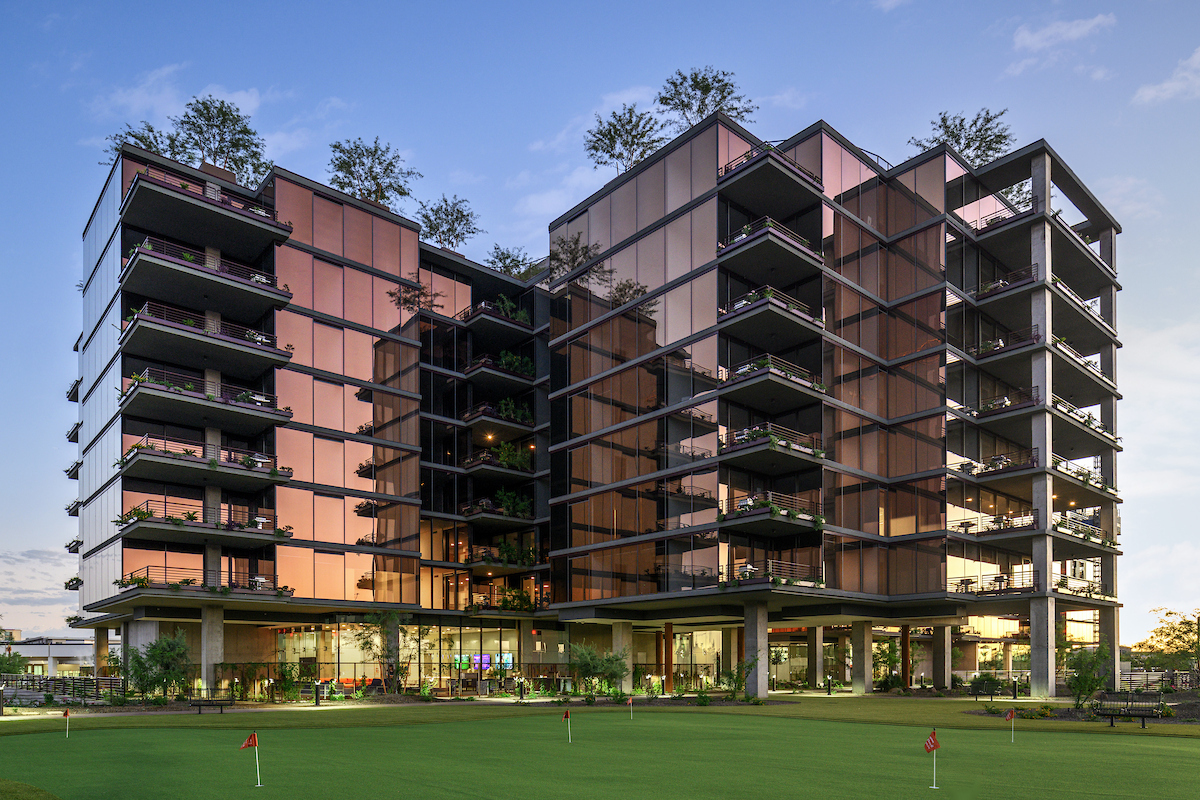
Optima wins approval for mixed-use Wilmette project

The village of Wilmette, Illinois has given Optima, Inc. final approval for a mixed-use development of 109 luxury apartments and street-level retail at 1210 Central Avenue. Optima plans to break ground in late 2021 with project completion slated for 2023.

“Thanks to the support and shared vision of Wilmette’s leaders, we’re excited to be back in the North Shore developing our newest project,” said Optima CEO, David C. Hovey Sr., FAIA. In 2010, the firm completed the 660-unit Optima Old Orchard Woods condominium development in nearby Skokie, Illinois that overlooks the Harms Woods Forest Preserve and Interstate 94, one of the firm’s 20 North Shore projects.

Designed by Hovey, the new Wilmette development will feature 109 luxury one-, two- and three-bedroom rental units and more than 8,000 square feet of commercial space at street level, along with 28 parking spaces available for public use. Select units will have large, private terraces. Building residents will have access to a rooftop sky deck and pool, residential courtyard, a suite of amenities and 173 parking spaces, including some electric vehicle charging stations.

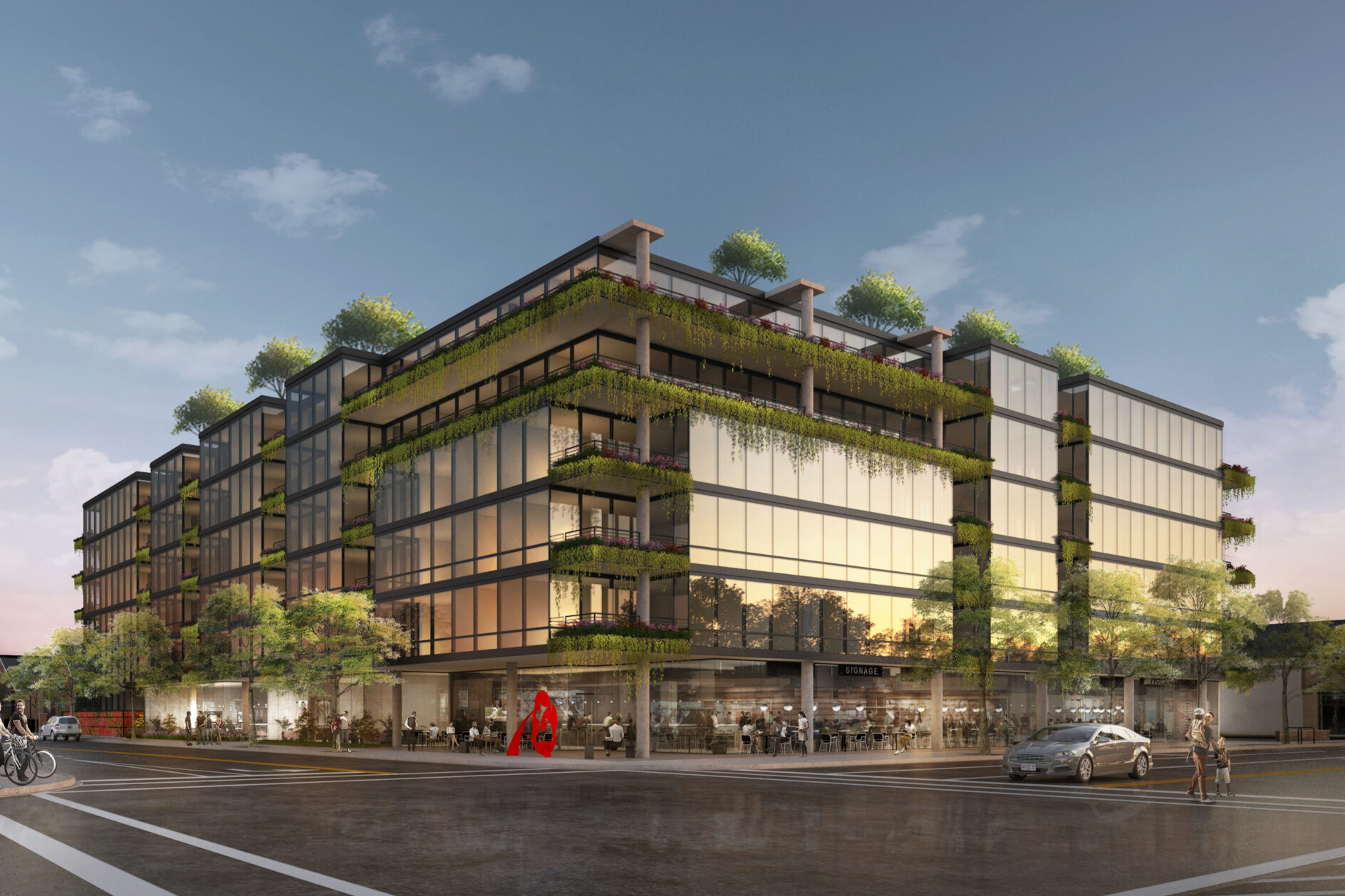
Floors one through three will use bird-friendly glass. Other sustainable features include Optima’s innovative vertical landscaping system that it has perfected at its Arizona communities. The Wilmette system will include self-containing irrigation and drainage and be complemented with hand-selected plants that will stay green year-round—even during the most extreme weather conditions. Optima is committed to earning Green Globes Certification for sustainable construction practices for the building

“As with each project we design and build, we’re very careful to ensure the buildings respect their environment and have a positive impact on the surrounding neighborhood,” said Hovey. “This development will be no different, as not only will it deliver the size of homes and amenities residents in Wilmette want, but the exterior design will feature our signature vertical landscaping system and public art component that will enhance the downtown community’s energy and aesthetic.”

Hovey will design an original, 8-foot-tall sculpture near the building’s entry as a public art piece. Optima will also install benches near the sculpture for passers-by to enjoy the space.

The final approval of the Wilmette building comes on the heels of Optima starting construction on Optima Lakeview, its new mixed-use, transit-oriented development of 198 apartments and street-level retail at 3460 N. Broadway in Chicago’s Lakeview neighborhood, which is scheduled to be completed in 2022.

Read the full feature on RE Journals

How Sustainable Design Is Elevating Multifamily Living Spaces

From city centers to suburban communities, developers are rethinking living spaces to minimize environmental impact and enhance resident well-being. Integrating environmentally friendly features into buildings helps to create spaces that are not only energy- and water-efficient but also promote occupant health.

Current key initiatives include integrating LED lighting and occupancy sensors for energy savings, employing smart thermostats for precise temperature control, and enhancing building enclosure and insulation for improved energy efficiency, according to Alison Mills, vice president of design and development at investment firm CRG.

Water conservation measures involve installing low-flow plumbing fixtures and smart irrigation systems, while prioritizing low-VOC materials contributes to indoor air quality. Additionally, the growing popularity of electric vehicle charging systems and “EV-ready” parking spaces reflects a commitment to sustainable transportation options.

Uncovering sustainable design principles

Incorporating green design principles into multifamily housing developments that simultaneously promote sustainability and eco-friendliness while enhancing the resident experience is a core architectural principle for Optima, a design-driven real estate development firm rooted in the modernist tradition.

“Optima’s vertical landscaping system allows plants to cascade down the facades of our buildings. The exterior greenery enhances the aesthetic appeal of a community and provides numerous environmental and biophilic benefits such as improved air quality, mitigating the heat island effect, solar shading and resident privacy,” said David Hovey president & COO of Optima.

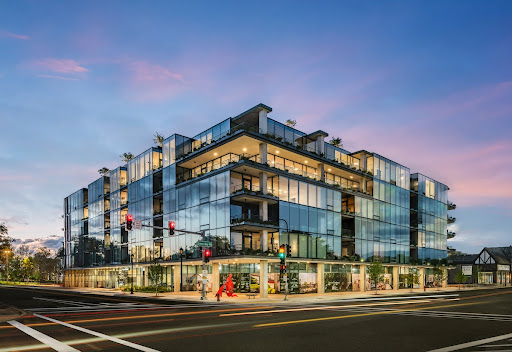
The firm’s proprietary exterior landscape system was first developed for Optima’s Arizona properties but recently made its Midwest debut at Optima Verdana, a 100-unit luxury rental community that opened in 2023 in Wilmette, Ill., on Chicago’s North Shore. The building’s exterior planters were designed with species that stay green year-round and provide opportunities for residents to connect with nature from within their homes.

CRG’s upcoming student housing project, Chapter at Madison, near the University of Wisconsin, is embracing biophilic design principles by incorporating visible green roofs instead of traditional white TPO rooftops. These roofs will showcase lush local plantings year-round, enhancing aesthetics while serving multiple environmental purposes. They mitigate climate change effects by reducing stormwater runoff, countering the heat island effect, saving energy and fostering biodiversity.

sustainable design green design multifamily
Optima Verdana’s exterior planters were designed with species that stay green year-round. Image courtesy of Optima/Michael Duerinckx

Chapter at Madison also prioritizes sustainability through LEED Silver certification efforts, leveraging water source heat pumps to exceed energy efficiency standards and reduce utility bills for residents. Recyclables are conveniently stored on-site, encouraging active participation in waste reduction, while ample bicycle facilities promote eco-friendly transportation alternatives.

In Chicago, CRG is committed to sustainable construction practices, aiming for an 80 percent diversion of construction waste to minimize landfill use, prevent soil contamination and reduce water pollution.

Optima McDowell Mountain, which is currently under construction in North Scottsdale, Ariz., will have a significant measurable positive impact on its surrounding environment. When complete, the community will feature the largest private rainwater harvesting site in the U.S. Hovey noted.

The residences are expected to use half as much water as the average Scottsdale multifamily residence and a quarter as much water as the average Scottsdale single-family home. The community will be the first project in Arizona to be built under both the new International Energy Conservation Code and International Green Construction Code.

“Integrating green and sustainable design principles into multifamily housing is not only a win-win for both the environment and the people who call these spaces home, but it also aligns with ESG priorities of investors and lenders,” Mills noted. “These stakeholders are placing growing importance on environmentally friendly business practices, which in turn safeguards the long-term value of the asset,” Mills noted.


Read more on Multi-Housing News

Visit Optima Verdana for more details

Suburban luxury rentals thriving as high-end finishes, amenities appeal to many demographics

Upscale living in the Chicago suburbs used to mean a spacious single-family home in a quiet cul-de-sac with a two-car garage. But for a growing group, it now looks like a three-bedroom apartment with Italian marble floors, fancy new appliances and amenities ranging from a golf simulator to a massage room and free macchiatos in the lobby on-demand.

As the cost of homeownership balloons, luxury apartments in the suburbs are emerging as an answer for several types of residents.

Many retirees and empty nesters who want to age in place are choosing to downsize to luxury rentals as opposed to townhomes or smaller houses so they can forgo the hassle of home repairs and maintenance.

And younger residents with children who want to live in suburban school districts but aren’t ready to buy a single-family home have flocked to luxury suburban rentals. The rentals also appeal to many singles who no longer have to commute downtown daily for their jobs and want amenities such as co-working spaces.

The rental market in the suburbs is strong. The median monthly rent was $1,830 for a one-bedroom and $2,190 for a two-bedroom at the end of the second quarter this year, according to Integra Realty Resources, a firm that gathers data on about 120,000 apartment units in the Chicago metro area every quarter. Median rent overall has increased by 4.1% over the last year, higher than historical increases, according to Integra.

The firm surveyed apartments in Lake, McHenry, Kane, Kendall, DuPage and Will counties and some in Cook County, excluding properties in the city of Chicago. In some pockets of the suburbs, median rents for a one-bedroom apartment jumped significantly since last year: In Waukegan and Gurnee, it increased by 16.9%, and in Lake County, it went up by 9.8%.

For two-bedroom apartments, median rents increased by 6% in McHenry County and by 5.5% in Naperville and Aurora, over the last year.

Ron DeVries, senior managing director at Integra, said renters are seeking out the more spacious apartments — not just in the number of bedrooms but in terms of square footage — that are offered by high-end developers.

“With the cost of housing being so high and interest rates where they are, people are staying in apartments longer,” DeVries said. “Your needs change over time. … We are seeing demand for bigger units.”

The report compiled by DeVries’ firm about data on suburban apartments from the second quarter of 2025 found that the suburban multifamily market is 97.5% occupied, contributing to higher rents. Several new projects are in the works, especially compared with downtown Chicago, where construction activity has slowed.

The report also attributes the popularity of suburban rentals to the remote work trend that grew during the pandemic, because workers now feel less pressure to live near downtown job centers.

Brian Carley, executive director at Bradford Allen, a real estate development firm with projects across Illinois and in Florida and New York, said housing supply in suburban Chicago is still not fully meeting demand, unlike markets such as South Florida, where there is an oversupply of apartments.

“The Chicago metro area is still a really strong market,” Carley said. “It’s not like Florida, where supply has now outpaced demand a bit. … We’re still meeting the market (in the Chicago suburbs).”

Carley’s firm is in the early stages of developing an eight-story, 301-unit apartment complex called Arbor House in Arlington Heights. With features like exposed concrete, the designers wanted the property to have an urban feel. And, like luxury apartments in the city, it will have a door attendant and amenities like a pool, golf simulators, a fitness center and a co-working space. The property will have views of Busse Woods, a nearby forest preserve, and the complex will be surrounded by 25,000 square feet of retail space for shops and restaurants.

“Our intention is to create a mixed-use space with retail and open space to create dynamic kinds of living experiences in southern Arlington Heights,” Carley said.

Aaron Tucker, president and chief investment officer at Tucker Development, who worked on The Henry at Harms Woods, a luxury community of apartments and townhomes in Skokie that opened last month, echoed the idea that suburban renters are looking to get the best of the city and suburbs when they opt for luxury apartments.

Tucker’s 11-acre development will include 245 apartments and 49 rental townhomes with a gym, conference rooms, a yoga studio, a swimming pool with cabanas, fire pits and grills. The property, which was developed in partnership with Wingspan Development Group, is also close to the North Shore and an outdoor space like Harms Woods.

“From our lobby to the clubhouse space, everything is elevated to a level that really makes you feel like you’ve walked into a nice hotel or resort,” Tucker said. “We’ve given people the ability to settle somewhere that gives them all the amenities that they might have been used to downtown.”

The library lounge area at Optima Verdana in Wilmette on Sep. 15, 2025. (E. Jason Wambsgans/Chicago Tribune)

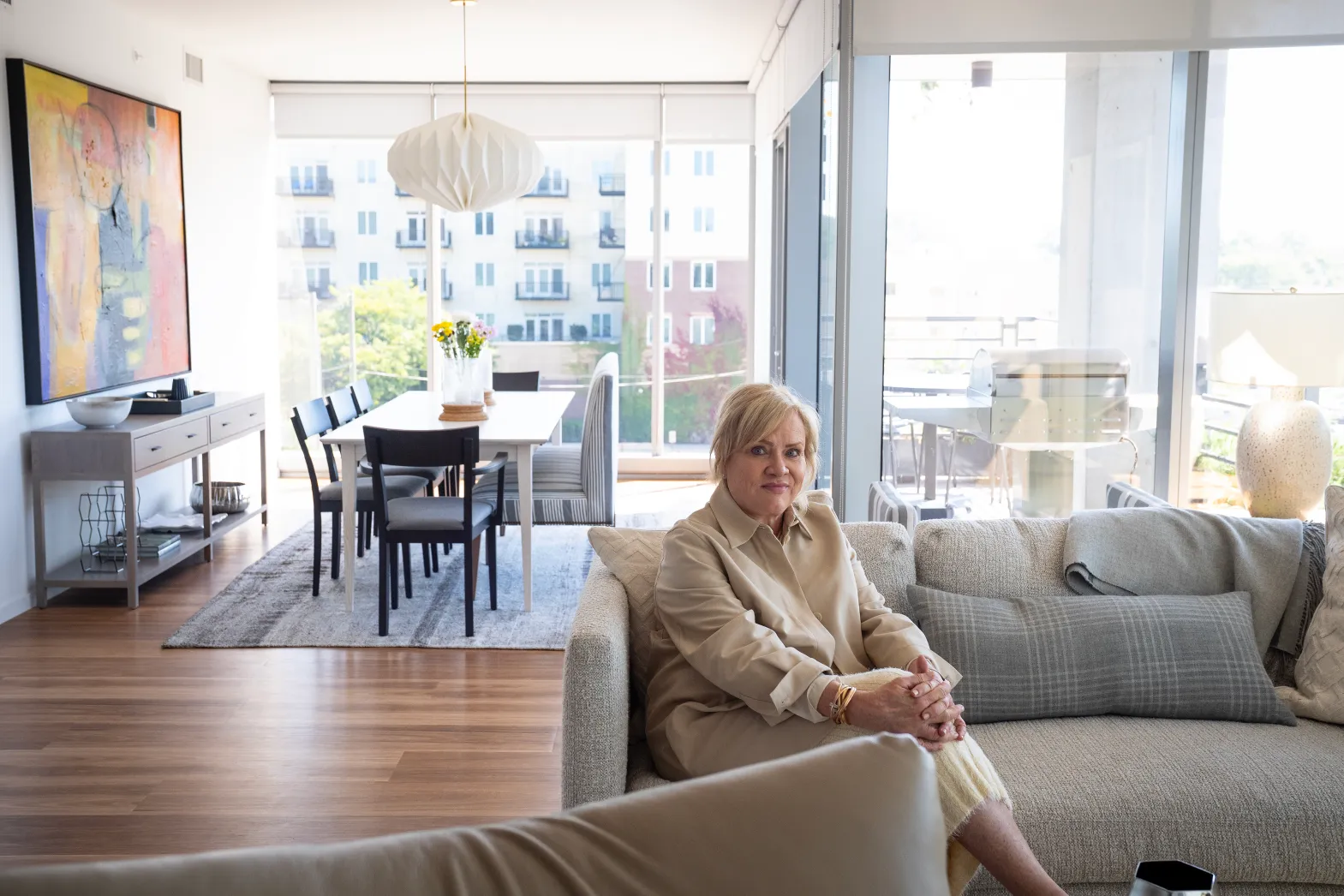
Kay Zanotti, 70, is one of a growing number of people opting for luxury living in the suburbs. She and her husband used to have a luxury apartment downtown, but they moved to Optima Verdana in Wilmette about two years ago to be closer to her daughter and grandchildren, who live in a single-family home a short walk away.

Although Zanotti and her husband now pay more in rent than they did downtown, she said it is worth it because her suburban apartment is bigger and staffers at the new complex are more attentive.

Optima Verdana has amenities like a heated pool, free Pilates and water aerobics classes, a complimentary coffee service and dry cleaning. Zanotti said she is extremely satisfied with the property and is glad she no longer has to deal with homeowners associations or maintenance issues.

“There’s a lot of work that goes into owning a home,” she said. “Renting is pretty freeing.”

Pam Roehl, 59, who pays about $4,840 a month to rent a three-bedroom apartment at The 1010 on Central Avenue in Wilmette, also likes that she no longer has to worry about home repairs. The building she lives in is a renovated Masonic Temple with 16 units meant for tenants age 55 and older.

Roehl, who is single, had lived in Wilmette and nearby Winnetka in single-family homes while raising her kids. When her kids graduated from college and it came time to downsize, renting made more sense than buying a smaller house because she was keen on staying in Wilmette, where property taxes are high.

“When you downsize in Wilmette, you’re not necessarily downsizing to a less-expensive house, you’re just downsizing smaller,” Roehl said. “You’re paying for higher rent in this building … but what (you’d be) paying in taxes (is higher).”

She considered buying a condominium near the lakefront in Wilmette, but none of the properties she looked at accommodated dogs.

Like Roehl, George Busse, 70, and his wife, Suzanne, 65, wanted to stay in Mount Prospect, where they raised their children, to be close to family members in assisted living facilities nearby and close to the Mount Prospect Lions Club, where George is a member.

The couple downsized from their 5,000-square-foot house, where they had bedrooms for each of their five children, a library and a home gym. At first, the couple thought of downsizing to a smaller house in Mount Prospect, but eventually decided to rent. Now they pay a little over $4,000 a month for a two-bedroom, two-bathroom apartment on the sixth floor of The Dawson, a luxury apartment complex in Mount Prospect.

It was hard to let go of their old house, but the couple now enjoys a maintenance-free lifestyle and travels more frequently.

“I never wanted to rent,” George Busse said, “but it just gives us so much flexibility.”

Photo credit: Kay Zanotti moved from a high-rise in downtown Chicago to Optima Verdana in Wilmette to be closer to her daughter and grandkids, as seen on Sep. 15, 2025. (E. Jason Wambsgans/Chicago Tribune)


Read more on Chicago Tribune

Visit Optima Verdana for more details
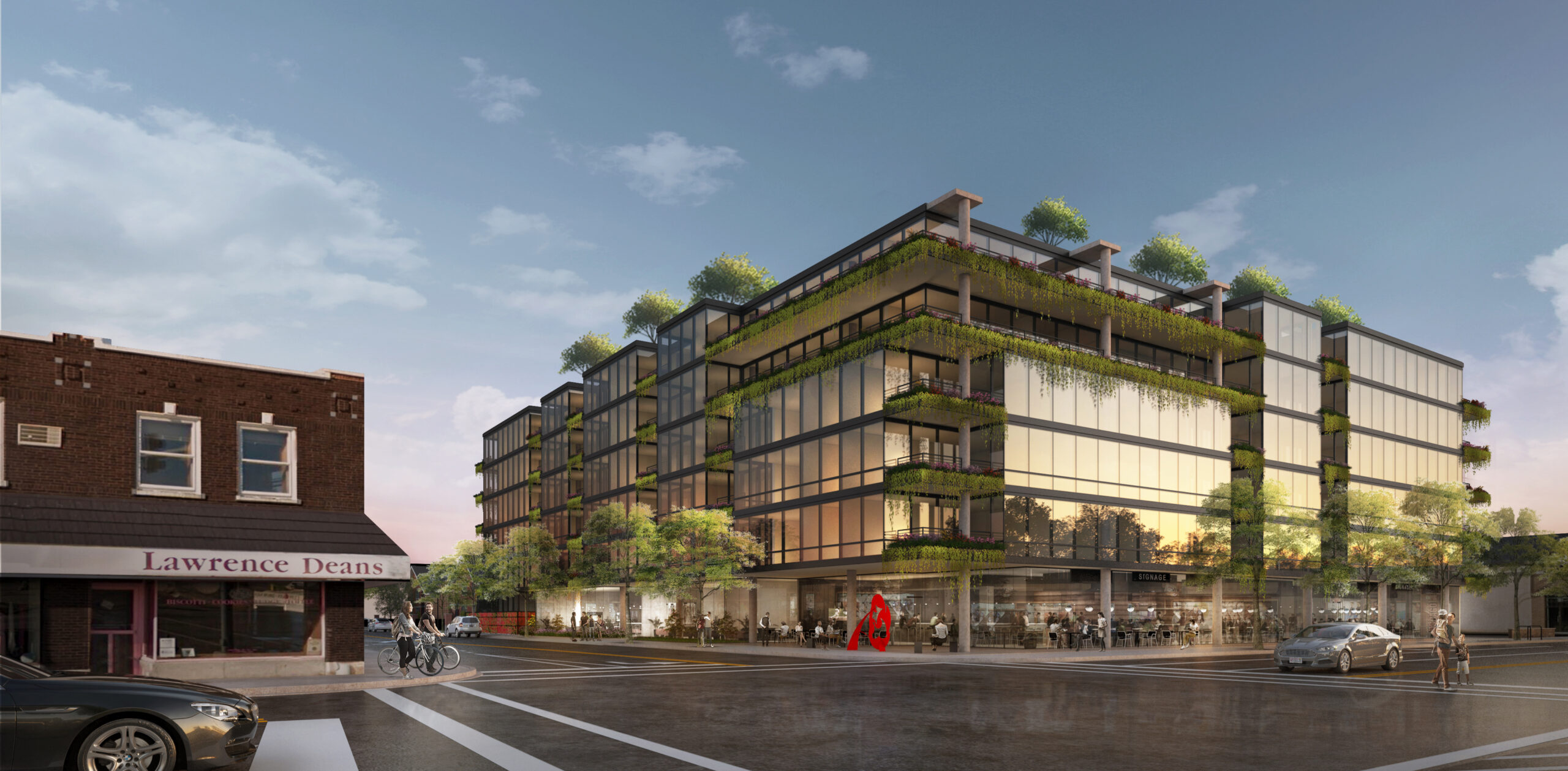
Optima Receives Final Municipal Approval for Development of 109-Unit Apartment Building in Wilmette, Illinois

Optima Inc. has received final approval from the village of Wilmette for the development of a 109-unit luxury apartment building. The developer plans to break ground in late 2021 at the site, which is currently occupied by a bank. Designed by Hovey, the project will also include more than 8,000 square feet of commercial space on the first floor. Residents will have access to various amenities, including a rooftop sky deck and pool. Completion is scheduled for 2023.

Read the full feature on RE Business Online

What’s in a Name?

How do iconic apartment buildings get their names? Property owners and managers go to great lengths to decide what best reflects a community and neighborhood, appeals to residents and might become memorable.

Deciding what size building to construct, which systems and materials to use, how many apartments to include and how much to charge monthly are among the many challenges to develop and operate a building in today’s competitive rental environment. And though it may seem that picking a name for a property and its common rooms and deciding on a palette and décor would be easy, fun tasks—the metaphorical icing on the cake, these decisions require work rather than decisions off the top of a marketing expert’s head.

Companies today often organize focus groups to have potential residents weigh in or research the history of an area to forge a connection with its roots. In some cases, a straightforward approach of using a street name or number supplant creative names that may be hard to pronounce, let alone remember or spell. However, thoughtfully branded community names can make a difference, not just for lease-up, marketing and residents but for professional internal and external teams who deal with the community, says Jon Cordell, Director of Development at Lendlease, which has 2,331 units in Chicago and 773 in three other states.

The importance of naming apartment buildings dates back decades. The iconic The Dakota on New York’s Central Park West, is said to have gained its name because of its once isolated location. Many guidebooks relay that it was ridiculed for being located far from the busiest part of New York City’s downtown and might as well have been in the Dakotas.

Other buildings’ names have helped make them famous, sometimes because of location, height, style and innovativeness such as Habitat 67 in Montreal, which was designed as cubes by architect Moshe Safdie in 1967 for the World Exposition of that year and has units to rent; the 1,500-foot tall John Hancock Tower in Chicago, which has rentals and condos and conjures images of one of the most well-known signers of the Declaration of Independence; and Aqua Tower also in Chicago, another rental and condo designed by architect Jeanne Gang with a wavy exterior to mimic Lake Michigan’s waters beyond.

Today’s owners and managers use a variety of strategies to name new properties and rebrand existing ones. Making the effort can help fashion an inviting setting with a name that connects it, says Diana Pittro, Executive Vice President at RMK Management Corp. in Chicago, which manages more than 8,800 apartment homes across 38 properties in Illinois, Indiana, Minnesota and Wisconsin. “People may not remember details, but they will remember if there’s a negative connotation,” she says.

Inspired by an address, landmark or architectural feature

RMK Management Corp. asks several executives to choose names to focus on something relatable to the address and how potential residents search online. As an example, Pittro cites the company’s property 42 Hundred on the Lake in St. Francis, Wis., which is on Lake Michigan. In other cases, it might simply go with the address such as 2929 on Mayfair in Wauwatosa, Wis., which makes it easy to remember and look up the building on the company website, she says. “So many potential renters search by town or street.”

Regarding décor, RMK Management Corp. works with a designer to create a look that reflects the property itself and its potential demographic through the choice of furnishings, colors and marketing materials such as a logo. In the last few years, its approach has been to simplify any decisions, so everything is less kitschy and more memorable, she says. If there’s something historic that’s important about the location or town, that might come into play. For example, Wauwatosa has a rich history and was founded by Charles Hart in 1835 along a river that spurred it to become a mill town. The building displays some historic photos.

Recalling a key person and company’s history

Chicago-based Habitat, which has 16,000 units in three states, considers the naming process pivotal, says Angelina DeWitt, Director of Marketing. “Choosing these names involves a collaborative yet strategic process. It starts with an in-house brainstorming session, involving key executives and occasionally extending to our operations team for broader input. This ensures the chosen name resonates both internally and with our target audience, supporting our marketing strategies and honoring our properties’ unique stories or features,” she says.

For example, Cassidy on Canal leverages alliteration and location for marketing and search engine optimization (SEO) benefits and pays tribute to the site’s

history. Cassidy Tire, a business that stood on the site for nearly a century, is honored in the name, bridging past and present, DeWitt explains. Also, the inclusion of bricks from the original Cassidy Tire building in the new development represents a tangible connection.

With another building, 43 Green, the name reflects a pioneering step in Chicago’s urban development as the city’s first equitable transit-oriented development, eTOD, on the South Side. Its name ties to the 43rd Green Line stop, simplifying navigation and reinforcing the commitment to sustainable urban living. OC Living, captures the essence of the larger Ogden Commons development in a name both distinct and descriptive, DeWitt says.

Chicago-based Draper and Kramer Incorporated, a multifamily developer with 6,000 units in five states, takes a similar approach by researching, taking stakeholders’ views into account and referencing recognizable locations such as the Wrigley Field baseball stadium in Chicago’s Wrigleyville neighborhood where the Cubs play. That location led to naming a loft-style building there, Wrigleyville Lofts, says Jim Love, Vice President of Marketing and Branding. In another example, in St. Louis, the company referenced the city’s authentic Italian the Hill neighborhood, where toasted ravioli was said to be developed, in its Moda at The Hill, the first multifamily building in the area. To play up the name, the company used photos of original apartments and industrial buildings in the area. The choice of “Moda” came from trying to use a name with an Italian twist, and which also seemed fashion forward, yet simple to pronounce, Love says.

Sometimes, the company is more direct in its choice, the case with its Bell Tower Reserve and Bell Tower Flats in McKinney, Texas’ Adriatica Village on Adriatica Parkway. The buildings’ names were picked to reference a large bell tower on the property, part of the Crotian fishing village theme that also includes cobblestone streets and a chapel, says Love, adding, “If we had used a Crotian name, it would have been harder to say and remember.”

Other factors may come into play, Love says, such as architectural style, history and potential demographics. “We’re trying to sell a lifestyle, and the name can help to differentiate one building from another and work well with planned marketing and advertising.”

Repetition helps enforce brand recognition

Chicago-based Optima, Inc., with 2,500 units in two states, uses the Optima brand with an additional identifier, says David Hovey Jr., President and Chief Operating Officer. For the identifier, it often uses the location of the development, as in the case of Optima Lakeview, which is in Chicago’s Lakeview East neighborhood. In other instances, the company looks to architectural and design elements such as for Optima Verdana, which focuses on its biophilic elements, particularly its vertical landscaping system. That concept was developed at the company’s Arizona properties and modified to reflect the Midwest’s four seasons. The word “verdure” is French for a fresh shade of green and a nod to greenery that cascades down from the building’s terraces.

More historic connections as well as a flower or bucolic setting

Chicago-based Mary Cook Associates, a commercial interior design firm that works with developers to strategically position and design a property, says the name needs to reflect the property’s brand in its market, its values and its narrative to tie the brand to its residents, says Josh Kassing, Senior Vice President. As an example, a property it worked on in Phoenix gained the name “Haverly” because of the area’s famous mid-century architect Ralph Haver who designed modest bungalows with bold architecture and colors, which became known as “Haver Homes” and “Haver neighborhoods.” The ideas inspired the larger approach to the multifamily development, says Kassing. “It’s unlikely that this name would have surfaced on its own, or without a strong brand position. We had to do our research and ask the right questions.” Or a student housing building in Miami’s Sweetwater area that it also worked on near Florida International University (FIU) was given the name “Lapis,” influenced by the university’s robust Latino population. “The name reflects the bold, lively, and strong spirit of the student body. Lapis is a precious blue stone with an iconic color, embodying those same descriptors,” he explains.

Naperville, Ill.-based Marquette Companies, which has more than 15,000 units in eight states, also used the name of a person for its adaptive reuse of the historic Mary Thompson Hospital in Chicago into an apartment building now known as The Thompson. It was named for Dr. Mary Thompson, Chicago’s first female physician and the first known to have performed major surgery, says Matthew Mehon, Director of Marketing. Good descriptors may lead to names, too, which happened with the company’s The Lydian, named because of its association with the Lydia broom, a low-growing shrub native to the Balkans, Turkey and Syria, which blooms with yellow pea-like flowers in spring. Names may also be connected with woods and other bucolic features and work equally well, hence The Sylvan for Marquette’s 300-unit build-to-rent (BTR) community underway in The Woodlands outside Houston.

Using words with a strong connotation, from ‘enclave’ to ‘niche’

Henry Torres’ The Astor Companies in Miami, which focuses on residential development and has several workforce housing projects underway, takes an inclusive approach by gathering its marketing division, in-house attorney and project managers to decide on building names. Several in its portfolio bear the word “Enclave” since it suggests a sense of security and a distinct building within the area, says founder Torres. “The name Havana Enclave adds in its neighborhood,” he says. The company is going with a street name, however, for its upcoming Flagler Enclave to make it easy to locate and remember. When it comes to amenity spaces within a building, his company also tries to be direct and use words such as “Fitness Center” for a gym, “Gathering Room” for a club room, “Resort Style” for a pool with barbecue area, or “Pet Washing Station” for that space rather than something that doesn’t suggest how it’s used.

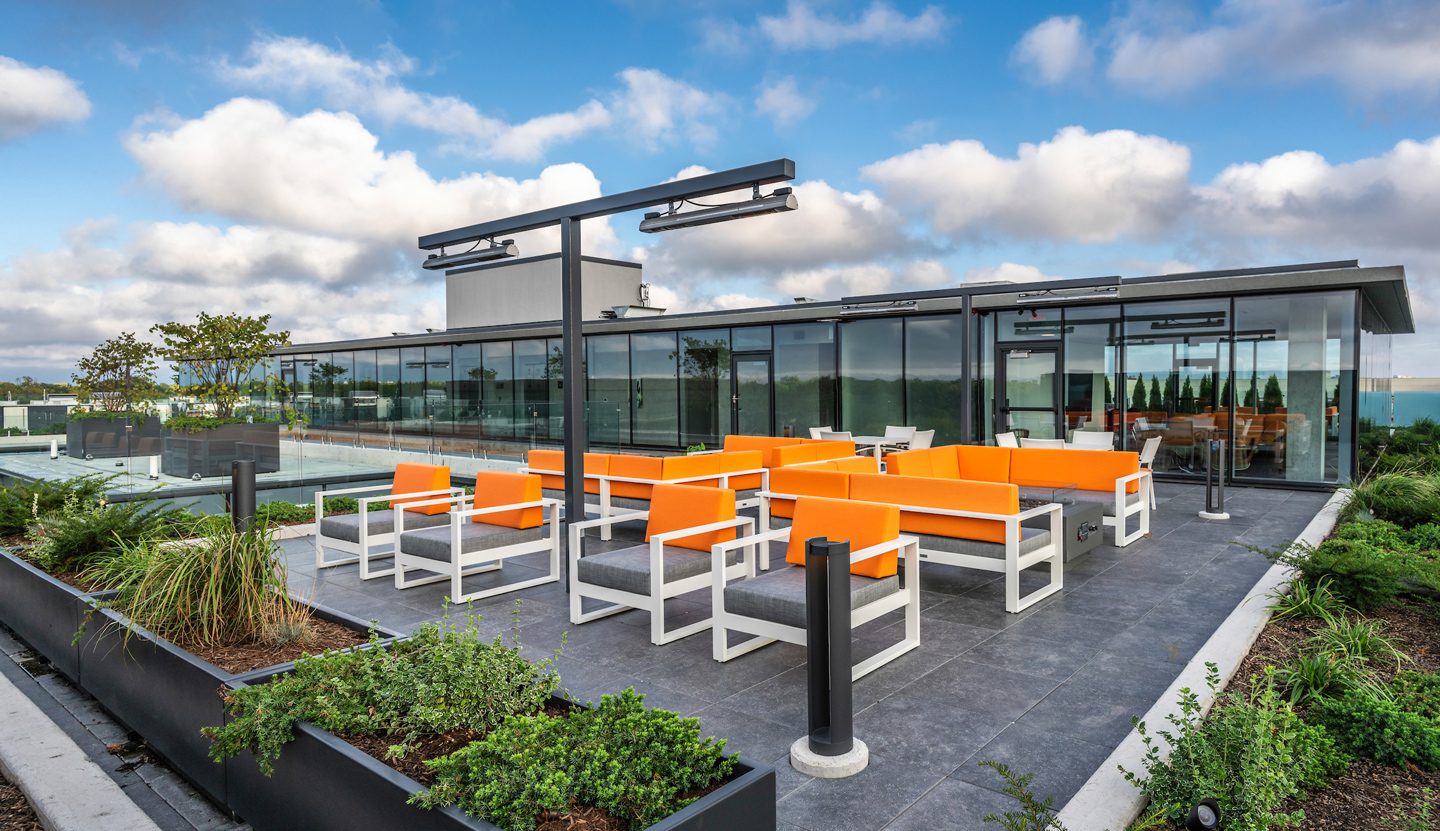
For its amenity spaces, Optima also refers to a location or use. Optima Verdana features its signature rooftop “Sky Deck,” which encompasses the entire seventh floor and is dedicated to resident amenities such as a landscaped sundeck, bocce court, garden lounge with fire pits and dining area with grills and outdoor kitchens, along with glass-enclosed pool and spa, sauna, residents’ club, party room with chef’s kitchen and card room.

Mount Prospect, Ill.-based Wingspan Development Group and Nicholas & Associates also use locations for some properties’ names such as Sixteen30 in Plainfield, Ill., which combines its proximity to Highway 30 and Lincoln Highway; Abraham Lincoln was the 16th President of the U.S, says Anthony Hansen, Director of Marketing for both companies. Or its Maple Street Lofts, also in Mount Prospect, is located on Maple Street. The Dawson, still another in downtown Mount Prospect, is named for Nancy Dawson Papanicholas, matriarch of the family, which owns both Nicholas & Associates and Wingspan.

Some names require more explanation to understand the intent such as NICHE, an apartment community in Tampa, Fla., named because of its 83 units that measure less than 440 square feet and incorporate innovative robotic furniture. “They’re targeted for a special niche—students and young professionals,” Hansen says. At the same time, some names are more lyrical such as Ruby at Brookfield Square in Brookfield, Wis., and Jade at North Hyde Park in Tampa, both a nod to gemstones. “The Ruby in Wisconsin has metal and glass and is top end with its materials and design. Jade also conveys that its apartments are upscale and polished,” Hansen says. And the community spaces within are named to provide instant understanding of their use. A demonstration kitchen was dubbed “Cook” and a Zen studio, “Relax.” Hansen says, “In these cases, we call them what they are rather than try to be playful.”

And Lendlease wants its buildings’ names to reflect something special about them. Its 503-unit, 37-story Cascade on Chicago’s Lake Michigan reflects its topography that includes a 50-foot drop over a park, cascading to the lakefront. “The name is meant to capture the harmonious flow of nature within an urban setting,” Cordell says. There’s also a Cascade bark park for dogs. A nearby building south of the Loop, The Reed, is a 41-story building that reflects its river site where reeds commonly thrive. But the name is also meant to recall the city’s Printer’s Row neighborhood since reeds were among early writing instruments.

How much do all the names entice residents? All the way from “yes,” to “some extent,” most experts interviewed say. While the name matters, its location counts most, followed by its amenities and cleanliness.


Read more on National Apartment Association

Visit Optima Verdana for more details

Visit Optima Lakeview for more details

Redefining the Renter Class

U.S. population growth is slowing and expected to continue declining over the next decade. At the same time, demand for multifamily rental units continues to be robust, a trend Fannie Mae predicts will continue over the long term.

Can both things be true at the same time? They can, say the professionals who keep a close watch on the demographic trends shaping the multifamily industry. Shifting demographic factors—including delayed household formation, aging renters, and lifestyle-driven mobility—are redefining who rents and why. And as developers and investors grow more savvy about parsing their rental pool and technology makes it easier than ever for REITs to align their portfolios using artificial intelligence (AI)-driven demographic strategy, they’re rethinking everything from geographical choices to unit mix to amenity strategies.

Younger generations are waiting longer to form households—the average marriage age has increased more than four years since 1990—while housing costs are driving outsized demand for rentals, says Roberto Casas, senior managing director for JLL. That means the renting population now spans a larger age demographic than it ever has, and this has been a big factor in pushing multifamily from 0% of the Open End Diversified Core Equity Index in 1980 to 32% today, he says.

“Aging demographics and structural changes, such as delayed marriage and a rise in the share of single households, are the biggest changes we’ve come across in both our proprietary data as well as third-party data sources,” says TJ Parker, senior vice president of market research and data analytics for multifamily investment and management firm Bell Partners. “On demographics, we are seeing a flattening of the curve across age cohorts, which means demand is spread out across both younger and older age cohorts.”

As mortgage rates decline, some millennials and Gen Zers will leave the rental market to buy homes, Parker says, but, at the same time, Bell is seeing more demand from older renters who are choosing the convenience of renting over the upkeep of owning a home. “But, of course, real estate is very local in nature,” she adds. “The demographic composition may vary widely across communities and different Bell markets, which adds complexity in terms of providing services that cater to those needs from a property management perspective.”

For Mary Cook, president of Chicago-based design firm Mary Cook Associates, getting demographics right means looking beyond things like average age and income. Cook’s team susses out “the who” of new projects by exploring the area’s key employers, figuring out where people are migrating from, and visiting nearby retail stores and coffee shops.

Cook says she realized, for example, that her design for a property located between Harvard University and the Massachusetts Institute of Technology in Cambridge, Massachusetts, had better be next-level tech savvy when she stumbled across a neighborhood coffee shop with an electric board that displayed how long her order would take based on an algorithm tracking how many people were in the store. For a property in Princeton, New Jersey, proximity to a pharmaceutical company that employed many people from East India prompted Cook’s team to include lock boxes in the mailroom for passports, visas, and green cards.

“The ‘who’ is what informs every aspect of our design, the strategy behind how we dedicate space, and how we prioritize space,” Cook says. “The aesthetic ends up coming last.”

Gen Z: Renting as a Lifestyle

On a macro level, Gen Z—which now comprises 27% of the workforce and 30.5% of all renters—is driving the rental market. Because this cohort had the unfortunate timing of starting their professional lives just as housing costs soared to unattainable levels, about 85% of them are renting, says George Ratiu, vice president of research for the National Apartment Association.

But young adults aren’t renting simply because they can’t afford to buy. Many simply prefer it. In a June poll, Entrata and Qualtrics found that 72% of Gen Zers said they believe renting is financially smarter than owning a home, 83% said renting helps them save for other priorities, and 37% said they prefer the ease of on-call maintenance over the burdens of home ownership.

This generation is also geographically nimble, much more willing than older generations to move in search of a better or more affordable lifestyle. They’ll pay a little more to live in walkable neighborhoods with parks, coffee shops, and restaurants, and they’re flocking to smaller, more affordable metros in the Midwest like Ann Arbor, Michigan; Lincoln, Nebraska; and Des Moines, Iowa—places their parents fled.

Developers are responding to Gen Z demand in these cities with amenity-rich properties in downtown hubs. In Des Moines, Double Eagle Development is building a $50 million, 202-unit complex on an urban infill site near restaurants and a growing entertainment district. In Ann Arbor, 4M recently opened a 216-unit, mixed-use mass timber complex powered by a natural gas fuel cell system and other environmentally friendly features that appeal to climate-conscious Gen Zers.

In addition to location and sustainability, these new developments are targeting tech-native, wellness-oriented Gen Zers with amenities like lightning-fast connectivity, coworking accommodations, and social spaces and programming that build belonging and address mental and emotional well-being. To counteract the amount of time this generation spends on screens, Cook says, Gen Z-focused properties “need to be really activated with all sorts of activity rooms to keep people more engaged with each other.”


The Sadie
Projecting a highly curated, authentic spirit, The Sadie in Fort Worth, Texas, targets those who not only appreciate art and culture but live it in their everyday lives. (Interiors by Mary Cook Associates, developed by Toll Brothers Apartment Living )

Not Your Father’s Senior Housing

Gen Z is not the only flexible, mobile, and digitally fluent generation to embrace renting. Their parents and grandparents—baby boomers—are chasing many of the same amenities, including walkability, access to transit and public services, and climate-responsive and resilient design. As such, boomers have become a desirable growth market for luxury properties.

Make no mistake—the number of 80-plus renters is growing at ever-accelerating rates, pushing net absorption for senior housing to record highs. But Doug Ressler, manager of business intelligence for Yardi Matrix, points out that the pool of potential tenants for senior housing is limited to people who can afford the high price of assisted living. Younger seniors who can’t see themselves moving into age-restricted, health care-oriented housing until they’re 85—if ever—are a ripe market, Ressler says.

Adults in the 65 to 85 age range often have pets and may still be working. They want space, but they don’t want the hassle of maintaining it, which is why they’re a driving force in the growing build-to-rent single-family rental market, Ressler says. They’re also not averse to living among young adults in apartment complexes. “The nature of generational conflict is not near where it used to be,” he says.

“Boomers and Gen Z actually cohabitate pretty well,” Cook says, “because you don’t have the kid factor.”

This trend started to emerge in the early 2010s, when developers who built Class A urban apartments to capture affluent millennials realized a lot of baby boomers were moving in, too, says rental housing economist and consultant Jay Parsons. “That demographic is not necessarily looking for something that’s geared toward a senior adult,” he says. “They’re maybe looking for something that makes them feel younger.”

“Renting has become an increasingly popular option for active seniors who aren’t interested in age-restricted housing but seek a maintenance-free lifestyle in an accessible building,” says David Hovey, president of Optima, a company that designs, develops, builds, and manages multifamily communities in Arizona and Illinois. “With single-level homes and residences with elevators in particularly high demand and short supply, luxury rentals offer a practical and appealing solution with the flexibility and peace of mind to age in place.”

With the number of renter households headed by people 65 and older increasing by more than 1 million between 2019 and 2024, according to a Harvard University Joint Center for Housing Studies report, boomers are lucrative at both the luxury and affordable ends of the market.

“With the oldest baby boomers turning 80 in 2026—an age when more people turn to renting—a wider range of affordable rental options for older adults will be required to accommodate their changing needs,” the report states. “Renting will be an especially attractive option for older adults who want to age in their community, reduce their maintenance responsibilities, and access the shared spaces for social interaction and accessibility features more common in multifamily buildings.”


Read more on Multifamily Executive

Optima, Inc. Announces Groundbreaking of Optima Verdana in Wilmette

Design-driven real estate development firm Optima, Inc. announced today its own construction team broke ground on the six-story, 100-unit Optima Verdana luxury apartment building in downtown Wilmette, Ill., on Chicago’s North Shore. The development is the firm’s second new Chicago-area retail and luxury apartment building to break ground in the last year – the 198-unit Optima Lakeview is scheduled for completion in spring 2022. Optima Verdana plans to welcome its first residents in spring 2023.

Located at the corner of Central Avenue and Green Bay Road, Optima Verdana will bring a new level of rental luxury to the North Shore. Featuring one-, two- and three-bedroom residences with an average size of 1,507 square feet, the boutique building will also feature 8,000 square feet of street-level retail.

True to its name, which is inspired by the word “verdure” meaning lush, green vegetation, Optima Verdana marks the Chicago-area debut of the latest evolution of Optima’s signature vertical landscaping system. Developed at Optima’s Arizona projects, the Verdana landscaping system has been modified to accommodate the Midwest’s four seasons. The plantings on all of Verdana’s private resident terraces will stay green year-round and be maintained by Optima’s property management team. The self-containing irrigation and drainage system promotes evaporative cooling, re-oxygenates the air, reduces dust and smog levels, decreases ambient noise and detains stormwater.

“In designing Optima Verdana, we’ve prioritized biophilic elements in a way that puts outdoor space, natural light and fresh air at the center of residents’ day-to-day lives – from our signature vertical landscaping system to spacious terraces and a landscaped courtyard,” said David Hovey Sr., FAIA, CEO of Optima, Inc. “Residents can not only immerse themselves in the outdoors from their private terrace space, but also reap benefits from its abundant greenery, which offers added privacy and an increased aesthetic value. We’ve even enhanced our commitment to sustainability by reducing our use of gas, opting for electric grills on terraces and induction cooktops in kitchens.”

Hovey noted Optima Verdana represents a 360-degree approach to sustainability. Optima Verdana will be constructed to achieve two Green Globes through the Green Globes® Building Certification, which is an alternative to LEED® certification that promotes lower energy and water bills, reduced emissions, optimized health and wellness benefits for residents, and minimizes waste. Green construction practices Optima will use to build Verdana include green concrete for the superstructure and a super energy efficient VRF heating and cooling system.

The building’s lushly landscaped private terraces will average 193 square feet, with the largest totaling nearly 1,000 square feet. In addition to enjoying a quick-heating electric grill on their terrace, residents in select homes will also have private firepits.

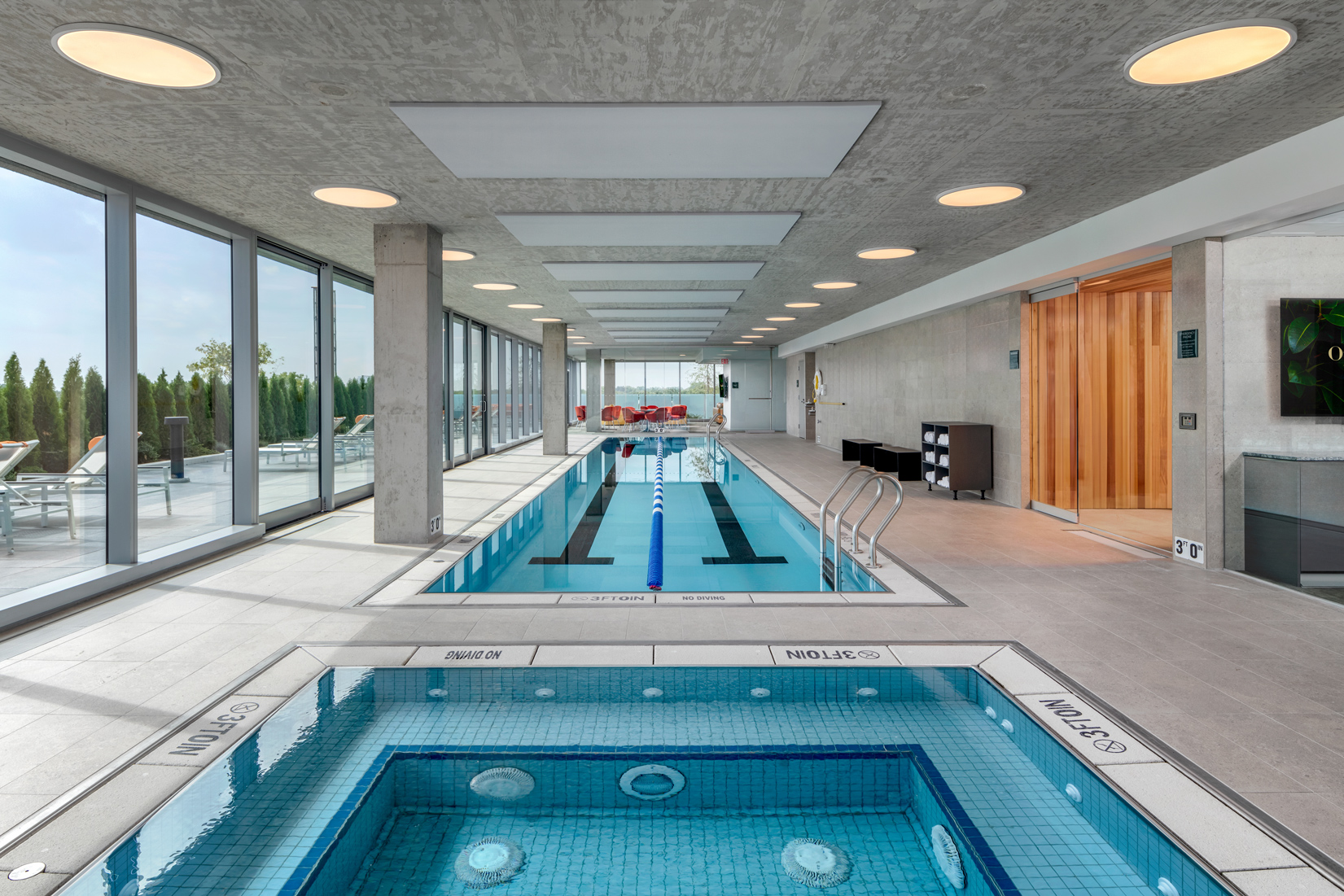
Sweeping views will be available on the building’s common rooftop sky deck where a range of health and wellness amenities will await residents, including: a heated, glass-enclosed lap pool with retractable glass walls that open onto the sundeck; complimentary pool towel service; a spa and sauna; barbecues; firepits and lounge areas; a party room with chef’s kitchen; residents’ club; two game rooms; and three distinct outdoor terraces, including the sundeck, garden lounge and dining area, designed for year-round use.

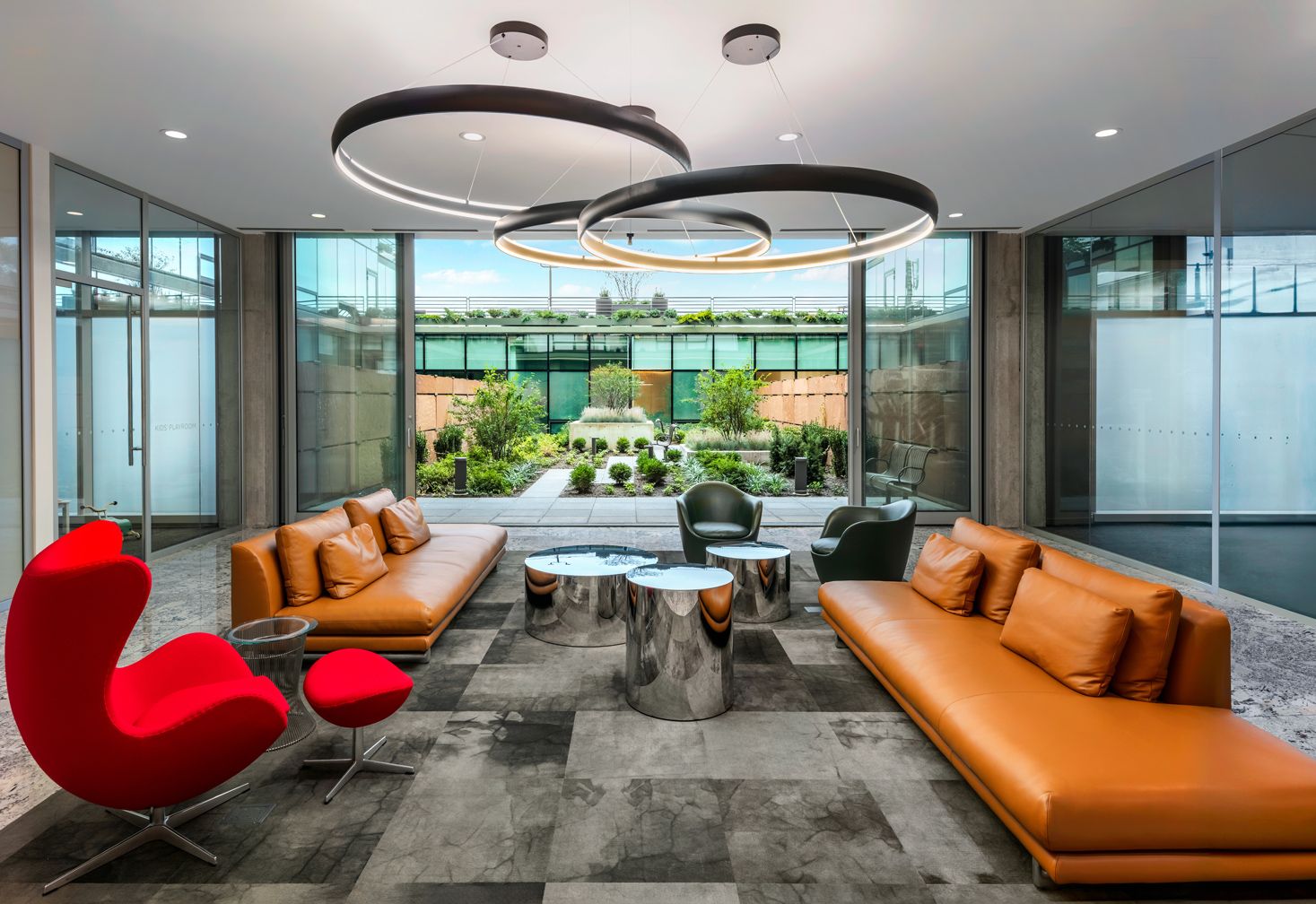
Indoor amenities will include a fitness center with cardio and strength-training equipment, including free weights and complimentary towel service; yoga room; Pilates studio and massage room; dual basketball/pickleball court; golf simulator and sports lounge with large screen TVs; children’s play area; pet park and spa; library lounge; and multiple work-from-home spaces, including conference rooms and a business center. Wi-Fi will run throughout amenity spaces and residents can choose from multiple data providers. Fitness programming will include yoga and meditation, Pilates, high-intensity interval training (HIIT) classes, water aerobics and personal training.


Read more on RE Journals

Optima Verdana Featured in Great Lakes By Design

In 2023, Optima, Inc., a family-owned, vertically integrated and design-driven real estate development firm based in Glencoe, Illinois and Scottsdale, Arizona, realized a multi-family, 100-unit apartment building in downtown Wilmette, Illinois, delivering rental residences and an amenity-rich development to the North Shore market. For the privately-held firm, the residential and commercial project is more than its visual composition of glass and concrete, and contemporary-inspired vernacular rooted in modernist tradition, but also a design and lifestyle solution for those wishing to downsize and remain in the community—and marks the inaugural debut of its proprietary Vertical Landscaping System to the Midwest.

“Each one of our developments is distinctive and customized to its physical location with shared signature aesthetics, including strong geometric shapes, inherently beautiful building materials, and open, flexible floor plans. Optima Verdana is no different—it is a 21st century design with vibrant, sustainable architecture, high-quality construction, and extensive amenities and services,” said David Hovey Jr., AIA, president and chief operating officer at Optima, Inc.

“One of the most exciting parts of Optima Verdana has been bringing the Vertical Landscaping System we developed in Arizona to Illinois’ four-season climate. We planted test beds and evaluated different plant material for over two years to ensure the plants would thrive during all four seasons, stay green all year round, and create the cascading motif we sought,” Hovey added.

Featuring 100 units of one-, two-, and three-bedroom apartments and more than 8,000 square feet of street-level retail and commercial space along Green Bay Road in Wilmette’s Village Center, Optima Verdana is the latest in the firm’s portfolio of work spanning multi-family condominiums, townhouse developments, and single-family homes across locations like Illinois, Arizona, and New Zealand. Founded in 1978, Optima, Inc. is the creative brainchild of the husband-and-wife team of David C. Hovey Sr., FAIA, and Eileen Sheehan Hovey, repositioning architecture and design as a business model in which they contained control of the entire process as owner, architect, developer, and general contractor.

“When my father, [David C. Hovey Sr.], was an architecture student at Illinois Institute of Technology, he envisioned an approach that enabled the architect to have greater control of design by vertically integrating the different functions of the real estate development process. By acting as the architect, developer, general contractor, and sales and property manager, Optima can ensure the architecture process is unaffected by the traditional developer-architect-general contractor relationship,” Hovey said.

Hovey Sr., who studied under a program built by Mies van der Rohe and then mentored with Arthur Shigeo Takeuchi—a pioneering architect and tenured faculty member at Illinois Institute of Technology College of Architecture—served as both architect and developer in the firm’s early years. Eileen Hovey, meanwhile, ran both the sales and marketing departments, and ultimately served as chief executive officer of its brokerage entities, Optima Real Estate Inc. and Optima Realty Inc. By 2000, the firm expanded outside of Chicago to its secondary market of Arizona, and more recently, the firm has transitioned to its next generation of leadership with David Hovey Jr. serving as president, chief operating officer, and principal architect; and Tara Hovey as president. Hovey Jr. also founded Optima DCHGlobal Inc. after patenting a modular, prefabricated building system that utilizes connector plate technology for quick, efficient, and sustainable construction. In 2021, Optima Inc. was also recognized as Firm of the Year by the American Institute of Architects Chicago.

“My father’s design philosophy has been that architecture is about structural expression, technology, material honesty, and function. His favorite quote about architecture is Vitruvius’ ‘firmness,’ or structure, ‘commodity,’ or function, and ‘delight,’ or beauty. Our design-build philosophy is to continually improve all aspects of our vertically integrated system to design and build each project with the highest-quality materials, systems, and techniques,” Hovey said.

“Some key principles that are important to us are that we believe great architecture and design inspires people and improves their lives and that our projects continue to progress architecturally and programmatically with continued attention to sustainability and the connection with nature. Also, we believe we are providing vibrancy to ever-evolving communities as well as meaningful economic impacts and job creation,” Hovey added.

Photography: Michael Duerinckx, Courtesy of Optima, Inc. | Pictured: Optima Verdana Model Unit
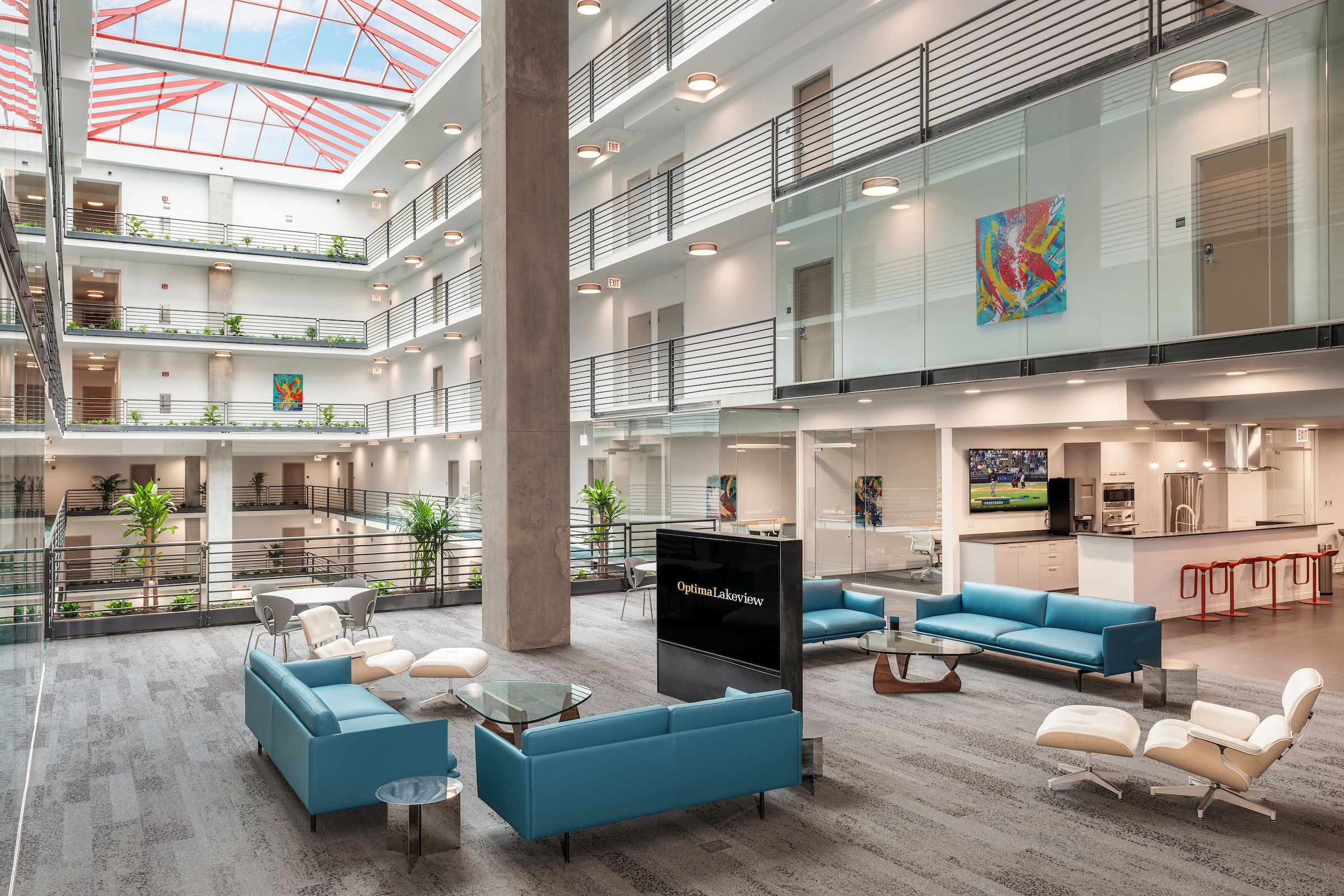
Photography: Michael Duerinckx, Courtesy of Optima, Inc. | Pictured: Optima Verdana Lobby Lounge and Courtyard
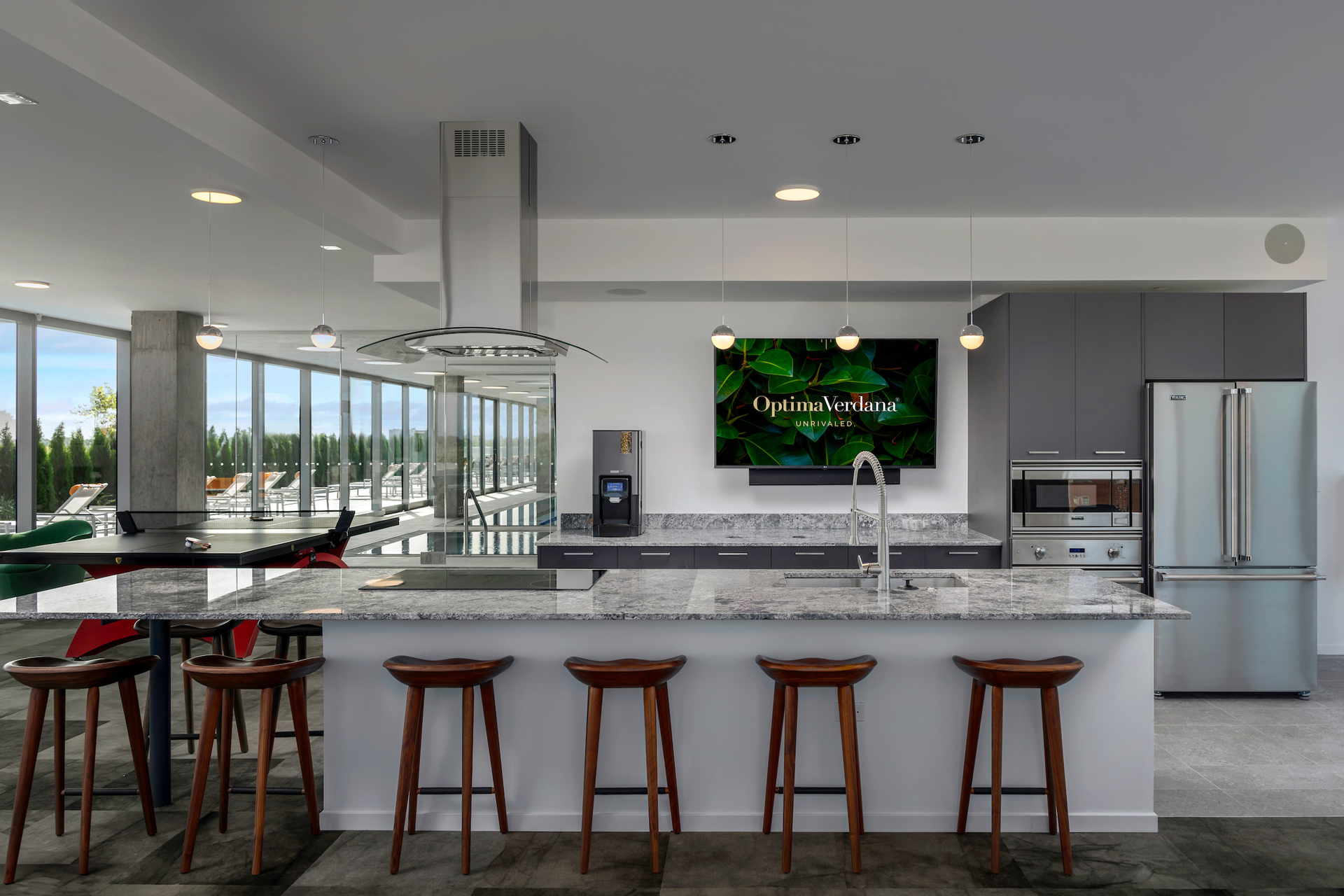
Photography: Michael Duerinckx, Courtesy of Optima, Inc. | Pictured: Optima Verdana Party Room with Chef’s Kitchen
Photography: Michael Duerinckx, Courtesy of Optima, Inc. | Pictured: Optima Verdana Sky Deck and Outdoor Lounge

In Wilmette, Optima Verdana also builds on the firm’s presence in the Chicago North Shore region, which as Hovey noted began in the early 1980s and in the 1990s for Wilmette, specifically. When the firm found the site for the now existing development, Hovey said it was ideal within the thriving downtown of Wilmette due to its walkability, proximity to shopping, dining, and entertainment, and access to rail transportation to downtown Chicago and the lakefront.

“There was also a need in Wilmette for a city-level luxury community for those seeking to sell their homes and downsize, but wishing to remain in the community,” Hovey said. “The building provides commercial space along Green Bay Road, which activates the streetscape and further enhances the vitality of the Village Center. Optima Verdana provides high-end rental residences for those seeking an exceptional North Shore location.”

In addition to its 100 units and street-level retail space, Optima Verdana has 173 parking spaces and 28 parking spaces for public use, electric vehicle charging stations, 1,500-square-foot residential courtyard, a rooftop sky deck and pool, private terraces in select units, and a suite of other amenities like executive conference rooms, spa and sauna, garden lounge, fitness center, library lounge, children’s playroom, business center, golf simulator, and an indoor pickleball and basketball court—and a custom, eight-foot-tall sculpture by David Hovey Sr. titled “Curves and Voids” near the entrance. But it also has green features, sustainable technology, and biophilic thinking, and while the driving idea behind its interior program was to build high-quality residential living units, there was also an intentionality in its relationship to nature.

“One of our main design principles is the importance of connecting the interior with nature,” Hovey said. “We also wanted to set new standards when it came to green features and biophilic thinking—making Optima Verdana our most sustainable Chicago project to date. We built Optima Verdana to achieve two Green Globes, which we were recently awarded. Green Globes is a comprehensive, science-based certification system that is an alternative to LEED. It evaluates the environmental sustainability, health and wellness, and resilience of all types of commercial real estate.”

Hovey noted some of its green features comprise bird-friendly glass on the first three floors of the structure and its participation in “Lights Out Chicago” in an effort to protect birds during migratory periods and reduce bird collisions with glass. The building also uses green concrete that is manufactured using residual materials requiring less energy for production while providing equal durability and lifespan to its more traditional counterpart. There are also pre-installed EV chargers in the parking garage, a high-efficiency VRF heating and cooling system, large balconies, floor-to-ceiling glass curtain wall to allow natural light to flood the interior layout—and Optima’s signature Vertical Landscaping System that features coniferous plantings along private terraces to provide cascading, year-round exterior greenery on the façade.

“We have been incorporating biophilic elements since our inception through green roofs, courtyards, and, beginning in the early 2000s, with our signature Vertical Landscaping System. The floor-to-ceiling glass curtain wall is draped in a veil of indigenous plantings that fall gently over it. These coniferous plants provide year-round greenery, a haven for urban wildlife, promote evaporative cooling, re-oxygenate the air, reduce dust and smog and ambient noise, detain stormwater, and thermally insulate and shield residents from the sun,” Hovey said.

Optima’s Vertical Landscaping System emerged in response to how the natural land influences, affects, and works in tandem with the built environment. The system has been integrated in many of its Arizona-based projects, such as Optima Kierland Center and Optima Camelview Village, and is intended to serve as more than an aesthetic feature, and also as a functional solution that continually engages human interaction with the natural world. The landscaping system has also been proposed for its potential adjacent development known as Optima Lumina, on a former Imperial Motors site. The project has undergone six significant design revisions since September 2023, and now features 128 residential units planned as condominiums, roughly 5,700 square feet of designated commercial and retail space, and about 6,275 square feet of open and plaza space. Now considered a standalone building, Optima Lumina lends a stepped terrace impression as it ascends vertically and incorporates terracotta on its façade in its latest proposal.

“We initially designed the adjacent project, known as Optima Lumina, as a second phase to Optima Verdana with the same architecture that was a complement to Optima Verdana. The feedback from the Village and the neighborhood was that they desired a standalone building that had its own character and was contextually different than Optima Verdana. While Optima Verdana is designed with an all-glass curtain wall system, Optima Lumina is designed with an infill window wall system with almost 40 percent less glass on the exterior wall with the addition of terracotta panels,” Hovey said. “Private terraces, strategically located within the undulating façade, create shadows and provide visual interest on all sides of the building. As the building extends north along Green Bay to Washington Avenue, additional step-backs at levels four and five occur in response to its context.”

Photography: Michael Duerinckx, Courtesy of Optima, Inc. | Pictured: Optima Verdana Indoor Pool and Spa


Read more on Great Lakes By Design

Visit Optima Verdana for more details
person name goes here

Maintenance Supervisor

Glencoe, IL


    Acceptable file types: *.pdf | *.txt | *.doc, max-size: 2Mb