Growing Your Own Herbs at Optima Verdana®

The stellar Rooftop Sky Deck and communal courtyard at Optima Verdana® abound with gorgeous greenspace and reflective hardscape surfaces to reduce heat. Our residents can delight in the outdoors year-round for both recreation and relaxation. And for those with green thumbs, dedicated planters atop the Sky Deck will be home to a seasonal herb garden.


Check your kitchen cabinets, your cupboards, your drawers! If you spend any time cooking, you probably have dried thyme, basil, and even a bit of parsley or oregano. These earthly delights known as herbs are easily accessible from most grocery stores, but imagine what it would be like if you grew them yourself?

In spite of their simplicity, herb gardens are magical places and offer many gifts — from cooking, to medicine, to unique fragrances. Growing your own herbs also serves as an exercise in gratification, and so much more:

Great for All Skill Levels

First, herb gardens are great for beginner gardeners because they require minimal effort and are easier to grow than vegetables. They don’t require large plots of land, and grow well in pots, planters and other containers. Herbs don’t need much fertilizing, which is a huge plus for beginners, and they can handle a wide range of temperatures that’s ideal for Chicago’s seasons. 

Herbs
Basil, parsely, thyme, and rosemary

Redefining the Word “Fresh”

When your recipes call for fresh herbs, what could be more delightful — and satisfying — than heading to your herb garden with a pair of kitchen shears and picking or cutting what you need? And because you can harvest your herbs while you’re cooking, they will always be fresh and fragrant.

Variety is the Spice of Life

Knowing that you have easy access to what you’re growing, you may find yourself with an appetite for expanding your repertoire with dishes that specifically call for fresh herbs. This is a real treat, since the flavors are so much more robust and the option to have full leaves, stems and flowers in your preparations is a real bonus. 

The herb garden also offers the opportunity to experiment with new flavor combinations. Take advantage of your herbs and try out a new recipe or two. Try growing herbs that are uncharted territory for you, this will likely lead to taking new risks in your cooking. Which in turn will enrich your life with new and flavorful experiences.

As you head into the fall and winter months, you can harvest your herbs and dry them indoors. This will tide you over until spring arrives and it’s time to plant again.

Creating A Healthy, Budding Community

The herb garden at Optima Verdana® is part of the powerful community experience of connecting with others around a shared purpose. All it takes is one seed to sow a relationship and build a budding new friendship with a neighbor. This convenience of access offers residents physical exercise, fresh air and the meditative qualities of connecting to the earth. 

If you’re looking for ideas for dishes that will put your fresh herbs in the spotlight at your next dinner or event, The Food Network offers quite a few!

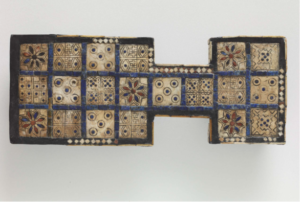
Trending Now: Play the 5,000-Year-Old Royal Game of Ur

History 

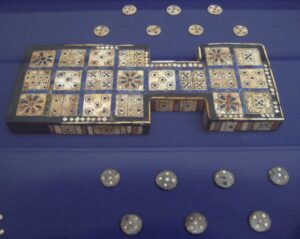
The Royal Game of Ur received its name from a British archaeologist named Sir Leonard Woolley in 1928. He was part of a team that excavated five worn boards at the Royal Cemetery of the Sumerian City of Ur. These ornate boards, made of wood, lapis lazuli, and inlaid shell are expected to have been made between 2600-2400 B.C. Making the Royal Game of Ur the oldest tabletop game.

Game of Ur
The Royal Game of Ur, made of wood, lapis lazuli, and inlaid shell, 2600-2400 B.C. Credit: Wikipedia Commons

Also known as the Game of 20 Squares, it appears to have been immensely popular with people of all classes according to archaeological evidence. With the game being so widely played, it spread across many Middle Eastern countries we know today. Iran, Syria, Egypt, and Lebanon are a few to name. Archaeologists have also discovered that when no board was available, players scratched it into clay or rock. 

Even though the Royal Game of Ur was very popular in ancient Mesopotamia for 1,000 years, its popularity and instructions waned as more games were introduced.

Consequently, figuring out the rules of the Royal Game of Ur was no easy task. It took Irving Finkel, a curator and Assyriologist at the British Museum to uncover the instructions of this ancient game. Dr. Finkel received a crumbling clay tablet from an antiquities dealer in the 1980s. It was inscribed with what appeared to be the rules of a game.

His research led him to Itti-Marduk-balatu, the author of the 177-176 B.C. tablet. Later, Finkel was able to decipher the rules by comparing them with other games.

This led to an understanding that the Royal Game of Ur is a race between two players. With the single goal of getting all 7 pieces across the board before your opponent.

So How Does One Play The Royal Game of Ur?


Playing a Game of Ur
The Royal Game of Ur with player pieces. Credit: British Museum via Picryl.com, Public Domain Dedication (CC0)

Fast forward to today. The Royal Game of Ur is back in the mix, and attracting fellow gamers near and far! Here are the rules:

  1. Throw the dice to decide who plays first – highest score goes first, if it’s a draw, throw again.
  2. Players take turns to throw three binary lots and move one of their pieces.
  3. Only one piece may be moved per throw of the dice and pieces must always move forward around the track.
  4. If a counter lands upon a square occupied by an opposing counter, the counter landed upon start’s from the beginning.

Finally, if you weren’t planning on time traveling several thousand years ago to discover an ancient Ur board. Get your very own modern Ur board in this New York Times article!

Check out the not so distant relative of The Royal Game of Ur, Backgammon.


Conceptualizing the Future of Furniture

During the spring semester of 2022, the Department of Architecture at the Massachusetts Institute of Technology conducted Course 4.041 — Advanced Product Design. The focus of the course was to “develop concepts of sustainability for a more ecologically-responsible and digitally-enabled future.” According to the course syllabus, students would be asked to “reinterpret and conceive of new typologies, redefining what ‘furniture’ means from the ground-up.” Today, we’re spotlighting just a handful of their future facing designs. 

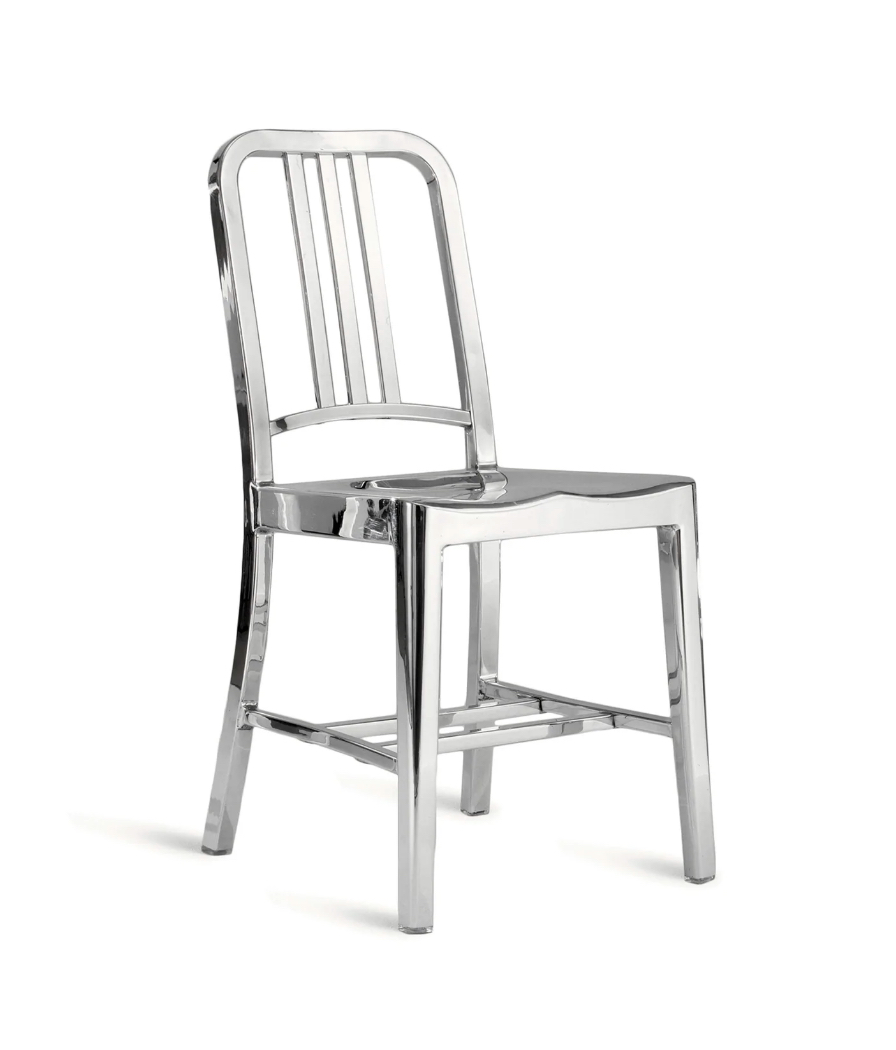
To make the course even more interesting, MIT teamed up with Emeco, an iconic American furniture company to provide students with access to Emeco’s manufacturing technology as they conceptualized sustainable furniture. The students’ design solutions have been dubbed The Next 150-year Chair, based on Emeco’s 1006 Navy chair developed in 1944, which, according to the manufacturer, has a “150-year lifespan.”

Associate Professor Skylar Tibbits explained that “Today, a 150-year chair means making something that lasts a long time, which is a great thing to do. But the question is whether that will be the same for the next 150 years – should the goal still be to make things that last forever? That’s one approach, but maybe there’s something that could be infinitely recyclable instead or something that’s modular and reconfigurable.”

La Junta designed by María Risueño Dominguez

Over the spring term, five students explored their unique approaches to answering the question. Their results featured a number of complete furniture pieces and components that were exhibited at Emeco House, the company’s converted 1940s sewing shop, in Venice, CA in late November. 

María Risueño Dominguez developed a furniture component based on longevity. Her research on furniture consumption and interviews with people involved in the furniture industry resulted in a concept called La Junta – a cast-aluminum joint with multiple different inserts shaped to fit a variety of components.

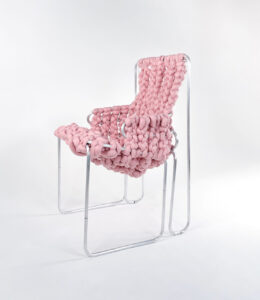
Rewoven Chair designed by Faith Jones

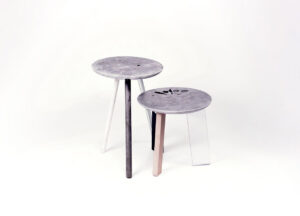
Amelia Lee developed a product designed to last through different stages of childhood. It is made from a single sheet of recycled HDPE. Modeled on a rocking chair, the piece can be turned on its side to function as a table.

Zain Karsan set out to improve metal 3D printing technology for the frames of his chairs, focusing on a technique for dispensing molten material at high-speed to explore new ways to think about form and joining parts.

Faith Jones designed the ReWoven Chair, with an aluminum frame and a recycled (and replaceable) cotton sling, as an exploration into how to maintain comfort and sustainability.

Jo Pierre’s interest in maintaining comfort within dense physical settings resulted in a chair called Enhanced Privacy — a plastic partition designed for domestic spaces that includes a hanging sheet of plastic that can be filled with water to block sound and diffuse light.

As both a design process and a collaboration between academia and industry, The Next 150-year Chair Project established a refreshing model for how we might conceptualize the future of furniture while pushing the boundaries of sustainable design and novel materials.

Trending Now: Backgammon — Fun and Then Some!

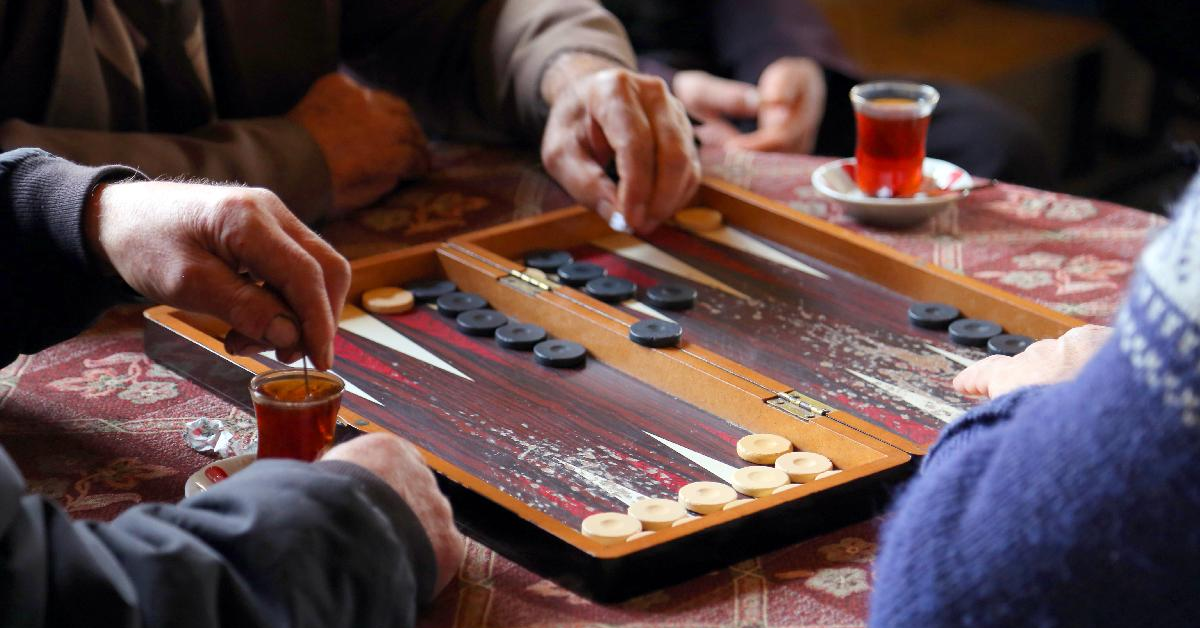
If you’re feeling sheepish about using your “free time” to settle into the card room at Optima Verdana® with a friend, relative or neighbor — and a backgammon board between the two of you — worry no more. You are about to engage in a high-value activity with a game that is a perfect combination of relaxation and stimulation.

That’s because backgammon, one one of the most classic board games, is a treasure trove that offers you far more than entertainment.

If you haven’t had the opportunity to discover its delights, backgammon is a two-player game. It uses a board with a series of narrow color-coded wedges and two sets of 15-pieces, one for each player.There is also a pair of dice and a cube used for betting, called a doubling cube. The ancestors of backgammon date back nearly 5,000 years to Mesopotamia and Persia; the earliest record of backgammon itself dates to 17th century England, where it descended from an earlier game called Irish.

Backgammon involves plenty of strategy, coupled with the luck related to rolling the dice at the beginning of each player’s move. With each roll of the dice, you must choose from numerous options for moving your pieces, while anticipating possible counter-moves by your opponent. And when you get the doubling cube involved, you raise the stakes during a game. What fun!

And the good times don’t stop there. Backgammon has the potential to boost memory and cognition abilities, regardless of your age, since the prefrontal cortex and hippocampus are given a workout. These areas are responsible for memory formation and complex thought processes. And with the exercise your brain gets through playing, you’ll also decrease the risk of cognitive diseases, such as dementia and Alzheimer’s. 

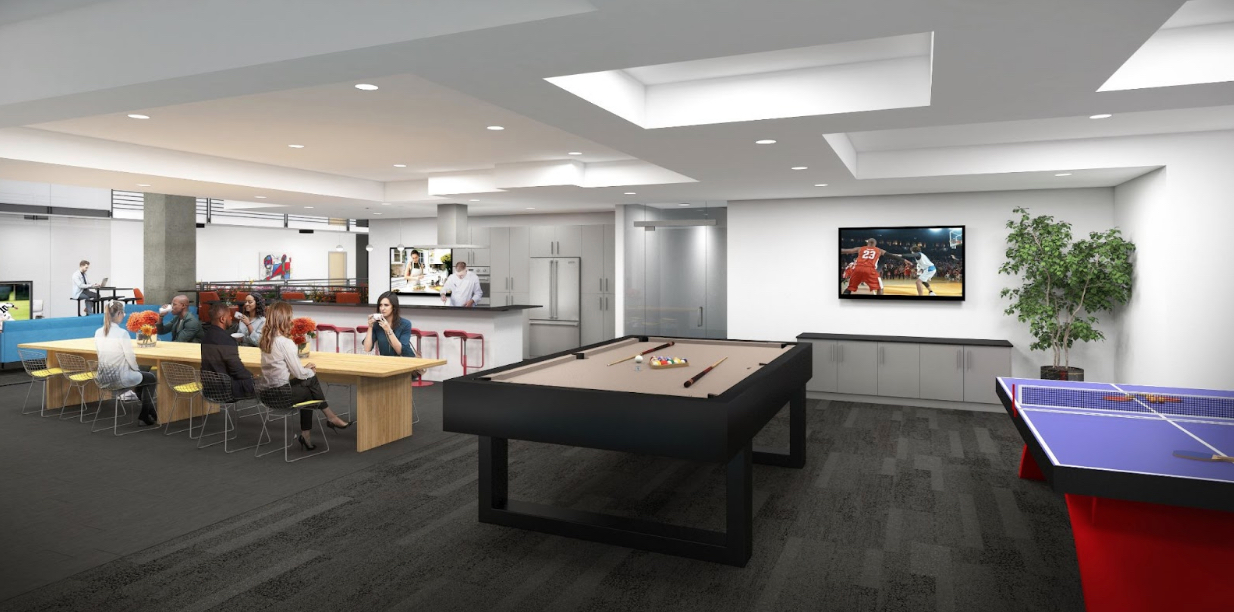
Optima Lakeview’s game room, Chef’s kitchen and dining area

Playing backgammon is fun and confidence-building. When your opponent pulls ahead or you roll double sixes three times in a row, you can’t help but crack a smile. And that means your endorphins are flowing and your blood pressure decreases — as you experience a moment of pure pleasure — all the while enjoying the company of another person. If you are able to organize regular sessions of backgammon with a group of people, imagine how good it can feel to sharpen your skills and strengthen your relationships.

It’s somewhat of a cliché to say that games are for all ages. But a simple truth about backgammon is that it is a fantastic way to teach math and probability concepts to children, while providing a forum for children and adults to relate on a level playing field. Literally.

Backgammon boards/sets come in all shapes and sizes. Choose the one best suited for you and your comrades and head up to the Optima Verdana® game room!

How Optima Communities Support Hybrid and Remote Working

At Optima, each of our communities are thoughtfully curated to make everyday life extraordinary. Whether it’s the expansive fitness centers or our stunning sky decks, we’re dedicated to providing curated spaces and opportunities to make sure all residents feel right at home. One unique amenity in Optima communities that has become increasingly relevant is the robust set of hybrid and work-from-home options. Here are just a couple of ways our communities support these evergrowing work features: 

Allocated Work Spaces in Your Home

It can be challenging to separate your life and career when working remotely, which is why we design each of our residences to allow space for desks and separate work areas. Each extensive floor plan allows residents to customize their living areas to fit their needs, whether you require a separated office or a dedicated work corner. 

We also work to provide our residents with the best technology features, further empowering them to define the way they live. In Optima Lakeview, in particular, residents have access to WiredScore Home Gold certified technology that includes best-in-class digital connectivity features and dedicated media panels for telecommunications equipment. 

Access to Greenery 

Whether you find yourself in our Arizona or Illinois communities, each provides convenient access to greenery and flexible environments. While all feature vast outdoor space and greenery, Optima Kierland, Optima Sonoran Village and our upcoming Optima Verdana are all home to our signature vertical landscaping system, which plays a crucial role in molding a healthy and sustainable environment for residents.

Communal Amenities

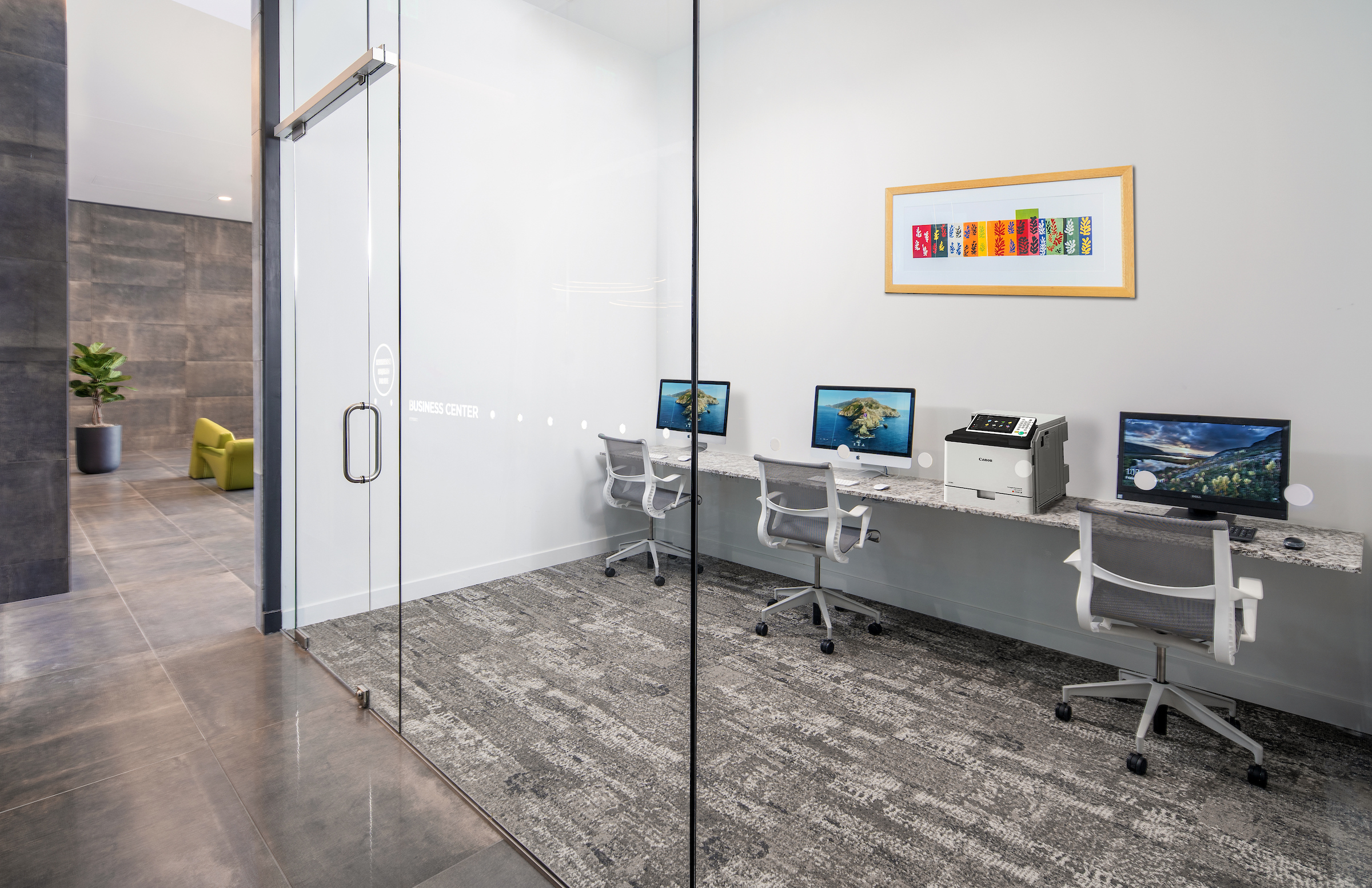
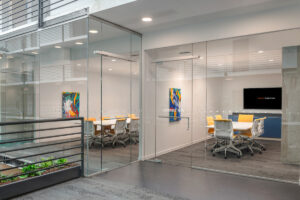
Not only can residents establish workspaces in their own homes, but all of our communities also provide an array of amenities designed to enhance the remote work experience. From the dedicated conference and business rooms developed for more intimate interactions to the lively communal spaces like Optima Lakeview’s light-filled atrium or Kaleidoscope Juice in Optima Sonoran Village and Egg Harbor Cafe in Optima Signature. 

Our team also works to provide Optimized Service® in each community. Residents have access to in-home package delivery, grocery delivery and 24/7 virtual personal assistance, and in Optima Lakeview, the Kids’ Club includes an indoor children’s playroom. 

No matter where you find yourself working, we’re with you every step of the way to ensure you feel comfortable and supported.

Rooftop Amenities at Optima Lakeview: The Sky Deck

Chicago boasts of the best skylines in the country, and there is no better place to revel in the city’s one-of-a-kind architecture than Optima Lakeview’s very own sky deck. And not only does the sky deck provide views of the city from the lakefront to Wrigley Field, but it also allows residents to enjoy the fresh air year-round with access to a range of unique, extensive amenities. 

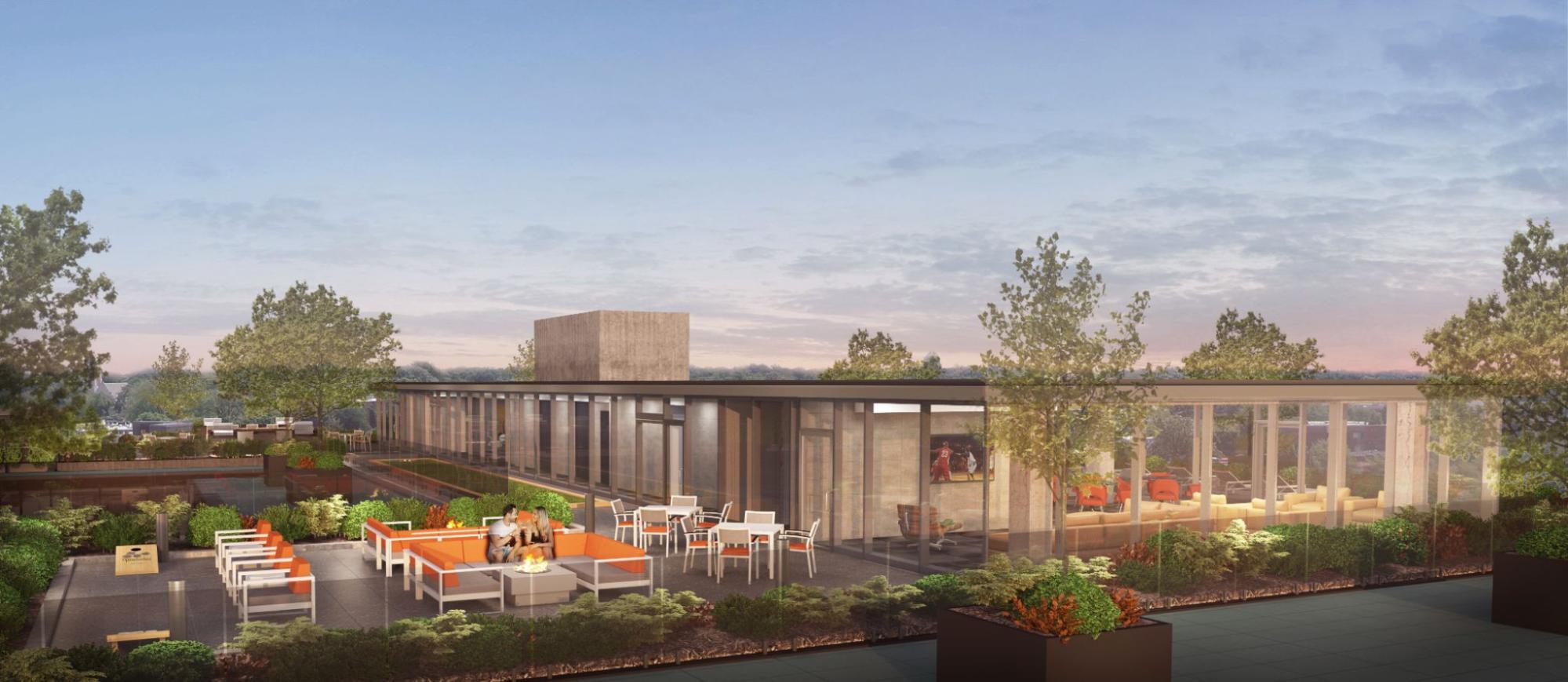
Optima Lakeview’s unparalleled sky deck has a surprise around every corner. From the resort-style pool and spa that stays heated for year-round use to the fire pits featuring lounge seating, residents will be able to go for a swim or relax at any moment. Our design provides plenty of ways for residents to stay physically and mentally healthy and embodies our dedication to creating spaces where residents can be active, inspired and entertained. 

Because of the sky deck’s versatility and unique amenities, the space is more than just a hub for wellness and relaxation, it’s also a space for residents to connect with their larger community. The BBQs, outdoor kitchens and theater provide the perfect opportunity for families and friends to convene and enjoy a movie and dinner under the stars. The space also features a glass-enclosed party room where residents have access to an extensive lounge area for entertaining. And, with views spanning the whole city, and Wrigley Field only a half-mile away, the Sky Deck provides the perfect opportunity for Chicago Cubs fans to throw their own viewing party. 

The sky deck at Optima Lakeview

Optima Lakeview’s sky deck exemplifies our dedication to inventive, distinctive amenity spaces that leave a lasting impact on our residents. However, the sky deck isn’t the only extraordinary amenity Optima Lakeview affords. Residents can find more than 40,000 square feet of amenity space, including an indoor basketball court, golf simulator, fitness center and more. Stay tuned for more Optima Lakeview spotlights, or learn more here.

Why Biophilic Design Matters

Since Optima’s founding, we have thoughtfully developed environments where nature and architecture coexist. This principle of sustainability – known throughout architecture as biophilic design – is becoming increasingly popular across the world throughout all types of built environments.

The process of biophilic design isn’t anything new to the world of architecture; however, in recent years, the design principle has seen a renaissance. Today, biophilic design is used within modern architecture as a method to fulfill the inherent connection between humans and nature. 

Because our natural habitats have increasingly become built environments, designers and architects have discovered the significant value of adding biophilic elements into all kinds of structures to enhance the relationship between natural and built environments. The framework for designing these biophilic environments consists of employing both direct and indirect experiences of nature. Direct experiences incorporate everything from natural light, fresh air and organic landscapes, while indirect experiences include utilizing natural materials and colors and ecological attachments to a location. Everything from skylights to green walls to fountains all apply the conventions attached to the design principle. 

Health Benefits

Beyond creating connectivity to natural environments, biophilic design also supplies an ample amount of benefits to both its surroundings and those who inhabit them. One of the most prolific benefits attached to the design principle is the improvement of air quality. Designs that employ vibrant greenery absorb the natural toxins in the air, ultimately enhancing the atmosphere.

Having access to vegetation and other models of biophilia also has a direct impact on happiness and wellbeing. When design principles like natural light and ventilation are introduced into built environments, a greater appreciation forms – establishing a more welcoming, advantageous space. 

Biophilic Design in Optima

Throughout our communities at Optima, we use biophilic design to improve the lives of our residents and complement their beautiful surroundings and communities. In our latest project, Optima Lakeview, we’re employing biophilic design throughout many elements of the architecture.

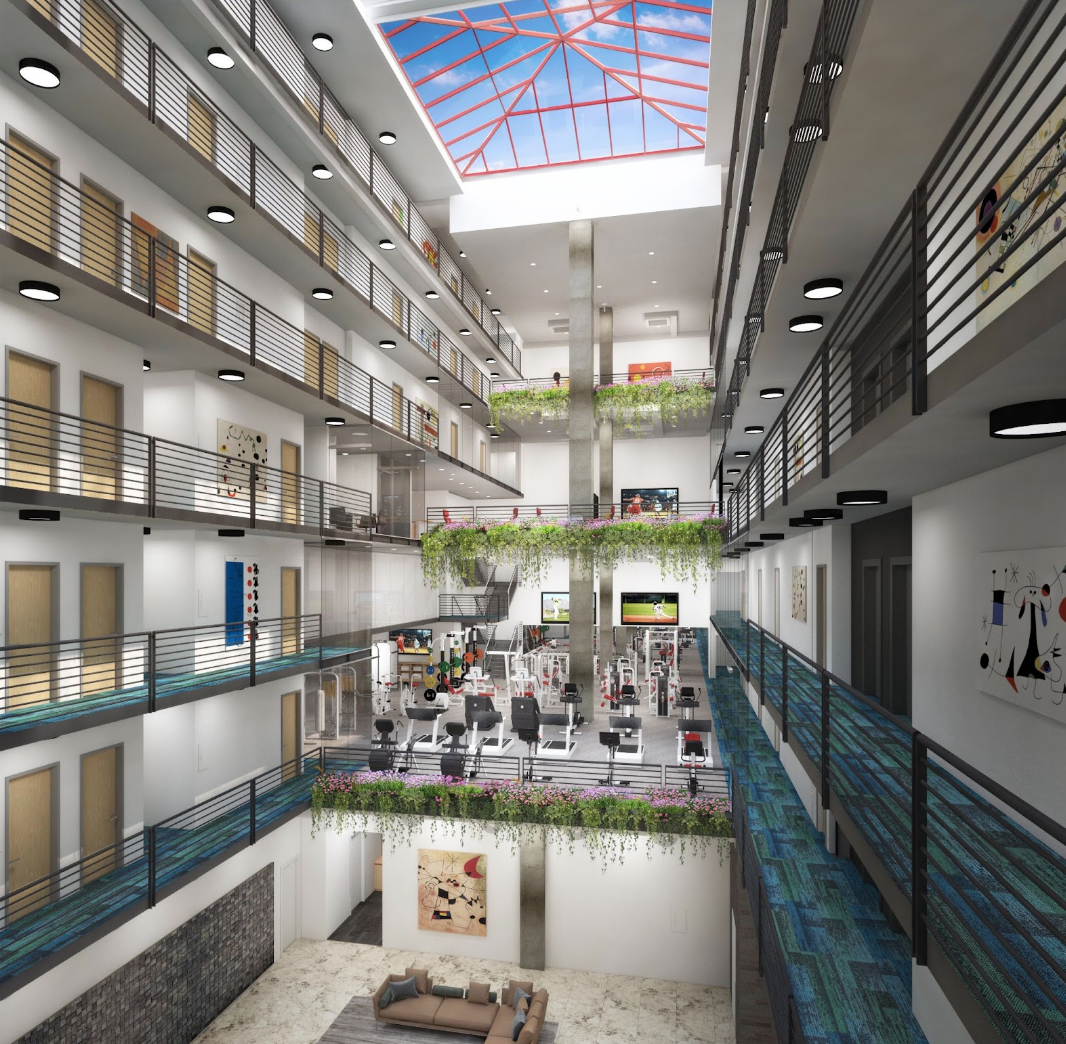
The development features a stunning atrium that includes our signature vertical landscaping system within it. At the atrium’s top, an expansive skylight fills the space below it with an abundance of natural light. Optima Lakeview is also home to a variety of private terraces and setbacks featuring lush vegetation and ensuring residents a seamless transition from outdoor to indoor environment.

From the materials used in construction to the greenery placed throughout a building, more and more architects are discovering how to include biophilic design within their builds, connecting their built environment with the natural world around them.

5 Innovative Materials Changing the Future of Architecture

As technology continues to advance, changemakers and visionaries are discovering ways to push the boundaries of sustainable design in architecture. Today, we’re spotlighting five of the most innovative materials currently in development that are setting the stage for the future of architecture and design. 

Green Charcoal Loofah Bricks

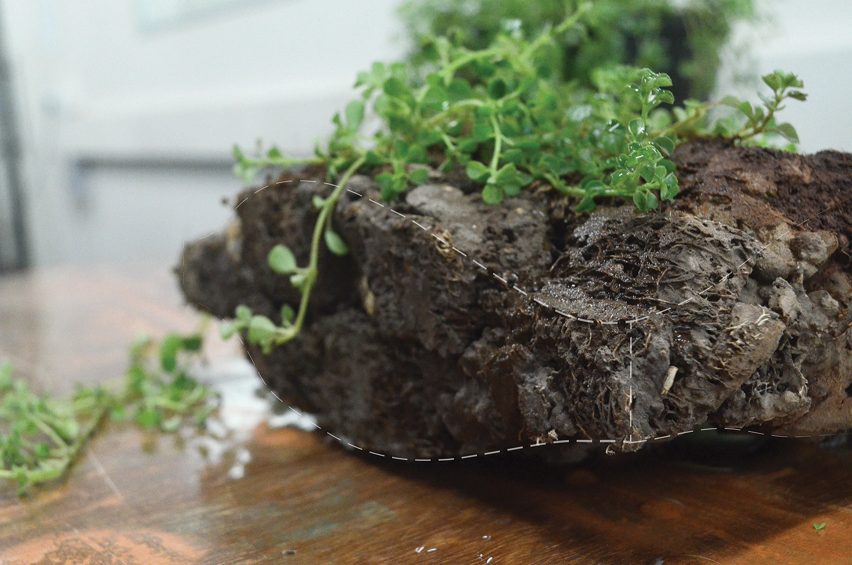
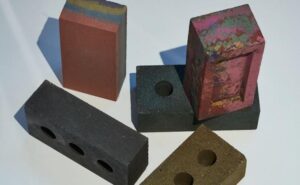
Engineered at the Indian School of Design and Innovation in Mumbai, the Green Charcoal Loofah Brick is another revolutionary twist on traditional brick material. Soil, cement, charcoal and organic loofah fibers – the plant commonly used in sponges – make up the lightweight, biodegradable product. 

Similar to the cavernous gaps that are found in loofahs, the bricks’ fibrous network allows it to double as a home for plants and animals to thrive. The bricks’ pours also act as water chambers, which, when filled with water, act as a coolant for the structures they support. While the name might suggest charcoal is a significant part of the material’s build, it only appears on the brick’s surface, purifying the air by absorbing a compound used for growing plants. 

Hemp Rebar

Hemp is one of the most carbon-sequestering and strongest fibers on the planet, making it a perfect material to shift the future of architecture. Engineers at the Rensselaer Polytechnic Institute developed the low-cost, low-carbon alternative to traditional steel rebar. One of the material’s most outstanding features is its ability to avoid corrosion, further extending the potential lifespan of the structure it is used to build. 

The rebar’s sustainable makeup has the potential to decrease construction time and triple the lifespan of the most costly traditional infrastructure — including everything from bridges to dams to seawalls. Its engineers intend the product to be cost-competitive, making it an obvious alternative material choice for future builds. 

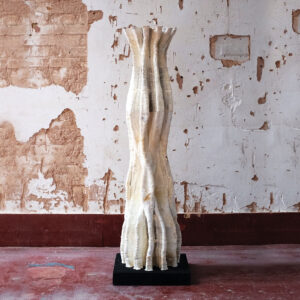
Blast Studio’s 3D Printed Mycelium Collum, Courtesy of Blast Studio

3D Printed Mycelium

An ever-growing number of engineers are discovering how to incorporate mycelium – a root-like structure of fungus that creates a network of threads and branches – into their designs, with a huge impact on advancing sustainable design. One of the teams leading the drive is Blast Studio in London. Their team takes advantage of mycelium’s strong webbing structure to form columns that not only support builds but also grow mushrooms. 

The tree-like structure is made up of a mixture of mycelium fiber and recycled coffee cups. After being constructed through 3D printing, the mycelium eventually consumes the recycled material and grows to command the entire form of the column. Along with cultivating its own food, the dynamic material also produces natural insulation and fire-retardant properties. While mycelium-based materials are still sparse, more and more engineers and architects are beginning to see their advantages in designs. 

Chip[s] Board

One of the best single-use alternatives to fibreboard, corkboard and even wood, Chip[s] Board is finding its place in today’s architecture landscape. Created by Rowan Minkley and Robert Nicoll, the biodegradable material is one of the healthiest building components used on the planet due to its absence of toxic chemicals or resins like formaldehyde. When creating the material, Minkley and Nicoll were set on combining the issues of material and food waste – eventually resulting in the sustainable wood substitute. 

The product’s name is a play on the ingredients used to make it, which includes a blend of potato peel binding agents mixed with fibers from potatoes, bamboo, wood or hops. To develop Chip[s] Board, the blended composite is heat-pressed into a sturdy board that becomes functional in everything from furniture to buildings. 

Kenoteq’s K-Briqs made of recycled construction waste, Courtesy of Felix Speller

K-Briq Construction Waste Bricks

Invented by Gabriela Meder, an engineering professor at Edinburgh’s Heriot-Watt University, the K-Briq is one of the leading sustainable and recycled brick materials today. The unfired brick is made of 90% construction waste and produces less than 10% of carbon emission in manufacturing compared to clay bricks, making it an obvious low-carbon alternative in construction.

Designers of 2020’s Serpentine Pavilion – an annual design commission known for its experiential architecture – were one of the first to utilize the brick due to its versatility and similarity to the weight, look and functionality of standard bricks. Meder, who spent ten years developing the K-Briq, still produces it herself through her company Kenoteq

With new forms of sustainable design being created daily, we can’t wait to continue exploring the ways innovative architecture can contribute to a healthier, more sustainable world.

A Guide to Chicago Restaurant Week

Spring is the season of new beginnings and reinvigoration — experiences many of us have been craving for a while. Thankfully, one of Chicago’s most cherished events is back this year, providing residents around the city with a treasured comfort. Here is our guide to Chicago Restaurant Week 2022.

Following last year’s modifications to the beloved event, Chicago Restaurant Week is back in full force for 2022. The 17-day festivity is a celebration of the city’s award-winning culinary scene. From March 25 to April 10, participants will have the opportunity to indulge in an endless list of Chicago’s most delectable eats.

The flavor-filled event features more than 300 restaurants, representing nearly any cuisine imaginable. Participating restaurants are found in both the city and its suburbs. So, whether you’re in Lakeview or Wilmette, there’s sure to be a plethora of choices around. Each restaurant will feature curated prix fixe menus filled with a variety of tasty eats. 

The multi-course meals vary in price, costing $25 for brunch and lunch and $39 or $55 for dinner (depending on the location). Many of the restaurants are also taking advantage of both takeout and delivery options for those looking to enjoy their meals from home. 

Chicago Restaurant Week is also partnering with Chicago Lighthouse’ Immersive Frida Kahlo Exhibit. The one of a kind experience will be held on March 22 from 6 – 8 p.m. and 8 – 10 p.m at Lighthouse Artspace Chicago. Guests will have the opportunity to enjoy snacks and cocktails from eight restaurants while absorbing the extraordinary Immersive Frida Kahlo Exhibit.

For those planning to savor some of the mouth watering cuisines, Choose Chicago has created a list of participating restaurants, complete with menus and the opportunity to book tables throughout the event that you can explore for yourself here.

Curated Furniture at Optima Lakeview: the Bertoia Side Chair

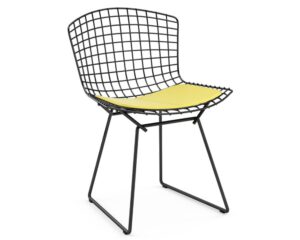
Our love of mid-century classic furniture can be found throughout all of the Optima communities. And with our soft spot for iconic seating, it’s no surprise that the famed Bertoia Side Chair is a staple in many of our amenity spaces. Let’s take a closer look.

About Harry Bertoia
Born in San Lorenzo, Italy in 1915, Bertoia built an international reputation as an artist, sound art sculptor and modern furniture designer. After leaving his home at the age of 15 to join his older brother Oreste in Detroit, Harry embarked on a career that centered on the exploration of modernist ideas and ideals, often in collaboration with some of the greatest thinkers and visionaries of that era.

In 1936, a one-year scholarship to the School of the Detroit Society of Arts and Crafts allowed Harry to study painting and drawing. He entered and placed in many local art competitions, said to be the most awarded student up until that time. The following year, another scholarship took him to the Cranbrook Academy of Art in Bloomfield Hills, Michigan. Working among some of the most famous artists and designers of the modernist age, including Eero and Eliel Saarinen, Charles and Roy Eames and Florence Knoll, Bertoia’s creativity and mastery of materials flourished.

Bertoia as Furniture Designer
Bertoia was first exposed to furniture design at Cranbrook when Eero Saarinen and Charles Eames entered and won the Organic Furniture Design Competition sponsored by the Museum of Modern Art. In fact, Bertoia developed his initial chair design ideas while working with Charles Eames and others in California in the late 1940s, which he later incorporated into his work.

Bertoia eventually left Eames to join the Point Loma Naval Electronics Laboratory. While there, he learned how to study the human body to design control panels and knobs that focused on comfort for reach and grip. This sensitivity to ergonomics contributed significantly to Bertoia’s fascination with designing well-fitting practical chairs.

In 1950, at the invitation of former classmate Florence Knoll and her husband Hans, Harry moved to eastern Pennsylvania to work at their emergent furniture company Knoll, Inc. Florence had seen Harry’s work at Cranbrook, heard he had left Eames, and knew that he had enormous promise as a furniture designer. The Knolls offered him the opportunity to design what he wished with full credit and complete recognition of his work, which was their policy with all designers.

About the Bertoia Side Chair
Once on staff at Knoll, Bertoia was asked to develop hospital furniture, but he preferred to work with healthy bodies. He gravitated towards metal as his material of choice, and he continued to experiment with it until he landed on the concept of the wire grid, which could be shaped at will. with it until arising at the wire grid concept that could be shaped at will to conform to the human body. This was a radical departure from the use of rigid wood, which was characteristic of the late 1940s and early 1950s furniture. He not only created the airy welded metal design of the chairs, but also devised the production molds used for mass manufacture. 

Knoll produced the first Bertoia chairs in 1952 — an amazing collection of furniture that reflects a profoundly beautiful study in space, form and function. As with other designers of his time, including Mies van der Rohe, Bertoia found infinite elegance in an industrial material, elevating it beyond its utility into a work of art. 

Today, the Bertoia collection remains one of the great achievements of mid-century modern furniture design by one of the master sculptors of the last century and a proud part of the Knoll heritage.

person name goes here

Maintenance Supervisor

Glencoe, IL


    Acceptable file types: *.pdf | *.txt | *.doc, max-size: 2Mb