The Career of Helmut Jahn

The Life of Helmut Jahn

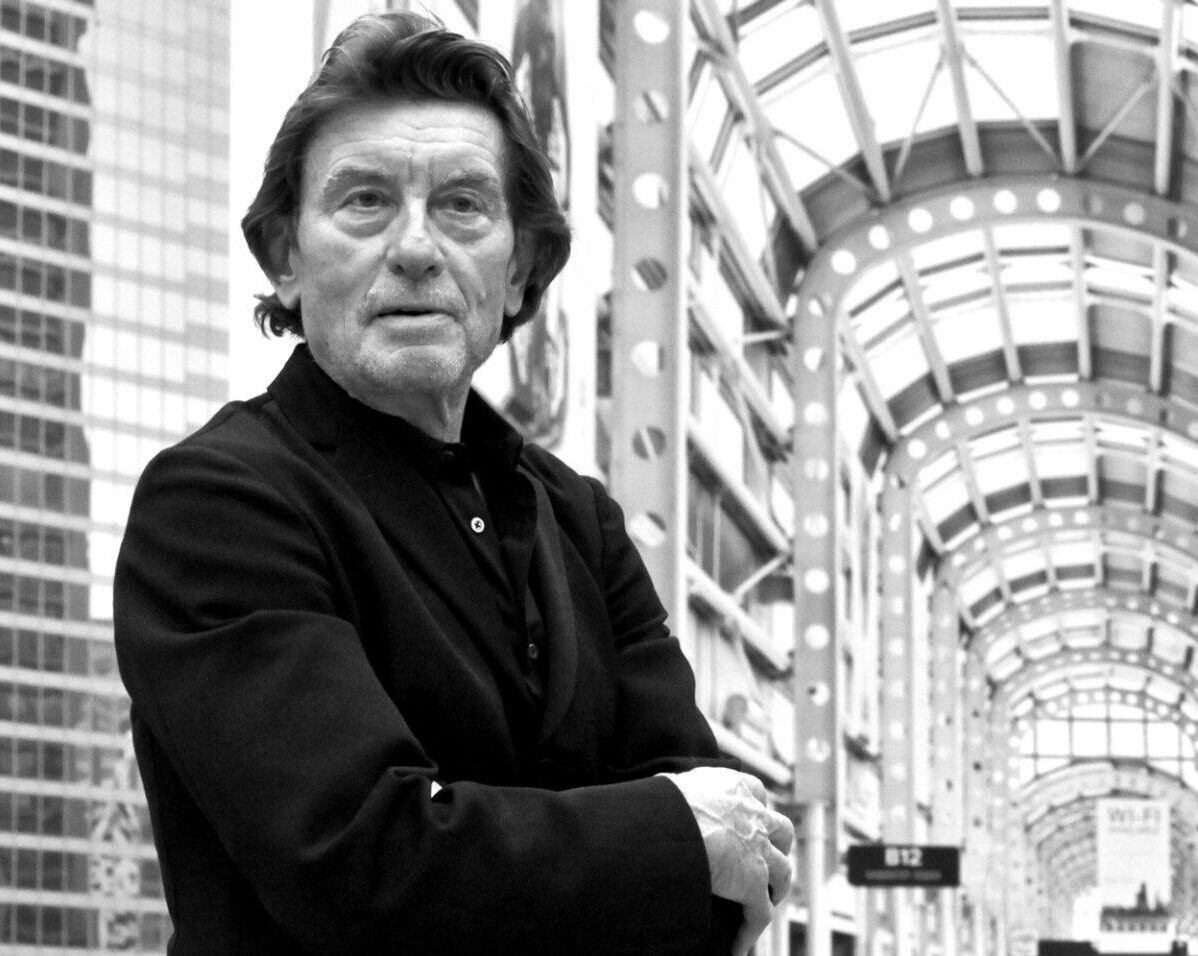
The German-American architect Helmut Jahn, who passed away in May 2021, holds a special place in the hearts of Chicagoans, as he made the city his home throughout his stellar international career. He was also a close friend and colleague of Optima founder, David Hovey Sr., FAIA.

Born in 1940 near Nuremberg, Germany, Jahn witnessed the destruction — and later reconstruction — of the town where he grew up during and after World War II. Because of this intimate and personal experience, he was inspired to study architecture and design as a way to participate in the process of stabilizing and beautifying the places where people live.

Jahn moved to Munich to study architecture, and relocated to Chicago in 1966 to further his studies under renowned architects Myron Goldsmith and Fazlur Khan at IIT. His career was forged when joining C. F. Murphy Associates, which was renamed JAHN in 2012 following Charles Murphy’s retirement. 

Much of the work Jahn created took inspiration from the modern aesthetic he adopted while at ITT; he also pulled from the influences of postmodernism, the Art Deco style of the ‘30s and eclecticism throughout his career. In the late 1970s and early ‘80s, Jahn’s mark on architecture really began as he transitioned from smaller projects to legacy-defining skyscrapers.

The Works of Helmut Jahn

James R. Thompson Center, Chicago

In 1985 Jahn designed the State of Illinois Building (renamed the James R. Thompson Center in 1994), located in Chicago, which serves as the second home to the Illinois state government. From the moment its doors opened to the public, it became one of Jahn’s most controversial designs, with mixed reviews that ranged from unabashed praise to outrage. 
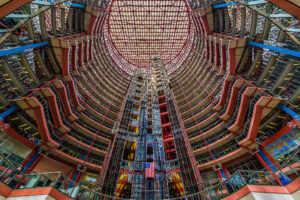
The photos shows a rounded interior of a building fitted with bright colors of steel railings, staircases and beams.
The atrium inside the James R. Thompson Center in Chicago, designed by Helmut Jahn

The building, with a grand atrium at its center, has a distinctive circular shape that references the Illinois State Capitol building in Springfield. While the structure was considered futuristic at the time, in part due to the use of advanced architectural tectonics, it also incorporated design elements that were reminiscent of the grandeur of large public spaces of the past.

Over the years, many of Illinois’ most senior officeholders (including governors) have proposed selling the structure, much to the criticism of architects and architecture devotees concerned about the building’s future. And while the future of the building remains in question, the 17-story structure is internationally known and considered a momentous piece of postmodern architecture.

A round shaped building is lit up with lights from it's inside in the dark night.
The exterior of the James R. Thompson Center, designed by Helmut Jahn

Sony Center, Berlin

Built in 2000 at the Potsdamer Platz in Berlin, Germany, the Sony Center stands as one of Jahn’s more recent architectural feats. After the city’s ruin during WWII, the original site — the infamous Nazi People’s Court — was stuck in the Berlin Wall’s No Man’s Land, and was left to decay. Once the Berlin Wall fell in 1989, the city looked to rehabilitate much of the forgotten architecture. 

Jahn undertook the project of this transformational urban marketplace with a desire to honor the meaning of building on and around abandoned structures. In the process, he successfully blended historic remnants and modern aesthetics to create an open, free-flowing space for all to enjoy.  

The grouping of eight buildings that makes up the Sony Center are a mix of residential, commercial and public space. Each structure is enveloped in glass, directing the flow of light and augmenting the feeling of transparency throughout the complex. The 102 meter-long roof that sits atop the complex, built by Waagner-Biro, has become an iconic feature in its own right. The medley of steel, glass and translucent fabrics, which is often illuminated in bright colors, furthers the fluid design that Jahn intended.

A wide lens photo captures four buildings faced with glass with a large fanned roof that is open above them.
A rendering of the Pritzker Military Archives Center in Sommers, Wisconsin, designed by Helmut Jahn

Pritzker Military Archives Center

The Pritzker Military Archives Center located in Sommers, Wisconsin, is one of Jahn’s final projects. The construction, which started in 2020, is taking place in conjunction with the development of a new Memorial Park Center. The center will advance the mission of the Pritzker Museum and Library to restore and preserve their ever-expanding collections. 

The state-of-the-art structure will feature an immersive 9,400 square-foot Gallery Center open to the public. The Gallery will house artifacts and exhibits provided by the parent museum and library located in Chicago. The front of the building will feature floor-to-ceiling glass frames that illuminate the interior. Brilliant red steel beams will stretch beyond the facade, creating a dramatic rooftop extending boldly beyond the building’s entrance. 

Construction on the Pritzker Military Archives Center is underway and moving swiftly; the entire Memorial Park Center will take nearly a decade to be completed.

A rendering presents a bright red steel structure with four flag poles with flags flying in its front. Around the structure green grass and trees fill the area.
The interior forum of the Sony Center in Berlin, designed by Helmut Jahn

Chicago Architecture Center Exhibit

Honoring Jahn’s accomplishments and extraordinary engineering feats, the Chicago Architecture Center (CAC) has curated the exhibit Helmut Jahn: Life + Architecture. The exhibit includes an expansive compilation of ephemera including photography, sketches and models of Jahn’s most iconic works. 

For those interested in learning more about Jahn’s exemplary career in architecture and beyond, Helmut Jahn: Life + Architecture is free with admission to the CAC. The exhibit is open from 10 a.m. to 5 p.m. daily until October 31. You can purchase vouchers and learn more about future exhibits here.

Women In Architecture: Maya Lin

American designer, architect, and sculptor, Maya Lin was born in 1959 in Athens, Ohio. Lin rose to national recognition in 1981 as an undergraduate at Yale University when she won a public design competition at 21 years old for the Vietnam Veterans Memorial on the National Mall in Washington DC.

One of 1,422 submissions, including those from established design firms, Lin’s design included a black granite wall with the names of those lost in Vietnam carved into its face. Lin’s design intended to “take a knife and cut into the earth, opening it up, and with the passage of time, the violence and pain would heal.”

Vietnam War Veterans Memorial, designed by Maya Lin. Credit: Wladia drummond on Wikimedia Commons, licensed under the Creative Commons Attribution-Share Alike 4.0 International license

The design was controversial for its lack of tradition and because of Lin’s Asian ethnicity and youth. Today, Lin’s design for the Vietnam Memorial is a pilgrimage site for the friends, family, and comrades of those who died in Vietnam and is an integral part of the National Mall’s landscape. 

Upon graduating from Yale, Lin went on to earn a Master of Architecture from the university in 1986. She opened Maya Lin Studio in New York City, her own design firm which has worked on numerous projects including the Civil Rights Memorial in Montgomery, Alabama and the outdoor Wave Field installation at the University of Michigan.

In many ways, Lin identifies as a “designer” rather than an “architect.” Her works focus on the relationship between people and nature, and how people will interact with the space and nature they take up in the future. Lin’s work emphasizes human emotion rather than politics, making the viewer aware of their surroundings in not just a physical, but also psychological way.

Wave Field, Maya Lin, University of Michigan Campus, 1995. Credit: Sharon VanderKaay on Flickr Creative Commons, CC BY 2.0 Deed

Lin’s 1995 design for Wave Field at the University of Michigan is inspired by the motion of fluids and ocean waves. Lin wanted to freeze the motion of water and movement of earth in an interactive earth piece that engaged the viewer more physically than a photograph. Wave Field was Lin’s first piece of earth work and was followed by her 2004 piece, Eleven Minute Line, in Sweden which is composed of a walkway that takes eleven minutes to traverse.

Lin’s architectural works include the plaza for the Claire Trevor School of the Arts at the University of California, Irvine, the design for the Museum of Chinese in America in New York City’s Chinatown, and a renovation of the Neilson Library at Smith College.

Lin’s project, “Ghost Forest” is currently on display in New York City’s Madison Square Park. Composed of a forest of dead or “ghost” trees, the installation gives the viewer an eerie vision of an earth damaged from climate change in the not-so-distant future.

In 2009, Lin was awarded the National Medal of the Arts by President Barack Obama. In 2016, she was awarded the Presidential Medal of Freedom by President Barack Obama. Other awards include the 1999 Rome Prize, an election to the National Women’s Hall of Fame, The American Academy of Arts and Letters, and the 2014 Dorothy and Lillian Gish Prize among numerous other recognitions.

Lin resides in New York City and also has a home in rural Colorado. She is represented by Pace Gallery in New York City and continues to run her own studio.

Women in Architecture: Denise Scott Brown

Denise Scott Brown knew from the age of five that she wanted to be an architect. Born in 1931 Northern Rhodesia (now Zambia), Scott Brown pursued her dream by spending her summers working for architects and studying at the University of Witwatersrand in South Africa.

In 1952, Scott Brown moved to London to work for modernist architect, Frederick Gibberd. While in London, Scott Brown won admission to the prestigious Architectural Association School of Architecture before moving to Philadelphia, Pennsylvania in 1958 to study at the University of Pennsylvania’s planning department and obtain a master’s degree in city planning and architecture.

In 1967, Scott Brown joined Robert Venturi’s architectural firm, Venturi and Raunch, where she became principal in charge of planning in 1969. Scott Brown’s approach to architecture with Venturi was to understand a city in terms of social, economic, and cultural perspectives and to use these perspectives a set of complex systems in which to build a structure.

With Venturi, Scott Brown designed the Bryn Mawr College Campus Center as well as a campus plan in 1997 which considered the campus’s physical character as originally shaped by famous planners and architects Calvert Vaux, Frederick Olmsted, Louis Kahn, and more. The student body of Bryn Mawr College, having grown, needed an expanded campus, and Scott Brown planned an expansion that celebrated the campus’s original orthogonal pattern while accommodating the students’ needs. 

Another of Scott Brown’s designs is for the Japanese Nikko Hotel chain, in which Scott Brown merged the ideals of western comfort with Japanese Kimono patterns to celebrate the heritage of the hotel chain while catering to the western audience. 

In 1989, Venturi and Raunch was renamed to Venturi, Scott Brown and Associates, celebrating Scott Brown’s contributions to the firm. The firm is known as one of the most influential architecture firms of its time and is celebrated for radical theories of design while approaching its practice clearly and comprehensively.

In 1991, Robert Venturi was awarded the Pritzker Architecture Prize, while Scott Brown was not recognized for her contributions to Venturi’s work. Scott Brown boycotted the award ceremony. In 2013, a student organization titled Women in Design started by Caroline Amory James and Arielle Assouline-Lichten at the Harvard School of Design started a petition for Scott Brown to receive joint recognition for the Pritzker Architecture Prize. Though Scott Brown has still not been awarded joint recognition for the Pritzker Prize, in 2017, she won the prestigious Jane Dew Prize. 

Throughout her career, Scott Brown struggled to be recognized as an equal partner at a male-dominated firm. In 1975, Scott Brown wrote an essay titled “Room at the Top? Sexism and the Star System in Architecture,” though Scott Brown did not publish the essay until 1989 out of fear of damaging her career. The essay became an immediate hit, and Scott Brown has continued to advocate for women in architecture throughout her life.

Best Day Trips Close to the Chicago Area

Although Chicago is a huge city with plenty to explore, sometimes you just need a break from the bustle and noise. For our fellow Chicago residents who might need a weekend getaway this summer, here are the best day trips close to the Chicago area:

Indiana Dunes National Park. Credit: Paul J Everett on Flickr Creative Commons, CC BY 2.0 Deed

Indiana Dunes National Park

Chicago boasts some great beaches, but for something different, Indiana Dunes National Park is worth the drive over state borders. The park features over three miles of lakeshore lined with sand dunes, marshes, grasslands and forests. If you’re feeling adventurous, you can try their Three Dune Challenge and climb three of their tallest dunes in one day. 

Rockford, IL

Less than 100 miles northwest of Chicago, Rockford’s charm is just a quick road trip away. You can’t miss the Anderson Japanese Gardens, one of North America’s premiere Japanese gardens with over 12 acres of streams, waterfalls, koi-filled ponds and more. The Discovery Center Museum or the Burpee Museum of Natural History are great spots for kids and families to explore.

Milwaukee, WI

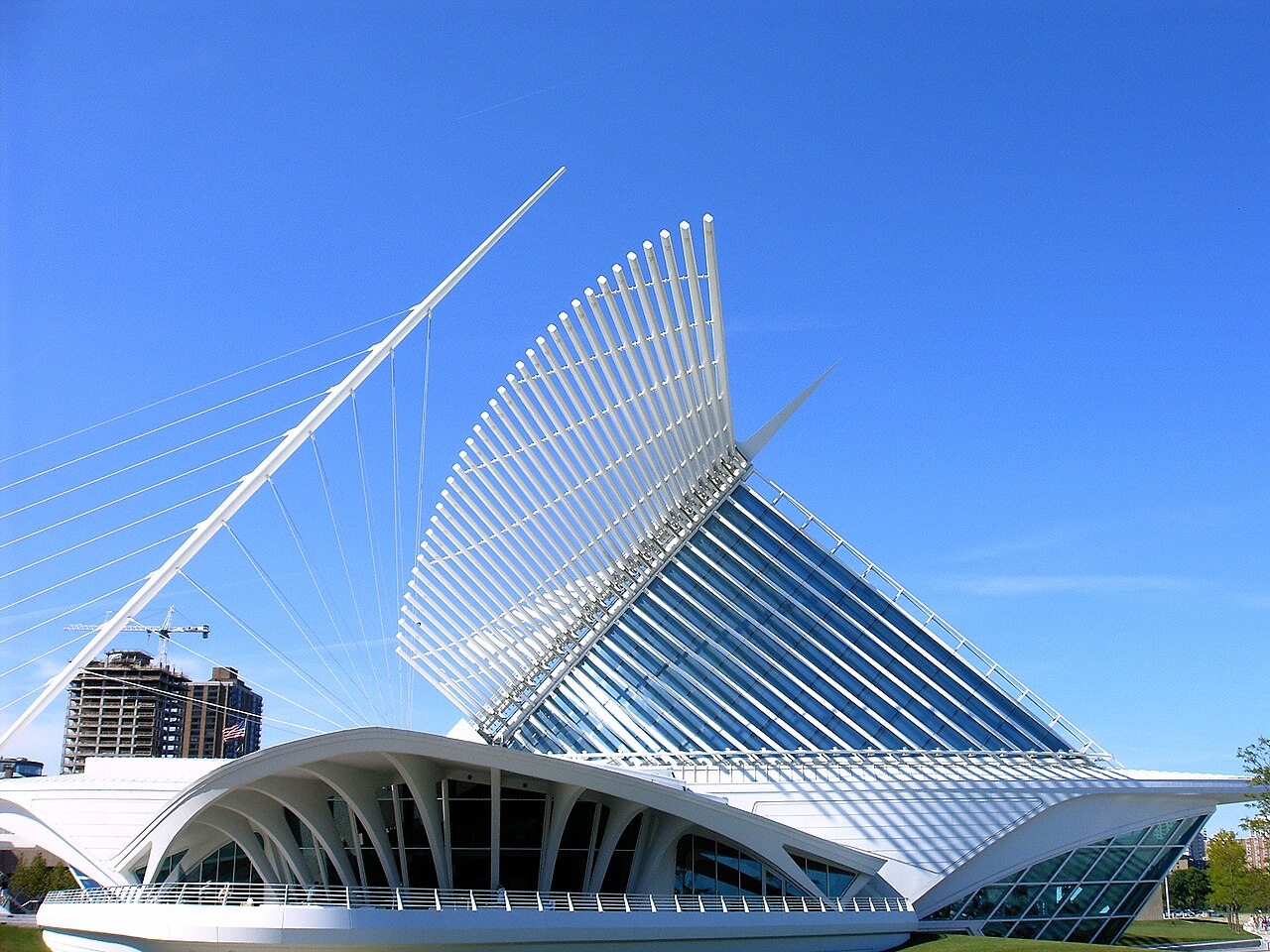
Whether you get there by car or Amtrak train, Milwaukee’s downtown has something for everyone. Murals and public art line the streets full of boutique shops, perfect for exploring without an agenda. Don’t miss the Milwaukee Art Museum, one of the city’s many museums, for the exhibits and the architecture of the building itself. Milwaukee is also a city for beer enthusiasts, with a few historic gems related to the Pabst Brewing Company.

Oak Park, IL

This one is right in Chicago’s suburbs, but we can’t skip over Oak Park’s ties to legendary architect Frank Lloyd Wright. His home and studio are in Oak Park, as are a series of other Prairie-style homes he designed. Take one of the many architectural tours dedicated to Wright’s work in the neighborhood.

Whether you’re exploring new museums, different scenery or a piece of architecture history, we hope this inspires you to find your new favorite getaway from the city!

The Legacy of Cornelia Oberlander

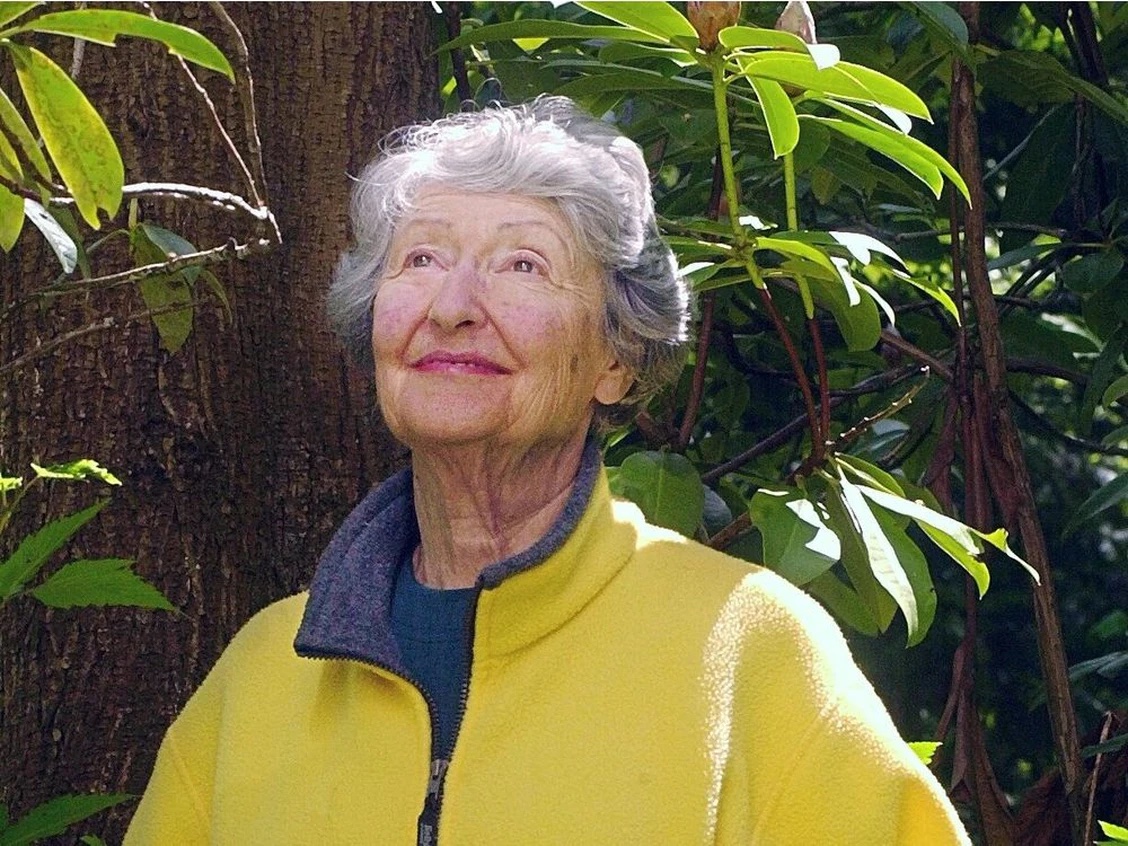
This spring, the design world lost a woman of fortitude, ingenuity and groundbreaking creativity. Cornelia Oberlander, a Canadian landscape architect, passed away just before her 100th birthday due to complications from COVID-19. Although her passing is mourned, Oberlander left behind an incredible and inspiring life story and legacy.

Cornelia Oberlander was born into a Jewish family in Germany in June of 1921. As the Nazi party rose to power, her family faced increasing dangers and chose to leave the country two weeks after Kristallnacht. Oberlander was eighteen by the time they emigrated to the United States in 1939, and there she was able to nurture her interests in the power of plants to heal. Her mother was a horticulturist who wrote gardening books for children and nurtured Oberlander’s appreciation for nature. Inspired by the landscaping and public spaces in Germany, she was determined to design parks from a young age. 

Main Hall at the University of British Columbia Museum of Anthropology. Credit: Xicotencatl on Wikimedia Commons. Licensed under CC BY-SA 4.0.

Oberlander received a BA from Smith College and was among the first class of women to study at Harvard’s Graduate School of Design, founded by Walter Gropius, a leader of the Bauhaus movement. Armed with a degree in landscape architecture, Oberlander was on a mission to improve lives with public spaces nourished by nature. And indeed she did; she started out working in Philadelphia, where her initiatives in public housing included places for children and green space. After moving to Canada, she advocated for communities and designed over 70 urban playgrounds. Her notable projects included the Children’s Creative Center at Montreal’s Expo ’67, Vancouver General Hospital Burn Unit Garden and the landscape design at the Museum of Anthropology at UBC, Vancouver (photo below). Over her lifetime, Oberlander was honored with Order of British Columbia, the Order of Canada and Vancouver Freedom of the City Award, amongst many other accolades.

Cornelia Oberlander’s work will impact landscape architects, urban designers and creative minds all over the world for years to come. Her beliefs in the ability of design to bring about social change and healing are ones we as creatives should all hold in high regard, as we build systems and buildings that elevate the human experience.

Modern Museums Around the World

As lovers of great design, Optima’s appreciation for both architecture and art itself runs deep, and there’s no better place to indulge this passion than at a modern museum of art. And with modern art and Modernist architecture sharing so much in common, it’s no wonder that many of these institutions are often housed in innovative and captivating buildings. Today, we’re taking a look at some of the best modern museums around the world — from the collections they contain to the structures that define them.

Guggenheim Museum Bilbao – Bilbao, Spain

The Guggenheim Museum Bilbao is a museum of modern and contemporary art designed by Canadian-American architect Frank Gehry, located in Bilbao, Spain. You’ll recall from our Subsects of Modernist Architecture Series that Gehry was part of the Deconstructivism movement on Modernism in the 1980s. This museum, established in 1997, boasts an impressive collection of modern art, as well as site-specific installations from artists such as Jeff Koons. The building itself has been described as “the greatest building of our time” by architect Philip Johnson, and “a fantastic dream ship of undulating form in a cloak of titanium,” by critic Calvin Tomkins in The New Yorker.

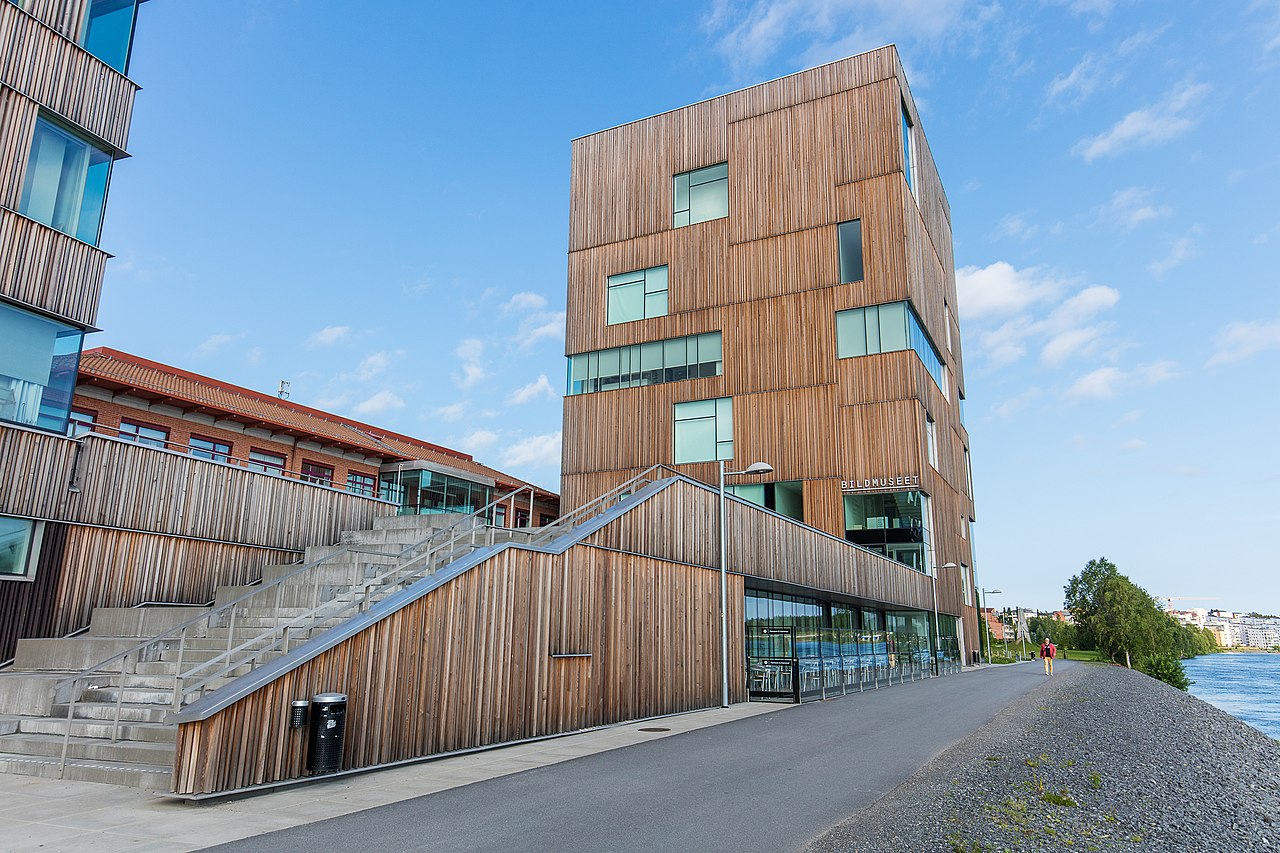
Bildmuseet – Umeå, Sweden

Bildmuseet is one of Sweden’s foremost venues for international contemporary art, a part of Umeå University and the public heart of its arts campus. The strikingly Modern building was designed by Henning Larsen Architects in collaboration with White. A living and breathing work of art itself, the building’s facade is made of Siberian larch wood that fades to a silver-grey color over time. In its lifetime, Bildmuseet was nominated in 2013 for the Swedish Kasper Salin Prize and the European Mies van der Rohe Prize and has been described as one of the world’s most beautiful university museums. 

Zeitz Museum of Contemporary Art Africa. Credit: Axxter on Wikimedia Commons, licensed under the Creative Commons Attribution-Share Alike 4.0 International license

Zeitz Museum of Contemporary Art Africa – Cape Town, South Africa

Zeitz Museum of Contemporary Art Africa (or Zeitz MOCCA, for short) is a contemporary art museum in Cape Town, South Africa, and boasts the title of being the largest museum of contemporary African art in the world. The building, which was commissioned through a public/private partnership between the V&A Waterfront and German businessman, Jochen Zeitz, is actually made from a converted historic 1921 grain silo. According to Zeitz MOCAA records, “The architects, Heatherwick Studio, aimed to conserve and celebrate the original structure’s industrial heritage, while simultaneously excavating large open spaces from the 42 densely-packed concrete cylinders from which it was comprised.”

Niteroi Contemporary Art Museum — Rio de Janeiro, Brazil

It’s no surprise that the
Niteroi Contemporary Art Museum, located in Rio de Janeiro, Brazil, is one of the city’s main landmarks. The futuristic building was designed by Oscar Niemeyer with the assistance of structural engineer Bruno Contarini. Thanks to its strategic design, this museum offers more than just art to admire — the tall, angled windows offer sweeping views of Guanabara Bay and Sugarloaf Mountain. Beneath the structure, architect Niemeyer also designed a reflecting pool that surrounds the cylindrical base “like a flower.”

As an artform all on its own, the architecture of these museums stands strong alongside their impressive modern art collections. 


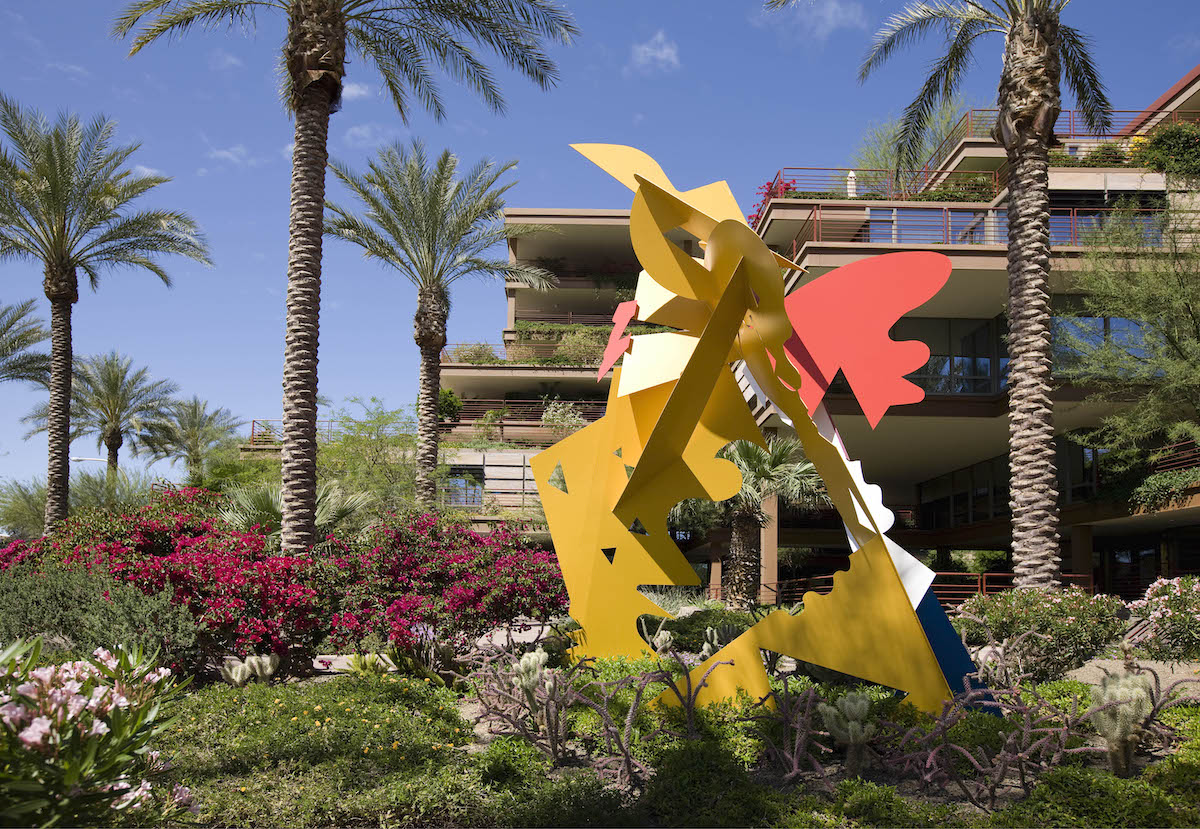
Sculpture Spotlight: Sundance

As devout fans of Modernism, at Optima we love to experiment with form and function. That’s how Optima Co-Founder David Hovey Sr. got into sculpture. Combining his love of art with his interest in materials, David Hovey Sr. began manipulating steel to create striking sculptural pieces that play to Optima’s architectural spaces. Today, we’re examining one of his sculptures: Sundance.

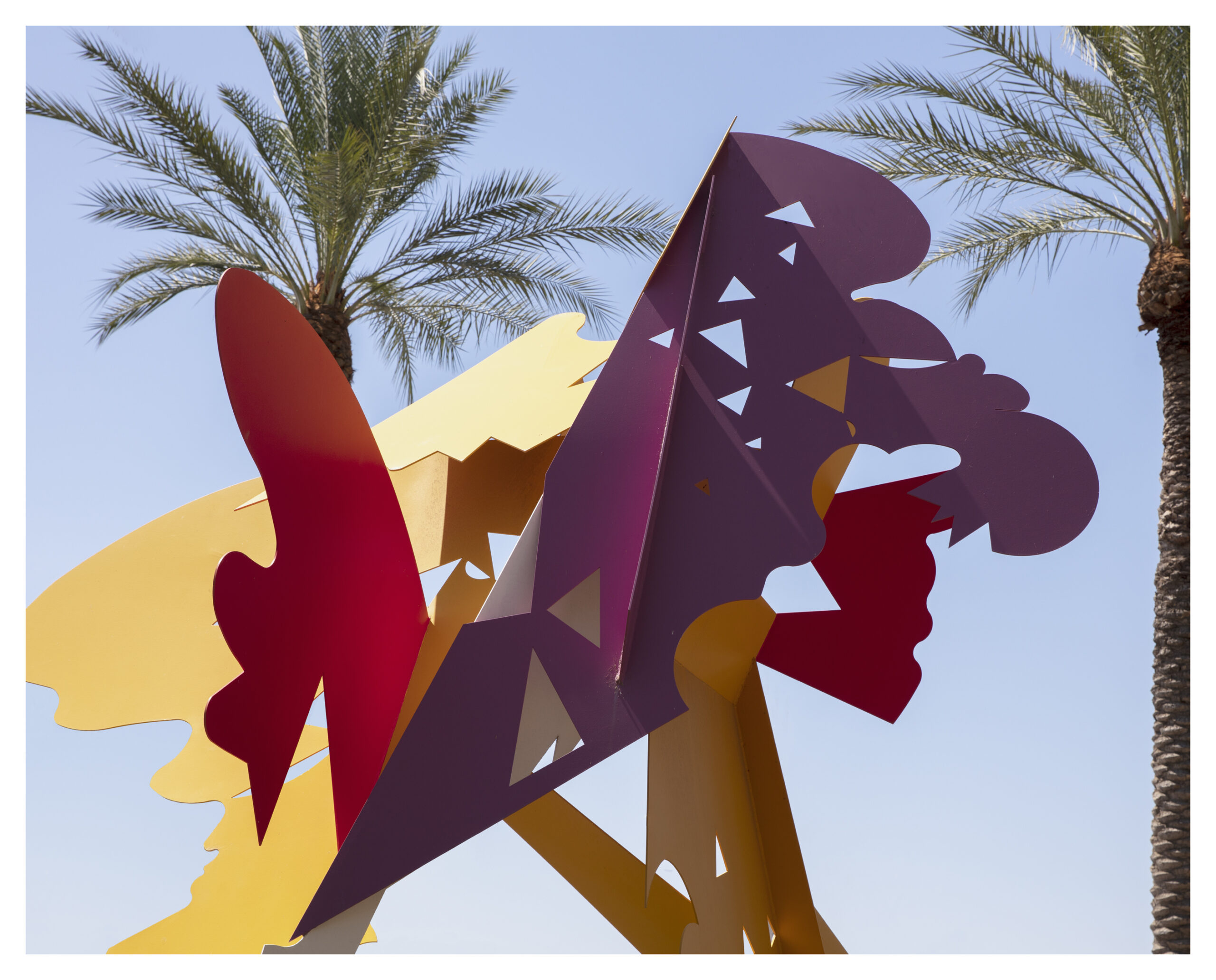
While many of our sculptures manifest in a variety of sizes and colors, Sundance is notable because of its goliath frame. Standing at thirteen feet tall, this impressive structure and its bold angles make a lasting first impression. The piece expresses the nature of the thin steel plate from which it was fabricated, showcasing structural potential with three-dimensional, dynamic components and an inviting sense of openness.

It’s no coincidence that Sundance is nestled in the landscaped courtyard of Optima Camelview Village. Sundance is built literally and metaphorically to connect to the ground, giving the sculpture context and roots within space. Meanwhile, being swathed in vibrant primary hues, the sculpture plays complement to the property’s red architectural details and the vibrant color palette displayed throughout the gardens.

Another perspective of Sundance sculpture

Whether we’re experimenting with form, function, size or color — at Optima we love to playfully implement sculpture as yet another component of thoughtful design.

Female Weavers and the Bauhaus

The Bauhaus is a renowned institution in the history of Modernist architecture — and art in general. But what may come as a surprise to many: the most commercially successful department of the school was actually the Bauhaus weaving workshop. And even more notable, this workshop was run by a slew of highly innovative, influential female designers.

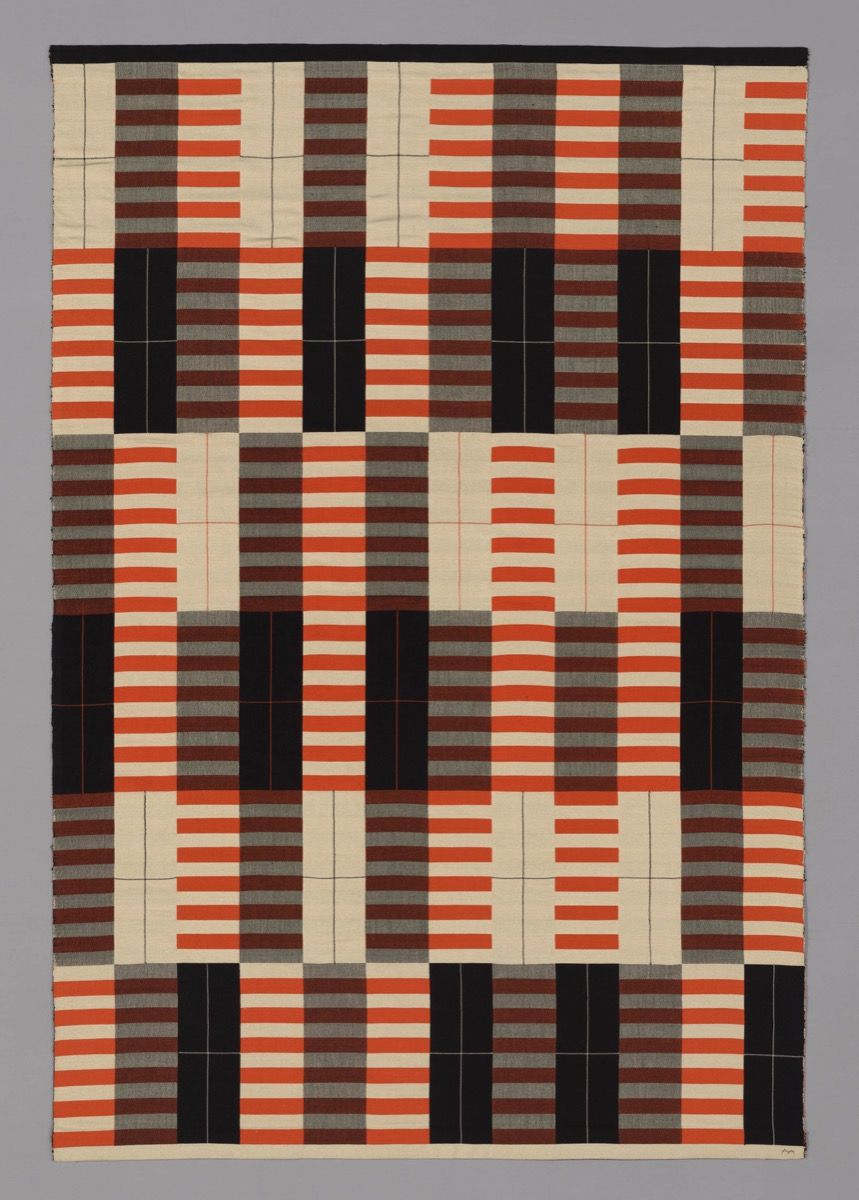
Anni Albers, Originally produced by the Bauhaus Workshop. Black-White-Red, 1926–27 (produced 1965). © The Josef and Anni Albers Foundation / Artists Rights Society (ARS), New York. Courtesy of the Art Institute of Chicago.

Defying Expectations

When the Bauhaus opened in 1919, the progressive school was heralded as an equitable place. In fact, its founder Walter Gropius even wrote in the Bauhaus bylaws: “Every eligible person whose talent and training are considered adequate will be accepted without regard to age and sex.” Gropius’s philosophy was stronger in theory than in action. He later became known for believing men thought in three dimensions, while women only thought in two.

Because of this gender bias, when women applied to the school, they were directed away from heavy craft areas, such as carpentry and metalwork, to a workshop considered more appropriate for women. This was the weaving workshop, which Gropius even referred to as “the women’s section” of the school.

Like many other women in architecture, the female weavers at the Bauhaus wouldn’t be put down by others’ limited perspectives. Designers such as Anni Albers, Gunta Stölzl and Otti Berger took the two-dimensional textile craft and breathed new life into it. In addition to creating patterns that were both commercially marketable and had deep influence on the fine arts world of the time, these female weavers also played with form and function. They took weaving beyond the two dimensional — inadvertently, defying Gropius’s backwards beliefs.

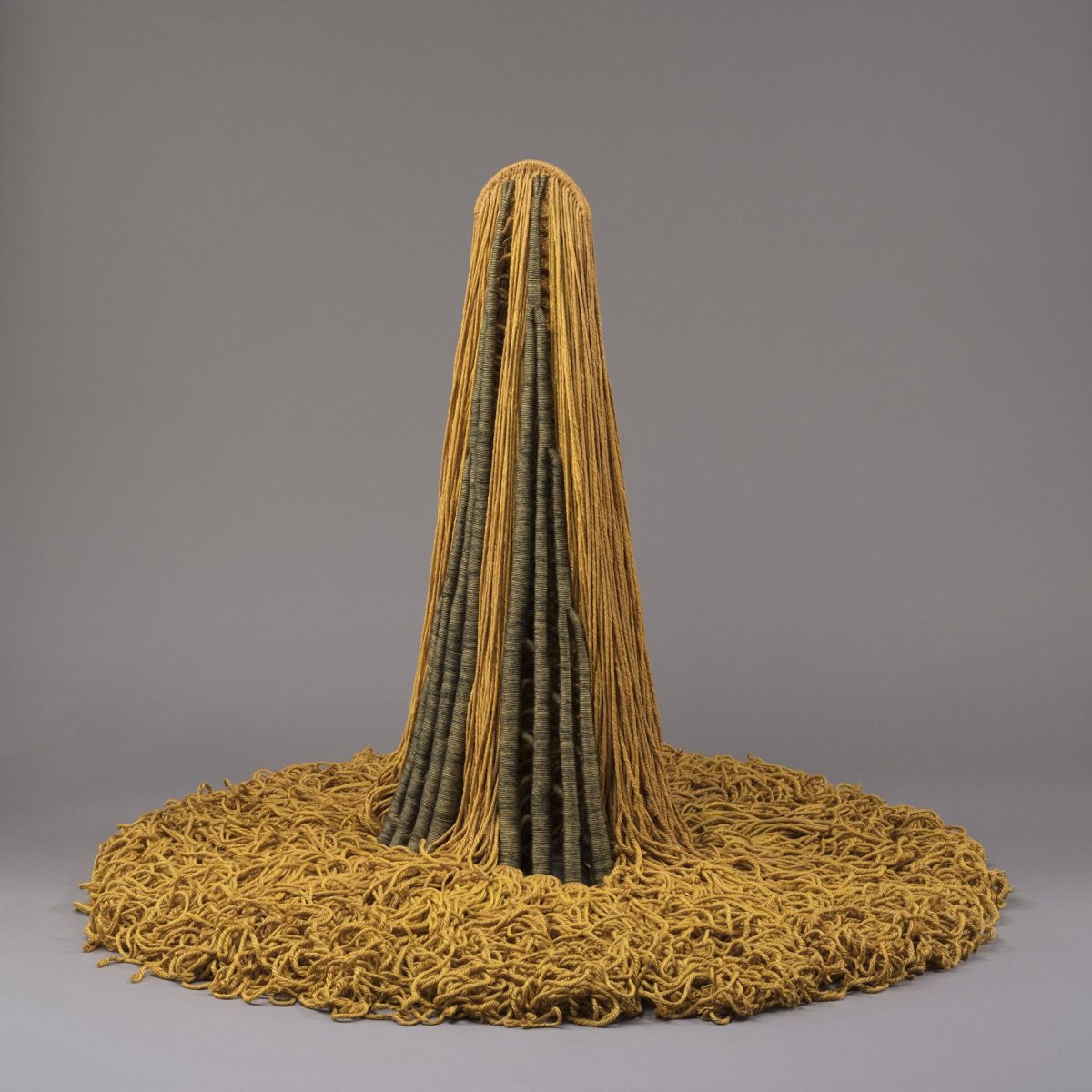
Claire Zeisler, Free Standing Yellow, 1968, shown at Weaving Beyond the Bauhaus. Courtesy of the Art Institute of Chicago.

A Collaborative Cohort

While the other workshops of the Bauhaus dealt in the highly theoretical and abstract, and often struggled to succeed commercially, the success of the weaving workshop stood in stark contrast. Besides its practical success, the workshop was also notable in the way that its female members taught to and learned from one another in a deeply collaborative process. Because Bauhaus members like Albers went on to teach their learnings globally, the impact of this collaboration is still seen in the weaving world today on figures like Sheila Hicks, Claire Zeisler and others. 

Most recently, the Art Institute of Chicago hosted an exhibit titled Weaving Beyond the Bauhaus, which ran from 2019-2020. The exhibit explored the influence of the Bauhaus weaving workshop across the Atlantic and across the decades. In lieu of traditional placards for each work, viewers navigated the exhibit by reading quote cards from various women in the field, all of whom were in conversation with one another, and with one another’s work. 

The women weavers from the Bauhaus exemplify an ongoing trend in the world of architecture and design: despite the odds or expectations, female designers are always ready and willing to rise to the challenge.

Auguste Rodin and the Beginnings of Modern Sculpture

Our appreciation for Modernism extends past architecture into all mediums of creative thought, including our love for sculpture (and our own sculpture at Optima). Sculpture has long been an artistic expression across decades and culture, but the beginnings of Modern sculpture sparked with renowned visionary, Auguste Rodin. 

Setting the Stage

By the 20th century, sculpture practices in Europe largely revolved around Neoclassical and Romantic ideals. Contour and clarity defined figures, and artists were inspired by the art and culture of classical Greek antiquity. Often sculptors even portrayed their subjects in Roman costume instead of contemporary clothing. But the world of sculpture would see dramatic change at the 1900 Paris Exposition, when Auguste Rodin would use the world’s fair to unveil a new way of thinking when it came to sculpted form. 

Auguste Rodin
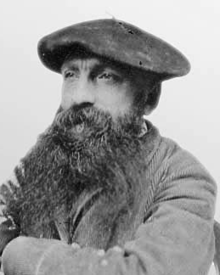
Auguste Rodin. Credit: public domain.

Auguste Rodin 

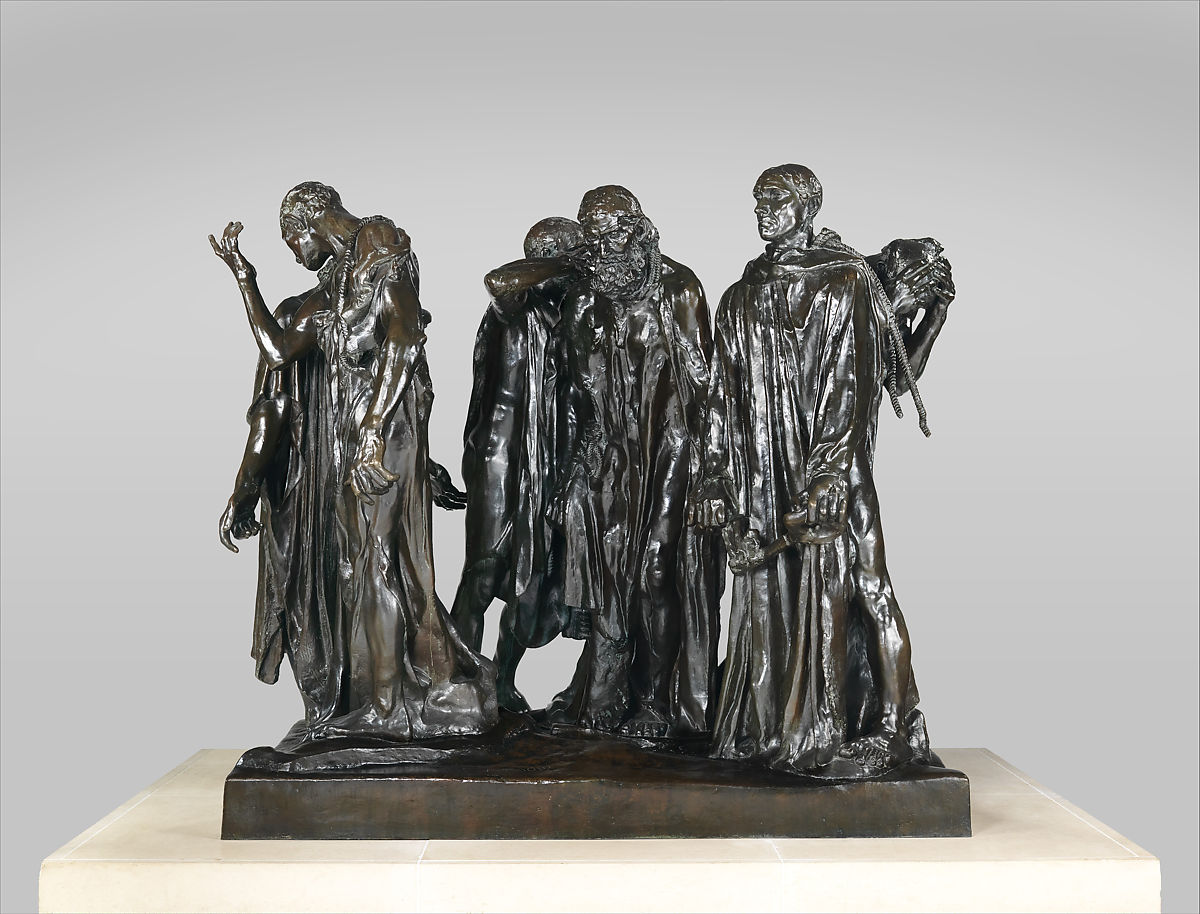
Rodin came from a working-class family in Paris and throughout his turbulent youth, taught himself to draw and paint. Eventually, he learned the trade of ornamental design and sculpture, but by the 1890s, had grown exhausted of the style. Rodin was a naturalist, more concerned with character and emotion than he was with tradition, idealism or decorative beauty. His work emphasized detailed, textured surfaces and the juxtaposition of light and shadow, a style that was met with criticism initially. At the Paris Exposition, Rodin showcased a series of pieces that would turn an entire industry upside down at the turn of the century.

Burghers of Calais by Auguste Rodin, which displayed at the 1900 Paris Exposition. Image courtesy of The Metropolitan Museum of Art

Modern Sculpture

Modernist styles that followed Rodin’s debut included Art Nouveau, Cubism, De Stijl, Dadaism, Surrealism, Futurism, among many others. It seemed that once the creative floodgates were open, artists ran with the possibilities of bending form past the boundaries of traditional realism. Especially since the 1950s, Modernist trends in sculpture have become increasingly more flexible to include new materials, abstractions and approaches. And we’re thankful they’ve made such progress; it’s allowed our own expressions of form to flourish over the years, and contribute beautiful, unique sculpted pieces to our Optima communities. 

Sculpture Spotlight: Curves and Voids

As devout fans of Modernism, at Optima we love to experiment with form and function. That’s how Optima Co-Founder David Hovey Sr. got into sculpture. Combining his love of art with his interest in materials, David Hovey Sr. began manipulating steel to create striking sculptural pieces that play complement to Optima’s architectural spaces. Today, we’re examining one of his sculptures: Curves and Voids.

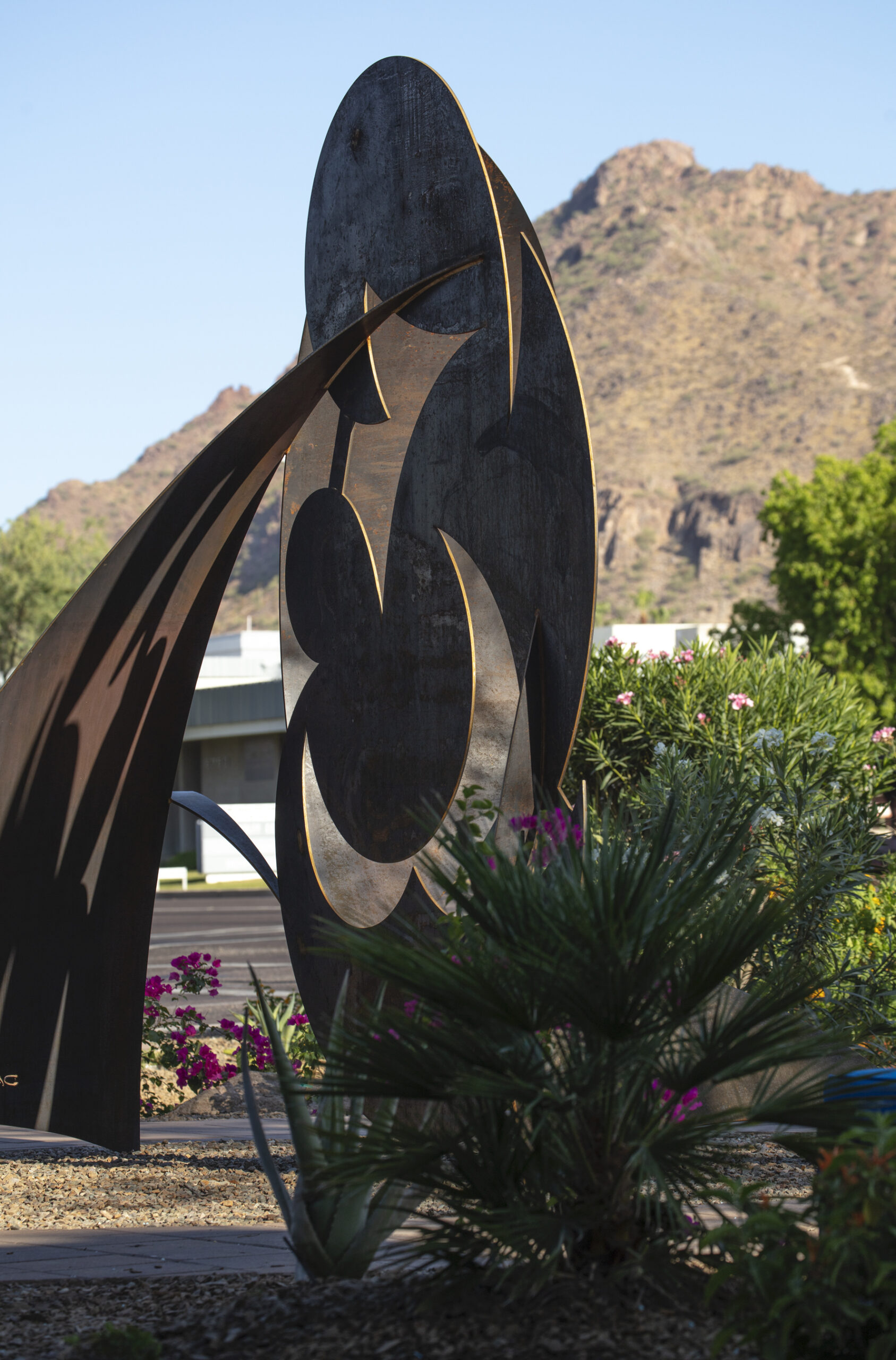
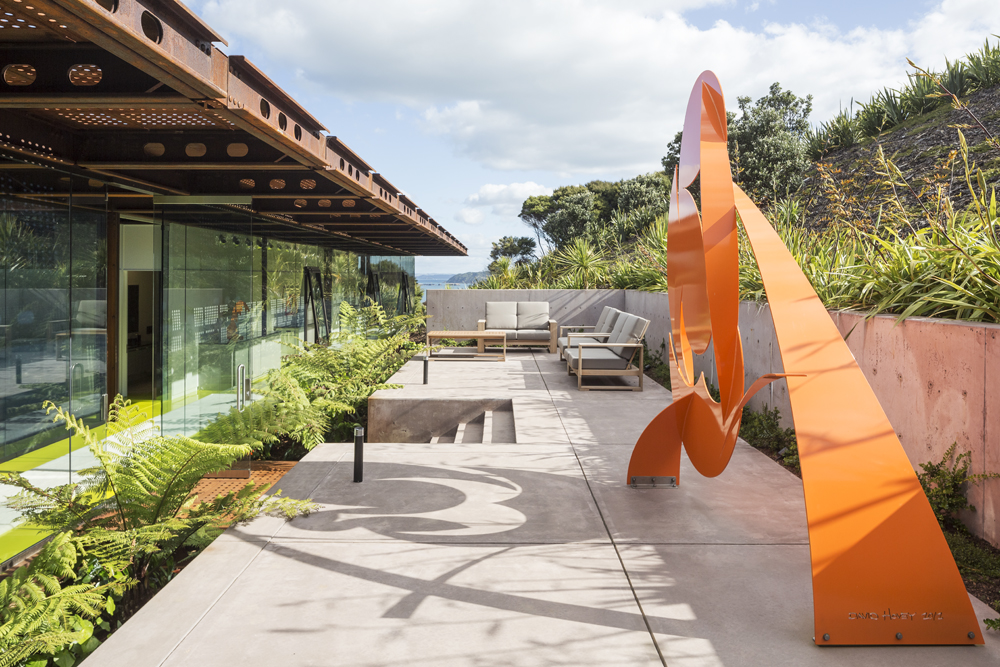
Curves and Voids at DCHGlobal Whale Bay House in New Zealand.

Like all original Optima sculptures, Curves and Voids can be found across our properties in various colors and sizes, as evidenced above. But what never changes is the form of the piece: Curves and Voids plays with the expression of steel and explores ideas of its potential. This play is demonstrated in grand, sweeping curves that make up the various sculptural components. Meanwhile, voids are laser cut within the sculpture’s steel planes. These holes provide gaps and textures to contrast and juxtapose the sculpture’s curves. 

The sweeping curves of Curves and Voids play perfect complement to the stark Modernist lines in our communities. At Optima Sonoran Village’s sculpture walk, Curves and Voids stands boldly expressed in natural Cor-Ten steel. The steel’s raw coloration was chosen so as not to compete with the vibrant colors in the building’s facade and landscaping. Meanwhile, at Optima DCHGlobal’s Whale Bay House in New Zealand, Curves and Voids is supersized in the courtyard, becoming a show stopping statement piece for contemplation. 

Whether we’re experimenting with form, function, size or color — at Optima we love to playfully implement sculpture as yet another component of thoughtful design.

person name goes here

Maintenance Supervisor

Glencoe, IL


    Acceptable file types: *.pdf | *.txt | *.doc, max-size: 2Mb