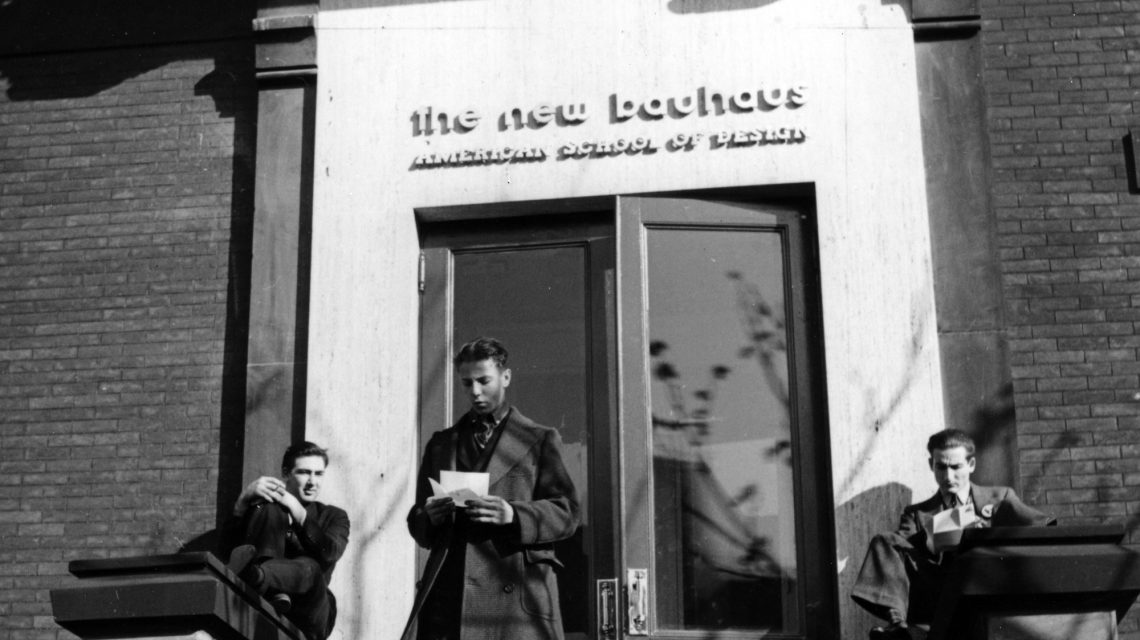
Chicago’s Bauhaus Movement

With aligning principles, artists and aesthetics, our practice of Modernism and the Bauhaus movements often overlap. Chicago’s Bauhaus movement offered unique contributions to the city’s growth, and continues to inspire. Today, we dive into its past and its present impact. 

Troubled Beginnings

During WWII, many artists and instructors involved with the Bauhaus movement were forced to flee Germany (you can read a more in-depth history on our past blog post,100 Years of Bauhaus.) A group of instructors took refuge in the United States, a few taking particular interest in Chicago and the Midwest. Among them was László Moholy-Nagy, who was enlisted by the Chicago Association of Arts and Industries to help open a similar Bauhaus school to attract talent. With Moholy-Nagy’s eccentric leadership, The New Bauhaus was born.
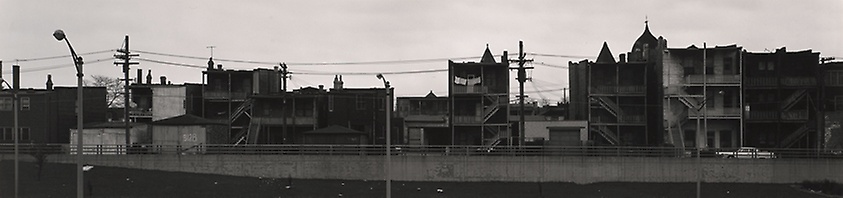
Chicago Landscape #26, 1964, Art Sinsabaugh. Courtesy of the Art Institute of Chicago

An Expansive Practice

Considering its widespread impact on the art world and Chicago, The New Bauhaus was a short-lived school, its formation filled with dramatic disagreements between leadership and changes in locations. Moholy-Nagy and other teachers built an atypical educational experience that produced eccentric, groundbreaking artists; however, the work they produced wasn’t particularly practical or profitable. After his death, the school was absorbed by the Illinois Institute of Technology and transferred to the care of Ludwig Mies van der Rohe.

Despite its turbulent trials, Chicago’s New Bauhaus school influenced many artists and industries, ranging from textiles and furniture to photography and sculpture. Ludwig Hilberseimer, another German immigrant, made notable strides in urban planning. Nathan Lerner and Art Sinsabaugh  helped define the visual culture in Chicago. Emmett McBain had a remarkable impact on the representation of Black Americans in advertising. Often overlooked through the lens of history, the women active in Chicago’s Bauhaus movement had impactful careers as well, from Marion Mahony Griffin’s architectural and planning work and Elsa Kula’s colorful, eye-catching work. 

From architecture and urban design to painting and sculpture, the legacy of the Bauhaus is evident throughout Chicago. And ultimately, its relationship with Modernism naturally means it’s also reflected in our own buildings and sense of design. 
A Brief History of the Plaza

At Optima, we’re believers that exceptional design has the power to inspire awe and wonder, and to enhance the human experience. One such component of design, the plaza, is a perfect example of this: designed as an open, public space, plazas create hubs for community activity and human connection. To learn more about the role this seminal piece of design has in creating public space, we’re diving into the history of the plaza.

Plaza Mayor, Madrid. Credit: Francisco Anzola on Wikimedia Commons, licensed under the Creative Commons Attribution 3.0 Unported license

The First Plazas

From colonial cities in Spanish America to the Spanish East Indies, there were several types of plazas serving as the center of community life. The plaza mayor often referred to the space centered between several administrative, religious and government buildings. The plaza de armas, meanwhile, served as a rallying space for troops, and the plaza de toros translates, quite literally, to bullring.

Perhaps the most significant example of such plazas is the Plaza Mayor in Madrid, Spain. Dating back to 1619, the plaza was constructed during the reign of Philip III by architect Juan de Herrera. Though the plaza saw several disasters since then and was reconstructed an equal number of times, it remained (and still remains) a pivotal public fixture in Madrid. Plaza Mayor has served many diverse purposes, from being the site of a marketplace, to bullfights, to military parading ground, to public executions, to even trials during the Spanish Inquisition and crowning ceremonies. 

Evolving over time to a space of leisure, the Plaza Mayor is now the site of outdoor cafes, restaurants and, inevitably, tourists. It draws people in with yoga workshops, concerts and festivals — a far cry from its dabbles in militant history. The Spanish plaza is also related to the Italian piazza, with both belonging under the umbrella term “town square,” which includes city squares, plazas, piazzas and city greens.

The Modern Day Plaza

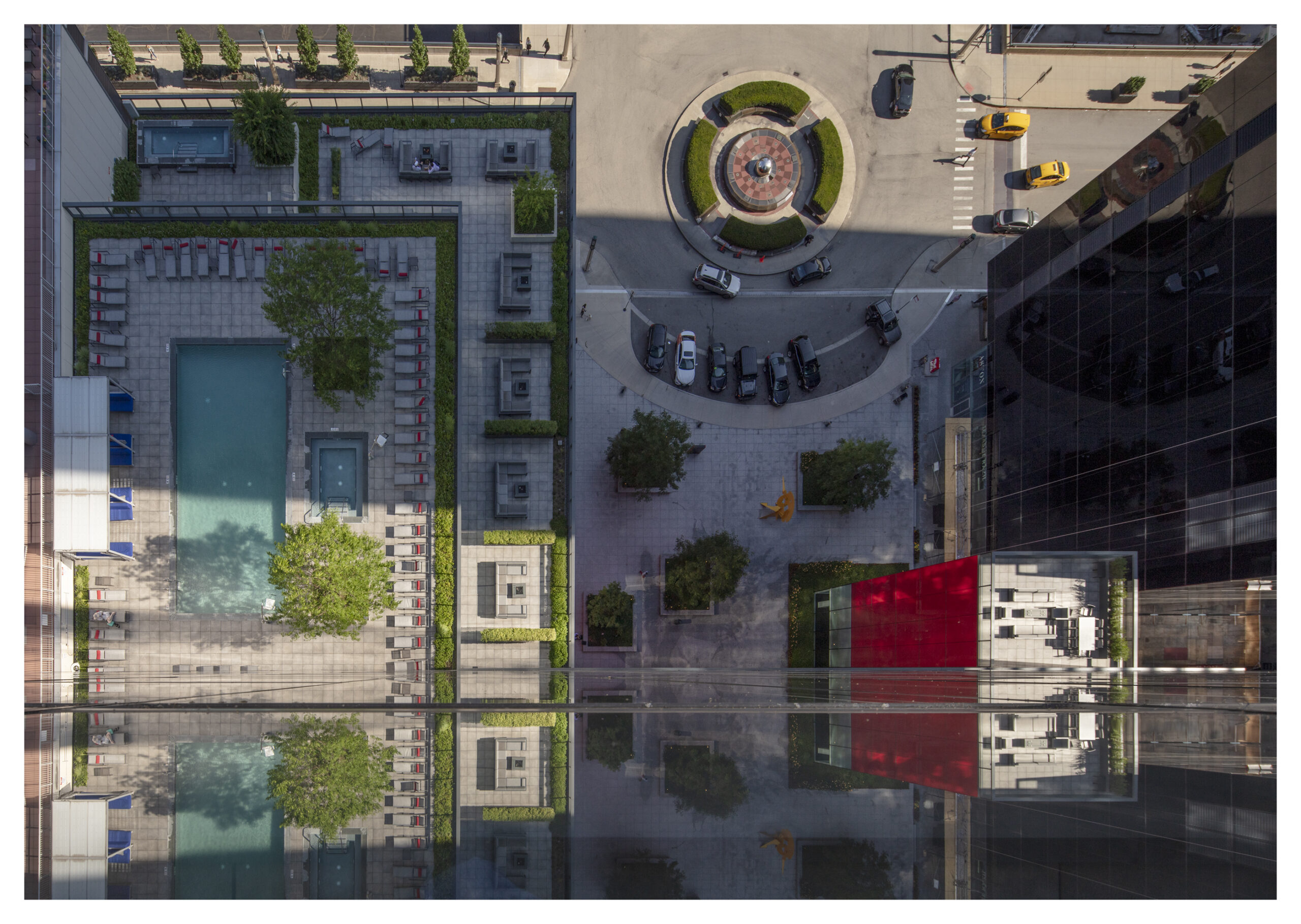
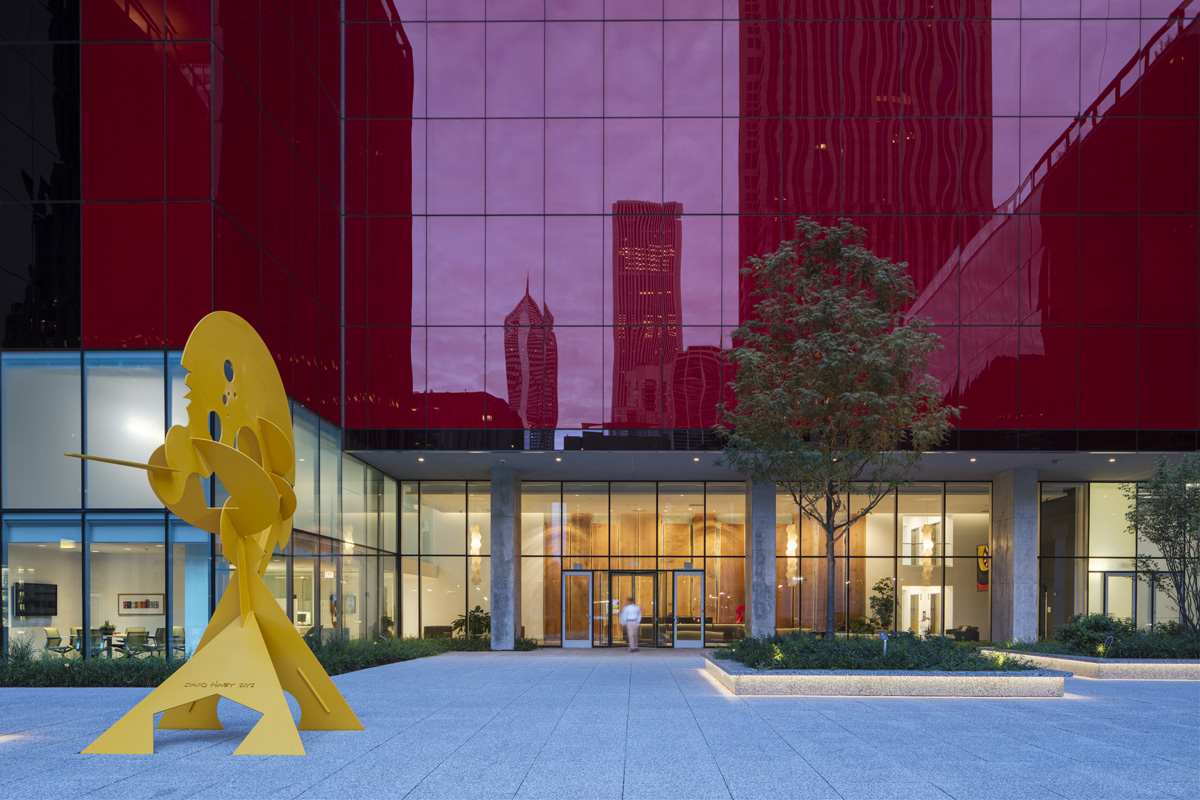
Following in the footsteps of Madrid’s adaptable Plaza Mayor, the modern day plaza can refer to a multitude of spaces with a multitude of purposes. Within our own portfolio, a prime example of a plaza is at Optima Signature and Optima Chicago Center. By sliding the podium of Optima Signature North and juxtaposing Optima Chicago Center to the West and South, the buildings create a dynamic plaza space, which features lush landscaping, planters and benches. Kiwi, a large-scale sculpture designed by Optima founder David Hovey Sr, adds to the visual energy of the space. 

Aerial view of the plaza at Optima Signature and Chicago Center

Now, plazas refer to open spaces within neighborhoods that boost economic vitality, pedestrian mobility and safety as well as providing aesthetically pleasing areas. No matter the interpretation of the word, there’s always one belief at the core, and that’s gathering and celebrating community. 

The Evolution of Amenities

Location, location, location” has always been the sage advice in real estate, but experts think in the coming years, that may shift to “amenities, amenities, amenities.” In the industry arms race, amenities have skyrocketed to the forefront of renters ⁠— and buyers ⁠— minds in recent years. And with any trend, amenities is one that’s constantly evolving, growing and incorporating new ideas that ultimately lead to greater longevity. 

Navigating Recovery and a New Generation

After the housing market crash of 2007-2008, many people opted to rent rather than buy, whether it was out of preference or for financial security reasons. That change in preference, combined with the rise of millennials in the home buyer/renter market, placed new emphasis on the multifamily market. Millennials began to eschew the suburbs in favor of multifamily buildings in urban cores, and prioritized access to local amenities and public transportation. 

With the transition to multifamily properties, residents became more and more open to sacrificing a ‘traditional’ home in exchange for more shared amenity spaces. With amenity offerings spanning from the recreational (gyms, pools, sport courts) to the everyday-practical (libraries, coworking space) to health and wellness focused (spas, outdoor space), the trade-off is well worth-it to most. Amenities offer access to a lifestyle and a community focus that may be well beyond a given resident’s price range, creating increased opportunity within their own home while still remaining in budget.

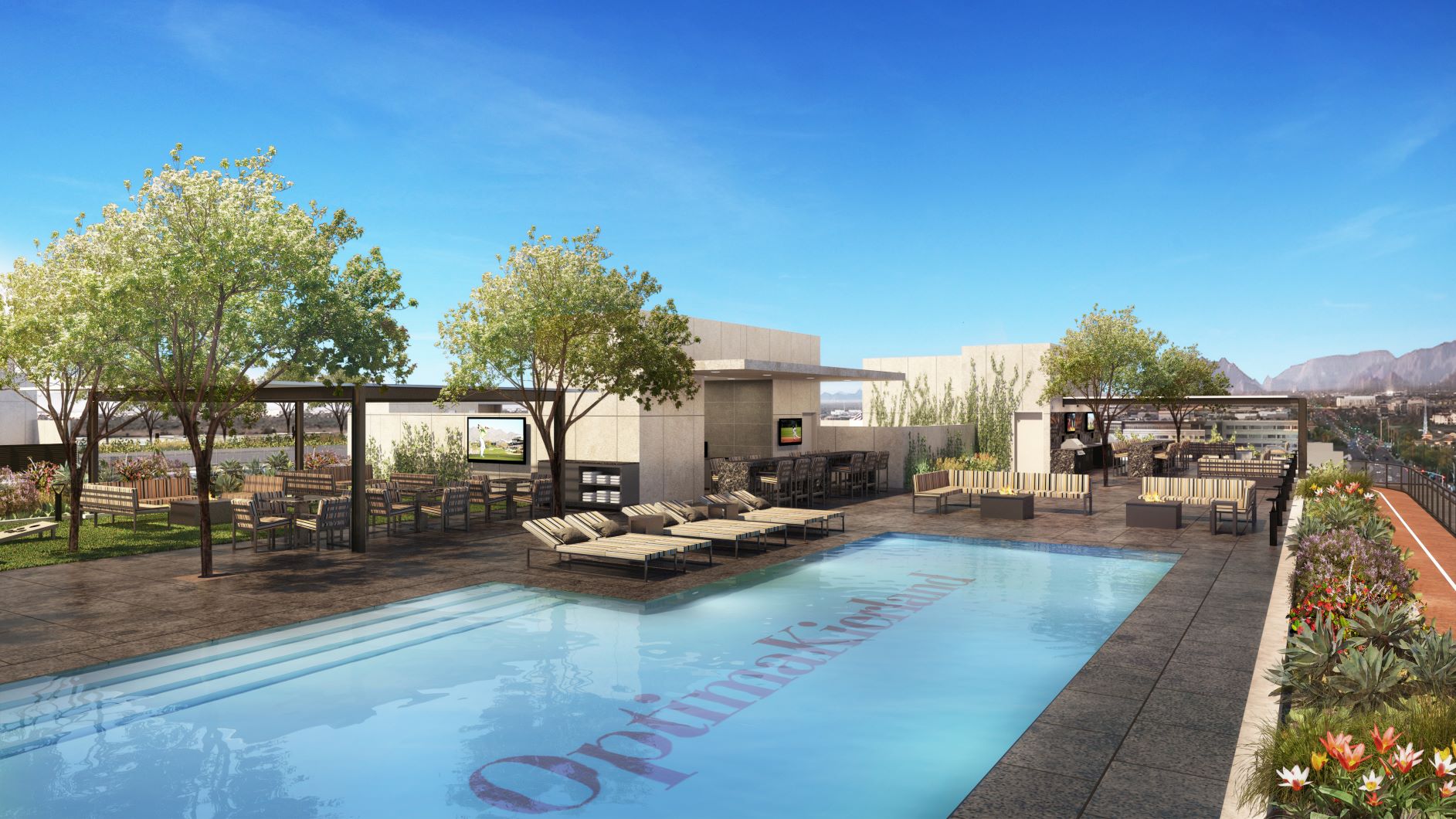
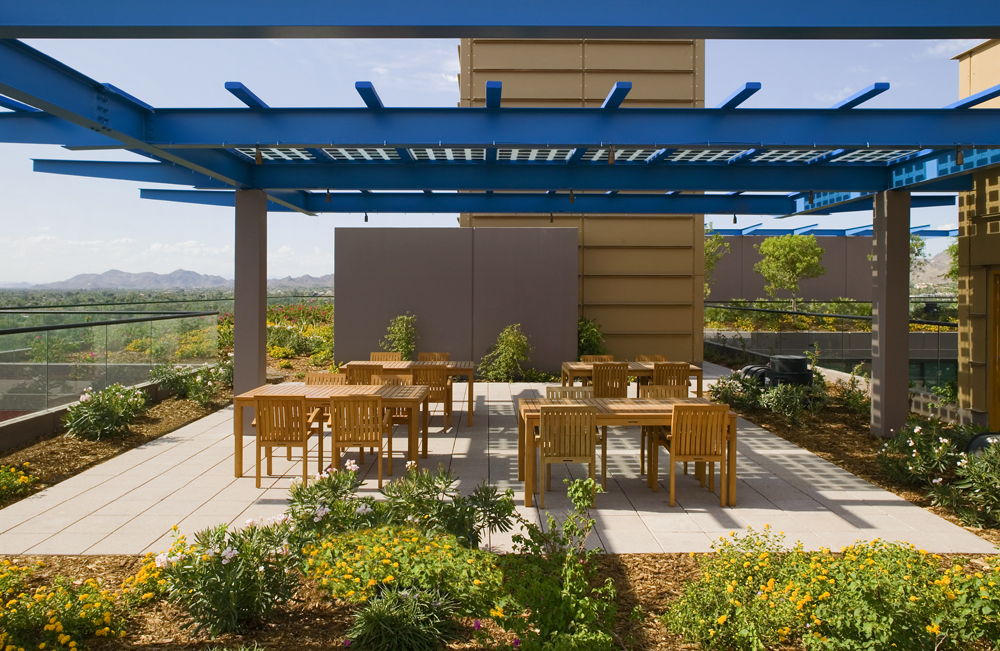
The Sky Deck at 7140 Optima Kierland

Amenities at Optima

In our pursuit of designing impactful spaces, amenities at Optima have similarly evolved to meet the needs and expectations of our residents. As Optima Signature was underway, we saw that an increasing number of people were working from home, so we incorporated spaces to stay focused and inspired. Our amenity spaces at Signature are numerous, and they include a conference room, library, powered and connected seating areas (indoor and outdoor as well as business suites. A productive at-home office space is well balanced with 1.5 acres of amenities, creating the perfect balance of work and play for Signature residents. 

At our latest project, Optima Kierland Center, the amenities were designed to take advantage of the great outdoors and surrounding desert, both in common spaces and individual residences. Party rooms, fitness spaces, yoga and wellness spaces were designed to be indoor-outdoor, oftentimes using retracting glass walls to join the two. Though wellness amenities are common now, amenities at Kierland include spa-calibur steam rooms and saunas, a rooftop running track, pickleball and basketball courts, full-service fitness centers, and stunning panoramic mountain views to get residents excited to enjoy the outdoors. 

Ultimately, we love creating spaces that don’t just respond to trends, but truly meet the needs of the people who will interact with them daily. Amenities are just one of the ways we create a lasting impact and a fantastic living experience for our residents.

A Brief History of the Green Roof

A cornerstone of Optima design is the integration of sustainable and enjoyable green roofs. Since our inception, we’ve honed our techniques and evolved our green roofs to be cutting edge additions to each community and its environment. As we reflect on the growth of our own approach to the craft, we’re reflecting on green roof evolution overall with a brief history.

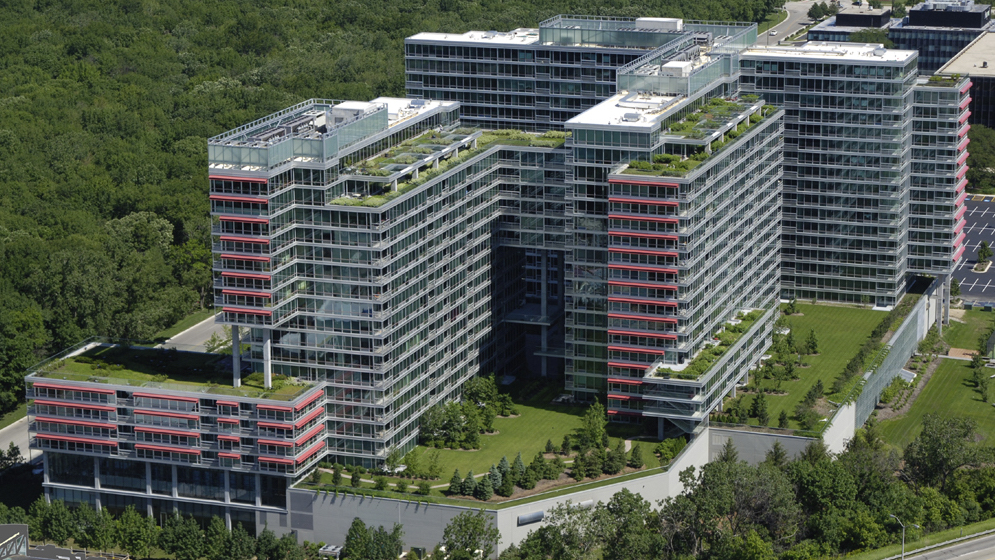
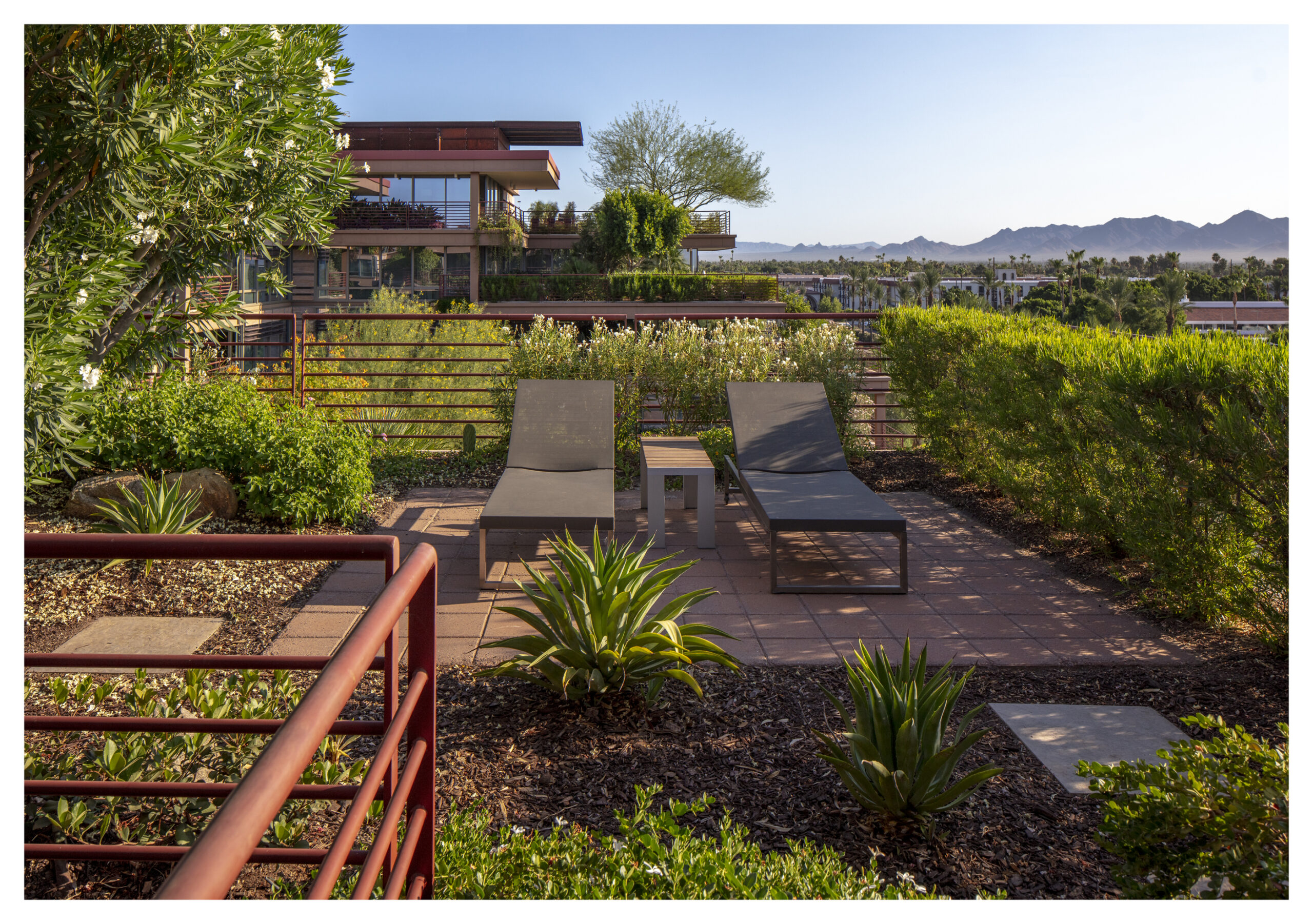
The green roof at Optima Biltmore Towers

A Quick Background on the Green Roof

A green roof (also sometimes called a living roof) is a roof of a building that is partially or completely covered with vegetation. This vegetation is often supported with a growing medium and planted over a waterproofing membrane, and can include additional layers such as a root barrier, drainage and irrigation systems as more complex components. Green roofs are aesthetic and also highly functional building components, serving to absorb rainwater, provide insulation, create a habitat for wildlife, lower urban air temperatures and mitigate the heat island effect. 

The green roof at Camelview Village

A Brief History of the Green Roof

Green roofs date back thousands of years. In ancient times, green roof structures began as sod roofs above caves, with “rooftop” earth and plantlife used for agricultural, dwelling and ceremonial purposes. The downfall of these sod roofs was a lack of protection against burrowing animals and lack of waterproofing ability. Inarguably, the most famous (and most sophisticated) ancient green roofs were the Hanging Gardens of Babylon, one of the Seven Wonders of the Ancient World, constructed around 500 B.C. Built over arched stone beams, the hanging gardens were indeed waterproofed by the inventive layering of reeds and thick tar. 

Modern green roof technology blossomed in the 1960s, when Germany pioneered new, reliable technology that provided sophisticated irrigation and protection against roof ingress. With its invention, Germany was able to market and develop the new green roof technology on a large scale like never seen before.

There are two types of green roofs: intensive and extensive. Intensive green roofs have deep soil layers, widely varied plantlife and increased weight-bearing and stress load (therefore requiring higher maintenance). Extensive green roofs have thin soil depth and less layers, a simplicity that allows for easier maintenance and makes them the more accessible option. In the 1980s, the widespread introduction of extensive green roof technology further propelled the practice. The dynamic and customizable technology means that buildings have the option of choosing which green roof is right for them, and therefore a larger population can take part in the sustainable practice of growing green roofs.

Green roofs have certainly evolved since their inception, and we can’t wait to see what new innovations in the coming years will bring for design, architecture and sustainability. 

Our Beliefs: All In, All the Time

Our beliefs are the principles that unite us, that inspire us each and every day to work toward a shared vision. One of those beliefs — all in, all the time — speaks to our unparalleled dedication, drive and willingness to do everything we can in the pursuit of exceptional design, from the small details to the big picture. We’re constantly at the drawing board with all cylinders firing, ensuring that what we deliver is in its best, most efficient form. That’s Modernism, and that’s Optima.

Our ability to commit so fully is made possible by our vertically integrated business model. Tired of the traditional red tape within real estate development companies, Optima founder David Hovey Sr. wanted to do something different, to start a company built around its dedication to exceptional design. We’re as passionate about the small details as we are about the big picture, and we operate at a pace — and with degrees of precision and attentiveness — that are unparalleled in the real estate development world. We invite the challenge of doing something that others say cannot be done, because we know that it can. 

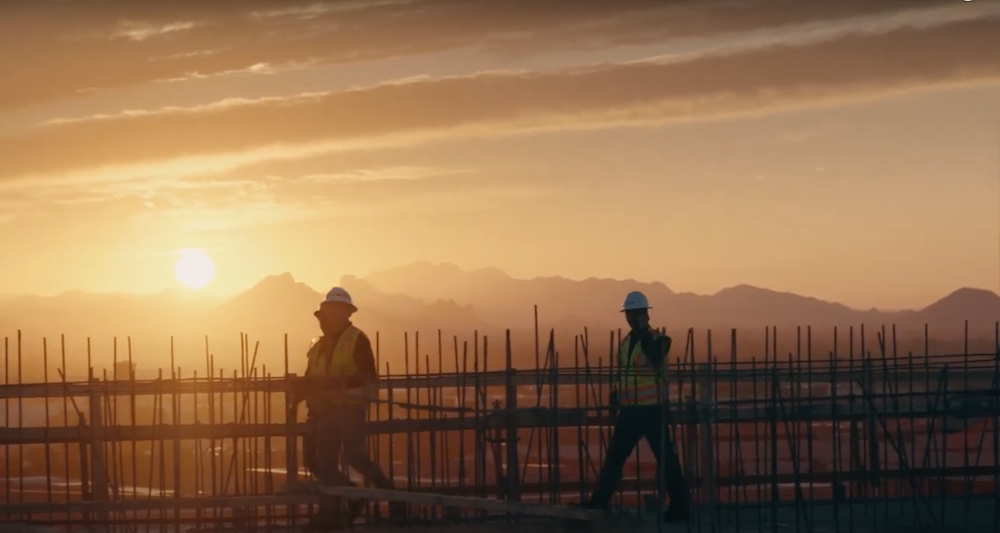
Thus far 2020 hasn’t been short of challenges, but our team has faced them head-on, from staying inspired to keeping focused through COVID-19. To keep Optima Kierland construction on track, our Arizona construction team worked tirelessly. They adapted through increased safety measures, adjusted schedules and constant communication to make sure everything still ran smoothly.

No matter the situation, we are adaptable and equipped to respond to challenges as they arise. More than just committed to a shared vision, we’re nimble and quick on our feet, bringing unique and innovative solutions that yield better results. To be all in, all the time — it’s not just built into our DNA, it’s built into how we navigate our work and our world every day.

Our Signature Vertical Landscaping System

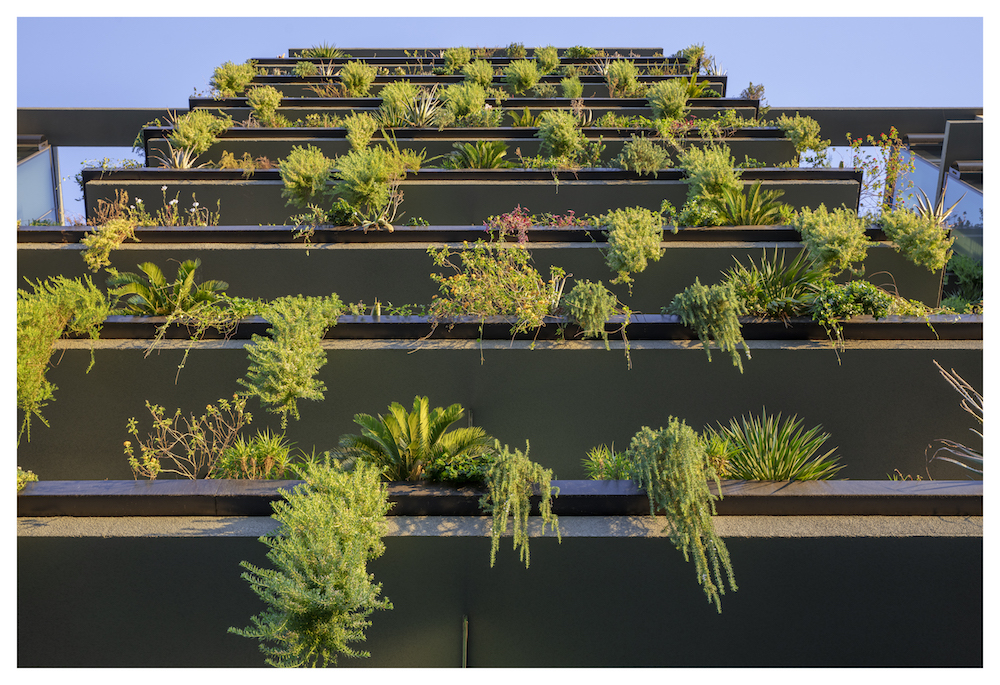
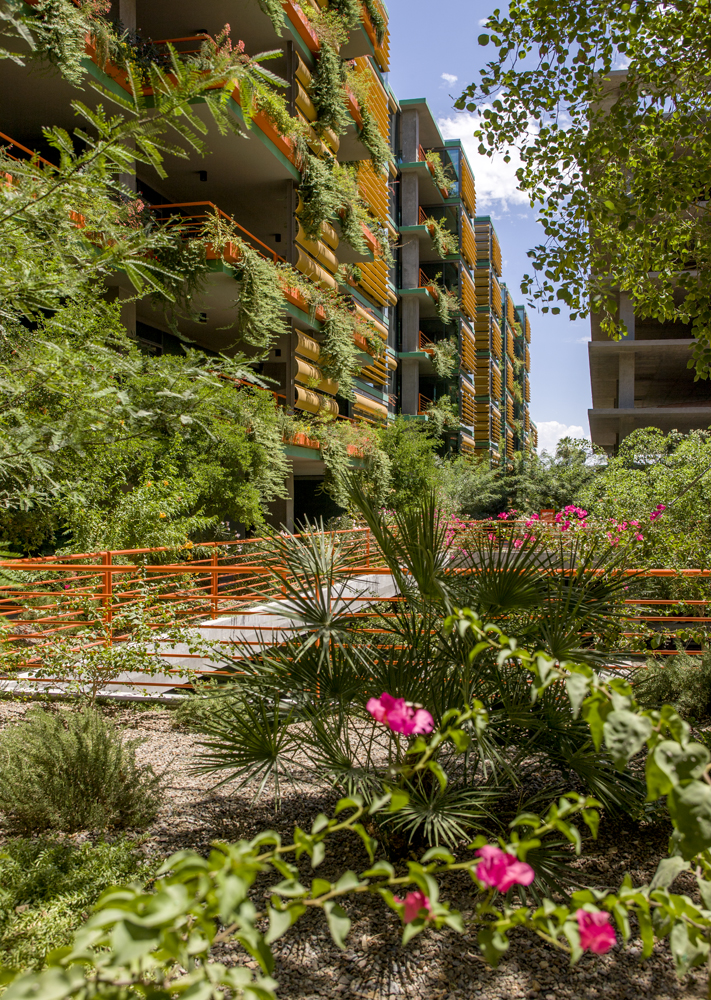
With every project, we ask ourselves how the natural land around us influences, affects and works in tandem with the structures we build. Seeking to holistically integrate the natural and built environments led us to develop our next-generation vertical landscaping system. The lush green element, utilized in many of our Arizona properties, is a cornerstone feature of Optima communities, a key component to our sustainability initiatives and so much more.

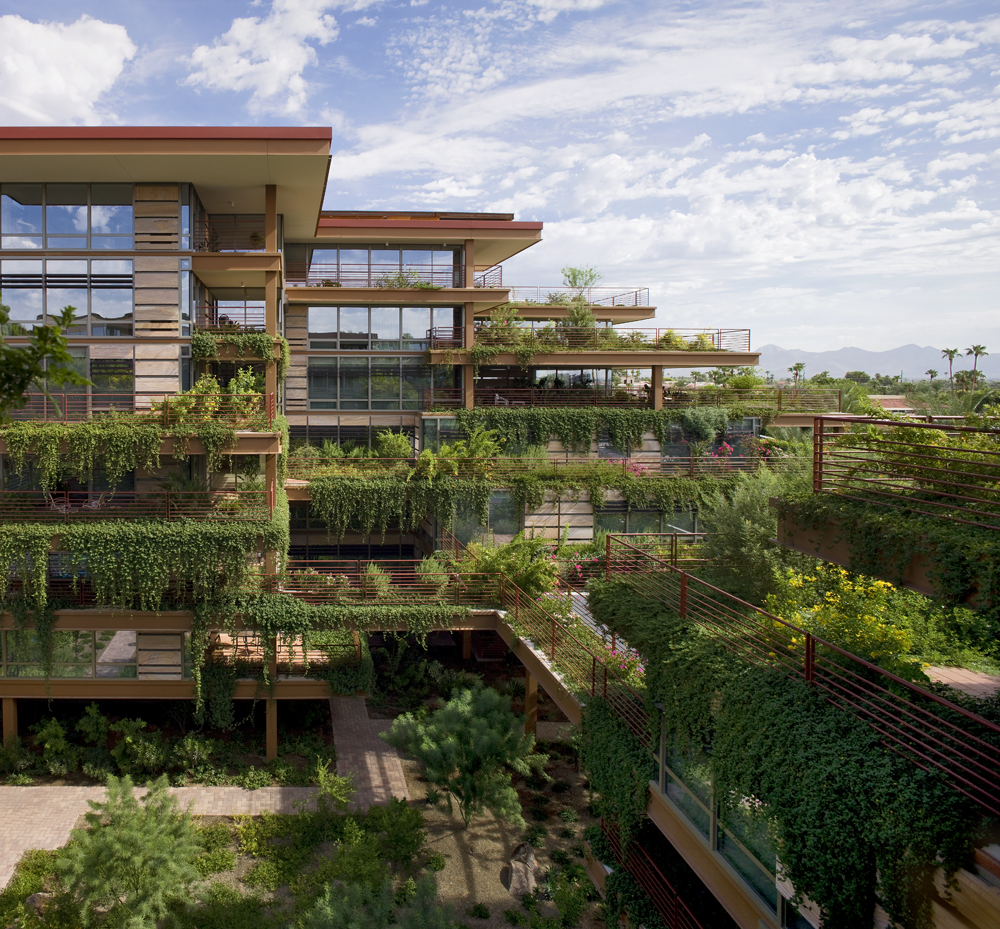
Our signature vertical landscaping system at Optima Kierland Center.
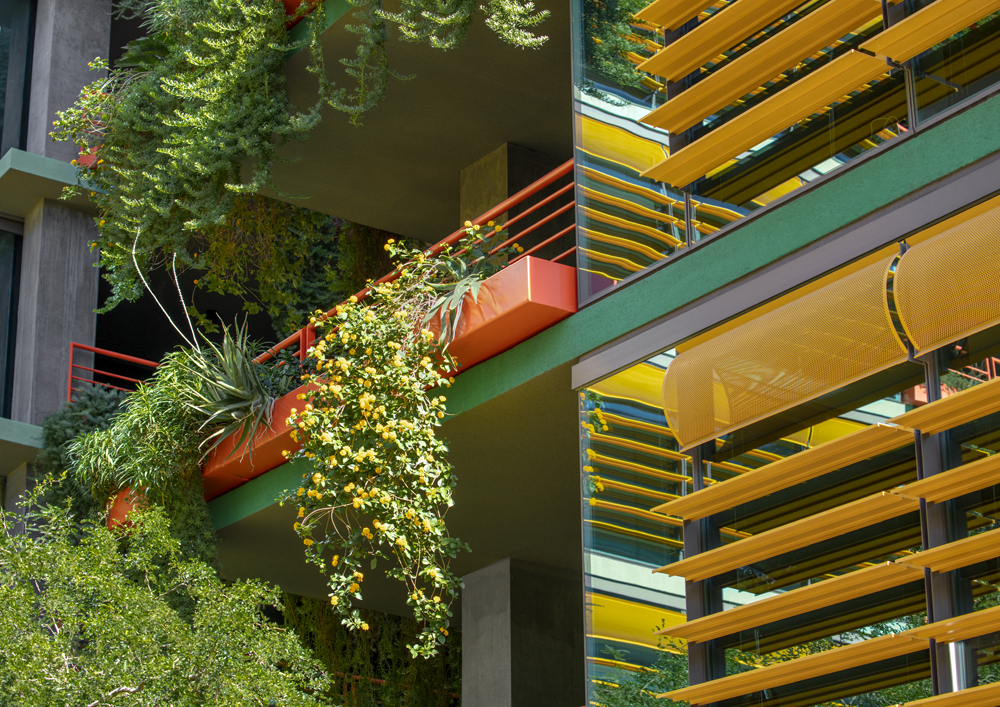
Our signature vertical landscaping system at Optima Kierland Apartments®.

Aesthetic Enhancement

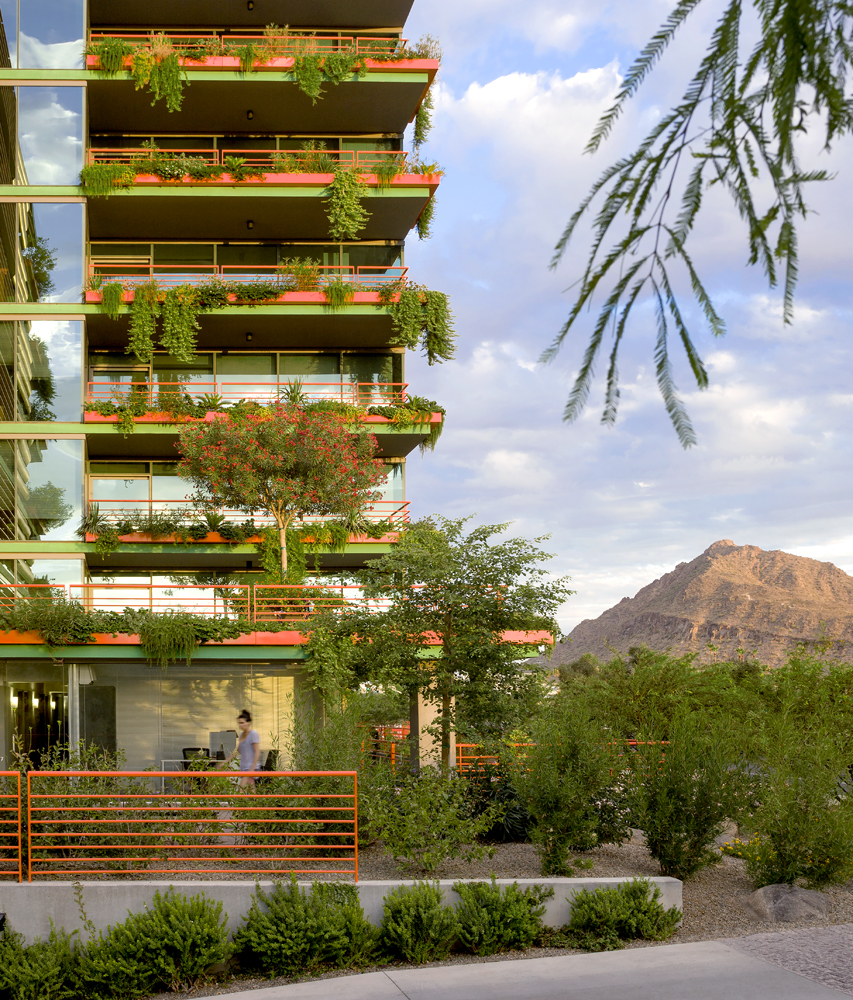
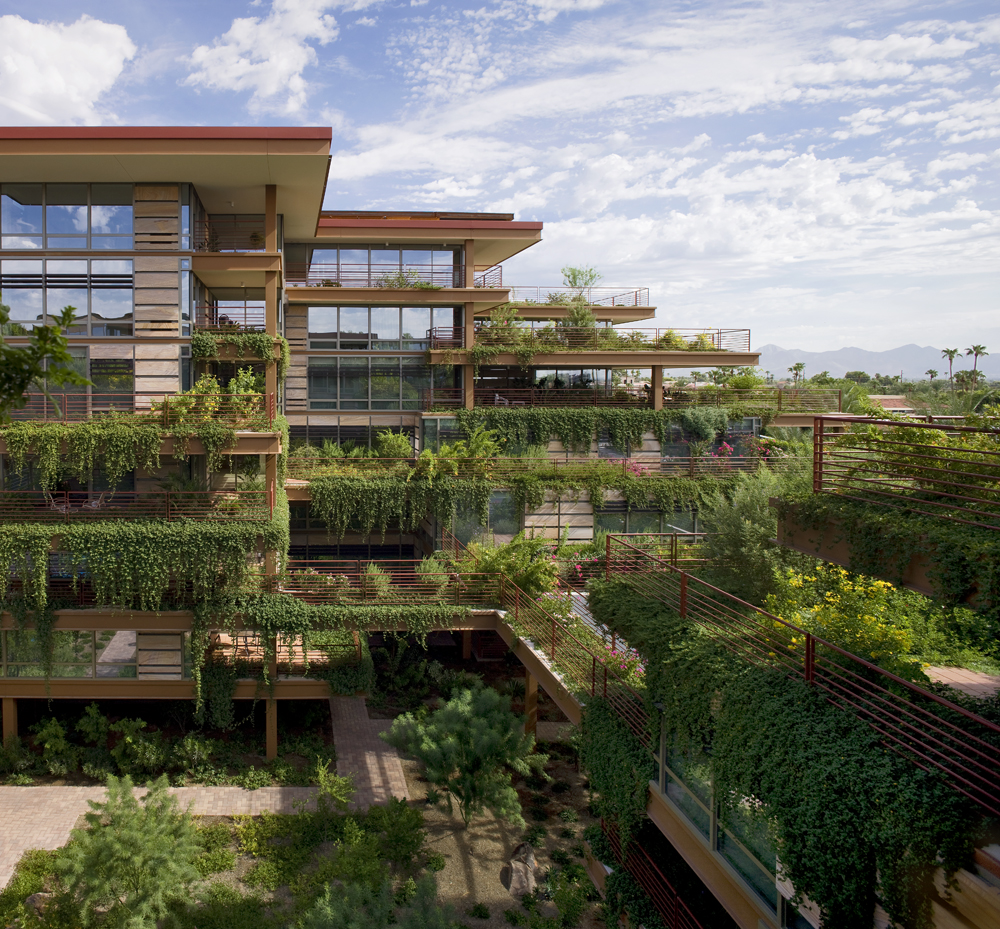
On its surface level, our signature vertical landscaping system serves to enhance the natural beauty of our communities. The lush verdure enables a palette of vibrantly colored plants at the edge of each floor to grow both up and over the edge of the building. This creates beautiful, private terrace gardens for each unit in buildings like Optima Camelview Village, Optima Kierland Center, and Optima Sonoran Village. The intense greenery also plays bold juxtaposition to our building’s facade, where concrete and glass work work in harmony to celebrate the relationship between the built and natural environment, with glass blurring the boundaries between indoor and outdoor, home and garden. 

Our signature vertical landscaping system at Optima Sonoran Village.
Our signature vertical landscaping system at Optima Sonoran Village.®

Functional, Sustainable Beauty 

Our signature vertical landscaping system isn’t just for aesthetic value — it plays a crucial role in maintaining a healthy and sustainable environment. The system, with self-containing irrigation and drainage, provides a haven for urban wildlife, promotes evaporative cooling, re-oxygenates the air, reduces dust and smog levels, reduces ambient noise, detains stormwater and thermally insulates and shields residents from the desert sun, all of which contributes to a sustainable urban environment. Residents also experience the direct impact of being surrounded by nature, with the vertical landscaping system serving as a connection to nature and added source of privacy.

Like all good design, our vertical landscaping system is a natural study in form and function. We’re proud to pioneer a system that contributes to the natural beauty of the environment, and helps preserve it, too.

An Inside Look at Architect Lingo, Part II

Our team is joined together by a love of exceptional design so naturally, design is our shared language. From property managers to accountants to architects, we’ve all come to know and love the architect lingo that helps us communicate our passions, our creations and our vision. In celebration — and in follow up to February’s blog we’re sharing Part II of our inside look at architect lingo.

Juxtaposed facade and surrounding landscape at Optima Sonoran Village
Juxtaposed facade and surrounding landscape at Optima Sonoran Village.

Juxtaposition

Juxtaposition refers to the fact of two things being placed close together with a contrasting effect. It’s the intentional creation of, and analysis of, a relationship that brings about exciting new realizations and discoveries, bringing added layers of meaning to each individual object and their relation to one another. 

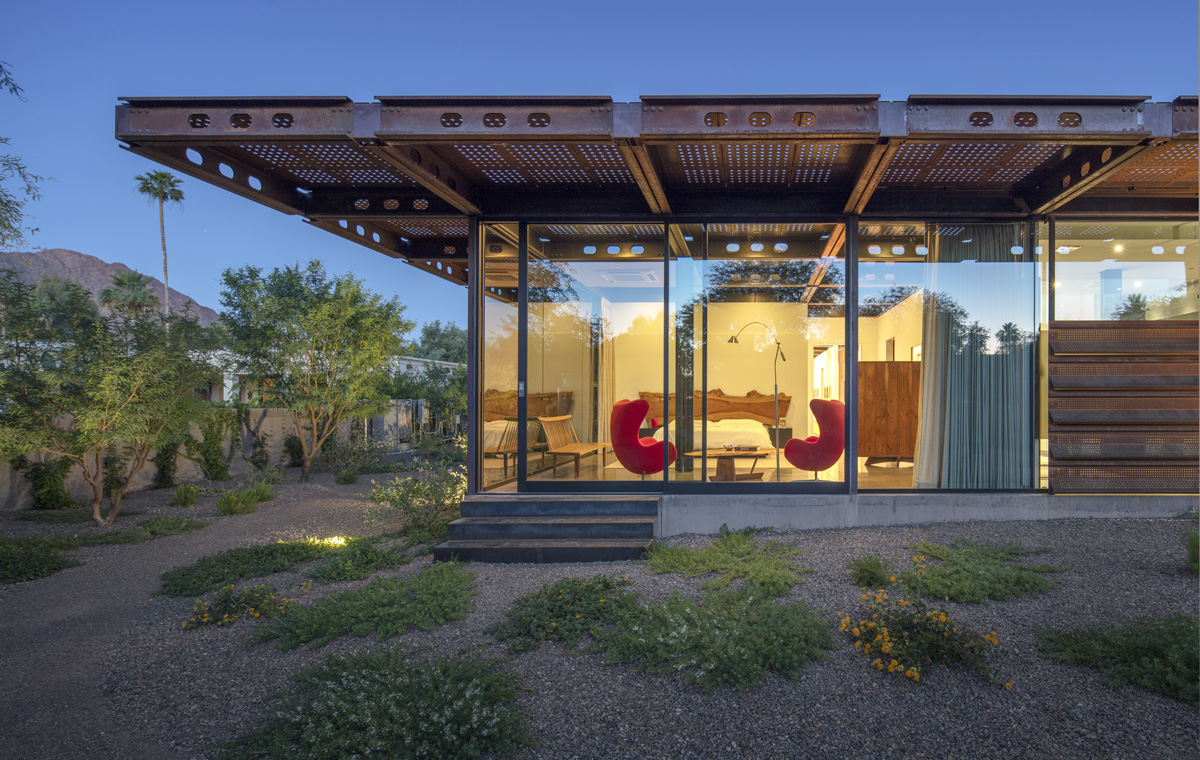
In architecture, the use of juxtaposition becomes particularly striking, manifesting on a large scale in entire building facades. With everything we build at Optima, we consider the relationship — or juxtaposition — between the built and natural environment. How does each entity influence and illuminate the other to positive effect? In our desert dwellings, juxtaposition occurs between the organic beauty of the arid landscape and the bold, Modernist facade of the houses, built in concrete and glass to intentionally illuminate their counterpart. 

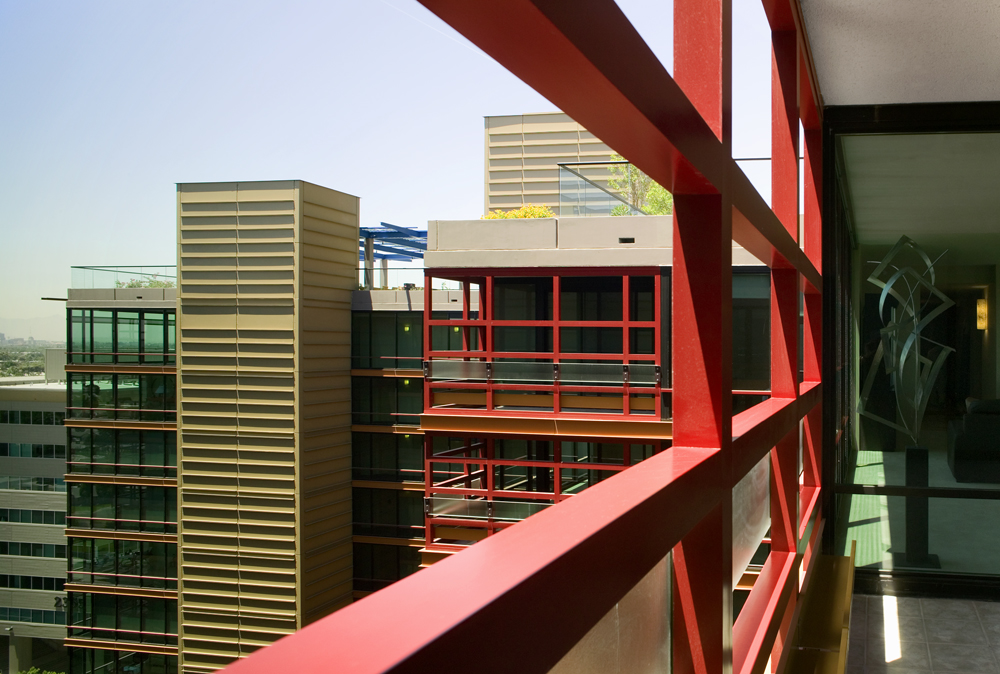
Looking out the windows at Optima Biltmore Towers
Looking out the windows at Optima Biltmore Towers.

Fenestration

Derived from the Latin word fenestrae (windows), fenestration is defined as the arrangement of any holes in a building’s facade. More specifically, this usually refers to the doors and windows on the elevation of a building. 

From the most basic standpoint, fenestration allows for the entry and exit of people into and out of a structure. That being said, fenestration historically posed a challenge to architects, because poking holes in a structure can weaken its resiliency. With Modern construction and increasingly durable building hardware, architects are freed up to explore fenestration with more liberty and inventiveness, going beyond the practical to examine decorative approaches.

The terraced design of Optima Camelview Village
The terraced design of Optima Camelview Village.

Terrace

Terraces originated as a series of flat areas made on a slope for cultivation purposes, but have evolved into any level or paved area next to a building. Their uses vary widely, from still being tied to agricultural practices to now being a place of leisure and pleasure. 

At Optima, our approach to the terrace is with respect to its landscaping origins we employ terraces that allow our buildings, and their residents, to live in harmony with the surrounding landscape. We see the relationship between cultivating plantlife and cultivating relaxing spaces as intrinsically related.

Stay tuned for future features on the world of architecture lingo at Optima.

The History of Landscape Design

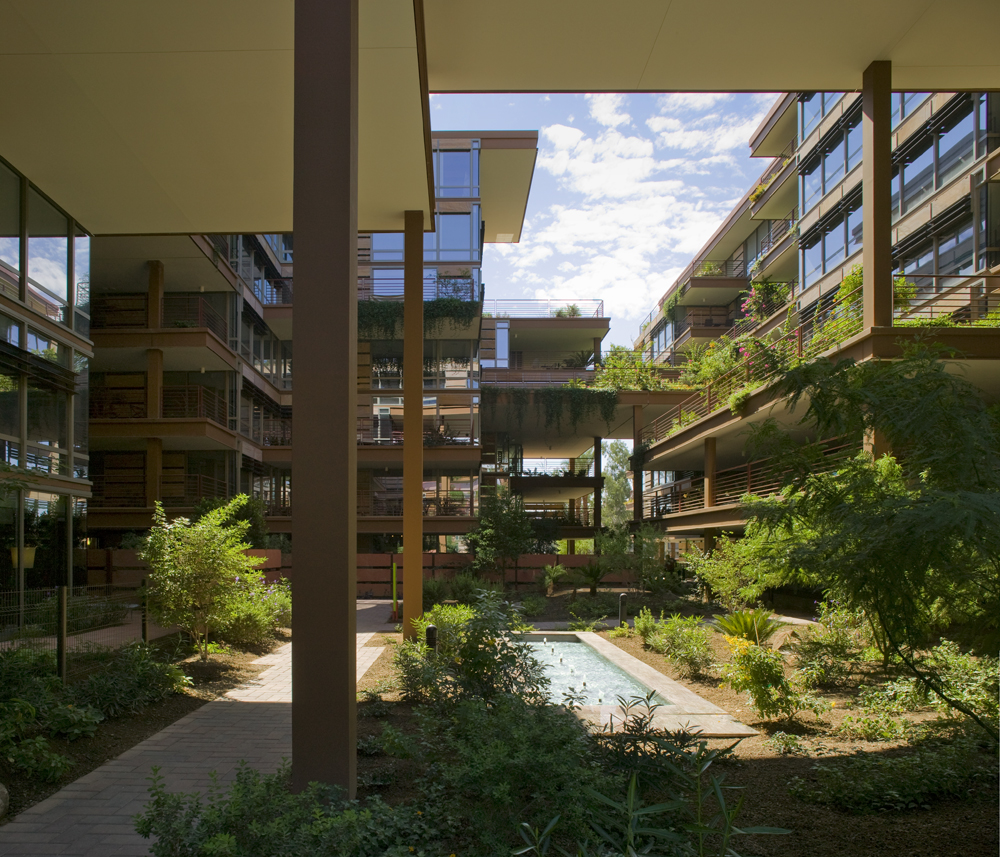
Landscape design is an integral part of our communities, from our signature vertical landscaping system to intentionally designed sculpture gardens. Each element in our terraces, courtyards and gardens is placed with careful consideration for the aesthetic, function and enjoyment of our residents — inspired by the thought and evolution of centuries of landscape design that came before us. Today, we’re diving deep into that history of landscape design to understand where the craft came from, and where it’s at today.

Ancient Origins of Landscape Design

At the core of landscape design’s history is agricultural development. Beauty and aesthetic function evolved from there, with ancient Japanese gardens designed to facilitate meditation and spiritual connection and ancient Chinese gardens designed as both reflective and social spaces. The two marked features of landscape design are softscaping, utilizing living elements such as trees and flowers, and hardscaping, utilizing non-living additions such as water features, paths, statues and patios. In Japanese gardens, water features were often incorporated in hardscaping while in Chinese gardens, the plants in softscaping often had symbolic, spiritual meaning.

Popularization of Landscape Design

Despite these ancient origins likely dating even further back, the earliest recorded example of landscape design is said to be the Hanging Gardens of Babylon from the 6th century BC. Even then, landscape design isn’t said to have been popularized until it reached the ancient Romans. Their accreditation for the landscape design’s rise is due in part to the fact that they transformed it from something only done for the elites to a practice applied in every home garden. 

From the ancient Romans, landscape design lost momentum during the Middle Ages and was rediscovered by Italy, France and England, respectively, in the 17th century, and was applied to elaborate piazzas, ornate gardens, large parks and even Versailles. The 17th century also saw the rise of cottage-style landscape design, a compact form of gardening that would eventually serve as inspiration for modern day suburban landscaping.

Landscape design at Optima Camelview Village

Landscape Design in the US Today

In the late 19th century, Frederick Law Olmstead became known as the “Father of American Landscape Architecture.” His aesthetic incorporated sweeping lawns into building design, influencing the US Capital, Central Park in NYC and city planning in Chicago and Cleveland. In 1988, Olmstead founded the American Society of Landscape Architects and classes in the field began to be offered at Harvard in 1900. 

Between evolving urban and suburban landscapes, people’s desire for increased, organized greenspace led to the development of highly evolved outdoor landscaping, gardens and living spaces. The landscape design at Optima reflects this highly evolved trend, incorporating terraces, courtyards, green rooftops and gardens to provide our residents with ways to connect their living spaces with the natural world.

You can learn more about the landscape design at Optima in our green space spotlights on Optima Kierland Center and Optima Sonoran Village.

Ray Eames: A Pioneer in American Architecture

A talented artist, designer and filmmaker, Ray Eames is a well-known name throughout the architecture and design industries. The name Eames itself carries weight; Ray Eames was half of the husband-and-wife duo that made an enormous impact on modern design. Though her husband, Charles, received most of the praise and spotlight during their partnership due to the gender conventions of their time, Ray was a powerful voice and creative in her own regard. Today, we look back on her life and contributions to the world of design.

Born in Sacramento, California in 1912, Ray was passionate about art from an early age, expressing interest in dance, illustration and art history. After pursuing art as a student for years, Ray eventually found her way to New York, fully immersed in the abstract art scene. By 1940, she decided to pursue a holistic approach to art and design at the Cranbrook Academy of Art, in Michigan, where she then met her husband, Charles. Upon meeting Charles, Ray took her strengths in color, form and structure and applied them to furniture design, and the two began a creative and life partnership that would thrive for decades.

Although Charles had a more public profile, Ray worked full-time and was equally devoted to their work. Together, they explored new, inventive designs for furniture, products, short films and architecture. Their own house is arguably the greatest representation of their architectural work. A structure of steel and glass, the Eames House is an iconic piece of modern architecture, with Ray’s background in abstract art informing the Mondrianesque panels on the front façade.

Eames House. Credit: IK’s World Trip on Flickr Creative Commons, CC BY 2.0 Deed

The Eameses worked as partners from 1941 until 1978 when Charles passed away. Their collaboration and creative vigor continues to inspire to this day, and is even reminiscent of our own David Hovey Sr. and Eileen Hovey, who have built Optima while also building a life and family together. 

To read more about the life and work of Ray Eames, check out a recent feature by The New York Times

The Paimio Sanatorium: Architectural Solutions in a Pandemic

At its core, architecture is a response to its surrounding environment. Every space in which we live, work, or play is carefully designed with intention, usually reacting to the wants or needs of the people around them. Oftentimes during a crisis, such as a pandemic, architectural solutions can make the difference between life and death. Located in southwestern Finland, the Paimio Sanatorium epitomizes the crucial part architecture plays in the health and wellness of our communities. 

Terrace of Paimio Sanatorium. Credit: Tiina Rajala on Wikimedia Commons,
Creative Commons Attribution-Share Alike 4.0

Completed in 1932, the Sanatorium was designed to house recovering tuberculosis patients. The building was designed by Alvar Aalto, who won the commission after an architectural competition for the project in 1929. Following Modernist design, Aalto included large windows, roof terraces, and a sleek aesthetic. As per most Modernist structures, function was also a priority. At the time, the only known ‘cure’ for tuberculosis was rest, fresh air and sunshine. The Sanatorium offered just that, with balconies and outdoor spaces for patients to enjoy while recuperating. From easy-to-sanitize surfaces to color choices, Aalto designed the entire building around the needs of patients and staff. 

By the 1950s, antibiotics ushered in the end of the disease, and eventually the Paimio Sanatorium was converted into a general hospital. Today, it stands as a reminder of the power of design, and how it can nurture and inspire change in the world. 

For more information, you can read Cultured Magazine’s full feature on the Paimio Sanatorium here.

person name goes here

Maintenance Supervisor

Glencoe, IL


    Acceptable file types: *.pdf | *.txt | *.doc, max-size: 2Mb