Exploring Paolo Soleri’s Cosanti

Scottsdale and its surroundings offer some of the country’s most historic art and architectural sites, including Taliesin West and its museum of contemporary art – SMoCA. Because of the popularity of these marquee locations, some of the area’s other unique contributions are often overlooked. Today, we’re spotlighting one of the community’s most ambitious architectural and design feats, Cosanti

Cosanti’s History

Found in Paradise Valley, Arizona, less than a 15-minute drive from Optima Kierland Apartments, Cosanti is a standout in its suburban neighborhood. The Gallery and design studio were designed and built by the Italian-American architect, urban designer and philosopher, Paolo Soleri. Soleri, who built the project in 1956, lived with his wife on the five-acre property only a few miles from Taliesin West, where he studied under renowned architect Frank Lloyd Wright just ten years earlier. 
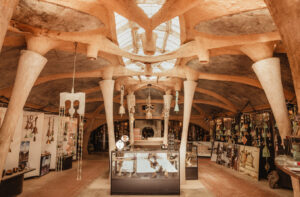
The interior of Cosanti’s Earth House where Soleri resided until 2013, Courtesy of Cosanti Originals

The structure’s name originates from Soleri’s Italian roots. Cosanti combines the two Italian words for ‘object’ and ‘before’, and the word itself means, ‘There are things more important than objects’ – a philosophy Soleri lived by. This attitude extends beyond the structure’s name and into its architecture, where he introduced his own philosophy of arcology. The term recognizes the importance between built and lived environments, similar to that of sustainable or regenerative design

Otherworldly Architecture

Cosanti’s otherworldly design elements easily separate it from its modern surroundings. Some of the build’s most alluring features are its outdoor studio, performance spaces, swimming pool, Soleri’s residence, and of course, his famous ‘Earth House’. 
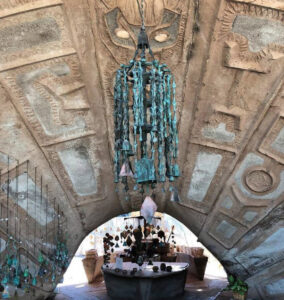
Cosanti’s earth-cast wind-bells produced of bronze and ceramics, Courtesy of Cosanti Originals

To create the Earth House, Soleri utilized an earth-casting technique, where his team formed dense mounds of earth and then covered them in concrete molds. After developing, the earth under each mold became excavated and concrete structures built partly underground appeared – a building method that allows the structure to utilize natural insulation from the earth. 

Soleri also used terraced landscaping, courtyards and garden paths to separate branches of the unique campus and further connected the environment to its natural surroundings using earth-cast wind-bells. 

Today, the Arizona Historic Site offers local residents and tourists free guided tours of the visionary structure and property. To explore the grounds and more of Cosanti yourself, visit their website here.
Modernist Treasures: A Visit to Columbus, Indiana

When you’re feeling a bit of wanderlust and looking for beauty in unexpected places, hit the road and make a beeline to Columbus, Indiana. Just 3-½ hours by car from Chicago and 50 miles south of Indianapolis, Columbus is a small city by American standards — and yet finds itself ranked 6th in the nation for architectural innovation and design by the American Institute of Architects.

As the website for Columbus explains, “Columbus is an improbable town. Every year thousands of visitors arrive to explore its streets and study its buildings, for it is one of the rare places on earth where the idea that architecture can improve the human condition has been put to the test. It’s a small, southern Indiana community with no apparent call to destiny that remarkably became an architectural ‘mecca.’”

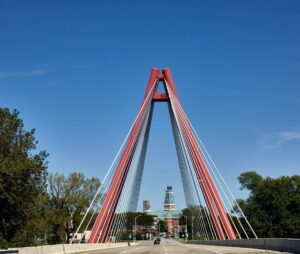
The Robert N. Stewart Bridge, 1999

The evolution of Columbus into an extraordinary experiment in modernist architecture began in the early 1940s when the industrialist J. Irwin Miller began commissioning world renowned architects to come to the city and undertake the design of commercial and municipal buildings. 

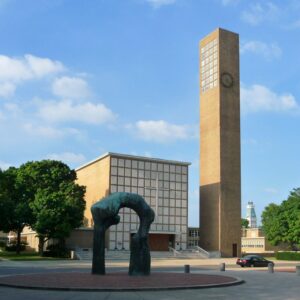
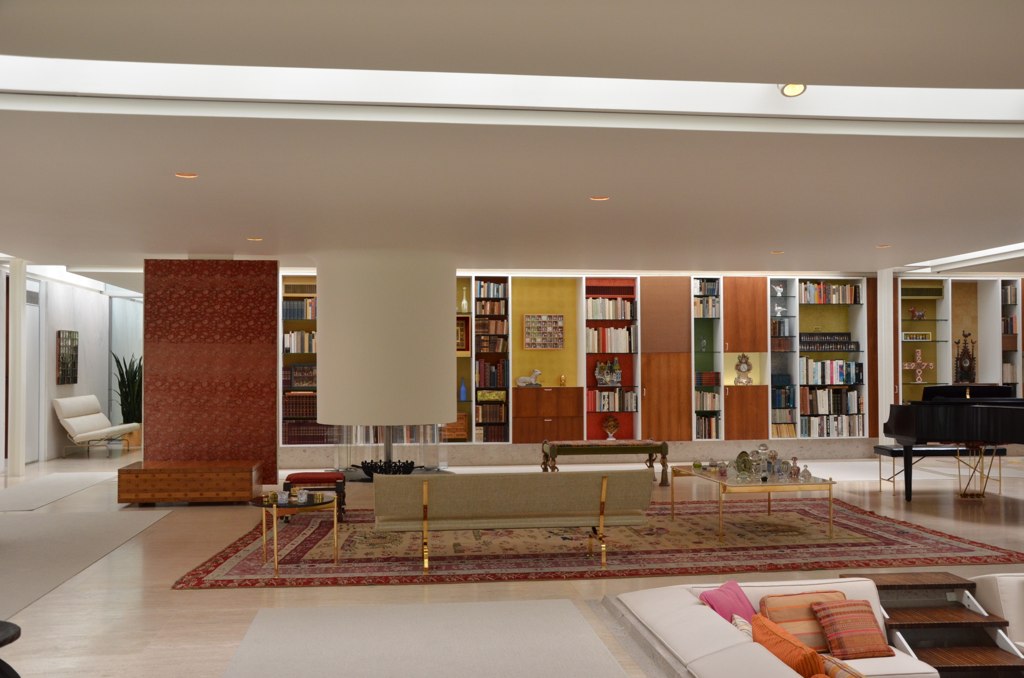
A tour through the city will take you to a host of treasures including  First Christian Church by Eliel Saarinen, the Irwin Union Bank, Miller House, and North Christian Church by Eliel’s son Eero Saarinen, and the Cleo Rogers Memorial Library by IM Pei. These commercial buildings and houses of worship expressed the deep beliefs held by J. Irwin Miller about the power of great architecture to shape the civic experience. 

Besides being meticulously preserved, the buildings are situated in proximity to impressive public art installations that include works by Henry Moore, Dale Chihuly, Jean Tinguely, and Robert Indiana.

First Christian Church, Eliel Saarinen, 1942

Adding to the caché and allure of Columbus is a feature film that has drawn even greater attention to this unique metropolis. Columbus is a 2017 American drama written, directed, and edited by Kogonada was shot on location in 2016 over a period of 18 days. The film follows the son of an esteemed architecture scholar who gets stranded in Columbus and strikes up a friendship with a young architecture enthusiast who works at the local library. The film premiered at the 2017 Sundance Film Festival and was released in the United States by the Sundance Institute, receiving broad acclaim from critics. 

When planning a visit to Columbus, visit the city’s comprehensive website for a guide to the city’s architecture or to schedule a tour. And if you want to get inspired in advance, you can stream the film Columbus on Amazon Prime.

Modernist Buildings in Chicago Everyone Should Know

Modernist tradition and design practices have been rooted in our identity at Optima for over four decades. The same appreciation for modernism is across countless iconic buildings throughout Chicago, where many of our multi-family residences reside. Here are just a few of the city’s modernist buildings we feel like everyone should know a little about:

Lake Shore Drive Apartments

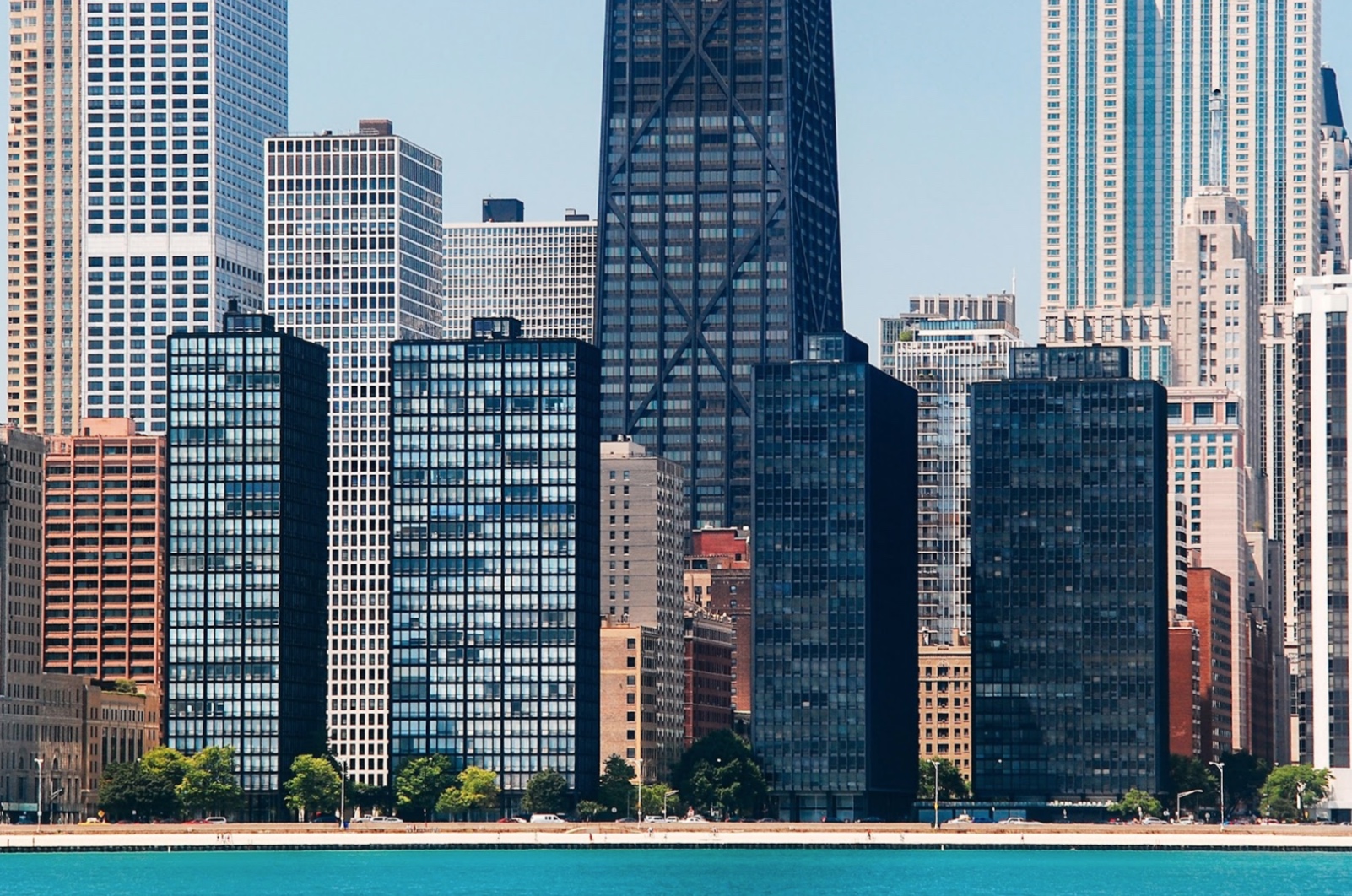
Built in 1951, the twin residential towers, which reside at 860-880 Lake Shore Drive, exhibit modernist less is more ideology adopted by its architect, Ludwig Mies van der Roh. Originally seen as too complex, the project’s materials don’t stray from the norm as it utilizes steel, glass and aluminum. Not long after their completion, even with the critics at the time, the Lake Shore Drive Apartments became a template for modernist buildings across the globe.

875 N Michigan Ave

875 N Michigan Ave

Previously known as the John Hancock Center, 875 N Michigan Ave is one of the most recognizable buildings in Chicago’s skyline. At the time of its completion in 1968, the modern masterpiece became the second tallest building in the world and the tallest in Chicago – a title it held for over 20 years. Skidmore, Owing and Merill, the architects behind the skyscraper, were pioneers for the new era of skyscraper design at the time and were the same architects behind the Willis Tower. Complementing the building’s basalt-black color, its façade is complete with unique X-bracing and a system of framed tubes which have allowed it to become an architectural icon. 

Marina City

Marina City

Often referred to as “the corn cob”, the mixed-use buildings became the first of their kind when built in 1964. The circular complex was designed by architect Bertrand Goldberg – a student of Mies – as a self-contained town. Each building shares identical floor plans and includes a theater, bowling alley, and various stores and restaurants. One of the most unique features of the towers is the near-complete lack of right angles found in their unique interiors. 

Charnley-Persky House

Charnley-Persky House

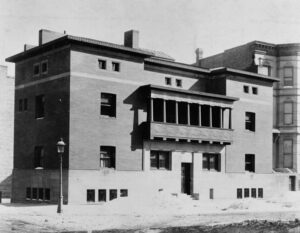
One of the oldest houses in Chicago, the James Charnley Residence was built in 1892 and is one of the only surviving residential works of Louis Sullivan. Often referred to as the “father of skyscrapers and modernism”, Sullivan was a mentor to Frank Lloyd Wright and helped establish Chicago School architecture. The building is often considered to be the first modern house in Chicago. Although it has an essentially classic form, Sullivan introduced modern aesthetics, like it’s clean and simplistic design, which separated it from other structures at the time.

S.R. Crown Hall

S.R. Crown Hall

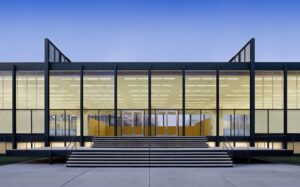
Created to house his alma mater’s – the Illinois Institute of Technology – departments of architecture, planning and design, S.R. Crown Hall is one of Ludwig Mies van der Rohe’s most notable designs. The modern masterpiece was built in 1956 and is often recognized as one of the most architecturally significant buildings of the 20th century. Mies created Crown Hall utilizing basic steel and glass construction styles, creating a one-of-a-kind open space without interior obstructions. The building’s 18-foot-tall extended roof also helps to establish the feeling of universal space. 

While these five of the city’s most iconic modern buildings, our list could go on forever. Next time you find yourself in downtown Chicago or traveling through the midwest, we encourage you to explore the modern masterpieces for yourself. 

Women in Architecture: Neri Oxman

As part of our ongoing “Woman in Architecture” series, we’re shining a spotlight on one of the world’s inspiring creatives, Neri Oxman. With a rich background in architecture and a drive to create, there was no question whether she would become the ingenious architect and designer she is today. Today, we’re diving into Oxman’s momentous life, work and achievements. 

The Life of Neri Oxman

Oxman was born on February 6, 1976, in Haifa, Israel. Both of her parents taught architecture, and growing up, Oxman spent much of her childhood immersing herself in her parent’s studio, which helped her establish a desire for creation at a young age. 

Originally, Oxman attended medical school in Israel, but after just two years, she realized that her interests belonged elsewhere. She began her architecture studies at Technion Israel Institute of Technology but eventually transferred to the Architectural Association School of Architecture in London – one of the most prestigious architecture schools in the world – where she graduated in 2004.

In 2005, Oxman traveled to the United States, where she began her Ph.D. studies in architectural design and computation at the Massachusetts Institute of Technology (MIT). Throughout her research at MIT, Oxman discovered her passion for environmental design and digital morphogenesis – a type of generative art. Oxman also launched her own research project titled material ecology – a term she coined – to experiment with generative design. 

Design Philosophy

Oxman launched her research project material ecology – a term she coined – in 2006 while studying at MIT to experiment with more facets of generative design. Material ecology, Oxman’s design philosophy, combines aspects of 3-D printing techniques with biology, engineering and computer sciences to build objects and structures through natural growth instead of assembly. 

The advanced philosophy also places humanity in harmony with nature, which is a principle of sustainable and regenerative design. Through her work, Oxman hopes to shift from consuming nature as a geological resource to instead editing nature as a biological resource. Oxman’s philosophy has led her to utilize biological shapes and textures throughout many of her designs. 

Notable Work and Achievements

Much of Oxman’s early work involved only 3-D printing. At MIT, she founded the Mediated Matter research group where she has created almost all of her structures and designs – large and small. Oxman’s innovative 3-D projects range in size from complex enclosures to detailed pieces of clothing.

Silk Pavilion, 2013. Credit: Neri Oxman on Wikimedia Commons. Licensed under CC BY-SA 4.0.

Some of Oxman’s most famous works utilize fabrications created by animals or other natural processes, including Silk Pavilion. The installation was created in 2013 with the help of 6,500 free-ranging silkworms that wove layers of silk onto a Nyon-framed dome. The completed project resulted in a stunning moon-like pavilion. The method of creation was recreated in 2020 for Oxman’s Silk Pavilion II, which resides in the Museum of Modern Art in New York City. 

Inspired by vibrant marine life, in 2013, Oxman collaborated with renowned fashion designer Iris Van Herpen and materials engineer Craig Carter to create Anthozoa. The 3-D-printed dress used a mixture of hard and soft materials that were crucial to its movement and texture. Oxman worked with Carter again in 2014 for a project called Gemini, a chaise lounge chair consisting of a milled wood frame and a 3-D-printed upholstery. The intricate chair was designed with the intent to recreate a womb-like environment.

Oxman and Mediated Matter have also prototyped various new tools for printing since the group’s founding. A few of the groundbreaking technologies include a printer that can create sections of rooms and an unprecedented glass printer. Alongside her extraordinary work, Oxman has also received many architecture and art awards as well as achievements throughout her career. 

  • Senior Fellow in the Design Futures Council
  • London Design Festival Design Innovation Medal, 2018
  • San Francisco Museum of Modern Art Contemporary Vision Award, 2019
  • Dezeen’s Design Project of the Year for Aguahoja, 2019
  • Honorary Royal Designer for Industry by the Royal Society of Arts, 2021

Oxman’s illustrious career has led her to collaborate with some of the most resourceful designers in the world, further catapulting her unique philosophy into the spotlight of the design world. Today, she continues working with the Mediated Matter group experimenting with different forms of generative design, and teaches at MIT as a tenured professor.

Lakeview’s Hidden Architectural Treasures

Filled with an appreciation for arts, culture, and everything in between, Chicago’s Lakeview neighborhood is home to some of the city’s most brilliant and iconic buildings. Forever inspired by the architecture surrounding us, we’ve been out and about to spotlight a few of the many architectural treasures found near our newest development, Optima Lakeview:

Landmark Century Cinema

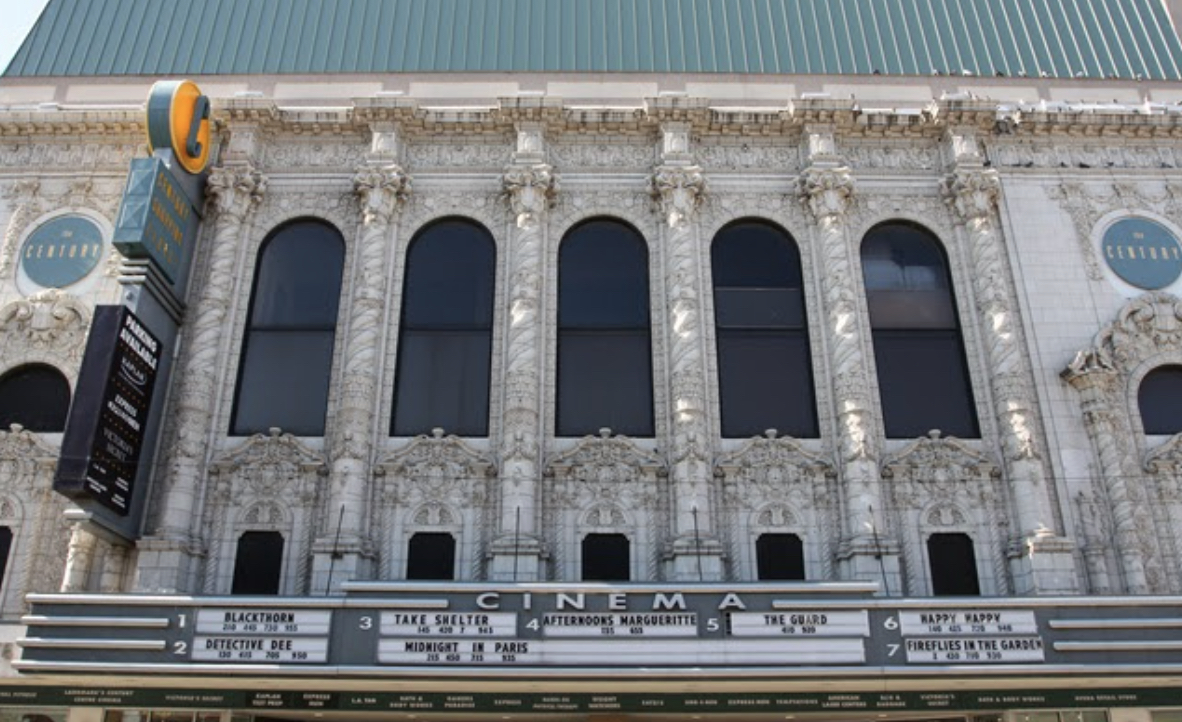
Landmark Century Cinema, one of the neighborhood’s most opulent structures, opened its doors in 1925 at 2828 N Clark Street. The structure, originally named Diversey Theater, was designed by Edward Eichenbaum of Levy and Klient, a prominent architectural firm that was known for their theater designs at the time. The stunning theater was built with a Spanish Baroque Style façade which has remained in excellent condition throughout the building’s life.

Throughout the building’s nearly century-long existence, it has undergone several renovations and name changes. In honor of the Century of Progress World Fair hosted in Chicago from 1933-34, the building became the Century Theater. With the name change came a complete remodeling of its interior space, which introduced various Art Deco elements to the theater. 

In 2000, the Landmark Theater Chain bought the property, prompting the name change to Landmark Century Cinema. With the purchase came further restorations and renovations across the historic structure. Today, Landmark Century Cinema exhibits its original Baroque terracotta facade and updated neo-Art Deco interior. 

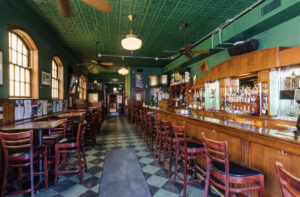
The vibrant interior of Schubas Tavern

Schubas Tavern

What was once a beloved tied house – a bar created to serve only a single brand of beer – is now a historic tavern featuring some of Lakeview’s most stunning interior and exterior architecture. Built by architectural firm Frommann and Jebsen, Schubas Tavern originated as a Schlitz Beer tavern in 1903.  

The company operated the tavern for over 80 years until the building was bought by Schubas in 1989. With restoration at the front of their minds, Schubas refreshed the historic bar’s 30-foot Brunswick mahogany bar, tin ceilings, walnut wainscoting along with exterior fixtures that included the famous Schlitz globe logo. Often frequented for its showstopping concerts and events, one of the most significant renovations for the building was its timber performance stage, which has been host to a variety of big names, including Janelle Monet, Billie Eilish and The Nationals.

The bar’s newest architectural addition, Tied House, exhibits a modern reinvention of the iconic tavern. The new restaurant and bar utilizes traditional tavern materials, including brick patterns, copper accents and ceiling tiles, while transforming them in a modern fashion. 

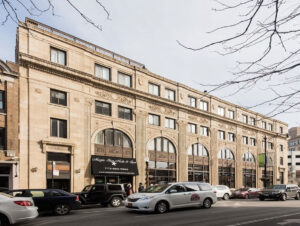
The Classical Revival Style façade of the Marshfield Trust and Savings Building

Marshfield Trust and Savings Building

Dramatically rising from its compact triangular lot at 3325 N Lincoln Ave, the former Marshfield Trust and Savings Building showcases various unique architectural elements that still radiate today. The historic bank building was constructed in 1924 by Architect William Gibbons Uffendell and Contractor Arthur Brundage, who would later become President of the International Olympic Committee.

The lanky flatiron building, which utilizes Classical Revival Styles of architecture, showcases an ornate terracotta exterior that features various elaborate designs. Two-story arched windows stretch along both sides of the building’s façade and meet in the middle to reveal the building’s main entrance, which is framed with an eye-catching bracketed cornice above its doors. 

With the opening of Optima Lakeview fast approaching, we couldn’t be more thrilled to continue showcasing what makes our new vibrant community so special.

The Intersection of Fashion and Architecture

Coco Chanel famously stated, “fashion is architecture, it’s a question of proportions.” While architecture can span hundreds of meters, fashion is typically crafted on a much smaller scale. Without question, however, both artful expressions involve a balance of creativity, functionality and innovation that often evolves with time. With our passion for architecture here at Optima, we’re exploring the inherent intersections between fashion and architecture, along with some talented creators who have discovered how to successfully cross the boundary that can separate the two.

An Affinity For Craftsmanship

The fields of architecture and fashion have been influenced by the same movements over time, including art, culture, economics, science and technology. And as various modernizations affecting form, materials, lighting and techniques for fabrication have changed our world, designers continue to adapt and innovate.

To be sure, designers and architects treat their creations as works of art, translating their emotions and visions through various acts of color, line, shape and form. Taking advantage of technological innovation, visionaries in both fields continue to share extraordinary new creations with the world through their exploration of glossiness, transparency, texture, color and structure. And in the process, they reinforce the intrinsic linkages between fashion and architecture that delight, surprise and inspire. 

Various selections from Virgil Abloh’s first Off-White collection, 2014

Individuals Who Have Found Success Crossing Fields

Countless individuals have elegantly walked the line between fashion and architecture. Some creatives first find themselves constructing shelters made of steel and wood but eventually shift to materials like cotton and silk for contrasting yet similar purposes. 

Virgil Abloh, the late Director of Louis Vuitton and Founder and CEO of Off-White, didn’t always work from a sewing machine. Abloh, who studied civil engineering and later received a master’s degree in architecture from the Illinois Institute of Technology, often took inspiration from his past experiences in architecture to propel his career in the fashion industry, using materials and structures uncommon to traditional fashion design. In fact, Abloh credited the inspiration for his acclaimed debut Off-White collection to Mies van der Rohe’s Farnsworth House and exhibited it with references to both Baroque and Bauhaus art. 

Louis Vuitton Icone Bag x Zaha Hadid, 2006

Zaha Hadid, one of the most influential and iconic architects in modern history, also successfully explored the dynamic relationship between architecture and fashion throughout her career. Known for her extensive use of curvature and emphasis on linework in architecture, Hadid brought her inspirations to the fashion world to design products that had not been explored before. Partnering with various luxurious fashion brands, including Louis Vuitton, Fendi and Lacoste, Hadid created ultra-modern bags, shoes and jewelry that fused signature elements of architecture and fashion. 

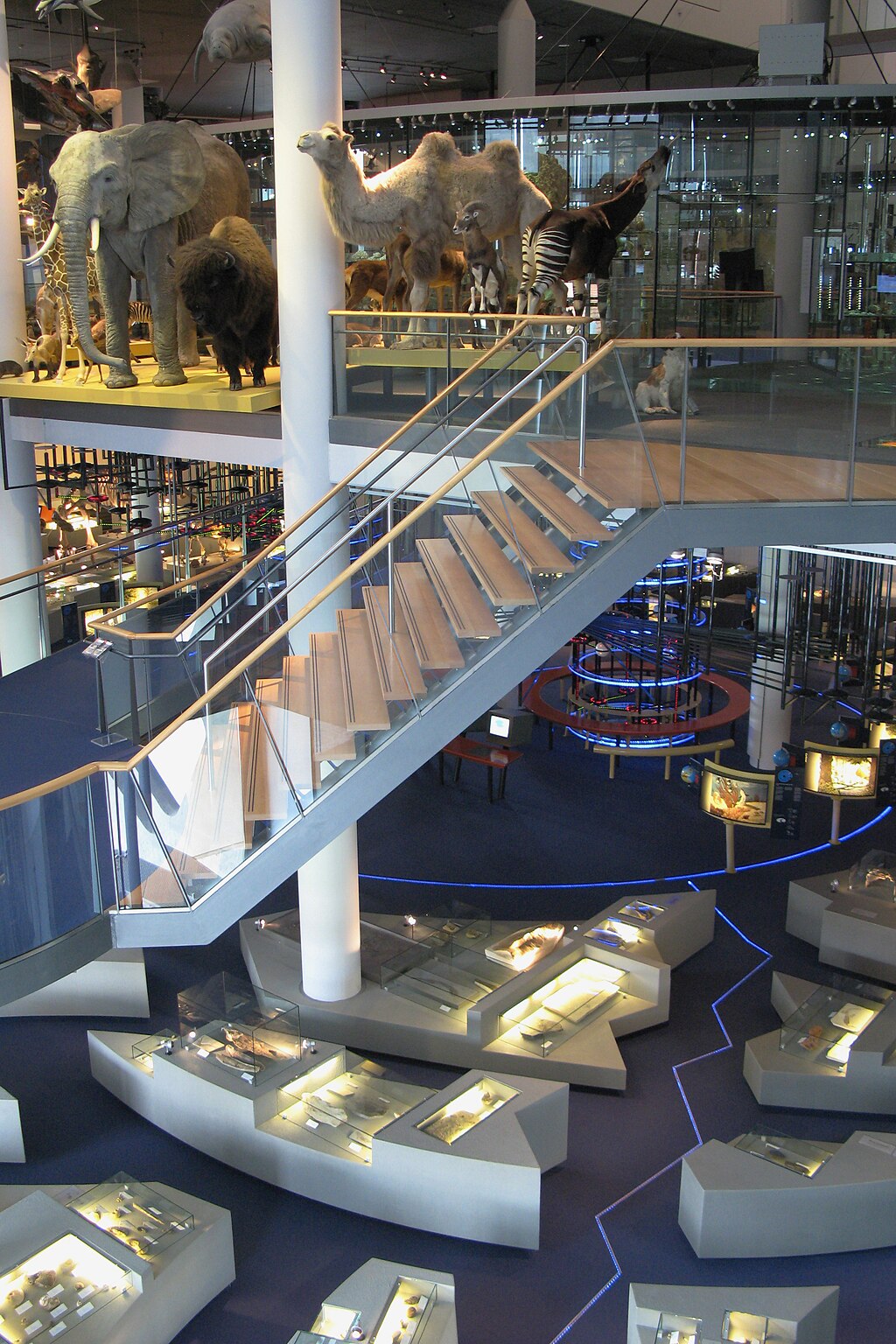
Today, countless fashion designers and architects continue to dismantle the boundaries between these disciplines with innovative constructions. Renowned fashion designer Iris van Herpen recently collaborated with Netherlands-based architecture firm Neutelings Riedijk Architects to transform the national research institute for biodiversity, Naturalis. Van Herpen was inspired by the museum’s collections, to replicate erosion patterns from the volcanic island of Lanzarote.

For decades, fashion designers and architects have crossed paths and shared similar inspirations within their designs – whether they know it or not. And for decades to come, these collaborations will continue to happen, expanding and advancing the fashion and architectural world.

The Future of Sustainable Design in Architecture

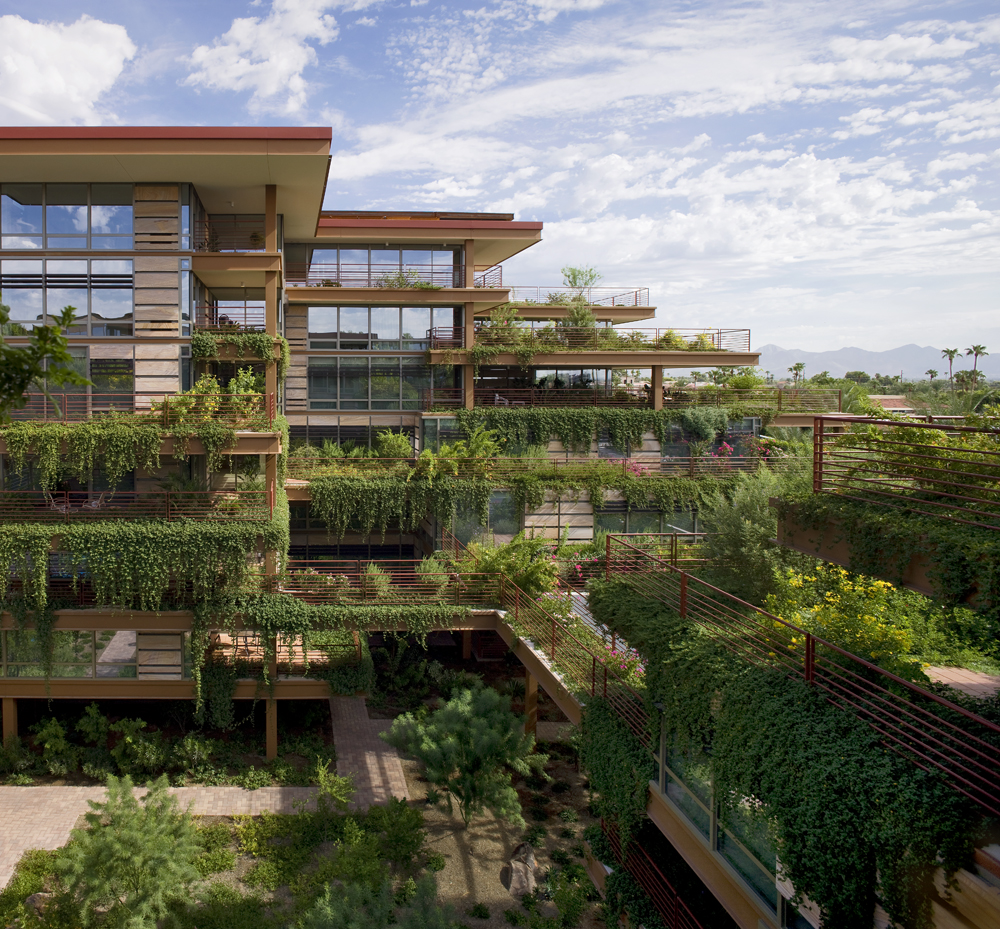
At Optima, sustainable design has always been part of our ethos, as we strive to create vibrant communities built with the surrounding natural environment at the forefront. And as technology continues pushing the boundaries of sustainability in architecture, we wanted to explore what the future might possibly hold. 

Historically, sustainable architecture has focused on lush outdoor environments, and at Optima, we know the benefits of urban greenspaces, which is why we have incorporated them into our communities for decades. Urban greenspaces and vertical landscaping are just some of the many sustainable features found in many of our Optima communities that help promote mental and physical health, while mitigating pollution and emulating the feeling of oasis. 

Today, as new age modernism continues to evolve and environmentalism exceeds formalism, designers and architects are developing new ways to create built environments that also benefit the Earth. The newest approach to sustainable architecture is found within regenerative building. 

Regenerative building looks beyond lessening harmful impact; it seeks ways to repair and restore the surrounding environment. In the regenerative design process, innovators conceive ways for each building to produce its own energy, treat its own water and emit a net-positive impact on the environment. 

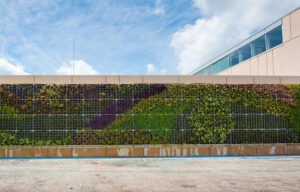
The Centre for the Built Environment’s living wall which features 24 plant species and 7,000 plants, courtesy of Nova Scotia Community College

While global contests like Redesign the World are encouraging designers to envision radical solutions to end environmental issues through built communities, some architects have begun to bring regenerative building to life. 

Kendeda Building For Innovative Sustainable Design
Kendeda Building For Innovative Sustainable Design. Photo: Jonathan Hillyer, 2019. Flickr Creative Commons Attribution-NonCommercial-NoDerivs

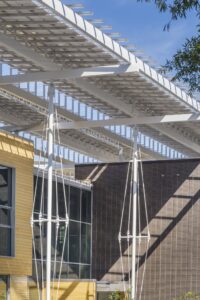
Buildings like The Kendeda Building For Innovative Sustainable Design found on Georgia Tech’s campus and Portal High School in Irvine, California use green roofs and water collection systems to reduce reliance on negative forms of energy. Other buildings like Nova Scotia Community College’s Centre for the Built Environment take advantage of multiple sustainable design features like living walls, geothermal systems and solar and wind energy to regenerate and restore their surroundings. 

As sustainable approaches to design continue to expand over time, we can’t wait to continue exploring how – through architecture – we can change contribute to a healthier, more sustainable environment.

Women in Architecture: Charlotte Perriand

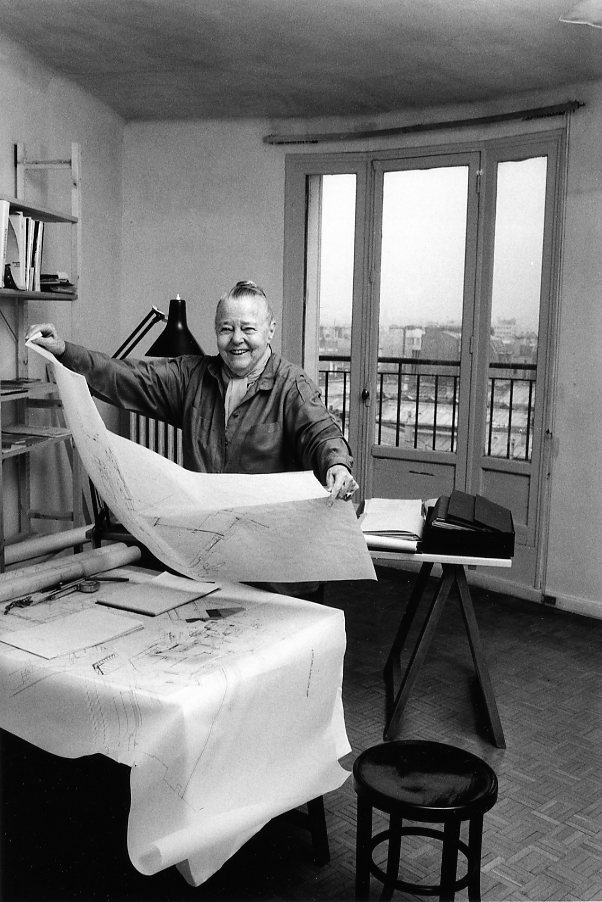
A trailblazer for women designers, Charlotte Perriand always found a way to reinvent her work with the ever-changing aesthetics of interior design and architecture in the 20th century. She forged herself as a leader of the avant-garde cultural movement, which influenced new perspectives and values in the design world. Today, as part of our ongoing “Women in Architecture” series, we’re exploring the life of this exceptional designer and some of her most celebrated creations. 

The Life of Charlotte Perriand
Perriand was born in Paris, France in 1903. She lived with her mother, who was a talented seamstress, and her father, who worked as a tailor in the city. Because of the lively energy of her surroundings, Perriand found a deep appreciation for city life but also relished her frequent visits to her grandparents’ home in the French Alps, where the natural environment was peaceful and calm. 

At a young age, Perriand discovered a passion for the arts. As her talents continued to flourish, Parriand’s mother encouraged her to push herself by attending École de l’Union Centrale des Arts Décoratifs in Paris. From 1920-1925 she studied under the renowned artist and decorator Henri Rapin, who helped bring her unique ideas to life. 

During her time at École de l’Union Centrale des Arts Décoratifs, Perriand learned to incorporate popular aesthetics such as ornate patterns, warm materials like wood and soft textiles like cotton. Dissatisfied by the status quo, Perriand pushed her interests and fed her curiosity by enrolling in classes made available through large department stores that housed their own design workshops. Encouraged by the reactions to her creations that incorporated glistening surfaces, reflective metals and blunt geometric forms, she began to submit her work to expositions throughout Paris. Perriand’s most notable entry at the time was Le Bar sous le toit, or Bar in the Attic, at the prestigious Salone d’Automne, in1927. This installation of furniture, finishes and a built-in bar reflected the current machine-age landscape and displayed a bold design featuring nickel and other metals. Emboldened by the reactions of her peers, Perriand quickly began embracing these taboo materials in her work, conveying exciting new interpretations of modern design. 

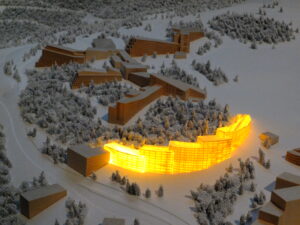
Maquette of Les Arcs ski resort, French Alps. Credit: B on Flickr Creative Commons. Licensed under CC BY-NC-SA 2.0.

Career and Achievements
After the success from Bar in the Attic, Perriand had a difficult time discovering what her next move should be in the art world. She took advice from a friend, jewelry designer Jean Fouquet, and immersed herself in the intensive literature of Le Corbusier. Dazzled by his work, Perriand reached out with her portfolio for a position at his atelier. After a hasty dismissal, she showed Le Corbusier her acclaimed Bar in the Attic project, which caused him to reverse his decision and hire her on the spot. 

While working for Le Corbusier and his cousin, Pierre Jeanneret, Perriand contributed to the design of some of their most celebrated furniture pieces: the basculant sling chair (known as LC1), the Grand Confort (LC2 and LC3) and the chaise lounge chair (LC4). However, her impact reached far beyond furniture; Perriand brought to life the trio’s vision of modern luxury as Equipment for the Home for the 1929 Salon d’Automne, which included an entire apartment set with a bold kitchen and bathroom. 

Perriand left Le Corbusier’s atelier in 1937 after ten years of extraordinary growth and accomplishment. Her expertise led her across the world, but she eventually traveled back to the French Alps, where her roots enticed her to work on her largest – and final – project, Les Arcs. Composed of three different structures and built over a nearly-20 year period, Les Arcs brought to life a new style of living with an open-plan interior and an exterior integrated into the surrounding natural environment. 

The bedrooms of the famous ski resort were built with minimal design elements. Thoughtful design was instead prioritized in communal spaces, like the great rooms, where windows opened to vibrant sunlight and views of the pristine natural surroundings. 

Throughout her illustrious career, Perriand preferred to look to the future instead of reflecting on her previous work. And on this life journey,Perriand established herself as a fearless forward-facing designer who was eager to reinvent her design philosophy over and over.  

Optima Communities: Exploring Wilmette’s Rich History

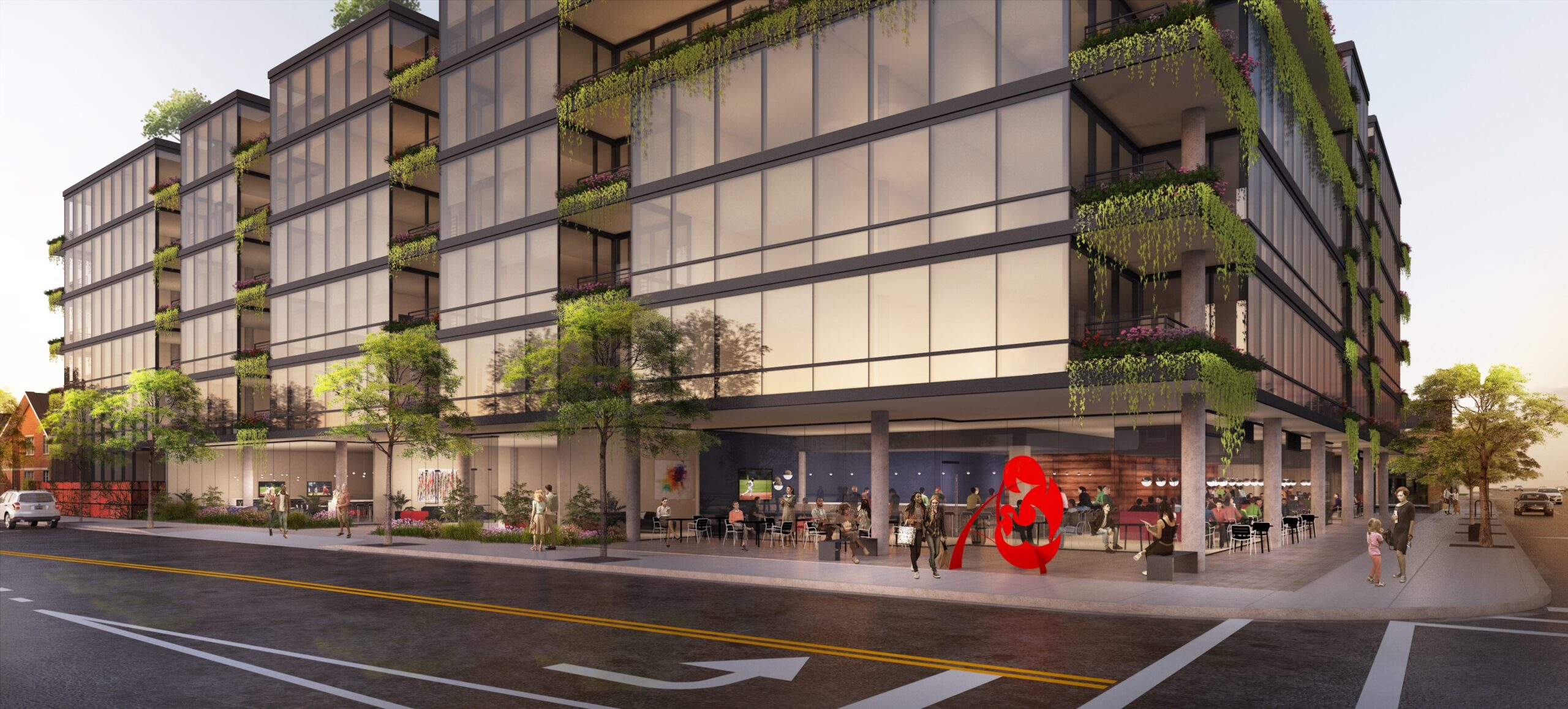
With groundbreaking underway for Optima Verdana in Wilmette, IL, we’re discovering this vibrant community and all it has to offer — including its rich history.

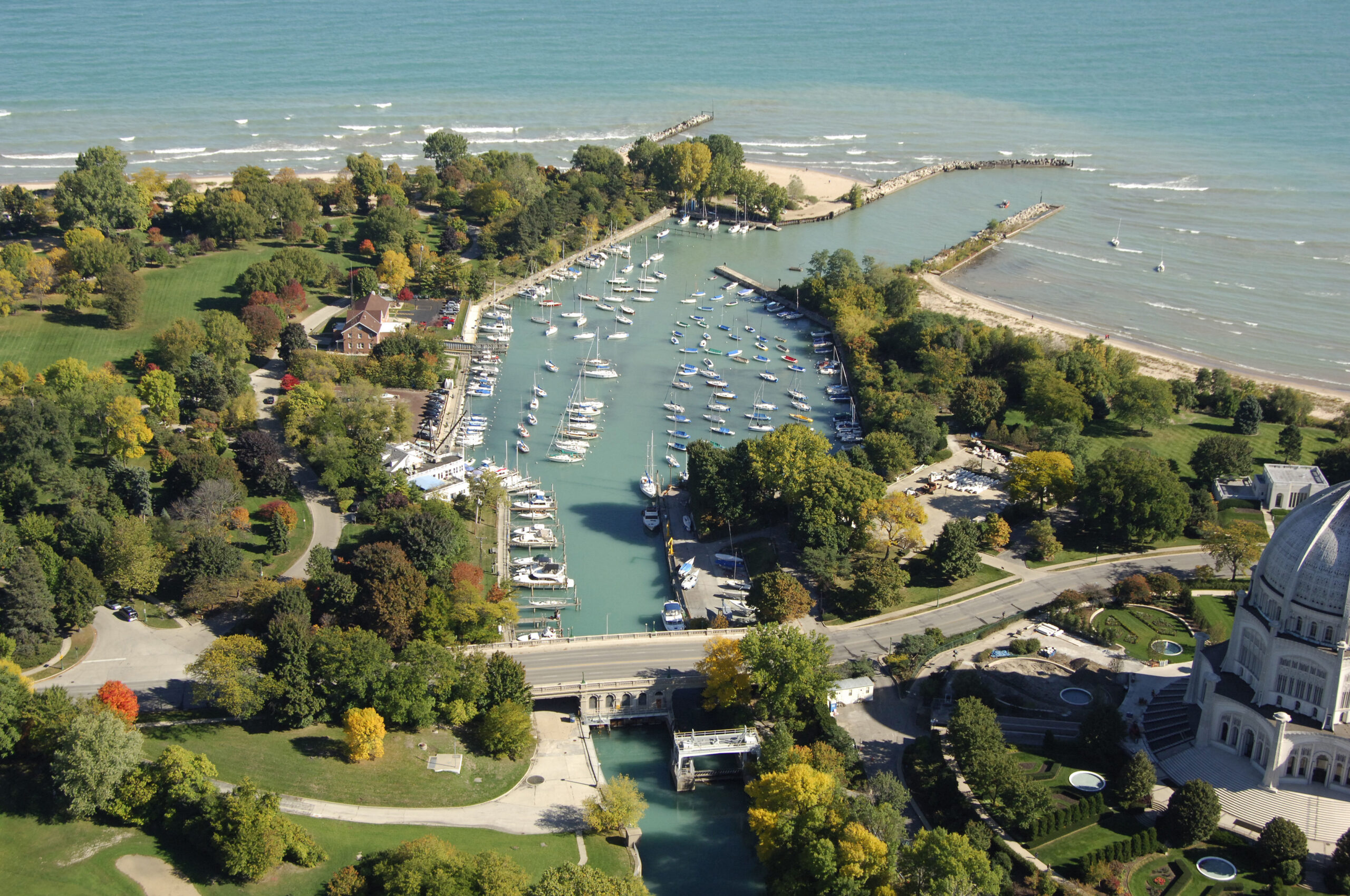
Bordering Lake Michigan and located 14 miles north of the Chicago Loop, Wilmette is recognized as one of the most prestigious communities in the nation. It started as a small settlement on Chicago’s North Side in 1872 and by the mid-twentieth century, it emerged as a distinctive, desirable suburb with unique vitality, extraordinary walkability along tree-lined, brick streets and a character all its own. 

Fast forward to today, when Wilmette, with a population of nearly 30,000, has fully matured into a vibrant community. Small businesses and lively restaurants flourish, each bringing a refreshing offering to this thriving, 21st century livable village. The lakefront, parks and gardens are all within easy reach. Culture abounds with music, theater, art and cinema. And the Wilmette schools are considered among the best in the country.  

As luck would have it, 2022 marks the 150th anniversary of Wilmette. As celebrations for this important milestone continue throughout the year, Wilmette is proud to showcase its reputation as future-facing while showing a deep appreciation for the past, including a host of events that shine a light on its delightfully eclectic history.

Bahá'í House of Worship
Bahá’í House of Worship

Mark your calendars…

To start the sesquicentennial year, all are welcome to the Wilmette Historical Museum’s  annual meeting and lecture via Zoom. John Jacoby, former Village President and Wilmette Beacon columnist, will discuss his recent book Wilmette at 150, a collection of essays on Wilmette. Mr. Jacoby’s talk will explore the lost landmarks of Wilmette. Learn about the stories of the significant buildings and other structures that are no longer in existence, including some of the oldest in Wilmette, such as the Big Tree and the Unity Church. Hear fascinating tales of Dr. Martin Luther King’s visit to the North Shore, the German POW camp in Harms Woods, the colorful history of No Man’s Land, the perseverance of world pushup champion Chick Lister and Public Enemy Number One Baby Face Nelson’s demise on Walnut Avenue.

You can stay connected to all the sesquicentennial happenings on the Wilmette at 150 website. And to attend the meeting and lecture, which will take place Sunday, January 30, 2022, from 2:00pm – 3:30pm,

Register HERE.

2021: A Year in Review

As we kick off 2022, we want to take a moment to reflect on how we’ve continued to grow, learn and serve others over the past 12 months. Here are just a few highlights:

Awards

We were honored to receive a total of 9 awards this year! Our design and architecture were recognized with the AIA Chicago Firm of the Year Award, AIA Chicago Design Excellence Awards – Distinguished Building Award (Arizona Courtyard House), and Chicago Athenaeum’s American Architecture Award twice (Optima Kierland and Optima Sonoran Village). 

Art Baril, our Maintenance Manager at Optima Sonoran Village was awarded the Gold Facilities and Maintenance Manager of the Year by Multi-Housing News at their 2021 MNH Excellence Awards. 

Our culture and values were also acknowledged in 2021 with the AZCentral Top Companies 2021 Award and Best Places to Work in Chicago for the second year in a row. 

To see the full 2021 lineup, visit our awards page here

Projects and Properties

This was a significant year for development, construction, leasing and more at Optima. In Chicago, we continued construction at Optima Lakeview, which is nearly complete. The project is the first multifamily development to achieve the WiredScore Home Gold Certification in North America. We also returned to our roots on the North Shore where we broke ground on our newest development, Optima Verdana, and plan to introduce our signature vertical landscaping system to the Midwest.

In Arizona, our leasing team worked tirelessly to lease up our new 7140 tower at Optima Kierland Apartments, and our second condo building, 7180 Optima Kierland, closed out. We also broke ground on the fifth and final residential tower at Optima Kierland, 7190 Optima Kierland which will open in 2023.

Culture

Throughout 2021 our culture at Optima continued to thrive through richly rewarding avenues of kinship and connection. We celebrated the autumn season with our second annual pumpkin carving and costume contest, observed Diwali, the festival of lights, and shared laughs and stories while celebrating our successful year at company outings at Topgolf and a Chicago Cubs Game. We also enjoyed the return of in-person happy hours during the year.

Our team continued to embrace and internalize our shared values more than ever. We gave back to the communities we live in by volunteering at the Skokie Lagoons on the Chicago North Shore, picking up trash at the boat launch. We also took the opportunity to acknowledge eight Optima employees with our Core Values Award for their exceptional representation of our beliefs throughout their work. 

We can’t thank our leadership, team members and Optima communities enough for making 2021 one to remember. Heading into 2022, we are excited to continue innovating and achieving great things together.

person name goes here

Maintenance Supervisor

Glencoe, IL


    Acceptable file types: *.pdf | *.txt | *.doc, max-size: 2Mb