It’s no secret that we love color. We believe that color, like art, brings a new dimension to the beautiful spaces that we design. That’s why the colorful and surrealist work of the Spanish painter, Joan Miró, is a natural fit to enliven the walls of our communities.
Portrait of Joan Miró. Photo in Public Domain
The Life of Joan Miró
Miró was born in 1893 in the seaside town of Barcelona. He grew up influenced by the beauty and culture of his city, and surrounded by the arts with a watchmaker father and goldsmith mother. His began drawing as a young child, though he diverted from his true calling when he went to business school for college. After school, Miró worked as a clerk, but quickly found his way back to art, evolving through several styles and artists’ circles and leaving an influential mark in his wake.
The Art of Joan Miró
Miró’s early work was inspired by Vincent van Goh and Paul Cezanne. By 1919 and his first trip to Paris, Miró began to dabble in geometric, patterned art inspired by the Cubists. In the early 1920s, Miró began to draw inspiration from Sigmund Freud and the Marxists, joining the ranks of the groundbreaking surrealists with work marked by lines, organic shapes and color. Miró himself once said, “I try to apply colors like words that shape poems, like notes that shape music.”
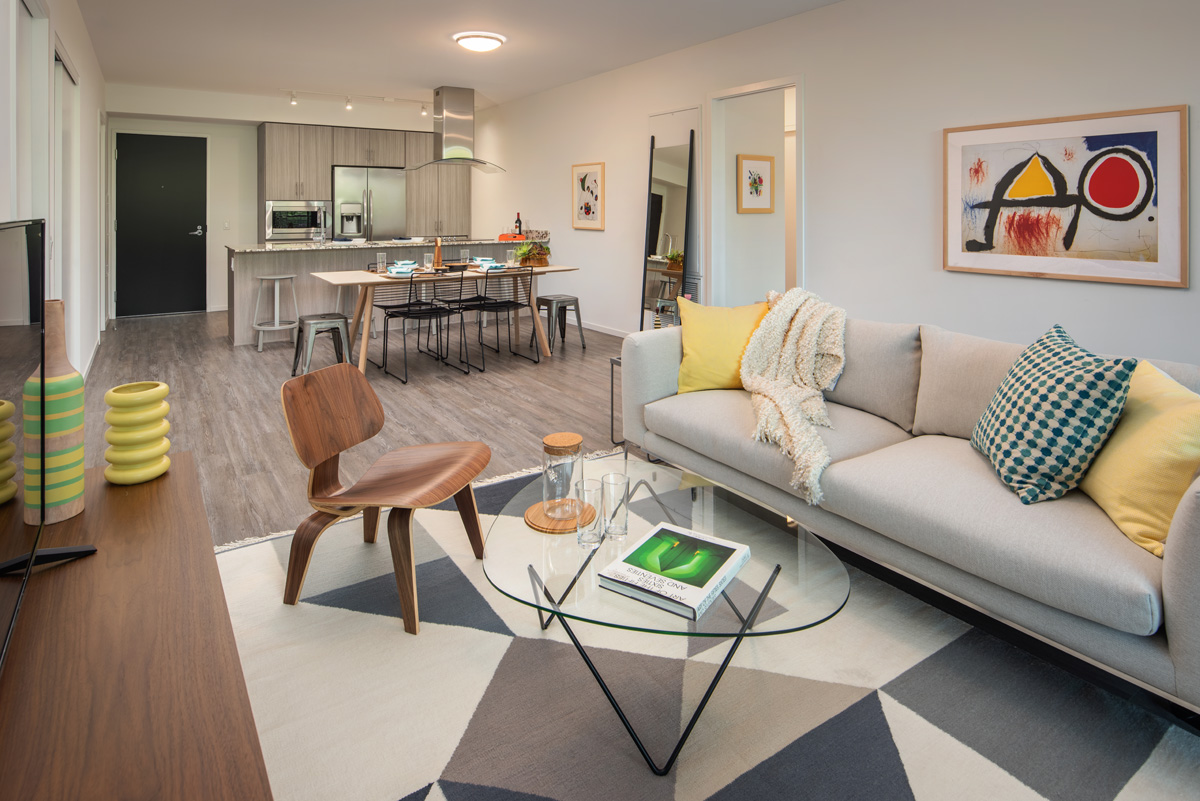
The Red Sun, 1950, Joan Miró at Optima Sonoran Village
We are proud to enliven our interior spaces with the art of Joan Miró, and are deeply moved by the power of his works and words. Miró’s work adorns the walls of a handful of units at Optima Sonoran Village, playing off the lively interiors and lush outside landscape. Like Miró, we too, try to apply colors, and art, to shape the beautiful spaces that we design.
One of our cornerstone beliefs at Optima is that our buildings can help improve the lives of those who reside within them by offering everyday comforts and conveniences — and we’re constantly searching for ways to innovate and improve.
It’s no secret that coworking spaces and the ability to work remotely, or from home, has become increasingly popular in the professional sector. In 2018, a staggering 1,000 new coworking spaces were introduced in the United States alone — and experts don’t see the trend slowing down anytime soon. Some estimates claim that freelancers will even outnumber full-time employees in the workforce by 2027.
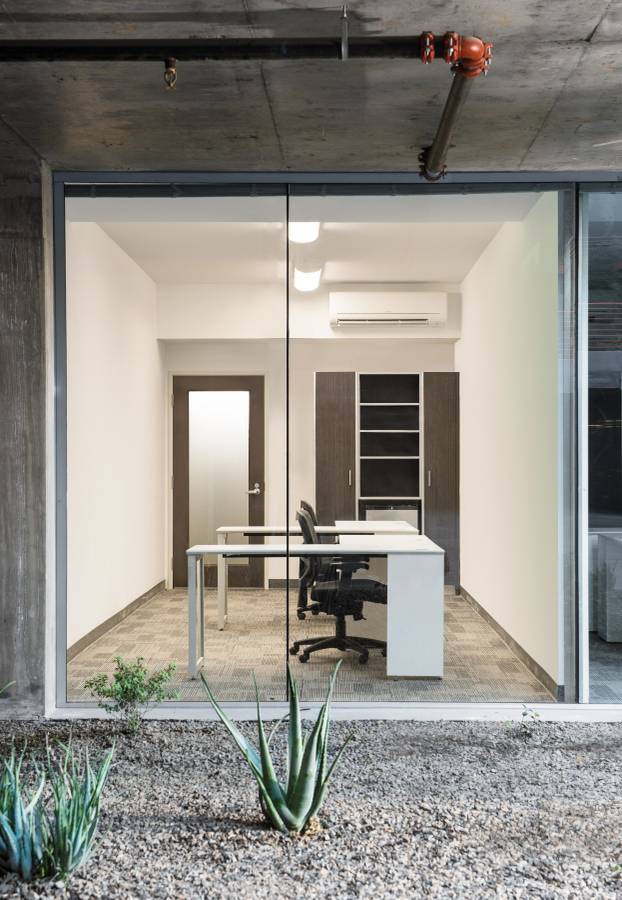
An Optima business suite at Optima Signature
We were happy to respond to the growing need by integrating our own rentable, commercial business suites into our multi-family communities, starting in 2010 with Optima Camelview Village. Since Optima Camelview Village, we have designed business suites at Optima Sonoran Village, Optima Chicago Center and Optima Signature with a live-work-play environment in mind. At each site, we have seen measurable success as the remote working trend continues to be on the rise and residents take advantage of the opportunity to utilize a workspace right in their own home.
Optima Signature in the Streeterville neighborhood of Chicago, IL
Having business suites within our communities makes work feel like a more comfortable, more convenient experience. And that’s exactly what we want to bring to our residents and tenants.
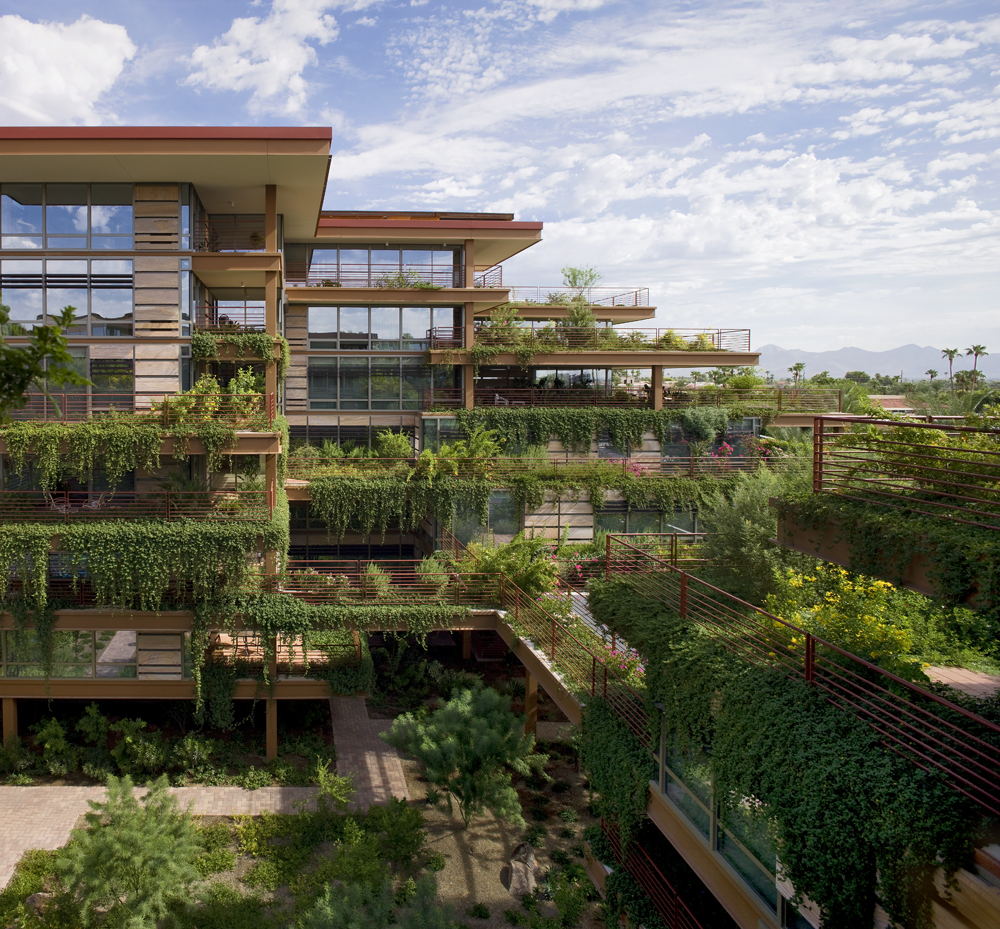
Optima Camelview Village landscaping is an oasis inspired by the surrounding mountains and Native American desert communities. What resulted: eleven terraced, bridge-linked buildings with courtyards that created ample opportunity to utilize our signature vertical landscaping to dramatic, and environmentally impactful, effect.
Optima Camelview Village, Scottsdale, Arizona
Private Terraces
Each and every residence at Optima Camelview Village features a private terrace. The terraces are made all the more beautiful by an abundance of verdure, with lush landscaping that provides a pop of color alongside ample privacy and shade. The terraces, and their landscaping, also play into the complex layered language of shading, textures and colors that create depth and complexity throughout the community.
The landscaping on the terraces was complicated due to the intricate geometry of Optima Camelview Village and necessitated designing for each individual terrace. By creating proper conditions for the plant life to thrive, with a specialized vacuum that deposits specially-tailored dirt for each mini-garden, we were able to make them work.
Rooftop Gardens
The community sits on a 13-acre site, including an impressive 23-acres of rooftop gardens spread across the eleven buildings that make up Optima Camelview Village. The intense greenery that thrives atop the buildings serves as a haven for the natural wildlife of Arizona, as well as for the residents who live in the community.
Optima Camelview Village, Scottsdale, Arizona
A Collaborative Effort
We worked with experts at Arizona State University for several years to get our landscaping just right. It’s crucial that the greenspace at Optima communities not only provides an aesthetic beauty, but that it contributes to the greater environment. With the help of ASU, we ensured that Optima Camelview Village’s landscaping is sustainable, with positive consequences such as re-oxygenation of the air, reduced dust and smog levels, reduced ambient noise, detainment of stormwater and thermal insulation and shielding from the desert sun.
As always, we consider the additive value of our built communities not just in the lives of those that call Optima Camelview Village home, but of the planet that we ourselves call home.
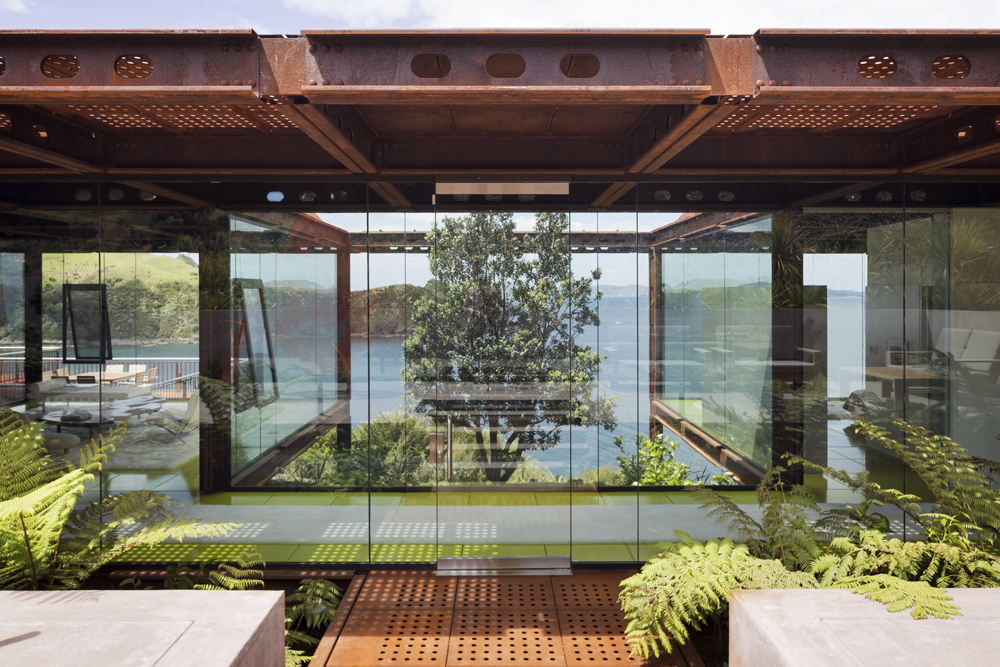
Whale Bay House, Optima DCHGlobal, Inc., New Zealand.
For decades, glass has been a stylistic signature of Modernist architecture. From the first Modernist structure ever built to the steel-and-glass aesthetic of Modernist master Ludwig Mies van der Rohe, the material has provided a timeless transparency that is crucial to minimalist design. But glass hasn’t always been as functional as it is aesthetic.
A History of Glass
Glass is one of the oldest man-made materials, with use dating back to 7000 B.C. It was first utilized for decorative purposes in 3000 B.C. by Egyptians — mainly in pottery and other decorative trinkets — and first used as windows by the Romans around 500 B.C.
However, at that time, the masonry required to create glass also didn’t allow for larger, stronger pieces to be created, so its use was therefore sequestered to windows and detailing, such as stained glass murals.
In the 19th century, the manufacturing renaissance introduced iron, steel and other materials that provided the strength and durability necessary to support larger glass constructions. The support of these materials, combined with the capability to produce glass in larger sheets, allowed architects to experiment with creating structures utilizing glass in more creative ways.
The Crystal Palace designed by Joseph Paxton.
The Crystal Palace
This new design potential allowed for greenhouses, large railway stations and other public structures to be made of glass. Such new usages inspired Joseph Paxton, an architect in London, to design the Crystal Palace in 1851 using 300,000 sheets of glass. The Crystal Palace was the first architectural creation to utilize an all-glass exterior, and is also considered the first Modernist structure ever created.
To overcome the harsh effects of a glass exterior, Paxton utilized translucent screens of calico hung externally between the ridge beams of the structure’s roof glazing, covering the entire exposed rooftop and protecting against the transparent building’s vulnerability to heat. This functional feature eventually transitioned into a cornerstone piece of Modernist design.
7120 Optima Kierland in the Kierland neighborhood of Scottsdale, AZ.
Glass at Optima
The idea of transparency, open space and functional materials are still relevant and desirable today. At Optima, we use floor-to-ceiling glass to create an indoor-outdoor relationship, allowing for sweeping views and connecting our indoor living spaces with the natural spaces just outside.
At 7120 Optima Kierland, we use a combination of low-e, UV-treated glass, perforated sunscreens and horizontal louvers, to create texture and rich variation of shades and shadows, while allowing for breathtaking views.
Optima Signature in the Streeterville neighborhood of Chicago, IL
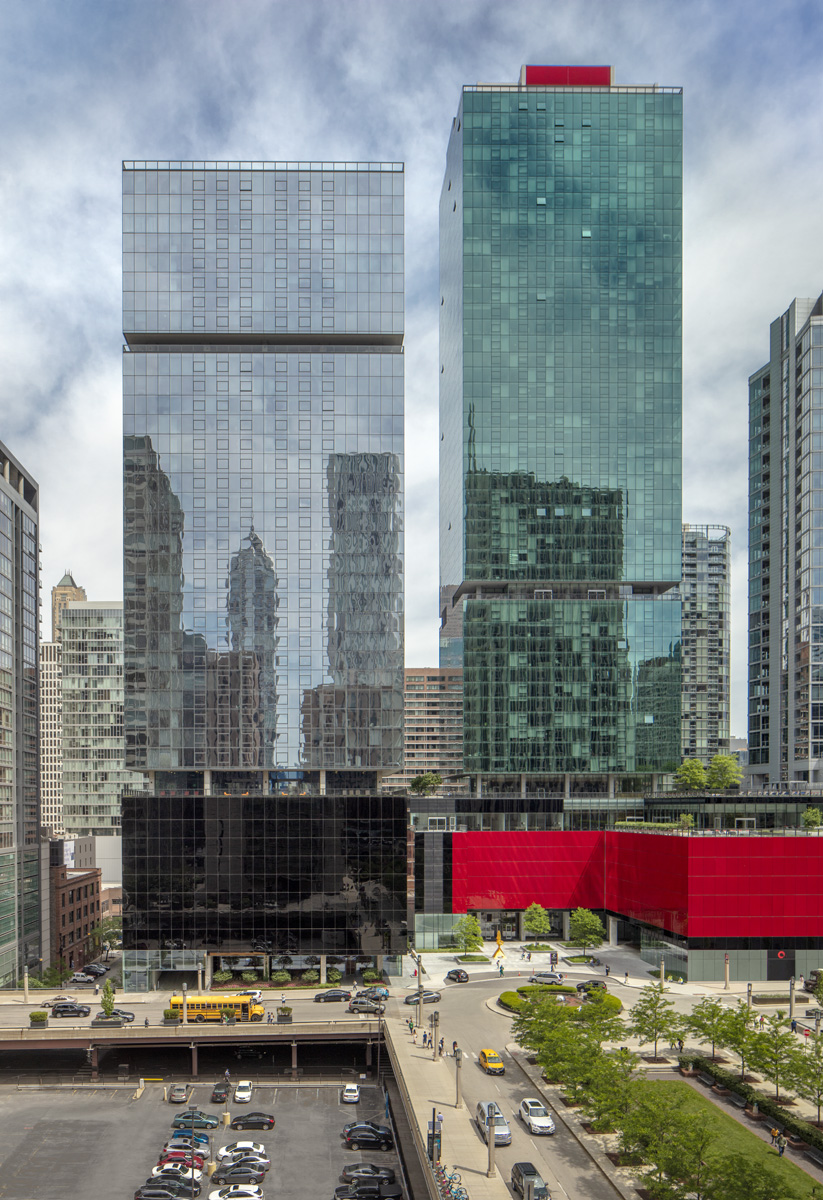
At Optima Signature, glass preserves the sweeping lake views to the east and dynamic city views in all other directions. Glass also unifies Optima Signature with its sister tower to the west, Optima Chicago Center. While the glass curtainwalls of each building are different — silver-toned in the case Optima Chicago Center, and transparent green for Optima Signature — the podiums share a unifying black ceramic frit glass with dot pattern. Optima Signature expands the palette with areas of red glass that wrap the podium as it extends south to define the east edge of the plaza.
As we reflect on the history of glass and how it has become a viable aesthetic and functional choice when designing today, we return to the material time and again to design and build the stunning Modernist steel-and-glass structures in our portfolio.
When women can take their seats at the table, businesses are more likely to reach their full potential. As a business comprised of strong women, Optima is unwavering about empowering women to pursue their passions and lead us towards a better and brighter future. We’re thrilled to partner with The Chicago Network (TCN) for their Equity Principles campaign to achieve gender equity across all levels of organizations, including leadership roles, by 2030.
Since 1979, The Chicago Network has called upon women to foster friendships, support one another, gather in community and empower each other to lead. By creating ongoing mentorship opportunities, partnering with area universities and hosting sessions and events for TCN members, the organization pushes for the betterment of Chicago’s women leaders. The Chicago Network’s latest initiative is The Chicago New Equity Principles, a pledge and toolkit that provides employers with clear, solutions-driven guideposts to create a truly equitable workplace. Through removing barriers, defining success, evolving culture, enhancing community and maintaining accountability, TCN challenges their partner organizations to move towards change. Aiming to achieve a 50% representation of women serving on company boards, as C-suite executives and in senior management roles throughout Chicago by 2030, the campaign seeks to embolden a new generation of leaders.
As one of the early signers of the campaign, Optima is thrilled to support a cause so crucial to the growth of our organization. We are currently 46% female overall, 43% at the management level and 27% at the executive level. We are also led by an incredible female, Tara Hovey, our President and Chief Operating Officer. We’re off to a good start, and we’re proud of our commitment to meet the Chicago Network goals.
This fall, we honor the historical significance of 2019, which marks 100 years since the Bauhaus movement was founded. 100 Years of Bauhaus, a centenary exhibition, gives us the opportunity to look back on a school of thought that has not only influenced our own design, but the design and thinking of the world for over a century.
The Bauhaus School of Design was borne out of necessity 100 years ago during the harsh political climate of post-World War I Germany. Founded by architect Walter Gropius, the school sought to combat the rise of industrialist manufacturing that was swiftly outpacing human craft and comfort. The ease and speed at which product was created at that time had greatly diminished aesthetic value and the way that design affect those that interacted with it. Things were, quite literally, looking bleak.
The Bauhaus solution was to bring back craftsmanship, combined with fine arts to make it stronger. The school aimed to combine all art forms in order to create one unified piece of art that could bring a sense of beauty and wonder back to the viewer. The Bauhaus did this through a sharp focus on form, function and aesthetic, ultimately creating art products that were abstractly beautiful and evocative.
Stacking Tables designed by Josef Albers. Credit: Florent Darrault on Flickr Creative Commons, CC BY-SA 2.0 Deed.
Most notable products of the Bauhaus school were furniture and wallpaper — including Marcel Breuer’s tubular steel “Wassily Chair,” inspired by his bicycle, and Josef Albers’ stacking tables.
In 1933, the school was closed due to the increasing pressues of Nazi Germany, causing its students and members to disperse across the world. As the disciples of Bauhaus spread, so too did its unique theory and ways of thinking and creating. The last director of the Bauhaus before its closing, Ludwig Mies van der Rohe, came to Chicago, where he rethought and revitalized the architecture program and campus at Illinois Institute of Technology (IIT). Mies’ vision for IIT earned the school the title of “the second school of design,” with the Bauhaus being the first. His involvement at the Bauhaus heavily influenced the new architecture program at IIT, and therefore influenced David Hovey Sr., co-founder of Optima, as he studied there years later.
One can see the influence of the Bauhaus, Mies and the Modernist masters that came before us in the designs of Optima. Like the Bauhaus, we place a heavy emphasis on form and function in all that we design; and like Mies, our work places emphasis on open space and revealing materials. When Gropius first decided that the Bauhaus School of Design must involve all processes into the creation of one, higher art form, it set in motion the ideologies and design principles that have shaped who we are today.
Today, Bauhaus thoughts and designs continue to influence all fields of design — and if something isn’t made in the Bauhaus school of thought, it was probably made in counter-response to it. At Optima, we continue to be influenced by, and inspired by, the fascinating, careful and unique emphasis that the Bauhaus has brought to the way we create.
For our projects, design doesn’t stop on the outside of our buildings. We carefully curate each and every interior to be an activating space that is at once beautiful and inviting. As part of that careful curation, many of our spaces feature furniture designed by Isamu Noguchi, a Japanese American artist, landscape architect, sculptor and furniture designer.
The Mid-century Modern “Airplane” Bimorphic Coffee Table, designed by Isamu Noguchi, at 7120 Optima Kierland.
The Style of Isamu Noguchi
Born in 1904, Isamu Noguchi became one of the 20th century’s most critically acclaimed and important sculptors. His sculptural work covered a wide range of creations, spanning from sculptures, gardens, furniture and lighting designs, ceramics, architecture and set designs. Midway through his career, Noguchi became inspired by the idea of a more reduced form, focusing on an abstract and Modernist approach to create intriguing designs that elicited emotional reactions.
“Everything is sculpture,” Isamu Noguchi once said. “Any material, any idea without hindrance born into space, I consider sculpture.” Noguchi believed that as a sculptor, he could shape space to give it order and meaning, contextualized by the surroundings in which it existed.
It was only natural that furniture fell into his wheelhouse. Perhaps his most popular work, Noguchi designed a glass-topped table in 1947 to be produced by Herman Miller. The base of the table is made up of two identical wooden pieces, reversed and connected, and topped with a heavy plate glass top. When first sold, the table was marketed in the Herman Miller catalogue as “sculpture-for-use” and “design for production.” Noguchi strongly believed in producing his designs for mass market in order to bring fine art into the home.
At Optima, we are proud to showcase Noguchi’s furniture within our own spaces, designs which serve to amplify and activate the evocative Modernist exteriors and interiors of our buildings.
Of the many interior design pieces within our buildings, the egg chair is arguably the most distinct. Its round shape, curved edges and cocoon-like nature are as inviting as they are fascinating. A staple accent in many Optima projects, the Egg chair has its own colorful past that has led it to its present-day prominence throughout the world of interior design.
A Scandinavian Start
In the mid-1950s, the Scandinavian Airlines System enlisted Arne Jacobsen to design downtown Copenhagen’s Royal Hotel. Jacobsen, a Danish architect and designer, is one of the best-known designers of the 20th century and one of the pioneers of Danish modern design. He was a crucial contributor to architectural Functionalism and his keen sense of proportion is most well-known throughout his wide range of furniture designs.
In designing the Egg chair, Jacobsen kept in mind both function and form with a chair that would allow travelers passing through the hotel to relax, swivel and recline. The high, curving sides allowed for a bit of privacy, a much-needed amenity after a long journey. The chair was lightweight at only 17 pounds, allowing the hotel staff to move and rearrange them as necessary. Even 60 years after its first debut, the Egg chair is still an iconic piece of design history, beloved by both residential and commercial spaces.
Optima Old Orchard Woods | Skokie, IL
The Eggs at Optima
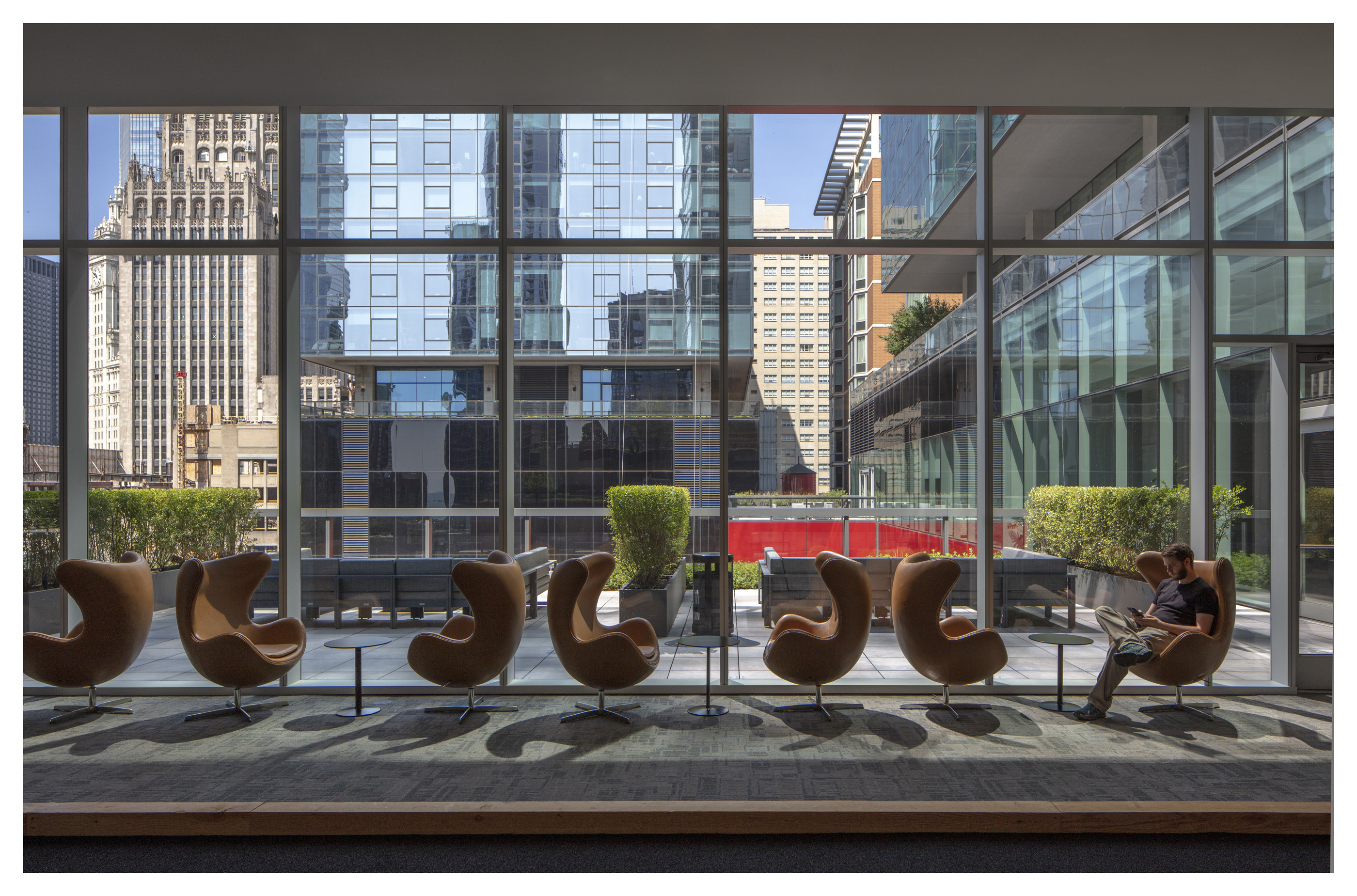
Throughout our residential spaces, Egg chairs serve as a complementary accent piece to our Modernist buildings, reflecting the same passion for form and function. The curvaceous seat is adaptable, pairing well with everything from white walls to colorful surroundings. As they did when they were first designed, egg chairs serve a variety of functional purposes: a fresh pop of color, a nod to the Modernist style, a place to relax at the end of the day or a cosy reading spot to enjoy your favorite book. However they’re utilized, these design icons are a Modernist staple and one of our favorite pieces of unique furniture.
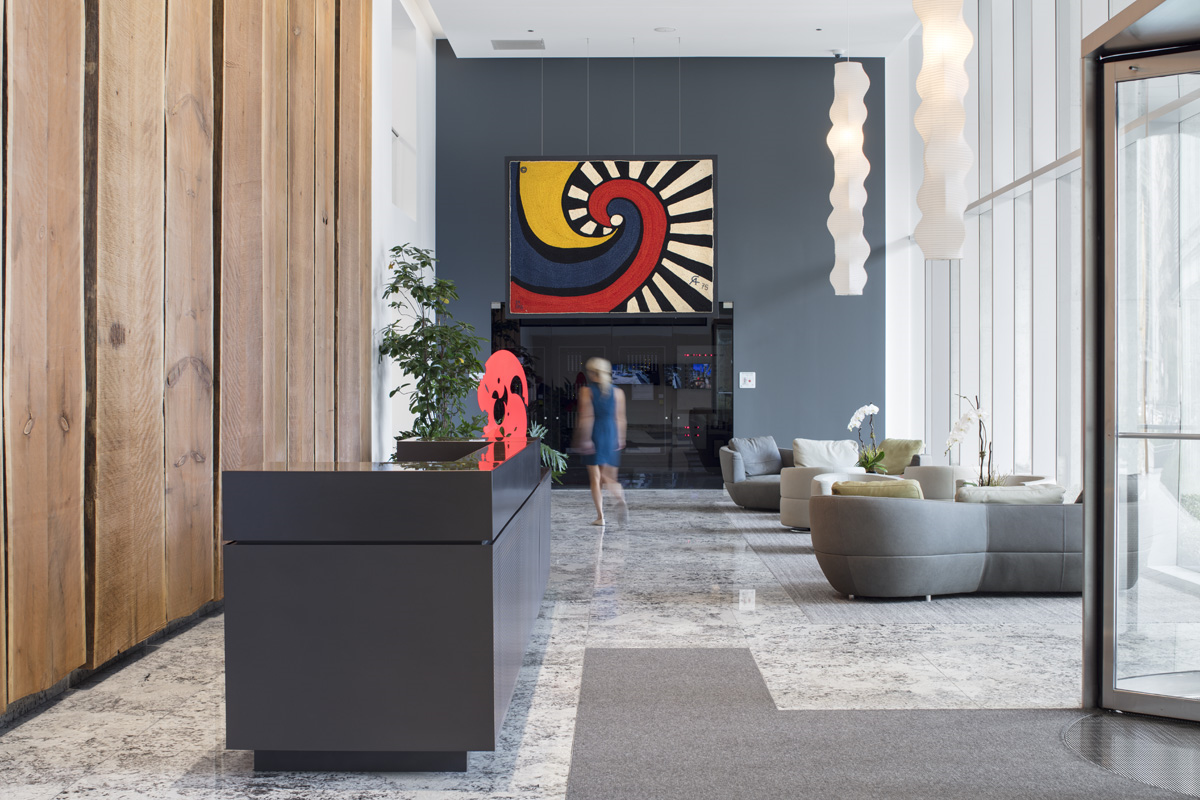
It’s no secret that we love color at Optima, and we carefully curate our interior furniture, textures and designs to reflect the vibrancy of our spaces. Our curated artwork is no exception, and throughout the halls of projects such as Optima Signature, Alexander Calder’s bright works greet residents with bold tones and distinct shape. A multimedia artist whose influence spans across decades, Calder’s work creates a meaningful connection to a rich piece of art history.
Calder’s Past
Born in Pennsylvania in 1898, Calder came from a family of artists; his grandfather and father both had rich careers as sculptors and his mother was a professional portrait artist. Though his family had artistic roots, they supposedly did not want him to follow in their footsteps. Calder began studying mechanical engineering in New Jersey, bouncing between jobs all while still being inspired by create. By the 1920s, Calder had moved back to New York to pursue a career as an artist.
Calder’s Artistic Career
After studying in New York, Calder moved to Paris where he studied, established a studio and met his future wife. While living in Paris, Calder joined the ever-growing network of avant-garde artists, including Fernand Léger, Jean Arp and Marcel Duchamp. Throughout his life, Calder maintained a strong connection to France, naming many of his works in French regardless of their location. After a lifetime of impactful creativity and exploration, Calder died unexpectedly of a heart attack in 1976, leaving behind an expansive and far-reaching legacy.
Calder’s Legacy
Over his career, Calder produced a wide range of work, spanning from sculpture, to stage sets, paintings, prints and jewelry. Like previous generations of Calders, he was also a recognized large-scale sculptor. Flamingo, one of his more notable works in Chicago, adorns the Federal Plaza with beautiful form and the famous “Calder Red” color. We’re thrilled and honored to have the works of Alexander Calder throughout our buildings, and hope they bring a bright source of inspiration to those who view and enjoy them.
Reflecting back to 1978, one of the first pillars of the Optima promise was a dedication to a multidisciplinary approach. David Hovey Sr, then new to the architecture world, wanted to escape from the corporate red tape that surrounded a traditional architect-developer relationship. Oftentimes, he observed that bankers and corporations were given more power over specific projects and the integrity of the building was overlooked. His vision was that architecture would lead the process, and the first iteration of the Optima Business Model was born.
Our process is a vertical one; we oversee architecture, development, general contracting, sales brokerage, property management and support. Because we’ve built an integrated process and are involved with every step, we welcome potential challenges and take pride in seeing our projects through from start to finish. Our model gives us a distinct advantage over others in the industry, and allows us to have a flexible and fluid project timeline.
From project inception to construction, we’re constantly working on ways to improve and adapt. During the construction of Optima Signature, our architectural team implemented strategies to improve efficiency, including condensing the coordination of mechanical, electrical, plumbing and fire protection systems, and producing documents on-site, reducing the process from days to hours. Originally scheduled for completion in February 2018, our vertical integration methods allowed the building to be completed in June 2017.
Even once a building is finished, we continue to be involved with and invested in our projects. We manage most of our multi-family properties, ensuring everything from amenities to retail spaces enrich the lives of their respective communities. Our intention is always to create a positive, lasting impact on our tenants, communities and environments, and our vertical integration model allows us to pursue that desire more fully.