A Brief History of Steel

One of the most utilized structural materials in the world, you’d be hard pressed to find a construction site not making use of steel. Yet what’s now a ubiquitous material was once so hard to come by that it was regarded as heaven-sent—literally. In paying our respects to steel, we’re diving deep into its rich and storied history. 

Iron, The Metal From Heaven

Before we learned to smelt iron into steel, iron itself was an alloy hard to come by. Ancient Egyptians called iron biz-n-pt, translating to “metal from heaven.” In their time, iron did come from space, crashing onto earth embedded in meteorites. This metal from heaven had a higher nickel content than the iron dug up from the ground, making it supple, malleable and resilient—and more valuable than gems or gold. It wasn’t until 2,500 BC that miners began the arduous task of removing iron from the earth, and even then, it took hundreds more years to discover how to properly separate the precious ore and manipulate it. 

From wrought iron made in primitive smelters, to cast iron made in ancient Chinese furnaces, to iron smelted in blast furnaces, the material remained challenging to produce in mass quantities and to use for a variety of purposes. Certain crafts, such as the delicate process of clock-making, called for a material that was even more malleable, even more resilient than iron. That material was steel, an alloy made by mixing iron and carbon.

One of three Bessemer Converters left in the world, at the Kelham Island Museum.
One of three Bessemer Converters left in the world, at the Kelham Island Museum. Credit: David Dixon on Geograph, licensed under CC BY-SA 2.0 Deed

The Dawn of Steel

The modern steel industry was officially born in 1856 when Henry Bessemer developed a more effective and inexpensive method of producing the precious alloy. Known now as the Bessemer Process, Bessemer designed a pear-shaped receptacle in which iron could be heated while oxygen was blown through the molten metal, reacting with carbon, releasing carbon dioxide and producing a more pure iron. 

Bessemer’s process revolutionized the industry, allowing for the efficient transformation of iron into high-quality steel in mass quantities. In fact, once the steel industry in America adapted the Bessemer process too, they were able to catch up with Britain’s production, sparking an industry that generated more wealth than the 1849 California Gold Rush. 

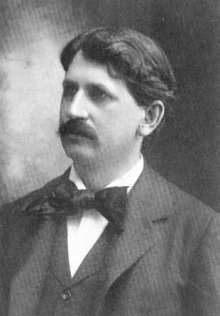
Steelmaking in America continued to boom as technology improved, allowing for higher efficiency, safety and yield. At the end of World War I, the improved production of steel is what allowed for the invention of skyscrapers. The skyline shot upward in cities like New York and Chicago, a testament to the true strength and power of the material. Steel became a staple in the Modernist structures of masters such as Ludwig Mies van der Rohe, as a material that not only allowed for a fierce, durable structure, but for a simple, bold aesthetic. 

As the steel industry continues to propel forward, metallurgists seek to create more sustainable production methods, exploring electricity-based smelting and utilizing recycled steel for new projects. 

Steel and Optima

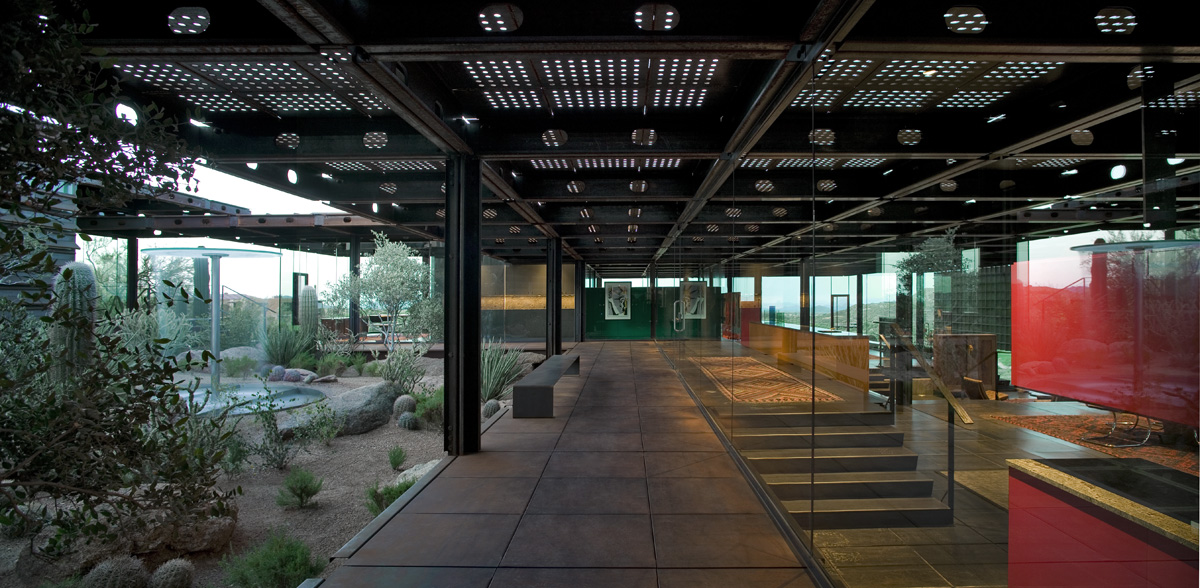
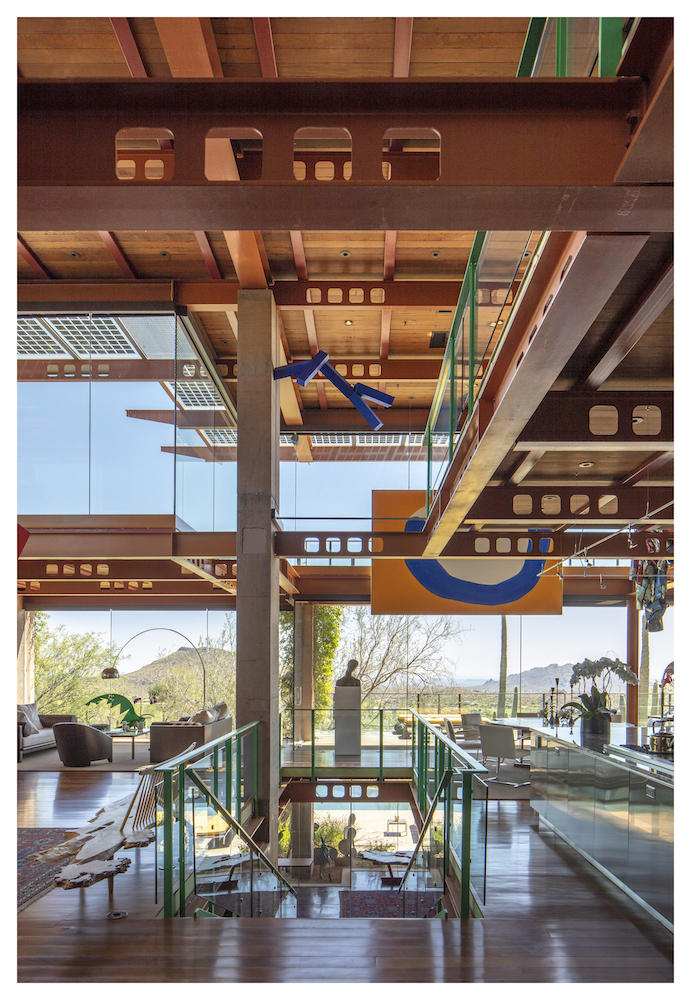
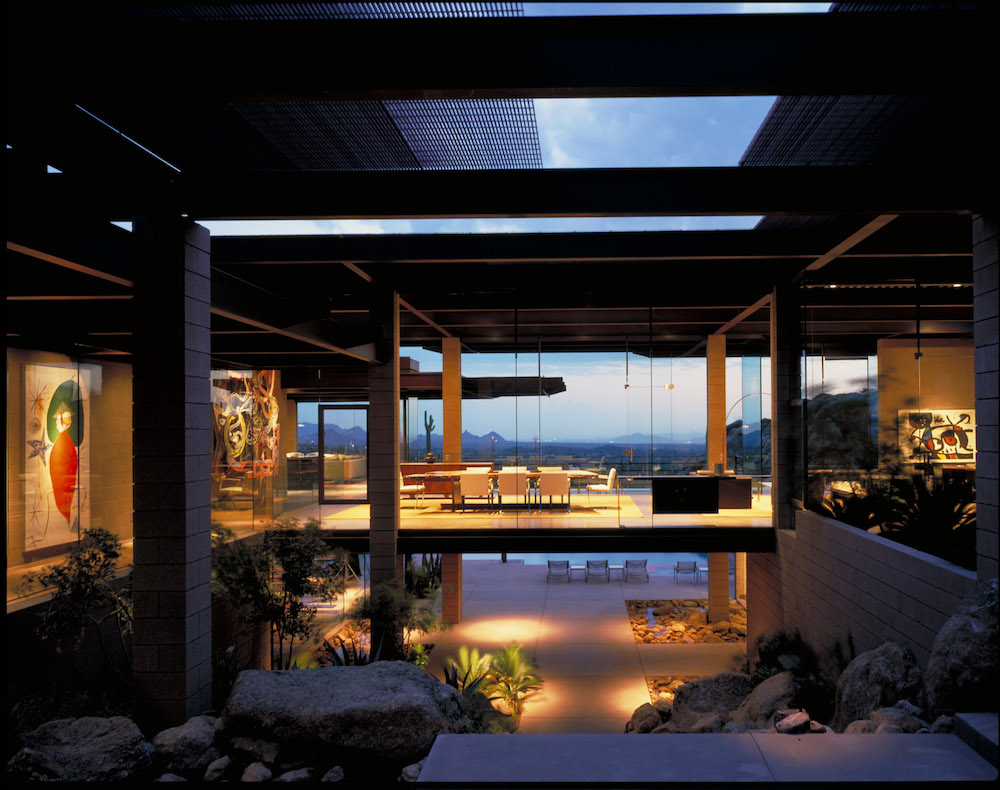
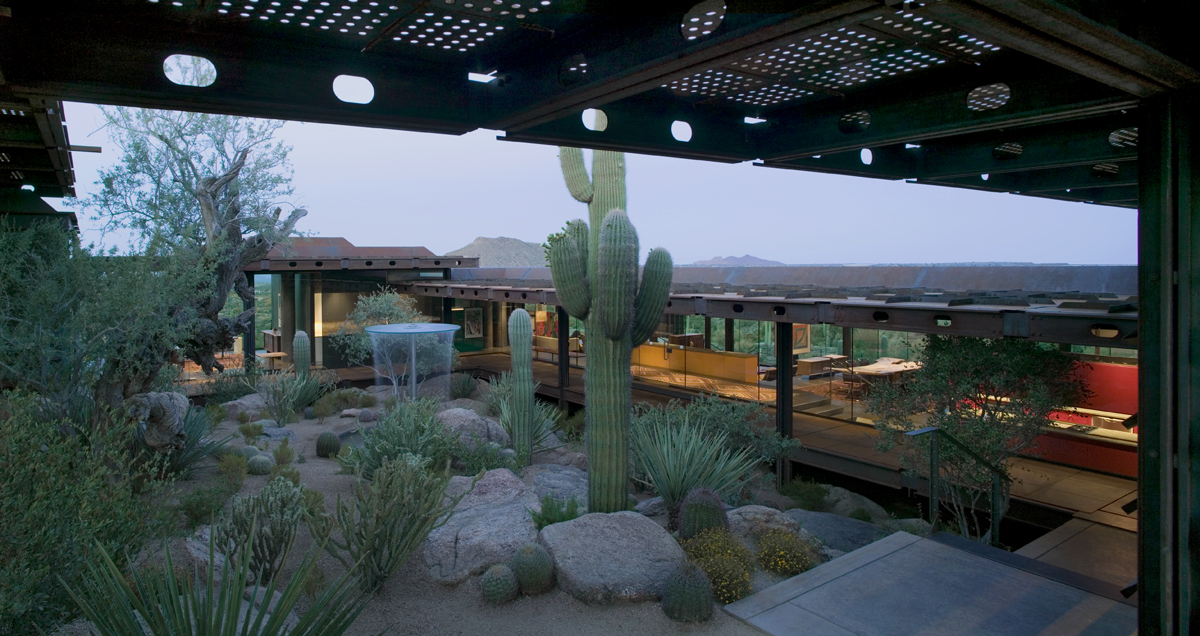
Throughout our projects at Optima, steel functions as both a structural component and a Modernist aesthetic choice. In projects such as Relic Rock and Arizona Courtyard House, we utilized Corten steel, which is a 99% recycled material. David Hovey Sr. also utilizes steel in his sculpture work, moulding the material into abstract creative expressions. From humble beginnings to its inventive usage today, steel’s versatility still inspires us to venture into new endeavors.

The Life and Work of Henri Matisse

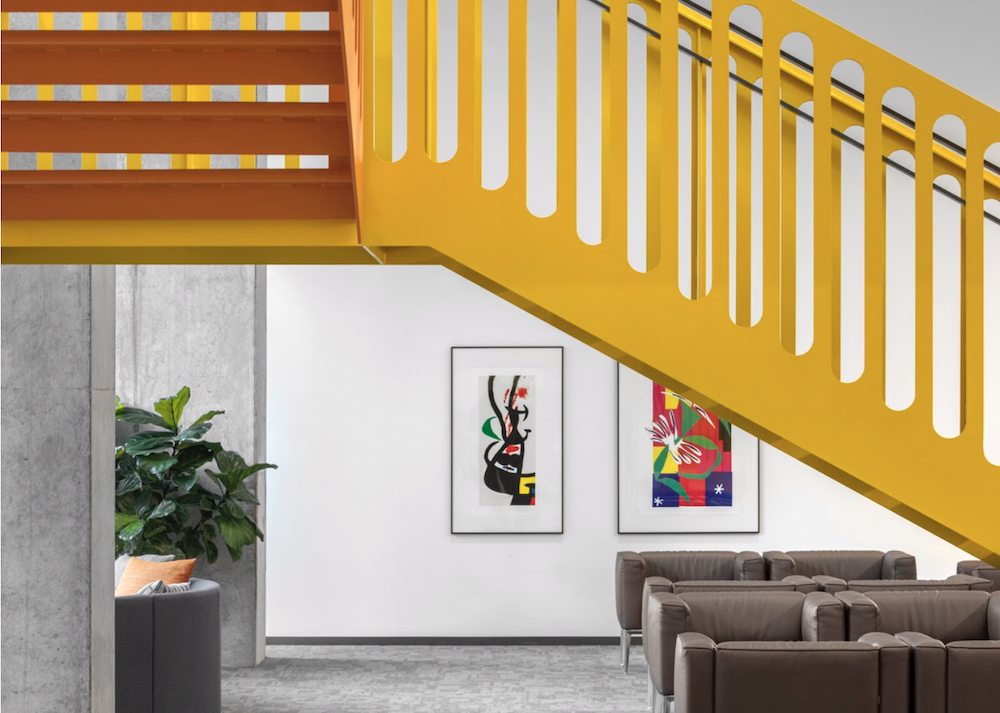
Henri Matisse is often regarded as the most important French painter of the 20th century. Leader of the Fauvist movement, his work was expressive, colorful and rigorous, often depicting flattened forms and decorative pattern. He operated with a unique way of seeing, stating, “I don’t paint things, I only paint the difference between things.” To understand the influential work of one of art history’s greatest minds, we first examine his life.

Matisse’s Early Life

Henri Émile Benoît Matisse (1869 to 1954) was a draughtsman, printmaker and sculptor, most renowned for his work as a painter. Born to a wealthy grain merchant in Northern France, he first studied law before finding his calling as an artist. His mother gifted him art supplies during his recovery from appendicitis. Through the gift, Matisse discovered “a kind of paradise” in creation, and made the decision to abandon law for a lifelong pursuit in art. 

In the last decade of the 19th century, Matisse studied art in Paris, and was influenced by the work of early masters and modern artists such as Jean-Baptiste-Siméon Chardin and Éduoard Manet. However, an 1896 trip to the island of Belle Île introduced Matisse to Australian painter John Russell, who then introduced Mattisse to Impressionism and the work of Vincent van Gogh, Russell’s dear friend. Seeing the vibrancy of Impressionism and van Gogh’s work, Mattisse’s style transformed with brilliant hues. Of his experience with Russell, Matisse said he, “explained colour theory to me.” 

The Red Room (1908), Henri Matisse.

The Art of Matisse

After time spent learning from Russell, Matisse was plunged into the world of Fauvism at the turn of the century. The style began around 1900, continuing beyond the first decade. Part of an innovative group later dubbed “Fauves,” Matisse explored his new understanding of color through paintings with tones bright, clashing and dissonant from those natural to their subject. Even though he helped to pioneer Fauvism, Matisse never really fit in with the crowd due to his conservative appearance and strict bourgeois work habits. And although the radical movement eventually declined, Matisse nevertheless forged on. 

The work that Matisse created during this period set the stage for the work he would create for the rest of his career. His focus on color continued, explored through what he called “construction by colored surfaces.” Even as his style and subject matter changed from abstract, to decorative interiors, to cut-out paper collages at the end of his life, this approach remained the same.

We are lucky to hang the work of Henri Matisse in our own communities. His consideration of form and color is reflective of our own thought process, and serves as a reminder that while style may change over time, a well-formed approach will always shine through.


A Tour of the Mies-designed IIT Campus

The Illinois Institute of Technology (IIT) is the place for Modernist architecture enthusiasts and more specifically, Ludwig Mies van der Rohe enthusiasts to be. Not to mention that the school is where Optima’s own David Hovey Sr. and David Hovey Jr. further honed their architectural education.

The campus, a place with a special place in our own heart and history, is home to the largest group of buildings designed by renowned architect Mies van der Rohe, arguably the most influential figure in American Modernism. As such, there is no better way to get an understanding of where our work began and where Modernism expanded, and to experience Mies’ philosophy than to explore the very campus that he designed and led. 

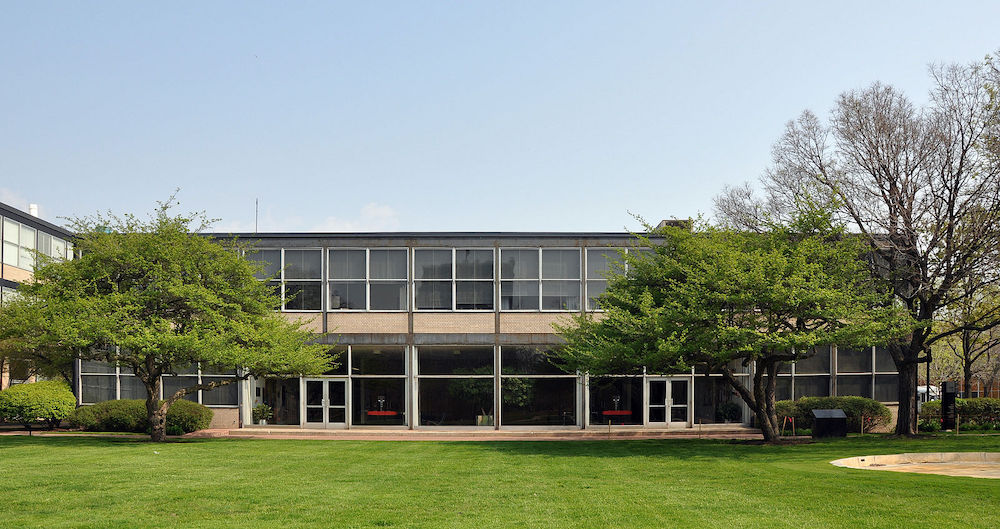
Perlstein Hall designed by Ludwig Mies van der Rohe.
Perlstein Hall designed by Ludwig Mies van der Rohe. Credit: Joe Ravi on Wikimedia Commons under the license CC-BY-SA 3.0

An Overview of the Campus

Ludwig Mies van der Rohe chaired the IIT School of Architecture from 1938 to 1958. During this time, he created a new master plan for the campus, the most ambitious he ever came up with, including twenty of his own works. This collection is the greatest concentration of Mies buildings in the world. Among the twenty are famous structures such as Wishnick Hall, Perlstein Hall, Carr Memorial Chapel and S.R. Crown Hall. Perhaps Mies’ most iconic piece of work, S.R. Crown Hall is the campus gem, a modern icon and National Historic Landmark, and even heralded by Time magazine as “one of the world’s most influential, inspiring and astonishing structures.” 

Overall, the campus is a bold expression of the Modernist discipline, utilizing steel, concrete and glass minimalist frames as a radical departure from traditional college quadrangles and limestone buildings. 

An Official Architectural Tour

A tour of the campus, offered by the Chicago Architecture Center, places special emphasis on Mies’ time as head of the IIT School of Architecture. The tour covers iconic Mies structures alongside newer additions such as State Street Village, designed by Helmut Jahn. 

During the warmer season, tickets for the tour are available for purchase here. Though not required, advance reservations are recommended, and private bookings are available. Truly enhancing the reach of the experience, the ticket price also gives entrance to the Chicago Architecture Center within seven days of your tour. 

As a piece of our own history at Optima, and as a grander piece of Modernist architecture’s history in America, the IIT campus is something that must be seen to be truly understood. Whether it’s on your own or with a tour, witnessing this iconic collection of designs is a necessity. 

A Brief History of the Swan Chair

An iconic piece in modern furniture design, the Swan chair’s fluidity and endless curves make it both a comforting perch and a sight to behold. Often swathed in vivid colors, the Swan chair makes a bold statement incorporated into striking interiors across our Optima communities.

An Iconic Design

The Swan chair was designed in 1958 by Arne Jacobsen, the same architect and designer who created the Egg chair. Alongside the Egg chair, the Swan chair was originally crafted for the Royal Hotel in Copenhagen (also architected by Jacobsen). The chair let hotel guests spin its swivel base and rotate 360 degrees to take in the bustling hotel atmosphere, while cocooned in comfort. As a chair with no straight lines, the Swan was a technological innovation in furniture design. Created in the Danish modern style, the chair swiftly became an icon.

A Feat of Engineering

Prior to designing the Swan chair, Jacobsen (and other furniture designers of his generation) were constrained by the pliability of the materials they used, which at the time, were stiff and difficult to sculpt. However, the introduction of molded foam a new, flexible material rewrote the rules. Through experimentation with the new product, Jacobsen found the freedom to shape fluid curves and single-piece molded shells. 

The Swan chair, originally made from Styropore, is now made from polyurethane foam, both inventive materials that allow for the chairs’ continuous shape. The shell of the swan is made of molded synthetic material, and covered by a layer of cold foam. The swiveling base, always star-shaped, includes a satin-polished, welded steel tube and a 4-star base in injection molded aluminium. With upholstery options available in a variety of textiles and colors, the Swan chair easily adapts to lobbies, lounges and homes across the world.

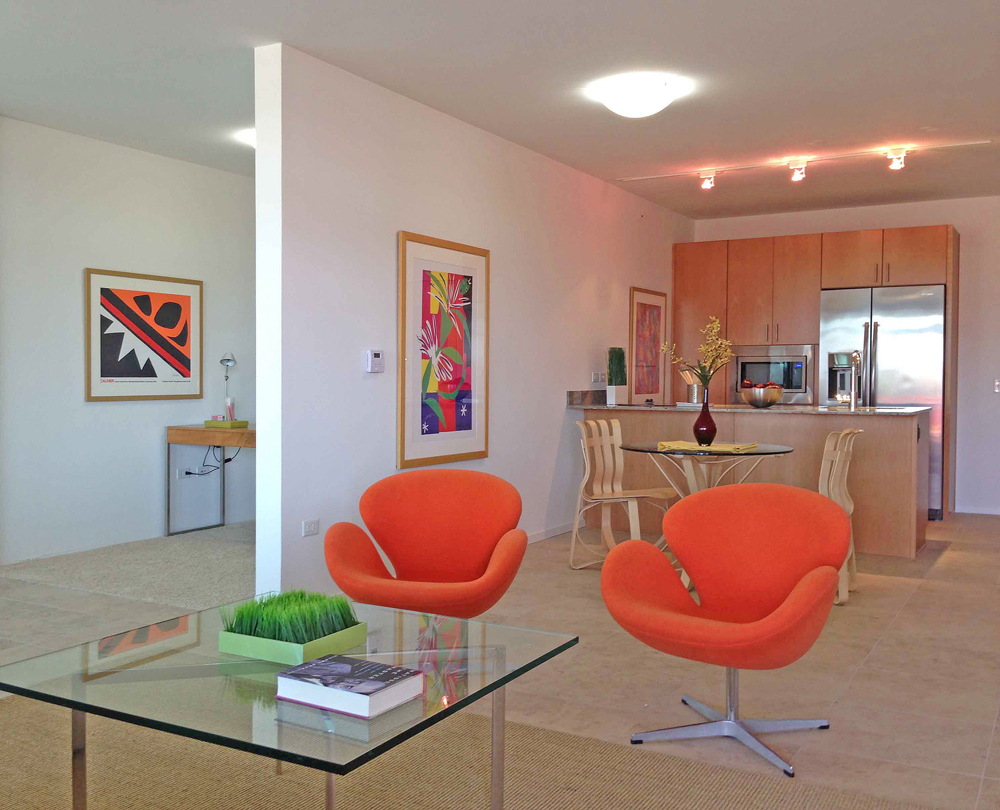
Throughout our residential spaces, Swan chairs are right at home in our Modernist buildings, reflecting the same passion for form and function. Easily employed in entry lobbies, lounges across the community or even commercial office space, the unique curves and comfort of this sculptural chair leave a lasting impression.  


Rooftop Amenities at Optima

Across all of our projects and properties, we believe amenities are essential to building wellness-focused, holistic spaces. From our single-family homes to our multi-family residences, we carefully curate our outdoor and indoor amenities to reflect these values. One of our favorite applications is utilizing our rooftop areas, particularly in our multi-family residences. Although rooftop gardens and green spaces have existed since the Hanging Gardens of Babylon, new technologies have allowed us to expand into sophisticated, expansive systems of features. Optima began using green roofs in Chicago back in the early 1980s, and have evolved our practice to include both green space and amenities throughout our properties in Arizona and Illinois. 

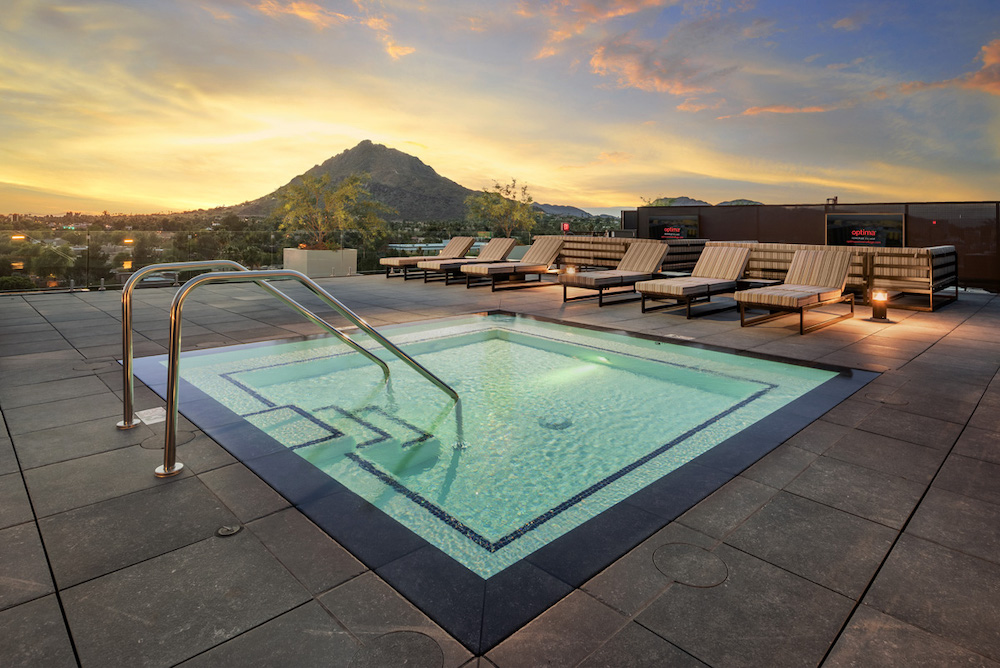
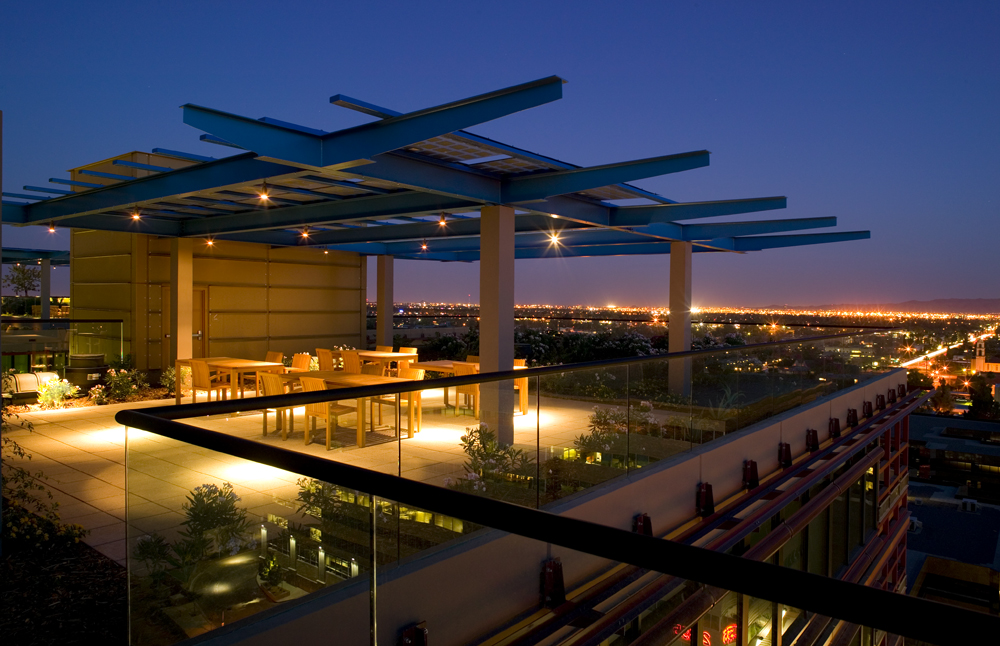
The rooftop views from Optima Sonoran Village.

One of our favorite aspects of moving out to Arizona was creating outdoor spaces that celebrated and embraced the desert atmosphere. Our Arizona rooftop amenities include heated pools, built-in seating areas, spas,cold plunges, rooftop running tracks, outdoor yoga studios, entertaining spaces with barbecues and fire pits, and of course, panoramic mountain views. At Optima Sonoran Village in particular, we maximized the small footprint of the building to offer incredible views of Camelback mountain and to create socializing space for residents. 

With state-of-the-art features and unparalleled views of the surrounding environments, our rooftop spaces across our Arizona projects create the perfect backdrop for time spent outside with loved ones. 

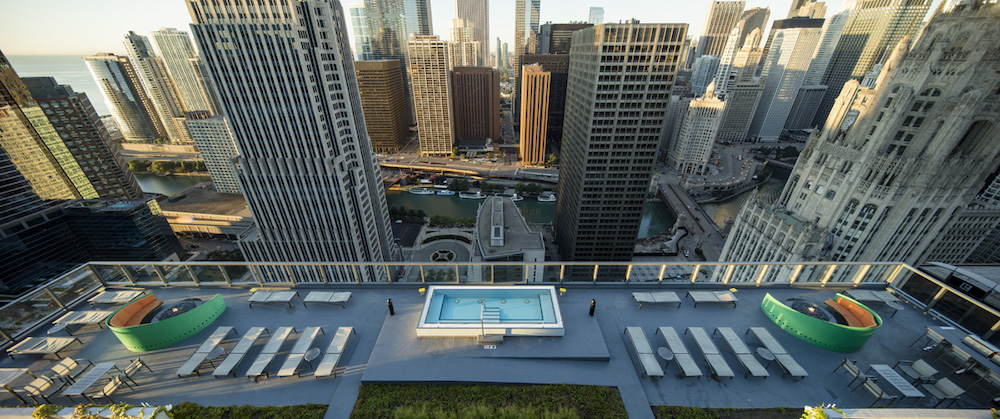
The rooftop at Optima Chicago Center.

Despite the cold Chicago winters, our projects within the city still take advantage of their rooftop space for dynamic city views and amenities for our residents to enjoy. With outdoor heated swimming pools, cabanas and bars, outdoor saunas and steam rooms, outdoor terraces, fire pits, herb gardens, dog parks and outdoor children’s play areas, both Optima Chicago Center and Optima Signature feature plenty of enticing areas and activities. 

Our building amenities are an integral step in our process of creating functional, beautiful and welcoming spaces, and in utilizing our rooftops, we extend our creativity into designing desirable, innovative outdoor space.

A Brief History of the Terrace

A hallmark of Optima properties is our integration of the built environment with the natural. Oftentimes, we employ terraceslevel platforms incorporated into buildings that allow for plantlife to thrive—that allow our buildings, and their residents, to live in harmony with the surrounding landscape. The usage of terraces is one that dates back for over 12,000 years, evolving over the millennium to be the sophisticated components of urban architecture that they are today.

Terraces of Ancient Times

The word terrace is derived from terra, the Latin word for earth. The technique has been in use for over 12,000 years, first utilized as an ancient farming method in hilly regions. Agricultural terracing involved cutting the land into a series of successively receding flat platforms, much like steps, to allow for more effective farming, by decreasing erosion and surface runoff and increasing the effectiveness of irrigation.  

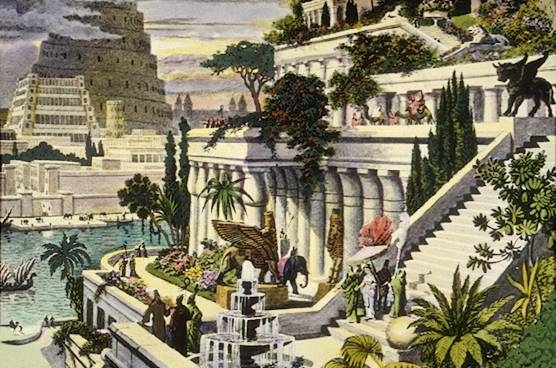
An illustration of the Hanging Gardens of Babylon.

In 9800 BC, ancient civilizations realized that they could adapt this technique to buildings, and they began to add terraces to their homes and other domestic structures. This first usage was seen across the globe, from the Middle East to the Pacific Islands. The most famous interpretation is undeniably King Nebuchadnezzar’s Hanging Gardens of Babylon, one of the Seven Wonders of the Ancient World. Although no actual proof of its existence has been found, depictions show an ascending series of tiered gardens abundant with plantlife, complete even with a waterfall.

Thousands of years later, from 3000 BC – 600 BC, Mesopotamians grew gardens atop ziggurats, terraced religious temples that allowed for religious spaces to become placed ever higher. The structures were placed upon many layered platforms, and it’s believed that ziggurats were what inspired the Biblical parable The Tower of Babel. 

Terraces continued to be integrated into homes. Around 1500 AD, Venice adopted terrace design to the tops of their homes, called altanas. Altanas were private, slat-floored roofs. They started out as a place to hang laundry out to dry, but continue to be used today as social spaces.

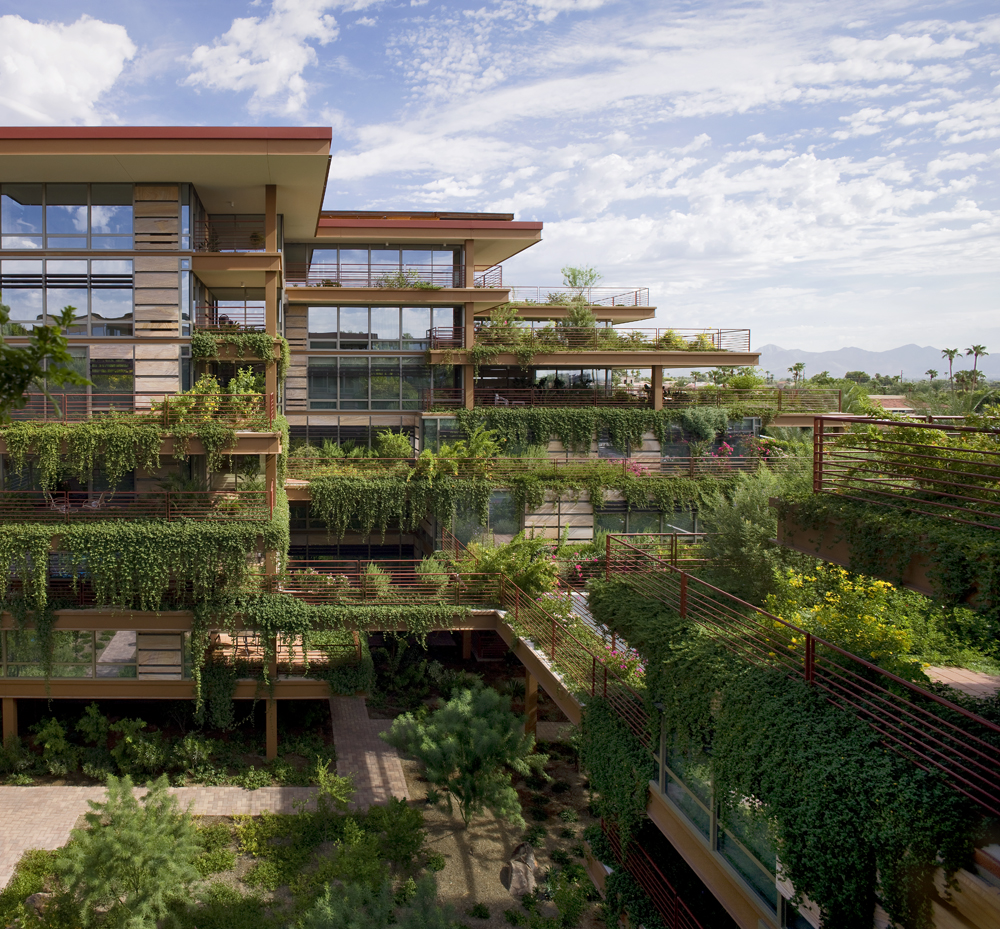
The terraced design of Optima Camelview Village.

Terraces in the Modern Age

Following the progression of altanas as a place to socialize, people began more and more to use the terrace as a location to congregate in privacy. Private rooftop and per-unit terraces became luxury amenities in the 1920s, when building height began to increase due to the adoption of the elevator. At that time, terraces become a status of wealth, allowing for privacy, fresh air and separation from the increasing bustle of life on city-level. 

Today, the use of terraces continues to flourish, finding increased purpose and urgency in response to population growth and a changing environmental climate. They provide private places to reconvene with nature, away from the bustle of the city. Terraces also create sustainable and contributive space, by providing thermal insulation, solar shading to mitigate air pollution, increased biodiversity and enhanced quality of life. 

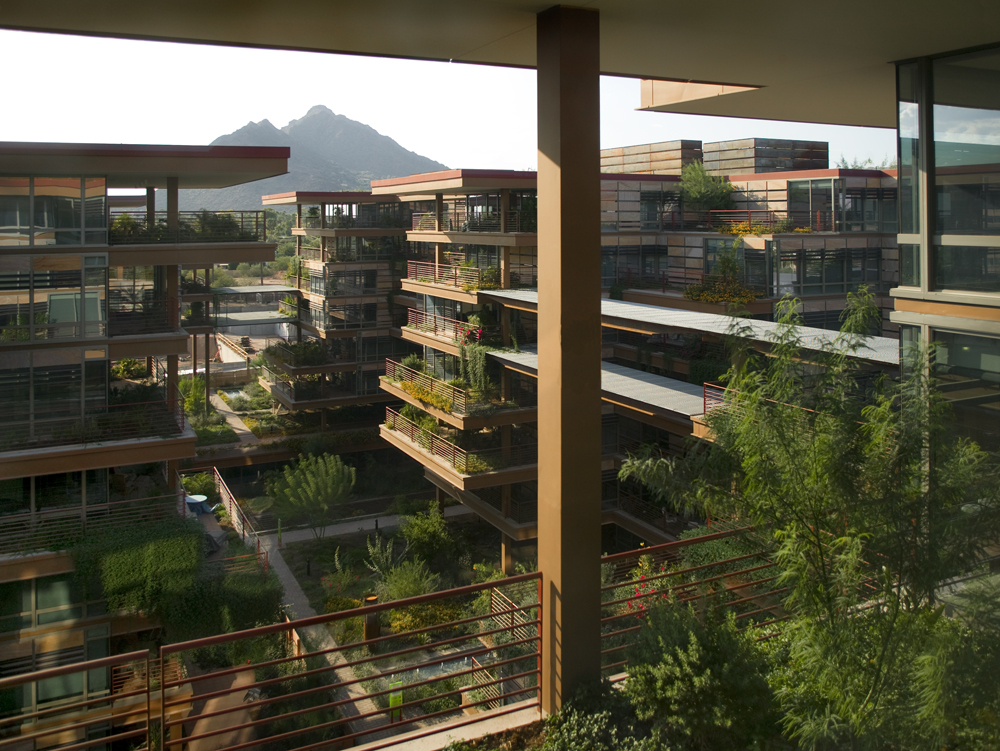
At Optima, we incorporate terraces to create private social space, to integrate nature into our communities through our signature hanging gardens, and to contribute to our sustainability practices at many of our properties, including Optima Camelview Village, Optima Sonoran Village and Optima Kierland. Terraces at Optima serve as outdoor living space, connecting the outdoor and indoor for a seamless living experience. From agricultural beginnings, the terrace stays true to its roots, allowing us to find harmony with nature.

The New Architecture: Integrating the Built and Natural Environment

In a recent New York Times article, author Karrie Jacobs wrote that the “hard barriers between the designed environment and the natural one are softening maybe for good.” 

Jacobs went on to say, “Designers today are rebalancing the relationship between architecture and nature, with the goal of increasing the quality of life, especially in urban settings.” 

The NYTimes article features several new and innovative works by global architects who are designing to fuse outdoor and indoor, with structures that are both influenced by and have influence on their environment. We love to see the innovation taking place throughout the architecture world, and the continued conversation surrounding how design can evolve to appreciate nature.

From the beginning, our work at Optima has celebrated this fundamental connection between design and nature as a way of enhancing the human experience. Since our founding in the late 70s, we have been utilizing Modernist design to create homes that are an extension of their environment and integrate nature into the lives of those that live in them.

Sandy Knoll, Optima, Homewood, Illinois

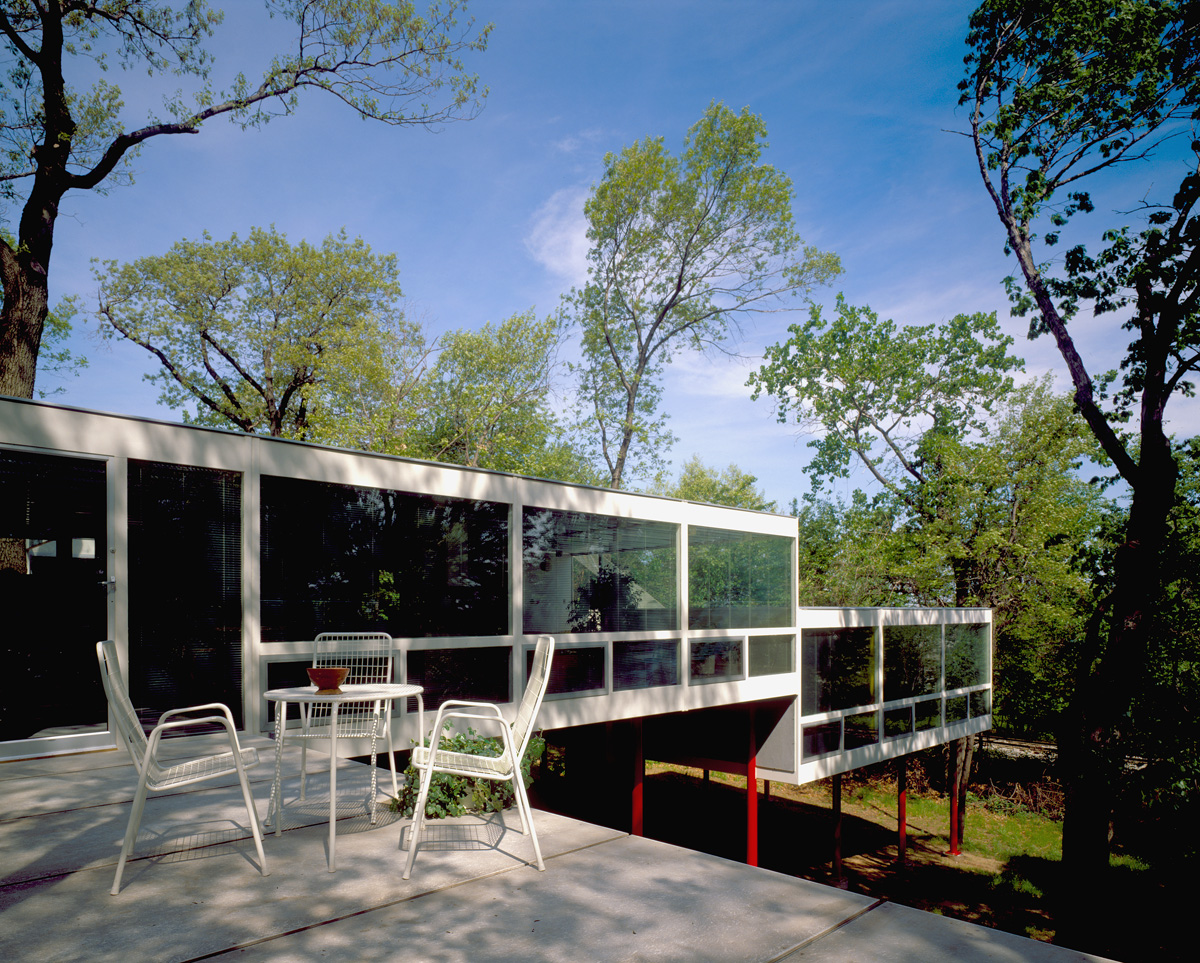
One of our first residences, Sandy Knoll, demonstrated how modular housing could integrate a home into a steep, challenging wooded knoll. What resulted was a beautiful home that preserved the integrity and grace of its site, with mature trees and local Illinois vegetation creating the views out of glass-paneled walls. 

Since then, we have continuously challenged ourselves to evolve new ways of incorporating nature into our design. Green space has always been a large component to the communities that we build, and our move to Arizona has only deepened our intimate understanding of landscaping.

Relic Rock, Optima DCHGlobal, Scottsdale, Arizona

Our desert dwellings incorporate the elevation, vegetation and climate of the desert into every facet of design, from bridged courtyards to the materials and colors used for each home’s exterior. Glass curtainwalls also provide uninterrupted, panoramic views of the sweeping landscape, so that the mountains of the desert feel a part of each home.

Optima Sonoran Village, Scottsdale, Arizona

In our multifamily work, we incorporate the Optima vertical landscaping system to create protection, privacy and beauty. For us, lush landscaping vertically and horizontally across our communities is an integral part of creating connection – a connection that is both physically inviting and spiritually inviting, as our design seeks to connect people with their surrounding environment.

We look forward to the future, to constantly pushing the boundaries and exploring how to further unify the built and natural environment. We’re excited that the work we do is part of a larger conversation in the architecture world and can’t wait to see what we, and others, do next for architecture and for the earth.

Infill Land and Optima’s Beginning

When David Hovey Sr. and Eileen Hovey set out to create Optima in 1977, they had a distinct vision for how to transform their passions into a business. After deciding that David would design and build the projects and Eileen would take charge of sales, they put a second mortgage on their condominium and purchased infill land in the Hyde Park neighborhood of Chicago. That plot of infill land eventually became our first development, but the concept of redevelopment and infill land has benefitted countless cities and urban areas throughout the country. Today, we dive into its history.

The History

The American Planning Association describes infill development as redevelopment that “optimizes prior infrastructure investments and consumes less land that is otherwise available.” Infill development can result in efficient utilization of land resources, reinvestment in areas that are targeted for growth and more efficient delivery of quality public services. Infill buildings are often constructed on vacant or underused property or between existing buildings. Often called “smart growth,” infill development allows for sustainable land development close to a city’s urban core, instead of spreading out. This type of development also helps to renew neighborhoods and create more prosperous communities. 

In Chicago

Following World War II, a series of local and federal initiatives were passed to revitalized aging and decaying parts of Chicago. Major institutions, including Illinois Institute of Technology, took part in the planning and reinvesting of various neighborhoods. New developments and infill on individual lots began to bring new vitality back to the city, with local school improvements and reduced crime rates following behind. 

At Optima

From our plots of land, to designing each residence, to creating fantastic amenity spaces, we’re passionate about bettering the lives of those within our buildings and the environments around them. Starting our first project on infill land, and continuing to do so with many projects for years after, reflects our pursuit of creating beautiful spaces that enhance the human experience.

Desert Dwellings: Laboratories to Test Our Tastes

Optima’s residential work goes back to 1982, when Sheridan Elm in Winnetka, IL first allowed us to challenge the status quo. Sandy Knoll and Ravine Bluff followed, each an exploration of the steel-and-glass Modernist aesthetic on our own terms. Ultimately, however, it was our geographic leap to designing homes in the Arizona desert that drew our practice, and design, into a new realm. Our desert dwellings serve as laboratories in which we are able to test our tastes and stretch the boundaries of our thinking.

Shadow Caster, Optima, Scottsdale, Arizona.

A New Frontier

In moving out to Arizona in the early 2000s, our intention was to build in a physical environment that was drastically different than our Chicago beginnings. Our team, led by David Hovey Jr., needed to utilize the outdoor space year-round, an interesting new challenge in comparison to Midwest seasons. Over the years, our desert homes have included  Shadow Caster, Cloud Chaser, Vanishing Rain, and Sterling Ridge. While our Illinois residences were straight-forward, functionalist modular builds, the Desert Homes are deepened and complexified by the multi-layered and defined spaces within. 

Our desert residences also allowed us to test changes in traditional components of Optima architecture, like our all-glass facades. Traditionally, transparency into such a hot region is ineffective for temperature control. However we were able to experiment with landscaping and solar screening that would help to shield our structures from direct sun and subsequent heat, while still allowing seamless desert views. We also discovered new methods of landscaping, creating shallow and bridged beds, as well as self-irrigating planter boxes, in order to create the vibrant verdure of the landscaping seen today at Optima Camelview Village, Optima Sonoran Village and 7160 Optima Kierland

 Relic Rock, Optima DCHGlobal, Scottsdale, Arizona.

Relic Rock, Optima DCHGlobal, Scottsdale, Arizona.

A New Way of Seeing

With a new office in Arizona, we were able to utilize current technology to form a project flow for both areas. About this time in 2001, technology was improving from an architecture standpoint; things were moving from a 2-D CAD design system into a 3-D building information modeling system. This allowed us to communicate effectively through our offices, helped our executive team take on more responsibility and started the process for multi-family projects in Arizona. 

Part of this expansion in Arizona was the introduction of Optima DCHGlobal, which acted as another laboratory for some of the processes we envisioned for large-scale buildings, especially with the transformation from 2-D design into 3-D BIM systems. The vision for Optima DCHGlobal was to create a customizable, flexible and standardized system, which resulted in additional desert dwellings, Relic Rock and Arizona Courtyard House. Through our desert laboratories, we have explored not only how to create beautiful spaces, but how to make them sustainable and adaptable across all types of geographic environments. 

The discoveries that we make through our desert dwellings don’t exist in isolation. With each new home, we uncover more of what makes our design uniquely us, and how to create our vision in the best way possible, so that we can bring it to each and every project that we undertake, no matter the type of home or type of terrain.

The Inception of IIT

Where we come from is a large part of who we are today, and Optima founder David Hovey Sr., FAIA is no exception. His long career as an architect is grounded in the education and mentorship that he found during his time at the Illinois Institute of Technology (IIT). Optima’s ties to the school run deep; David Hovey Jr. followed his father’s footsteps in passion and education, also attending IIT. To better understand our founder and our own story, we’re diving deep into the history and inception of the school that helped shape him.

Frank Wakeley Gunsaulus, the minister that gave the Million Dollar Sermon.
Frank Wakeley Gunsaulus, the minister that gave the Million Dollar Sermon. Photo in the Public Domain.

A Million Dollar Sermon

In 1890, Chicago minister Frank Wakeley Gunsaulus delivered the “Million Dollar Sermon.” In a church on the South Side, near the current site of IIT, Gunsaulus declared that with a million dollars, he could build a school where students from all backgrounds could prepare for meaningful roles in a changing industrial society. He believed that the students could learn in practice, not in theory taught at a school to “learn by doing.” 

In response to his vision, Philip Danforth Armour Sr. gave that million dollars. Armour’s money founded the Armour Institute, opened in 1893, a school that offered engineering, chemistry, architecture and library science courses. Two years after that in 1895, another school on Chicago’s south side opened; Lewis Institute offered liberal arts, science and engineering courses for co-ed classes.

47 years later, the Illinois Institute of Technology was created when Armour Institute and Lewis Institute agreed to merge together to form a stronger, singular school.

Mies and IIT

Two years before the merger and the inception of IIT, German architect Ludwig Mies van der Rohe joined the Armour Institute of Technology to head their architecture program and bring a new, rationalized curriculum. Once the new school was created by the two colleges joining, Mies was tasked with designing an entirely new campus for IIT, set apart by his distinct Modernist style in the surrounding urban environs. 

Coming from the Bauhaus, Mies brought with him a new way of thinking about architecture, design, form and function. Because his arrival came at a time of transition, he was able to share his belief system and help shape the curriculum that now makes IIT markedly unique. 

It is this distinctive series of events that led to the creation of this program, passed down from the Bauhaus, to Mies, to IIT, to David Hovey Sr. and David Hovey Jr., eventually shaping the way we think at Optima today. 

person name goes here

Maintenance Supervisor

Glencoe, IL


    Acceptable file types: *.pdf | *.txt | *.doc, max-size: 2Mb