Although Chicago is a huge city with plenty to explore, sometimes you just need a break from the bustle and noise. For our fellow Chicago residents who might need a weekend getaway this summer, here are the best day trips close to the Chicago area:
Indiana Dunes National Park. Credit: Paul J Everett on Flickr Creative Commons, CC BY 2.0 Deed
Indiana Dunes National Park
Chicago boasts some great beaches, but for something different, Indiana Dunes National Park is worth the drive over state borders. The park features over three miles of lakeshore lined with sand dunes, marshes, grasslands and forests. If you’re feeling adventurous, you can try their Three Dune Challenge and climb three of their tallest dunes in one day.
Rockford, IL
Less than 100 miles northwest of Chicago, Rockford’s charm is just a quick road trip away. You can’t miss the Anderson Japanese Gardens, one of North America’s premiere Japanese gardens with over 12 acres of streams, waterfalls, koi-filled ponds and more. The Discovery Center Museum or the Burpee Museum of Natural History are great spots for kids and families to explore.
Milwaukee, WI
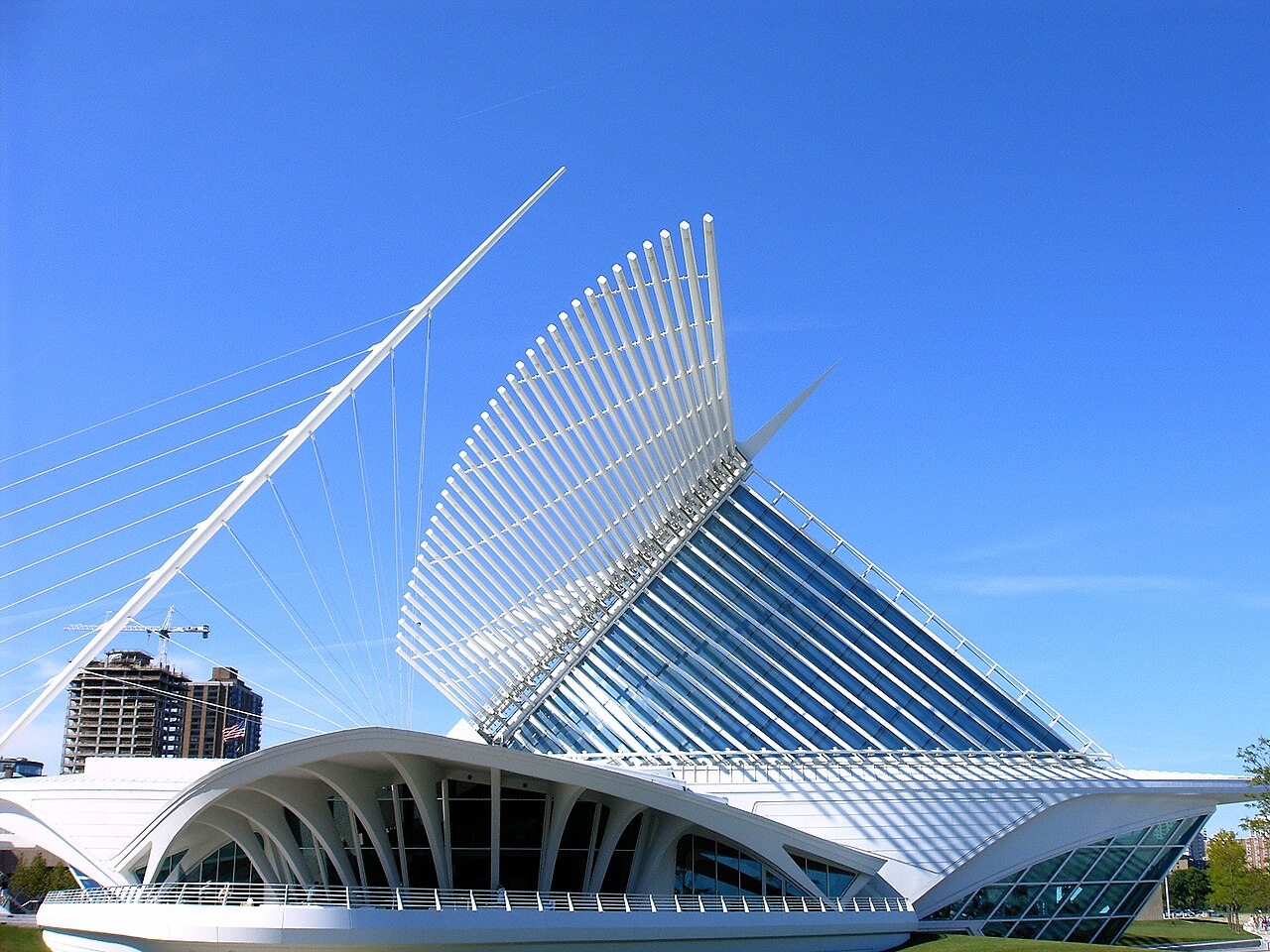
Whether you get there by car or Amtrak train, Milwaukee’s downtown has something for everyone. Murals and public art line the streets full of boutique shops, perfect for exploring without an agenda. Don’t miss the Milwaukee Art Museum, one of the city’s many museums, for the exhibits and the architecture of the building itself. Milwaukee is also a city for beer enthusiasts, with a few historic gems related to the Pabst Brewing Company.
Oak Park, IL
This one is right in Chicago’s suburbs, but we can’t skip over Oak Park’s ties to legendary architect Frank Lloyd Wright. His home and studio are in Oak Park, as are a series of other Prairie-style homes he designed. Take one of the many architectural tours dedicated to Wright’s work in the neighborhood.
Whether you’re exploring new museums, different scenery or a piece of architecture history, we hope this inspires you to find your new favorite getaway from the city!
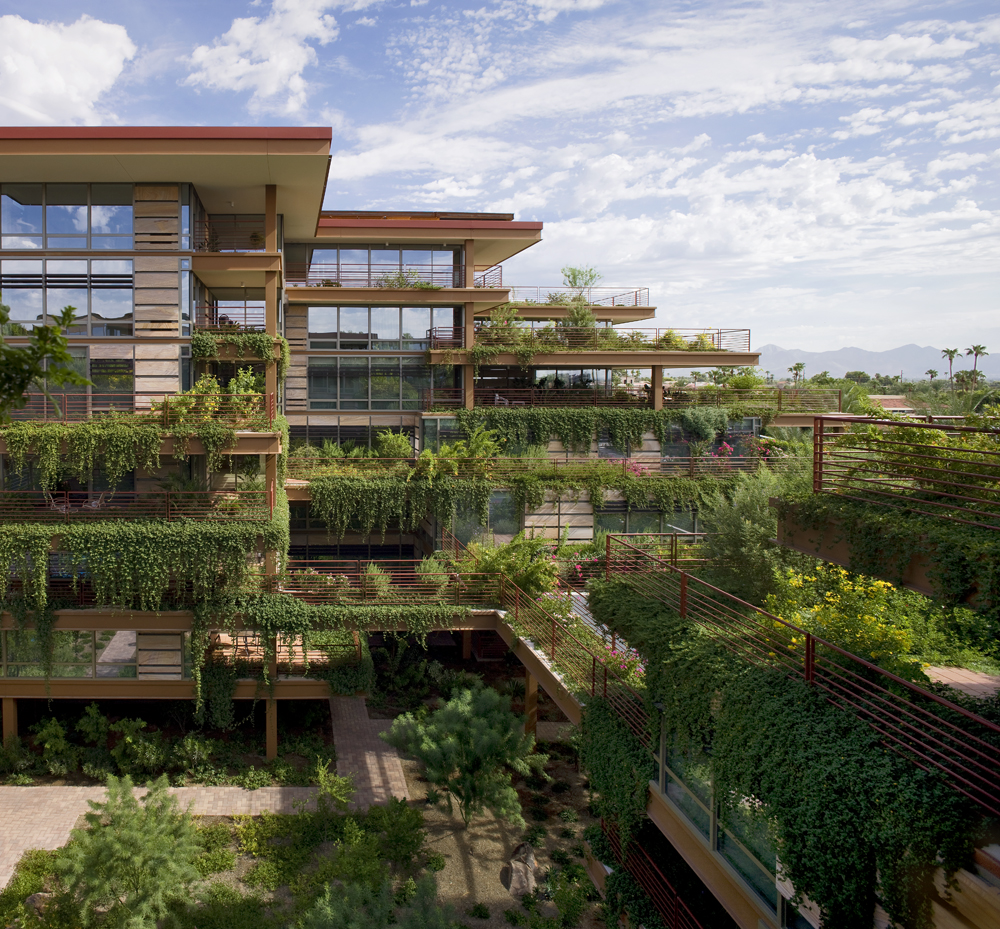
Vertical landscaping is a signature feature across Optima communities. In Arizona, we’re easily recognized by the lush greenery that makes itself a key element of the facade at Optima Camelview Village and Optima Sonoran Village. Most recently, we’ve even strategized how to bring our vertical landscaping to the inclement midwestern climate, with plans to incorporate it at our latest development in Wilmette, Optima Verdana.
Vertical landscaping at Optima Verdana in Wilmette.
Besides providing aesthetic value through added beauty and privacy for residents, our vertical landscaping system also serves another important purpose: bringing a broad array of environmental benefits to the natural environments in which we build.
The impact of our vertical landscaping system is something we calculated carefully through extensive design exploration, engineering and a multi-year research collaboration with Arizona State University.
The system, with self-containing irrigation and drainage, provides a haven for urban wildlife, promotes evaporative cooling, re-oxygenates the air, reduces dust and smog levels, reduces ambient noise, detains stormwater and thermally insulates and shields residents from the desert sun, all of which contributes to a sustainable urban environment.
Residents and community members alike also get to experience the direct impact of being surrounded by nature, with the vertical landscaping system serving as a connection to nature. Wherever this connection is made, it fosters a lifelong appreciation for the environment around us, and helps us all to stay mindful of the role we play in keeping that environment safe.
Considering we all spent a lot of time indoors in 2020, we’ll take any excuse to get outside this summer. Thankfully, there are numerous mental and physical perks to spending time in the great outdoors, whether it’s on a hiking trail or on your own terrace. Here are just a few of the many health benefits of being outdoors:
Boost Your Mood
Studies have shown being outdoors lowers levels of cortisol, a hormone that’s a marker for stress. Spending some time outside can help with stress, anxiety or depression, not to mention the added physical benefits of just spending a few minutes in the sun. Vitamin D helps with bone growth, regulates your immune system and can help battle depression. Even if it’s just a quick reset, getting out of the house and into nature can really boost your mood.
Improve Your Vision
Just like we’ve all spent more time inside over the past year, we’ve also spent more time on our screens. Whether you’re back in the office or working from home, your eyes probably need a break. Staring at computers, tablets and smartphones for long periods of time can cause Computer Vision Syndrome, but spending time outdoors can alleviate blurred and double vision, red eyes and headaches.
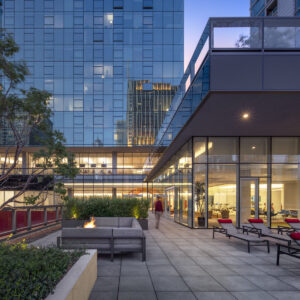
Optima Signature 7th Floor Outdoor Deck
Refresh Your Focus
Nature and green space lets our brains take a break from the chaos of life (and in some cases has even reduced symptoms of ADHD). Spending more time outdoors is also linked to higher levels of concentration, creativity and improved mental clarity.
We hold these health benefits in high esteem, and it’s one of the many reasons we design our residential and communal spaces to invite the outdoors inside. Connecting to nature is an easy way to take some time and connect to yourself and to the environment around you.
Highly regarded as one of the most historically significant buildings in Chicago, it’s only natural that we would include the Rookery Building in our ongoing Chicago skyscraper spotlight series. So what does it take for a building to earn such an esteemed title – especially in a city with a skyline marked by its architectural diversity and richness? Let’s take a look.
Big Shoulders Indeed
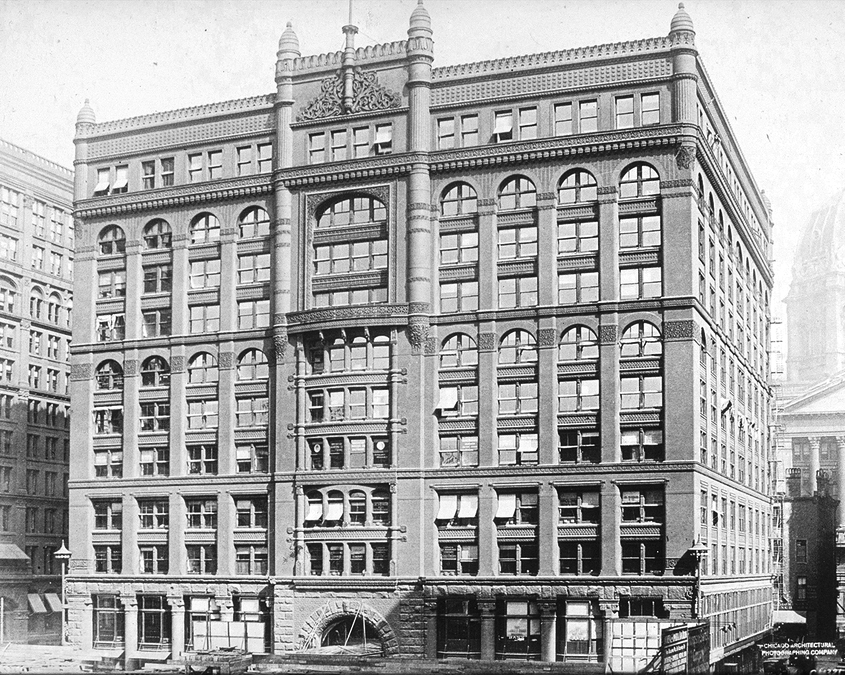
The Rookery Building was completed in 1888 by architects Daniel Burnham and his partner John Wellborn Root, under their firm Burnham and Root. Overall, the structure is considered one of their masterpiece buildings and was even once the location of their offices. Standing at twelve stories high (188 feet total), it’s also considered the oldest standing high-rise in Chicago.
The Rookery Building rose from the ashes of the Great Chicago Fire. Burnham and Root were part of the Chicago School of Architects who worked to rebuild the city during that time, utilizing modern industrial techniques combined with traditional techniques and design, resulting in a truly unique product.
The unique name, too, comes with a story: only a water tank was left standing from the original structure after the fire. A temporary structure was built around this tank, and was nicknamed the “rookery” – in part because of the pigeons and crows that perched on its exterior, but also in part because of the crooked politicians it housed within.
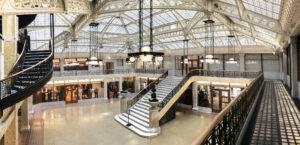
Light Well and Mezzanine at The Rookery. Credit: Alan on Flickr Creative Commons CC BY-NC-ND 2.0 Deed
The Rookery Building in the Modern Era
Burnham and Root weren’t the only big names to call the Rookery Building home. At one point, Frank Lloyd Wright once held offices there as well. In fact, Wright even remodeled the building’s lobby in 1905. Just a few decades ago, from 1982 to 1992, a massive renovation project was completed to restore the lobby to this original Wright design once again.
These days, the building is home to tenants such as US Bank, Brooks Brothers, Perkins Eastman and Interactive Brokers Group. Both the Frank Lloyd Wright organization and the Chicago Architectural Society offer tours inside the building, so that lovers of great architecture today can continue to appreciate its history, story, and gorgeous features.
Our team is joined together by a love of exceptional design — so naturally, design is our shared language. From property managers to accountants to architects, we’ve all come to know and love the architect lingo that helps us communicate our passions, our creations and our vision. In celebration and as part of our ongoing series, today we’re sharing Part IV of our inside look at architect lingo.
Poché
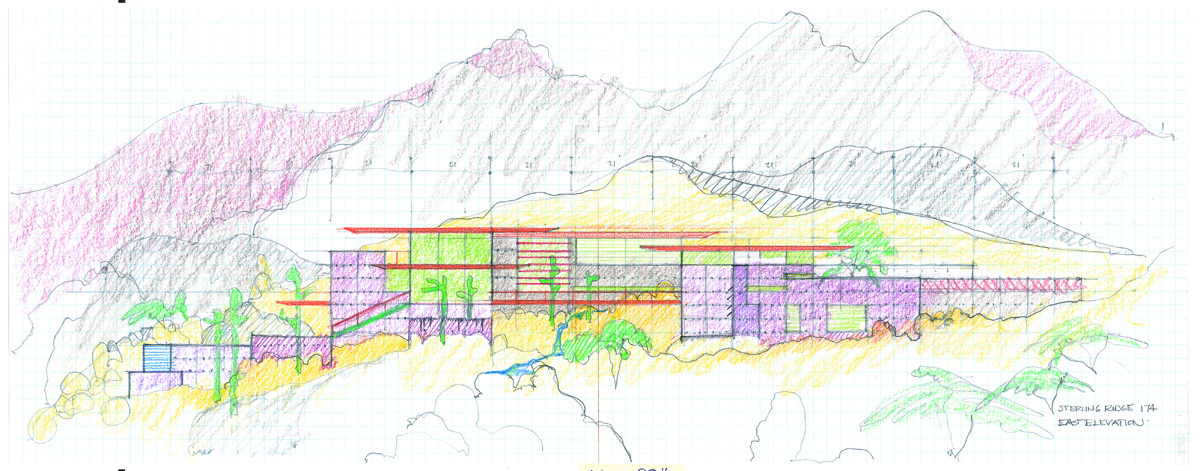
Pronounced with an exaggerated accent on the e at the end, the word poché comes from the French word pocher, which means to sketch roughly. To the untrained eye, poché refers to the portions of an architecture plan that are blacked out, darkened or cross-hatched. To an architect’s eye however, these blacked-out portions of the drawing hold much information.
Poché in a drawing demonstrates to architects the wall thicknesses, floor thicknesses and all other solid areas that intersect the plane of the section cut. Because poché makes it more clear how much space these solid areas take up (i.e. a normal line wouldn’t demonstrate the thickness of a wall, but poché does), it means that architects then have a better understanding of what space is actually available to them around these elements.
Architectural drawing of Sterling Ridge.
Charette
While the word charette might be unfamiliar to many, likely the meaning behind it will sound all too familiar. Charette refers to the intense final effort made by architectural students to complete their solutions to a given architectural problem in an allotted time or the period in which such an effort is made. It’s the home stretch of a project, if you will.
The word charette is derived from the word “cart,” and its origins date back to the École des Beaux Arts in Paris during the 19th century. During that time, proctors circulated a cart, or “Charrette”, to collect final drawings while students frantically put finishing touches on their work. Nowadays, the meaning of charette has evolved to refer to a period of several consecutive days, during which time all stakeholders involved in a project are consulted during an open, collaborative process to gather feedback and make refinements to a given plan.
Miesian
If you’re familiar with Modernist architecture (or if you’ve been an avid reader of our blog), this homological word explains itself. Used as either an adjective or a noun, Miesian as an adjective describes that relating to or characteristic of Ludwig Mies van der Rohe or his work and Miesian as a noun describes an admirer or student Ludwig Mies van der Rohe or his work.
In the Modernist discipline, this basically sums up all of us and everything we create. Mies’ “skin and bones” design style and philosophy of “less is more” is largely influential to the formulation of the discipline as we know it today.
Stay tuned for future features on the world of architecture lingo at Optima.
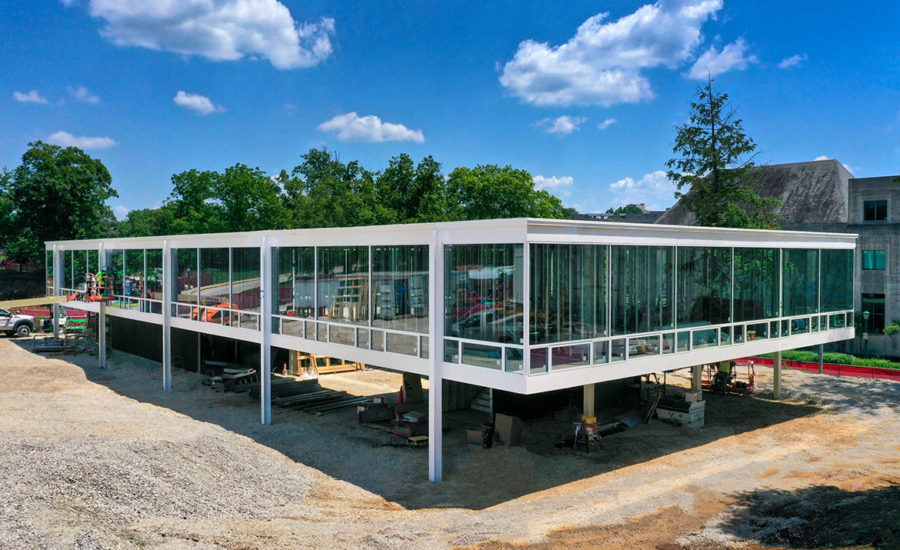
When you picture the work of architecture titan Ludwig Mies van der Rohe, you probably don’t picture a fraternity house. But back in 1952, the German-American architect created a design for Indiana University’s Alpha Theta chapter of Pi Lambda Phi fraternity. However, the design was never constructed and forgotten about until 2013, when an alumni and former fraternity member dug up the news. Indiana University then located the documents through the Art Institute of Chicago and New York’s Museum of Modern Art so the project could become a reality.
Instead of a fraternity house, the building will be home to the Eskenazi School of Art, Architecture + Design. Extensive research helped update the building to modern features while keeping the integrity of the Modernist design. The plans for bedrooms were simply swapped out for offices. 70 years later, this incredible design will finally come to life and inspire students and creatives for generations to come.
For the full story, check out Architectural Record’s recent feature on the project.
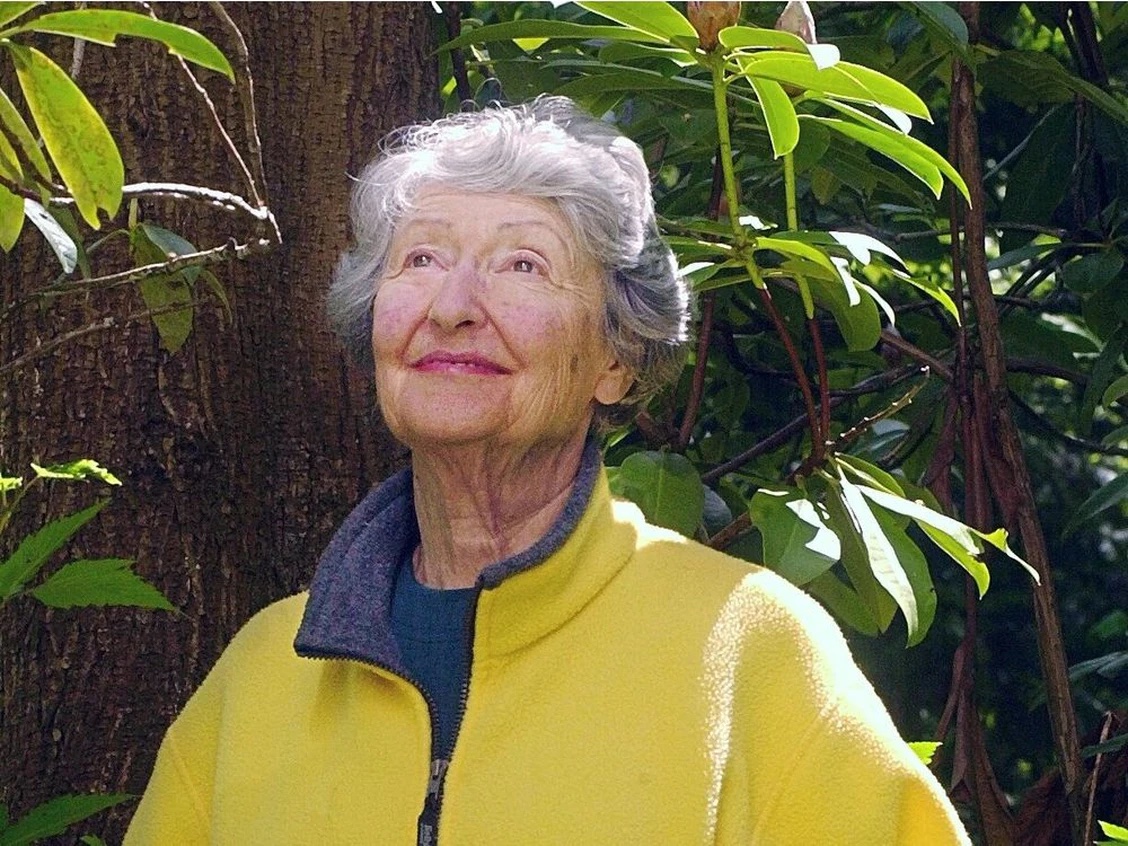
This spring, the design world lost a woman of fortitude, ingenuity and groundbreaking creativity. Cornelia Oberlander, a Canadian landscape architect, passed away just before her 100th birthday due to complications from COVID-19. Although her passing is mourned, Oberlander left behind an incredible and inspiring life story and legacy.
Cornelia Oberlander was born into a Jewish family in Germany in June of 1921. As the Nazi party rose to power, her family faced increasing dangers and chose to leave the country two weeks after Kristallnacht. Oberlander was eighteen by the time they emigrated to the United States in 1939, and there she was able to nurture her interests in the power of plants to heal. Her mother was a horticulturist who wrote gardening books for children and nurtured Oberlander’s appreciation for nature. Inspired by the landscaping and public spaces in Germany, she was determined to design parks from a young age.
Oberlander received a BA from Smith College and was among the first class of women to study at Harvard’s Graduate School of Design, founded by Walter Gropius, a leader of the Bauhaus movement. Armed with a degree in landscape architecture, Oberlander was on a mission to improve lives with public spaces nourished by nature. And indeed she did; she started out working in Philadelphia, where her initiatives in public housing included places for children and green space. After moving to Canada, she advocated for communities and designed over 70 urban playgrounds. Her notable projects included the Children’s Creative Center at Montreal’s Expo ’67, Vancouver General Hospital Burn Unit Garden and the landscape design at the Museum of Anthropology at UBC, Vancouver (photo below). Over her lifetime, Oberlander was honored with Order of British Columbia, the Order of Canada and Vancouver Freedom of the City Award, amongst many other accolades.
Cornelia Oberlander’s work will impact landscape architects, urban designers and creative minds all over the world for years to come. Her beliefs in the ability of design to bring about social change and healing are ones we as creatives should all hold in high regard, as we build systems and buildings that elevate the human experience.
While Modernism has a history over a century deep, modern-day architects designing in the discipline are looking towards the future. Recently, Space Caviar founder Joseph Grima published a manifesto for a new kind of non-extractive architecture, positioning Modernism’s traditional, formalistic approach against a new, environmentalist way of operating.
Moving Away From the “Top-Down” Approach
In a conversation with Dezeen, he says that modern-day architects are considering how Modernism can be a “form of stewardship of the natural environment,” as opposed to just in conversation with the landscape through compositional considerations. At the center of Grima’s manifesto is the idea that architecture should no longer have a top-down approach, where materials are selected for their aesthetics and function, but without consideration for their impact on the environment.
Interestingly enough, Mies van der Rohe’s famous Barcelona Pavilion is employed as a primary example of “top-down” architecture here. The materials used in the project – green marble, travertine and onyx – exemplify Modernism’s “skin and bones” appeal at its most raw. But where did they come from? These are questions that will no longer be ignored, according to Grima.
Setting Our Sights on Sustainability
Grima’s manifesto resonates. At Optima, we create built environments with the surrounding natural environment in mind. Beyond just living in visual harmony with the landscape, we’re invested in fostering a more reciprocal relationship.
Our signature vertical landscaping system at Optima Camelview Village
Our signature vertical landscaping system, featured at properties such as Optima Sonoran Village, Optima Camelview Village, and Optima Kierland, plays a crucial role in maintaining a healthy and sustainable environment. The system, with self-containing irrigation and drainage, provides a haven for urban wildlife, promotes evaporative cooling, re-oxygenates the air, reduces dust and smog levels, reduces ambient noise, detains stormwater and thermally insulates and shields residents from the desert sun, all of which contributes to a sustainable urban environment.
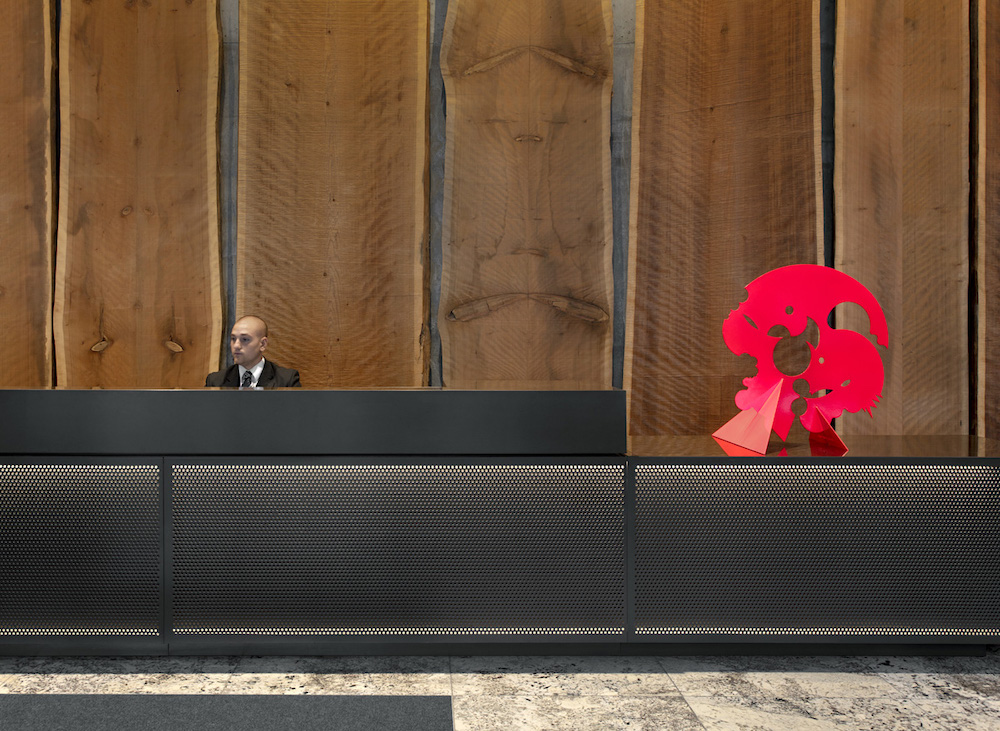
Barge wood in the lobby at Optima Signature
Meanwhile, Optima Sonoran Village also served as the pilot project for Scottsdale’s International Green Construction Code, or IgCC. Having earned full certification from the program, Optima Sonoran Village’s attributes include major building elements consisting of 95 perfect local and recycled content materials; energy efficiency as a result of the high-performing glazing, overhangs, building configurations and exterior shading devices; water resource conservation from plumbing fixtures and excellent indoor environmental quality and reduced material emissions from the materials used in the development.
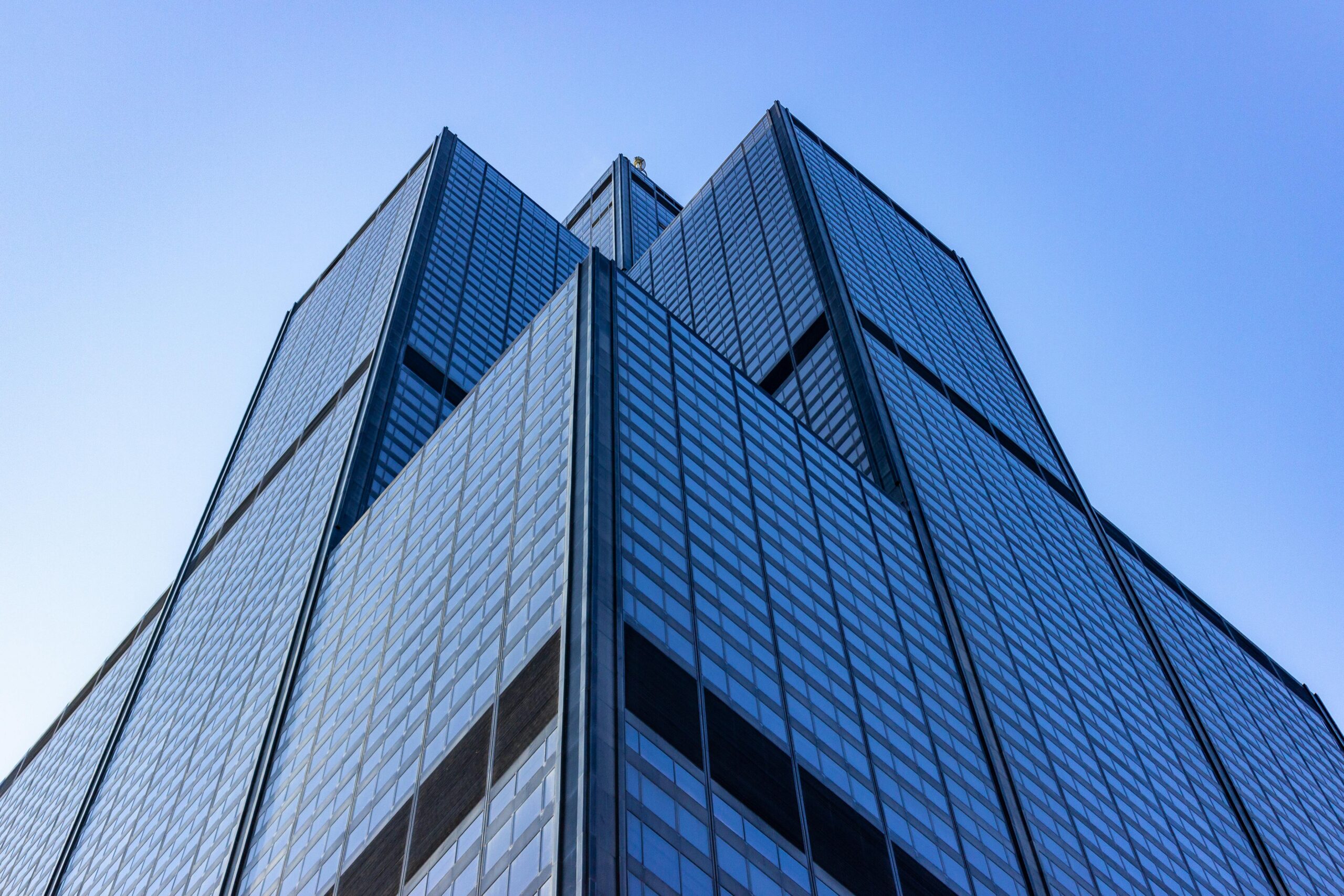
If you ask anyone – Chicago native or tourist – to name one building in the city, odds are they’ll say Willis Tower (or perhaps Sears Tower, since the name only recently changed). This goliath skyscraper towers over the skyline, standing as a landmark beacon from vantage points even miles away. But how much do you really know about the famed Willis Tower? Today, we take a closer look at the building’s rich history.
The History of Willis Tower
One of the most contentious debates among Chicagoans this millennium has been whether they’ll call Willis Tower by its new name – or stick to tradition and refer to it as the Sears Tower. The tower was first envisioned in 1969 by the department store and its original namesake, Sears and Roebuck Company. Needing a place to house their 350,000 employees, the leading retailer commissioned architectural firm Skidmore, Owings and Merrill to complete the task.
And complete the task they did. Groundbreaking on the superstructure occurred a year later in 1970, and when the tower was completed three years later, it stood proud and tall at 108-stories as the world’s tallest building (surpassing even the World Trade Center in New York City). This soaring frame was made possible by a steel-framed bundled-tube construction, and boasts being the first building to use this structurally efficient and economic method.
Though Sears and Roebuck Company sold the tower and moved out eighteen years later, the newly-named Willis Tower continues to host companies such as United Airlines (its largest tenant) and its new namesake, Willis Towers Watson.
Looking down from The Ledge at Willis Tower
Not Your Average Office Building
Having held the title of the world’s tallest building until being unseated from the throne in 1998, Willis Tower naturally had to welcome visitors to come witness the outstanding views. The building’s world-renowned observation deck, the Skydeck, has been open since 1974. Located on the 103rd floor and standing at an elevation of 1,353 feet, visitors (on a clear day) can see as far as Indiana, Michigan and Wisconsin as they feel the building sway in the wind.
In 2009, the same year as the building’s name change, the Skydeck underwent renovation to now include glass boxes that jut four feet out over the skyline, informally dubbed “The Ledge.” Thrill-seeking visitors experience the sensation of floating above the city skyline while enjoying the famous view – a view which draws in 1.9 million visitors annually.
Naturally, such a structure attracts thrillseekers of a different kind as well. In 1981, a man named Dan Goodwin donned a Spiderman suit, some suction cups, camming devices and skyhooks scaled the entire tower. The attempt took him seven hours, despite the Chicago Fire Department’s best attempts to stop him, and he was arrested when he reached the top. In 1999, another Spiderman impersonator, Alain “Spiderman” Robert attempted the same journey as his predecessor, this time with only his bare hands and feet… he was mostly successful.
If that last paragraph tempts you to try your own risky ascent, know that an annual charity event, named SkyRise Chicago, legally allows visitors to climb the tower’s 103-story staircase, making it the world’s tallest indoor stair climb.
Whether it’s from a passing car on Lakeshore Drive, peering up into the sky as you traverse downtown, or running up a 103-story staircase, there’s many ways to appreciate the rich history and beautiful views the Willis Tower brings to Chicago’s city skyline.
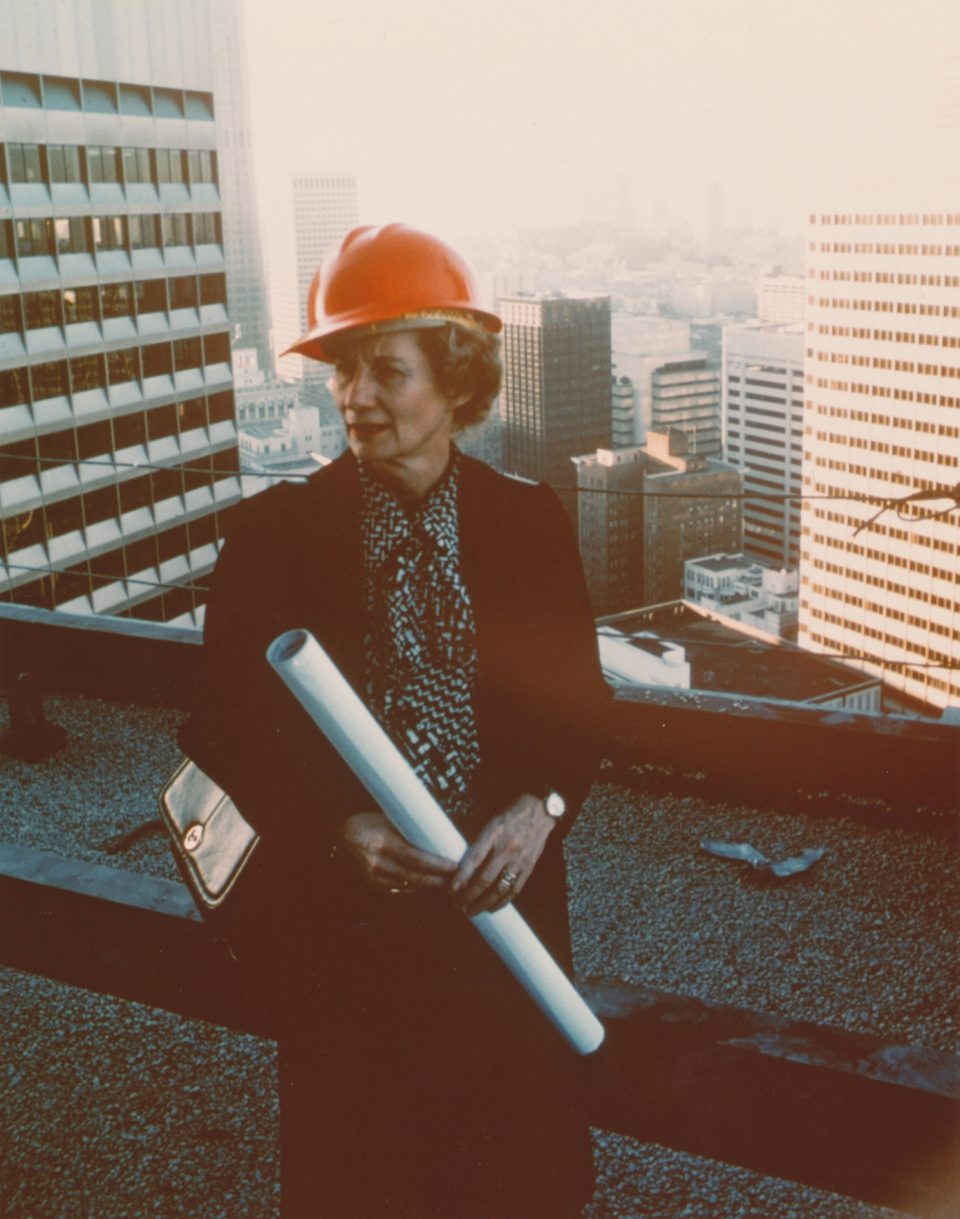
As part of our ongoing “Women in Architecture” series at Optima, we’re taking a look at another pioneering female figure: Beverly Willis. Willis’ career set an unprecedented tone in the industry – to quote her own website, she “accepted commissions for which there were no built precedents, adopted practices that did not become mainstream until decades later, and sought research-driven solutions unique to each project.” Let’s dive in below:
The Life of Beverly Willis
Beverly Willis was born on February 17, 1928, in Tulsa, Oklahoma. Her mother was a nurse and her father was an oil industry entrepreneur and agriculturist. The couple split during the Great Depression, at which point Willis was only six years old, and she wouldn’t see her father again for another several years. Left alone, Willis’ mother struggled to provide for her two children and they were placed in an orphanage. There, they worked for their keep and often fought back against the establishment, learning the lifelong lesson that “pushing boundaries was a way to survive.”
Willis saw her father again, for the last time over the summer when she was fifteen. She worked alongside him in his shop and earned a man’s wages, which she later used to pay for flying lessons. It was 1943, the middle of World War II, and with her ability to fly a single-engine propeller plane, Willis qualified for the Women’s Air Service.
After her time in the service, having learned many trades’ skills, Willis went off to study engineering at Oregon State University. Ultimately, however, she graduated with a Fine Arts degree from the University of Hawaii in 1954.
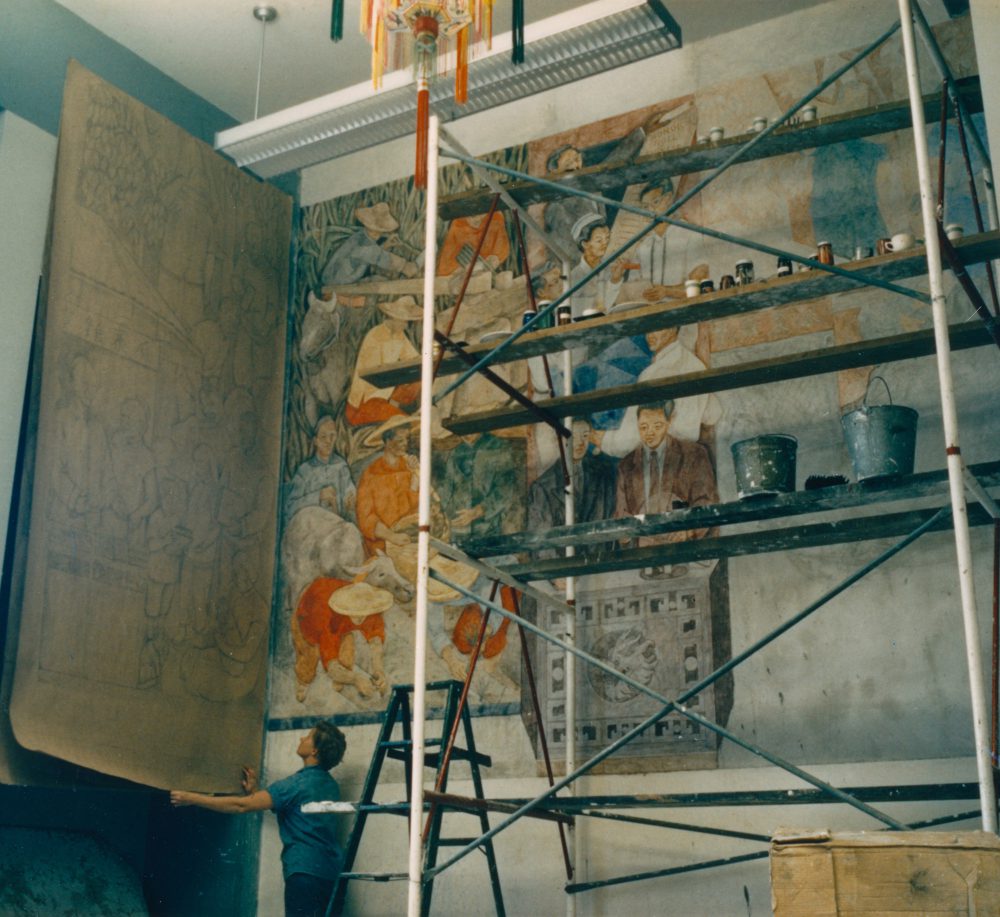
Beverly Willis at work on her fresco for the United Chinese Society, Honolulu, 1955. Beverly Willis Archive, Library of Congress Prints and Photographs Division Washington, D.C. 20540 USA (http://hdl.loc.gov/loc.pnp/pp.print).
Career and Accolades
Willis learned much from her art studies and mentors – including Gustav Ecke, a scholar of Chinese furniture, who introduced her to Asian art and architecture, and Jean Charlot, who exposed her to the history of European art and fresco painting. Armed with this knowledge, she founded her own studio, the Willis Atelier, in Waikiki, Hawaii. There, she continued her murals, fresco paintings and multimedia installations. One of her most notable projects during this period was her fresco work on the Shell Bar at the Hilton Hawaiin Village hotel, which also used an innovative sand cast mural panel technique she herself had pioneered.
In 1958, Willis moved to San Francisco where she opened her own design office and deepened her architectural prowess. She was successful in retail design in particular, but transitioned to residential design with her special program at the Robertson Residence. There, she created notably disability-friendly design far before disability guidelines such as the ADA ever existed.
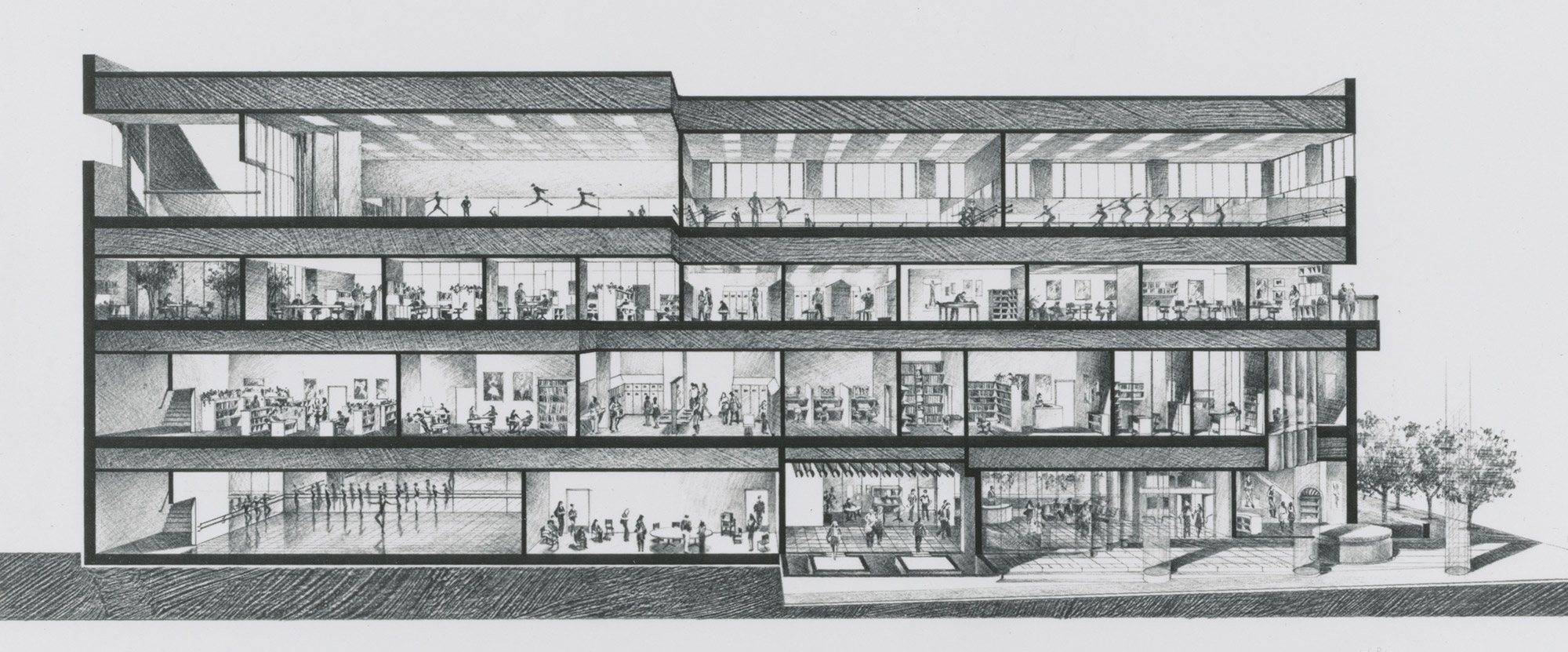
Beverly Willis & Associates, preliminary section showing uses for San Francisco Ballet Building, San Francisco, 1979. Beverly Willis Archive, Library of Congress Prints and Photographs Division Washington, D.C. 20540 USA (http://hdl.loc.gov/loc.pnp/pp.print).
Two other notable projects during this era included her renovation of the Union Street Stores from 1963 to 1965, which, according to The Architectural Forum, “some historians describe as an initial contribution to the advancement of the Modern adaptive re-use of historical buildings movement.” She also designed the San Francisco Ballet Building in 1973. It was the first building in the US specifically designed for a ballet company and school, and paved the way for many others like it to follow.
Willis was also famously one of the first to use a computerized approach to design. Her firm invented CARLA (Computerized Approach to Residential Land Analysis) in 1970, a program which was quickly adapted and used nationally. In 1997, the National Building Museum published her book, “Invisible Images– The Silent Language of Architecture.” Understanding that women were often excluded from the historical narrative of architecture, Willis also founded the Beverly Willis Architecture Foundation (BWAF) in 2002 with the goal of changing architecture culture through research and education.
Her extensive portfolio and accolades speak for themself. And lucky for us, today, Willis is 93 and her humanistic approach to design and innovative approaches continue to shape the architectural world.