Chicago Skyscraper History: The Monadnock Building

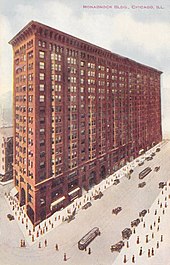
As part of our Chicago Skyscraper History series, we’re exploring some of the architectural feats that have defined Chicago, and buildings across the world. Located in Chicago’s South Loop, the Monadnock Building is a 16-story skyscraper, perhaps unassuming considering the height Chicago’s skyscrapers see today. But the Monadnock Building has an important, impactful story to tell.

Phase 1

Following the Depression of 1873-79, Chicago saw a notable building boom across residential and commercial spaces. The Monadnock was commissioned and envisioned as an expansive office space in the heart of the city, and was so large that it was built in two phases. The northern half was completed in 1891 and designed by Daniel Burnham and John Wellborn Root (of Burnham and Root). Consistent with other buildings of the time, the exterior walls consisted of layered bricks in the load-bearing tradition; however, it was unique in using cantilevered steel to support the undulating bay windows. Also unusual for the time was the lack of ornamentation and stripped-down facade. During the construction, Root tragically passed away, and Burnham’s time consumed by the World’s Columbian Exhibition, the rest of construction would rely on different leadership. 
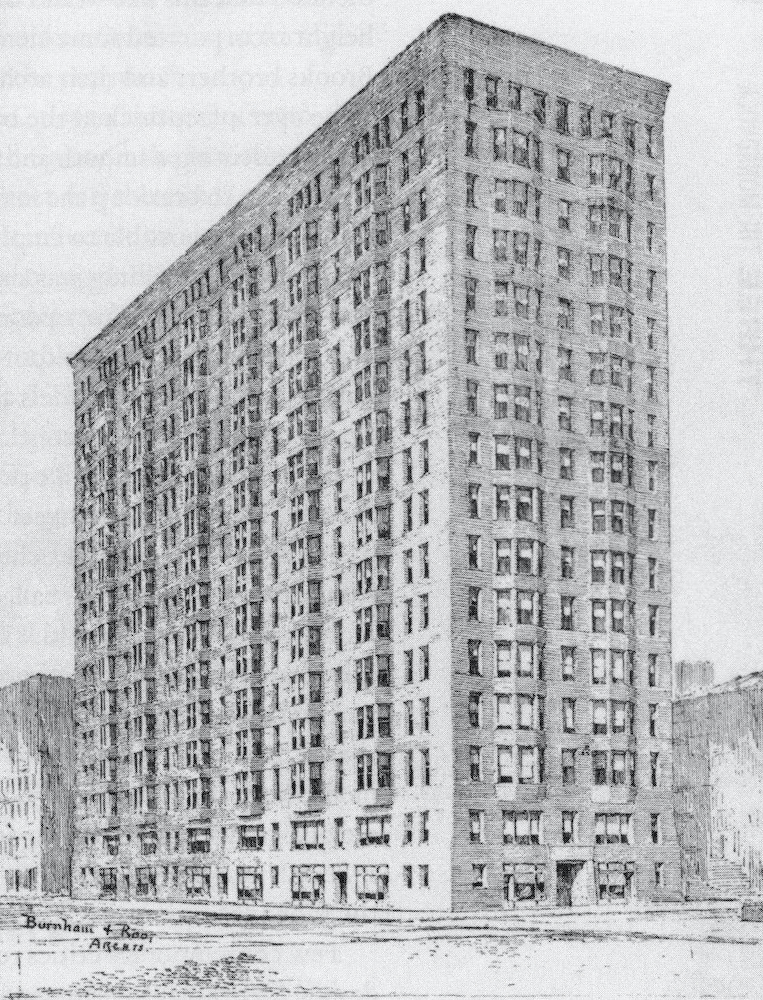
The Monadnock building

Phase 2

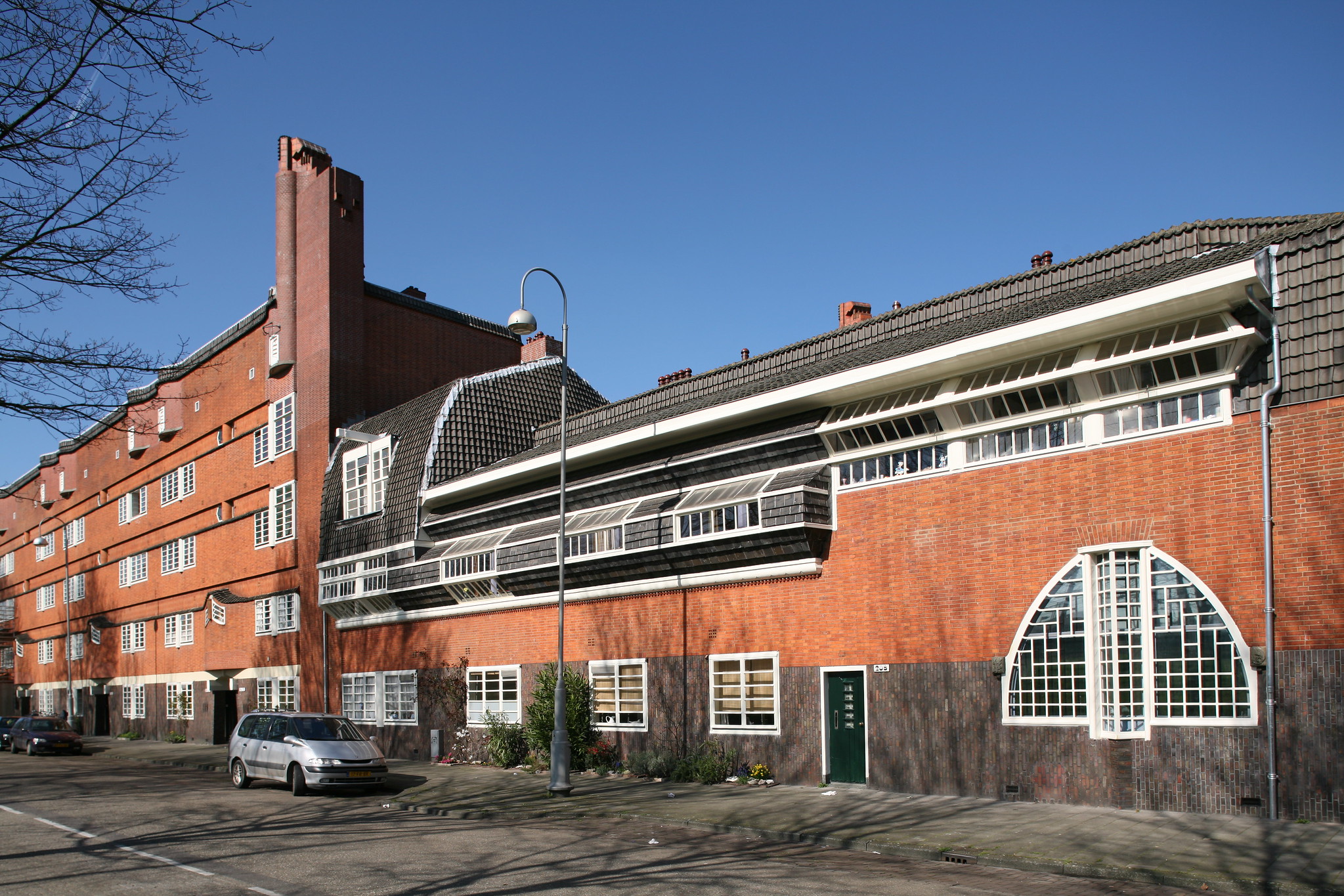
Holabird & Roche took over the design of the second phase just two years later, but the variations in approach are still apparent. With progress in structural engineering and design, the brick facade of the southern portion didn’t need to bear the load of the building. Instead, metal frames were installed to stabilize the building. There were also differences in style; while the northern half was absent of exterior ornamentation, the southern half is considered an early application of classical architectural principles. 
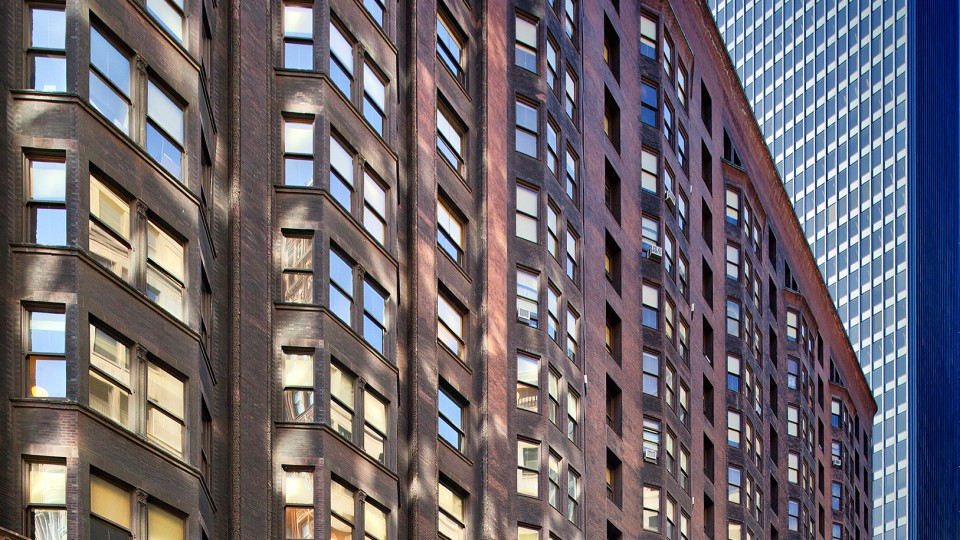
The Monadnock building

When it was completed, the Monadnock Building was the largest office building in the world, and catapulted business potential in Chicago’s South Loop. It captures the moment of change between load-bearing construction and skeleton frame construction. It also employed the first portal system of wind bracing in the country. Unlike many iconic structures of its time, the Monadnock is still standing today. It’s home to businesses and offices, it’s a popular destination for architectural tours and it’s a wonderful example of Chicago’s architectural legacy. 
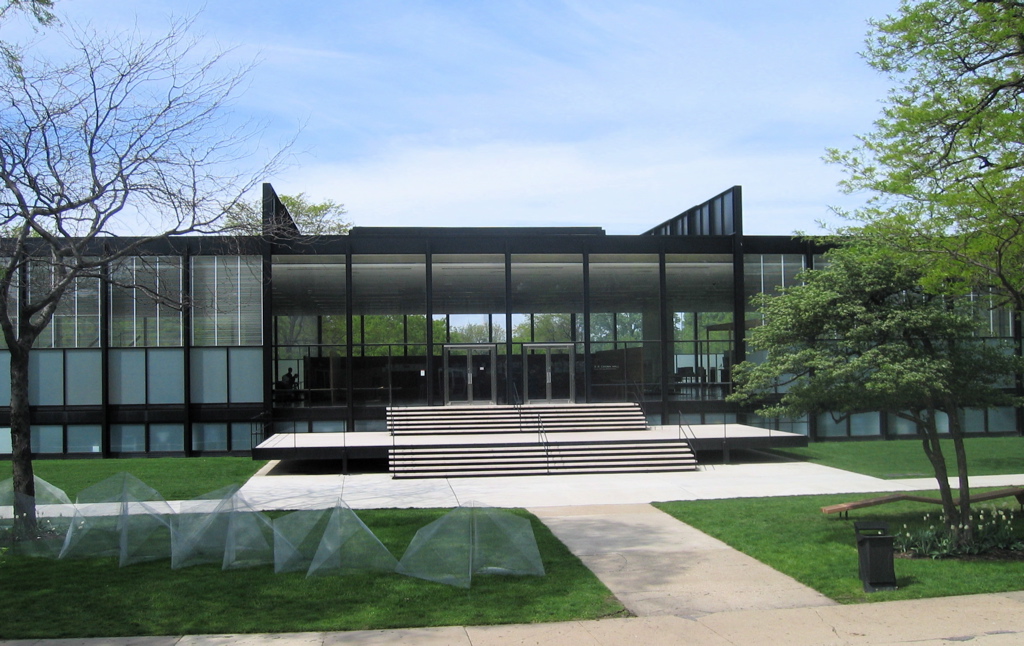
The Subsects of Modernist Architecture Part III

As part of our “Subsects of Modernist Architecture” series, we’re continuing to explore the many trickle-down pockets of Modernist design throughout the years. Picking back up where we last left off in Part II, European Modernism continued to spread globally and set the precedent for the next wave of architectural movements that emerged. Here’s what followed:

International Style

The International Style (sometimes also referred to as internationalism) emerged in the 1920s and 30s. Originated in post-World War I Holland, France and Germany, the style quickly caught on worldwide, eventually becoming the dominant architectural style in the 1970s. According to the Getty Research Institute, “the style is characterized by an emphasis on volume over mass, the use of lightweight, mass-produced, industrial materials, rejection of all ornament and colour, repetitive modular forms, and the use of flat surfaces, typically alternating with areas of glass.” 

Major figures in the International Style movement include Bauhaus Founder Walter Gropius, as well as Bauhaus Director Ludwig Mies van der Rohe and Le Corbusier. Both Gropius and Mies van der Rohe were instrumental in introducing the International Style to Chicago’s architecture — leaving a lasting impact on the city’s skyline that can still be seen and appreciated today.

Metabolism

Like many subsects of Modernist architecture, Metabolism emerged in response to the post-war period in Japan. First introduced during a Congrès Internationaux d’Architecture Moderne (International Congresses of Modern Architecture, or CIAM) meeting in 1959, the movement became fully-fledged just a year later when young architects Kiyonori Kikutake, Kisho Kurokawa and Fumihiko Maki released the Metabolism manifesto during the 1960 Tokyo World Design Conference.

The style was marked by its dynamic fusion of megastructures and organic biology. Metabolism was also heavily influenced by the Marxist philosophies of the time. The architects behind the movement envisioned a more flexible form of urban planning, one where modular towers could be easily installed. They even went so far as to propose vast cities that could float on the ocean, with these modular structures as their foundation. The most successful examples of Metabolism include the site of the 1970 World Exposition, designed by Kenzō Tange, and the Nagakin Capsule Tower, designed by Kisho Kurokawa.

Brutalism

Brutalism, also called Brutalist architecture or New Brutalism, emerged in the 1950s in the UK during post-war construction. The word Brutalism is derived from the Swedish phrase nybrutalism, as well as being associated with the French phrases béton brut (“raw concrete”) and art brut (“raw art”). It’s easy to see the connection: the style is characterized by monolithic forms, rigid geometric styles, and unusual shape, and commonly makes use of bare or raw materials being exposed in monolithic color palettes. 

Influenced by socialism, Brutalist architecture was often employed in the UK to create utilitarian, low-cost housing solutions or government buildings. Perhaps for this reason, the style received widespread criticism and was often regarded as “cold” or “soulless.”  Nevertheless, many Brutalist structures have left a strong impression on architecture today and remain the cornerstone of universities and public institutions worldwide. 

Stay tuned for more features on the subsects of Modernist architecture.

Furniture Design Spotlight: Ara Thorose

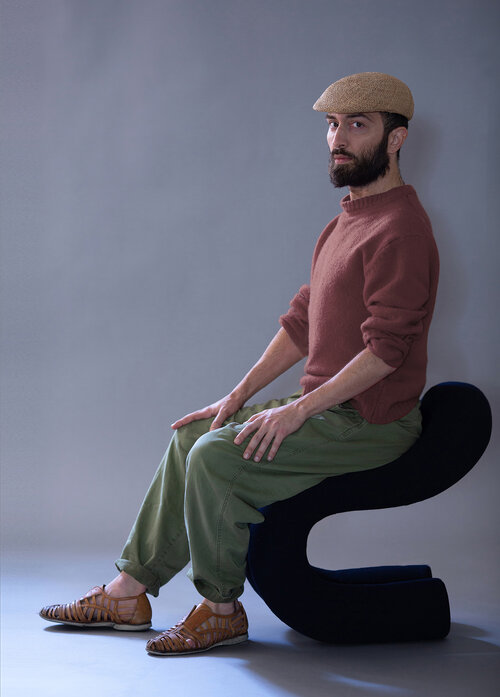
We love being part of a long legacy of people designing in the Modernist discipline. From architects, to sculptors and artists, to furniture designers, many creators continually innovate and find new ways of exploring form and function. One such innovator is Ara Thorose, a queer Armenian American artist and designer currently based out of Brooklyn, whose cylindrical-form furniture pieces are taking the design world by storm. 

Who Is Ara Thorose?

Ara Thorose is a fresh face on the scene. He earned an undergraduate degree from the University of California, Irvine, in Sociology, with a focus on gender and sexuality. Most recently, he went on to earn his MFA in 3D Design from Cranbrook Academy of Art. Cranbrook was founded as an experimental artists academy, and has since held national acclaim as the “incubator” of mid-century modernism in recent decades. Makers who emerge from the school are often agents of change who quickly make a name for themselves, and Thorose is no exception.

Just two years after earning his MFA, Thorose debuted his inaugural work, Tubular Group 01, under his brand Soft Limits, at the Architectural Digest Design Show in 2017. His work in the show garnered critical acclaim for its innovative form and experimentation in cylindrical forms. The design world continued to take notice of Thorose: he was named Up and Coming by Surface Magazine, and Soft Limits received Interior Design magazine’s 2019 Best of Year Award for Accent Seating.

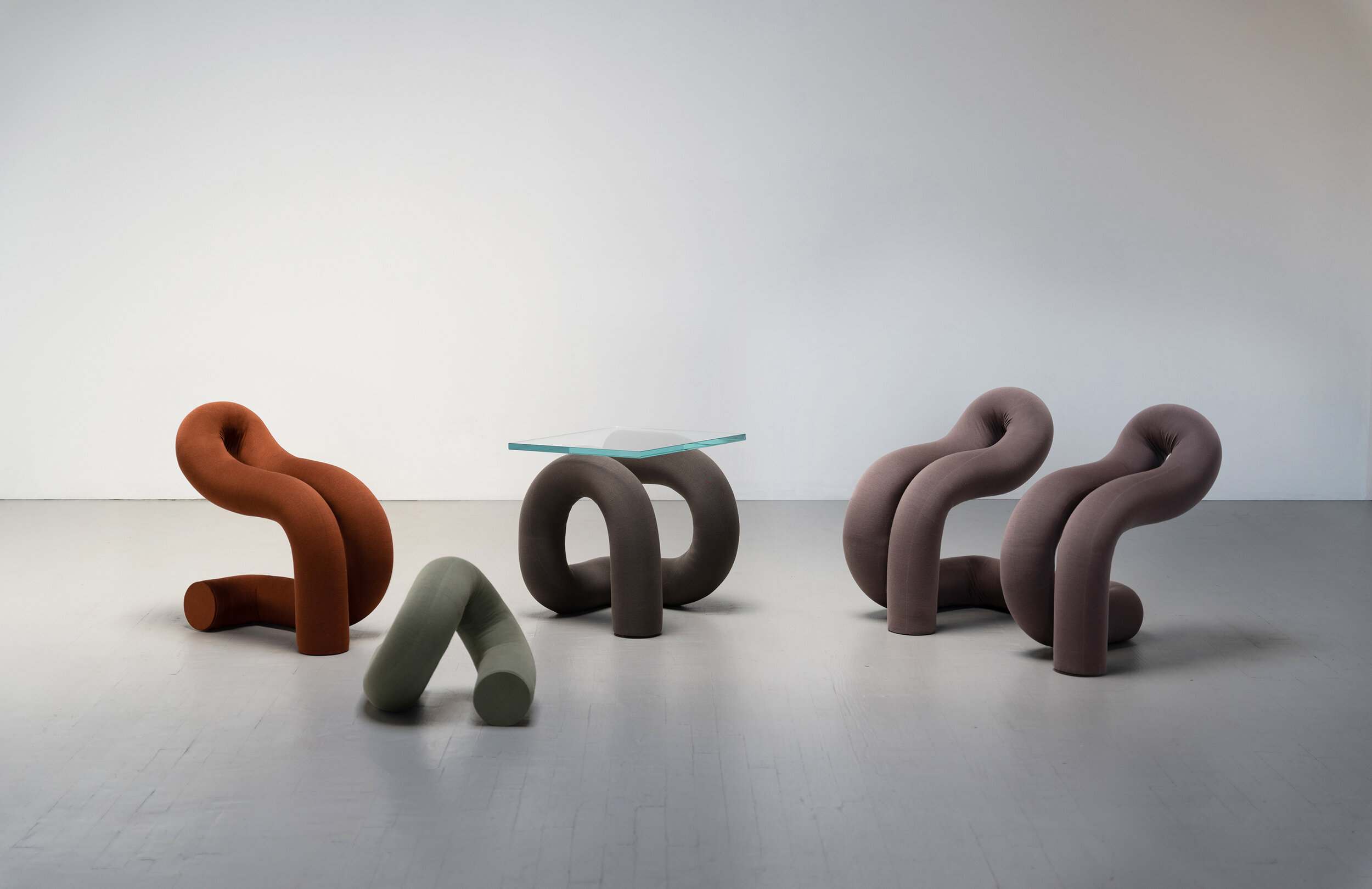
Ulu Group by Ara Thorose. Photography courtesy of Se Yoon Park, shot at Carvalho Park.

Innovative Design in Action

Under his brand, Soft Limits, Ara Thorose designed Ulu Group, a series of cylindrical-form furniture pieces “inspired by the idea of a circle trapped inside of a square.” Most notably, the cylinders in the collection got their circumference from Thorose’s own thigh circumference. Thorose describes this as a humanizing element, which serves to ground the abstract nature of his work. 

On his website, Thorose describes the theory behind Ulu Group, stating: “It represents conflict with no apparent solution. A circle is limitless, while a square is limited, so it’s inherently problematic. By adding a third dimension to it’s premise, there is potential for functional solutions. That’s the inspiration for this series. Each form is a circle traversing cube-like spaces held by furniture. Alternating between U-turns and L-turns, the cylinders push against the boundaries of familiar typologies.”

The collection includes four total pieces — Ulu Chair (orange), Ulu Duo, (mauve), Ulu Table (brown), and Un (green) — made of steel and foam and upholstered in wool and silk. Thorose begins his design process with hand building small-scale maquettes and then sketching his revisions in profile. 

Thorose is a deeply individual figure in the realm of furniture design today. He describes his perspective, stating: “I’m inspired by the notion of autonomy. I view the self as fluid and dynamic. My work explores the creative potential of self awareness without conforming to surroundings. Singular and succinct unto itself. An individual sense of being and order.” 

We look forward to seeing how this point of view develops and grows as Thorose continues to inspire the industry.

Frederick Law Olmsted and American Landscape

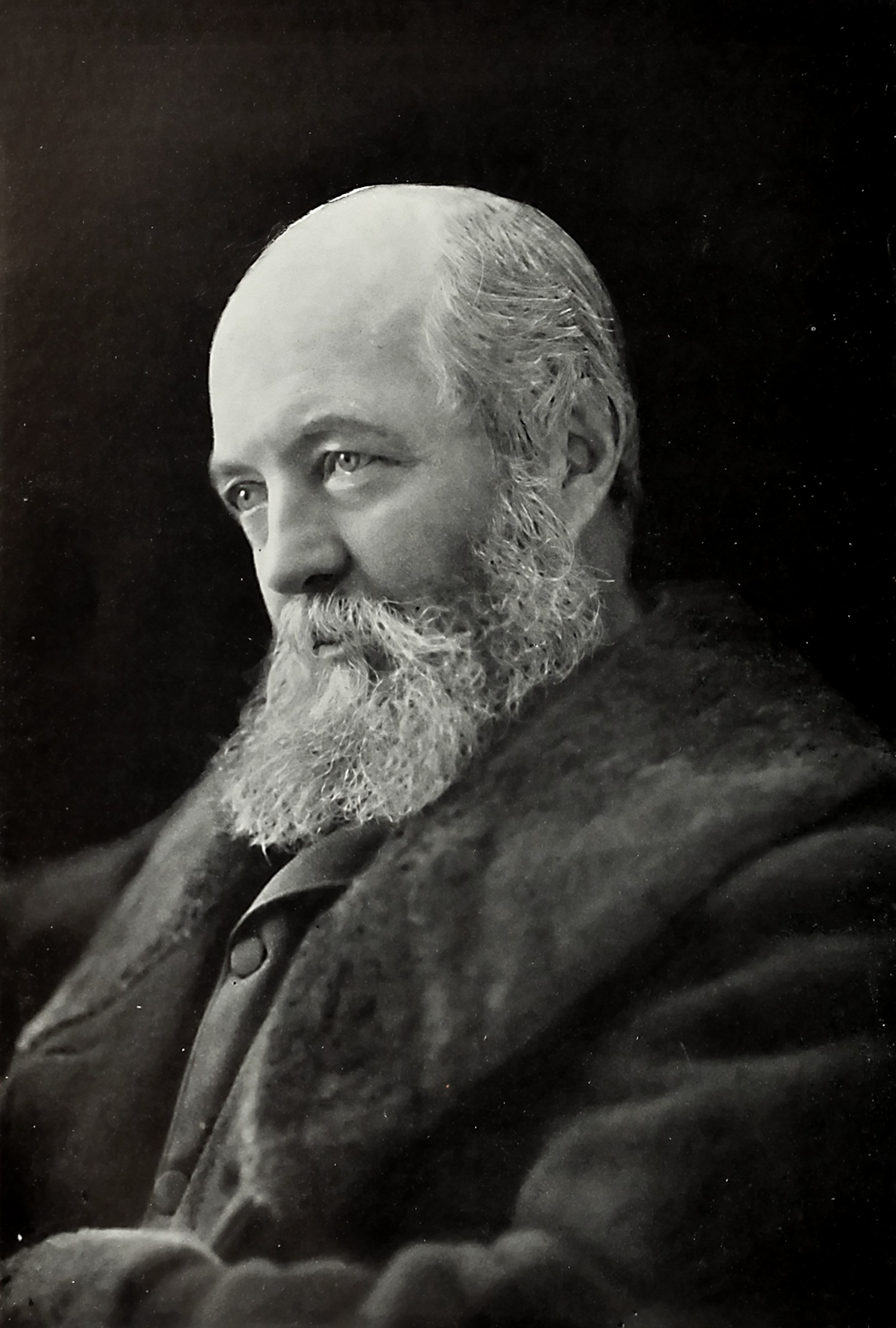
Even if you haven’t heard the name of Frederick Law Olmsted before, there’s no doubt you’ve come across his work. If you’ve ever visited Central Park or read about Chicago’s World’s Columbian Exposition of 1893, you’ve seen Olmsted’s fingerprints across urban design. Olmsted was an American landscape architect, journalist, social critic, and public administrator. Widely considered to be the father of American landscape architecture, Frederick Law Olmsted’s life and work were vastly impactful to cities across the world.

From a young age, Olmsted was immersed in greenery. He was born in Hartford, Connecticut in1822, and his father had his own interests in nature, people, and places. Olmsted lived on a farm for years before deciding on a career in journalism, which took him over to England. There, his visits to public gardens sparked inspiration that would form his later works. His profession in journalism would take a sudden turn in the 1850s, with the help of his mentor, Andrew Jackson Downing.

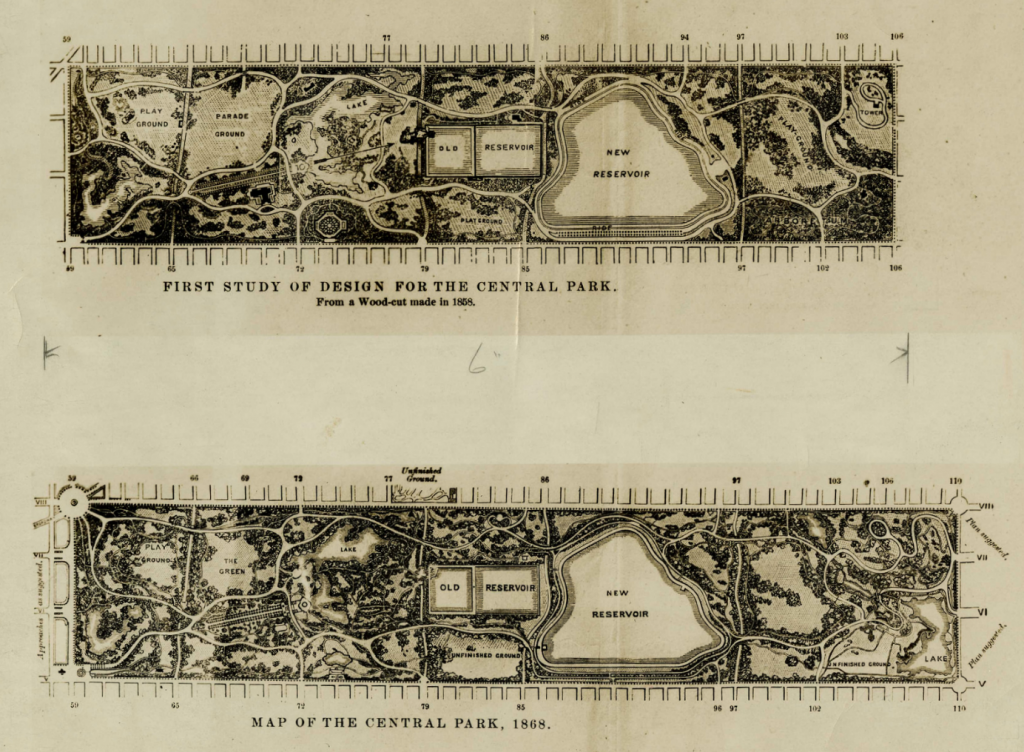
Downing was a landscape architect himself, and was one of the first to propose developing New York’s Central Park. He introduced Olmsted to English-born architect Calvert Vaux and their plans for the vast green space. Tragically Downing passed away, and Olmsted was left to fill his shoes in presenting their design. Prior to this, Olmsted had never created or executed a landscape design, but his theories and political contacts were invaluable. With the Central Park project won, Olmsted’s name began to explode across the industry.

Early designs for Central Park. Image courtesy of the National Park Service, Frederick Law Olmsted National Historic Site

Over the years, Olmsted worked on the designs for Prospect Park in New York City, Walnut Hill Park in New Britain, Connecticut, Cadwalader Park in Trenton, New Jersey and more. His reach extended into larger urban planning initiatives, such as the country’s first coordinated system of public parks and parkways in Buffalo, New York and the country’s oldest state park, the Niagara Reservation in Niagara Falls, New York. Olmsted also had a large impact on the city of Chicago; his design for Jackson Park, Washington Park and the Midway Plaisance are still in existence today. 

Frederick Law Olmsted’s legacy on American landscape and urban design is a lasting one, and his work a medium of art all its own. As his fellow Chicago planner colleague and friend, Daniel Burnham, once said, “an artist, he paints with lakes and wooded slopes; with lawns and banks and forest covered hills; with mountain sides and ocean views.”

An Inside Look at Siegel Sklarek Diamond

As part of our Women in Architecture series, we recently wrote a feature on pioneering architect, Norma Merrick Sklarek. Sklarek made waves when she co-founded her own architectural practice — the largest women-owned architectural firm in the country, and the first practice to be co-owned by an Black woman. That firm was Siegel Sklarek Diamond.

Siegel Sklarek Diamond

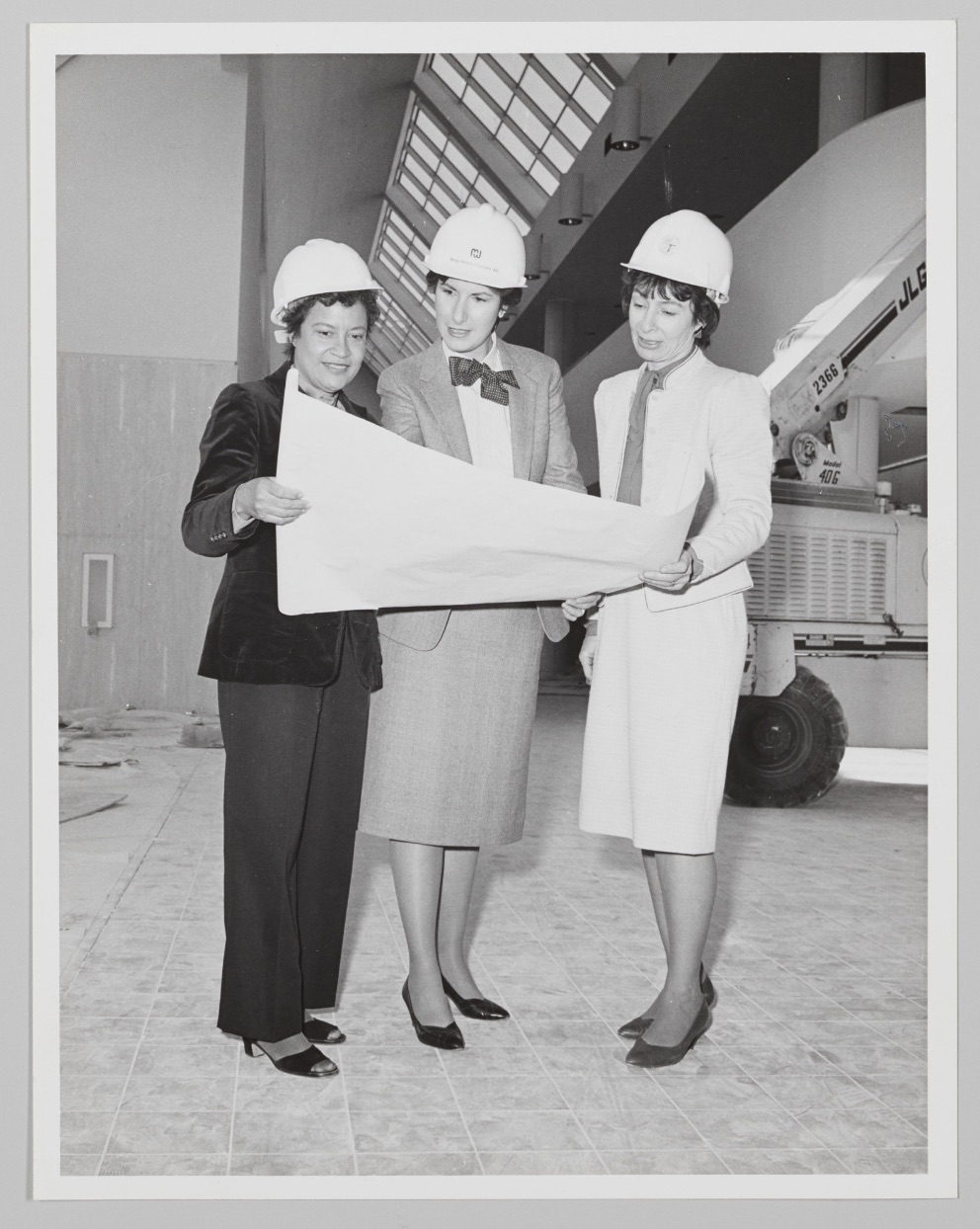
Siegel Sklarek Diamond was founded in Los Angeles in 1985 by three architects from whom the firm got its name: Margot Siegel, AIA, Norma Merrick Sklarek, AIA and Katherine Diamond, FAIA. Siegel had owned her own business for fourteen years prior, while Sklarek and Diamond both came from jobs working for large companies. 

The trio combined their unique skill sets to build a successful and impressive practice. Siegel took on the task of quality review and preparing working drawings; Sklarek brought her impressive project management abilities and keen architectural sense; Diamond took charge of the design, giving shape to simple ideas and ensuring clients’ needs were met. Overall, their collective style took inspiration from the Bauhaus style, consisting of largely unadorned Cubist structures, but with the three women’s own inventive twist.

According to a Los Angeles Times article published the year after their founding, Siegel Sklarek Diamond, had “a portfolio of nearly a dozen large projects in Southern California with a value of more than $25 million.” Their work covered a broad breadth and depth of categories, including educational facilities and community buildings, as well as commercial and industrial projects. Projects Siegel Sklarek Diamond took on include the Student Counseling and Resource Center (1988) and The Early Childhood Education Center (1989) at the University of California, Irvine and the Los Angeles Air Traffic Control Tower (completed in 1995), among others.

Control Tower at LAX. Credit: Moto “Club4AG” Miwa on Wikimedia Creative Commons, licensed under the Creative Commons Attribution 2.0 Generic license

In that same article, Diamond is quoted saying that the architecture profession at the time was “definitely an old-boys network,” Diamond said. “It’s definitely a very male-oriented profession, and I think that part (of the reason) is our clients, in order to have the money to hire an architect, tend to be older and more conservative.” As the largest women-owned architectural firm nationally at its time, and the first to be owned by a Black woman, Siegel Sklarek Diamond certainly turned that industry standard on its head and paved the way for many more influential women to follow.

The Subsects of Modernist Architecture Part II

A few weeks ago on our blog, we began exploring the subsects of Modernist architecture and covered the Bauhaus, De Stijl and Constructivism movements. Modernism took the world by storm at the time of its invention — reimagining everything from painting to furniture to the built environment. Over time, that impact has continued to evolve and morph into many different directions. Here’s just a few of those iterations:

Expressionism

Expressionism is the fourth subsect of Modernism to emerge in the discipline’s early years. This architectural style existed simultaneously with the Bauhaus style, but stood in stark contrast to its counterpart. While Bauhaus architecture emphasized clean, linear design, Expressionism was an outburst of artistic emotion, encouraging fragmentation and distortion to express extreme feelings. These feelings were borne from the political turmoil at the time, when the German Revolution of 1919 led many to a utopian outlook and a romantic socialist agenda. 

Functionalism 

As the name suggests, functionalism emphasizes one of the core traits of modernism: “form follows function.” The style, which emerged in Europe in the 1930s, touted that the design of a building should reflect its function and purpose. In the wake of World War I, this philosophy played its part in the larger desire to create a new and better world for people. This socialist and humanist philosophy was evident in many of the designs from this subsect of Modernism. 

Minimalism

Minimalism is another subsect of Modernist architecture that emerged mid-century. Inspired by its predecessors, the De Stijl and Bauhaus movements, Minimalism is perhaps one of the most recognizable Modernist styles. Distinguished by its straight-forward design, stripped of ornamentation and decoration, Minimalism drove design back to its bare essentials. The movement was inspired by the hustle and bustle of urban life as well as influenced by Japanese architecture. Figures such as Ludwig Mies van der Rohe popularized the design; it continued to evolve throughout the decades and can be seen in contemporary Modernist architecture today.

Stay tuned for more features on the many subsects of Modernist architecture.

Women in Architecture: Norma Merrick Sklarek

From well-known figures like Charlotte Perriand to lesser-known names like Eileen Gray, countless women have left their mark on the history of architecture. As part of our Women in Architecture series, today we’re taking a look at another pioneering figure: Norma Merrick Sklarek, a woman who paved the way for generations of African American woman architects to follow.

Norma Merrick Sklarek

Norma Merrick Sklarek was born on April 15, 1926, in Harlem, New York. Her parents were both immigrants from Trinidad; her father was a doctor and her mother was a seamstress. Sklarek grew up going to predominantly white schools, where she excelled in math, science and fine arts, encouraged by her father. In fact, he was the one who initially suggested she pursue a career in architecture. 

Sklarek pursued education at Barnard College for a prerequisite year before enrolling at the School of Architecture at Columbia University. Her experience was challenging, but nevertheless she persisted and went on to graduate in 1950 as one of two women and the only African American in her class.

Pacific Design Center
Pacific Design Center, Los Angeles. Credit: Kent Kanouse, Flickr Creative Commons CC BY-NC 2.0 Deed

Career and Work

After graduation, Sklarek faced both gender and racial discrimination in her job hunt and was rejected by nineteen firms. She told a newspaper in 2004, “They weren’t hiring women or African Americans, and I didn’t know which it was [working against me].” She took on a civil service job as a draftsperson for the city of NY, but refused to settle. While working for the city, she took the architectural licensing examination in 1954 and became the first licensed African American woman architect in the state of New York. (Later, this accomplishment would earn her the nickname “the Rose Parks of Architecture.)

As a single mother, Sklarek’s own mom watched her kids while she worked at a variety of architectural firms. The first cordoned her to menial tasks, such as designing bathrooms, while the second gave her more responsibility. At her third firm job, Sklarek noticed her supervisor was particularly scrutinous of her. She carpooled with a white male colleague who was consistently late to work; her boss critiqued Sklarek’s own punctuality but never made mention of the man’s. In response, Sklarek bought her own car. 

In 1959, she became the first African American woman member of the American Institute of Architects and in 1960, the first Black woman licensed as an architect in California. Sklarek rose in rank at her third architectural firm job, overseeing other staff and production processes. Like many women in the field, she remained cordoned to project manager positions, rather than becoming a project architect, despite her aptitude and keen sensibilities. 

She worked on prestigious projects such as the California Mart, Fox Plaza, Pacific Design Center, San Bernardino City Hall, and the U.S. Embassy in Tokyo. She also continued to accumulate accolades throughout her career, including becoming the first African American woman elected to the College of Fellows of the American Institute of Architects in 1980. Five years later in 1985, Sklarek co-founded Siegel Sklarek Diamond, the largest woman-owned architectural field in the country and became the first African American woman to co-own an architectural practice. Throughout her lifetime, she served on numerous boards, became an esteemed educator and prioritized mentoring other aspiring architects. She was proud to be a role model for others, acting as a figure that she herself had not had access to on her own journey.

Norma Merrick Sklarek was a pioneer of her own time, and remains today a figure of inspiration for anyone who faces discrimination and prejudice in their field. She proved that you are not what others believe you to be, and fought for others to be able to step into their full potential and leave their own marks on the architectural world.

Sculpture Spotlight: Sundance

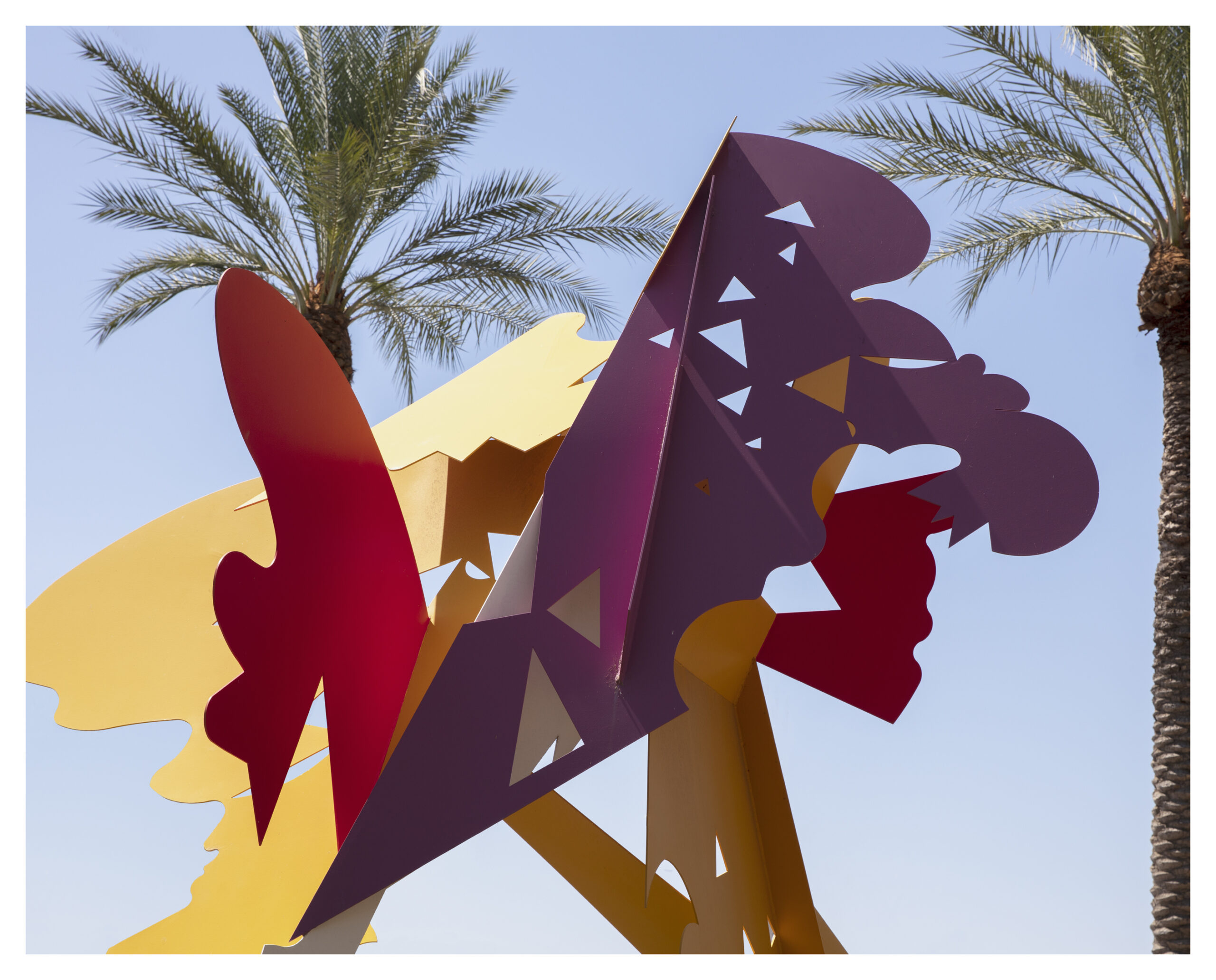
As devout fans of Modernism, at Optima we love to experiment with form and function. That’s how Optima Co-Founder David Hovey Sr. got into sculpture. Combining his love of art with his interest in materials, David Hovey Sr. began manipulating steel to create striking sculptural pieces that play to Optima’s architectural spaces. Today, we’re examining one of his sculptures: Sundance.

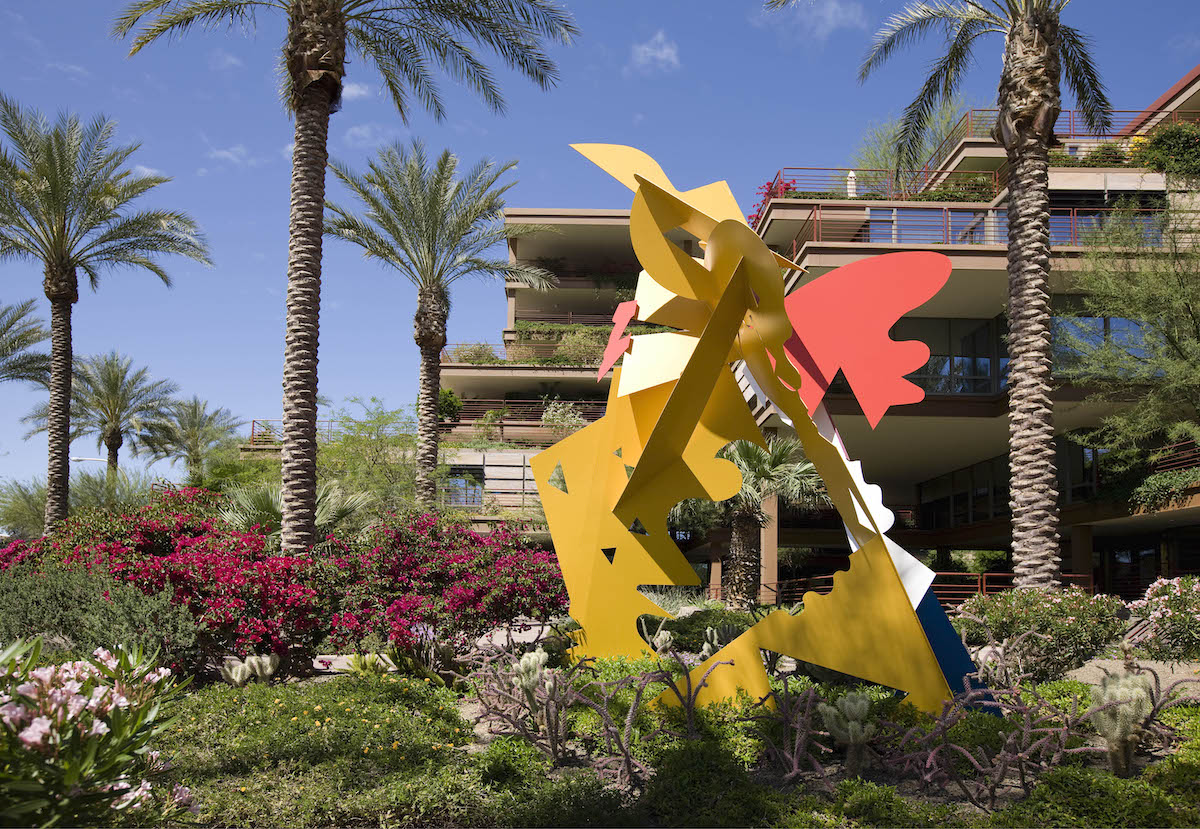
While many of our sculptures manifest in a variety of sizes and colors, Sundance is notable because of its goliath frame. Standing at thirteen feet tall, this impressive structure and its bold angles make a lasting first impression. The piece expresses the nature of the thin steel plate from which it was fabricated, showcasing structural potential with three-dimensional, dynamic components and an inviting sense of openness.

It’s no coincidence that Sundance is nestled in the landscaped courtyard of Optima Camelview Village. Sundance is built literally and metaphorically to connect to the ground, giving the sculpture context and roots within space. Meanwhile, being swathed in vibrant primary hues, the sculpture plays complement to the property’s red architectural details and the vibrant color palette displayed throughout the gardens.

Another perspective of Sundance sculpture

Whether we’re experimenting with form, function, size or color — at Optima we love to playfully implement sculpture as yet another component of thoughtful design.

The Subsects of Modernist Architecture, Part I

As a pioneering approach to architecture, the Modernist discipline took the creative world by storm. It’s only natural that the discipline has since evolved and morphed to mean many different things to many different people around the world, from Japanese Modernists to the Bauhaus School in Germany and beyond. In celebration of this, we’re taking a closer look at just a few of the many nuanced subsects of Modernist architecture. 

Bauhaus School of Design. Credit: Lannguyen138 on Wikimedia Commons, licensed under the Creative Commons Attribution-Share Alike 4.0 International license

Bauhaus

The Bauhaus Modernist architectural style emerged from the Bauhaus School, founded by Walter Gropius, in Germany over a century ago. The school operated from 1919-1933. Gropius formed the Bauhaus in response to the rise of industrialism, emphasizing the importance of craftsmanship and human-centric design. The school united fine arts and craftsmanship to create one strong point of view, a style marked by its eschewment of the ornamental in favor of a sharp focus on geometric and abstract form, function and aesthetic. The simple schema of Bauhaus architecture was intended to be easily mass produced — and indeed, the style was packaged and spread globally, inspiring Modernist architecture as we know it today.

De Stijl

Emerging at the same time period as the Bauhuas, De Stijl (Dutch for “The Style) originated in the Netherlands in 1917 and is said to have peaked between its inception and 1933. The style emerged post World War I as a utopian means of social and spiritual redemption that took advantage of art and its transformative impact. De Stijl applied to both painting and architecture, proposing ultimate simplicity and abstraction through the use of stark and straight horizontal and vertical lines and rectangular forms. Though considered more prominent in architecture than painting, the movement is considered to be led by Piet Mondrian. Pioneers in the movement considered it the perfect fusion of form and function, yielding what they considered the ultimate style.

Constructivism

While the Bauhaus style and De Stijl were emerging in Eastern Europe, Constructivism entered the scene in the Soviet Union in the 1920s. Constructivism was in part inspired by the Bauhaus, as well as by Russian Futurism. The style is characterized by its blend of modern technology and engineering methods, and marked deeply by the socio-political ethos of Communism. Constructivism combined existing Modernist principles like minimal and geometric design with a more experimental lens. This sense of experimental play, combined with its Futurism influences, resulted in intriguing and abstract structures. Though the style fell out of favor only a decade later, its influence can be seen in later movements such as Brutalism — but more on that later.

Stay tuned for more features on the numerous subsects of Modernist architecture.

Auguste Rodin and the Beginnings of Modern Sculpture

Our appreciation for Modernism extends past architecture into all mediums of creative thought, including our love for sculpture (and our own sculpture at Optima). Sculpture has long been an artistic expression across decades and culture, but the beginnings of Modern sculpture sparked with renowned visionary, Auguste Rodin. 

Setting the Stage

By the 20th century, sculpture practices in Europe largely revolved around Neoclassical and Romantic ideals. Contour and clarity defined figures, and artists were inspired by the art and culture of classical Greek antiquity. Often sculptors even portrayed their subjects in Roman costume instead of contemporary clothing. But the world of sculpture would see dramatic change at the 1900 Paris Exposition, when Auguste Rodin would use the world’s fair to unveil a new way of thinking when it came to sculpted form. 

Auguste Rodin
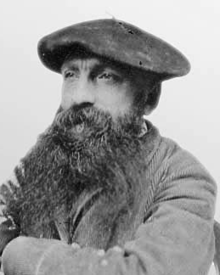
Auguste Rodin. Credit: public domain.

Auguste Rodin 

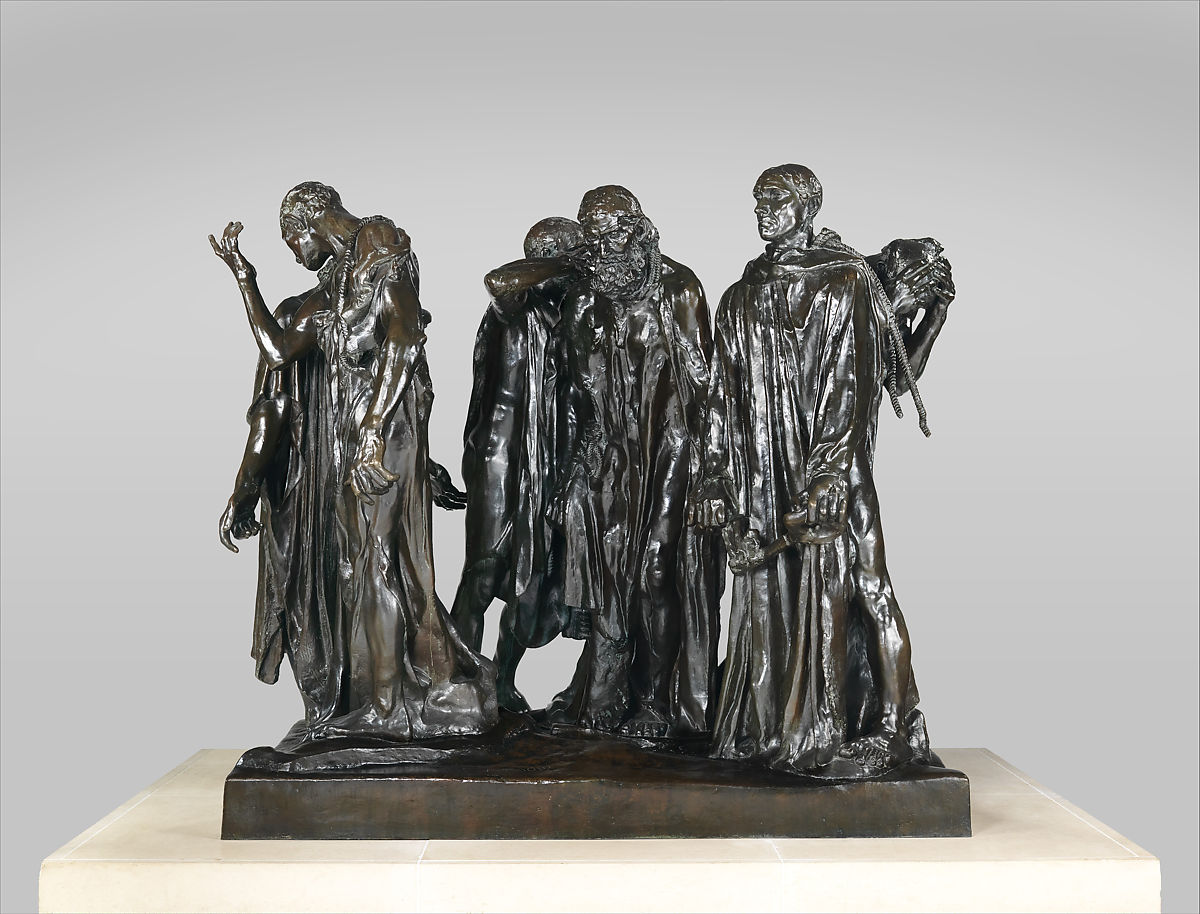
Rodin came from a working-class family in Paris and throughout his turbulent youth, taught himself to draw and paint. Eventually, he learned the trade of ornamental design and sculpture, but by the 1890s, had grown exhausted of the style. Rodin was a naturalist, more concerned with character and emotion than he was with tradition, idealism or decorative beauty. His work emphasized detailed, textured surfaces and the juxtaposition of light and shadow, a style that was met with criticism initially. At the Paris Exposition, Rodin showcased a series of pieces that would turn an entire industry upside down at the turn of the century.

Burghers of Calais by Auguste Rodin, which displayed at the 1900 Paris Exposition. Image courtesy of The Metropolitan Museum of Art

Modern Sculpture

Modernist styles that followed Rodin’s debut included Art Nouveau, Cubism, De Stijl, Dadaism, Surrealism, Futurism, among many others. It seemed that once the creative floodgates were open, artists ran with the possibilities of bending form past the boundaries of traditional realism. Especially since the 1950s, Modernist trends in sculpture have become increasingly more flexible to include new materials, abstractions and approaches. And we’re thankful they’ve made such progress; it’s allowed our own expressions of form to flourish over the years, and contribute beautiful, unique sculpted pieces to our Optima communities. 

person name goes here

Maintenance Supervisor

Glencoe, IL


    Acceptable file types: *.pdf | *.txt | *.doc, max-size: 2Mb