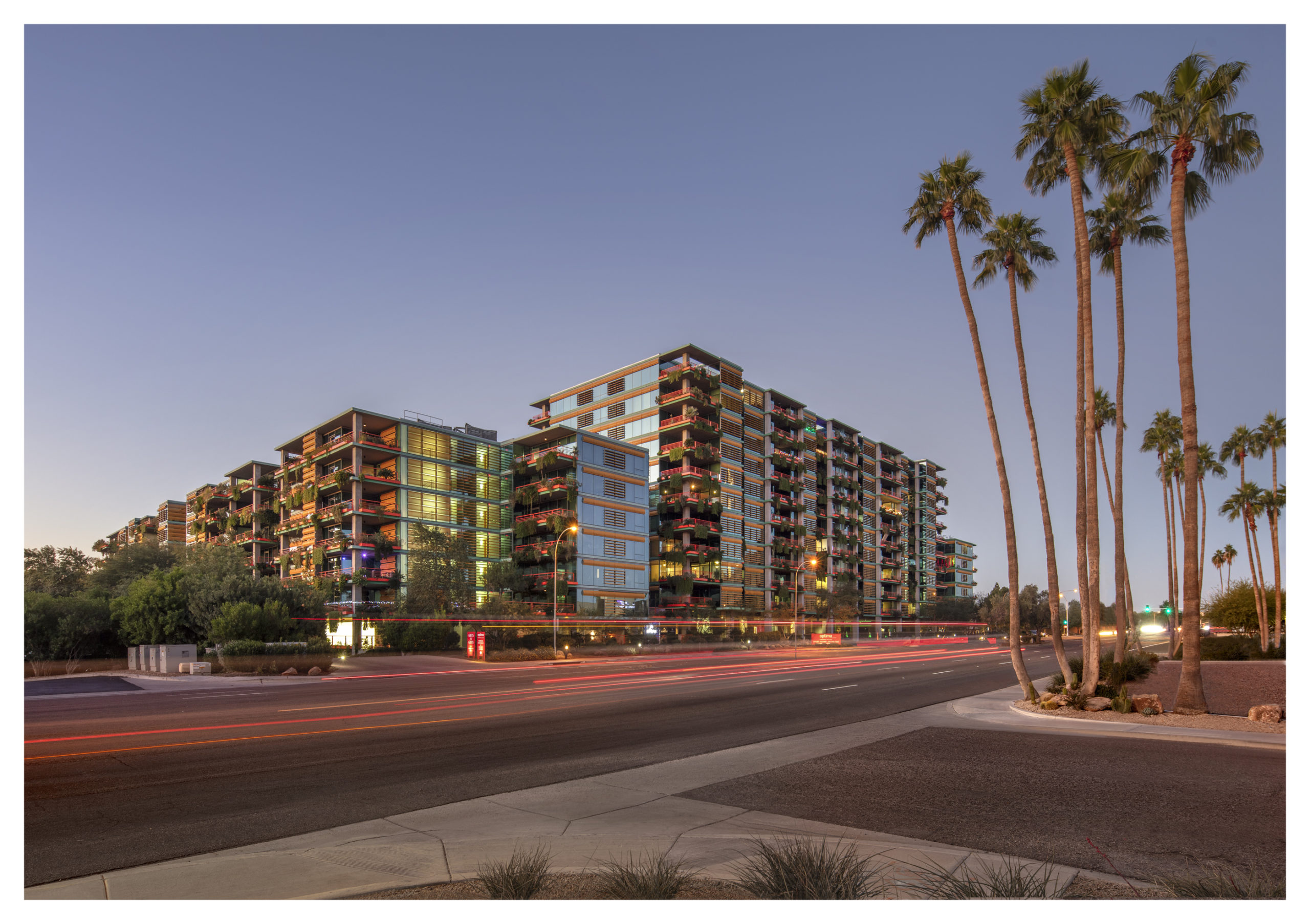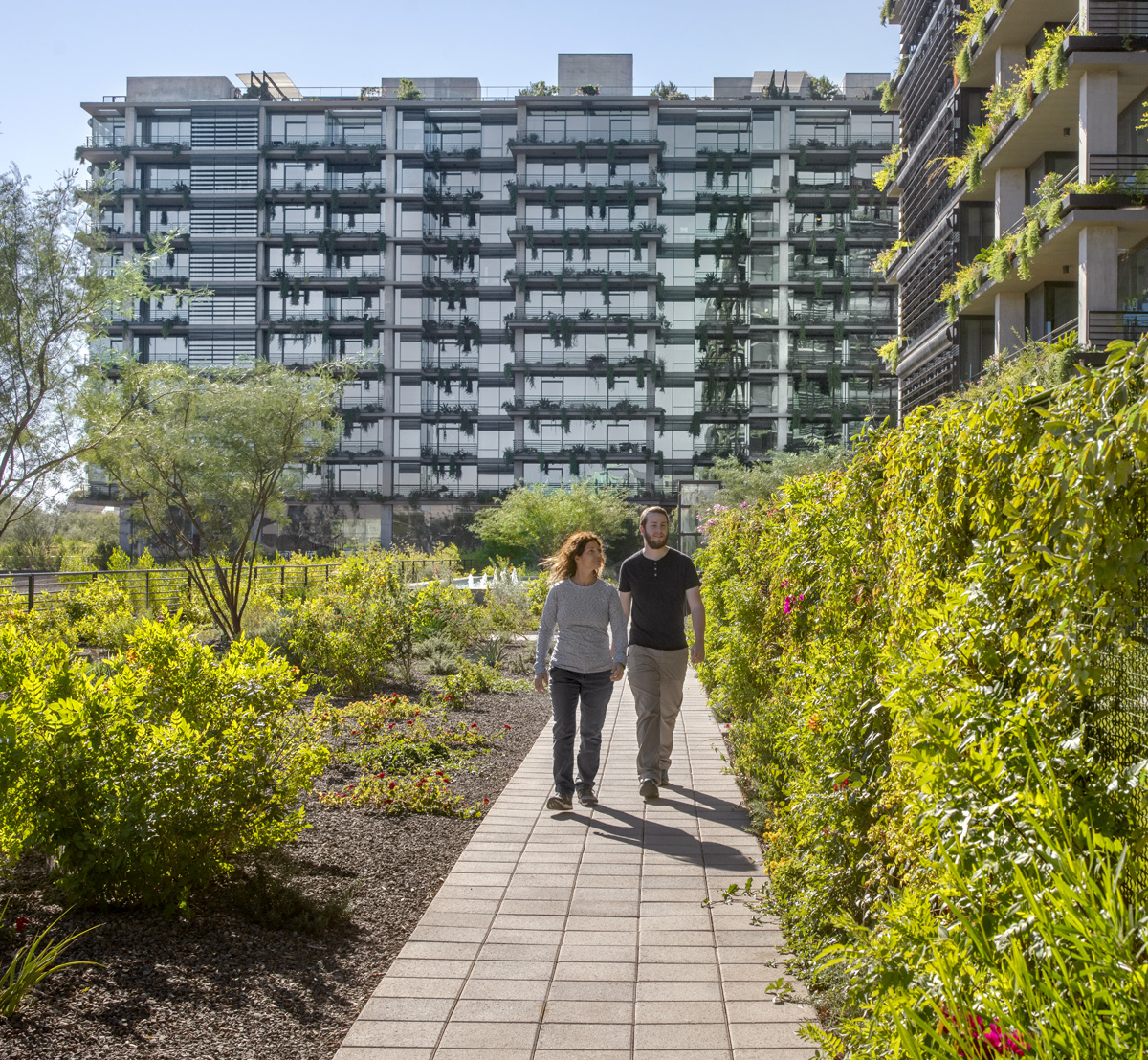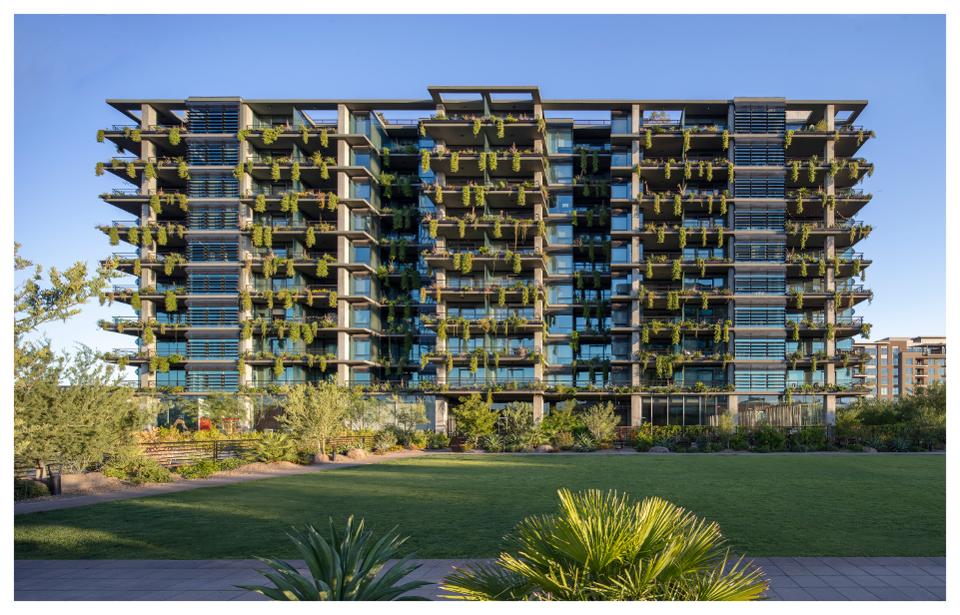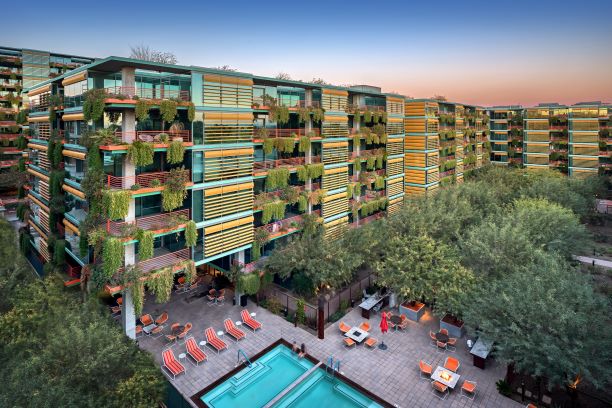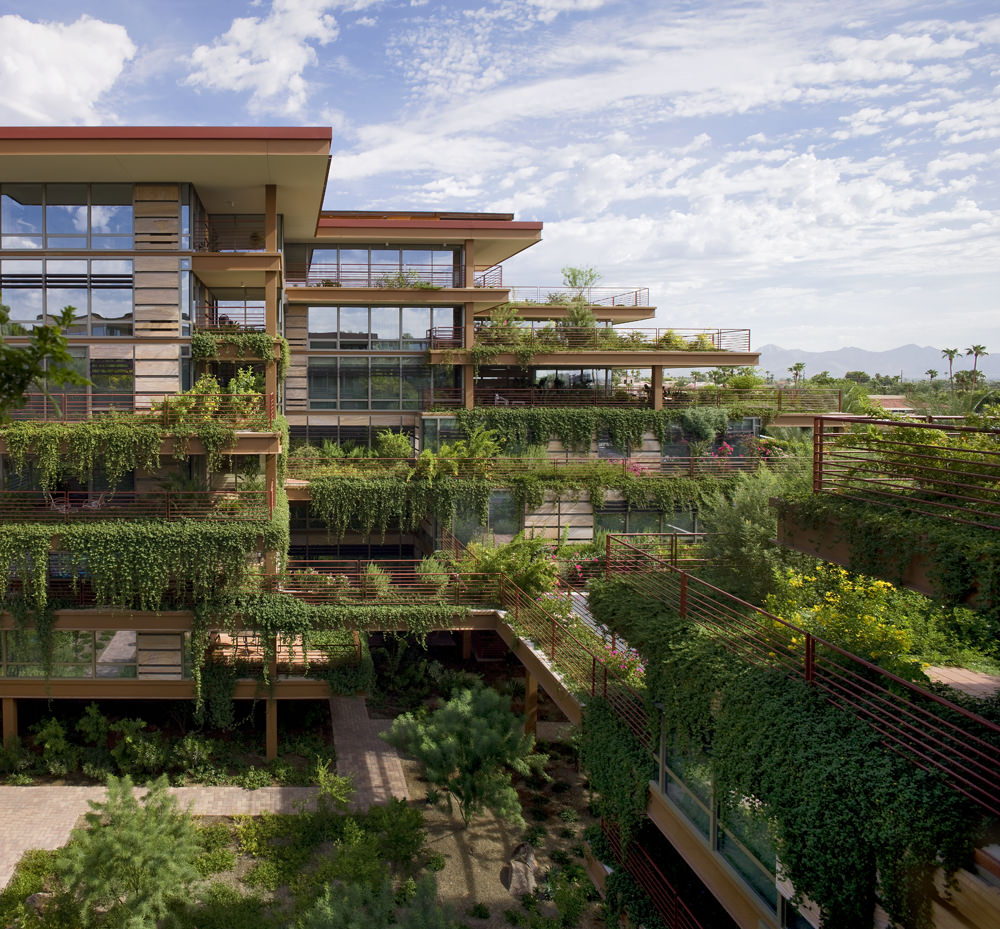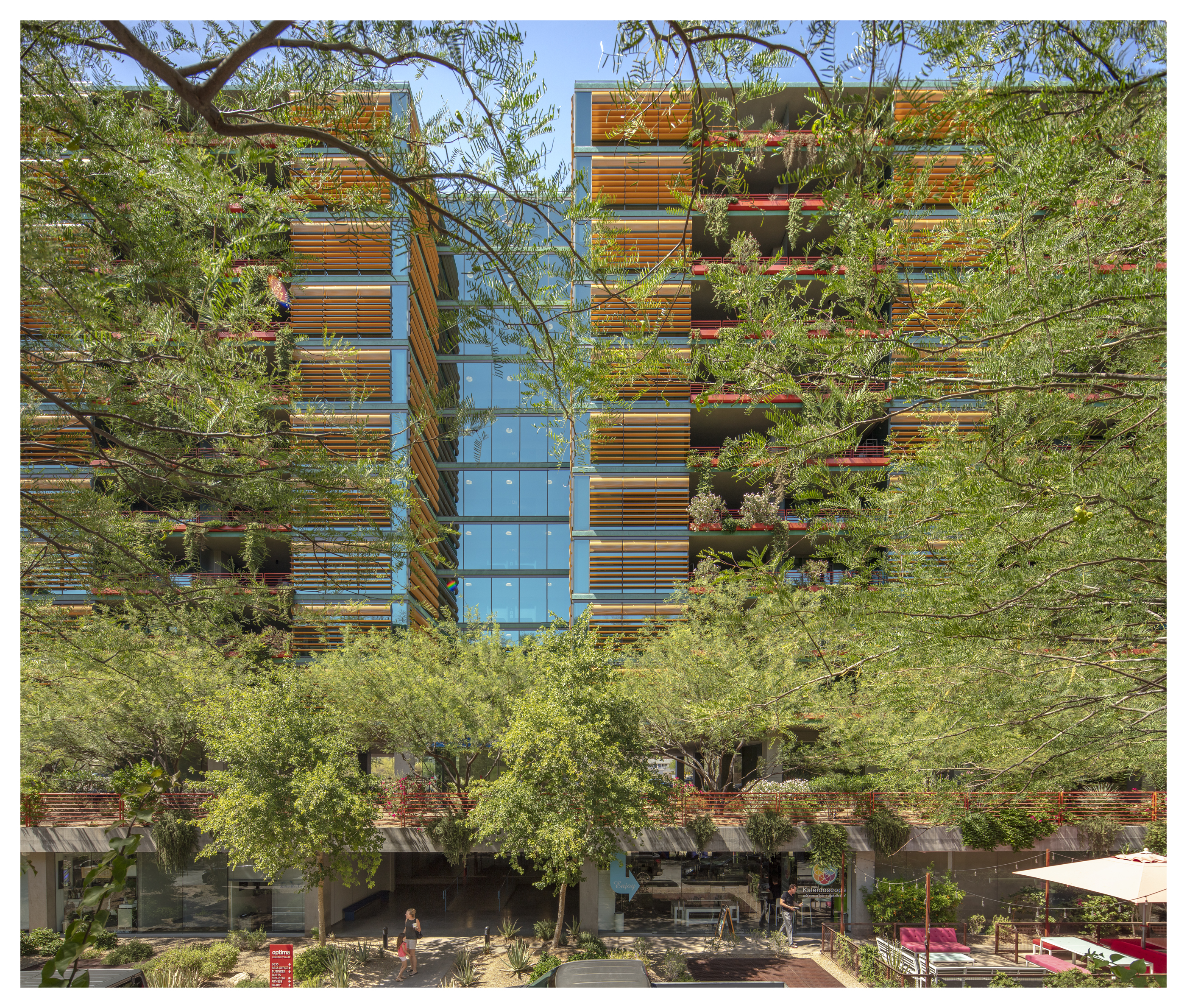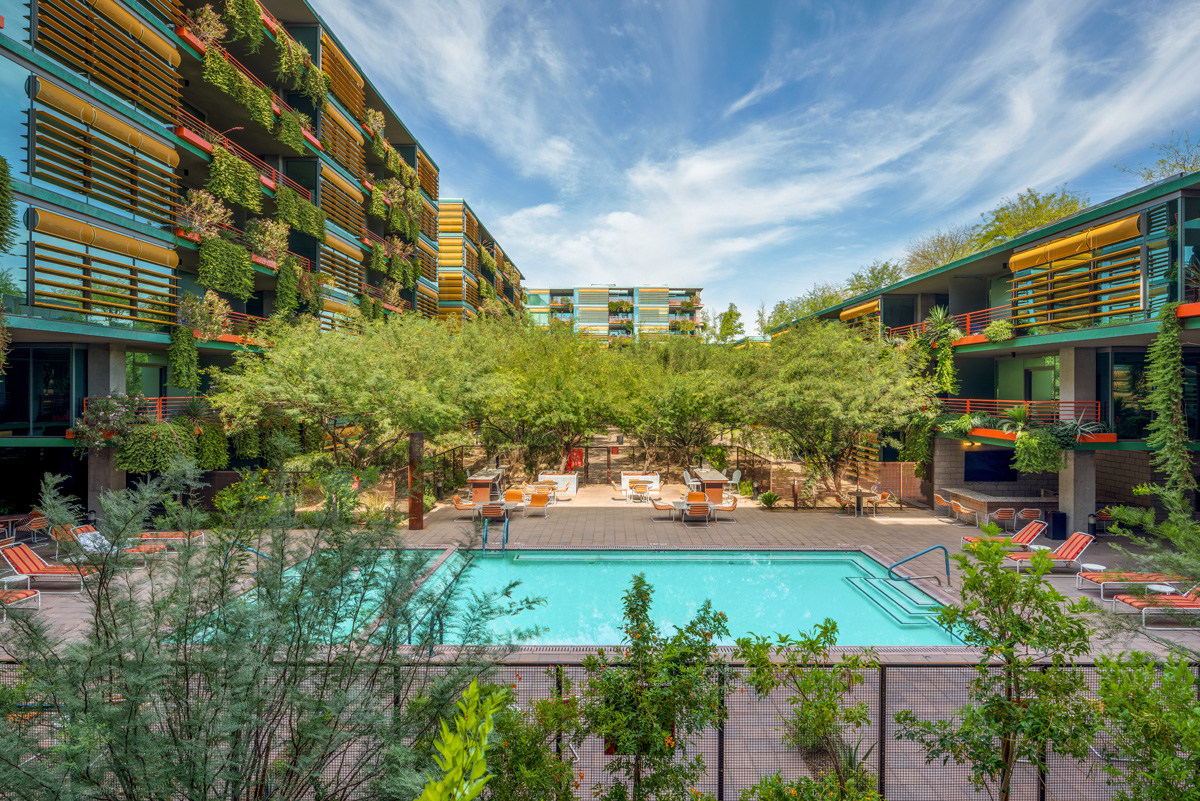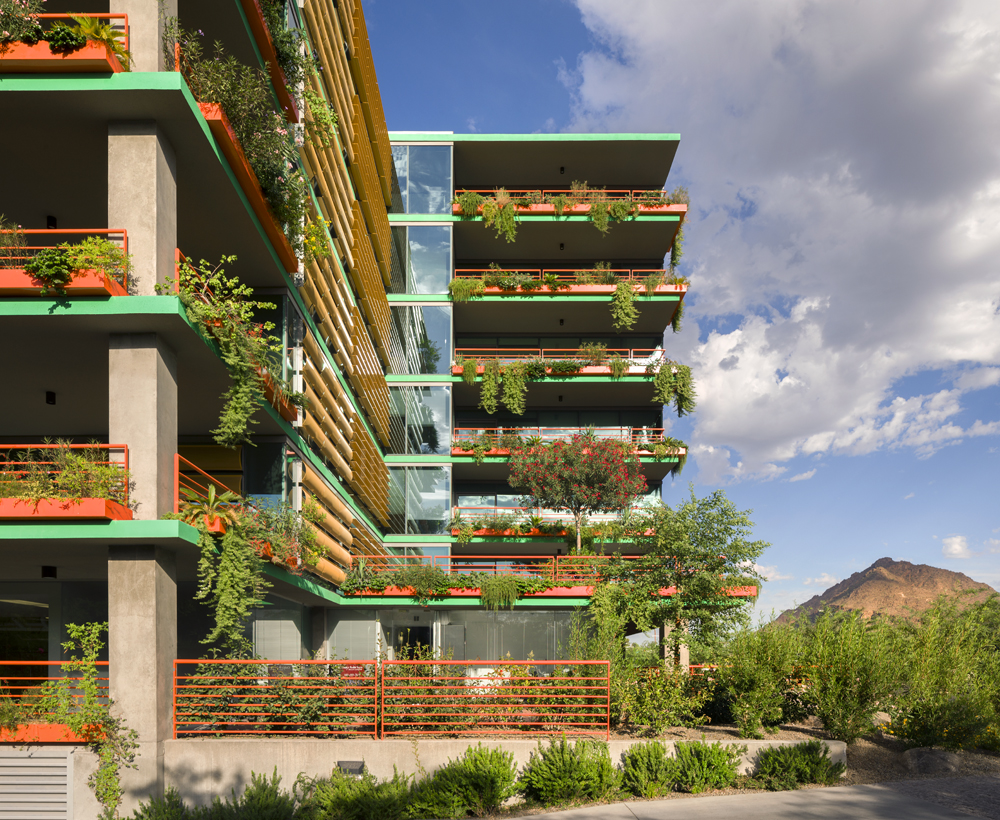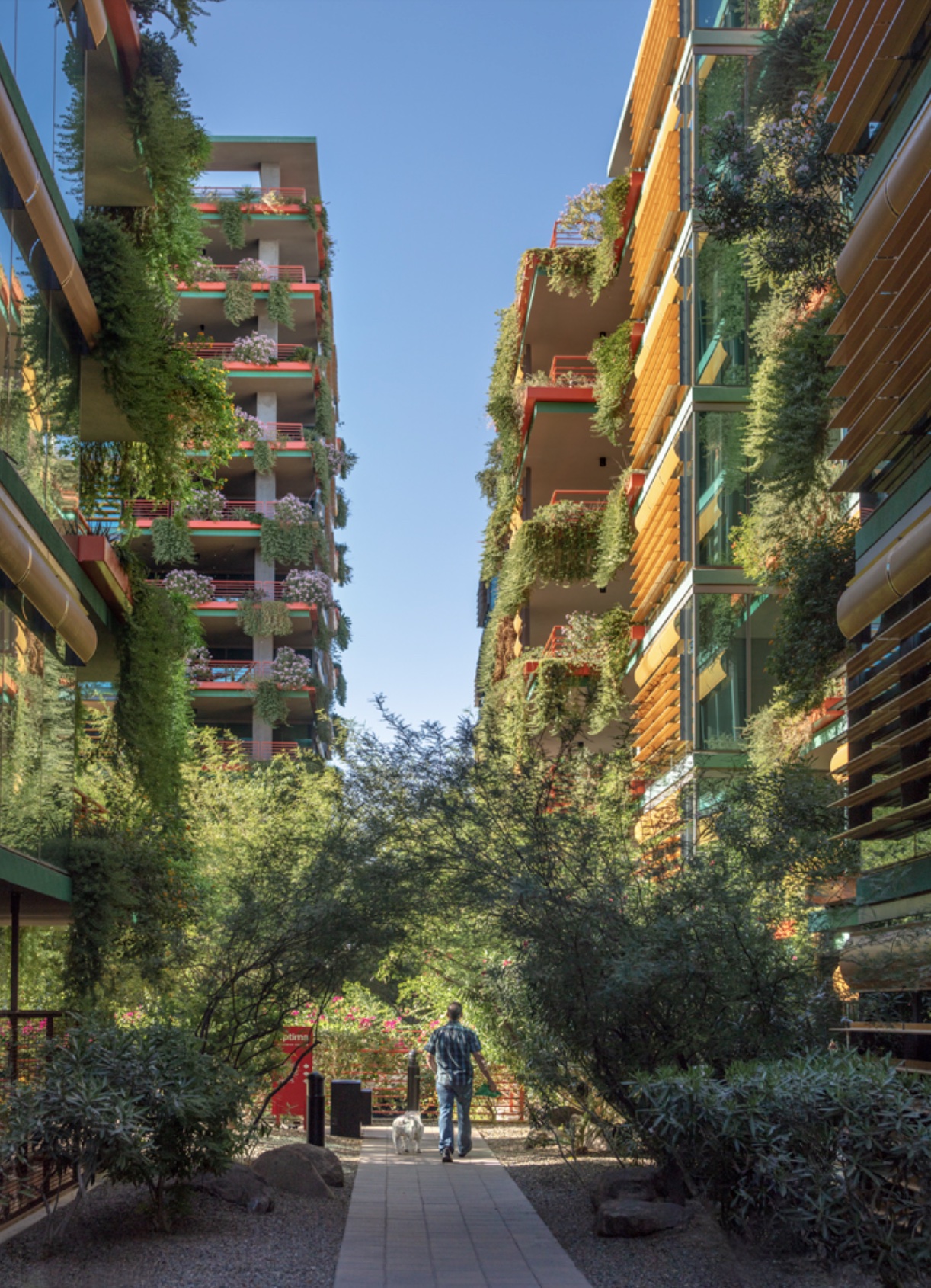
Optima Sonoran Village, an apartment complex in Scottsdale, Arizona, received one of 19 “Champions of Sustainability” awards from utility company Salt River Project in 2022, the Scottsdale Independent reported.
For nine years, SRP has used this award to recognize local businesses and organizations that have worked with the utility provider on eco-friendly projects and solutions, the company’s website explains.
Optima Sonoran Village was one of three businesses honored for “Building Communities for Electric Vehicles,” along with apartment brand Acero and home builder Lennar.
According to SRP, this category is for “homebuilders and multifamily developers who build homes or communities to be electric vehicle (EV) ready — complete with pre-wired electrical outlets to support Level 2 chargers or on-property charging stations for residents.”
The Scottsdale Independent reports that the 19 businesses named by SRP received their awards in a ceremony held at the Hyatt Regency Scottsdale Resort. “The event underscores SRP’s 2035 Sustainability Goals related to energy efficiency, demand response, transportation electrification, and electric technologies initiatives,” SRP said in its press release.
Jim Pratt, SRP’s associate general manager of customer operations & chief customer executive, also spoke in support of the award winners’ efforts. “We are thankful to the winners for being valued partners. Their strong commitment to energy efficiency and sustainability is driving meaningful change and demonstrates what’s possible when we work together to keep the [San Tan] Valley and all of Arizona growing and thriving for generations to come,” he said, as reported in the SRP release.
City of Los Angeles civil servant Dan Caroselli took to Twitter to praise Optima Sonoran Village’s design, though he did wonder about the project’s affordability and sustainability. “I have to admit they look really cool and I was surprised by them since basically nothing else looks remotely like this in Phoenix,” he said, and noted that “Everything is plants! Plants! Plants!”
Twitter user Sukrit Ganesh (@SukritGanesh) agreed. “At first I thought this was AI-generated, then I Googled it up. If only more apartment complexes [were] designed like this!”
Read more on The Cool Down
Visit Optima Sonoran Village for more details