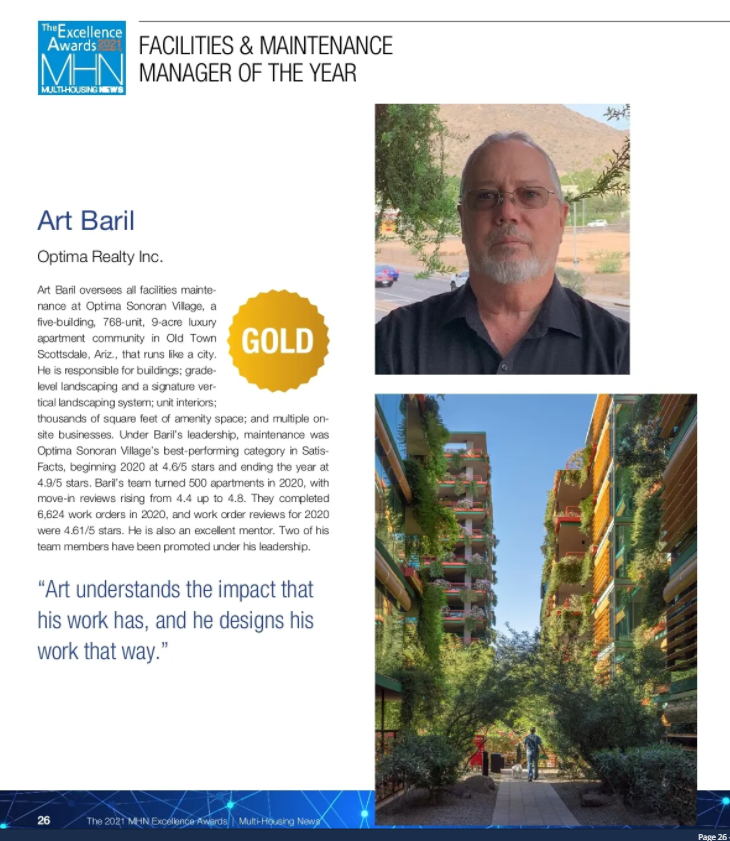
Community: Optima Sonoran Village
Scottsdale Architects’ Creations Win Top Honors
Optima Kierland Center and Optima Sonoran Village received top honors this year by being recognized as the top multi-housing developments by the American Architecture Awards.
The American Architecture Awards are the country’s highest public recognition for architectural design excellence given by a non-commercial, non-trade affiliated public arts, culture and educational institution — and a big deal to Optima and its president and principal architect, David Hovey Jr., of Scottsdale.
Not only is the award an honor for Hovey, but it is also a testament to the architectural efforts of Hovey and his father, David Sr.
“My father and I work very closely together on all of our projects and work together on every detail with our team,” Hovey Jr. said. “Both developments share the same principal philosophy to create sustainable architecture with an open park-like setting, pedestrian shaded courtyards and lush landscaping.”
Though the two buildings are alike in construction, the two have differentiating features.
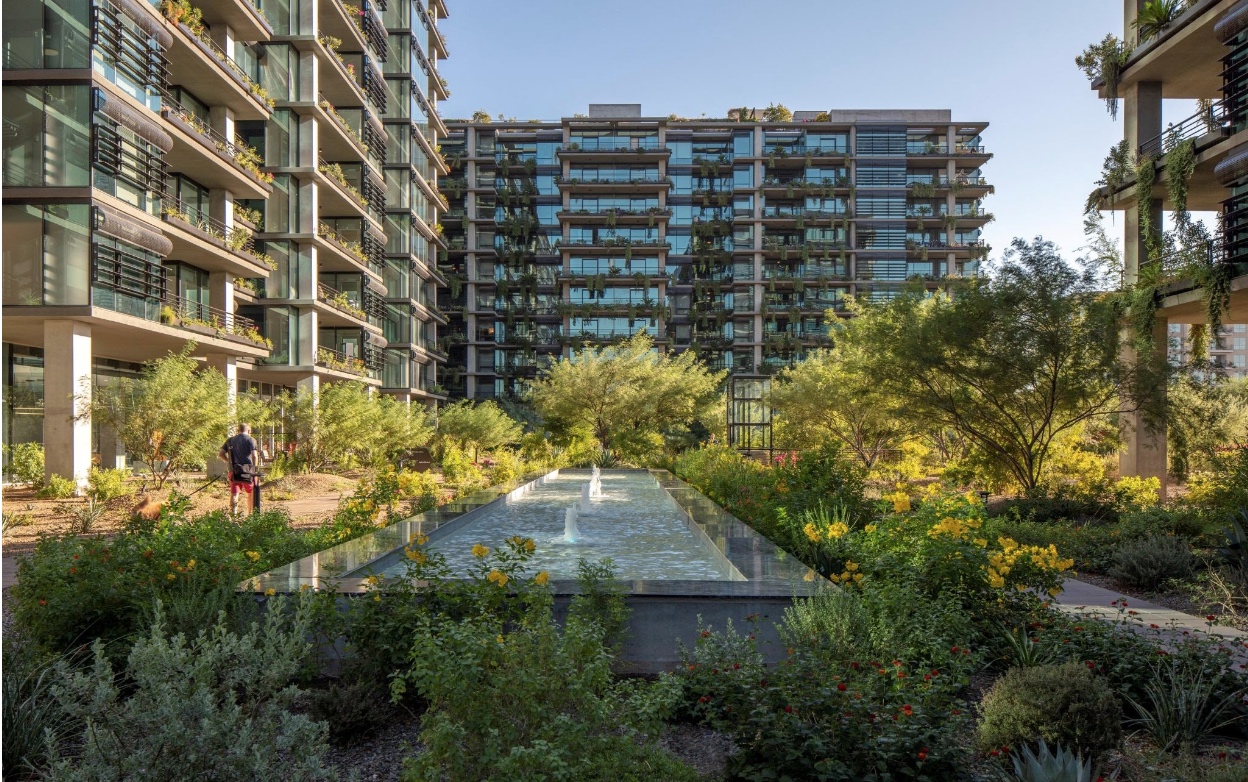
“For Optima Sonoran Village, we focused on a design concept that celebrated how the native desert plants bloom and it’s been great to see how the building relates to the plants that were chosen for this project’s vertical landscaping system,” Hovey said.
“Every month there is a different plant on property in bloom and it changes the entire feel of the project.”
The Kierland complex, on the other hand, uses the nearby complexes to its advantage.
“For Kierland, the design concept was to create an open grade level plan that was heavily landscaped and evolve our vertical landscape system,” Hovey said.
“It was a great opportunity to provide luxury apartments and condominiums directly across the street from the world class Kierland Commons and Scottsdale Quarter open pedestrian friendly shopping and entertainment districts.”
Despite these differences, Hovey and his father ensured that there were distinct similarities between their masterpieces.
“Both sites are roughly 70 percent open space at grade-level and though each looks quite different from the other, the buildings share a common architectural language of undulating elevations, expressed concrete structures with large, cantilevered corners, expansive decks and open space, and our signature Optima vertical landscaping system.”
Master Class in Service: 10 Ways to Spur Renewals
In today’s apartment marketplace, where rents and occupancy are at historically high levels, quality customer service is proving to be the differentiator.
Of the many consequences of contending with the pandemic, one of the most visible has been a groundswell in expressions of frustration. From air travel to dining to work and school, the list of grievances runs long, and rental housing residents are no different, from the perception that maintenance takes too long to coffee machines running dry.
One of the biggest complaints has been the difficulty of working from a small apartment, according to buzz at the National Multifamily Housing Council’s (NMHC) 2022 annual meeting, says attendee Mary Cook, founder of Chicago-based Mary Cook Associates (MCA), a commercial interior design firm. “Two years ago, 20 percent might have worked from home and now 45 percent do a few days each week,” Cook says. “They get upset if staff is making noise blowing leaves or cutting a lawn.”
Property managers have complaints and frustrations, too, facing a shrunken labor pool and disrupted supply chains. Despite the apartment industry experiencing historically strong occupancy levels, managers are not taking the high numbers for granted. If COVID-19 has brought home any message, it’s that situations change—fast.
Many are listening closely to residents, taking notes about leading causes of dismay and sources of joy, developing creative solutions to increase net referrals. The strategies that seem to make the biggest difference are good customer service and value. Some companies, like Chicago-based Optima Inc., a developer and property manager that created 2,135 units in Illinois and Arizona, has trademarked its Optimized Service, the equivalent of an in-home concierge, to make clear it prioritizes service.
As rent prices climb, quality service becomes more critical. The following are 10 ways to achieve it.
Read more on National Apartments Association
Top Tips from Multifamily Leasing Professionals
When the COVID-19 pandemic forced multifamily leasing offices around the country to suddenly close their doors and move most of their operations online, leasing professionals and their management companies or owner/operators stepped up to the challenge. They embraced new technology, in many cases for the first time, and found ways to create connections with prospects while still focusing on the best ways to market their properties.
The panelists include:
- Devin Dowling, head of leasing, The Apartments at Bonnie Ridge, Baltimore, Westminster Management
- Rebecca Fox, senior leasing manager, Morgan Properties
- Isabella Horne, assistant community manager, Brea Wendell Falls, Wendell, N.C., Bell Partners
- Conny Matos, general manager, Gio Midtown, Miami, Bozzuto Management Co.
- Ivonne McNeese, property manager at The Marq, Virginia Beach, Va., and former leasing agent at Red Knot at Edinburgh, Chesapeake, Va., The Breeden Co.
- Heather Sims, senior leasing professional, Optima Sonoran Village, Scottsdale, Ariz., Optima Realty Inc.
What were some challenges faced when the pandemic began and how did you overcome them to continue marketing your property or properties?
Dowling: Once Westminster added virtual touring and showed us how to do a shared screen, we could actually do a tour with somebody, a virtual tour with side-by-side screens, so it did make them feel like they were right here with us. That helped tremendously. The very first year doing virtual tours, occupancy jumped from 93 to 97 percent, in the middle of the pandemic.
Fox: Prior to the pandemic, we primarily sent photos and online brochures along with the occasional use of FaceTime. We’ve added the use of Microsoft Teams, Zoom and Matterport tours. By using these tools, we are able to continue to personalize our online touring so that prospective renters can feel like they are physically with us without leaving the comfort of their homes. We also digitized our online brochure to include links to the community, video, photos, Matterport, floor plans and online leasing.
Horne: The pandemic allowed us to be proactive in implementing technology innovations that are still in use companywide. Some of these innovations include self-guided tours, virtual tours and enhanced videography. We’ve also learned that people like to have information at their fingertips and in real time. We introduced two AI formats—Meet Elise and Better Bot, allowing our prospects and residents to have access to immediate communications and information.
Matos: (Gio Midtown opened in 2020 just as the pandemic began.) Building rapport was essential in getting to know our customers and understanding their needs. We had folks coming from out of state due to the pandemic or for work who had some concerns not knowing the area and also leasing sight unseen.
The tour tool we use does allow live tour sessions so it’s pre-recorded but you can do it live and take customers through that journey. We were inviting them for a cup of coffee even if it was virtually. “Grab your favorite drink, let’s have a seat and walk through this floorplan you’re interested in.”
What are some examples of thinking outside the box when marketing to potential renters?
Fox: Add personal touches to their tour. Are they bringing a pet with them? Have dog or cat bowls and toys and say the pet’s name during the tour. Is their child really into Peppa Pig right now? Include a coloring sheet to send to them. Find out what will make your apartment theirs.

Dowling: We have a good rapport with hospitals here like Johns Hopkins and Sinai Hospital and Travelers Haven, which is one of our corporate leasers. If we don’t hear from them for awhile, we will reach out and say, ‘We’ve done some renovations if you have any clients coming that might be interested.’
Matos: As part of our welcome home commitment, we seal our apartment homes after they’ve been sanitized and cleaned. We’re so confident in our system, checklist and ensuring that everything is exceeding expectations for move-in that we stand behind a 30-day guarantee if they’re not happy.
McNeese: We have a high population of military in this area. In some cases, many were on ships, and they couldn’t utilize FaceTime. If videos were too big, they couldn’t open them. But we could send emails. We could send pictures and customize it to the potential resident’s needs. I also did several videos in Spanish. At Red Knot we also did furniture rentals because we were able to do six-month leases. People were asking about furniture rentals. We hadn’t implemented it at that point, and we said why not. People were in between homes or waiting for their homes to be built and so we started putting packages together. It’s now permanent and extended to other properties.
What are some examples of building brand awareness for your property?
Horne: We increased our content on platforms such as Facebook, Instagram and TikTok to not only cater to our current residents, but also to interact with potential new residents and get them engaged. Prospects got to see different facets of the community and really imagine us being their new home. Google scores are also vitally important as many times prospects will go online to look for feedback from current residents.
Matos: We did put more of an emphasis on creating brand awareness to help convey who we are and where we stand in the market against our competitors. So we went deeper into training for our team to understand the product more than ever because you’re answering so many questions when touring virtually.
We’re very conscious of what we post (on social media). We want to spark interest, and we understand and we’re all trained to focus on what audience I am targeting with what I’m posting. What kind of reaction am I looking to get? How do I want to further engage with residents and potential residents in what I’m posting? We found it helpful in promoting local areas and events, which make the community that much more attractive.
Sims: We’ve always had professional photos and we keep refreshing images on the website or the virtual tour. Last year Optima bought all new outdoor furniture for the pool and roof deck. They came in and did all new photos and will also do that if we’ve done upgrades or renovations.
We’ll have marketing meetings and chose an apartment to feature in a digital flier. Today we picked our last three-bedroom, two-bath in one of our towers to blow out through an email blast or text message. We do that five days a week.
Fox: At Morgan Properties, we pride ourselves on taking a customer-centric approach where all customers “Experience More with Morgan.” The journey begins when our prospective residents are in the awareness phase of leasing and continues through residency. Our leasing success is derived from three factors: making great first impressions, building rapport and personalizing our tours to show we really care about their needs.
What are some of your top qualities that have led to your success as a leasing agent?
Horne: The greatest tool anyone can have is friendliness, which helps build rapport and client relationships. Next is product knowledge, which allows you to not only connect with your prospect, but also to take complete ownership in what you are offering.
Sims: I am very approachable and very personable. I provide first-class service and take the time to listen to the prospect and understand them. My knowledge of the property goes hand in hand with it.
Dowling: I just try to make that connection and try to make the prospect feel comfortable and see exactly what they want. I don’t want you to feel like you can’t ask me a question, and I will be as honest with you as possible.

Visit Optima Sonoran Village for more details
Pickleball Takes Its Place as the Must-Have Luxury Amenity
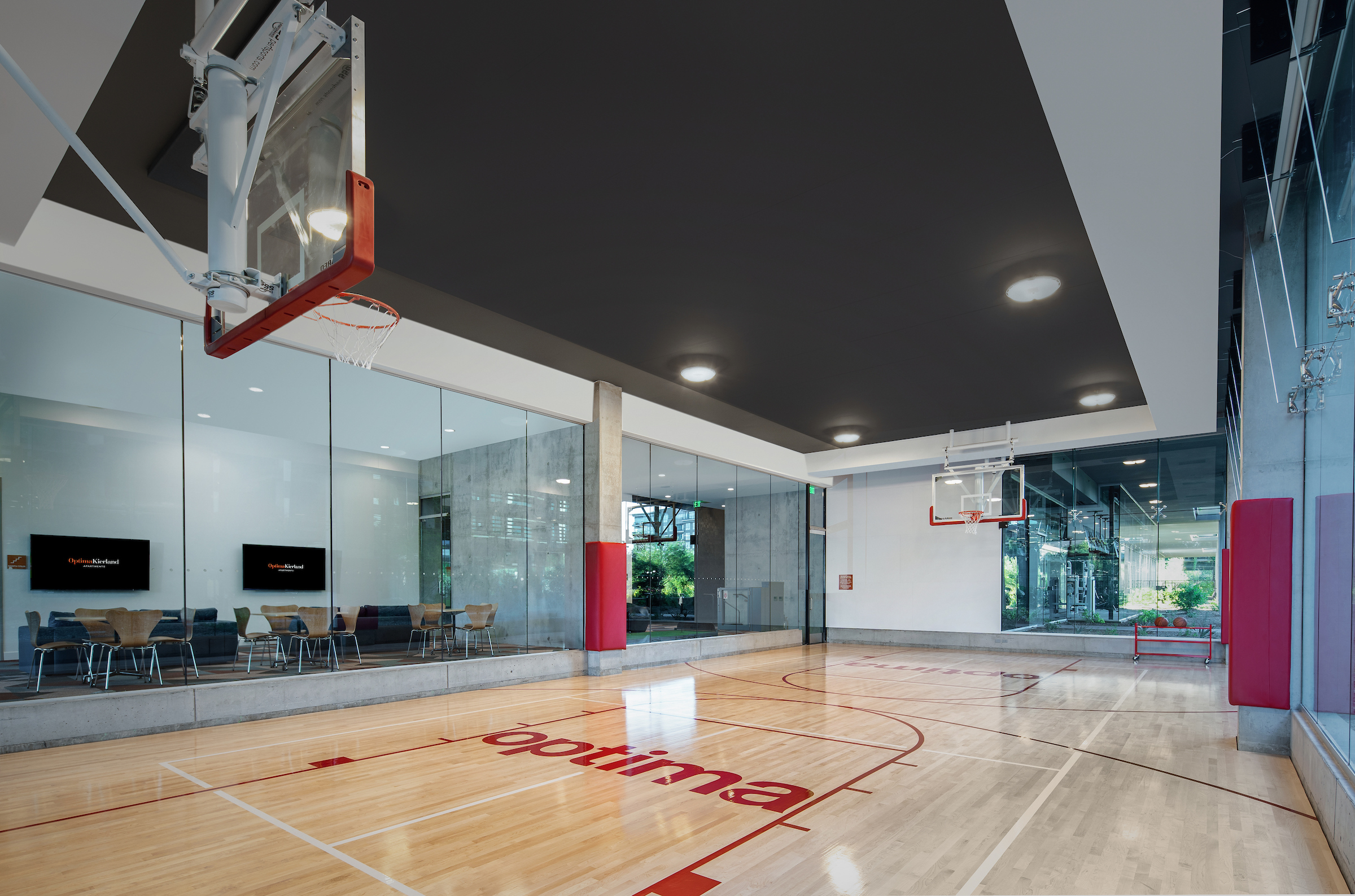
Making Use of Existing Tennis and Basketball Courts
Before installing dedicated courts, luxury developers can try out pickleball at their facilities for a negligible price. They can add lines to existing tennis and basketball courts and roll out temporary nets.
The Abaco Club gauged residents’ interest in the game by adding stripes to its tennis court before committing to the smaller-sized courts. The residential developer Optima Inc., which owns properties in Scottsdale, Arizona and Chicago, did the same by painting stripes on indoor basketball courts.
“The requirements are similar to those of an indoor basketball court, so it’s been an easy addition. The most important thing to consider in planning a pickleball court is space and creating the striping overlay on the existing court in a way that’s cohesive,” said David Hovey Jr., AIA, president, COO and principal architect of Optima, Inc.
To meet demand, they’ve planned an outdoor pickleball stadium at their forthcoming luxury apartment tower, 7190 Optima Kierland. The 216-unit tower is slated to open in 2023 in Scottsdale. “We’re excited to build resident programming around this newest feature, possibly hosting a tournament,” Mr. Hovey said.
Read the full article on Mansion Global
Photos of this Award-Winning, Plant-Filled Apartment Complex has Twitter Users Speechless: ‘I Thought This Was Ai-Generated’
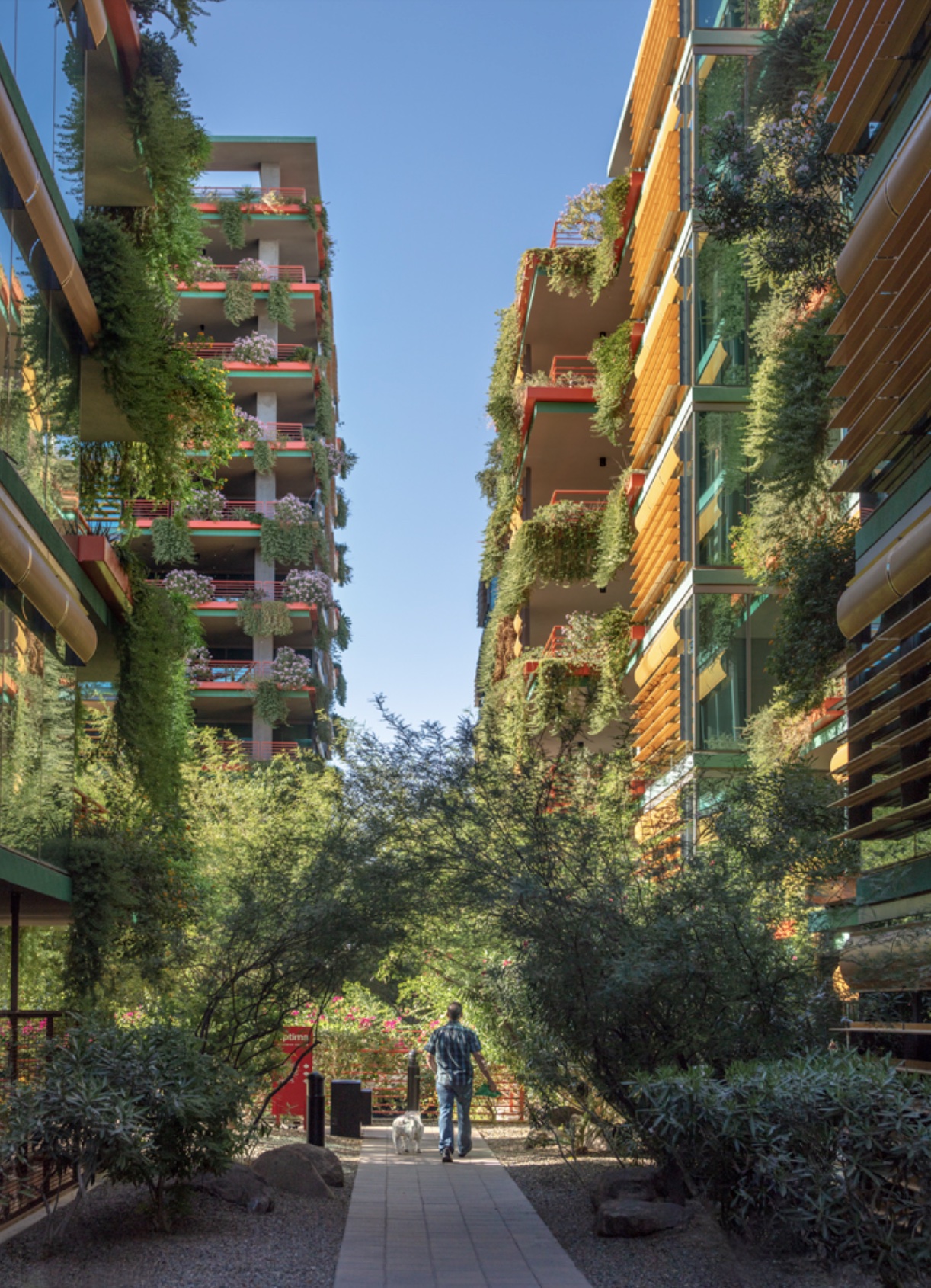
Optima Sonoran Village, an apartment complex in Scottsdale, Arizona, received one of 19 “Champions of Sustainability” awards from utility company Salt River Project in 2022, the Scottsdale Independent reported.
For nine years, SRP has used this award to recognize local businesses and organizations that have worked with the utility provider on eco-friendly projects and solutions, the company’s website explains.
Optima Sonoran Village was one of three businesses honored for “Building Communities for Electric Vehicles,” along with apartment brand Acero and home builder Lennar.
According to SRP, this category is for “homebuilders and multifamily developers who build homes or communities to be electric vehicle (EV) ready — complete with pre-wired electrical outlets to support Level 2 chargers or on-property charging stations for residents.”
The Scottsdale Independent reports that the 19 businesses named by SRP received their awards in a ceremony held at the Hyatt Regency Scottsdale Resort. “The event underscores SRP’s 2035 Sustainability Goals related to energy efficiency, demand response, transportation electrification, and electric technologies initiatives,” SRP said in its press release.
Jim Pratt, SRP’s associate general manager of customer operations & chief customer executive, also spoke in support of the award winners’ efforts. “We are thankful to the winners for being valued partners. Their strong commitment to energy efficiency and sustainability is driving meaningful change and demonstrates what’s possible when we work together to keep the [San Tan] Valley and all of Arizona growing and thriving for generations to come,” he said, as reported in the SRP release.
City of Los Angeles civil servant Dan Caroselli took to Twitter to praise Optima Sonoran Village’s design, though he did wonder about the project’s affordability and sustainability. “I have to admit they look really cool and I was surprised by them since basically nothing else looks remotely like this in Phoenix,” he said, and noted that “Everything is plants! Plants! Plants!”
Twitter user Sukrit Ganesh (@SukritGanesh) agreed. “At first I thought this was AI-generated, then I Googled it up. If only more apartment complexes [were] designed like this!”
Read more on The Cool Down
Visit Optima Sonoran Village for more details
Here are the finalists for the 2020 RED Awards
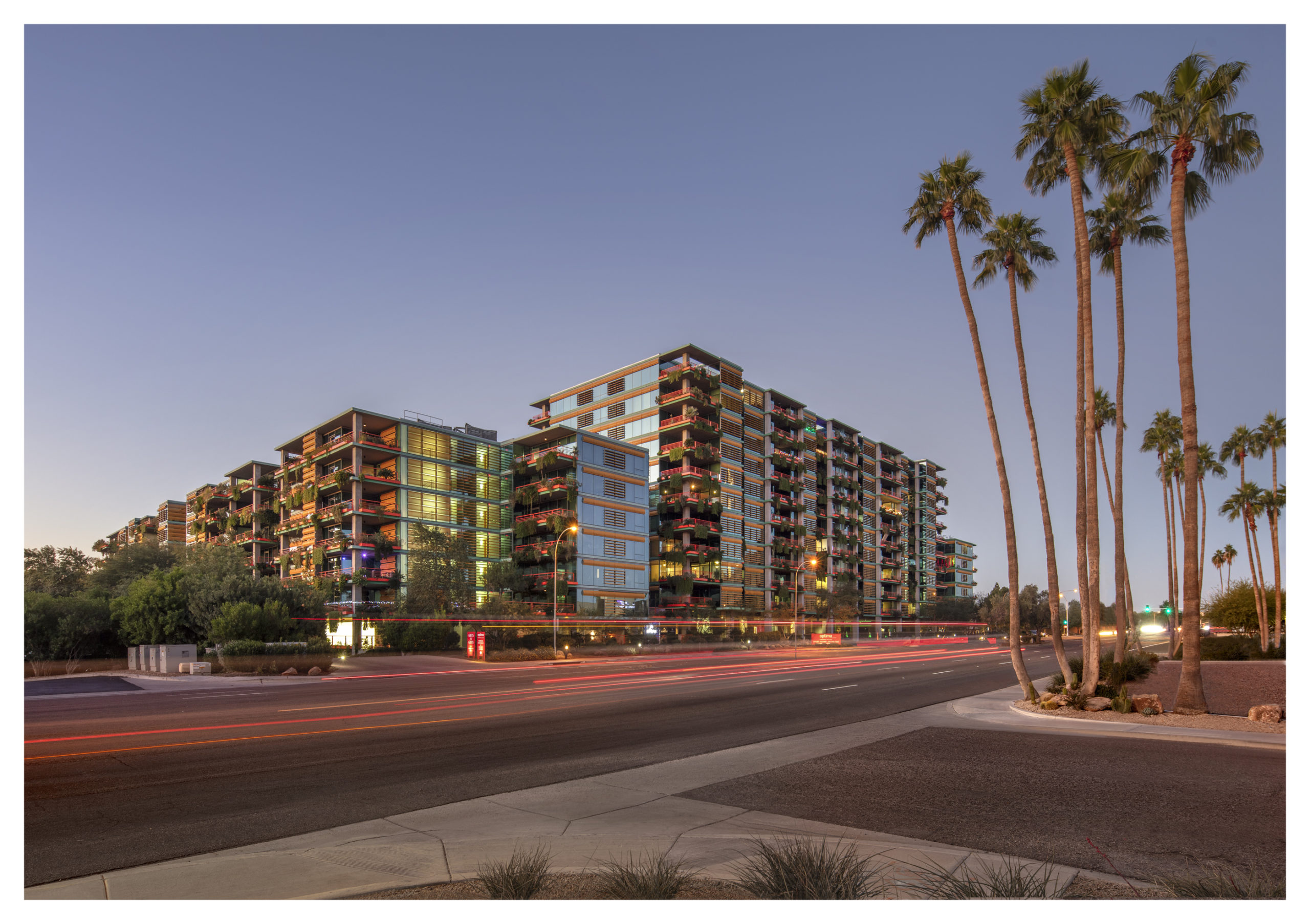
The rush of commercial real estate development has truly become a statewide phenomenon, and the 2020 Real Estate Development (RED) Awards reflect just how widespread the activity has been in Arizona. From the more than 110 project nominations received this year, 17 were for projects away from the Valley. Projects in Tucson, Marana and Flagstaff can be found in the list of finalists, showing clearly that good work is being done all over the state. This year’s projects were some of the most impactful developments the state has seen in the 2000s, which made narrowing them down to three finalists and, ultimately, only one winner very difficult. The finalists and winners were honored at our 2020 RED Awards event on March 12 at Pointe Hilton Tapatio Cliffs Resort in Phoenix. For tickets, click here.
Here are the finalists for the 2020 RED Awards, by category:
Optima Sonoran Village
Owner: Optima Inc.
Developer: Optima DCH Development, Inc.
General Contractor: Optima Construction, Inc.
Project Manager: Optima DCH Development, Inc.
Architect: David Hovey & Associates Architect, Inc.
Subcontractors: Suntec Concrete, Aspen Construction, Inc., Jen Electric, RKS Plumbing & Mechanical, S Diamond Steel
Read the full feature at AZ Big Media
Visit Optima Sonoran Village for more information
Eco-Friendly Homes That Embrace The Earth Day Spirit
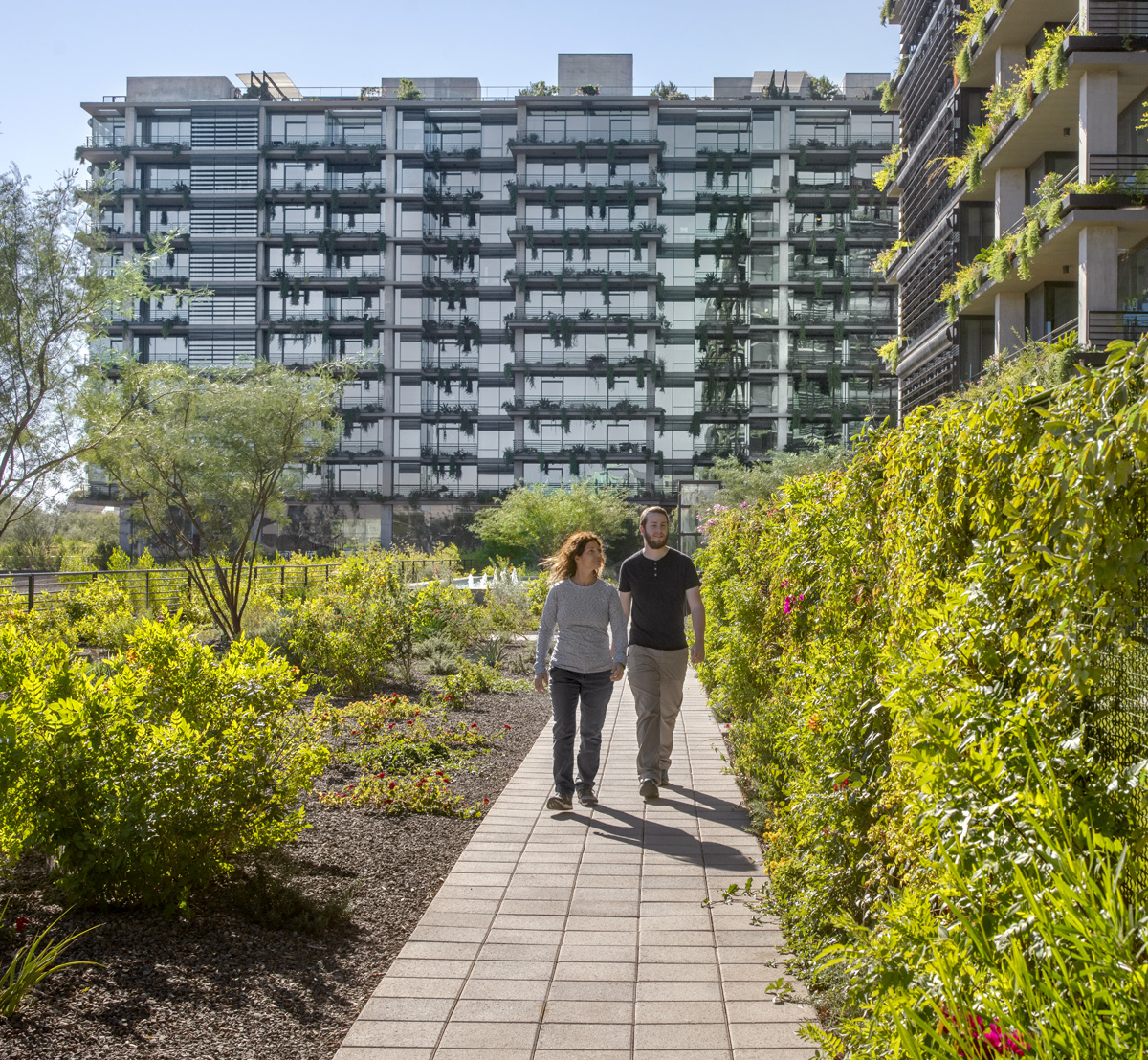
A cornerstone of community design at Optima Inc. is including green space to seamlessly connect residents to nature. Numerous studies suggest that contact to nature has positive effects for human physical and psychological well-being.
At Optima Kierland Center in Scottsdale, Arizona, a development of luxury rental and for-sale residences, residents have access to lush rooftop landscaping, an outdoor Zen garden and 5.5 acres of lushly landscaped courtyards with fountains.
A multiphase development project, each building within Optima Kierland Center is connected to the others through aesthetic structure and physical pathways amid lush gardens. Within the building, an innovative vertical planting system features self-containing irrigation and drainage, including vibrant and colorful planters at the edge of each floor. The system ultimately culminates into a beautiful rooftop garden.
At Optima Sonoran Village in Arizona, 60 percent of its grounds are open space that not only mediate the harsh desert climate but also create visually stunning landscaped areas to be enjoyed by residents and the community. A Kaleidoscope Juice Bar with patio seating is also on site.
In Chicago, luxury rental tower Optima Signature offers residents and the surrounding Streeterville neighborhood access to a tree-lined public plaza near its front entrance with a short walk to the lakefront and the Riverwalk.
Read the full feature on Forbes.
Visit Optima Kierland Center, Optima Sonoran Village and Optima Signature for more details.
Green Walls Are About To Become Much, Much Bigger With A Little Help From Technology
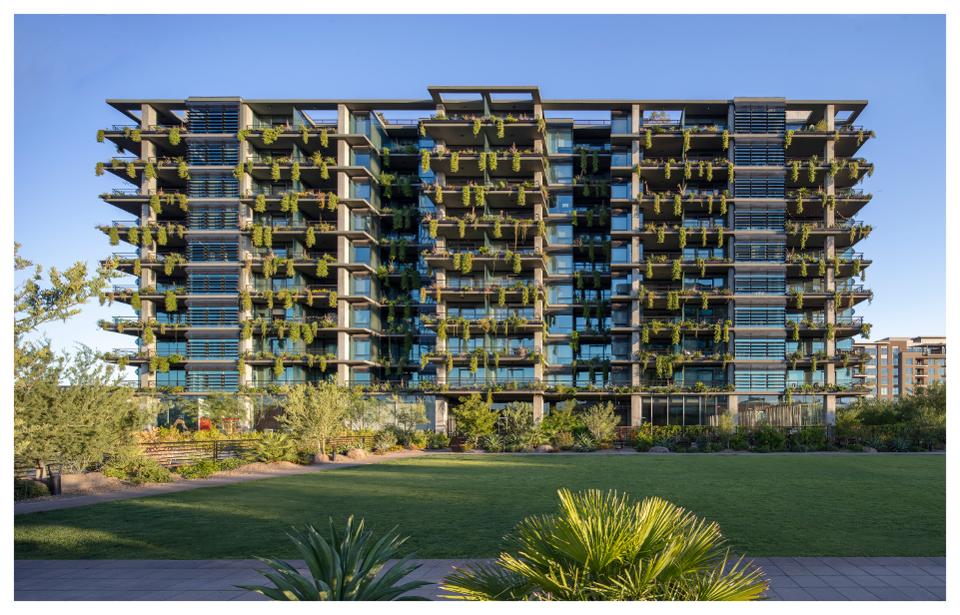
Optima, a developer based in the dry climate of Arizona no less, has come up with a vertical planting system that has self-contained irrigation and drainage so plants can grow up and over the side of the building. This provides a natural shading system while also creating cleaner air and decreasing the excessive temperatures so common to Arizona. Vertical gardens are one part of their overall greening initiative which aims to be carbon neutral by 2030.
Read the full feature on Forbes
Optima Sonoran Village: Your Own Personal Oasis
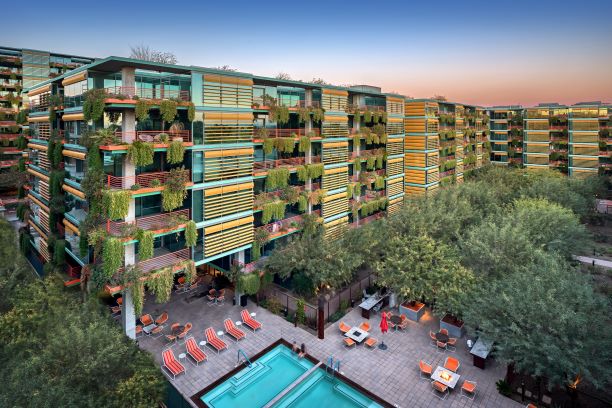
Imagine living in a private, beautifully designed community that feels as if it’s been created to fit your every need, providing all the convenient daily services and recreational amenities you could ever want and need. Instead of spending your busy day traveling between the coffee shop, the local gym, and a variety of other errands, you’ll be able to get everything done without ever leaving Optima Sonoran Village.
Optima Sonoran Village is surrounded by Scottsdale’s best shopping, restaurants, culture, arts, and nightlife. Everything within easy reach! When you’re ready to escape the hustle and bustle of the city, you’ll be welcomed home with lush landscaping, sweeping views, thoughtfully designed spaces, and unmatched community amenities.
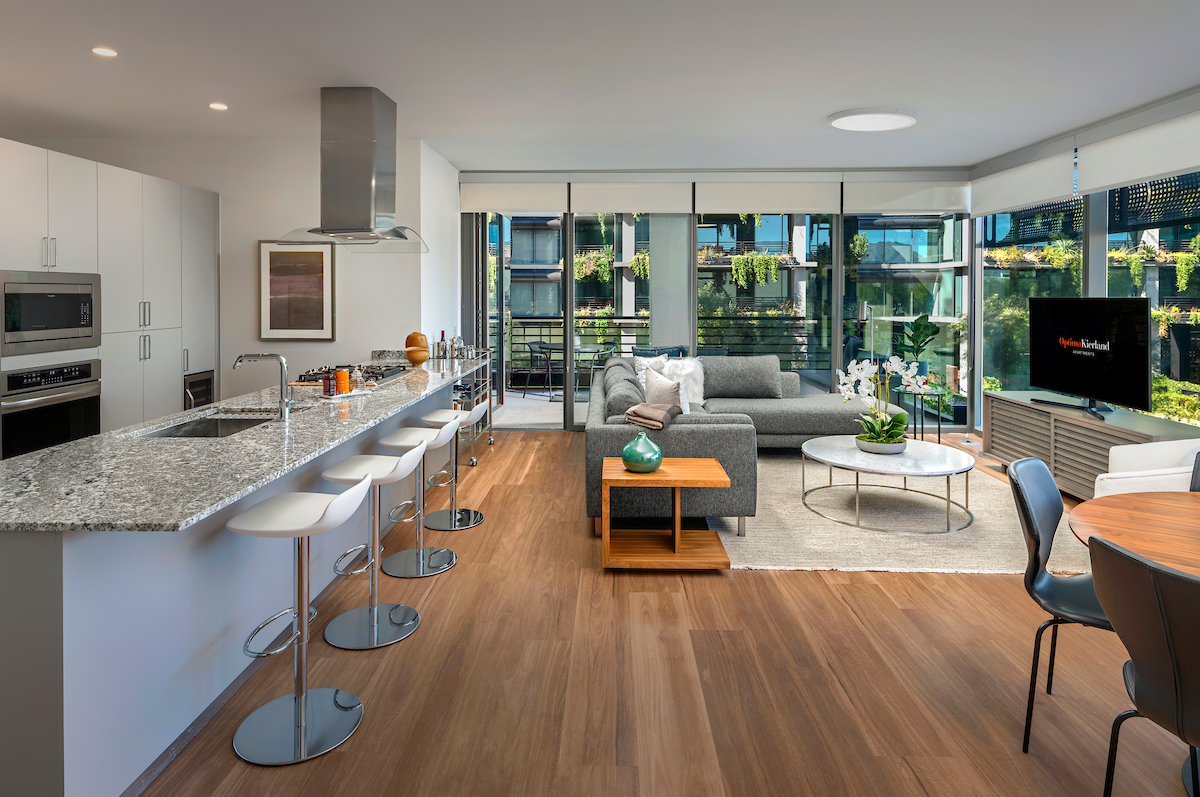
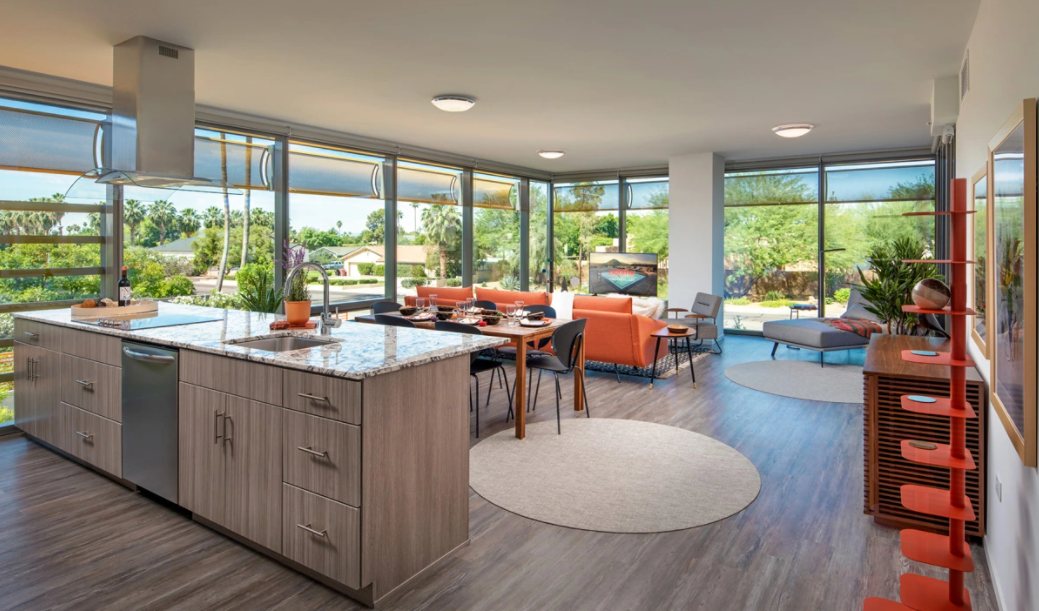
Residents at our rental community know that contrary to popular belief, you really can have it all – and it’s all waiting for you here. View our luxury one-bedroom floorplans, two-bedroom luxury apartments, three-bedroom floorplans, and luxury studio apartments that are all designed with large outdoor living spaces with floor-to-ceiling windows showcasing gorgeous views. Each apartment includes stainless steel appliances, including a washer and dryer, as well as granite countertops, a modern design, and indoor garage parking.
The new tower at Optima Sonoran Village is the final addition to our community, offering the best in upscale residences and high-end apartment amenities in Scottsdale. Every detail has been considered in the design of this luxury tower, redefining the concept of luxury apartment living. This exclusive tower consists of large, contemporary homes that feature extensive outdoor living areas, going above and beyond the traditional balcony. First-floor units have spacious patio areas and landscaped yards, providing residents with an incredible amount of outdoor space to enjoy the beautiful Arizona weather.
Read the full feature on Phoenix New Times
Visit Optima Sonoran Village for more details
